A complete issue · 36 pages · 1931
Life — May 15, 1931

# Life Magazine Cover Analysis (May 15, 1931) This is the cover of *Life* magazine from May 1931, featuring a caricature signed by Neil Halt. The drawing depicts a grotesque face with exaggerated features—bulbous nose, distorted mouth, and prominent ears—rendered in aggressive black and white contrast. The figure wears formal attire (white shirt visible). Without additional context or identifying text on the cover itself, I cannot definitively identify the specific public figure being caricatured. However, the style is typical of *Life*'s political satire from this era. The exaggerated physiognomy suggests this was meant as harsh commentary on a particular contemporary political or social figure, though the specific identity and referenced events remain unclear from the image alone.
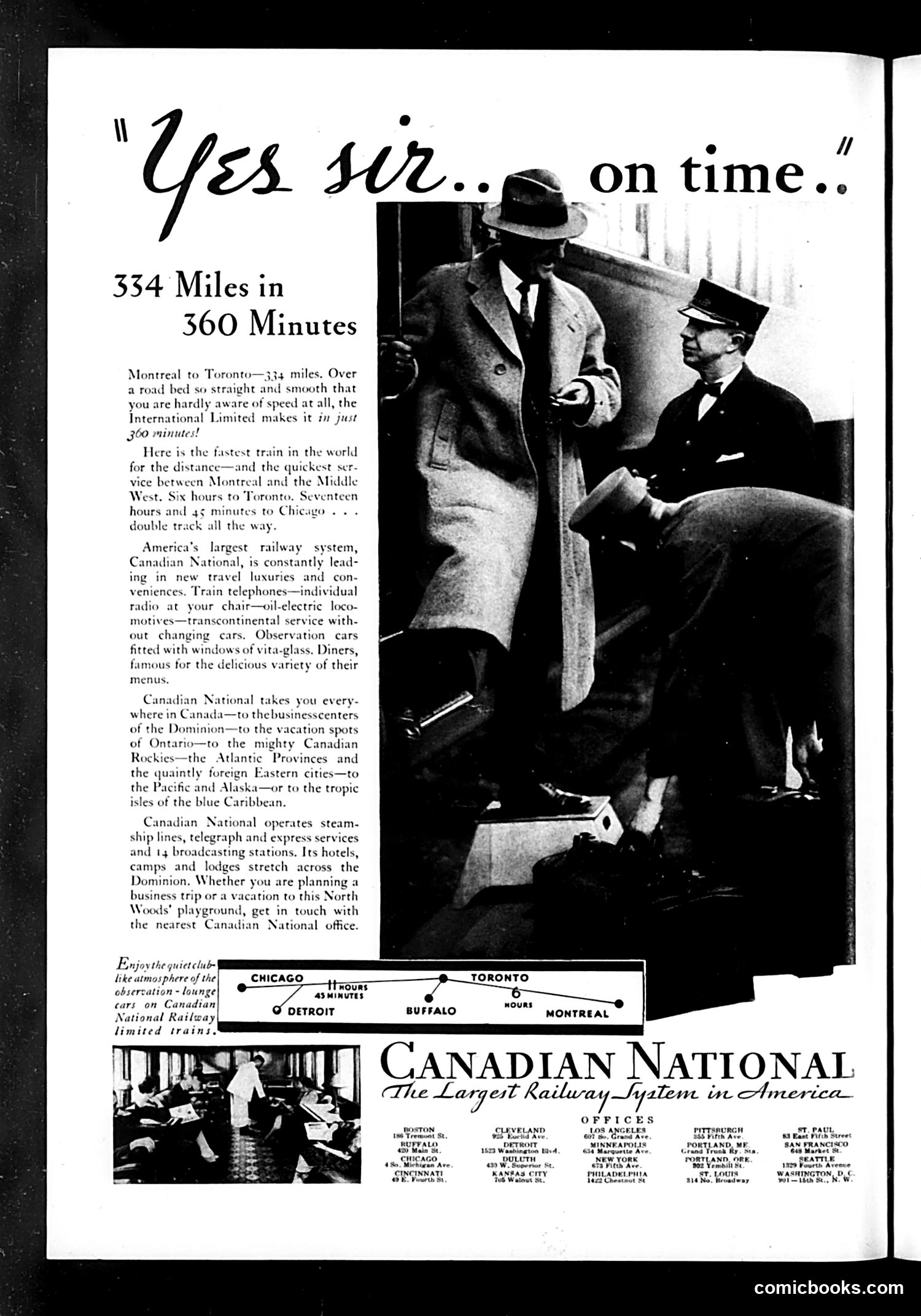
# Analysis This is a **Canadian National Railway advertisement**, not political satire. The page promotes the speed and luxury of the International Limited train service between Montreal and Toronto (334 miles in 360 minutes). The central image shows two men in business attire and fedoras—likely a businessman and a porter or conductor—aboard the train, suggesting comfortable first-class service. The headline "Yes sir...on time" emphasizes the railway's reliability. The accompanying text boasts about amenities: telephones, radio, observation cars with vista-glass windows, and high-quality dining. A small route map shows connections to Chicago, Detroit, Buffalo, and other cities. A secondary photograph depicts the dining car's interior. The advertisement targets business travelers seeking speed and comfort, presenting rail travel as a modern, professional transportation option. This is commercial marketing rather than editorial cartoon content.
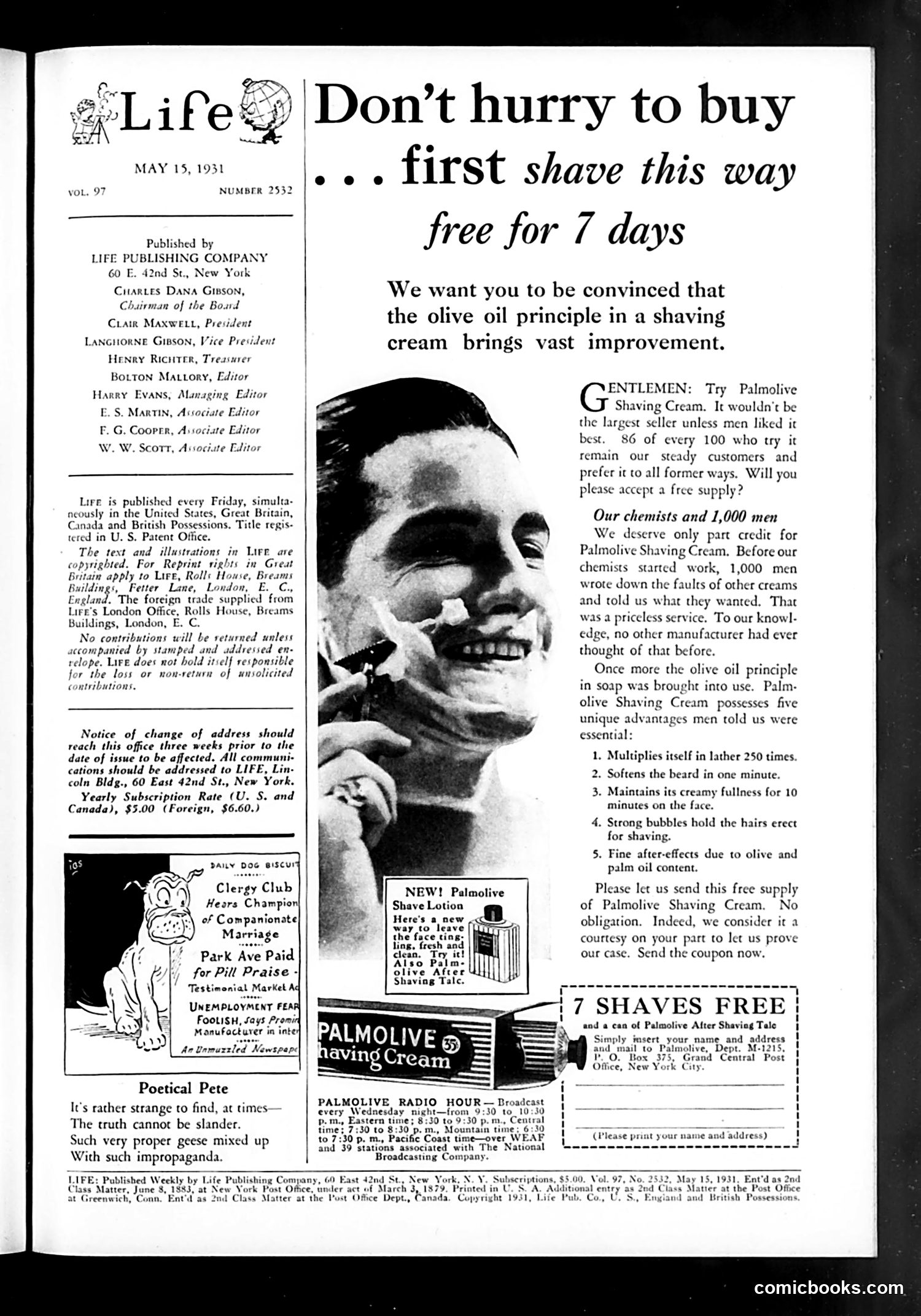
This page is primarily a **Palmolive Shaving Cream advertisement** rather than political satire. The large image shows a man's face demonstrating the product's effects, with marketing copy emphasizing the "olive oil principle" that supposedly improves shaving. The advertisement claims their chemists and "1,000 men" tested the cream, listing five benefits including increased lather and beard softening. It offers a free 7-day trial. The small "Poetical Pete" cartoon at bottom-left appears to be a regular humor feature, criticizing propaganda with a brief verse about truth and falsehood—likely commentary on exaggerated advertising claims generally, though the specific reference is unclear from this excerpt alone. The page reflects 1931 consumer marketing conventions, emphasizing scientific authority and free trials to build brand loyalty.
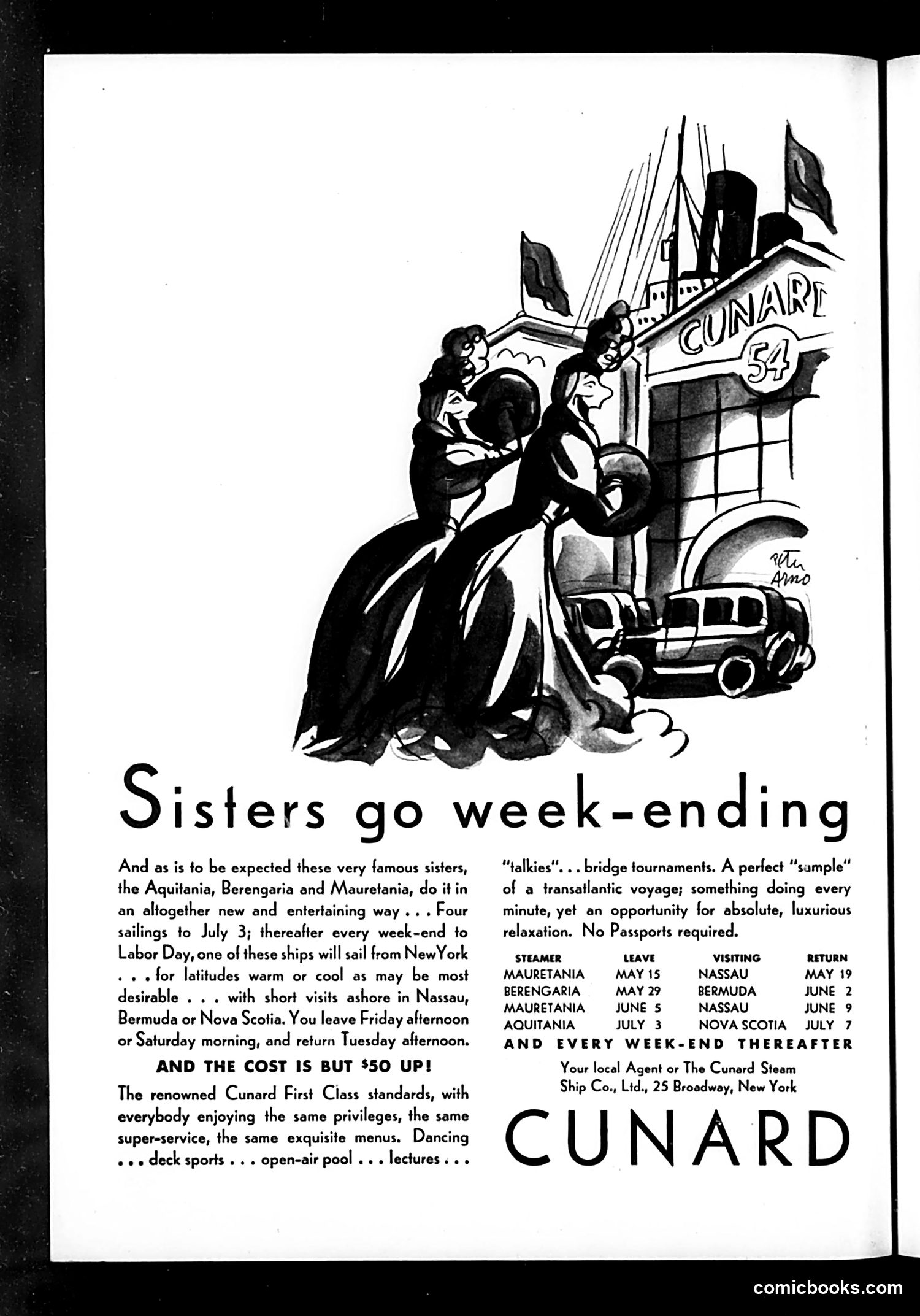
# Analysis This is primarily a **Cunard cruise ship advertisement**, not political satire. The illustration depicts three fashionably dressed women boarding or positioned near the SS Mauretania, one of Cunard's famous ocean liners. The ad promotes "week-ending" cruises—brief luxury getaways departing Friday afternoons, returning Tuesday, priced at $50. Destinations include Bermuda and Nova Scotia. The text emphasizes Cunard's First Class amenities: deck sports, pools, fine dining, and dancing. The cartoon style reflects 1930s advertising aesthetics, using elegant line work to convey sophistication and leisure. The phrase "famous sisters" refers to multiple Cunard ships sailing together. This advertisement targets affluent Americans seeking affordable short-term ocean travel, positioning cruising as accessible luxury during the Depression era.
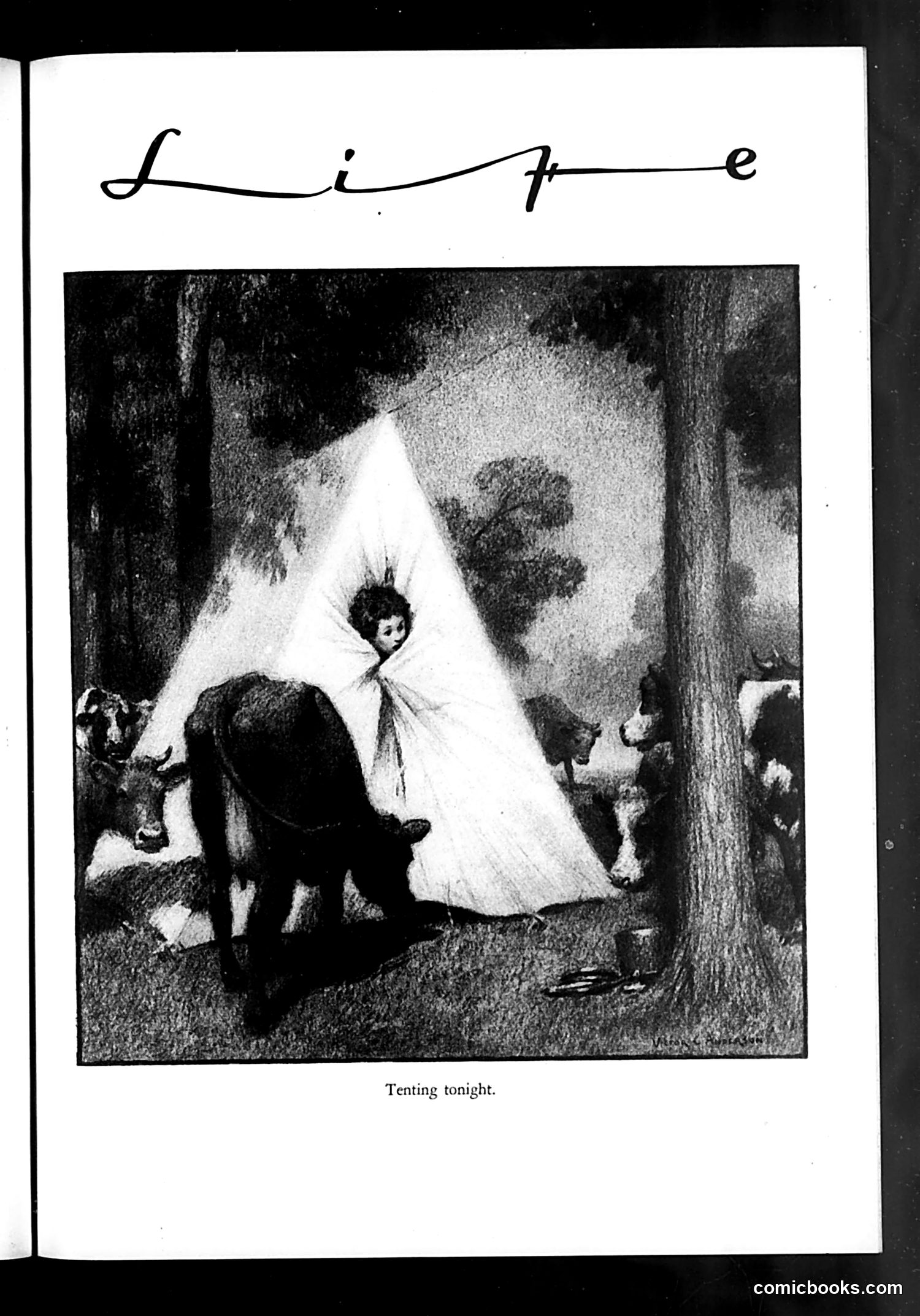
# Analysis This page from *Life* magazine shows a black and white photograph captioned "Tenting tonight." The image depicts a woman in dark clothing inside a white tent, surrounded by what appear to be dogs or similar animals in a wooded setting. The handwritten text at the top reads "Life" (the magazine's masthead). Without additional context from surrounding articles or dates, the specific satirical target is unclear. However, the juxtaposition of the refined woman in the tent with animals suggests this may be mocking either: - Fashionable "camping" or "roughing it" culture among the wealthy - A specific contemporary social figure or trend The photograph's quality and composition suggest this is documentary-style satire rather than an illustrated cartoon. More context would be needed to identify the exact reference.
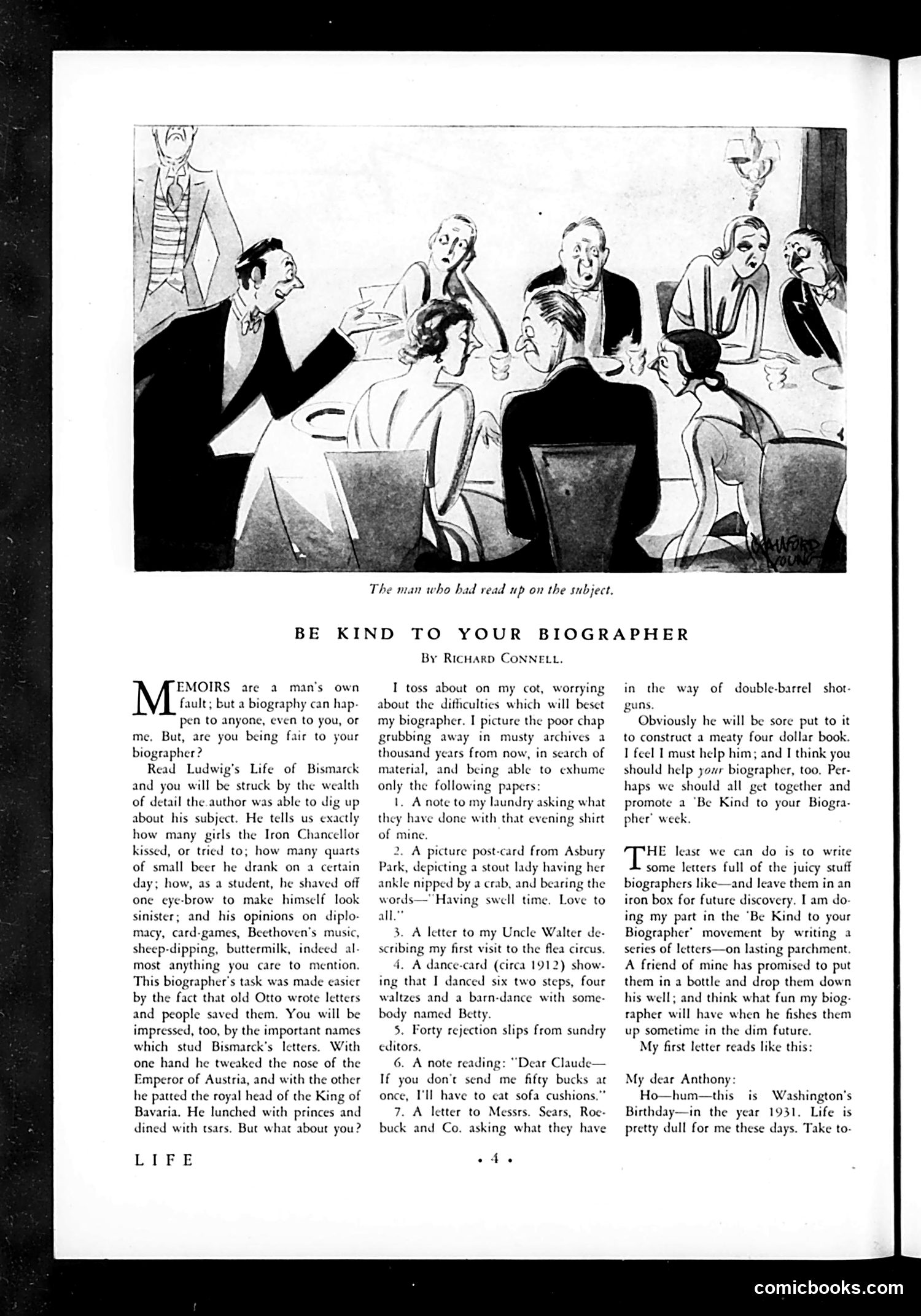
# "Be Kind to Your Biographer" by Richard Connell This satirical article uses a cartoon and humorous narrative to mock both biography-writing and biographical subjects. The cartoon depicts a dinner party where "the man who had read up on the subject" is speaking—presumably a biographer sharing embarrassing or unflattering details about someone present. Connell's piece jokes that biographers will eventually excavate all your secrets—love letters, drinking habits, dancing mishaps, rejected job applications—from archives and correspondence. His tongue-in-cheek advice: help your biographer by keeping good records yourself, or at least organizing a coordinated effort among friends to promote a flattering narrative during "Be Kind to Your Biographer" week. The satire targets both the invasiveness of biographical research and vanity around one's historical legacy.
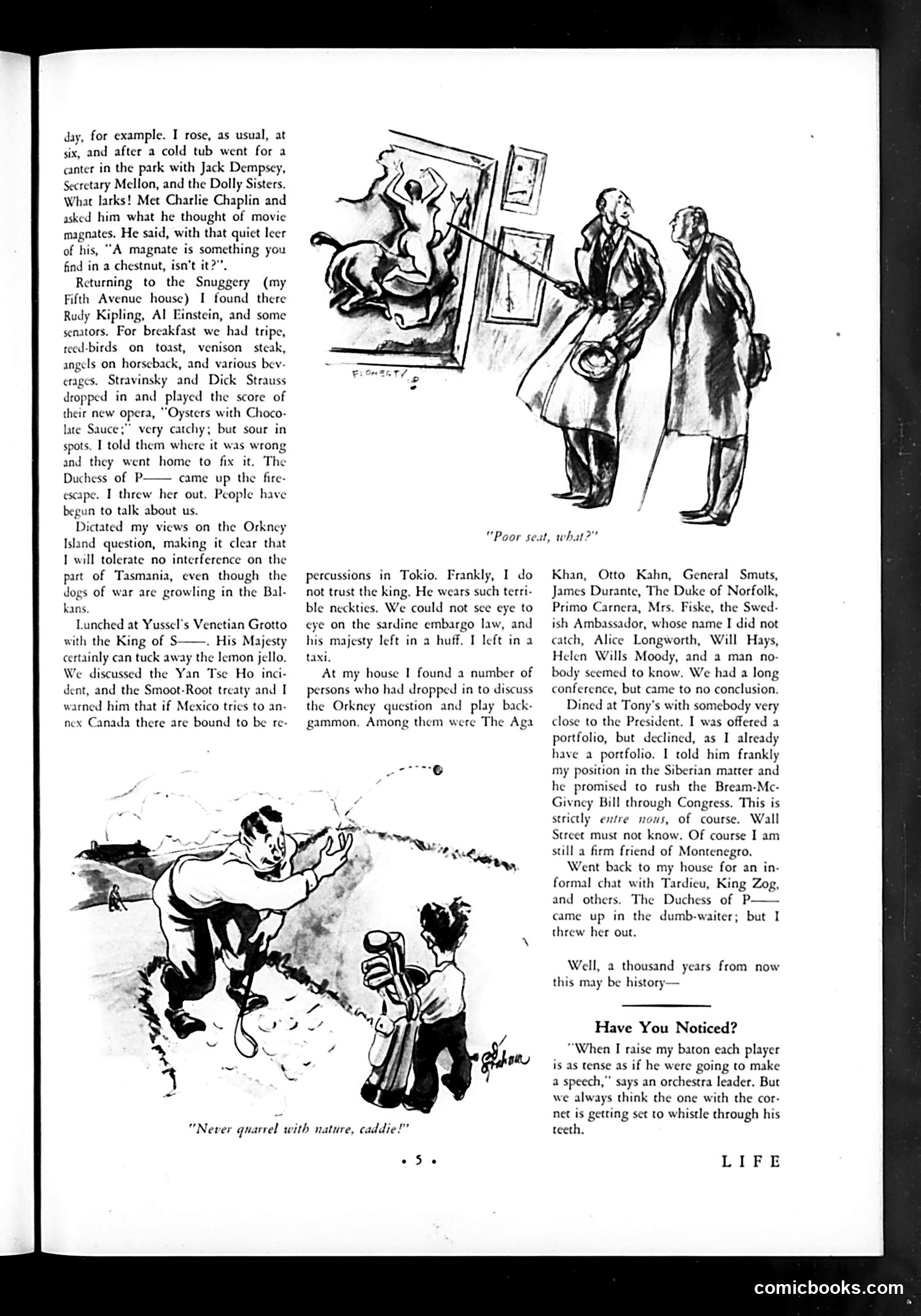
# Analysis of Life Magazine Page This page contains memoir-style text with two satirical cartoons. The upper cartoon shows a chaotic scene labeled "Poor seat, what?" depicting what appears to be opera or theater-goers confronting disorder—likely satirizing audience behavior at cultural events. The lower cartoon, "Never quarrel with nature, caddie!" shows a golfer in an awkward position with a caddie, appearing to reference the absurdity of blaming external circumstances (nature) rather than one's own skill for poor performance. The accompanying text mentions numerous celebrities and political figures (Charlie Chaplin, various European nobility and diplomats), suggesting this recounts a society journalist's encounters with high-profile individuals. The "Orkney Island question" reference suggests pre-WWII political tensions. Overall, the page satirizes elite social pretension and incompetence through humor and caricature.
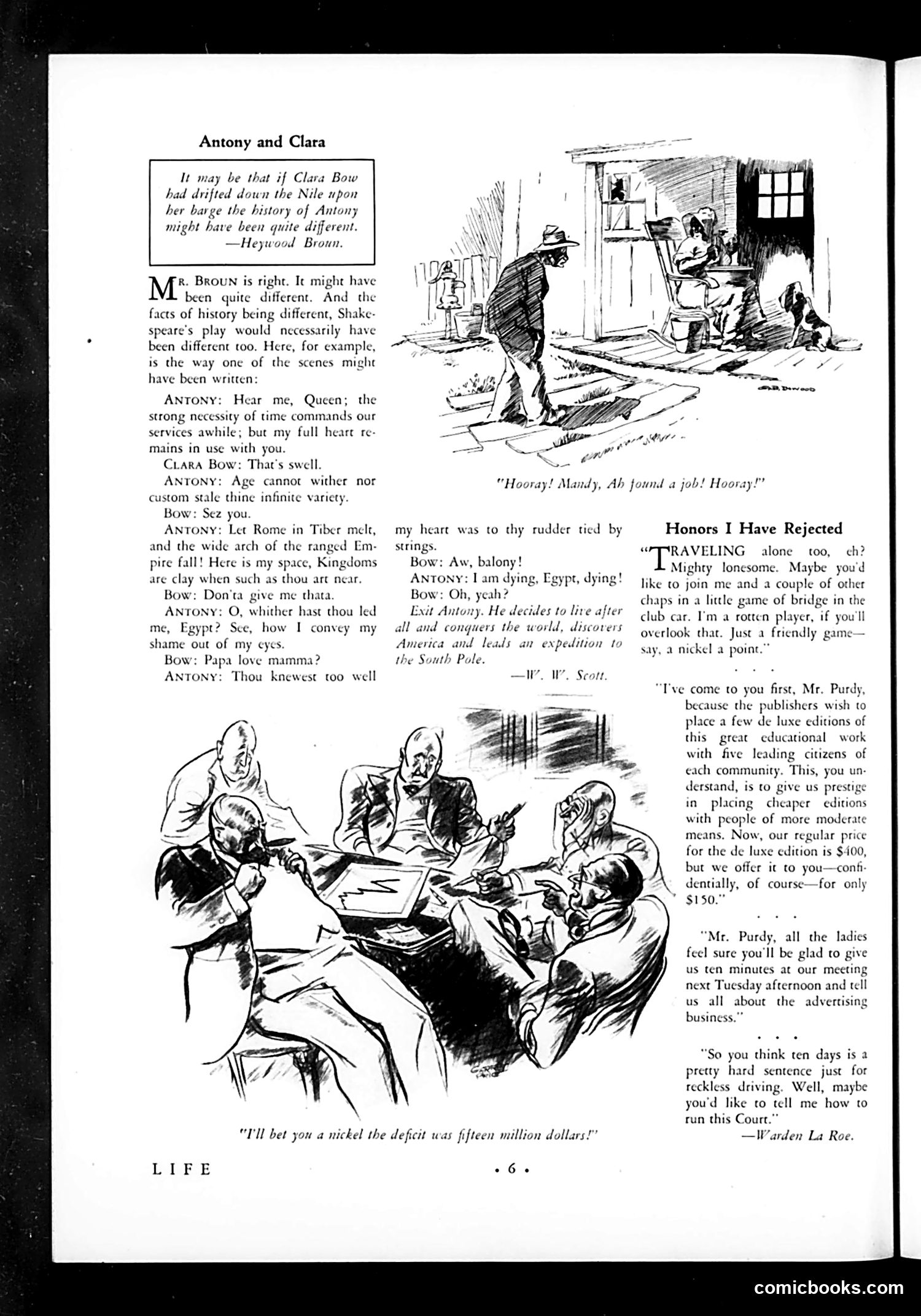
# Analysis of Life Magazine Page This page contains two distinct sections: a Shakespeare adaptation discussion and a separate satirical sketch. The top section debates whether Clara Bow's life story might have differed from Shakespeare's *Antony and Cleopatra*. This references Clara Bow, the famous 1920s silent film actress known as the "It Girl." The lower cartoon satirizes the advertising/publishing industry. A man (labeled Mr. Purdy) meets with what appears to be magazine publishers or book salespeople. They're pitching him an expensive deluxe edition at $400, claiming he'd get it for only $150—framing this as a prestige opportunity. The final caption quotes someone sarcastically suggesting this inflated pricing is comparable to a harsh legal sentence. The satire targets deceptive sales tactics: presenting marked-up prices as exclusive deals while suggesting social status comes from owning expensive editions.
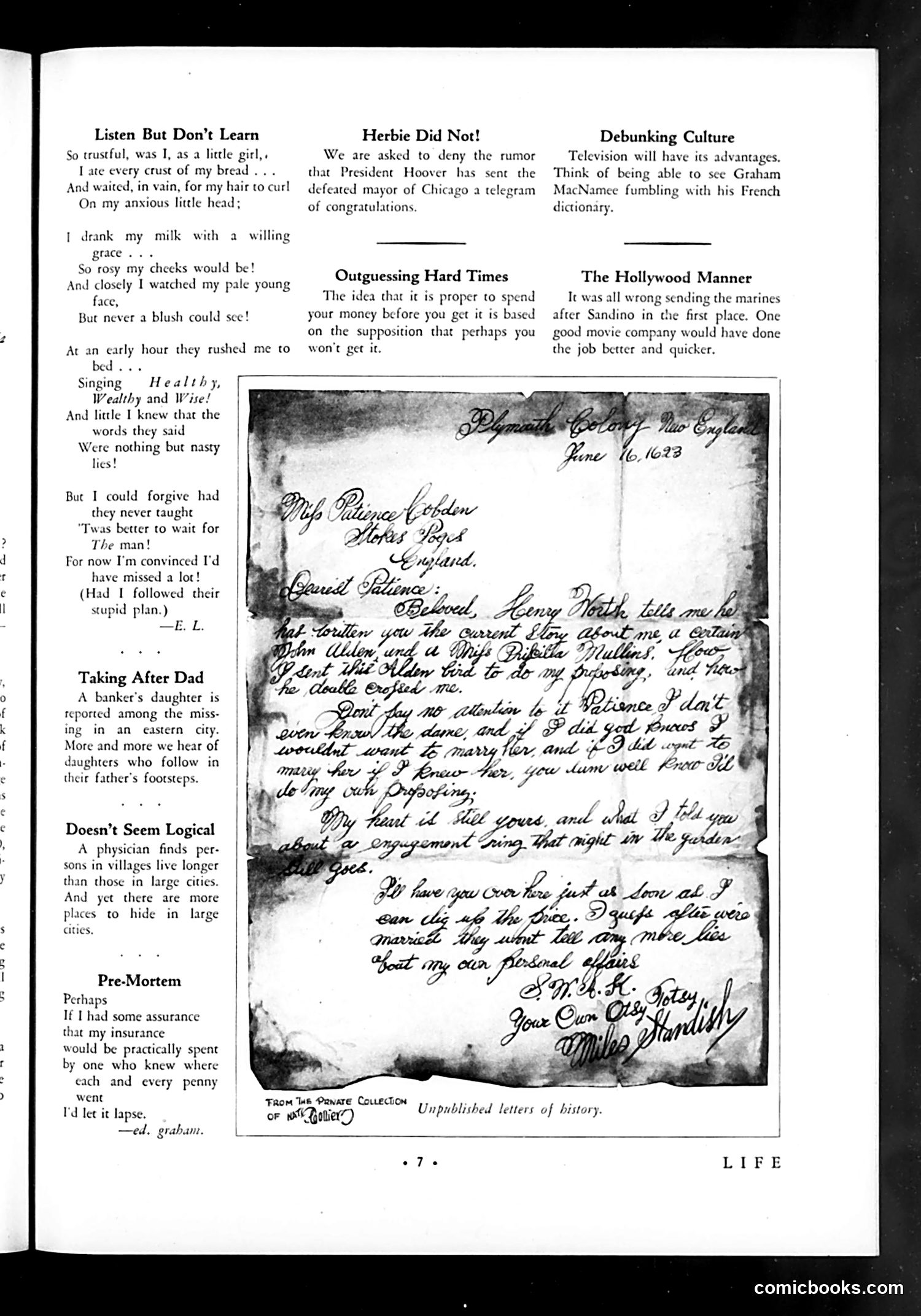
# Life Magazine Page Analysis This page contains several short poems and satirical items rather than a political cartoon. The content includes: **"Listen But Don't Learn"** — A poem by E.L. about childhood obedience and missed lessons about waiting for "the man." **"Herbie Did Not!"** — A brief item denying rumors that President Hoover sent a congratulatory telegram to Chicago's defeated mayor. **"Debunking Culture"** — A quip about television's limitations compared to reference materials. The centerpiece is a **facsimile of a handwritten historical letter** dated June 16, 1623, from Plymouth Colony, addressed to "My Patience Bolden" in England. The letter discusses personal affairs and colonial matters. The remaining items are light satirical verses on various social observations: banker's daughters, physicians' longevity, and insurance preparedness. This appears to be a typical Life magazine page mixing humor, social commentary, and historical curiosities rather than focused political cartooning.
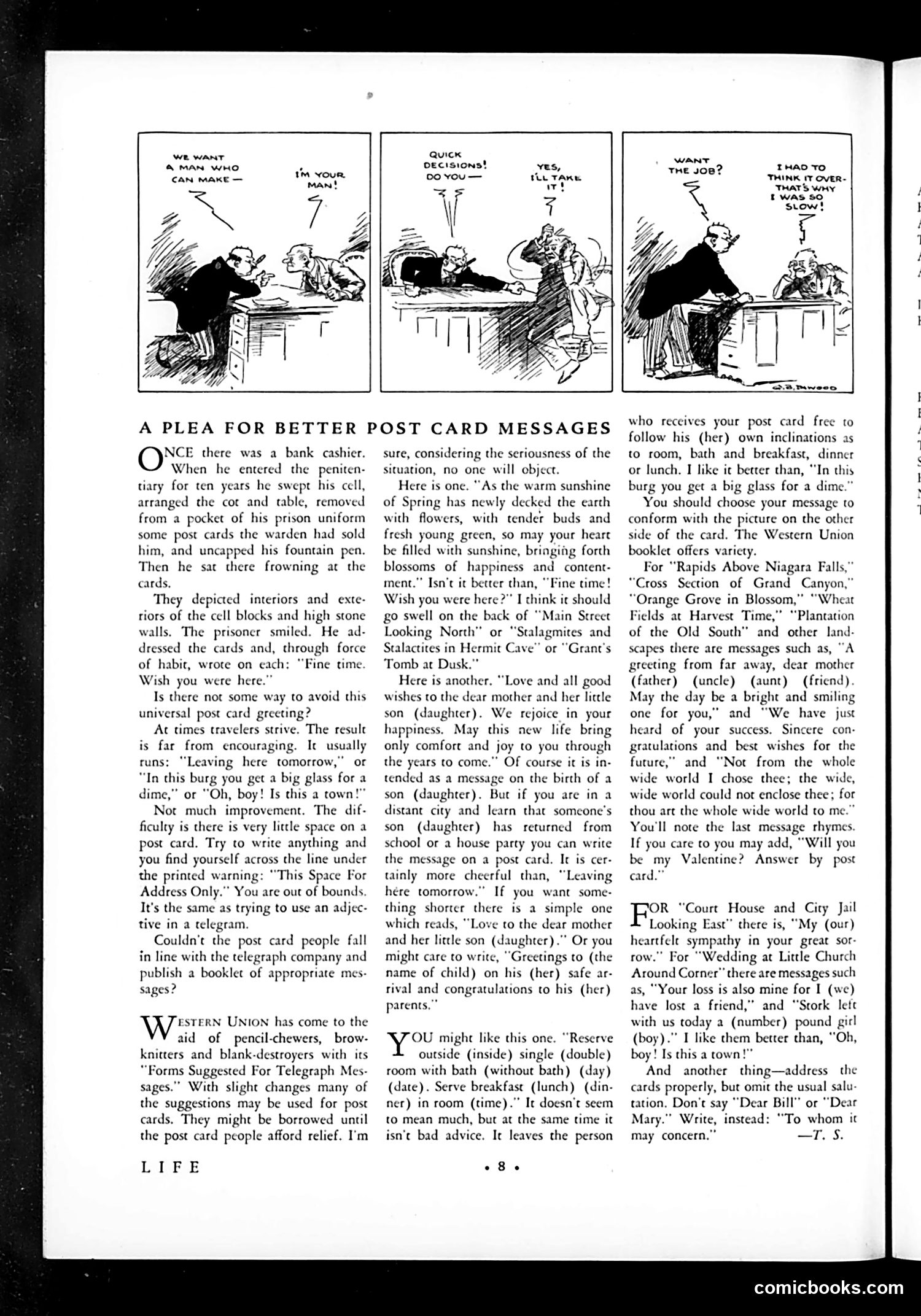
# "A Plea for Better Post Card Messages" This three-panel cartoon satirizes the tedious, formulaic nature of postcards sent by travelers in the early 20th century. **The joke:** A bank cashier interviews job candidates. In panel one, he asks what they want; in panel two, he demands a quick decision; in panel three, he's annoyed the candidate is overthinking it. **The satire:** The article argues that postcards typically contain generic phrases like "Wish you were here?" or "Fine time!" The cartoonist ridicules this laziness by showing how even important decisions (hiring) get rushed responses—suggesting people apply the same thoughtless speed to postcards as to everything else. The accompanying article proposes specific message alternatives for different locations and occasions to encourage more meaningful correspondence.
# "Life Looks About" - Page Analysis This page from *Life* magazine contains three opinion columns rather than cartoons. The visible illustration shows a cherub/cupid figure, likely decorative for the "Ferment Stirs" column header. The columns discuss 1931-32 political issues: Alfonso of Spain's exile, the need for government investigation of corruption (mentioning Judge Seabury's inquiry into NYC's Citizens Union), and General Pershing's military memoirs. The commentary is conservative, praising Republican prospects and criticizing what the authors see as governmental inefficiency. References to "Wet or Dry" indicate Prohibition debate remains relevant. The tone suggests *Life*'s editorial stance favored Republican leadership and skepticism toward Democratic governance during the Depression era.