A complete issue · 37 pages · 1931
Life — May 8, 1931
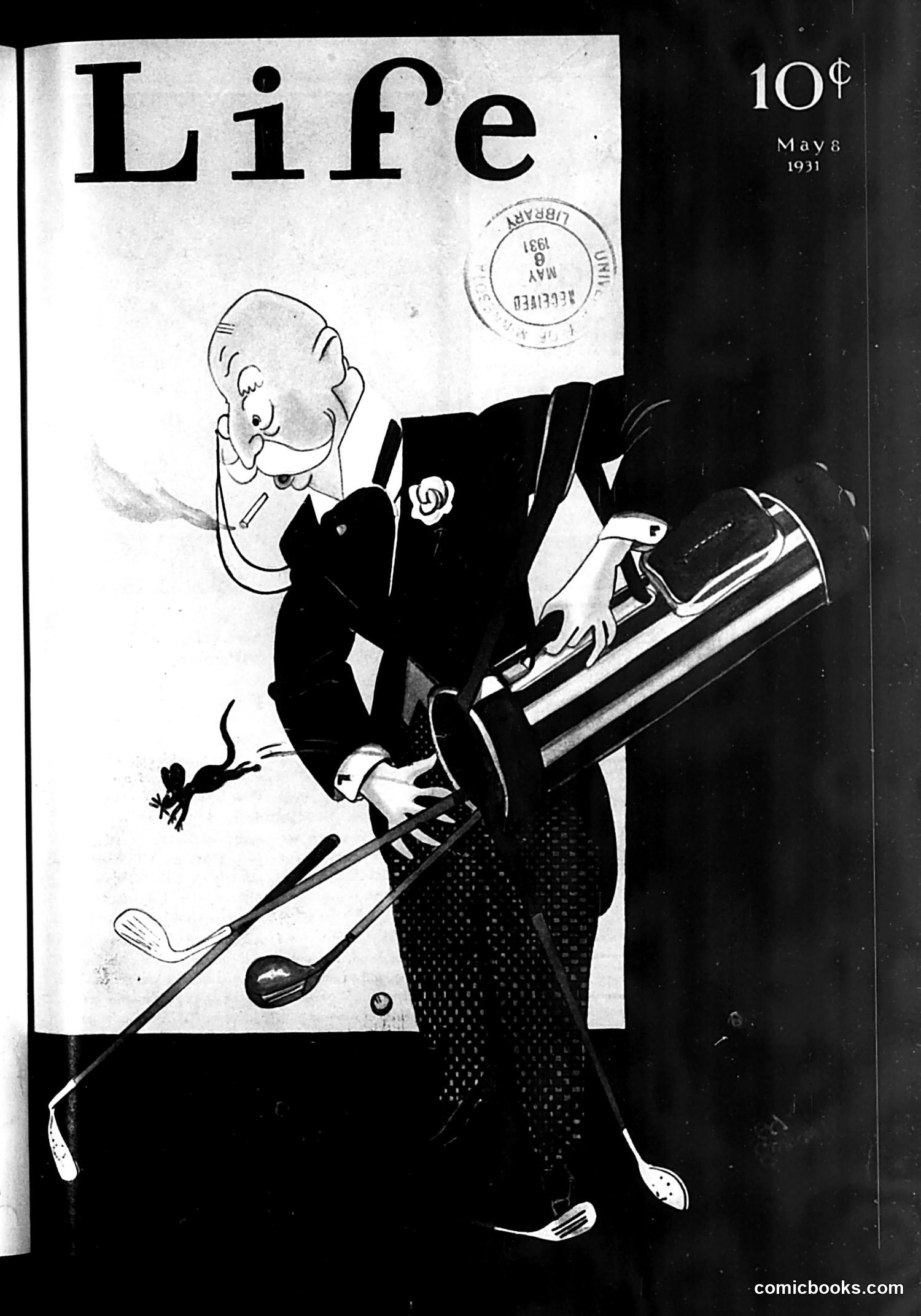
# Life Magazine Cover Analysis (May 8, 1931) This cover depicts a caricatured golfer in formal attire holding a large golf club and what appears to be a vacuum cleaner or similar mechanical device. The exaggerated facial features and the incongruous combination of golfing equipment with household appliance suggest satirical commentary. Given the 1931 date during the Great Depression, this likely mocks either: - The wealthy continuing leisure pursuits (golf) while the economy collapsed - A specific public figure associated with both wealth and consumer goods The cartoonist's style emphasizes absurdity through the character's distorted features and the clash between formal dress, recreational equipment, and domestic machinery—typical of Life's satirical approach to social and economic commentary of the era.
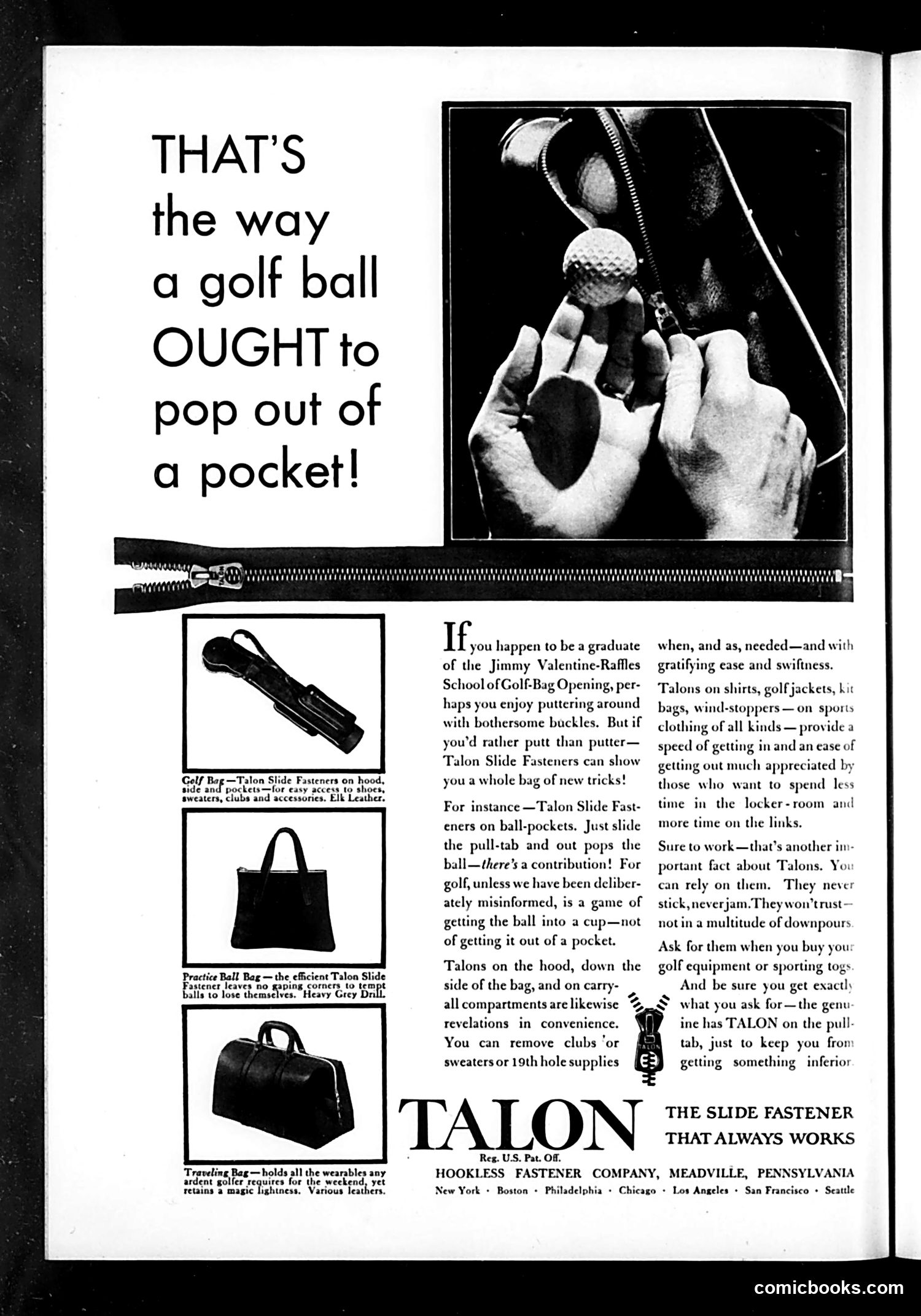
This is primarily an **advertisement for Talon slide fasteners (zippers)**, not political satire or commentary. The ad uses humor to promote Talon brand zippers for golf bags and sports clothing. The joke in the headline—"THAT'S the way a golf ball OUGHT to pop out of a pocket!"—illustrates the convenience of Talon's quick-opening mechanism. The accompanying photograph shows a golf ball literally popping out of a pocket, dramatizing how easily the slider works. The page showcases three different Talon applications: a golf bag with a side pocket, a small "Practise Ball Bag," and a larger "Traveline Bag." The text emphasizes Talon's reliability ("never stick, never jam") and quality as superior alternatives to inferior fasteners. This represents typical mid-20th-century American advertising strategy: combining visual humor with product benefits to appeal to affluent male consumers interested in golf and sporting goods.
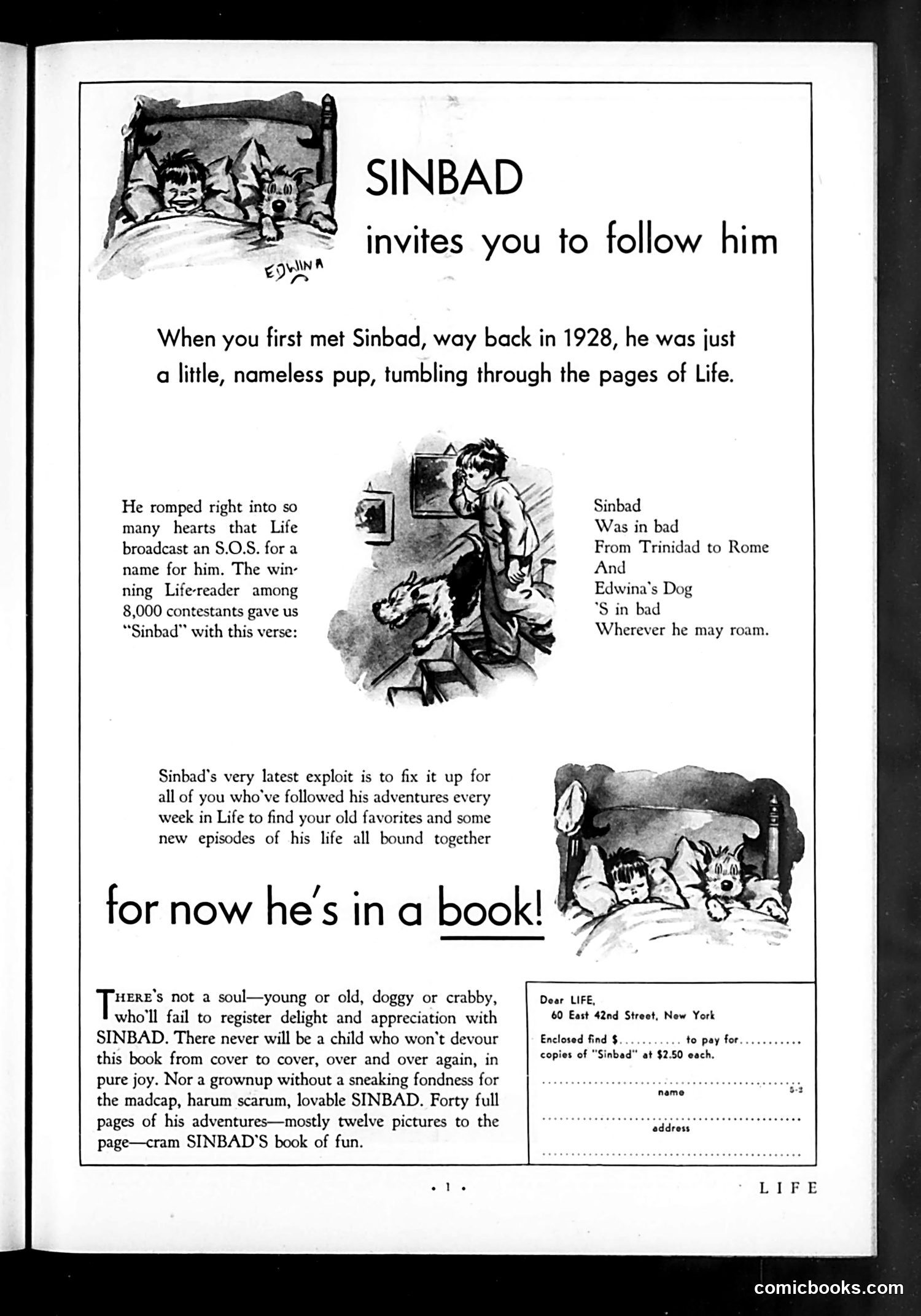
# Analysis This is an **advertisement**, not a political cartoon. It promotes a children's book collection of "Sinbad" adventures, published by Life magazine. The page announces that Sinbad—a character who debuted in Life magazine in 1928 as "a little, nameless pup"—is now being compiled into a bound book. According to the text, Sinbad became popular enough that Life held a naming contest won by a reader who submitted the verse shown. The illustrations show a young boy and a dog in various adventures. The ad emphasizes the book contains "forty full pages" with "mostly twelve pictures to the page" of the character's exploits, marketed as wholesome entertainment for children and adults alike. This reflects early-20th-century magazine merchandising, where popular recurring comic characters were repackaged as collectible books.
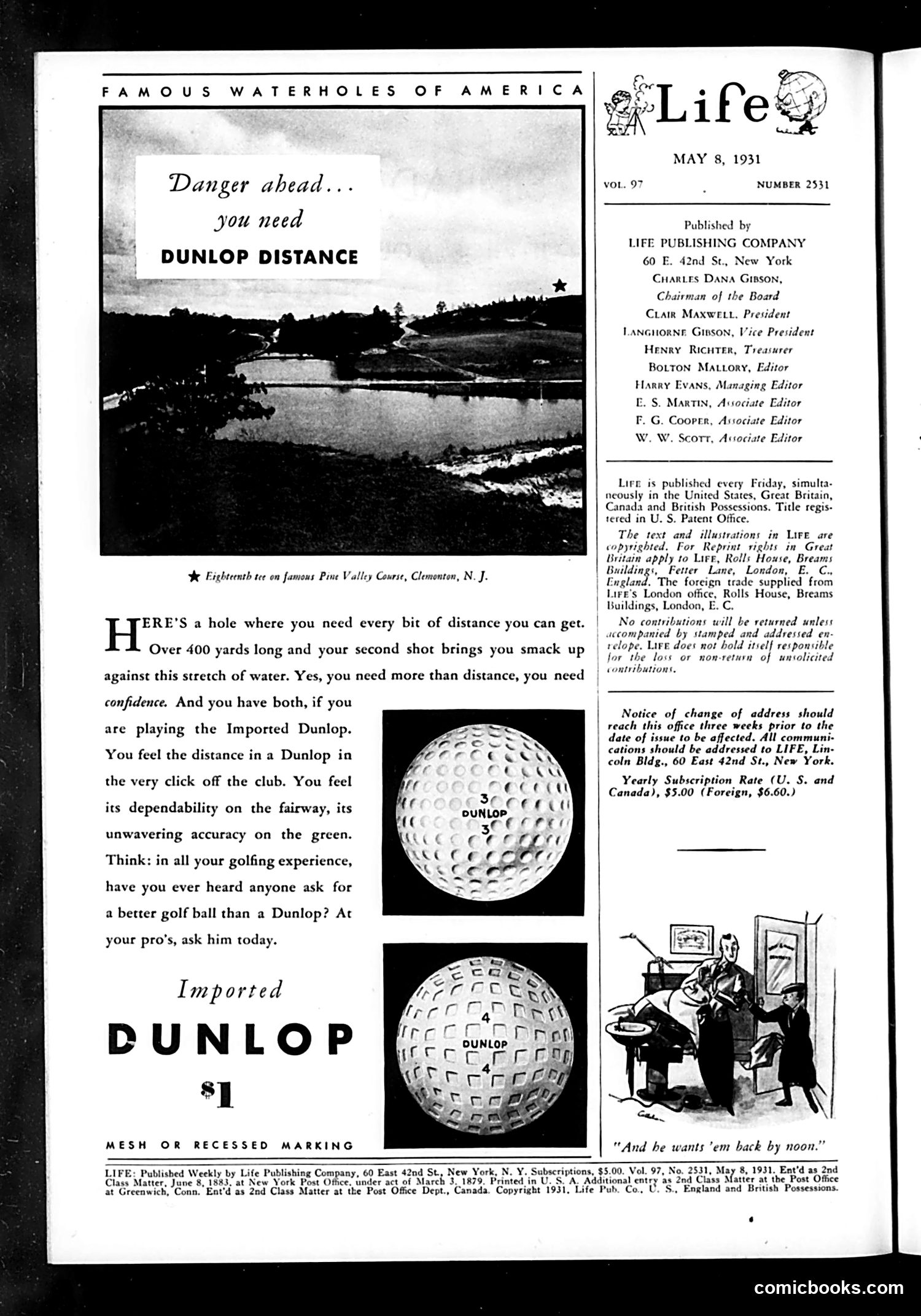
This page is primarily a **golf ball advertisement** for Dunlop, not political satire. The ad features: - A photograph of a famous waterhole at Pine Valley Country Club in Clementon, New Jersey, positioned as a golf hazard requiring distance and accuracy - Close-up images of two Dunlop golf ball designs (mesh and recessed marking patterns) - Marketing copy emphasizing that Dunlop balls provide the confidence, distance, and dependability golfers need The only cartoon element is a small illustration at bottom right showing a man at a desk with the caption "And he wants 'em back by noon" — likely a domestic humor joke about someone requesting their golf balls returned promptly. This is essentially a **vintage sports equipment advertisement** rather than political or social commentary.
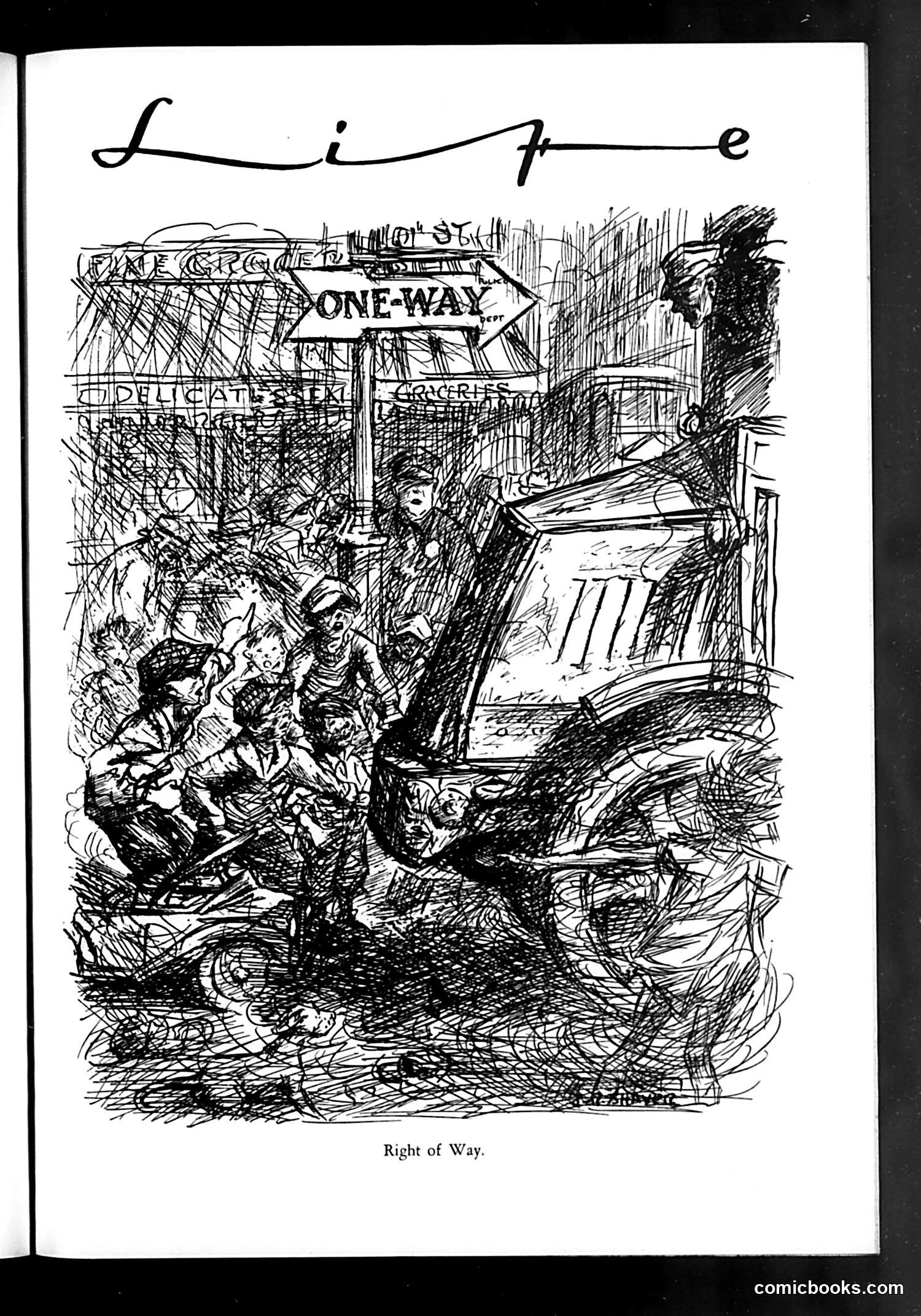
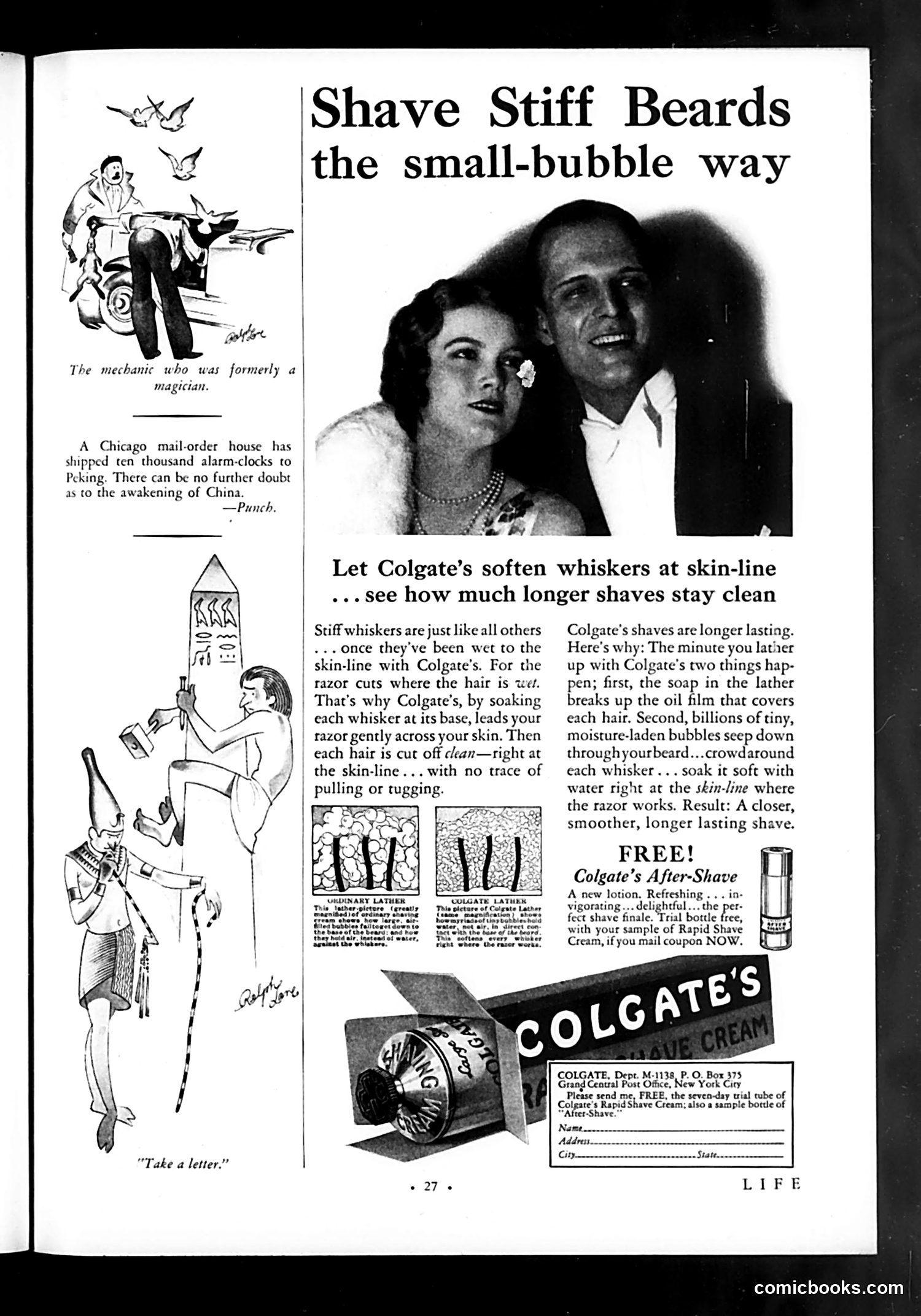
# "Right of Way" - Life Magazine Cartoon This cartoon satirizes urban street congestion and pedestrian safety. The sketch depicts a chaotic street scene with a "ONE-WAY" sign visible above storefronts (one reading "DELICATESSEN" and "GROCERY"). Multiple figures—adults and children—crowd a narrow urban sidewalk near parked automobiles, creating dangerous congestion. The cartoon's title, "Right of Way," appears ironic: despite traffic regulations like the one-way sign meant to organize street flow, the reality shown is complete disorder with pedestrians and vehicles competing for the same cramped space. This likely critiques early-twentieth-century urban planning's failure to manage the explosive growth of automobile traffic, leaving pedestrians vulnerable and streets dangerously overcrowded.
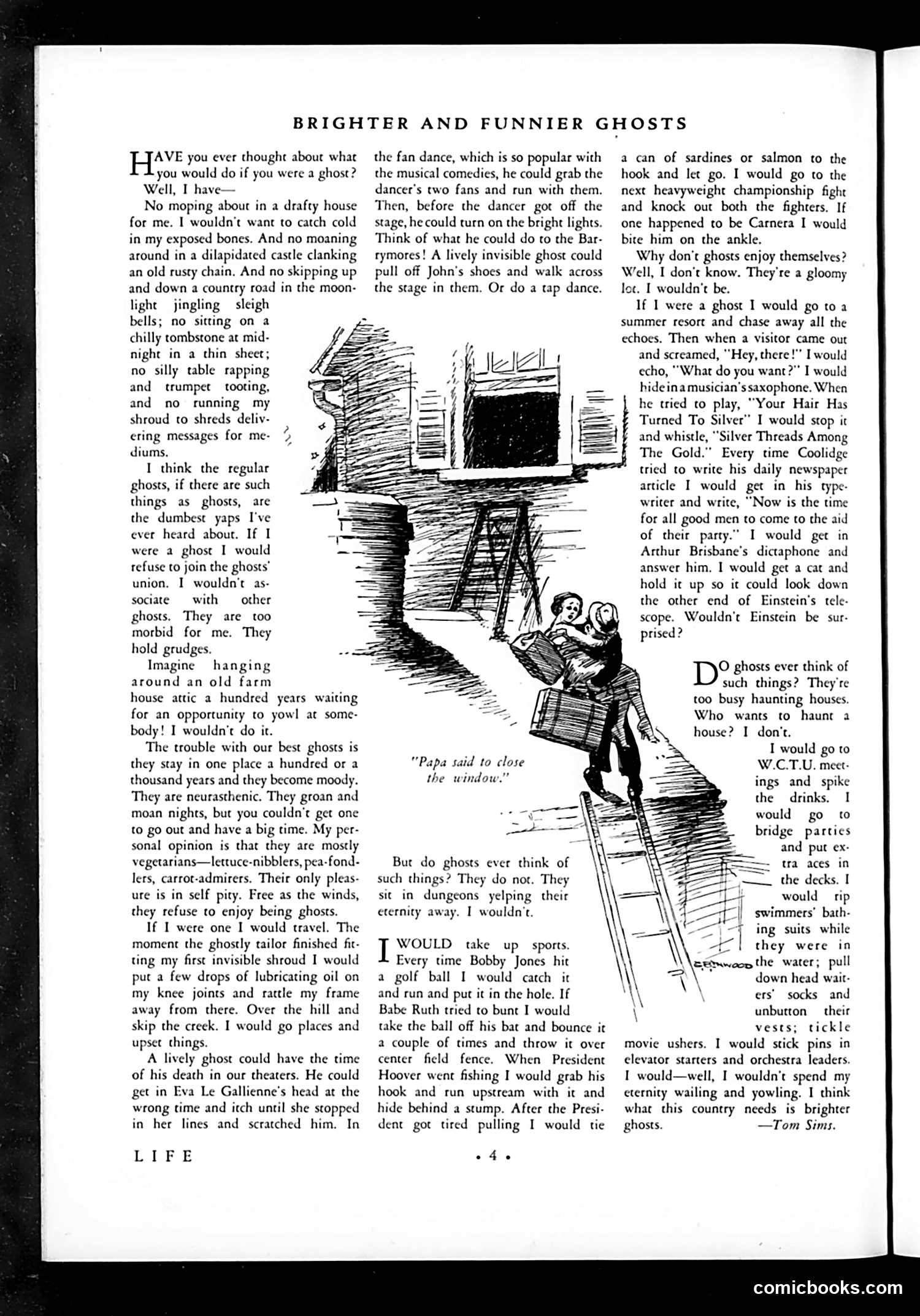
# "Brighter and Funnier Ghosts" This is a humorous essay by Tom Simi imagining what life would be like if he were a ghost. Rather than the traditional gloomy specter, Simi proposes cheerful, mischievous hauntings—interfering with sports (catching Babe Ruth's home runs, intercepting President Hoover's fishing), sabotaging musical performances, and playing pranks on public figures like Arthur Brisbane and Albert Einstein. The central joke contrasts the stereotypical melancholy ghost with an energetic, prankster spirit who'd actually enjoy haunting. Simi suggests American culture needs "brighter" ghosts—a lighthearted social commentary using supernatural humor. The accompanying sketch shows figures on a ladder, illustrating the playful tone. The piece is essentially comedic fantasy rather than political satire.
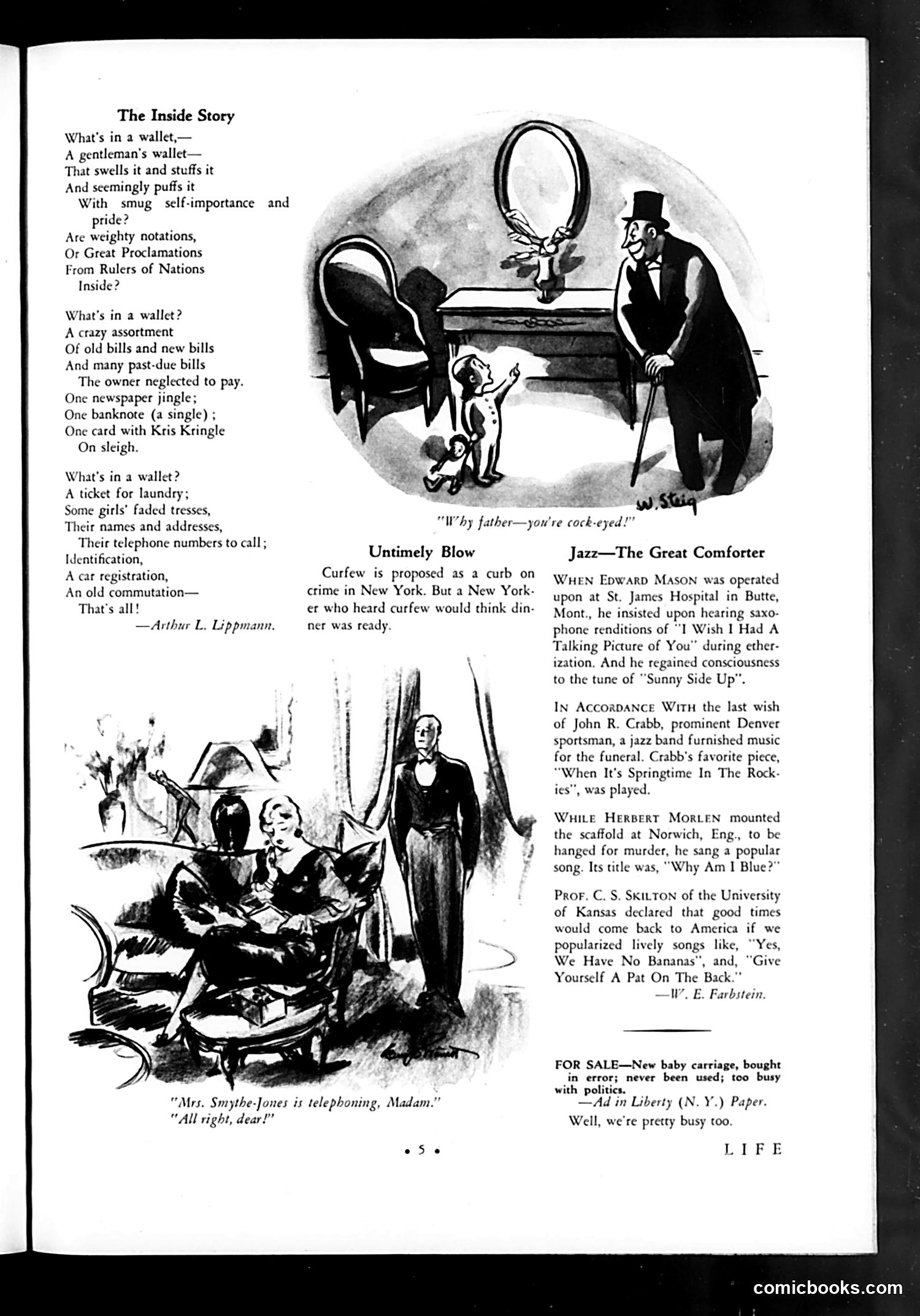
# Analysis of Life Magazine Page **"The Inside Story"** is a satirical poem by Arthur L. Lippmann mocking the contents of a gentleman's wallet—bills, receipts, business cards—suggesting pretentiousness masked by mundane financial disorder. **"Why Father—You're Cock-Eyed!"** depicts a well-dressed man examining himself in a mirror held by a small dog, likely satirizing vanity or self-deception among the wealthy. **"Untimely Blow"** jokes about New York proposing curfews to combat crime, implying the city wasn't ready for such measures. **"Jazz—The Great Comforter"** describes Edward Mason's anesthesia during surgery accompanied by jazz music and popular songs, satirizing the era's enthusiasm for jazz as a cultural cure-all during the Jazz Age. The page exemplifies 1920s humor targeting social pretension, modern convenience culture, and contemporary fads.
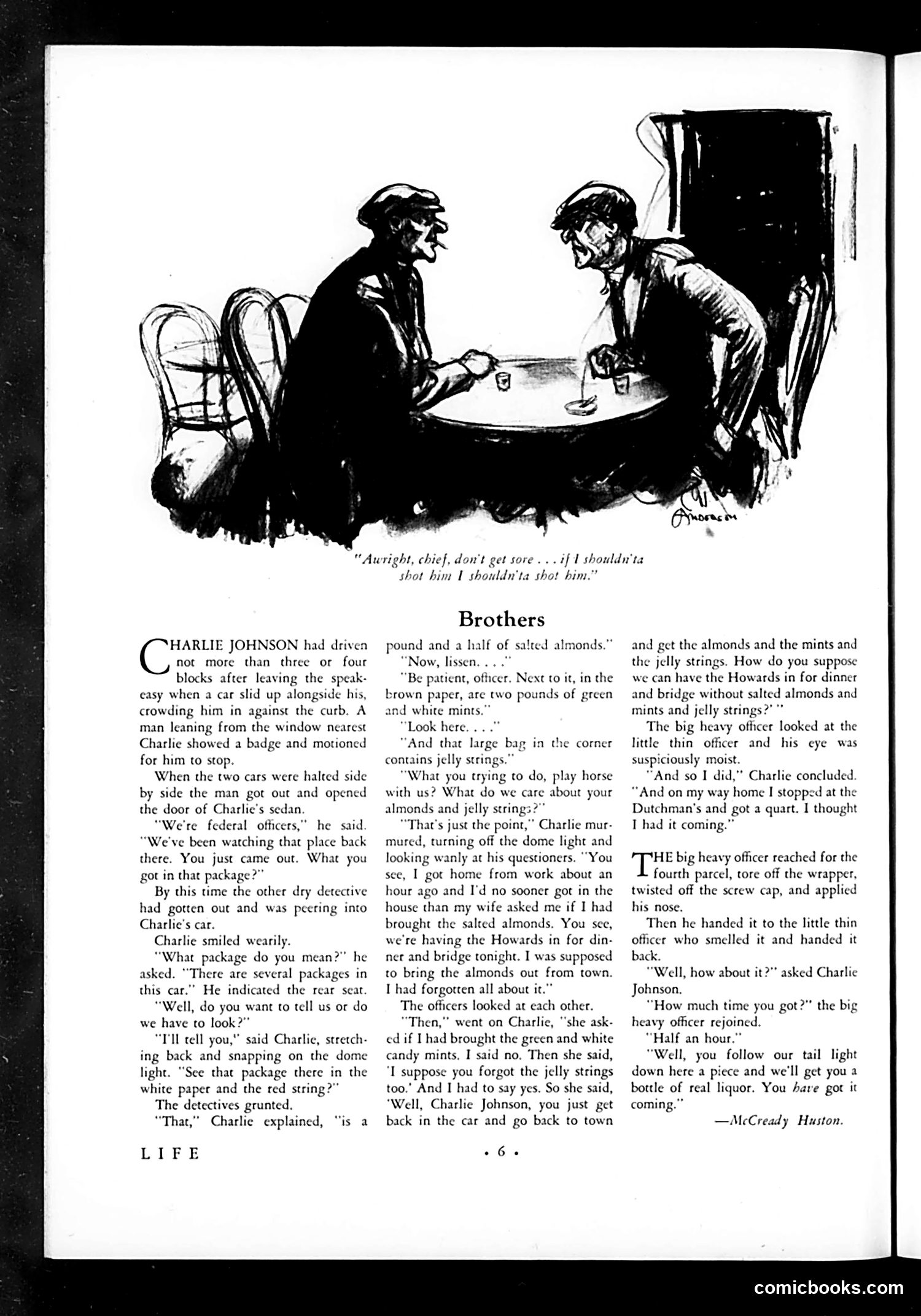
# "Brothers" by McCready Hauton This is a humorous short story illustrated with a cartoon showing two men at a small table with drinks. The narrative concerns Charlie Johnson, who's been stopped by detectives while driving a car containing a suspicious package. The "joke" involves salted almonds and jelly strings intended for a dinner party. Charlie's brother, a police officer, initially suspects Charlie of smuggling contraband. The humor derives from the misunderstanding—the officers' suspicion that an innocent grocery delivery might be illicit cargo. This reflects early 20th-century American attitudes toward police work and fraternal relationships, playing on common anxieties about law enforcement and mistaken identity, rendered as light domestic comedy rather than serious drama.
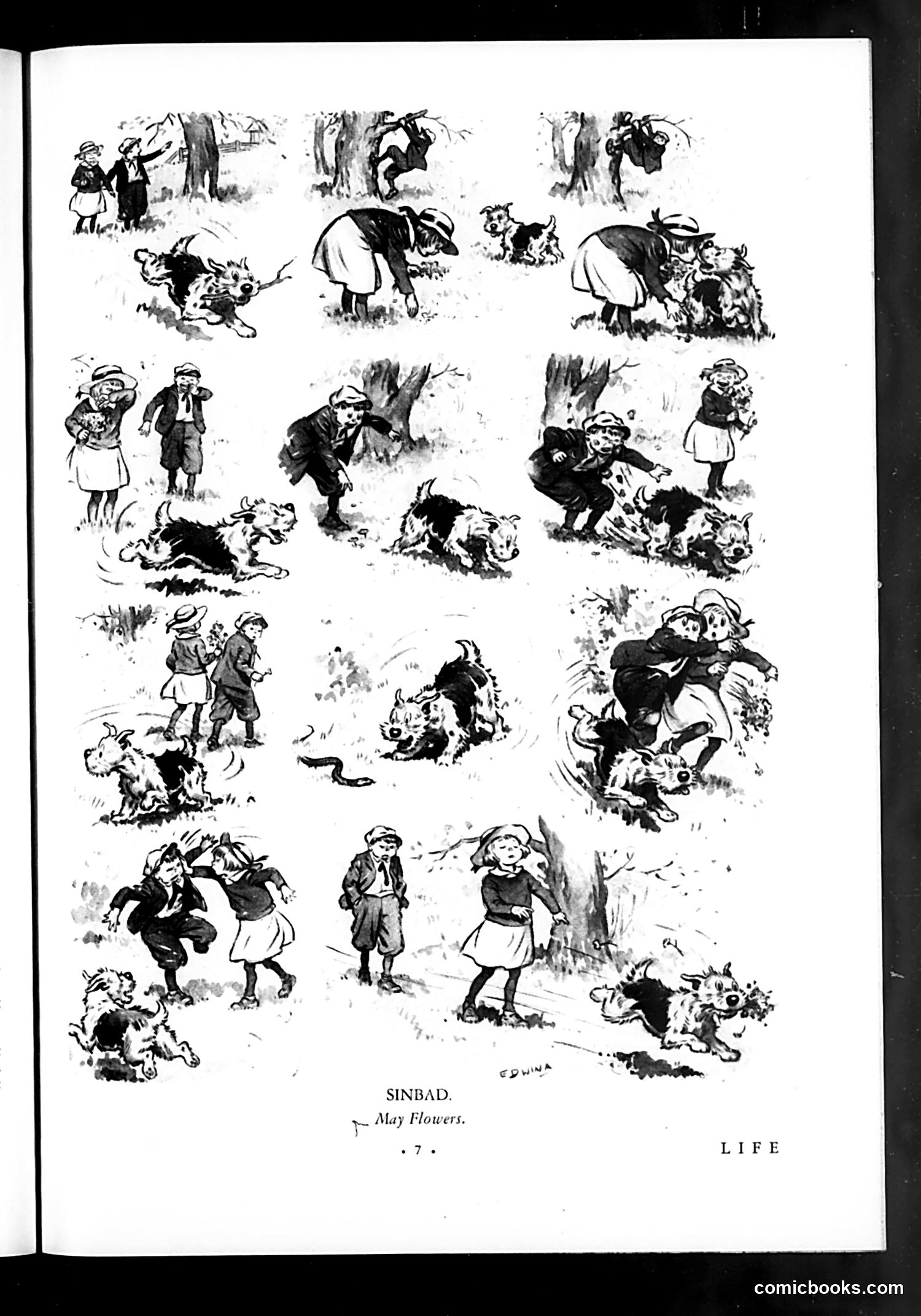
# "Sinbad: May Flowers" - Life Magazine Comic This is a whimsical comic strip by artist Edna (signature visible) showing a character named Sinbad engaged in various spring activities with children and animals, particularly dogs. The scenes depict typical May Day or early spring pastimes: children playing outdoors, adults and kids interacting with pets, running, embracing, and celebrating in natural settings with trees and grass. The title "May Flowers" references the traditional association between May and spring blossoms. Rather than political satire, this appears to be lighthearted domestic humor depicting innocent childhood play and outdoor recreation—the kind of gentle, family-oriented comic content Life magazine regularly published alongside its satirical pieces.
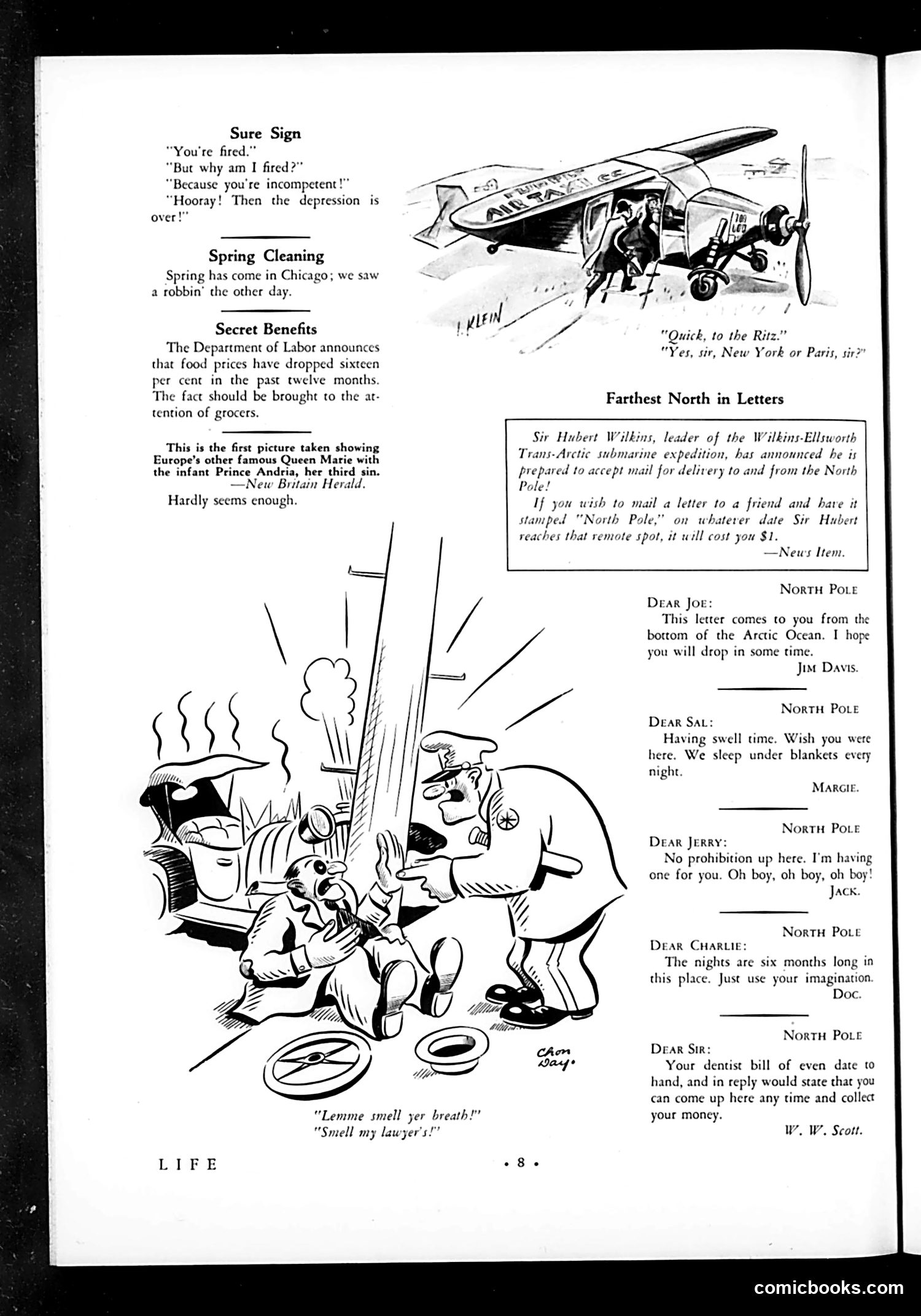
# Content Analysis This page from *Life* magazine contains several satirical pieces: **"Sure Sign"** is a brief joke about job incompetence leading to depression relief through firing. **"Spring Cleaning"** notes a robin spotted in Chicago, suggesting winter's end. **"Secret Benefits"** reports food prices dropping 16% in twelve months—a positive economic indicator worth publicizing. **The main cartoon** depicts a chaotic kitchen scene where someone's breath is being remarked upon ("Lemme smell yer breath!" / "Smell my lawyer's!"). This appears to be Prohibition-era satire, mocking the absurdity of alcohol laws and their enforcement through humor about lawyer involvement in what should be simple matters. **"Farthest North in Letters"** features humorous postcards supposedly sent from the North Pole Arctic expedition, a novelty service advertised at $1 per letter.
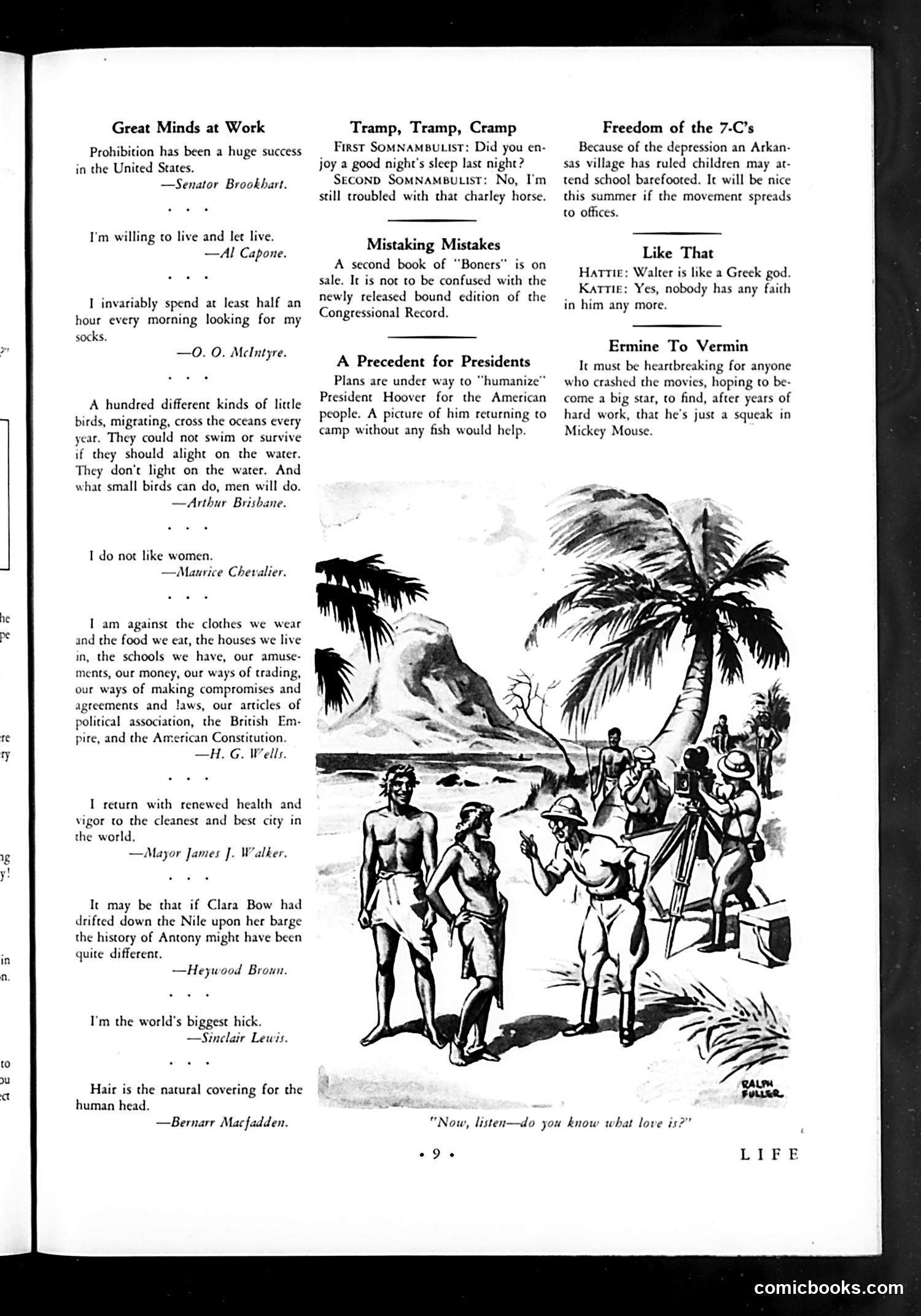
# Analysis of Life Magazine Page This page contains miscellaneous satirical quotes and a cartoon illustration. The main visual depicts what appears to be a colonial or tropical scene with Indigenous people and European colonizers, with the caption "Now, listen—do you know what love is?" The satire likely mocks European colonialism and paternalistic attitudes toward Indigenous populations—the condescending framing of a "civilized" person explaining love to Indigenous people reflects period racism and the false assumption of European cultural superiority. The quotes above address various social topics (prohibition, fashion, politics) typical of Life's satirical format. The specific attributions appear to be humorous false citations rather than actual quotes from the named figures. Without a publication date visible, precise historical context remains unclear, though the colonial imagery and tone suggest early-to-mid 20th century.
# "Life Looks About" - Page Analysis This page contains three opinion columns critiquing American public figures and social trends, rather than traditional political cartoons. **"Salvation by Business"** argues that having ambassadors with business backgrounds is sensible for a business-oriented country, defending this against isolationist criticism. **"As Ford Sees It"** quotes Henry Ford approvingly on business's role in society, suggesting business leaders understand practical solutions better than politicians. **"Flouters of Garb"** and **"Accused of Frivolity"** mock Mayor Walker (likely Jimmy Walker of New York) for neglecting his duties while pursuing private pleasures and nightlife, and criticize the National Republican Club for investigating his conduct rather than addressing substantive governance issues. The satire targets both political negligence and social hypocrisy regarding morality.