A complete issue · 36 pages · 1931
Life — March 6, 1931
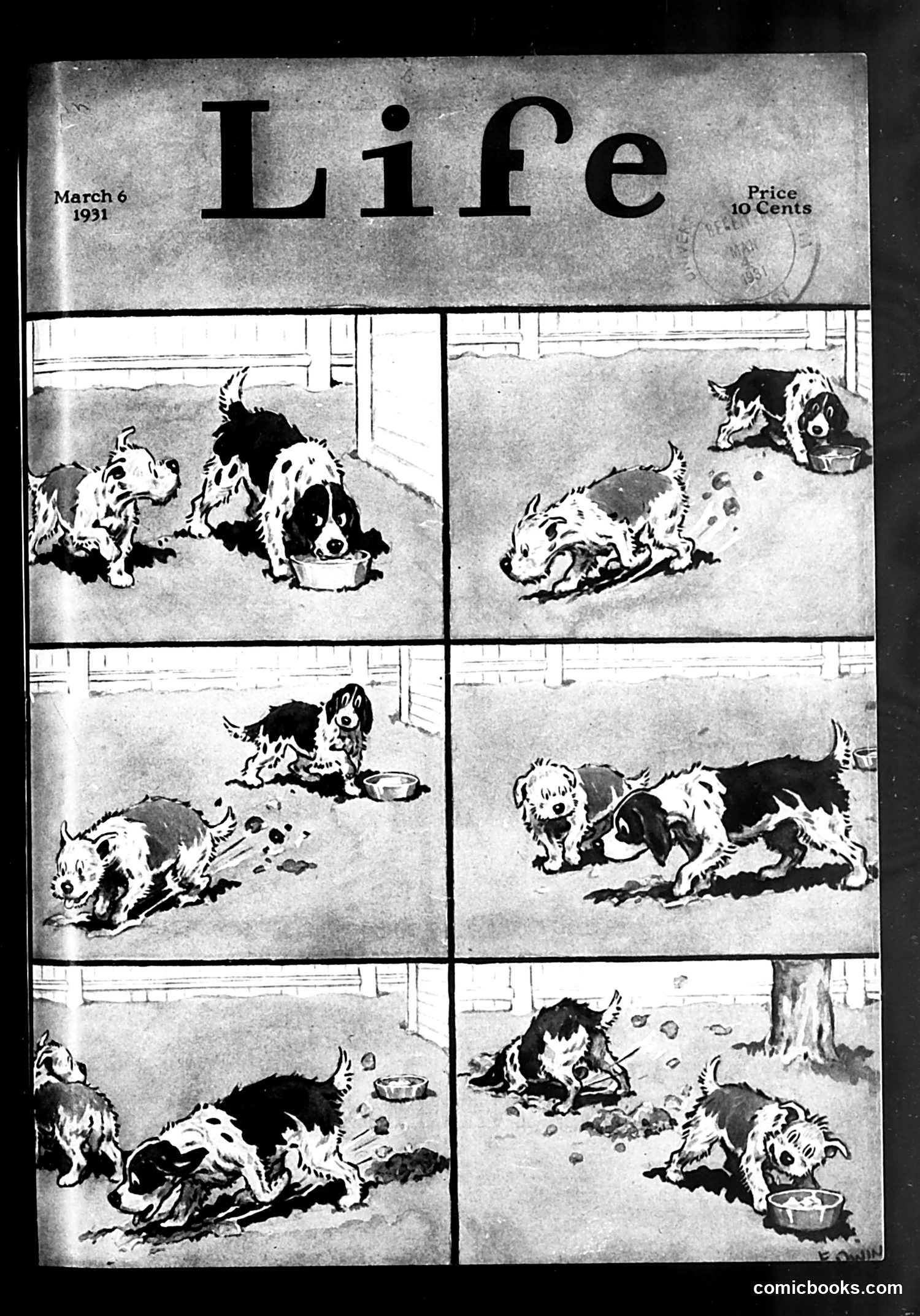
# Life Magazine Cover, March 6, 1931 This is a six-panel comic strip depicting several small dogs (appearing to be terriers or similar breeds) competing for food from bowls. The narrative progresses from the dogs gathering peacefully around shared bowls, to pushing and shoving, to one dog dominating the food while others are excluded or displaced. Given the 1931 publication date (during the Great Depression), this appears to be social satire about economic competition and resource scarcity. The dogs likely represent people or classes competing for limited food and resources during widespread poverty. The visual joke shows how cooperation breaks down when necessities become scarce—a commentary on Depression-era desperation and the struggle for survival among the working poor.
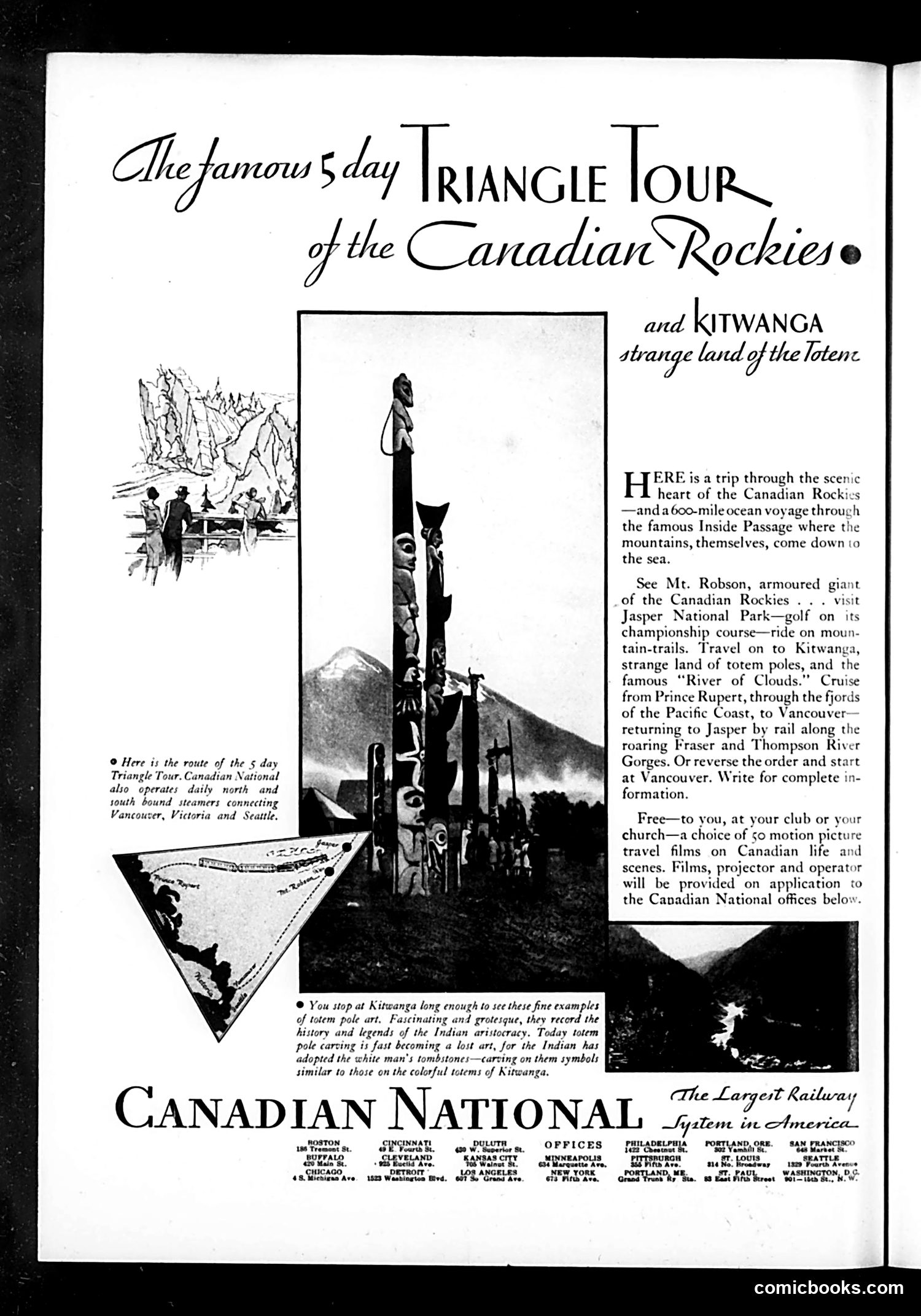
# Analysis This is primarily **advertising content**, not satire or political commentary. The page promotes the Canadian National Railway's "5-day Triangle Tour of the Canadian Rockies and Kitwanga." It features scenic photographs of mountain landscapes and Indigenous totem poles, along with descriptive text highlighting destinations like Jasper National Park and the "River of Clouds." The ad emphasizes leisure travel opportunities available to American club and church groups, offering free promotional films about Canadian scenery. The "strange land of the totem" reference reflects early 20th-century exoticization of Indigenous cultures for tourist appeal. This is straightforward travel marketing rather than satirical content—typical of Life magazine's advertising pages from this era.
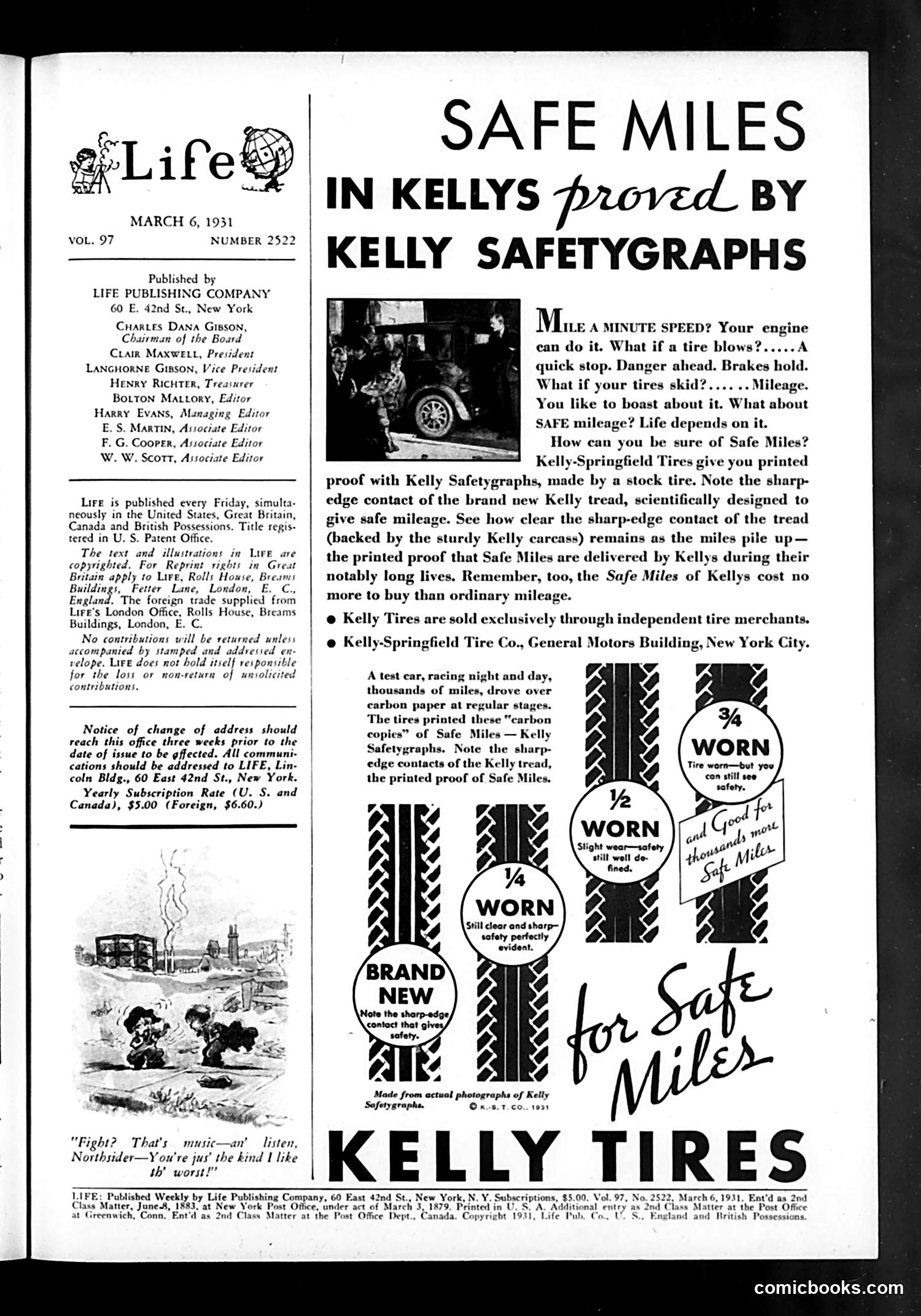
# Analysis This page is primarily **advertising, not satire or political commentary**. It's a 1931 Life magazine ad for Kelly Tires promoting their "Safe Miles" tire technology. The content uses a visual demonstration technique: photographs of tire treads at different wear stages (brand new, 1/4 worn, 1/2 worn, 3/4 worn) to prove Kelly tires maintain safety performance throughout their lifespan. The accompanying text uses fear-based marketing—asking readers "What if a tire blows?" and "What if your tires skid?"—to persuade them that Kelly tires deliver reliable "Safe Miles" at no premium cost. The small cartoon at bottom left appears unrelated to the tire ad and may be a magazine feature.
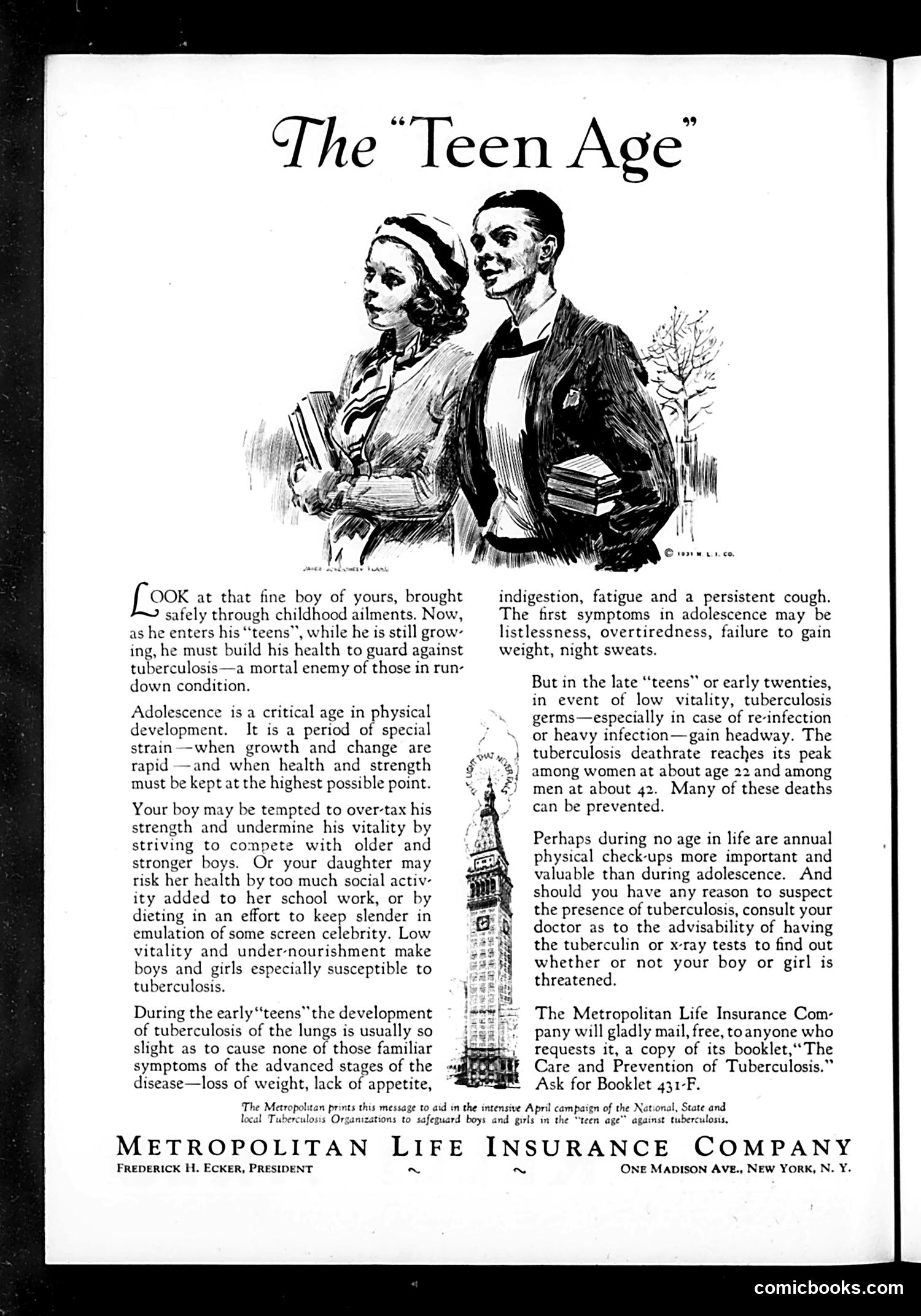
# Analysis This is **not a satirical cartoon page**, but rather a **public health advertisement** by Metropolitan Life Insurance Company addressing tuberculosis risk in teenagers. The illustration shows a well-dressed young man and woman, representing healthy adolescents. The accompanying text warns parents that the "teen age" is a critical health period when tuberculosis—then a major killer—poses particular danger due to rapid physical development and potential overexertion from social activities or school work. The message is straightforward health advocacy: teens need physical check-ups, proper nutrition, and rest to build resistance against tuberculosis. The company offers a free booklet on tuberculosis prevention. This reflects the early 20th-century context when TB was epidemic and insurance companies positioned themselves as civic health educators, not satirists.
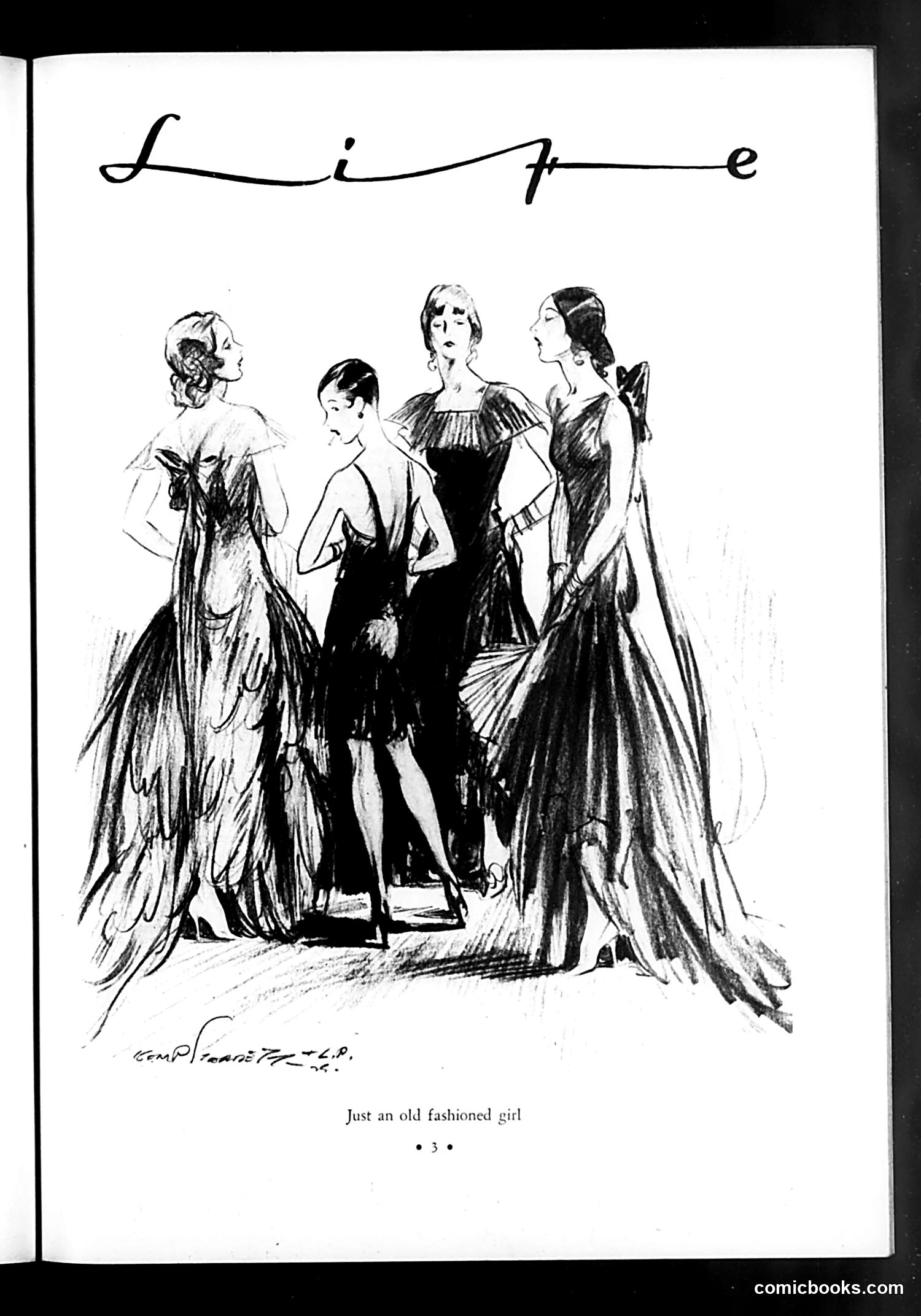
# Analysis of "Life" Magazine Page This page from *Life* magazine features an illustration titled "Just an old fashioned girl" showing four women in elegant evening wear from what appears to be the 1920s era. The sketch depicts women in fashionable flapper-style dresses with flowing fabrics and period hairstyles. The satire likely mocks the contrast between traditional femininity and the modern "flapper" movement of the 1920s. The title's ironic tone suggests the illustration critiques women who claim to embody old-fashioned values while actually displaying contemporary fashion and attitudes. The elegant, somewhat exaggerated poses and styling emphasize the disconnect between nostalgic self-presentation and actual modern behavior—a common satirical theme in *Life* magazine's commentary on changing social norms and women's roles during this era.
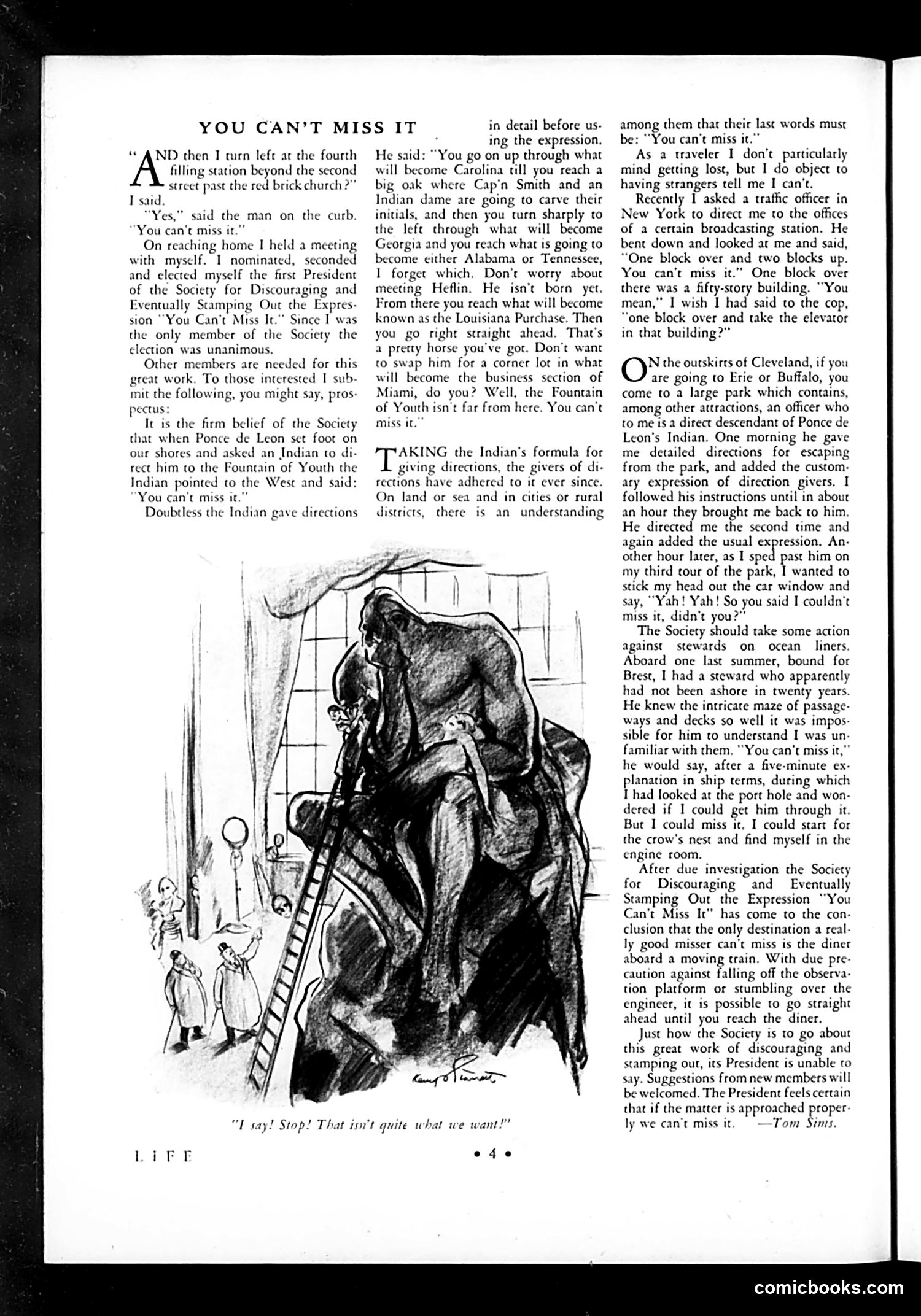
# Analysis of "You Can't Miss It" This satirical piece by Tom Simi mocks the phrase "You can't miss it" as useless directions. The article traces how this expression became standardized through an apocryphal story: a Native American allegedly gave directions to the Fountain of Youth, telling someone to "go right straight ahead" and turn at various landmarks that would eventually become Alabama, Tennessee, and the Louisiana Purchase—clearly absurd, retroactive geography. The accompanying cartoon depicts people attempting to follow poorly-marked directions, with a massive figure towering over them. The satire criticizes how this meaningless phrase persists despite being demonstrably unhelpful. The piece concludes by suggesting that "You can't miss it" is the only reliable destination on a moving train's diner car—a final joke about inescapable, unavoidable outcomes versus genuinely useful guidance.
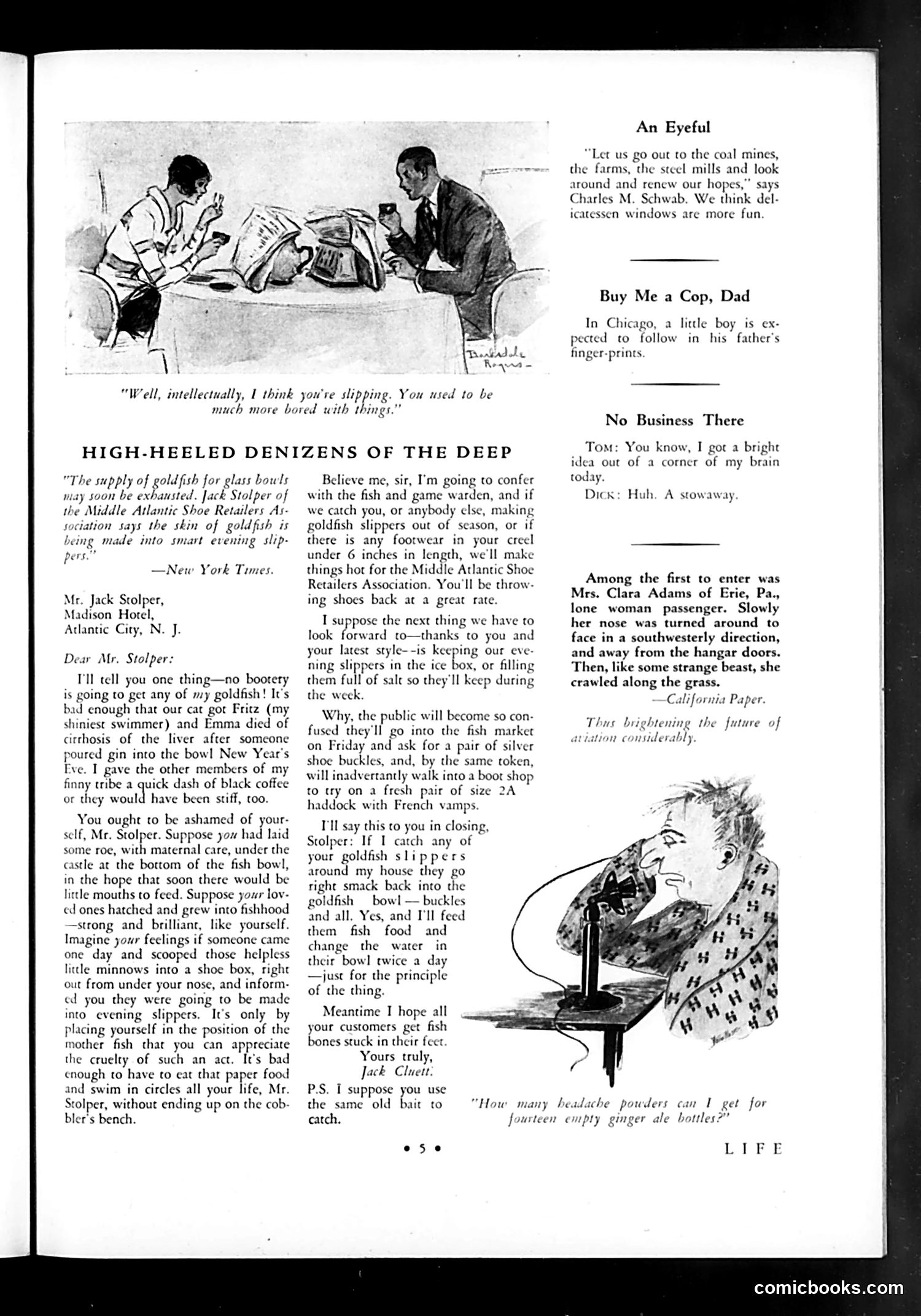
# Analysis of Life Magazine Page **Top Cartoon:** Shows a man and woman at a table. The woman says the man is "slipping" intellectually and "used to be much more bored with things." This appears to be satirizing how intellectual pursuits or growing interests can damage romantic relationships—the joke being that boredom was actually preferable to a partner. **Main Article:** "High-Heeled Denizens of the Deep" is a humorous letter-exchange mocking the Middle Atlantic Shoe Retailers Association's proposal to make goldfish slippers. The satirist Jack Closett ridiculously elaborates on this absurd product idea, suggesting goldfish would need salt water maintenance and warning of confusion with actual fish markets. **Bottom Section:** Contains brief humorous items ("Buy Me a Cop, Dad," "No Business There") and a cartoon about headache powders.
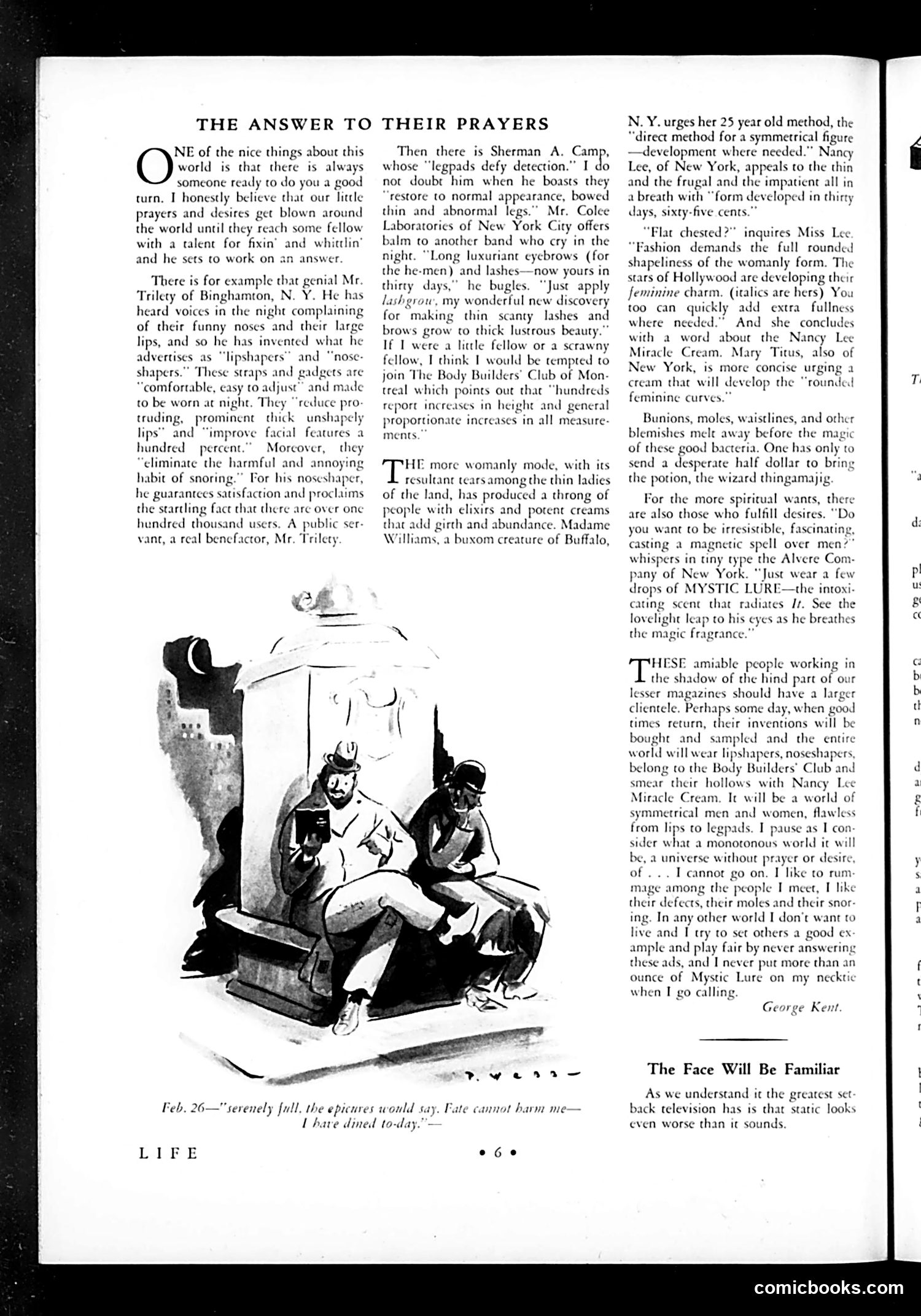
# Analysis of Life Magazine Page This page satirizes beauty product advertising and the absurd claims made by cosmetic companies in early 20th-century magazines. The left column mocks Mr. Trilby, a fictional beautician who sells dubious products like "Noseshapers" and "lipshapers" to desperate consumers. The cartoon illustrates gullible women consulting with what appears to be a quack doctor or charlatan, suggesting the comedic desperation behind such purchases. The right column continues the satire, mentioning specific fake products like "Nancy Lee Miracle Cream" and "Mystic Lure" perfume—absurdly promised to make women "irresistible" to men. The article's conclusion by George Kent critiques how these magazine ads prey on insecurities, noting he refuses to promote such fraudulent products despite their prevalence in publications like Life itself.
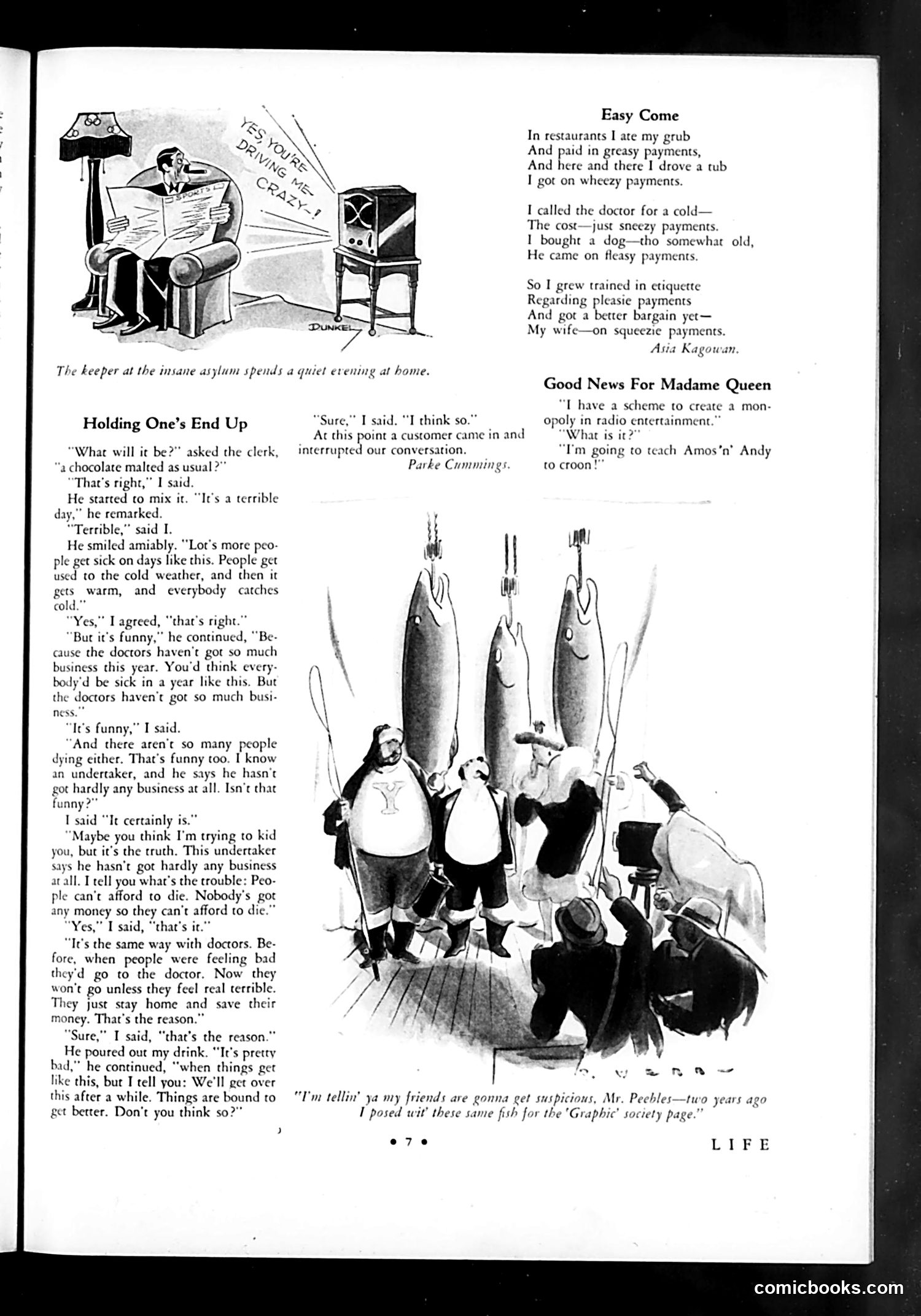
# Page Analysis: Life Magazine Humor This page contains three separate humorous pieces typical of Life's satirical content: 1. **"Holding One's End Up"**: A dialogue-based joke about a clerk ordering a chocolate malt during bad weather. The humor derives from economic anxiety—the customer and clerk discuss how illness and death reduce business, noting people can't afford to die because "nobody's got any money so they can't afford to die." This reflects Depression-era financial stress, where even mortality was economically problematic. 2. **"Easy Come"**: A poem about accumulating debt through installment payments—buying dogs and tubs on "wheezy payments," exemplifying consumer credit culture's burden. 3. **"Good News For Madame Queen"**: A brief exchange about radio monopoly schemes, likely satirizing corporate consolidation. The cartoons humorously depict financial hardship and consumer debt anxiety prevalent in this era.
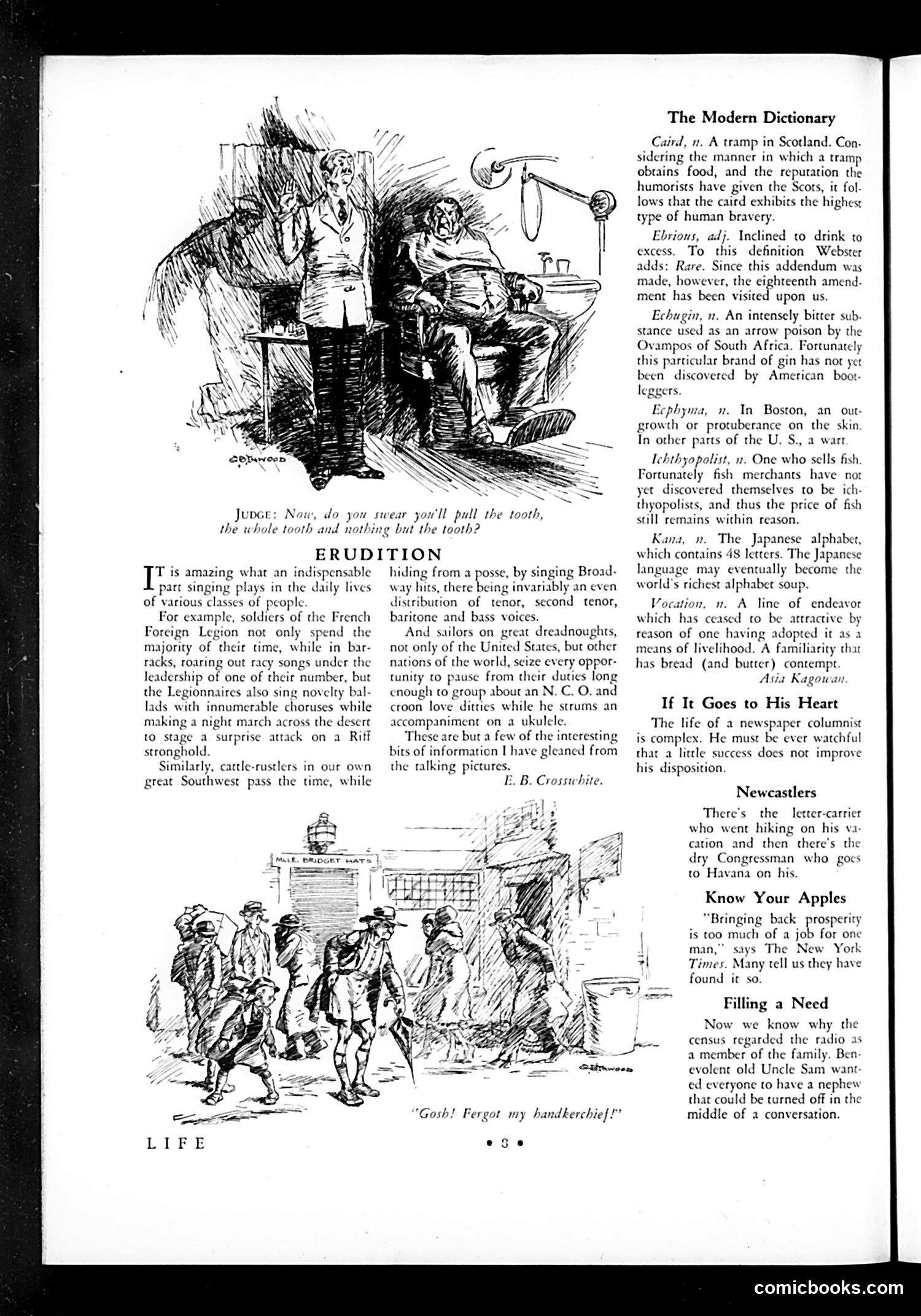
# Life Magazine Page Analysis This page contains two satirical cartoons and dictionary definitions mocking various human behaviors and professions. The **top cartoon** depicts a judge interrogating someone about tooth extraction, with the caption "Now, do you swear you'll pull the tooth, the whole tooth and nothing but the tooth?" It satirizes courtroom oath-taking by applying it absurdly to dentistry. The **bottom cartoon** shows men outside what appears to be a building, with one saying "Gosh! Forgot my handkerchief!" This appears to mock absent-minded forgetfulness or social awkwardness. **"The Modern Dictionary"** section humorously defines occupations and conditions—including "caird" (Scottish tramp), "ebrious" (habitual drunkard), "ichthyopolist" (fish seller), and others—offering satirical commentary on various social types and their characteristics. The overall page uses humor to critique human folly and social pretension.
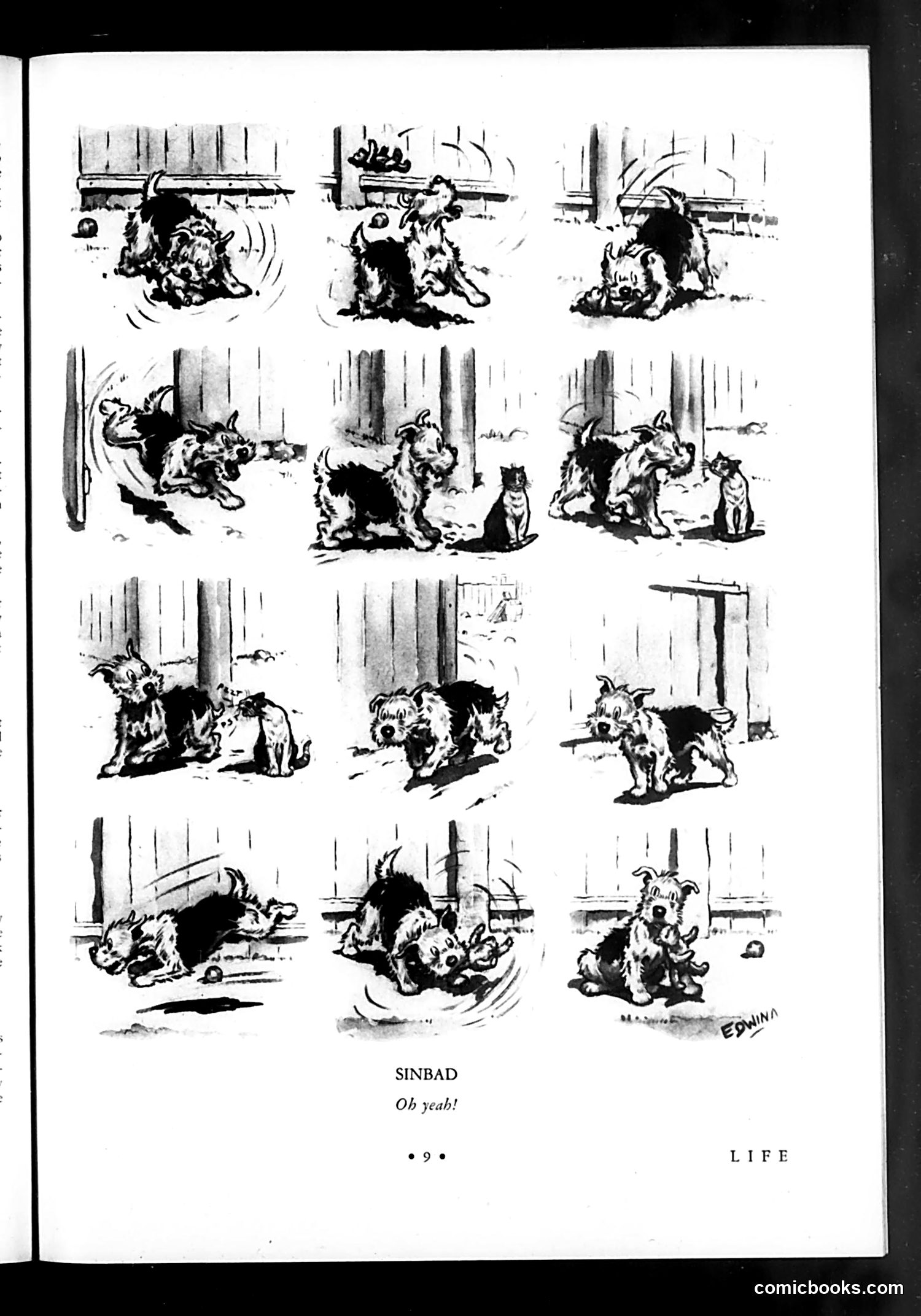
# Analysis of "Sinbad" Comic Strip This is a comic strip titled "Sinbad" with the caption "Oh yeah!" showing a shaggy dog character in various scenes around what appears to be a dock or waterfront setting with wooden posts and railings. The strip depicts slapstick humor involving the dog getting into physical mishaps—being knocked around, tangled up, and generally roughhoused by its environment and circumstance. The humor is purely visual and physical rather than satirical. Without additional context about what "Sinbad" references or represents (whether it's a character from Arabian tales, a contemporary public figure, or simply a named dog character), the specific political or social commentary, if any, remains unclear from the image alone. The humor appears to be general comedic entertainment rather than pointed satire.
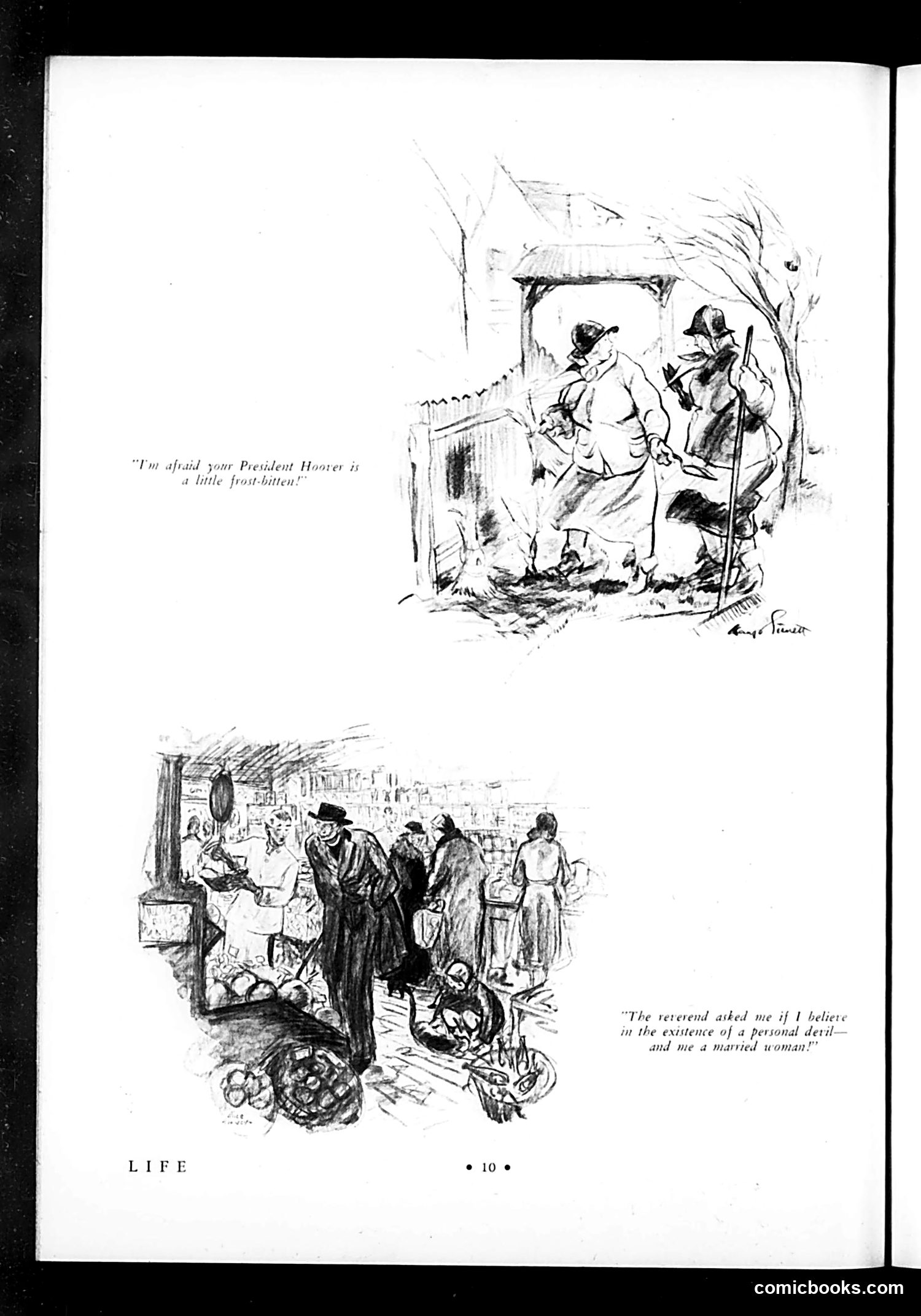
# Life Magazine Page 10 - Political Satire This page contains two cartoons satirizing President Hoover during what appears to be the Great Depression era. **Top cartoon**: Someone warns that "President Hoover is a little frost-bitten"—likely referring to Hoover's cold, detached public persona during the economic crisis, or his perceived indifference to citizens' suffering. **Bottom cartoon**: A reverend asks a married woman if she "believes in the existence of a personal devil," and she responds by mentioning her husband—dark humor suggesting domestic unhappiness. The crowded street scene implies widespread social struggle. Both cartoons employ cynical humor typical of Life's satirical approach, combining personal domestic troubles with broader social commentary about the era's hardships and leadership failures.