A complete issue · 60 pages · 1930
Life — December 5, 1930
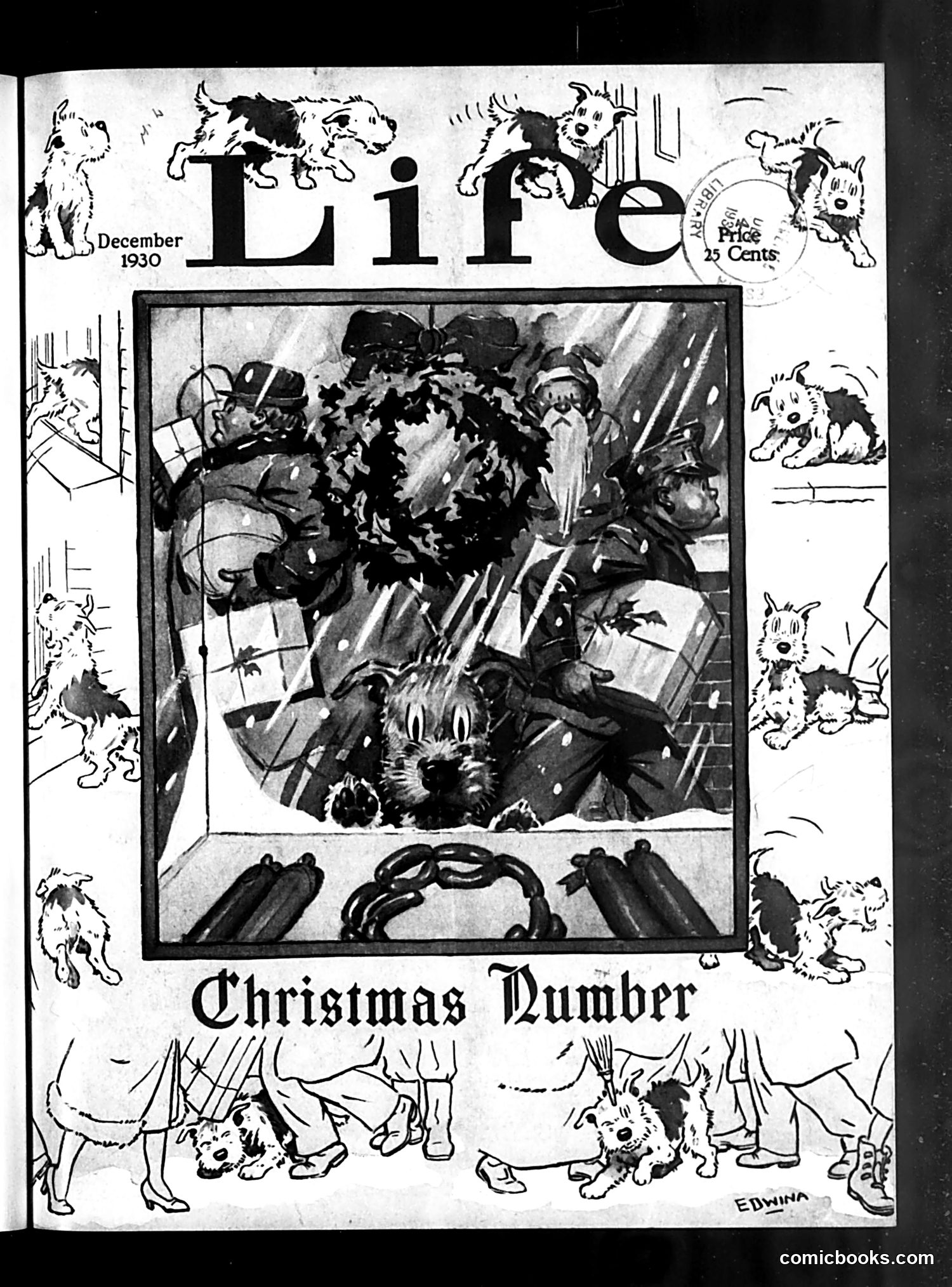
# Life Magazine Cover, December 1930 (Christmas Number) This is the cover of Life's Christmas issue from December 1930, during the Great Depression. The central illustration shows Santa Claus surrounded by small dogs in what appears to be a chimney or confined space, packed tightly with Christmas gifts and holiday items. The decorative border features multiple small terrier-type dogs in various playful poses, suggesting this issue likely contains humorous dog-related content or illustrations—a popular feature in Life magazine. The 25-cent price reflects early Depression-era costs. The overall composition emphasizes the crowded, chaotic nature of holiday preparations, possibly satirizing commercial excess or the cramped domestic chaos of Christmas, rendered through the whimsical imagery Life was known for.
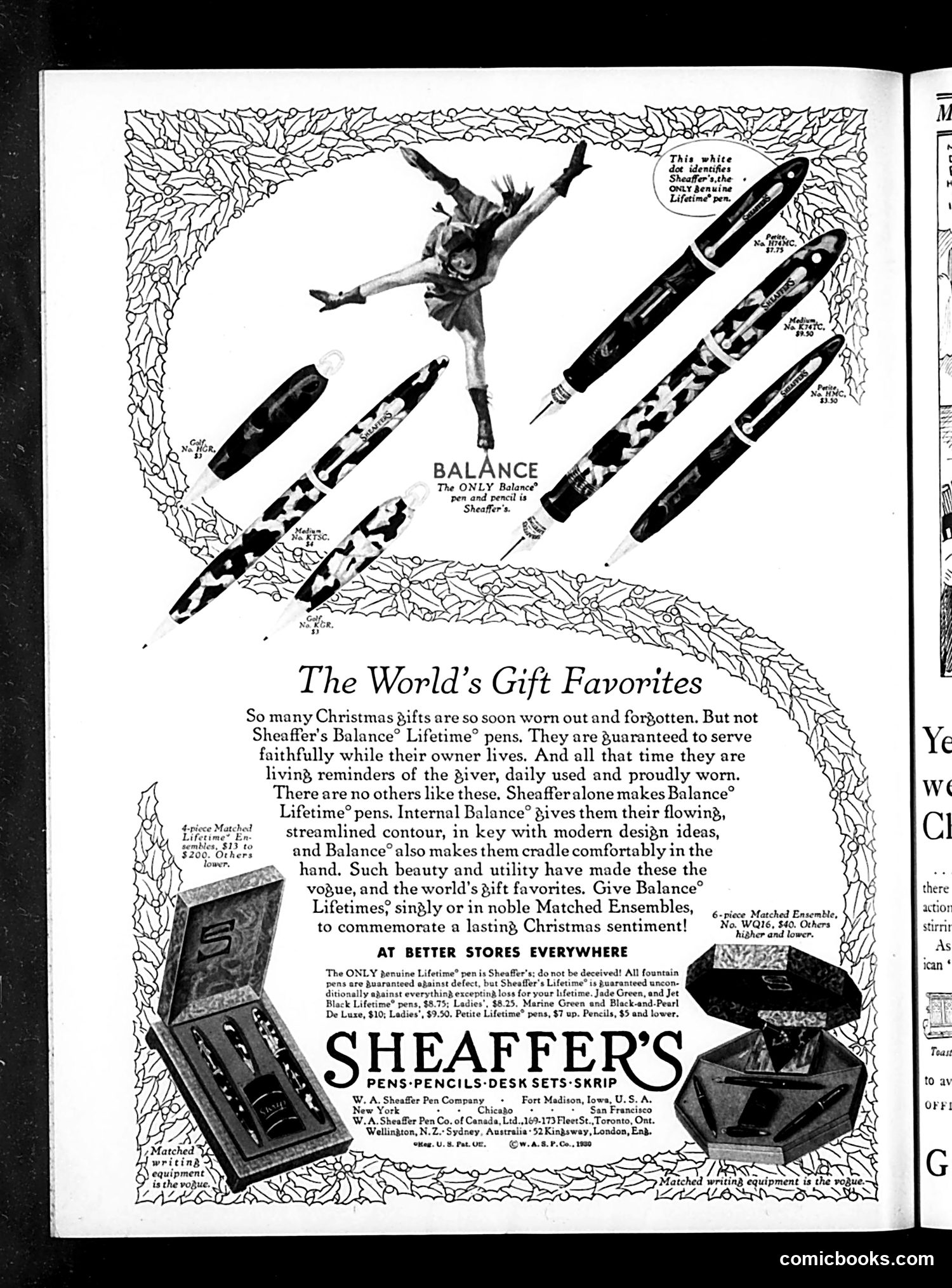
# Sheaffer's Pens Advertisement This is a **commercial advertisement**, not political satire. It promotes Sheaffer's Balance fountain pens and pencils as Christmas gifts. The ad features a stylized illustration of a female dancer in a dynamic pose, serving as a visual metaphor for the pens' qualities: "balance," grace, and streamlined elegance. The surrounding decorative border and the dancer's balanced posture reinforce the brand name "Balance." The text emphasizes durability ("Lifetime" guarantee) and design quality as reasons these pens make superior gifts compared to other Christmas presents that wear out quickly. Multiple pen styles are displayed, along with matching "Matched Ensembles" in presentation boxes. The ad targets mid-to-upper-class consumers seeking prestigious gift items, positioning Sheaffer pens as timeless luxury goods available "at better stores everywhere."
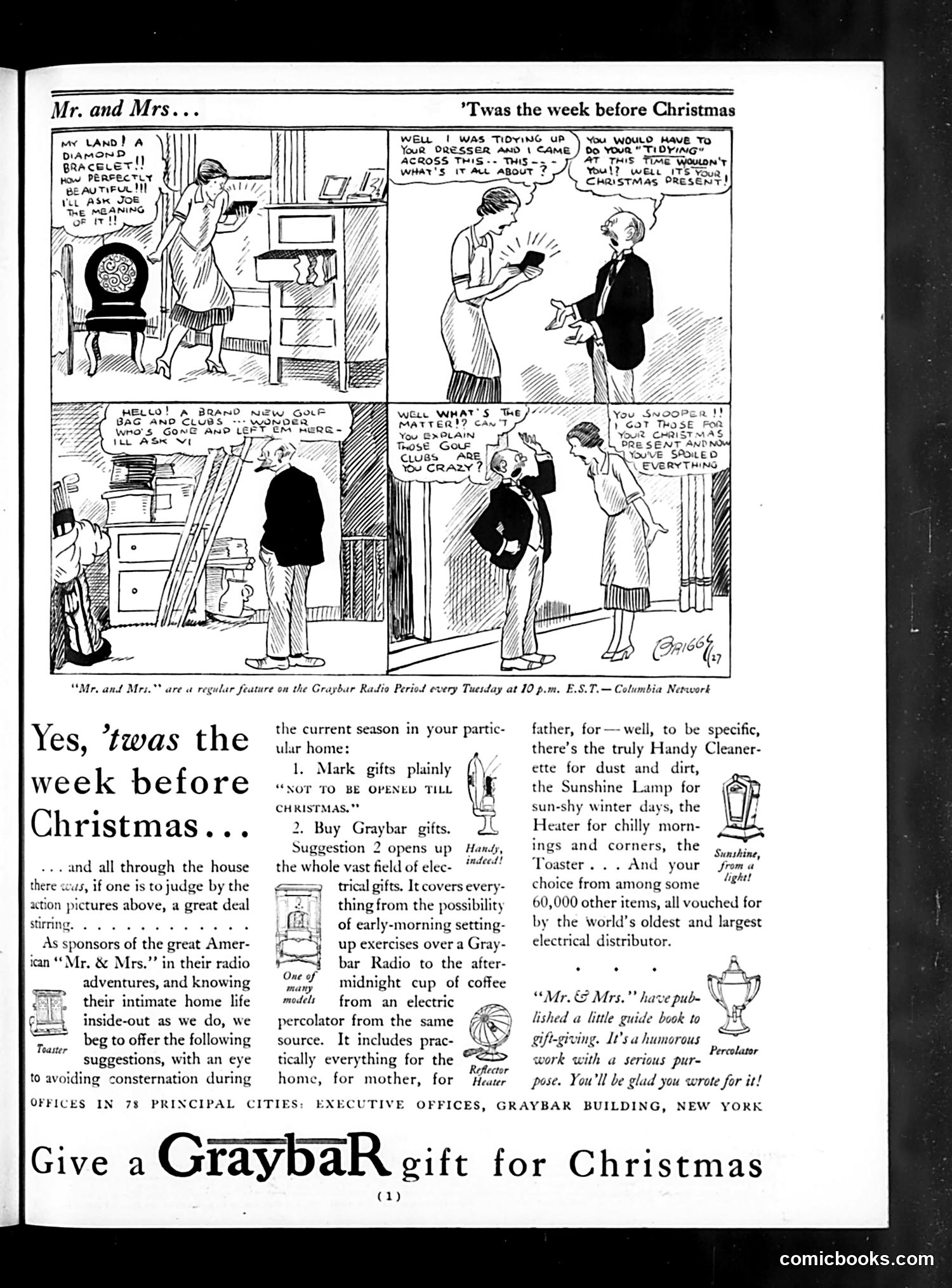
# "Mr. and Mrs." Comic Strip Analysis This page is primarily a **Graybar Electric Company advertisement** disguised as editorial content. The comic strip "Mr. and Mrs." depicts a domestic scene where a husband receives golf clubs as a Christmas gift, then discovers his wife has also given him expensive electrical appliances (toaster, heater, lamp, percolator). The satire targets **consumer culture and marital dynamics** of the era: the husband's enthusiasm for leisure goods (golf) contrasts with the wife's practical, domestic-focused gifts. The joke suggests wives redirect spending toward home electrification—positioning Graybar products as the "sensible" Christmas choice. The strip functions as soft-sell advertising, presenting electrical appliances as desirable, modern gifts appropriate for the "inside-out" domestic life of radio listeners.
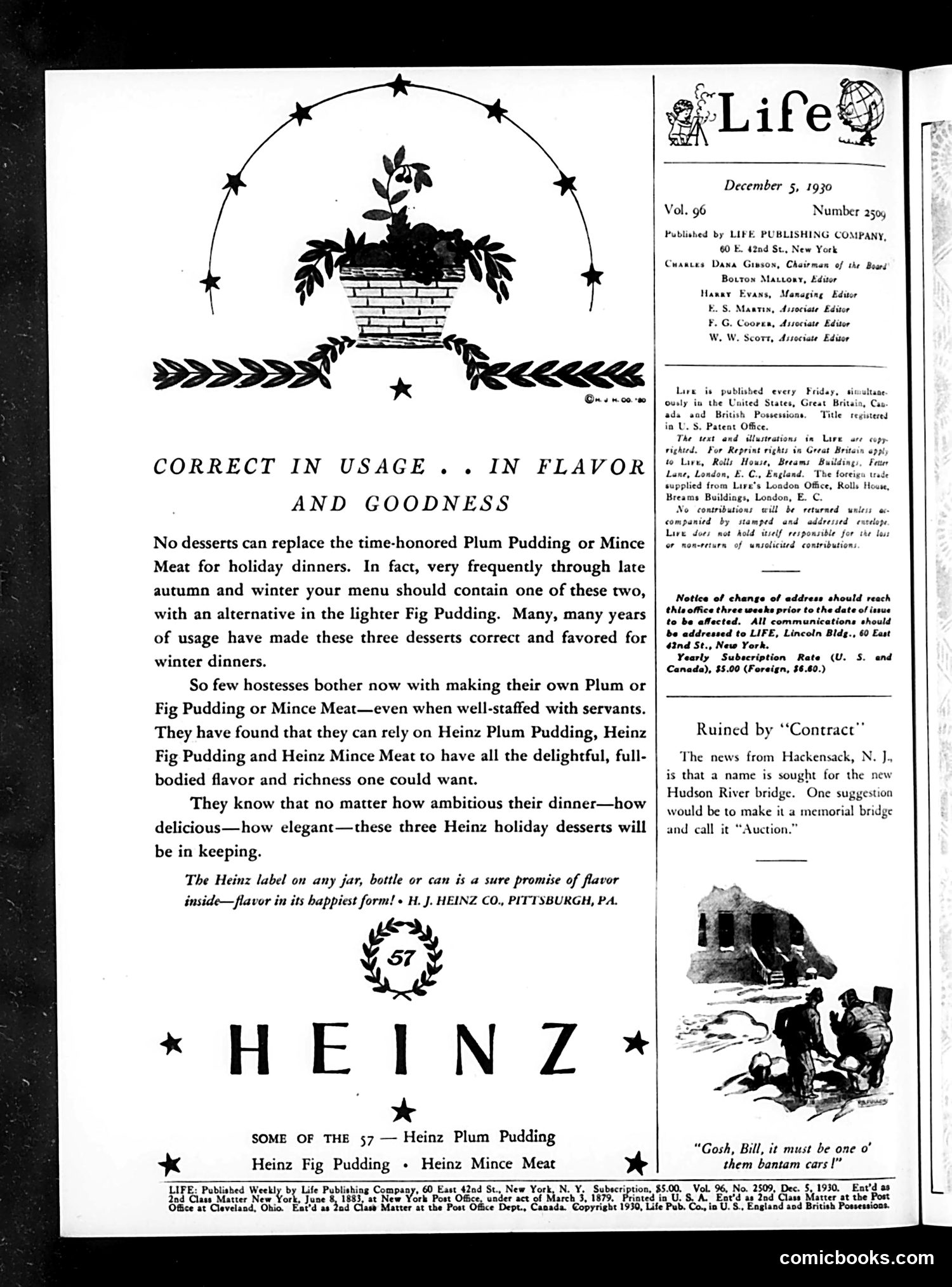
# Analysis This page is primarily a **Heinz food advertisement**, not political satire. The left side promotes Heinz Plum Pudding, Fig Pudding, and Mince Meat as convenient holiday dessert alternatives to homemade versions. The ad emphasizes that these prepared products offer the same "delightful, full-bodied flavor" as labor-intensive homemade desserts—appealing to busy hostesses who might lack servant help. The right side contains **Life magazine's masthead and notices**. Below that is a small cartoon captioned "Gosh, Bill, it must be one of them bantam cars!" showing figures examining what appears to be a tiny vehicle—likely satirizing the novelty of compact automobiles becoming available. This is a **commercial publication page** mixing advertising with light humor, not political commentary.
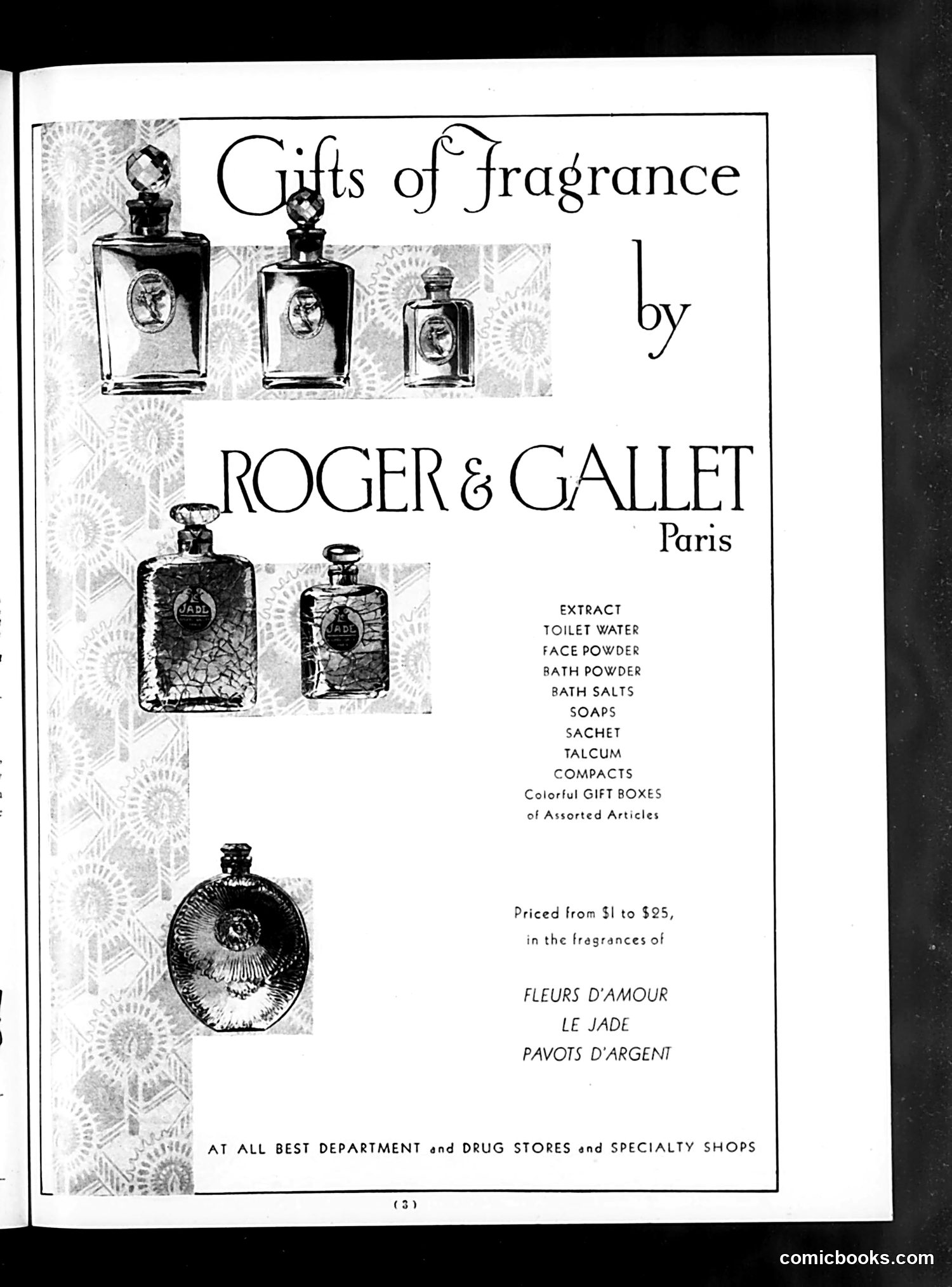
This is an advertisement, not a cartoon or satirical content. It promotes "Gifts of Fragrance by Roger & Gallet Paris," a French perfume and toiletry company. The page displays various perfume bottles and bath products in elegant line drawings against a decorative background pattern. The ad lists product types (extract, toilet water, face powder, bath powder, soaps, sachets, talcum, compacts) and three fragrance names: "Fleurs d'Amour," "Le Jade," and "Pavots d'Argent." Pricing ranges from $1 to $25. The advertisement targets upscale consumers, emphasizing the French origin and luxury positioning typical of early 20th-century fragrance marketing in American magazines. Distribution is noted as department stores, drug stores, and specialty shops.
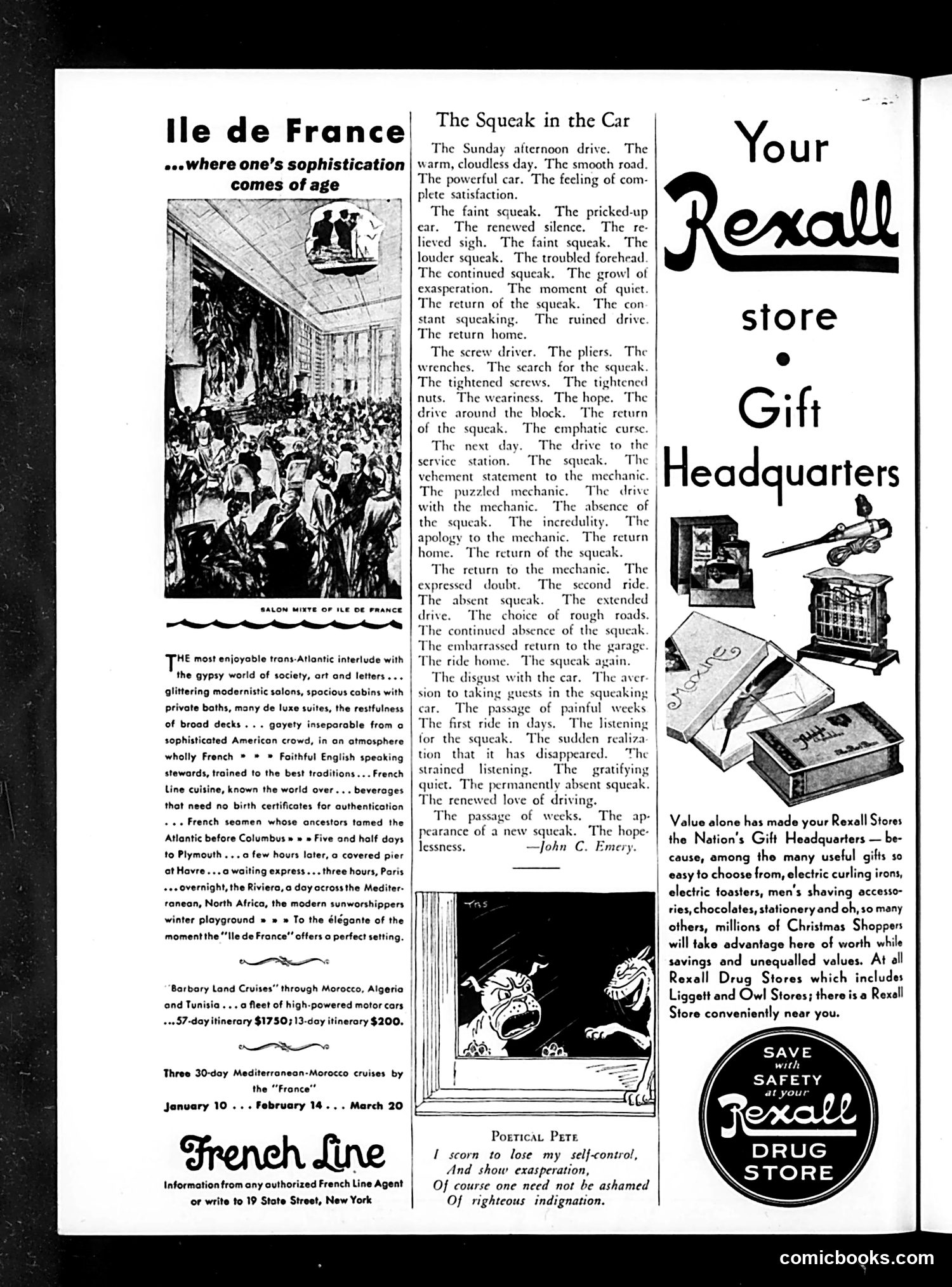
# Page Analysis: Life Magazine (Vintage) This page combines travel advertising with humorous fiction and commercial ads. **"The Squeak in the Car"** is a comedic short story by John C. Emery about a Sunday drive ruined by an annoying car squeak. The narrative humorously catalogs the owner's escalating frustration—visiting mechanics, attempting repairs, enduring awkward social situations—all centered on an unidentifiable noise. The repetition of "squeak" emphasizes the mundane domestic irritation that spirals into obsession. The cartoon below (labeled "Poetical Pete") appears to show cartoon characters in distress, though its specific reference is unclear from the visible image. The remaining content includes a **French Line cruise advertisement** and **Rexall Drug Store gift merchandise ads**—typical mid-century magazine filler promoting consumer goods and travel services.
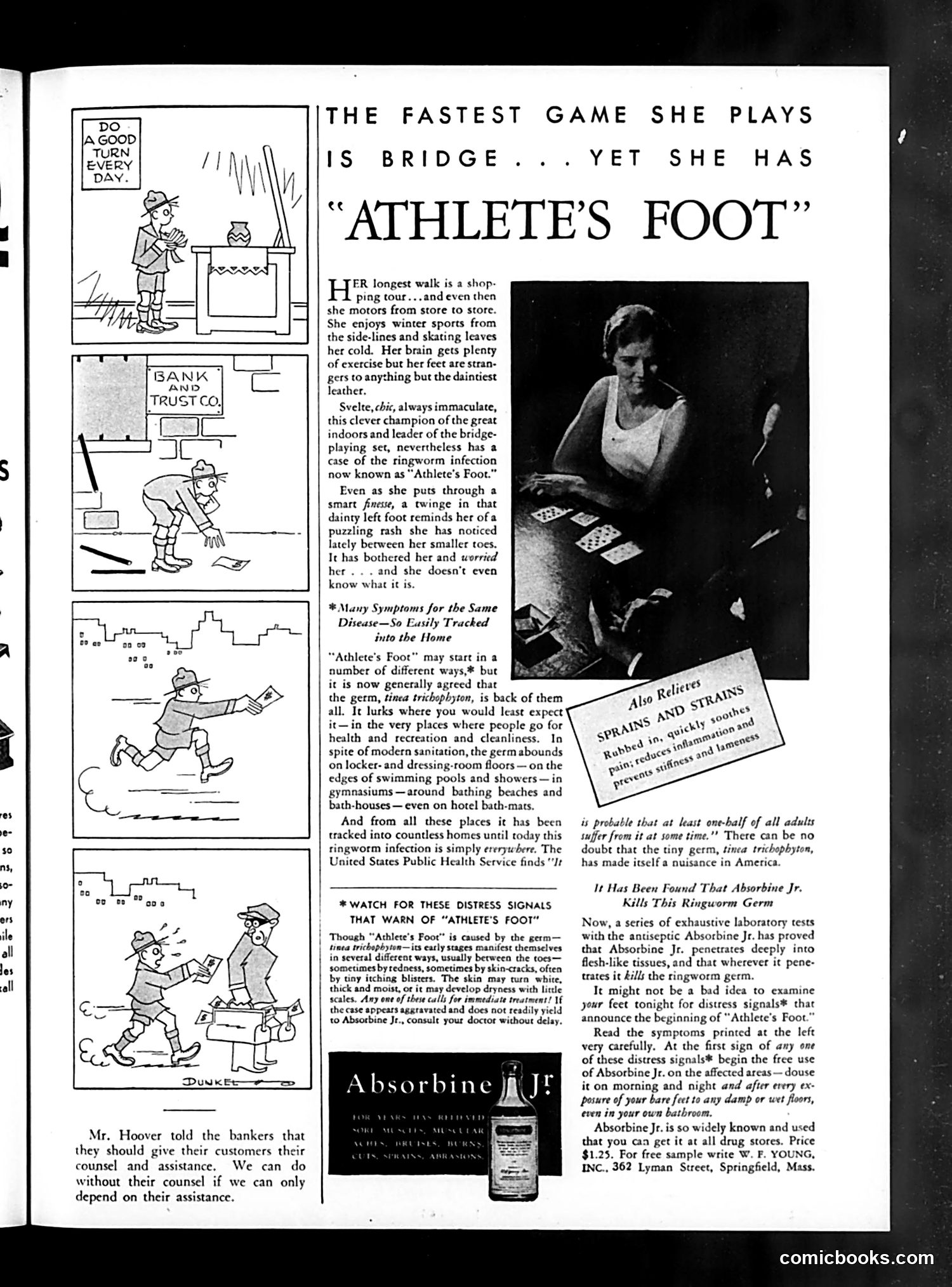
# Analysis of Life Magazine Page This page combines social satire with medical advertising. The left side shows four comic panels depicting a man conducting financial/banking business while experiencing foot discomfort—he's shown wincing, limping, and struggling through errands. The satire targets the contradiction between professional competence and physical ailment. The right side explains "Athlete's Foot," a fungal infection, noting it spreads in communal spaces (pools, gyms, hotels, bathhouses). The irony is that a sedentary banker—not an actual athlete—suffers this condition, undermining assumptions about who contracts such infections. Below runs an advertisement for Absorbine Jr., a patent medicine treatment, capitalizing on the medical information provided above it. This typical early-20th-century magazine layout merged humor with commerce.
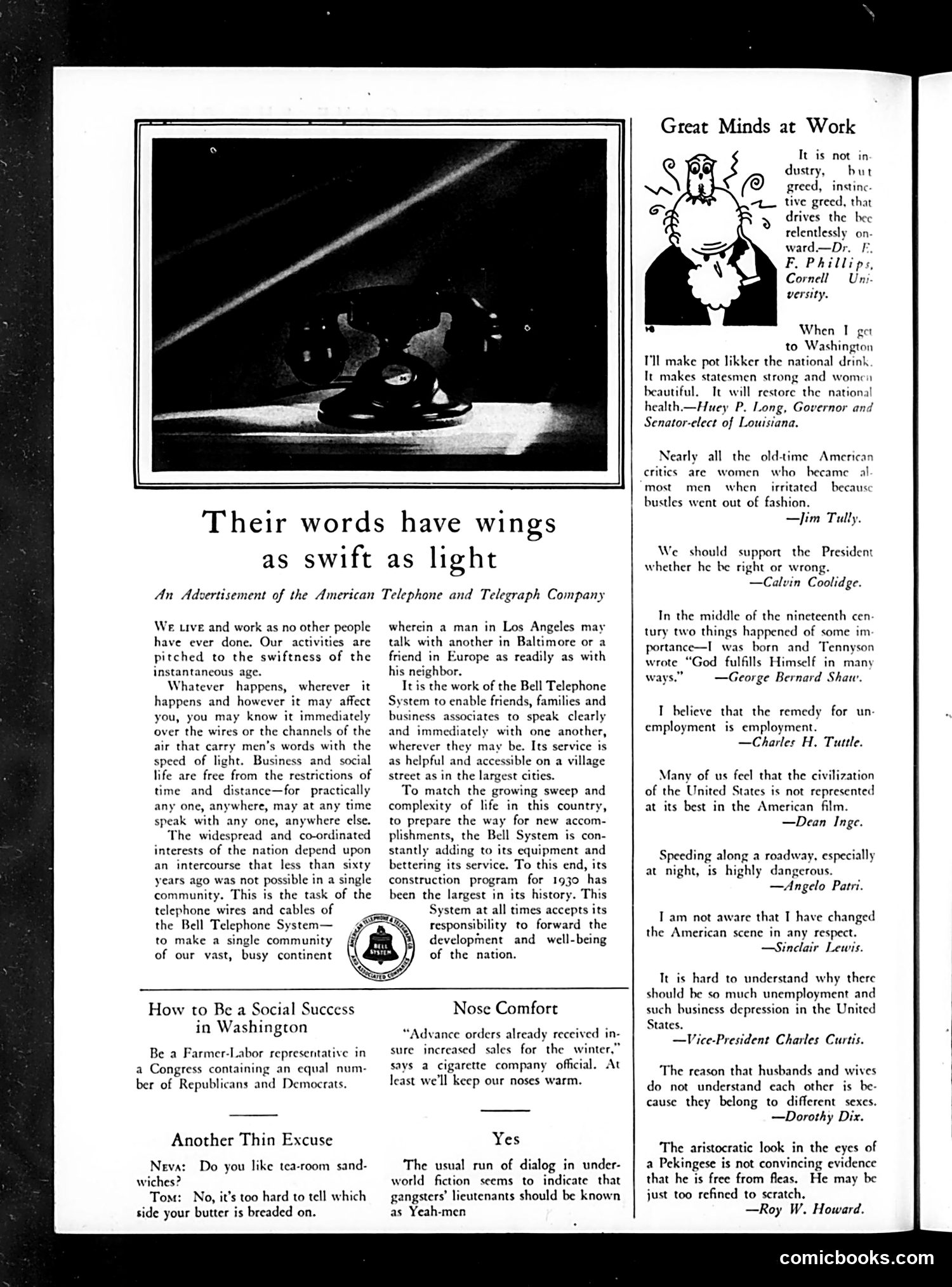
# Analysis This page is primarily an **advertisement for American Telephone and Telegraph Company** (Bell Telephone System), occupying the top half with the headline "Their words have wings as swift as light." The accompanying image shows what appears to be people in an interior space, illustrating the ad's message about instantaneous long-distance communication connecting people across the continent. The right column contains unrelated **quotations from public figures** (F. Phillips from Cornell, Huey P. Long, Jim Tully, Calvin Coolidge, and others) offering brief opinions on various topics—unemployment, fashion, patriotism, and social matters. Below are brief **humorous exchanges** ("How to Be a Social Success in Washington," "Nose Comfort," "Another Thin Excuse," "Yes"), presenting satirical quips rather than substantive jokes. The page is essentially a **hybrid of corporate advertising and opinion/humor content**, typical of Life magazine's format during this era.
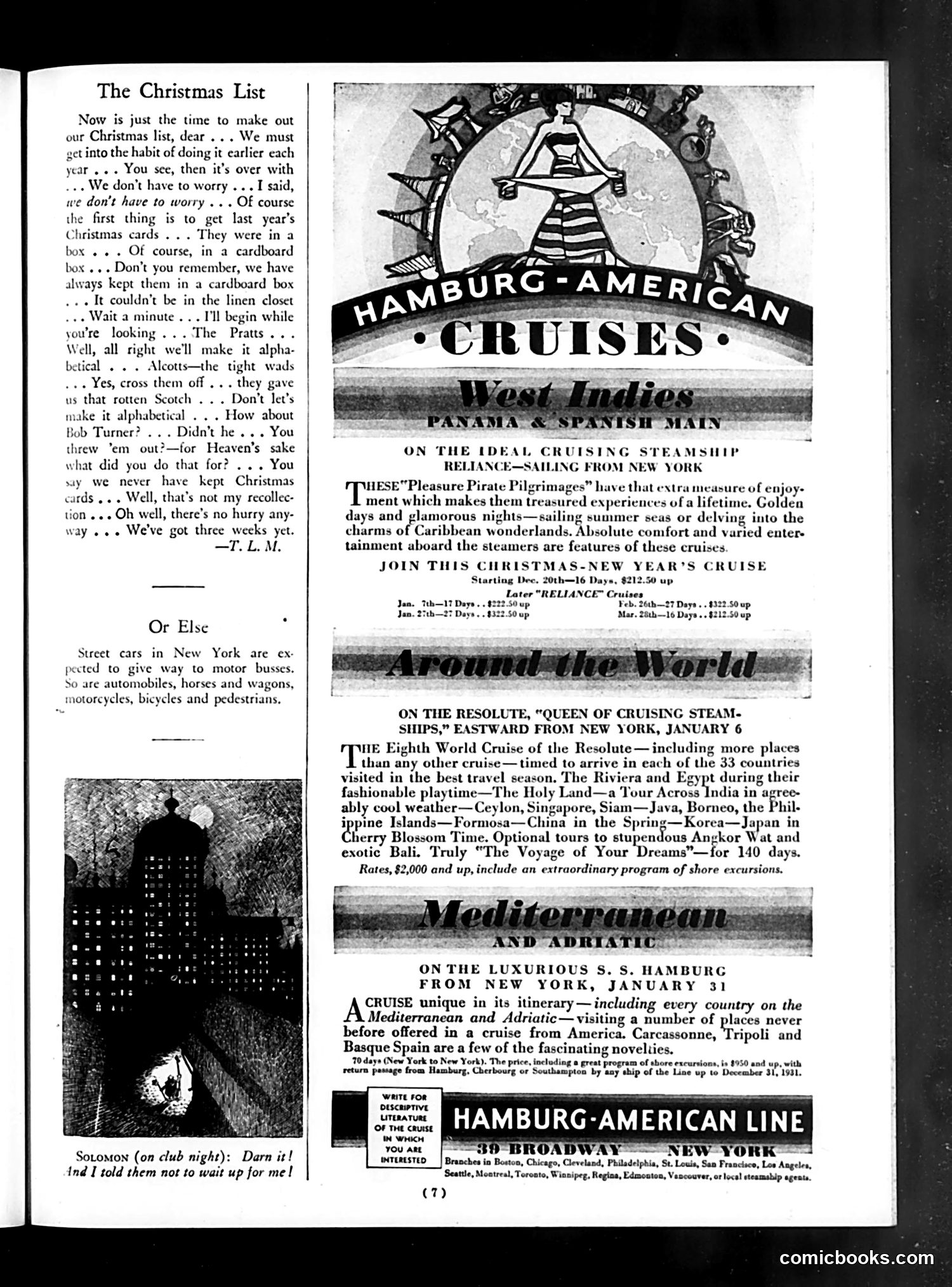
# Analysis This page is primarily **advertising and editorial content** rather than political satire. The left column contains a humorous short piece titled "The Christmas List" about procrastinating on holiday card-sending, written by T. L. M. Below it is a brief satirical note titled "Or Else" mocking New York street traffic chaos. The bulk of the page features **Hamburg-American Line cruise ship advertisements** promoting luxury vacations to the West Indies, around the world, and the Mediterranean. A cartoon illustration shows a stylized woman in a striped dress advertising the cruises. The single editorial cartoon depicts **Solomon on a ship** saying "Darn it! And I told them not to wait up for me!" — a mild joke about someone extending their cruise vacation unexpectedly. The content reflects 1920s leisure culture and transatlantic travel marketing.
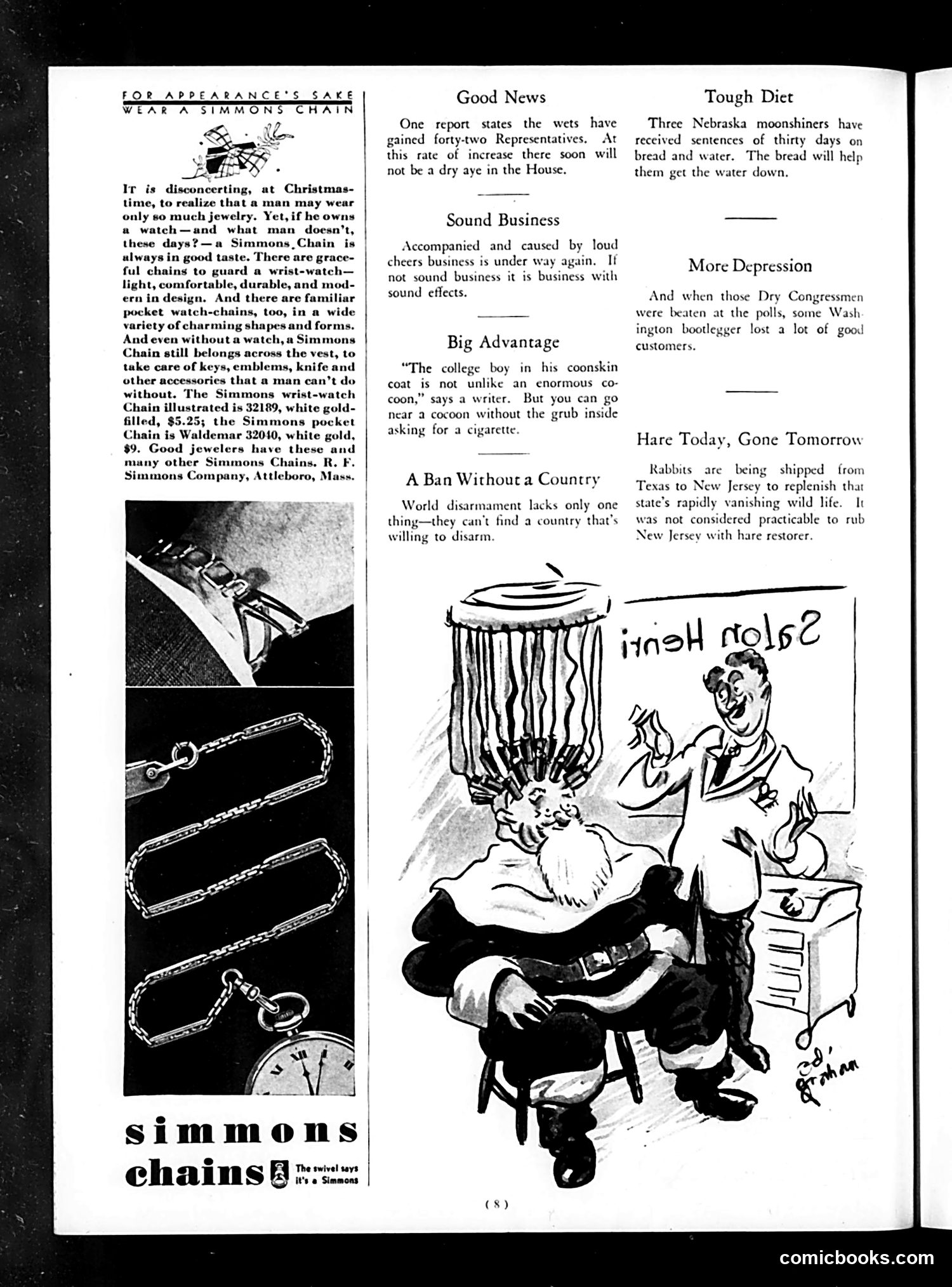
# "Hare Today, Gone Tomorrow" Cartoon Analysis The cartoon depicts a man being force-fed or having something shoved down his throat by what appears to be a rabbit or hare character. The caption reads "Hare today / gone to[morrow]" — a pun on the common expression "here today, gone tomorrow." The accompanying text explains that rabbits are being shipped from Texas to New Jersey to replenish that state's vanishing wild hare population, noting it was "not considered practicable to rub New Jersey with hare restorer." The cartoon satirizes this wildlife restocking effort through physical comedy: the man is being force-fed rabbits as an absurdist "solution" to the hare shortage — mocking both the restocking program and New Jersey's ecological decline during the Depression era.
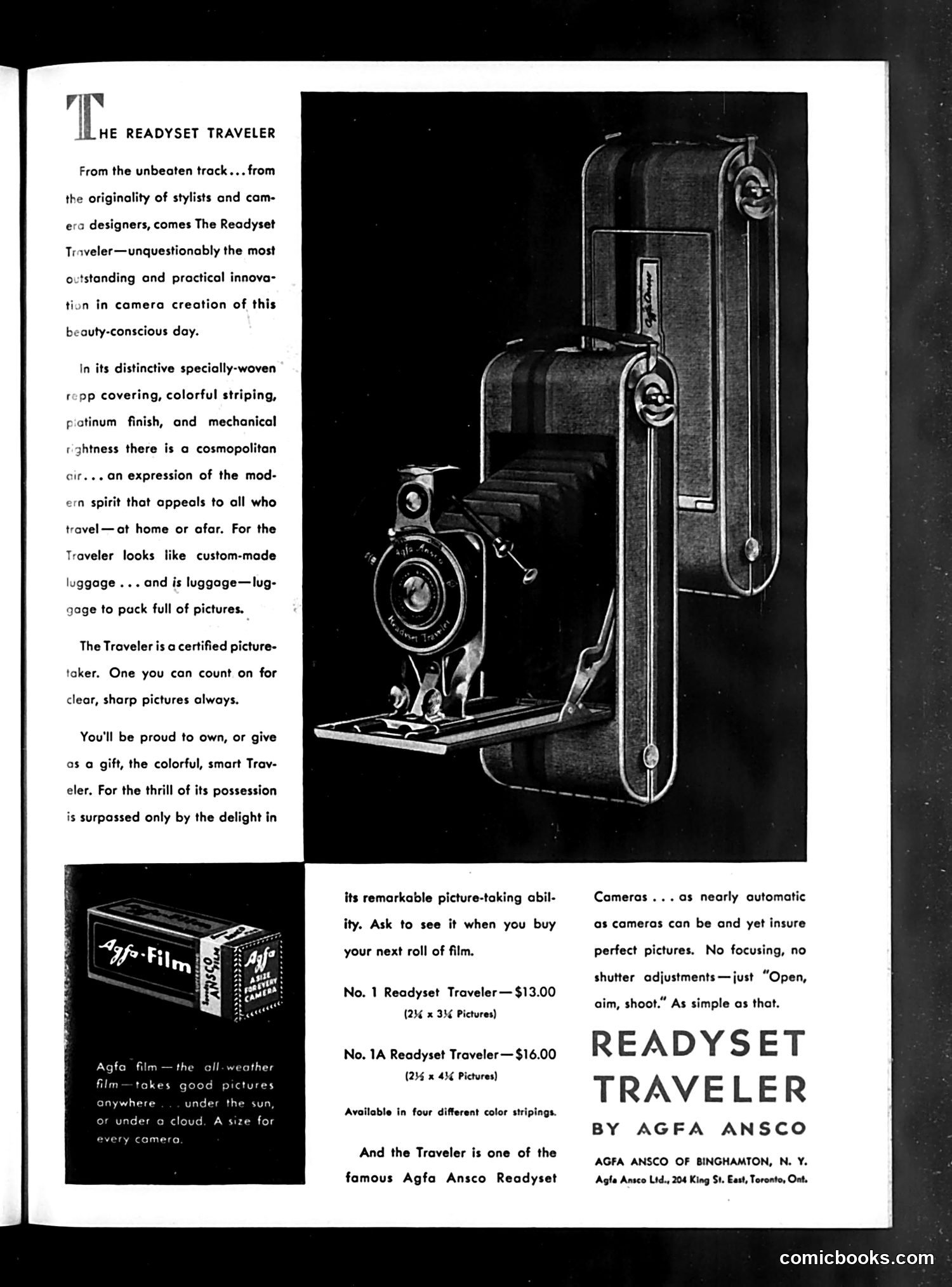
This page is primarily a **product advertisement**, not political satire or a cartoon. It promotes the Readyset Traveler, a folding camera by Agfa Ansco designed for portable photography. The ad emphasizes the camera's practical appeal to tourists and travelers, highlighting its compact "specially-woven rapp covering, colorful striping, platinum finish," and automatic operation ("Open, aim, shoot"). The text positions it as aspirational lifestyle merchandise—something "you'll be proud to own, or give as a gift." The image shows the camera alongside sample film and luggage, targeting mid-century consumers interested in travel and leisure photography. This reflects the post-WWII boom in consumer camera technology and recreational travel culture.
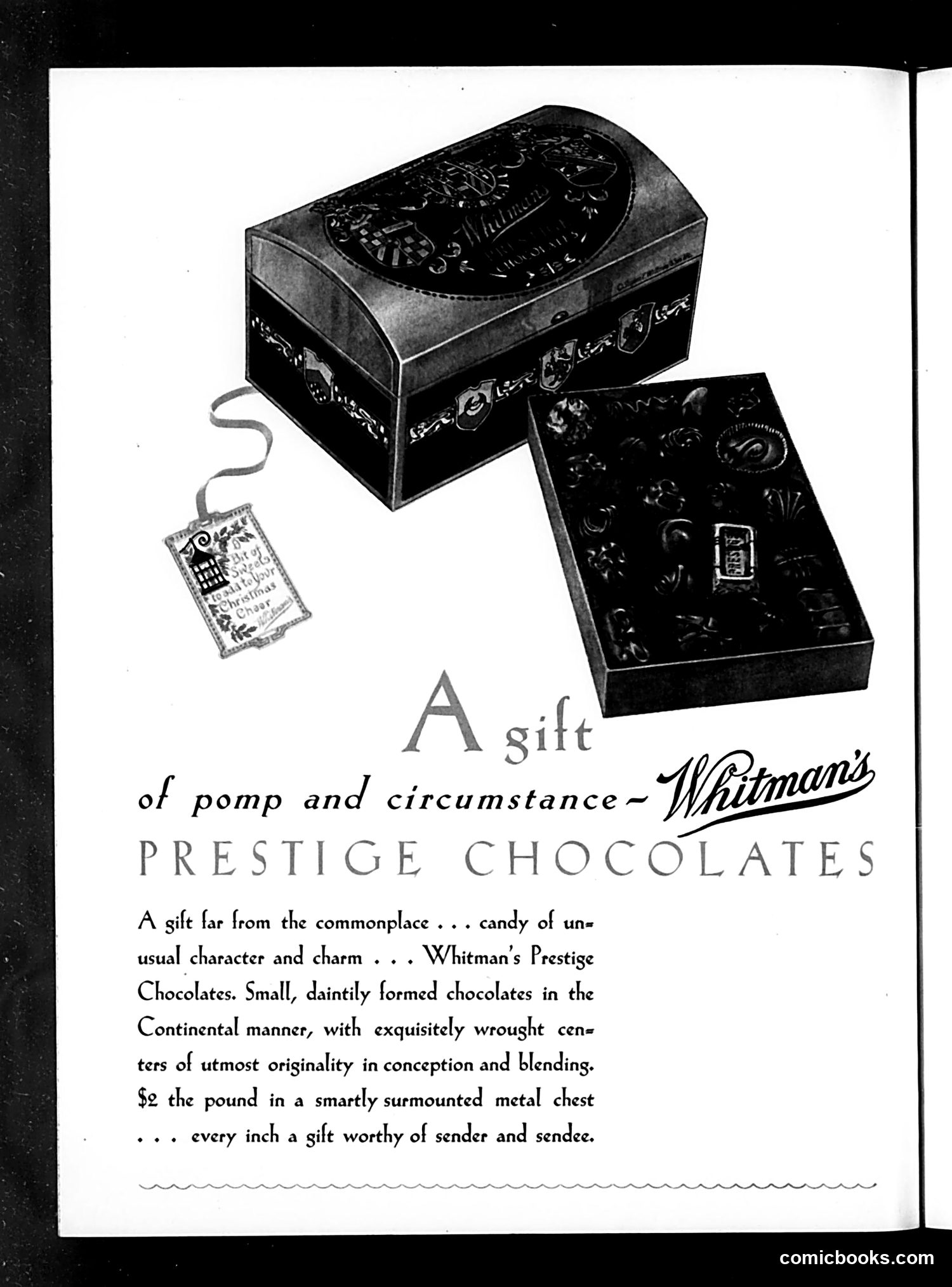
# Analysis This is a **vintage advertisement, not a cartoon or satire**. It promotes Whitman's Prestige Chocolates as an upscale gift item. The ad emphasizes luxury and sophistication through several visual and textual elements: - An ornate metal chest containing the chocolates, presented as an elegant container - References to "Continental manner" and "exquisite" craftsmanship, appealing to aspirations of European refinement - The phrase "a gift of pomp and circumstance" positions the chocolates as a prestigious, formal gift - Pricing at "$2 the pound" suggests premium quality for the era - Language like "unusual character and charm" and "gift worthy of sender and sendee" targets gift-givers seeking to impress The small gift tag visible in the image reinforces the product's positioning as a high-end present. This represents early-20th-century advertising strategy emphasizing taste, refinement, and social status.