A complete issue · 36 pages · 1930
Life — October 31, 1930
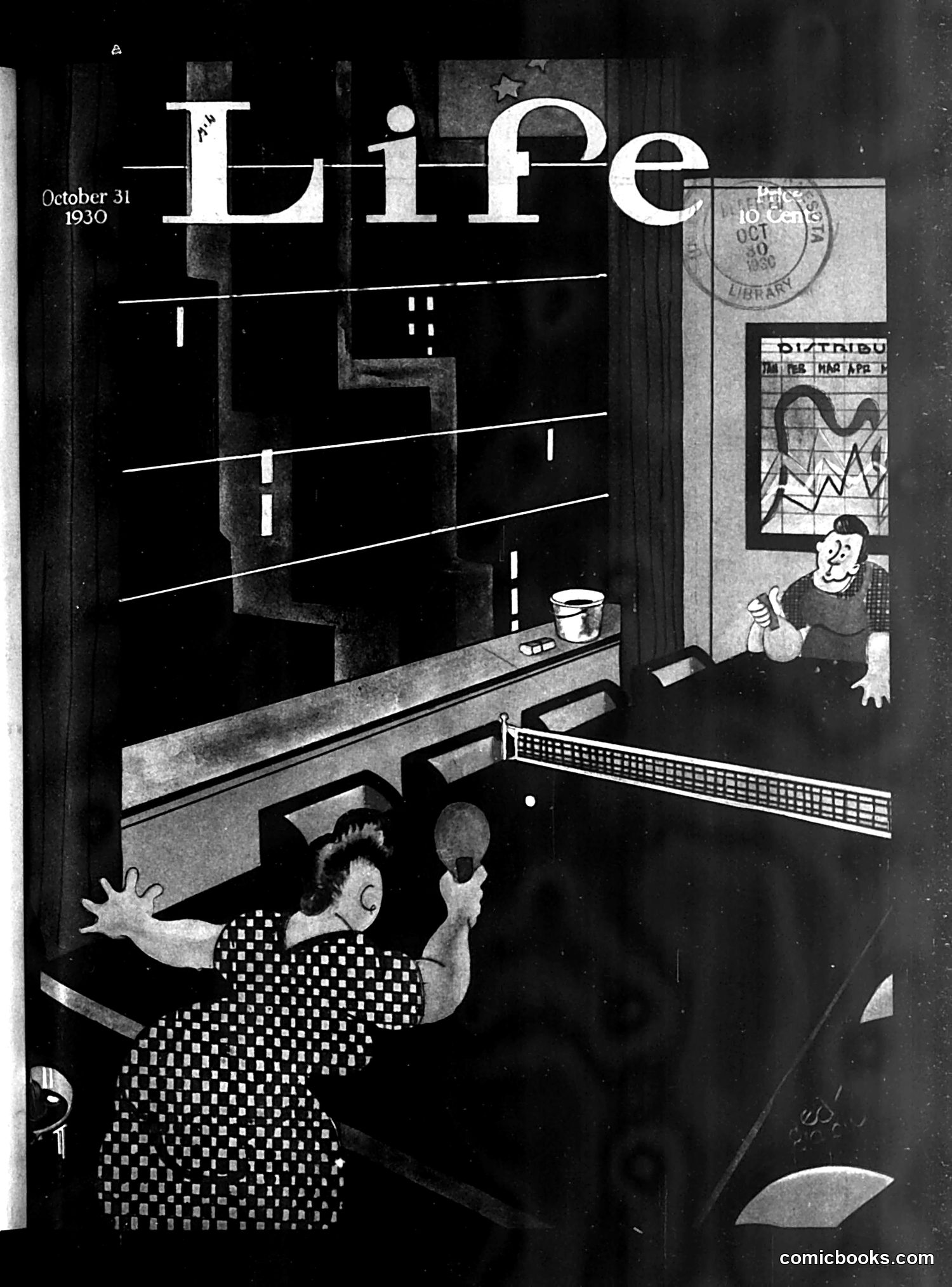
# Life Magazine, October 31, 1930 This page appears to be a cover or title page for Life magazine's Halloween issue. The illustration shows a woman in a checkered dress playing ping-pong against a skeletal or death-like figure across the net. The scene takes place in what appears to be a basement or cellar setting, with another figure visible in a window above. The imagery likely plays on Halloween themes—the skeleton opponent and underground setting create an eerie, supernatural atmosphere. The ping-pong game may be a visual pun or metaphor, though without additional context, the specific satirical or political meaning isn't entirely clear from the image alone. The cartoon seems designed primarily for seasonal entertainment rather than political commentary.
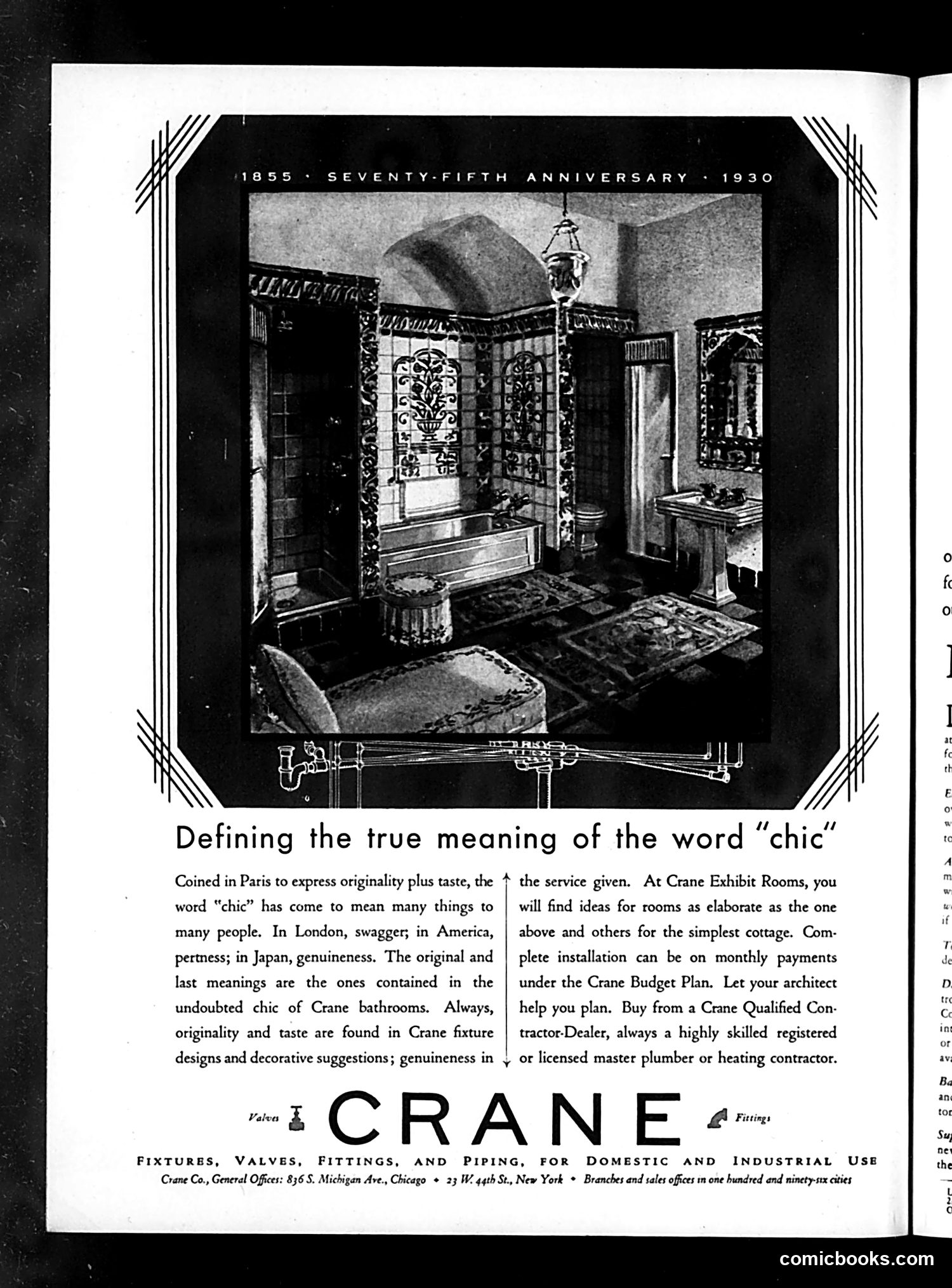
# Content Analysis This page is **primarily advertising**, not editorial satire or political commentary. It is a 1930 advertisement for Crane plumbing fixtures, celebrating the company's 75th anniversary (1855-1930). The image shows an elaborate bathroom interior with ornate fixtures and decorative elements. The ad's text plays on the word "chic" — claiming that Crane bathrooms embody true sophistication and taste, contrasting how the term means different things in different cultures (Paris, London, America, Japan). The satire, if present, is subtle: the ad humorously suggests that owning Crane bathroom fixtures is the ultimate expression of refinement and "originality plus taste." It's aspirational marketing that conflates luxury plumbing with cultural sophistication — a gentle mockery of consumer desires during the prosperous late 1920s.
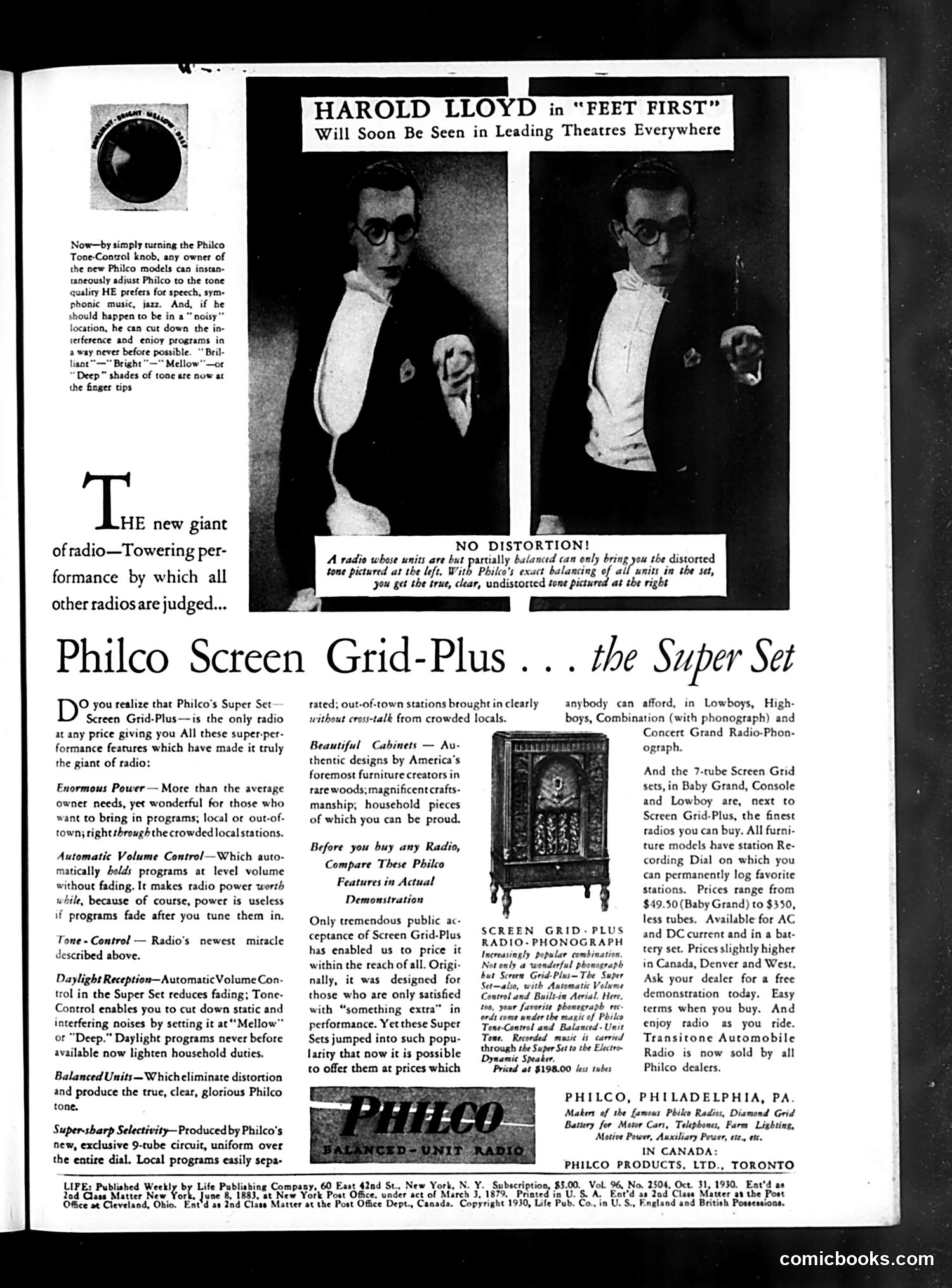
This page is primarily **advertising for Philco radios**, not political satire. The top section features Harold Lloyd, the famous silent-film comedian, promoting Philco's "Feet First" film. The accompanying images show Lloyd demonstrating the radio's tone control feature—illustrating how users can adjust audio quality regardless of broadcast conditions. The bulk of the page advertises the **Philco Screen Grid-Plus "Super Set,"** highlighting features like automatic volume control, tone control, and balanced units that eliminate distortion. The advertisement emphasizes the radio's quality and affordability across different models. This reflects 1920s-1930s consumer culture when radio technology was rapidly advancing and celebrities endorsed products to build brand trust among American households.
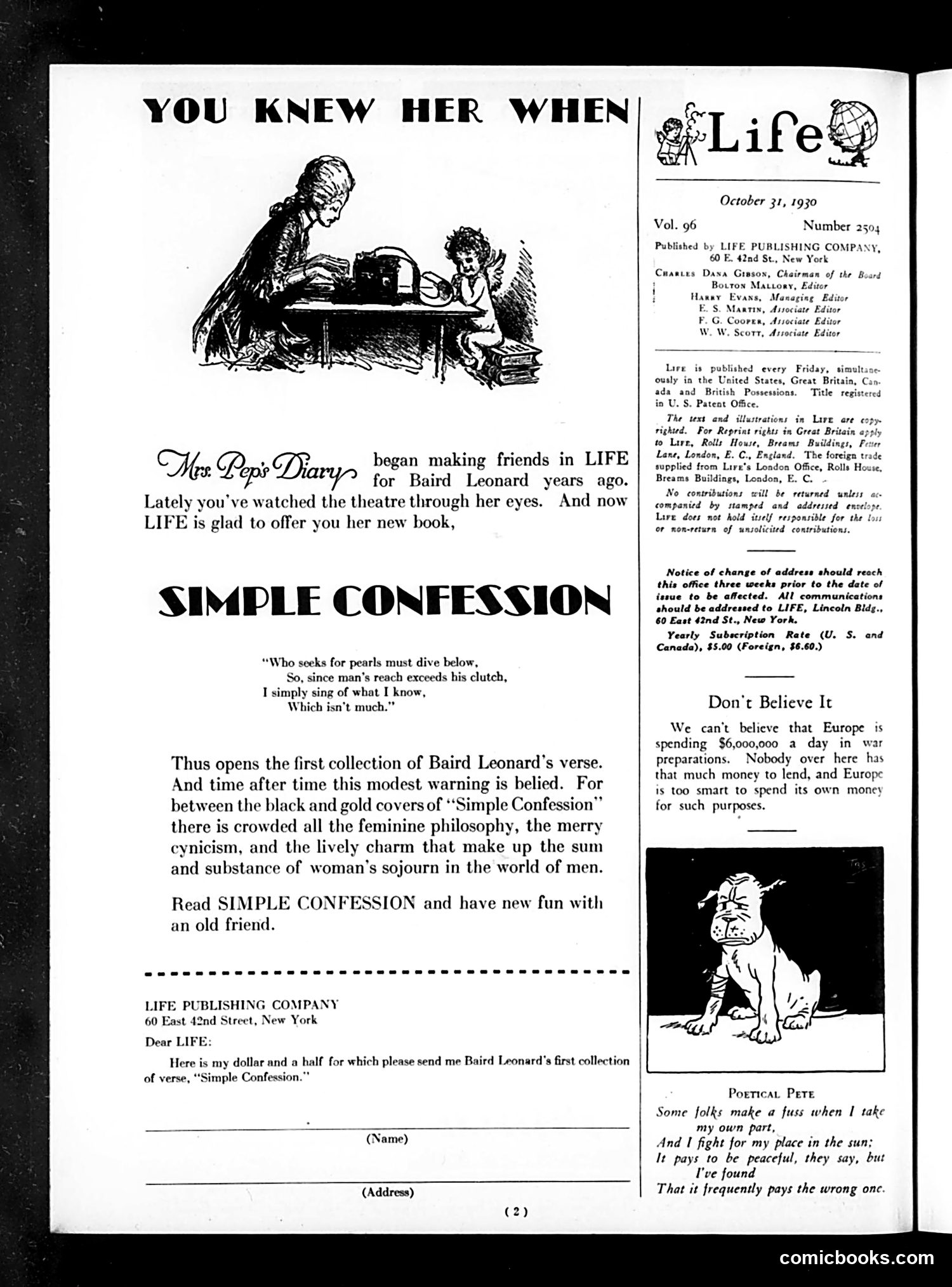
# Analysis of Life Magazine Page (October 31, 1930) This page is primarily **advertising and editorial matter** rather than political satire. The left side promotes "Simple Confession," a new poetry collection by Baird Leonard, featuring Mrs. Pep's Diary. The advertisement includes a subscription coupon for the book ($1.50). The right side contains **"Political Pete,"** a short poem with an accompanying cartoon of a dog wearing a hat. The verse appears to satirize political fence-sitting—someone who claims neutrality ("fuss when I take my own part") while actually benefiting from conflict ("It pays to be peaceful...but I've found that it frequently pays the wrong one"). This likely mocks politicians or public figures avoiding clear stances on contemporary issues during the Depression era.
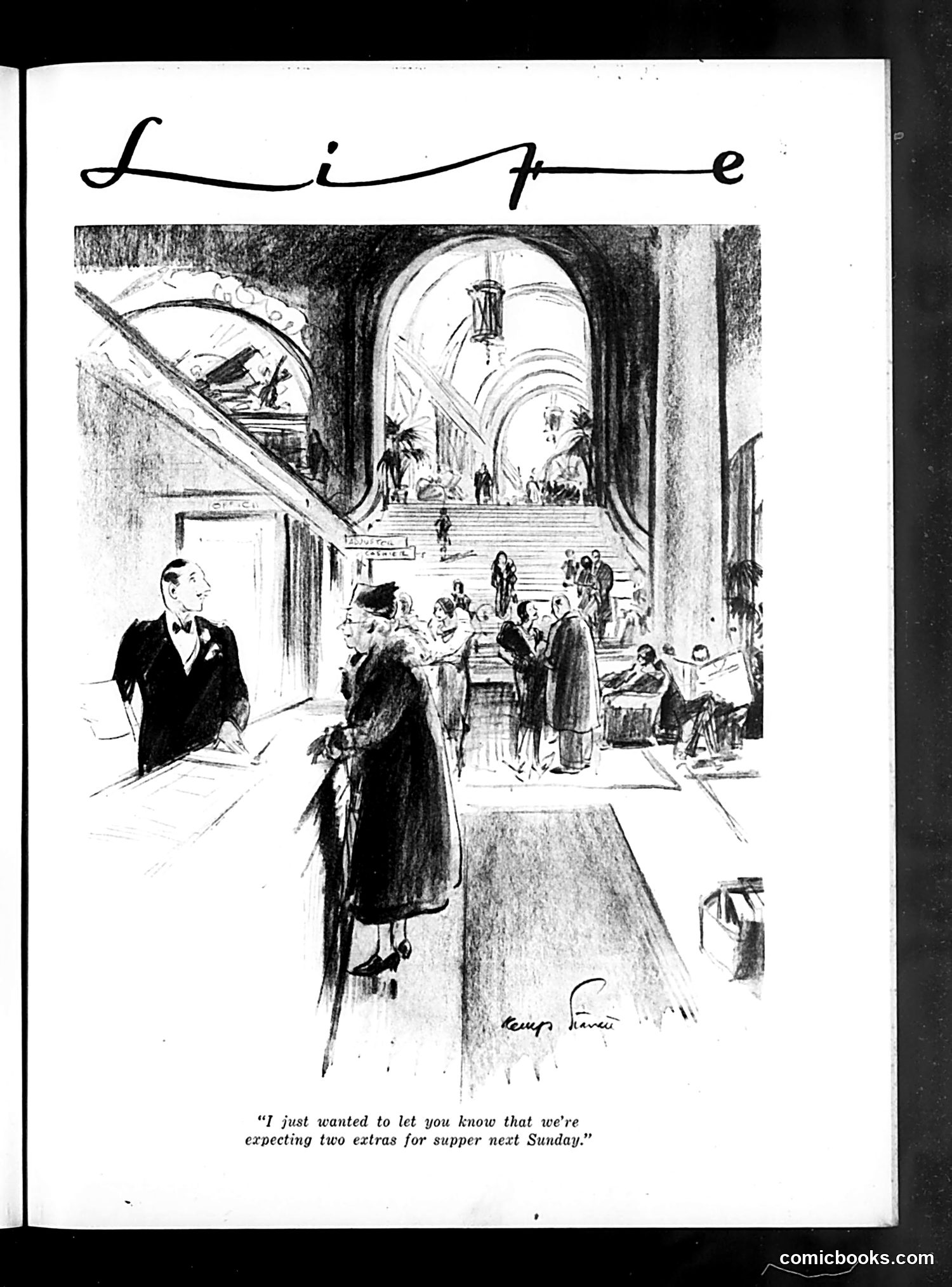
# Life Magazine - "Expecting Two Extras for Supper Next Sunday" This appears to be a single-panel cartoon set in what looks like a grand European cathedral or public building with arched ceilings. A well-dressed man in formal attire addresses a woman, announcing they're "expecting two extras for supper next Sunday." The humor likely stems from the formal announcement of additional dinner guests in an ornate, solemn architectural setting—creating an absurd contrast between the grandiose surroundings and mundane domestic conversation about meal planning. Without additional context about the publication date or specific historical references, the cartoon's deeper satirical meaning remains unclear. It may reference contemporary social customs or class anxieties about entertaining, but this cannot be confirmed from the visible image alone.
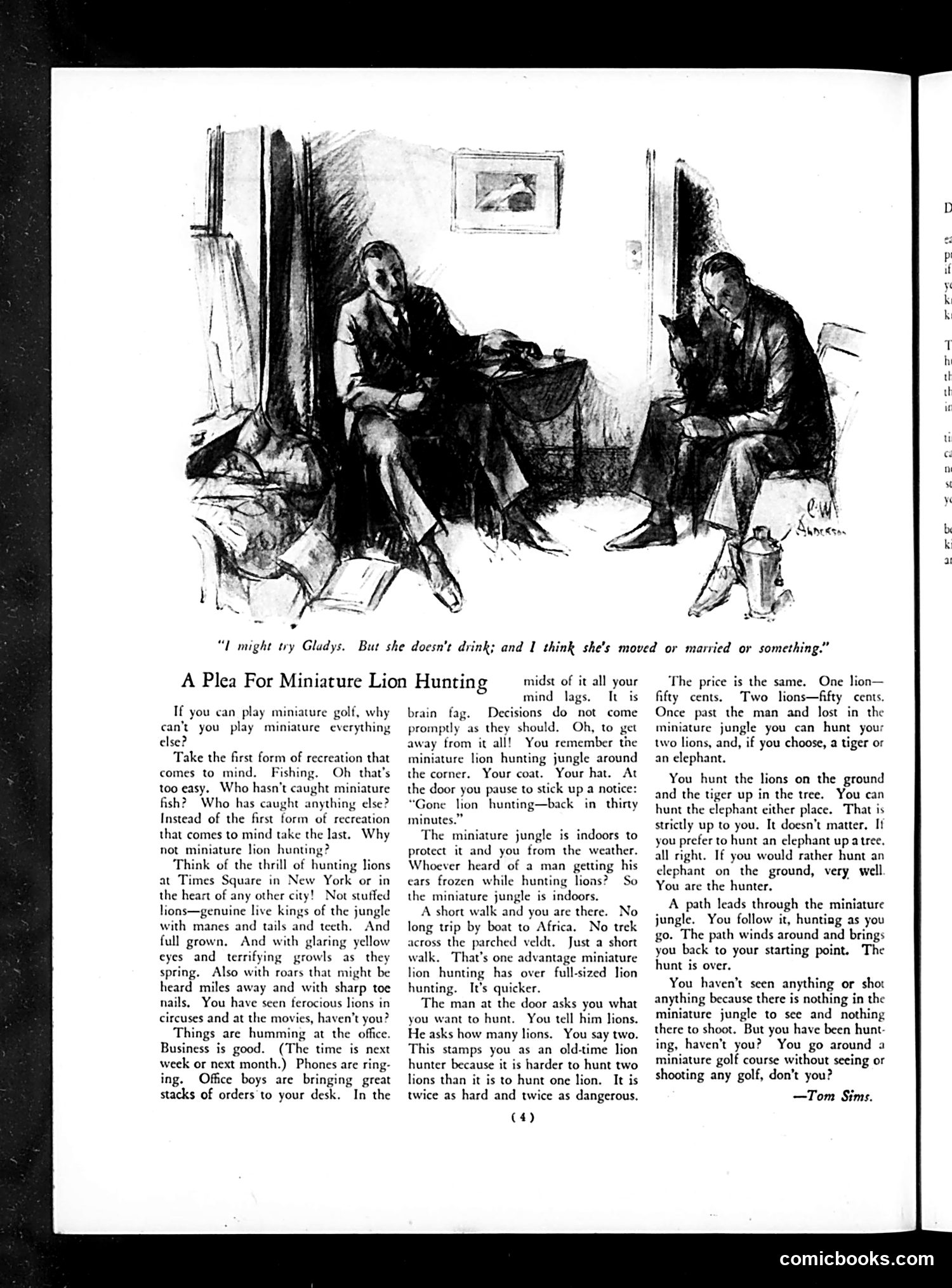
# Analysis of "A Plea For Miniature Lion Hunting" This is a humorous essay by Tom Sims satirizing the tedious monotony of office work. The accompanying sketch shows two men in an indoor setting, illustrating the piece's central conceit. Sims argues that if miniature golf can be a recreational fad, why not "miniature lion hunting" as office entertainment? He describes an absurd indoor jungle hunt—tracking lions in a small space, with predetermined rules about where elephants and tigers can be positioned. The satire targets the boredom and repetitiveness of modern business life ("hunts at the office. Business is good..."). By proposing an increasingly ridiculous alternative recreation, Sims mocks how office workers seek escape from monotonous routines through fashionable pastimes like miniature golf, suggesting even fabricated danger would be preferable to their actual work environment.
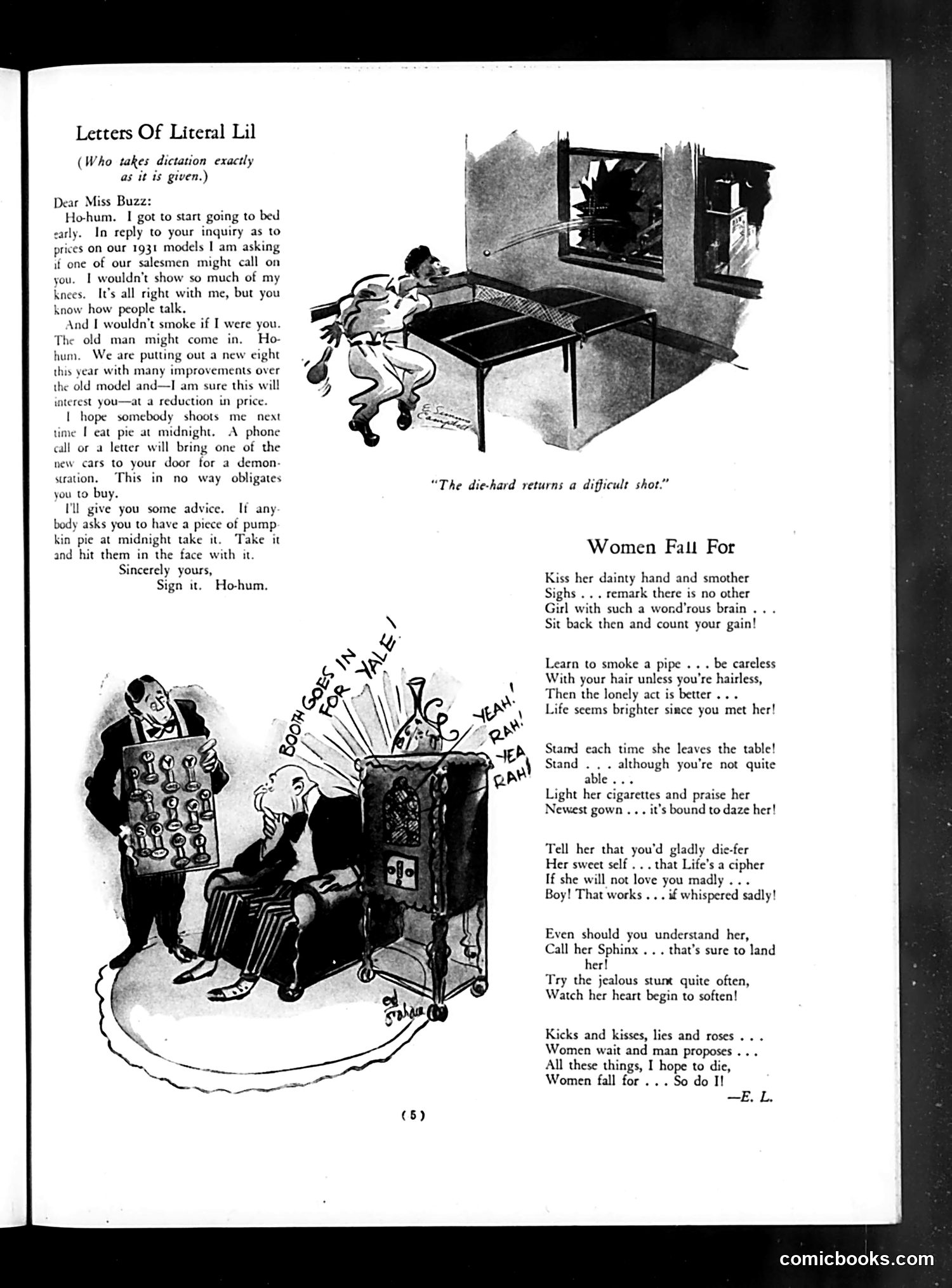
# Analysis of Life Magazine Page This page contains two distinct pieces of period humor: **"Letters of Literal Lil"** features a mock letter from "Ho-hum" to "Miss Buzz" about automobile sales, written in the deadpan style of someone taking figurative language literally. The accompanying cartoon shows a man being hit in the face—illustrating the letter's advice to literally "hit them in the face" with a pumpkin pie. **"Women Fall For"** is a satirical poem by E.L. offering tongue-in-cheek dating advice to men. It lists manipulative tactics (praising her, standing when she leaves, complimenting her dress, feigning jealousy, calling her "Sphinx") as surefire ways to win women's affection. The satire mocks both shallow romantic strategies and the era's assumptions about female psychology. Both pieces exemplify Life magazine's humor style: absurdist literalism and gentle social satire.
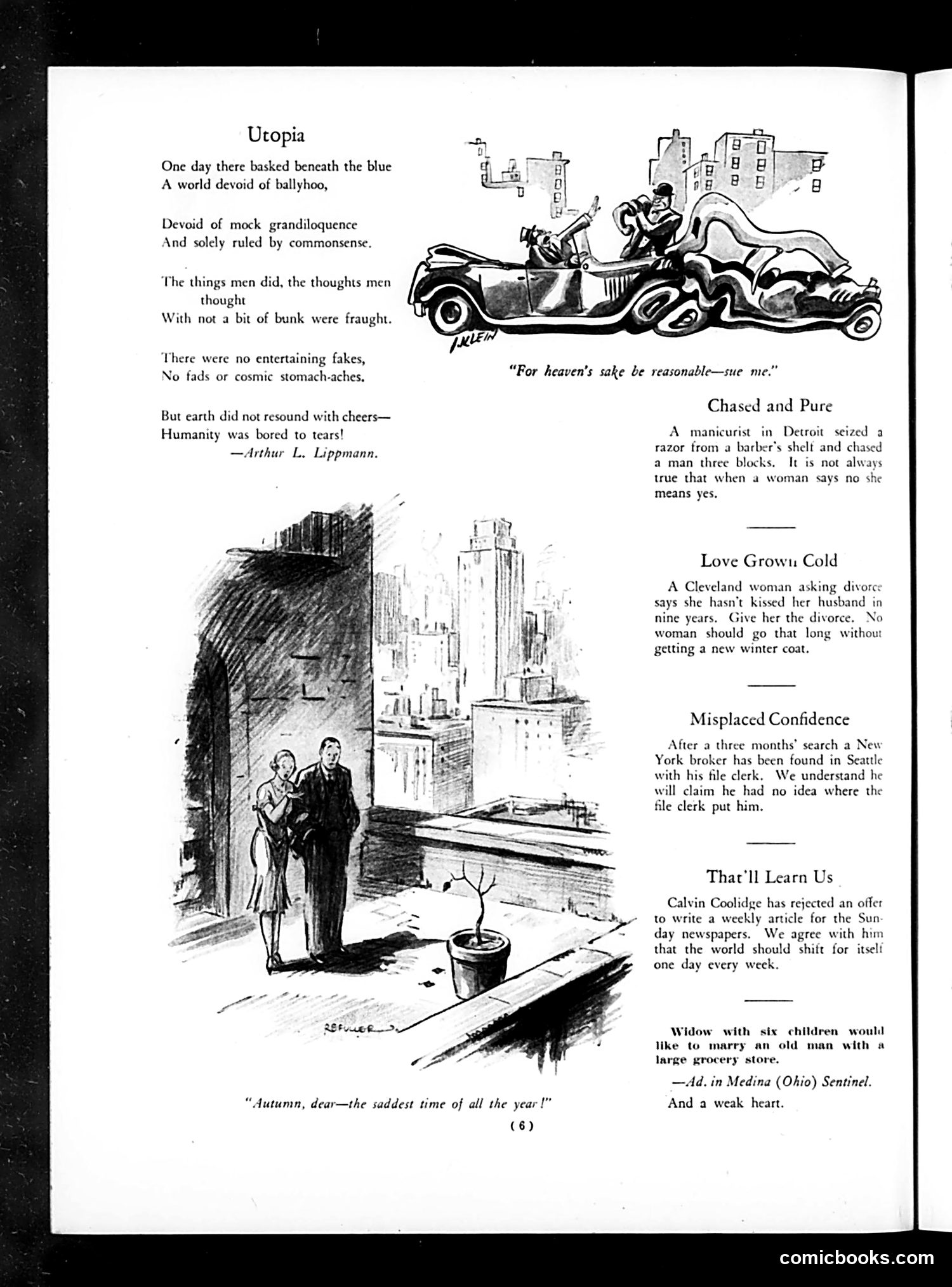
# Page Analysis: Life Magazine Satire This page contains miscellaneous humor and social commentary typical of Life magazine. The top section features Arthur L. Lappmann's poem "Utopia," satirizing an imagined world governed by pure reason and common sense—contrasting sharply with actual human folly. The illustration below depicts an autumn street scene with the caption "Autumn, dear—the saddest time of all the year!"—likely romantic sentiment about seasonal melancholy. The right column offers brief, cynical observations on contemporary life: a manicurist chasing a man with a razor, a woman seeking divorce after nine years without affection, a missing New York broker, and Calvin Coolidge rejecting a newspaper column offer. These reflect 1920s social anxieties about relationships, disappearances, and celebrity figures, presented as sardonic one-liners.
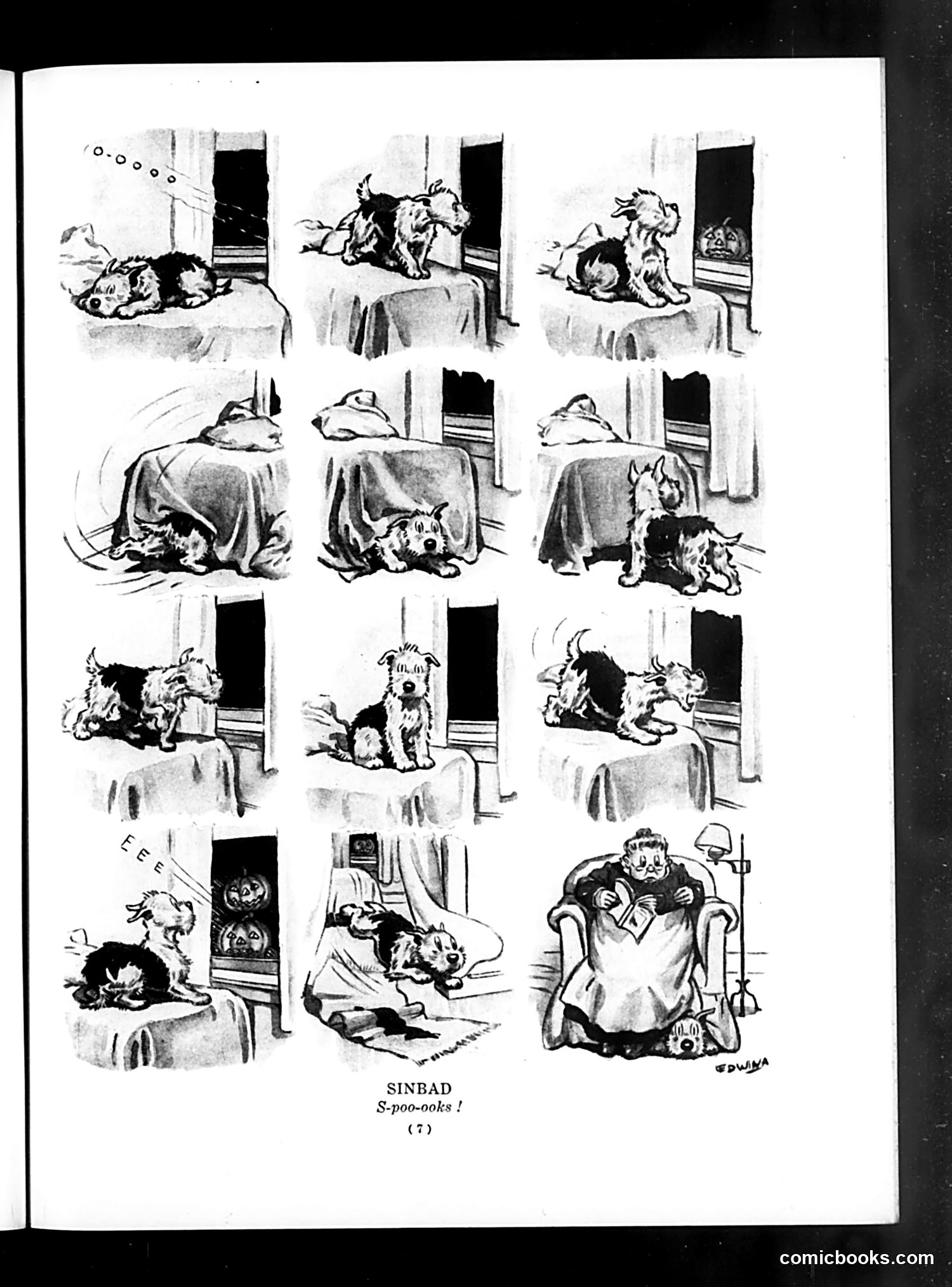
# Sinbad "Spook-ooks!" Comic Strip This is a sequential comic strip titled "Sinbad" showing a humorous domestic scene. The narrative follows what appears to be a man in bed who is startled by increasingly visible supernatural or frightening apparitions entering through a doorway. The strip progresses from subtle disturbances (indicated by dotted lines suggesting movement or sounds) to increasingly obvious ghostly or monstrous visitors. The man's reactions escalate from mild concern to apparent terror in the final panel, where he's shown cowering in a chair, seemingly traumatized. The joke appears to play on the contrast between the man's initial skepticism about supernatural occurrences and his eventual panic when confronted with undeniable evidence. The title "Spook-ooks!" is a pun referencing both "spooks" (ghosts) and the sound of fright.
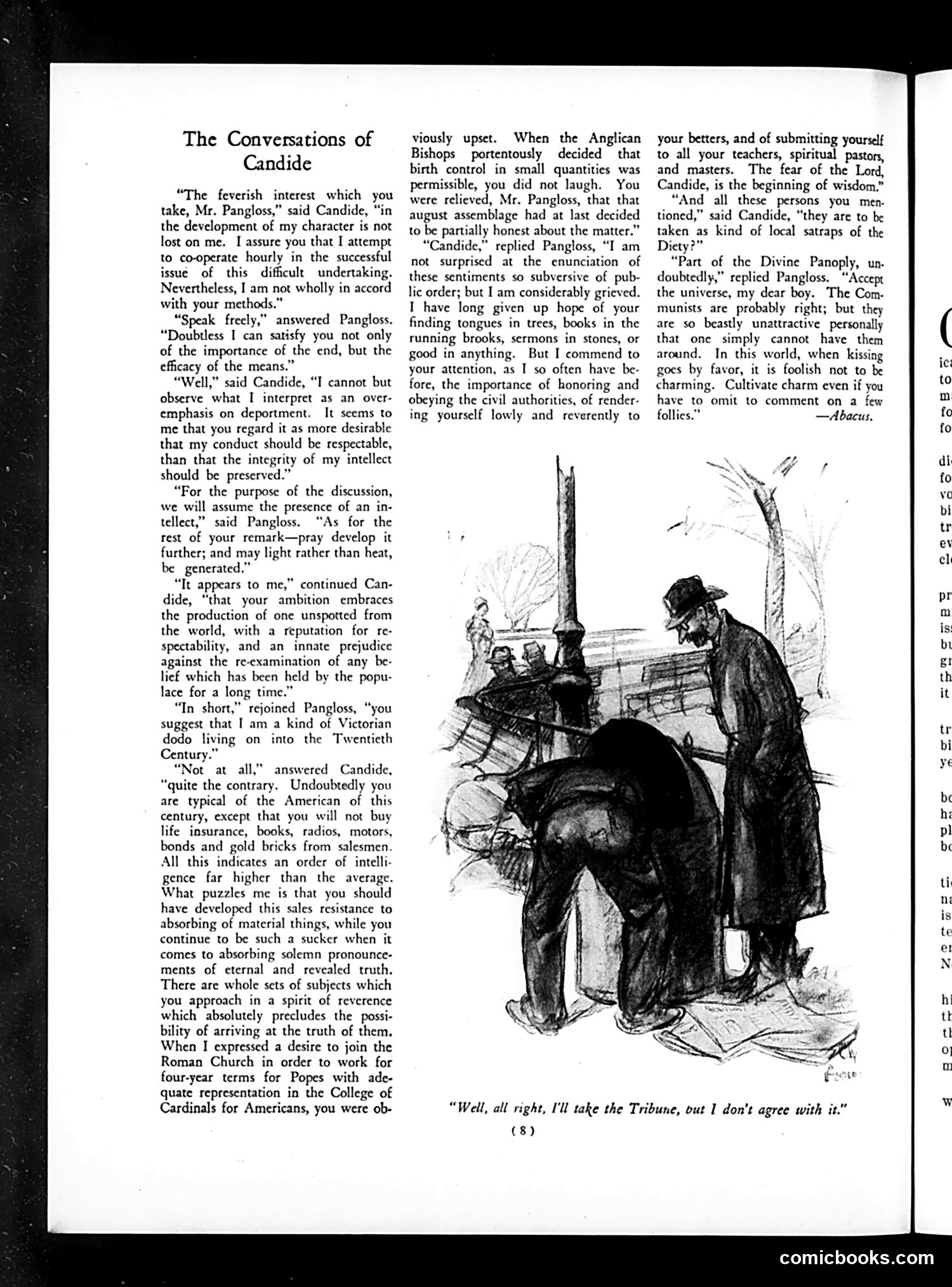
# "The Conversations of Candide" - Life Magazine Satire This page presents a satirical dialogue between two characters: **Candide** (likely referencing Voltaire's naive optimist character) and **Pangloss** (Voltaire's fatalistic philosopher from the same novel). The cartoon depicts two men in discussion near what appears to be a newsstand or street corner. The satire critiques **American materialism and intellectual complacency in the 20th century**. Candide accuses Americans of rejecting philosophical and religious engagement in favor of consuming commercial goods (insurance, radios, bonds). Pangloss defends American optimism and suggests Candide is merely a "Victorian dodo" out of touch with modern times. The exchange mocks how modern Americans prioritize material comfort over serious intellectual or spiritual inquiry, updating Voltaire's 18th-century satire for contemporary American society.
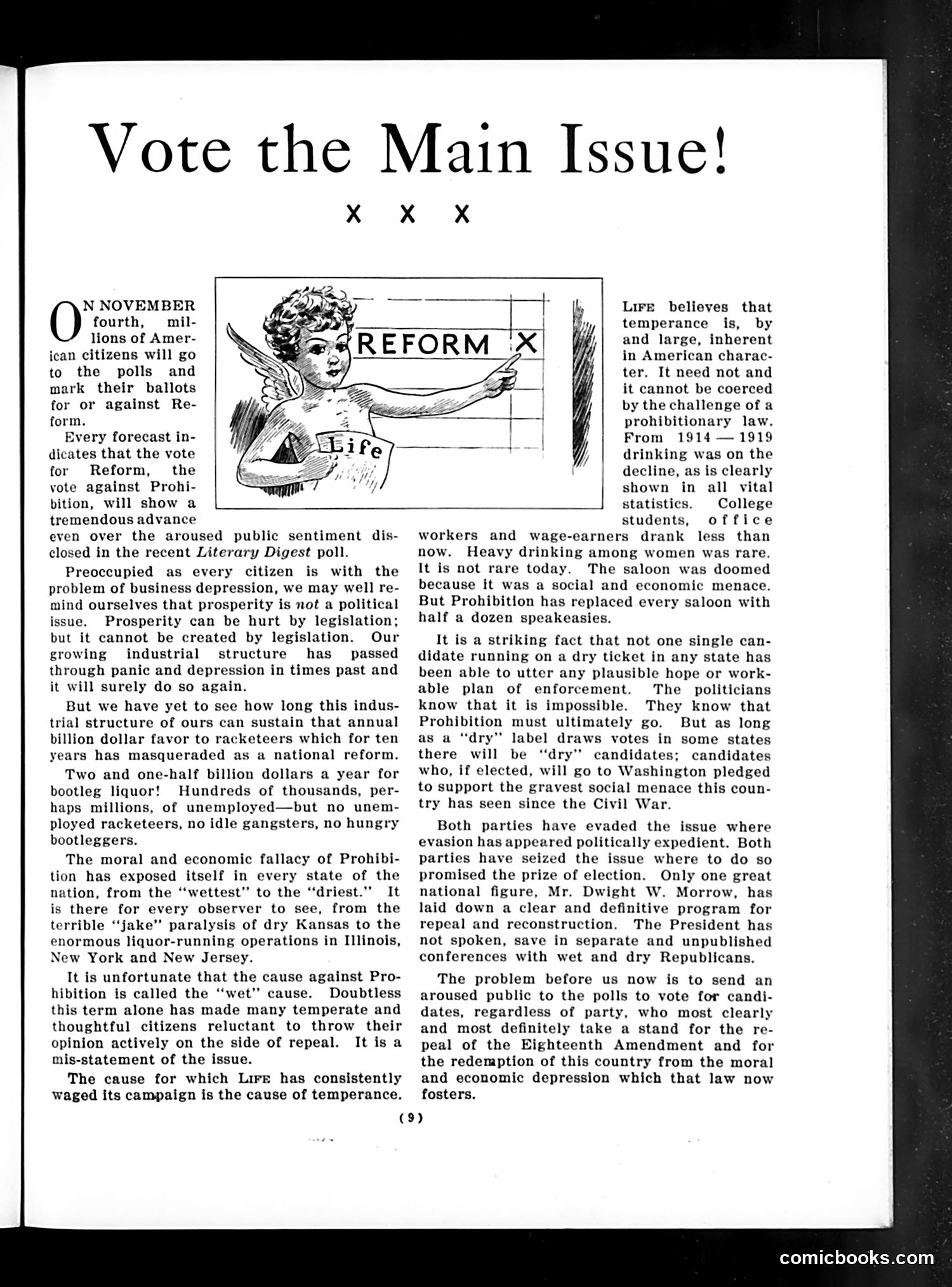
# Analysis This Life magazine page advocates for voting "Reform" (repeal of Prohibition) in the November election. The central image shows a winged female figure labeled "Life" holding a banner marked "REFORM" with an X, encouraging readers to mark their ballot for repeal. The accompanying article argues that Prohibition has failed morally and economically, citing increased crime, bootlegging, and unemployment. It criticizes both major political parties for avoiding the issue and praises President Dwight D. Eisenhower for taking a clear stance on repeal and reconstruction. The satire emphasizes Prohibition's hypocrisy: it claimed to reduce drinking but instead created organized crime, corruption, and social decay. The article calls for voters to support candidates who will repeal the Eighteenth Amendment and restore economic prosperity.
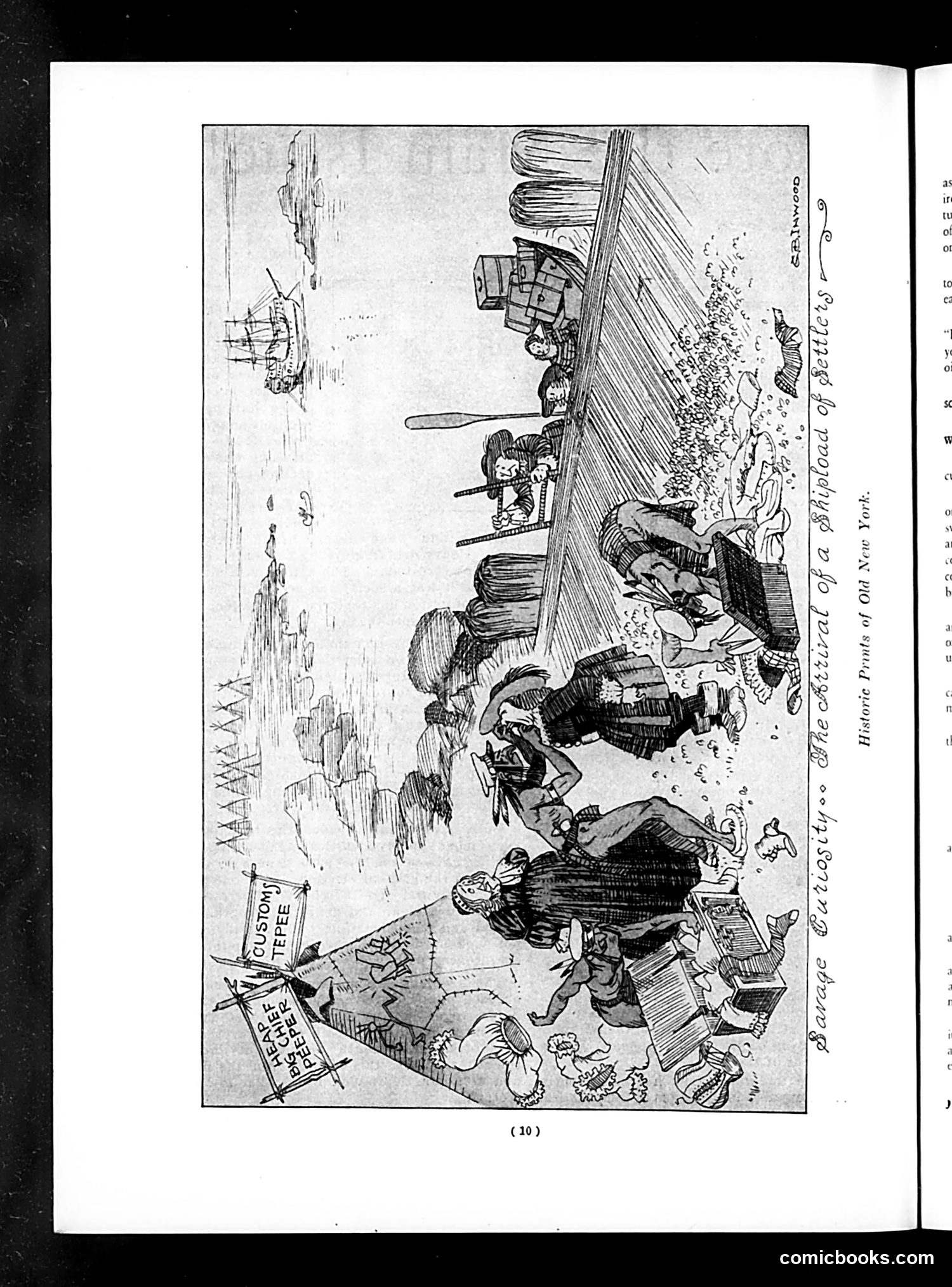
# Analysis of Historical Cartoon This page contains a single satirical illustration titled "A Successful Bid of Petticoats" (subtitle references "Printed on New York"). The cartoon appears rotated and depicts a crowded street scene with multiple figures engaged in what seems to be a commercial or social transaction. The visible text references "Custom House" and "Broker," suggesting commentary on commercial or governmental corruption. The cartoon likely satirizes either: - Corruption in New York's custom house operations - Women's economic participation or influence in business dealings - Social climbing through material acquisition The "petticoats" reference indicates gender-based satire, possibly mocking women's economic power or manipulative social tactics of the era. However, without clearer identification of specific individuals or knowing the exact publication date, the precise political target remains unclear. The crowded composition emphasizes chaos or disorder in the depicted transaction.