A complete issue · 36 pages · 1930
Life — August 15, 1930
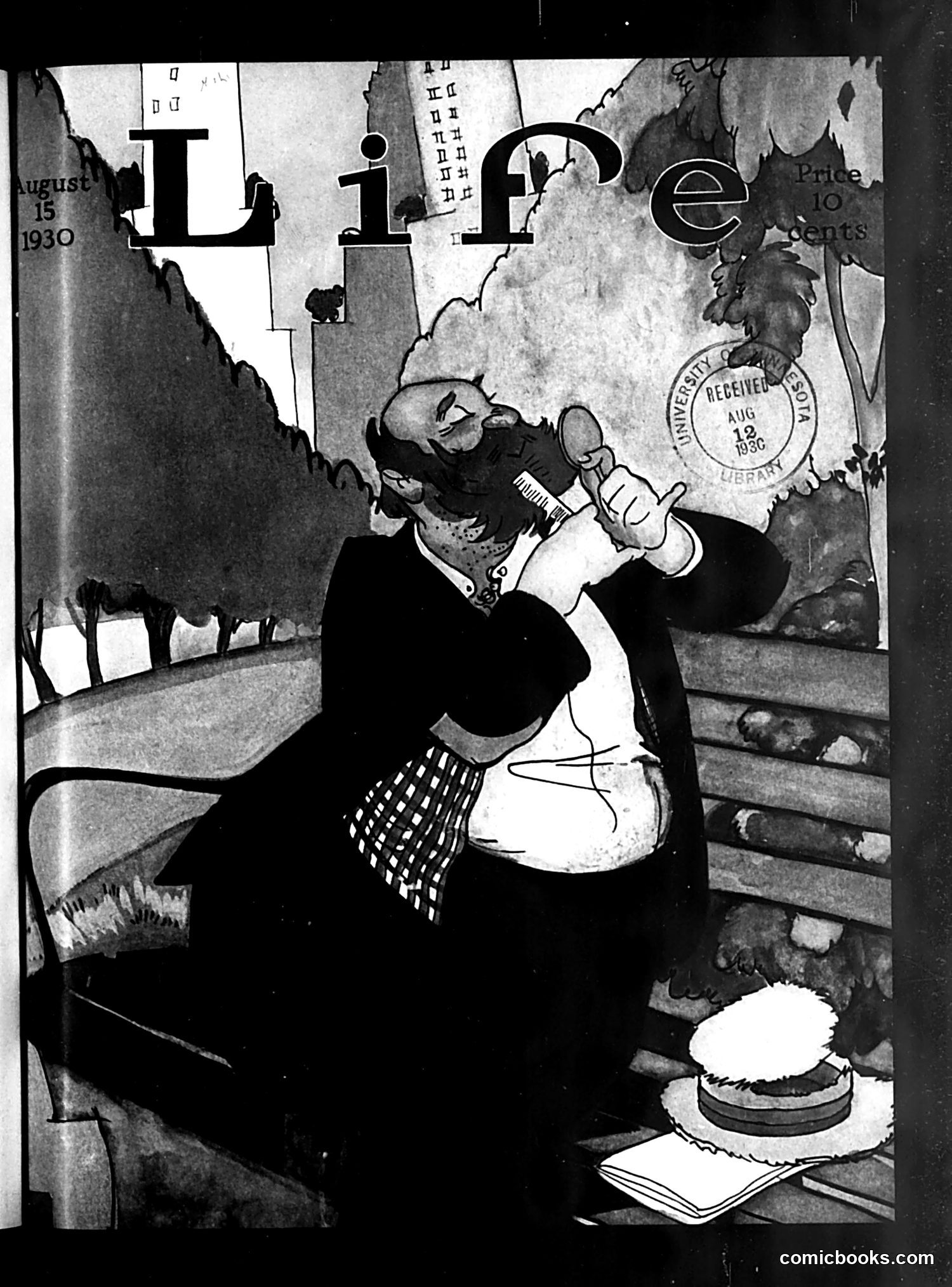
# Life Magazine Cover - August 15, 1930 This appears to be a Life magazine cover from August 1930 featuring a caricatured figure in formal black attire with an exaggerated facial expression, depicted smoking or drinking something. The figure is shown in an interior setting with a map of the United States visible in the background and rural/agricultural imagery. The specific satirical target and context remain unclear without additional text or identifying labels on the cover itself. The caricature's style and the agricultural backdrop suggest commentary on American politics or society during the early Depression era, but I cannot definitively identify the figure or the precise point of satire based solely on what's visible in the image.
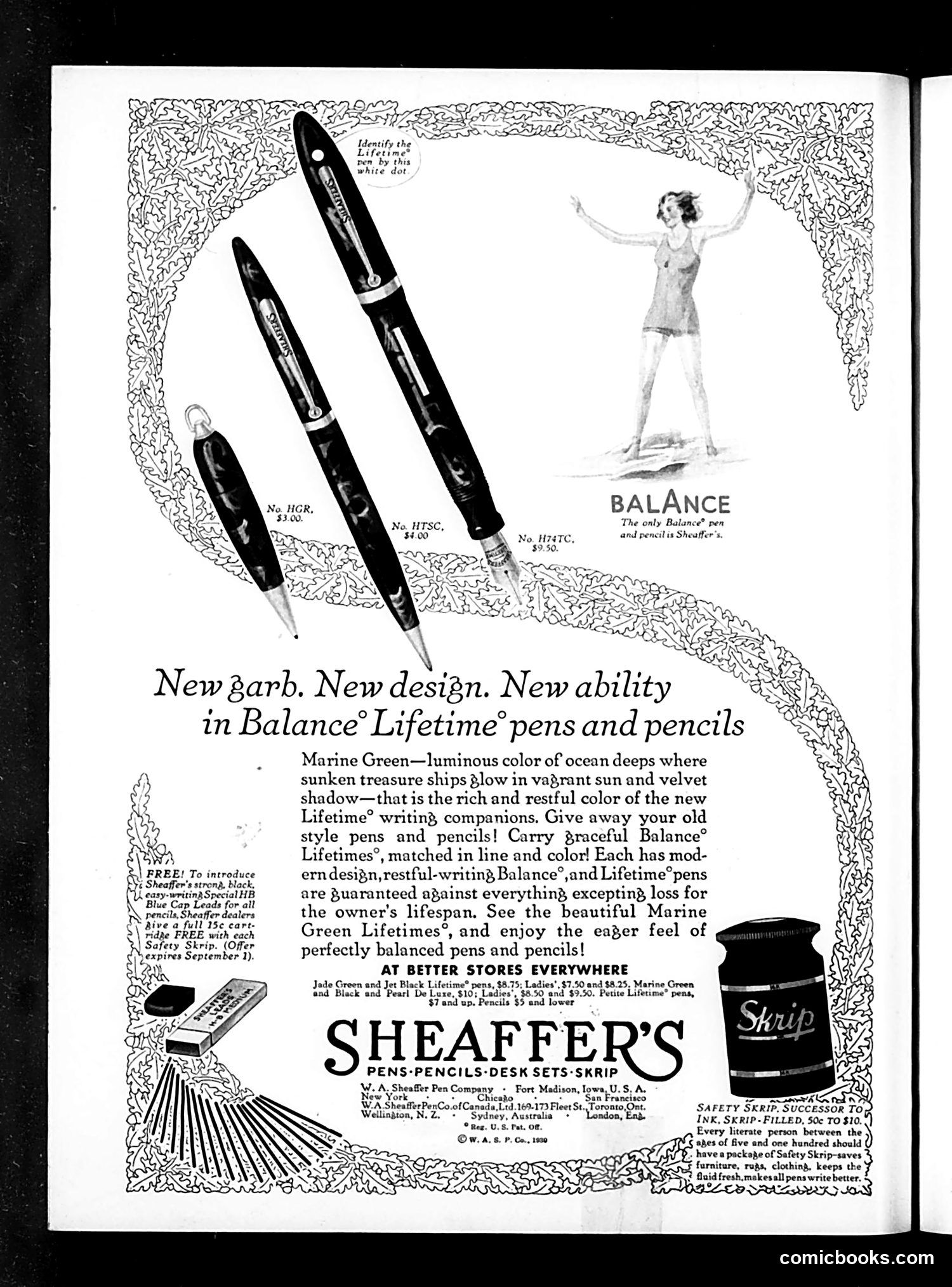
# Analysis This page is primarily an **advertisement, not a political cartoon**. It promotes Sheaffer's Balance Lifetime pens and pencils. The main visual content shows three writing instruments displayed alongside an illustration of a woman in a short dress striking a balanced pose on one leg, labeled "BALANCE." This is the brand's marketing concept—the pens are named "Balance" and the ad emphasizes their superior design and writing quality. The imagery reflects 1920s advertising aesthetics: the stylized female figure was typical of the era's commercial art, used to convey modernity and elegance. The decorative border and typography are period-appropriate. There is no political satire or social commentary present. This is straightforward product marketing highlighting new pen designs and promoting consumer adoption through beauty and functionality claims.
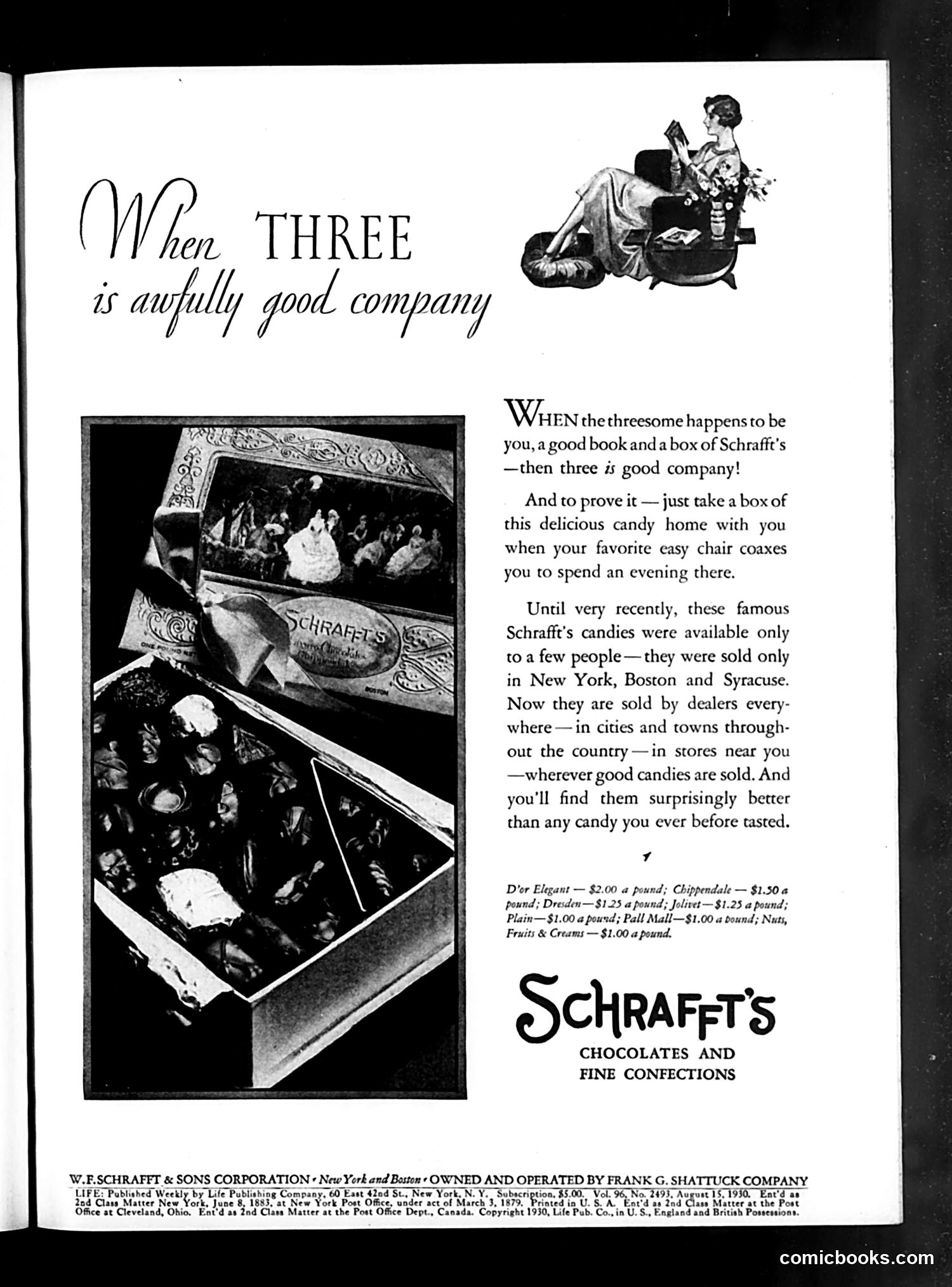
# Analysis This is a **Schrafft's chocolate advertisement**, not political satire. The page promotes Schrafft's candies and fine confections through the phrase "When THREE is awfully good company." The visual shows an elegantly dressed woman reclining in a chair, reading while holding Schrafft's chocolates—suggesting that a book, a comfortable chair, and a box of their candy constitute perfect companionship for an evening at home. The ad notes that Schrafft's candies were historically available only in New York, Boston, and Syracuse, but are now distributed nationwide. Various varieties are listed with prices (ranging from $1.00–$2.00 per pound). This is straightforward consumer advertising targeting middle-to-upper-class readers, emphasizing leisure, refinement, and domestic comfort during what appears to be the early 20th century.
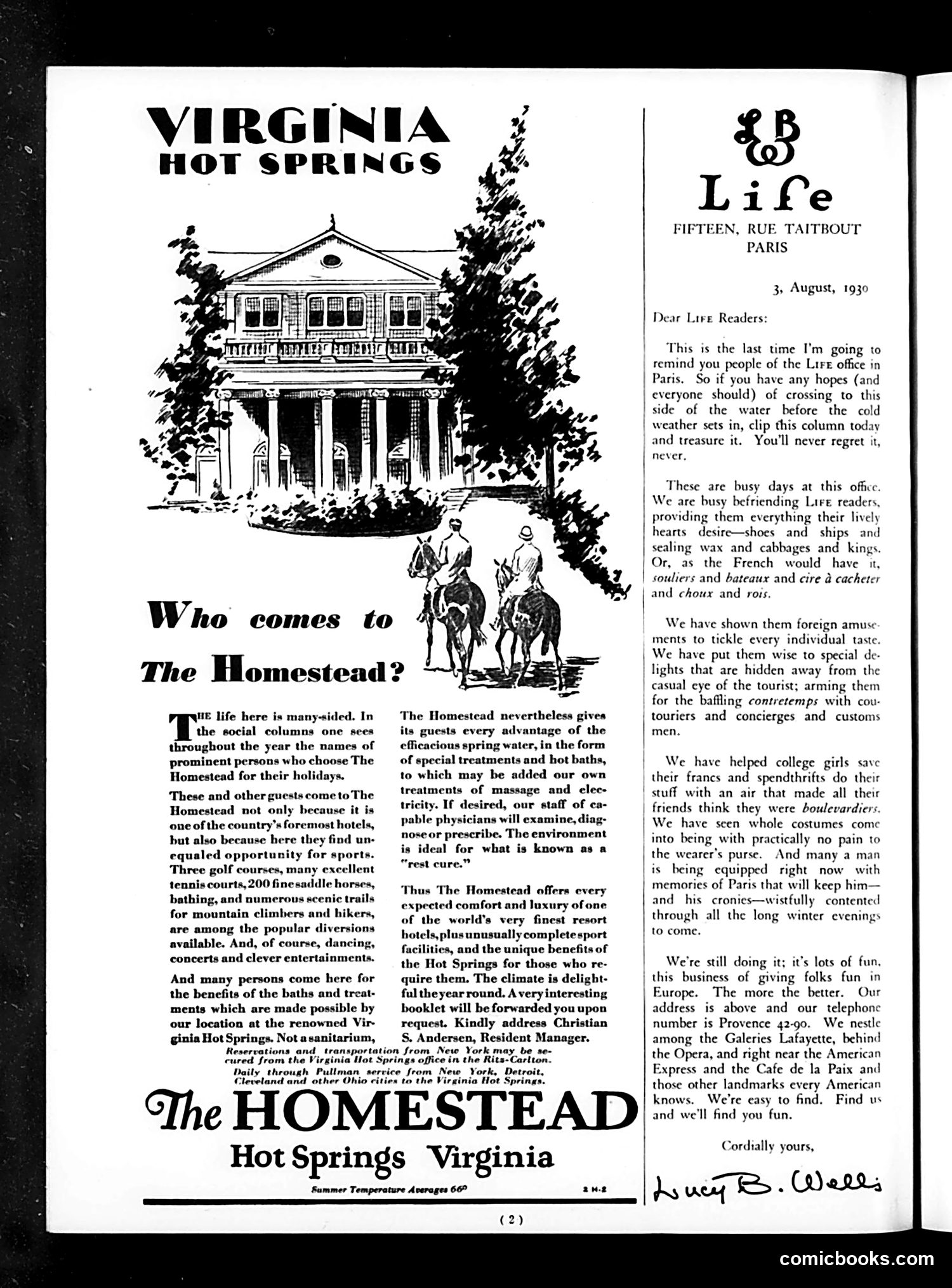
# Virginia Hot Springs Advertisement This page is primarily a **travel advertisement** for The Homestead resort in Hot Springs, Virginia, not political satire. The left side features an illustration of an elegant neoclassical building (the resort's main structure) with well-dressed guests on horseback approaching it. The accompanying text describes the resort's amenities: hot spring waters, golf courses, horseback riding, concerts, and entertainments. The right side contains a letter from Life's Paris office (dated August 3, 1936) discussing the magazine's work entertaining Life readers in Europe—helping them find shoes, ships, amusements, and cultural experiences. There is **no political cartoon or satire** on this page. It is straightforward promotional content paired with organizational correspondence from the magazine's European bureau.
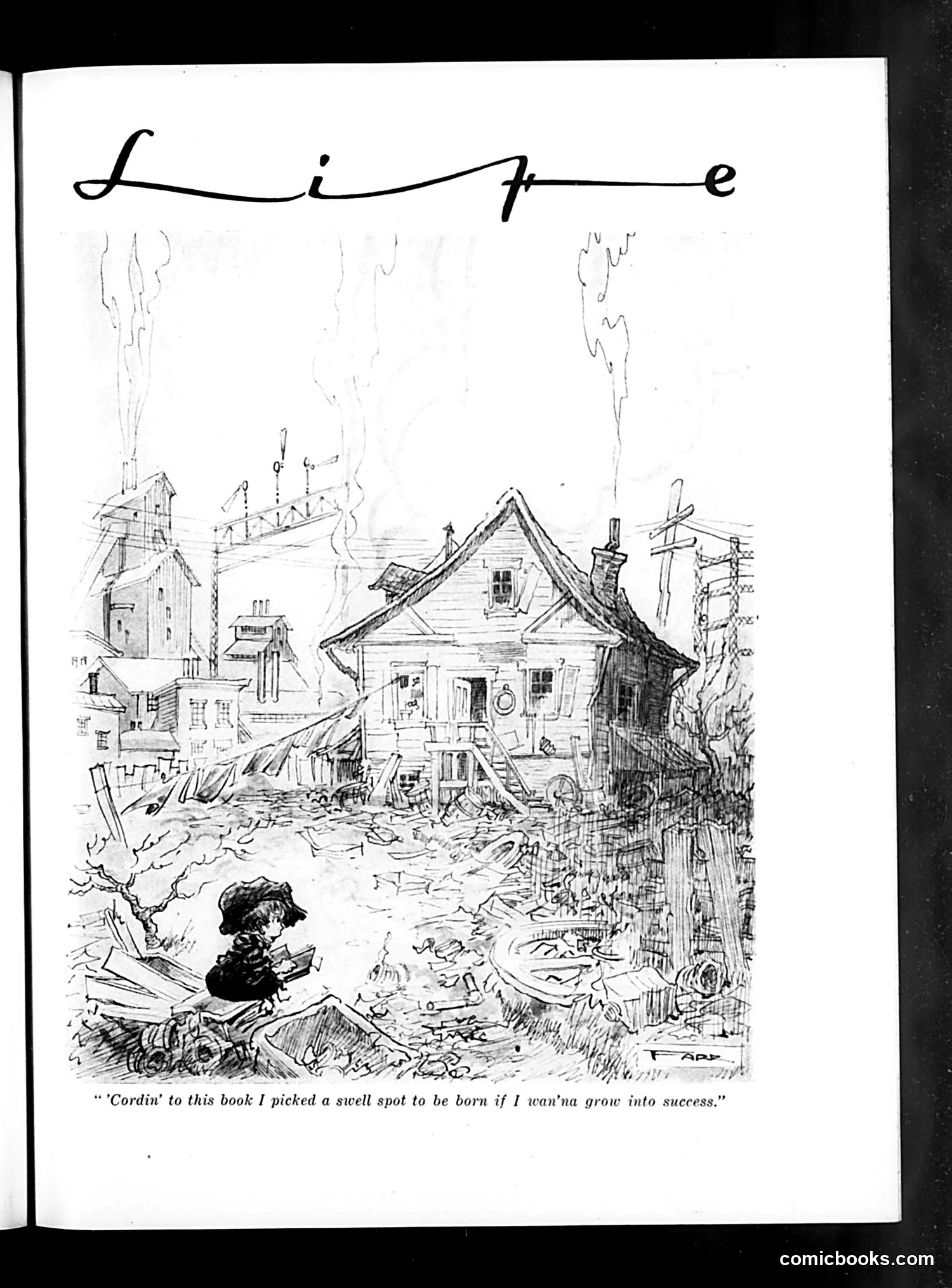
# Analysis This page from *Life* magazine presents a single illustration titled "Life" at the top. The drawing depicts a child sitting in a dilapidated, run-down neighborhood amid debris and broken buildings. The caption reads: "'Cordin' to this book I picked a swell spot to be born if I wan'na grow into success." The satire is bitter social commentary on American wealth mythology. The child's dialect-heavy speech suggests a poor, likely immigrant background. The irony is sharp: despite popular narratives claiming America rewards hard work and merit, this child was born into squalor—a "swell spot" only in cruel mockery. The illustration contrasts the child's innocent ambition with the grim reality of urban poverty, questioning whether success is truly achievable from such circumstances or merely promised by false ideologies.
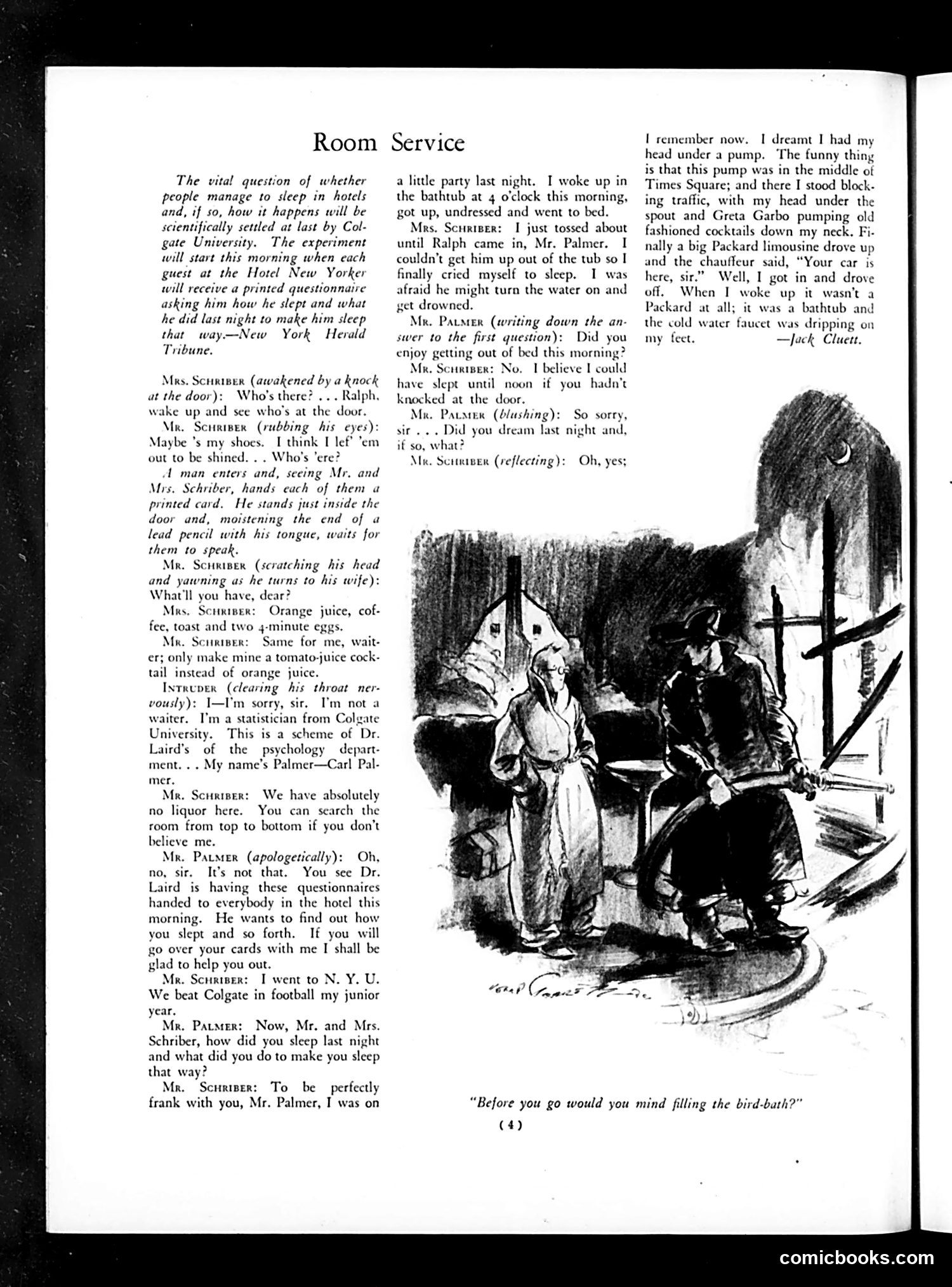
# "Room Service" - Life Magazine Satire This is a comedic sketch about hotel accommodations and sleep difficulties. The dialogue presents **Mr. and Mrs. Schriber** being interviewed by **Mr. Palmer**, apparently conducting a psychology experiment for Colgate University about how hotel guests sleep. The humor centers on **domestic absurdity**: Mrs. Schriber complains her husband nearly drowned in the bathtub at 4 a.m., while Mr. Palmer offers increasingly ridiculous dream-analysis questions. The accompanying illustration shows a woman near a bird bath, with the caption "Before you go would you mind filling the bird-bath?" suggesting confusion between hotel amenities. The satire mocks both the pretensions of early **psychology departments** conducting dubious "scientific" studies and the chaos of hotel living.
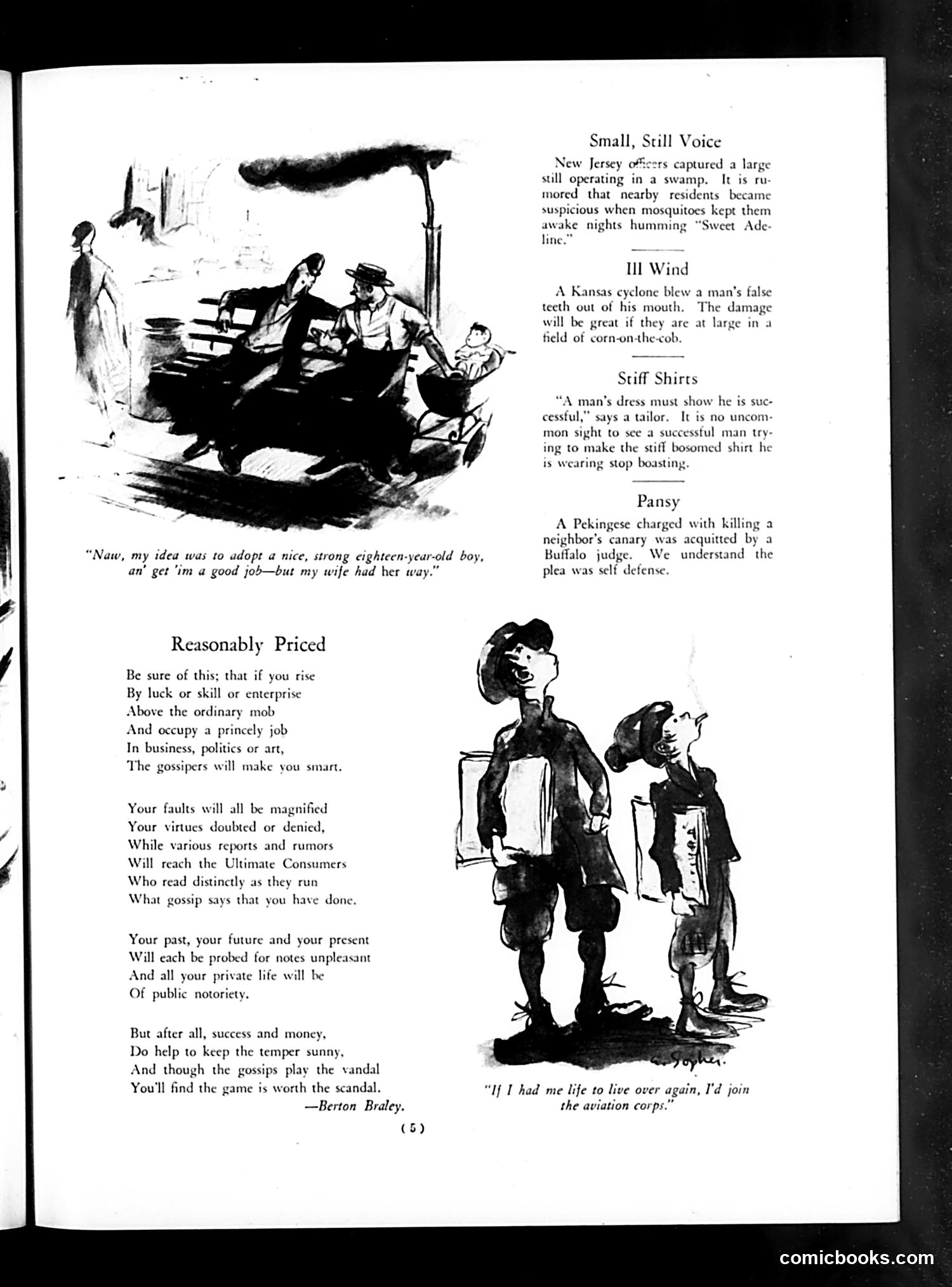
# Analysis of Life Magazine Page This page contains satirical news items and a poem about success and gossip. The top section presents humorous brief anecdotes: - **"Small, Still Voice"**: Mocks a New Jersey still (illegal alcohol production during Prohibition) operating in a swamp, where residents grew suspicious hearing mosquitoes humming "Sweet Adeline." - **"Ill Wind"**: A Kansas cyclone blew out a man's false teeth—the joke being the damage would be worse if he owned corn-on-the-cob. - **"Stiff Shirts"** and **"Pansy"**: Legal/social commentary on dress codes and a Pekinese dog acquitted of killing a canary. The main poem **"Reasonably Priced"** (by Berton Braley) satirizes how success brings magnified scrutiny: your faults are exaggerated, rumors spread, and gossip follows. The cartoon shows two well-dressed figures, one saying he'd join the aviation corps if he could live over.
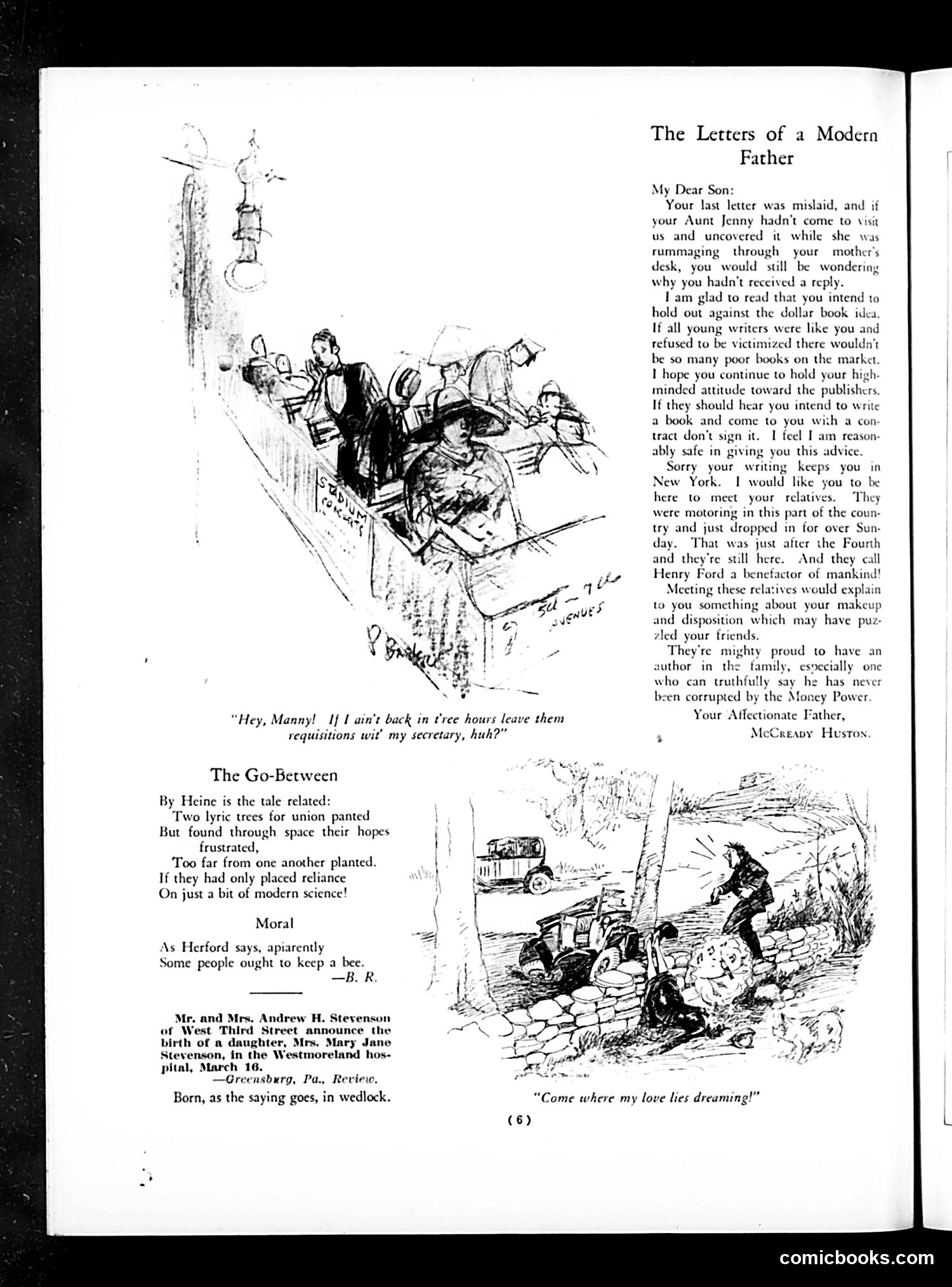
# Analysis of Life Magazine Page This page contains a letter from father McCready Huston to his son about writing and publishing, alongside two unrelated satirical pieces. The top illustration depicts a chaotic office scene with the caption about "requisitions" and a secretary, likely satirizing bureaucratic inefficiency or corporate absurdity—a common Life magazine theme. "The Go-Between" is a brief poem by Heine about two trees seeking union through "modern science," with a moral suggesting people should rely on practical solutions (keeping a bee) rather than complex ones. The accompanying illustration shows a car accident or breakdown scene, reinforcing the ironic message. The page concludes with a birth announcement, a standard magazine feature. The overall tone is early-20th-century American satirical humor targeting corporate culture and misplaced faith in technological solutions.
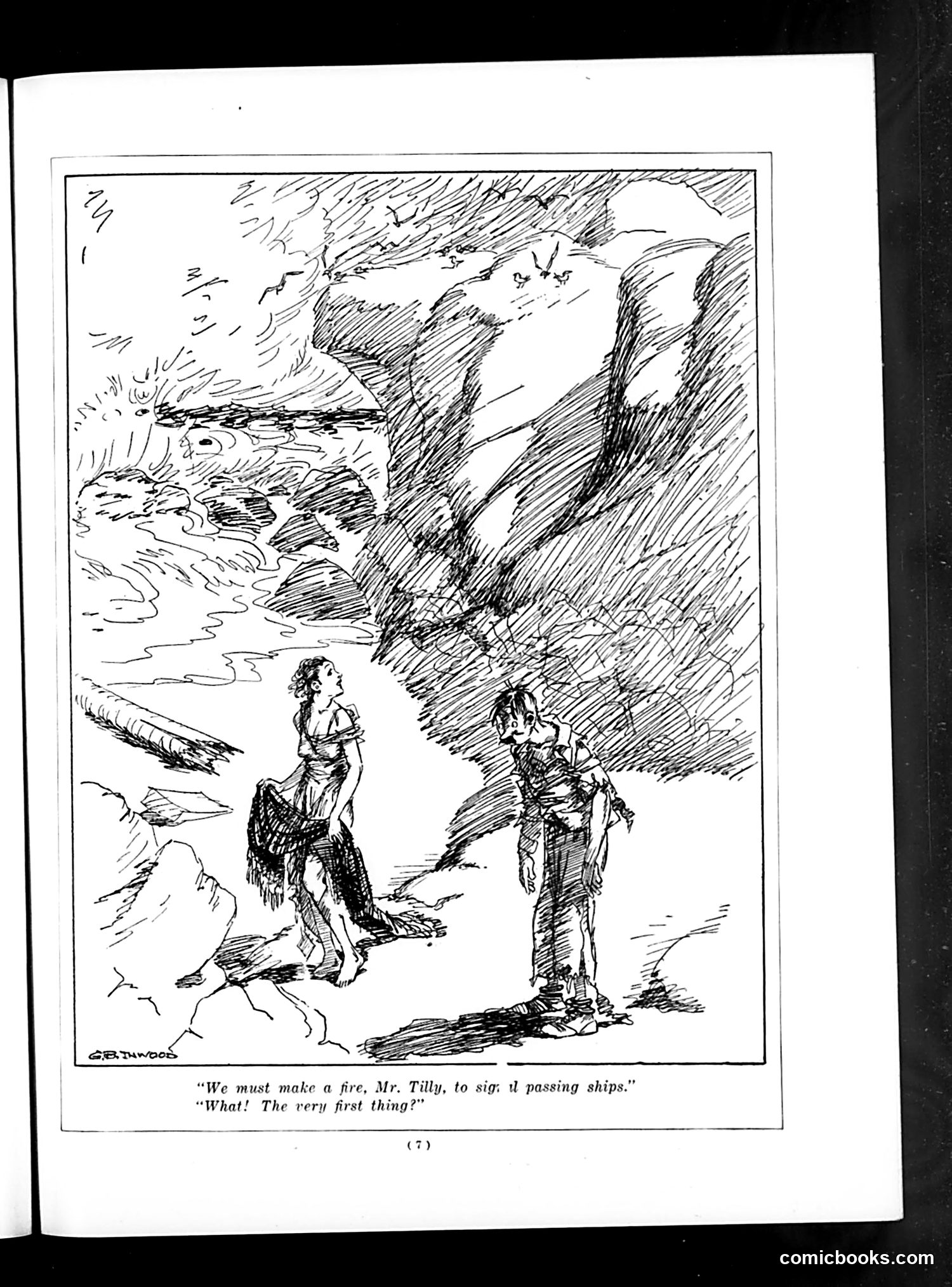
# Cartoon Analysis This single-panel cartoon depicts two people on a rocky beach or shore beneath tall cliffs. One figure (appearing to be a woman in a dress) suggests to the other (a man labeled "Mr. Tilly"): "We must make a fire, Mr. Tilly, to signal passing ships." The man's response—"What! The very first thing?"—suggests he's either shocked or has different priorities in their apparent survival situation. The joke appears to satirize gender relations or courtship norms of the era, implying the man interprets the woman's suggestion as forward or inappropriate rather than as a practical survival measure. The cartoon plays on miscommunication or differing social expectations between the sexes in this isolated predicament. The artist's signature reads "G.B. Tutwood" or similar.
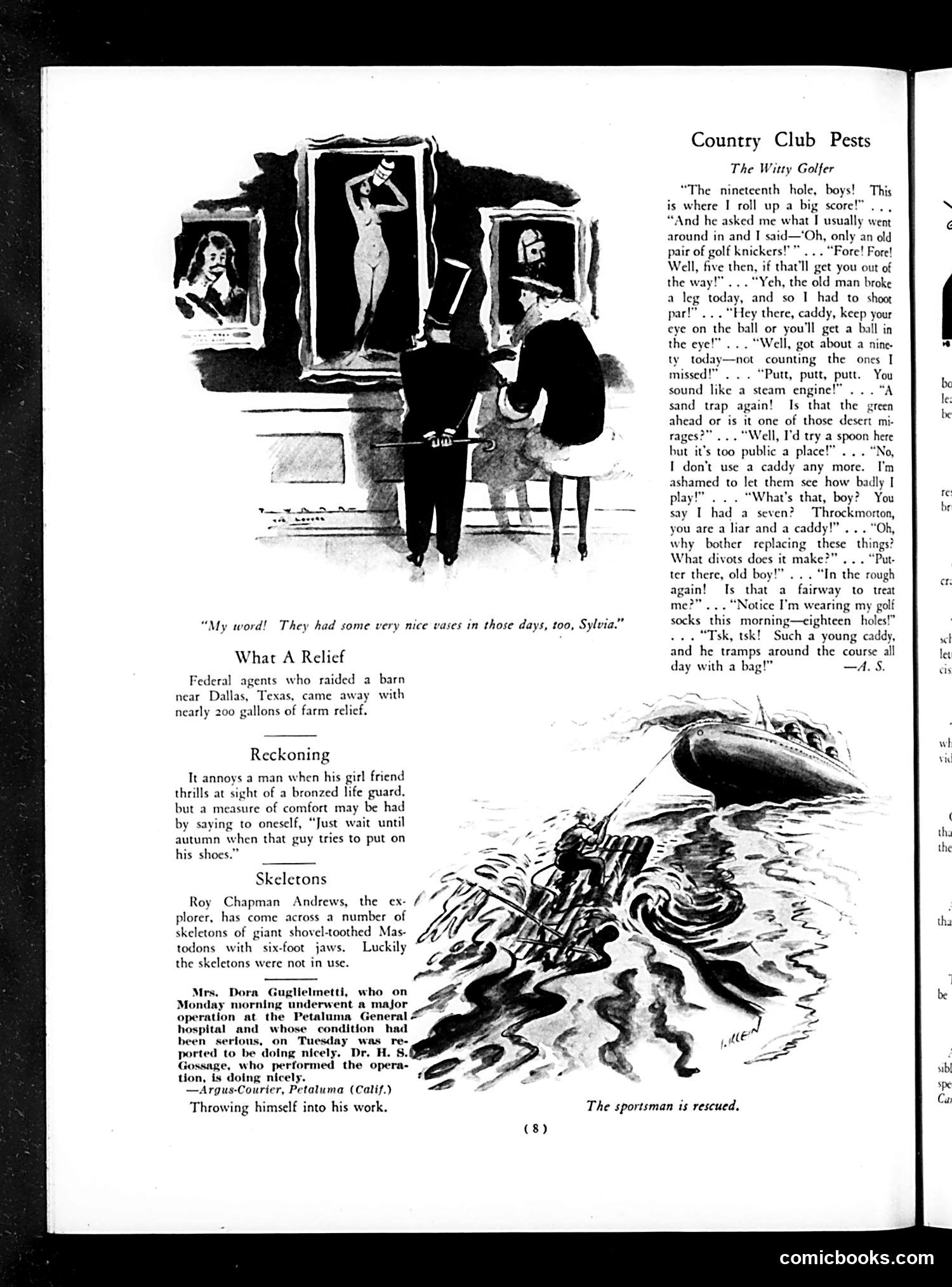
# "Country Club Pests" - The Witty Golfer This page satirizes social dynamics at country clubs through golf humor. The main cartoon shows a woman looking at framed pictures on a wall while a man speaks to her, with the caption "My word! They had some very nice views in those days, too, Sylvia." The right column presents "The Witty Golfer" — a monologue mocking an irritating golfer who constantly makes bad jokes and comments during play. The repeated quoted snippets capture the tedious, unfunny banter: puns about "fore," steam engines, sand traps, and golf socks. The satire targets the type of club member who ruins others' enjoyment through constant, forced jocularity and poor sportsmanship — complaining about scores, caddy performance, and his own appearance while pestering fellow golfers.
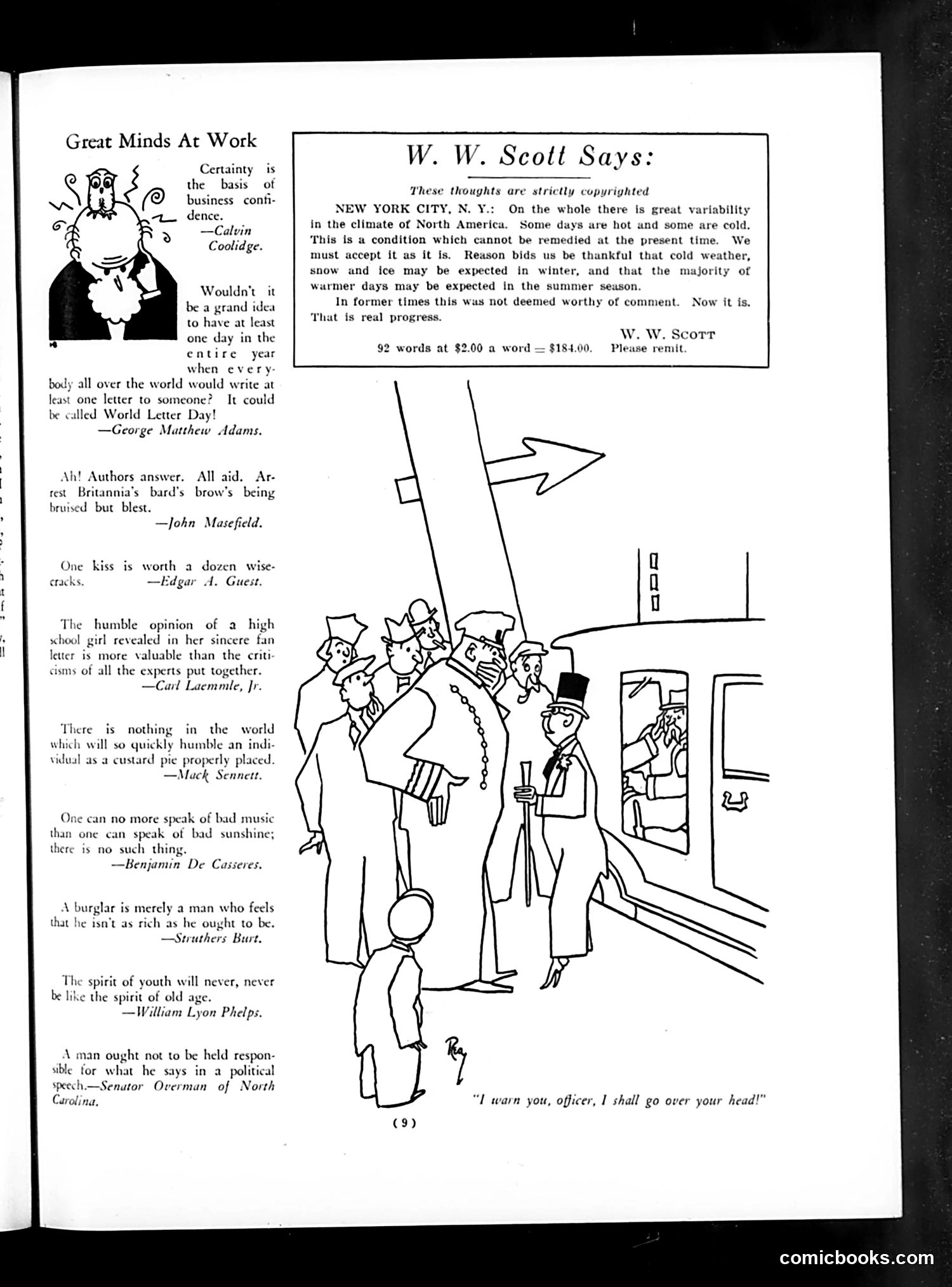
# Analysis This page contains a "Great Minds at Work" column of humorous quotations attributed to famous figures, plus one cartoon illustration. The cartoon depicts what appears to be a police officer confronting a group of men entering or exiting a building (possibly a speakeasy, based on the furtive nature and the era). The officer warns, "I warn you, officer, I shall go over your head!" — suggesting someone threatening to use political influence to avoid arrest. This likely satirizes **Prohibition-era corruption**, where wealthy or politically connected individuals could evade enforcement of alcohol laws through bribery or influence. The joke is that the suspect preemptively warns the officer he has connections powerful enough to overturn any arrest. The page itself is primarily textual quotations rather than a substantive article.
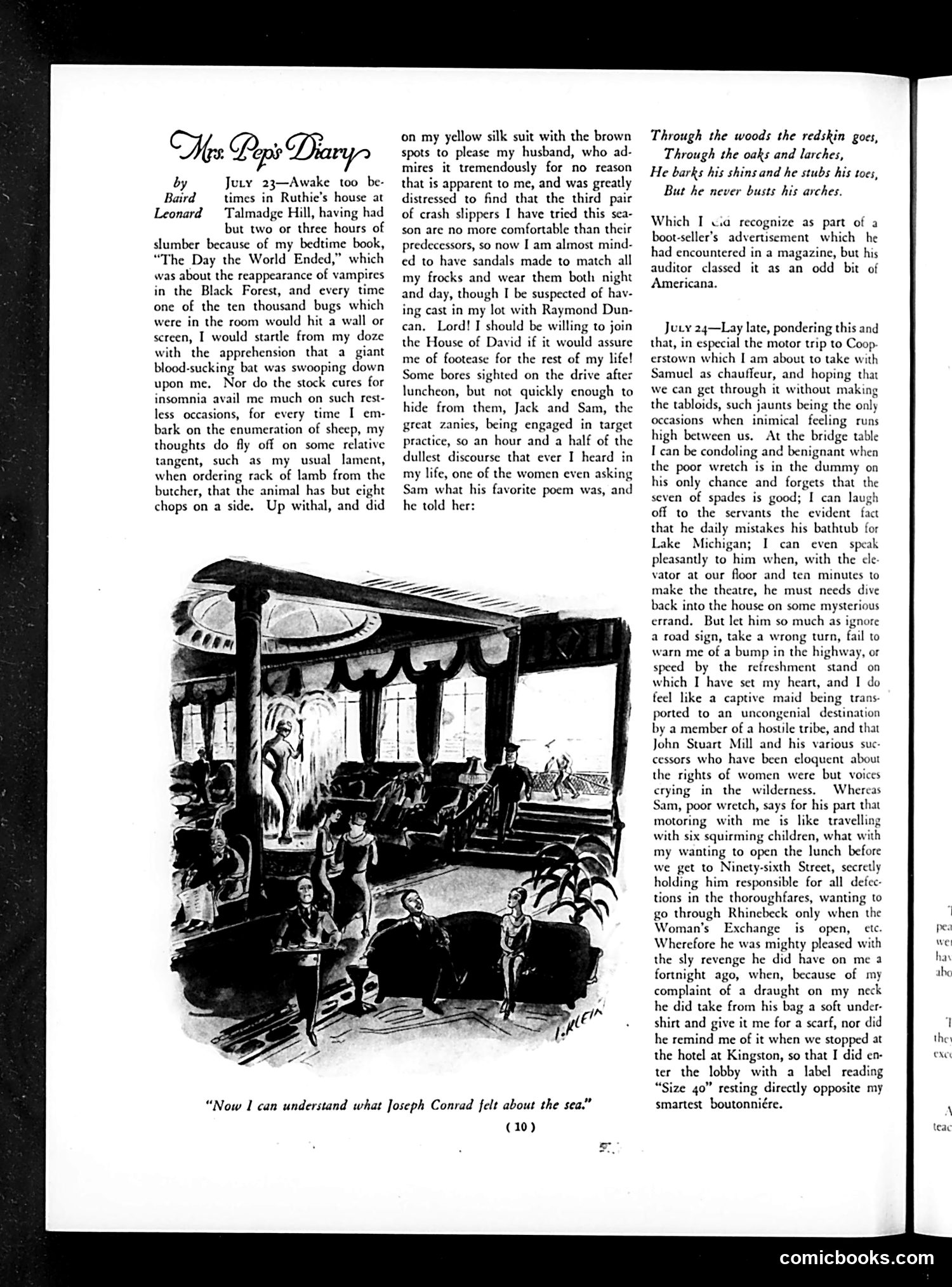
# "Mrs. Pop's Diary" - Page Analysis This is a humorous diary entry by Baird Leonard dated July 23-24, satirizing upper-middle-class domestic life and marital frustrations. The illustration shows what appears to be an elevated train or transit car interior with passengers. The entry mocks the narrator's complaints about her husband (Raymond Duncan) and trivial domestic concerns—uncomfortable crash slippers, target practice bores, and his various character flaws. The satire targets women's magazines' typical advice columns and domestic concerns of the era. A key satirical moment: she compares her marital discomfort to Joseph Conrad's maritime experiences, suggesting her domestic grievances are cosmically insignificant. The humor lies in the contrast between her self-important complaints and actual human suffering, poking fun at the privileged complainant.