A complete issue · 36 pages · 1930
Life — July 18, 1930
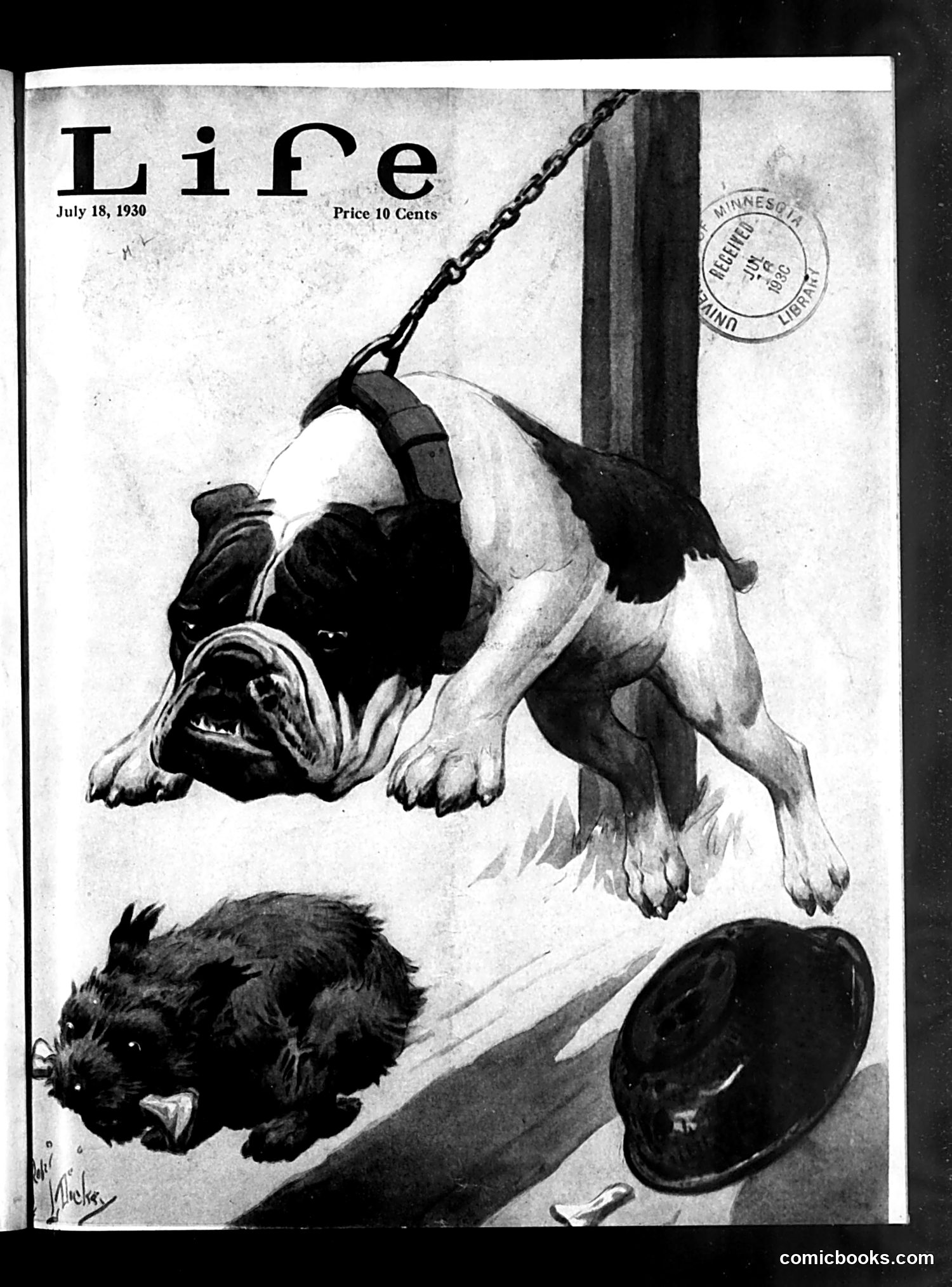
# Life Magazine Cover, July 18, 1929 This cover depicts a bulldog suspended by a chain, straining downward toward a small dark animal (appears to be a rat or similar creature) on the ground, with an overturned bowl nearby. The image likely satirizes the stock market crash of October 1929, which occurred just months after this July issue. The bulldog—representing American economic power or investors—is shown restrained and unable to reach its prey (financial opportunities or profits). The overturned bowl suggests depleted resources or failed expectations. The overall message appears to be a dark comedic warning about impending economic danger: despite America's strength, external forces or circumstances are preventing it from achieving its goals, foreshadowing the Great Depression's devastating impact.
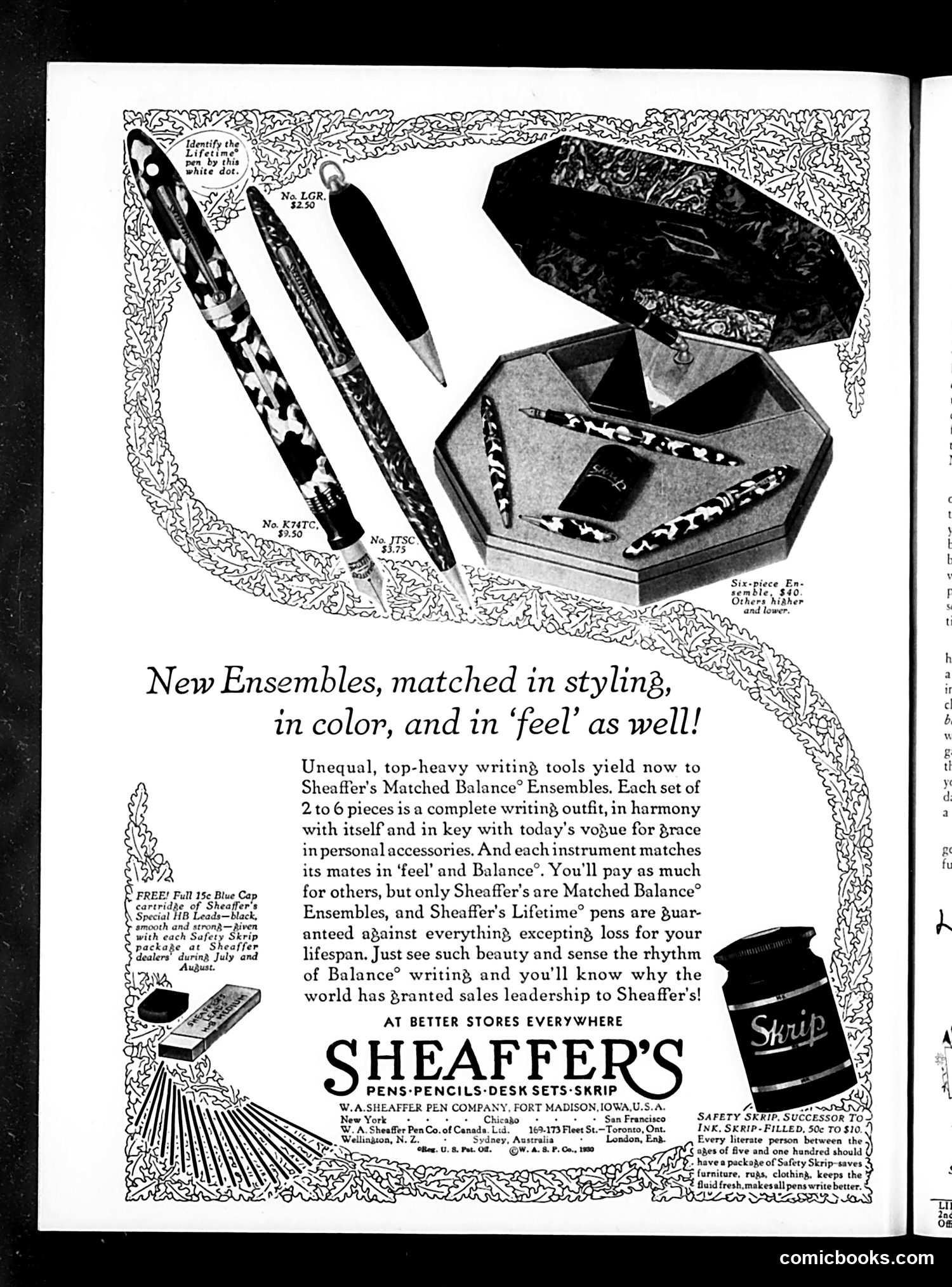
# Analysis This is primarily a **Sheaffer's pen and pencil advertisement**, not a political cartoon or satire. The page advertises "Matched Balance Ensembles" — coordinated writing instrument sets that combine pens, pencils, and desk accessories in matching styles and colors. The ad emphasizes that these matched sets represent a shift from "unequal, top-heavy writing tools" to harmonious, balanced designs. It appeals to consumers' aesthetic sensibilities and the appeal of coordinated accessories—a modern concept at the time. The decorative border and small illustrations of writing implements are purely ornamental. There is no political satire, caricature, or social commentary present. This is straightforward consumer advertising typical of vintage magazine content.
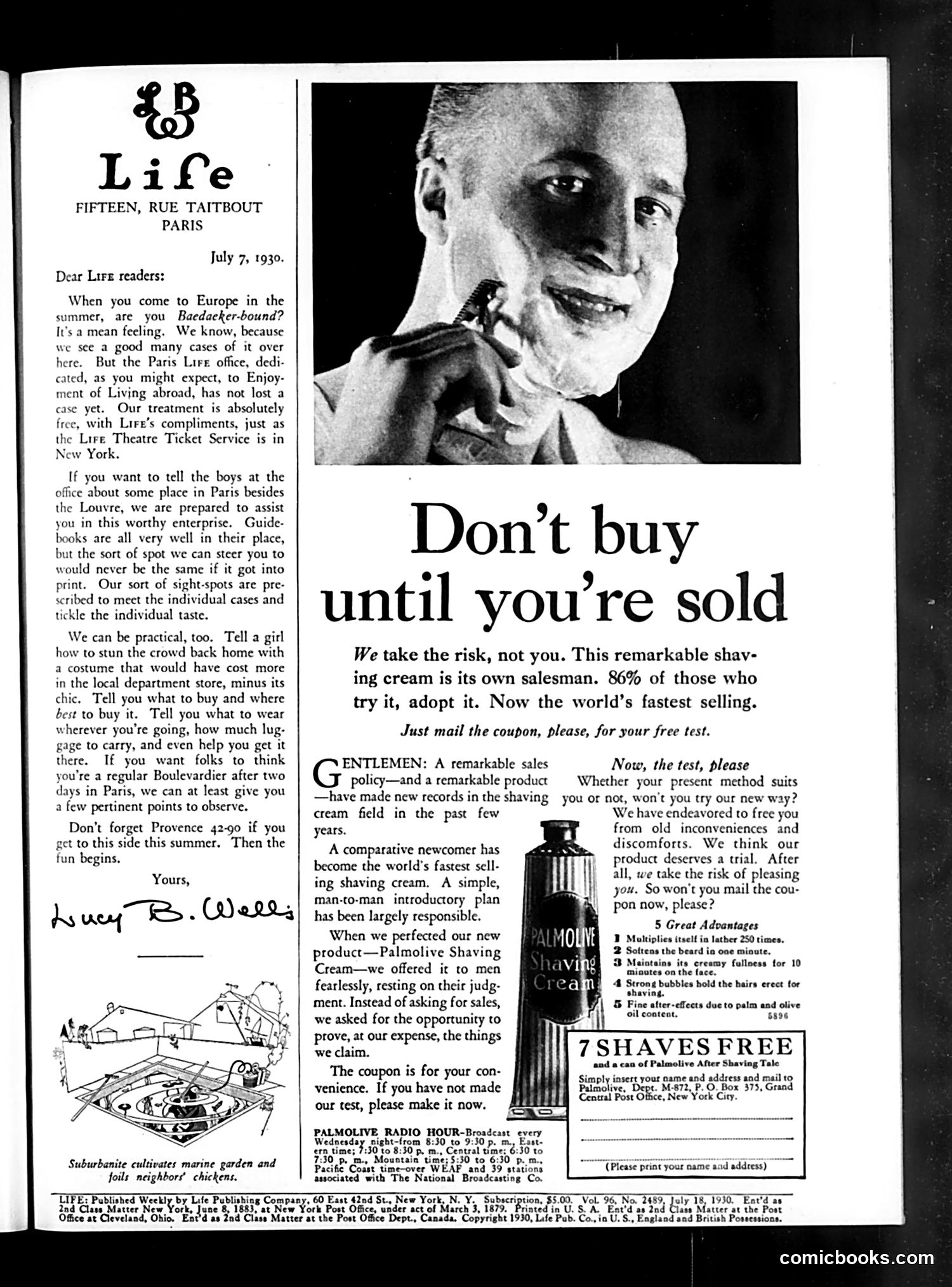
This page is primarily a **Palmolive Shaving Cream advertisement**, not political satire. The ad features a photograph of a man's face with the headline "Don't buy until you're sold," promoting Palmolive's sales strategy: customers can test the product free before purchasing. The ad claims 86% of trial users adopt the product, calling it "the world's fastest selling" shaving cream. The accompanying text emphasizes the company's confidence in quality—they "take the risk, not you"—and lists seven claimed advantages (better lather, quicker shaves, etc.). A small cartoon at bottom left shows a domestic scene, likely illustrating the product's family appeal or convenience. The page also includes unrelated editorial content from Life magazine's Paris office discussing summer travel in Europe.
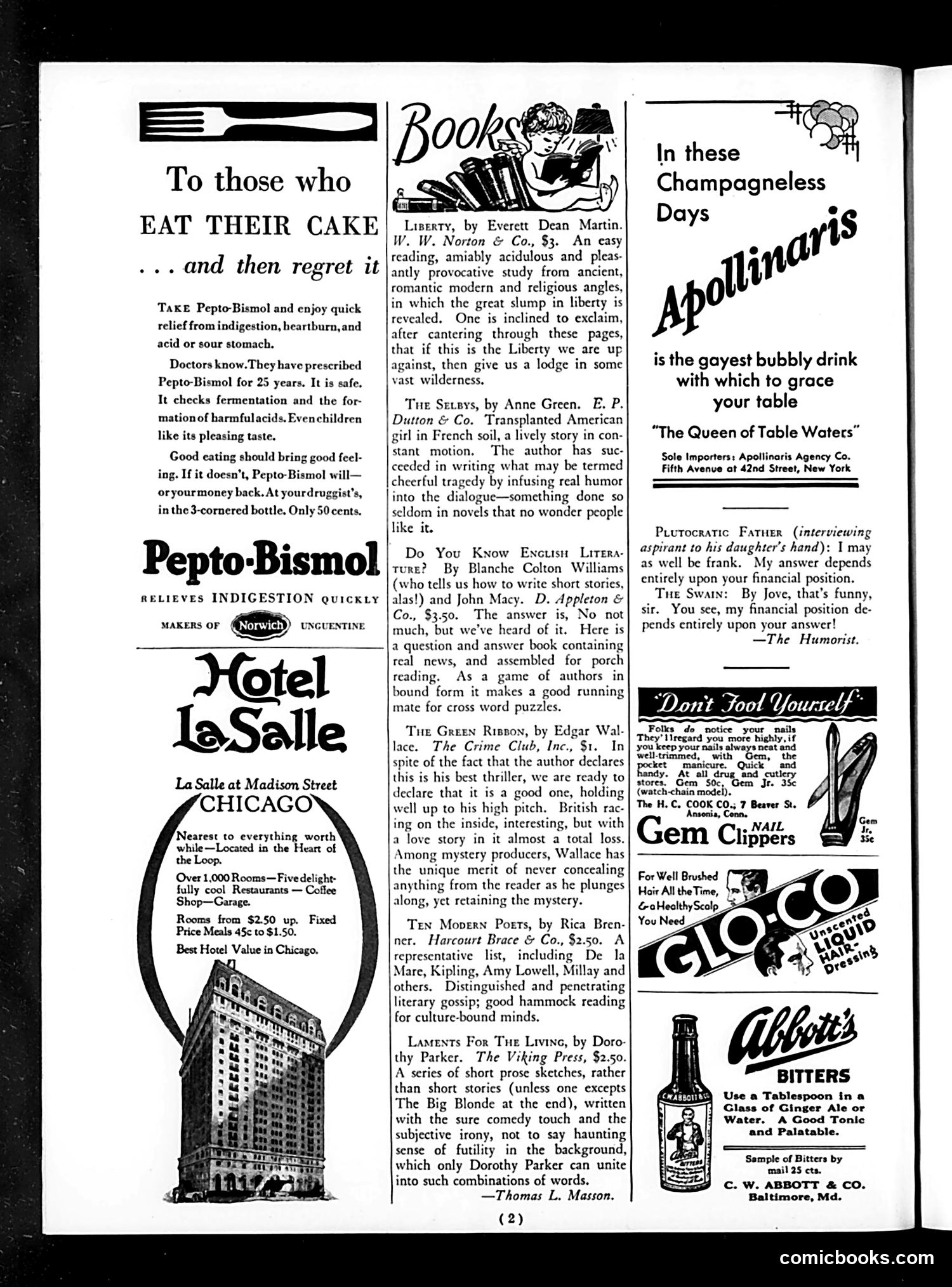
# Page Analysis This page is primarily **advertising and book reviews**, not political cartoons. The content includes: **Book Reviews** (center column): Reviews of contemporary 1920s-30s literature, including works on liberty, French life, English literature, and modern poetry—typical middlebrow cultural fare of the era. **Advertisements** (surrounding text): - Pepto-Bismol (digestive aid) - Hotel LaSalle in Chicago - Apollinaris sparkling water - Gem Clippers (nail care) - Gloico hair product - Abbott's Bitters (medicinal tonic) The advertisements reflect period concerns: digestive health, hotel amenities, grooming, and patent medicines marketed as health tonics. There are **no political cartoons or caricatures** on this page—it's a standard magazine layout mixing literary content with consumer product advertising typical of early 20th-century American magazines.
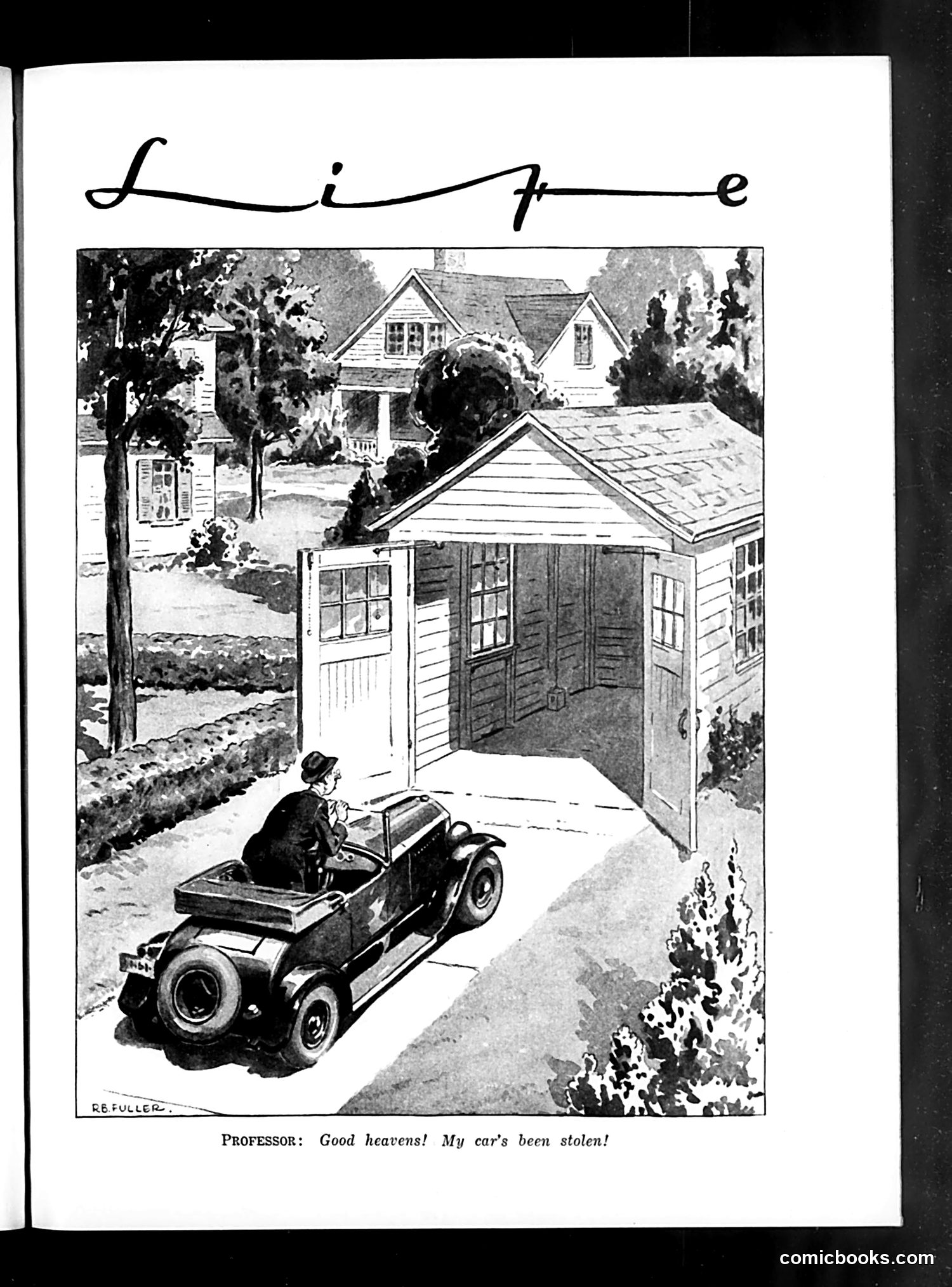
# Analysis This is a single-panel cartoon satirizing car theft. The image shows a well-dressed professor driving away in a toy-sized automobile from a residential garage, with the caption reading "Good heavens! My car's been stolen!" The joke operates through visual irony: the professor appears to be driving away *in* what he claims has been stolen. The cartoon likely comments on absent-mindedness or the absurdity of not noticing one has their car. It may also gently mock the emerging problem of automobile theft in early-to-mid 20th century America, playing on concerns about vehicle security and crime. The cartoonist signature reads "R.B FULLER." The architectural detail of the suburban house and garage setting anchors this in domestic American life during the automobile era.
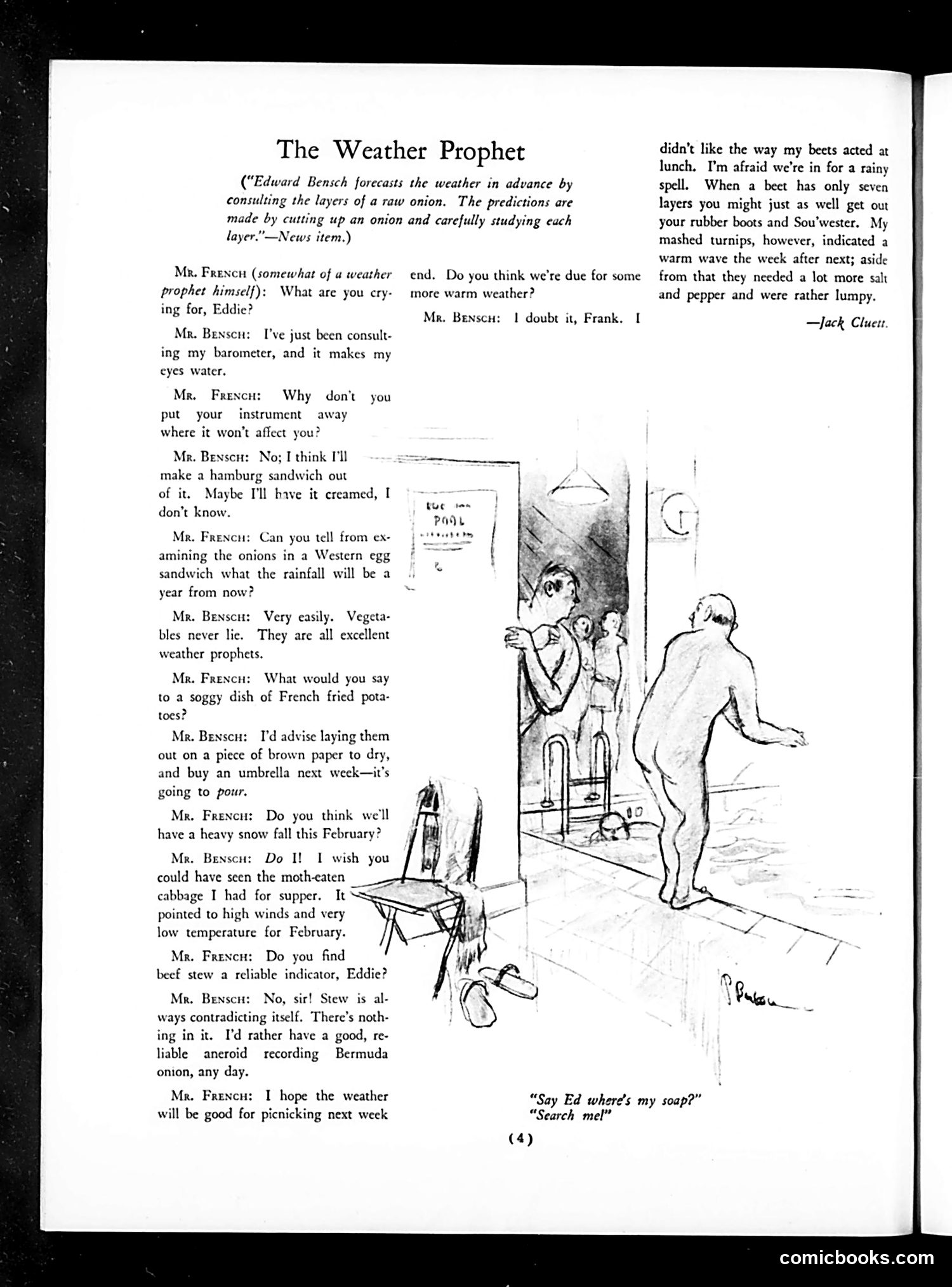
# "The Weather Prophet" Analysis This is a humorous dialogue between Mr. French and Mr. Bensch, a self-proclaimed "weather prophet" who claims to predict rainfall by examining onion layers (a folk method referenced in the header). The satire mocks both pseudoscientific weather prediction and Bensch's absurd confidence in his method. When French asks serious questions about rainfall and snow, Bensch responds with ridiculous advice: using vegetables as forecasting tools, claiming a moth-eaten cabbage indicates low February temperatures, and recommending French fried potatoes need drying on brown paper. The accompanying cartoon shows two nude figures looking at what appears to be a bathtub or basin, with one asking "Say Ed where's my soap?" and the other replying "Search me!" This visual gag seems unrelated to the dialogue, likely accompanying a separate joke on the page.
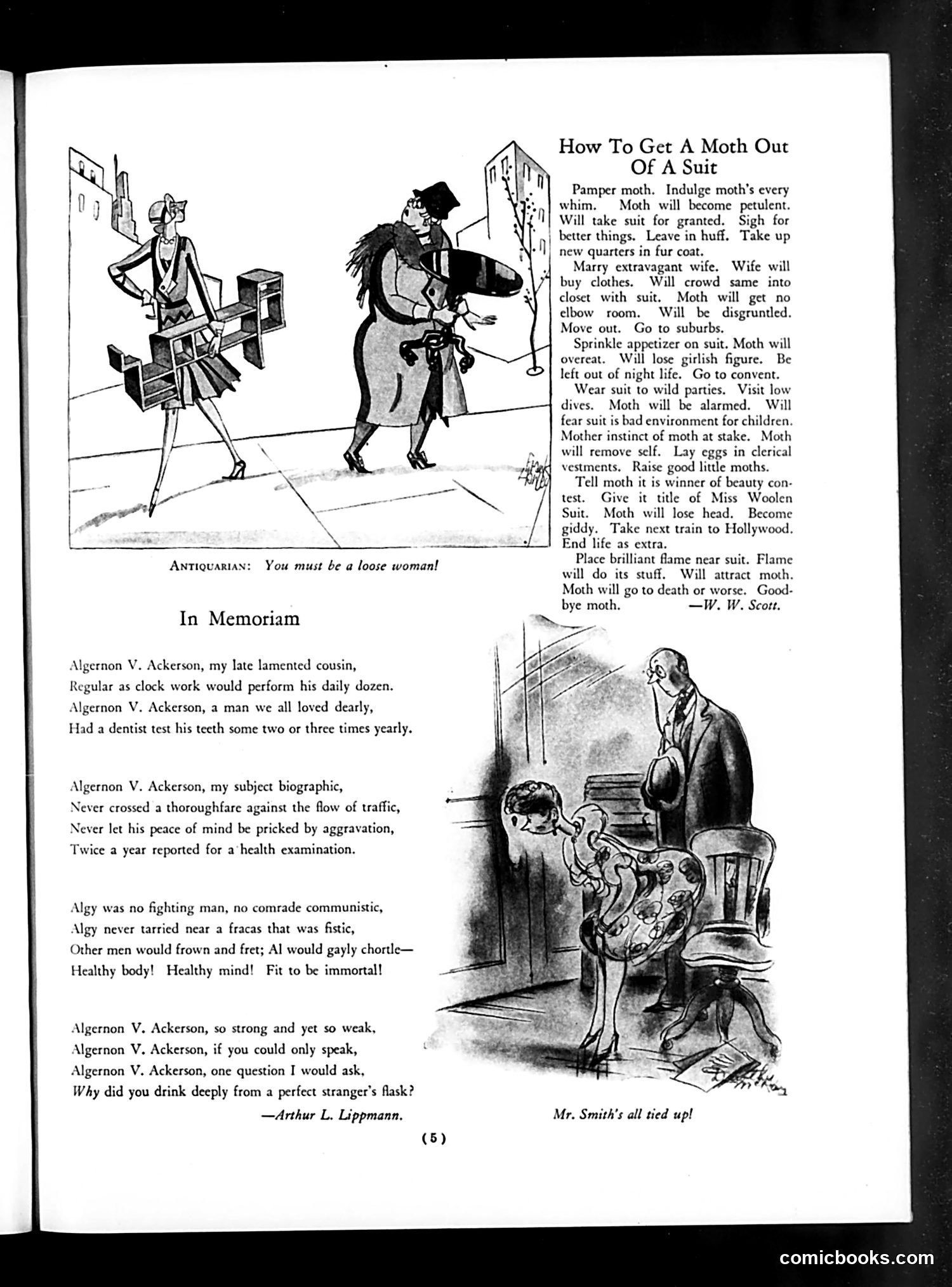
# Analysis of Life Magazine Page The top cartoon satirizes gender roles and marriage. A woman in fashionable dress stands holding household items while a man in formal wear appears to be leaving. The caption "You must be a loose woman!" suggests mockery of a wife's independence or unconventional behavior—likely her spending on clothes or active social life. The satire targets rigid Victorian expectations of female domesticity. Below is a humorous poem "In Memoriam" for Algernon V. Ackerson, presented as an oddly cheerful tribute to a boring, cautious man who regularly visited dentists and never took risks. The tone is ironic—praising his predictability as admirable rather than dull. The bottom illustration shows a medical/dental scene, likely supporting the poem's theme about health examinations.
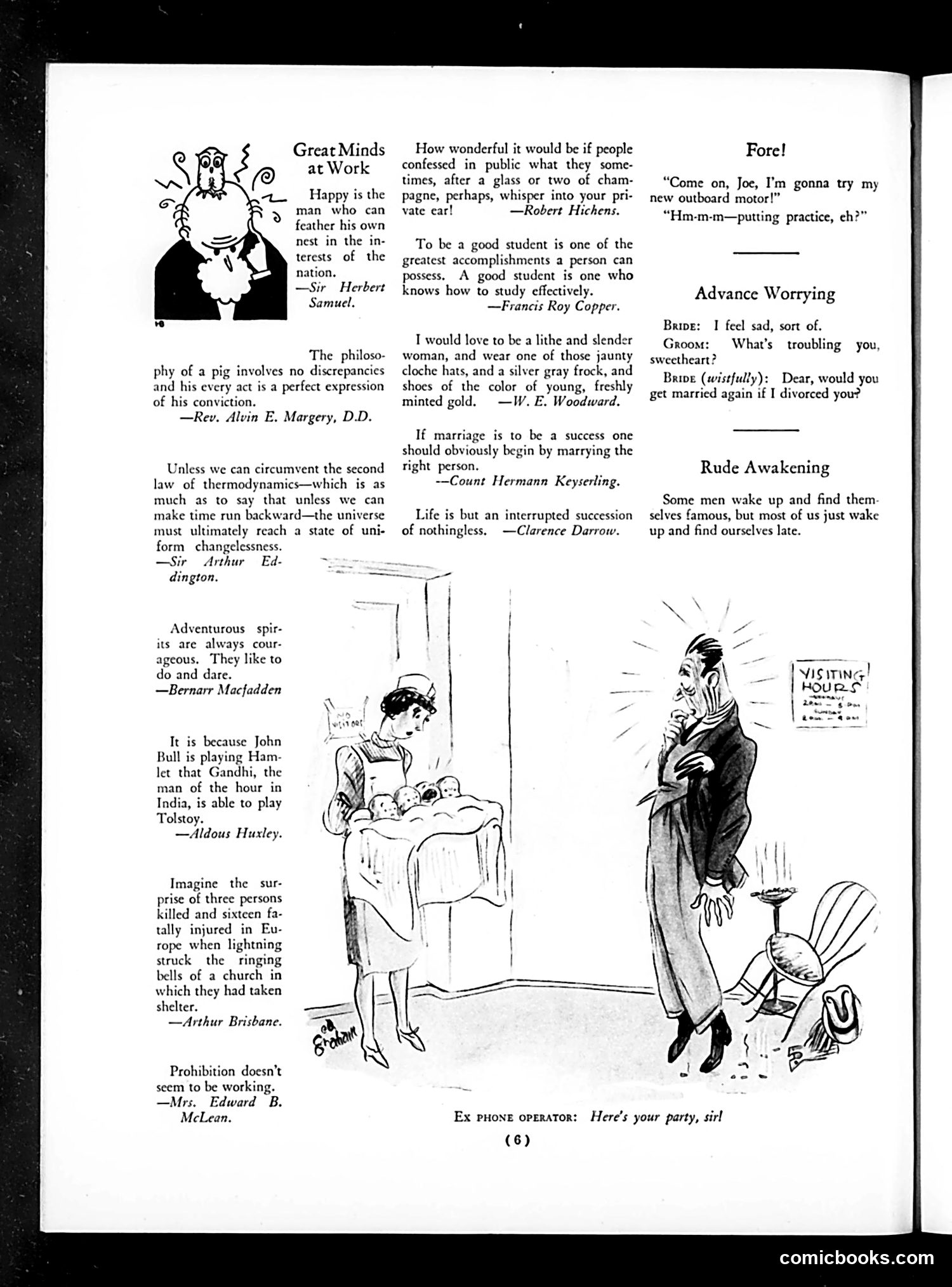
# Analysis of Life Magazine Page This page contains satirical quotes and cartoons typical of 1920s-30s Life magazine humor. **"Great Minds at Work"** features attributed quotes on happiness, student life, and philosophy from various public figures and writers. **"Advance Worrying"** is a brief comic dialogue between a bride and groom about potential divorce—a joke on marital pessimism. **"Rude Awakening"** contains a quip about fame and ordinariness, paired with a cartoon showing a man arriving at "visiting hours" to see a woman with a baby. The caption "Ex phone operator: Here's your party, sir!" is a pun: the operator is delivering her "party" (the baby, implying he's the father), playing on telephone operator language. The humor relies on sexual innuendo common to the era's satire about unmarried mothers and paternity.
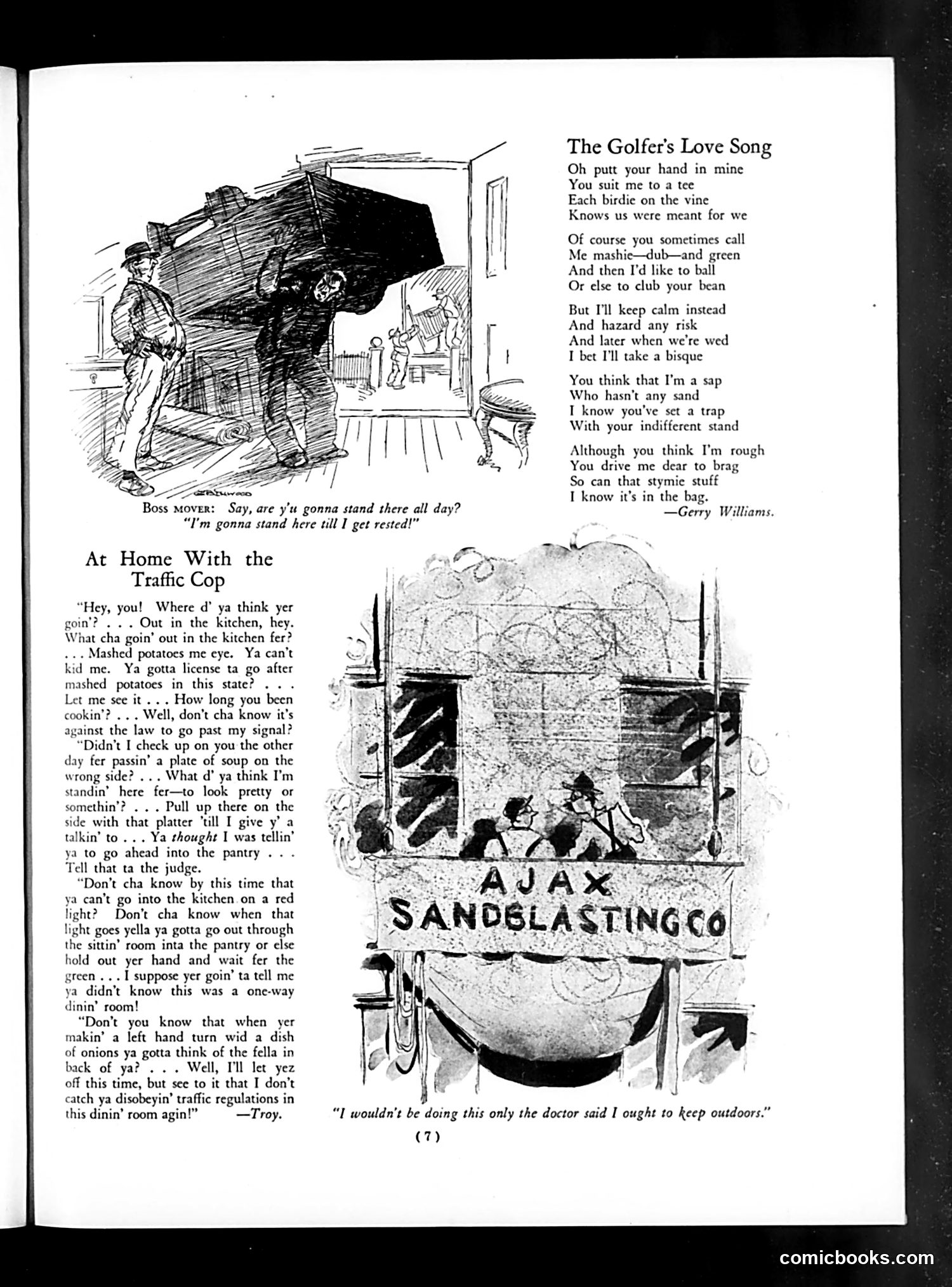
# Analysis of Page 7 This page contains three separate pieces: 1. **"The Golfer's Love Song"** by Gerry Williams—a humorous poem about a man courting a woman who is obsessed with golf. The joke is that she prioritizes the sport over romance, calling him names like "mashie-dub" (golf club terms) and threatening to "club your bean" (hit his head). It's satire on how golf consumes people's attention. 2. **"At Home With the Traffic Cop"** by Troy—a comedic monologue where a traffic cop complains about his wife's kitchen cooking and his frustration enforcing traffic laws. The humor relies on his exasperated, vernacular speech and domestic frustrations. 3. **An advertisement for "Ajax Sandblasting Co."** with an illustration showing workers sandblasting a surface. These represent typical Life magazine humor content: light domestic comedy and advertising.
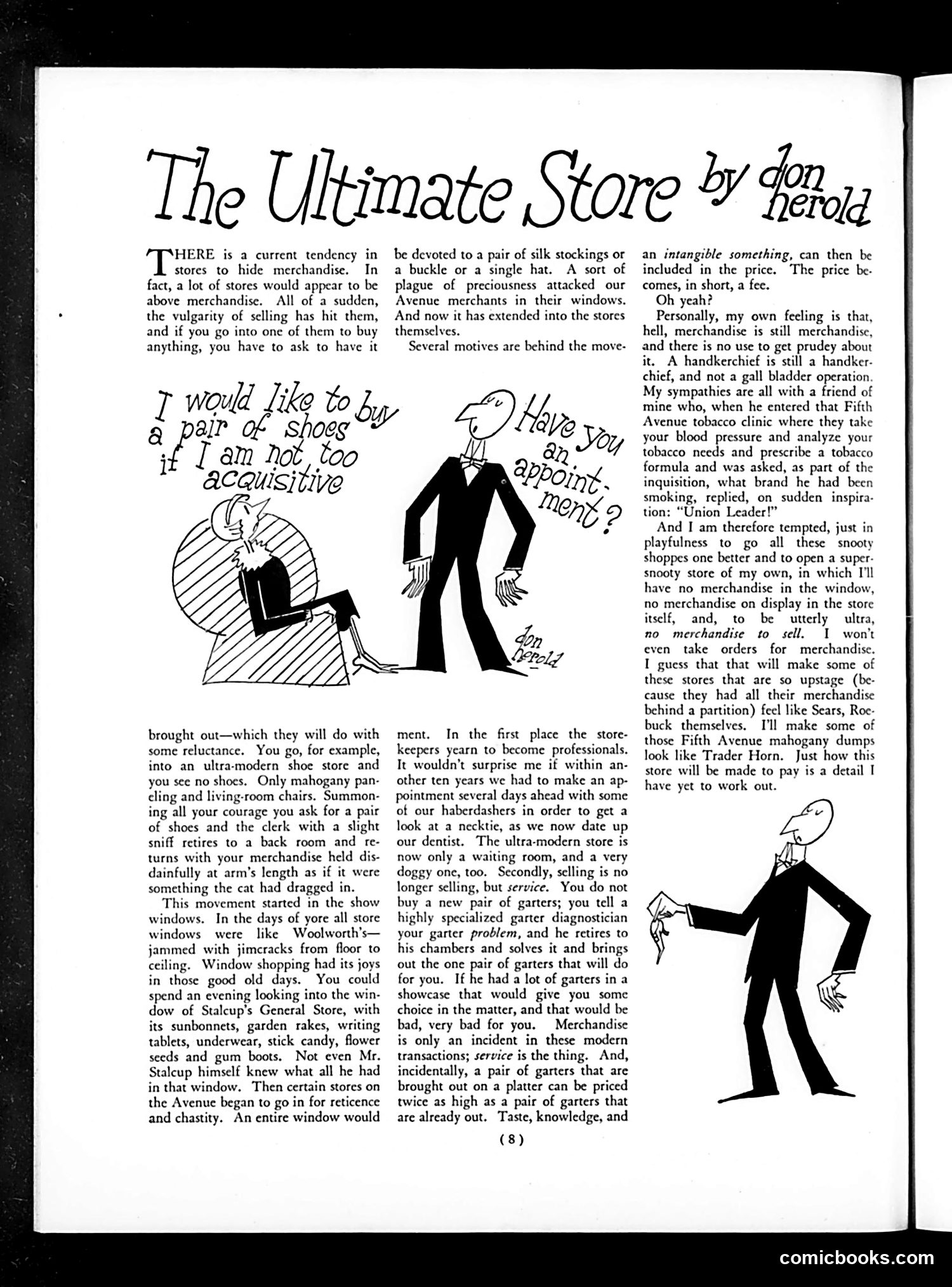
# "The Ultimate Store" by Don Herold This satirical article mocks the trend of upscale retail stores removing merchandise from display to emphasize exclusivity and "service." The author ridicules stores that hide products behind partitions, forcing customers to ask clerks for items—mimicking high-end tobacconists and haberdasheries. Herold proposes opening a deliberately absurd counter-store: no merchandise visible anywhere, no window displays, and no actual sales—only consultation services (like a garter "diagnostician"). The joke targets the pretension of modern retail culture, where the *perception* of exclusivity matters more than actual goods. The accompanying cartoons show exaggerated figures embodying this snobbish shopping experience—the satire suggesting this trend had become laughably extreme among Fifth Avenue establishments.
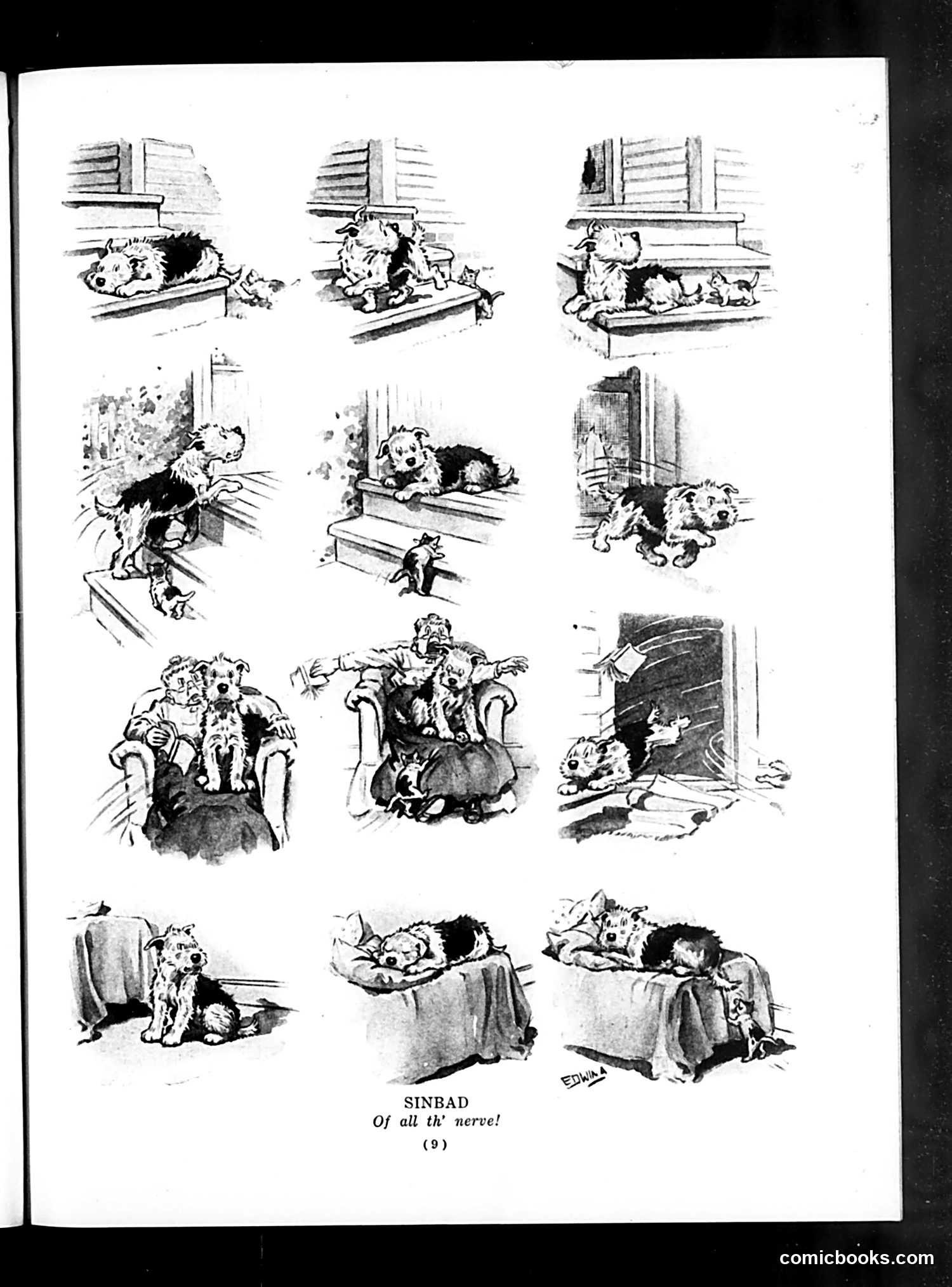
# "Sinbad: Of all th' nerve!" This is a humorous comic strip sequence depicting the misadventures of a character named Sinbad (likely a dog, based on the visual style). The twelve panels show increasingly chaotic scenarios: the character causes trouble in various domestic and public settings—creating disturbances indoors, outdoors, with furniture, and around people. The title "Of all th' nerve!" suggests exasperation at the character's brazen misbehavior. The humor derives from slapstick physical comedy typical of early 20th-century comic strips, where a mischievous character creates destruction and mayhem without apparent consequence or remorse. The strip appears designed as lighthearted entertainment rather than political satire, relying on visual gags of disorder and chaos for comedic effect.
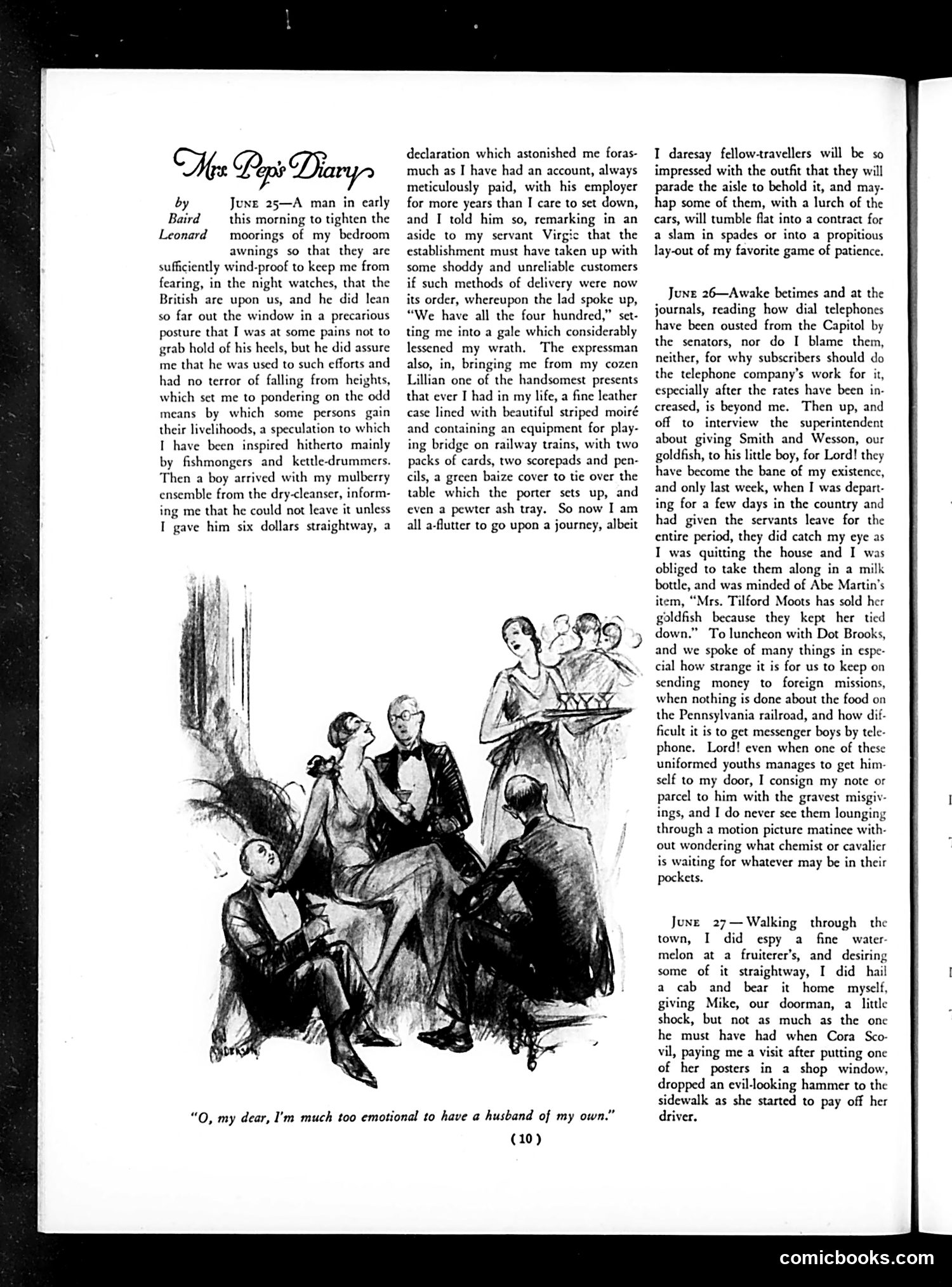
# "Mrs. Pep's Diary" - Page Analysis This is a satirical diary entry by humorist Leonard, dated June 25-27. The illustration depicts a domestic scene where a woman (Mrs. Pep) appears distressed while holding a serving tray, surrounded by men in formal dress. The satire targets **early 20th-century servant labor and domestic management**. Mrs. Pep complains about her cook's unreliability and discusses hiring difficulties. The caption—"O, my dear, I'm much too emotional to have a husband of my own"—suggests the humor lies in **comparing spoiled, difficult servants to difficult husbands**, mocking upper-class domestic frustrations. Additional entries mock sending money to foreign missions while ignoring local problems, and describe an awkward encounter with a cab driver over a watermelon purchase. The overall tone satirizes privileged concerns and social pretensions of the period.