A complete issue · 37 pages · 1930
Life — June 27, 1930
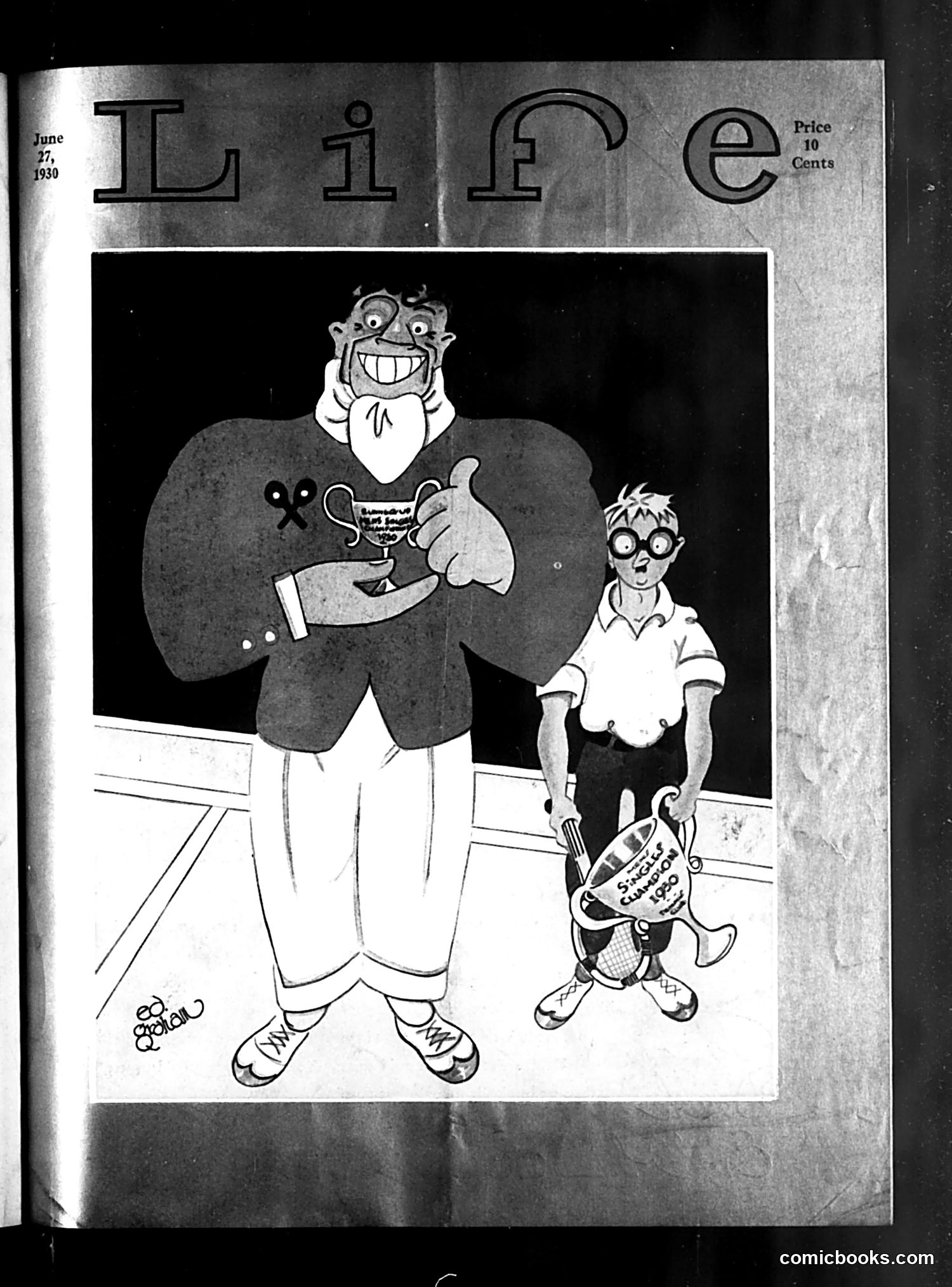
# Life Magazine Cover, June 27, 1930 This cover illustration depicts a large, menacing figure with an exaggerated grin holding a trophy cup, while a smaller boy beside him clutches what appears to be a sports award or ribbon. The art style is characteristic of 1930s satirical cartooning. Without identifying text clearly visible for the specific figures, the cartoon appears to satirize disparities in competitive success or prize-winning—possibly commenting on unfair advantages or "rigged" competition where a dominant figure claims the trophy while a smaller competitor is left with lesser recognition. The exact political or social context remains unclear from the image alone. The date (1930) and exaggerated character design suggest commentary on contemporary American sports, business, or social competition during the Great Depression era, but the specific target of satire cannot be definitively determined without additional context.
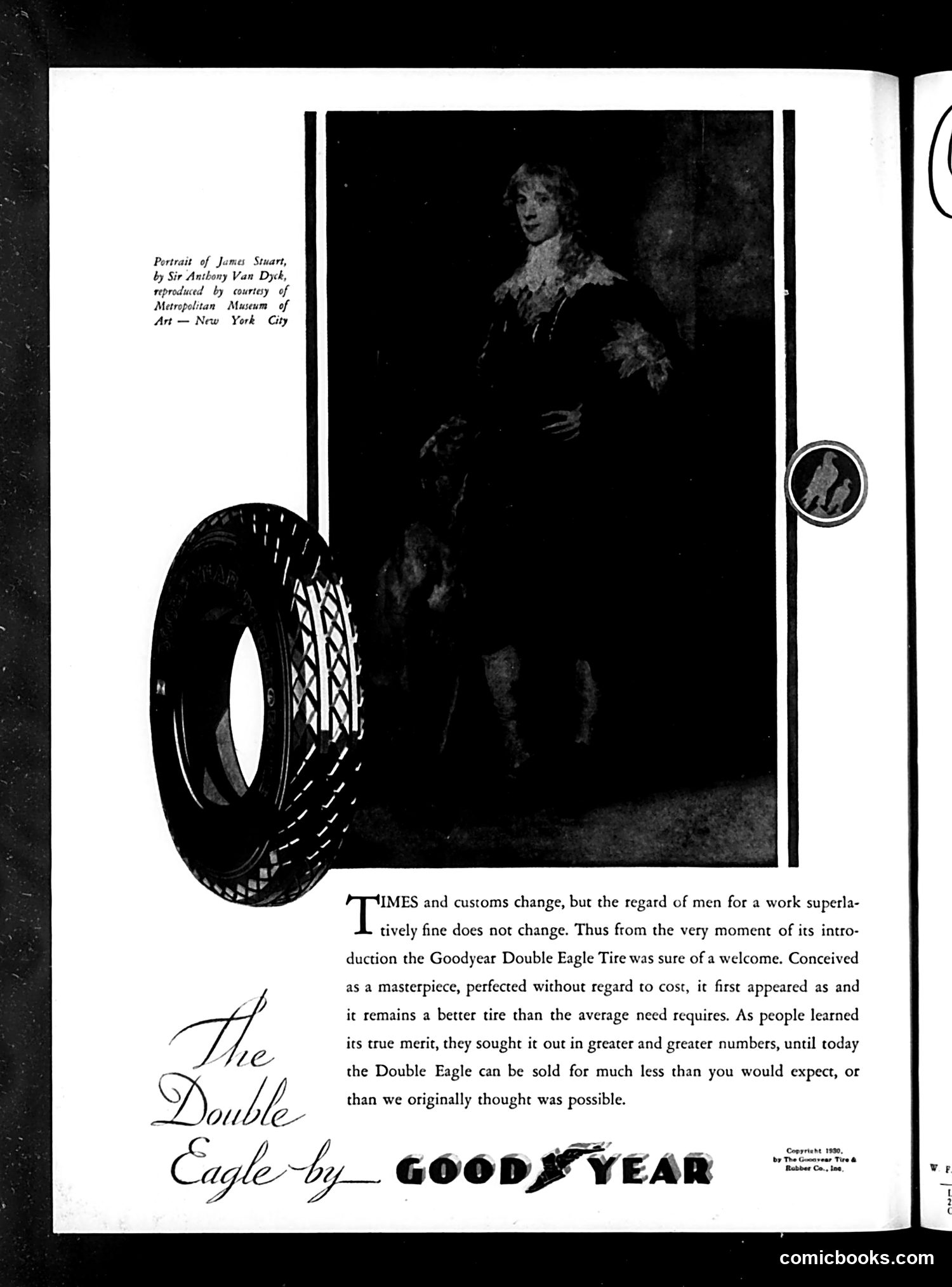
This is a **Goodyear tire advertisement**, not a satirical cartoon. The page features a portrait (credited to Sir Anthony Van Dyck, from the Metropolitan Museum of Art) of what appears to be a historical gentleman in 17th-century dress, positioned above a large tire illustration. The advertisement's pitch argues that quality craftsmanship is timeless: "Times and customs change, but the regard of men for a work superlatively fine does not change." It uses this classical portrait as a metaphor—just as Van Dyck's painting remains valued across centuries, so the Goodyear Double Eagle Tire supposedly maintains its superior quality despite changing times and market conditions. The ad claims the tire's excellence has driven increasing demand, allowing prices to drop while maintaining superior quality.
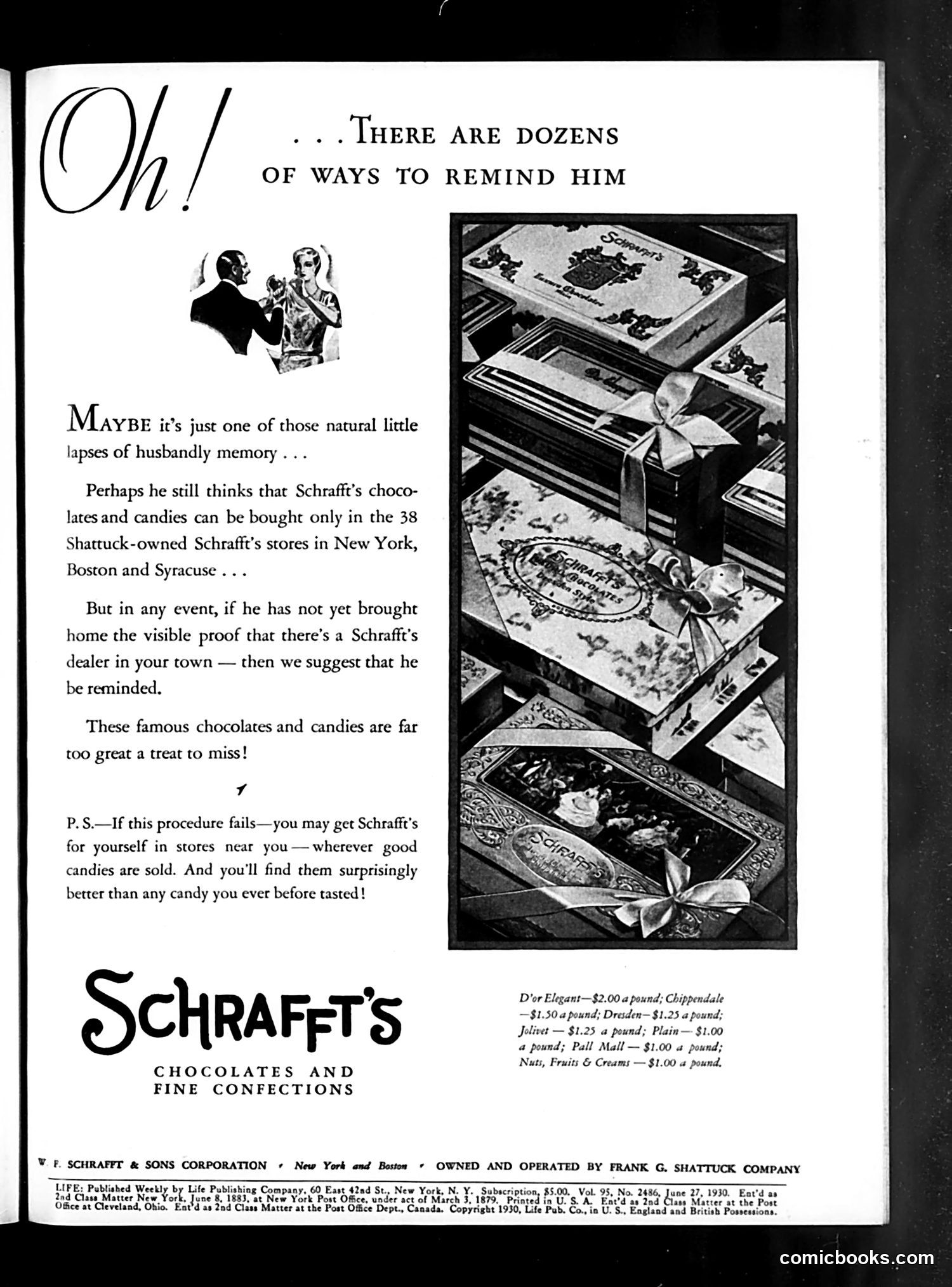
# Analysis This is primarily an **advertisement for Schrafft's chocolates and candies**, not a political cartoon. The "Oh!" headline and illustrated couple appear designed to humorously address husbands who've forgotten to bring home Schrafft's products as gifts. The satire is gentle domestic humor: the ad jokes that a husband's "natural little lapses of husbandly memory" might cause him to forget Schrafft's exists only in 38 stores across three cities (New York, Boston, Syracuse). The solution: the wife should remind him, or he should buy it himself. The right panel shows attractive Schrafft's product boxes with ribbons. Prices range from $1.00 to $2.00 per pound for varieties like "D'r Elegant" and "Dresden." The humor targets wives and gift-giving expectations—typical 1930s consumer advertising using gentle marital comedy to encourage candy purchases.
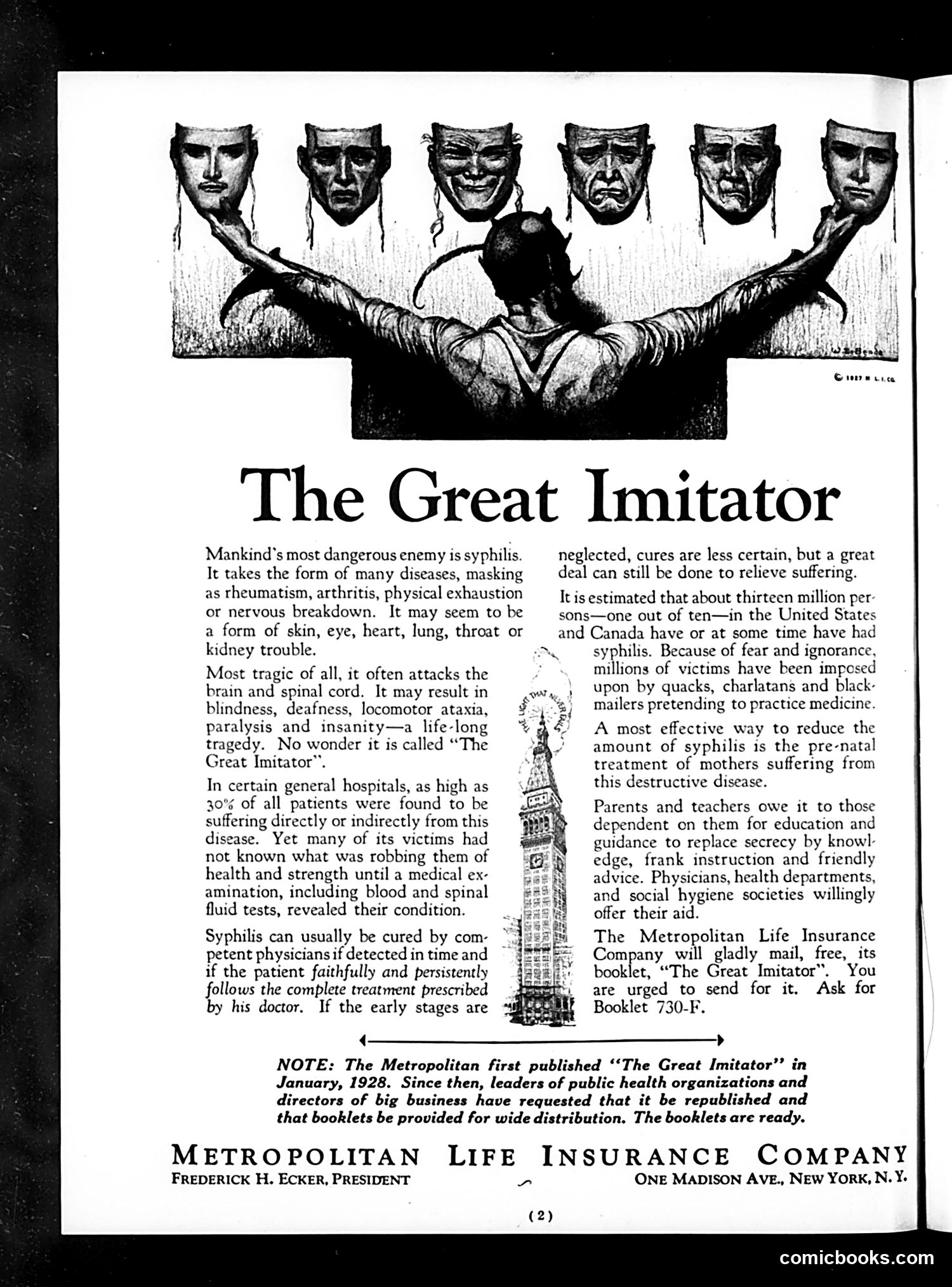
# "The Great Imitator" - Public Health Advertisement This is a **public health advertisement** by Metropolitan Life Insurance Company, not political satire. The page warns about syphilis, which was called "The Great Imitator" because it mimics other diseases—appearing as rheumatism, arthritis, or nervous breakdown. The six illustrated male faces at top represent different disease manifestations. The figure below with outstretched arms symbolizes the disease's widespread, deceptive nature. The ad emphasizes that syphilis was a major health crisis (affecting roughly one in ten Americans), often undiagnosed due to stigma and medical fraud. It urges education, early detection, and proper medical treatment as prevention strategies, positioning the insurance company as a public health advocate offering free informational booklets.
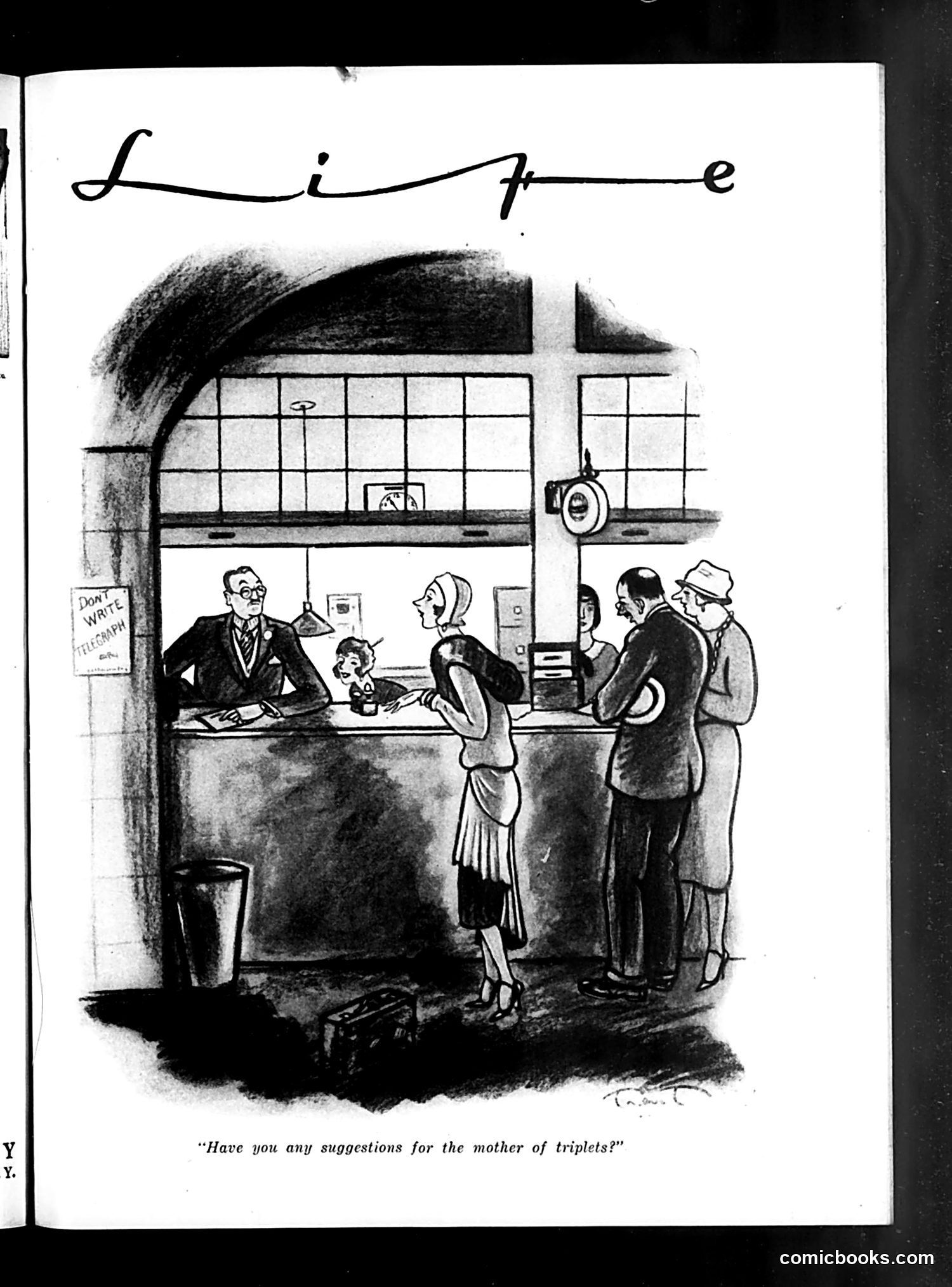
# Cartoon Analysis: "Have you any suggestions for the mother of triplets?" This is a satirical cartoon from *Life* magazine depicting a scene at what appears to be a government office or social services window (note the "Don't Write on Sill" sign). A woman with triplets seeks advice from a bureaucrat behind the counter, while several men in hats wait behind her. The humor satirizes the bureaucratic response to large families during an era of economic concern—likely the Depression or post-war period when supporting multiple children was financially challenging. The cartoon mocks both the apparent inadequacy of government assistance and the absurdity of asking bureaucrats for practical parenting advice. The waiting men suggest this is a common, frustrating interaction with an indifferent system. The satire targets institutional inefficiency in addressing real family hardships.
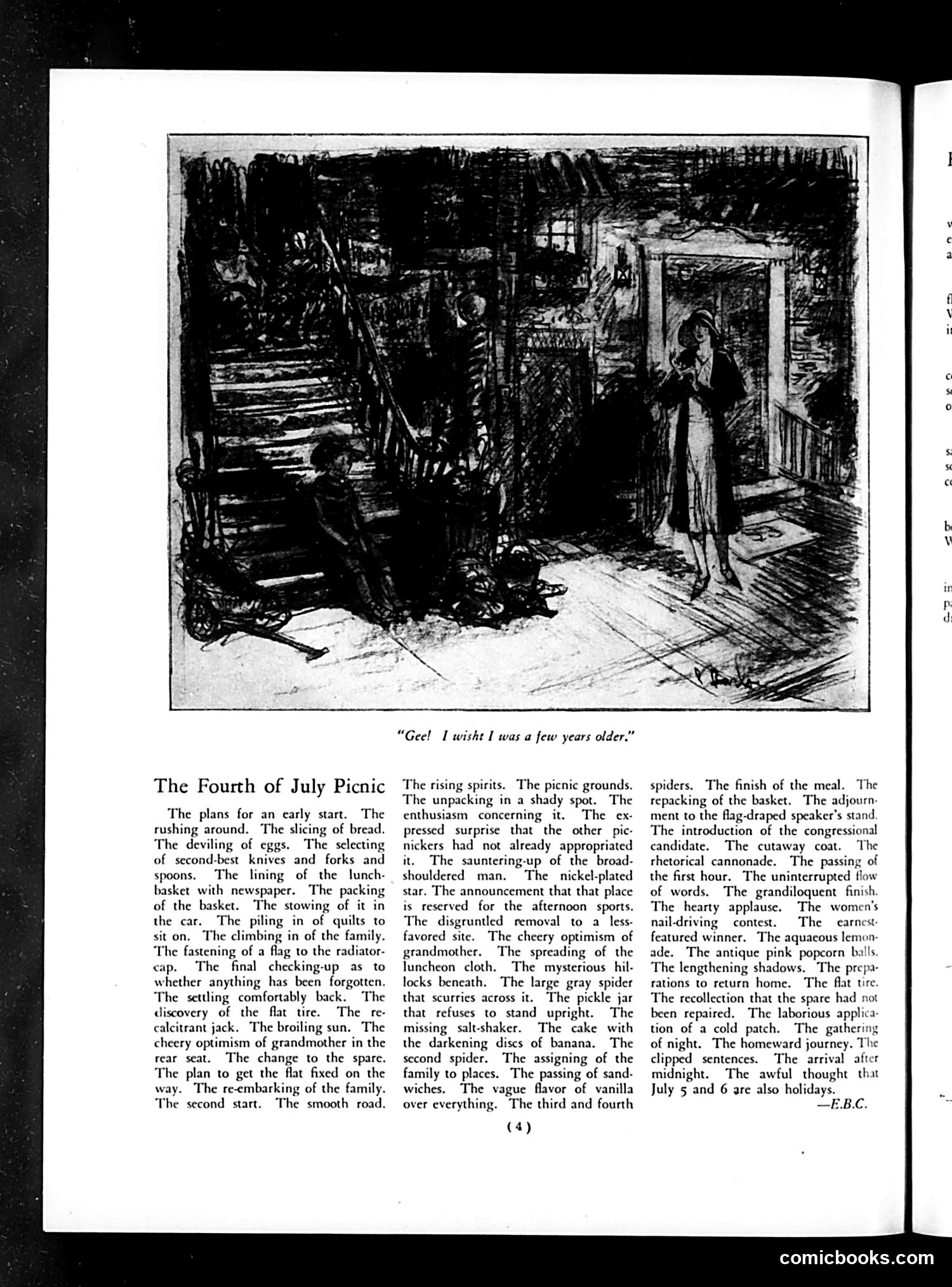
# Analysis This page contains a humorous short story titled "The Fourth of July Picnic" with an accompanying illustration. The sketch shows a domestic scene at what appears to be a picnic outing, depicting various mishaps and ironies associated with attempting an early-morning Fourth of July celebration. The satire targets the gap between picnic ideals and reality: the text catalogs a series of escalating disasters—forgotten items, spilled food, broken equipment, family disputes, and various minor catastrophes that undermine the cheerful patriotic occasion. The final line notes that "July 5 and 6 are also holidays," suggesting exhausted relief when the ordeal ends. This is gentle social satire about American family life and holiday expectations rather than political commentary.
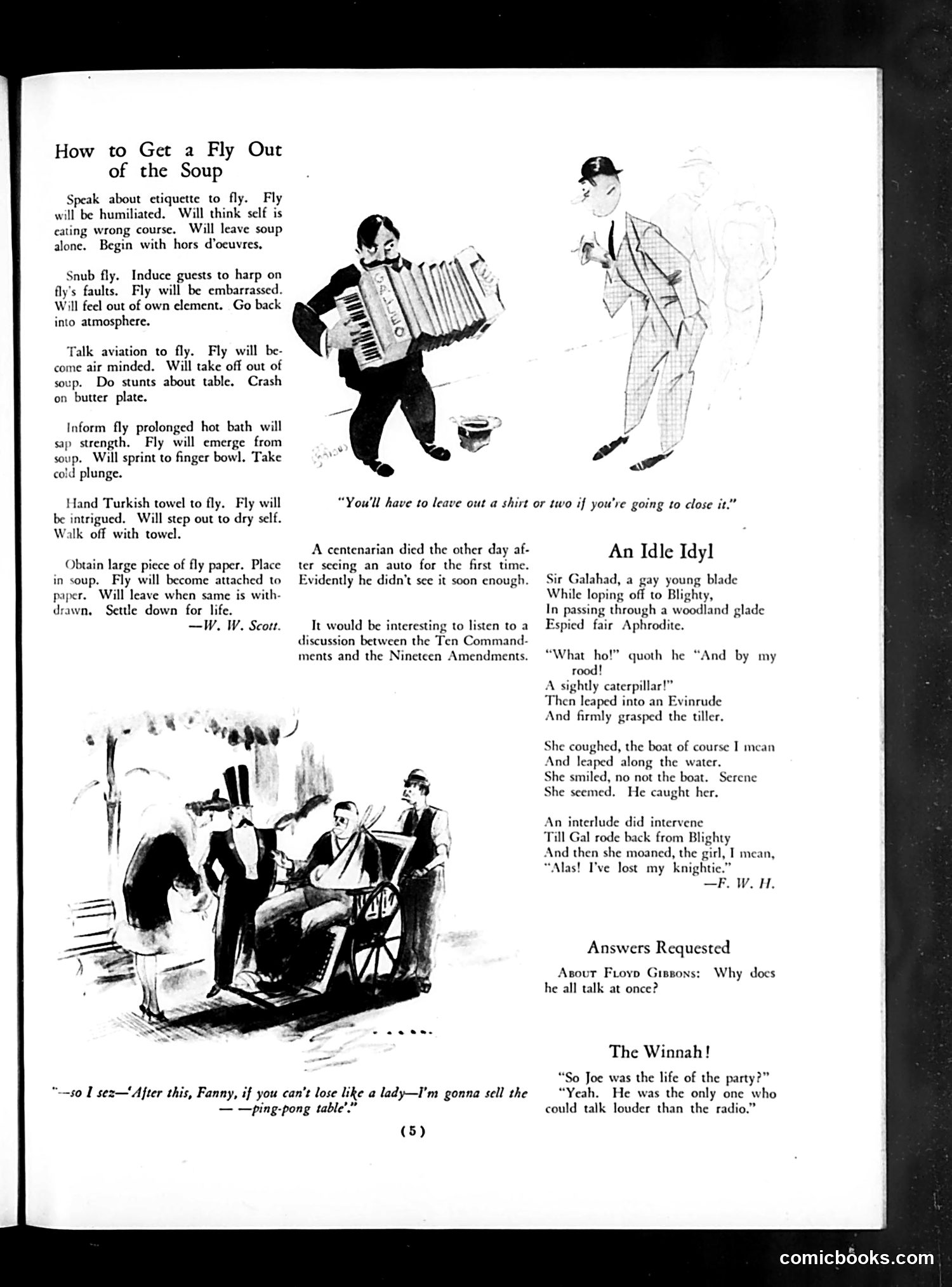
# Explanation for Modern Readers This page contains three unrelated humor pieces typical of Life magazine's satirical content: 1. **"How to Get a Fly Out of the Soup"** — A comedic advice column offering absurd solutions (snubbing the fly, talking aviation to it, Turkish towels, etc.). The joke relies on treating a mundane annoyance with exaggerated, ridiculous formality. 2. **"An Idle Idyl"** — A poem about Sir Galahad encountering a woman named Aphrodite while boating. The humor appears to play on courtly romance language applied to an awkward modern encounter. 3. **"Answers Requested" and "The Winnah!"** — Short joke items. One asks why Floyd Gibbons talks constantly; the other makes a joke about Joe being the loudest party guest (likely a radio reference, as radio was prominent entertainment then). The page reflects 1920s-era humor: wordplay, physical comedy scenarios, and gentle social satire about modern manners and entertainment.
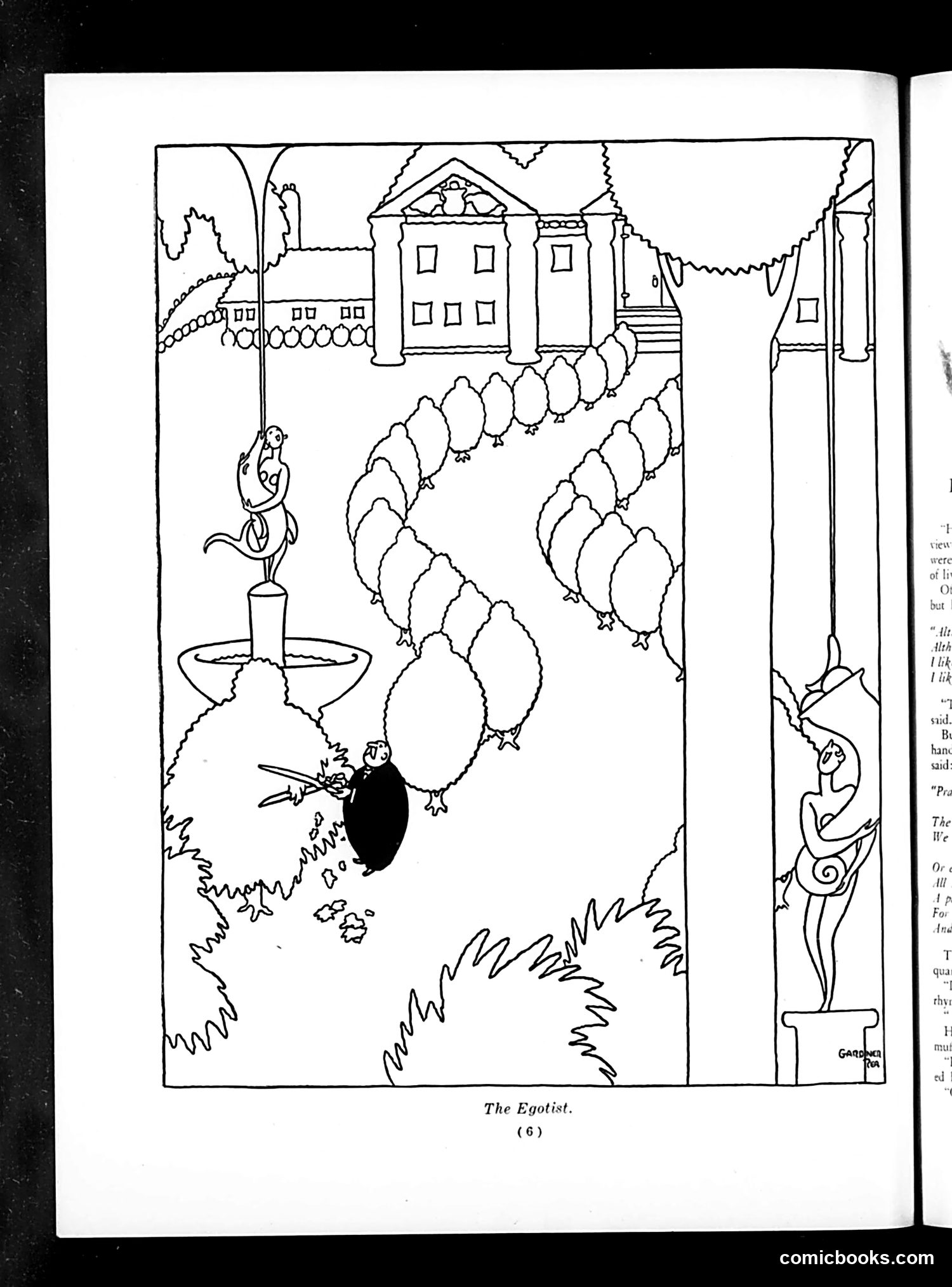
# "The Egotist" - Explanation This satirical cartoon depicts a pompous figure (shown in black, standing center) surrounded by admiring statues of themselves in various classical poses. The figure is literally surrounded by representations of their own image—in fountains, on pedestals, and as decorative garden elements around an impressive mansion. The satire targets excessive self-regard and vanity. The title "The Egotist" makes the message explicit: this is a person so consumed with self-importance that they've filled their entire estate with monuments to themselves. The classical architectural setting and formal garden layout emphasize the pretension and self-aggrandizement. This appears to be social commentary on wealthy individuals who display their status and ego through ostentatious self-commemoration rather than genuine achievement or character.
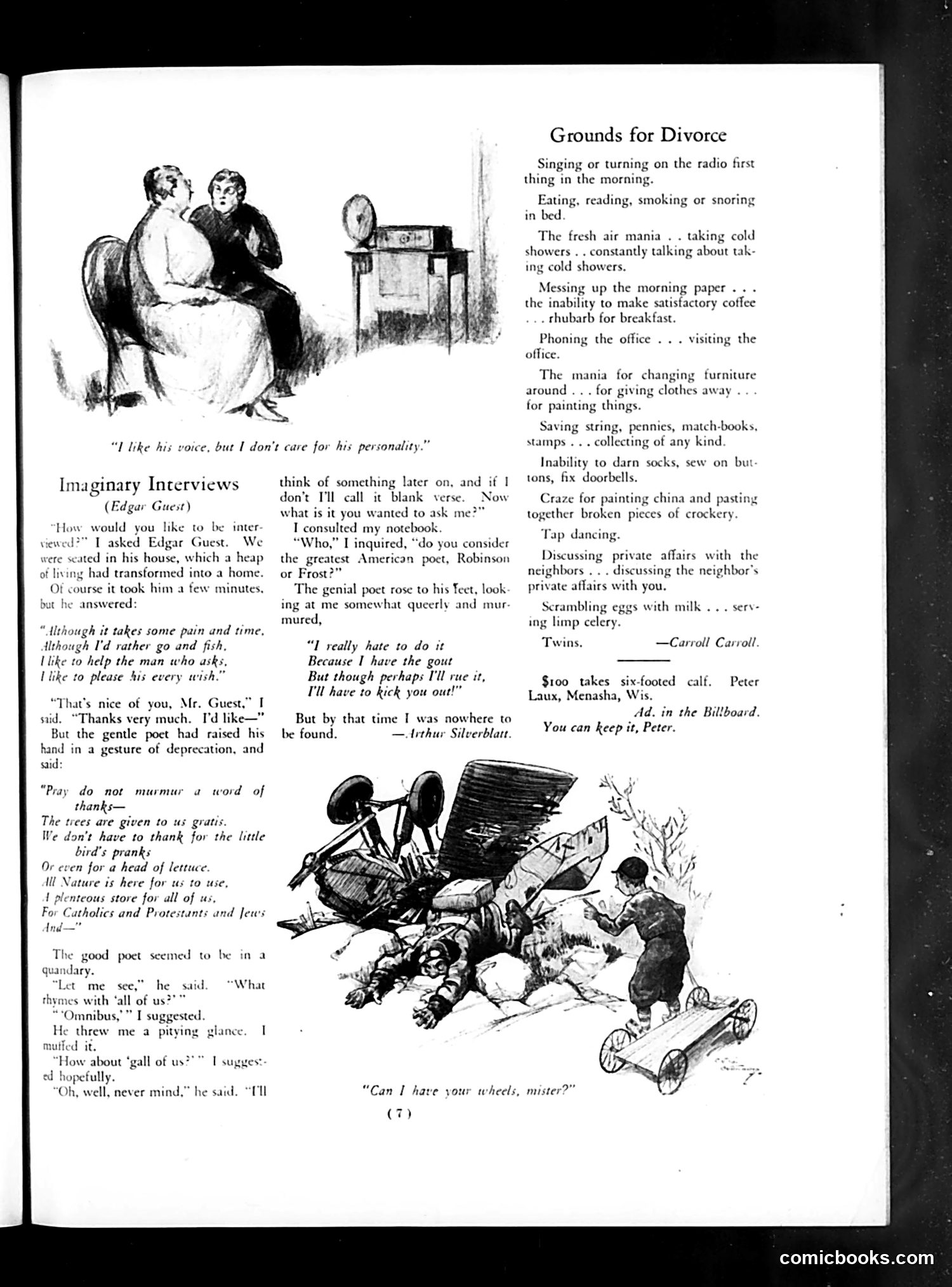
# Analysis of Life Magazine Page This page contains two distinct pieces: **"Imaginary Interviews (Edgar Guest)"** — A satirical interview with the poet Edgar Guest. The interviewer asks Guest about being America's greatest poet, and Guest responds with verbose, sentimental poetry. The joke targets Guest's reputation for writing overly flowery, saccharine verse. The satire suggests his poetry lacks substance—the interviewer can't even get a straight answer. **"Grounds for Divorce"** — A humorous list of marital complaints (singing off-key, snoring, messiness, obsessing over cold showers, etc.). This reflects period anxieties about marriage and domestic friction. **Bottom cartoon** — Shows children playing roughly with a toy wagon, with one child asking "Can I have your wheels, mister?" The humor appears to reference childhood negotiation and property disputes.
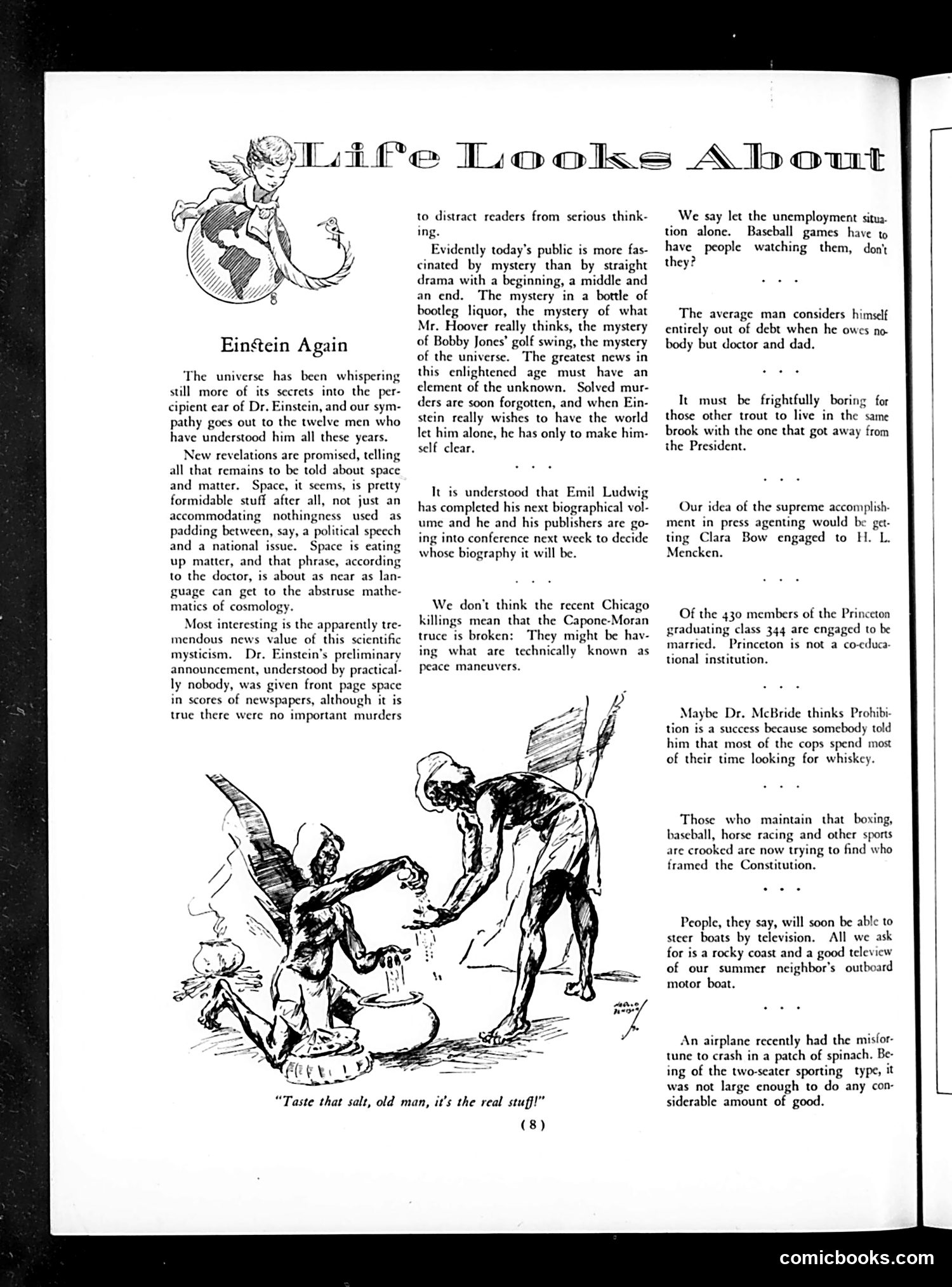
# "Life Looks About Einstein Again" This satirical piece mocks contemporary fascination with Einstein's scientific announcements. The main text criticizes how modern readers prefer mystery and spectacle over substantive understanding—using Einstein's relativity theories as an example of incomprehensible yet celebrated news. The cartoon below depicts figures around a cauldron with the caption "Taste that salt, old man, it's the real stuff!" This appears to reference Prohibition-era bootlegging and the illegal alcohol trade, likely satirizing corrupt practices or dubious "remedies" being sold to the public. The right column includes brief jokes about unemployment, baseball, Prohibition enforcement, and sports corruption—common satirical targets of the 1920s-30s era. The overall tone suggests readers are distracted by sensationalism rather than genuine understanding of complex issues.
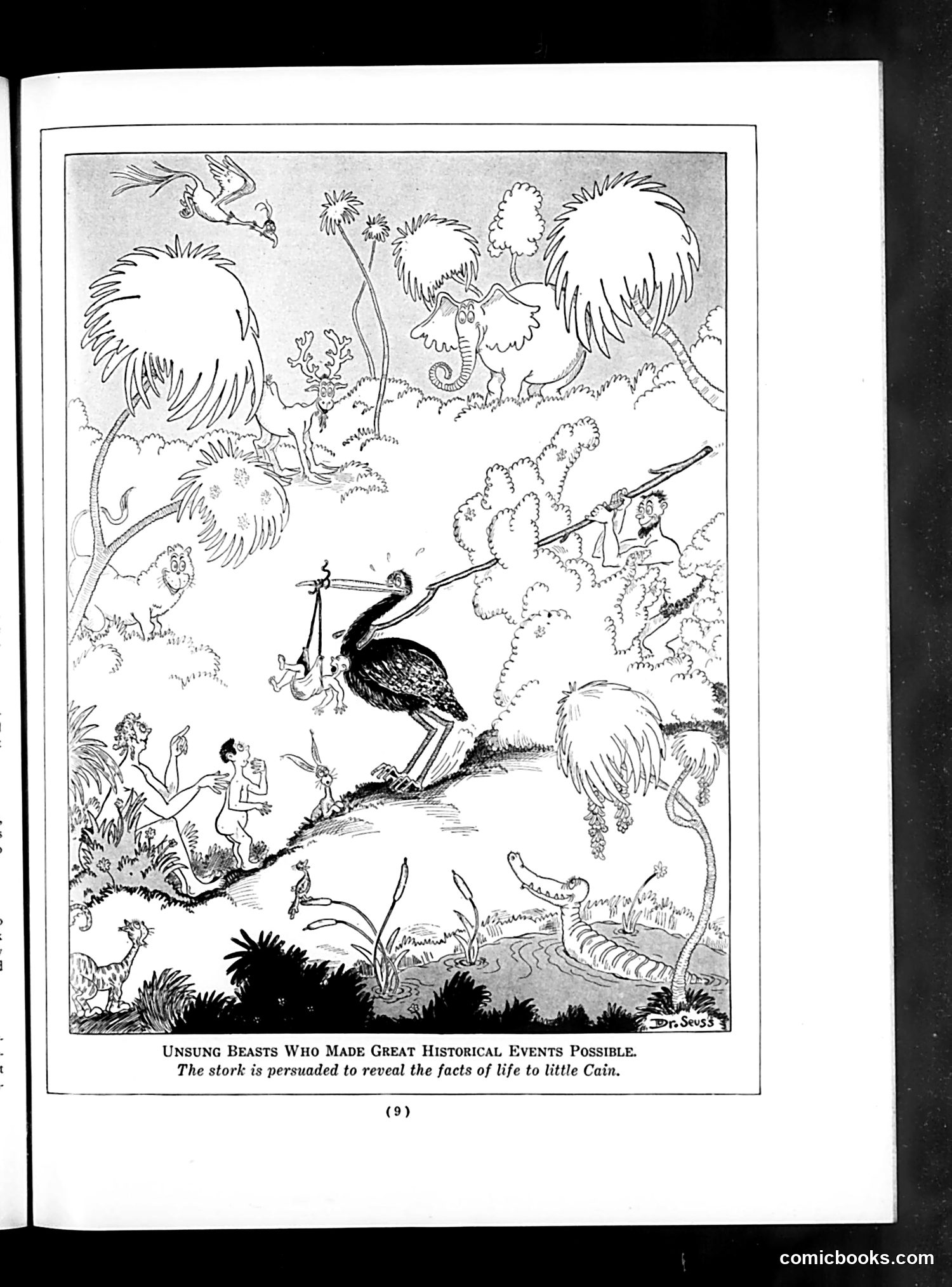
# Unsung Beasts Who Made Great Historical Events Possible This satirical illustration shows a stork being "persuaded" by various fantastical creatures to reveal "the facts of life to little Cain." The cartoon appears to be a humorous take on the traditional story of storks delivering babies, here recontextualized with a biblical reference to Cain (the first murderer in Genesis). The "unsung beasts" are whimsical, invented creatures populating the landscape. The satire seems to mock the conventional euphemism adults use to explain human reproduction to children, while the reference to Cain adds dark irony—suggesting that even knowledge of life's origins cannot prevent human violence and sin. The cartoon employs absurdist humor typical of Life magazine's satirical style.
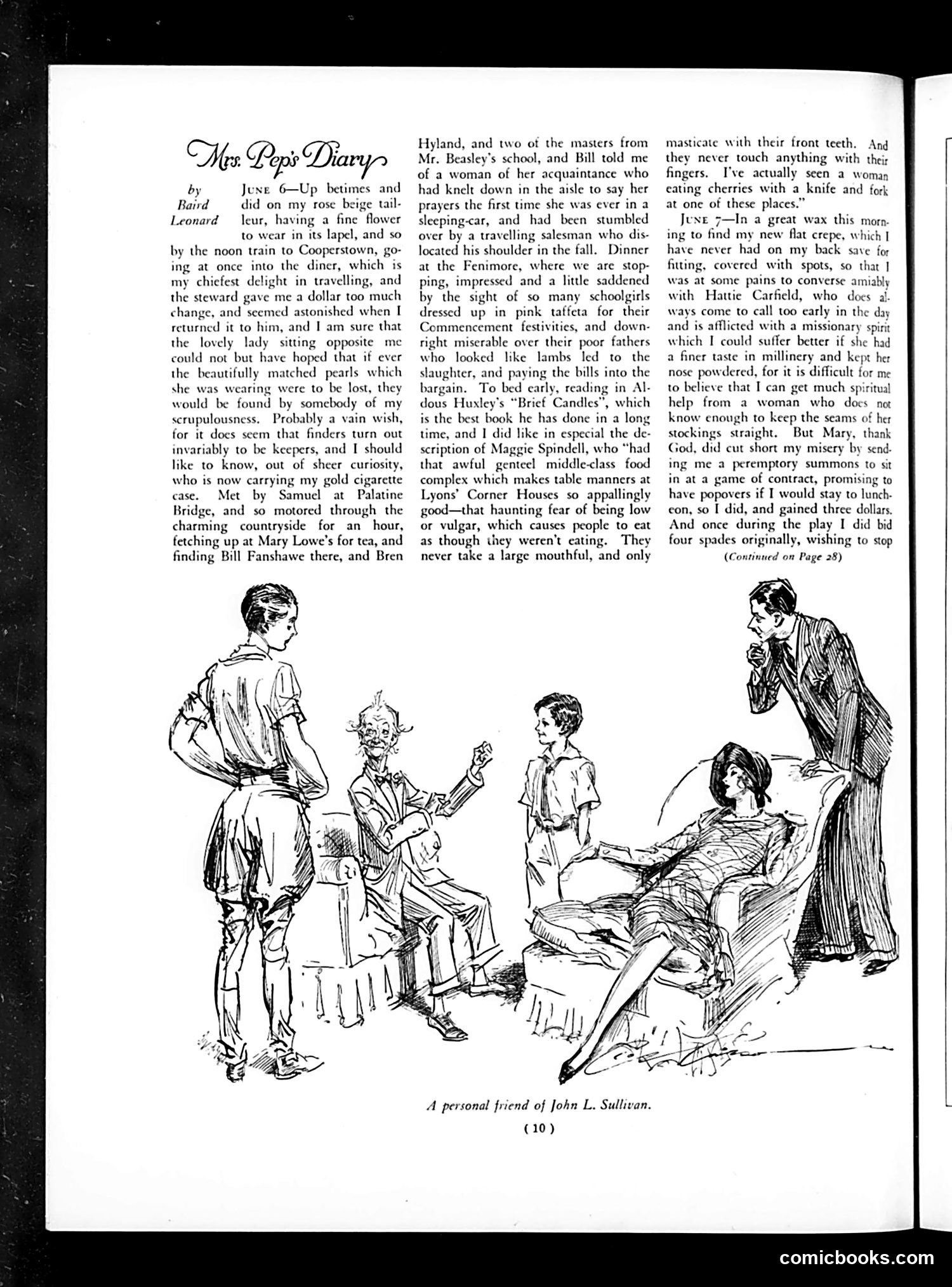
# Analysis This page contains "Mrs. Pop's Diary" by Baird Leonard, a personal essay with accompanying illustration. The text describes the author's train journey to Cooperstown, observations about schoolgirls in pink taffeta at a church event, and reflections on social class anxieties—particularly about appearing vulgar or "low." The illustration, credited as "A personal friend of John L. Sullivan," shows a social gathering with figures in Edwardian dress. It appears to satirize middle-class pretension and social climbing, depicting people in somewhat awkward poses that underscore the essay's theme about class consciousness and the fear of social misstep. The reference to boxer John L. Sullivan (popular circa 1880s-1890s) suggests this is from Life's humorous commentary on American social dynamics and aspirational behavior among the emerging middle class.