A complete issue · 36 pages · 1930
Life — May 23, 1930
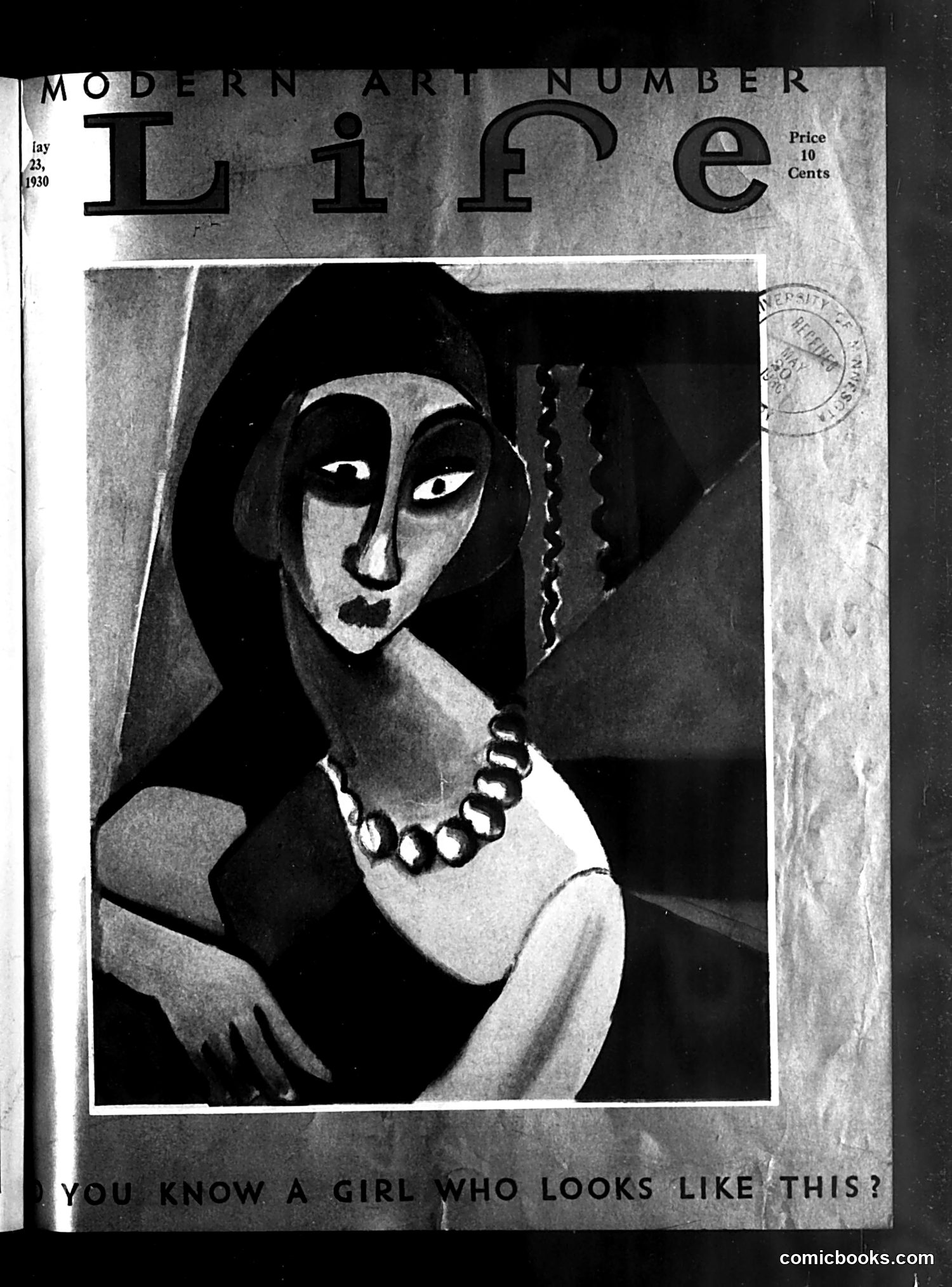
# Analysis This is a cover from *Life* magazine (priced at 10 cents, dated July 24, 1930). The striking modernist portrait depicts a woman wearing a black hood or head covering and a geometric necklace, rendered in high-contrast black and white. The caption asks: "YOU KNOW A GIRL WHO LOOKS LIKE THIS?" The artwork appears to be satirizing the modernist or avant-garde aesthetic popular among certain social circles in 1930s America—likely mocking either experimental fashion trends, artistic pretension, or perhaps specific cultural figures associated with avant-garde movements. The exaggerated geometric face, severe styling, and mysterious hooded appearance suggest the magazine is gently ridiculing what it portrays as affected or bizarre contemporary style choices among fashionable women.
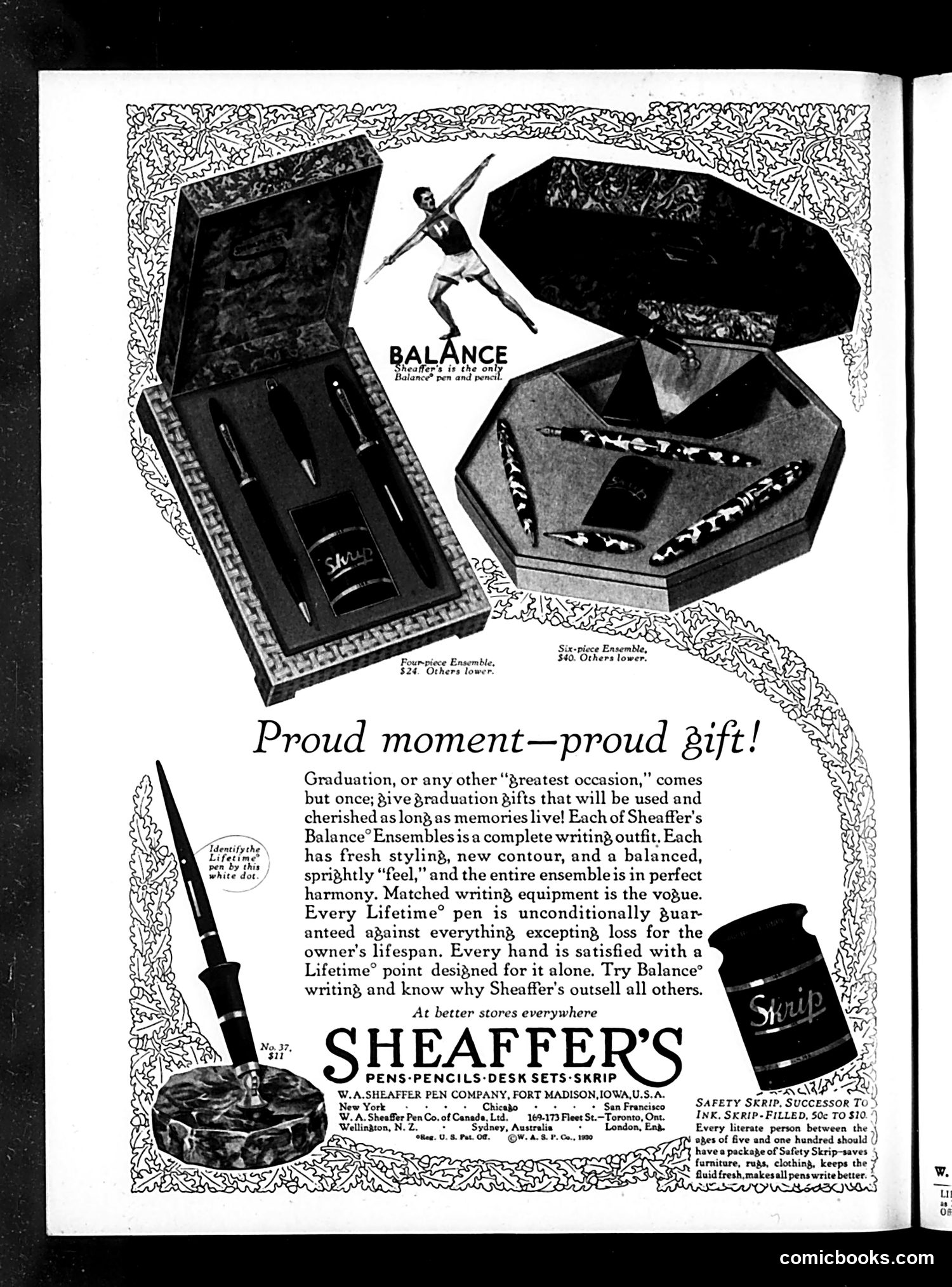
# Content Analysis This page is **primarily an advertisement**, not satire or political commentary. It promotes Sheaffer's "Balance" writing sets—pens, pencils, and desk accessories marketed as graduation gifts. The visual elements include: - Decorative ornamental borders (typical of the era) - Product photography showing multiple "Balance Ensemble" sets in open boxes - A stylized illustration of a figure in a diving/balancing pose, illustrating the "Balance" brand name - Images of individual pens and a bottle of Safety Skrip ink The advertisement's appeal emphasizes matched writing equipment as prestigious graduation gifts that will last a lifetime. The "Balance" name and acrobatic figure serve as visual branding rather than political reference. There is no cartoon, satire, or social commentary present on this page—it is straightforward commercial advertising typical of early-to-mid 20th century magazine promotion.
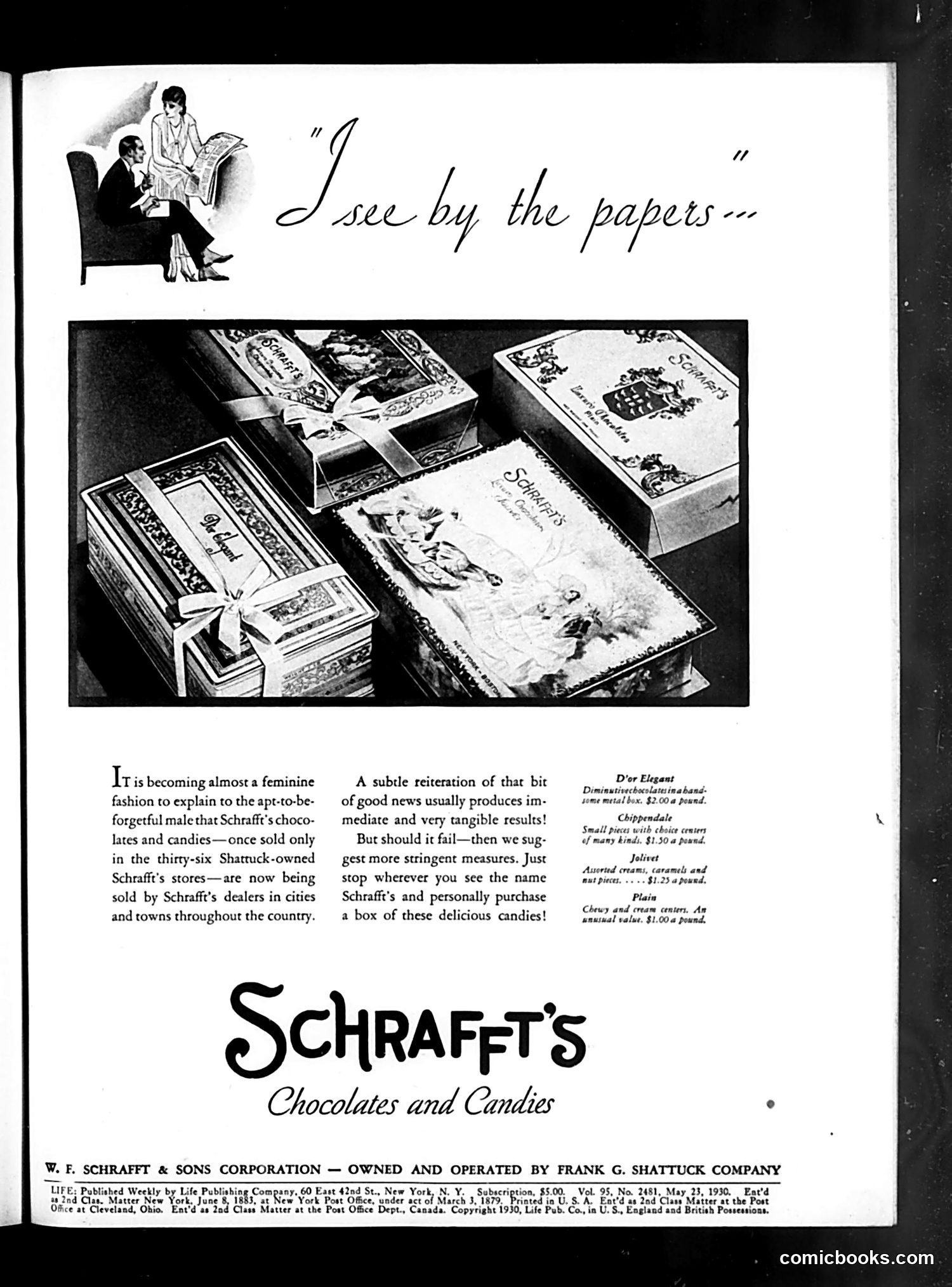
# Analysis This is a **Schrafft's chocolate and candy advertisement**, not political satire. The page shows gift boxes of confections arranged artfully. The small illustration at top depicts a man and woman in an office setting—likely meant to suggest a business or workplace context where Schrafft's candies serve as an appropriate gift. The ad's humor relies on gentle social commentary: it notes that giving Schrafft's chocolates and candies has become "almost a feminine fashion" to explain the "apologies" men must make. The underlying joke is that men have traditionally given women sweets as romantic gestures or peace offerings, positioning Schrafft's as the quality brand for such occasions. The copy emphasizes that Schrafft's products, once sold only in their own stores, are now available through dealers nationwide—a distribution expansion the advertiser presents as significant news.
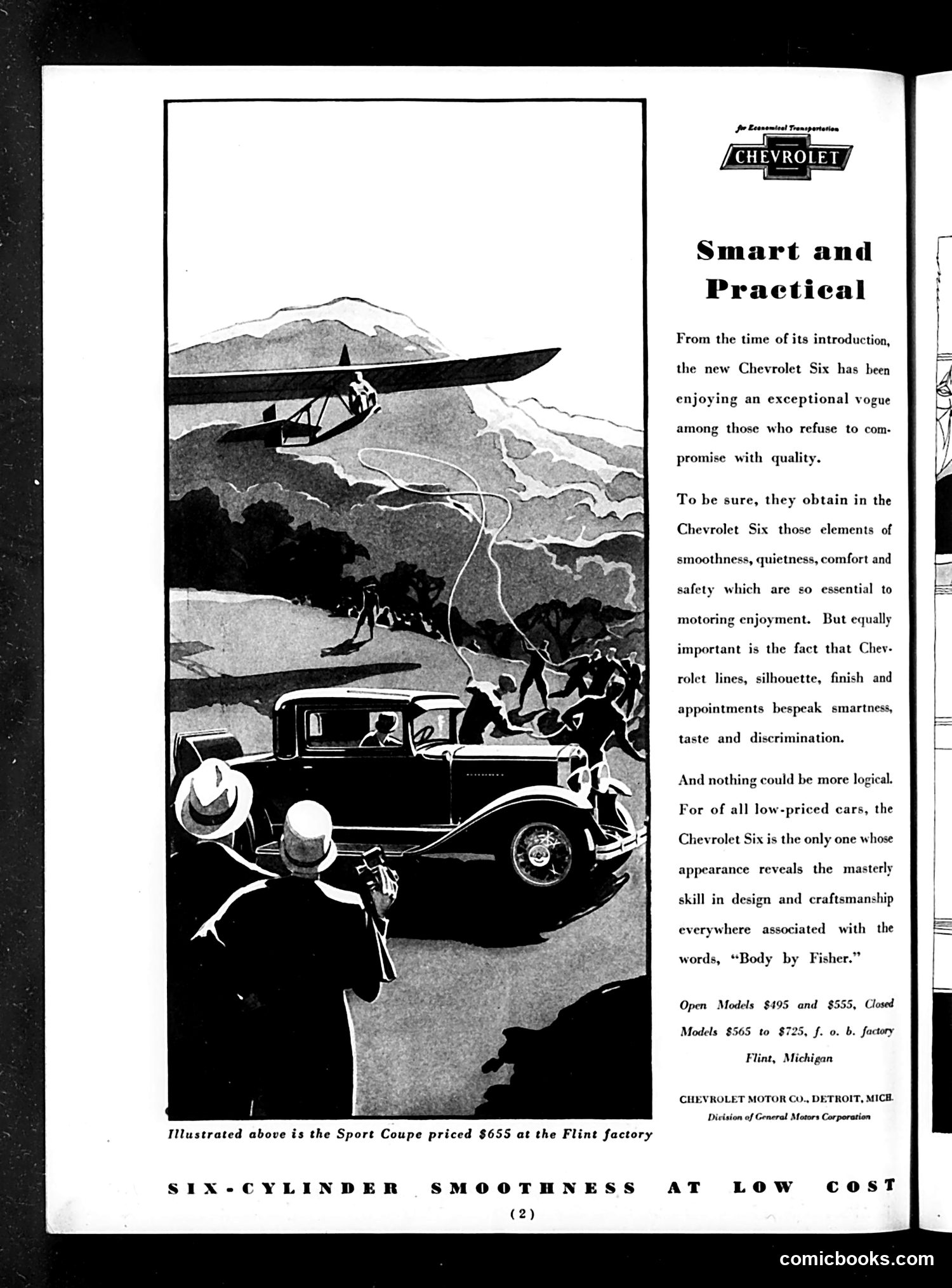
# Analysis This is a **Chevrolet automobile advertisement**, not a political cartoon. The page showcases the Chevrolet Six with the heading "Smart and Practical." The illustration depicts an airplane landing near a Chevrolet, with elegantly dressed people observing—suggesting the car's modernity and sophistication. The ad emphasizes that despite being low-priced, the Chevrolet Six features quality design, comfort, and safety comparable to higher-priced vehicles. Key selling points highlighted include the car's "smoothness, quietness, comfort and safety" and its distinctive appearance by Fisher Body (a noted coachbuilder). The text notes this positions the Chevrolet Six uniquely among affordable cars for its craftsmanship. Pricing listed: Open Models $495-$555; Closed Models $565-$725, factory in Flint, Michigan.
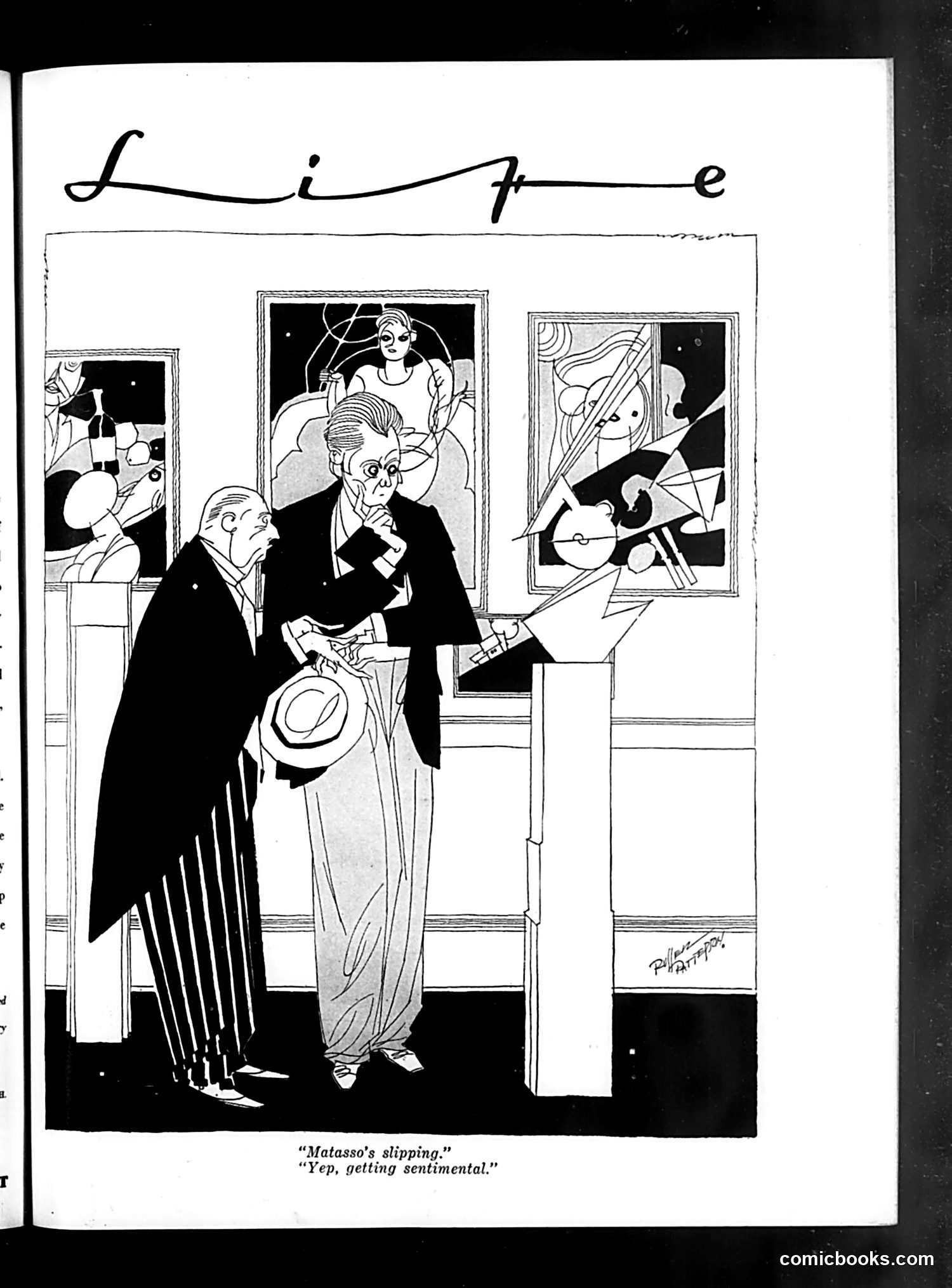
# "Matasso's Slipping" - Life Magazine Cartoon This cartoon depicts two well-dressed men in formal attire viewing what appears to be an art gallery or exhibition. The caption reads: "Matasso's slipping. / Yep, getting sentimental." The joke appears to reference someone named Matasso (likely an artist or public figure) whose work is displayed in the framed pieces visible on the walls behind them. The observers are commenting that Matasso's artistic standards or edge are declining—he's "slipping"—and they attribute this decline to him becoming overly "sentimental," suggesting his work has become emotionally indulgent rather than maintaining previous artistic rigor. Without additional context about who Matasso was, the specific satirical target remains unclear, though this was likely topical commentary on a contemporary artist or cultural figure from Life magazine's era.
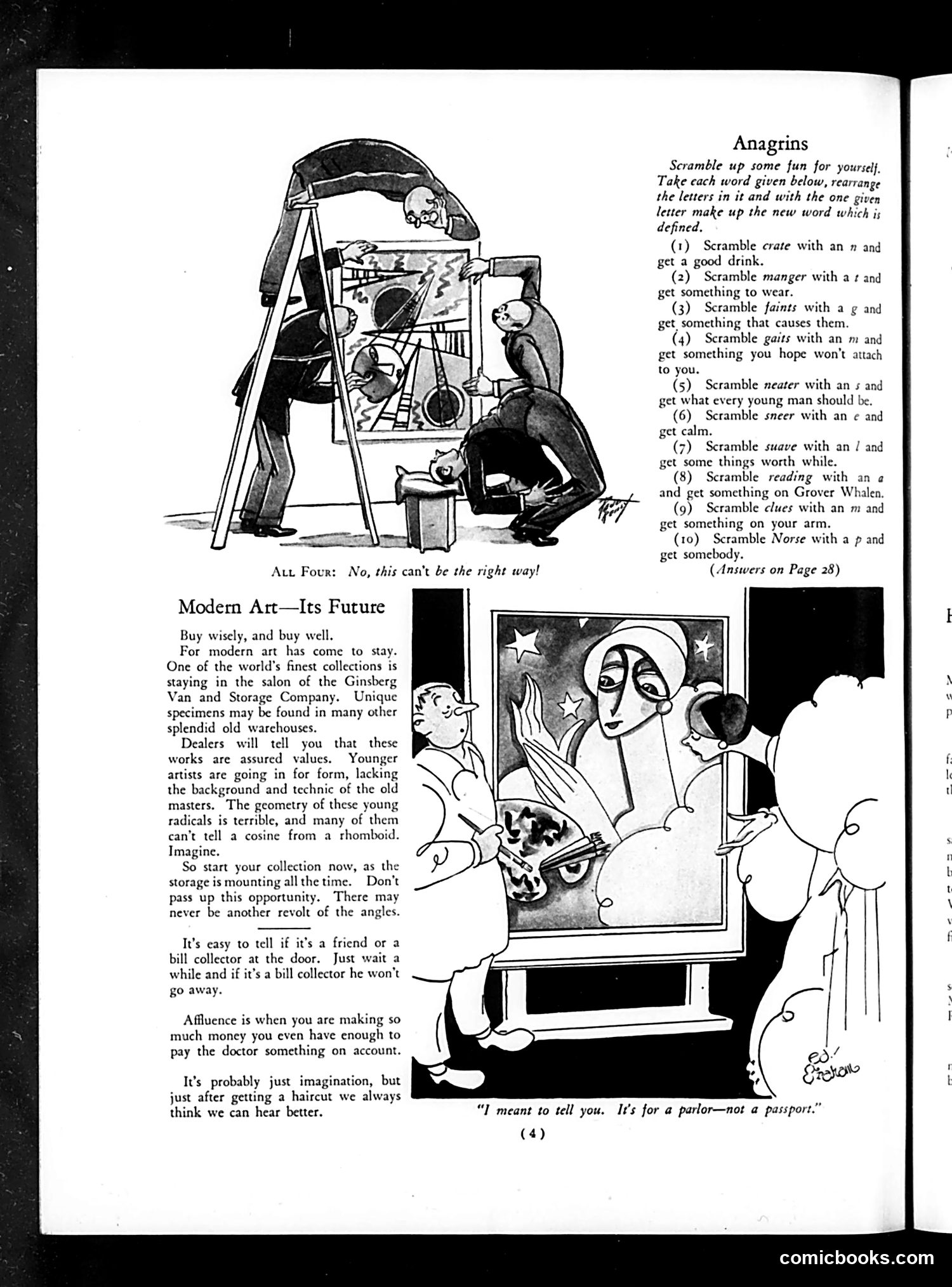
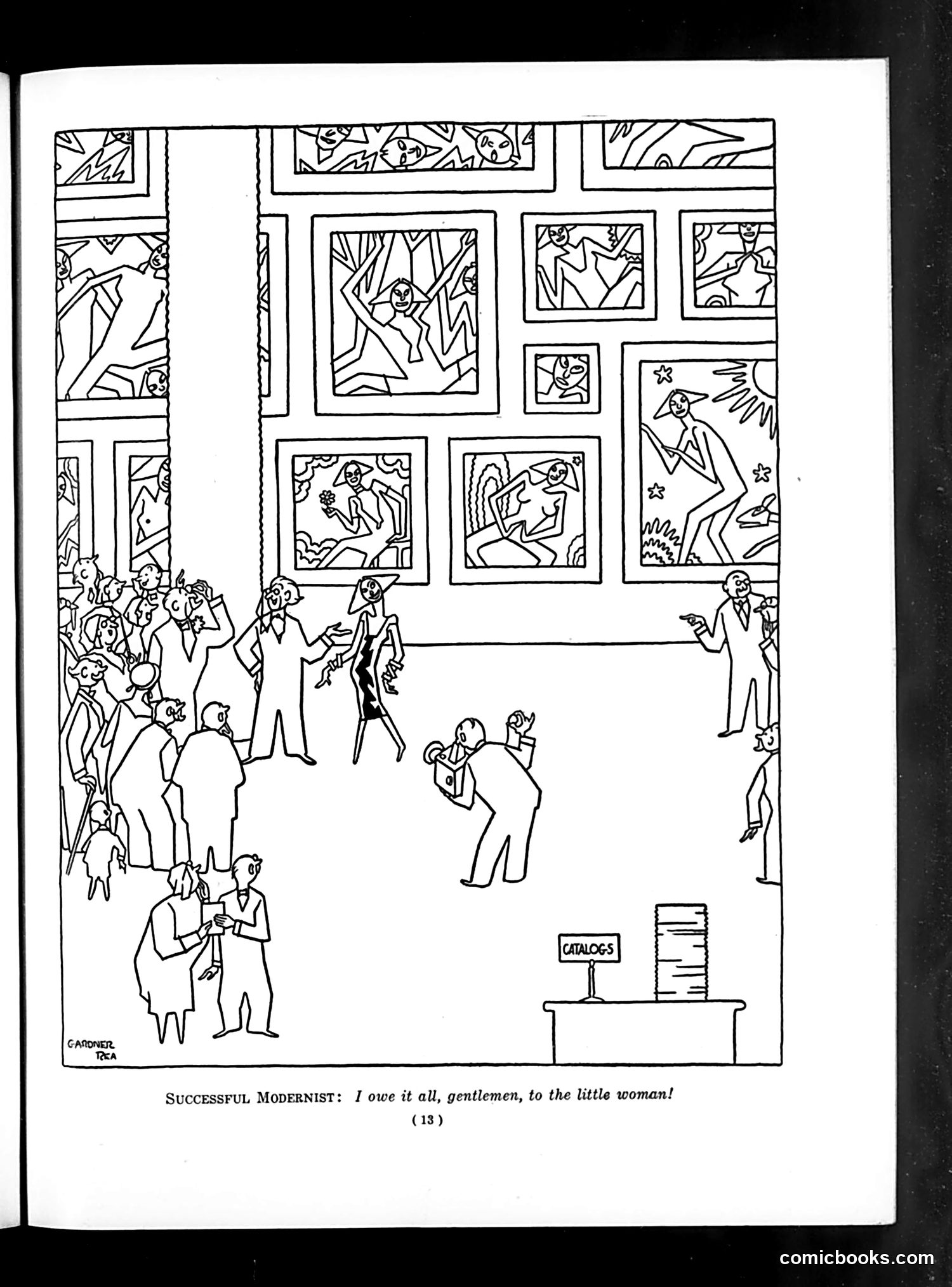
# Explanation for Modern Readers **Top Cartoon:** Four figures examine what appears to be abstract modern art on an easel, all declaring "No, this can't be the right way!" This satirizes the bewilderment that early 20th-century audiences felt toward modernist and avant-garde art movements—cubism, abstract expressionism, etc. The joke: even trained observers couldn't understand or appreciate these radical new artistic styles. **Bottom Advertisement:** A piece of abstract art on display attracts potential buyers. The caption jokes: "I meant to tell you. It's for a parlor—not a passport." This mocks modern art's obscurity by suggesting the painting is so incomprehensible it could serve as a fraudulent travel document. The satire targets both the bewildering nature of modern art and wealthy collectors who purchase it despite (or because of) its incomprehensibility.
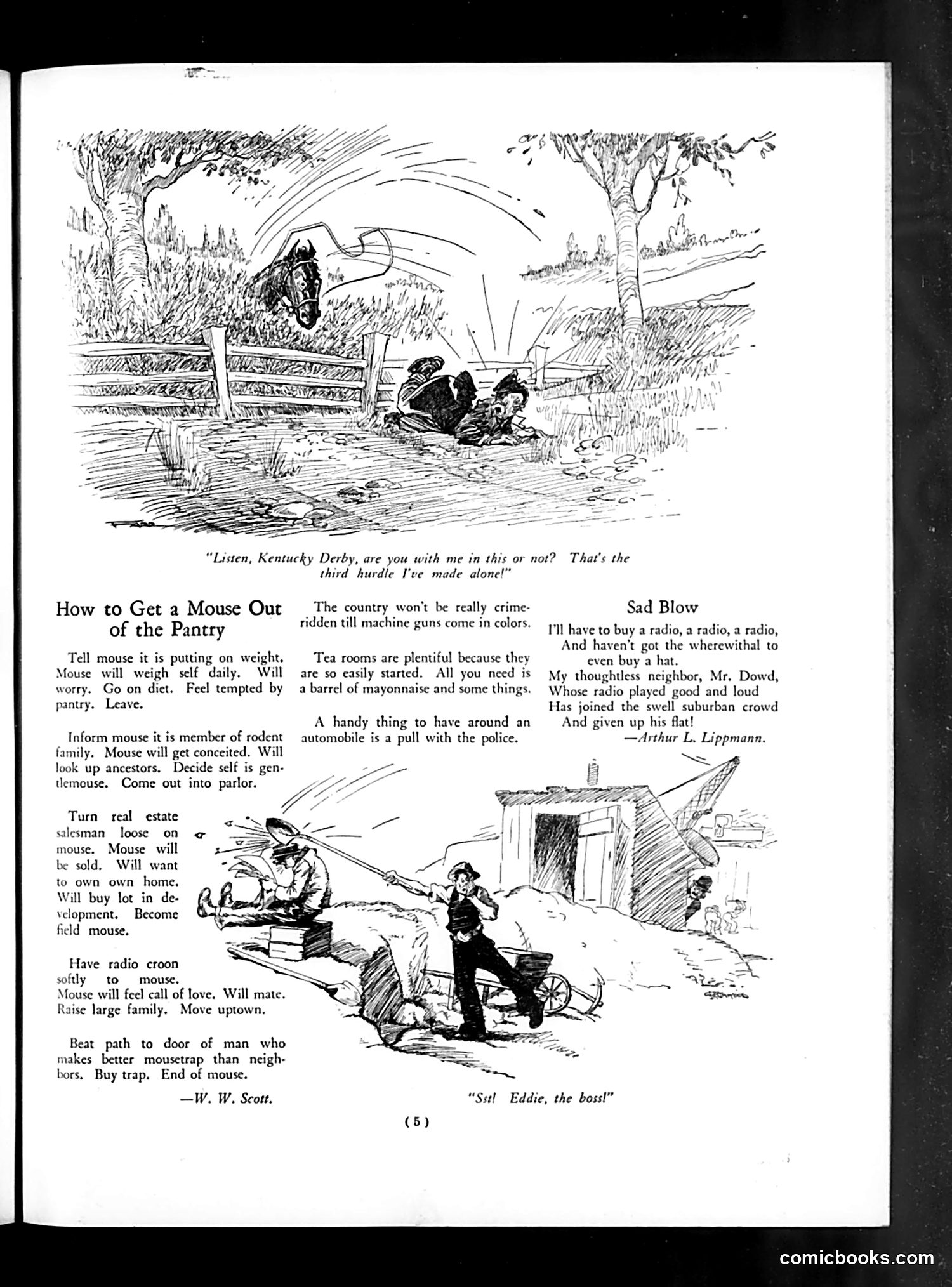
# Analysis This page contains three humorous pieces from *Life* magazine: 1. **"How to Get a Mouse Out of the Pantry"** (by W.W. Scott): A satirical "advice" piece offering absurd solutions—telling the mouse it's overweight, making it a real estate agent, playing radio music to make it mate and move uptown, or buying a better mousetrap. The humor lies in treating a simple pest problem with elaborate, impractical schemes. 2. **"Sad Blow"** (by Arthur L. Lippmann): A poem lamenting that the author can't afford a radio, while a thoughtless neighbor, Mr. Dowd, bought one and now plays it loudly, annoying the entire suburban neighborhood. This reflects 1920s-30s frustrations with new radio technology and inconsiderate neighbors. 3. **Cartoon captions**: "Listen, Kentucky Derby, are you with me..." and "Suh! Eddie, the boss!" accompany period illustrations depicting rural/comedic scenarios. The page satirizes everyday modern inconveniences of the era.
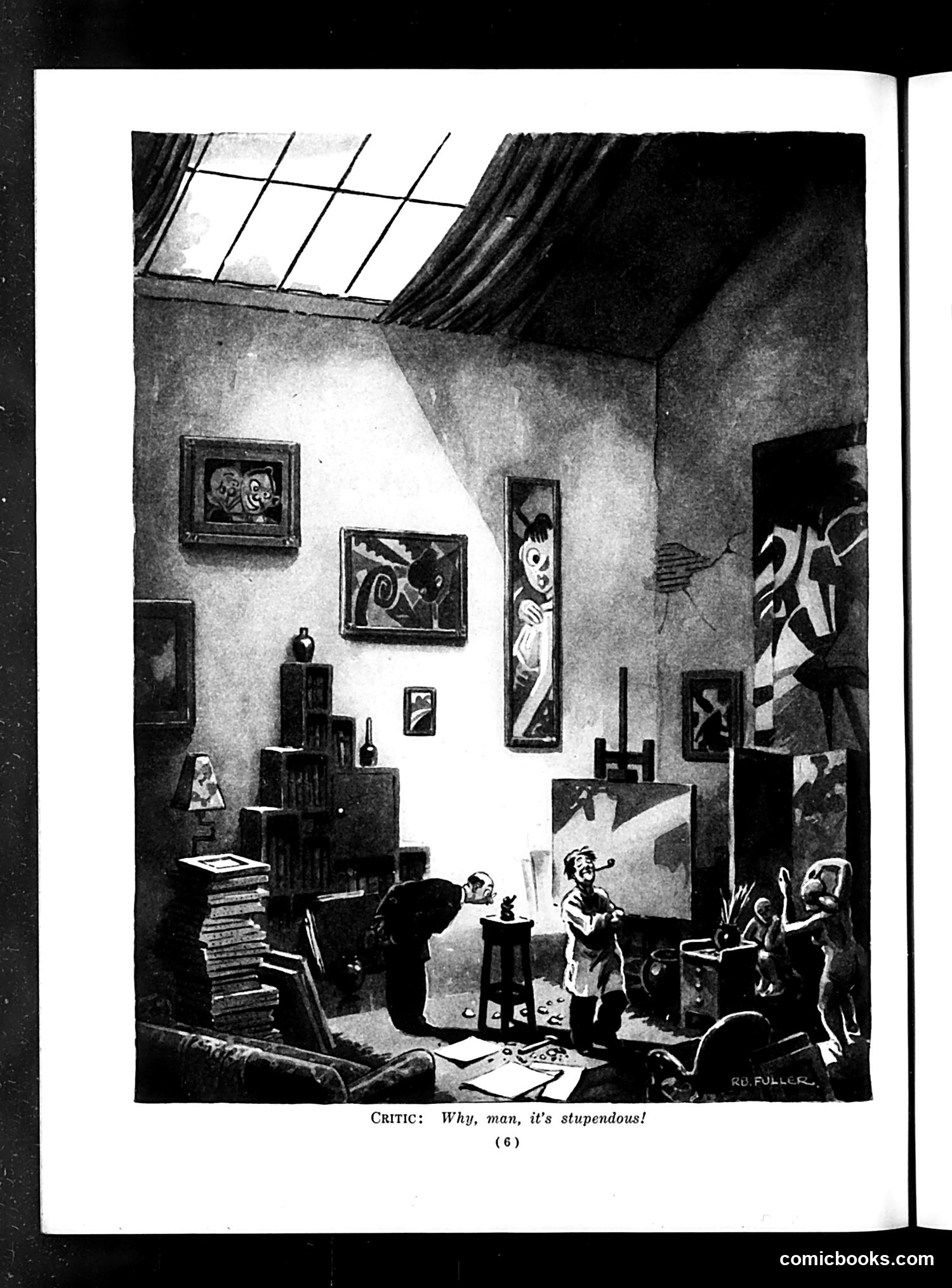
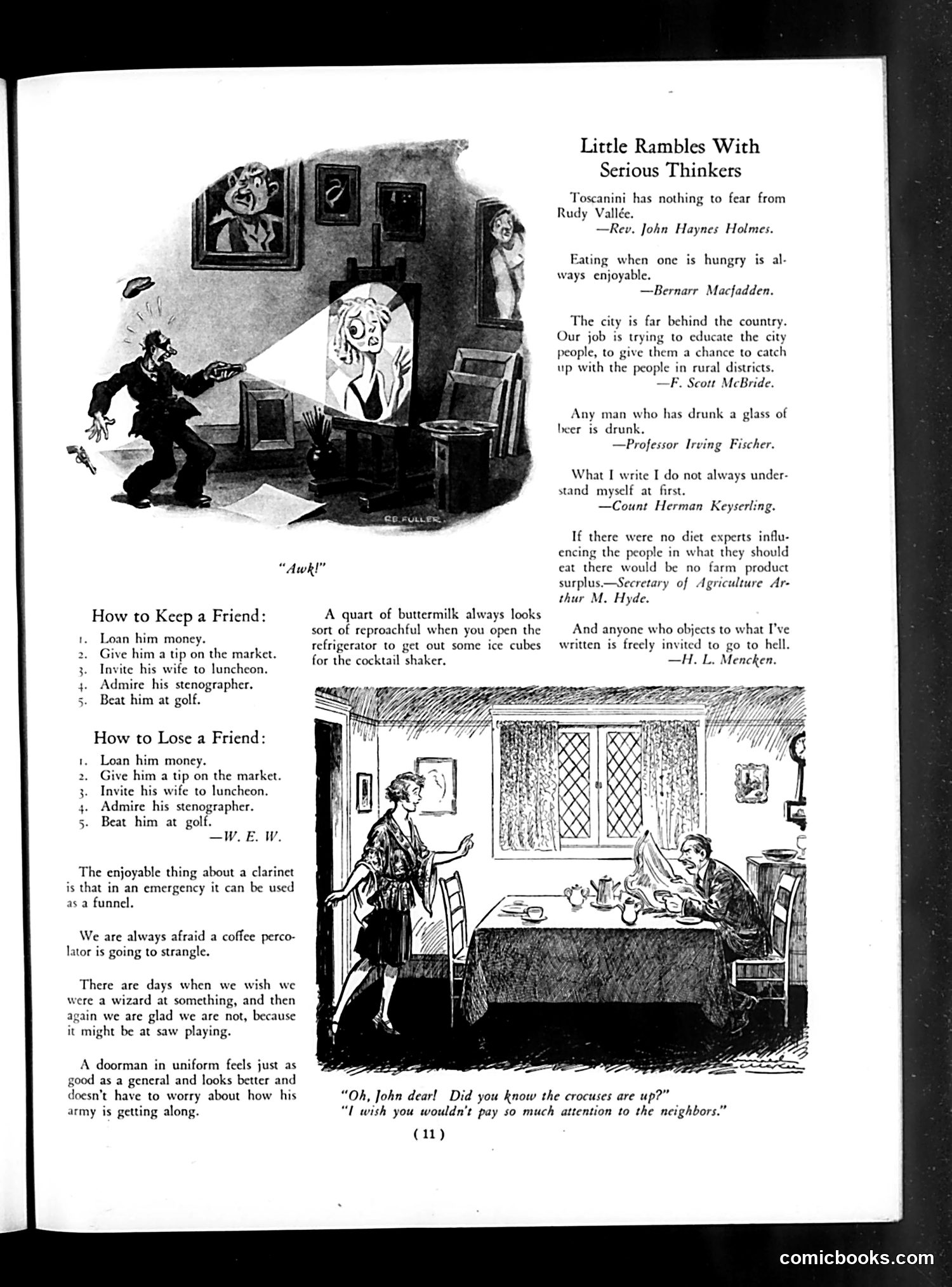
# Analysis This is a single-panel cartoon by R.D. Fuller titled "Critic: Why, man, it's stupendous!" The image depicts an artist's studio with a skylighted ceiling and various modernist artworks hanging on the walls. Several figures examine the artwork with apparent enthusiasm. The satire targets **art criticism and modernism**. The joke appears to be that critics lavishly praise abstract or unconventional art as "stupendous" when the actual merit may be questionable. The cluttered studio, stacked books, and eclectic collection of paintings—some appearing quite crude or nonsensical—suggest the artwork lacks clear artistic value, yet the critic declares it impressive anyway. This reflects early-to-mid 20th-century skepticism about modern art movements and the perceived pretentiousness of art criticism.
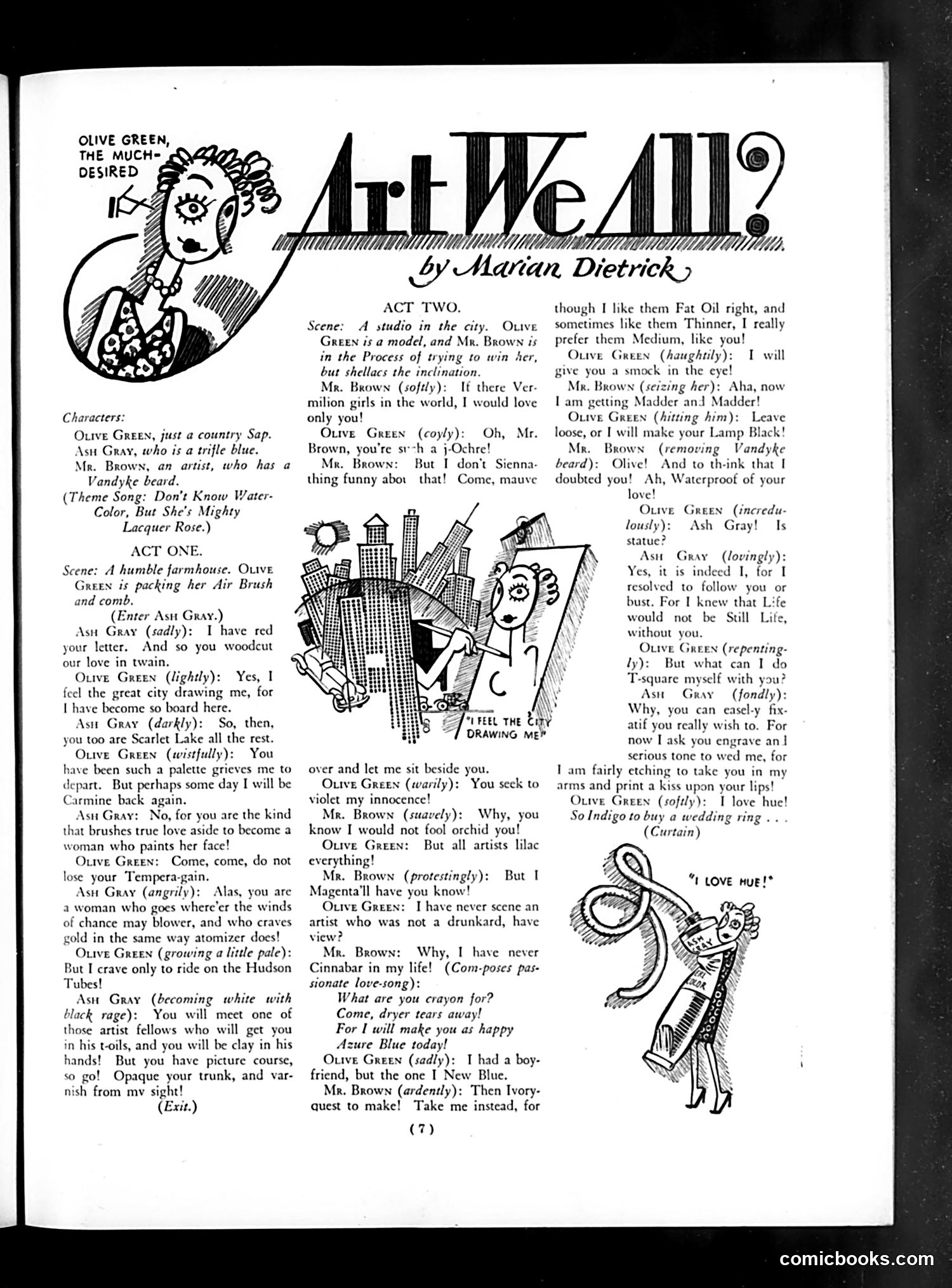
This page presents "Art Well?", a one-act comedy by Marian Dietrick. The sketch satirizes artistic pretension and bohemian stereotypes through characters including Olive Green (a country girl and air-brush model), Ash Gray (described as "a trifle blue"), and Ms. Brown (an artist). The humor revolves around Olive Green's naïve charm clashing with the affected, bohemian world of artists and models in the city. References to artistic temperament, drinking ("I have never seen an artist who was not a drunkard"), and romantic entanglement drive the comedy. The illustrations show the city skyline and Olive Green in fashionable dress, emphasizing the contrast between her rural origins and urban artistic society. The sketch mocks both artistic pretension and the innocence of country folk encountering city sophistication.
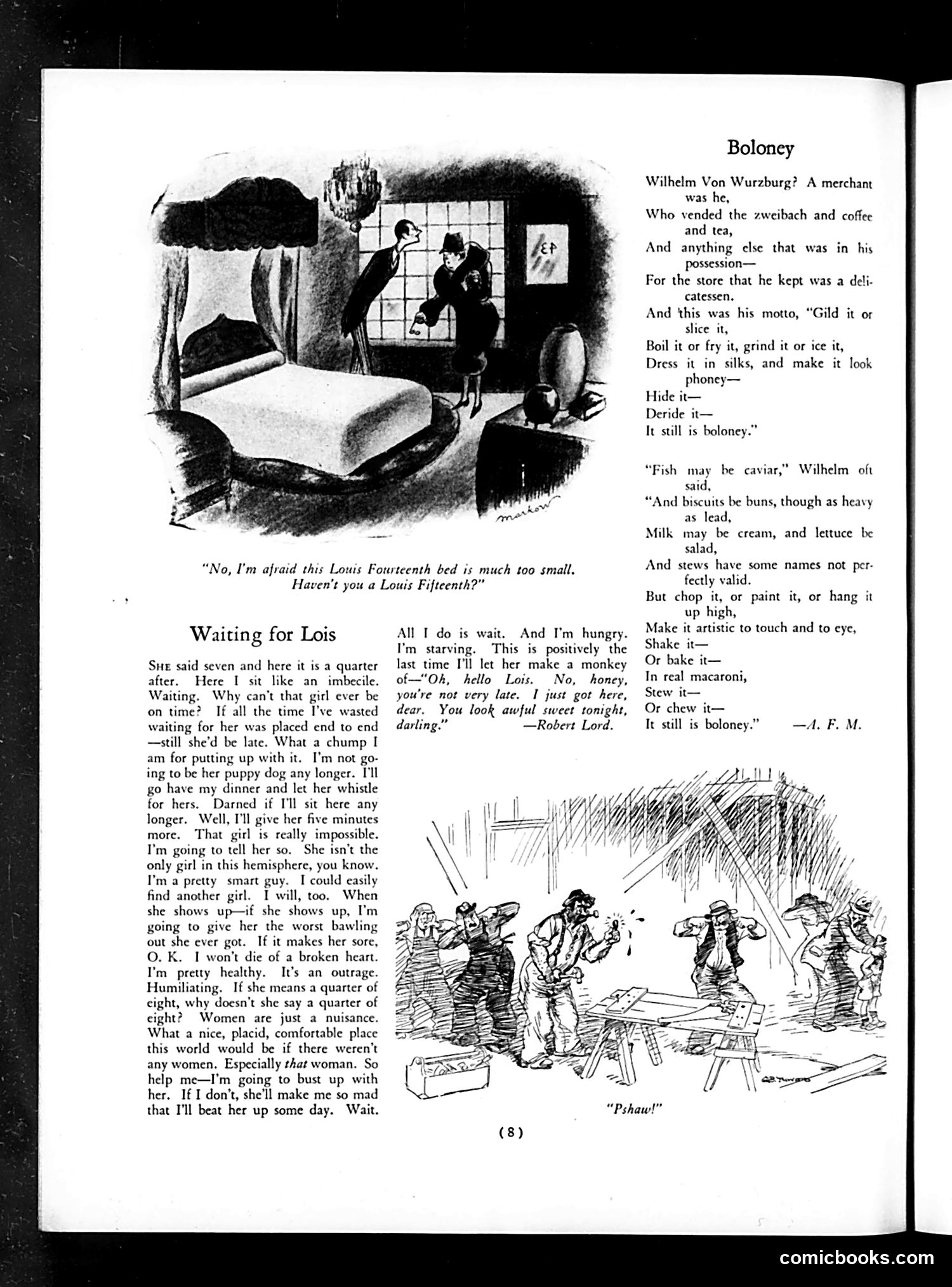
# Analysis of Page 8 from Life Magazine This page contains two distinct pieces: **"Boloney"** (right): A satirical poem mocking Wilhelm Von Wurzburg, a merchant who sells delicatessen items. The piece ridiculues his practice of disguising low-quality food through fancy preparation—"Gild it or slice it, / Boil it or fry it"—to pass it off as premium. The satire targets food fraud and marketing deception, suggesting merchants mask inferior ingredients through presentation and labeling tricks to deceive customers. **"Waiting for Lois"** (left): A humorous story about a man waiting for a woman named Lois who is late. He complains bitterly about waiting, threatens to end the relationship, and makes misogynistic remarks about women generally being a "nuisance." The illustration shows an uncomfortable domestic scene reflecting early 20th-century gender dynamics and relationship frustrations.
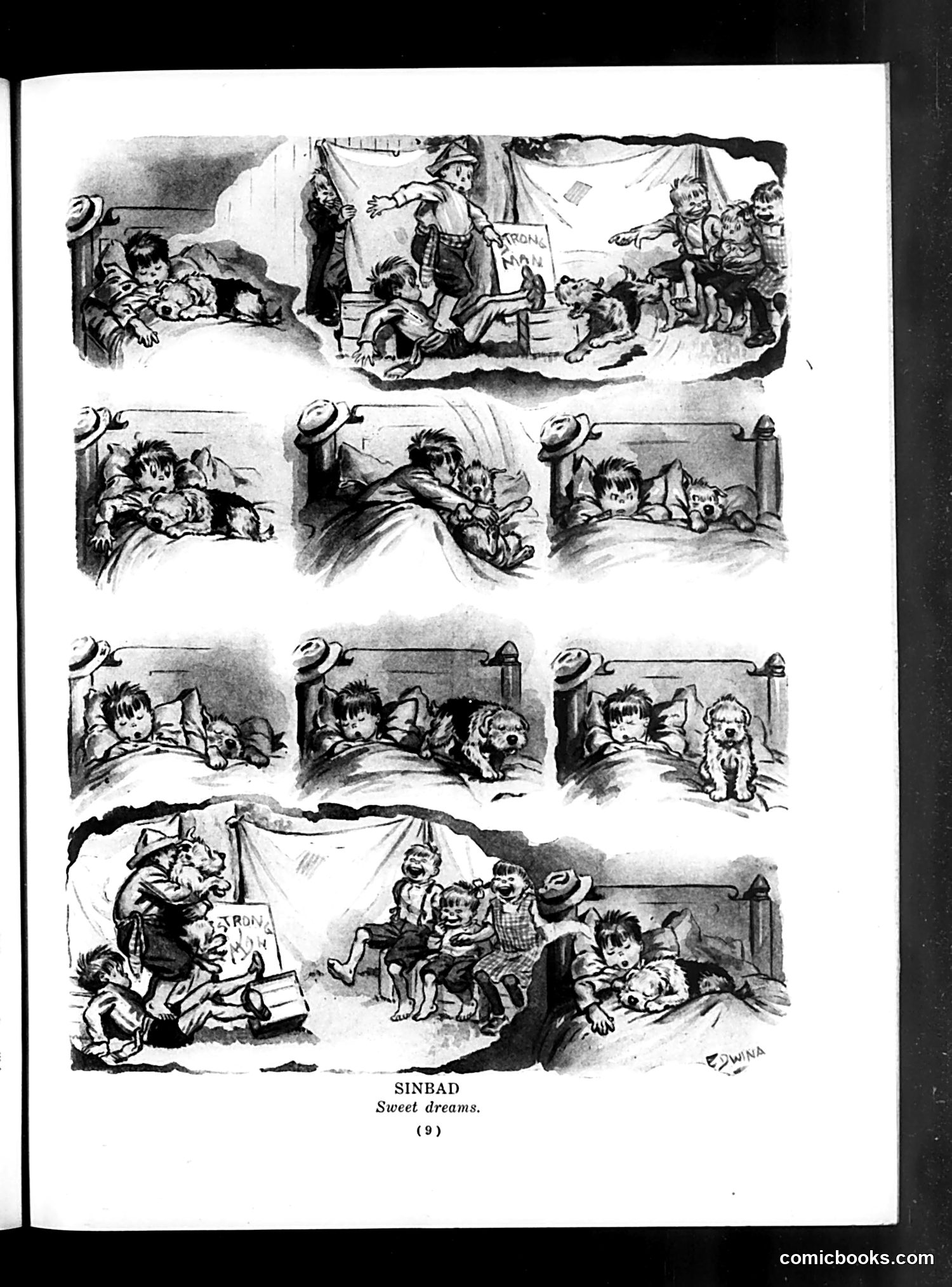
# "Sweet Dreams" by Sinbad This appears to be a sequential comic strip depicting a child's bedtime routine and dreams. The title "Sweet dreams" and the character name "Sinbad" suggest the narrative follows a young boy named Sinbad as he goes to bed. The panels show: children in various sleeping positions, an adult (likely a parent) supervising bedtime, and what appear to be dream sequences featuring fantastical or adventurous imagery—possibly referencing Sinbad's famous maritime adventures from Arabian tales. The comic likely uses the contrast between ordinary bedtime and imaginative dreams for gentle humor, playing on how children's sleep is often filled with vivid, fantastical dreams. The signature appears to be "Dwina" or similar. Without additional context about Life magazine's publication date, the specific satirical intent remains unclear.
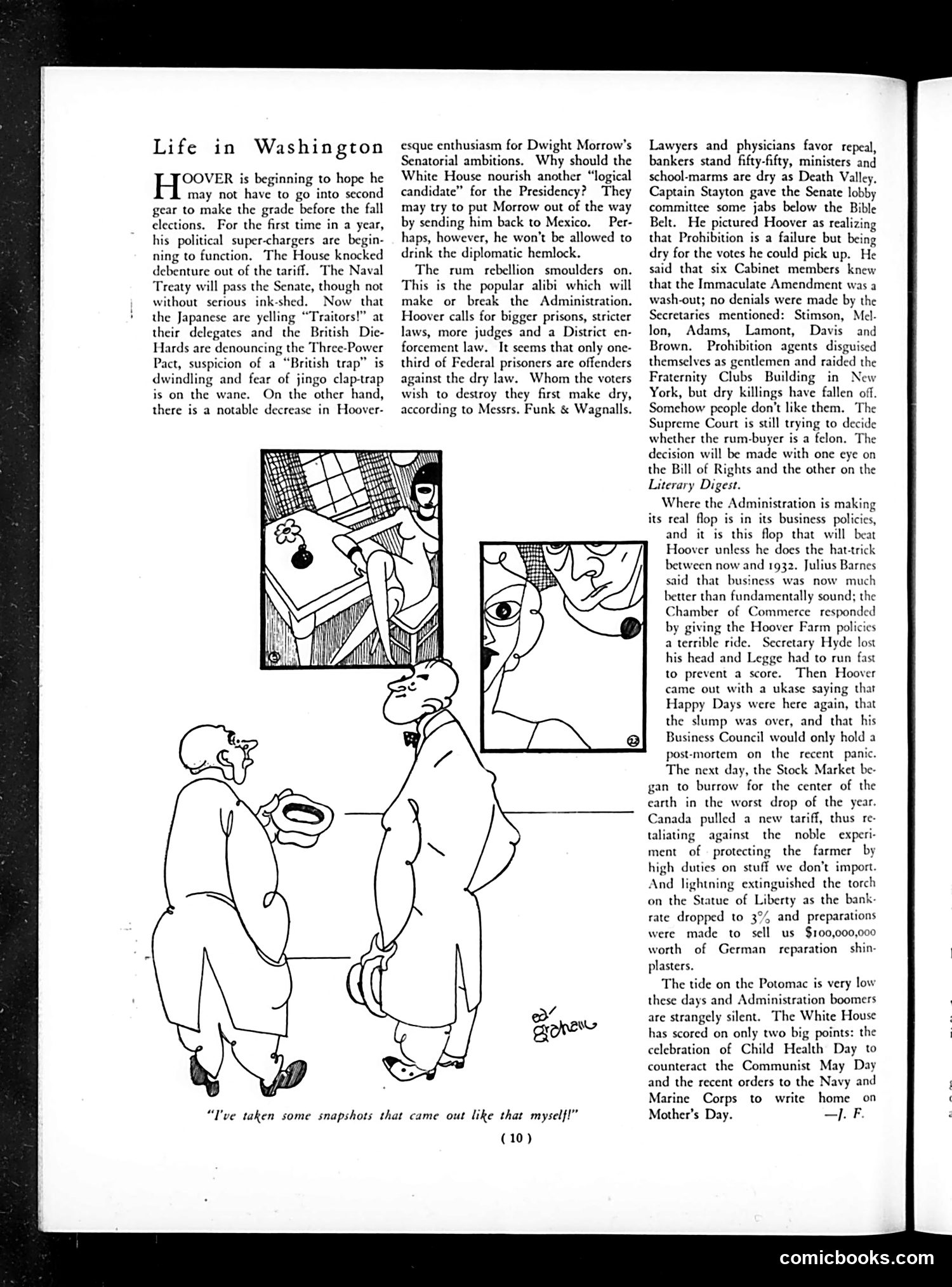
# Political Satire: "Life in Washington" This page satirizes the Hoover administration's political troubles circa 1932. The main cartoon depicts two portly figures (likely representing political rivals or administration figures) exchanging gossip or scheming, with the caption "I've taken some snapshots that came out like that myself!" The text criticizes Hoover's declining popularity and failing economic policies during the Great Depression. It mocks his attempts to manage crises—including references to the Doral Treaty, crime concerns, and failed business recovery efforts. The article suggests Hoover's administration is resorting to deceptive tactics and empty rhetoric ("Happy Days were here again") rather than substantive solutions. The cartoon's style and subject matter reflect contemporary frustrations with the president's inability to address the economic catastrophe gripping America.