A complete issue · 40 pages · 1930
Life — February 14, 1930
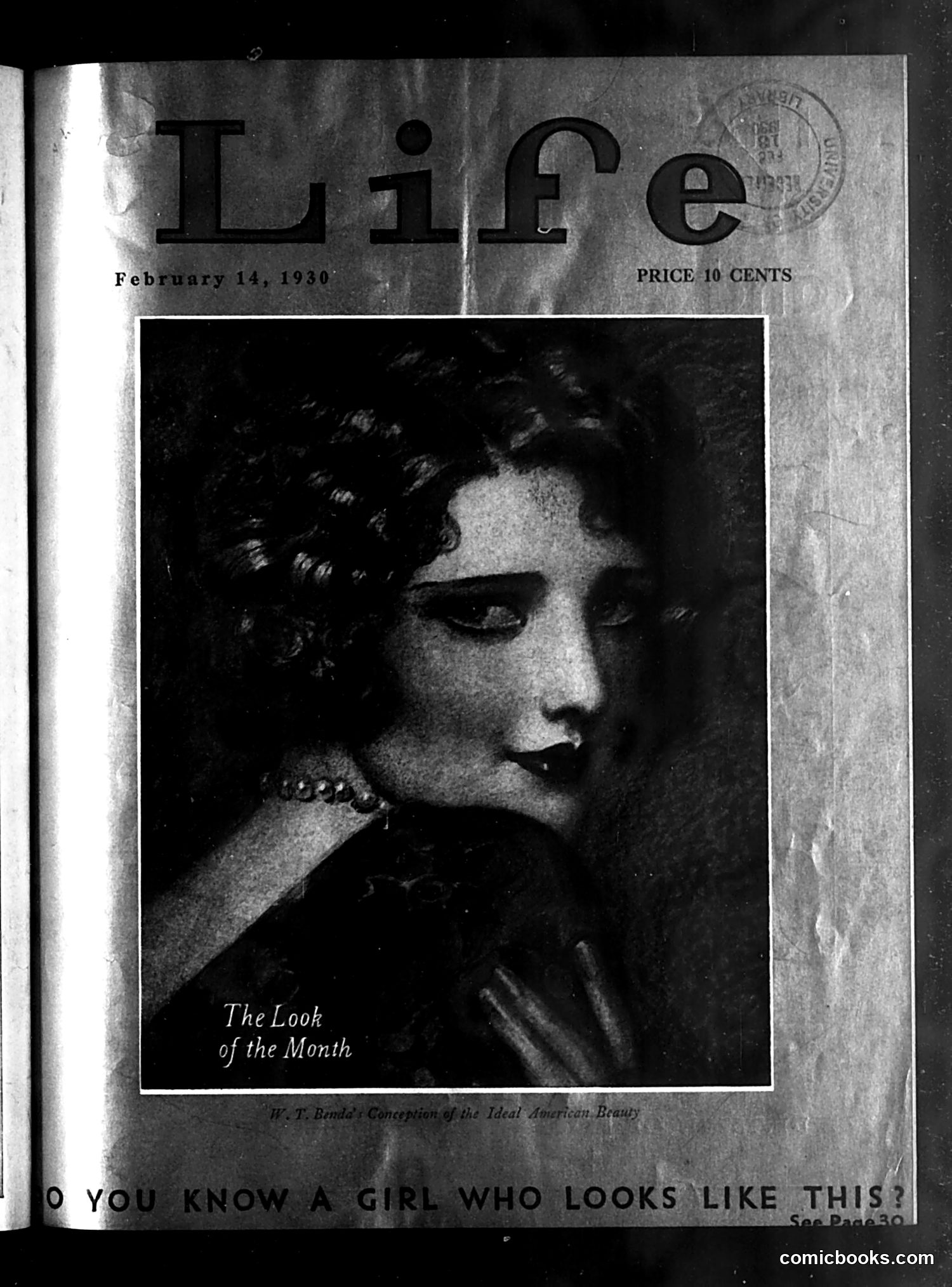
# Life Magazine, February 14, 1930 This is a cover featuring a portrait labeled "The Look of the Month" credited to "W. T. Benda: Conception of the Ideal American Beauty." The image shows a woman in profile with 1920s-style finger waves and what appears to be pearl jewelry, exemplifying the fashionable aesthetic of that era. The headline "DO YOU KNOW A GIRL WHO LOOKS LIKE THIS?" suggests this represents the contemporary ideal of feminine beauty—likely reflecting both advertising conventions and social expectations of the period. Rather than political satire, this appears to be a lifestyle/fashion-focused magazine cover typical of Life's content in 1930, priced at 10 cents. The "satire" may lie in Life's characteristic gentle mockery of beauty standards and modern consumer culture.

# Analysis This is **not a cartoon or satire page** — it's a straightforward advertisement for Houdaille shock absorbers, a real automotive component. The ad uses a demonstration concept to advertise product superiority: it shows a car on a rough, rutted road (marked "End of Pavement"), claiming that Houdaille-equipped vehicles can safely navigate poor road conditions at high speeds because their hydraulic shock absorbers eliminate steering wheel vibration and improve handling on rough terrain. The text invites potential buyers to test-drive rough roads themselves and suggests dealers would volunteer such demonstrations. A technical diagram of the shock absorber appears at bottom right. This represents early automotive advertising emphasizing suspension technology as a safety and comfort feature — a practical sales pitch rather than satire.
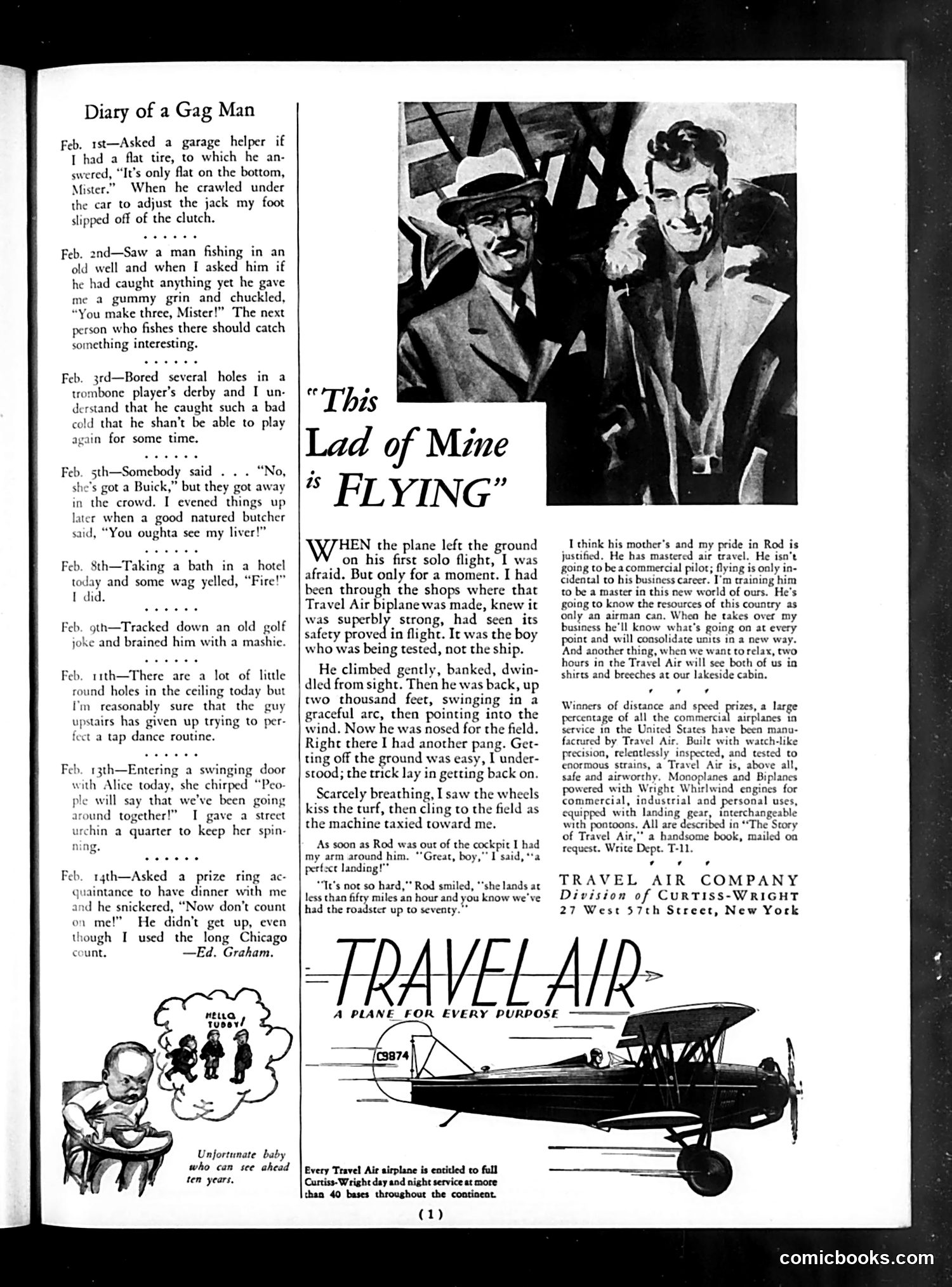
# Analysis of This Page from Life Magazine This page combines humor with aviation advertising from the early commercial aviation era (likely 1920s-30s based on the aircraft design). **"Diary of a Gag Man"** (left column) is a humor column featuring brief comedic anecdotes—flat tires, fishing mishaps, musical instrument damage—typical of Life's light satirical content. **"This Lad of Mine is FLYING"** (center/right) celebrates a young pilot's first solo flight. The narrative emphasizes the pride and anxiety of parents witnessing aviation as an emerging commercial industry. **The Travel Air advertisement** below promotes commercial aircraft as practical business tools, claiming widespread service across the continent. The overall page reflects 1920s-30s American culture: aviation's novelty as both thrilling and reassuring, parents' mixed emotions about technological progress, and corporate efforts to normalize air travel as routine transportation.
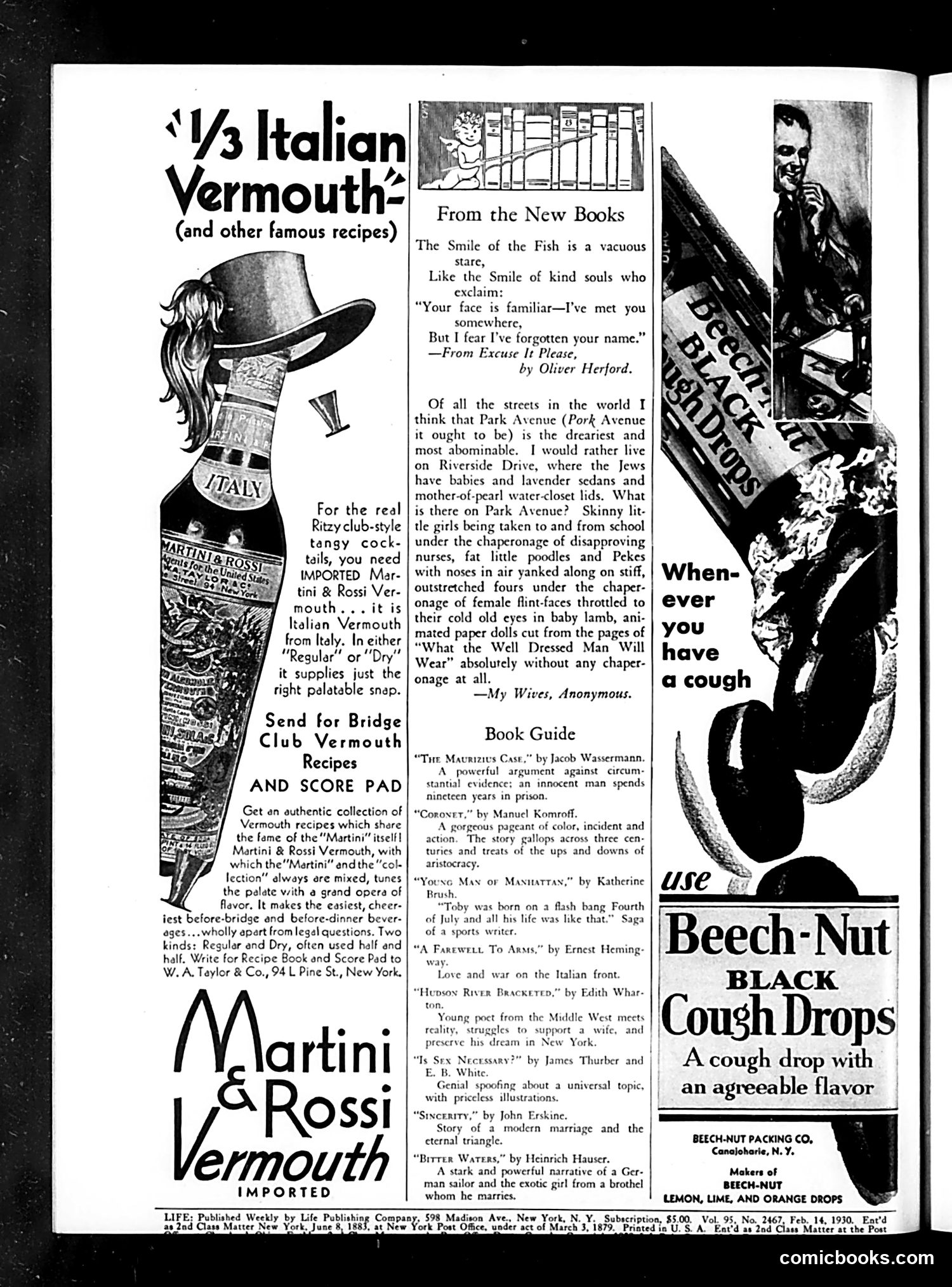
# Analysis This page is primarily **advertising**, not political satire. The left side advertises **Martini & Rossi Vermouth** through a stylized bottle illustration labeled "ITALY," promoting Bridge Club cocktail recipes. The copy emphasizes the product's Italian authenticity and palatability for social gatherings. The center contains a "Book Guide" reviewing recent publications, including works by Oliver Herford and Katherine Brush—typical literary commentary for *Life* magazine's educated readership. The right side advertises **Beech-Nut Black Cough Drops**, featuring an illustration of someone coughing, with marketing copy emphasizing the product's "agreeable flavor." The page reflects 1930s consumer culture and advertising conventions. There is **no political cartoon or satire present**—it's a standard magazine page mixing product advertisements with book reviews.
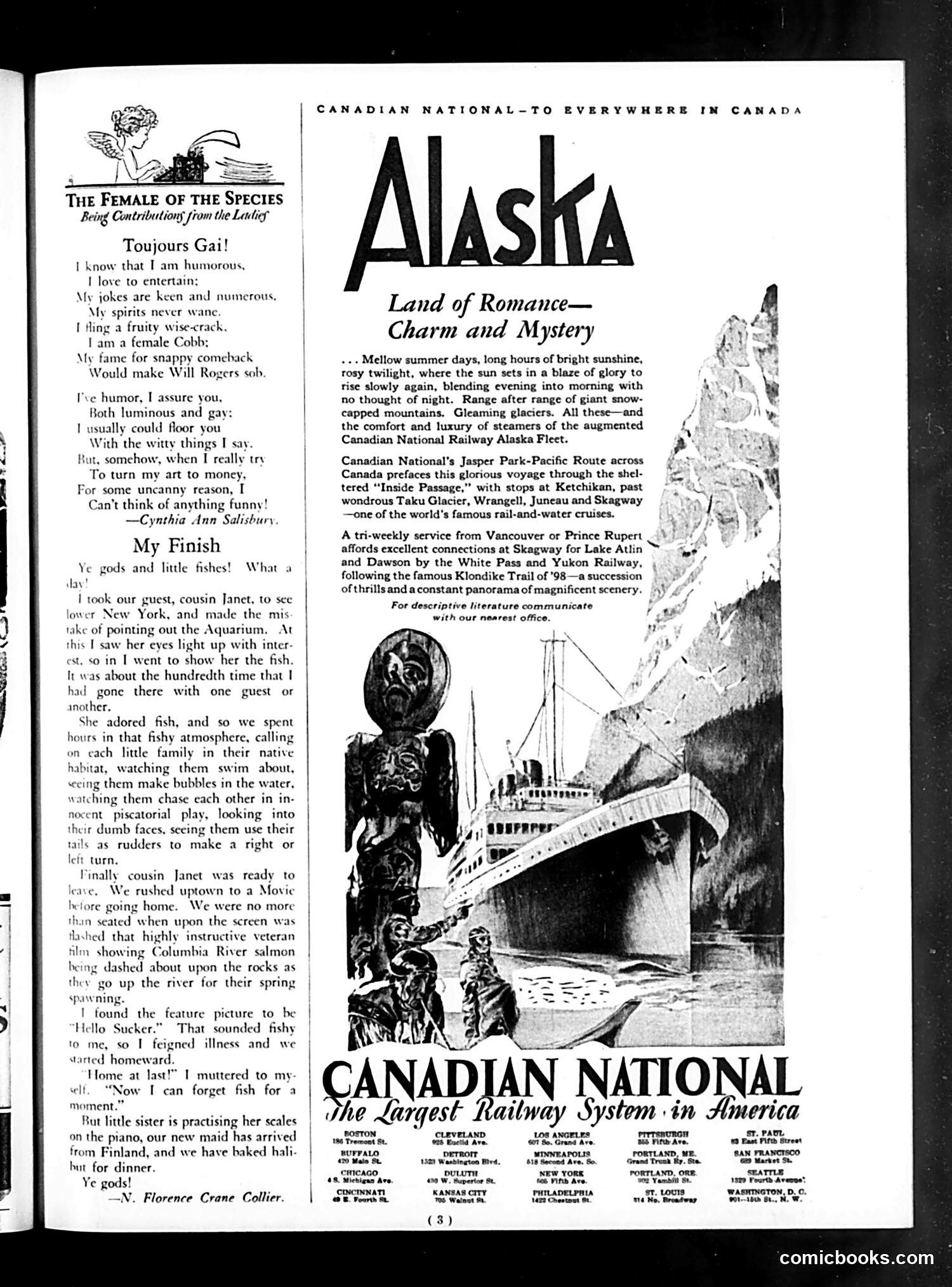
# Page Analysis This page is **primarily advertising**, not satire or political commentary. The left column features "The Female of the Species," a humorous poem by Florence Crane Collier about a woman's wit and charm, ending with an anecdote about taking a guest to see fish and a movie ("Hello Sucker"). The dominant right side is a **Canadian National Railway advertisement** promoting Alaska travel. It depicts a steamship navigating mountains and glaciers, advertising the scenic "Inside Passage" route connecting Vancouver or Prince Rupert to Alaska, with connections via the White Pass and Yukon Railway. The advertisement emphasizes romance, mystery, and natural grandeur—typical early 20th-century travel marketing. There is no political cartoon or satirical content on this page.
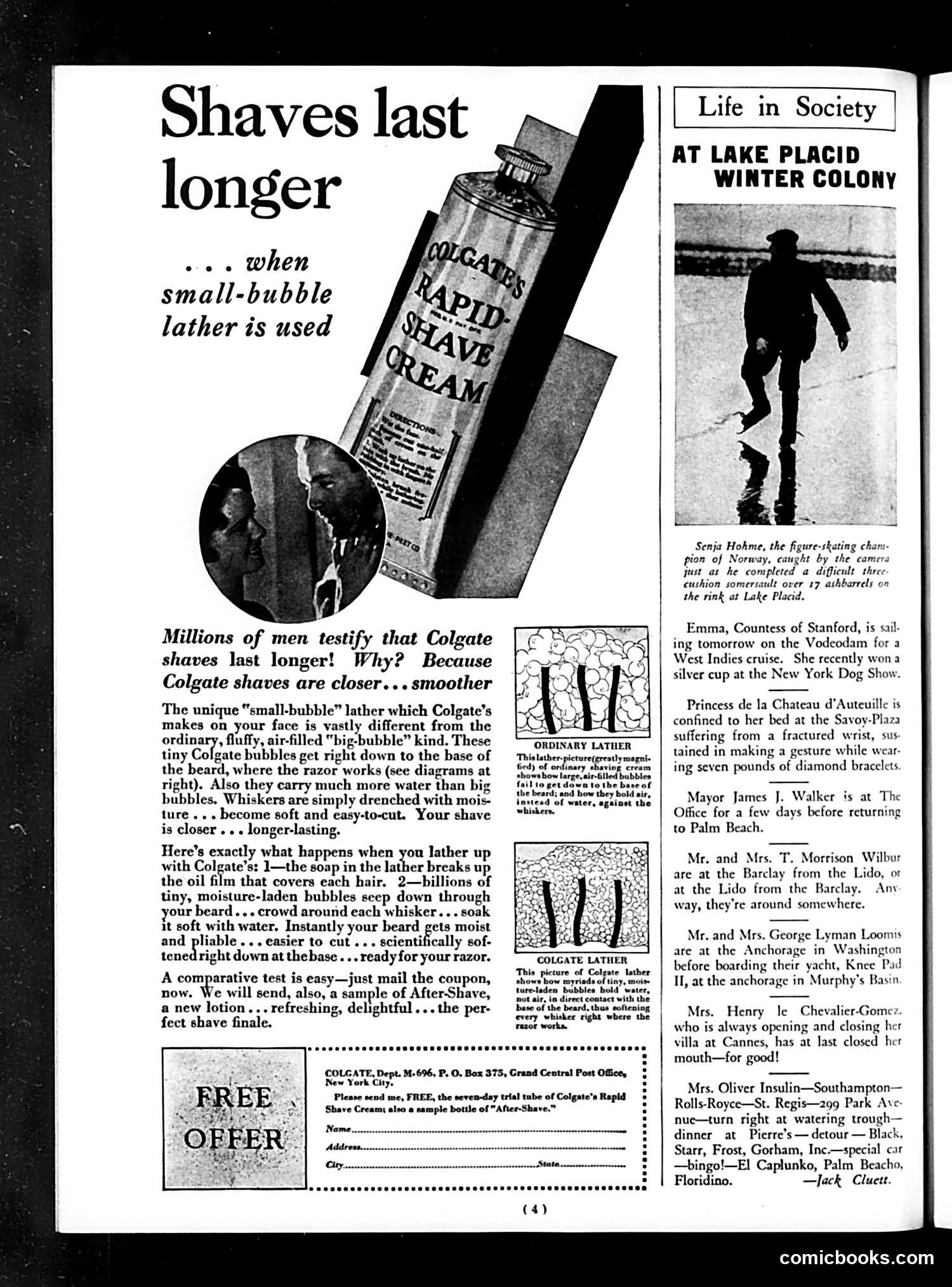
# Analysis This page is **primarily a Colgate shaving cream advertisement**, not satirical content. The left side features a large product ad claiming Colgate's "small-bubble lather" creates superior shaves that last longer than competitors. The ad includes comparative diagrams showing how Colgate's bubbles differ from "ordinary lather"—a marketing claim rather than satire. The right column, titled "Life in Society," contains brief social notes about wealthy individuals' travels and activities (countesses, princes, mayors), typical of the magazine's society page coverage. These appear to be genuine society announcements, not satirical commentary. The page functions as advertising revenue for *Life* magazine, blending commercial content with genuine society reporting rather than containing political or social satire.
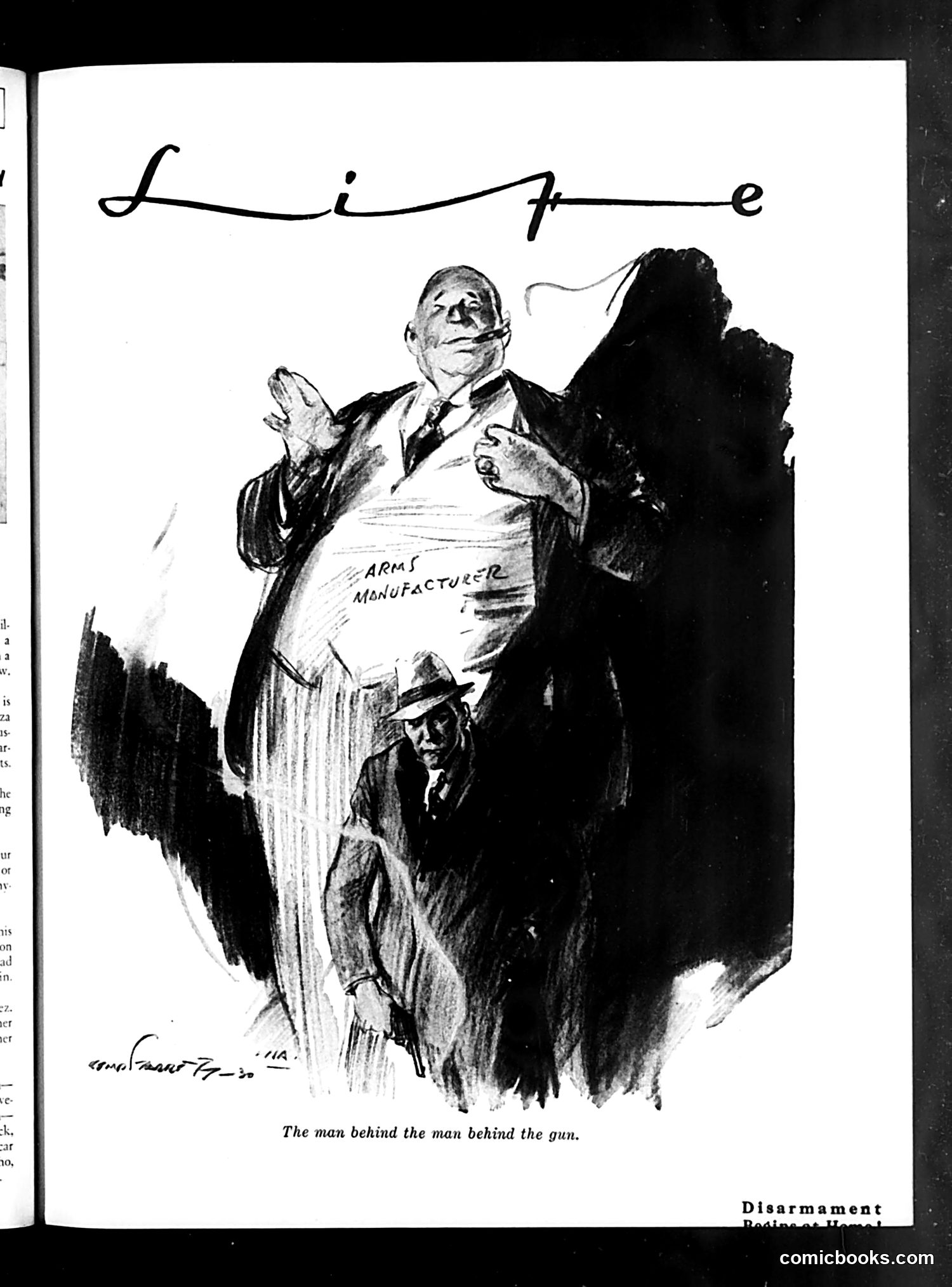
# Political Cartoon Analysis: "The Man Behind the Man Behind the Gun" This satirical cartoon depicts arms manufacturers' influence on military policy during the World War I era. The central figure—a portly man labeled "Arms Manufacturer"—literally stands behind a military officer, suggesting corporate control of military decisions. A smaller figure (appearing to be a politician or government official) stands beneath them, completing the chain of influence suggested by the caption. The cartoon critiques how weapons manufacturers profited from and potentially drove military policy, rather than elected officials or military leadership making independent decisions. The title's wordplay emphasizes hidden power structures: corporations manipulate the visible authority figures who ostensibly control warfare. This reflects early 20th-century anxieties about "merchants of death"—industrialists accused of promoting conflict for profit.
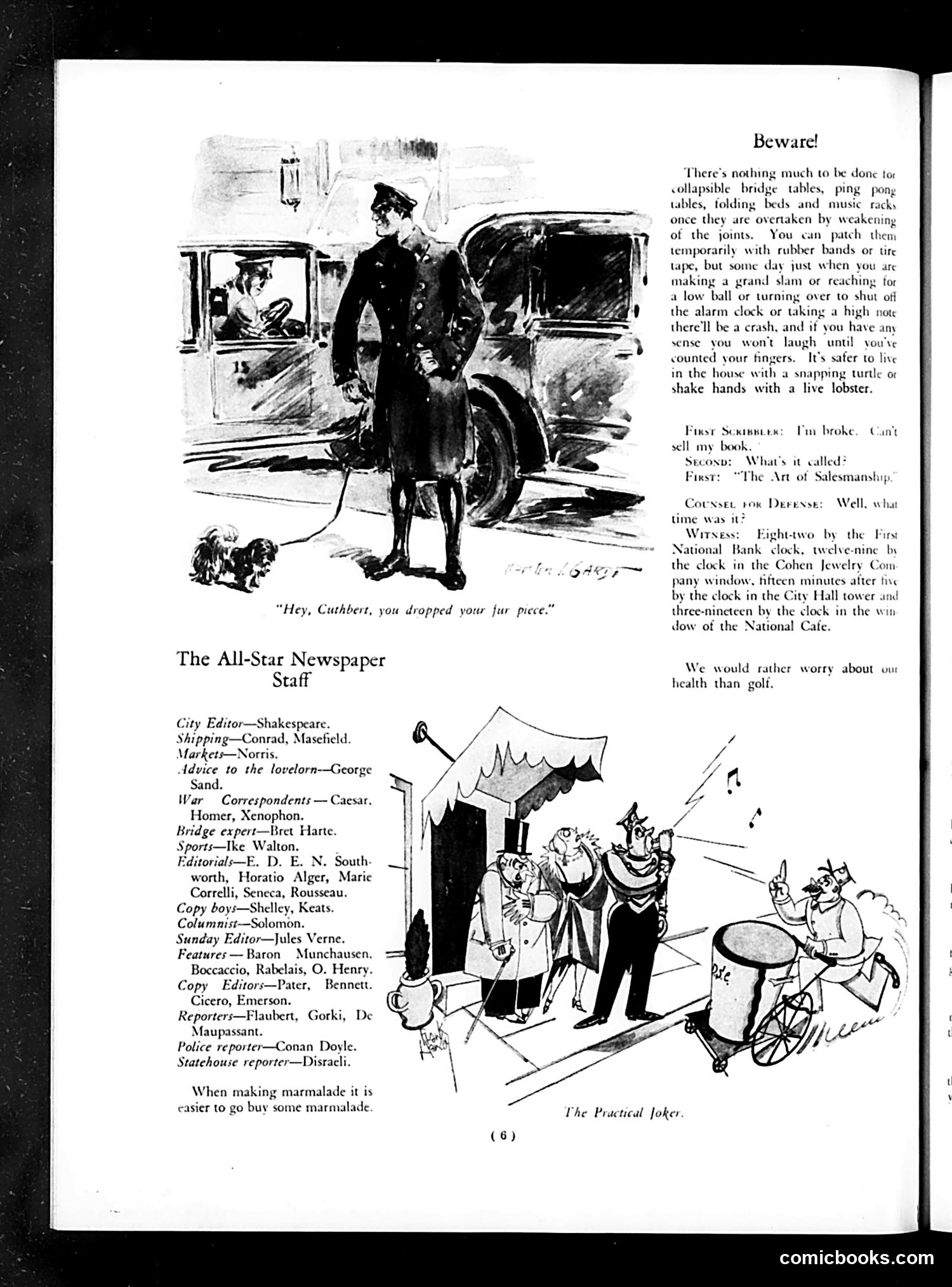
# Analysis of Life Magazine Page This page presents satirical content about newspaper work and collapsible furniture hazards. **Top Cartoon ("Hey, Cuthbert, you dropped your fur piece"):** Shows a woman in a car observing a man outside with a small dog, playing on the double meaning of "fur piece"—both a fur garment and the literal small furry animal. **"The All-Star Newspaper Staff":** A humorous roster of positions filled with literary and historical figures (Shakespeare, Caesar, Homer, Conan Doyle, etc.), satirizing the pretentiousness or complexity of newspaper organization. **"The Practical Joker" (bottom right):** Illustrates the article's warning about collapsible furniture—showing furniture and objects breaking or malfunctioning, humorously depicting common household accidents from poorly-maintained items. The page combines light social satire with practical domestic humor typical of Life magazine's style.
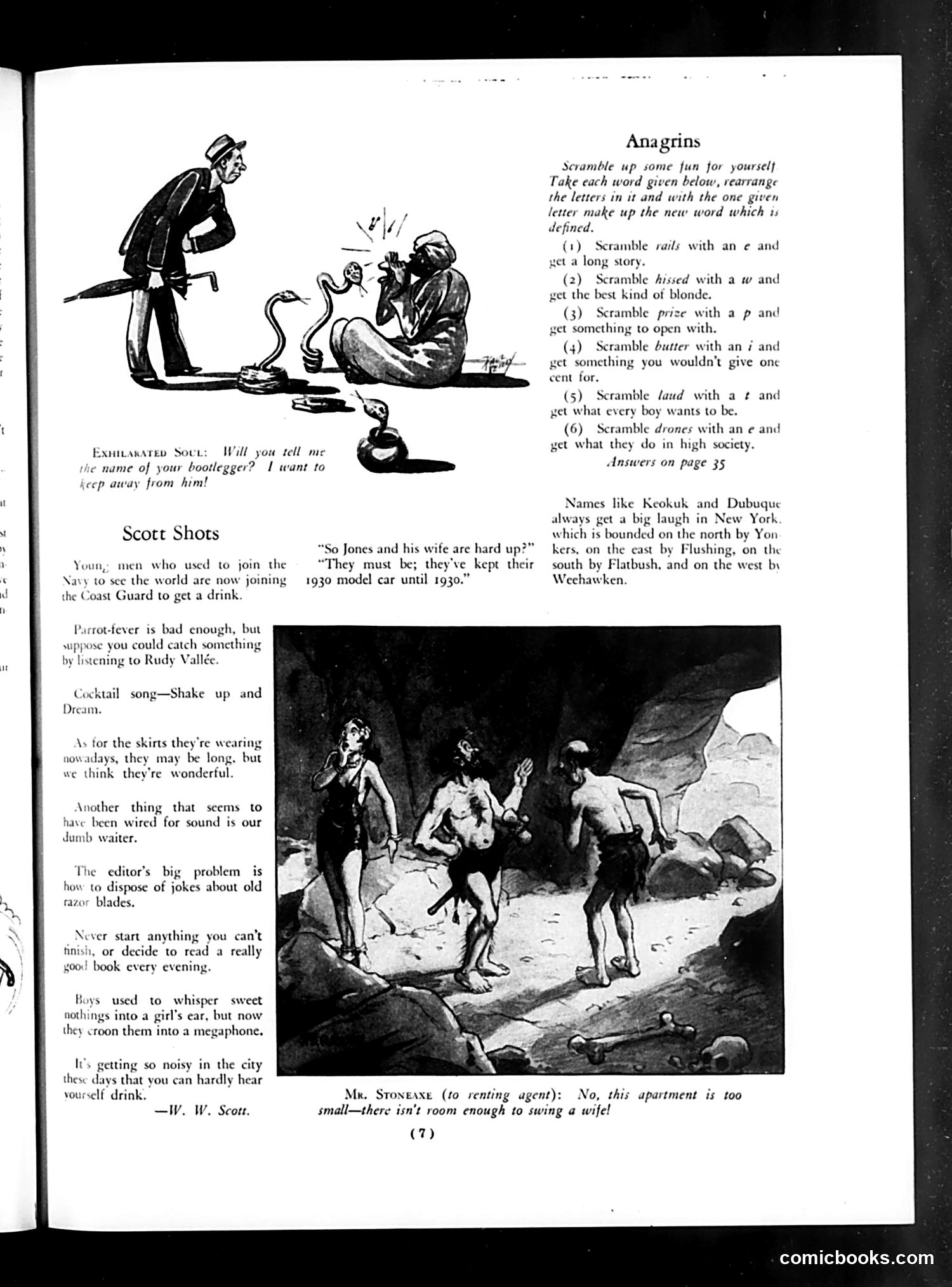
# Analysis of Life Magazine Page This page contains two distinct sections: **"Scott Shots"** (left column): A humor column by W.W. Scott offering brief satirical observations about contemporary life—Navy recruiting, cocktails, women's fashion, dumb waiters, razors, book reading habits, and urban noise. These are disconnected quips rather than political satire, reflecting typical 1930s lifestyle complaints. **"Anagrins"** (top right): A word puzzle game where readers rearrange letters to form new words with humorous definitions. **Illustration** (bottom): A caveman-style cartoon with a real estate agent showing an apartment to a primitive couple. The caption jokes that the apartment is too small "to swing a wife"—playing on the common phrase "can't swing a cat," updated with domestic humor about cramped living conditions. The overall page represents lighthearted satirical commentary on 1930s American life.
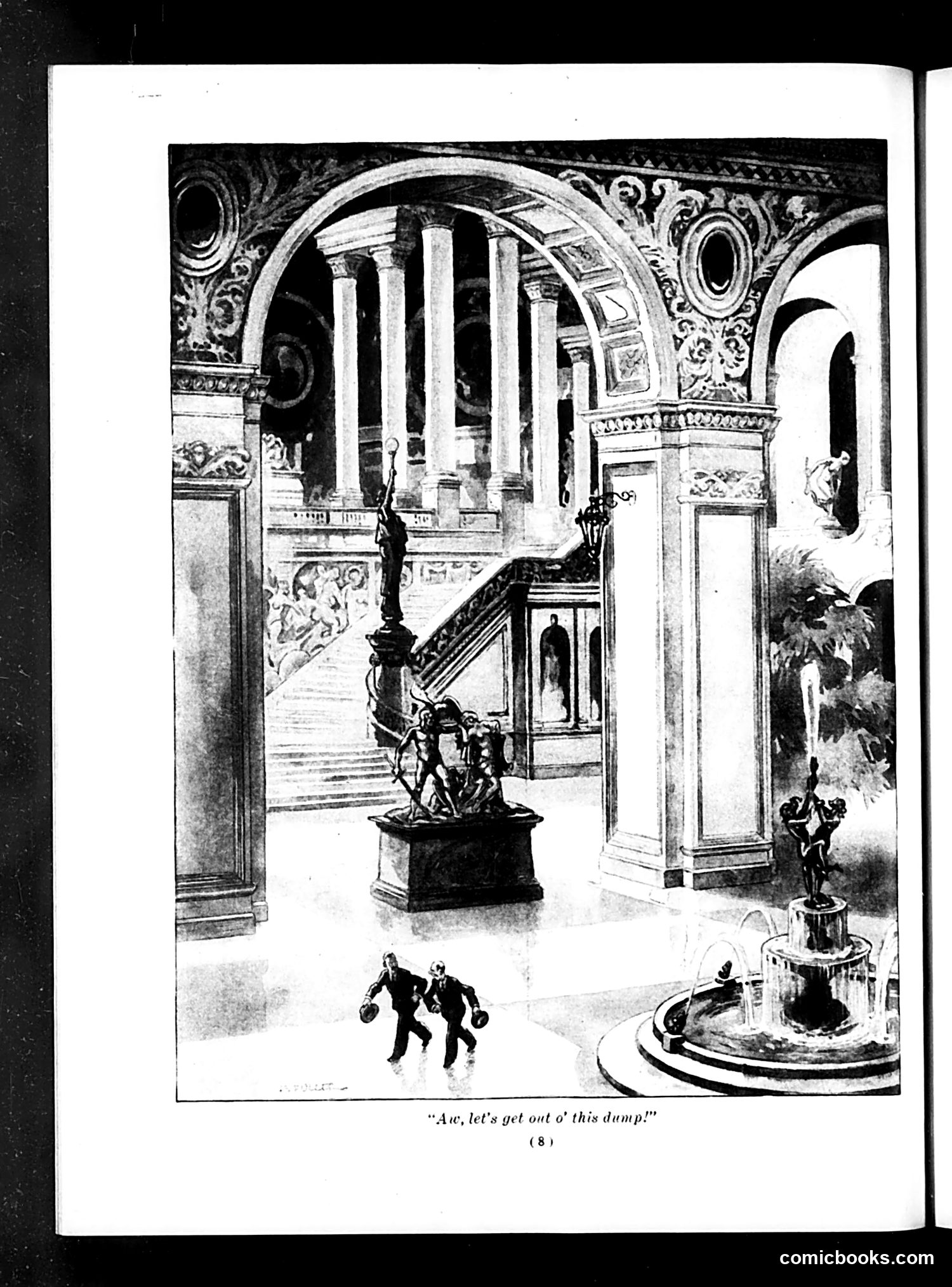
# Analysis This is a single cartoon illustration showing an ornate interior space with classical architecture—grand columns, decorative arches, and statuary. Two figures in dark suits are depicted running or fleeing through the space. The caption reads: "Aw, let's get out of this dump!" The satire appears to mock wealthy or elite individuals who dismiss or disparage grand, culturally significant buildings as unimpressive. The contrast between the obviously magnificent classical architecture and the figures' contemptuous dismissal suggests commentary on philistinism—the attitude of people with money but no appreciation for art or cultural heritage. Without additional context about the publication date, I cannot identify which specific building or individuals are targeted, but the joke hinges on ridiculing this particular brand of ignorant snobbery.
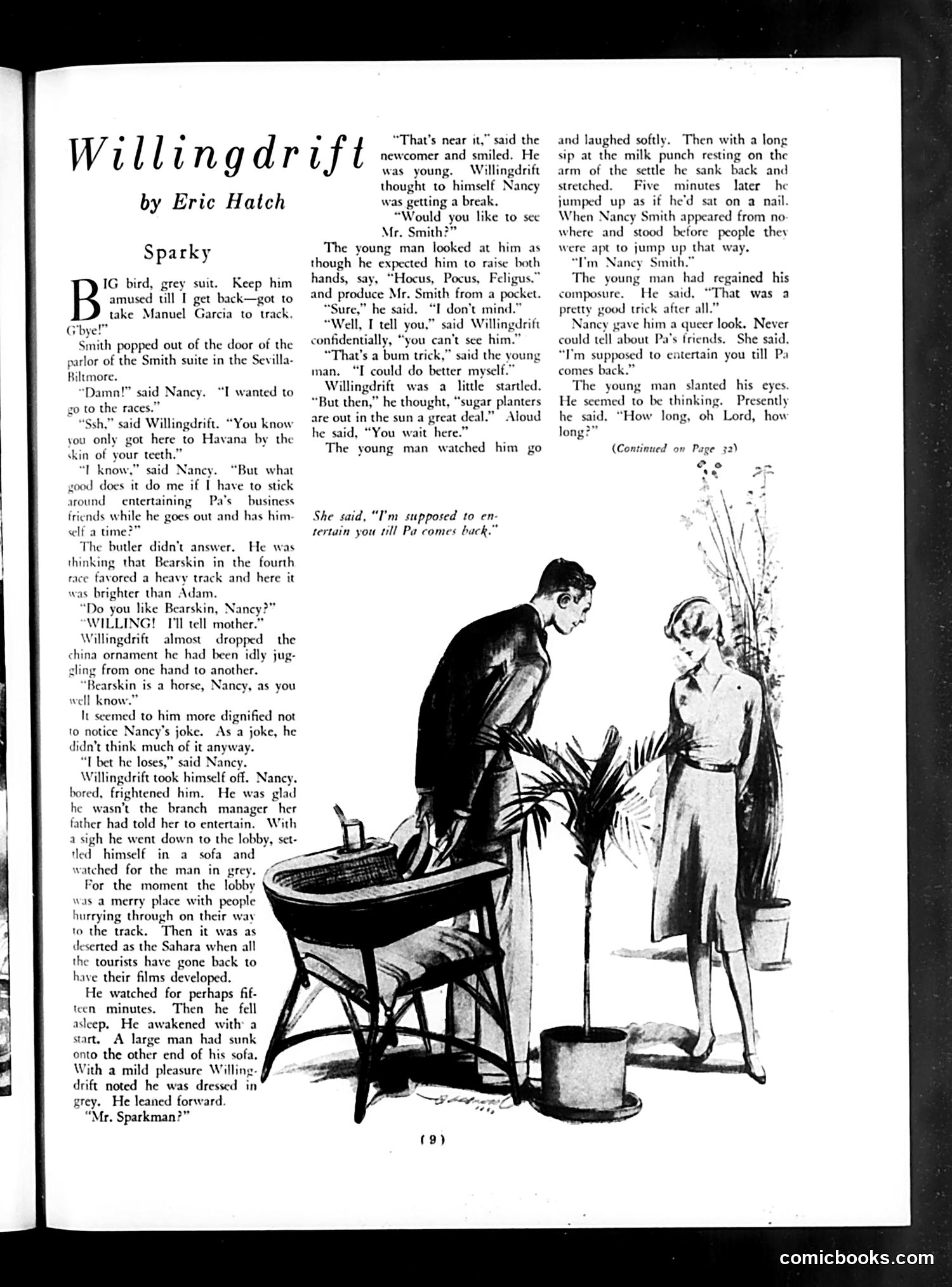
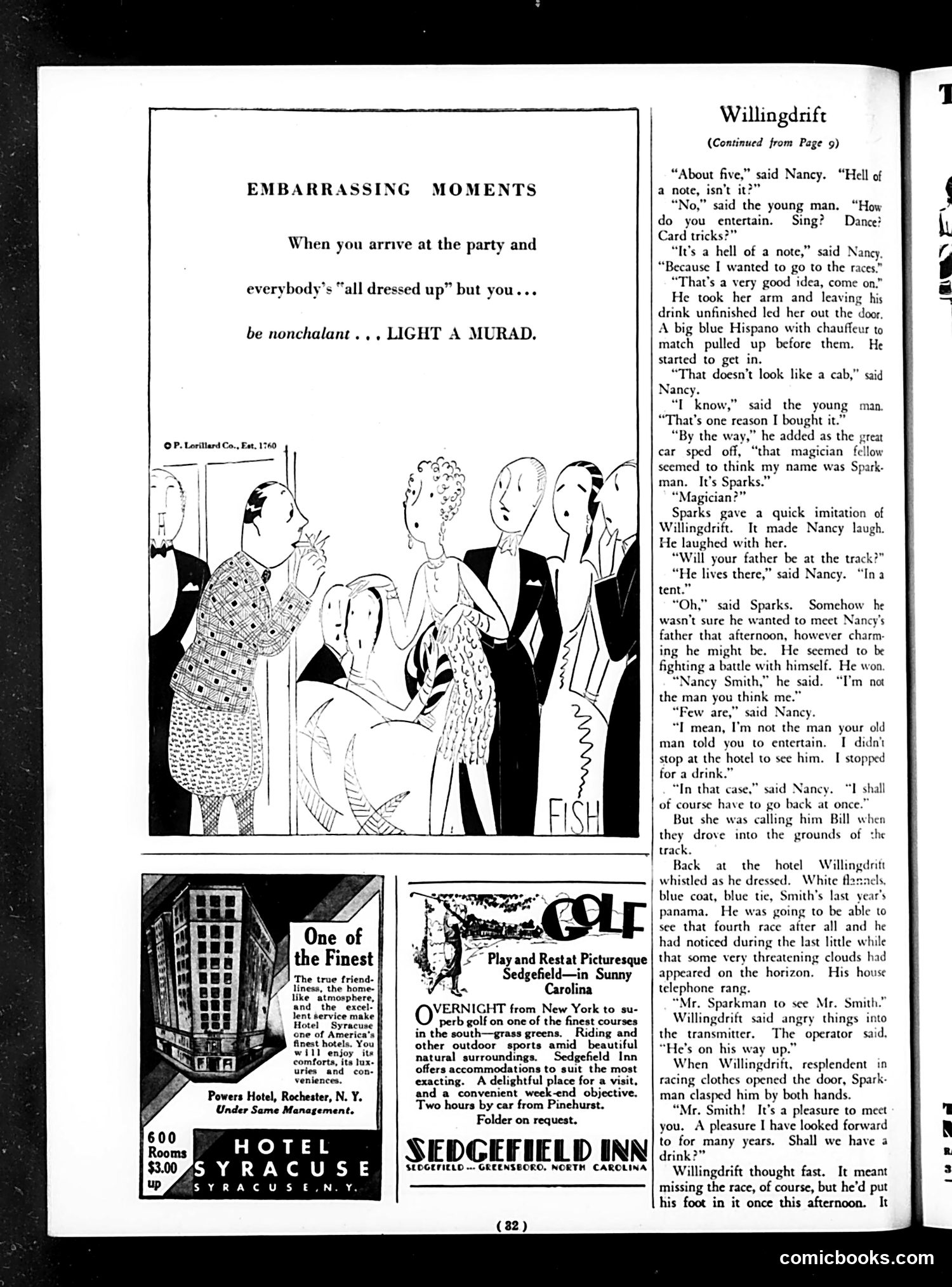
# "Willingdrift" by Eric Hatch This page presents a short story rather than political satire. The narrative follows a young man named Willingdrift who encounters Mr. Smith at a racing venue. Nancy, a woman present, expresses frustration about entertaining business associates while Mr. Smith attends the races. The illustration shows a man in formal dress speaking with a woman near what appears to be a baby carriage or settee. The story appears to be a domestic comedy about social obligations and romance, common themes in Life magazine's fiction during this era. No political figures or events are referenced. This is entertainment content—light social humor about everyday urban life, class interactions, and courtship—typical of Life's popular fiction offerings for general readers.
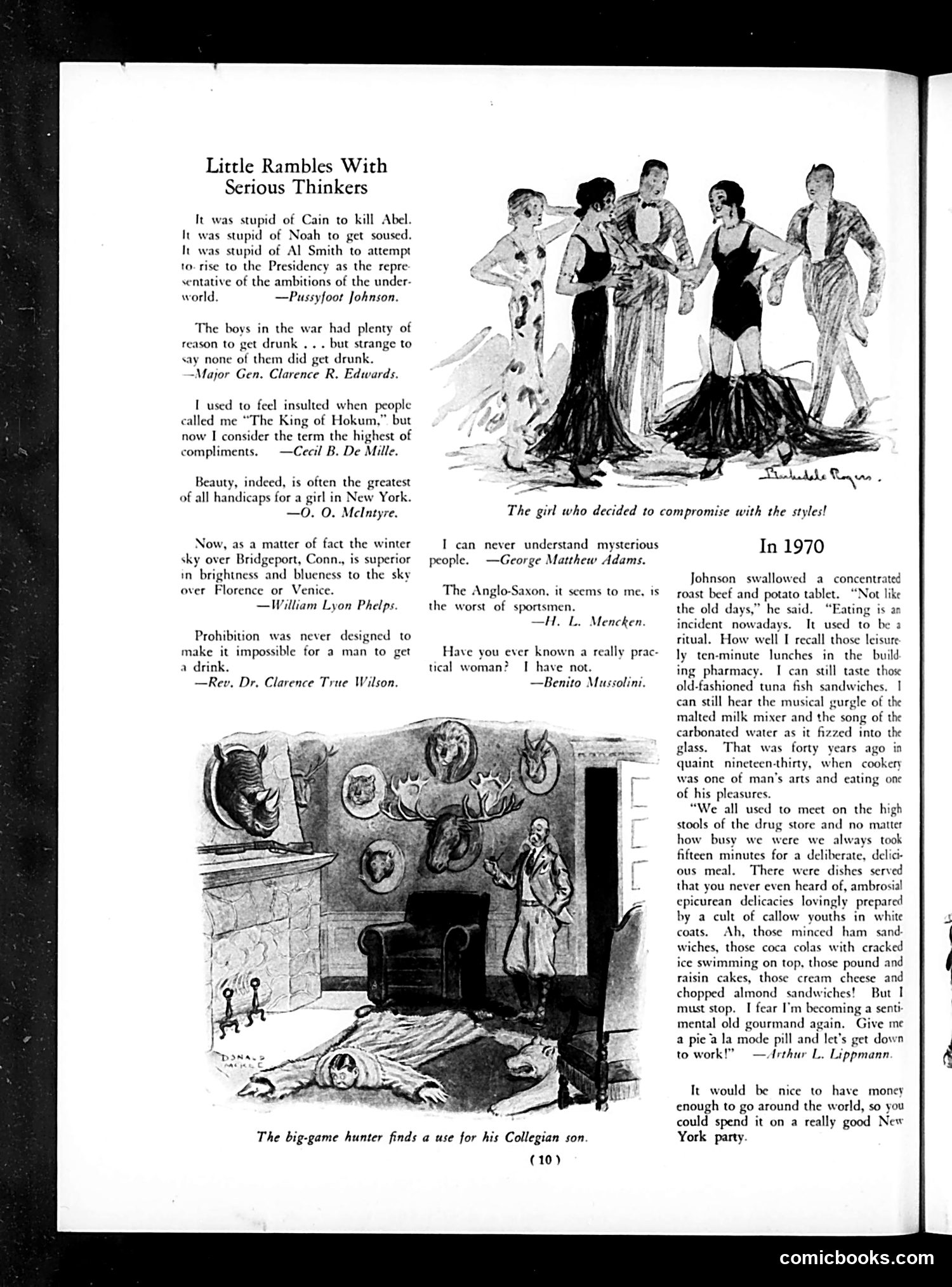
# "Little Rambles With Serious Thinkers" This page presents satirical quotes attributed to famous figures (Farplay Johnson, Major Gen. Clarence R. Edwards, Cecil B. DeMille, O.O. McIntyre, William Lyon Phelps, Rev. Dr. Clarence True Wilson, George Matthew Adams, H.L. Mencken, and Benito Mussolini). The top cartoon shows fashionable people, captioned "The girl who decided to compromise with the style!" — likely mocking women's fashion choices during an era of changing dress codes. The lower cartoon depicts a hunter presenting dead game, captioned "The big-game hunter finds a ue for his Collegian son" — a joke about unemployed young men from wealthy families being useful only as trophies or burdens. The "In 1970" section is nostalgic commentary on 1930s dining culture and pleasures, written in melancholic retrospect.