A complete issue · 48 pages · 1929
Life — November 8, 1929
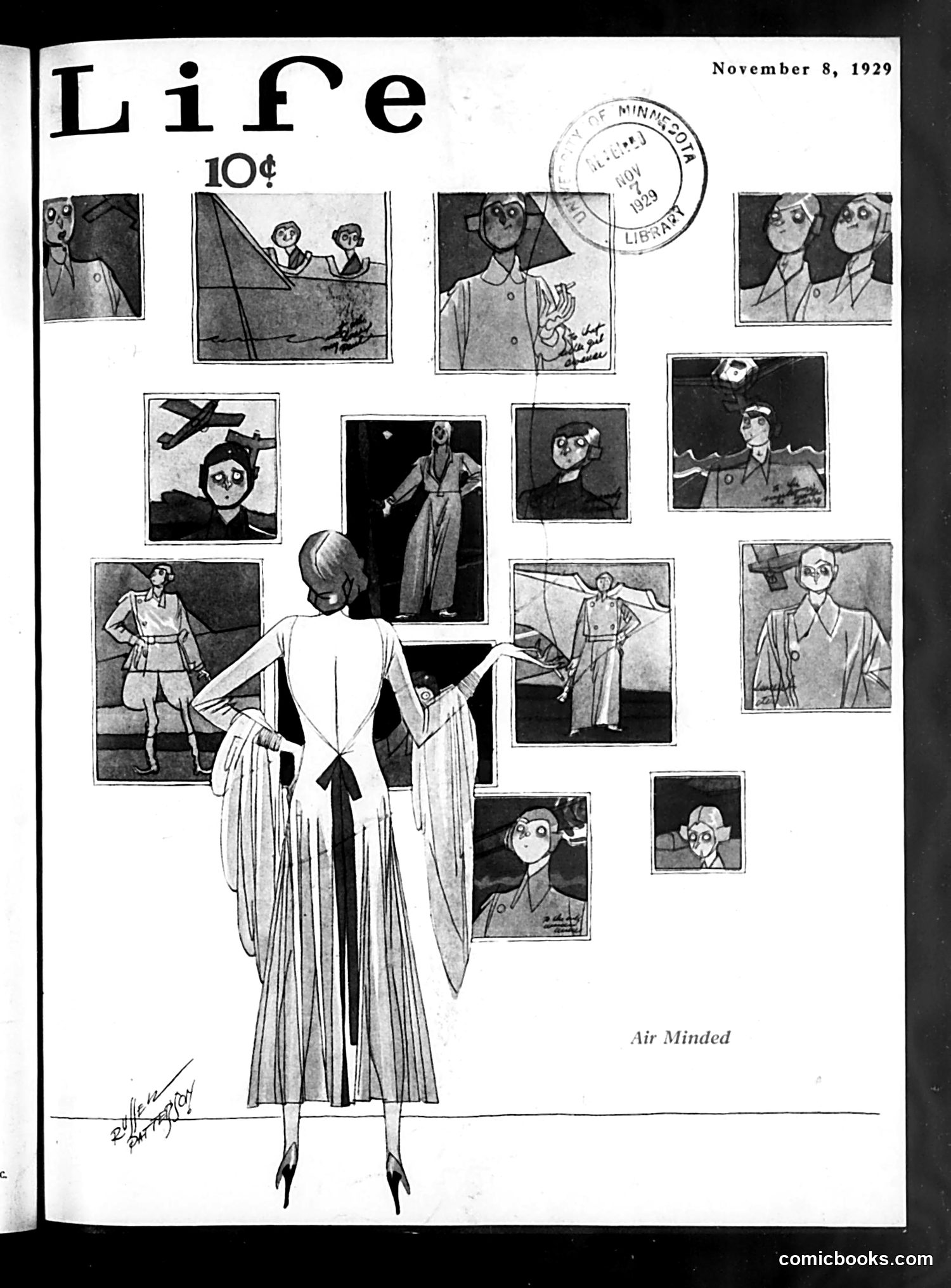
# "Air Minded" - Life Magazine, November 8, 1929 This satirical cover depicts a woman viewing photographs of various aviators and aviation pioneers, titled "Air Minded." The woman, viewed from behind in an elegant 1920s gown, appears to be selecting or admiring these aerial figures like portraits in a gallery. The satire likely mocks the contemporary obsession with aviation celebrities and pioneers during the aviation boom of the late 1920s. Aviation was a glamorous, cutting-edge pursuit capturing public imagination. The "air minded" woman represents society's fascination with these aerial heroes, suggesting the era's trend of lionizing aviators as cultural icons—much as we today follow celebrity culture. The magazine's 10-cent price reflects this being published just weeks before the stock market crash of October 1929.
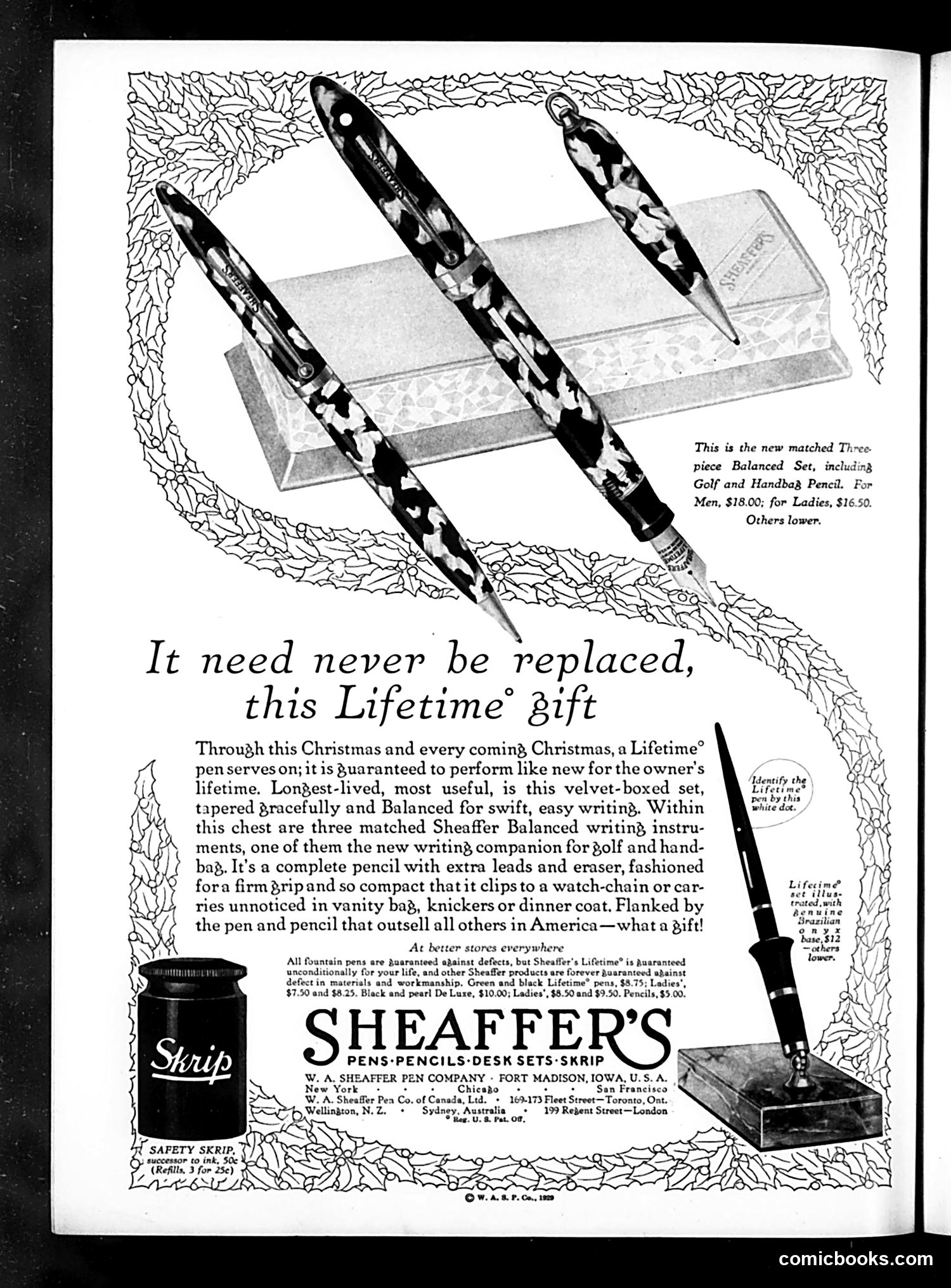
# Analysis This is **not a political cartoon or satire**—it's a **Sheaffer pen advertisement** from what appears to be an early-to-mid 20th century *Life* magazine. The ad promotes Sheaffer's "Lifetime" fountain pen and pencil set as an ideal Christmas gift. The marketing pitch emphasizes durability ("need never be replaced," "guaranteed to perform like new for the owner's lifetime"). It highlights three matched writing instruments: a fountain pen, golf pencil, and handbag pencil, presented in an elegant box. The decorative leaf border and product imagery are typical advertising design of the era. There is no political commentary or satire present—this is straightforward commercial promotion emphasizing quality and longevity as selling points for luxury writing instruments.
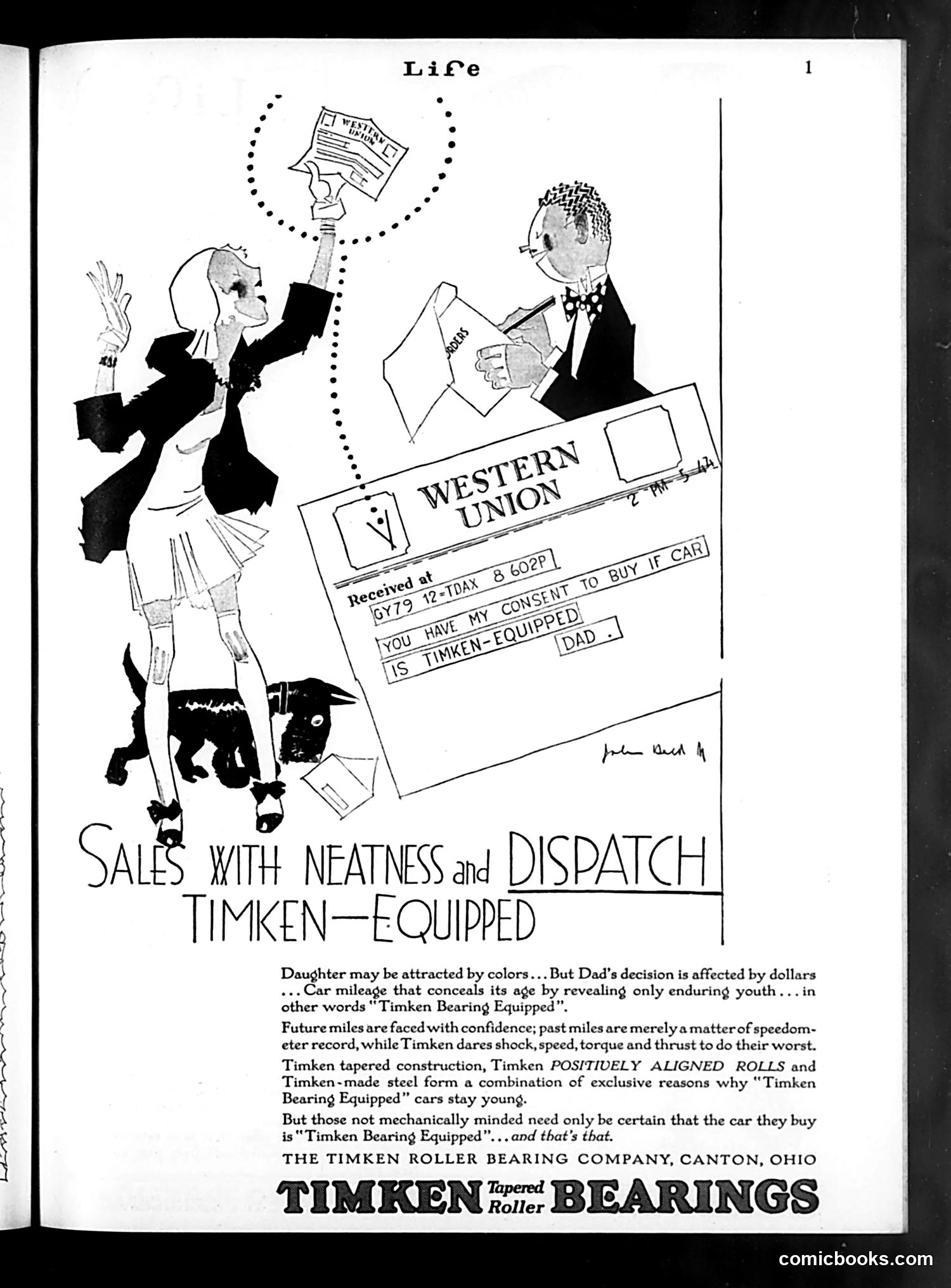
# Analysis This is primarily a **Timken Roller Bearings advertisement** disguised as satirical commentary, not actual political satire. The cartoon depicts a young woman excitedly receiving a Western Union telegram from her father, agreeing to buy her a car—but only if it's "Timken-equipped." The joke targets fathers' purchasing decisions: while daughters may be attracted by a car's appearance, fathers focus on practical durability and reliability. The message suggests that cars with Timken bearings retain their value longer, appearing "young" despite age and mileage. The accompanying text emphasizes Timken bearings' engineering superiority—their alignment, construction, and durability—to persuade cost-conscious automobile buyers (typically male decision-makers in the 1920s-30s) that the investment protects their vehicle's longevity. This reflects period gender dynamics: daughters desire, fathers decide based on economics.
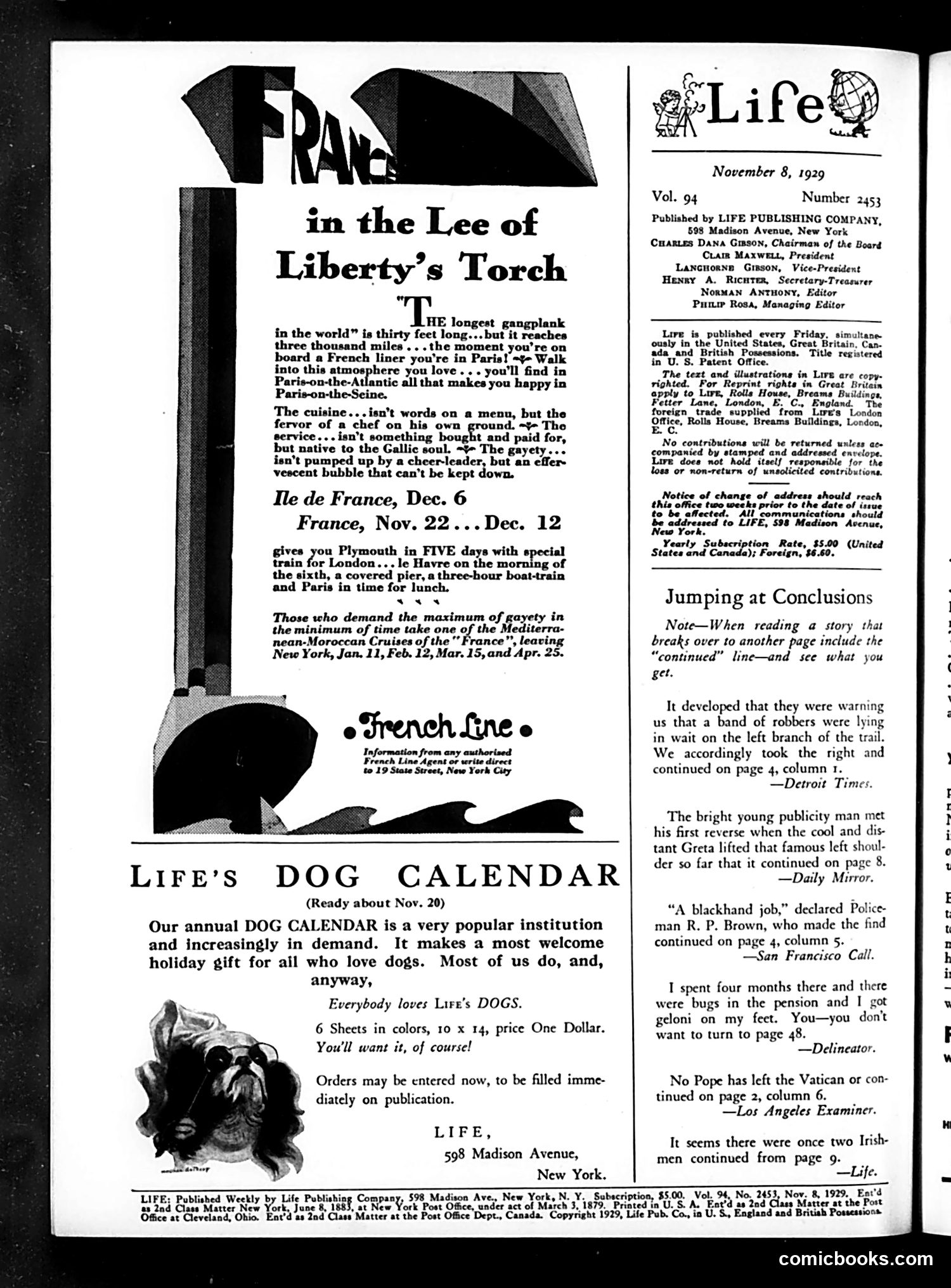
# Analysis This page is primarily **advertising and editorial content** rather than political satire. The main feature advertises the **French Line** (a cruise ship company) offering Plymouth-to-Paris service in five days, positioning leisure travel to Europe as accessible and desirable. Below that is an advertisement for **Life's Dog Calendar**—an annual product featuring dog illustrations, priced at one dollar for six color sheets. The right column contains brief editorial notes about various stories ("Jumping at Conclusions"), including references to robberies, a publicity man, a policeman, and mentions of Vatican and Irish subjects—these appear to be cross-references directing readers to continued stories elsewhere in the magazine rather than standalone satirical commentary. The overall page emphasizes consumer products and travel opportunities available to American readers in November 1929.

# Analysis This page is **primarily advertising**, not a political cartoon. It promotes the 1929 14th Edition of Encyclopaedia Britannica, featuring testimonials from notable figures like William Lyon Phelps (Yale professor) and Henry Seidel Canby (Saturday Review editor). The advertising emphasizes the encyclopedia's comprehensiveness (3,500 authorities, 15,000 illustrations) and affordability through installment payments. There's a handsome mahogany bookcase table pictured as an incentive. The only potentially satirical element is the hyperbolic language—calling it "The Greatest Knowledge Book of all Times"—typical of 1920s advertising excess. The page reflects Depression-era marketing strategies targeting middle-class families wanting self-improvement and cultural prestige through home libraries. A coupon at bottom invites mail orders.
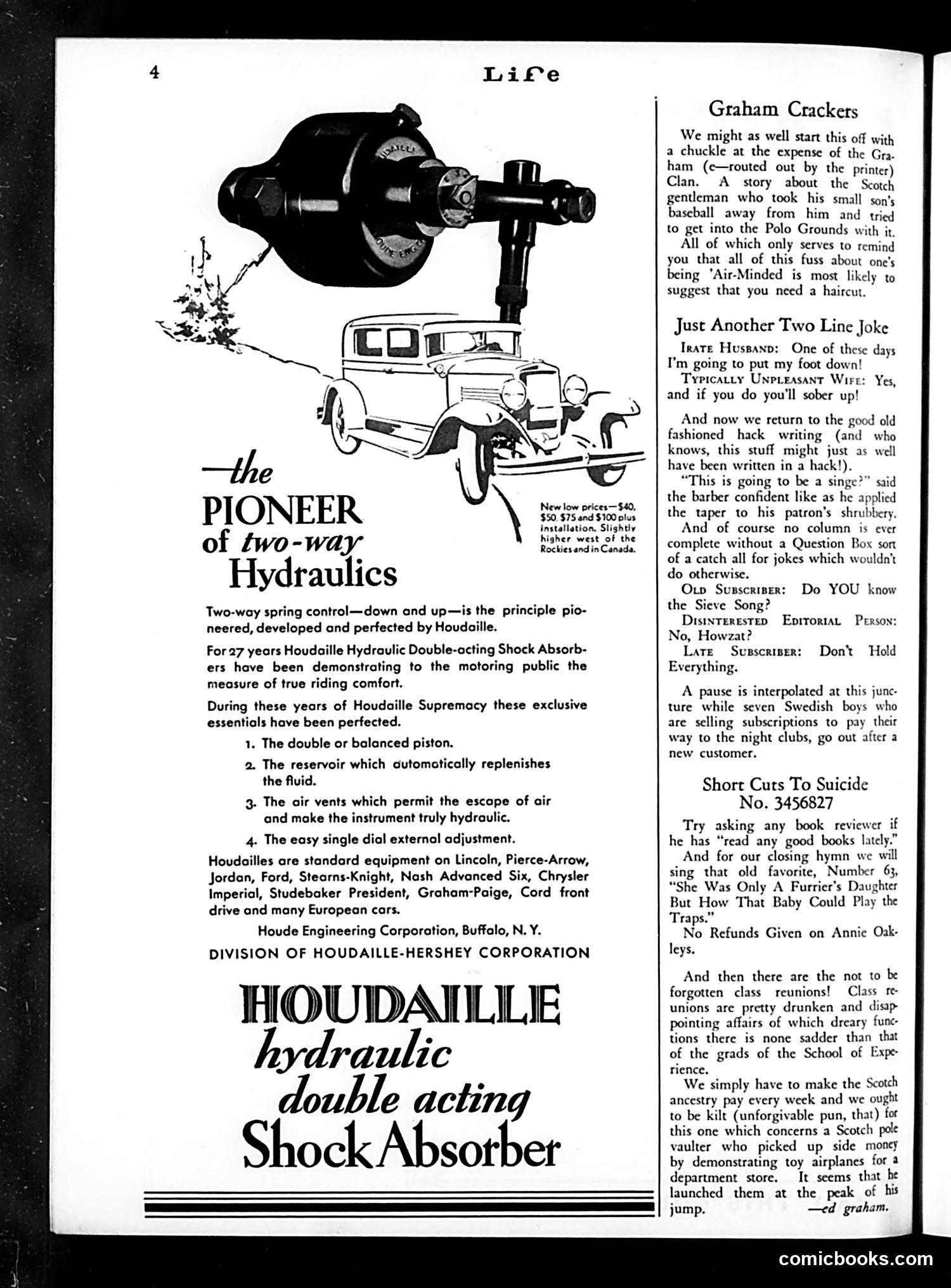
# Page Analysis: Life Magazine, circa 1920s-1930s This page is primarily **advertising for Houdaille hydraulic shock absorbers**, showing a device being fired at a car to demonstrate its effectiveness. The ad emphasizes the "pioneer" status of two-way hydraulic technology for vehicle comfort. The right column contains **humor pieces typical of Life magazine's satirical style**: brief jokes about marriage ("irate husband" threatening to "put my foot down"), barber shop banter, and editorial commentary on forgotten class reunions and Scottish frugality. The humor is mild and domestic in nature—poking fun at marriage dynamics, professional pretension, and ethnic stereotypes (Scottish thriftiness) rather than political targets. This reflects Life's focus on social observation and consumer culture rather than hard-hitting political satire during this era.
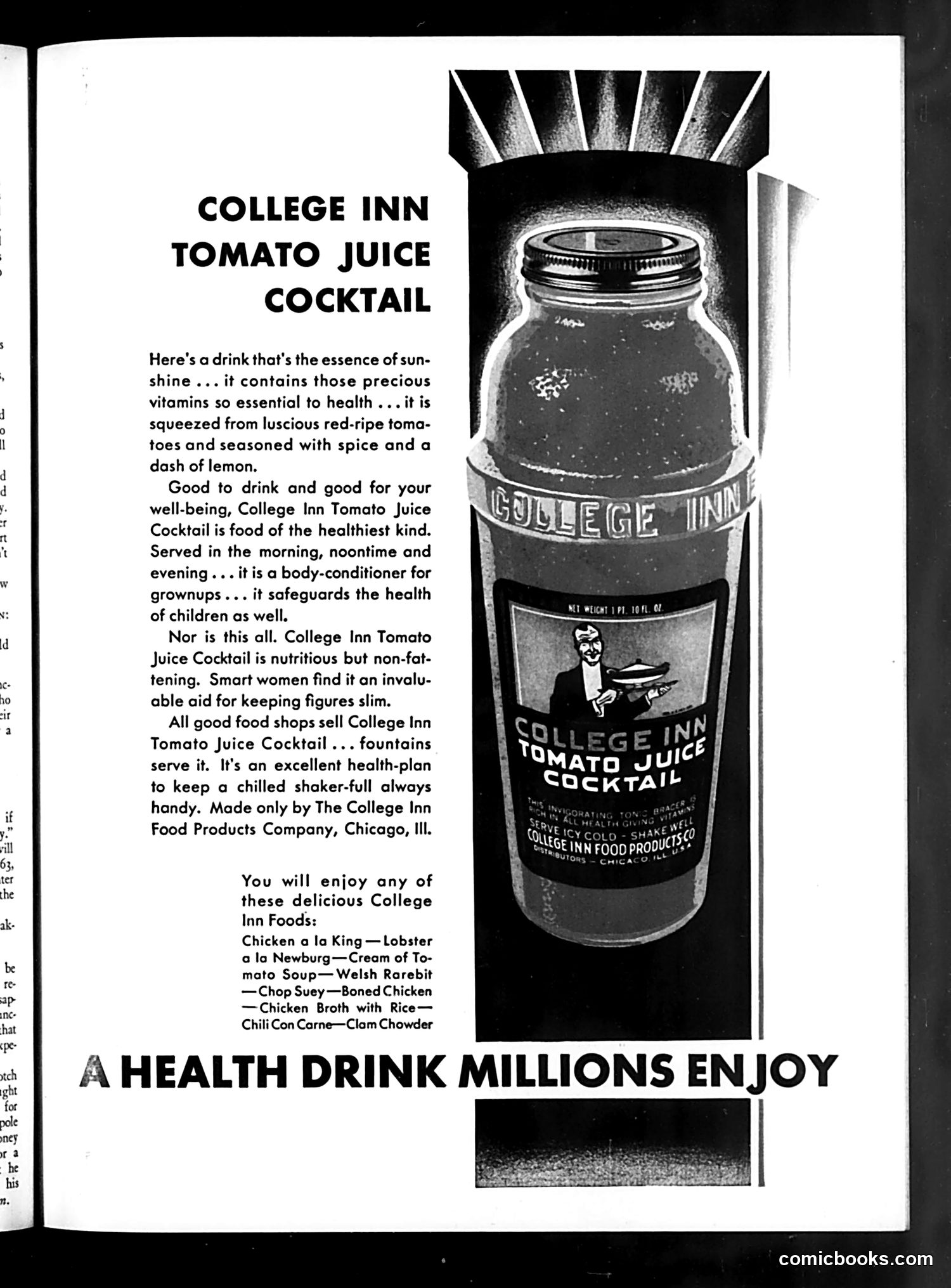
# College Inn Tomato Juice Cocktail Advertisement This is a straightforward advertisement—not satire or political content—for College Inn brand tomato juice cocktail, made by College Inn Food Products Company of Chicago. The ad promotes tomato juice as a health drink, emphasizing its vitamins and nutritional value. It appeals to health-conscious consumers, particularly "smart women" watching their figures, by marketing the product as "non-fattening" and beneficial for "well-being" and "health." The bottom lists other College Inn food products (Chicken à la King, soups, chowders) to build brand recognition. The visual shows a large jar with the product label prominently displayed. This reflects mid-20th-century marketing that heavily emphasized health benefits and targeted weight-conscious audiences, particularly women.
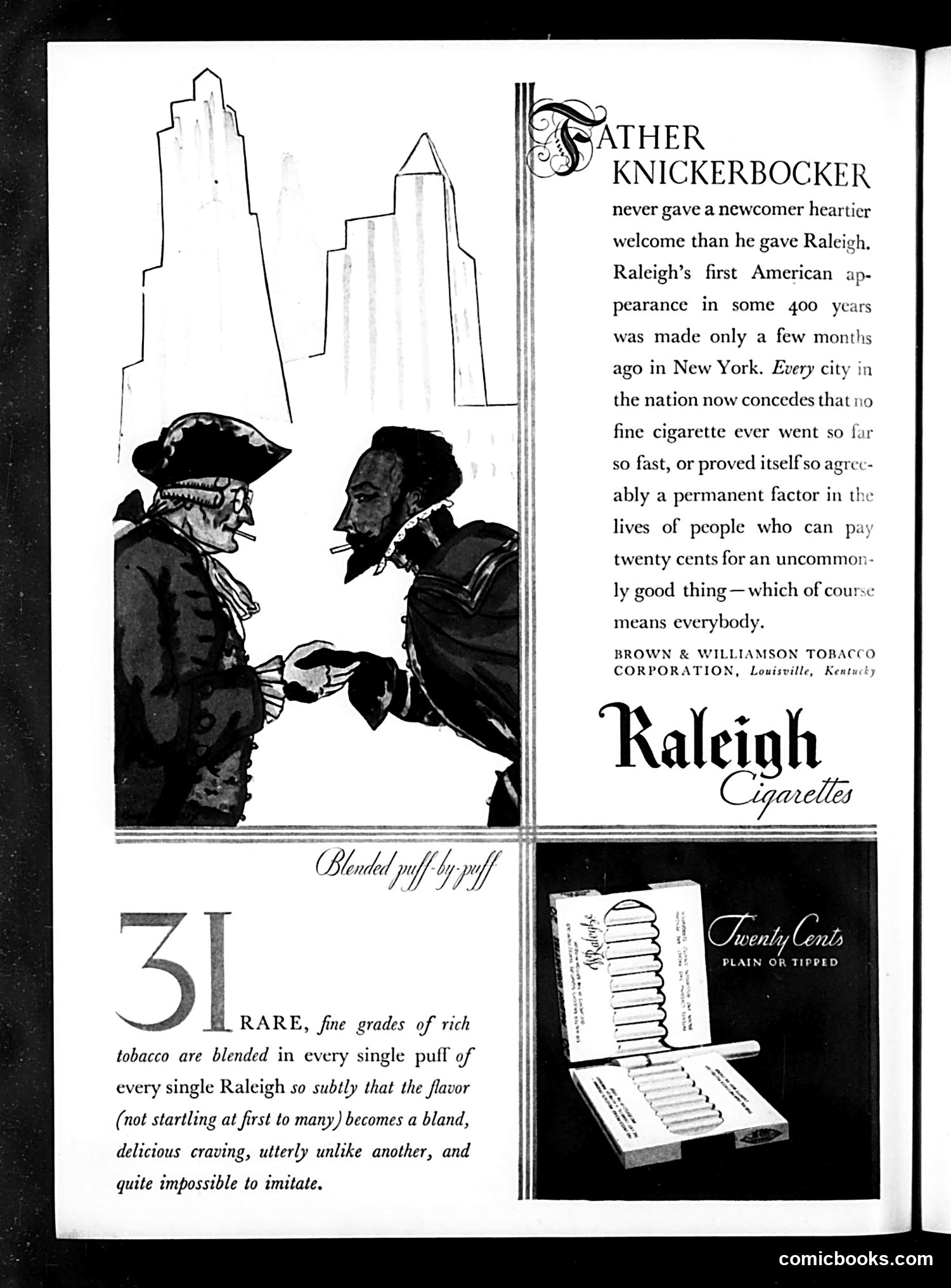
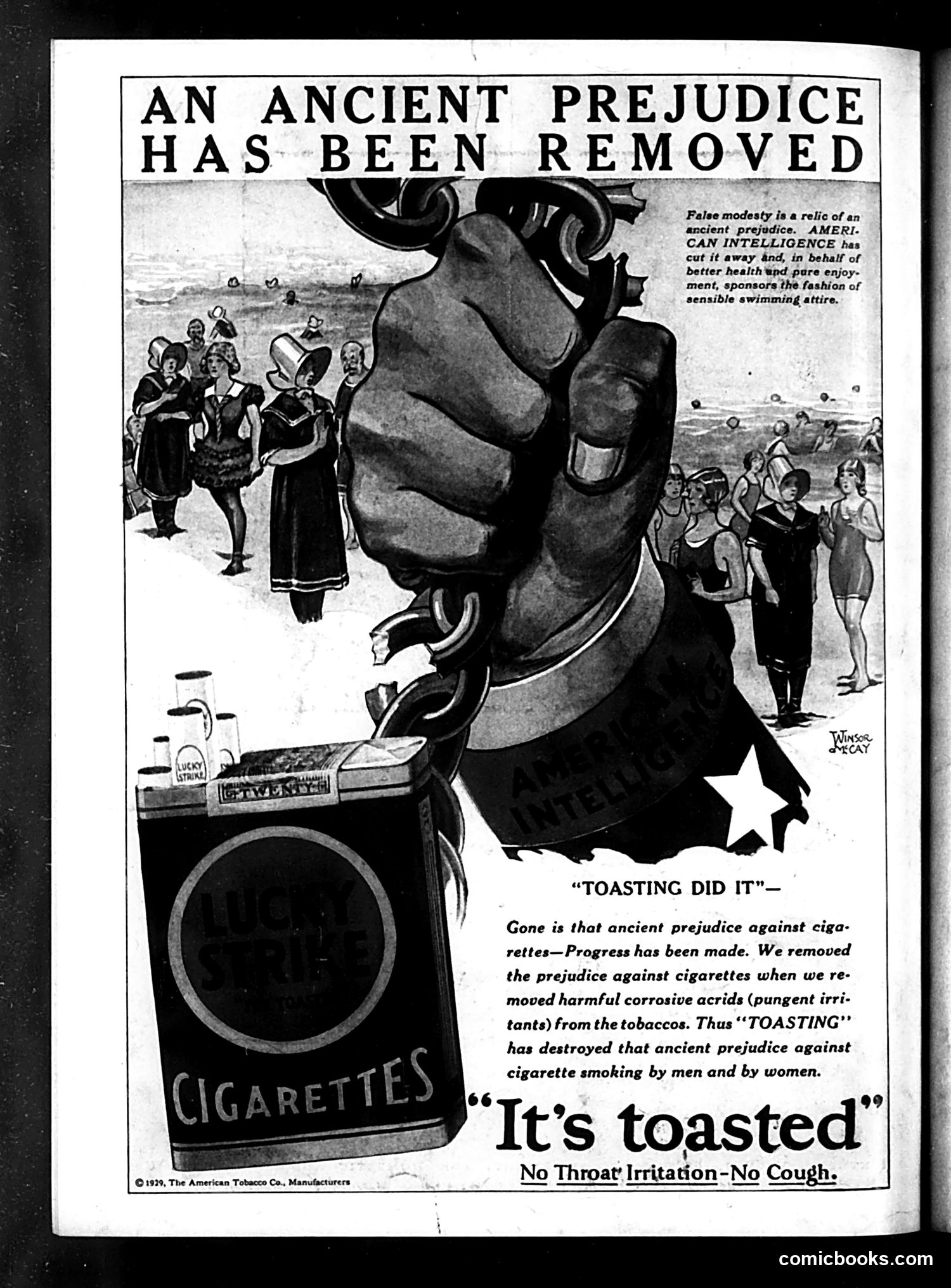
# Analysis of Raleigh Cigarettes Advertisement This is a **cigarette advertisement**, not political satire. The page features two caricatured figures in 18th-century colonial dress (tricorn hats, period clothing) exchanging what appears to be a cigarette pack. The imagery invokes Sir Walter Raleigh, the historical figure associated with introducing tobacco to England. The ad's humor lies in anachronistic exaggeration—depicting ancient colonials as modern cigarette consumers. The text claims Raleigh's "first American appearance in some 400 years was made only a few months ago in New York," personifying the cigarette brand as Raleigh himself arriving as a newcomer. The sales pitch emphasizes a secret "blend" of 31 tobacco grades at twenty cents per pack. This was vintage early-20th-century advertising conflating historical prestige with consumer product appeal.
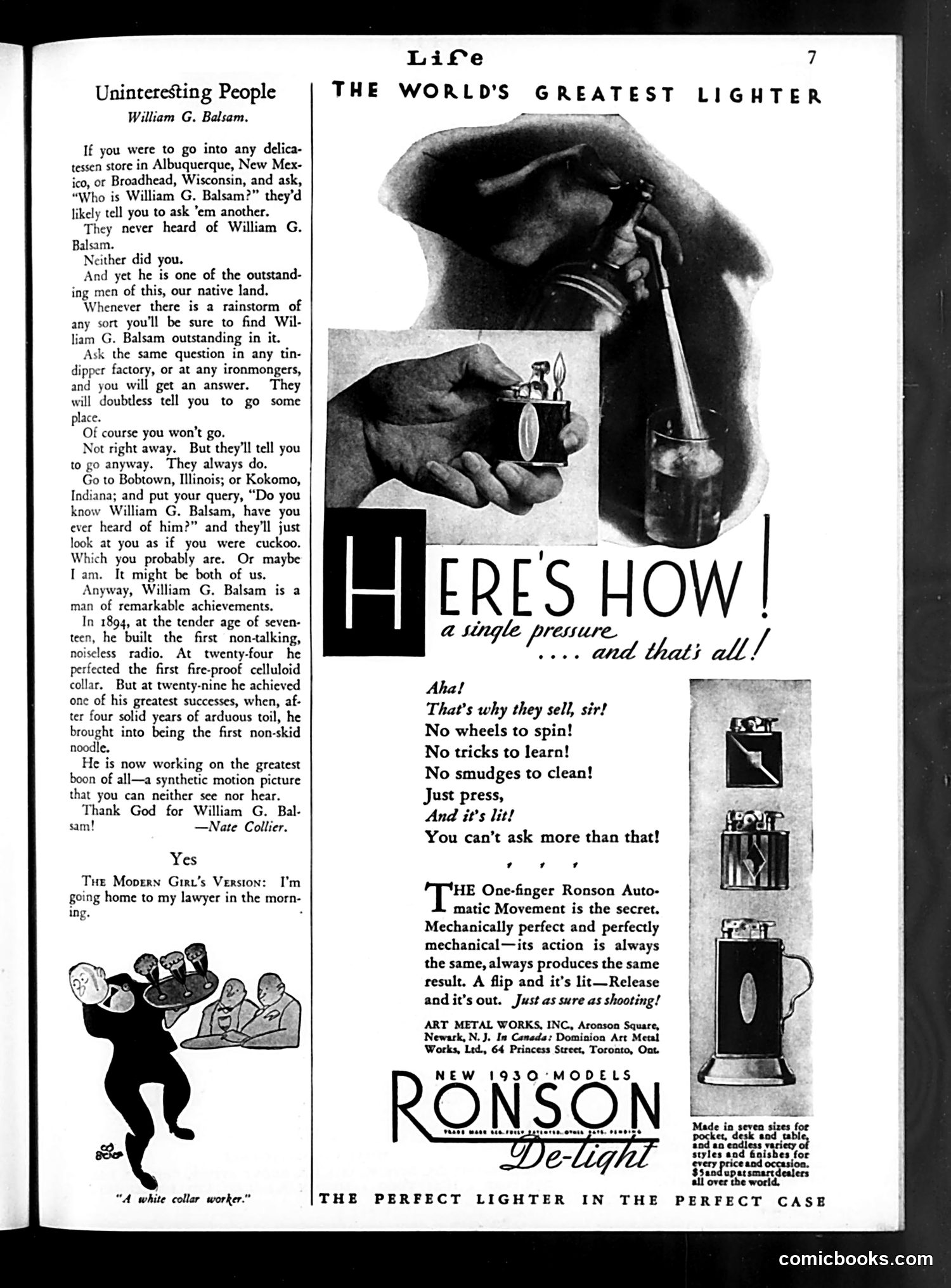
# Analysis This page is primarily **advertising for Ronson lighters**, not political satire. The left column contains two unrelated items: a brief biographical piece about William G. Balsam (an obscure inventor of radio and other devices), and a single-panel cartoon titled "The Modern Girl's Version" showing a woman in silhouette carrying a large bag, captioned "A white collar worker." The cartoon's joke appears to be social commentary on modern working women—the woman is ironically described as a "white collar worker" despite visibly struggling with an enormous burden, suggesting satire about the reality of women's labor versus their professional status. The dominant content is the Ronson De-Light lighter advertisement, emphasizing its simplicity ("a single pressure...and that's all!") with product photos and detailed marketing copy.
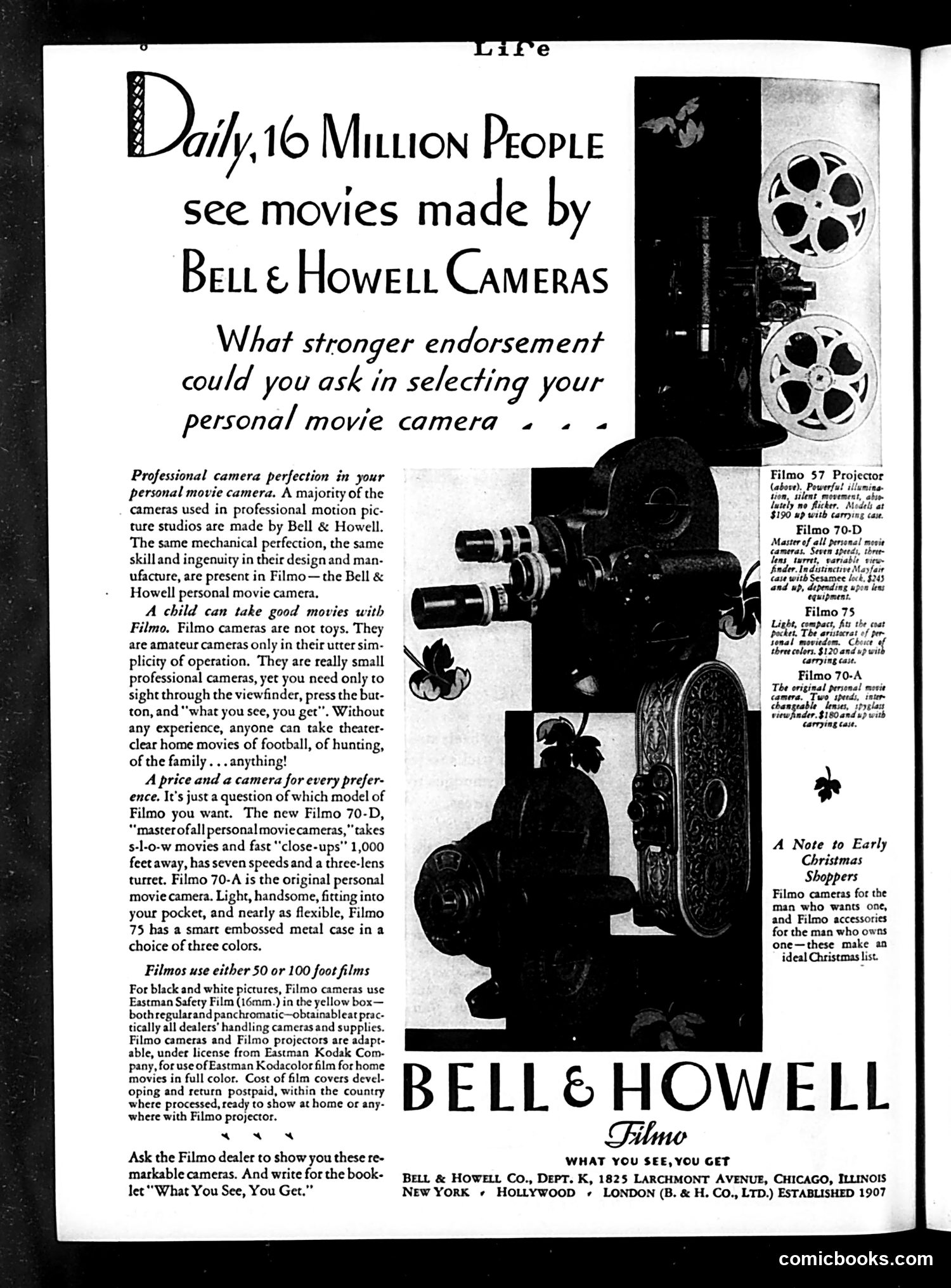
# Analysis This is **an advertisement, not a cartoon or satirical content**. It's a Bell & Howell Filmo camera ad from *Life* magazine. The page promotes personal home movie cameras to average consumers. The main claim is that 16 million people daily watch movies shot on Bell & Howell equipment, positioning the brand as professional-grade yet accessible for amateurs. The imagery shows the actual camera equipment (reels, lenses, and the device itself) to demonstrate the product. The text emphasizes ease of use—"what you see, you get"—requiring no experience to film family activities or events. This reflects early 20th-century consumer culture, when home movie-making was becoming a novelty for middle-class households, positioning it as an aspirational, modern luxury.
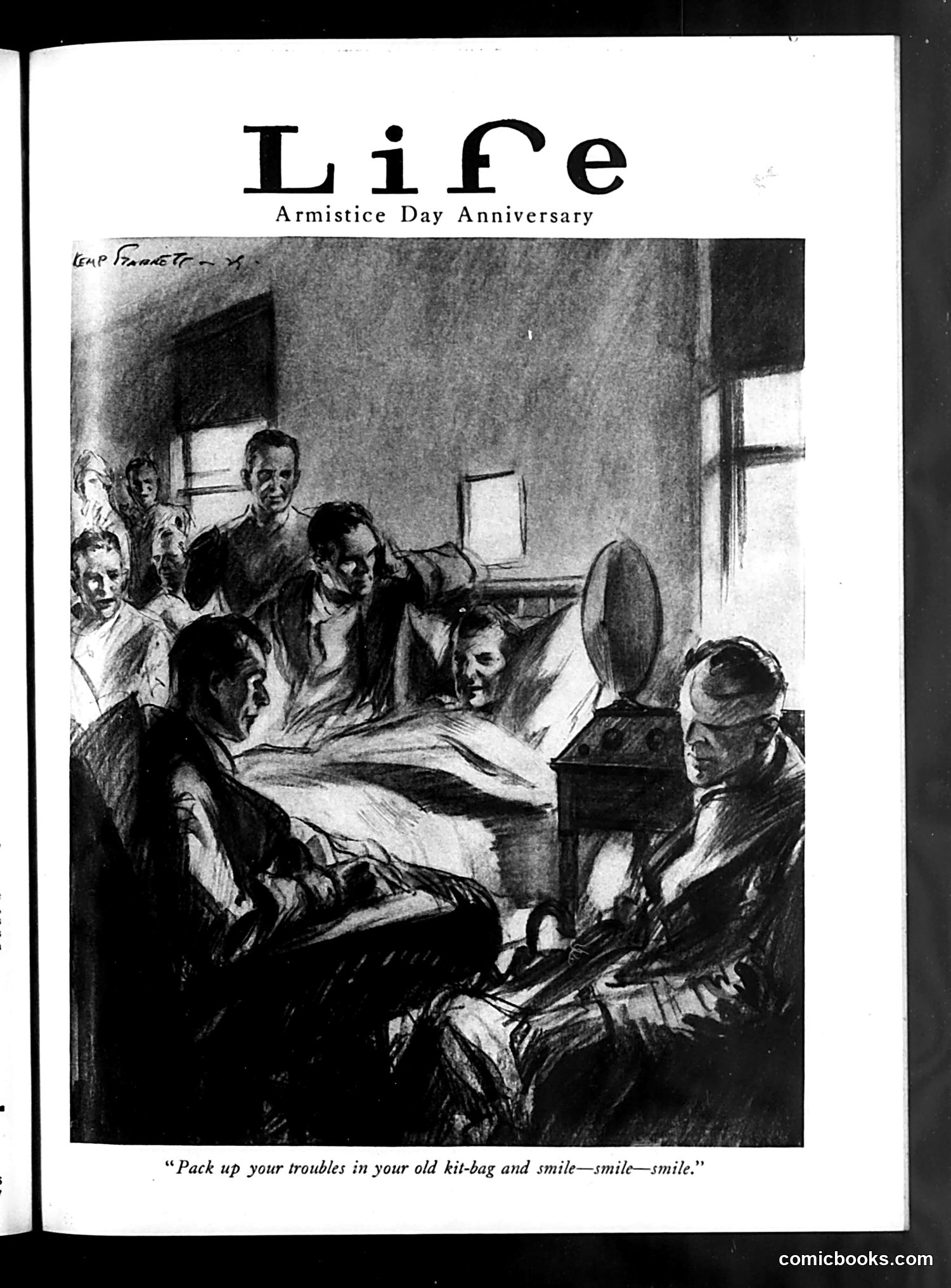
# Analysis This is a Life magazine cover for an "Armistice Day Anniversary" issue—commemorating the November 11th end of World War I. The illustration shows soldiers or war-worn men in what appears to be a military hospital or barracks, packing belongings into a kit-bag. The caption reads: "Pack up your troubles in your old kit-bag and smile—smile—smile." This references the famous 1915 WWI song "Pack Up Your Troubles in Your Old Kit-Bag," a morale-boosting marching tune. The satire appears sardonic: the men are depicted with weary, worn expressions despite the cheerful lyrics' instruction to smile. The image captures post-war reality—soldiers returning home, their troubles far from packed away. The juxtaposition of the upbeat song title against their grim demeanor critiques the gap between wartime propaganda and soldiers' actual suffering and trauma.
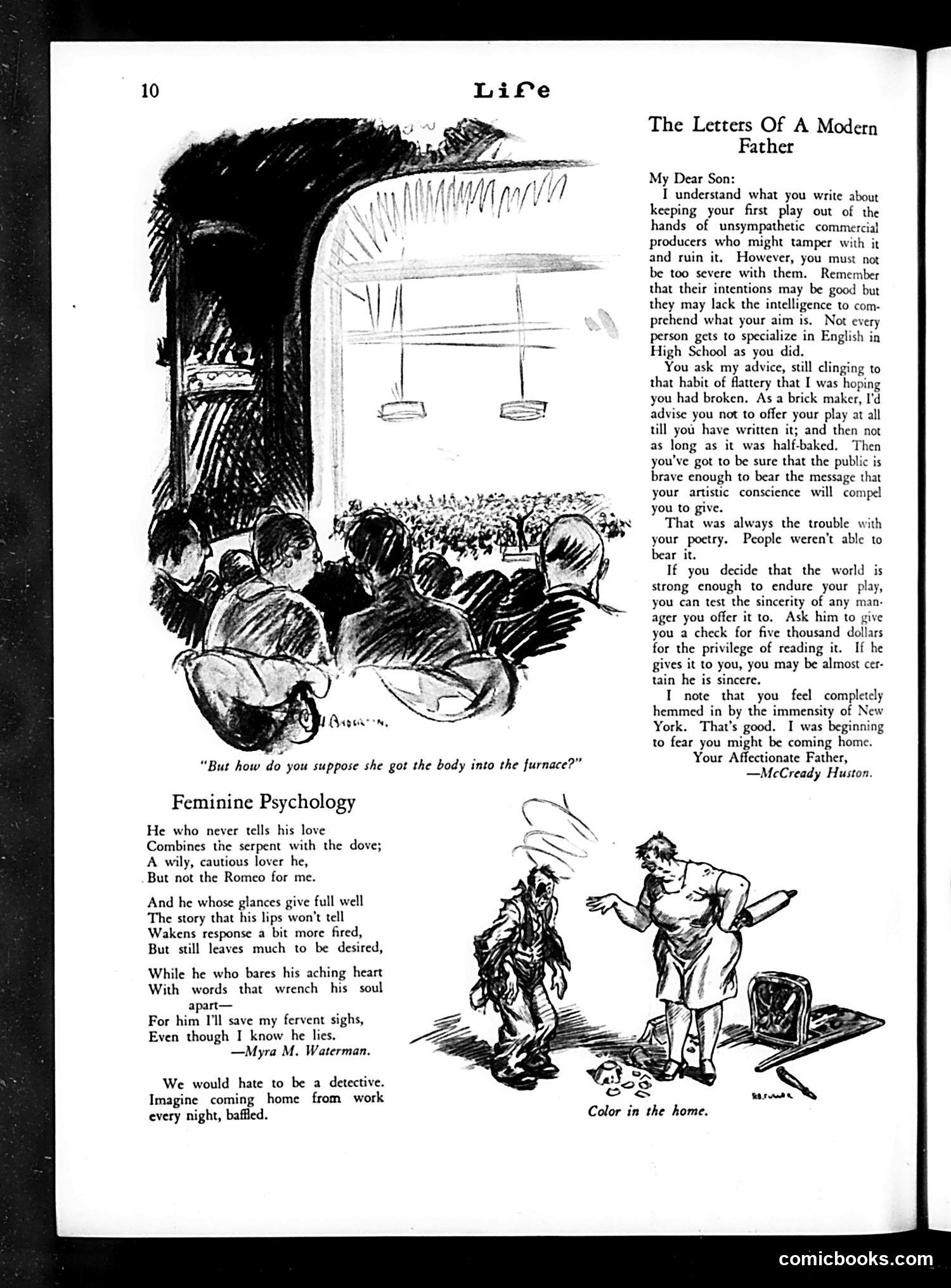
# Analysis of Life Magazine Page 10 This page contains three satirical pieces: **Top cartoon**: Shows an audience watching a theatrical furnace scene. The caption "But how do you suppose he got the body into the furnace?" suggests dark comedy about either a murder mystery play or absurdist theater—likely mocking overly melodramatic or implausible stage productions. **"Feminine Psychology" poem**: By Myra M. Waterman, satirizes romantic/courtship dynamics. It mocks the preference for mysterious, emotionally distant men over straightforward romantics, suggesting women find emotional unavailability attractive. **Bottom cartoon**: Titled "Color in the home," depicts a man in apparent distress while a woman gestures dramatically with paint supplies, satirizing domestic conflict—likely about decorating disagreements between spouses or the disruption caused by home renovation projects. All content reflects 1920s-era social commentary on theater, gender relations, and domestic life.