A complete issue · 36 pages · 1929
Life — September 20, 1929
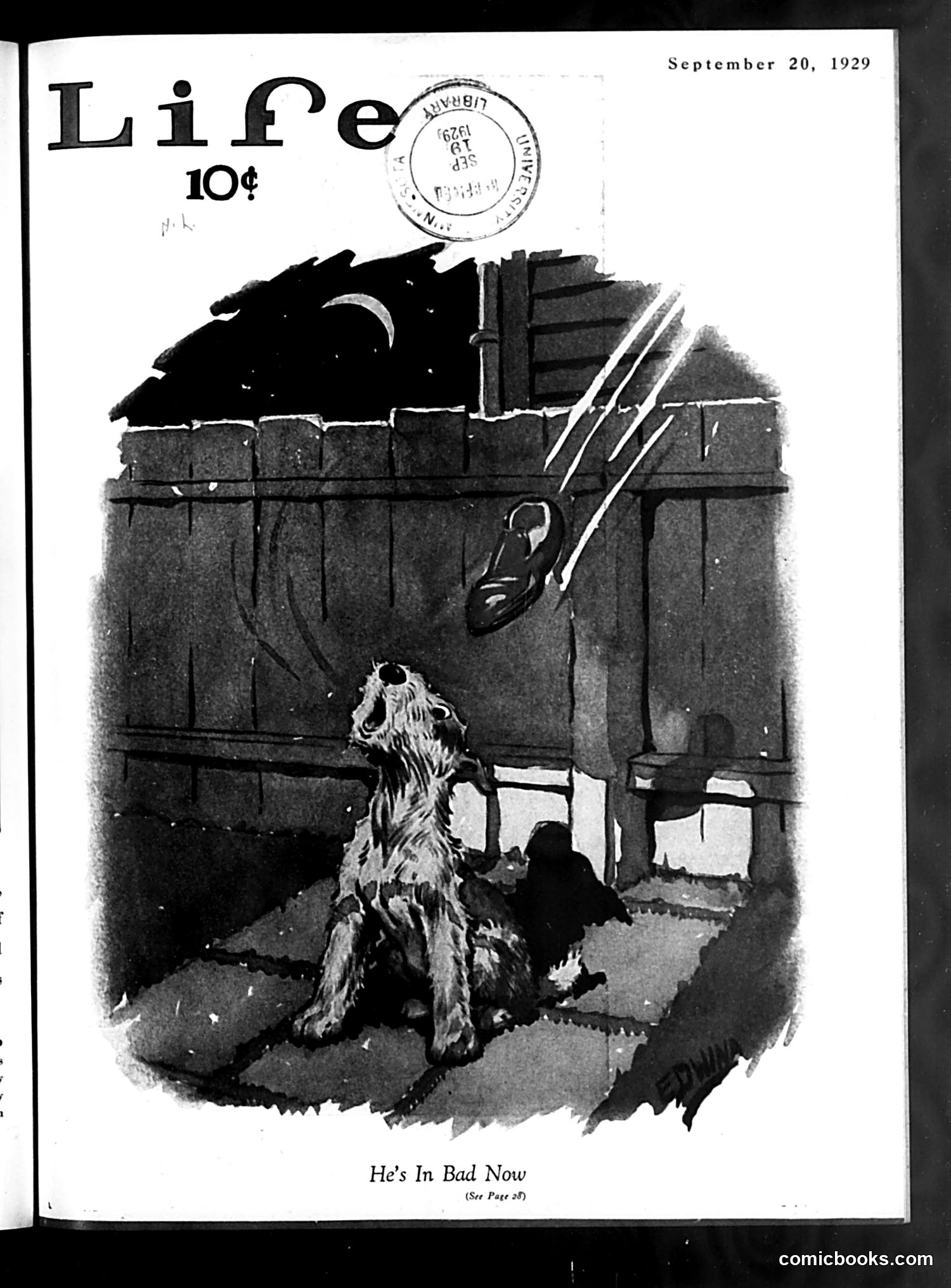
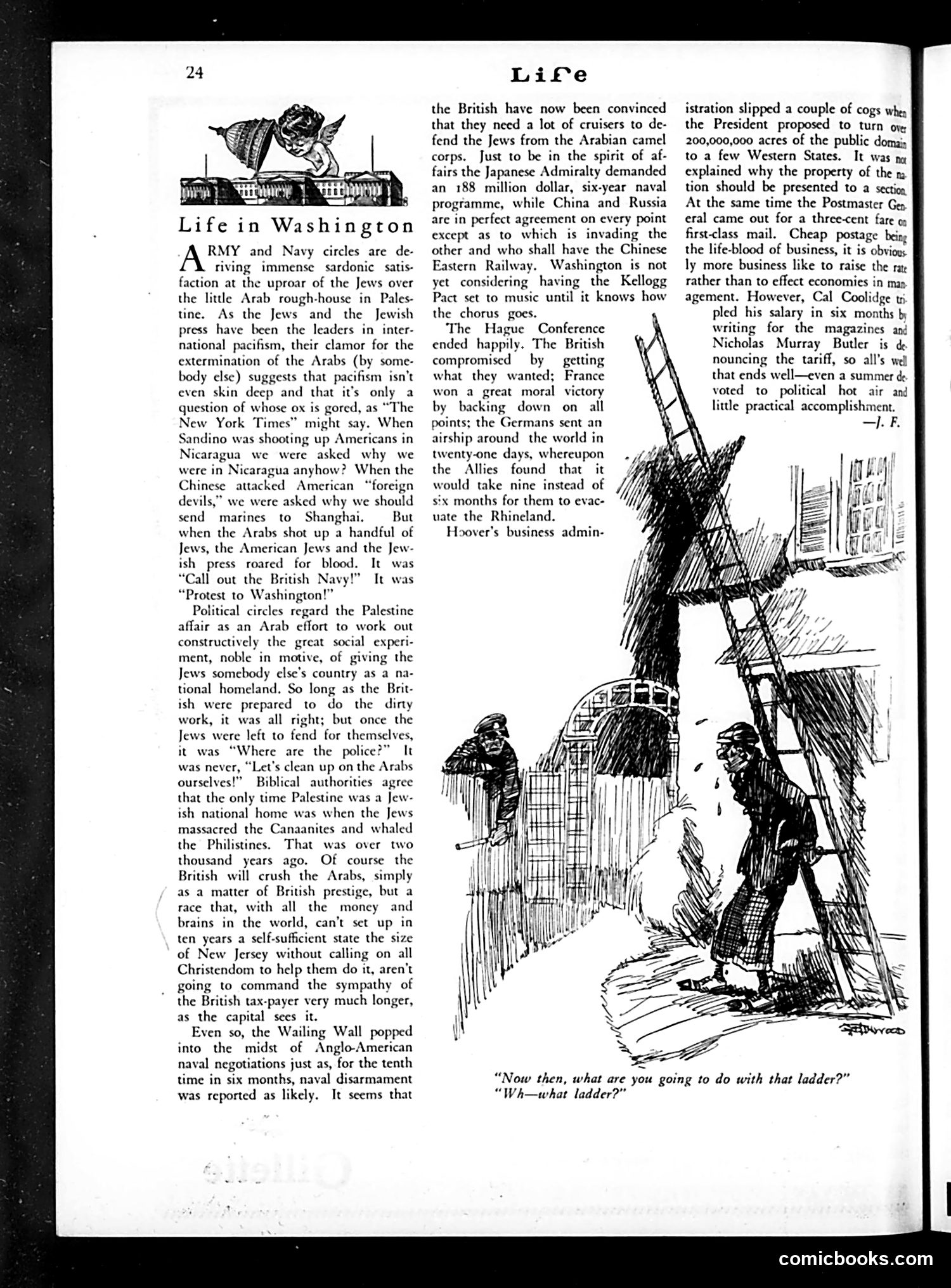
# "He's In Bad Now" — Life Magazine, September 20, 1929 This cartoon depicts a dog in a prison cell, climbing a ladder to escape while a guard pursues him up the ladder. The title "He's In Bad Now" is a pun on the dog's predicament. The cartoon likely references the widespread practice of Prohibition enforcement during the late 1920s, when police raids on illegal alcohol operations were frequent. The dog appears to represent someone (possibly a bootlegger or ordinary citizen) caught violating Prohibition laws. The prison setting and escape attempt humorously suggest the serious legal consequences citizens faced for alcohol-related offenses during this period. The satirical point critiques either the severity of Prohibition enforcement or the desperation of those attempting to evade it.
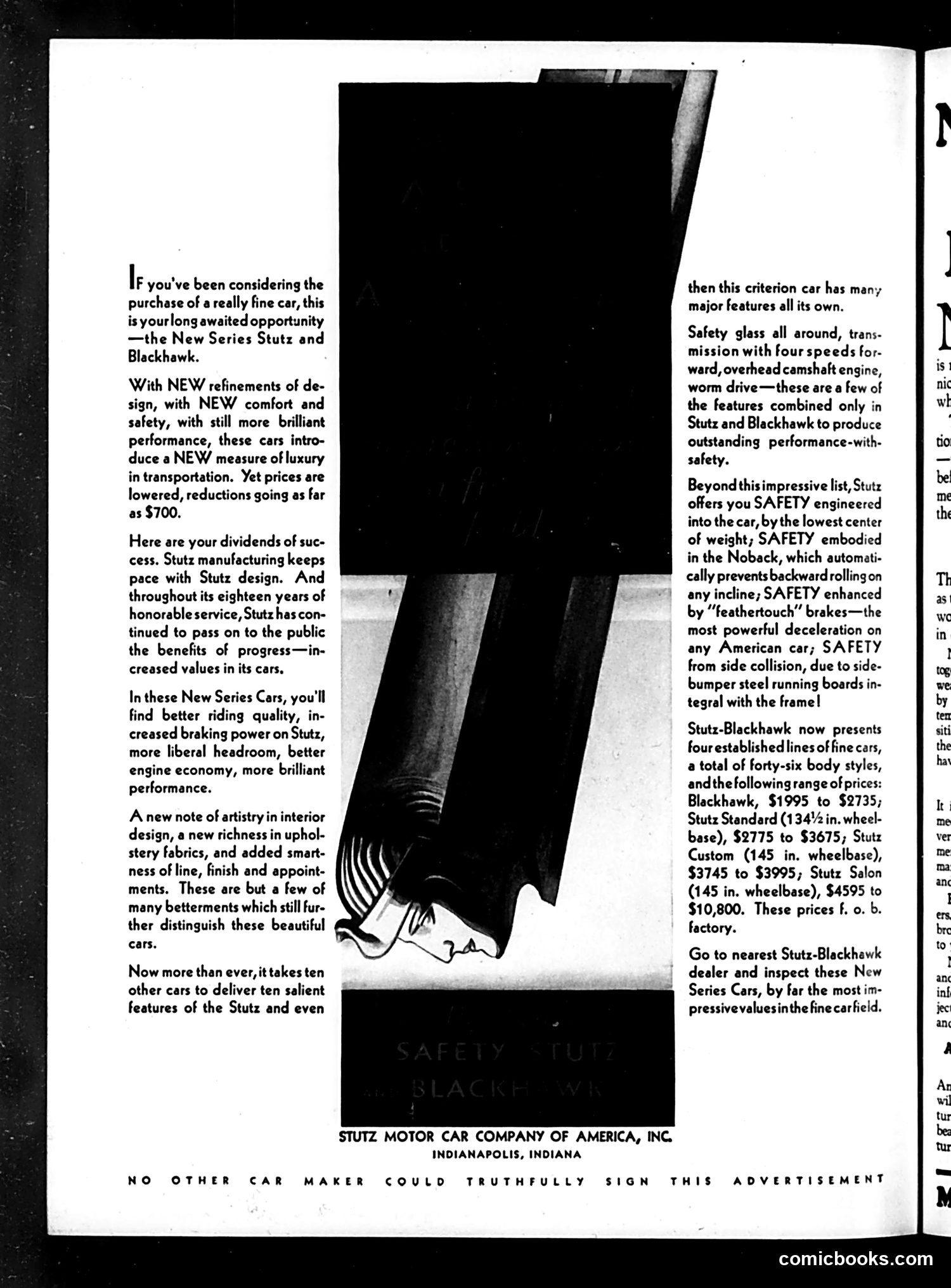
# Analysis This is **not a satirical cartoon page**, but rather a **Stutz automobile advertisement** from Life magazine. The central image shows a stylized illustration of a woman's legs and feet, emphasizing elegance and luxury lifestyle. The ad promotes the "New Series Stutz and Blackhawk" cars, highlighting safety features, performance improvements, and interior design refinements. The advertisement targets affluent readers, emphasizing that "prices are lowered, reductions going as far as $700" while maintaining luxury status. It lists specific models and price ranges from $1,995 to $10,800. The page represents **commercial advertising as editorial content**—common in early 20th-century magazines where luxury brands occupied significant space. The artistic leg illustration was a typical marketing technique of the era for conveying sophistication and aspirational lifestyle.
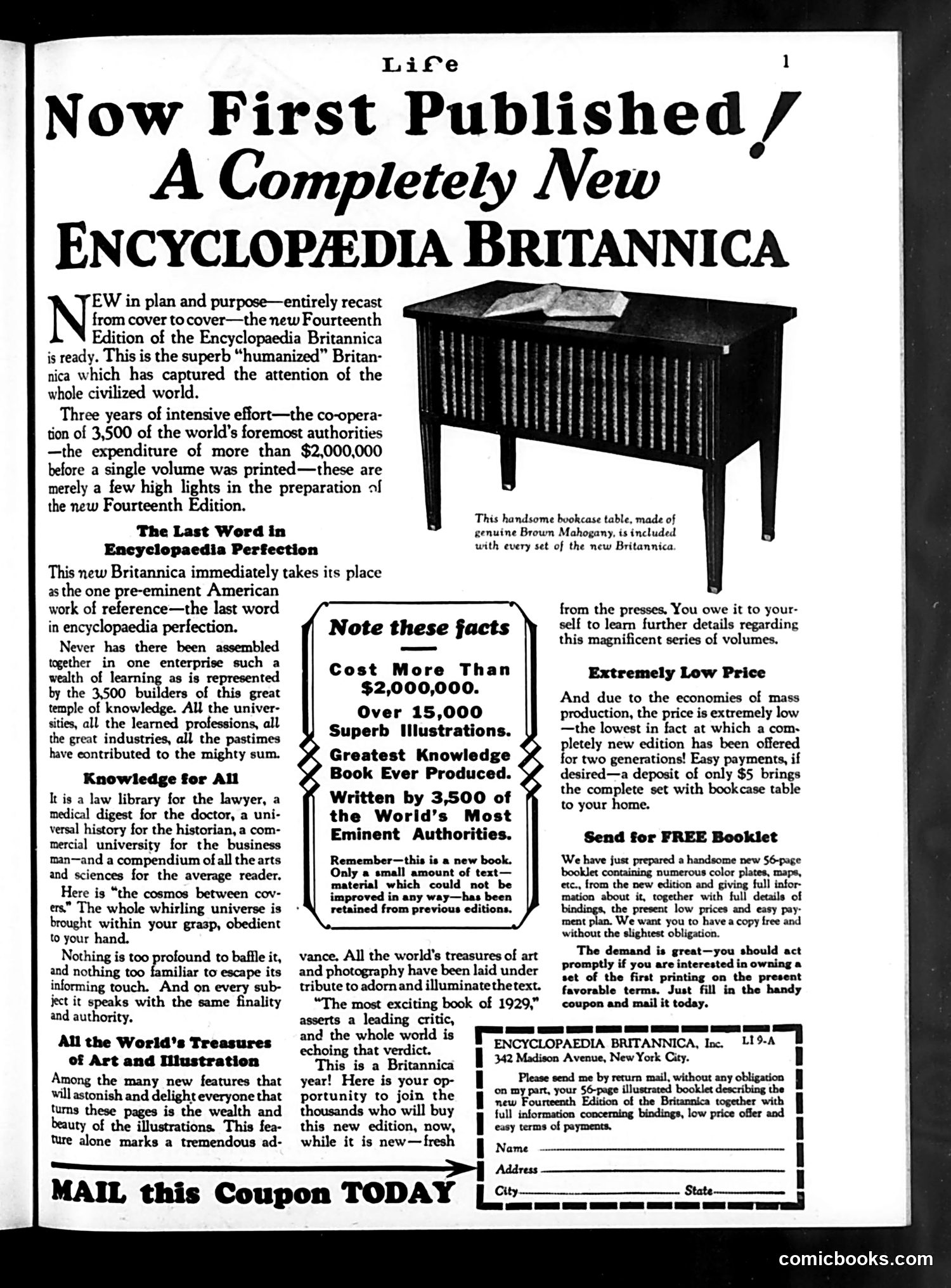
# Content Analysis This page is **primarily advertising**, not satire or political cartoon. It's a full-page advertisement for the Encyclopædia Britannica's new Fourteenth Edition, published in Life magazine. The ad highlights the encyclopedia's credentials: three years of development, input from 3,500 world authorities, and over $2,000,000 in production costs. It emphasizes 15,000+ illustrations and positions the work as "the one pre-eminent American work of reference." The only visual element is a photograph of a handsome mahogany bookcase table (included with purchase) displaying the encyclopedia volumes. The marketing strategy targets affluent readers by emphasizing prestige, comprehensiveness, and "extremely low price" with easy payment terms. There is no political satire or social commentary present on this page.
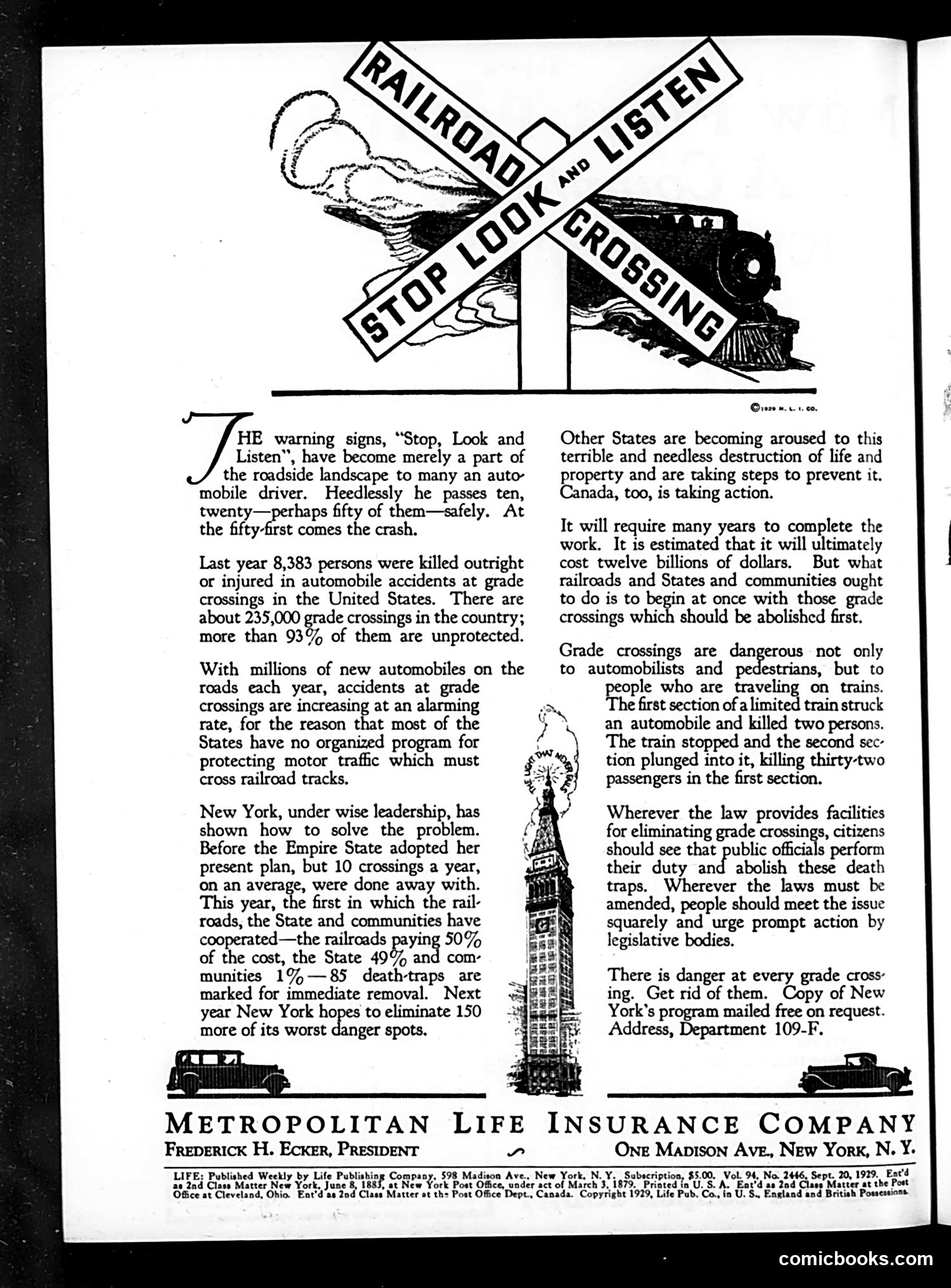
# Railroad Crossing Safety Advertisement This is a public service advertisement by Metropolitan Life Insurance Company addressing a serious early-20th-century safety crisis: unprotected railroad grade crossings. **The Issue:** The text reports 8,383 deaths from automobile accidents at grade crossings in the U.S. the previous year, with over 93% of 235,000 crossings unprotected. As automobile ownership increased dramatically, collisions at these crossings became epidemic. **The Message:** The prominent railroad crossing sign and locomotive illustration emphasize the danger. The ad advocates abolishing grade crossings entirely—a costly but necessary solution estimated at twelve billion dollars. New York State is highlighted as a model, having already eliminated 150 dangerous crossings with shared railroad-state-community funding (railroads 50%, state 49%, communities 1%). The advertisement urges citizens to pressure legislators to eliminate these "death traps" immediately.
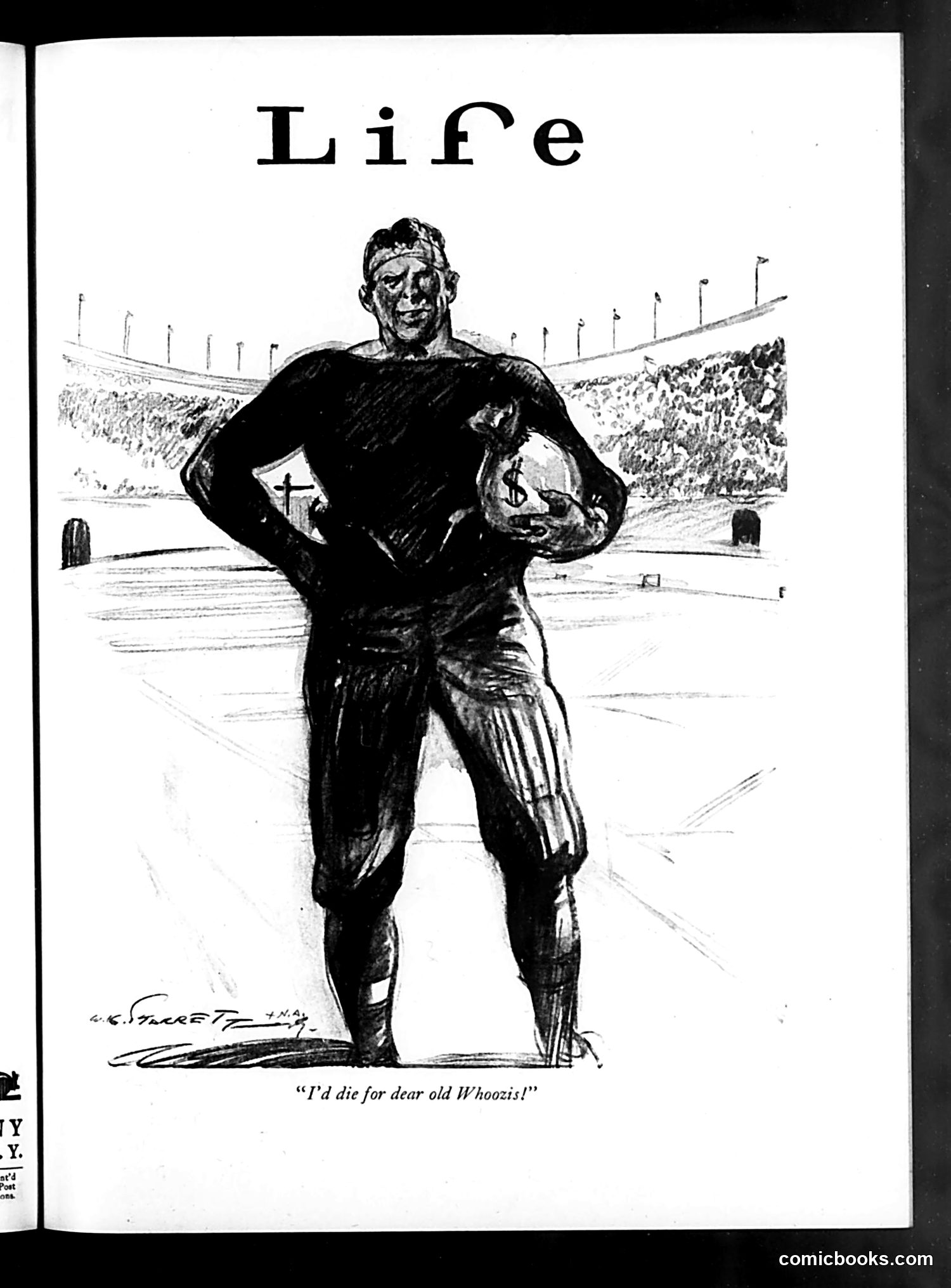
# Analysis This Life magazine cover features a football player in a stadium, striking a heroic pose while holding a football. The caption reads "I'd die for dear old Whoozis!" — the vague name "Whoozis" is the joke itself. The satire mocks the excessive sentimentality and school spirit rhetoric surrounding college football. Rather than naming a specific school, the cartoonist uses "Whoozis" (implying "whoever") to ridicule how interchangeable this patriotic devotion becomes — players proclaim undying loyalty to their institution in nearly identical, clichéd terms regardless of which college they attend. The drawing's dramatic heroic style further emphasizes the satirical contrast between inflated rhetoric and the somewhat absurd nature of risking one's life for a sports team or school name.
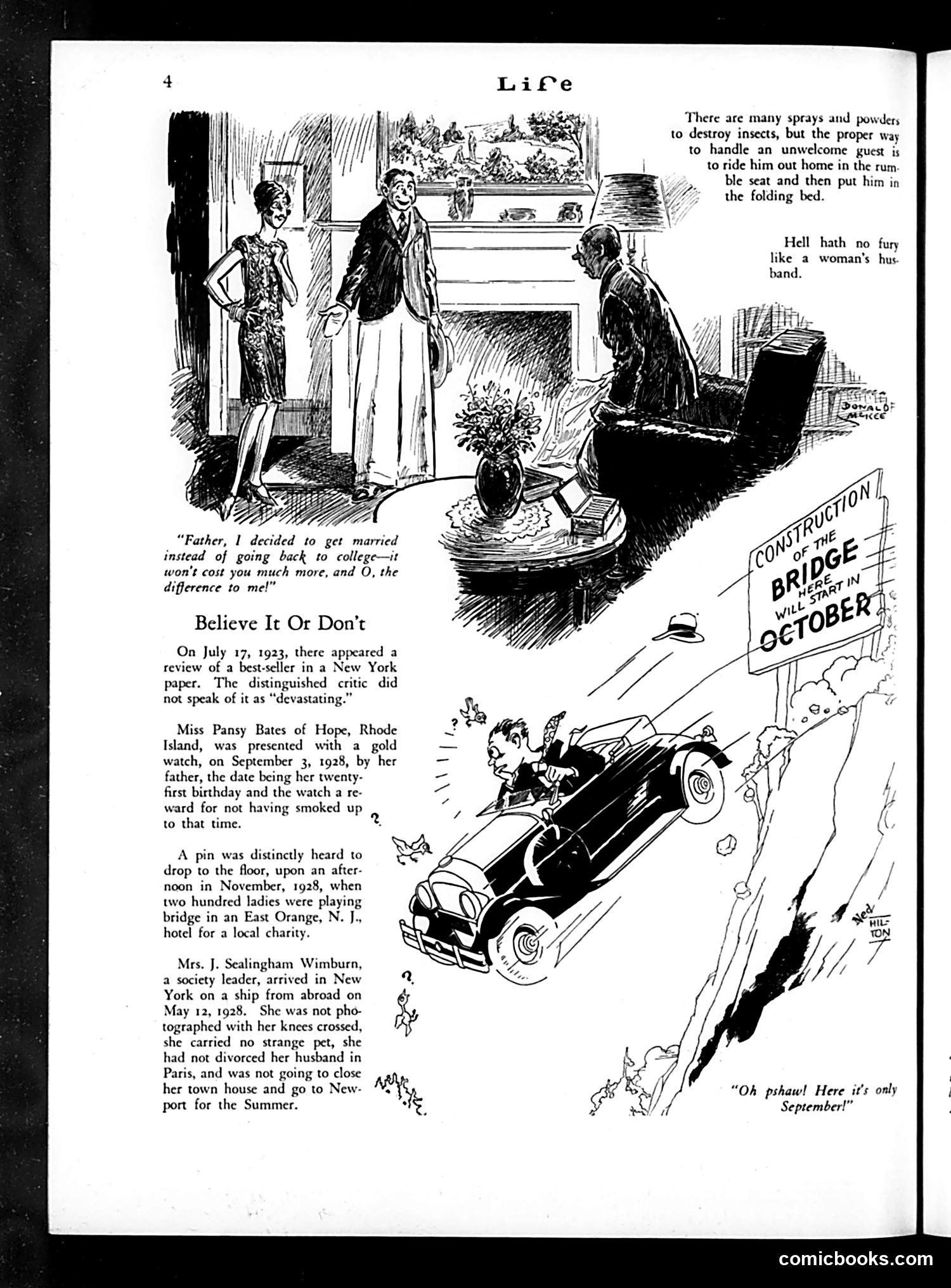
# Analysis of Life Magazine Page This page contains two distinct pieces: **Top cartoon**: Shows a woman telling her father she's decided to marry instead of returning to college, asking if the difference matters to him. The joke satirizes changing social attitudes—the woman expects her father to object to marriage as a distraction from education, but the caption "Hell hath no fury like a woman's husband" suggests husbands were viewed as more troublesome than education. **Bottom section**: "Believe It Or Not" presents unusual anecdotes (Miss Pansy Bates receiving a gold watch for her 21st birthday without smoking it; a pin dropping audibly during bridge; Mrs. Sealingham Wimburn's arrival in New York). These are novelty items intended as amusing trivia. The car illustration advertising "Construction of the Bridge will start in October" appears to be an unrelated advertisement.
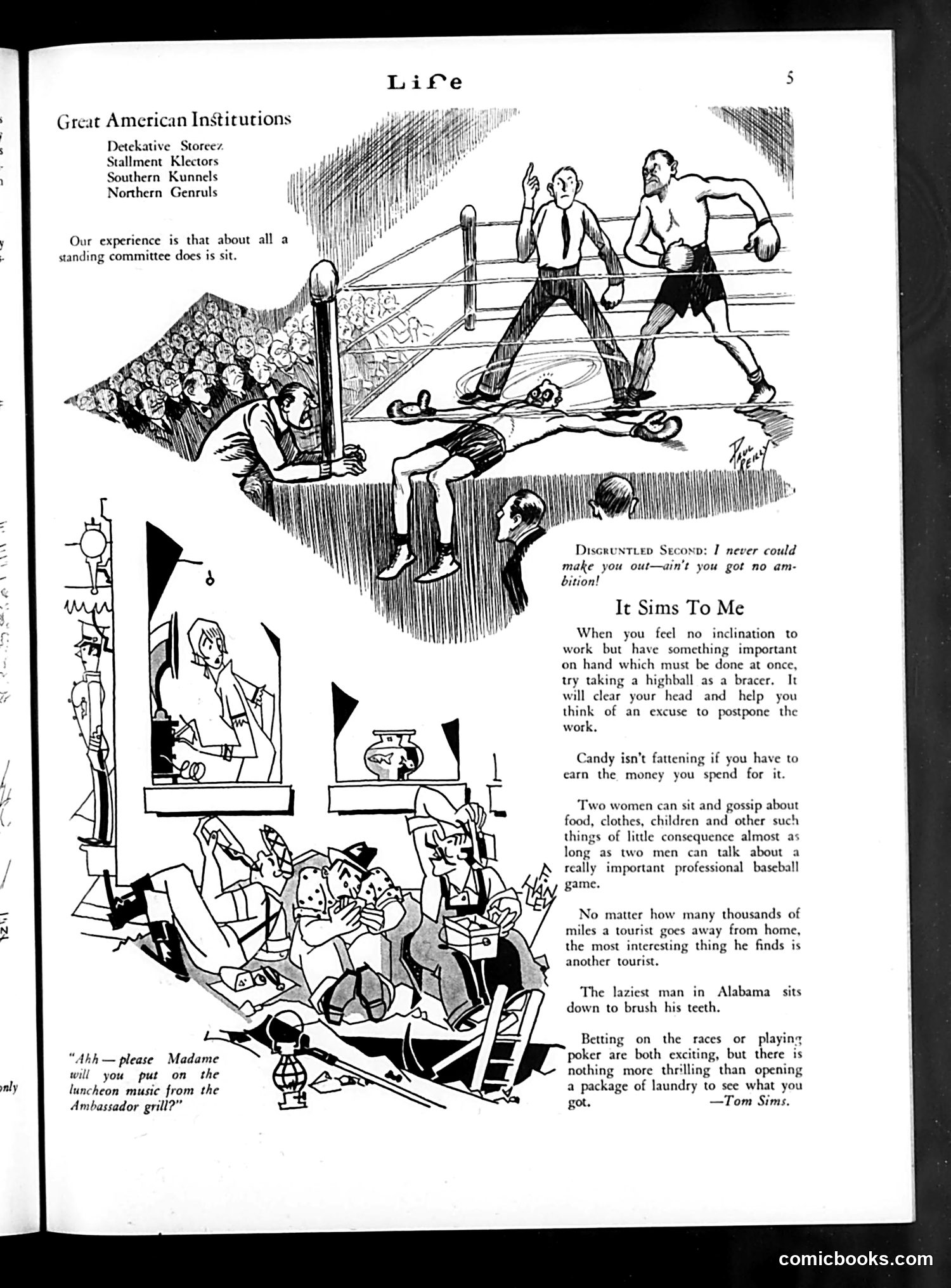
# Analysis of Life Magazine Page This page satirizes American institutions and social absurdities. The top section mocks "standing committees" — showing they accomplish nothing but sitting. The boxing ring cartoon depicts committee members as ineffectual spectators while action happens around them. Below, "It Sims To Me" (attributed to Tom Sims) offers humorous observations about human nature: people seeking excuses to avoid work, the appeal of gossip, tourists' predictable behavior, and the thrill of gambling or laundry-opening surprises. The lower cartoon depicts chaos at what appears to be a diplomatic or social function, with the caption requesting music from "the Ambassador grill" — likely satirizing pretentious social events and bureaucratic confusion. The overall message critiques institutional ineffectiveness and human foibles with gentle humor typical of mid-century American satire.
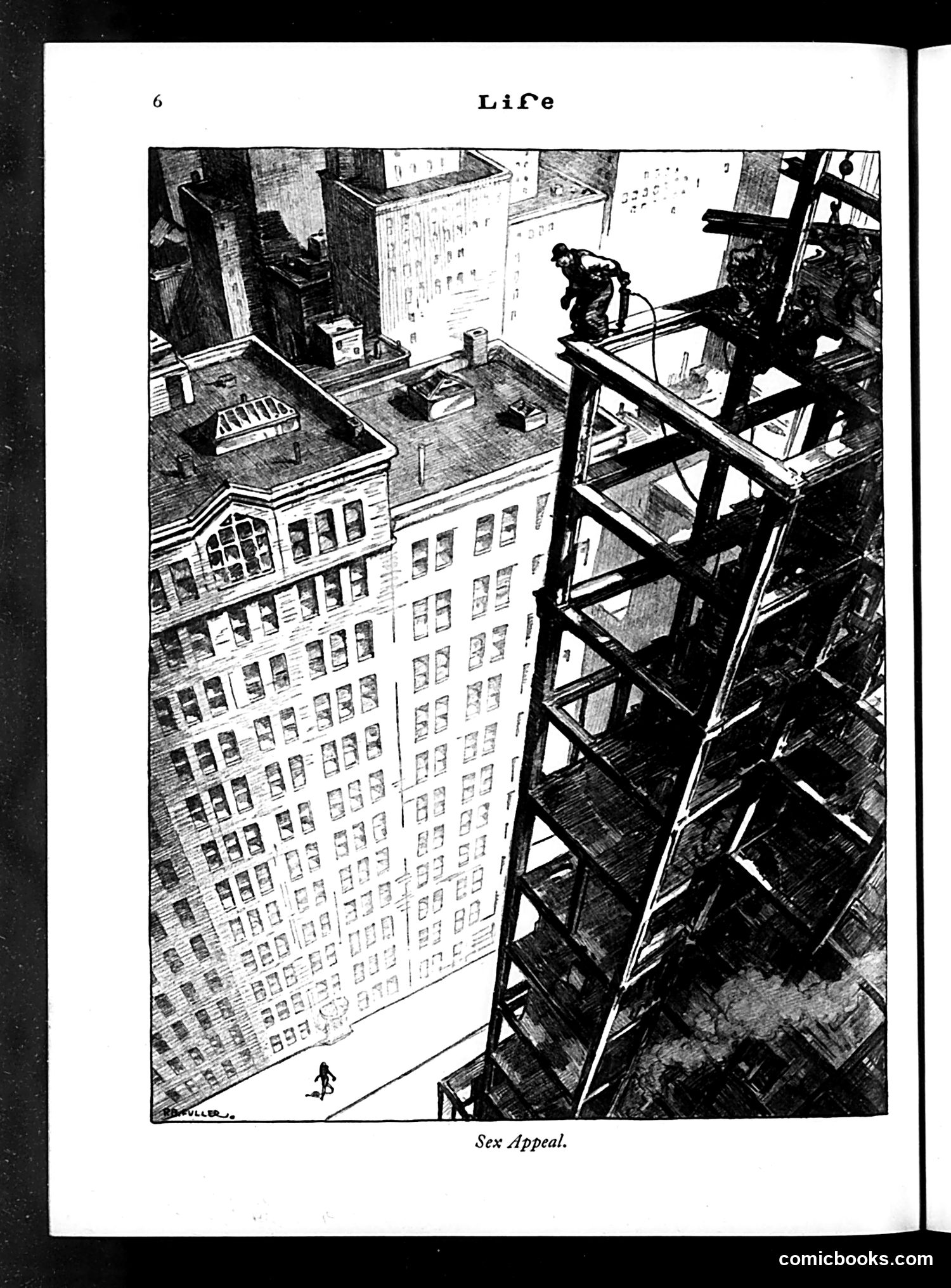
# "Sex Appeal" - Life Magazine Cartoon This cartoon depicts a dangerous construction scene from a vertiginous overhead angle. A worker stands precariously on steel framework high above a city street, where a tiny pedestrian is visible far below. The composition emphasizes the extreme height and danger of the work. The caption "Sex Appeal" appears ironic or cynical—suggesting the cartoon critiques how dangerous, underpaid manual labor might be romanticized or made to seem attractive despite its hazards. The cartoon likely satirizes either media representations of construction workers, or broader societal attitudes that glamorize risky working conditions rather than addressing worker safety and fair compensation. The vertiginous perspective makes the joke's dark edge clear: "sex appeal" cannot compensate for genuine danger.
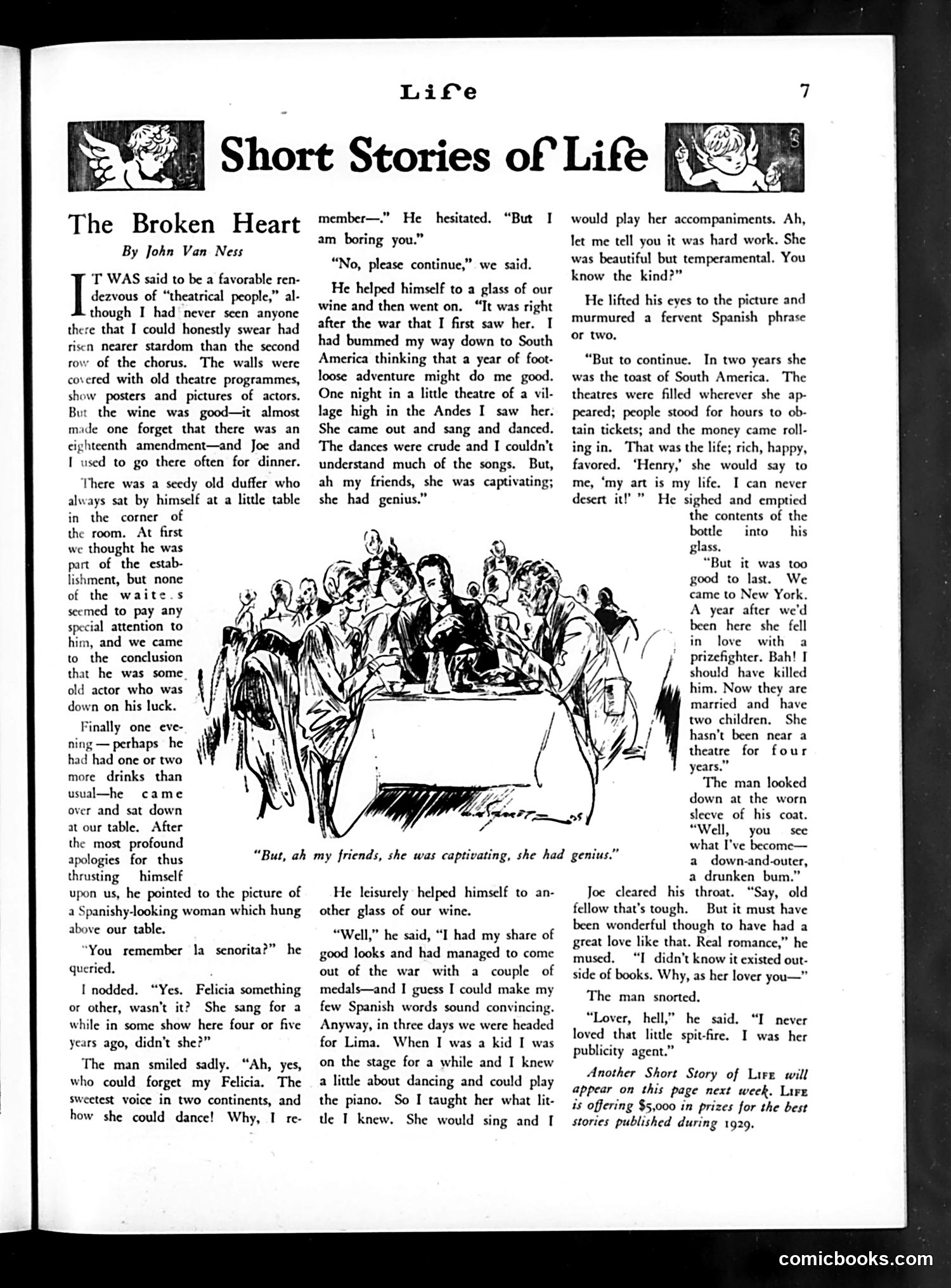
# "The Broken Heart" by John Van Ness This is a short story rather than political satire. The narrative concerns a man reminiscing about a Spanish dancer named Felicia whom he knew years ago in South America. He had taught her to sing and dance, and she became celebrated throughout the continent. However, when she moved to New York, she fell in love with a prizefighter and abandoned her theatrical career. Now married with children, she has disappeared from public life entirely. The story explores themes of lost love and squandered artistic talent—a common literary subject of the era. The accompanying illustration shows what appears to be a theatrical or social gathering, though the story's focus is on the narrator's nostalgic regret about Felicia's abandonment of her promising career.
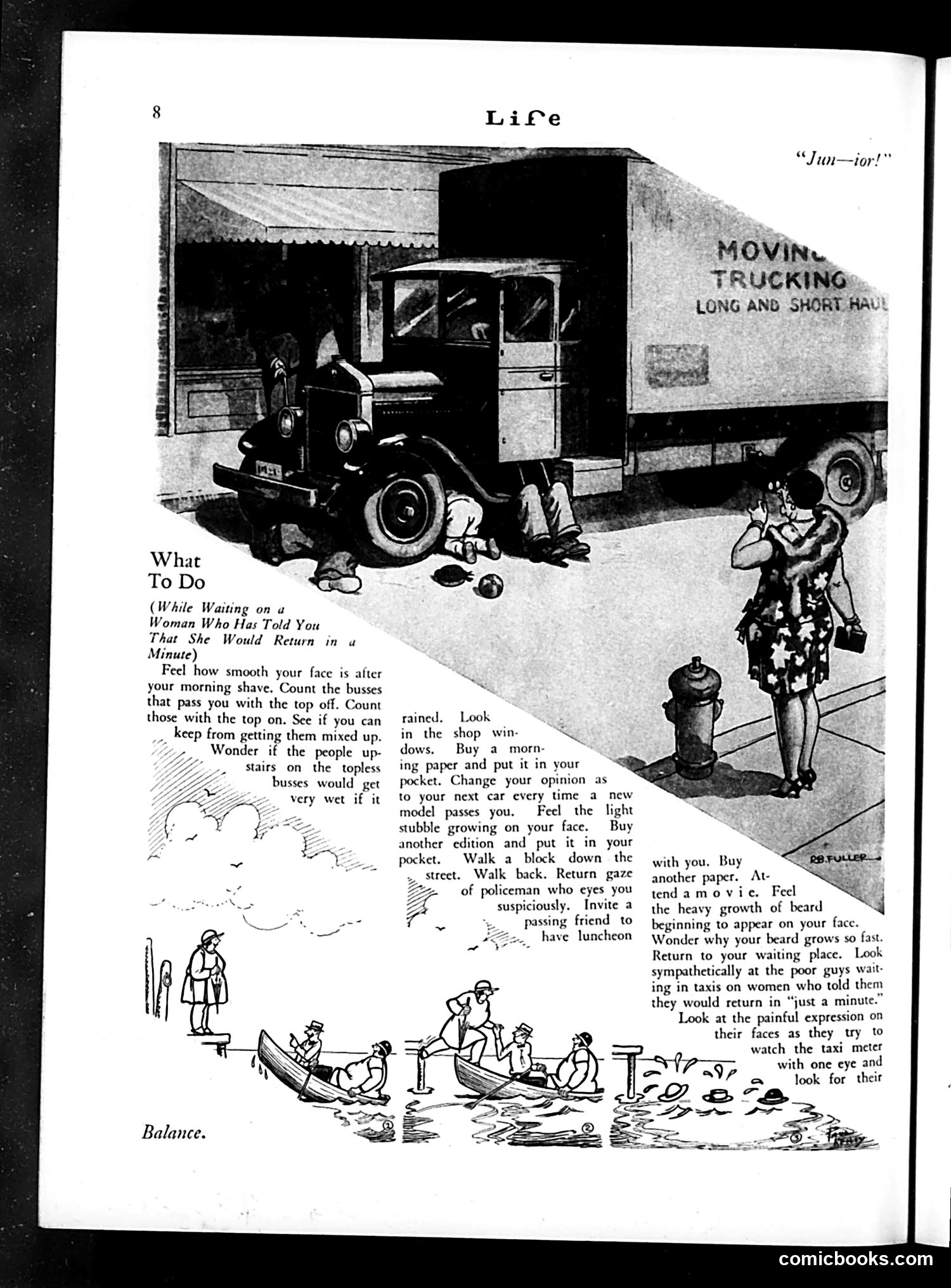
# Analysis of Life Magazine Page This page contains two satirical pieces mocking the experience of waiting for tardy companions. **"What To Do"** (top left) humorously suggests ways to occupy yourself while waiting for someone who promised to return "in a minute"—activities include counting buses, examining your face for whiskers, buying newspapers, and attending a movie. The implicit joke: people chronically underestimate how long they'll actually be gone. **"Balance"** (bottom) depicts men in small boats on water, struggling to maintain equilibrium—a visual metaphor for the precarious situation of men waiting in taxis while women shop, watching the meter run. The accompanying text describes their frustration and anxiety during this wait. Both pieces target domestic impatience and gender dynamics around shopping and punctuality—common complaints in 1920s-era humor.
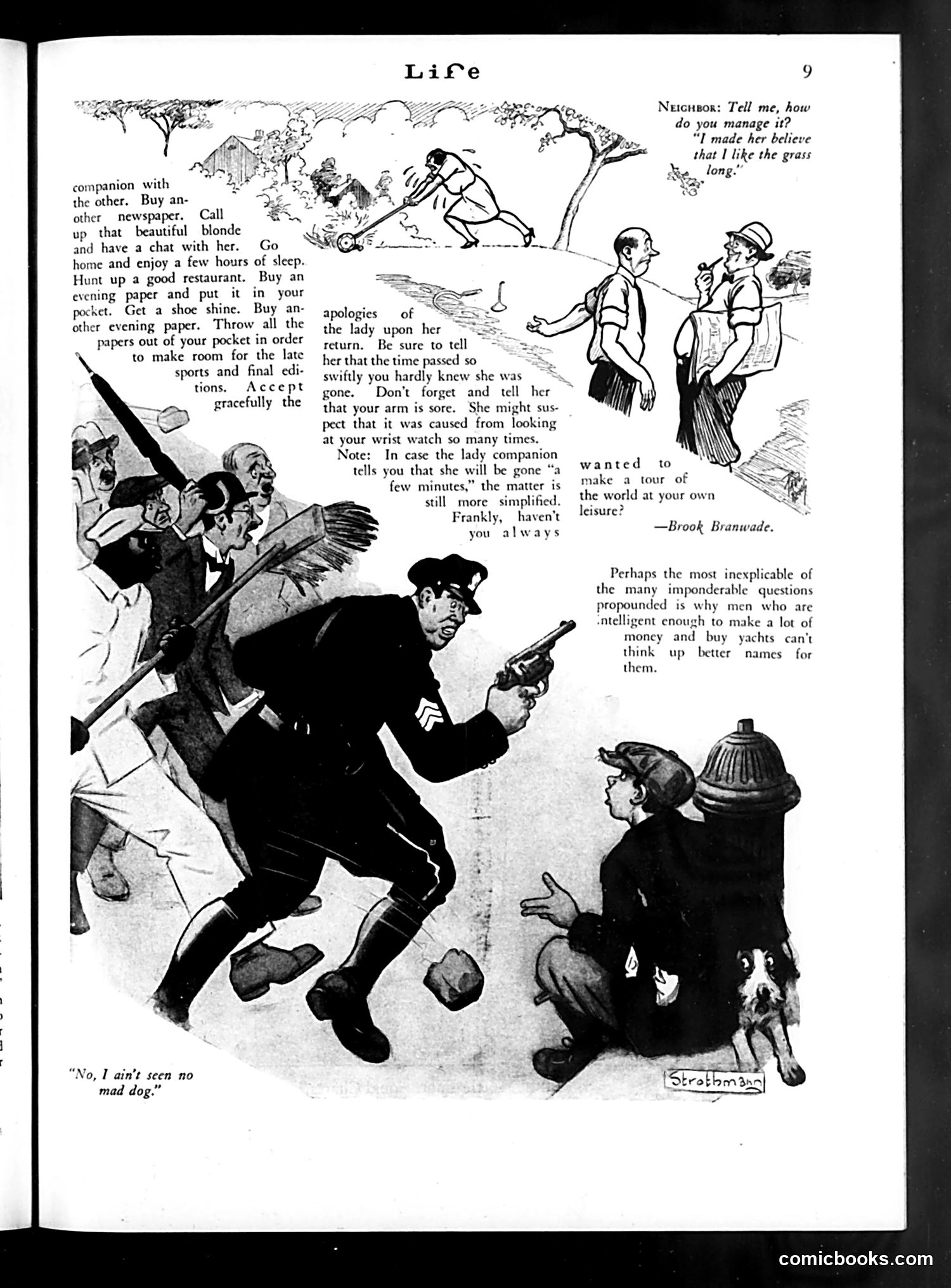
# Analysis of Life Magazine Page 9 This page contains humor advice and two distinct cartoons. **Top cartoon**: Shows a couple on a country outing. The text offers humorous tips for managing a female companion during leisure time—suggesting buying newspapers, going to restaurants, and managing her expectations about time away. The advice is patronizing by modern standards, reflecting early 20th-century gender attitudes where women required management and distraction. **Bottom cartoon** (signed Strothman): Depicts a man with a gun confronting two figures, claiming "No, I ain't seen no mad dog." The humor appears to reference either urban crime or a literal search for a dangerous animal—the context is unclear without additional historical information. The exaggerated caricaturing and action suggest social satire, possibly about police or vigilante behavior. Both reflect period attitudes toward gender relations and urban/rural life.
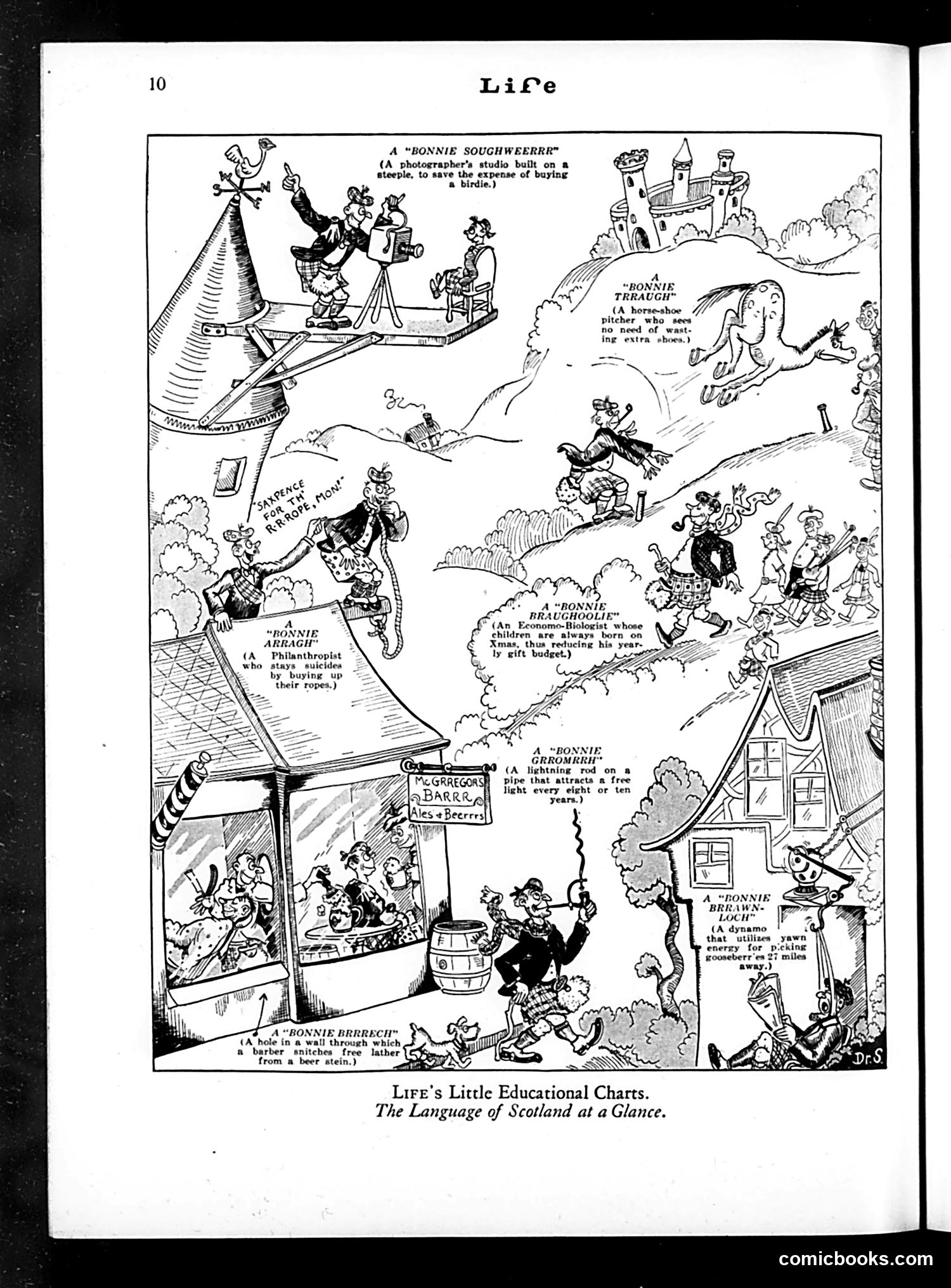
This page presents "Life's Little Educational Charts: The Language of Scotland at a Glance" — a humorous illustrated guide to Scottish terminology and culture. The cartoon shows various whimsical Scottish concepts with definitions. These include: - **"Bonnie Soughweerie"** (a photographer's studio built on a steeple to save buying a birdie) - **"Bonnie Terachie"** (a horse-shoe pillow to save on shoes) - **"Bonnie Herbage"** (an anthropomorphist who saves money by buying up their ropes) - **"Bonnie Braw"** (a dynamo that utilizes lawn clippings) - **"Bonnie Girromrh"** (a lightning rod on a pipe that lights every eight or ten years) The satire mocks Scottish thriftiness and resourcefulness through absurdist inventions and wordplay, presenting exaggerated stereotypes of Scottish frugality as humorous "educational" definitions for American readers unfamiliar with Scottish culture and dialect.