A complete issue · 48 pages · 1929
Life — September 13, 1929
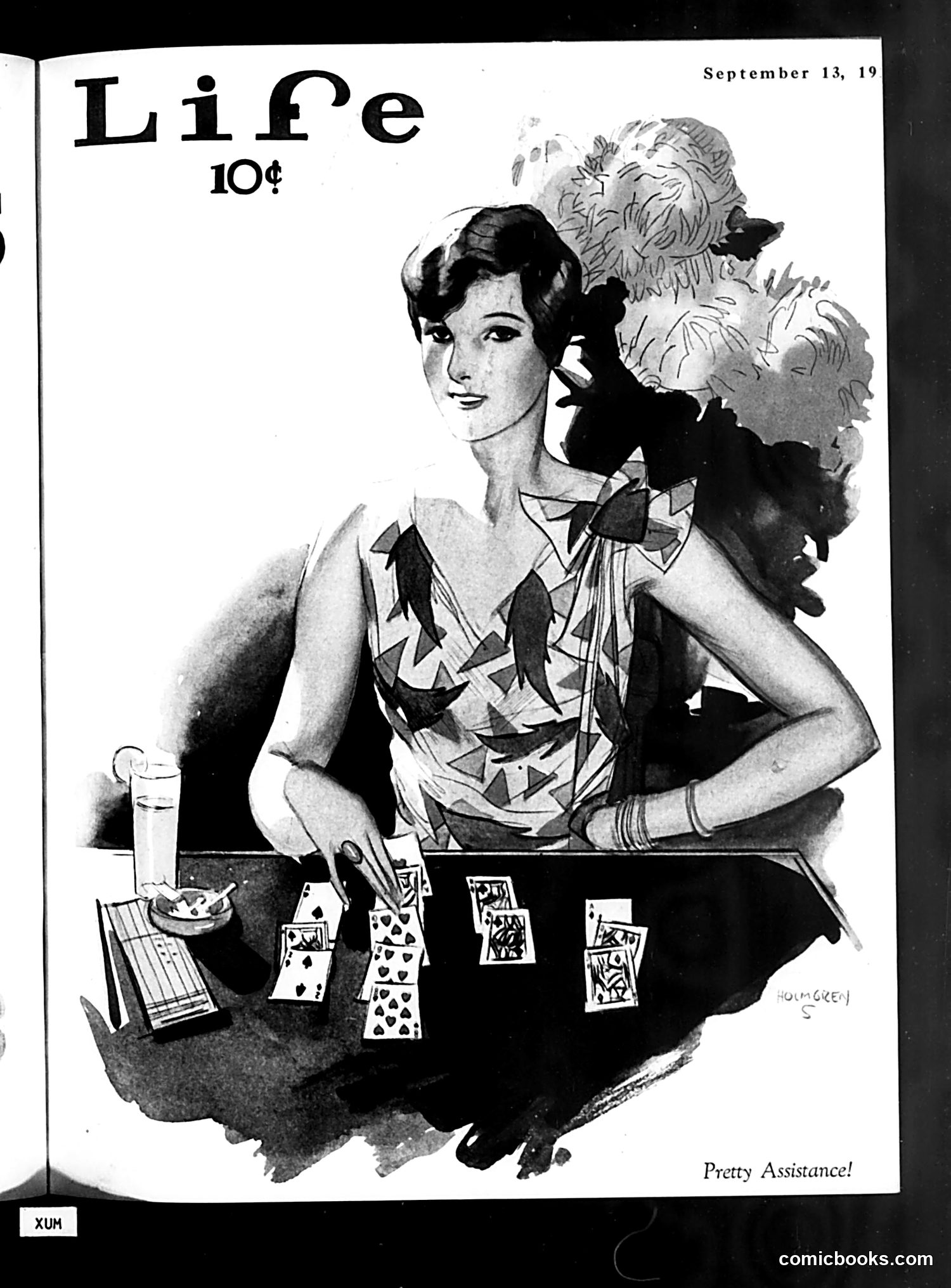
# "Pretty Assistance!" - Life Magazine Cover, September 13, 1919 This cover depicts a woman playing cards while holding two cherubs or cupids on her shoulders. The title "Pretty Assistance!" suggests the joke concerns cheating at cards—the cherubs represent "pretty assistance" or supernatural help to win. The illustration satirizes either card-playing scandals of the era or the broader theme of women seeking unfair advantages, possibly through charm or deception. The 1919 date places this during the Jazz Age, when card games were popular social activities and gambling concerns were widespread. The woman's fashionable bobbed hairstyle reflects contemporary 1920s style. The specific context of what scandal or trend this references remains unclear without additional source material.
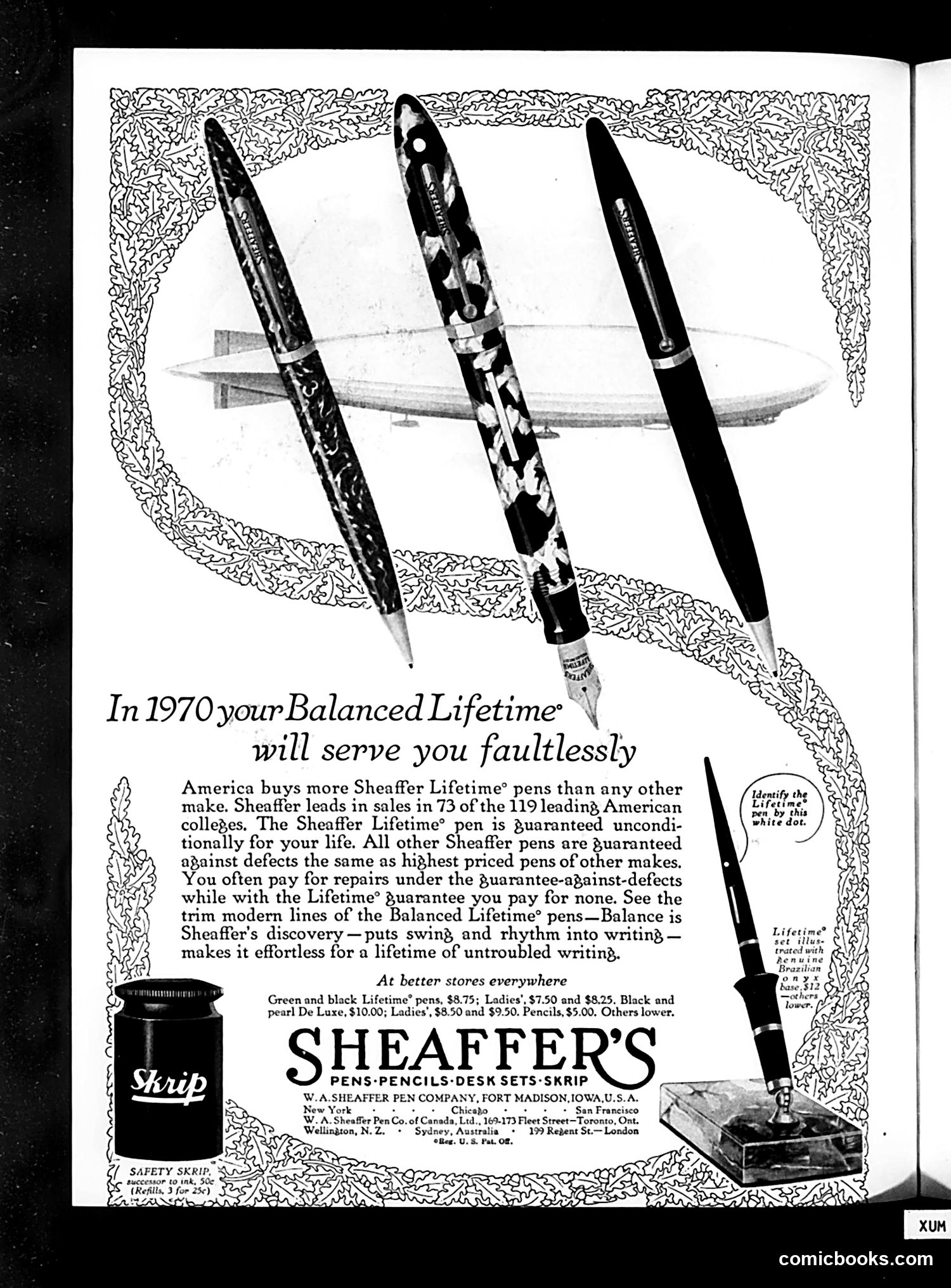
# Analysis This is **not a political cartoon or satirical content**—it's a straightforward **advertisement for Sheaffer pens**, specifically promoting their "Balanced Lifetime" model. The ad claims that in 1970, Sheaffer pens will provide reliable writing service for life. It emphasizes that Sheaffer leads American sales and offers an unconditional lifetime guarantee, unlike competitors. The visual shows three elegant pens with decorative ornamental framing. The ad highlights pricing ($8.75 for basic models up to $10 for deluxe versions) and notes that the "Balanced Lifetime" design adds "swing and rhythm into writing." This appears in *Life* magazine as paid advertising, not editorial content or satire.
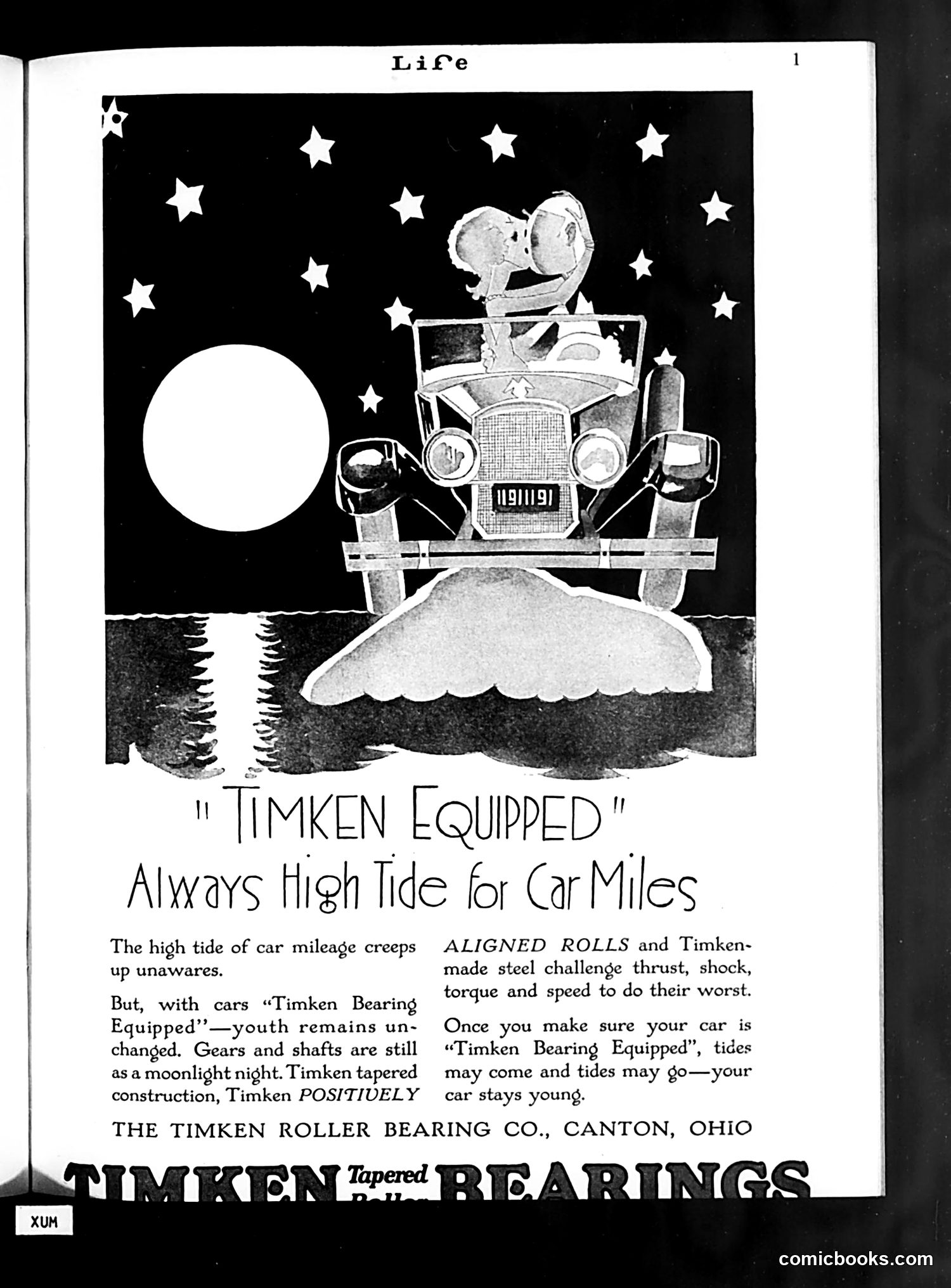
# Analysis This is primarily a **Timken Roller Bearing Company advertisement**, not political satire. The page uses whimsical imagery to market industrial products to automobile owners. The cartoon depicts two anthropomorphic characters in a vintage automobile driving on the moon's surface, with a large moon and stars visible. The headline "TIMKEN EQUIPPED: Always High Tide for Car Miles" uses a maritime metaphor to promise durability. The ad's logic: just as Timken bearings keep cars functioning despite "high tides" of wear (shock, torque, speed), they maintain vehicle longevity. The moon setting suggests aspiration and modernity—space travel was emerging in popular imagination during this era. This is straightforward commercial advertising exploiting contemporary fascination with science and innovation, not political commentary.
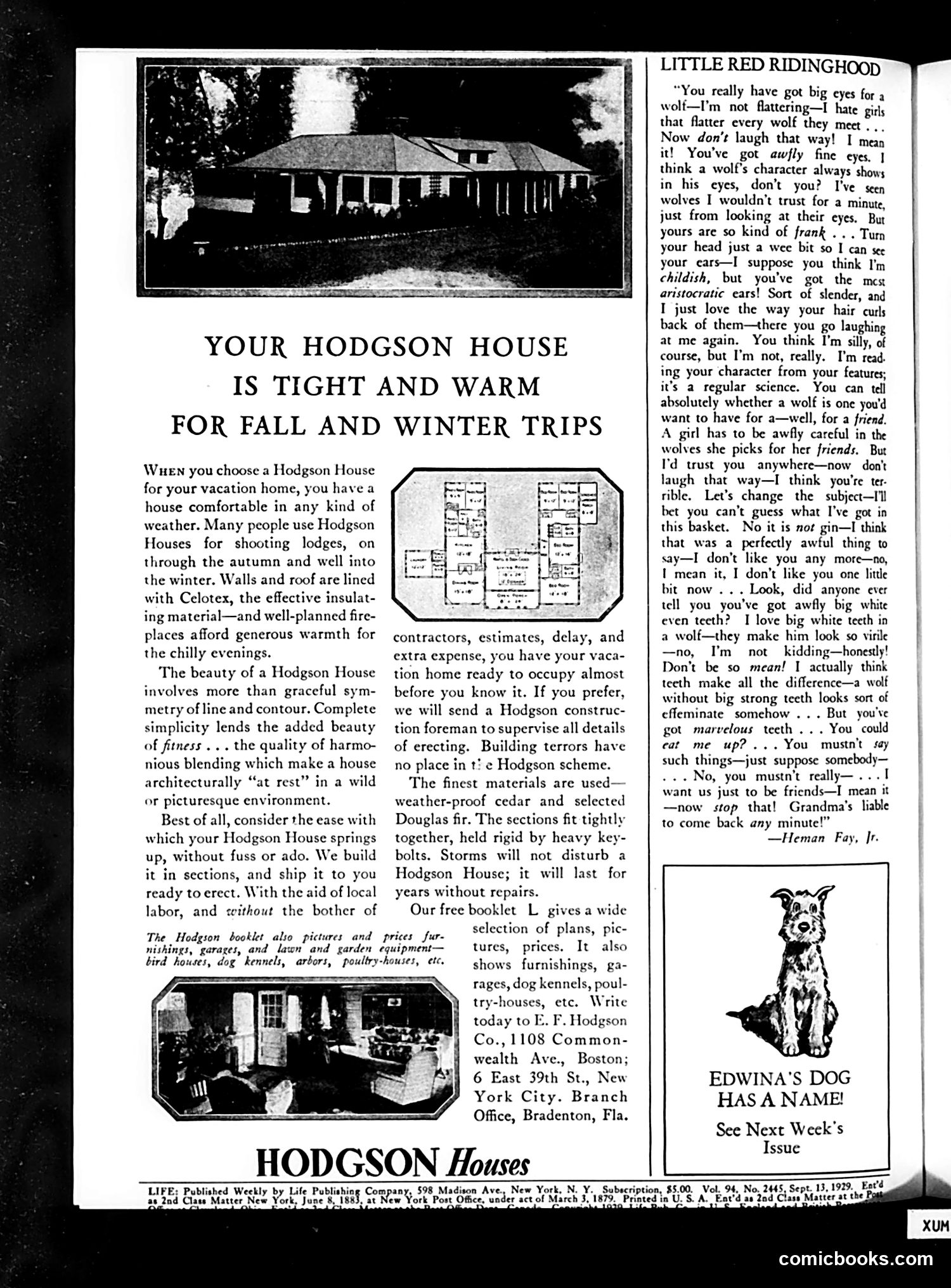
# Analysis This page is **primarily advertising**, not political satire. The left side promotes Hodgson Houses—prefabricated home kits shipped in sections for assembly. The text emphasizes their affordability, durability (using cedar and Douglas fir), and suitability for vacation homes, hunting lodges, or year-round residences. The right side contains "Little Red Ridinghood," a flirtatious dialogue where a girl playfully teases a boy about his appearance and character, using wolf/predator metaphors. It's light romantic banter typical of 1920s magazine humor—the girl is mock-threatening, suggesting the boy's "big eyes" and physical features make him wolf-like, but she ultimately invites him back. The bottom promotes "Edwina's Dog"—a tease for next week's issue.
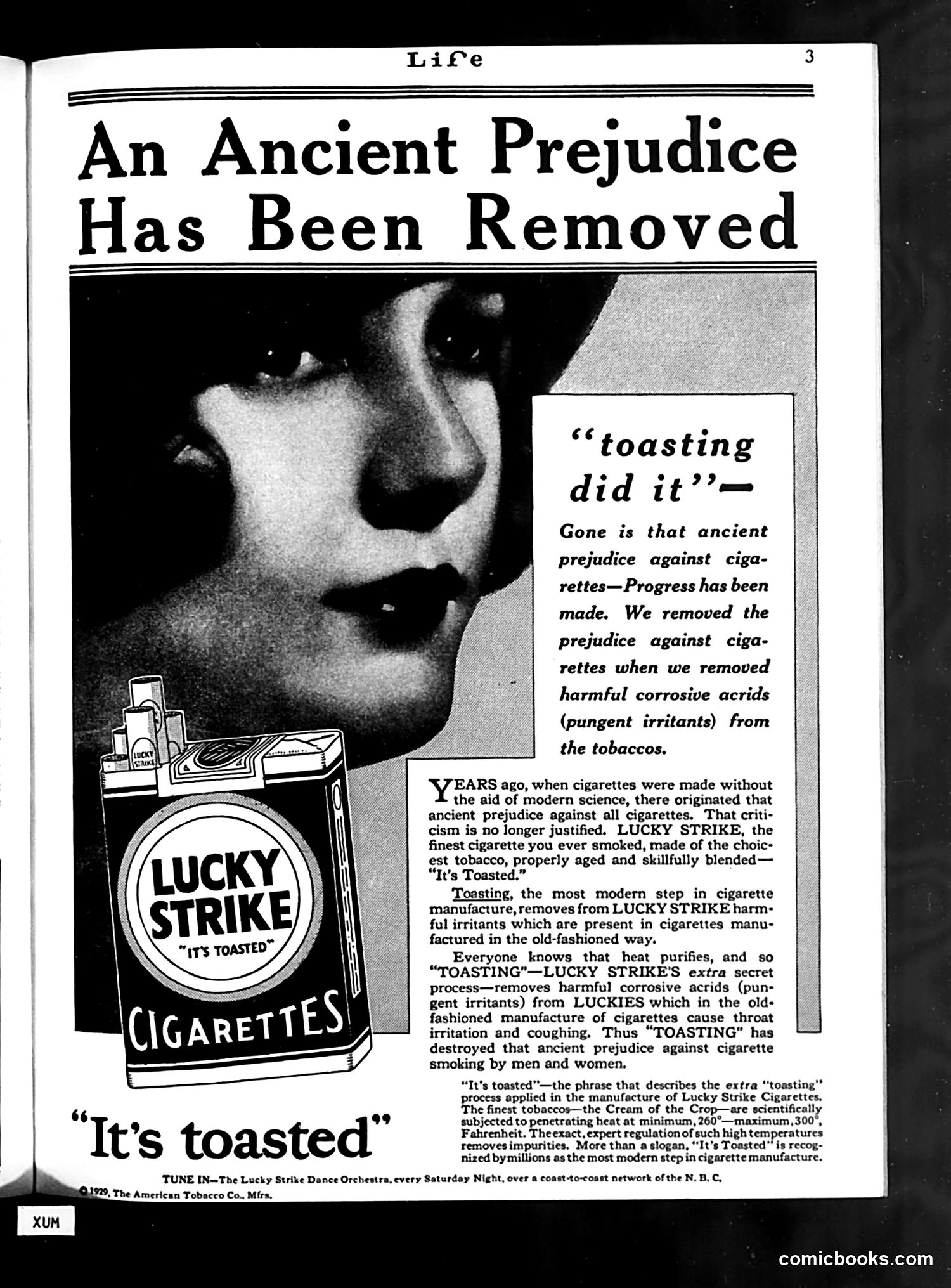
# Analysis This is not satire—it's a **cigarette advertisement** for Lucky Strike, disguised as editorial content in Life magazine. The ad claims that "toasting" (heat treatment) removes harmful corrosive acids from tobacco, thereby eliminating "ancient prejudice" against cigarettes. The tagline "It's toasted" appears throughout. **Key context for modern readers:** This represents early 20th-century tobacco marketing before health warnings were required. The ad uses pseudo-scientific language ("heat purifies," "removes irritants") to address genuine public health concerns about cigarettes, repackaging them as a product improvement rather than addressing smoking's actual dangers. The phrase "ancient prejudice" is cynical—it equates legitimate health concerns with superstition rather than valid worry. This exemplifies how corporations used advertising to manufacture credibility around dangerous products.
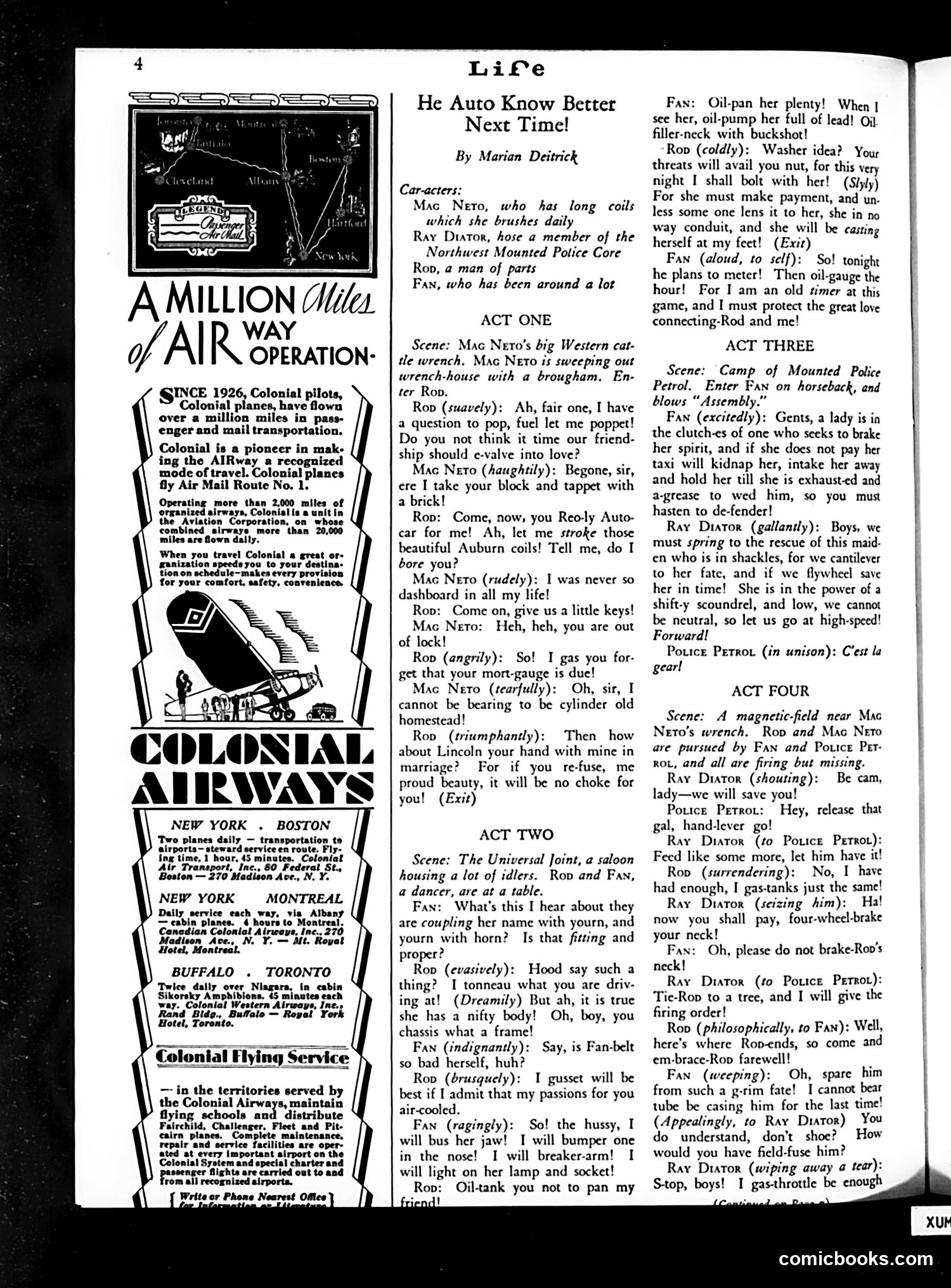
# Analysis of "He Auto Know Better Next Time!" by Marian Deitrick This page is primarily a **comedic playlet** (short dramatic sketch) satirizing romantic entanglements among automobile enthusiasts. The characters—Mag Neto, Rod (a police officer), and Fan—engage in a love triangle involving jealousy and competitive bravado about their vehicles' performance. The satire targets the **automotive culture obsession** of the 1920s-1930s, where cars and driving prowess had become status symbols tied to masculinity and romance. The exaggerated dialogue mocks how drivers treated automobiles as extensions of their identity, using car terminology as flirtation ("cylinder," "gas," "horsepower"). The page also features **Colonial Airways advertisements** below, promoting early commercial aviation routes in North America, reflecting the era's fascination with modern transportation technology.
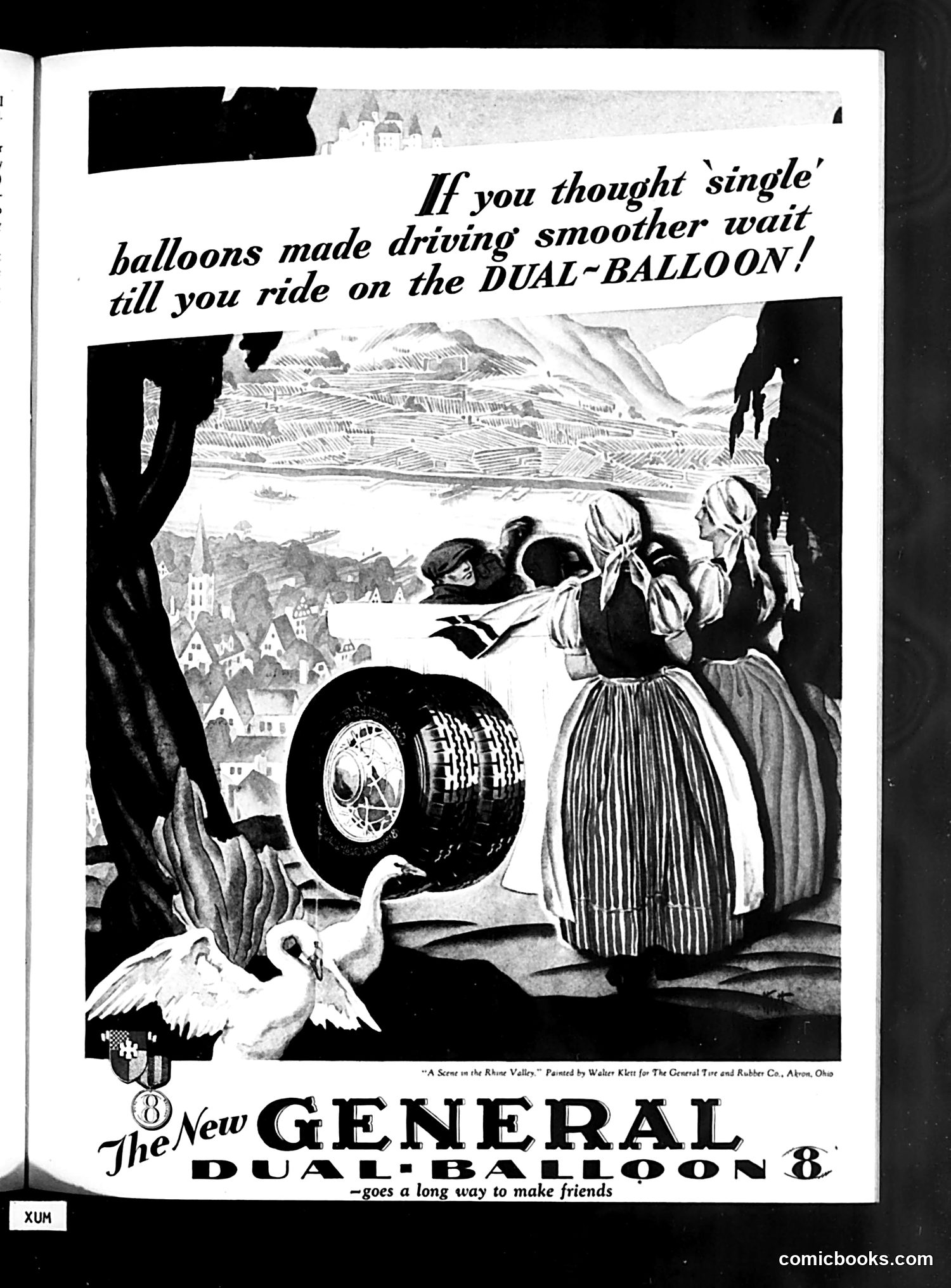
# Analysis This is a **General Tire advertisement**, not political satire. The ad promotes the "Dual-Balloon 8" tire by comparing it favorably to single balloons for smooth driving. The imagery is whimsical rather than satirical: women in what appear to be traditional Alpine or European folk costumes stand with a large dual-balloon tire overlooking a mountainous village landscape. A goose is present in the foreground. The tagline "goes a long way to make friends" suggests the tire's superior quality makes travel more pleasant. The painting credit to Walter Kern is noted. This represents vintage automotive advertising using fantastical, lighthearted imagery to market tire technology—common advertising strategy of the era. There is no political commentary or social satire present on this page.
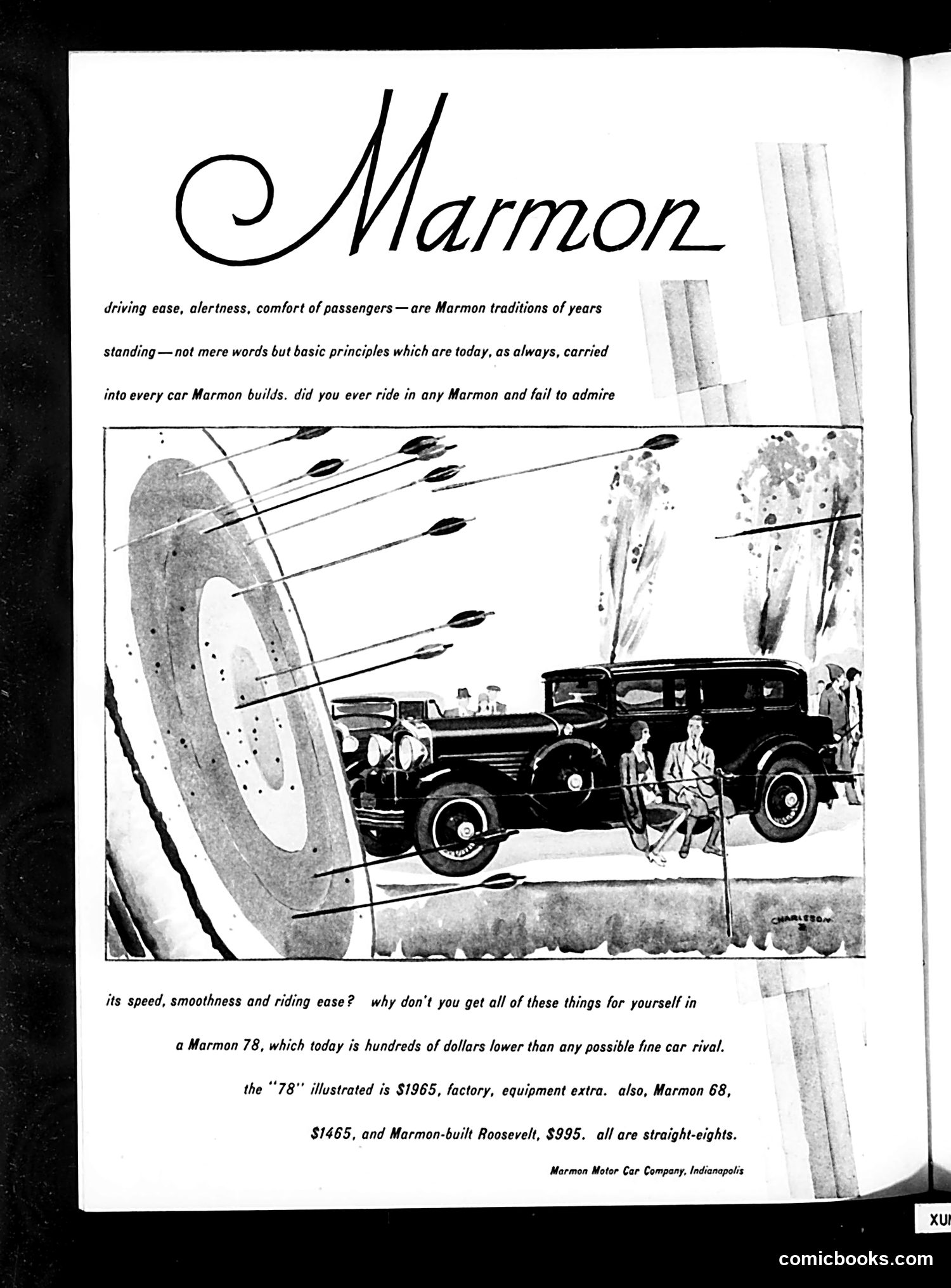
# Marmon Automobile Advertisement This is a vintage **car advertisement**, not political satire. It promotes the Marmon automobile, made by the Marmon Motor Car Company of Indianapolis. The ad emphasizes Marmon's traditional qualities—"driving ease, alertness, comfort"—and appeals to buyers by highlighting value: the Marmon 78 costs $1,965, "hundreds of dollars lower than any possible fine car rival." The illustration shows well-dressed passengers enjoying the car's smooth ride, with stylized motion lines suggesting speed and comfort. The ad lists three models (78, 68, and Roosevelt) with prices, all featuring straight-eight engines—a premium technical feature of the era. This reflects 1920s automotive marketing emphasizing both luxury and affordability.
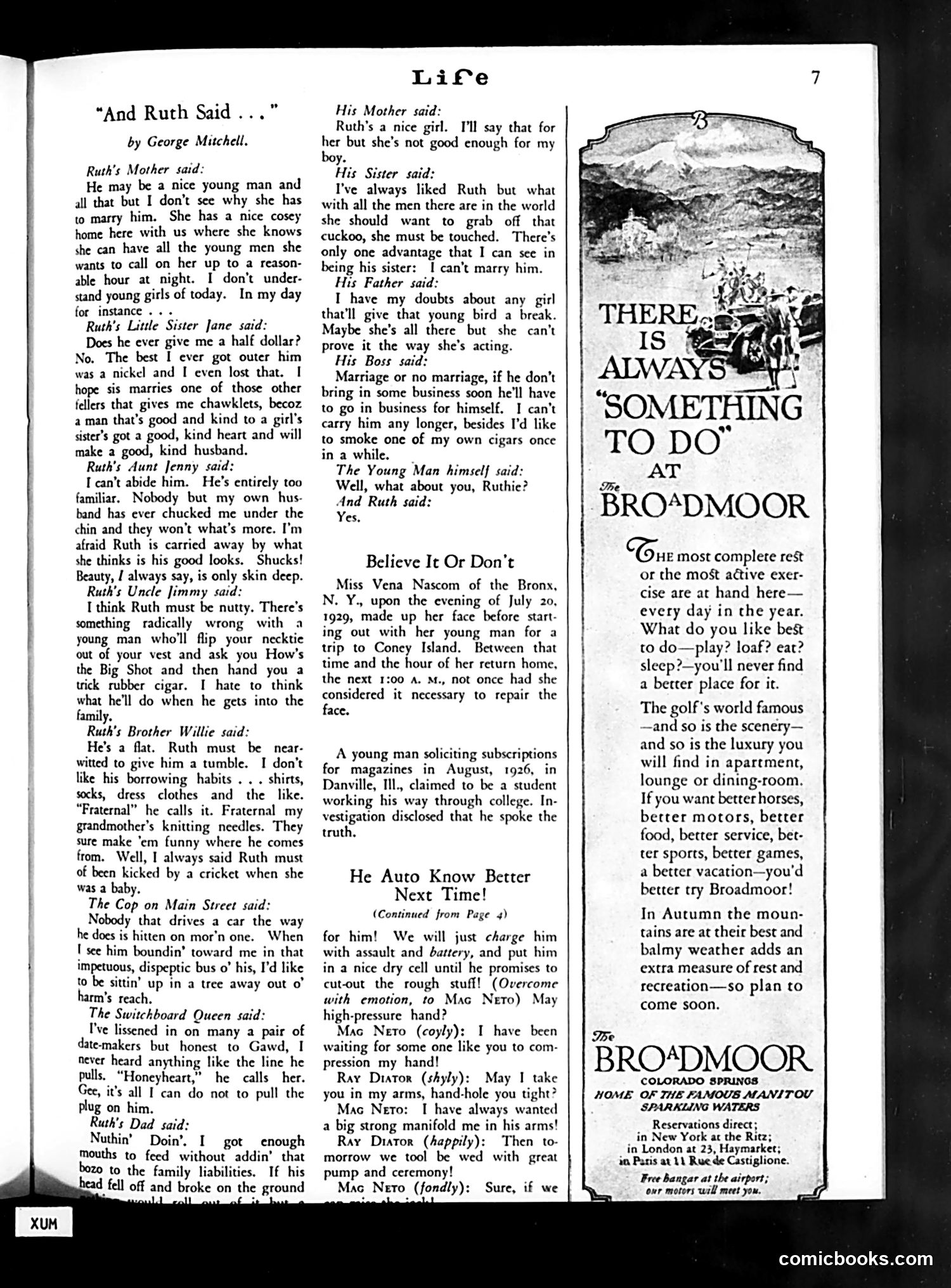
# Analysis of Life Magazine Page 7 This page contains two distinct sections: **Left side:** A satirical piece titled "And Ruth Said..." by George Mitchell, featuring dialogue from various family members and acquaintances debating whether a young woman named Ruth should marry a particular man. Each speaker offers contrasting opinions—some praising Ruth's qualities, others criticizing the suitor's prospects or character. The humor lies in the contradictory advice and family dynamics around marriage decisions. **Right side:** A travel advertisement for Broadmoor resort in Colorado Springs, promoting luxury amenities and recreational activities. The copy emphasizes golf, fine dining, and relaxation. The page juxtaposes domestic comedy with aspirational leisure marketing, typical of 1920s Life magazine content mixing satire with commercial advertising.
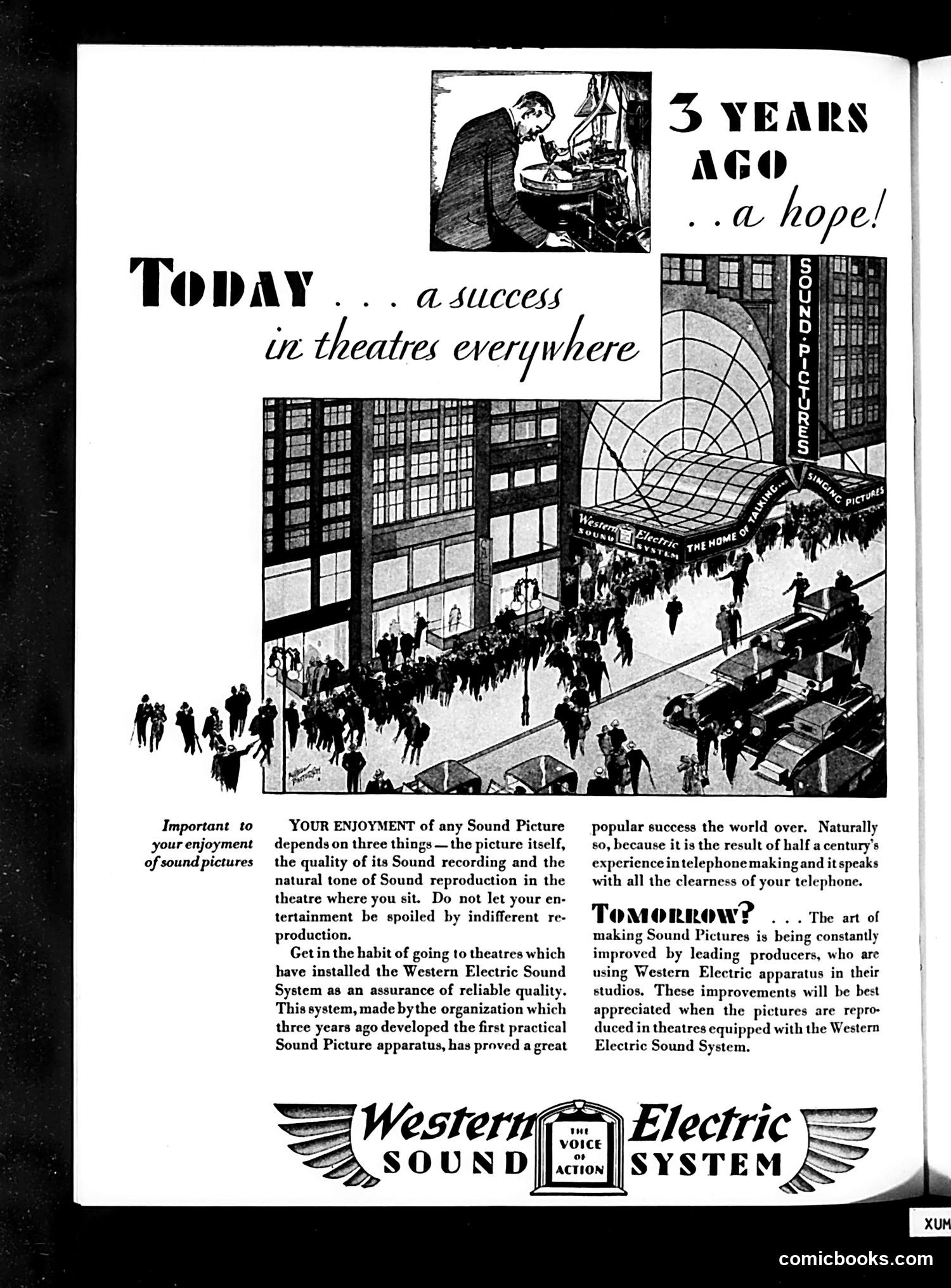
# Western Electric Sound System Advertisement This is a **full-page advertisement**, not satire or political commentary. It promotes Western Electric's sound reproduction technology for movie theaters. The ad uses a "then vs. now" comparison: three years ago (top), sound in cinema was experimental ("a hope"), shown by a technician working on early equipment. Today (bottom), it's successful, depicted by crowded theaters enjoying films at what appears to be a major cinema. The pitch emphasizes that Western Electric developed the first practical sound picture apparatus and now leads improvements in theater sound quality. The message targets moviegoers: attend theaters with Western Electric Sound Systems installed to ensure reliable audio reproduction and not have your entertainment "spoiled by indifferent reproduction." This reflects cinema's transition to synchronized sound in the late 1920s.
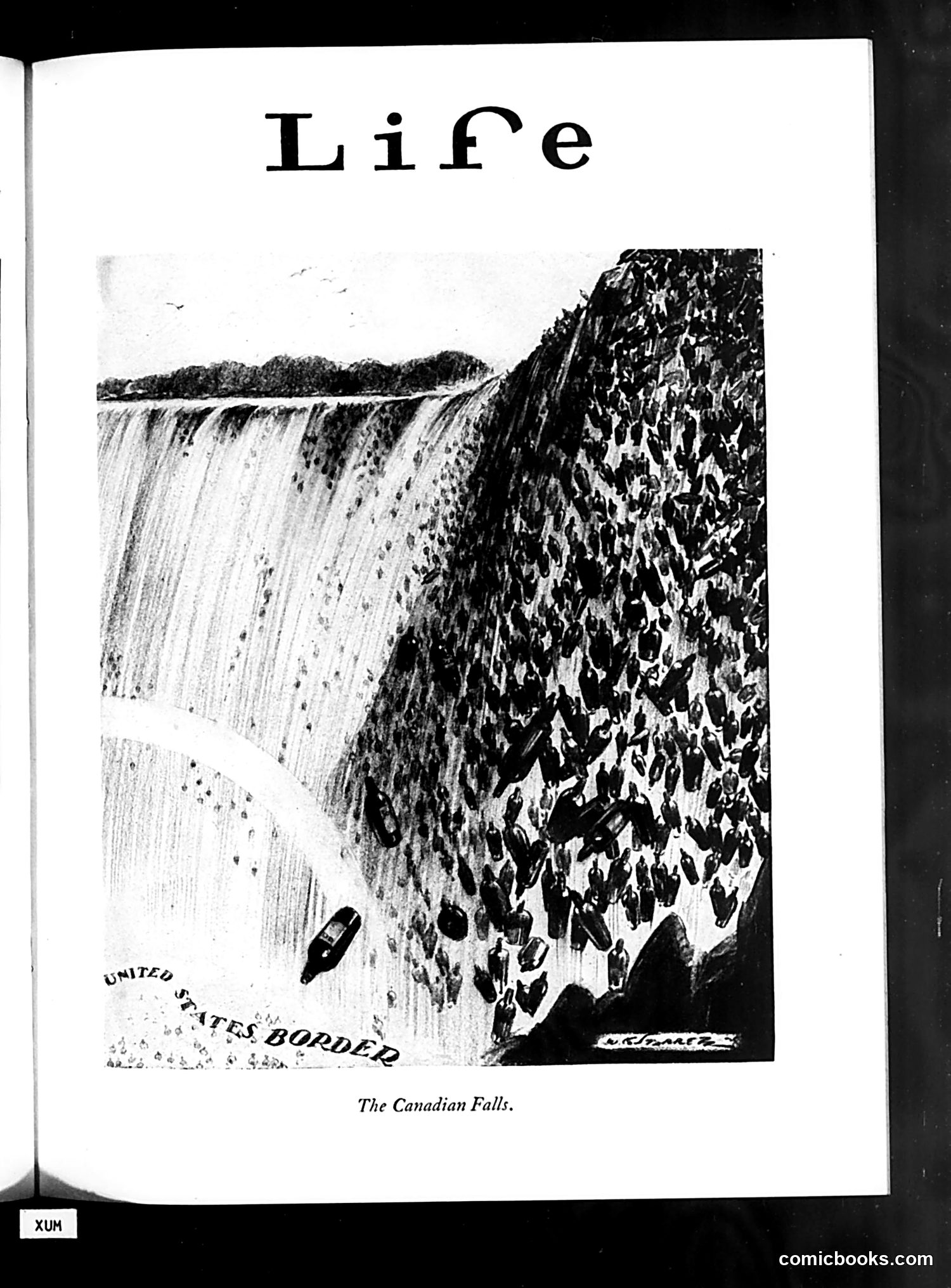
# Analysis This is a title page for a Life magazine section titled "Life" featuring an illustration labeled "The Canadian Falls" (Niagara Falls). The image shows a dramatic waterfall with ivy-covered cliffs on the right side and a small boat in the water below. A stamp reading "UNITED STATES BORDER" appears in the lower left corner. The satirical point appears to reference the U.S.-Canada border, likely commenting on tourism, natural resources, or cross-border relations during the early-to-mid 20th century. The placement of the border stamp on an iconic natural landmark suggests commentary on how artificial political boundaries divide naturally shared geography. Without additional context from the article text, the specific satirical target remains unclear, though it likely critiques either border policy or the commercialization of natural wonders.
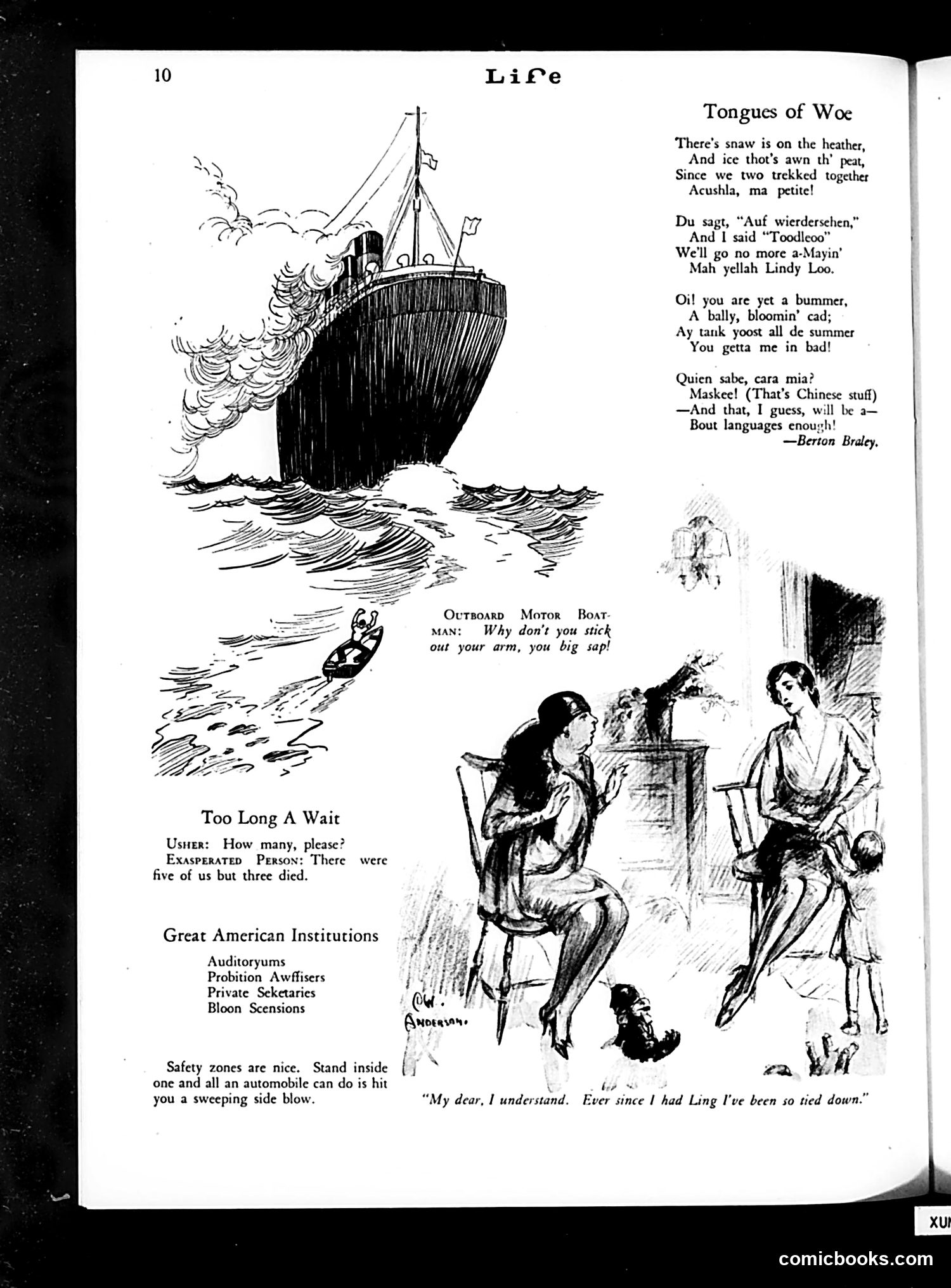
# Analysis of Life Magazine Page 10 This page contains several unrelated satirical pieces typical of Life's humor magazine format: **"Tongues of Woe"** presents a poem by Berton Braley mocking multilingual affectation and travel pretense—the speaker sarcastically catalogs foreign phrases picked up during travel, suggesting such linguistic showing-off is annoying. **"Outboard Motor Boat"** shows a crude joke about a man on a motorboat, likely sexual innuendo. **"Too Long A Wait"** presents a dark joke: an usher at what appears to be an execution asks exhausted prisoners how many arrived; three of five died waiting. This satirizes bureaucratic inefficiency and possibly capital punishment delays. **"Great American Institutions"** lists items with grim humor (auditoriums, prohibition, blood donations). The final illustrated scene depicts a woman telling a man she's been "tied down" since losing "Ling I've"—likely a pun or reference unclear without additional context.