A complete issue · 44 pages · 1929
Life — September 6, 1929
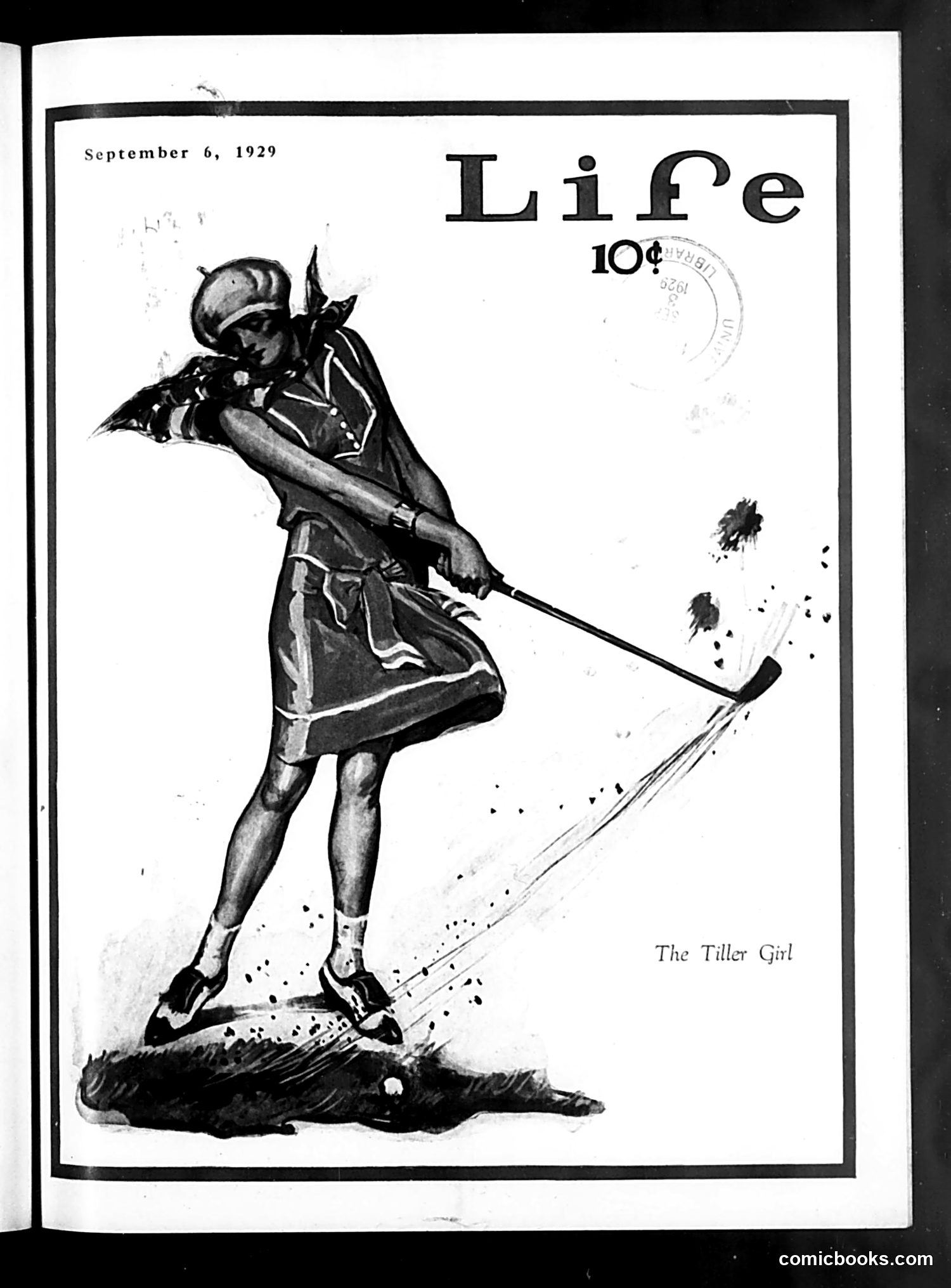
# "The Tiller Girl" — Life Magazine, September 6, 1929 This cover depicts a young woman in 1920s athletic wear performing a golf swing, titled "The Tiller Girl." The image satirizes the modern "flapper" phenomenon—young women who embraced sports, shorter skirts, and independent lifestyles that shocked conservative society. The cartoon celebrates this cultural shift with humor. "Tiller" likely references John D. Rockefeller Jr.'s famous golf club, making the joke about women entering traditionally male-dominated recreational spaces. The energetic pose and athletic confidence embody the "New Woman" of the Jazz Age who rejected Victorian restrictions. Published just weeks before the 1929 stock market crash, this cover captures the optimistic, boundary-pushing spirit of the Roaring Twenties before economic collapse.
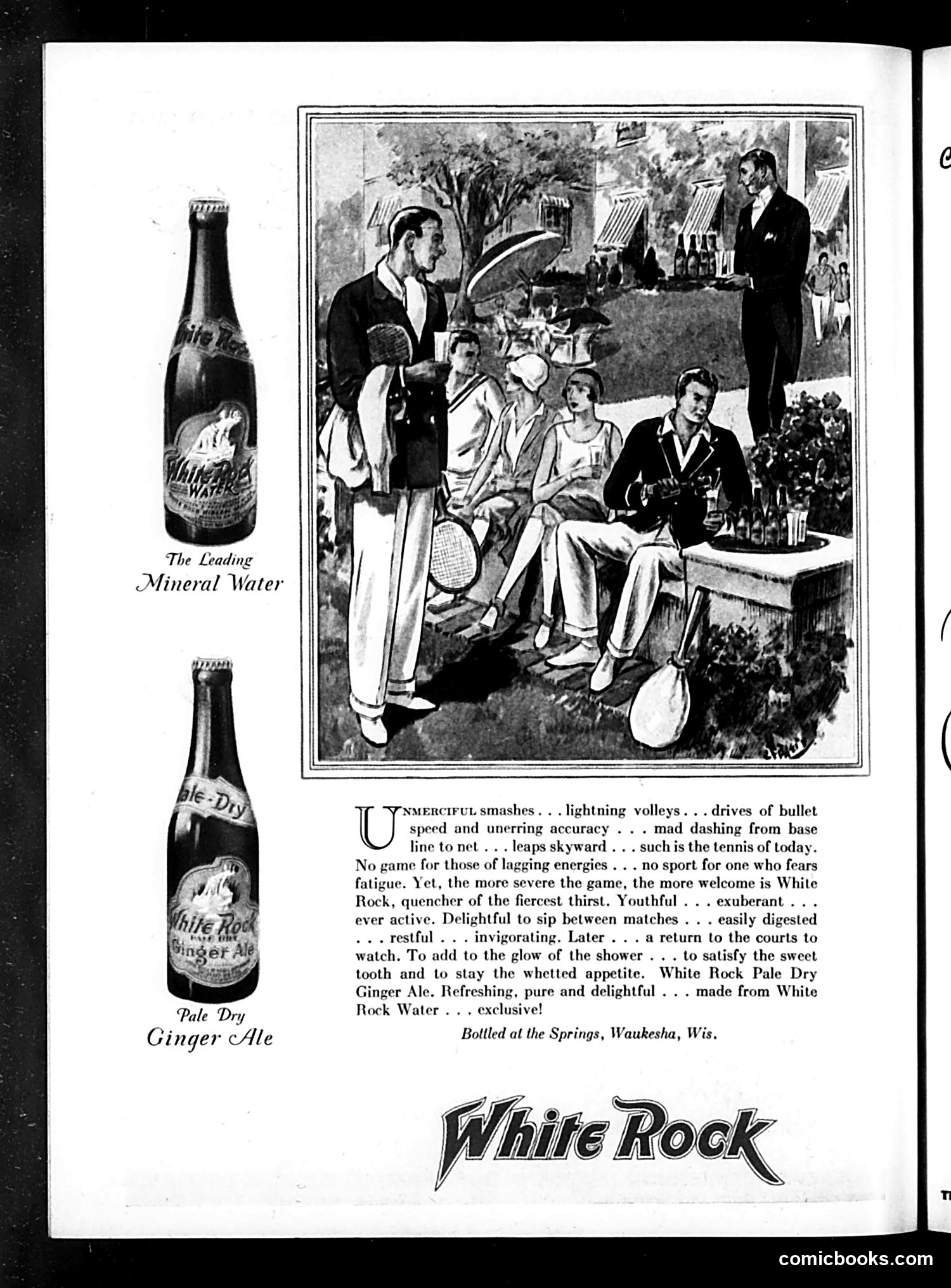
# Analysis This page is primarily **advertising, not satire or political commentary**. It's a White Rock beverage advertisement featuring two products: their mineral water and Pale Dry Ginger Ale. The illustration shows an outdoor tennis scene—young people in 1920s-era athletic wear enjoying refreshments at what appears to be a country club or resort. The text celebrates tennis as a modern, energetic sport requiring "unmerciful smashes," "lightning volleys," and "bullet speed." The ad positions White Rock products as ideal for active, youthful leisure activities. The ginger ale is described as "refreshing, pure and delightful," marketed to appeal to the aspirational middle and upper-class consumers who played tennis and frequented such venues. There is no political satire here—it's straightforward lifestyle advertising from the early 20th century.
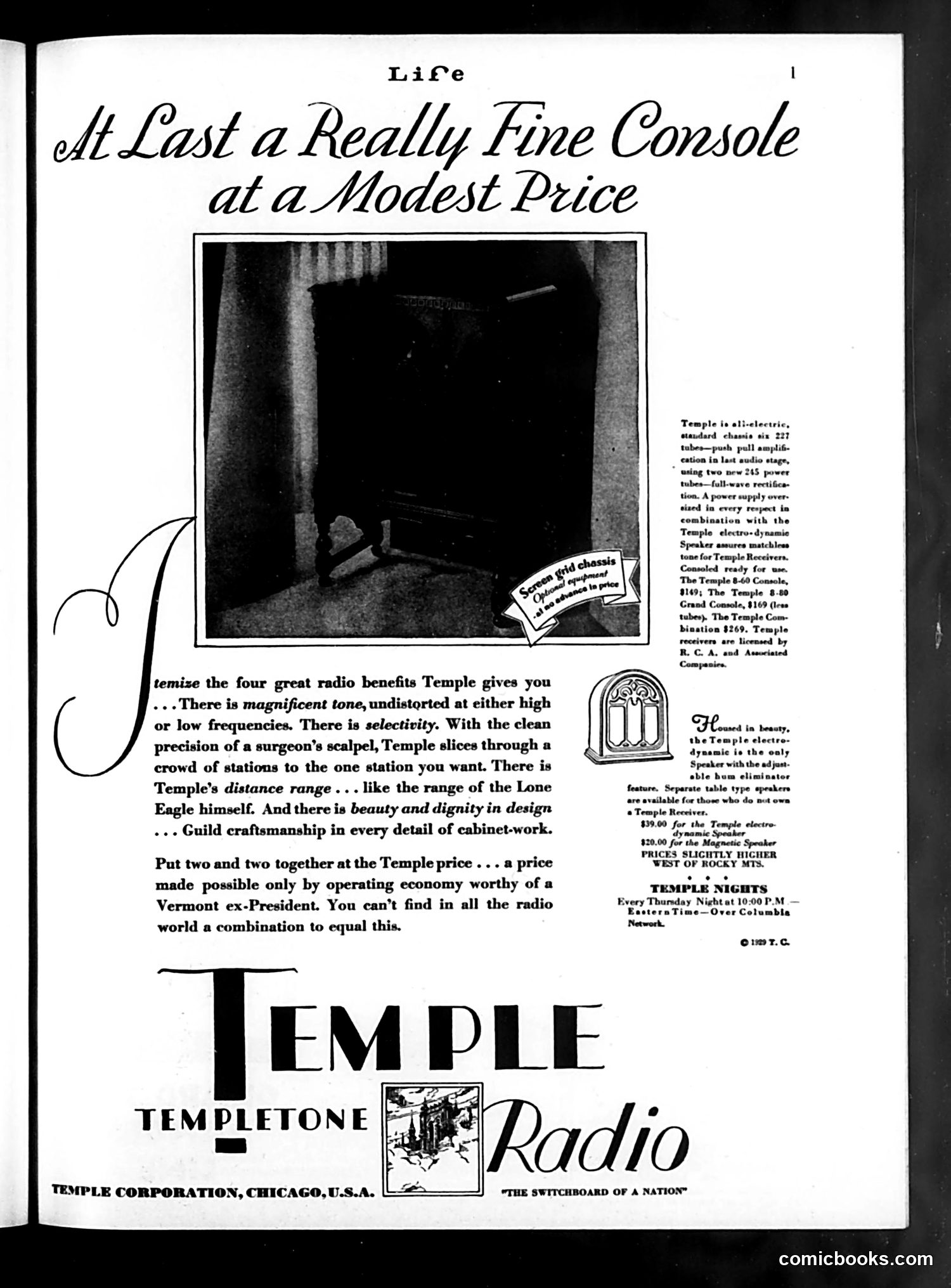
# Analysis This page is primarily a **Temple Radio advertisement**, not satirical content. The "Life" magazine masthead indicates this is from the publication's advertising section. The ad promotes Temple brand radio consoles as affordable, high-quality alternatives to expensive competitors. The main visual shows a radio console in a home setting. The accompanying text emphasizes four "great radio benefits": magnificent tone, selectivity, distance range, and elegant design—all at a modest price point. A small illustration of what appears to be a Native American figure (labeled "Lone Eagle") provides a branding reference, though the specific cultural or commercial context is unclear from this page alone. The bottom promotes "Temple Nights," a radio program airing Thursday evenings on the Columbia Network. This is straightforward product marketing rather than political or social satire.
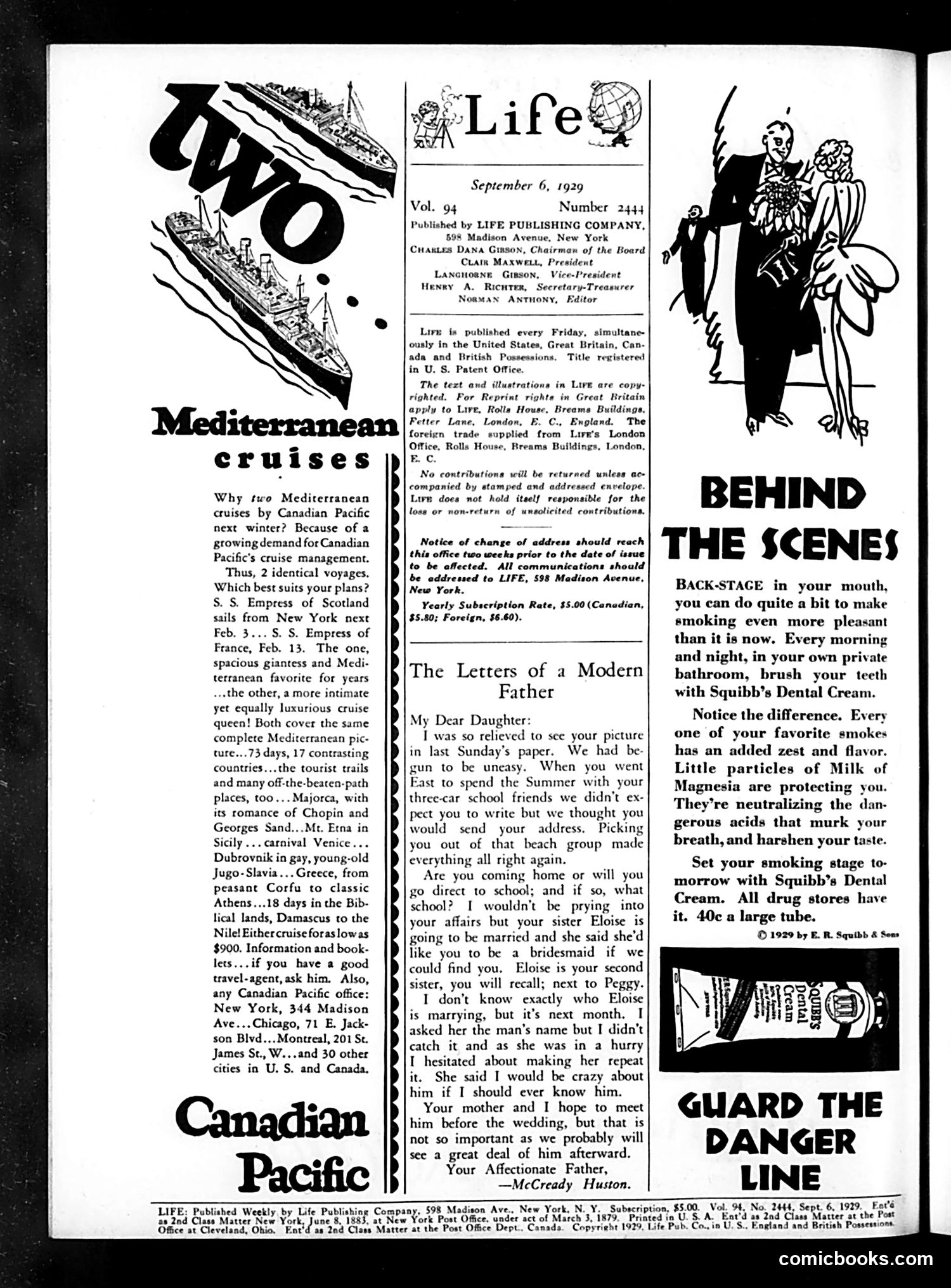
# Life Magazine, September 6, 1929 This page is primarily **advertising and editorial content** rather than political satire. The left side features ads for **Canadian Pacific cruise lines** promoting Mediterranean voyages—a luxury travel pitch typical of 1929, before the stock market crash that October. The center contains "The Letters of a Modern Father," a domestic humor column where a father writes to his daughter about family matters and her potential bridesmaid role in her sister's upcoming wedding. This type of sentimental, family-focused humor was popular magazine filler. The right side includes an ad for **Squibb's Dental Cream** and a "Guard the Danger Line" public safety advertisement. These represent typical 1920s consumer and civic messaging. No significant political satire is evident on this particular page.
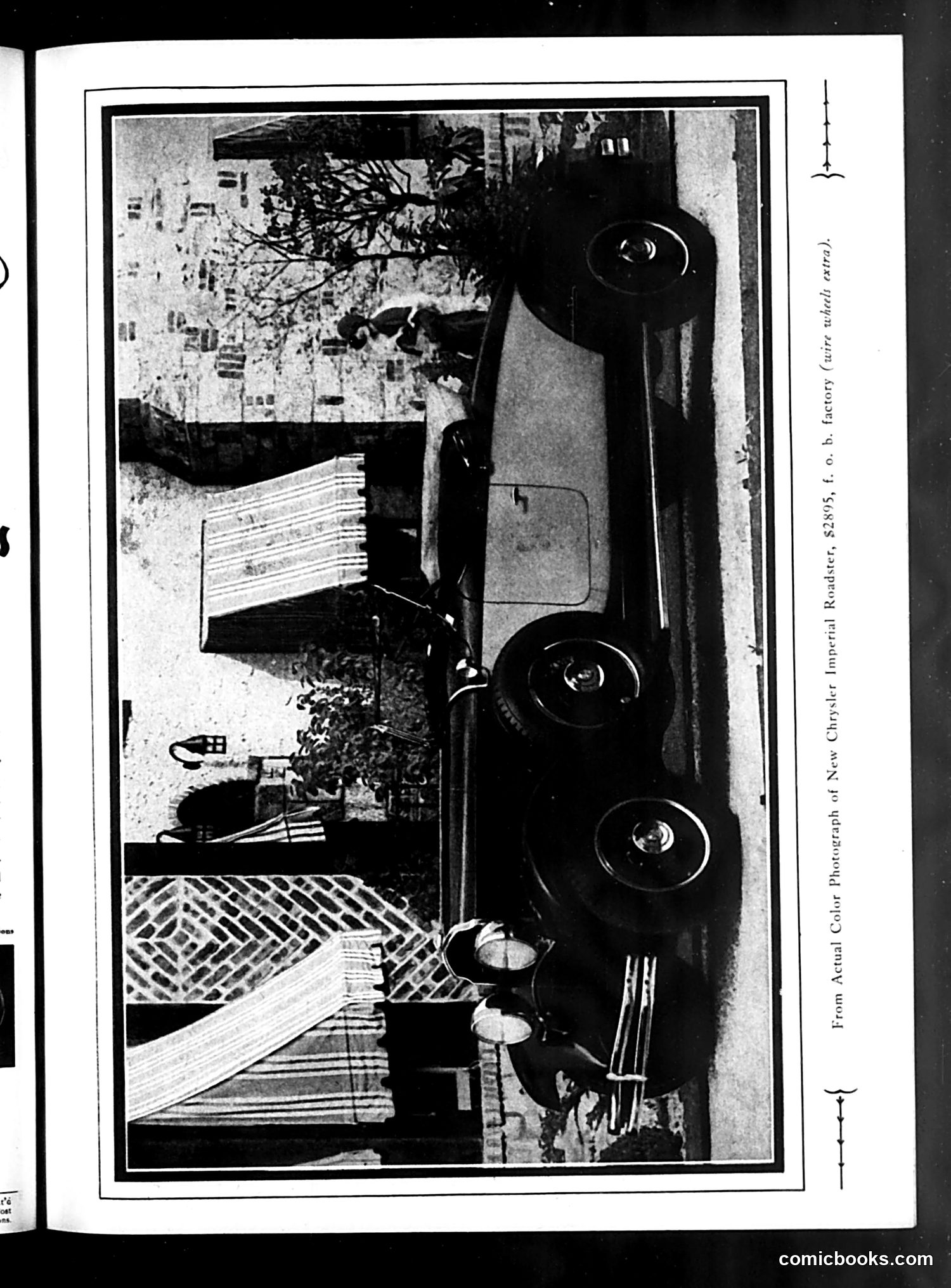
I can see this is a black and white photograph labeled "From Aerial Color Photograph of New Crystal Imprrial Rodsters, S.F.O., a factory under construction." The image appears to be rotated 90 degrees, showing what looks like an aerial or elevated view of an industrial or automotive facility with parked vehicles, buildings, and structural elements. However, I cannot definitively identify this as a political cartoon or satire in the traditional sense. The page appears to be primarily a documentary photograph with caption, rather than a satirical cartoon with identifiable caricatured figures or clear political messaging. Without additional context from surrounding pages or clearer visibility of any satirical elements, I cannot confidently explain what specific social or political commentary this image is intended to convey to a modern reader.
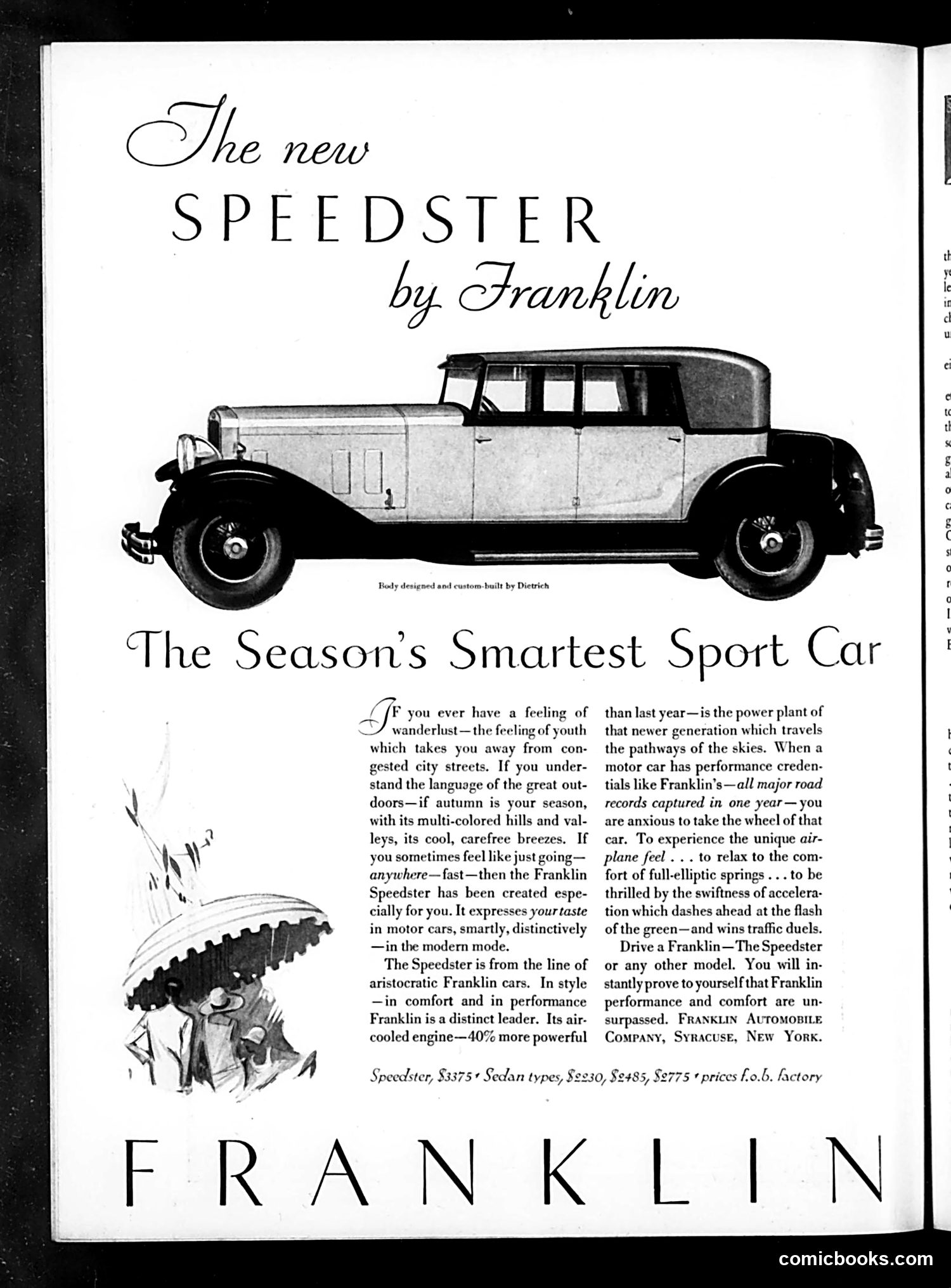
# Analysis This page is primarily an **advertisement**, not satirical content. It promotes the Franklin Speedster automobile, marketed as "The Season's Smartest Sport Car." The ad emphasizes the car's appeal to affluent, leisure-oriented consumers—those seeking escape from "congested city streets" into autumn scenery. Key selling points include an air-cooled engine (40% more powerful than previous models), full-elliptic springs for comfort, and high performance credentials (all major road records captured in one year). The decorative illustration of a woman with a parasol and traveling outfit reinforces the luxury lifestyle messaging. Pricing ($2,375-$2,775) targets the wealthy. This represents 1920s aspirational automotive marketing aimed at America's elite, emphasizing freedom, speed, and sophisticated recreation.
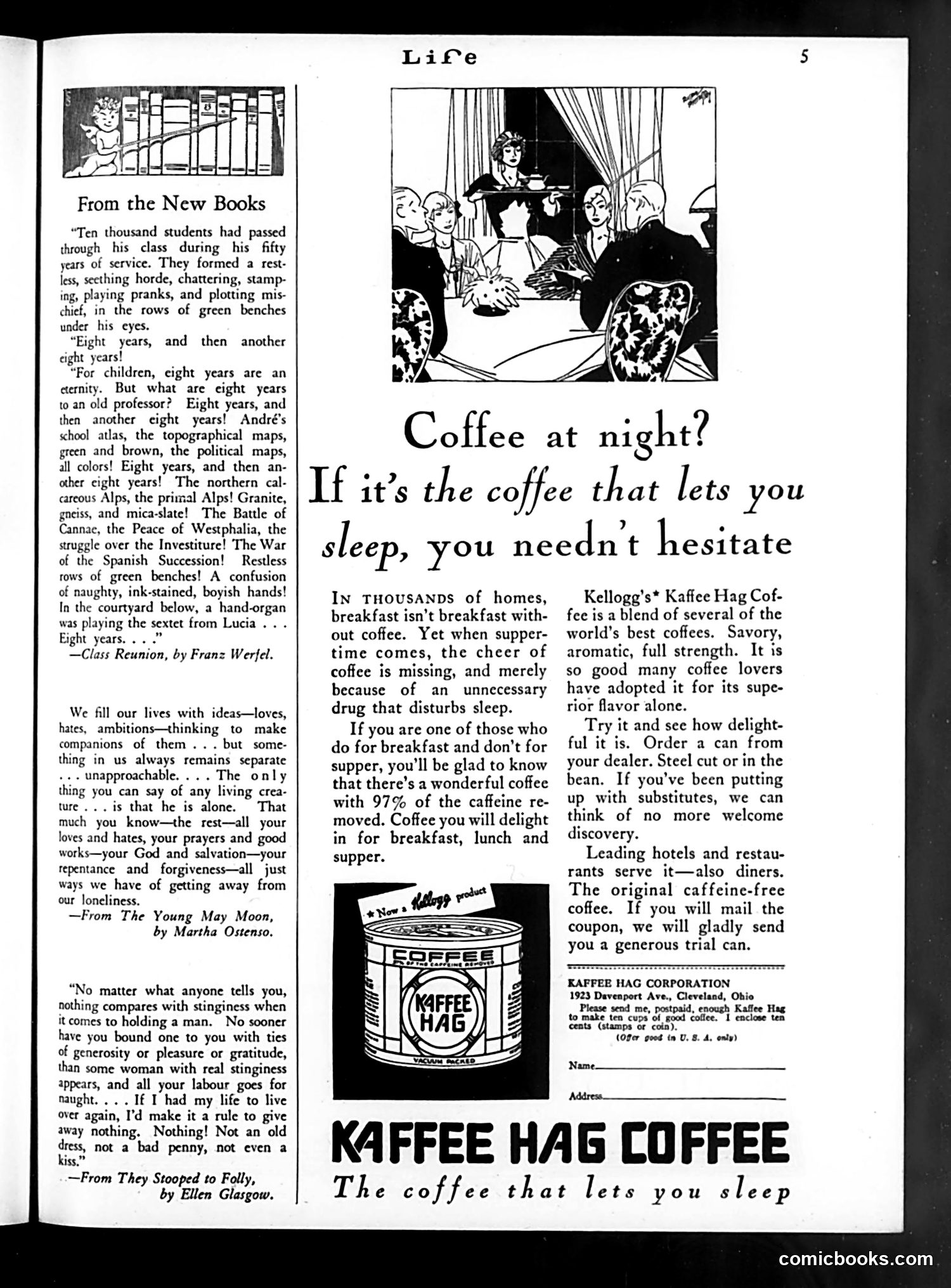
# Page Content Analysis This page is primarily **advertising** for Kaffee Hag Coffee, a caffeine-free brand. The main illustration shows a social gathering where a woman serves coffee to well-dressed guests. The advertisement's central claim is that Kaffee Hag removes caffeine while retaining coffee's flavor—allowing people to drink coffee at night without sleep disruption. The tagline "the coffee that lets you sleep" was the brand's key marketing message. The left column contains literary excerpts ("From the New Books") unrelated to the advertisement, typical of Life magazine's mixed editorial-advertising format. The satire is implicit rather than explicit: the ad assumes readers care enough about coffee culture to worry about caffeine's effects on sleep—addressing an emerging modern concern about stimulant consumption.
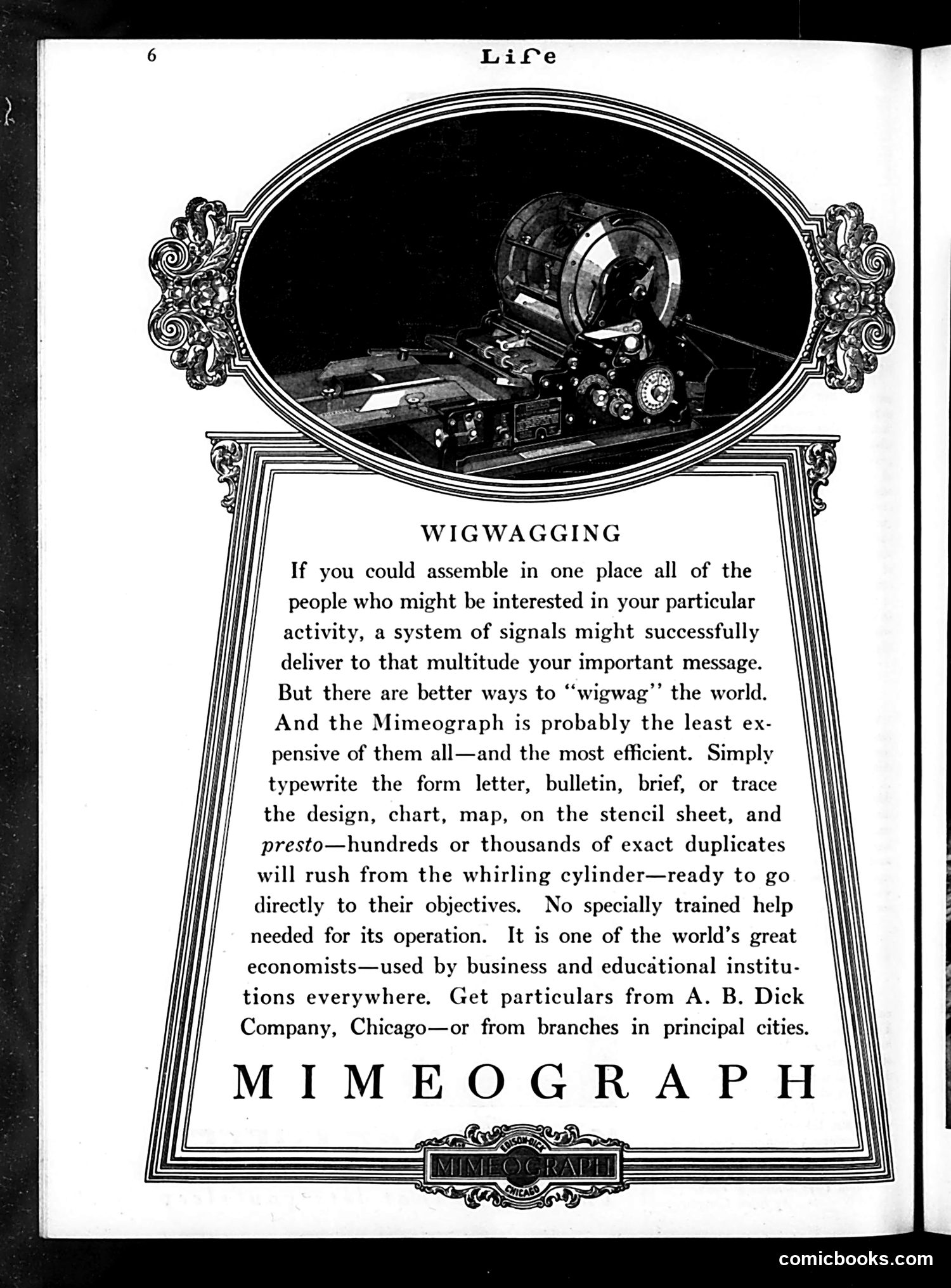
# Analysis This is a **Mimeograph machine advertisement**, not political satire. The page uses the term "WIGWAGGING" (a reference to signal-flag communication) as a metaphor for spreading messages widely. The ad promotes the Mimeograph as an economical, efficient copying device for businesses and educational institutions. It claims the machine can rapidly produce "hundreds or thousands of exact duplicates" from a stencil without requiring trained operators. The image shows the device itself—a mechanical duplicator with a rotating cylinder. The advertisement targets institutional buyers by emphasizing cost-effectiveness and ease of use, positioning the Mimeograph as "one of the world's great economists." Contact information directs readers to A.B. Dick Company in Chicago. This represents early 20th-century office technology marketing.
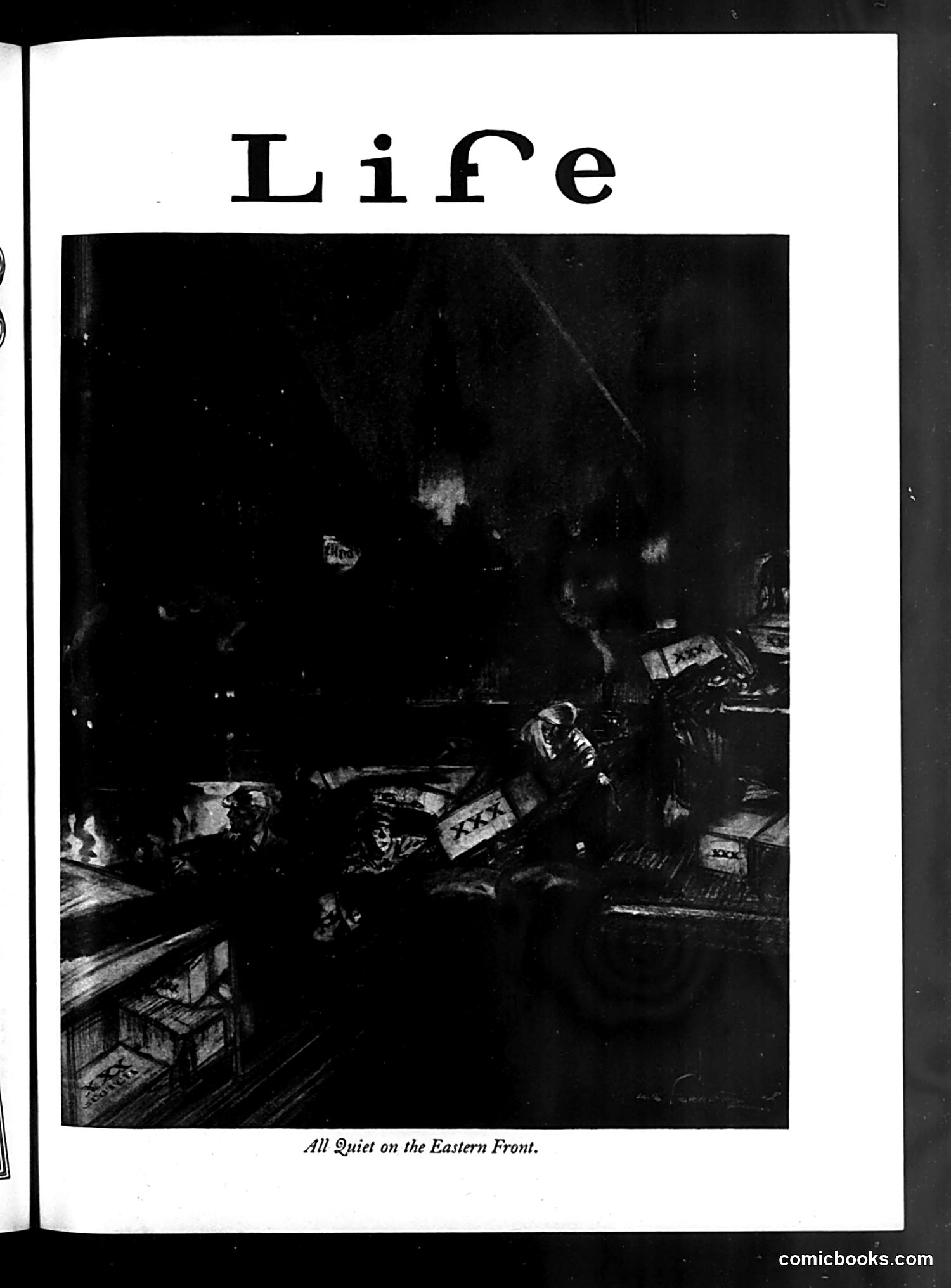
# Analysis This appears to be a title page from *Life* magazine featuring a dark, dramatic photograph captioned "All Quiet on the Eastern Front." The image shows what appears to be a wartime scene—soldiers or military personnel in a trench or fortified position at night, with equipment and supplies visible. The caption is a reference to Erich Maria Remarque's famous World War I novel "All Quiet on the Western Front," but deliberately substitutes "Eastern" for "Western." Given the satirical nature of *Life* magazine, this likely comments on military activity or conditions on the Eastern Front during a specific conflict period—though without the publication date visible, the exact historical moment (WWI, WWII, or Cold War era) cannot be definitively stated from the image alone.
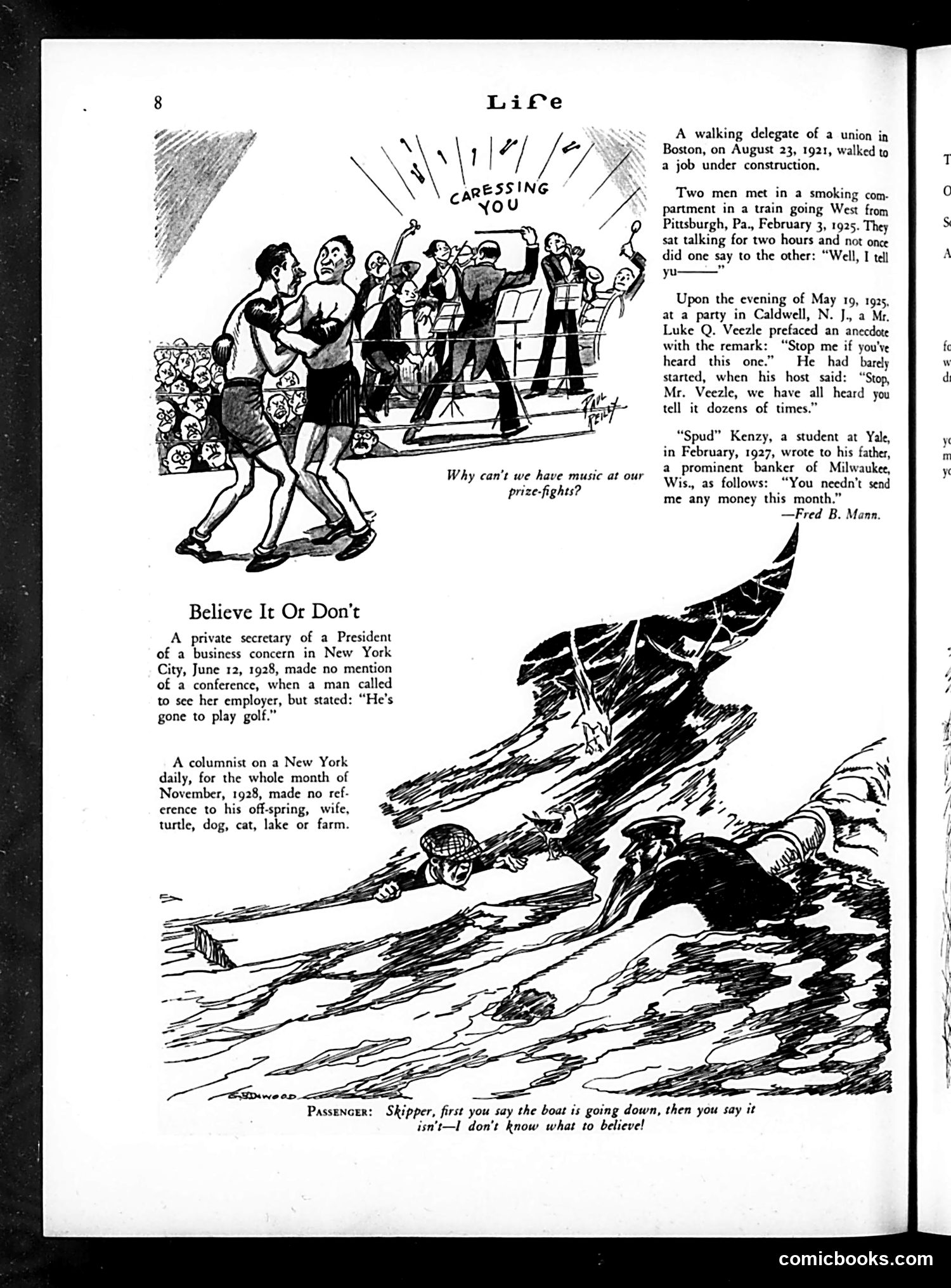
# Analysis of Life Magazine Page 8 This page contains humorous anecdotes and two cartoon illustrations rather than political commentary. The top cartoon depicts a boxing match with spectators labeled "CARESSING YOU" and asks "Why can't we have music at our prize-fight?" The joke appears to mock the incongruity of romance/affection at a violent sporting event. The bottom cartoon shows a sinking boat with a caption about conflicting reports: a passenger says the skipper first claimed the boat was going down, then denied it. This satirizes inconsistent official statements or credibility problems. The text anecdotes are light social humor: a secretary's excuse for her boss being absent (golf), a columnist who ignored major life events entirely, and a Yale student's joke about not needing money from his banker father. These reflect 1920s-30s social attitudes and humor styles.
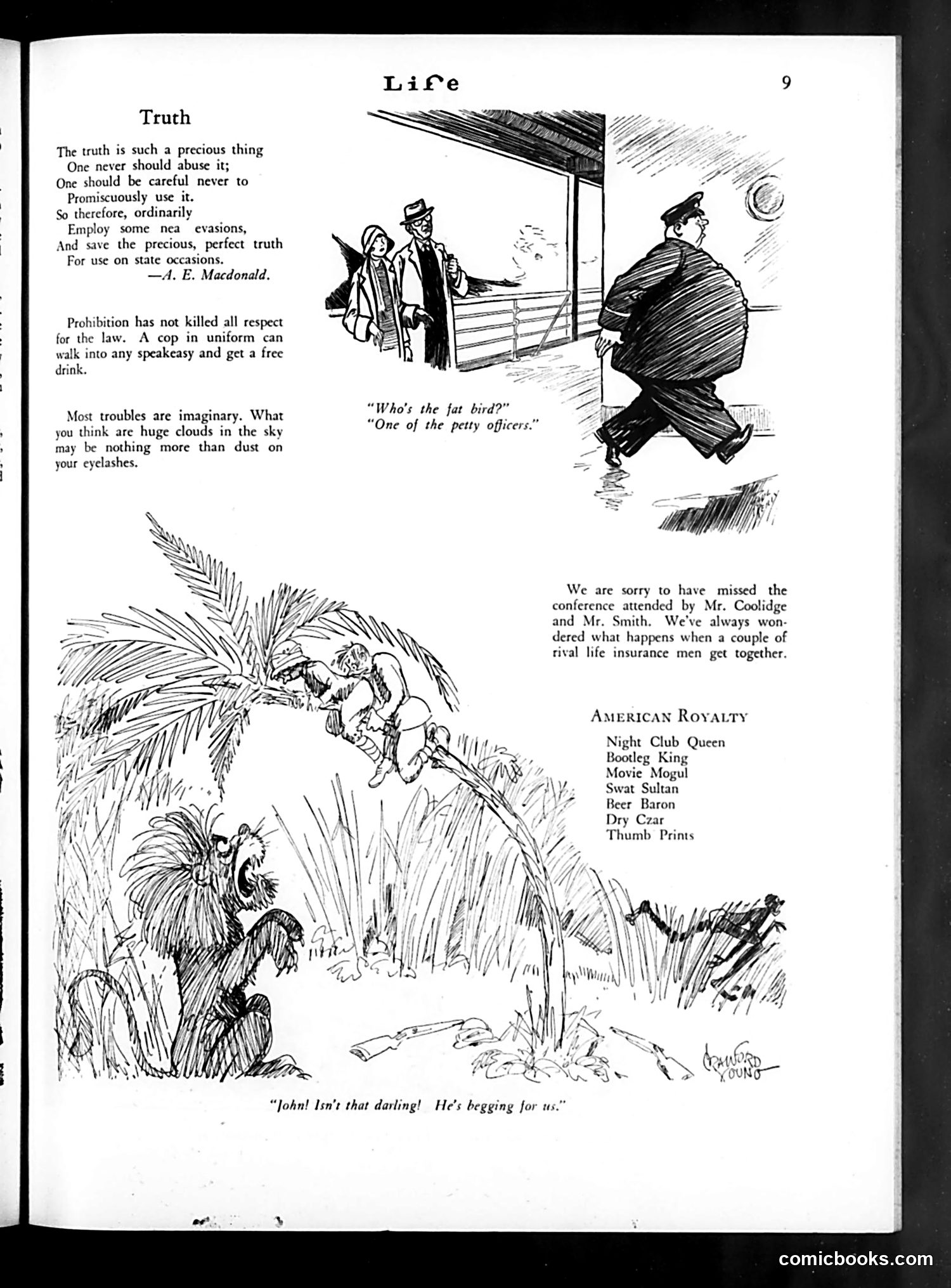
# Analysis of Life Magazine Page 9 This page contains two satirical cartoons addressing Prohibition-era corruption and social hypocrisy. The **top cartoon** depicts a police officer ("fat bird") accepting a bribe at a speakeasy, mocking law enforcement complicity in illegal alcohol sales during Prohibition. The joke criticizes how cops could "walk into any speakeasy and get a free drink." The **bottom cartoon** shows figures in tall grass, apparently poaching wildlife. The caption "John! Isn't that darling! He's begging for us" satirizes upper-class hunters' attitudes toward endangered animals. Both cartoons mock institutional corruption and moral inconsistency among authority figures. The text block about missed insurance men's conferences adds workplace humor, unrelated to the main cartoons.
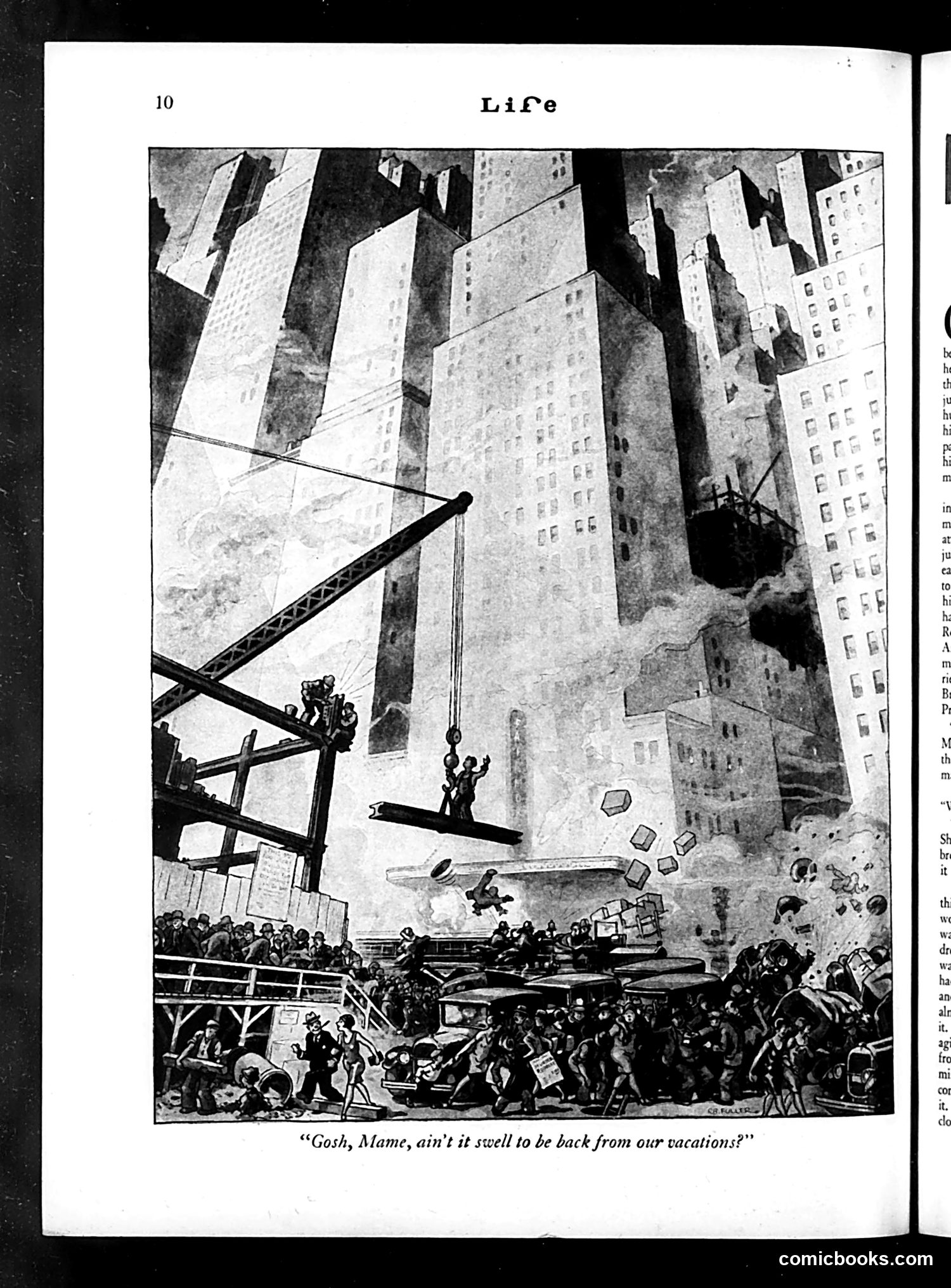
# Analysis This is a satirical illustration from *Life* magazine (page 10) depicting a chaotic urban construction scene. The caption reads: "Gosh, Mame, ain't it swell to be back from our vacations?" The cartoon mocks the contrast between leisurely vacation expectations and the reality of returning to a bustling, dangerous cityscape. Towering skyscrapers loom overhead while construction cranes hoist massive steel beams precariously above crowds of workers and pedestrians below. The casual, cheerful dialogue clashes sharply with the perilous industrial activity depicted. This satirizes early 20th-century American urban development—the rapid, chaotic modernization of cities, workplace hazards, and the gap between romanticized leisure and the actual hazards of modern industrial life. The tone is darkly humorous about returning to civilization's dangers.