A complete issue · 36 pages · 1936
Judge — May 1936
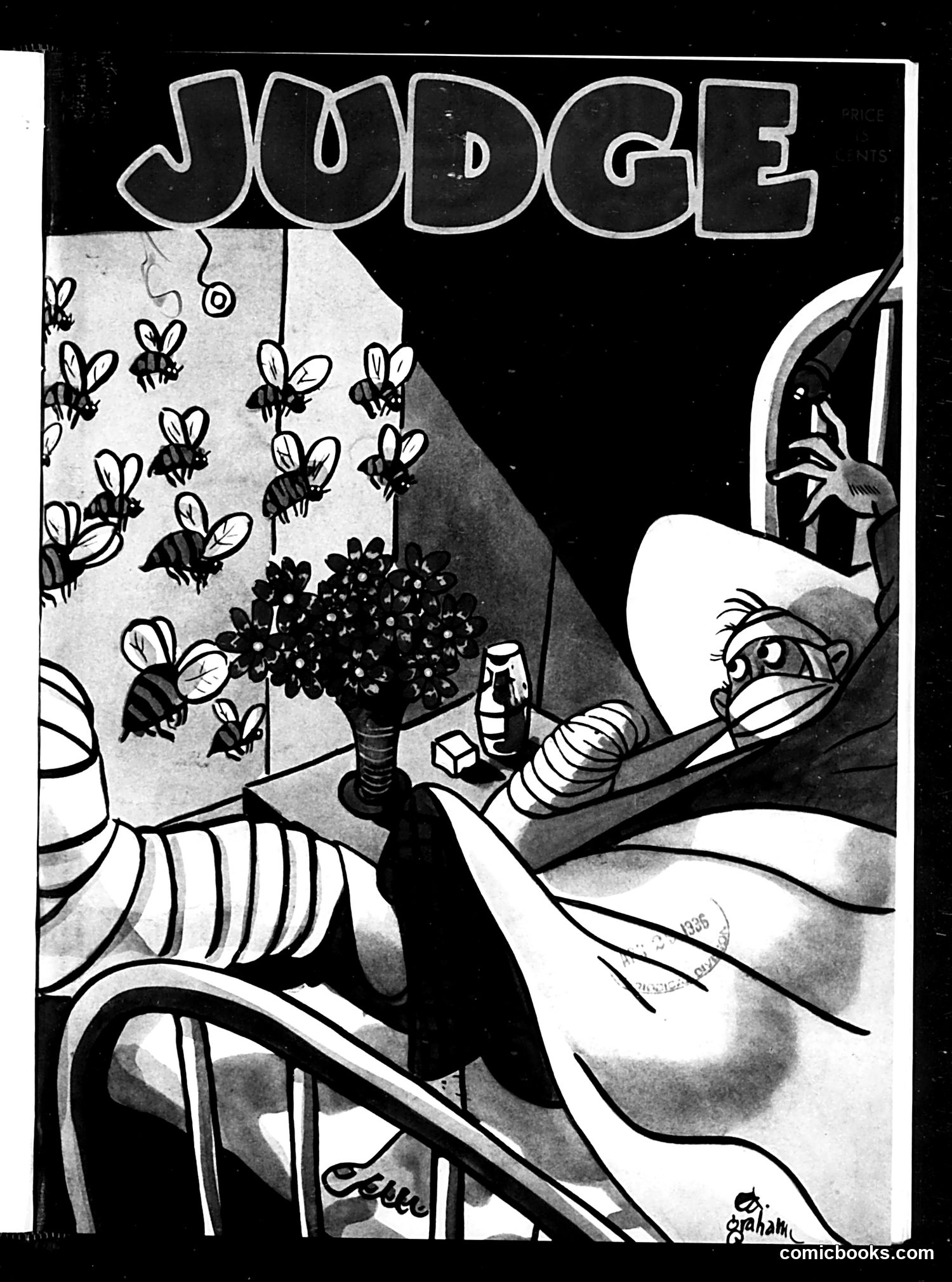
# Judge Magazine - Satire Analysis This appears to be a **Judge magazine cover** featuring a medical or scientific theme. The illustration shows a bandaged figure in bed holding flowers, surrounded by detailed drawings of bees on the left side. The figure appears to be a patient, possibly recovering from an illness or injury. The satire likely concerns a **contemporary medical or public health situation**, though without clearer contextual text or visible dates, the specific reference is unclear. The juxtaposition of bees, flowers, and a bedridden patient might satirize folk remedies, beekeeping trends, or perhaps a contemporary health scare or treatment. The artistic style and composition suggest early-to-mid 20th century publication. More specific historical context would be needed to identify the precise political or social commentary intended.
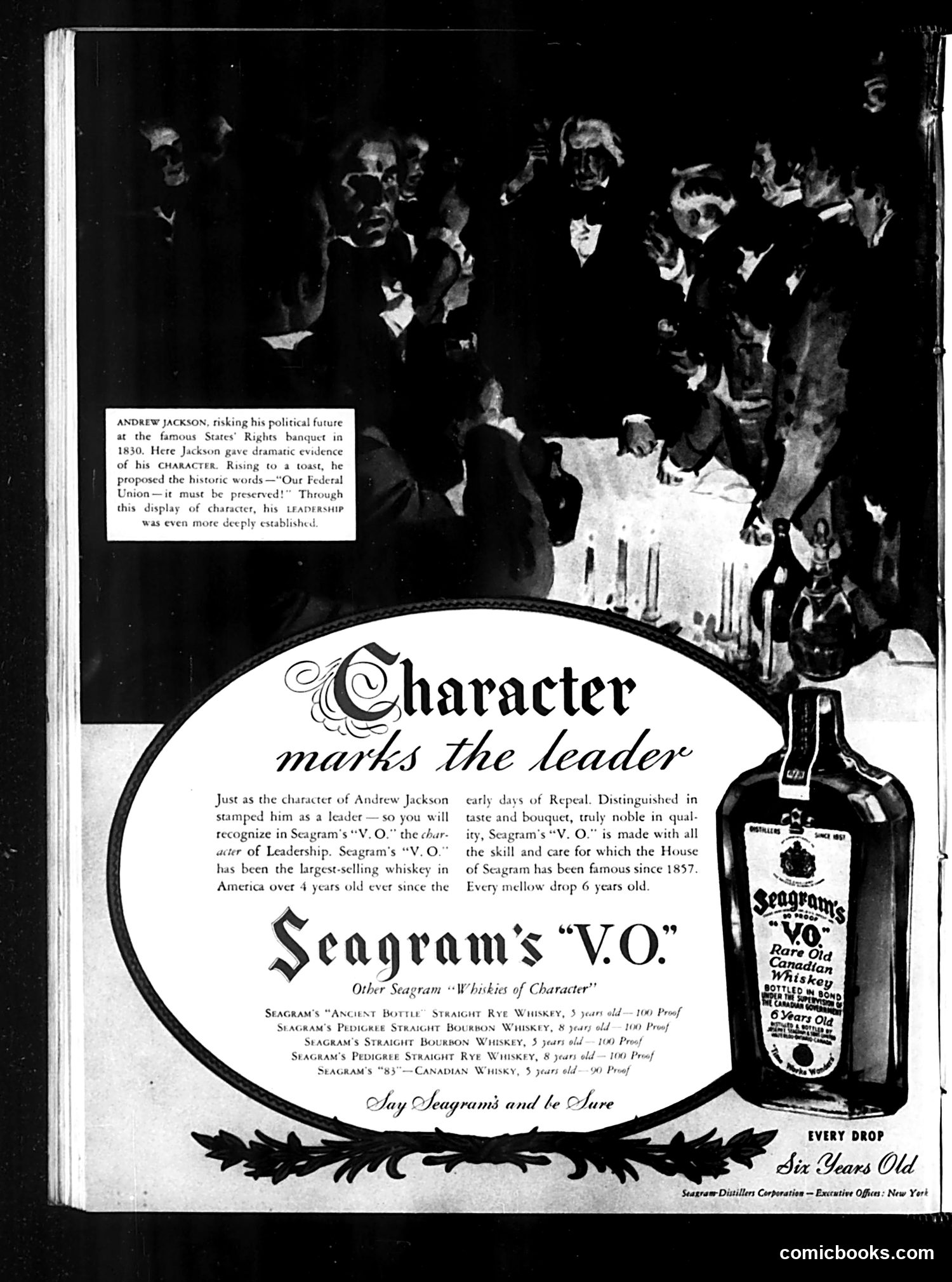
# Analysis This page is primarily a **Seagram's whiskey advertisement** rather than political satire. The ad uses a historical reference to Andrew Jackson to promote its "V.O." brand whiskey as a marker of character and leadership. The upper photograph depicts Jackson at an 1830 States' Rights banquet, where he allegedly made a defiant toast defending the Federal Union—a moment the ad claims demonstrated his strong character. The advertisement then draws a parallel: just as Jackson's character made him a leader, Seagram's V.O. whiskey supposedly reflects distinguished taste and noble quality. The phrase "Character marks the leader" is the central sales pitch, linking Jackson's historical reputation for principled leadership with the whiskey brand's claimed superiority. This is commercial messaging dressed in patriotic rhetoric rather than satire.
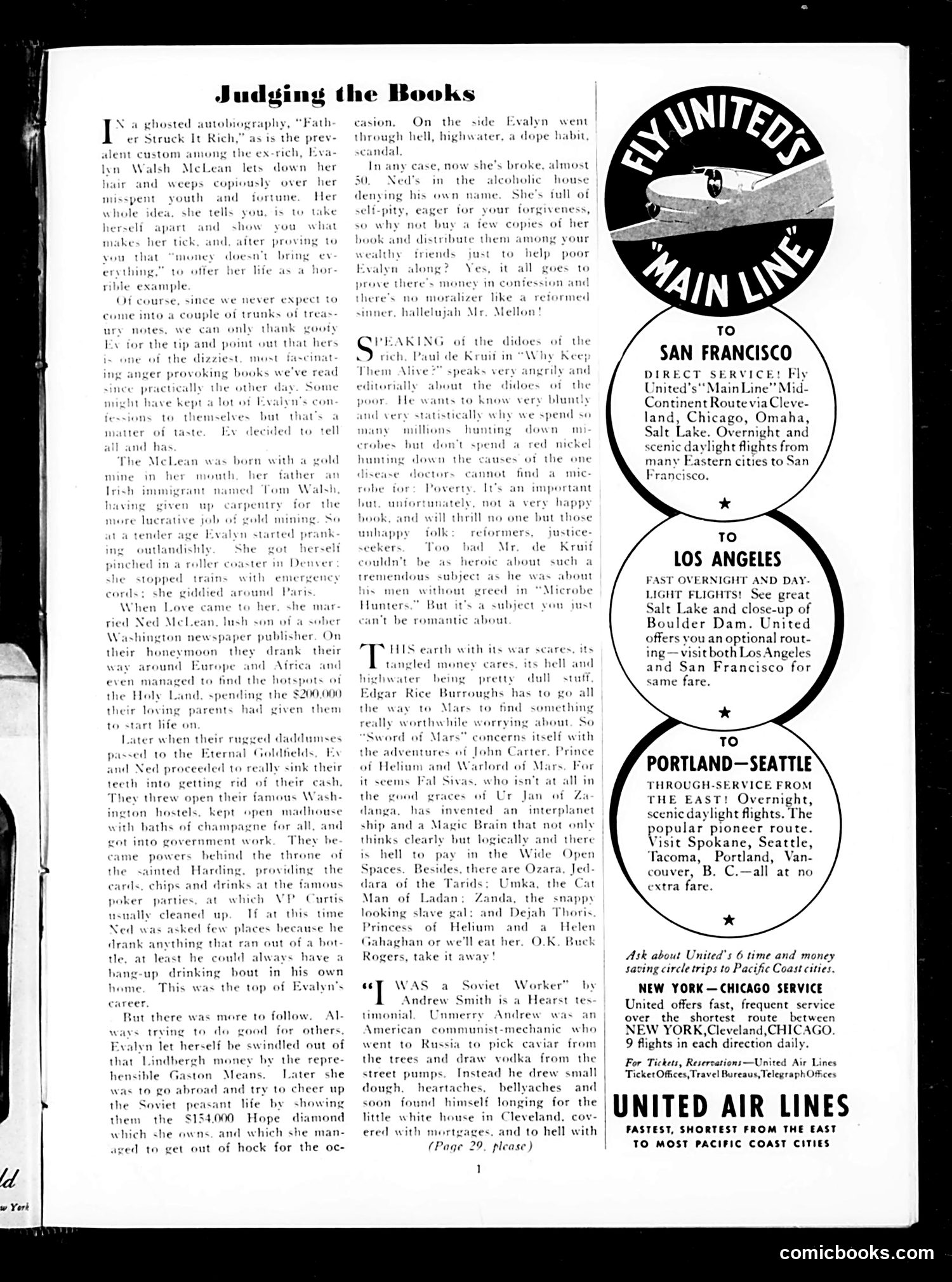
# Analysis of "Judging the Books" Page This page is primarily a **book review column** discussing recent publications, with substantial **airline advertising** on the right side. The review critiques several books, including Evalyn Walsh McLean's autobiography "Father Struck It Rich" (about her wealthy, scandal-prone life), Paul de Kruif's "Why Keep Them Alive?" (about public health), and Edgar Rice Burroughs' "Sword of Mars" (science fiction). The reviewer uses pointed satire to mock McLean's self-serving narrative and de Kruif's social commentary about disease and poverty. The advertising showcases **United Air Lines' domestic routes** (San Francisco, Los Angeles, Portland-Seattle, New York-Chicago), emphasizing speed and convenience for travelers. No political cartoons appear on this page—it's primarily editorial content and commercial advertisement typical of 1930s magazine layout.
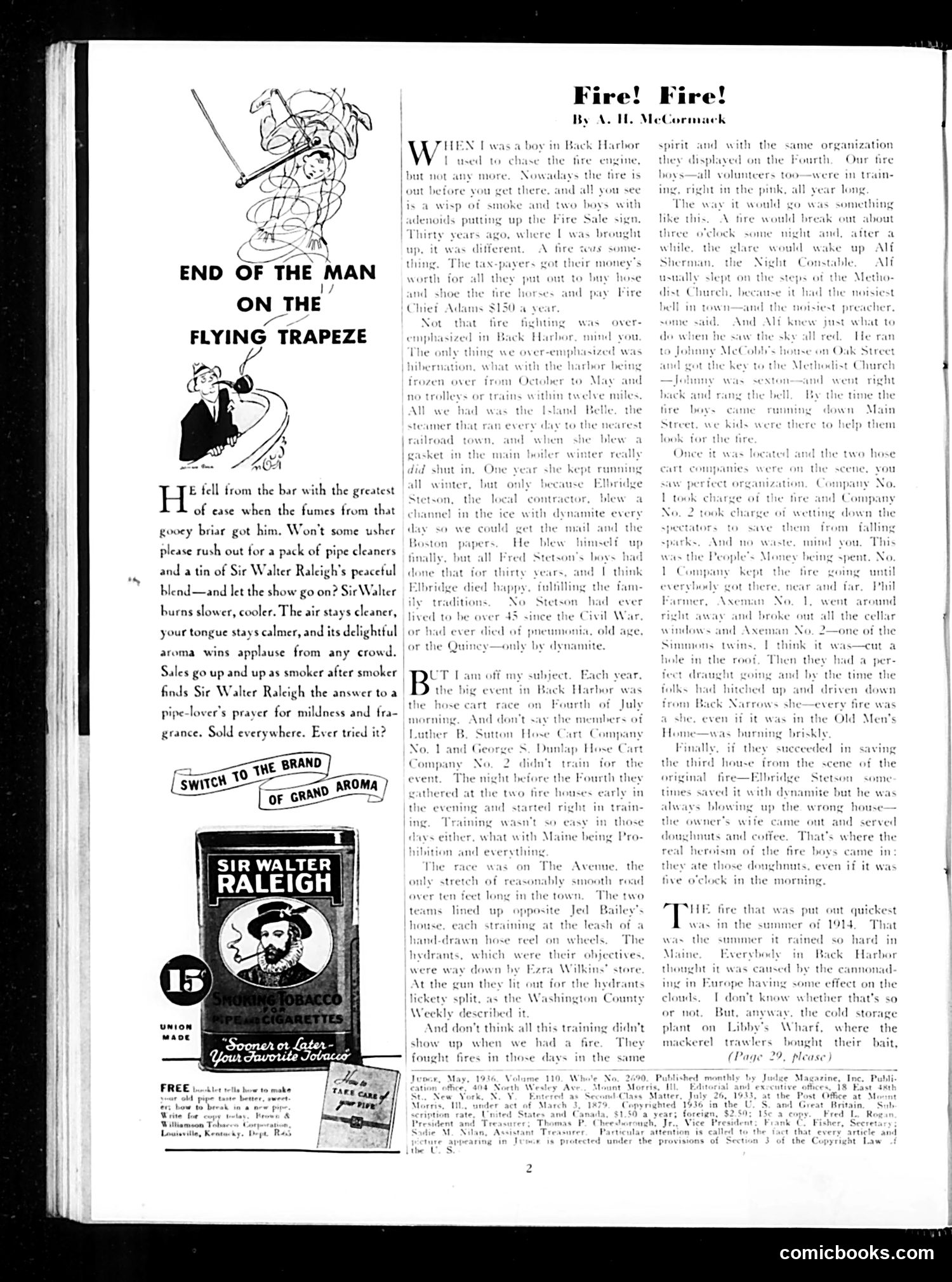
# Analysis of Judge Magazine Page This page is primarily a humorous article titled "Fire! Fire!" by A.H. McCormack, nostalgically recounting firefighting in Back Harbor (a fictional town). The piece contrasts volunteer firefighting of the author's youth with modern commercial fire departments, emphasizing how the old system was chaotic but spirited—featuring volunteer competition, dramatic horse-drawn equipment, and dramatic rescues. The **cartoons** are incidental: a small illustration of a trapeze performer ("End of the Man on the Flying Trapeze") and advertisements, including a **Sir Walter Raleigh tobacco ad** (15 cents) below. There's **no political satire here**—this is sentimental Americana humor about obsolete firefighting methods, appealing to readers nostalgic for pre-modern small-town life. The tone is entertainment and nostalgia rather than commentary.
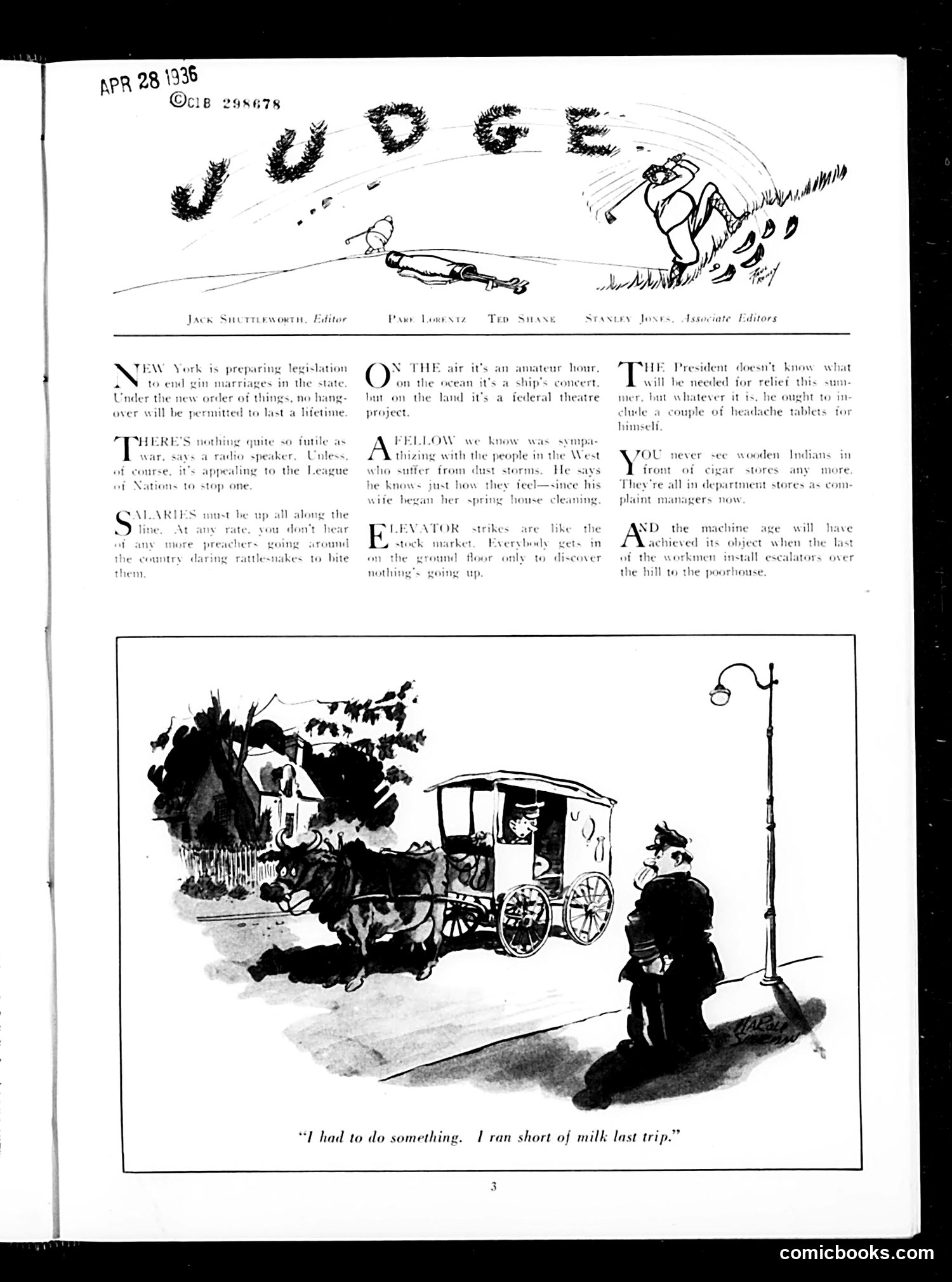
# Judge Magazine Page Analysis (April 28, 1936) This page contains several brief satirical commentaries on contemporary issues: - **Marriage legislation**: New York is preparing laws to end marriages deemed unsuitable; the joke is that under new restrictions, no one will be permitted to marry. - **Radio/League of Nations**: A radio speaker notes nothing stops wars unless nations join the League to enforce peace. - **Salaries and preachers**: Commentary that salary increases don't help the country when preachers spread discord. - **Stock market**: References everyday investors discovering nothing gains on ground floors—a depression-era joke about market collapse. - **Wooden Indians**: A quip that you won't find wooden Indians in cigar stores anymore; they're all in department stores as complaint managers. The **cartoon** shows a gypsy fortune teller's caravan with a man saying he "ran short of milk" on "last trip"—likely a humorous domestic situation, though context is unclear.
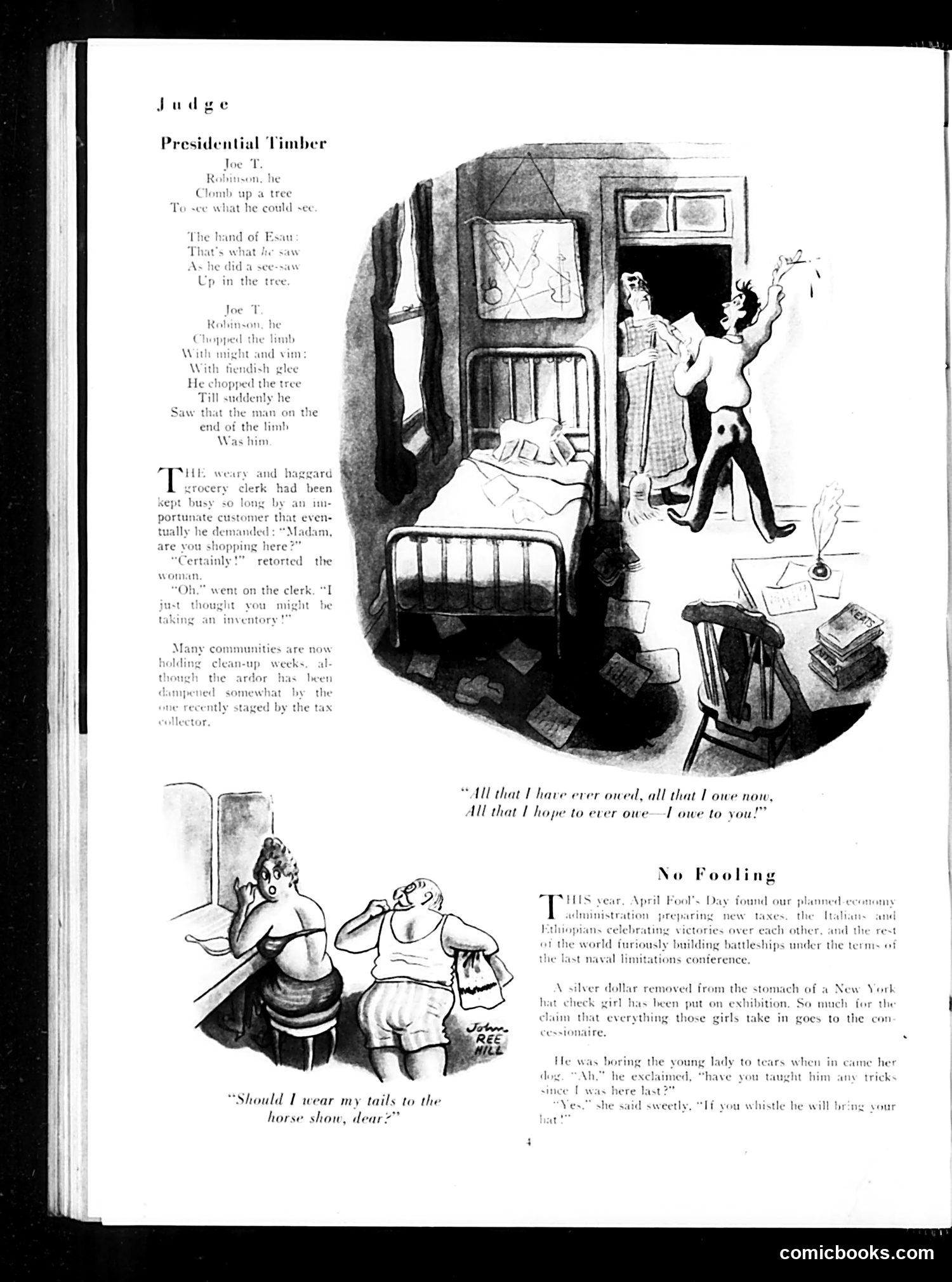
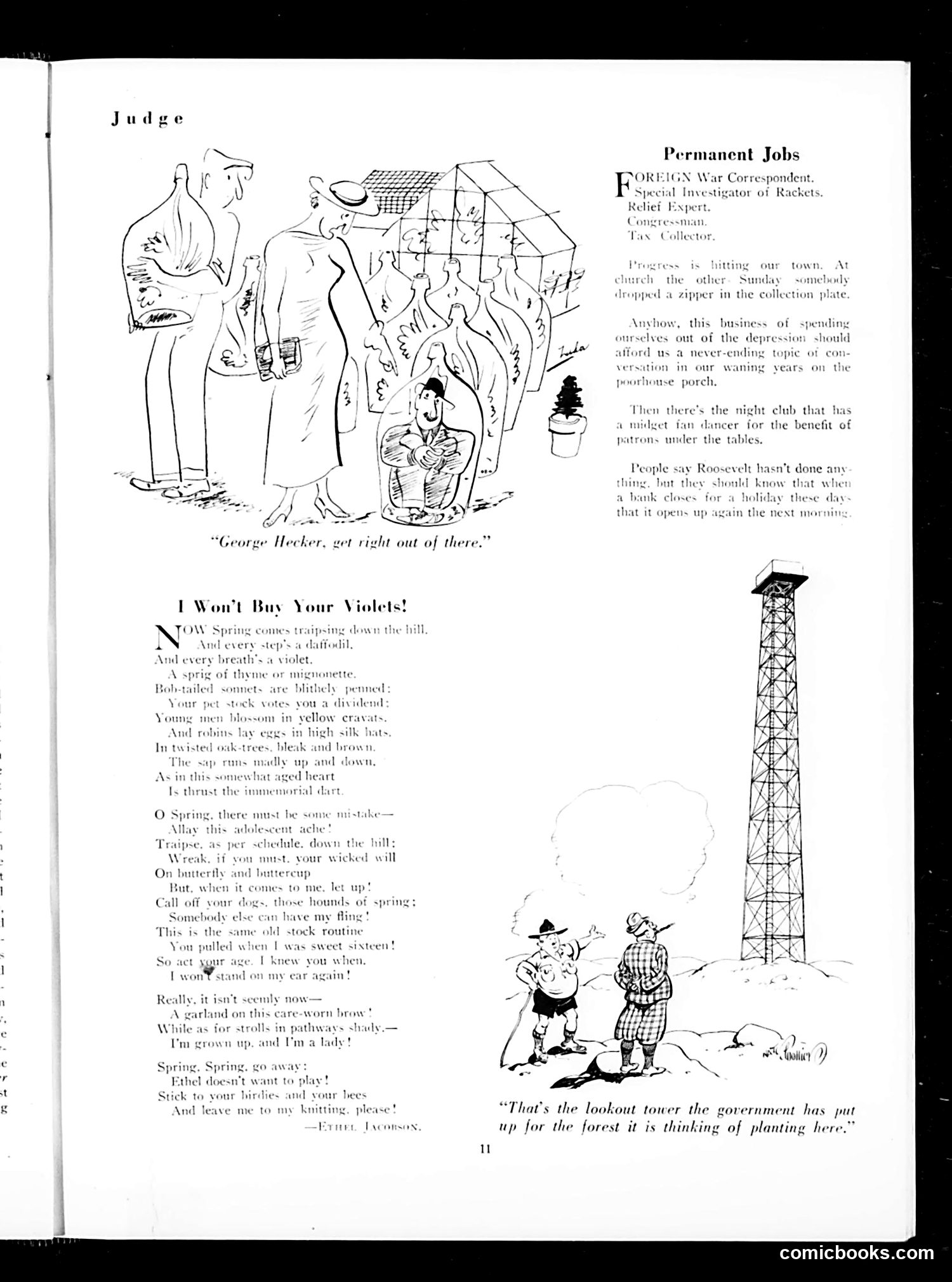
# Analysis of Judge Magazine Page **"Presidential Timber"** (top cartoon): This poem and illustration satirize someone named Robinson who climbed a tree to see what he could see, then chopped it down, killing a man in the process. The satire appears to mock someone's political ambitions ("presidential timber") despite causing harm—suggesting unfit leadership credentials. **"No Fooling"** (bottom section): This piece mocks April Fools' Day 1921 by referencing then-current events: the planned economy, naval conferences, and a bizarre news item about a silver dollar removed from a New York woman's stomach. The smaller cartoon at bottom contains a domestic joke about wearing "tails to the horse show." The page blends political satire with period humor and oddities.
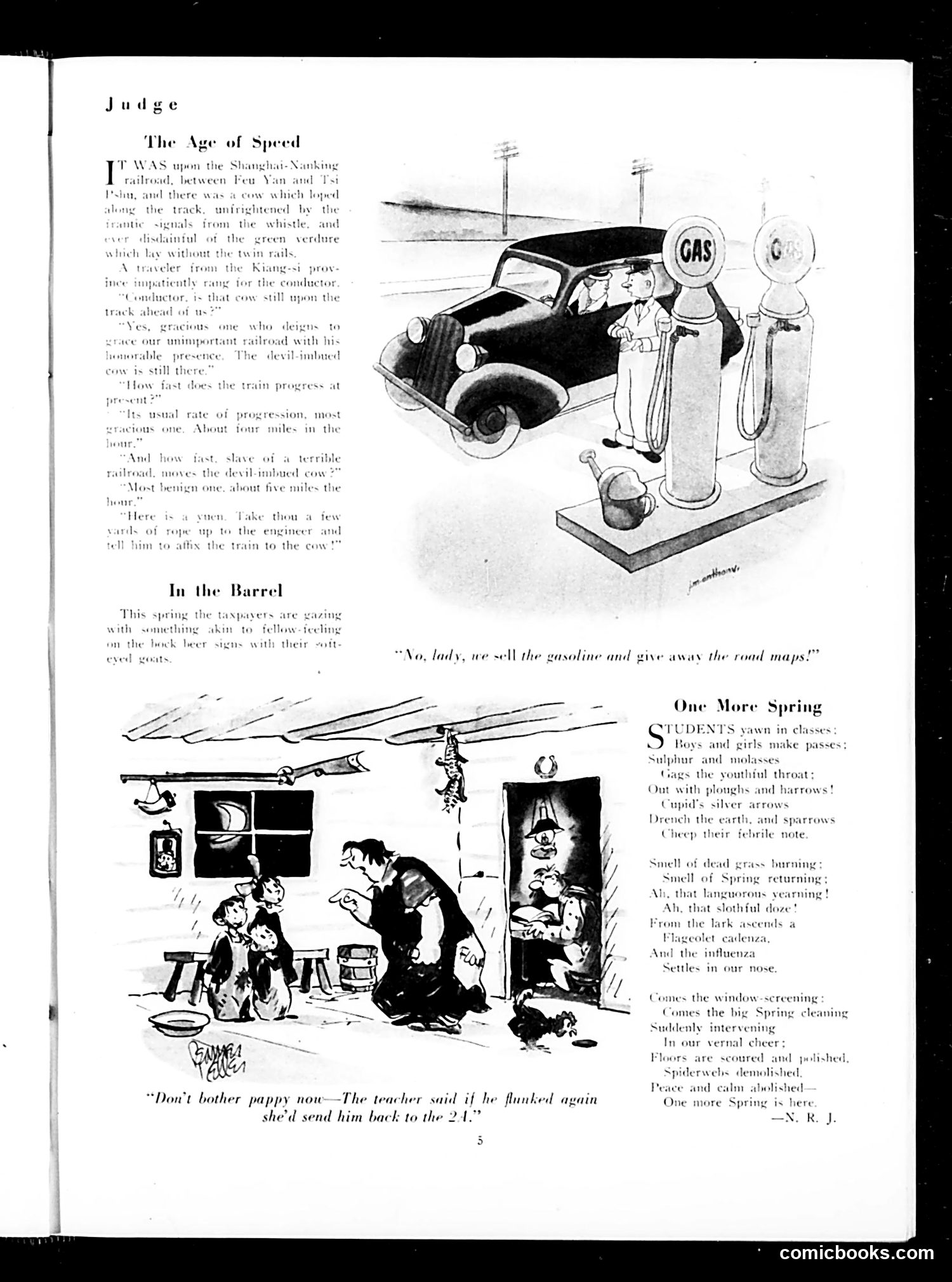
# Analysis of Judge Magazine Page **"The Age of Speed"** section satirizes early automobile culture. The top cartoon shows a car at a gas station where the attendant quips, "No, lady, we sell gasoline and give away the road maps"—mocking how automobiles were still novel enough that drivers needed maps, and suggesting gas stations were becoming ubiquitous service centers. **"In the Barrel"** references a drinking establishment during Prohibition-era America, though details are unclear. **"One More Spring"** is a poem celebrating spring's arrival, with seasonal imagery about students, nature, and spring cleaning. The page reflects early 20th-century American anxieties about rapid motorization, changing consumer culture, and the novelty of automotive infrastructure—topics very familiar to Judge's urban readership.
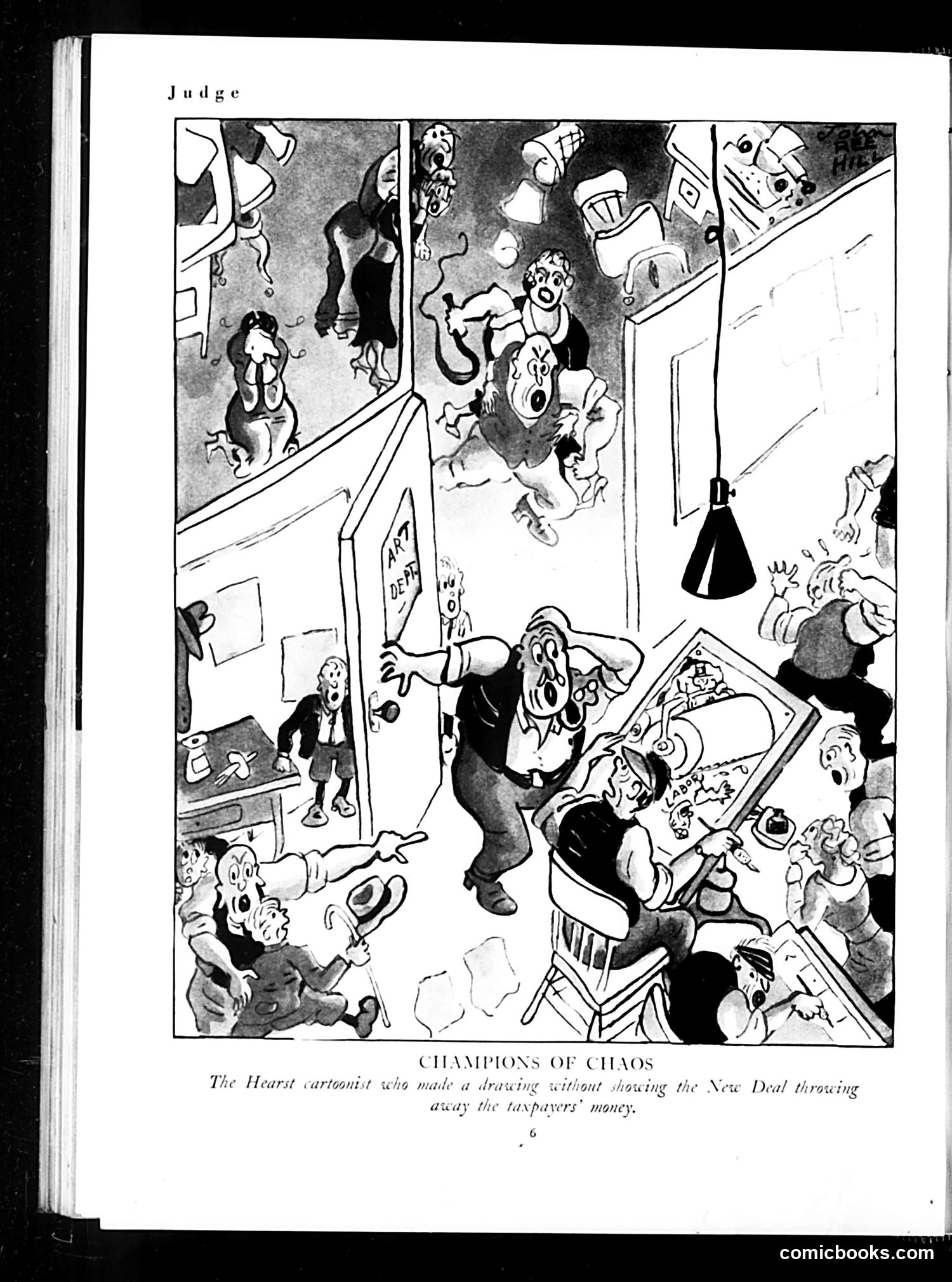
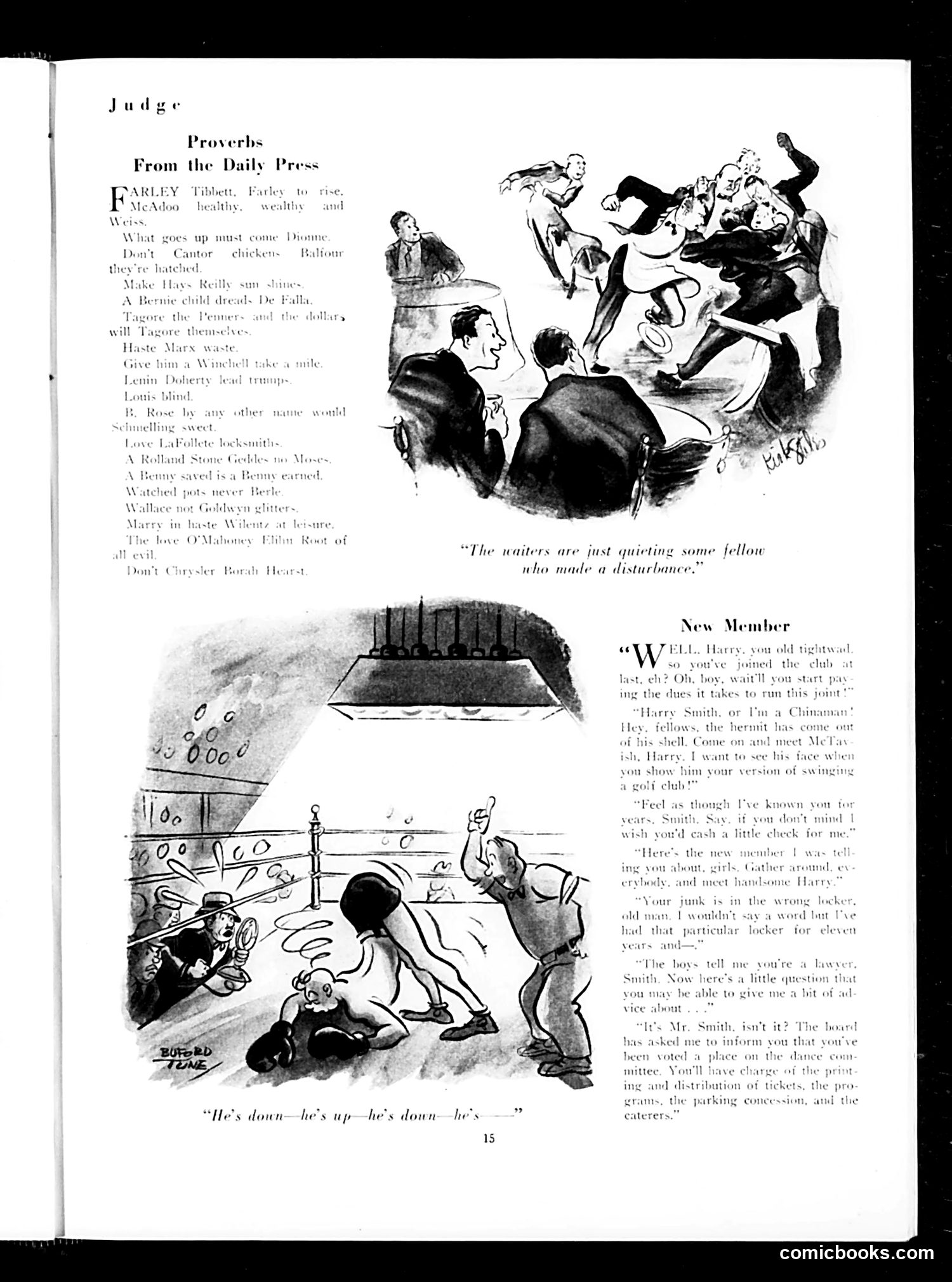
# "Champions of Chaos" - Judge Magazine Cartoon This political cartoon satirizes opponents of Franklin D. Roosevelt's New Deal programs. The chaotic courtroom scene depicts various figures—likely business leaders, politicians, and critics—as disruptive "champions of chaos" literally throwing money around and causing mayhem while a judge (representing authority/law) presides overhead. The caption explains the cartoon targets "the Hearst cartoonist who made a drawing without showing the New Deal throwing away the taxpayers' money"—suggesting this is a response to criticism from William Randolph Hearst's media empire, which opposed New Deal spending. The satire reverses the usual critique: instead of the New Deal wasting money, its *opponents* are portrayed as the real chaos agents, undermining stability and fiscal responsibility through their opposition and obstruction.
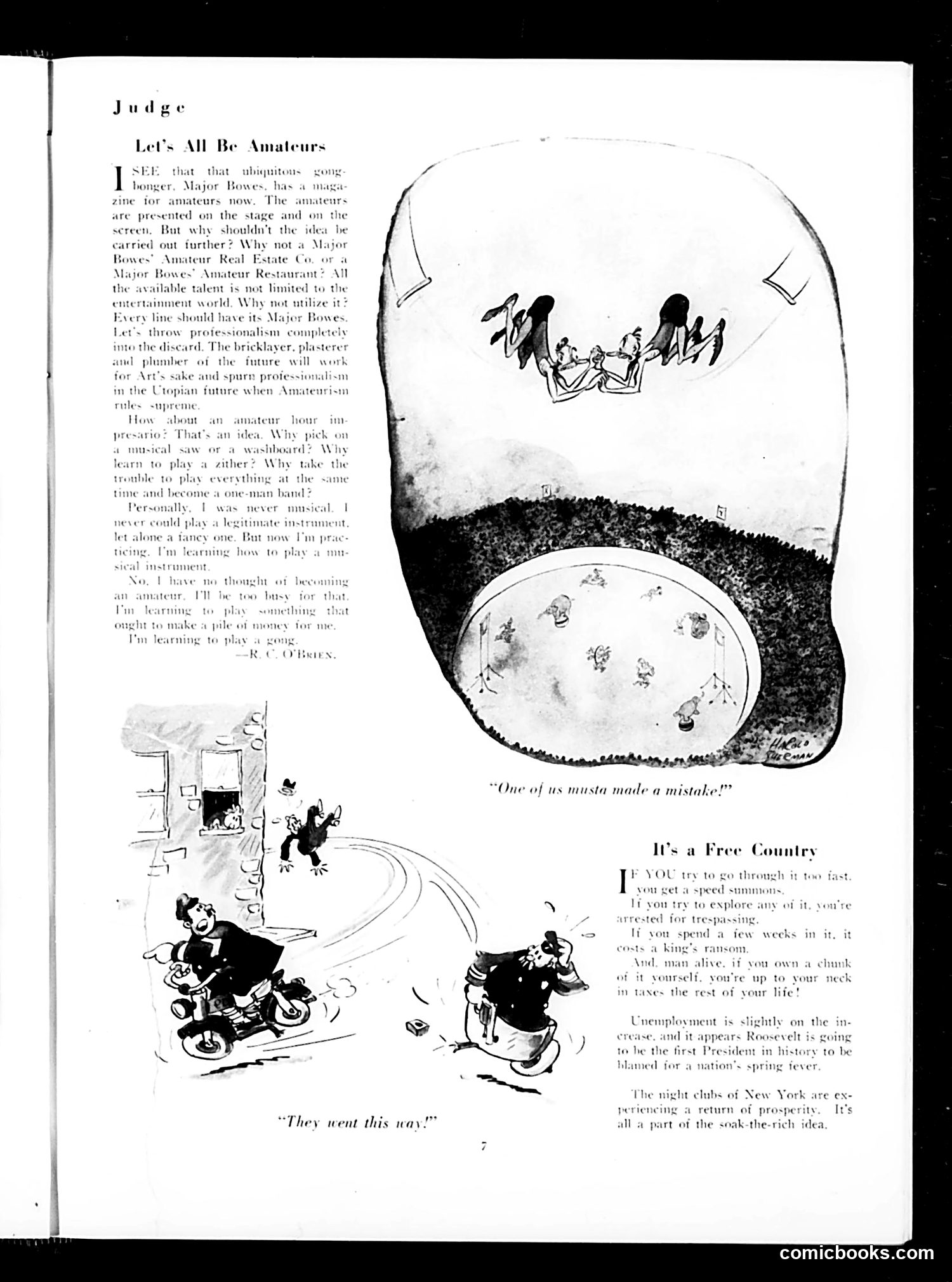
# Analysis of Judge Page This page contains two satirical pieces about American amateur culture and freedoms, circa early-to-mid 20th century. **"Let's All Be Amateurs"** argues that Major Bowes' Amateur Hour (a radio talent show) should expand into other fields—real estate, restaurants—to democratize opportunity. The author humorously suggests amateurs bungling every profession, noting this represents an "Utopian future when Amateurism reigns supreme." **"It's a Free Country"** satirizes the costs and constraints of American freedom. The cartoon shows people caught in speed traps and arrested for trespassing, while the text ironically notes unemployment rising under Roosevelt and New York nightclubs profiting from wealth inequality—all "part of the soak-the-rich idea." The satire critiques how proclaimed freedoms come with hidden expenses and restrictions for ordinary citizens.
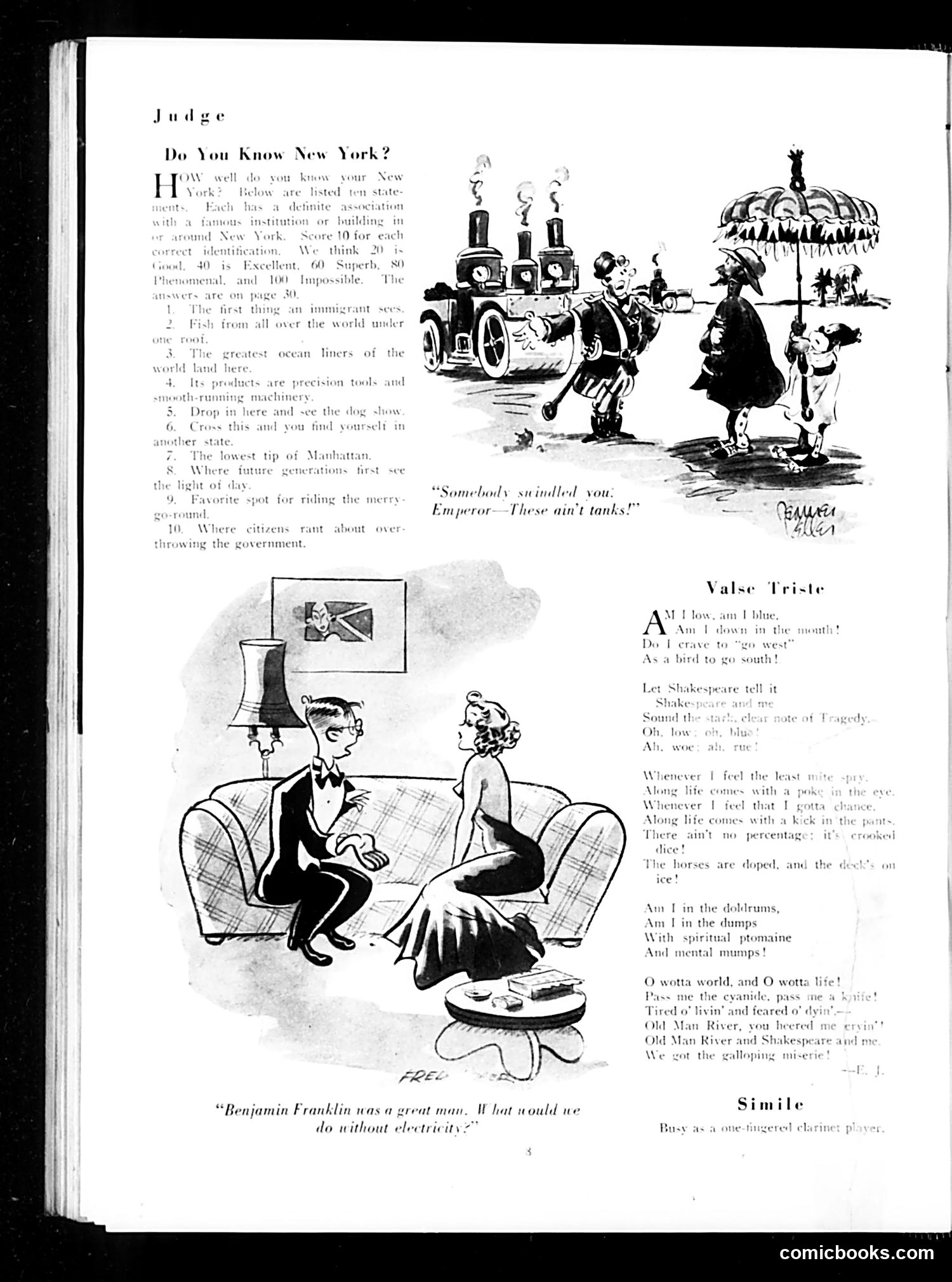
# Judge Magazine Page Analysis This page contains three distinct satirical pieces: **"Do You Know New York?"** (top): A quiz testing readers' knowledge of NYC landmarks and institutions, presented as a lighthearted challenge. The accompanying cartoon shows a character claiming someone "swindled" him with fake "tanks"—likely satirizing either WWI military deception or consumer fraud of the era. **"Valse Triste"** (right): A melancholic poem/verse lamenting life's disappointments, referencing Shakespeare and "Old Man River" (likely Showboat imagery). It's self-pitying humor about being "in the doldrums" and "dumps." **Bottom cartoon**: A couple on a couch discussing Benjamin Franklin and electricity—satirizing how people credit historical figures with modern conveniences they didn't create, poking fun at fuzzy historical thinking. The page blends topical humor, literary parody, and domestic comedy typical of Judge's satirical approach to American life and culture during this period (appears early 20th century based on style).
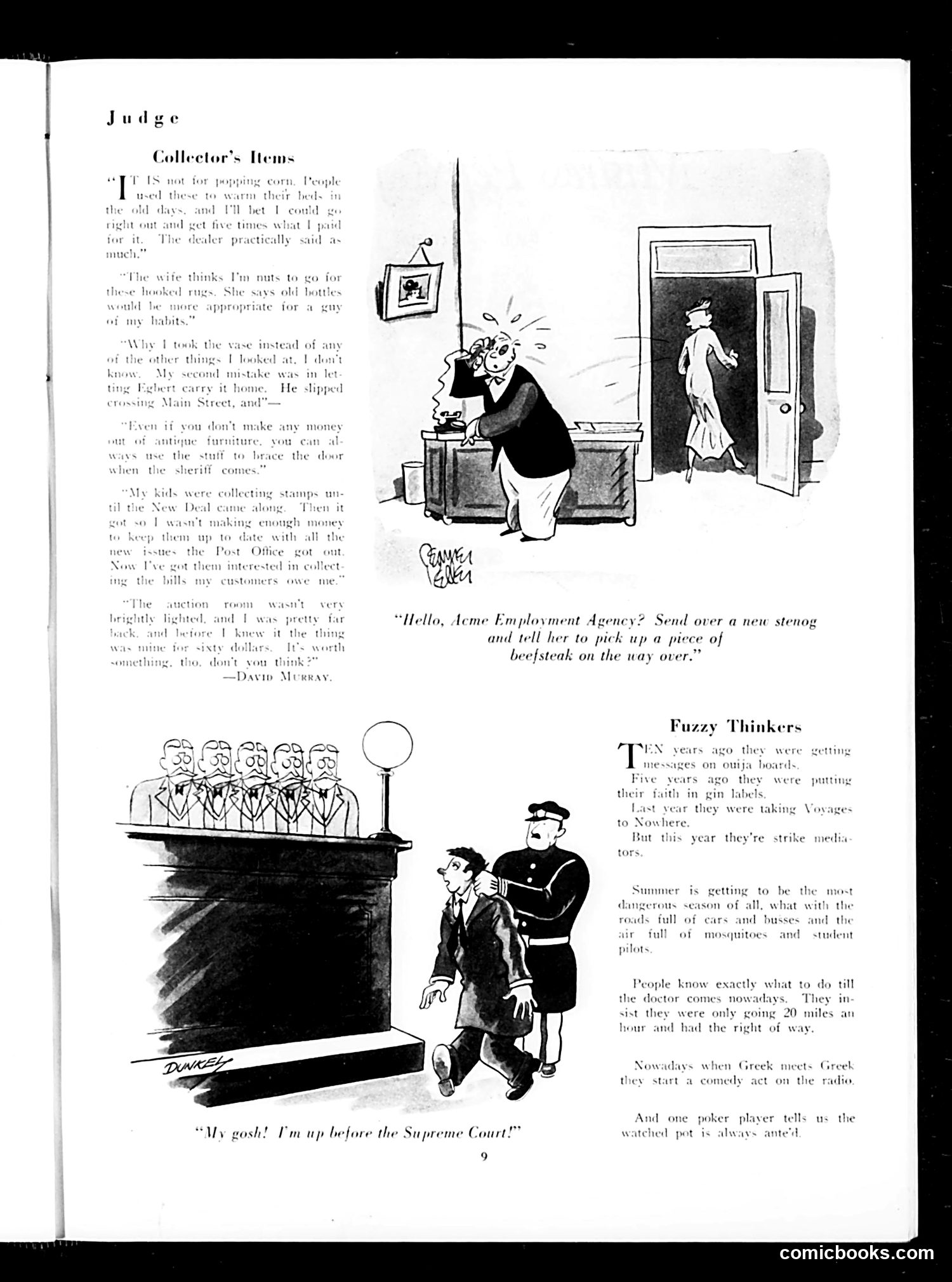
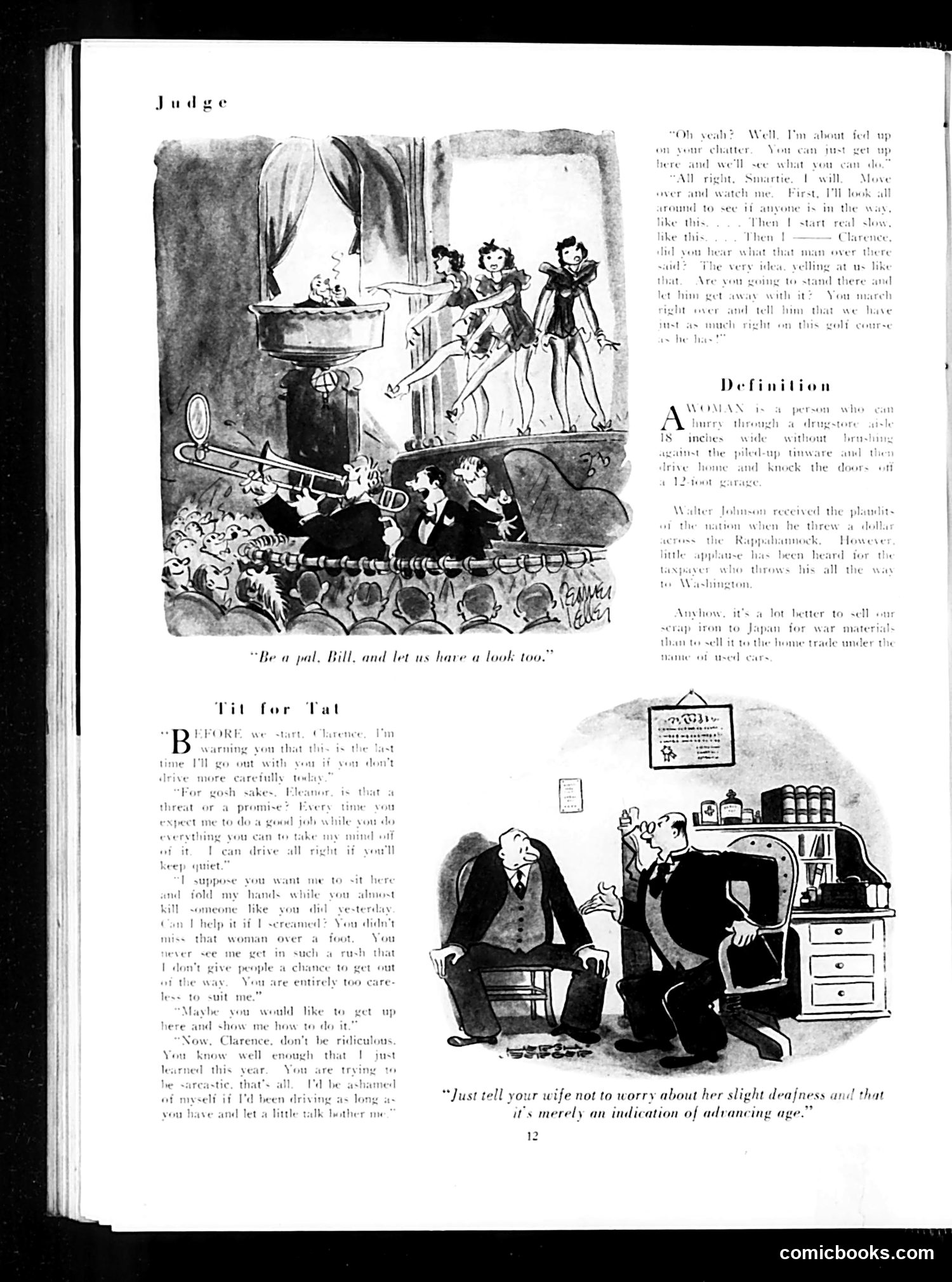
# Analysis of Judge Magazine Page This page contains two satirical cartoons reflecting 1920s-30s American social concerns. **Top cartoon**: A man frantically calls an employment agency requesting a stenographer, instructing her to "pick up a piece of beefsteak on the way over." The satire mocks the casual treatment of office workers—reducing a professional employee to an errand-runner, suggesting workplace gender dynamics where female stenographers (secretaries) were expected to perform personal tasks for male bosses. **Bottom cartoon**: Five identical men sit as judges above a small figure before them, captioned "My gosh! I'm up before the Supreme Court!" The joke satirizes either the intimidating power of the Supreme Court or (less clearly) concerns about judicial consistency or conformity. **"Fuzzy Thinkers" column**: Brief commentary on changing social fads—ouija boards, gin labels (Prohibition-era), spiritualism—mocking how people uncritically embrace trends. It also jokes about summer dangers (cars, mosquitoes) and modern excuses for traffic violations. The overall tone reflects period anxieties about workplace exploitation, legal authority, and modern gullibility.
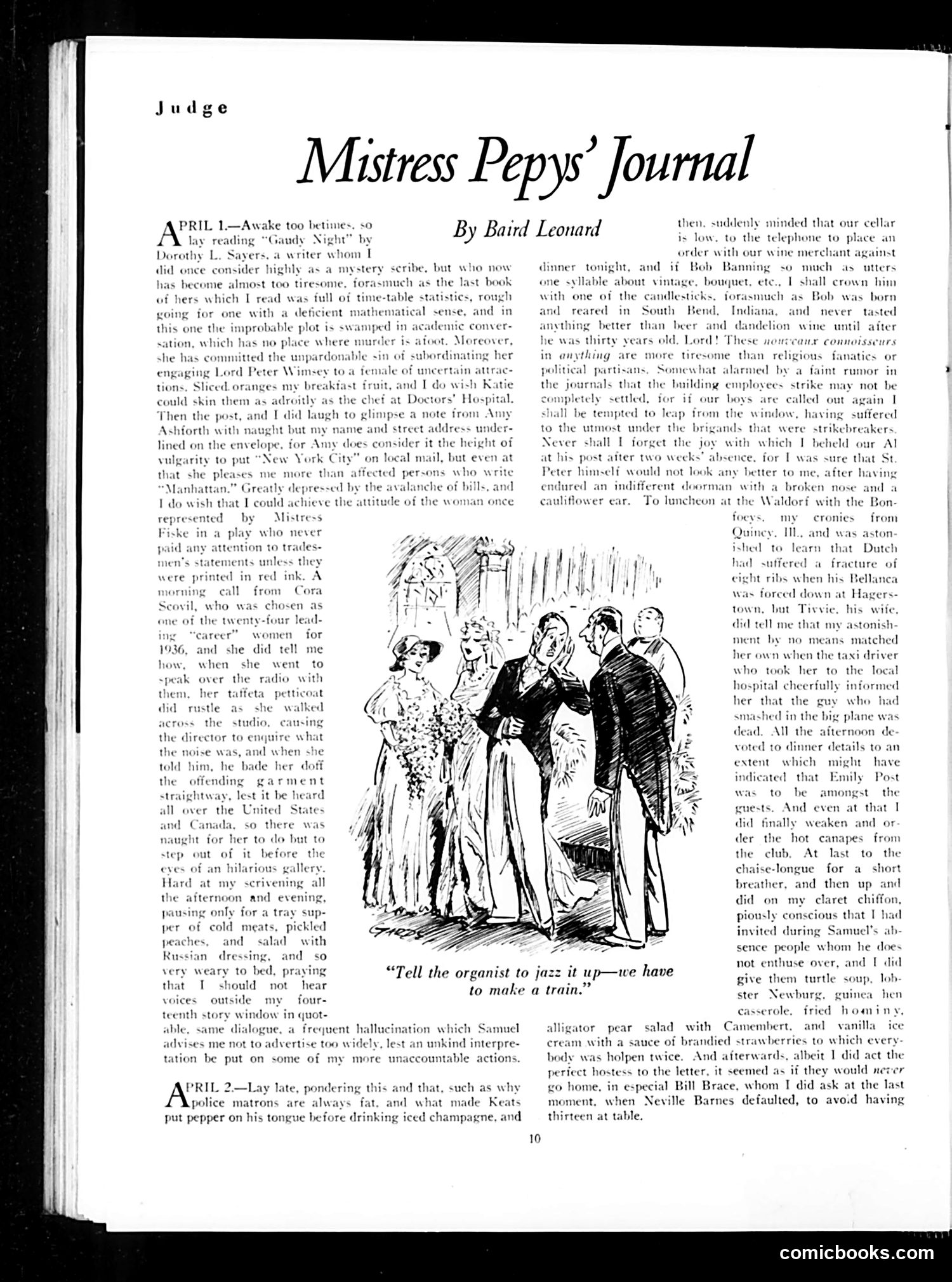
# Mistress Pepys' Journal: A Satirical Parody This page parodies Samuel Pepys' famous 17th-century diary, reimagined as "Mistress Pepys" by writer Baird Leonard. The humor derives from applying Pepys' detailed, gossipy personal observations to 1930s high-society life. The cartoon depicts a fashionable woman at a social gathering, with the caption: "Tell the organist to jazz it up—we have to make a train." The satire mocks several 1930s concerns: the pretensions of wealthy women obsessed with fine wines and proper etiquette; anxieties about labor strikes and strikebreakers; references to aviation disasters (the "Bellanea" crash); and the social upheaval of the era. The diary format allows commentary on trivial domestic complaints alongside serious contemporary events, creating comedy through incongruous juxtaposition of the mundane and significant. The overall joke: applying historical literary sophistication to contemporary American shallow society.