
Penny Dreadfuls, 1916 · page 381 of 400
Tom Anderson, Dare-Devil: A Young Virginian in the Revolution — page 381: what you’re looking at
What you’re looking at
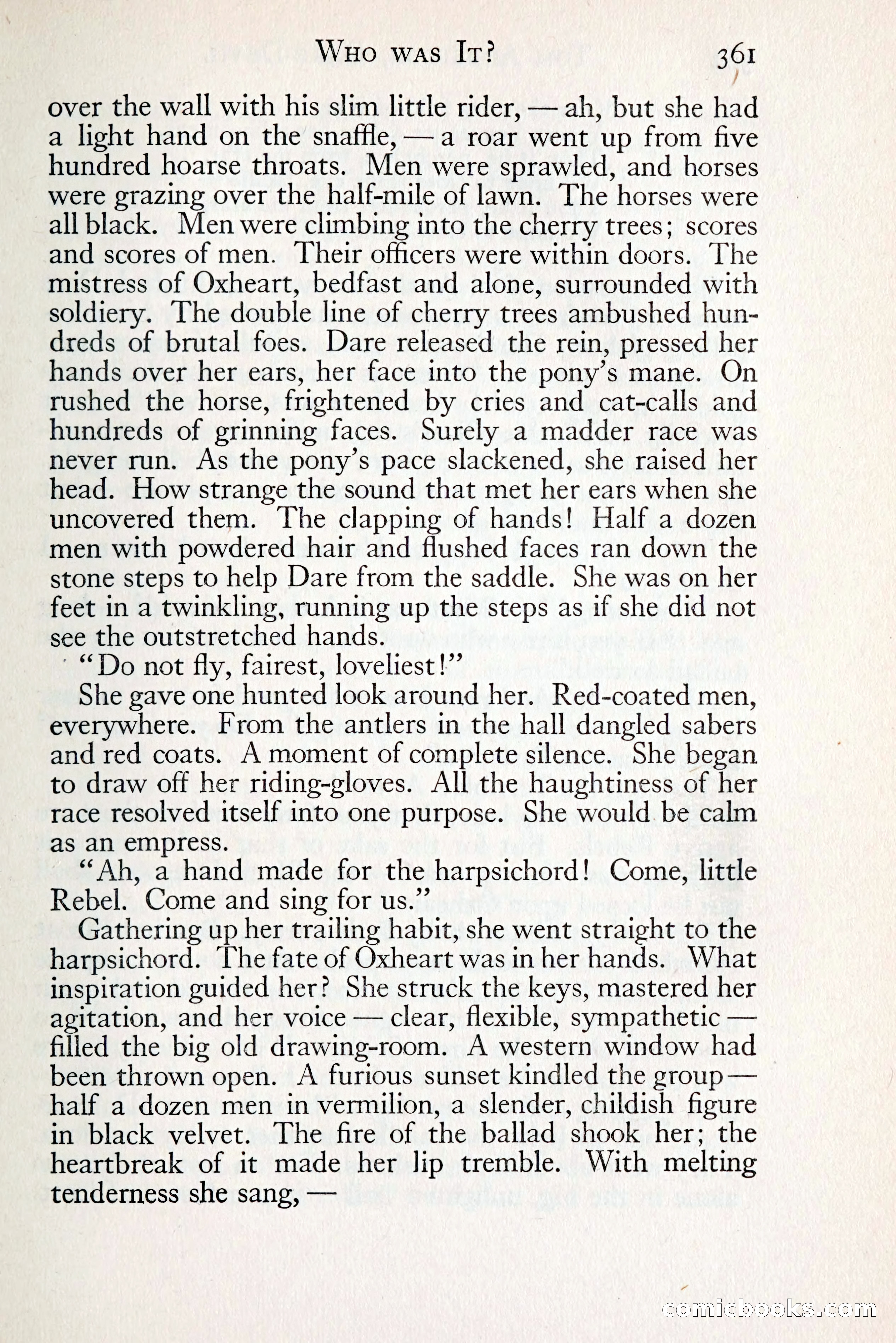
This is a page of running prose from a Victorian penny dreadful serial (page 361). The text describes a young woman named Dare arriving at Oxheart estate on horseback, surrounded by red-coated soldiers. After being helped from her pony, she composes herself and is asked to sing at the harpsichord. The passage ends as she begins performing a emotional ballad for the assembled men, with the sunset casting dramatic light through an open window. The narrative suggests military occupation and Dare using her musical talent in a moment of apparent tension or danger.
📄 Transcribed text from this page (OCR, searchable)
Machine-transcribed from the original scan — historical spelling and the odd misread are preserved.
WHo was IT? 361 / over the wall with his slim little rider, — ah, but she had a light hand on the snaffle, — a roar went up from five hundred hoarse throats. Men were sprawled, and horses were grazing over the half-mile of lawn. The horses were all black. Men were climbing into the cherry trees; scores and scores of men. [heir officers were within doors. The mistress of Oxheart, bedfast and alone, surrounded with soldiery. The double line of cherry trees ambushed hun- dreds of brutal foes. Dare released the rein, pressed her hands over her ears, her face into the pony’s mane. On rushed the horse, frightened by cries and cat-calls and hundreds of grinning faces. Surely a madder race was never run. As the pony’s pace slackened, she raised her head. How strange the sound that met her ears when she uncovered them. The clapping of hands! Half a dozen men with powdered hair and flushed faces ran down the stone steps to help Dare from the saddle. She was on her feet in a twinkling, running up the steps as if she did not see the outstretched hands. “Do not fly, fairest, loveliest She gave one hunted look around her. Red-coated men, everywhere. From the antlers in the hall dangled sabers and red coats. A moment of complete silence. She began to draw off her riding-gloves. All the haughtiness of her race resolved itself into one purpose. She would. be calm as an empress. “Ah, a hand made for the harpsichord! Come, little Rebel. Come and sing for us.” Gathering up her trailing habit, she went straight to the harpsichord. The fate of Oxheart was in her hands. What inspiration guided her? She struck the keys, mastered her agitation, and her voice — clear, flexible, sympathetic — filled the big old drawing-room. A western window had been thrown open. A furious sunset kindled the group — half a dozen men in vermilion, a slender, childish figure in black velvet. The fire of the ballad shook her; the heartbreak of it made her Jip tremble. With melting tenderness she sang, — 17? CORNICLIOO SS) (CO) im