
Penny Dreadfuls, 1916 · page 138 of 400
Tom Anderson, Dare-Devil: A Young Virginian in the Revolution — page 138: what you’re looking at
What you’re looking at
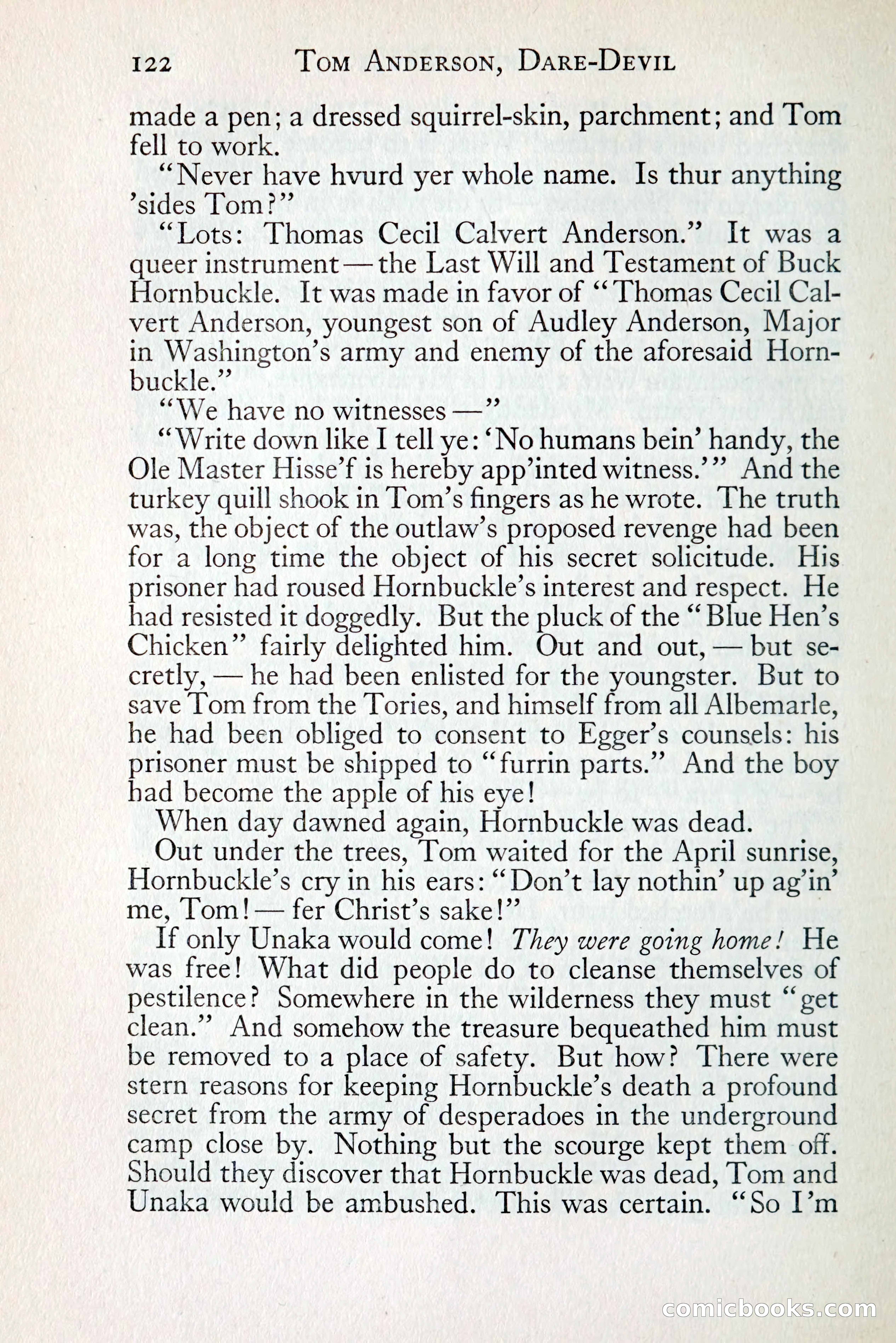
# Analysis This is a page of running prose from the penny dreadful *Tom Anderson, Dare-Devil* (page 122). The text depicts Tom writing out Buck Hornbuckle's will in favor of "Thomas Cecil Calvert Anderson," using a turkey quill and makeshift materials. Hornbuckle dies that night, and Tom—now free—faces the problem of keeping the death secret from desperadoes in a nearby underground camp, fearing he and his companion Unaka will be ambushed if the outlaw's death is discovered. The passage is set during the American Revolutionary War period and emphasizes Tom's dilemma about escaping while concealing Hornbuckle's death.
📄 Transcribed text from this page (OCR, searchable)
Machine-transcribed from the original scan — historical spelling and the odd misread are preserved.
122 Tom ANDERSON, DarE-DEVIL made a pen; a dressed squirrel-skin, parchment; and Tom fell to work. “Never have hvurd yer whole name. Is thur anything sides Tom?”’ “Lots: Thomas Cecil Calvert Anderson.” It was a queer instrument — the Last Will and Testament of Buck Hornbuckle. It was made in favor of “Thomas Cecil Cal- vert Anderson, youngest son of Audley Anderson, Major in Washington’s army and enemy of the aforesaid Horn- buckle.” “We have no witnesses —”’ “Write down like I tell ye: ‘No humans bein’ handy, the Ole Master Hisse’f is hereby app’inted witness.’’’ And the turkey quill shook in Tom’s fingers as he wrote. The truth was, the object of the outlaw’s proposed revenge had been for a long time the object of his secret solicitude. His prisoner had roused Hornbuckle’s interest and respect. He had resisted it doggedly. But the pluck of the “ Blue Hen’s Chicken”’ fairly delighted him. Out and out, — but se- cretly, — he had been enlisted for the youngster. But to save lom from the Tories, and himself from all Albemarle, he had been obliged to consent to Egger’s counsels: his prisoner must be shipped to “furrin parts.’ And the boy had become the apple of his eye! When day dawned again, Hornbuckle was dead. Out under the trees, Tom waited for the April sunrise, Hornbuckle’s cry in his ears: “Don’t lay nothin’ up ag’in’ me, [om!— fer Christ’s sake!” If only Unaka would come! They were going home! He was free! What did people do to cleanse themselves of pestilence? Somewhere in the wilderness they must “get clean.”’ And somehow the treasure bequeathed him must be removed to a place of safety. But how? There were stern reasons for keeping Hornbuckle’s death a profound secret from the army of desperadoes in the underground camp close by. Nothing but the scourge kept them off. Should they discover that Hornbuckle was dead, Tom and Unaka would be ambushed. This was certain. “So I’m ECONMMICLOOOKS,(6O) m