
Penny Dreadfuls, 1812 · page 60 of 258
Psyche, and other poems — page 60: what you’re looking at
What you’re looking at
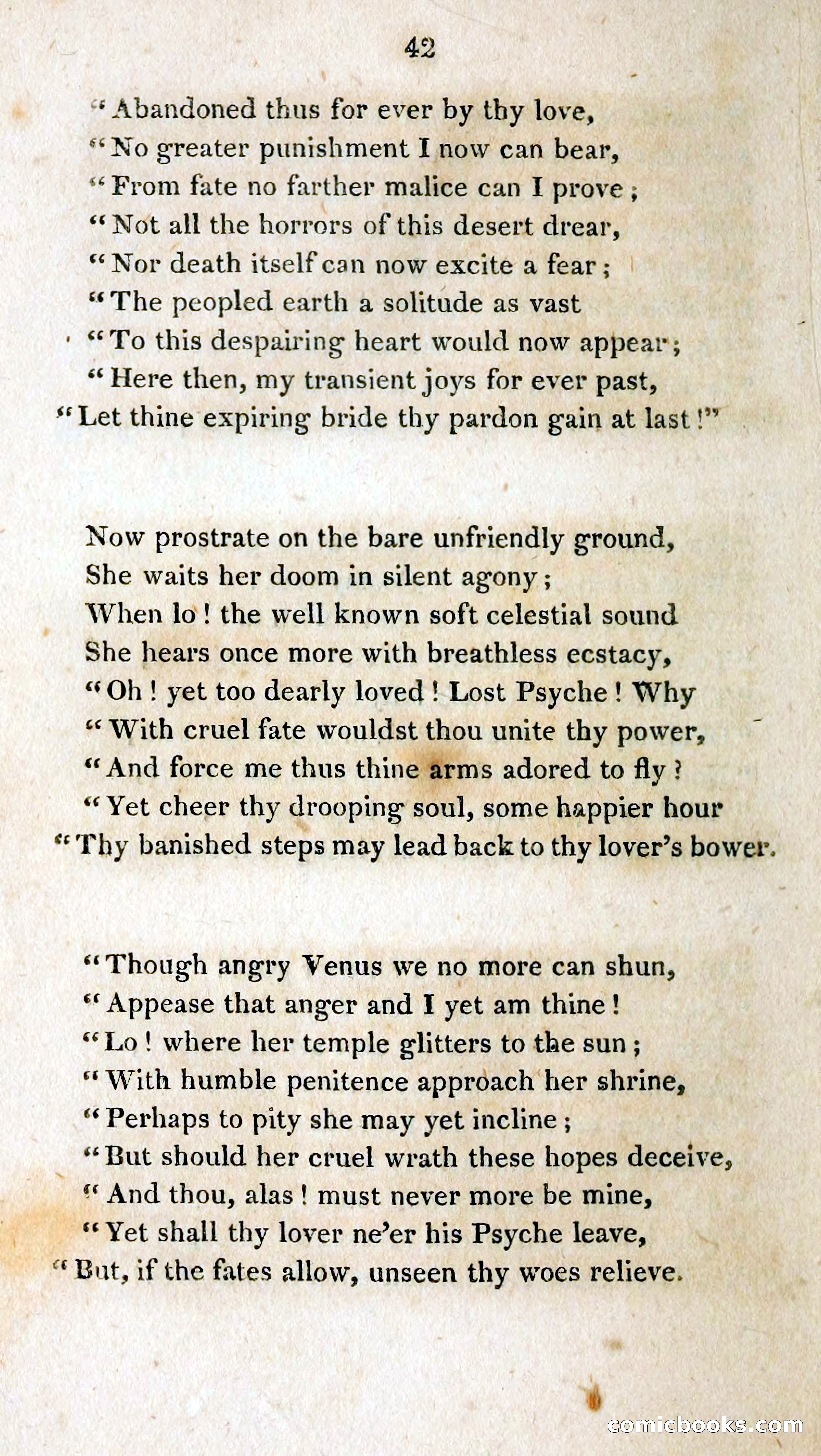
# Page 42: Poetic Dialogue from a Victorian Penny Dreadful This is a text page of running verse from what appears to be a serialized narrative poem or dramatic work. The passage depicts an emotional scene involving a female character (addressed as "Psyche") in despair over abandonment by her lover, followed by a supernatural or celestial voice offering her consolation and hope. The speaker urges her to appease Venus through penitence at her shrine, promising that even if their union is forbidden, he will secretly remain devoted to her. The verse employs romantic melodrama typical of Victorian popular literature, with themes of doomed love, divine intervention, and tearful devotion.
📄 Transcribed text from this page (OCR, searchable)
Machine-transcribed from the original scan — historical spelling and the odd misread are preserved.
4.2 ‘* Abandoned thus for ever by thy love, **No greater punishment I now can bear, “From fate no farther malice can I prove ; ‘“Not all the horrors of this desert drear, ** Nor death itself can now excite a fear; | *“The peopled earth a solitude as vast ' To this despairing heart would now appear; ‘“‘ Here then, my transient joys for ever past, ** Let thine expiring bride thy pardon gain at last!” Now prostrate on the bare unfriendly ground, She waits her doom in silent agony ; When lo! the well known soft celestial sound She hears once more with breathless ecstacy, “Oh! yet too dearly loved ! Lost Psyche! Why “With cruel fate wouldst thou unite thy power, “‘And force me thus thine arms adored to fly ? “Yet cheer thy drooping soul, some happier hour “Thy banished steps may lead back to thy lover’s bower. “Though angry Venus we no more can shun, ** Appease that anger and I yet am thine! ‘Lo! where her temple glitters to the sun; “With humble penitence approach her shrine, ‘Perhaps to pity she may yet incline ; ‘But should her cruel wrath these hopes deceive, © And thou, alas! must never more be mine, ‘* Yet shall thy lover ne’er his Psyche leave, “ But, if the fates allow, unseen thy woes relieve. é Connie DOO KS.COmna) \