
Penny Dreadfuls, 1812 · page 44 of 258
Psyche, and other poems — page 44: what you’re looking at
What you’re looking at
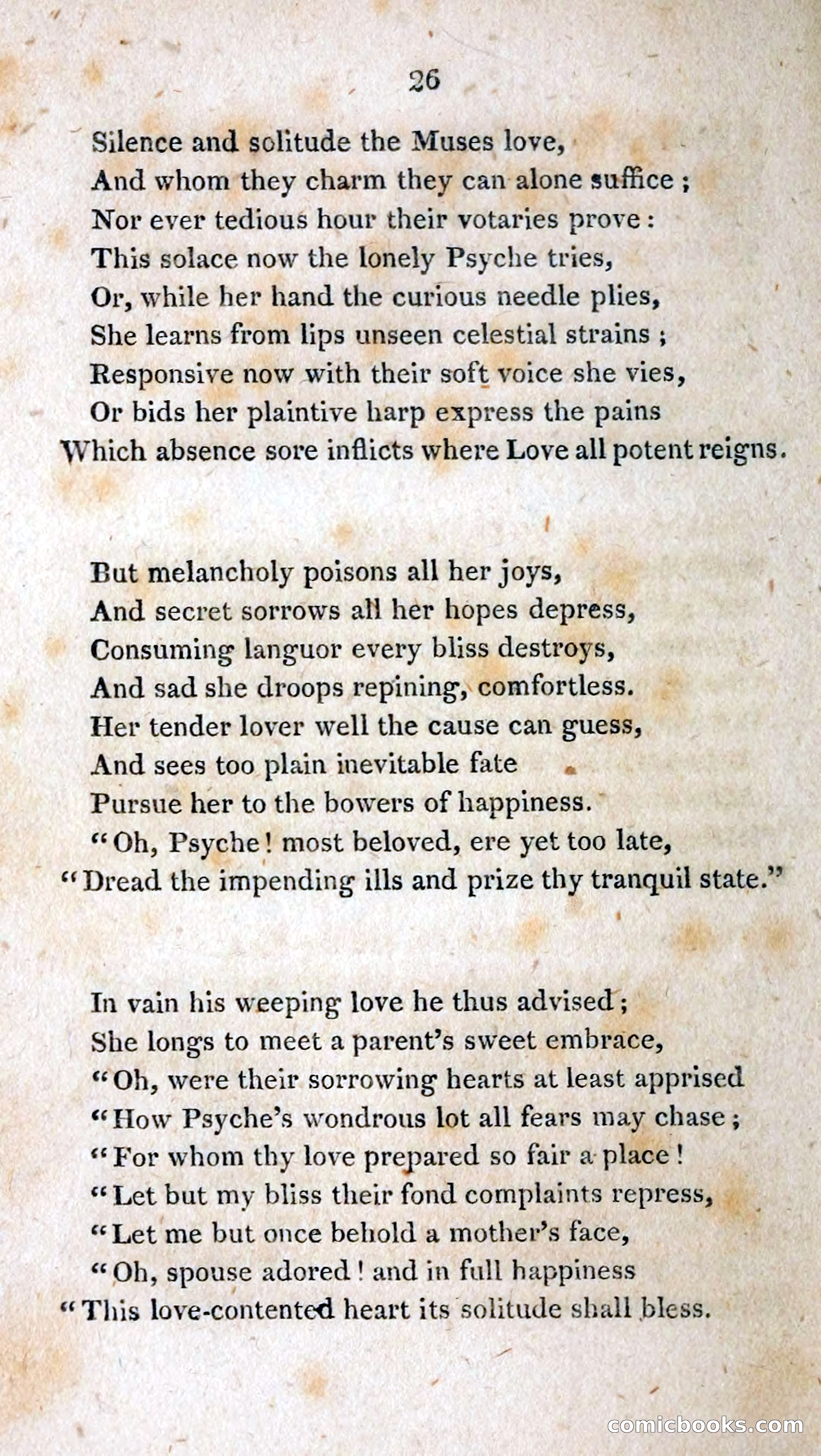
# Page 26 of a Victorian Penny Dreadful This page contains running verse narrative poetry (not prose), presented in stanza form. The text depicts a character named Psyche experiencing loneliness and melancholy while separated from loved ones. A lover attempts to console her, warning her to appreciate her current tranquil state and dread impending troubles. Psyche responds through quoted dialogue, expressing her longing to see her parents and embrace her spouse, hoping her happiness might comfort their sorrowful hearts. The language and romantic mythology (Psyche) suggest this narrative draws on classical sources adapted for melodramatic serialization.
📄 Transcribed text from this page (OCR, searchable)
Machine-transcribed from the original scan — historical spelling and the odd misread are preserved.
5 26 Silence and solitude the Muses love,, ——- And whom they charm they can alone suffice ; Nor ever tedious hour their votaries prove: This solace now the lonely Psyche tries, Or, while her hand the curious needle plies, She learns from lips unseen celestial strains ; Responsive now with their soft voice she vies, Or bids her plaintive harp express the pains Which absence sore inflicts where Love all potent reigns. f But melancholy poisons all her joys, And secret sorrows ali her hopes depress, Consuming languor every bliss destroys, And sad she droops repining, comfortless. — Her tender lover well the cause can guess, And sees too plain inevitable fate . Pursue her to the bowers of happiness. ° “Oh, Psyche! most beloved, ere yet too late, ‘Dread the impending ills and prize thy tranquil state.” | 4 ey ‘ tsi a In vain his weeping love he thus advised; She longs to meet a parent’s sweet embrace, “Oh, were their sorrowing hearts at least apprised. “How Psyche’s wondrous lot all fears may chase ; “For whom thy love prepared so fair a place ! ‘Let but my bliss their fond complaints repress, «. “Tet me but once behold a mother’s face, “Oh, spouse adored ! and in full happiness “This love-contented heart its solitude shall bless. — ' 7 CONE DOO KSaCeOwnn)