
Penny Dreadfuls, 1912 · page 75 of 118
The Medea — page 75: what you’re looking at
What you’re looking at
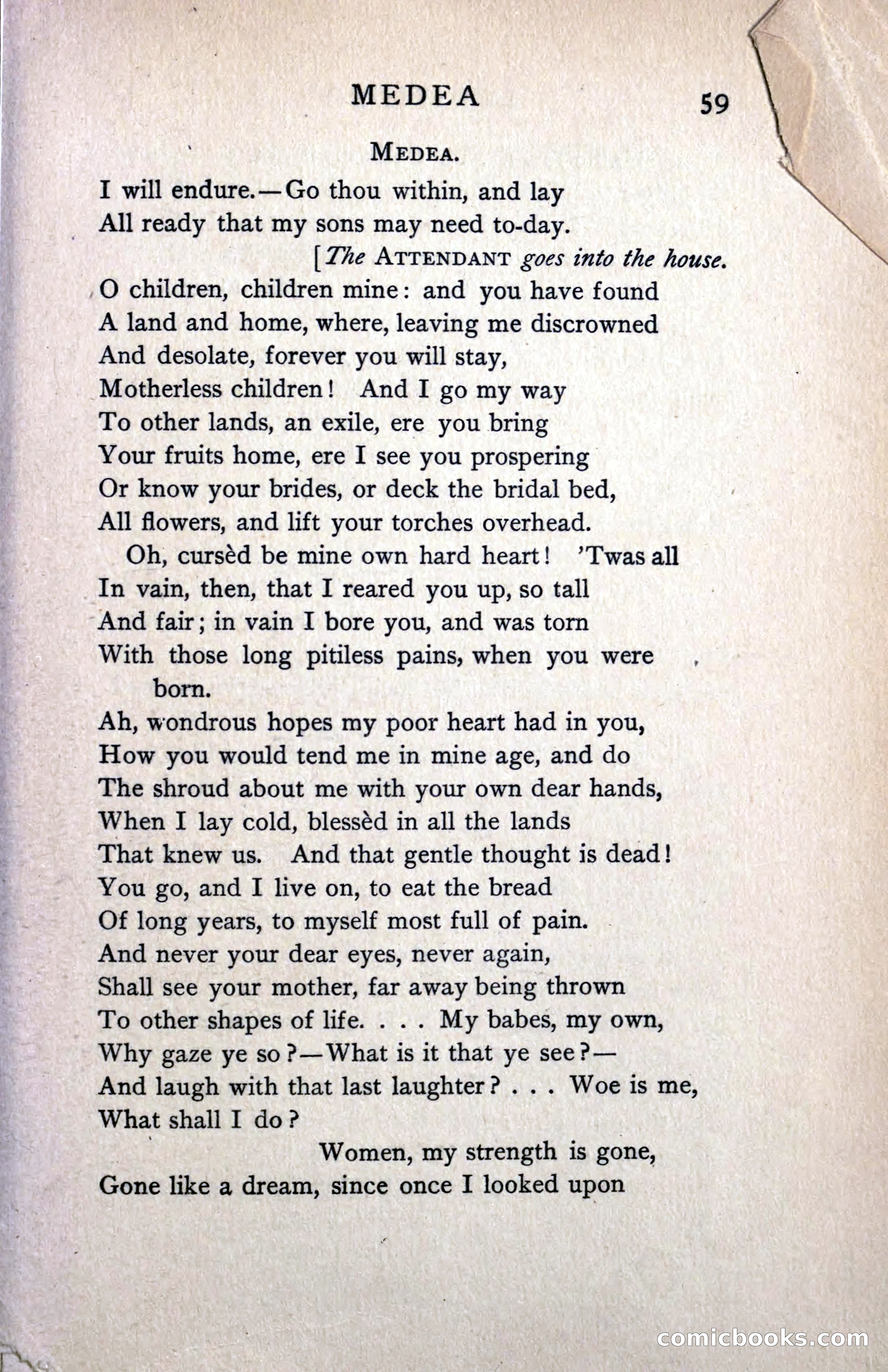
# Page Analysis This is a running text page (page 59) from what appears to be a dramatic work or theatrical adaptation titled *Medea*. The page contains verse dialogue spoken by the character Medea, a mother addressing her children before their separation. The text centers on her anguish at abandoning them—she will go into exile while they remain in a new land, and she laments that she will never witness their futures or receive their care in old age. The passage is emotionally intense melodrama, featuring Medea's expressions of maternal despair and self-recrimination, which aligns with the sensational tone typical of Victorian penny dreadful serials.
📄 Transcribed text from this page (OCR, searchable)
Machine-transcribed from the original scan — historical spelling and the odd misread are preserved.
MEDEA MEDEA. I will endure.—Go thou within, and lay All ready that my sons may need to-day. | Ze ATTENDANT goes into the house. .O children, children mine: and you have found A land and home, where, leaving me discrowned And desolate, forever you will stay, Motherless children! And I go my way To other lands, an exile, ere you bring Your fruits home, ere I see you prospering Or know your brides, or deck the bridal bed, All flowers, and lift your torches overhead. Oh, cursed be mine own hard heart! ’Twasall In vain, then, that I reared you up, so tall And fair; in vain I bore you, and was torn With those long pitiless pains, when you were born. Ah, wondrous hopes my poor heart had in you, How you would tend me in mine age, and do The shroud about me with your own dear hands, When I lay cold, blesséd in all the lands That knew us. And that gentle thought is dead! You go, and I live on, to eat the bread Of long years, to myself most full of pain. And never your dear eyes, never again, Shall see your mother, far away being thrown To other shapes of life. . . . My babes, my own, Why gaze ye so ?>— What is it that ye see P— And laugh with that last laughter? . . . Woe is me, What shall I do? Women, my strength is gone, Gone like a dream, since once I looked upon Eomichbooks;com