
Penny Dreadfuls, 1912 · page 65 of 118
The Medea — page 65: what you’re looking at
What you’re looking at
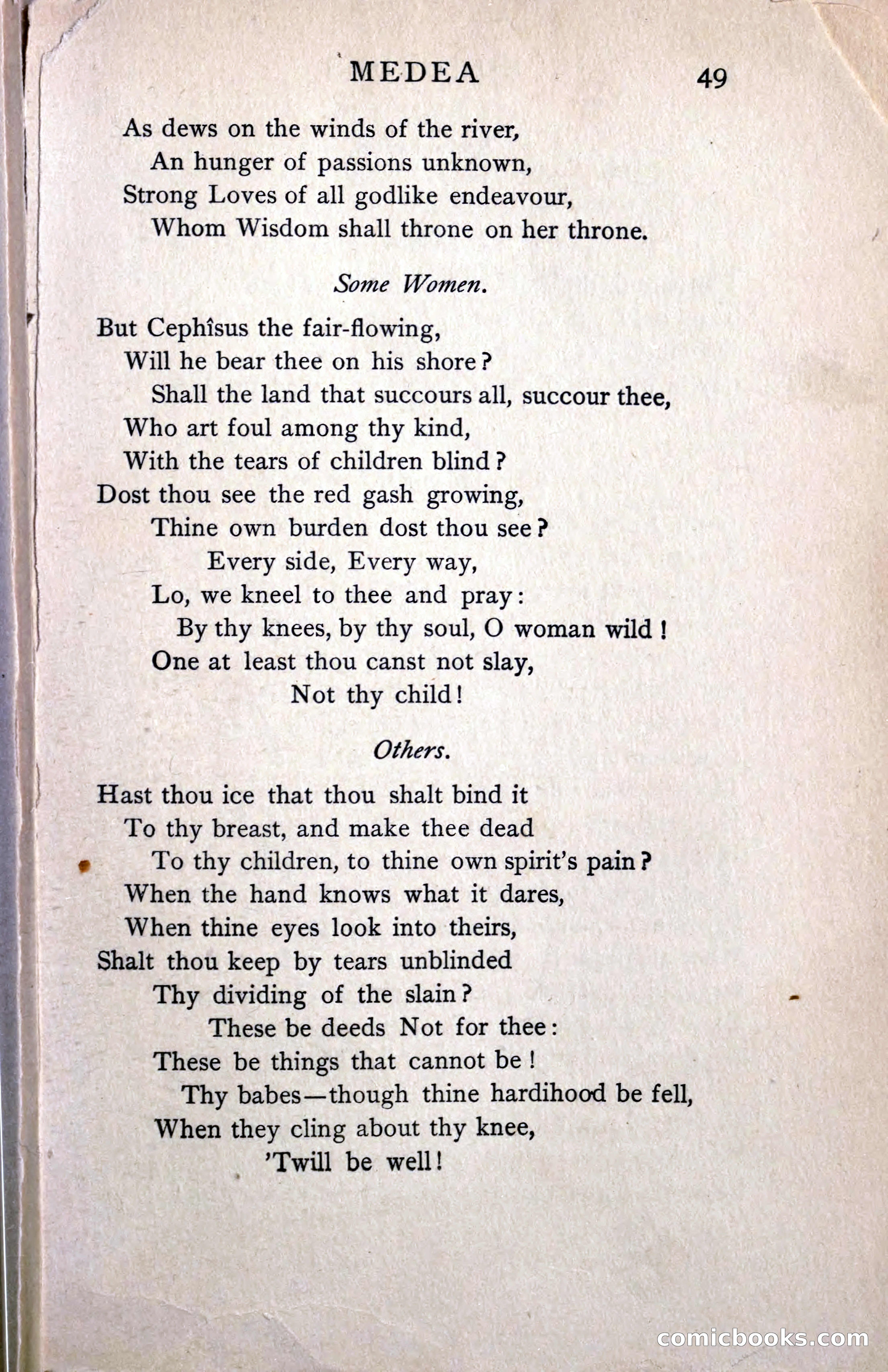
# Page Analysis This is a page of running dramatic verse from page 49 of what appears to be a stage adaptation or poetic rendering of *Medea*. The text consists of dialogue between grouped speakers—"Some Women" and "Others"—pleading with a female character (apparently Medea) not to harm her children. The speakers invoke imagery of rivers, tears, and maternal bonds, urging her to resist whatever dark deed she contemplates. The passage emphasizes the impossibility of a mother killing her own children, ending with reassurance that "when they cling about thy knee, / 'Twill be well!" The language is Victorian dramatic blank verse treating the classical myth.
📄 Transcribed text from this page (OCR, searchable)
Machine-transcribed from the original scan — historical spelling and the odd misread are preserved.
“MEDEA 49 7 An hunger of passions unknown, Strong Loves of all godlike endeavour, Whom Wisdom shall throne on her throne. , As dews on the winds of the river, an — Some Women. But Cephisus the fair-flowing, Will he bear thee on his shore P Shall the land that succours all, succour thee, Who art foul among thy kind, With the tears of children blind? Dost thou see the red gash growing, Thine own burden dost thou see? Every side, Every way, Lo, we kneel to thee and pray: By thy knees, by thy soul, O woman wild! One at least thou canst not slay, Not thy child! i ' Others. Hast thou ice that thou shalt bind it To thy breast, and make thee dead To thy children, to thine own spirit’s pain P When the hand knows what it dares, When thine eyes look into theirs, Shalt thou keep by tears unblinded Thy dividing of the slain? These be deeds Not for thee: These be things that cannot be! Thy babes—though thine hardihood be fell, When they cling about thy knee, ’Twill be well! Gomicbooks.com