
Penny Dreadfuls, 1912 · page 30 of 118
The Medea — page 30: what you’re looking at
What you’re looking at
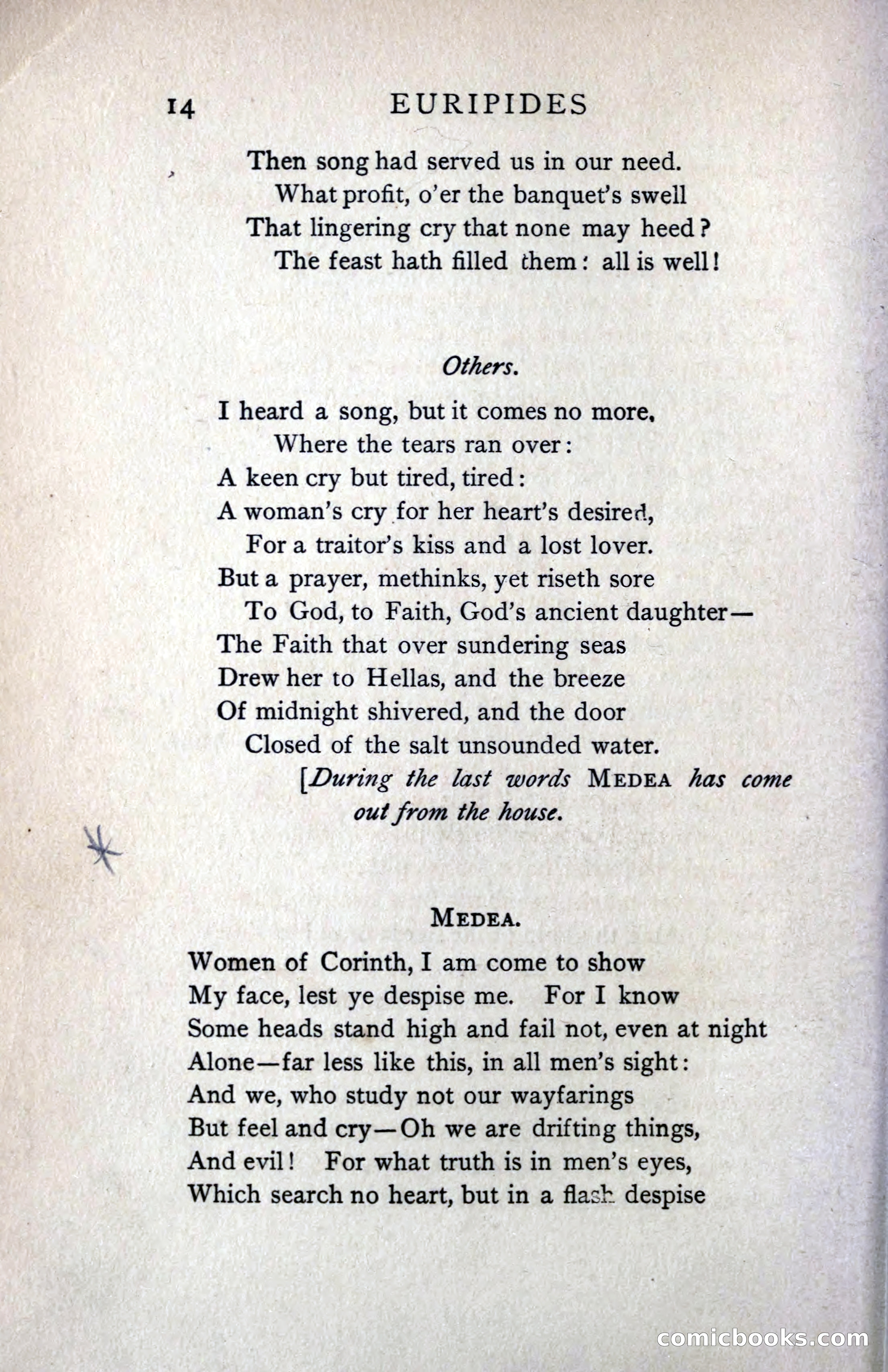
# Page 14: Running Prose from *Euripides* This is a page of running dramatic text—likely from a Victorian theatrical or literary adaptation rather than a penny dreadful proper. It contains verse dialogue from what appears to be a classical play adaptation, featuring a chorus ("Others") lamenting a woman's suffering and lost love, followed by the entrance of **Medea**, who addresses the "Women of Corinth." Medea speaks of shame and societal judgment, arguing that women are emotional and "drifting things" despised by men who judge by appearance alone rather than truth. The page is numbered 14 and printed in standard book format with stage directions in italics.
📄 Transcribed text from this page (OCR, searchable)
Machine-transcribed from the original scan — historical spelling and the odd misread are preserved.
14 EURIPIDES Then song had served us in our need. What profit, o’er the banquet’s swell That lingering cry that none may heed ? The feast hath filled them: all is well! Others. I heard a song, but it comes no more, Where the tears ran over: A keen cry but tired, tired: A woman’s cry for her heart’s desired, For a traitor’s kiss and a lost lover. But a prayer, methinks, yet riseth sore To God, to Faith, God’s ancient daughter— The Faith that over sundering seas _ Drew her to Hellas, and the breeze Of midnight shivered, and the door Closed of the salt unsounded water. [During the last words MEDEA has come out from the house. MEDEA. Women of Corinth, I am come to show My face, lest ye despise me. For I know Some heads stand high and fail not, even at night Alone—far less like this, in all men’s sight: And we, who study not our wayfarings But feel and cry—Oh we are drifting things, And evil! For what truth is in men’s eyes, Which search no heart, but in a flash despise Eomicboo “S (E(0) m