
Penny Dreadfuls, 1912 · page 27 of 118
The Medea — page 27: what you’re looking at
What you’re looking at
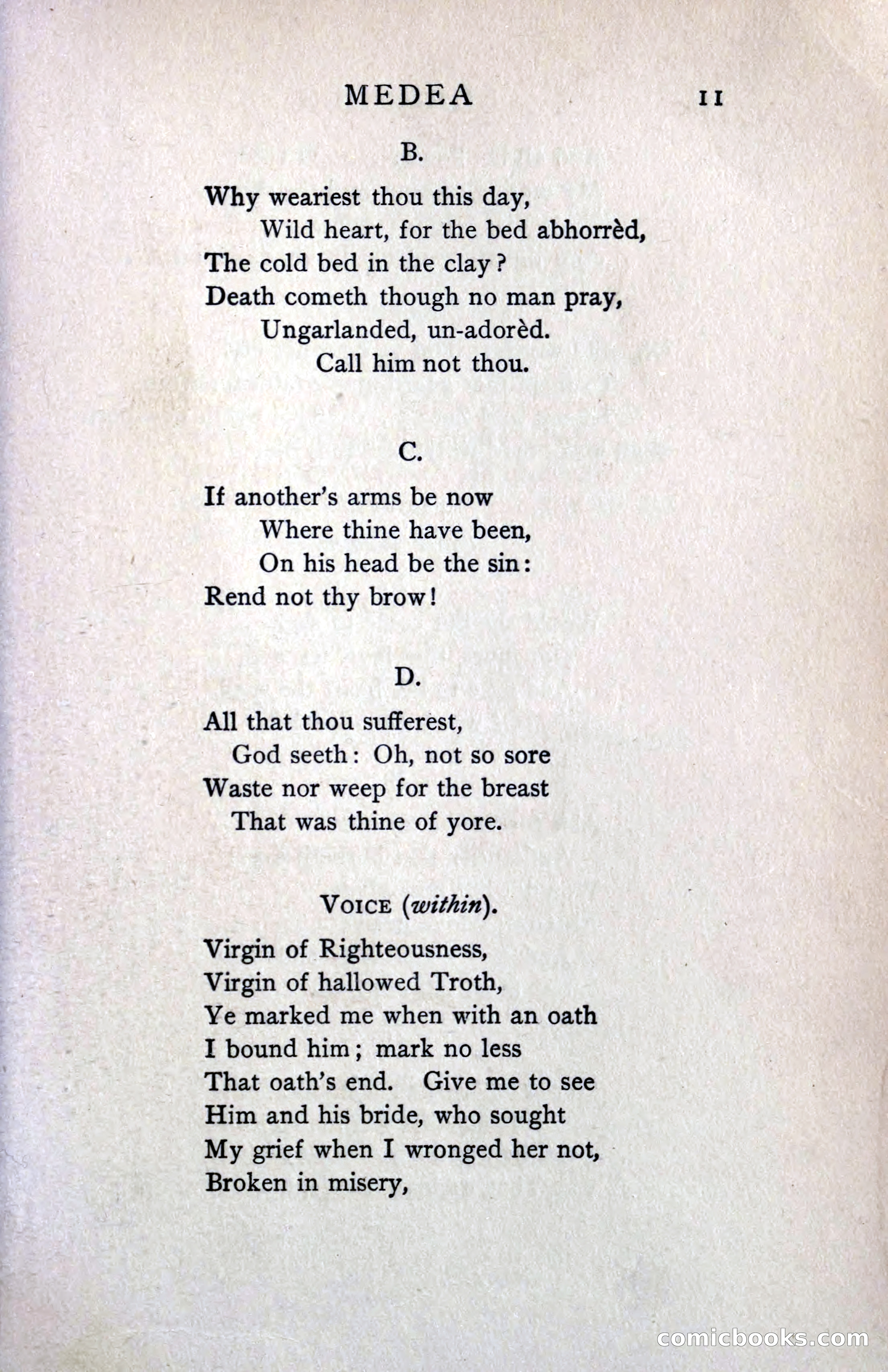
This is a page of running verse dialogue from what appears to be a dramatic work titled "Medea." The page presents several short poetic speeches (labeled B, C, D, and a "Voice within") that address themes of death, suffering, and betrayal. The speakers counsel against despair over lost love and a rival's embrace, while a mysterious inner voice invokes "Virgin of Righteousness" and "Virgin of hallowed Troth," requesting to witness a former lover's misery with his new bride. The archaic language and melodramatic tone are typical of Victorian theatrical or serialized fiction.
📄 Transcribed text from this page (OCR, searchable)
Machine-transcribed from the original scan — historical spelling and the odd misread are preserved.
MEDEA | II B. Why weariest thou this day, Wild heart, for the bed abhorréd, The cold bed in the clay? Death cometh though no man pray, Ungarlanded, un-adoréd. Call him not thou. C. If another’s arms be now Where thine have been, On his head be the sin: Rend not thy brow! D. All that thou sufferest, God seeth: Oh, not so sore Waste nor weep for the breast That was thine of yore. VOICE (within). Virgin of Righteousness, Virgin of hallowed Troth, Ye marked me when with an oath I bound him; mark no less That oath’s end. Give me to see Him and his bride, who sought My grief when I wronged her not, © Broken in misery, EORMNIC OOO KS ,COnN