
Penny Dreadfuls, 1912 · page 23 of 118
The Medea — page 23: what you’re looking at
What you’re looking at
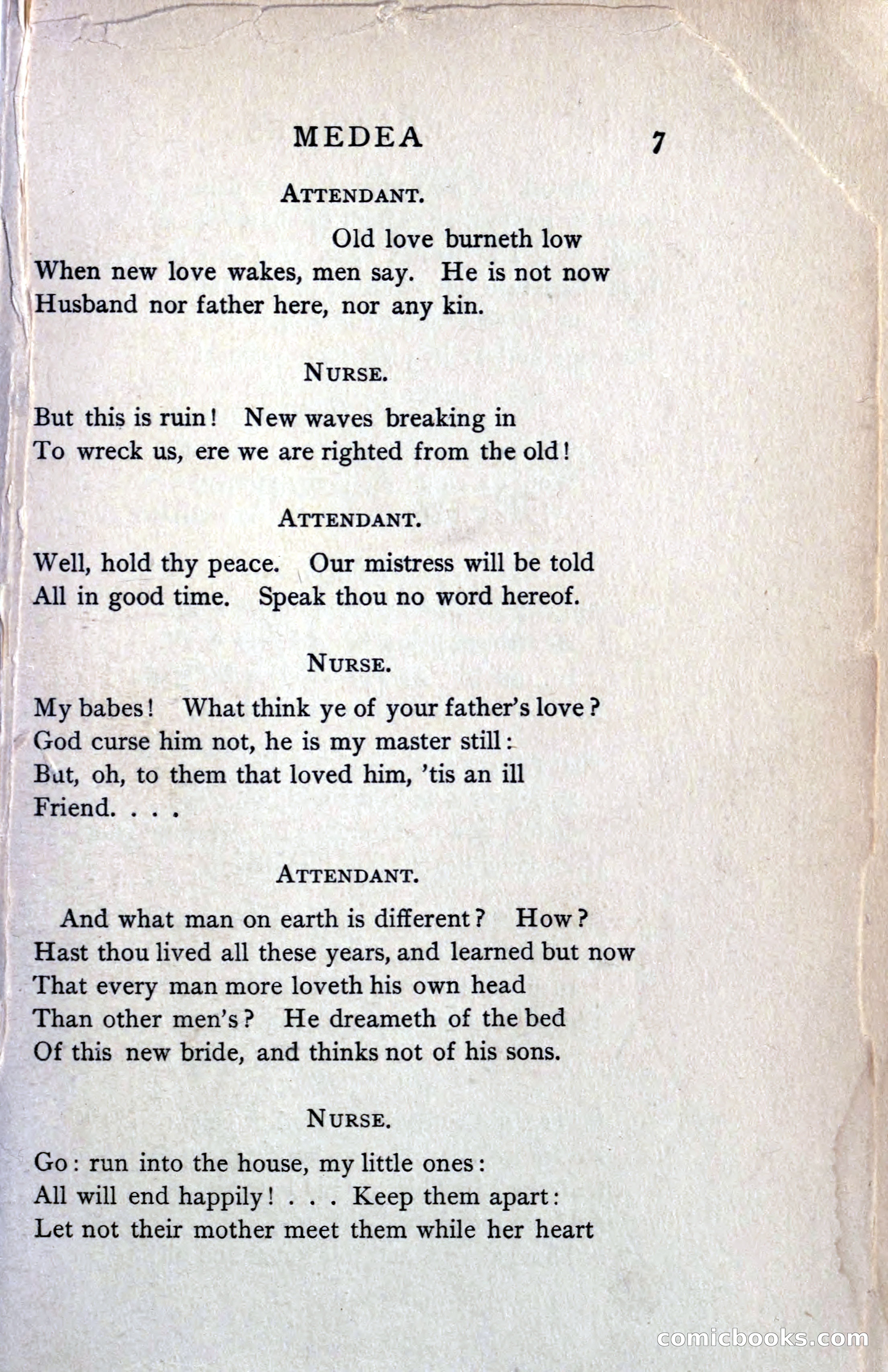
# Page Analysis This is a text page from a dramatic work titled "Medea" (page 7), presenting dialogue in verse between an Attendant, Nurse, and implied other characters. The passage depicts a conversation about a man who has abandoned his family for a new bride—the Nurse expresses concern for children and warns against letting their mother meet them while emotionally distressed, while the Attendant philosophizes cynically about male nature and self-interest. The theatrical format and classical subject matter suggest this is likely a Victorian-era adaptation or staging of Euripides' Greek tragedy, presented as serialized popular drama rather than scholarly text.
📄 Transcribed text from this page (OCR, searchable)
Machine-transcribed from the original scan — historical spelling and the odd misread are preserved.
MEDEA 7 | : ATTENDANT. Old love burneth low When new love wakes, men say. He is not now _ Husband nor father here, nor any kin. NURSE. But this is ruin! New waves breaking in _ To wreck us, ere we are righted from the old! i ATTENDANT. Well, hold thy peace. Our mistress will be told All in good time. Speak thou no word hereof. ) NURSE. _ My babes! What think ye of your father’s love? ' God curse him not, he is my master still: But, oh, to them that loved him, ’tis an ill Friend. .... ATTENDANT. And what man on earth is different? How? Hast thou lived all these years, and learned but now That every man more loveth his own head Than other men’s? He dreameth of the bed Of this new bride, and thinks not of his sons. | NURSE, Go: run into the house, my little ones: All will end happily! . . . Keep them apart: Let not their mother meet them while her heart EORNICOOO KS, COM