
Judge, 1932-11 · page 24 of 36
Judge — November 1932 — page 24: what you’re looking at
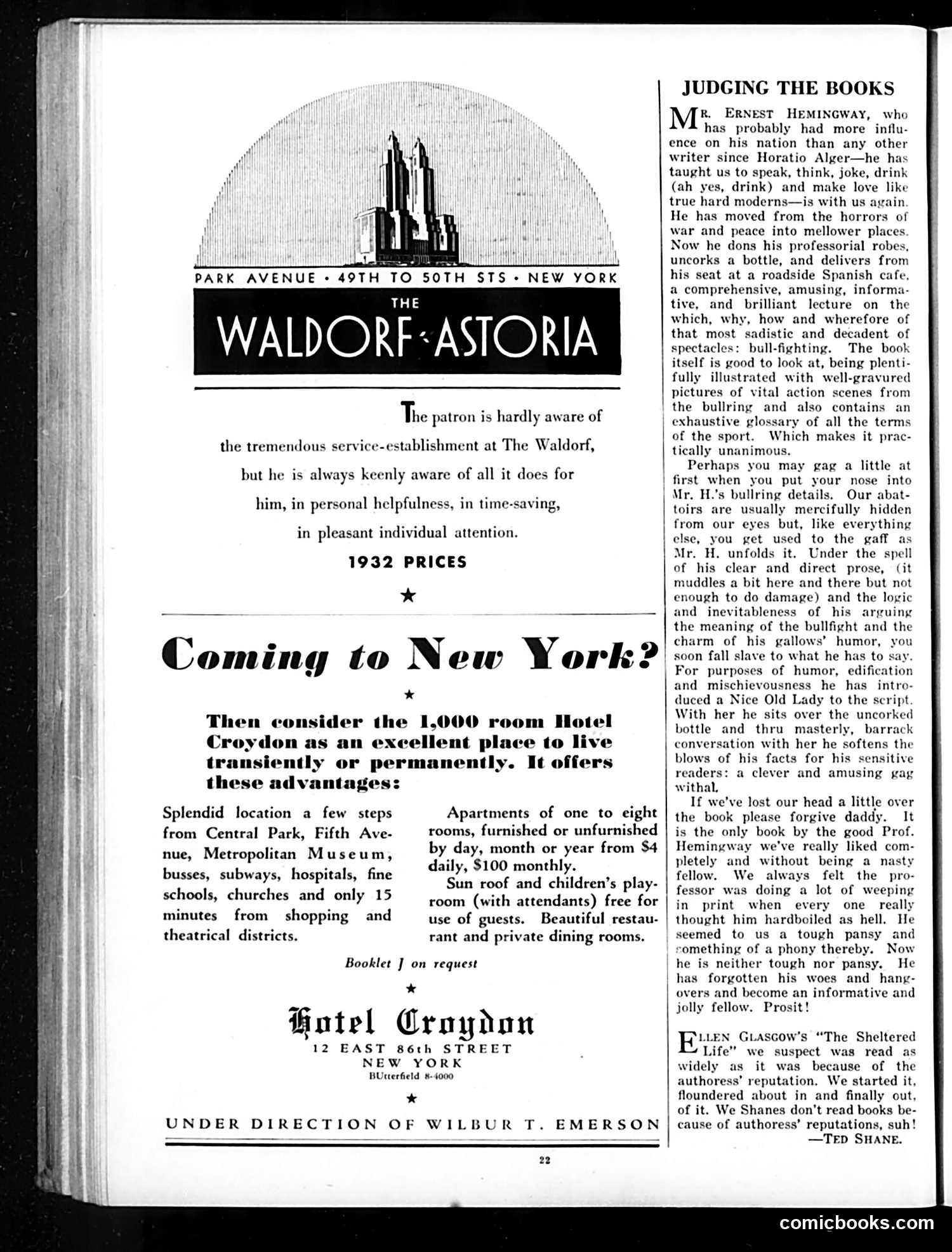
A restored page from Judge, 1932-11. Page through the whole issue in the reader above.
📄 Transcribed text from this page (OCR, searchable)
Machine-transcribed from the original scan — historical spelling and the odd misread are preserved.
The patron is hardly aware of the tremendous service-establishment at The Waldorf, but he is always keenly aware of all it does for him, in personal helpfulness, in time-saving, in pleasant individual attention. 1932 PRICES * Coming to New York? * Then consider the 1,000 room Hotel on as an excellent place to live tly or permanently. It offers these advantages: Splendid location a few steps Apartments of one to eight from Central Park, Fifth Ave- rooms, furnished or unfurnished nue, Metropolitan Museum, by day, month or year from $4 oe : daily, $100 monthly. busses, subways, hospitals, fine Sun roof and children’s play- schools, churches and only 15 room (with attendants) free for minutes from shopping and use of guests. Beautiful restau- theatrical districts. rant and private dining rooms. Booklet J on request Bntel Croydon 12 EAST 86th STREET NEW YORK BUteerfield 8-4000 * UNDER DIRECTION OF WILBUR T. EMERSON JUDGING THE BOOKS k. ERNEST HEMINGWAY, who has probably had more influ- ence on his nation than any other writer since Horatio Alger—he has taught us to speak, think, joke, drink (ah yes, drink) and make love like rd moderns—is with us aga He has moved from the horror war and peace into mellower places Now he dons his professorial robes, uncorks a bottle, and delivers from his seat at a roadside Spanish cafe, a comprehensive, amusing, informa- tive, and brilliant lecture on the which, why, how and wherefore of that most sadistic and decadent of spectacles: bull-fighting. The book itself is good to look at, being plenti- fully illustrated with well-gravured pictures of vital action scenes from the bullring and also contains an exhaustive glo: of all the terms of the sport. Which makes it prac- tically unanimous, Perhaps you may gag a little at | first when you put your nose into Mr. H.'s bullring deta toirs are usually mercifully from our eyes but, like everything | else, you get used to the gaff as Mr. H. unfolds it. Under the spell of his clear and direct prose, (it muddles a bit here and there but not enough to do damage) and the logic and inevitableness of his arguing the meaning of the bullfight and the charm of his gallows’ humor, you soon fall slave to what he has to say For purposes of humor, edi ion and mischievousness he has _ intro- duced a Nice Old Lady to the script With her he sits over the uncorked bottle and thru masterly, barrack conversation with her he softens the blows of his facts for his sensitive readers: a clever and amusing gag withal, If we've lost our head a little over the book please forgive daddy. It is the only book by the good Prof. Hemingway we've really liked com- pletely and without being a nasty fellow. We always felt the pro- fessor was doing a lot of weeping in print when every one really thought him hardboiled as hell. He seemed to us a tough pansy and something of a phony thereby. Now he is neither tough nor pansy. He has forgotten his woes and hang- overs and become an informative and jolly fellow. Prosit! K EN GLASGOW’s “The Sheltered Life’ we suspect was read as widely it was bees authoress’ reputation. We started it, floundered about in and finally out, | of it. We Shanes don’t read books be- cause of authoress’ reputations, suh! —TED SHANE. comicbooks.com