
Judge, 1932-10 · page 18 of 36
Judge — October 1932 — page 18: what you’re looking at
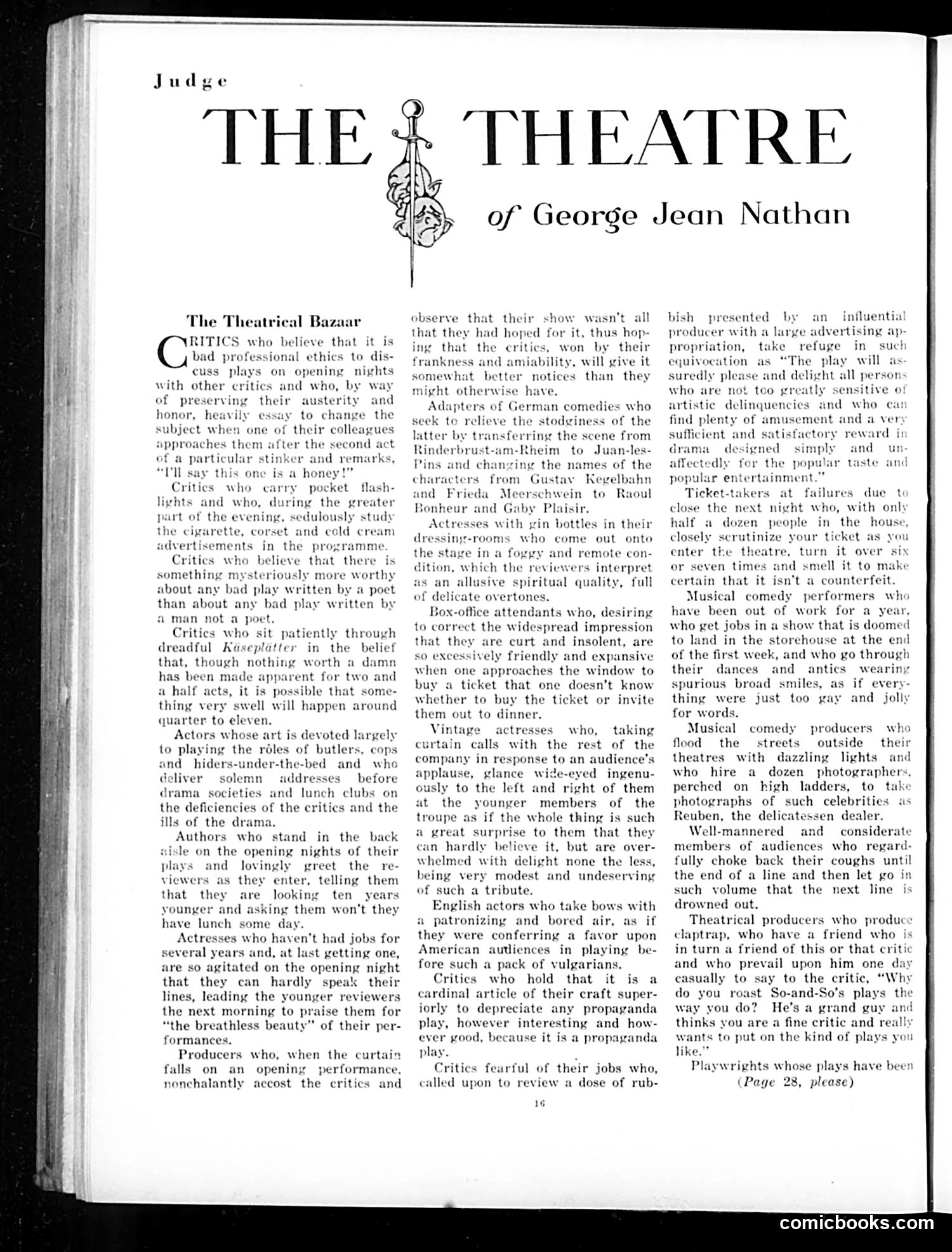
A restored page from Judge, 1932-10. Page through the whole issue in the reader above.
📄 Transcribed text from this page (OCR, searchable)
Machine-transcribed from the original scan — historical spelling and the odd misread are preserved.
The Theatrical Bazaar RITICS who believe that it is Cix pro ynal ethics to dis- cuss plays on opening nights with other critics and who, by way of pre g their austerity and honor, heavils to cha the subject when one of their colleagues approaches them after the second act particular stinker and remarks, U'll say this one is a honey! Crities who carry pocket flash- lights and who, during the greater part of the evening, sedulously study the cigarette, corset and cold cream sdvertisements in the programme. Critics who believe that there is something mysteriously more worthy about any bad play written by a poet than about any bad play written by a man not a poet. Critics who sit patiently through dreadful Adsepldtter in the belief that, though nothing worth a damn has been made apparent for two and a half acts, it is possible that some- thing very swell will happen around rter to eleven. Actors whose art is devoted largely to playing the réles of butlers, cops and hiders-under-the-bed and who sliver solemn addresses before drama societies and lunch clubs on the deficiencies of the critics and the ills of the drama. Authors who stand in the back aisle on the opening nights of their plays and lovingly greet the re- viewers as they enter, telling them that they are looking ten years younger and asking them won't they have lunch some daj Actresses who haven't had jobs for several and, at last getting one, ated on the opening night an hardly their viewers ise them for of their per- essay lines, the next morning to pre “the breathless beauty” formances. Producers who, when the curtain an opening performance, nonchalantly accost the critics and THEATRE of George Jean Nathan observe that their ow that they had hoped for it, thus hop- ing that the rs, Won by their frankness a will give it somewhat bette than they might otherwise have. Adapters of German comedies who seek to relieve the stodginess of the ter by transferring the scene from Rinderbrust-am-Rheim to Juan-les- Pins and changing the names of the characters from Gustav Keyelbahn and Frieda Meerschwein to Bonheur and Gaby Plaisir. Actresses with gin bottles in their dressiny-rooms who come out onto the stave in a foggy and remote con- dition, which the reviewers interpret an allusive spiritual quality, full of delicate overtones. wasn't all Raoul sox-office attendants who, desiring to correct the widespread impression that they are curt and insolent, are so excessively friendly and when one approaches the window to buy a ticket that one doesn’t know whether to buy the ticket or invite them out to dinner. Vin actresses who, taking curtain calls with the rest of the company in response to an audience’s applause, glance w eyed ingenu- ously to the left and right of them ut the younger members of the troupe if the whole thing is such a great surprise to them that they can hardly believe it, but are over- whelmed with delight none the less being very modest and of such a tribute. English actors who take bows with a patronizing and bored air, as if they were conferring a favor upon Ameri audiences in playing be- fore such a pack of vulgarians. Critics who hold that it is a cardinal article of their craft super- jorly to depreciate any propaganda play, however interesting and how- ever yood, because it is a propaganda play. Critics fearful of their jobs who, called upon to review a dose of rub- undeserving 16 bish presented yan influentia producer with a large advertising propriation, take refuge in equivocation as play will suredly please and delight all per who are not tco greatly sensitive of artistic delinquencies and who car find plenty of amusement and a ver sufficient and satisfactory reward i dram d reds simply and affectedly for the popular taste anc popular entertainment.” Ticket-takers at f close the ilures due t next night who, with only half a dozen people in the house, closely scrutinize your ticket as you enter the turn it over six or seven times and smell it to make certain that it isn't a counterfei Musical comedy performers who have been out of work for a year, who get jobs in a show that is doomed to land in the storehouse at the end of the first week, and who go through their dances and antics wearing spurious broad smiles, as if every- thing were just too yay and_ jolly for words. Musical comedy flood the — streets theatres with producers who outside their dazzling lights and who hire a dozen photographers, perched on high ladders, to take photographs of such celebrities Reuben, the delicatessen dealer. Well-mannered and considerate members of audiences who regard- fully choke back their coughs until the end of a line and then let go in such volume that the next line is drowned out. Theatrical producers who produce who ha iend who is in turn a friend of this or that critic and who prevail upon him one day to the critic, “Why do you roast So-and-So’s plays the way you do? He's a grand gu: thinks you are a fine critic and really wants to put on the kind of play like.” Playwrights whose pl have been (Page 28, please) comicbooks.com