
A complete issue · 3 pages · 1684
An Account of a Sort of Paper Made of Linum Asbestinum Found in Wales
This is **not a Victorian penny dreadful page**—it is a modern informational/copyright page from JSTOR, a digital academic library. The page explains that JSTOR has digitized nearly 500,000 scholarly works, including research articles and letters from over 200 academic journals dating from the mid-seventeenth to early twentieth centuries, and that these works are freely available for non-commercial sharing and redistribution.
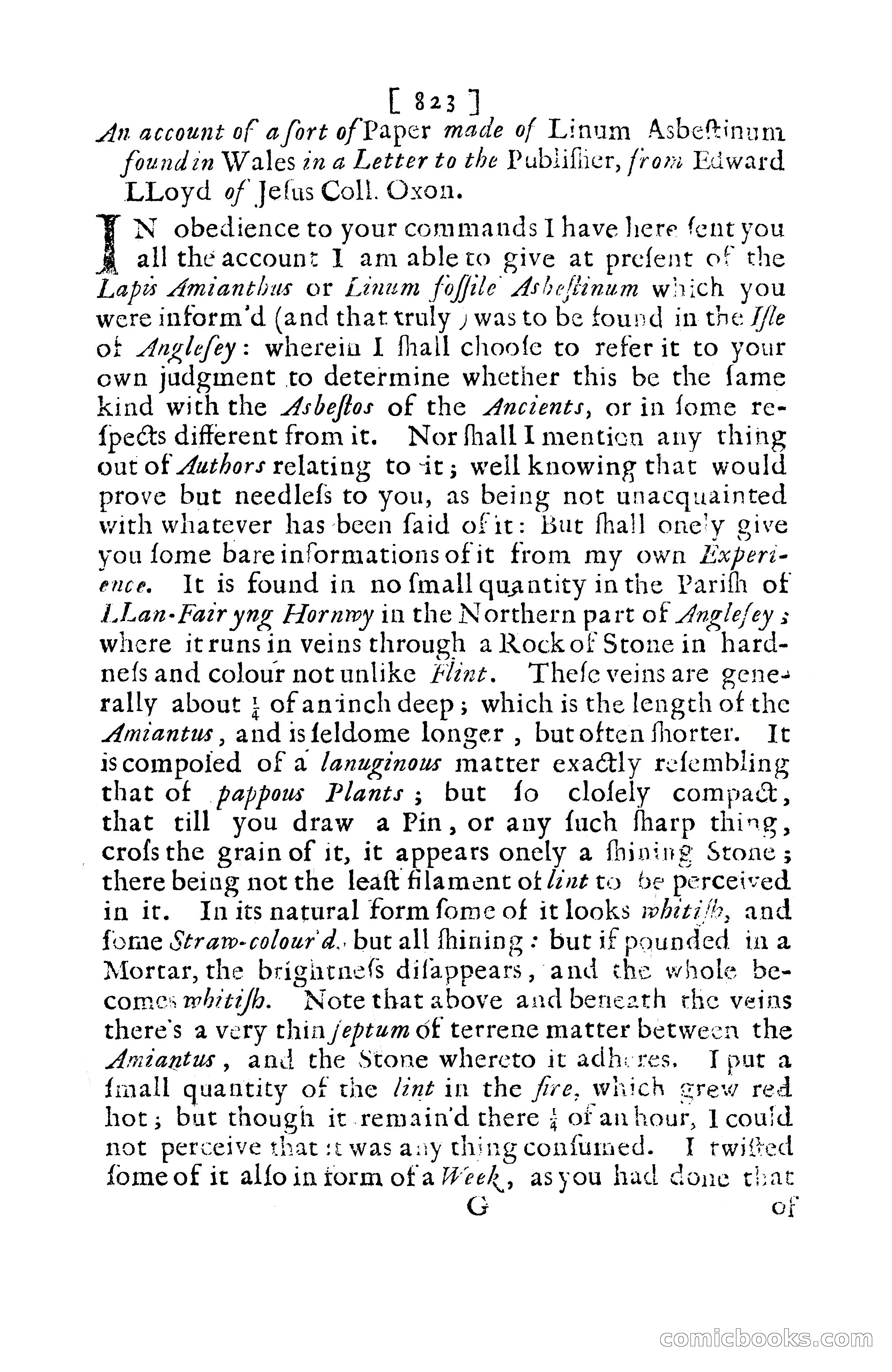
This is a running prose page from a scholarly letter describing a mineral discovery. Edward Lloyd of Jesus College, Oxford, writes to the publisher about "Lapis Amiantus" or "Linum fossile Asbeftinum"—a fibrous stone found in Anglesey, Wales—apparently a form of asbestos or similar material. Lloyd provides firsthand observations: the mineral occurs in veins about half an inch deep within flint-like rock, appears as a shining stone until scratched with a pin, turns white when pounded, and does not burn when heated. The letter presents empirical findings rather than relying on classical authorities.
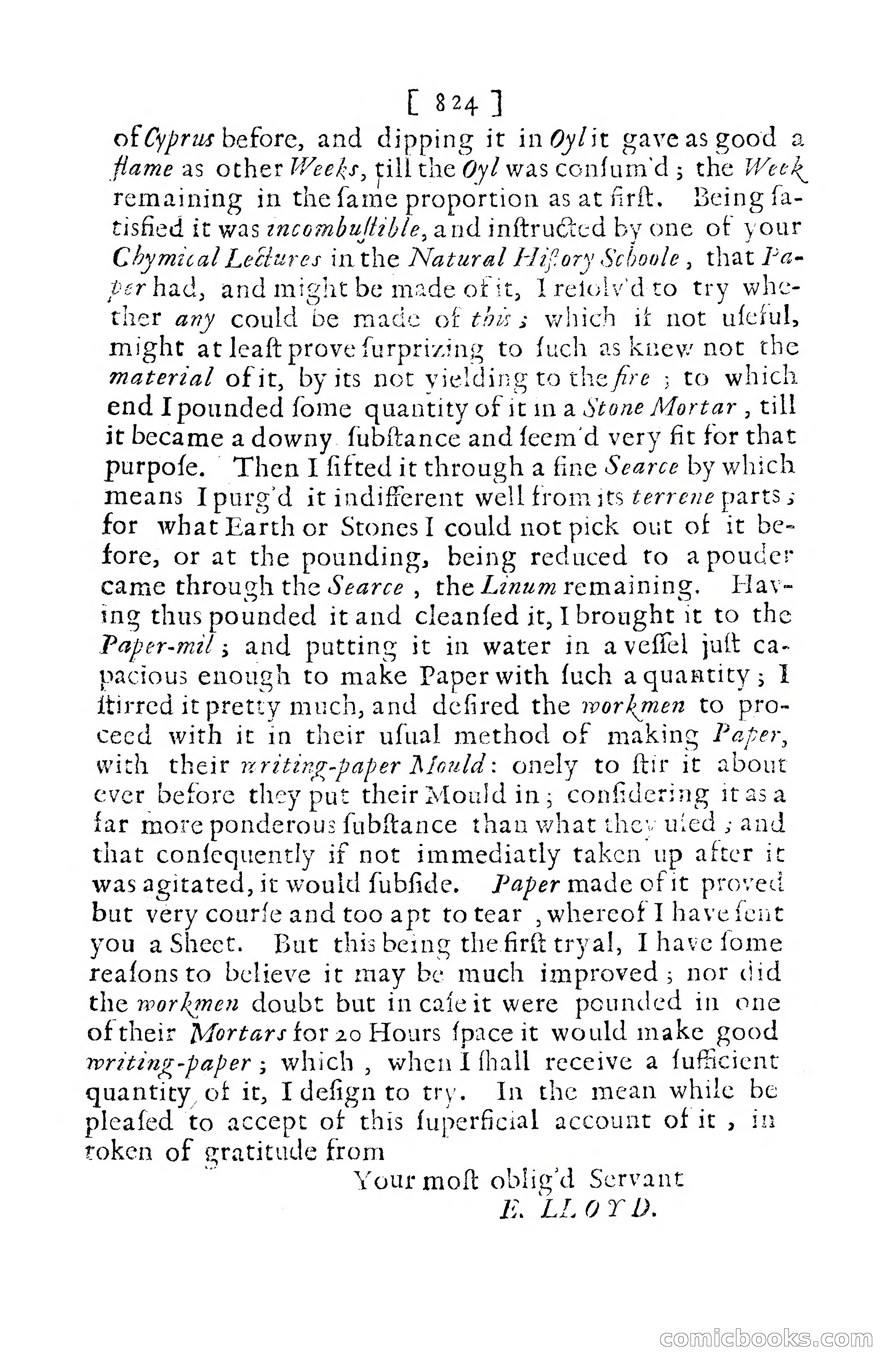
# Analysis This is a page of running prose—specifically, a letter or detailed account. The text describes an experimental attempt to manufacture paper from an unusual material (apparently ashy residue from burned Cyprus wood mixed with oil). The writer details the process: pounding the substance in a mortar, sifting it to remove earthy matter, mixing it with water at a paper mill, and having workers attempt papermaking using standard moulds. The resulting paper was coarse and prone to tearing, but the writer expresses hope for improvement with longer pounding time and offers this "superficial account" as a token of gratitude. The letter is signed "E. LLOYD."