
A complete issue · 16 pages · 1736
Thoughts on Trade
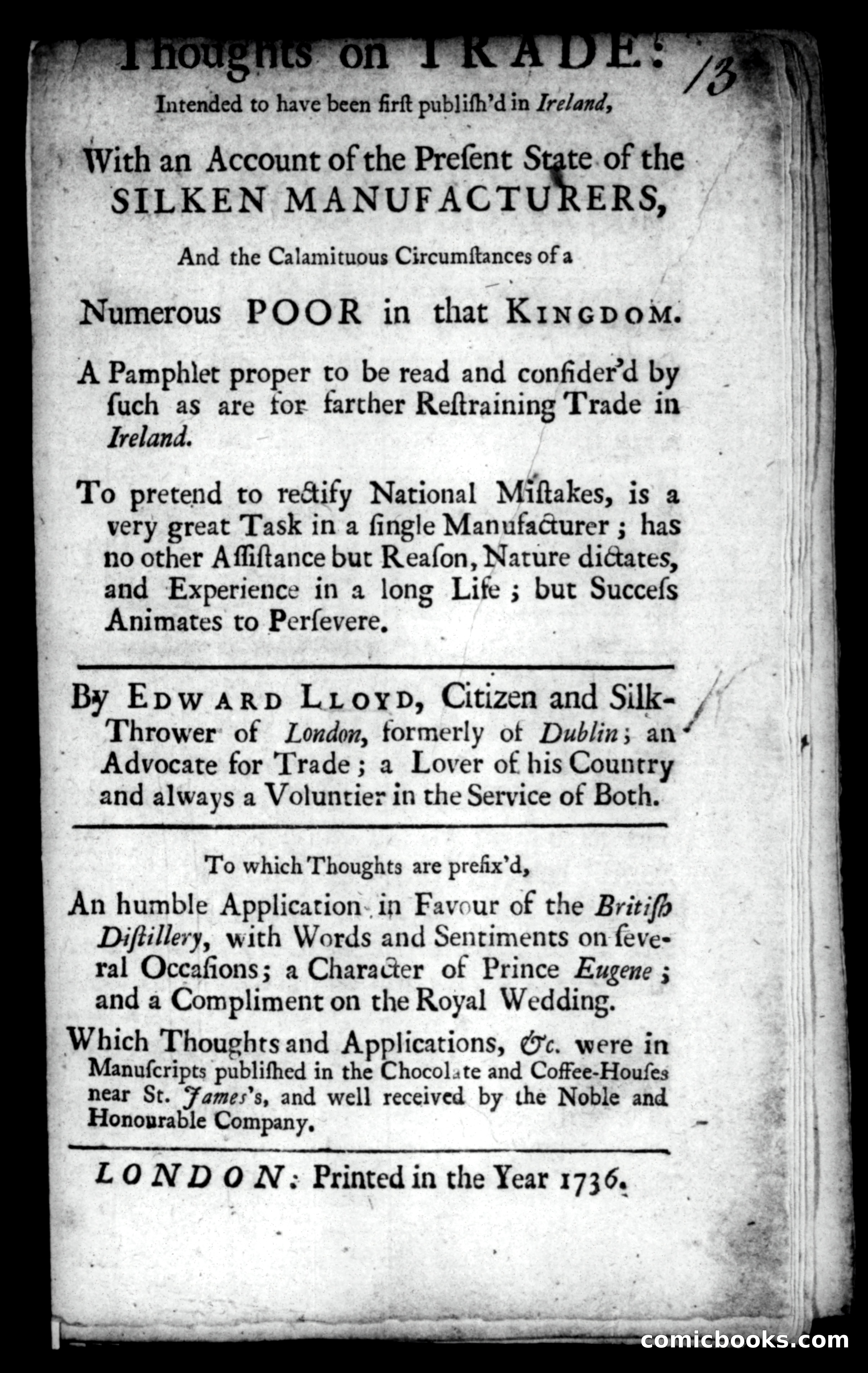
This is a title page from 1736 (not a Victorian penny dreadful, but an earlier 18th-century pamphlet). The page announces "Thoughts on Trade," a work by Edward Lloyd, a silk-thrower formerly of Dublin, concerning the state of Irish silk manufacturers and the poor. The pamphlet addresses trade restrictions in Ireland and includes prefatory materials on British distillery, Prince Eugene, and a royal wedding, reportedly circulated and well-received in London coffeehouses near St. James's.
This appears to be a blank or nearly blank page from a Victorian penny dreadful, showing only the paper's texture and a center fold line. The OCR text provided contains no readable content, suggesting either the page is blank, the image quality prevents legible text extraction, or this represents an endpaper or divider page within the serialized publication. Without visible text or illustrations, it is impossible to determine the specific subject matter or narrative content of this particular installment. The page shows age-appropriate wear and discoloration consistent with nineteenth-century printed materials.
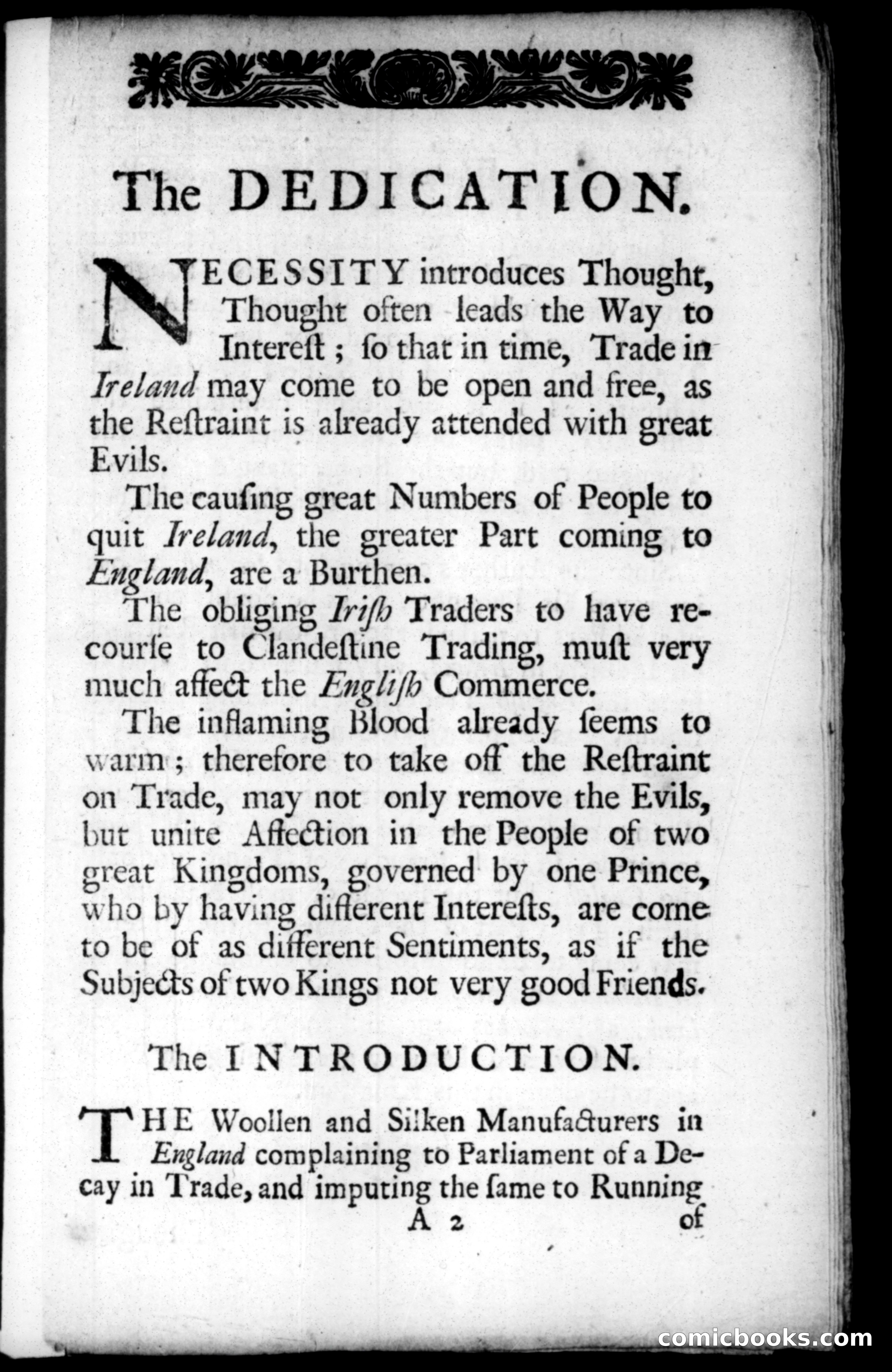
This is a dedication and introduction page from what appears to be an early eighteenth-century pamphlet or tract (not a Victorian penny dreadful, despite the OCR attribution). The dedication argues that removing trade restrictions between Ireland and England would benefit both nations, reduce emigration, prevent smuggling, and unite the kingdoms under one sovereign. The introduction then begins addressing complaints from English woollen and silk manufacturers to Parliament about trade decay, which they attribute to Irish competition. The text concerns economic policy and Anglo-Irish trade relations rather than sensation fiction.
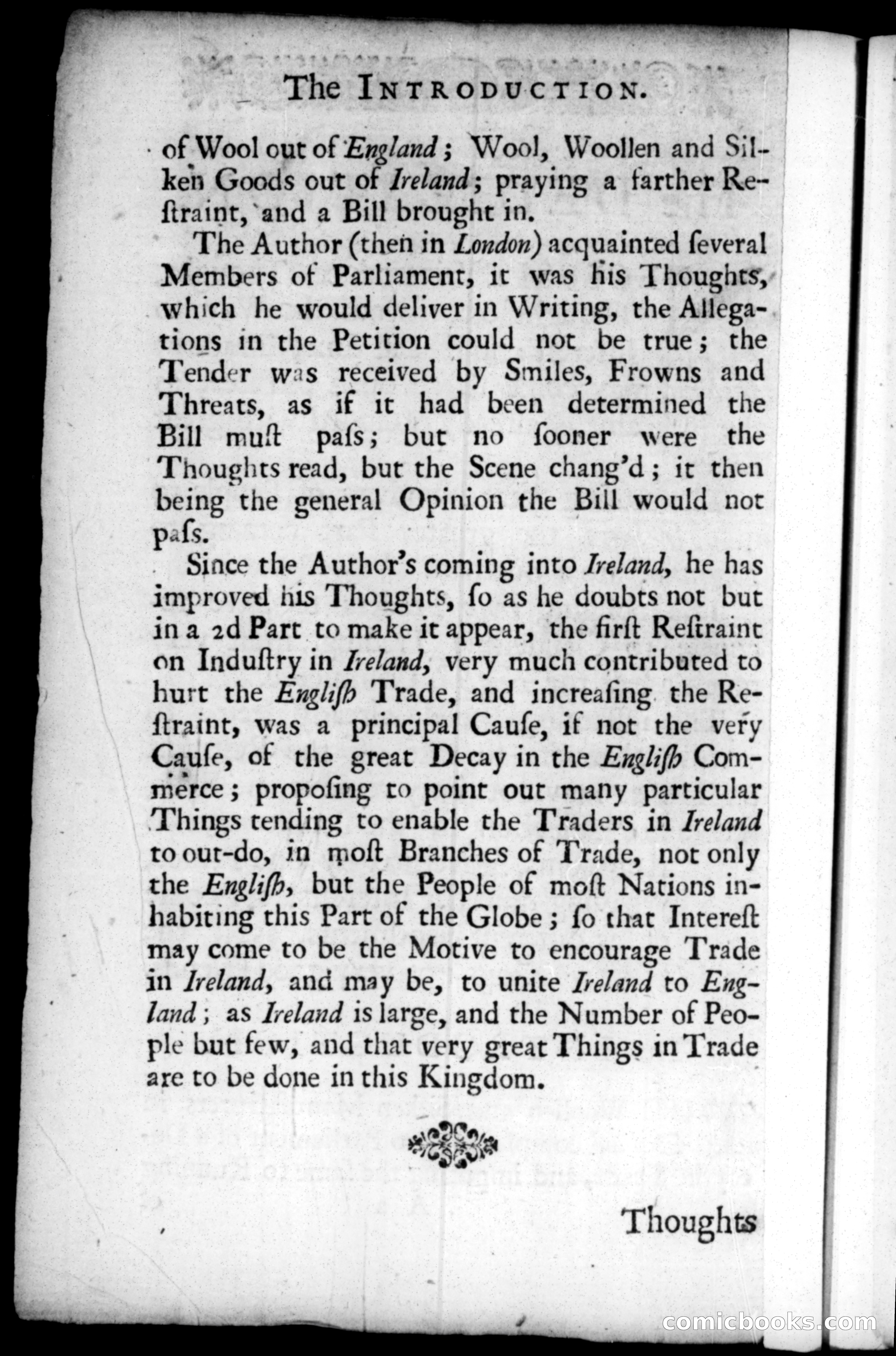
# Analysis This is an **introduction page** from what appears to be an 18th-century economic treatise (not a Victorian penny dreadful, despite the prompt's framing). The text discusses the author's written thoughts on trade restrictions affecting wool and goods between England and Ireland. The author initially presented these thoughts to Parliament in London, where they were initially well-received, but opinion shifted after reading. The introduction indicates a second part will expand these arguments, claiming that restraints on Irish industry have damaged English commerce, and proposing that encouraging Irish trade could unite the kingdoms and advance commerce generally.
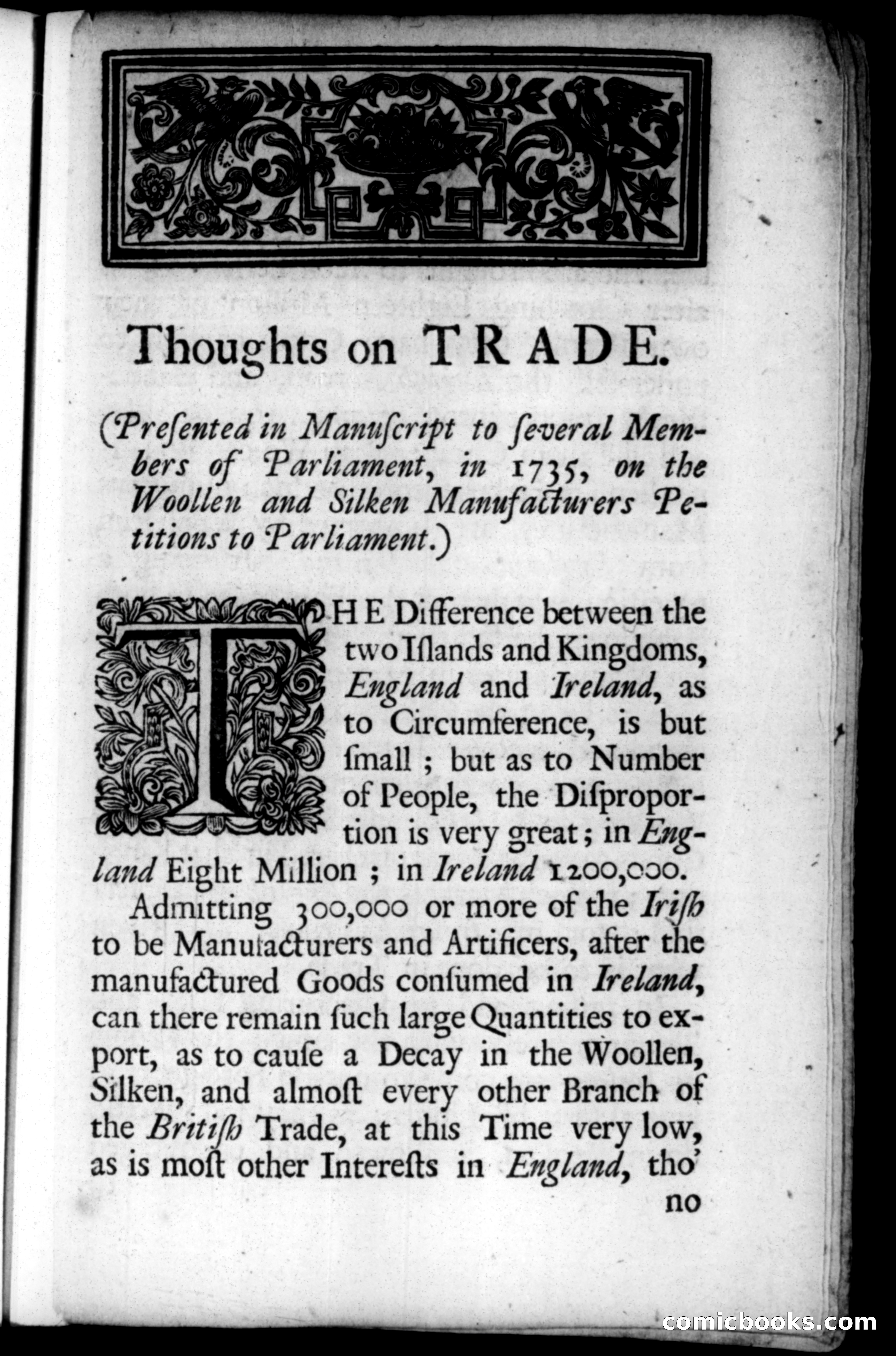
# Analysis This is a **title page and opening prose** from an 18th-century economic treatise (not a Victorian penny dreadful, as the document predates that genre by over a century). The page presents "Thoughts on TRADE," a manuscript submitted to Parliament members in 1735 concerning woolens and silks manufacturing petitions. The visible text argues that despite England and Ireland's similar geographic size, England's vastly larger population (eight million versus Ireland's 1.2 million) creates a trade disparity. The author questions whether Ireland's domestic consumption of manufactured goods leaves enough surplus for export to meaningfully damage British wool and silk trades, which are already depressed.
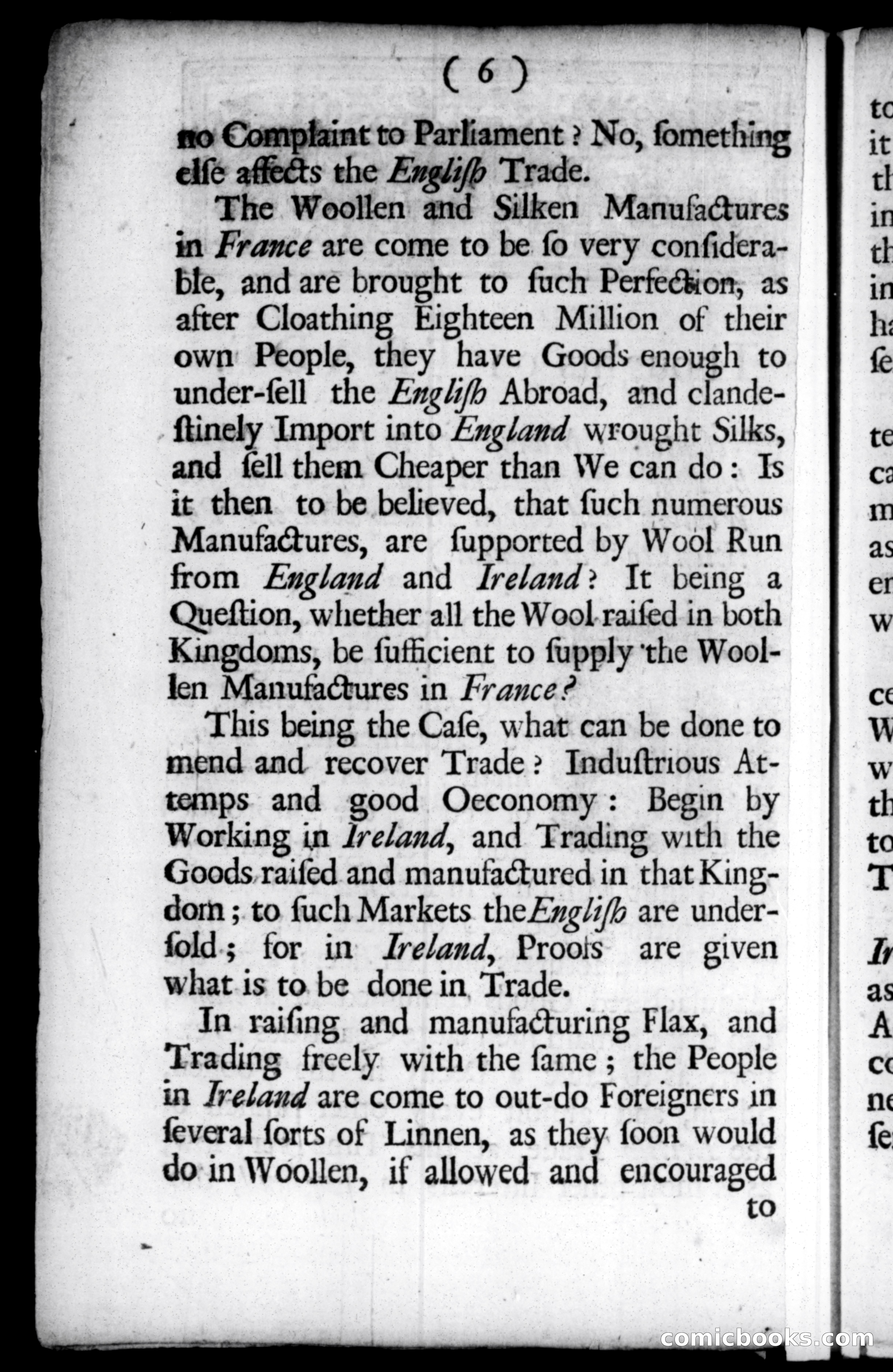
# Page Description This is running prose from page 6 of what appears to be an economic or trade-focused pamphlet or tract (not a penny dreadful as initially suggested—the content and typography indicate an 18th-century political-economic work). The text discusses English commercial concerns about French woollen and silk manufactures underselling English goods both domestically and abroad, questioning whether French mills rely on smuggled English wool. It proposes remedies: developing Irish manufacturing and trade in flax and linen to compete with foreign producers, arguing that Irish workers could excel in these industries if permitted and encouraged.
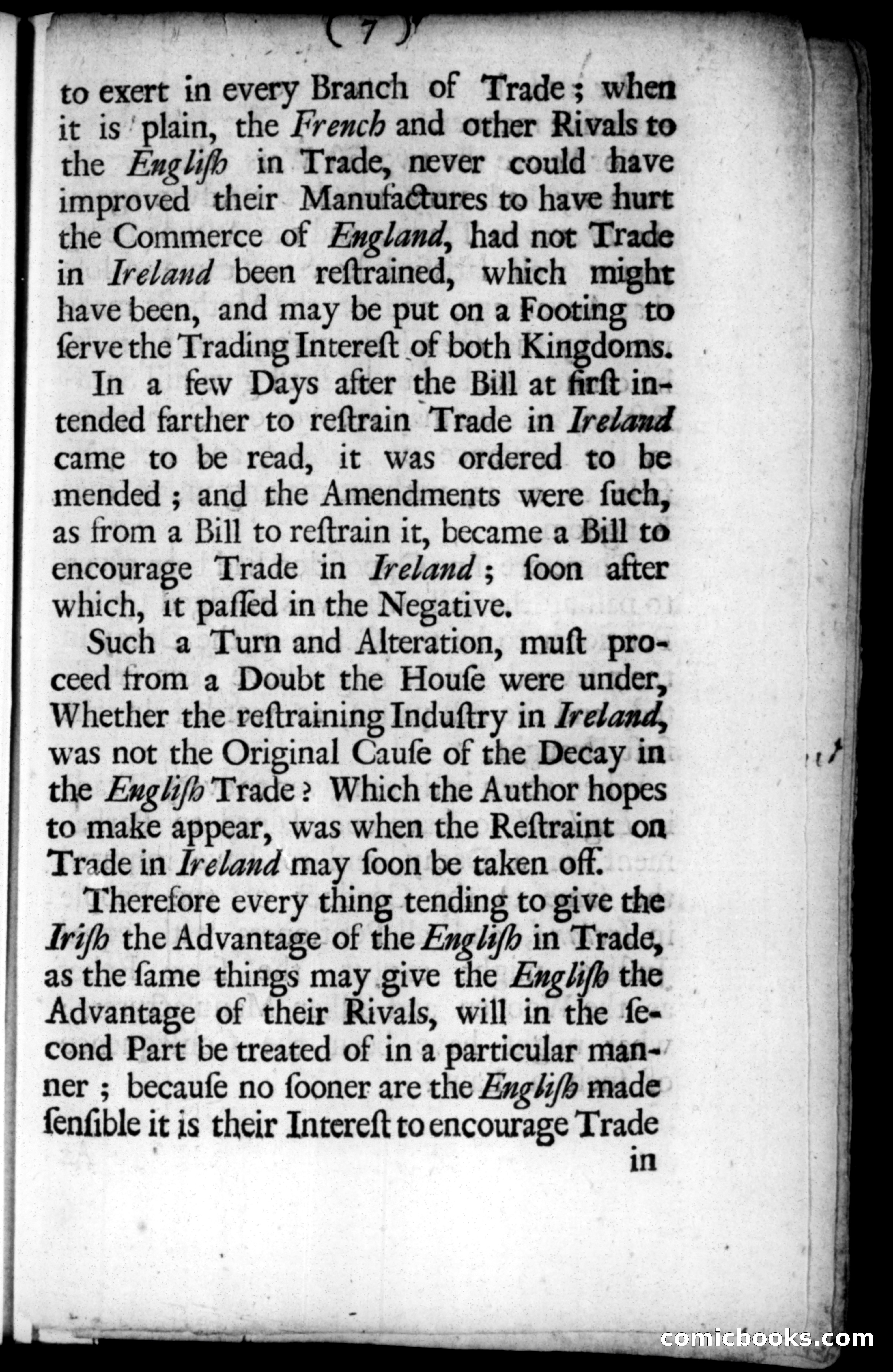
# Page Analysis This is **running prose** from what appears to be an 18th-century economic or political treatise (not a Victorian penny dreadful—the OCR attribution seems mistaken, as the typography and subject matter predate Victorian sensationalism). The visible text discusses a parliamentary bill concerning trade restrictions in Ireland. It describes how an initial bill intended to restrain Irish trade was amended and reversed, becoming instead a bill to encourage it, ultimately failing passage. The author argues that restraining industry in Ireland caused decay in English trade, and promises to demonstrate this point in a second part of the work, while explaining why encouraging Irish trade serves English commercial interests.
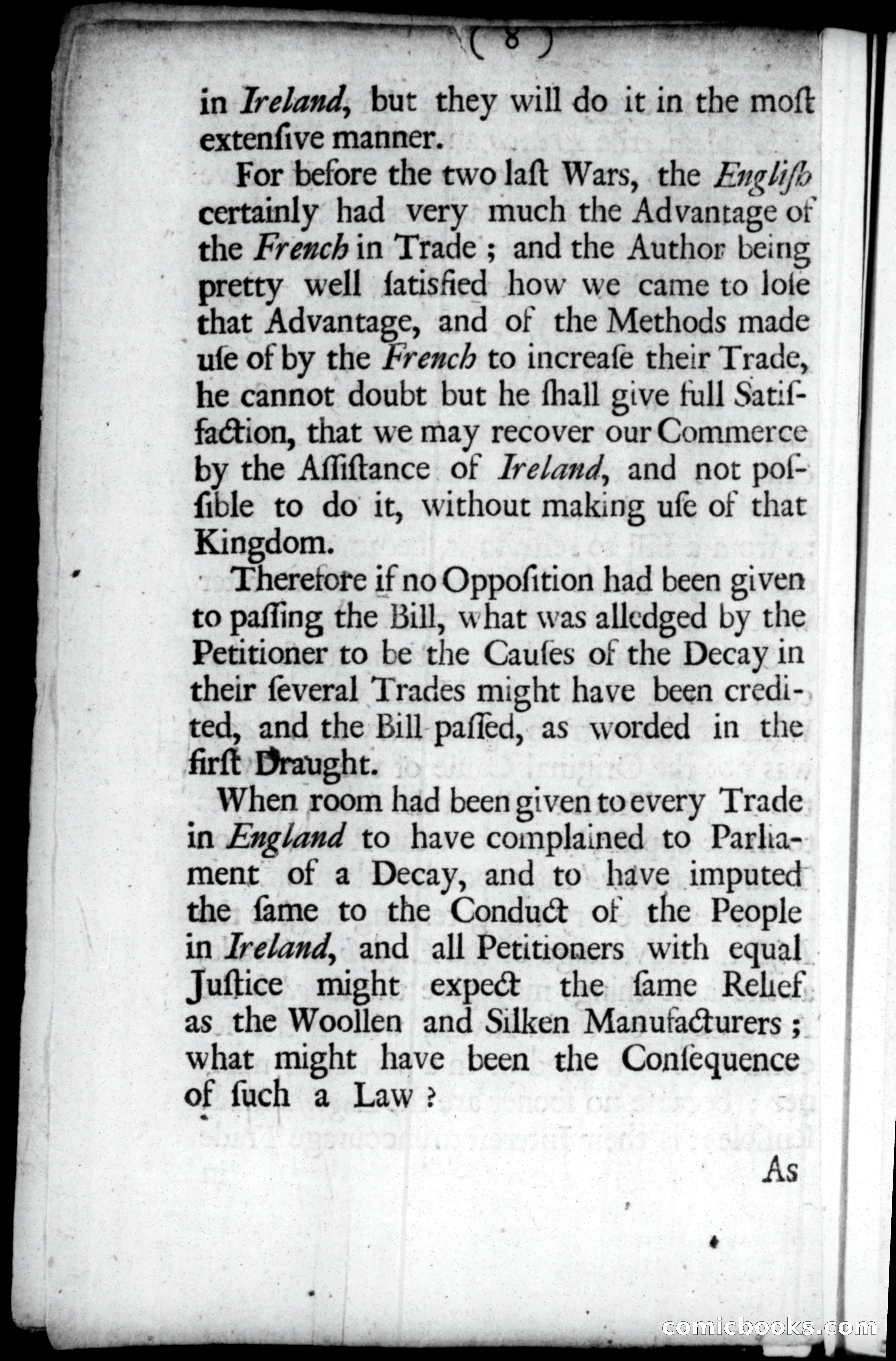
# Page Description This is a page of running prose from what appears to be a political or economic treatise (not a typical penny dreadful of sensation fiction). The text discusses trade policy between England, France, and Ireland, arguing that England lost commercial advantages to France in previous wars, and that recovery requires Ireland's assistance. The author contends that if a certain Bill had passed unopposed, competing English trades (wool, silk manufacturers) might have demanded equal relief by blaming Irish conduct, creating problematic legislative precedent. The page ends mid-argument with a rhetorical question about the consequences of such a law.
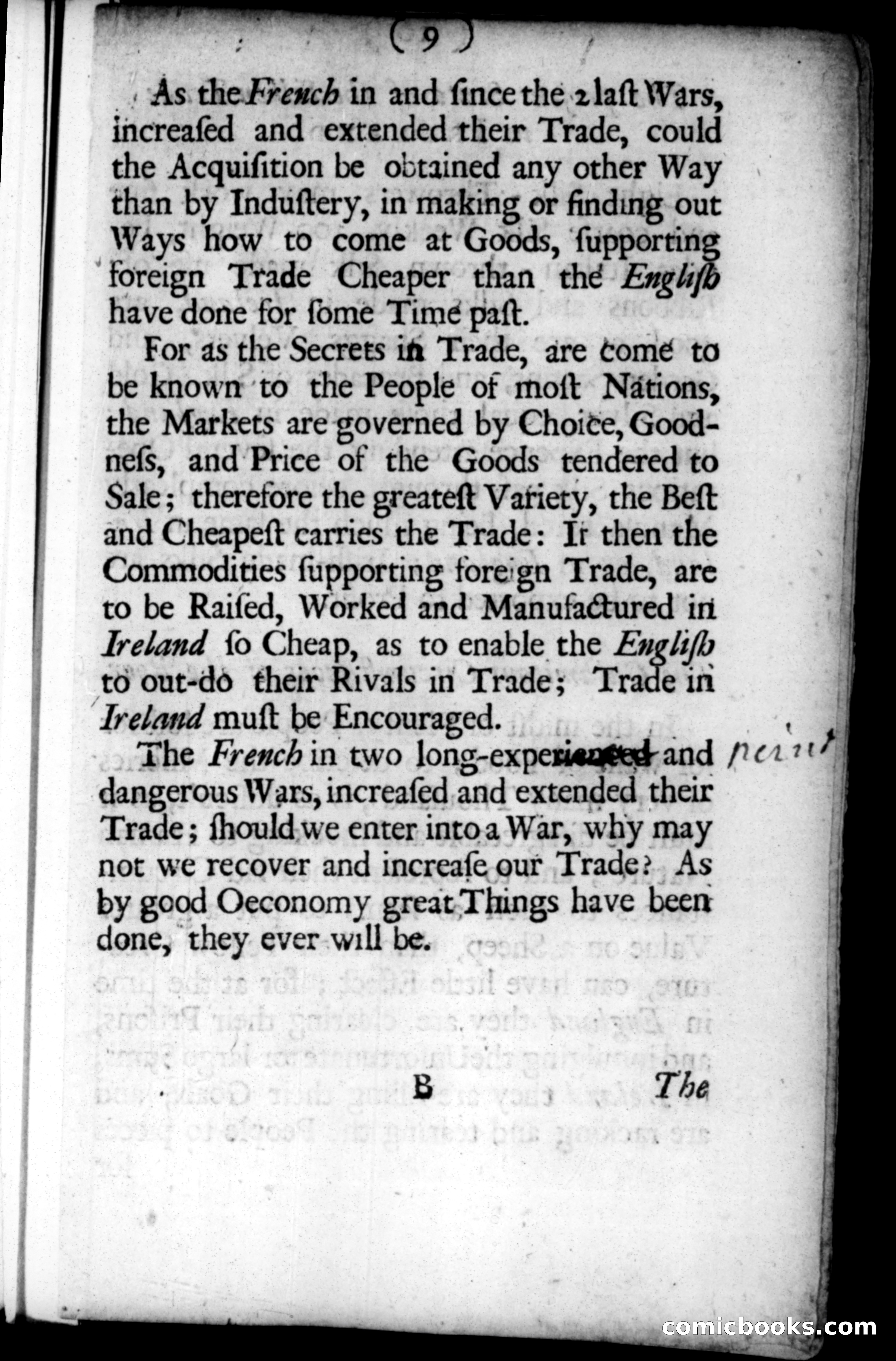
# Page Analysis This is a page of running prose text, likely from an economic or political treatise rather than a penny dreadful. The visible text argues that Ireland should be encouraged to manufacture goods cheaply to support English foreign trade and help English merchants compete with French rivals. The author contends that markets are governed by choice, quality, and price; therefore, if Irish-manufactured commodities can be produced inexpensively, they will enable English traders to outcompete their competition. The passage also suggests that if France increased trade during wartime, England similarly could recover and expand trade through good economy and management.
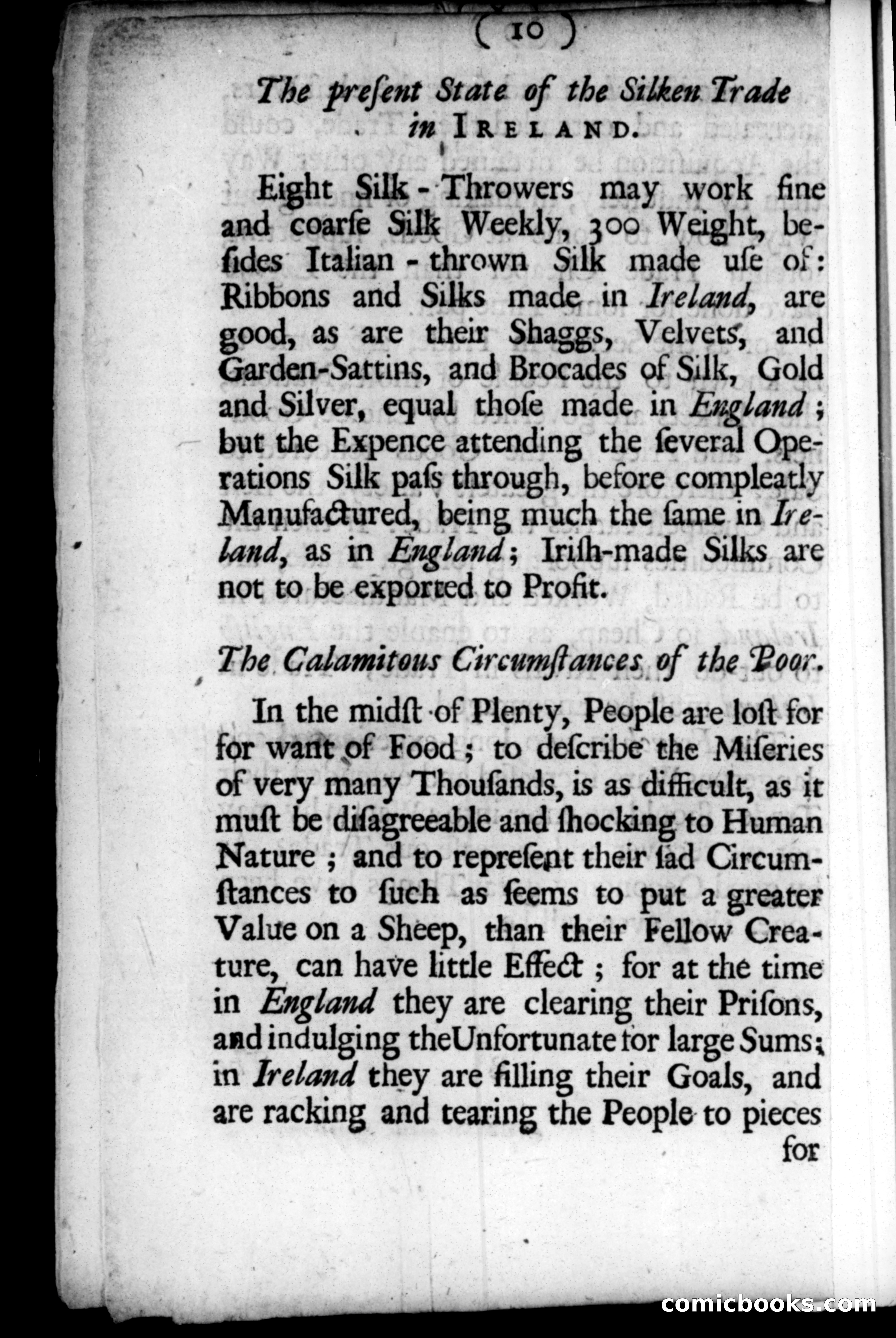
# Victorian Page Analysis This is **running prose** from what appears to be a didactic or political pamphlet, not a penny dreadful. The page contains two sections: first, a brief economic assessment of Ireland's silk manufacturing industry, noting that Irish-made silks rival English quality but cannot be profitably exported due to high production costs; second, a social commentary titled "The Calamitous Circumstances of the Poor," which contrasts England's lenient treatment of prisoners with Ireland's harsh imprisonment and exploitation of its people. The text employs emotionally charged language ("racking and tearing") typical of 18th- or 19th-century reform literature.
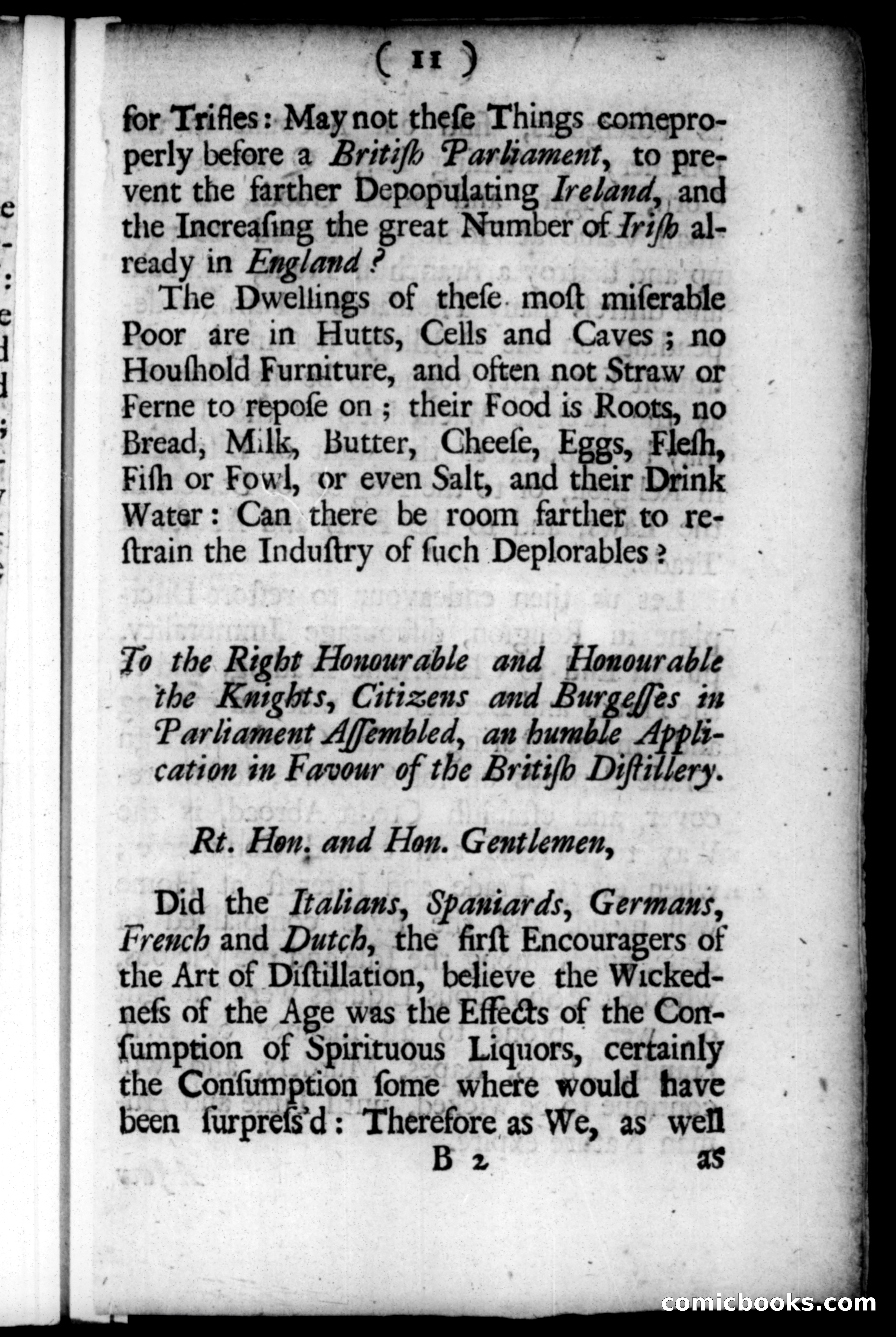
This is a page of running prose from what appears to be a petition or appeal document addressed to Parliament. The visible text argues for measures to prevent Irish depopulation and reduce Irish immigration to England, describing the severe poverty of Irish poor living in hovels without proper food or furnishings. The page then shifts to a separate petition addressed to Parliament's members, arguing that early European practitioners of distillation would not have blamed spirituous liquors for society's wickedness, and therefore (the argument continues on the next page) the British distillery industry deserves support. The text employs 18th-century typography and spelling conventions.
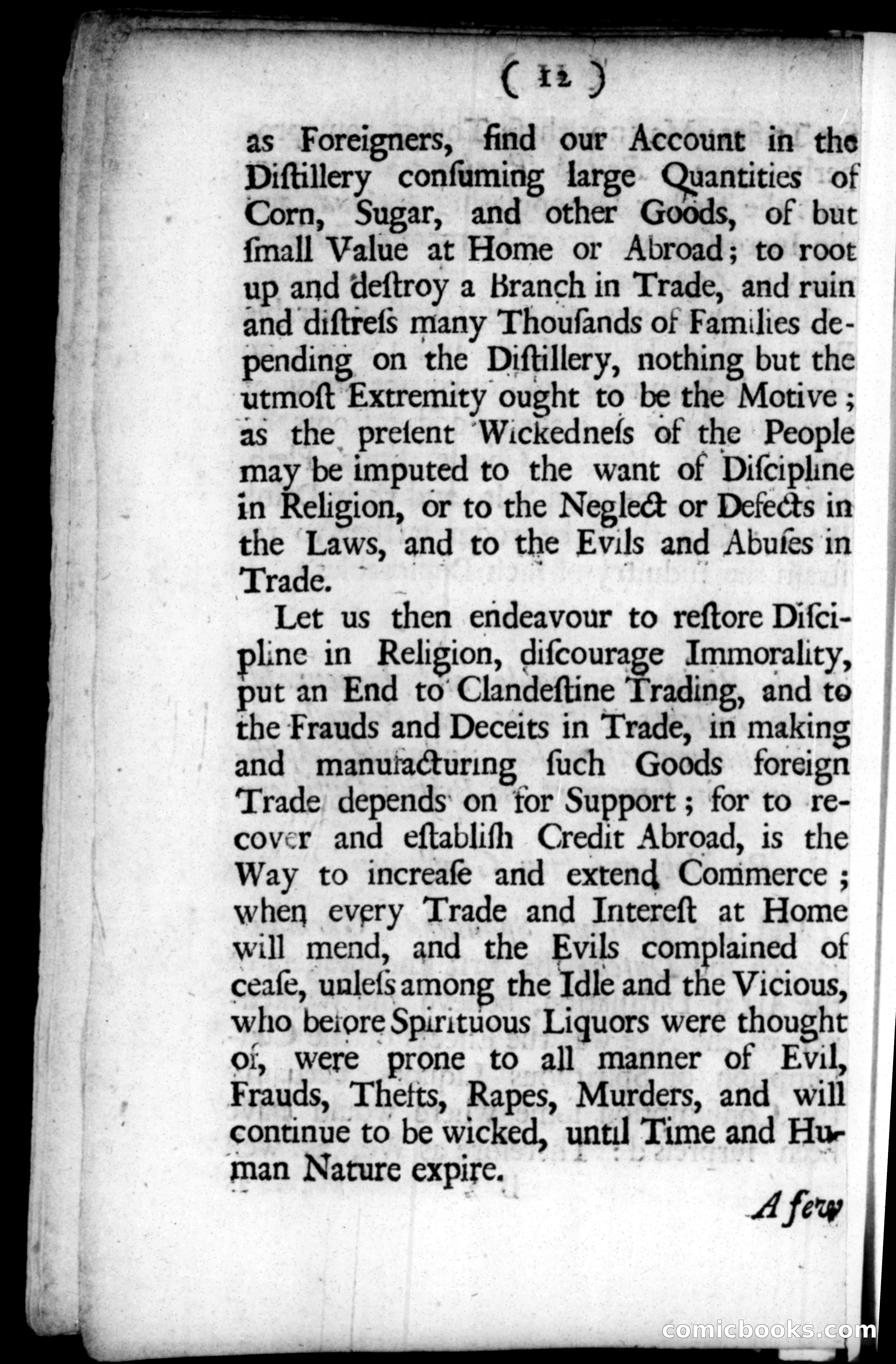
This is a page of running prose text (page 12), likely from a tract or pamphlet rather than a penny dreadful. The visible text argues against destroying the distillery trade, attributing social wickedness to lack of religious discipline and legal defects rather than to spirits themselves. It advocates for restoring moral discipline, ending fraudulent trading practices, and establishing commercial credit abroad. The author contends that vice among "the Idle and the Vicious" preceded spirituous liquors and will persist regardless. The text is signed "A few" at the bottom, suggesting this is an excerpt from a larger work.
# Page Description This is a running prose page (page 13) from what appears to be an 18th-century political or social commentary pamphlet, not a Victorian penny dreadful. The text consists of two separate essays: the first argues in favor of the distillery industry, addressing concerns about revenue and trade while stereotyping Dutch people as heavy drinkers of Geneva spirits; the second discusses the proposed construction of a new bridge near Westminster in London, questioning whether toll revenues would adequately cover construction and maintenance costs. The page contains dense argumentative prose typical of period polemic writing.
This is a page of running prose from what appears to be an 18th-century (not Victorian) political or commercial pamphlet. The text discusses arguments about London Bridge repairs and tolls, asserting that building a new bridge would not harm the City of London's trade or navigation. The second section shifts to an elegiac piece titled "On the Demife of the Great Prince Eugene," mourning Eugene as the last surviving captain among three great generals—John Duke of Marlborough, James Duke of Berwick, and Prince Eugene himself—representing Protestant and Catholic faiths respectively.
# Page Description This is running prose text, not a cover or illustration. The page contains congratulatory verses on the marriage of the Prince of Wales to the Princess of Saxe-Gotha, followed by a note (marked "N.B.") discussing British trade policy, particularly regarding the woollen industry's competition with French imports and concerns about domestic economic decline due to neglect of profitable trade branches.
# Analysis of Page 16 This is a **running prose page** from what appears to be an early economic treatise (not a penny dreadful, contrary to the prompt's framing). The visible text discusses trade deficits and currency regulation in England and Ireland. The author argues that losses in trade have drained cash reserves, forcing reliance on paper credit, which will similarly decline if trade decay continues. He advocates for coining unused gold and silver, urging swift action to avoid prolonged delays. The page concludes with an advertisement: someone named Lloyd seeks to negotiate business opportunities in Dublin and northern Ireland, proposing to depart July 1st and return to London by October. The text references a promised "Second Part" discussing lowering the coin, suggesting this is part of a longer work.