A complete issue · 54 pages · 1935
Life — April 1935
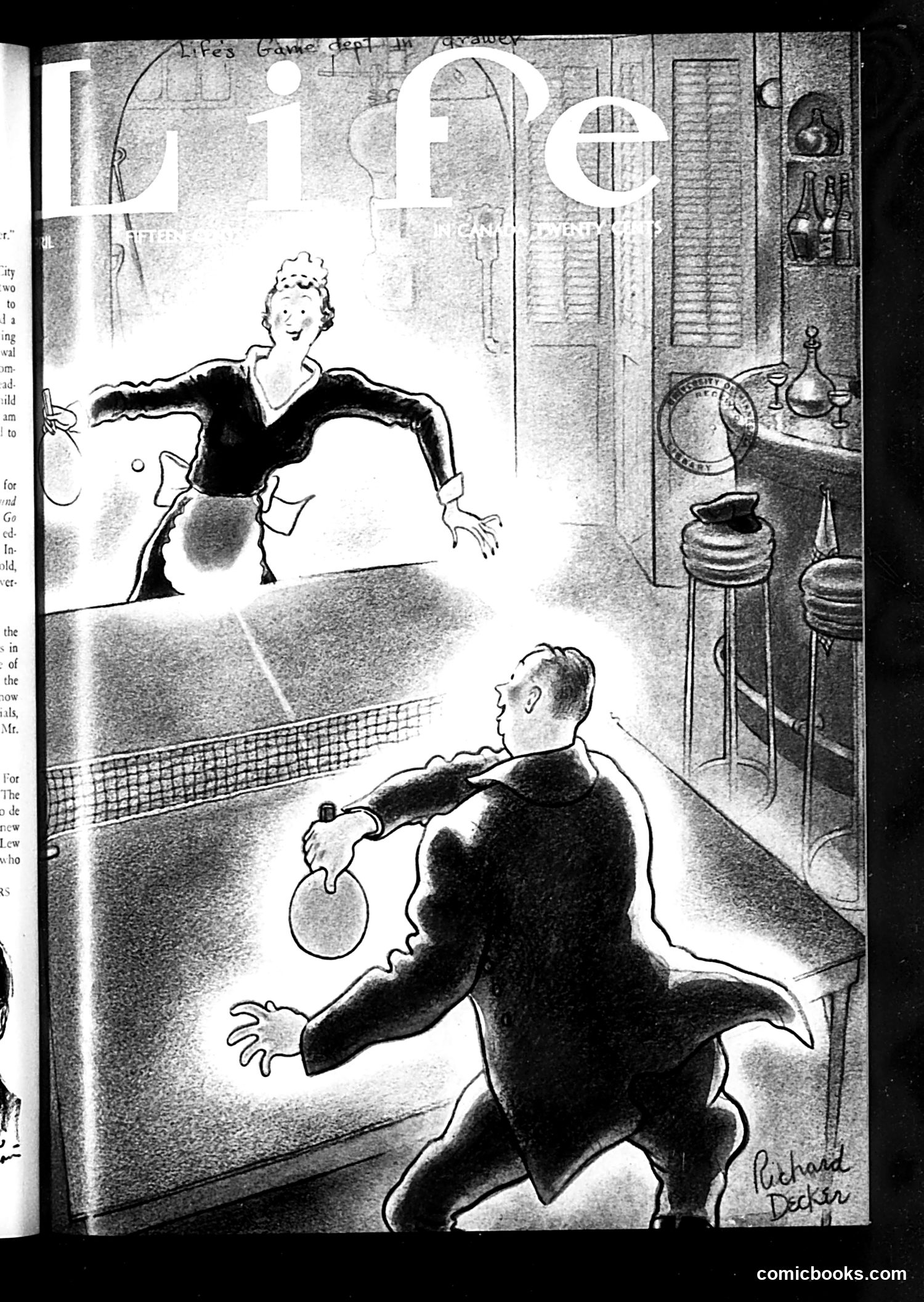
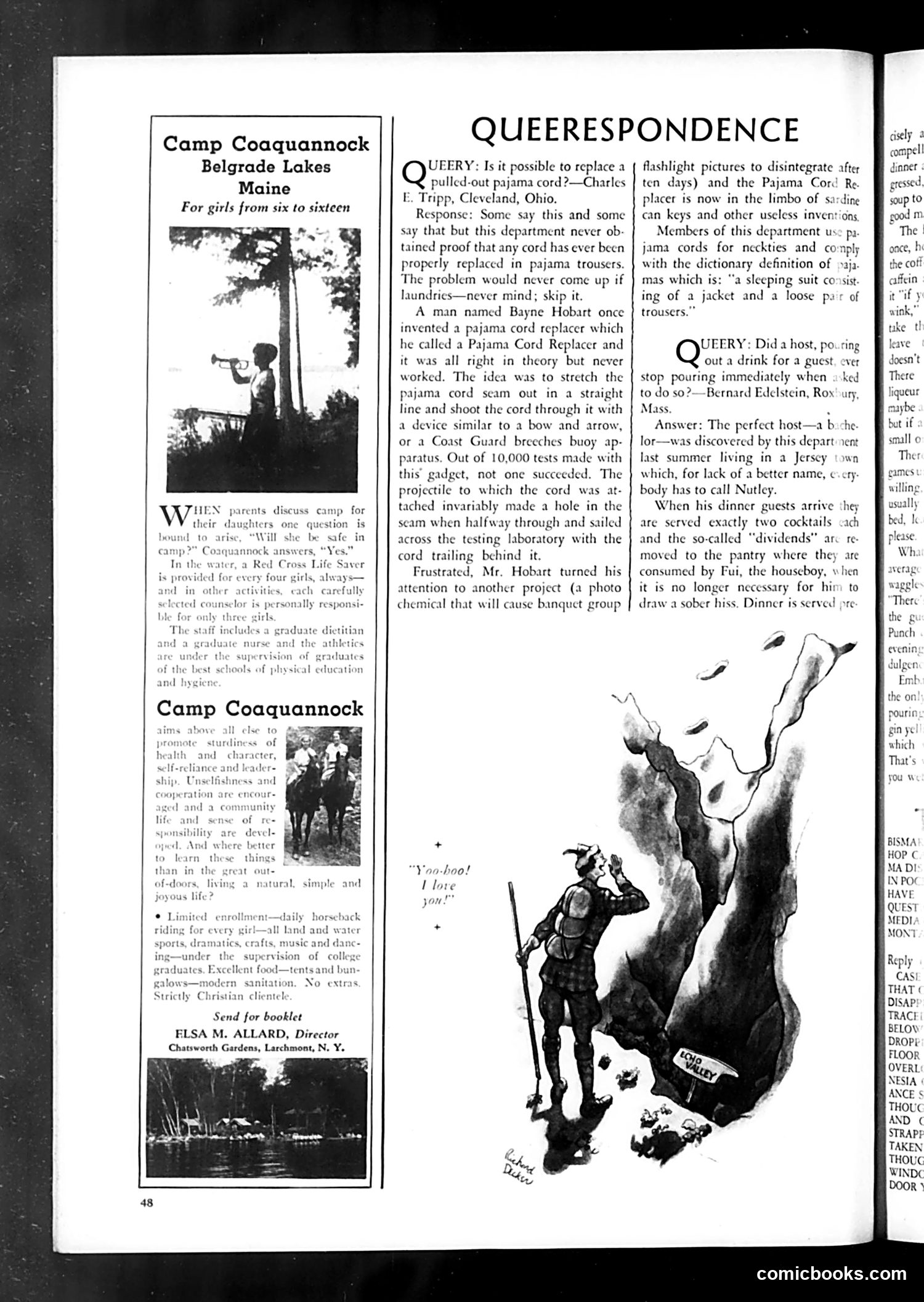
# Life Magazine Cartoon Analysis This cartoon depicts a man playing badminton or tennis against a woman across a net. The man, drawn in an exaggerated caricatured style with heavy shading, appears to be losing or struggling with the game. The woman stands confidently on the opposite side. The satire likely comments on **gender roles and changing social dynamics**, possibly from the 1920s-1940s era when women's increased participation in sports and social activities was noteworthy. The cartoon may mock male anxiety about women's athletic competence or their shifting social position. The artist's signature reads "Richard Decker" (visible at bottom right). Without the complete text visible, the specific social commentary remains somewhat unclear, but the visual joke appears to center on role reversal or female athletic prowess challenging traditional gender expectations.
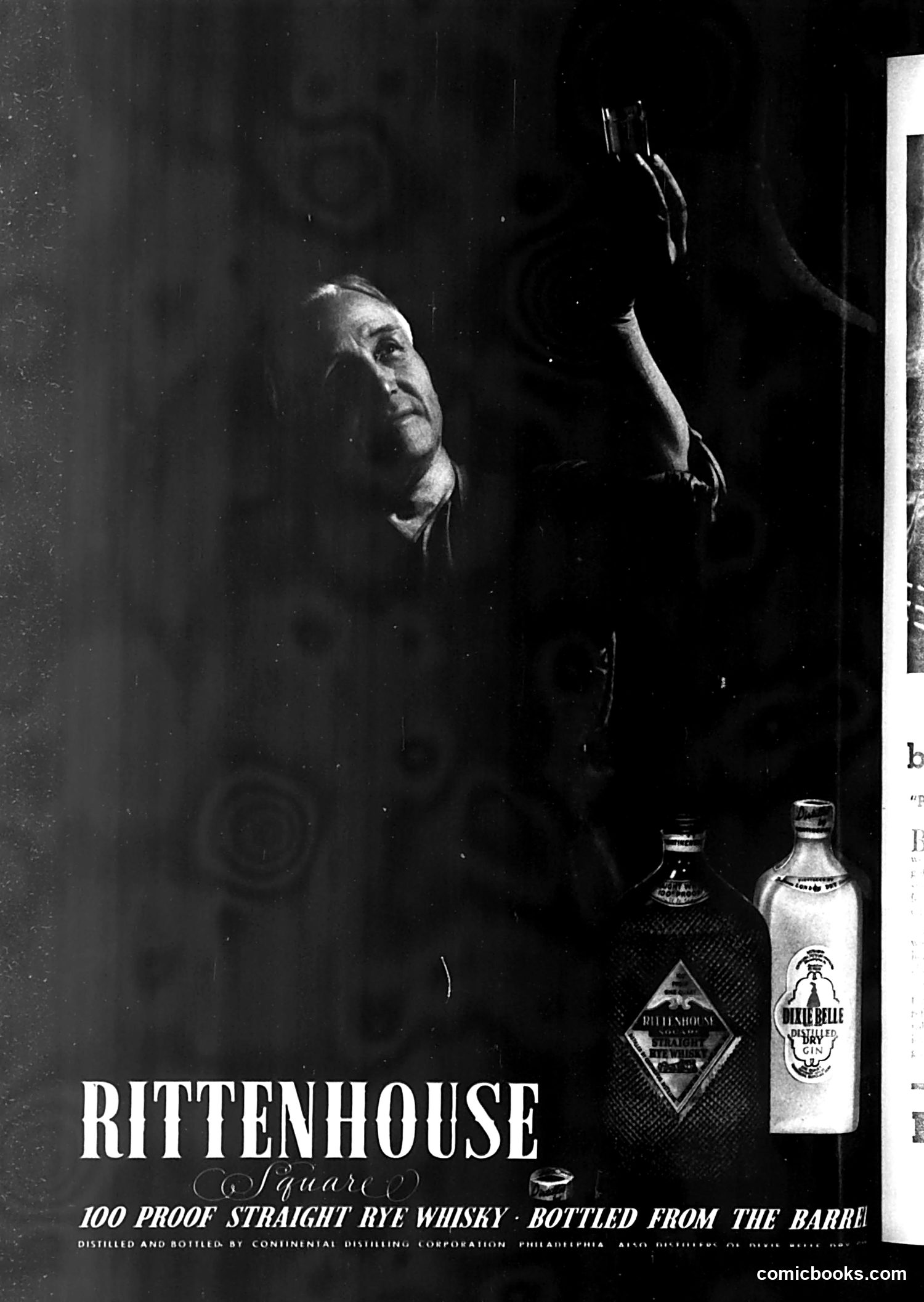
# Advertisement Analysis This is a **Rittenhouse Square whiskey advertisement**, not political satire. The page shows a dramatic black-and-white photograph of a man examining two bottles of Rittenhouse brand rye whisky in low lighting, creating atmospheric, sophisticated branding. The text identifies it as "100 Proof Straight Rye Whisky - Bottled from the Barrel," made by Continental Distilling Corporation in Philadelphia. This appears in **Life magazine**, which despite being satirical, carried advertisements. The ad uses dramatic photography and product display typical of 1930s-40s liquor marketing—emphasizing quality and straight-from-barrel authenticity during an era when such claims held marketing appeal. No political cartoon or satire is present; this is straightforward commercial advertising.
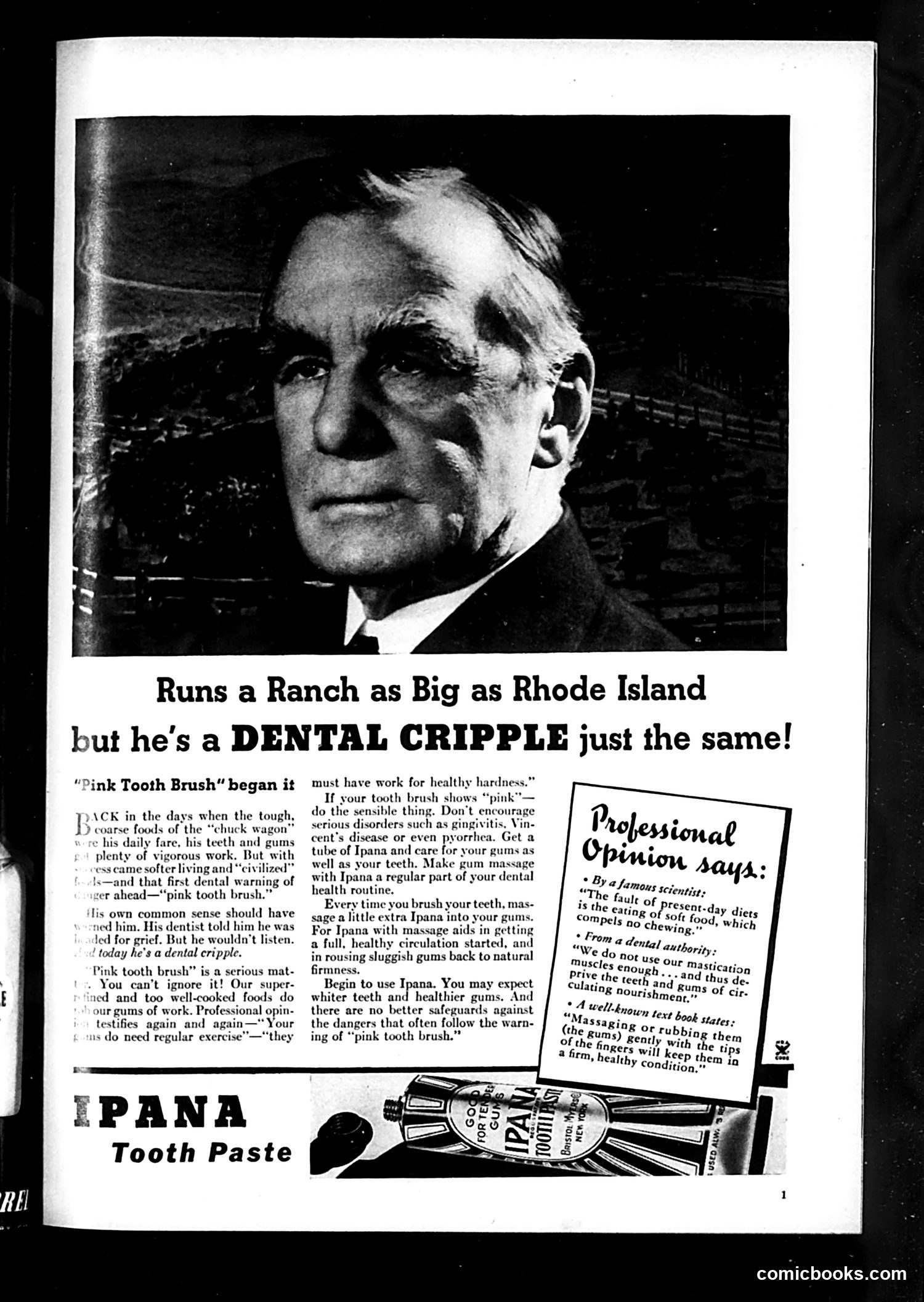
# Analysis This is a **vintage Ipana toothpaste advertisement**, not political satire. The page features a photograph of an older man in formal attire with the headline: "Runs a Ranch as Big as Rhode Island but he's a **DENTAL CRIPPLE** just the same!" The ad uses shock-value language to sell Ipana toothpaste and their associated "Pink Tooth Brush" product. The "dental cripple" phrase refers to someone wealthy and successful in business who nonetheless suffers from poor dental health—suggesting even successful people need proper dental care products. The advertisement includes testimonial-style "Professional Opinions" claiming Ipana and massage aids prevent gum disease. This reflects early-20th-century marketing that emphasized gum health alongside tooth cleaning, a common sales angle for dental products of that era.
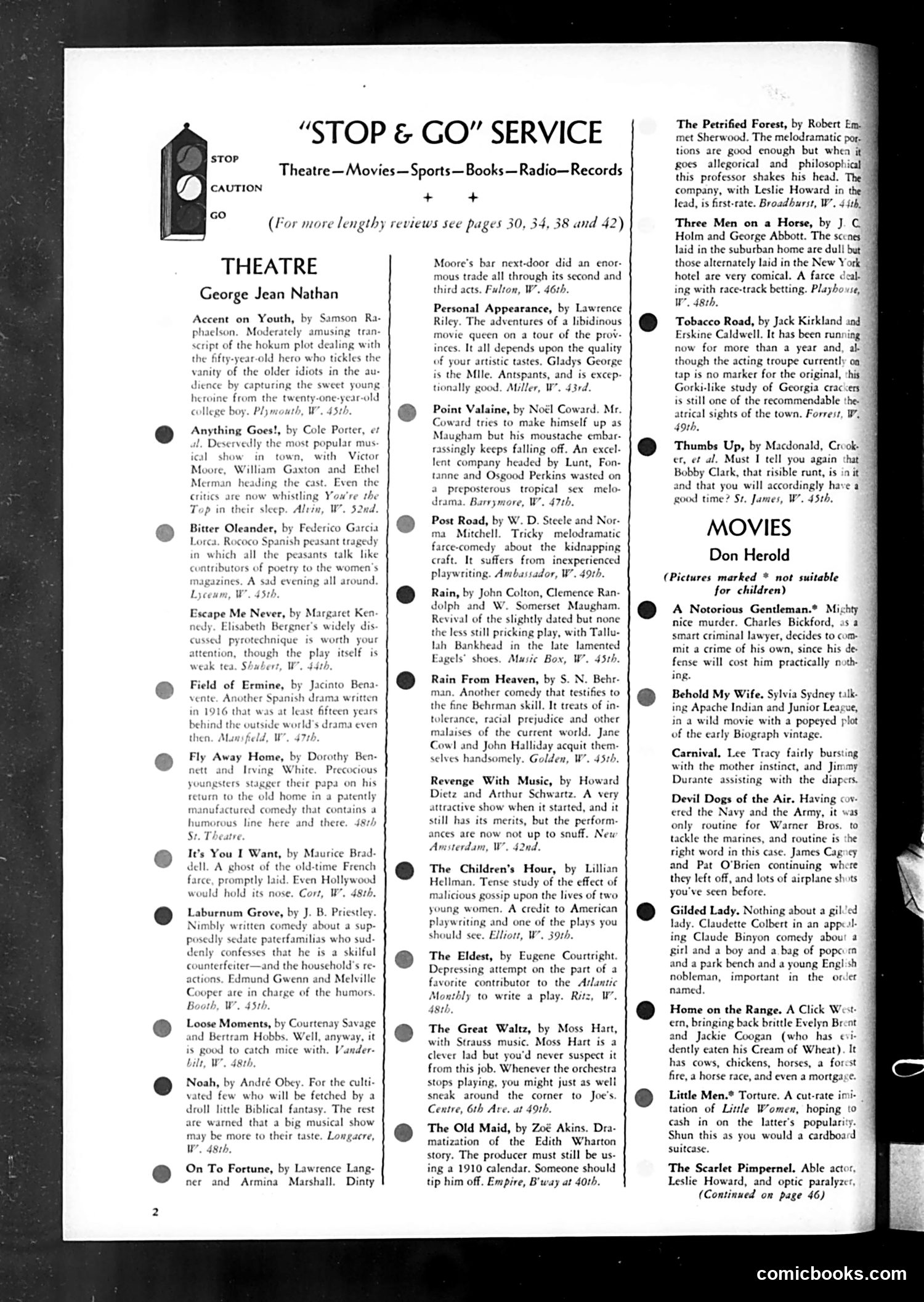
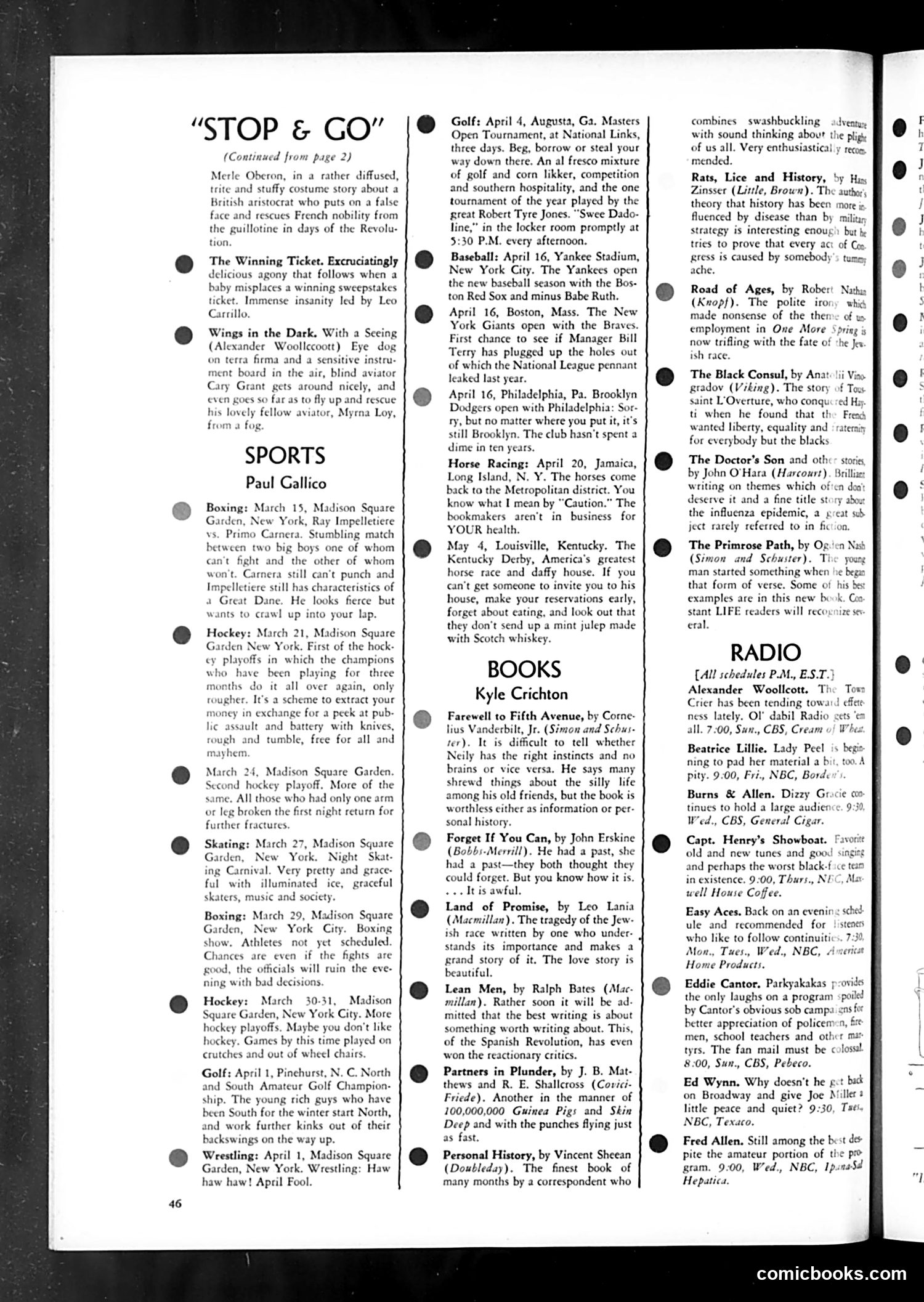
This page is a "Stop & Go" entertainment review section from *Life* magazine, covering theatre, movies, sports, books, radio, and records. The header features a traffic light logo, which is the section's recurring visual device. The content consists of brief critical reviews of theatrical productions (like "Accent on Youth" and "Anything Goes!") and films, written in the magazine's characteristic witty, abbreviated style. Rather than containing political cartoons or satire, this is straightforward entertainment criticism—a regular magazine feature reviewing contemporary Broadway shows and Hollywood movies from what appears to be the 1930s era. The reviews are largely descriptive, offering quick judgments to help readers decide what to see, with shorthand noting venue locations and cast members.
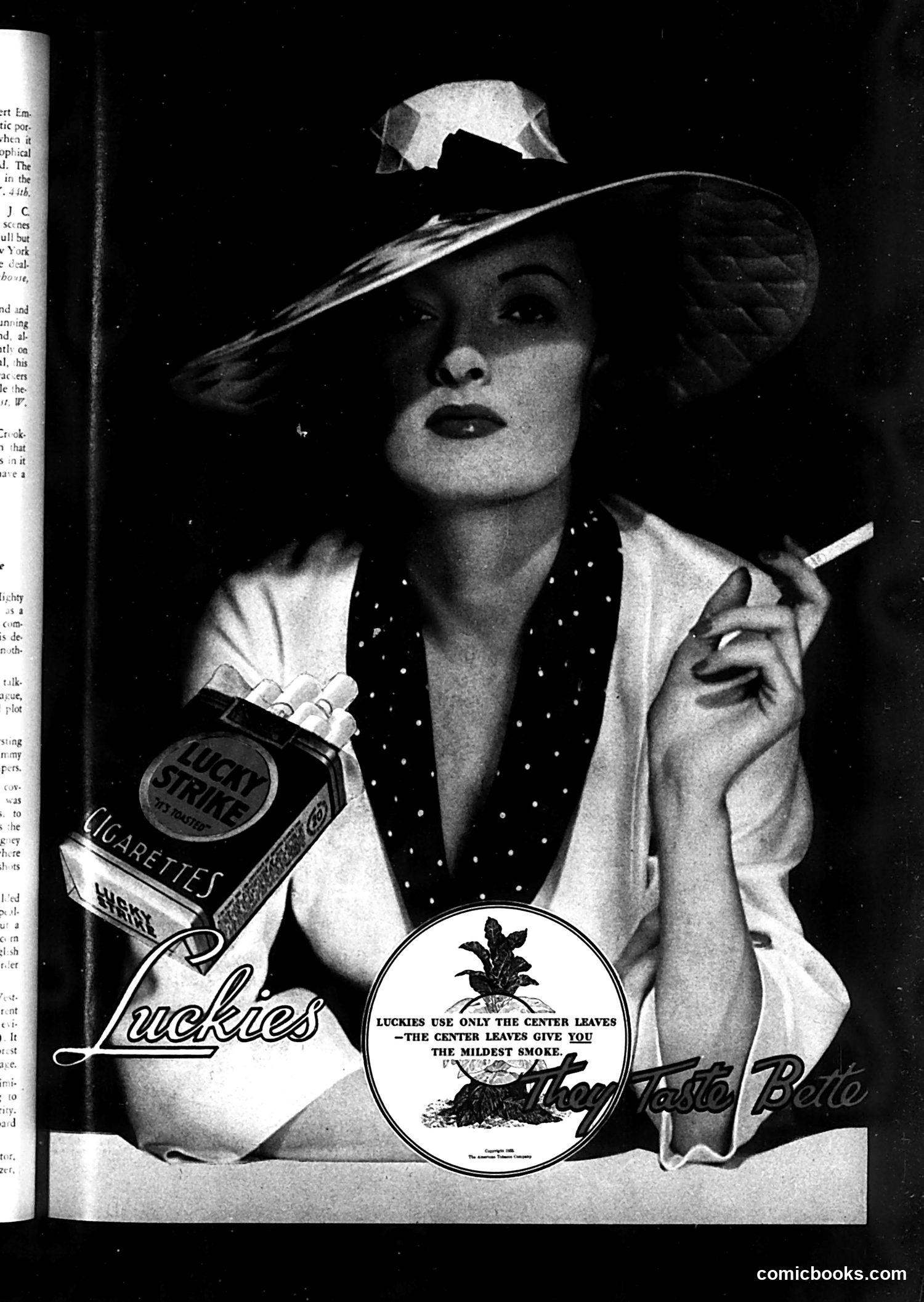
# Analysis This appears to be a **cigarette advertisement for Luckies** rather than political satire. The image shows a fashionably dressed woman in 1920s-30s attire (wide-brimmed hat, polka-dot scarf, cigarette holder) posed glamorously against a dark background. The central circular text reads: "LUCKIES USE ONLY THE CENTER LEAVES—THE CENTER LEAVES GIVE YOU THE MILDEST SMOKE." This is a marketing claim emphasizing product quality—that Lucky Strike cigarettes use only the finest tobacco leaves, positioned as a premium choice. The sophisticated styling targets affluent consumers, particularly women, during an era when cigarette advertising increasingly featured elegant imagery to expand the female market. This is **commercial advertising**, not political or social satire.
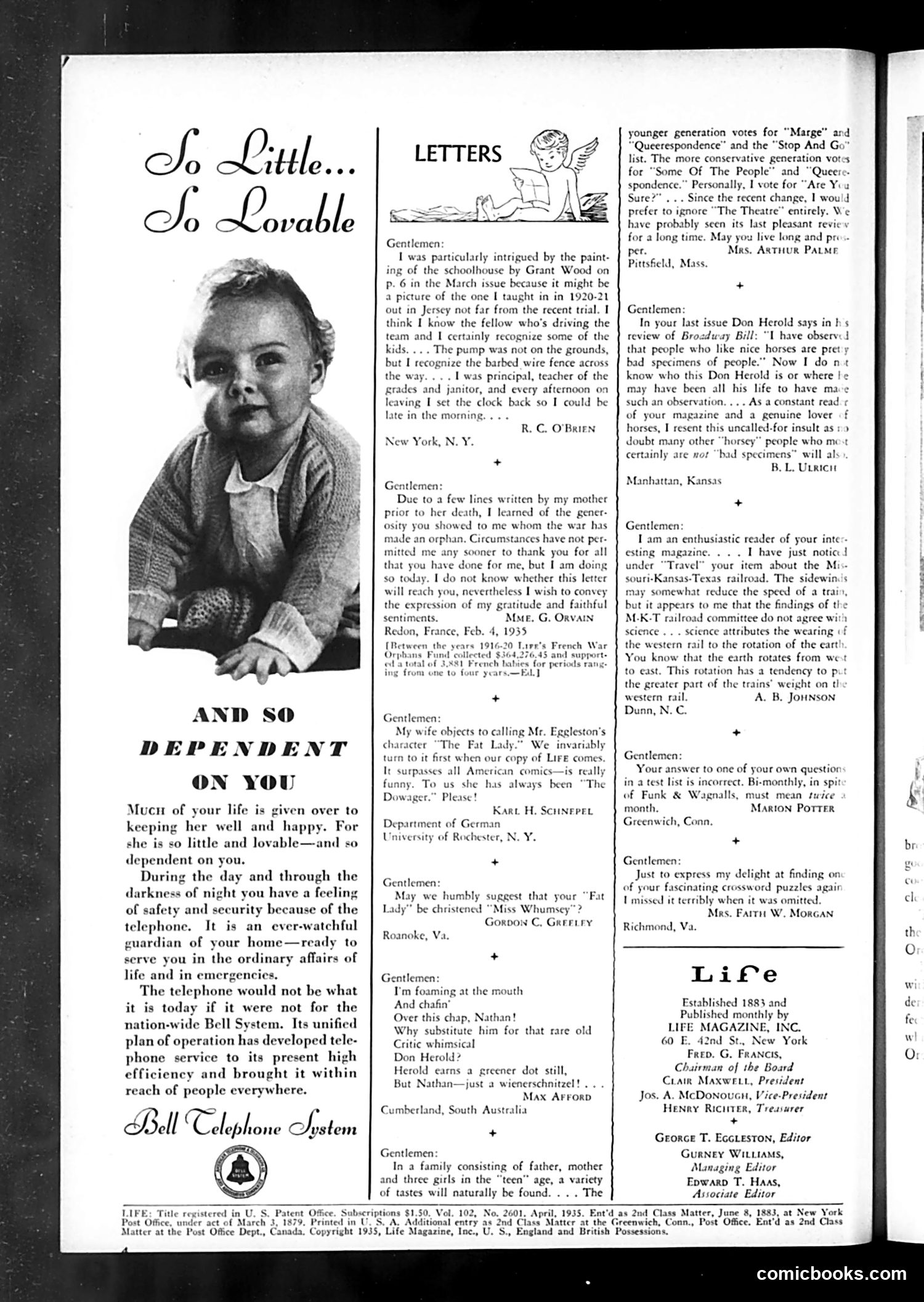
# Life Magazine Page Analysis This page features the "Letters" section with reader correspondence and advertisements. The prominent left-side image and text titled "So Little... So Lovable and So Dependent On You" appears to be a **Bell Telephone System advertisement** emphasizing the telephone's role in home security and family connection. The copy stresses how the telephone provides "safety and security" during day and night, positioning it as an essential guardian service. The letters discuss various topics including Broadway reviews, railroad operations, and crossword puzzles—typical early 1920s reader concerns. No specific political cartoon or satire is evident on this page; it's primarily a letters column with accompanying commercial messaging about telephone utility and reliability.
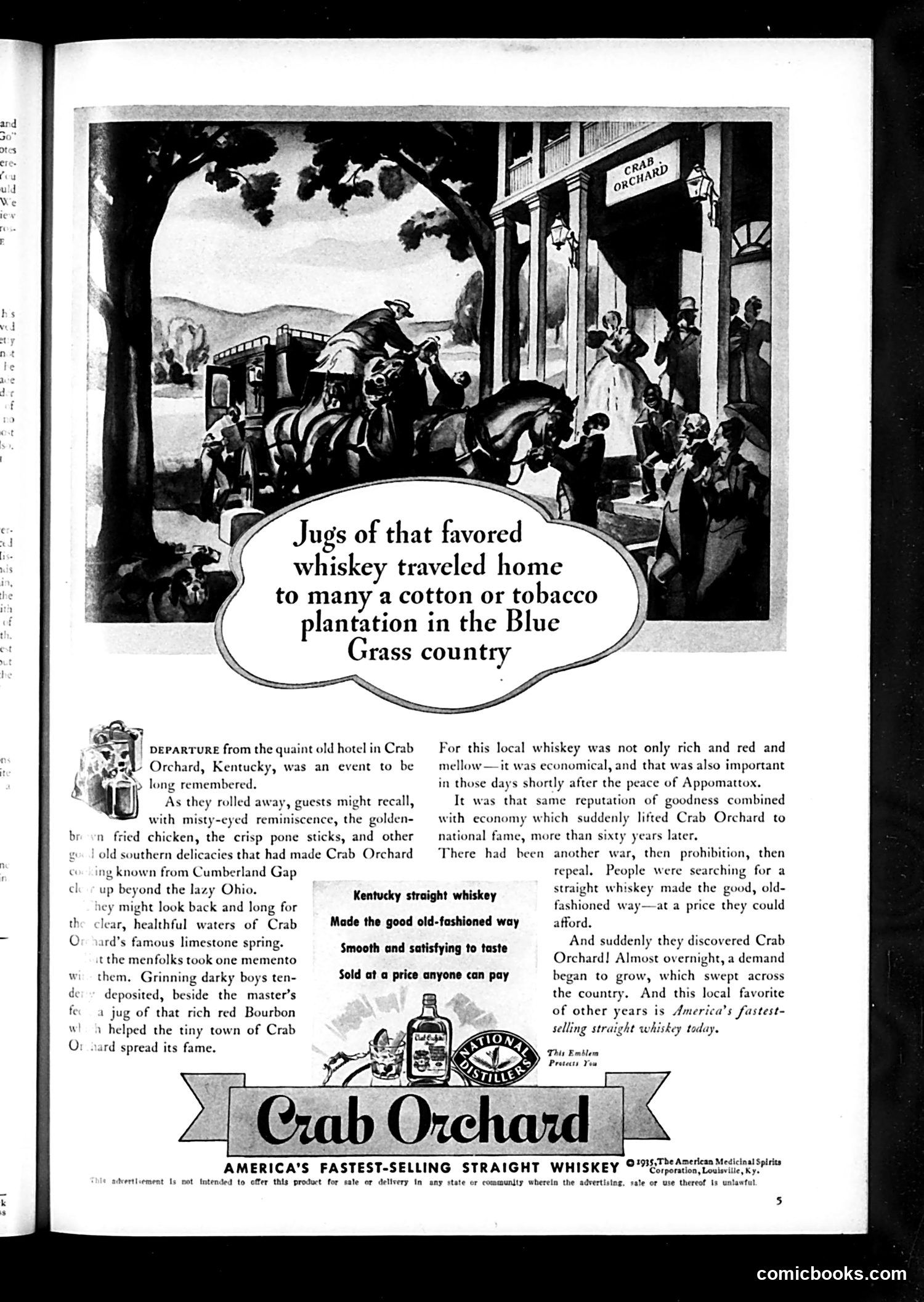
# Analysis This is a **Crab Orchard whiskey advertisement**, not political satire. The ad uses nostalgic Americana to market the product. The illustration depicts a colonial-era scene: a stagecoach arriving at an inn labeled "Crab Orchard" in Kentucky, with period-dressed figures gathered around. The text romanticizes the whiskey's history, claiming jugs traveled "home to many a cotton or tobacco plantation in the Blue Grass country." The ad emphasizes the whiskey was "economical" and "good, old-fashioned"—selling post-Prohibition appeal by positioning Crab Orchard as an established, trusted brand with deep American roots. The phrase "America's fastest-selling straight whiskey" claims current market dominance. This leverages historical legitimacy and regional pride to boost sales in the post-Prohibition era.
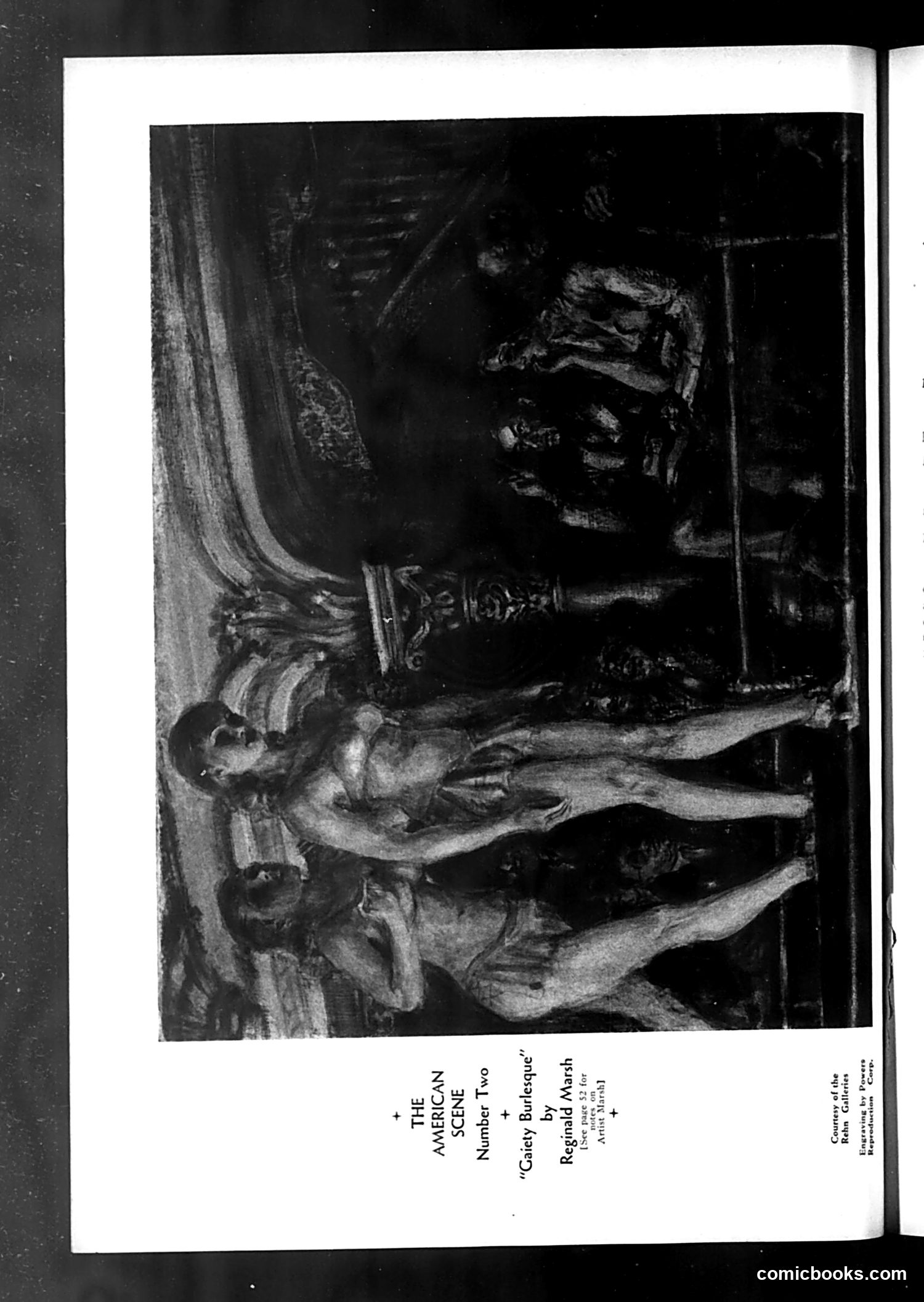
# Analysis This appears to be a page from *Life* magazine showing "The American Scene, Number Two" — a satirical illustration labeled "Gassy Bridegroom" with credit to "Reginald Marsh." The image depicts what seems to be a theatrical or domestic scene with multiple figures in an interior setting. The composition is rotated 90 degrees, requiring careful viewing. The subject matter — titled "Gassy Bridegroom" — suggests satire about either a wedding scenario or a character type associated with excessive talk or pretension. Reginald Marsh was known for satirical social commentary through caricature. Without additional context about the specific date or cultural references, the exact target of satire remains unclear, though the title implies mockery of pompous or verbose behavior, likely a common social type or contemporary figure of the period.
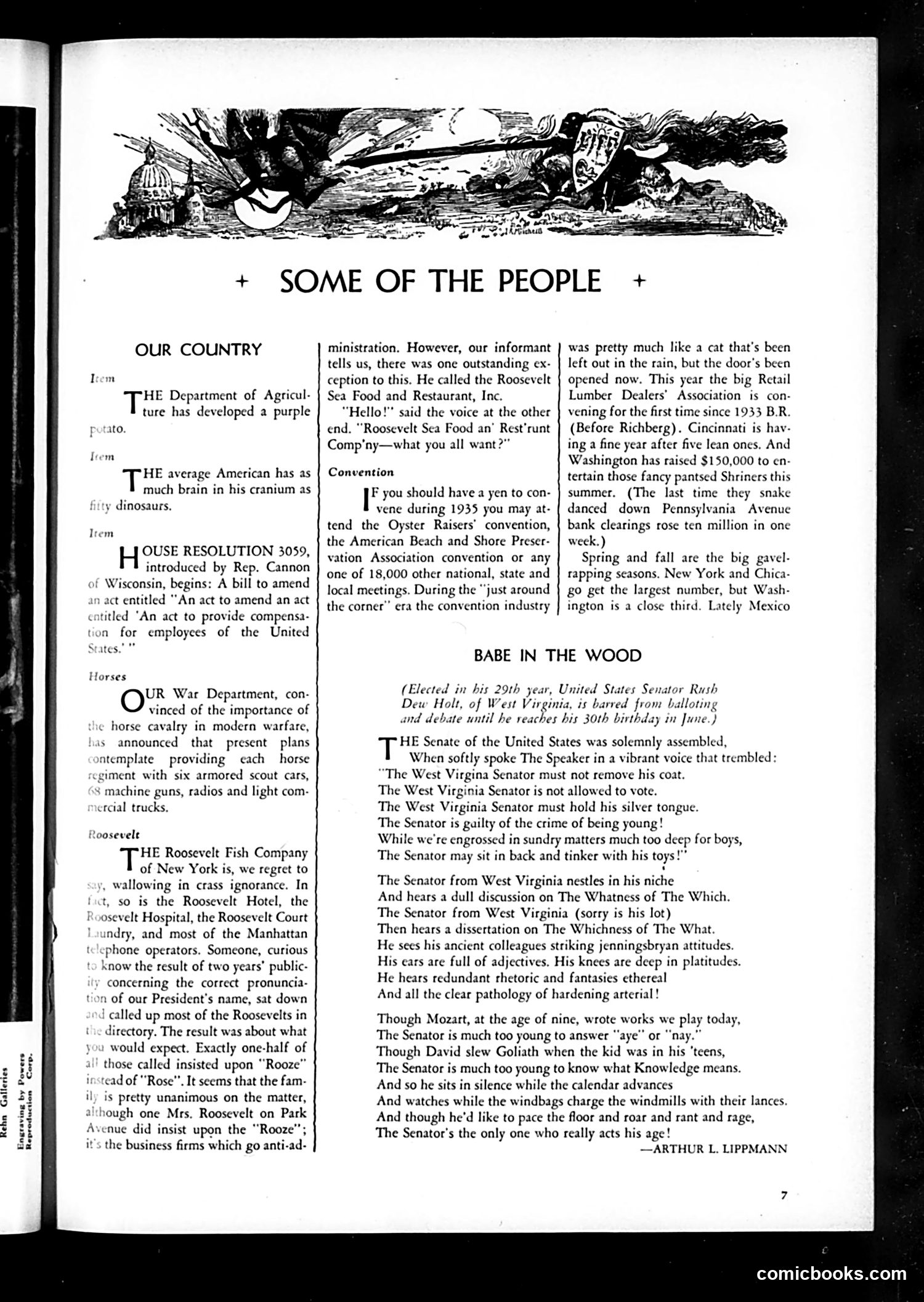
# "Some of the People" / "Babe in the Wood" This page contains satirical commentary on various American institutions and figures. The left column mocks government agencies (Agriculture Department's purple potato), conventions (Oyster Raisers' Association), and the Roosevelt administration's various initiatives—particularly poking fun at the pronunciation disputes around "Roosevelt" and the Roosevelt Hotel/Fish Company. The main poem "Babe in the Wood" (by Arthur Lippmann) satirizes Senator Ruth Dew Holt of West Virginia on his 29th birthday. It mocks him as inexperienced and unfit, using extended metaphors of youth and ignorance—comparing him to Mozart and David (both young) to suggest he's too immature for Senate. The poem criticizes his silence, lack of knowledge, and inability to contribute meaningfully to serious legislative matters.
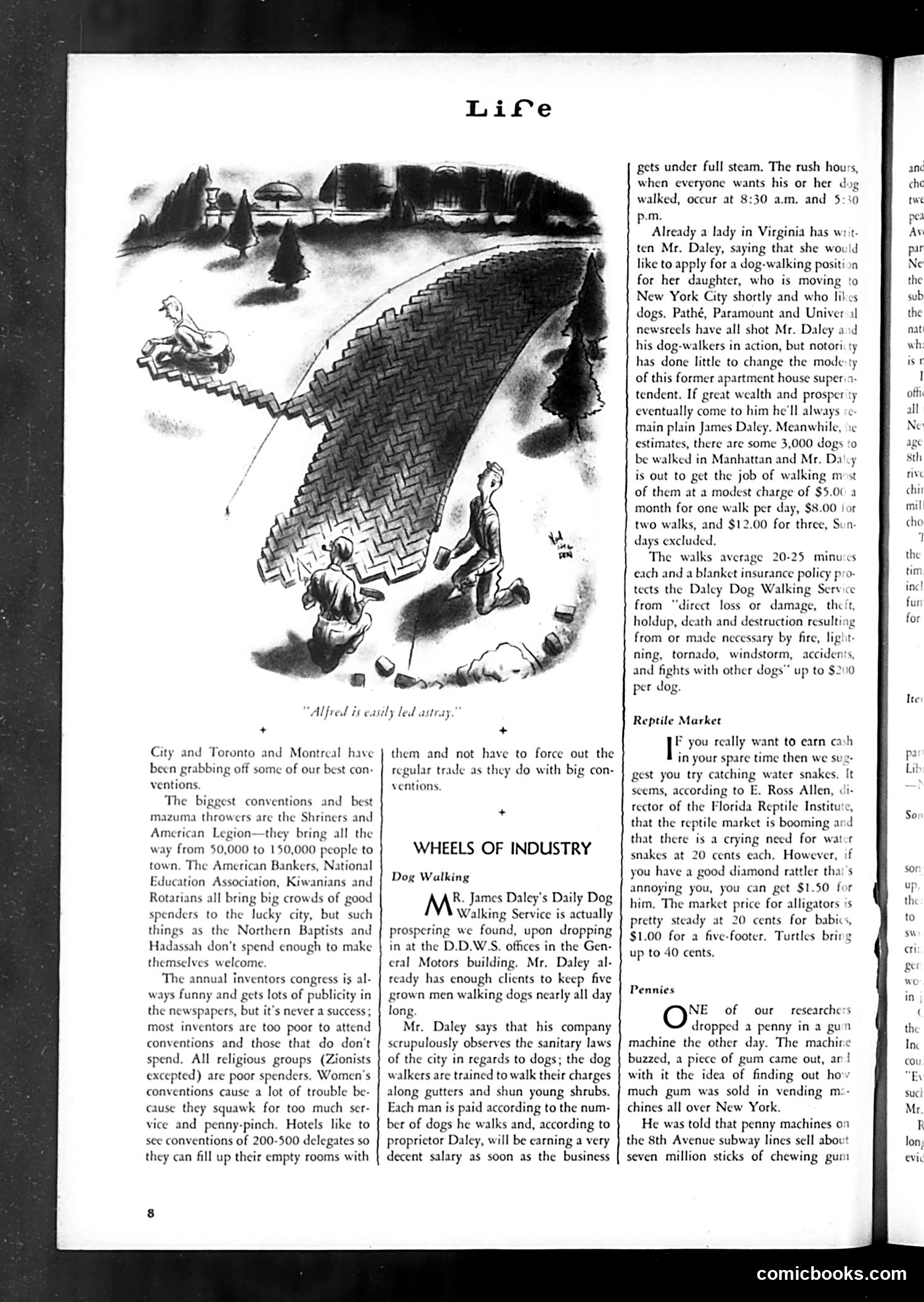
# "Alfred is easily led astray" This cartoon satirizes the emerging dog-walking service industry in New York City. The illustration shows a small dog being led astray by larger dogs on leashes, with the caption suggesting that even a dog named "Alfred" can be easily manipulated or corrupted. The accompanying article discusses James Daley's "Daily Dog Walking Service," which employs multiple walkers to exercise Manhattan dogs for fees ranging from $5-12 monthly. The satire mocks this new commercial venture—the idea that New Yorkers are now paying strangers to walk their pets—by suggesting the service itself might lead dogs (and by extension, their owners' money) astray. It's social commentary on urban commercialization and the outsourcing of basic pet care to service industries.
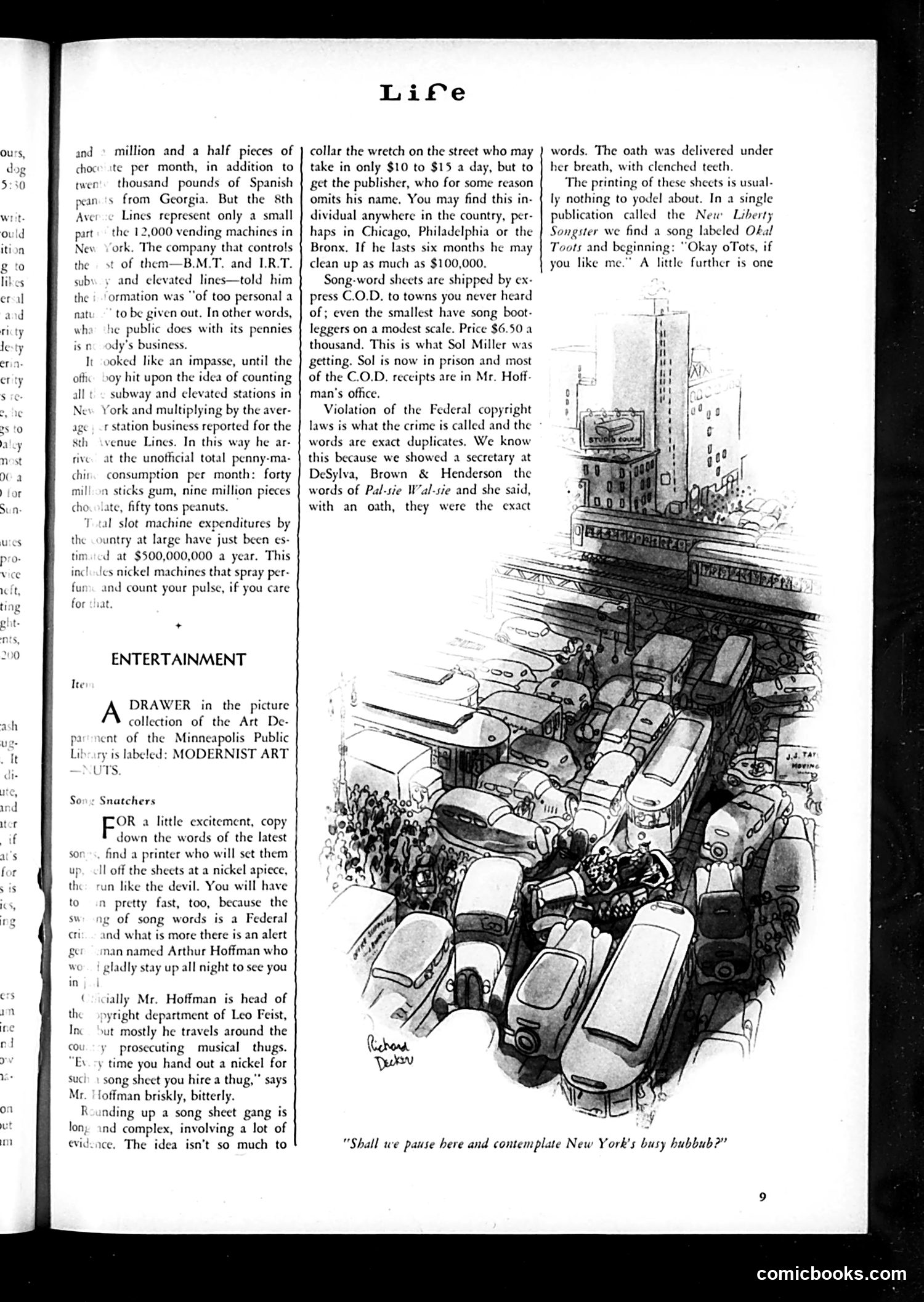
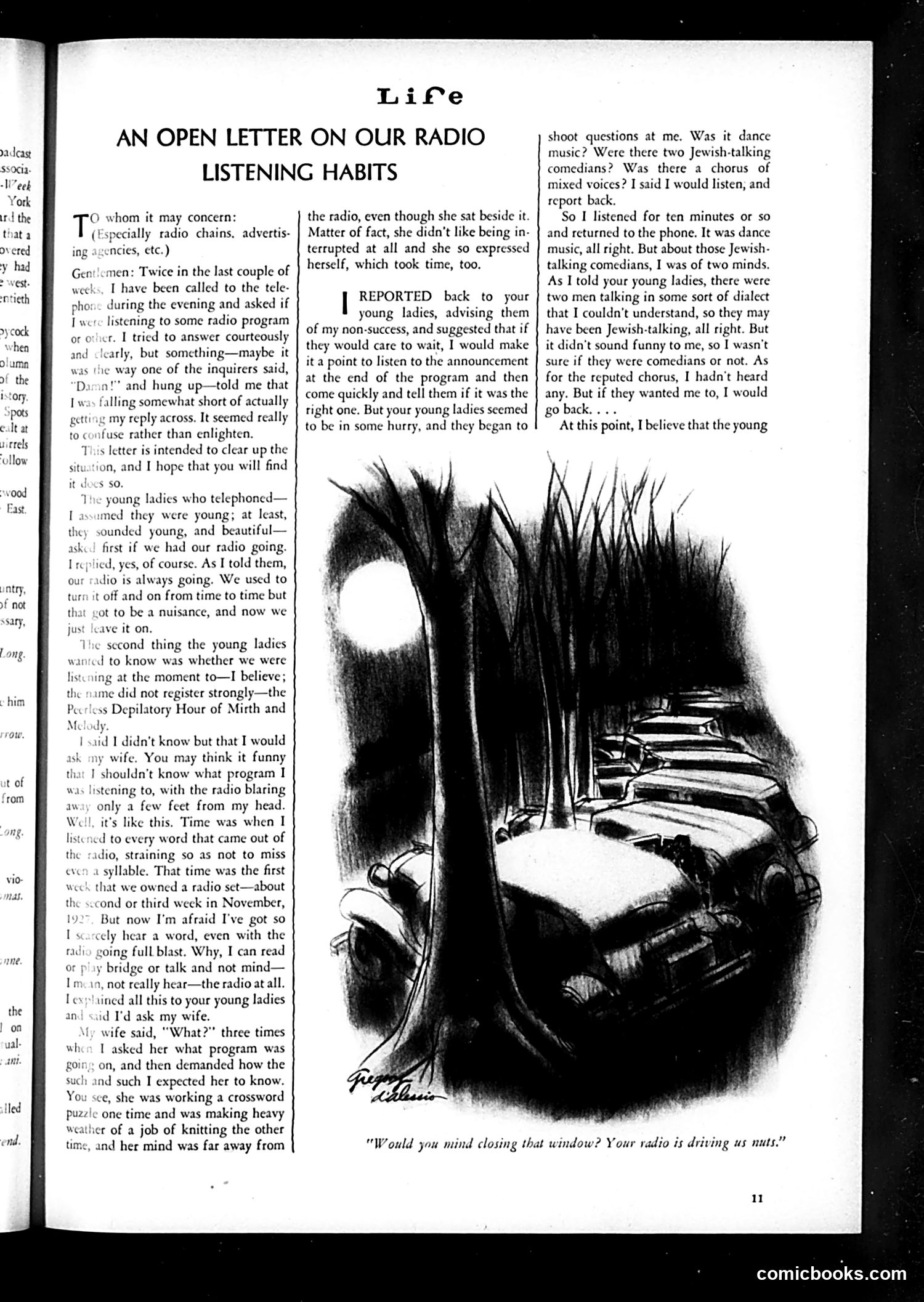
# Analysis of Life Magazine Page This page contains a satirical illustration about urban congestion, captioned "Shall we pause here and contemplate New York's busy hubbub?" The drawing depicts an overhead view of a crowded parking lot or street filled with automobiles packed tightly together, with pedestrians visible among the vehicles. The accompanying text discusses copyright violations in the music industry, specifically mentioning Sol Miller's song-sheet piracy operation. The "Entertainment" section covers Arthur Hoffman, head of Leo Feist Inc.'s copyright department, who prosecutes musical theft. The cartoon satirizes New York City's growing automobile congestion and urban overcrowding during the early-to-mid 20th century, a common complaint in satirical magazines of that era. The juxtaposition of bumper-to-bumper traffic with the suggestion to "contemplate" the scene is ironic social commentary.
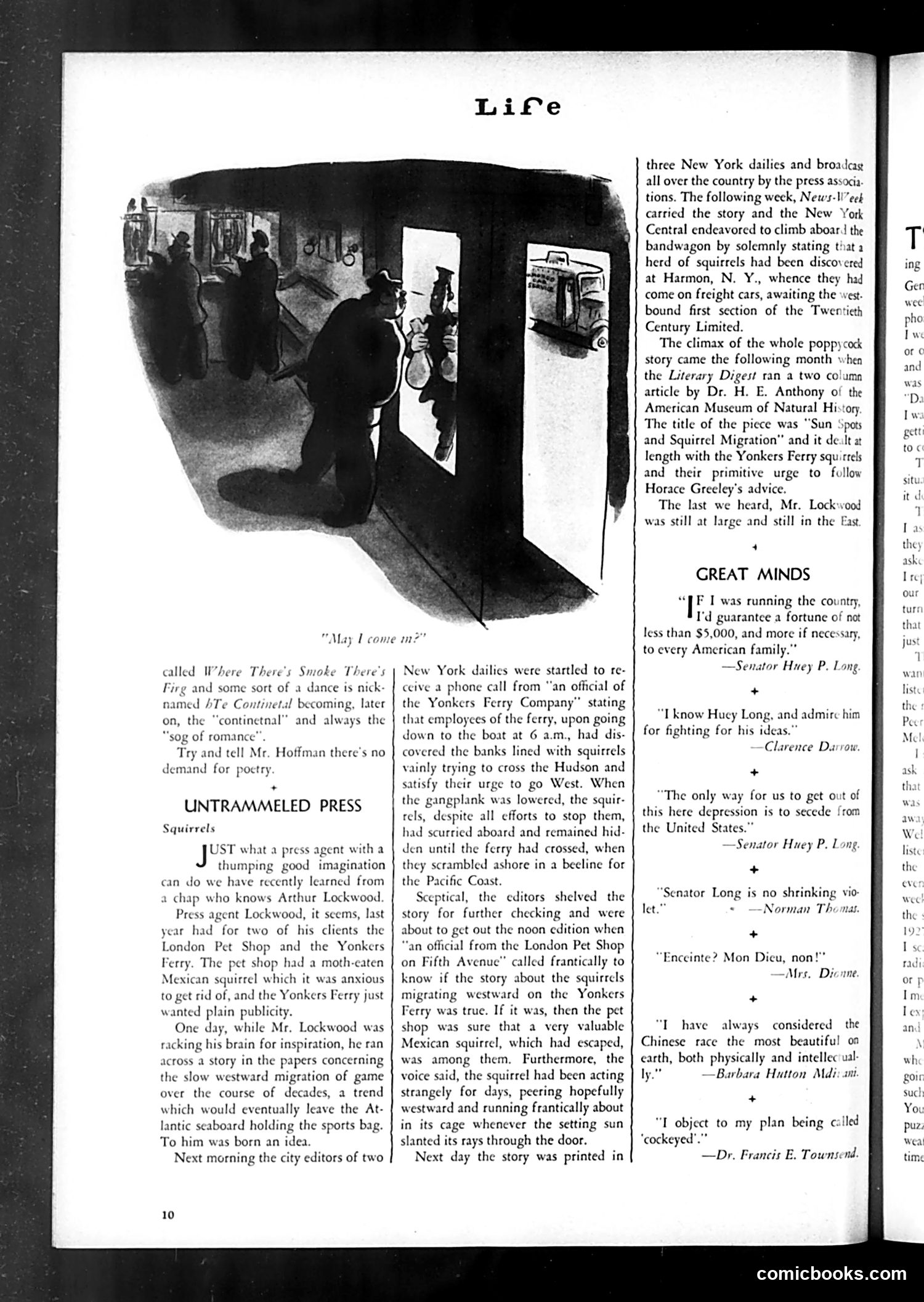
# Analysis of This Life Magazine Page The main cartoon, titled "May I come in?", depicts a crowded subway car with passengers packed inside. The satire targets New York City's chronic overcrowding and poor public transportation conditions—a familiar complaint even in this era. The text discusses a humorous press story about squirrels discovered in Harmon, N.Y., that had escaped freight cars and were attempting to migrate west, following Horace Greeley's famous advice to "Go West, young man." The "Great Minds" section collects brief quotes from political figures like Senator Huey P. Long and others, expressing their opinions on various national issues, presented somewhat ironically to highlight their contradictions or absurdity.