A complete issue · 59 pages · 1934
Life — December 1934
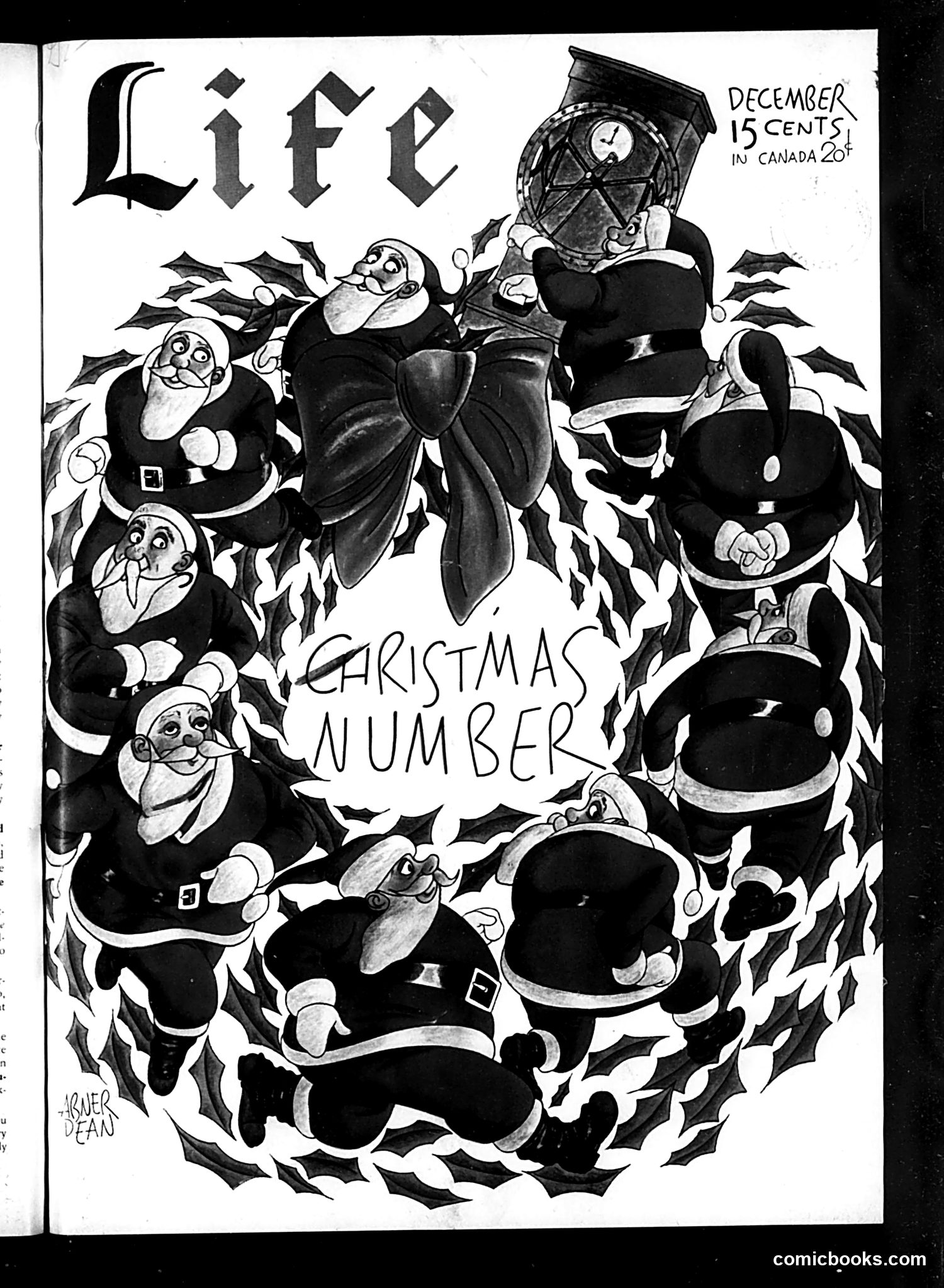
# "Life" Magazine Christmas Number Cover Analysis This is the December cover of *Life* magazine (15 cents; 20 cents in Canada), featuring a satirical Christmas illustration by Barber Dean. The central image depicts multiple rotund Santa Claus figures arranged in a wreath of holly, surrounding a large bomb with a clock face—a striking juxtaposition of holiday cheer with militaristic imagery. The title "Christmas Number" appears innocuously, but the bomb's presence suggests dark satire about war and military concerns during what appears to be the early-to-mid 20th century. The contrast between jolly Santas and weaponry likely critiques either militarization during holiday season or wartime anxiety undermining Christmas celebration. The exact historical moment remains unclear without publication date confirmation.
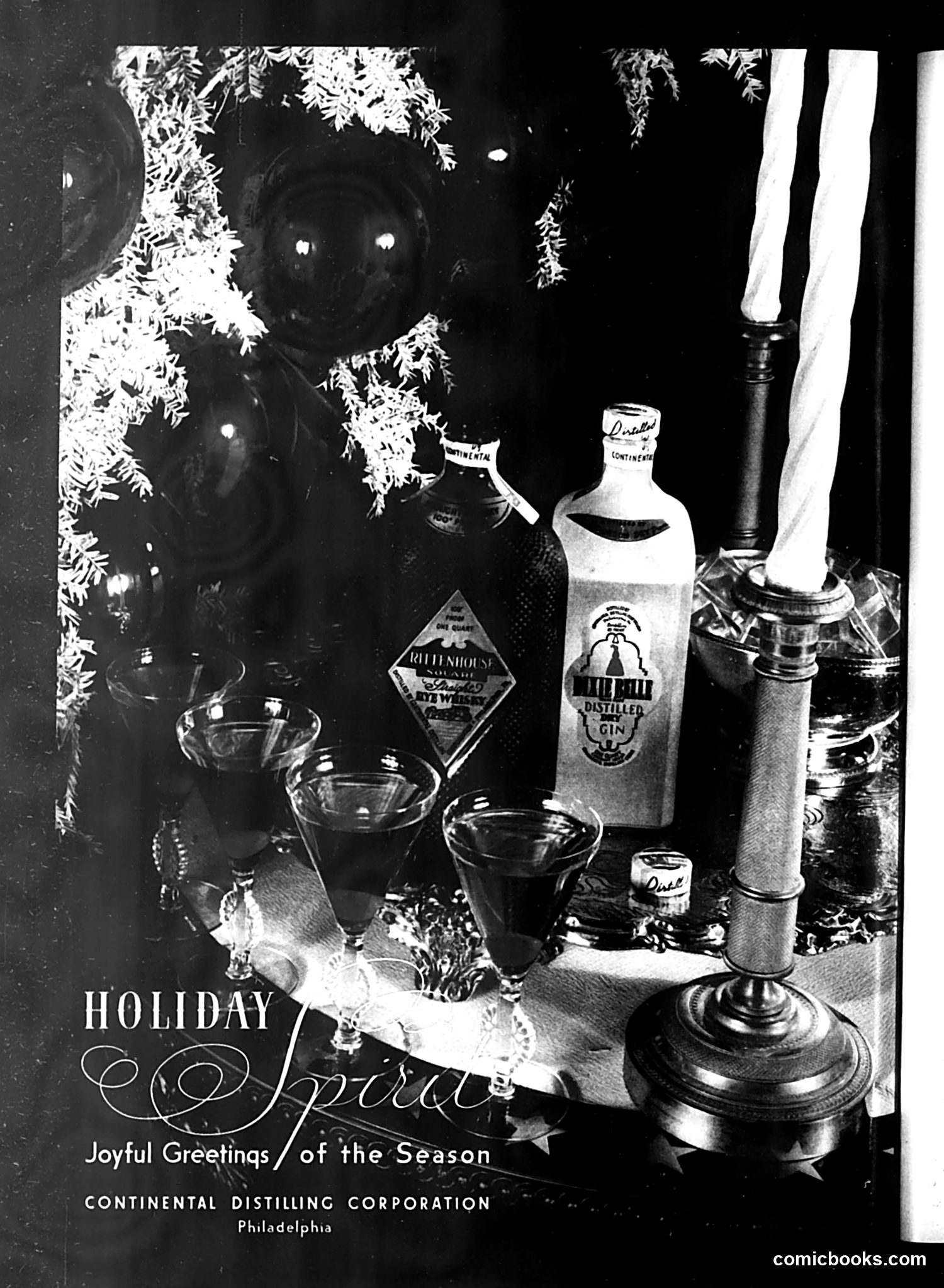
# Analysis This appears to be a **holiday advertisement** rather than political satire. The page shows a festive display from Continental Distilling Corporation (Philadelphia) featuring: - Decorative evergreen garland framing the composition - Three cocktail glasses with dark liquid - A bottle labeled "Distilled Gin" - Candles in candlesticks - Text reading "Holiday Spirit" and "Joyful Greetings of the Season" The imagery suggests this is a **liquor advertisement** using seasonal holiday aesthetics to promote gin consumption. The "holiday spirit" pun plays on both the festive season and the alcoholic product being advertised. This reflects pre-Prohibition or post-Prohibition era advertising practices when such promotions were common in magazines.
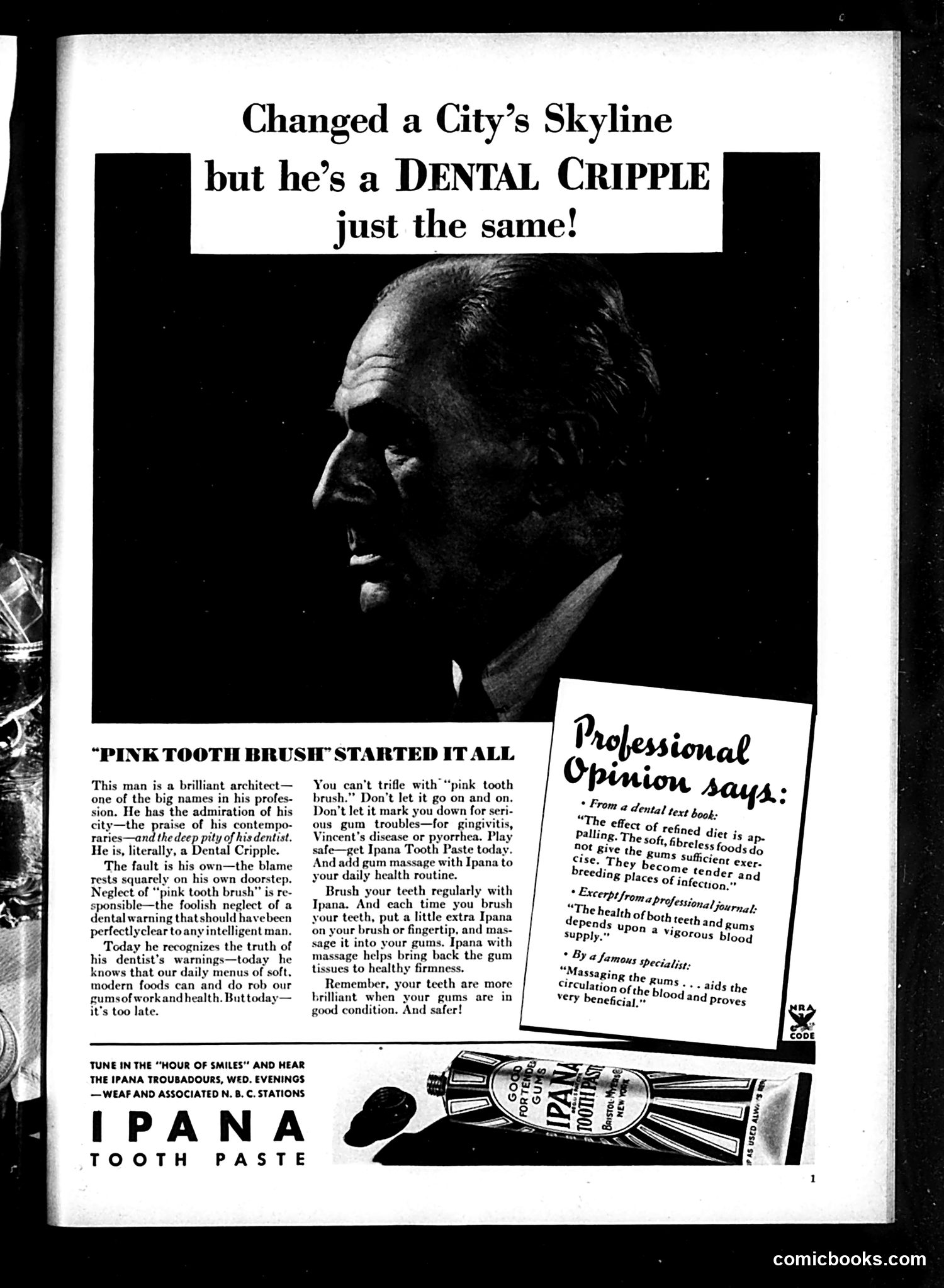
# Analysis This is an advertisement for Ipana Tooth Paste, not political satire. The ad uses a visual joke about a famous architect with a "dental cripple"—someone whose poor dental health undermines his professional accomplishments. The headline suggests that despite his architectural achievements (changing a city's skyline), his teeth betray him as unhealthy. The ad features a profile photograph of what appears to be a well-known architect of the era, though the specific identity isn't stated. The satire is commercial rather than political: it argues that even brilliant professionals can't escape the social embarrassment of poor oral hygiene, making Ipana tooth paste essential for maintaining professional credibility. The "Professional Opinion" box includes testimonials about gum disease and dental care.
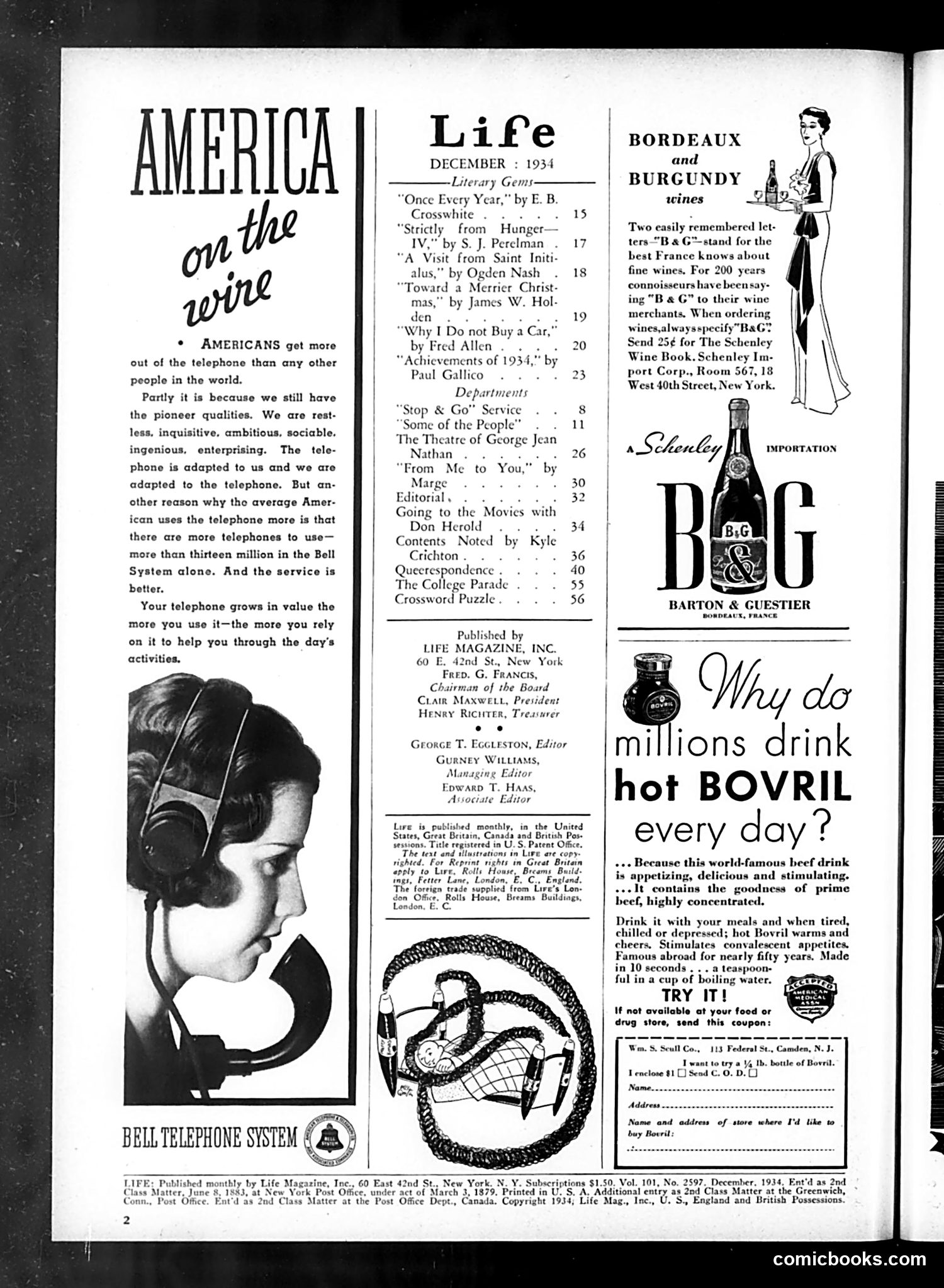
# Page Analysis: Life Magazine, December 1934 This page contains primarily **advertisements and magazine contents**, not political cartoons. The main content includes: **"America on the Wine"** (left): A Bell Telephone System ad featuring a woman with headphones, arguing Americans use telephones more than other nationalities because they are "restless, inquisitive, ambitious, sociable, ingenious, enterprising." The "joke" is self-congratulatory—using telephone frequency as a marker of American character. **Right side**: Wine and food advertisements (Bordeaux/Burgundy, B&G wine, Bovril beef drink), typical of 1934 luxury marketing. The page is primarily a **table of contents** and **ads**, not satirical commentary. There are no identifiable political figures or social satire visible—just period consumer marketing and magazine layout.
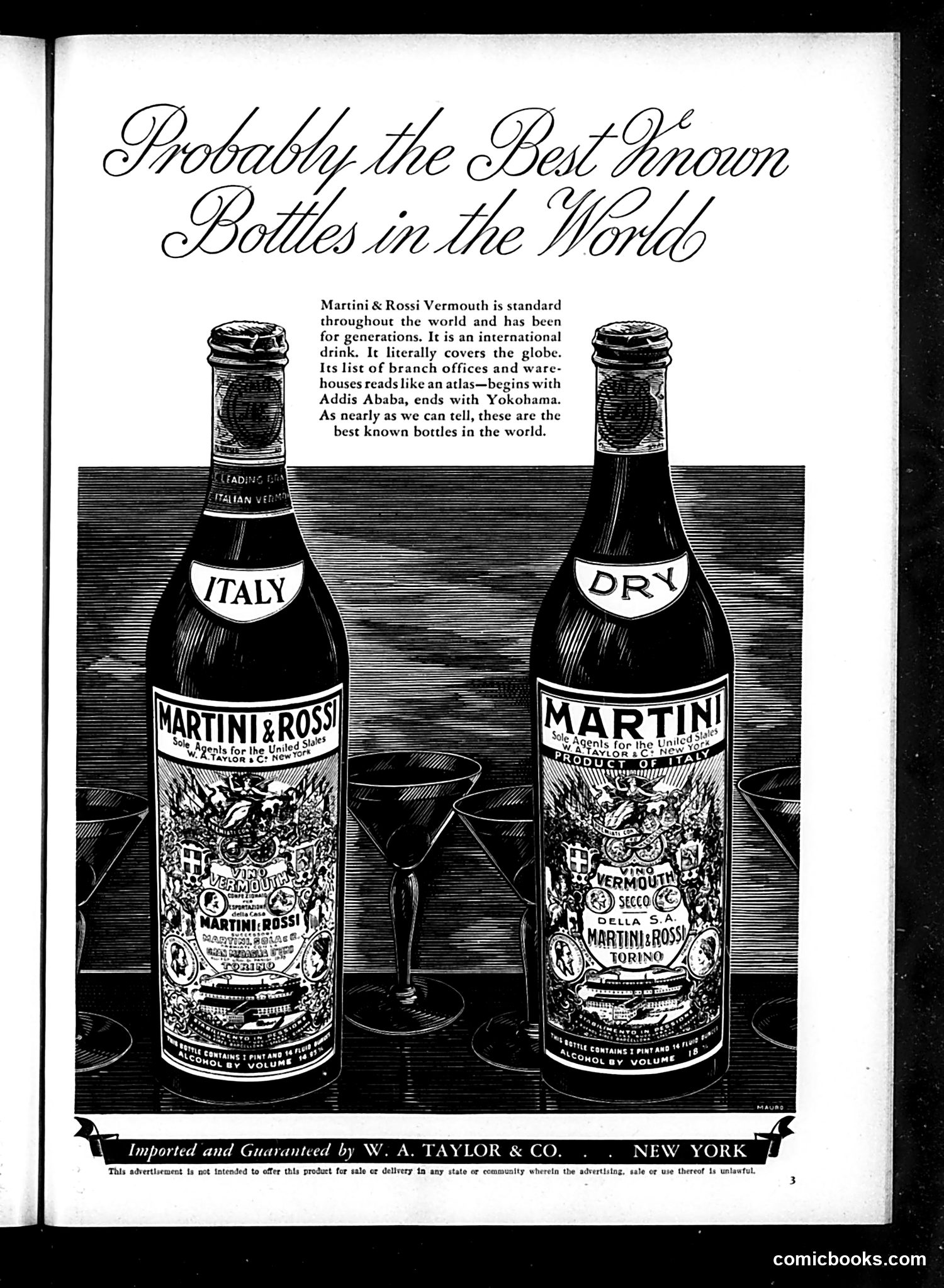
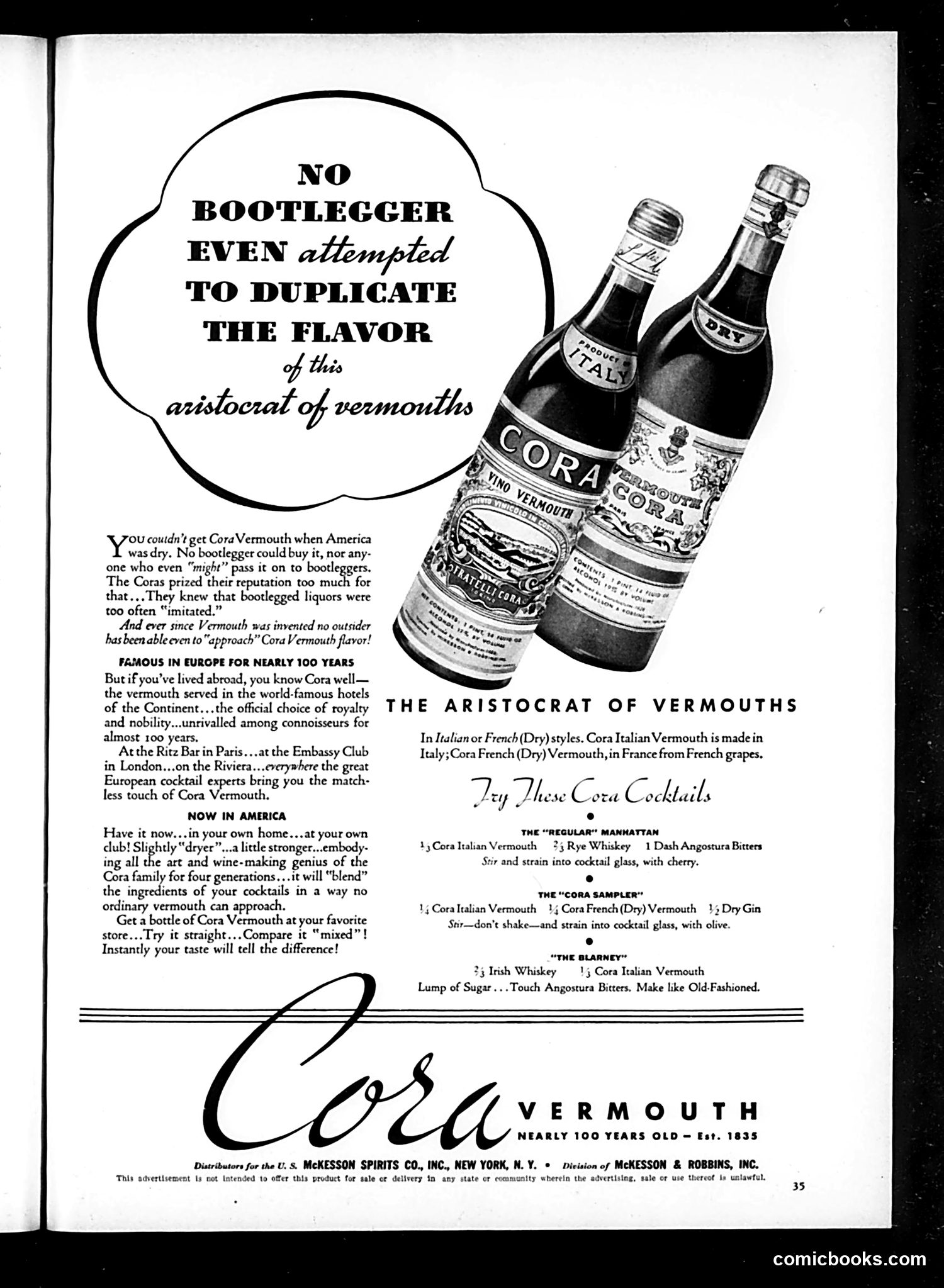
# Analysis This is a **full-page advertisement**, not satire or a political cartoon. It promotes Martini & Rossi Vermouth, an Italian aperitif imported to the United States by W.A. Taylor & Co. of New York. The ad features two bottles side-by-side—one labeled "Italy" and one labeled "Dry"—positioned as if they are prestigious, globally-distributed products. The advertising copy claims Martini & Rossi is "standard throughout the world" with offices spanning from Addis Ababa to Yokohama, positioning it as the "best known bottles in the world." There is no political commentary or satire here—it's purely commercial messaging using international prestige and availability as selling points to American consumers.
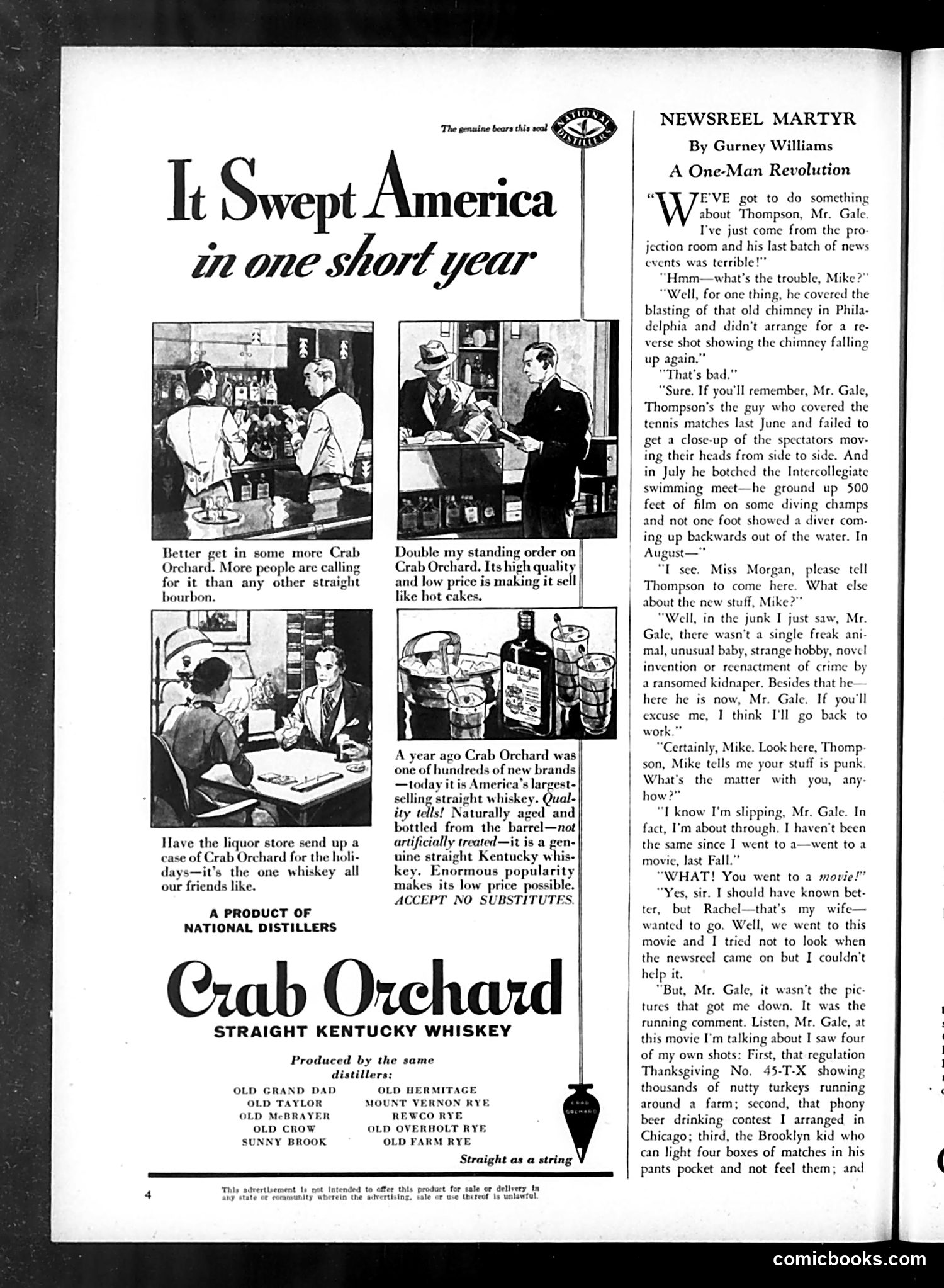
This page contains a Crab Orchard whiskey advertisement (left) and a satirical column titled "Newsreel Martyr" by Gurney Williams (right). The advertisement humorously depicts Crab Orchard's rapid market success, showing it "swept America in one short year." Images show bartenders, liquor store owners, and consumers enthusiastically promoting the whiskey. The right-side column satirizes newsreel cameraman "Thompson," whose incompetence at covering events has become legendary. Mr. Gale catalogs Thompson's failures: he missed key moments at tennis matches, an intercollegiate swimming meet, and various other assignments. The satire culminates when Thompson attends a movie—the very medium meant to capture news—and ironically appears in the newsreel footage himself, becoming the subject rather than the documentarian. The piece mocks both journalism and personal embarrassment through this ironic role reversal.
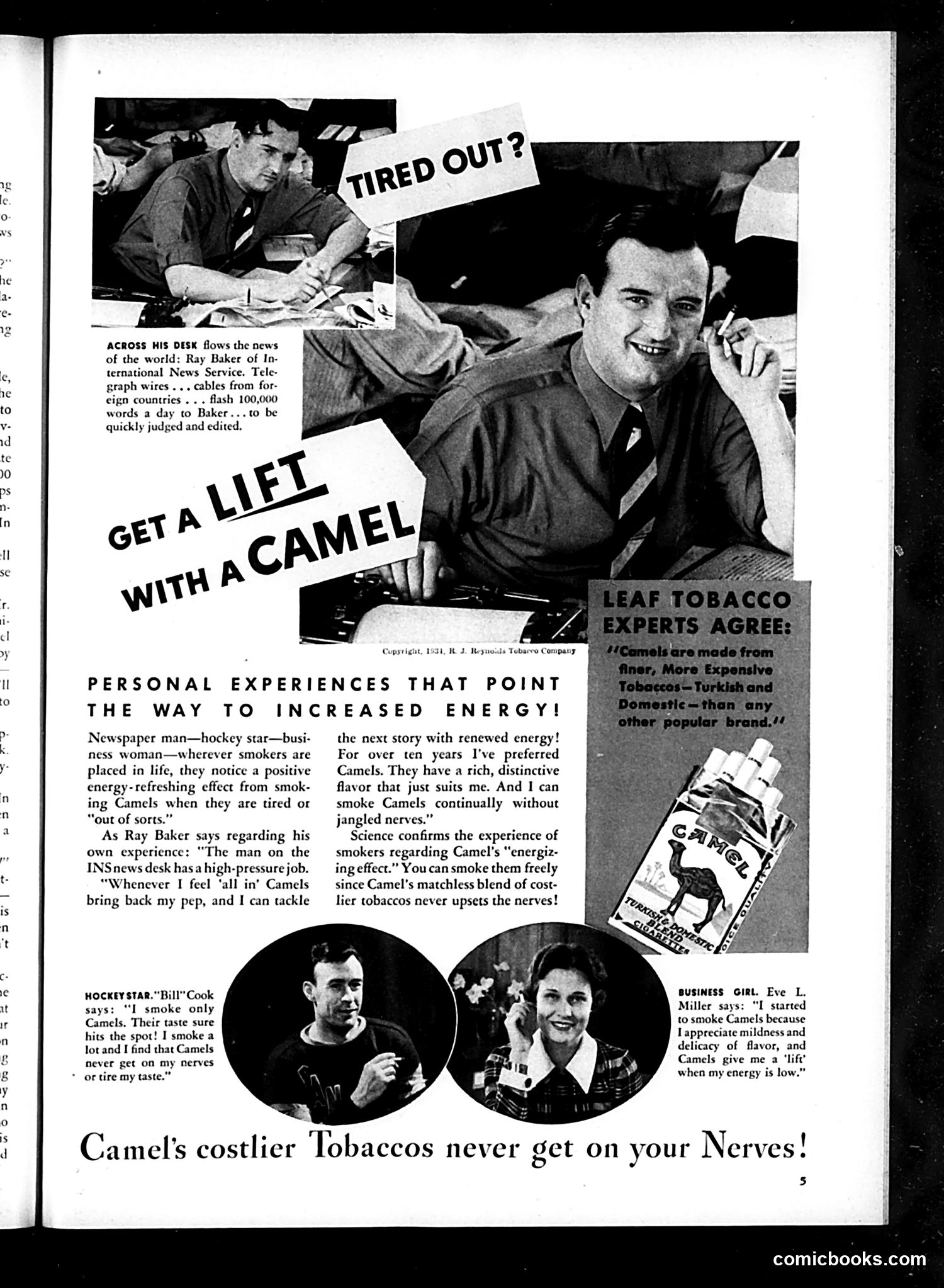
# Analysis This is a **Camel cigarette advertisement**, not satire or political commentary. The page uses testimonials from recognizable public figures to endorse smoking Camels as an energy boost for tired workers. The advertisement features: - **Ray Baker** of the International News Service, describing how Camels help him tackle high-pressure work - **"Bill" Cook**, identified as a hockey star, claiming Camels don't affect his nerves - **Eve L. Miller**, a business girl, praising Camels' flavor and energizing effect The ad's central claim—"Get a Lief with a Camel"—promises that Camel's "costlier Tobaccos never get on your Nerves," implying smoking provides stamina without negative effects. This reflects mid-20th-century advertising practices before smoking's health dangers were widely acknowledged or regulated.
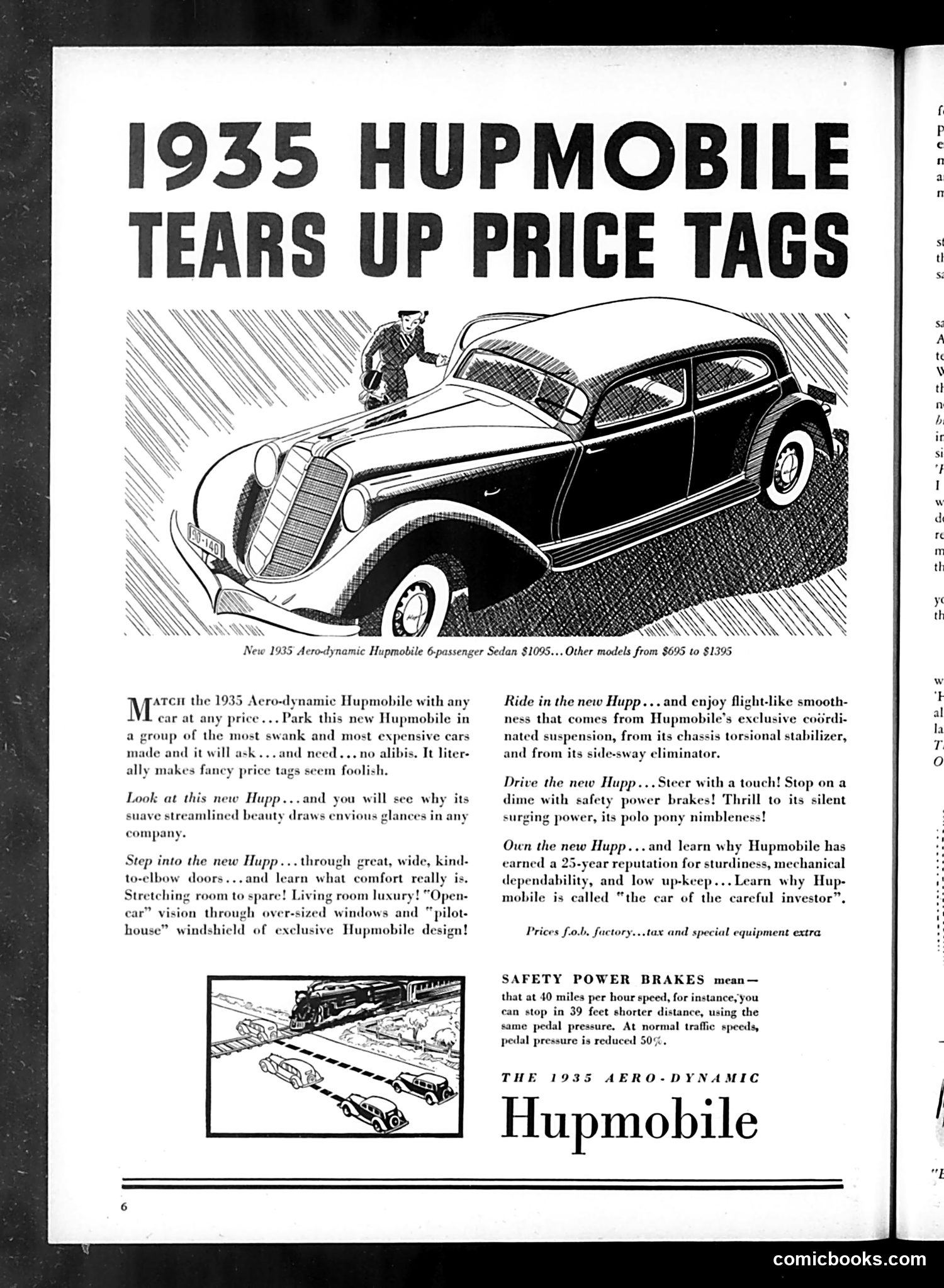
# Analysis This is primarily **an advertisement, not satire or political commentary**. The page promotes the 1935 Hupmobile automobile, a mid-range car competing with more expensive vehicles. The headline "TEARS UP PRICE TAGS" is a pun: the car's affordability means customers can literally discard high sticker prices from competitor vehicles. The illustration shows a man tearing up a price tag while examining the Hupmobile. The ad emphasizes value propositions: streamlined design, comfort features (wide doors, spacious interior), safety innovations (power brakes), and Hupmobile's reputation as "the car of the careful investor." The smaller illustration depicts the car's superior braking performance compared to competitors. This reflects 1930s Depression-era marketing: emphasizing affordability and reliability rather than luxury.
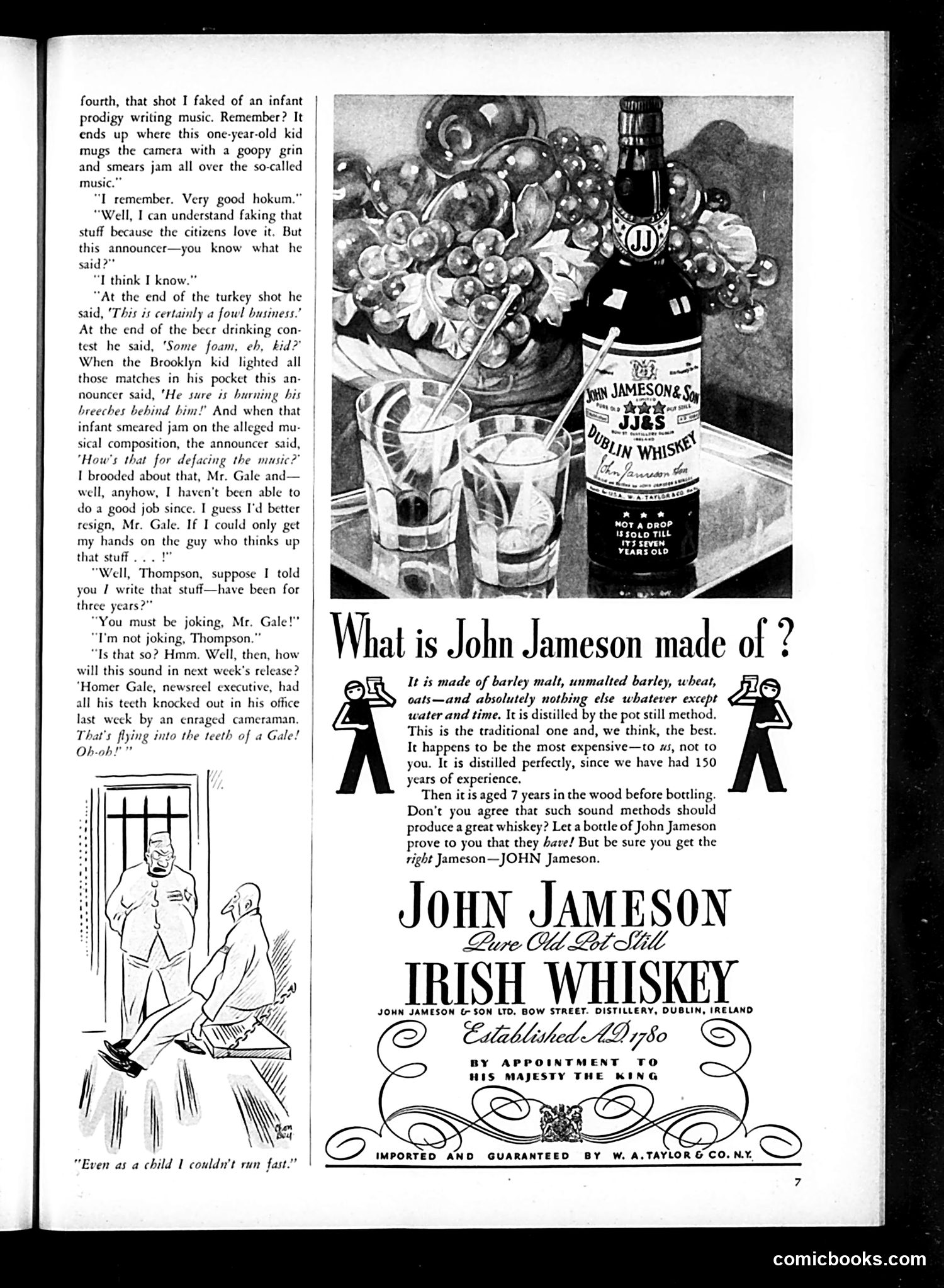
# Analysis This page contains primarily a **John Jameson Irish Whiskey advertisement** rather than political satire. The left column features a conversational narrative about a music critic named Gale who fabricated stories about an "infant prodigy" composer—a satirical jab at pretentious cultural criticism and journalistic dishonesty. The small cartoon illustration shows a figure in what appears to be a jail cell, captioned "Even as a child I couldn't run fast," suggesting consequences for the critic's deceptions. The large advertisement on the right showcases the whiskey bottle and emphasizes its traditional production methods ("aged 7 years in the wood"), targeting affluent readers. This is essentially a full-page commercial rather than political commentary.
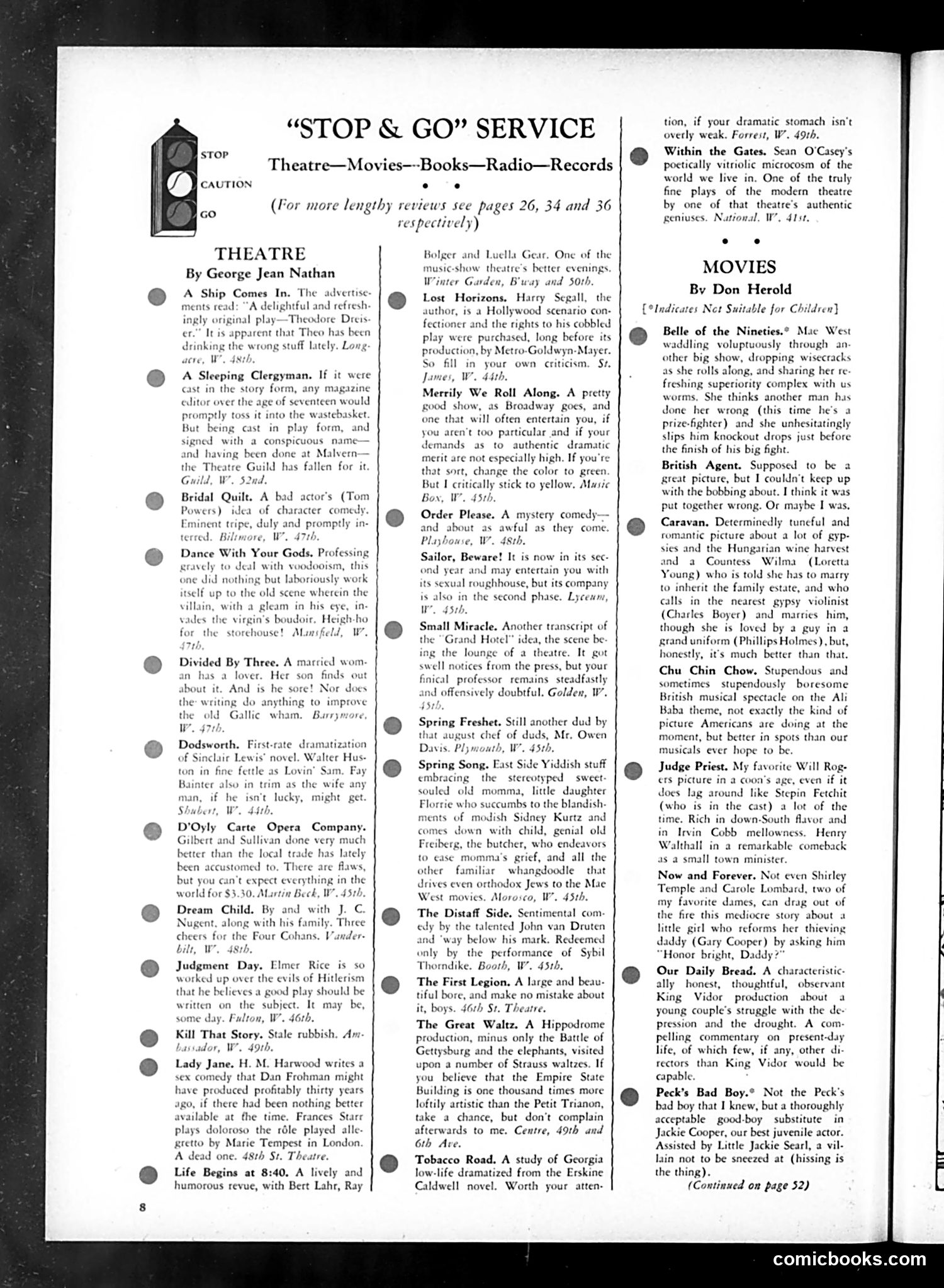
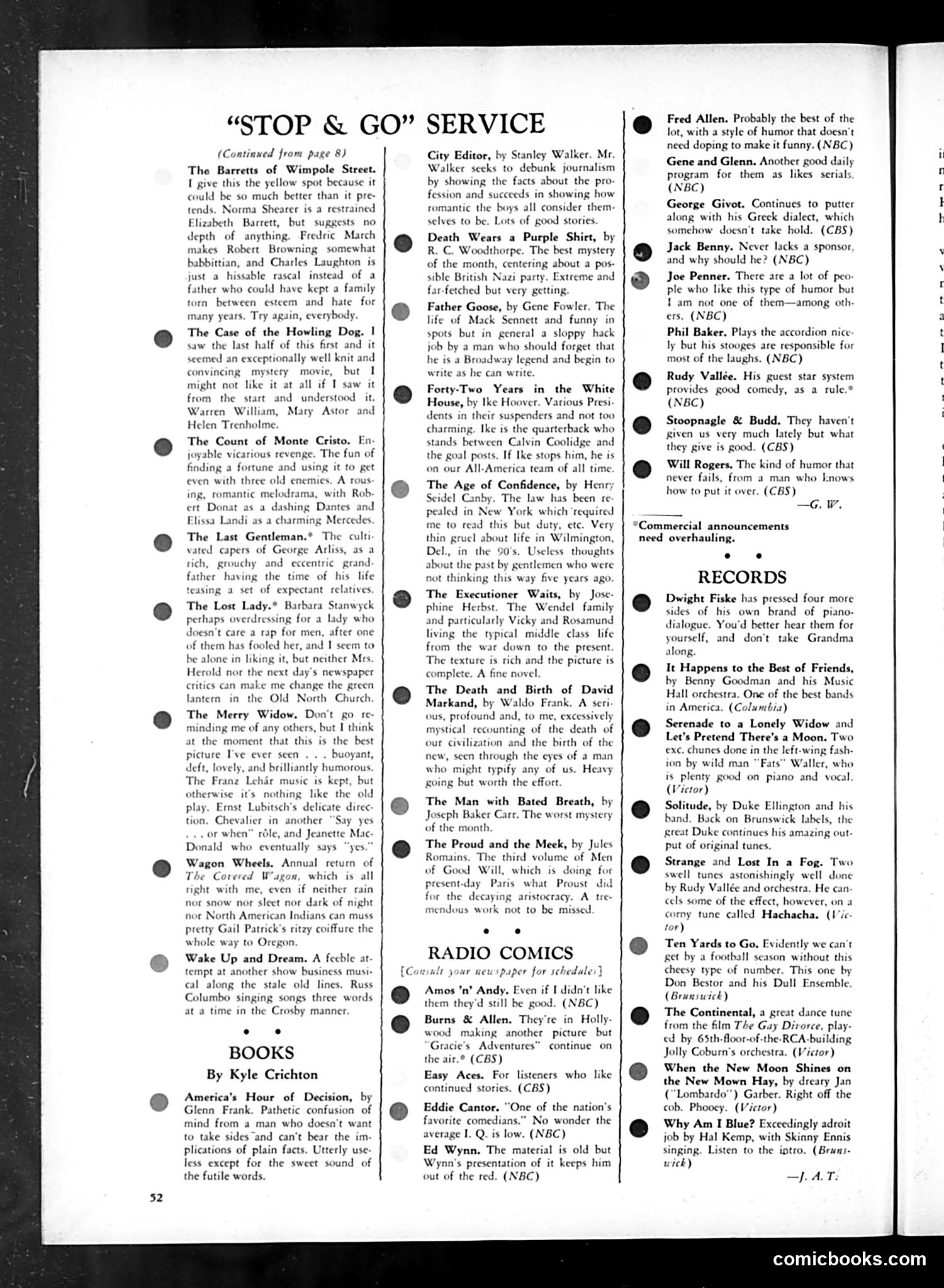
# "Stop & Go" Service Page Analysis This is a **review/criticism page**, not a political cartoon. The traffic light graphic at top left is a visual organizing device, not satire—it labels three review sections (Stop, Caution, Go) for theater, movies, books, radio, and records. The content consists of **brief, often sarcastic critical reviews** of Broadway shows and films from around 1920s-1930s. Reviewers use the "Stop/Caution/Go" framework to recommend or warn against entertainment. Examples: "A Sleeping Clergyman" gets criticized as "heavy"; "Merrily We Roll Along" is praised as entertaining; "Judge Priest" is recommended as Will Rogers' best picture. This represents **early American magazine criticism culture**—witty, pointed, and dismissive of mediocre entertainment for general readers.
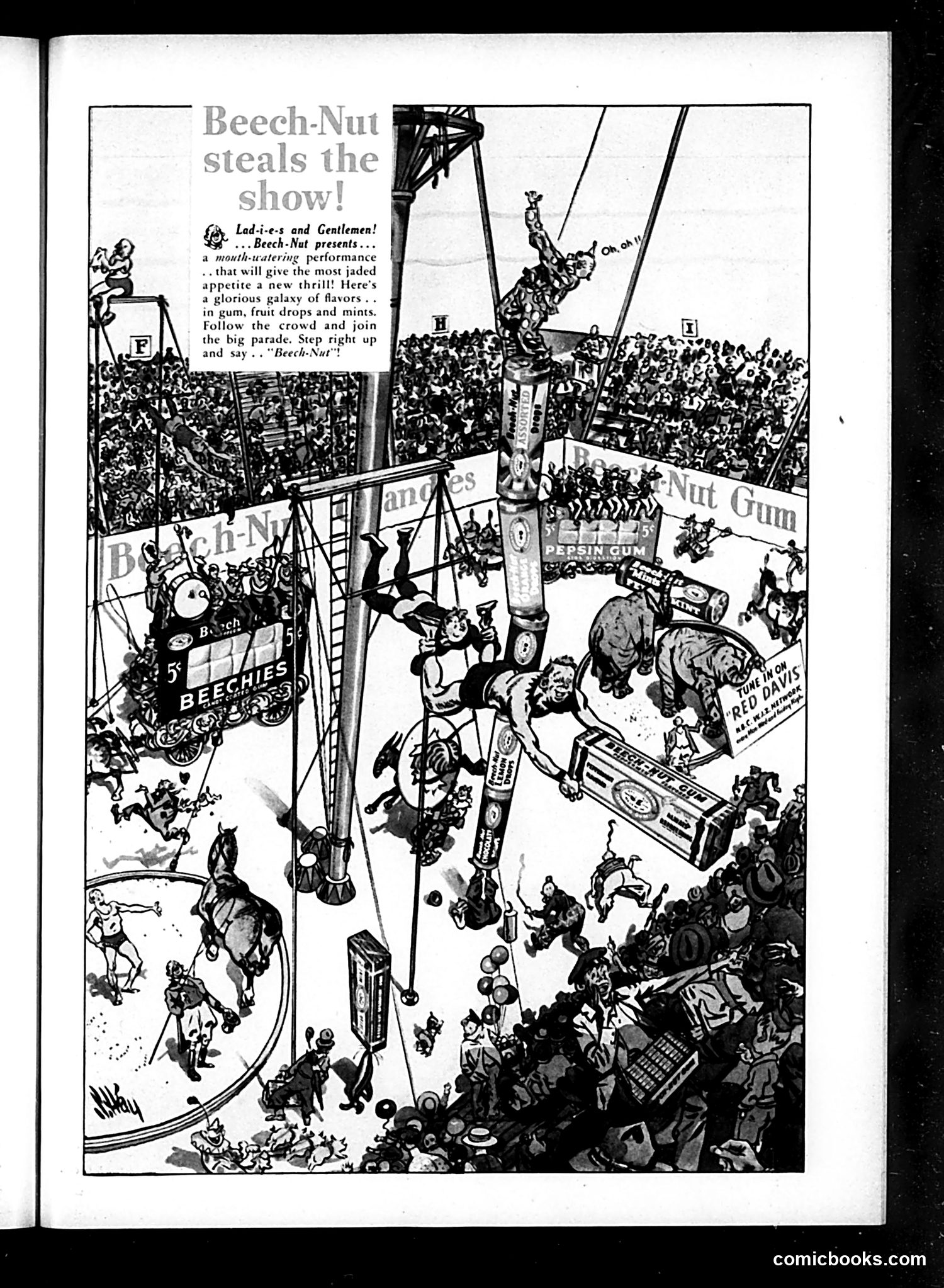
# Beech-Nut Steals the Show This is a **Beech-Nut gum advertisement** depicting an elaborate carnival or circus parade. The headline claims "Beech-Nut steals the show," and the ad copy promises "a mouth-watering performance" featuring "a glorious galaxy of flavors...in gum, fruit drops and mints." The illustration shows a crowded fairground scene with acrobats, swings, rides, and spectators. Various Beech-Nut product boxes are prominently displayed among the carnival attractions. The style is vintage slapstick humor—exaggerated action and busy composition typical of early-to-mid 20th century advertising. The "joke" is straightforward marketing: that Beech-Nut products are so exciting and entertaining they rival an actual carnival attraction for public attention and excitement.
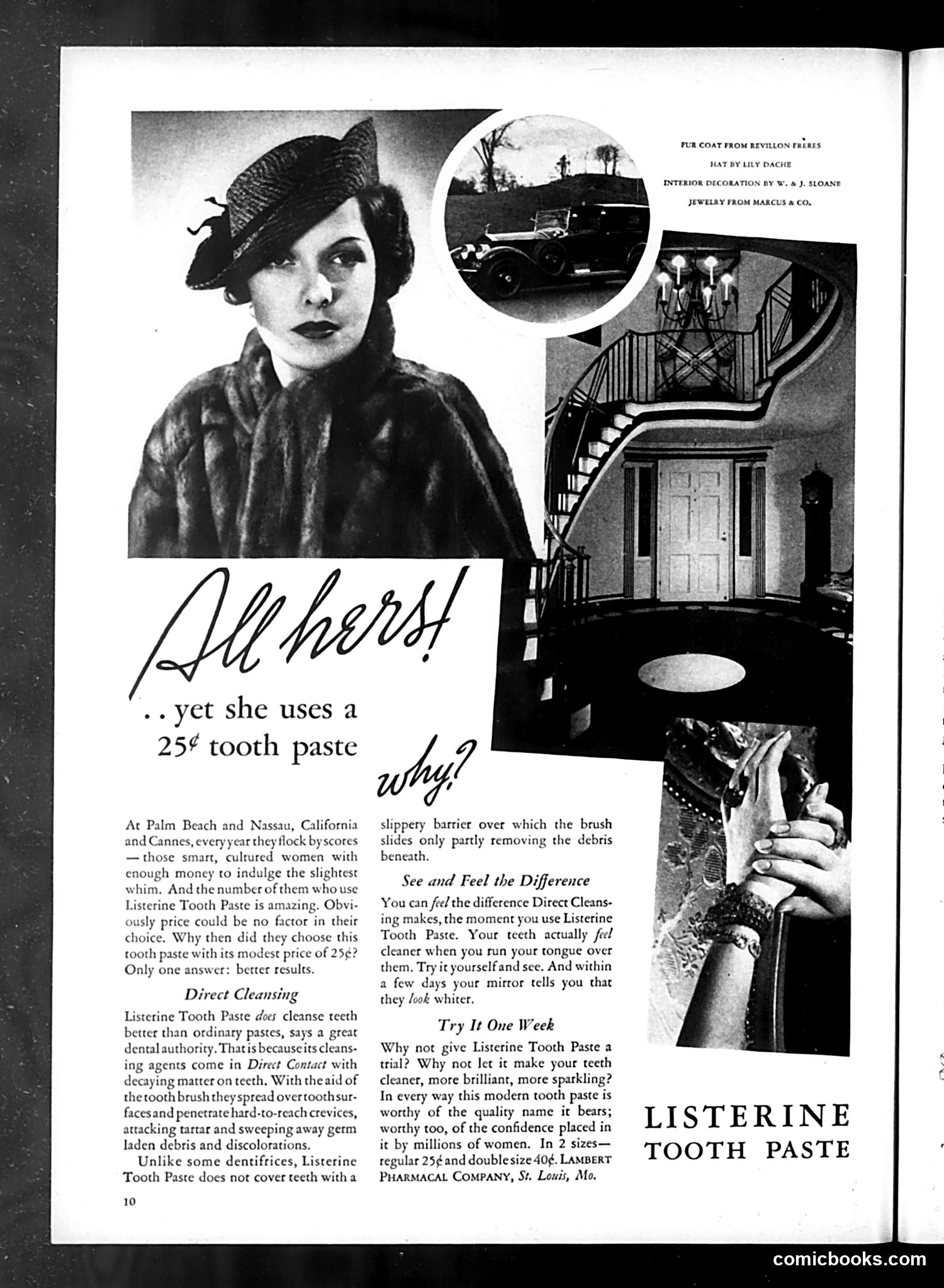
# Listerine Tooth Paste Advertisement This is a vintage advertisement, not political satire. The page promotes Listerine Tooth Paste to wealthy women by depicting an elegantly dressed woman wearing an expensive fur coat and fashionable hat, positioned alongside images of luxury items: an automobile, an ornate interior staircase, and jewelry. The headline's implicit message: even wealthy, cultured women use this inexpensive 25¢ toothpaste. The ad emphasizes "direct cleansing" action and claims users will "feel the difference" within a week, with visibly whiter teeth. The copy targets affluent readers by flattering their status while suggesting that good oral care doesn't require expensive products—a sales pitch designed to appeal to both economy-minded consumers and status-conscious buyers in the interwar period.