A complete issue · 54 pages · 1934
Life — May 1934
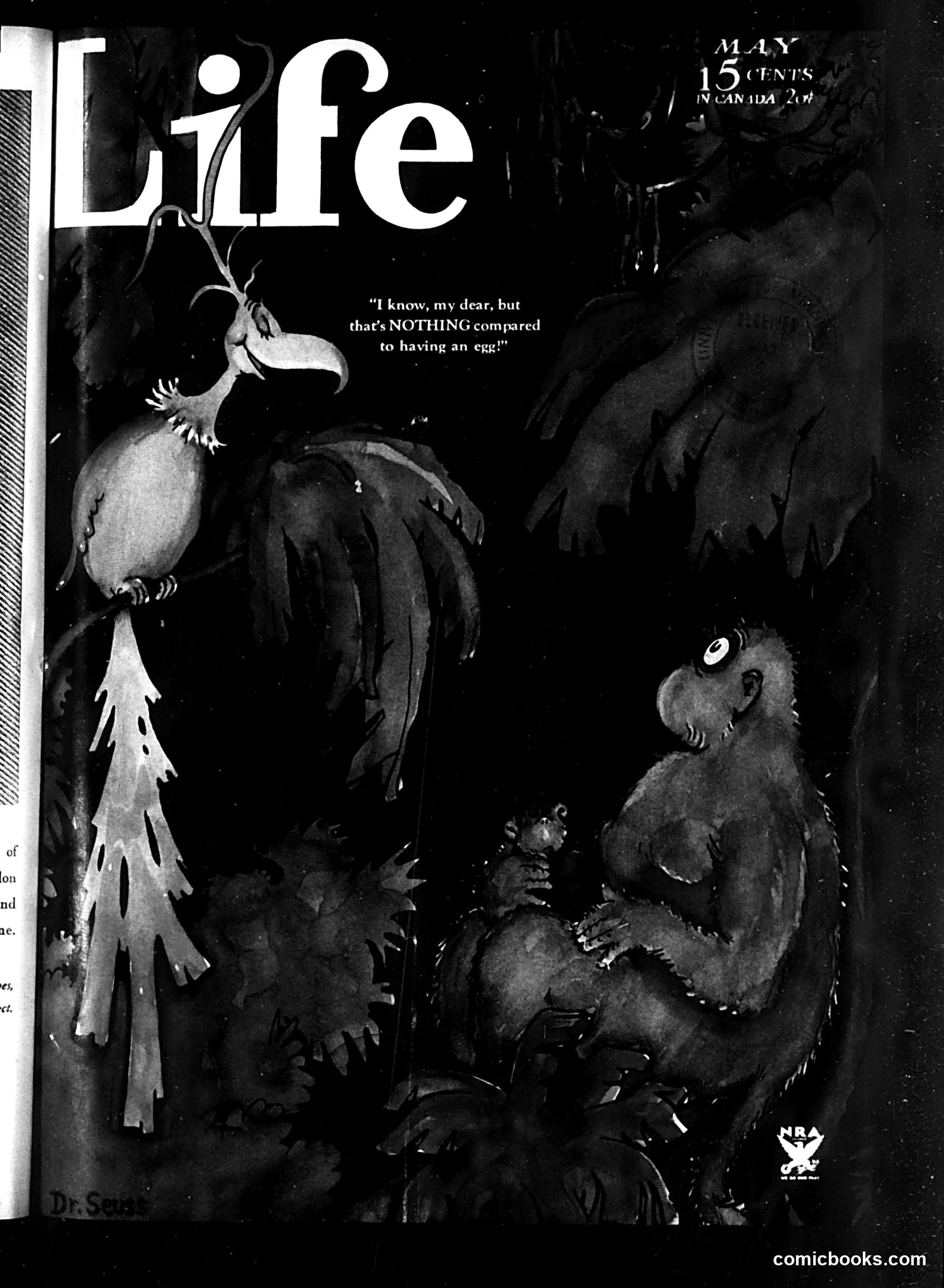
# Life Magazine Cover Analysis This is a Dr. Seuss illustration for Life magazine's May issue (15 cents). The cartoon depicts anthropomorphic creatures in conversation, with one bird-like figure perched above speaking to another creature below. The quote reads: "I know, my dear, but that's NOTHING compared to having an egg!" The satire appears to address reproductive or fertility concerns, likely from the early-to-mid 20th century context. The humor rests on the creature's complaint about egg-laying being presented as a trivial concern compared to something unstated but supposedly worse. Without additional context, the specific social or political reference remains unclear, though it may relate to contemporary anxieties about parenthood, family planning, or gender roles of that era.
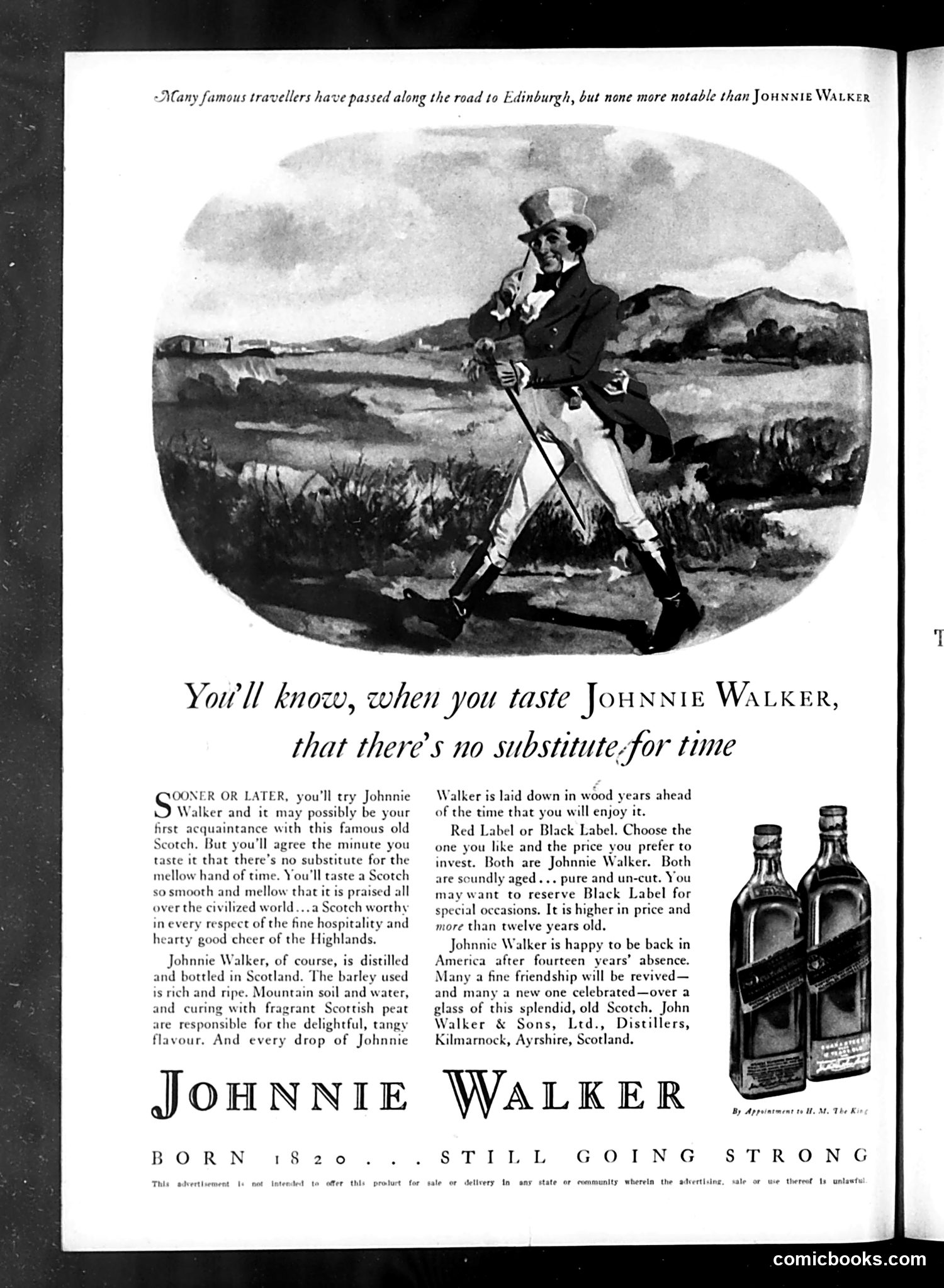
# Advertisement Analysis This is a **Johnnie Walker whisky advertisement**, not political satire. The page features an illustration of a well-dressed Scottish traveler in 19th-century attire (top hat, coat, breeches, boots) striding across the Scottish landscape toward Edinburgh. The ad's humor relies on the **"Johnnie Walker" brand mascot**—a personified figure who literally "walks"—shown in motion across terrain. The copy emphasizes the whisky's Scottish authenticity, its long aging process (particularly the premium Black Label), and positions it as a refined choice for American consumers. The phrase "there's no substitute for time" serves dual purpose: promoting the product's quality while playing on the walking figure's name. This represents typical early-20th-century advertising that blended humor, nationalism, and product positioning.
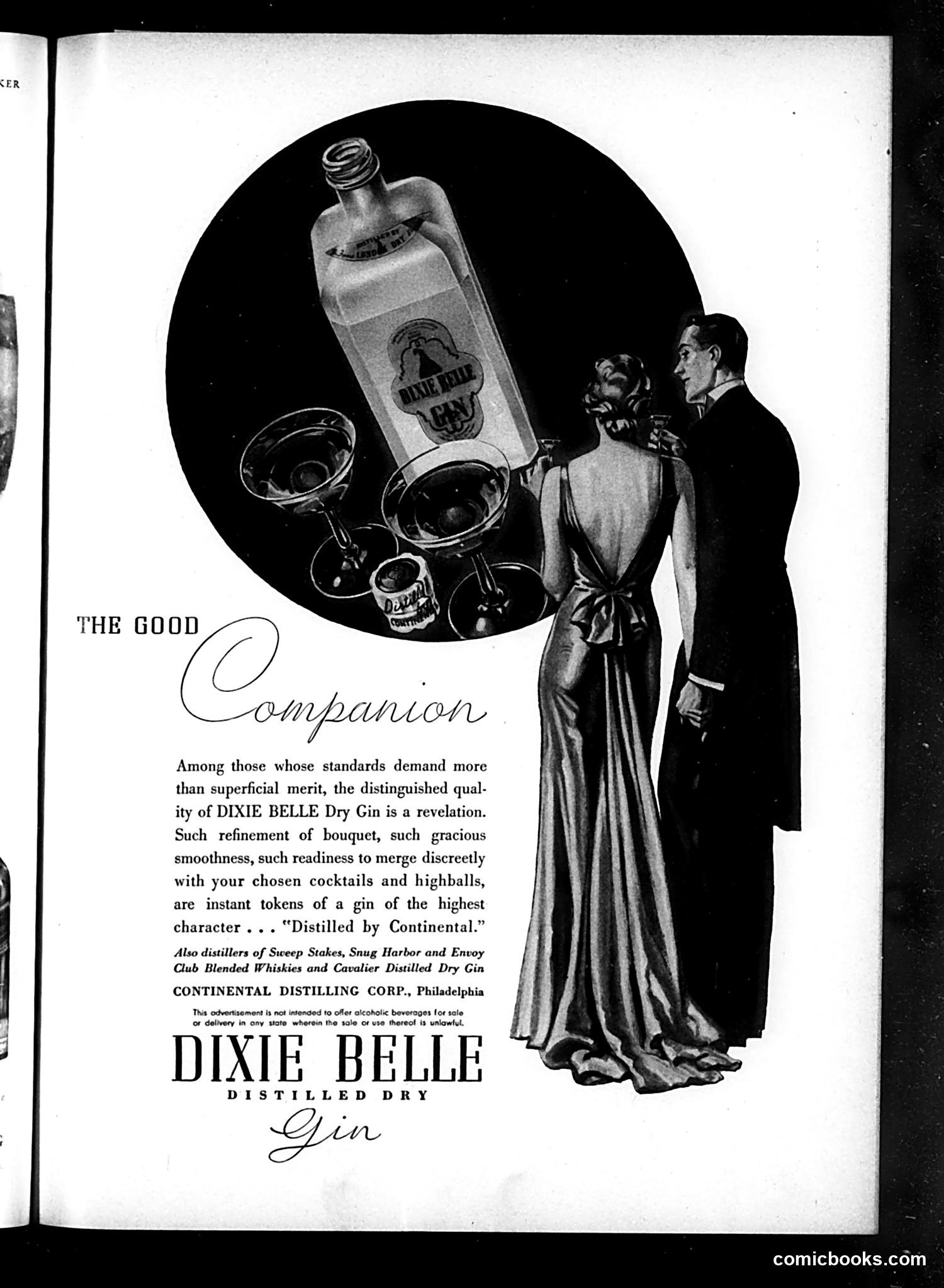
# Analysis This is a **advertisement, not political satire**. It promotes Dixie Belle Distilled Dry Gin, manufactured by Continental Distilling Corp. in Philadelphia. The ad features an elegantly dressed couple admiring a large bottle of gin surrounded by cocktail glasses. The marketing copy emphasizes the product's refinement and quality ("distinguished quality," "refinement of bouquet"). The couple's formal attire and sophisticated poses suggest the gin is aspirational—marketed to upper-class consumers. The disclaimer at bottom acknowledges Prohibition-era restrictions: "This advertisement is not intended to offer alcoholic beverages for sale or delivery in any state wherein the sale or use thereof is unlawful." This represents typical pre-Repeal or early post-Repeal advertising (likely 1930s), when gin distilling resumed after Prohibition ended in 1933.
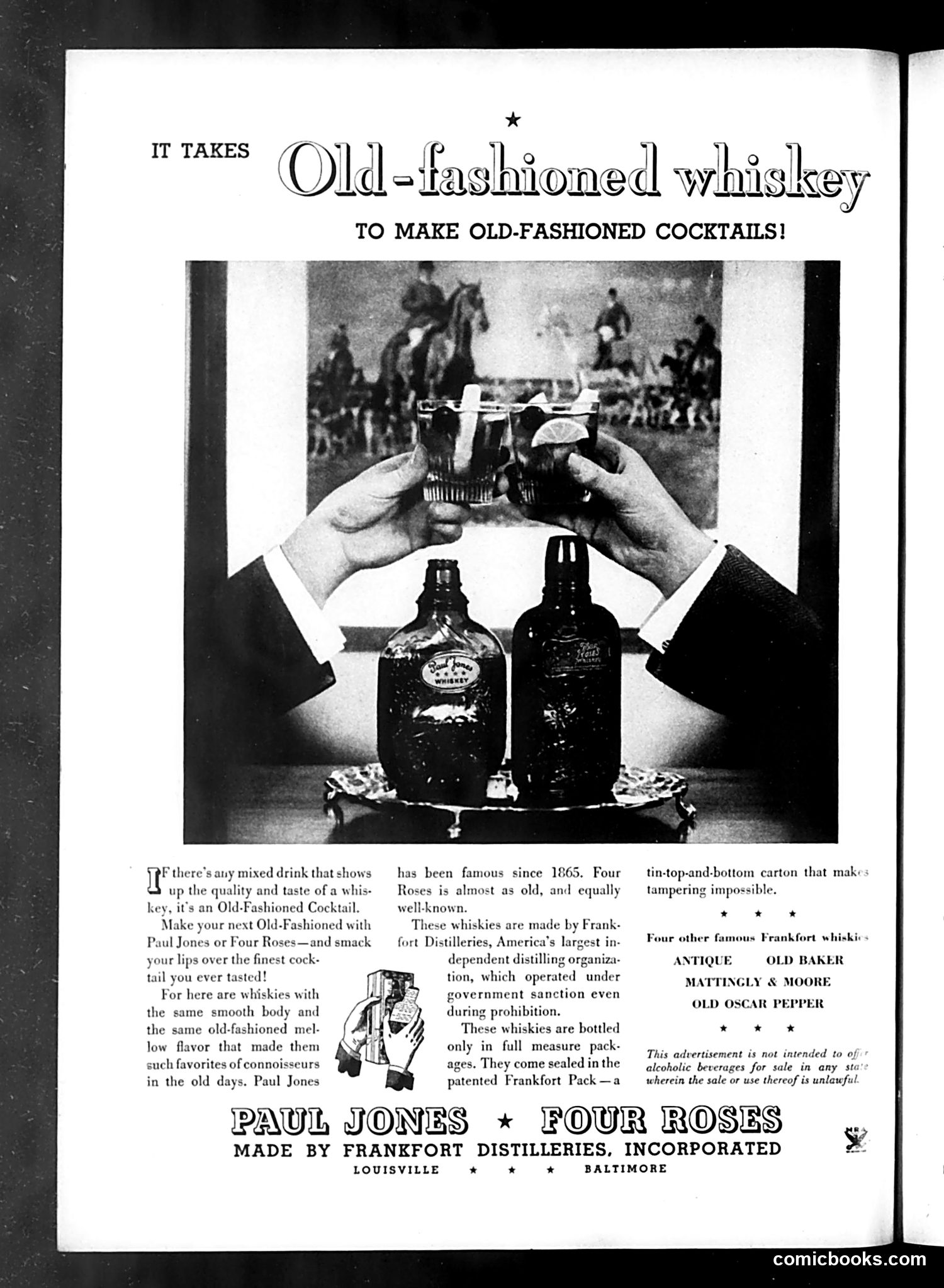
# Analysis This is primarily a **whiskey advertisement**, not political satire. It promotes Paul Jones and Four Roses whiskeys made by Frankfort Distilleries. The ad features two hands toasting with Old-Fashioned cocktails above two whiskey bottles. The background shows a horse-racing scene, likely referencing Kentucky's association with thoroughbred racing and bourbon production. The text emphasizes these whiskeys' "smooth body" and "old-fashioned" character, claiming they've been "famous since 1865." It notes the whiskeys are "bottled only in full measure packages" and come "sealed in the patented Frankfort Pack." A small disclaimer states the ad isn't promoting illegal sale of alcohol—indicating this ran during or shortly after Prohibition (1920-1933), when such disclaimers were legally required.
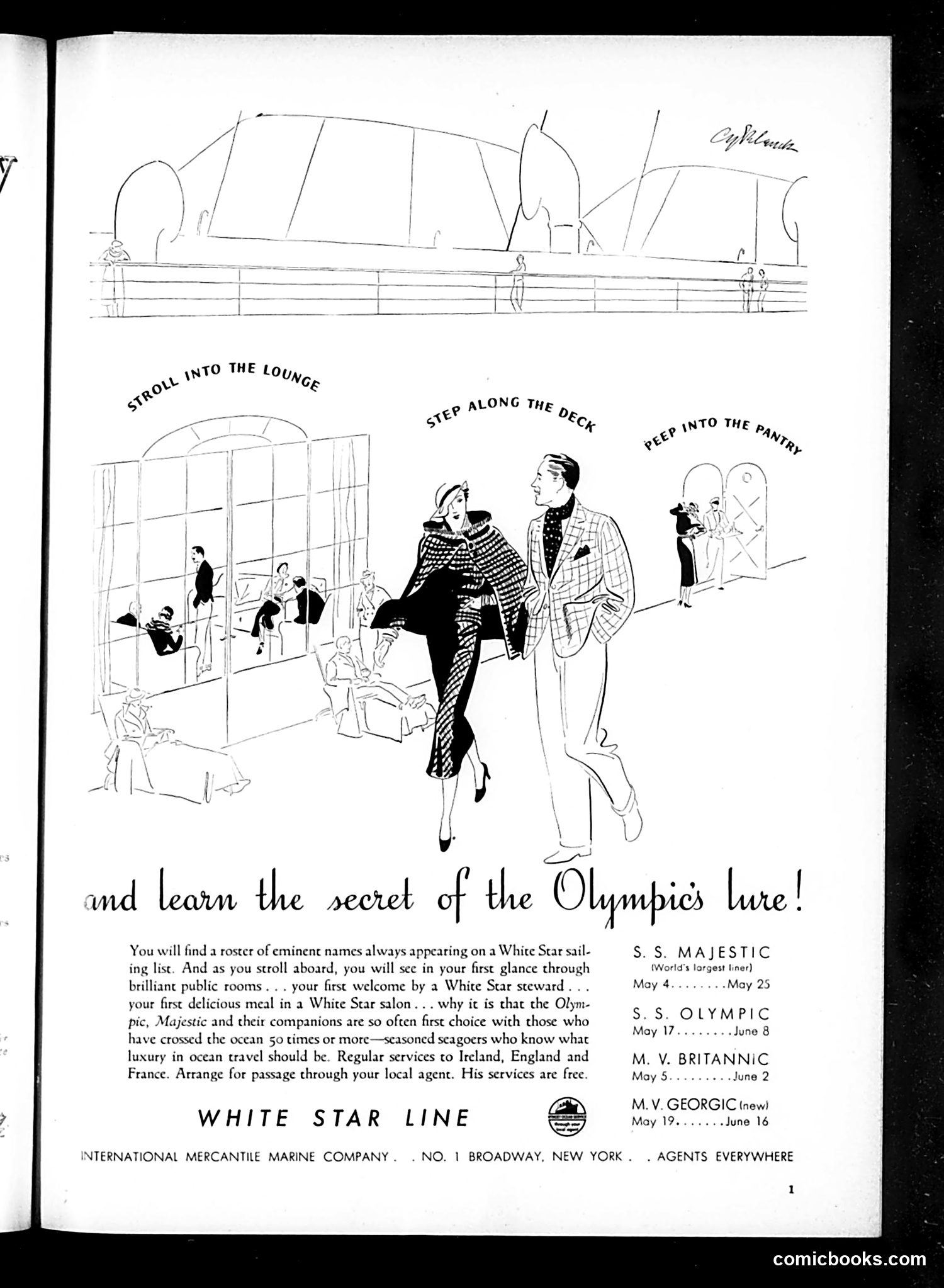
# White Star Line Advertisement This is a **luxury cruise ship advertisement**, not political satire. The page promotes White Star Line's ocean liners, emphasizing prestigious transatlantic travel to Ireland, England, and France. The three illustrated scenarios—"Stroll into the Lounge," "Step Along the Deck," and "Peek into the Pantry"—showcase the ships' amenities and social atmosphere. The well-dressed passengers represent the wealthy clientele attracted to these voyages. The ships advertised include the S.S. Majestic, S.S. Olympic, M.V. Britannic, and M.V. Georgic, with sailing dates in May-June (likely 1930s-40s based on the illustration style). The tagline "learn the secret of the Olympics lure" uses glamorous language to market luxury ocean travel to affluent readers.
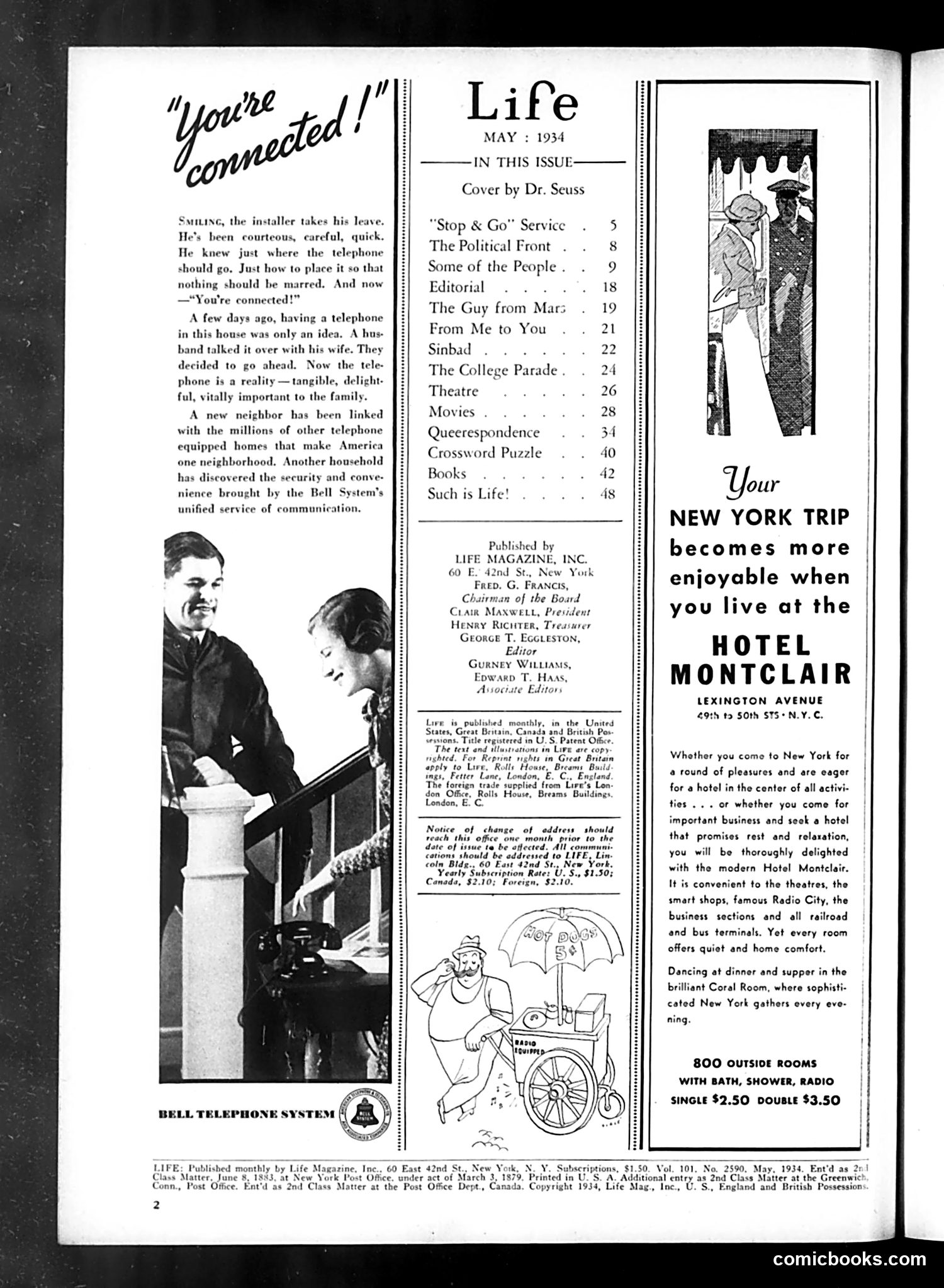
# Life Magazine, May 1934 - Page Analysis This page is primarily a **table of contents and advertisements** rather than editorial cartoons. The left side features a **Bell Telephone System advertisement** showing two men at a telephone, promoting home connectivity as a luxury that links families across America—reflecting 1930s optimism about modern technology during the Depression era. The center lists the magazine's contents, noting a **Dr. Seuss cover** (the famous illustrator's early work). The right side advertises the **Hotel Montclair** in Manhattan, targeting affluent travelers seeking comfort and central location near theaters and businesses. The small cartoon at bottom appears to be a **humorous illustration** (likely by Dr. Seuss, given the style), though its specific subject is unclear from this image. Overall, the page reflects 1934 consumer culture and commercial leisure.
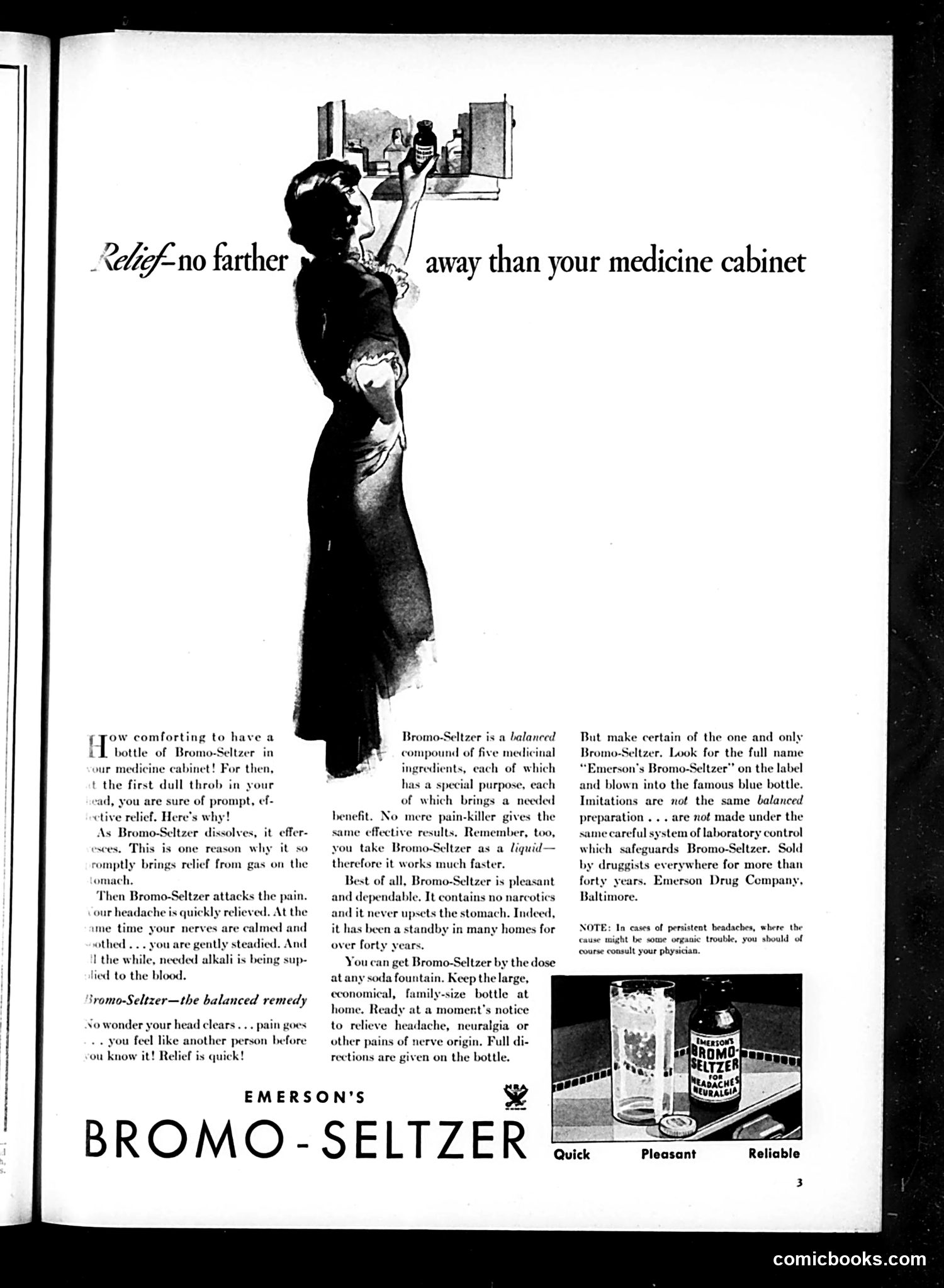
# Analysis This page is primarily an **advertisement for Bromo-Seltzer**, a patent medicine marketed as a headache and digestive relief remedy. The illustration shows a woman reaching upward toward a medicine cabinet, with the tagline "Relief no farther away than your medicine cabinet." The ad emphasizes Bromo-Seltzer's convenience and effectiveness, claiming it's a "balanced remedy" containing five medicinal ingredients with "no narcotics" that "never upsets the stomach." It promises quick relief and was positioned as a household staple. **Historical context**: This reflects early-20th-century medical advertising before FDA regulations. Such remedies were widely promoted through lifestyle imagery showing domestic scenarios. The ad targets middle-class households and normalizes patent medicines as standard home healthcare.
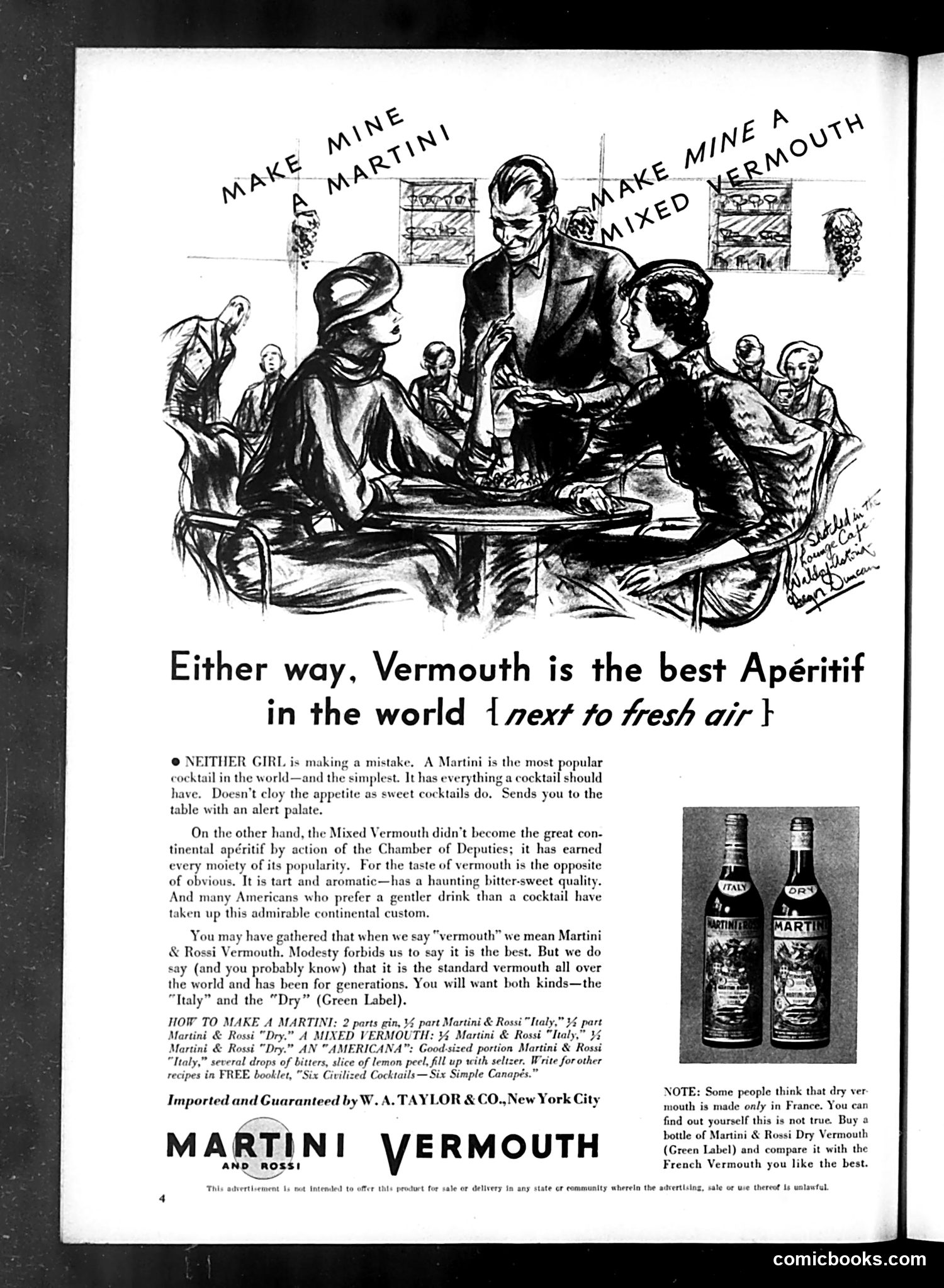
# Analysis This is **advertising content**, not editorial satire. The page promotes Martini & Rossi vermouth through an illustration showing a social scene where two men and a woman are at a table, with text suggesting different vermouth-based cocktails ("Make mine a Martini," "Make mine a mixed Vermouth"). The headline claims vermouth is "the best Apéritif in the world [next to fresh air]"—a lighthearted exaggeration typical of period advertising. The copy positions Mixed Vermouth as an alternative to Martinis for those preferring gentler drinks, while claiming vermouth's popularity comes from its quality rather than Chamber of Deputies action. The two bottle images compare Martini & Rossi varieties. This is straightforward product advertising, not political commentary.
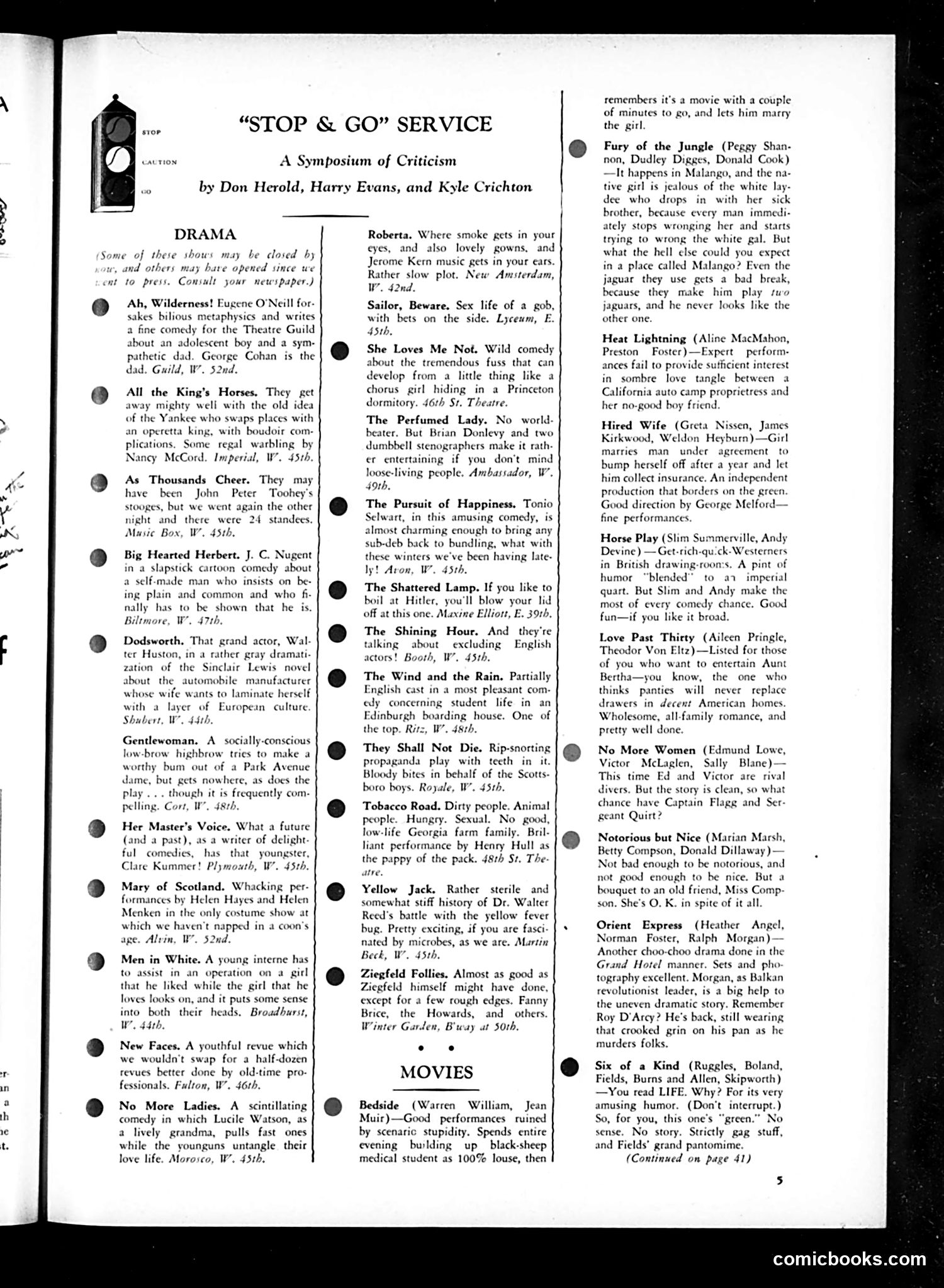
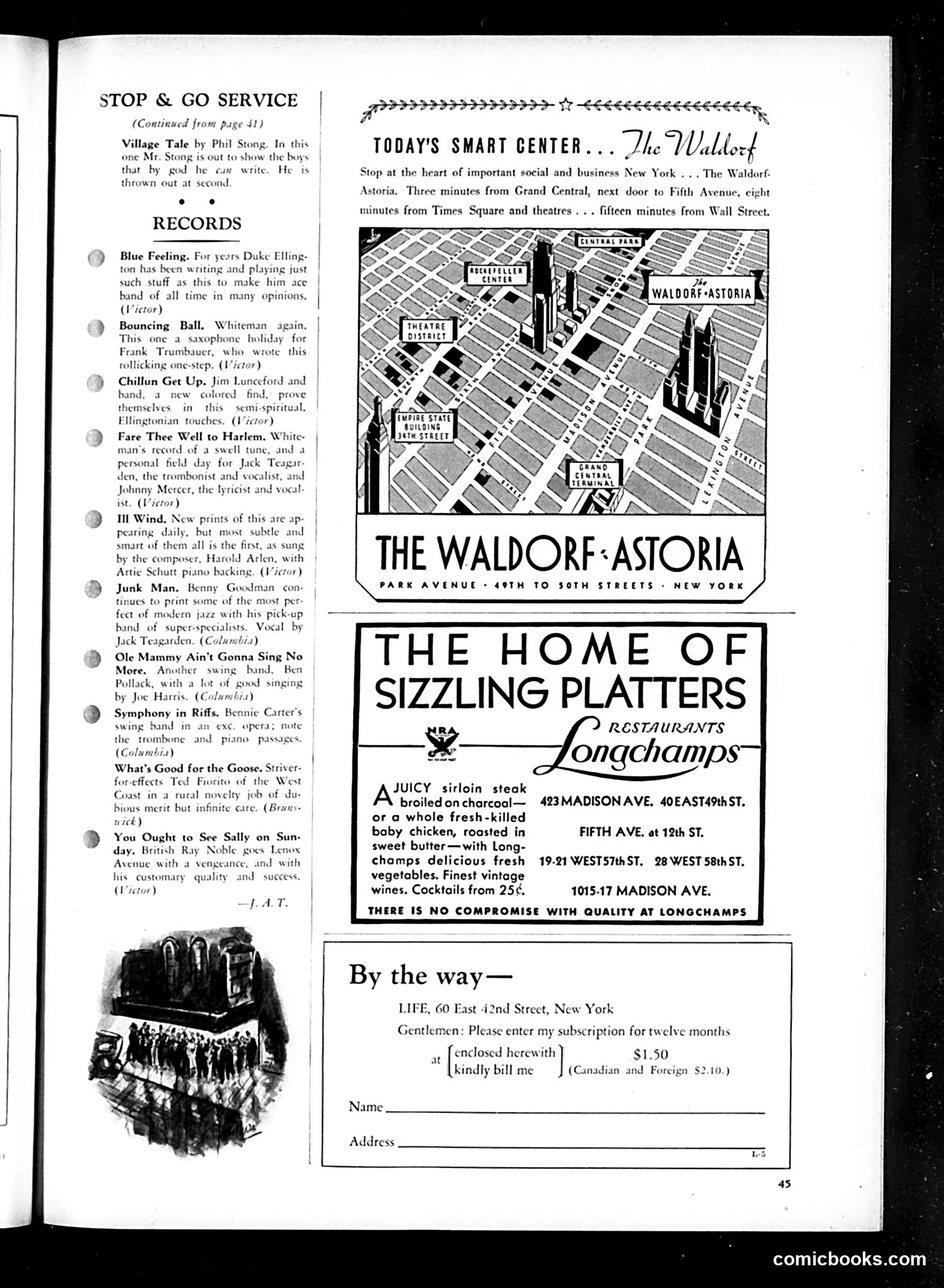
# Analysis of "Stop & Go Service" Page This is a **theater and film review page** from *Life* magazine, not a political cartoon. The "Stop & Go Service" heading appears to be the column's title—a metaphor for brief, quick assessments of entertainment. The content consists of **short, satirical reviews** of theatrical productions and films. Critics (Don Herold, Harry Evans, and Kyle Crichton) offer witty, dismissive critiques using colorful language. For example, they mock overly ambitious or poorly executed plays and films with phrases like "no good," "sterile," and complaints about bad acting or thin plots. The reviews target both experimental theater and commercial cinema, critiquing everything from acting quality to narrative substance. The satire lies in the *brevity and harshness* of these professional dismissals of contemporary entertainment.
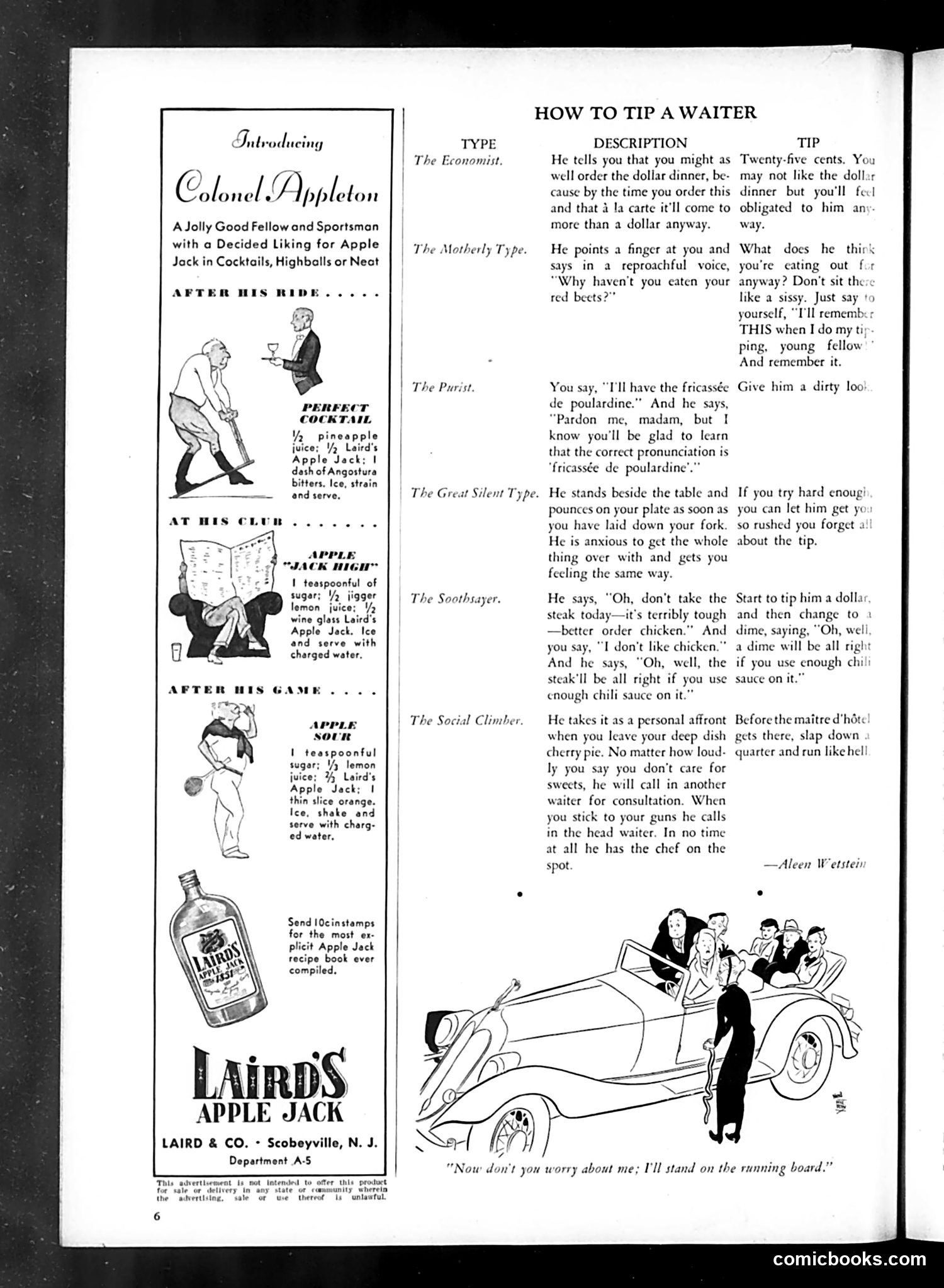
# Analysis: "How to Tip a Waiter" This page is primarily **humorous social commentary**, not political satire. The right side catalogs different waiter "types" and their behaviors—the Economist (warns about costs), the Motherly Type (criticizes your eating), the Purist (corrects your pronunciation), and others. Each description ridicules both the waiter's pretension and the diner's awkwardness. The joke targets **class anxieties of the era**: diners unsure of proper etiquette and service workers who weaponize their knowledge to intimidate customers. The "Social Climber" waiter is particularly sharp—he's offended if you don't order sweets and summons the chef for consultation, maintaining control through hierarchical performance. The left side advertises Colonel Appleton Apple Jack cocktails, unrelated to the satire.
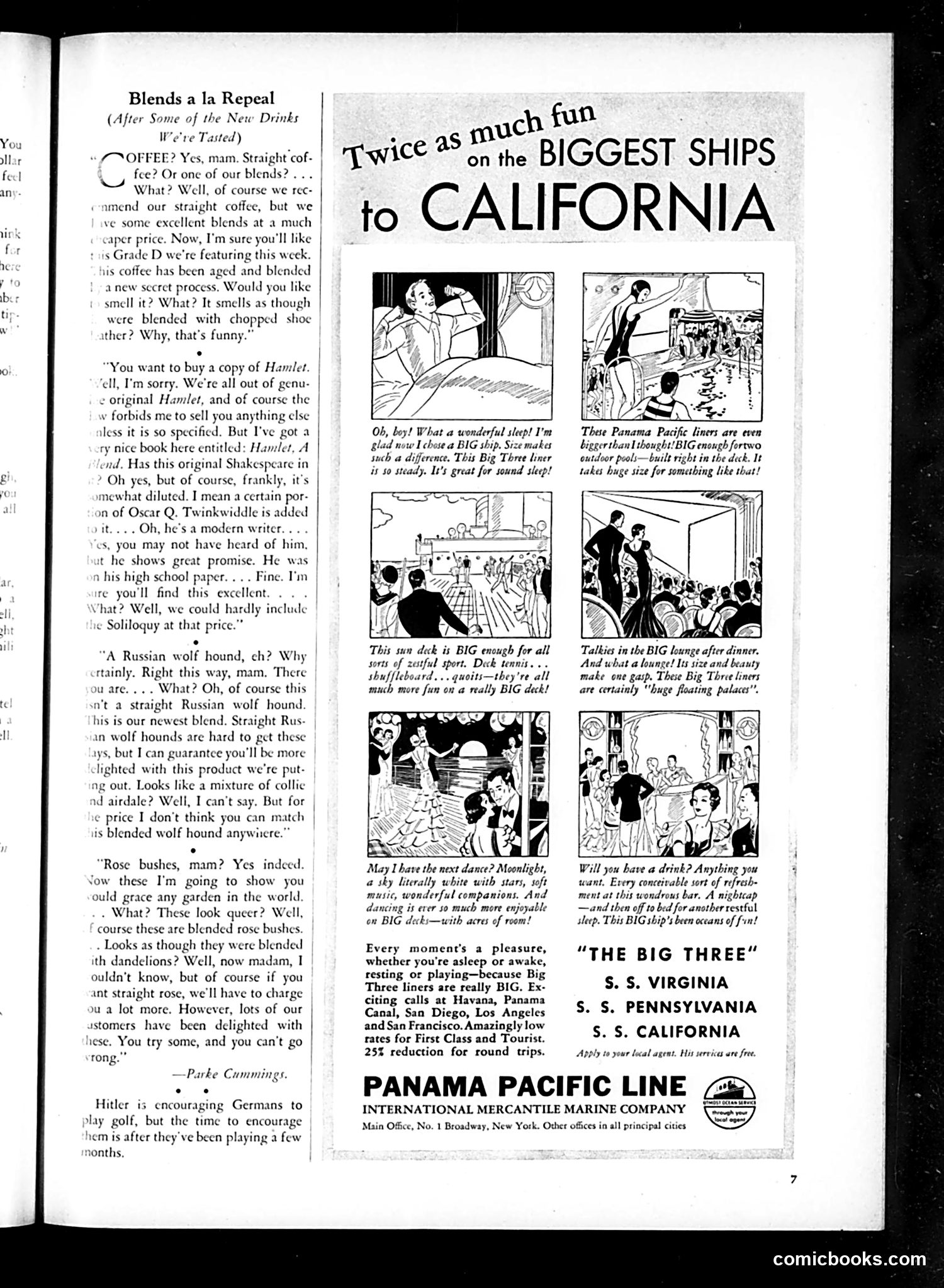
# Analysis This page is primarily a **Panama Pacific Line cruise ship advertisement** disguised as editorial content, occupying most of the space with six comic panels showing leisure activities aboard "Big Three" ocean liners. The left column contains "**Blends a la Repeal**" — satirical dialogue about coffee blends and literary references (Hamlet, Oscar Wilde). The tone is humorous and whimsical rather than politically pointed. The advertisement's comic panels depict passengers enjoying sleeping quarters, deck sports, dining, dancing, and socializing—marketing luxury ocean travel to California via Panama Canal ports. The phrase "Twice as much fun on the BIGGEST SHIPS" emphasizes the ships' scale as a selling point. The final reference to Hitler encouraging golf is brief and contextual to the era, suggesting pre-WWII attitudes. This is fundamentally **advertorial content**, not political satire.
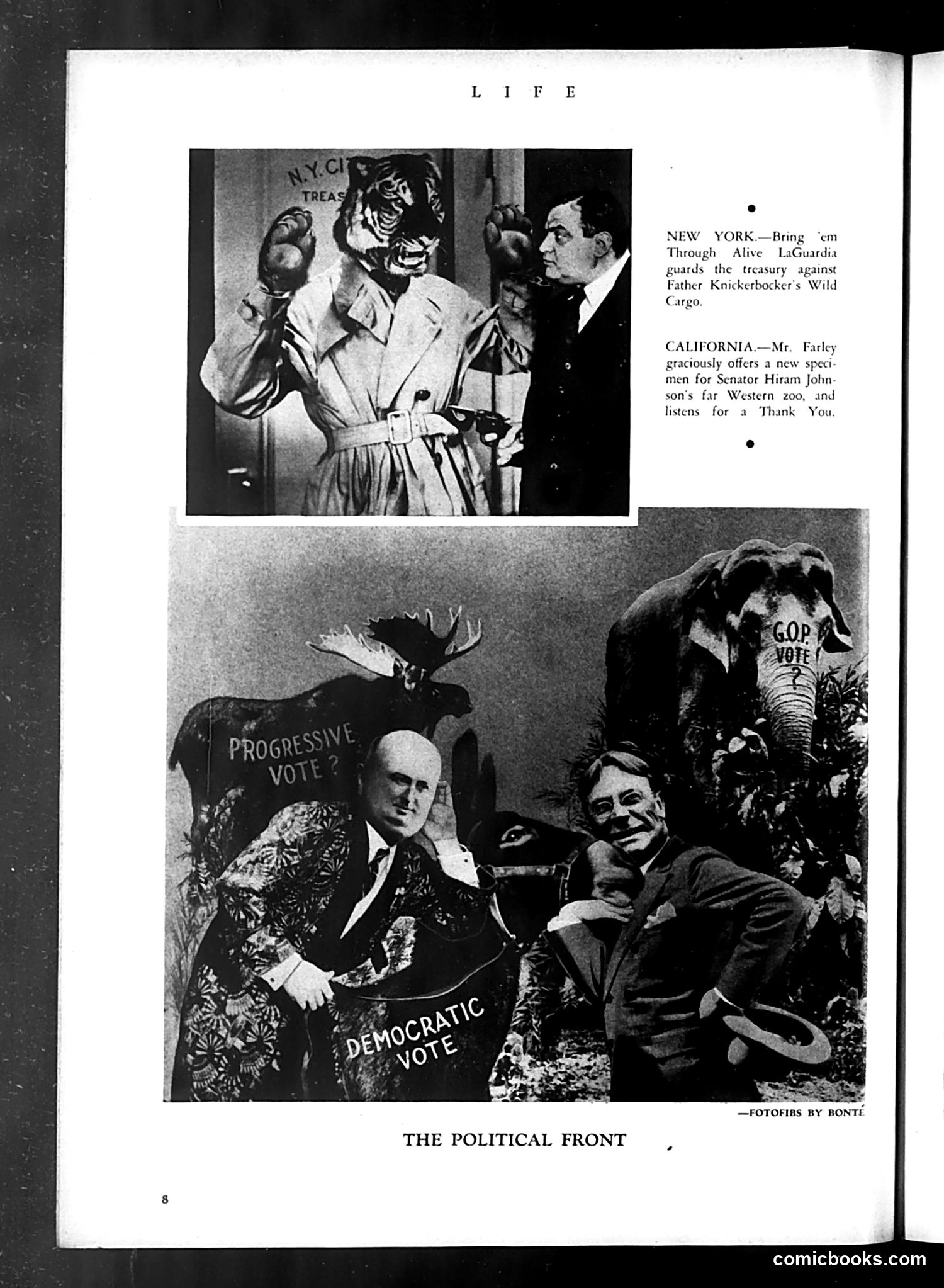
# "The Political Front" - Life Magazine Satire This page presents political cartoons mocking the 1912 U.S. presidential election, a three-way race between Republican President William Taft, Democrat Woodrow Wilson, and Progressive Party candidate Theodore Roosevelt. The top image shows a woman (Lady Liberty) protecting the Treasury against "Father Knickerbocker's Wild Cargo"—likely referencing chaotic campaign promises. The bottom cartoon depicts two men (appearing to represent Democratic and Progressive candidates) awkwardly positioned with animals labeled "Progressive Vote," "Democratic Vote," and "GOP Vote"—symbolizing how the split between Roosevelt's Progressives and Taft's Republicans benefited Wilson's Democrats. The satire critiques the political chaos and competing claims on voter allegiance created by the three-candidate race.