A complete issue · 56 pages · 1933
Life — November 1933
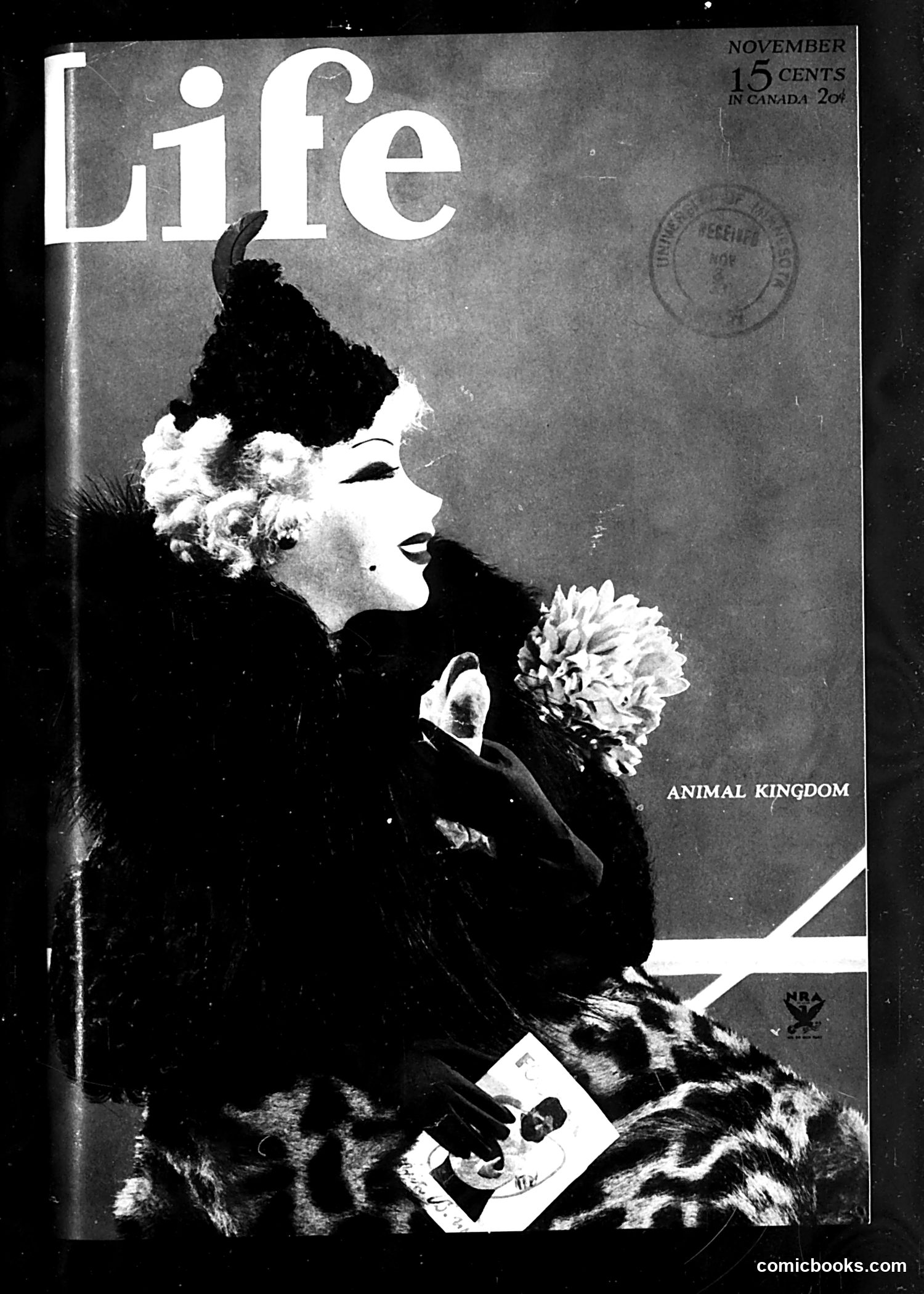
This is the November cover of *Life* magazine, priced at 15 cents (with a Canadian edition at 20 cents). The cover features a stylized illustration of an elegant woman in profile, wearing an ornate black feathered hat and holding flowers, dressed in fashionable fur clothing. The woman appears to be examining or holding a small image or card. The cover's text indicates the issue contains a feature on "Animal Kingdom." The illustration exemplifies the magazine's typical satirical approach to fashion and high society. The woman's exaggerated profile, elaborate accessories, and the juxtaposition with animal imagery suggests commentary on wealthy socialites and the fashion industry's connection to animal products—likely a gentle critique of conspicuous consumption and fashion's reliance on fur and exotic materials popular among the wealthy during this era.
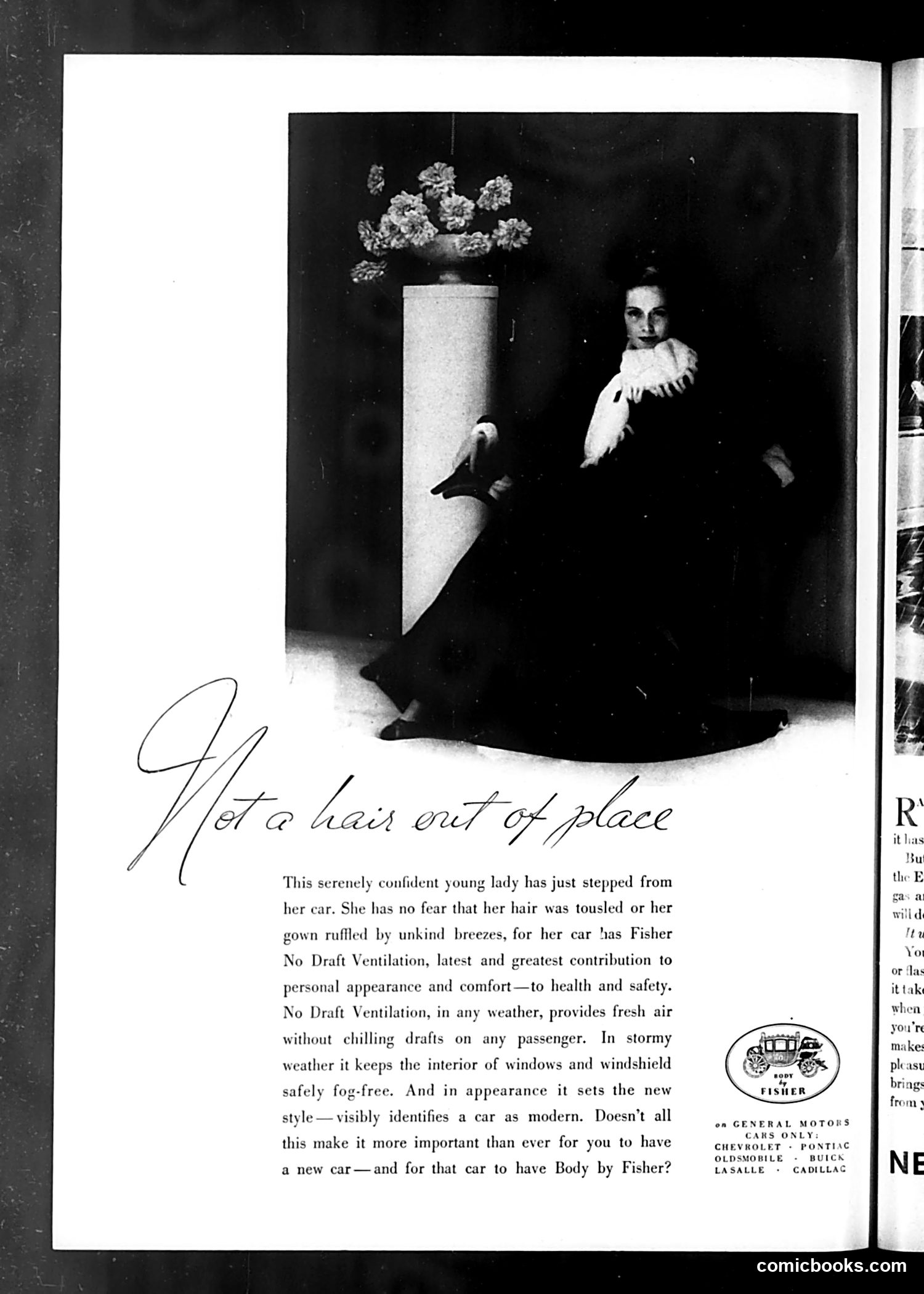
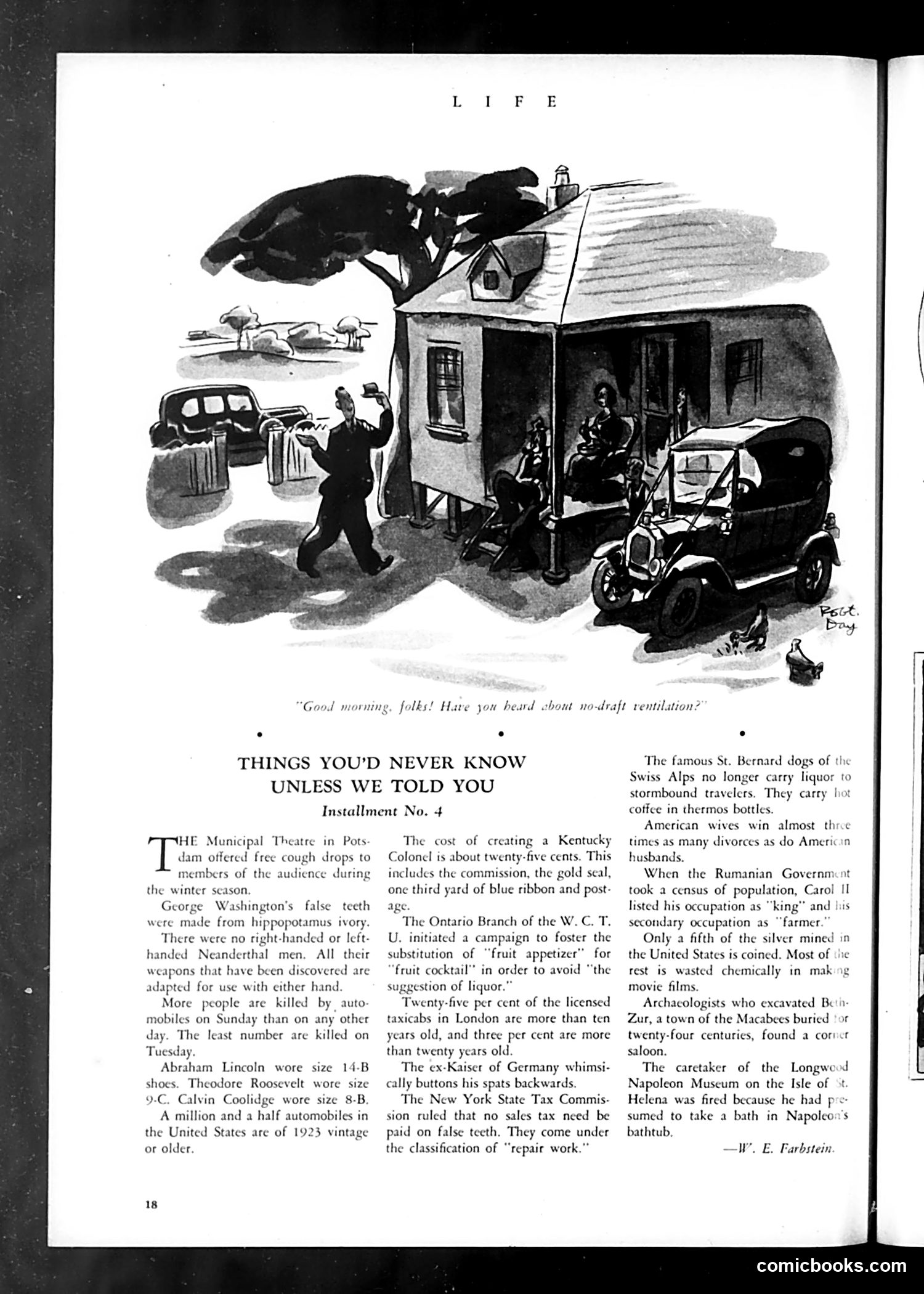
# Analysis This is a **Fisher Body advertisement** for General Motors vehicles, not political satire. The image shows a fashionably dressed woman exiting a car, with the caption "Not a hair out of place." The accompanying text promotes Fisher's "No Draft Ventilation" feature—a car ventilation system that provides fresh air without creating uncomfortable drafts that would disturb a passenger's appearance (hair, clothing, etc.). The advertisement appeals to concerns about personal grooming and comfort, positioning the feature as modern and stylish. The tagline suggests that owning a Fisher Body car is a status marker of sophistication and up-to-date design. This reflects 1920s-30s marketing focused on women as car buyers/passengers, emphasizing luxury, appearance, and comfort rather than mechanical performance.
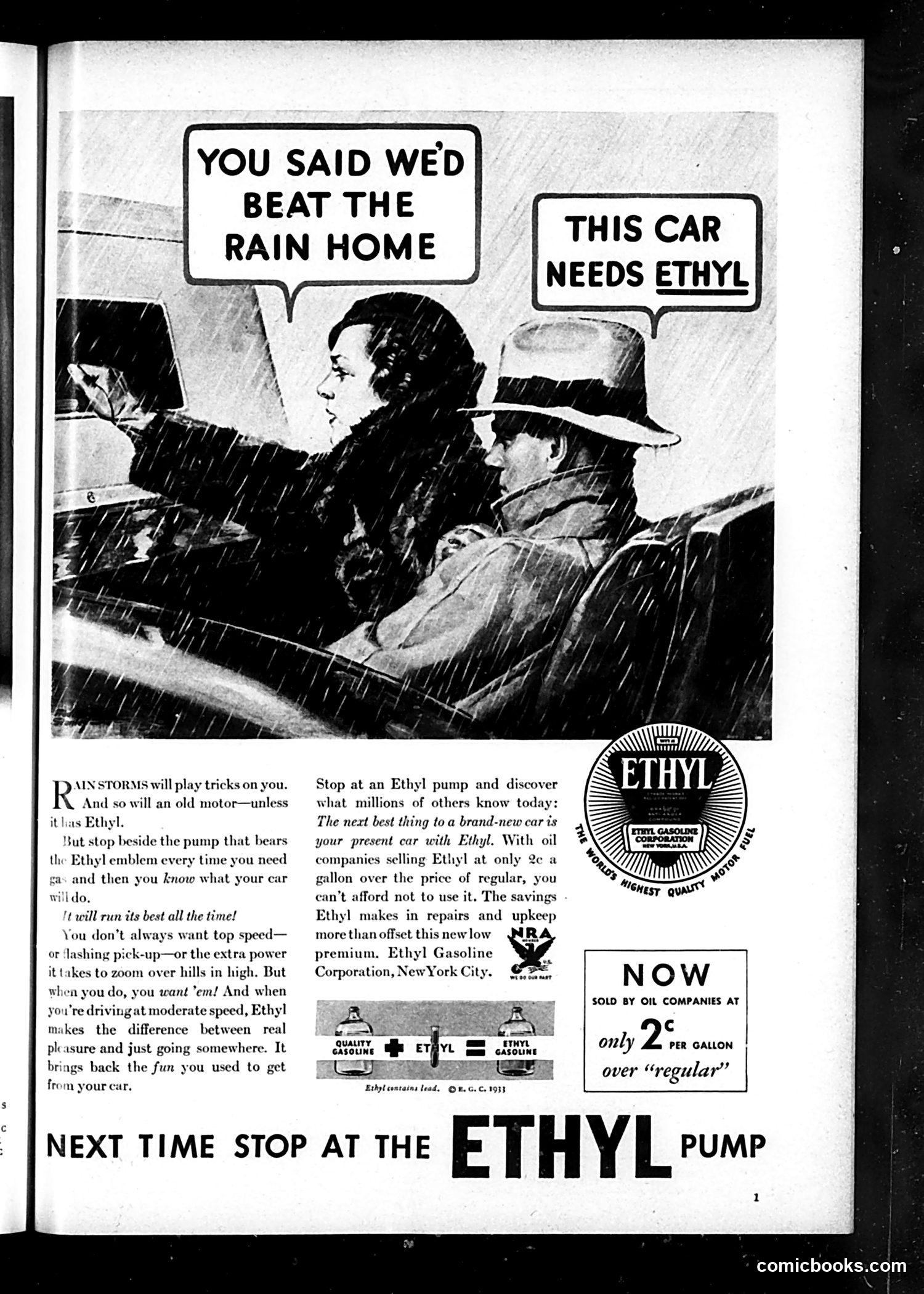
# Ethyl Gasoline Advertisement This is a **commercial advertisement**, not political satire. The page promotes Ethyl Gasoline, a leaded fuel product sold during the early-to-mid 20th century. The cartoon depicts two men in a car during rainstorm, with one saying they'll "beat the rain home" if the car has Ethyl fuel. The ad's humor plays on the idea that Ethyl gasoline provides superior performance and reliability compared to regular fuel. The advertisement emphasizes that Ethyl costs only 2¢ more per gallon than regular gasoline while offering better engine performance, fuel economy, and driving pleasure. The text encourages motorists to seek out Ethyl pumps at gas stations for improved vehicle reliability in all driving conditions.
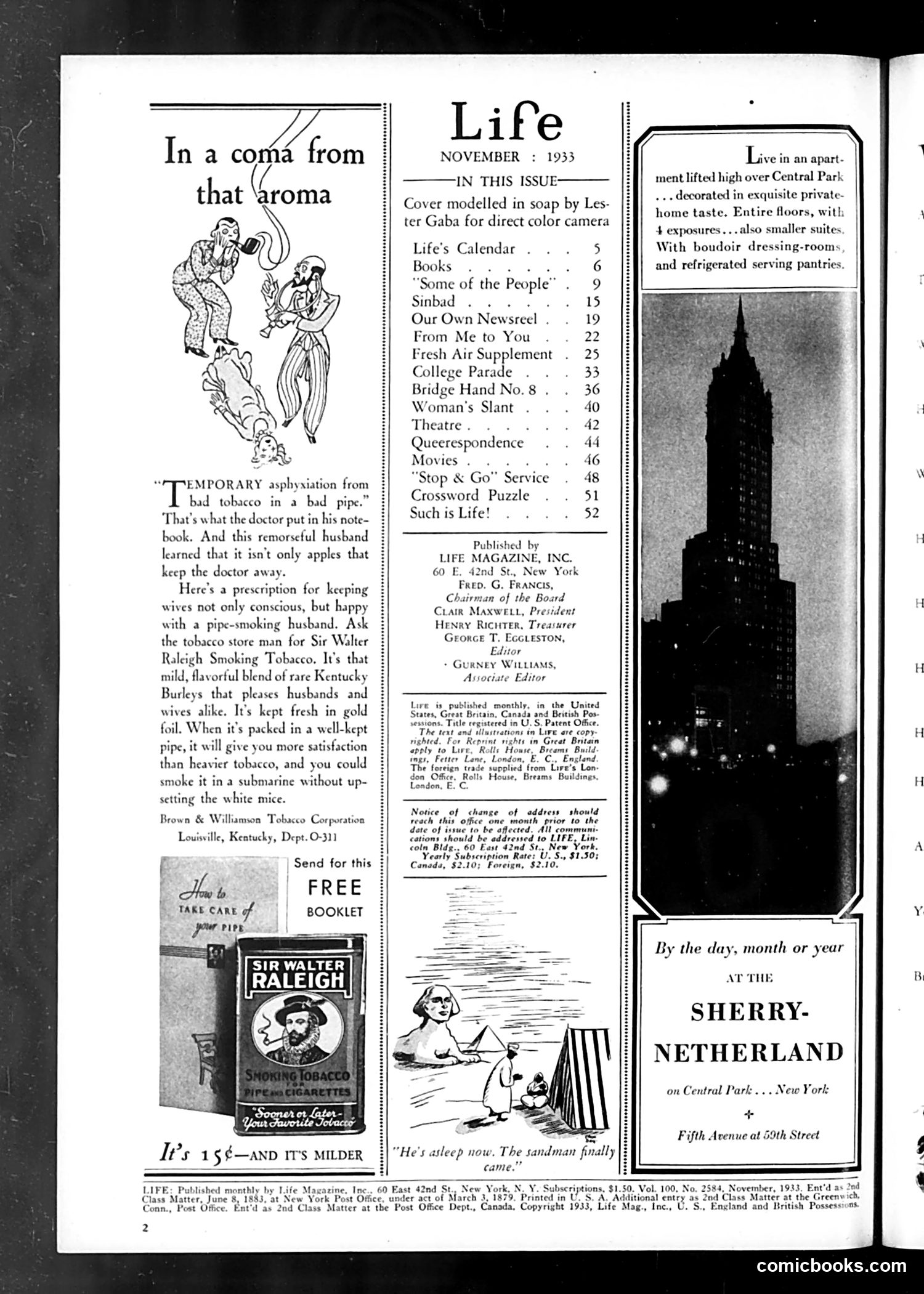
# Life Magazine, November 1933 - Page Analysis This page is primarily **advertising and magazine front matter**, not political satire. The left side advertises **Sir Walter Raleigh smoking tobacco** with a humorous "prescription" framing pipe smoking as a health remedy—a common advertising trope of the era. The copy jokingly attributes the habit to doctors' recommendations, playing on 1930s attitudes before tobacco's dangers were widely acknowledged. The right side shows the magazine's table of contents and promotes the **Sherry-Netherland hotel** in Manhattan with a photograph of its distinctive Art Deco tower. The small cartoon at bottom center depicts children at a beach, with minimal satirical content—just mild humor about a sleeping sandman. This is primarily a **commercial/marketing page** rather than political commentary.
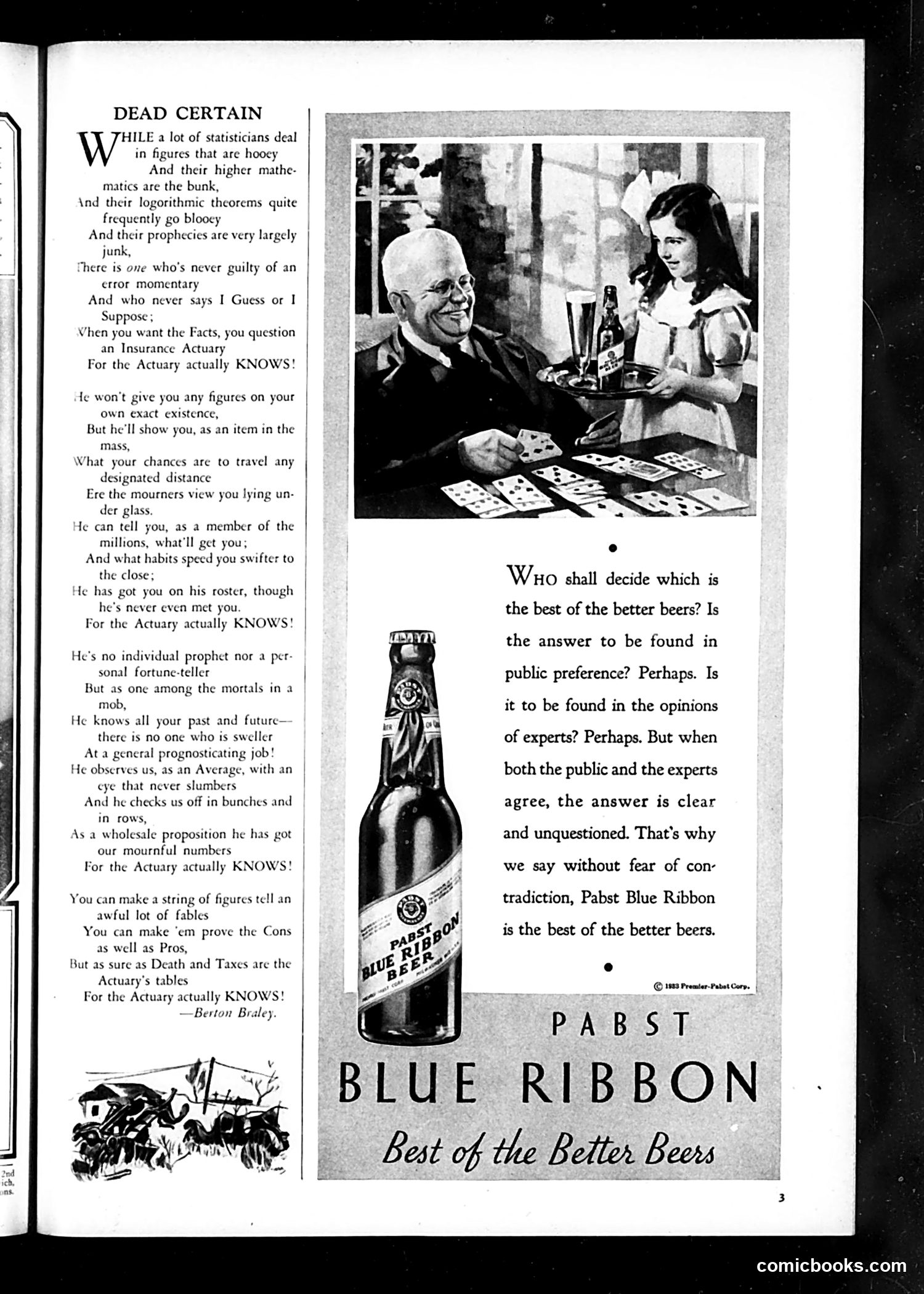
# Analysis This page is primarily a **Pabst Blue Ribbon beer advertisement** (right side), with an unrelated poem on the left titled "Dead Certain" by Berton Braley. The ad features a photograph of an older man and younger woman examining playing cards, accompanying text claiming that when "both the public and the experts agree," Pabst Blue Ribbon is definitively "the best of the better beers." The poem satirizes statisticians and actuaries—professionals who deal in data, prophecies, and calculations—arguing that only actuaries truly "know" facts about existence, mortality rates, and probabilities. The satire mocks their pretension to absolute knowledge. There is no political cartoon on this page; it's primarily advertising copy using rhetorical appeals to authority and consensus.
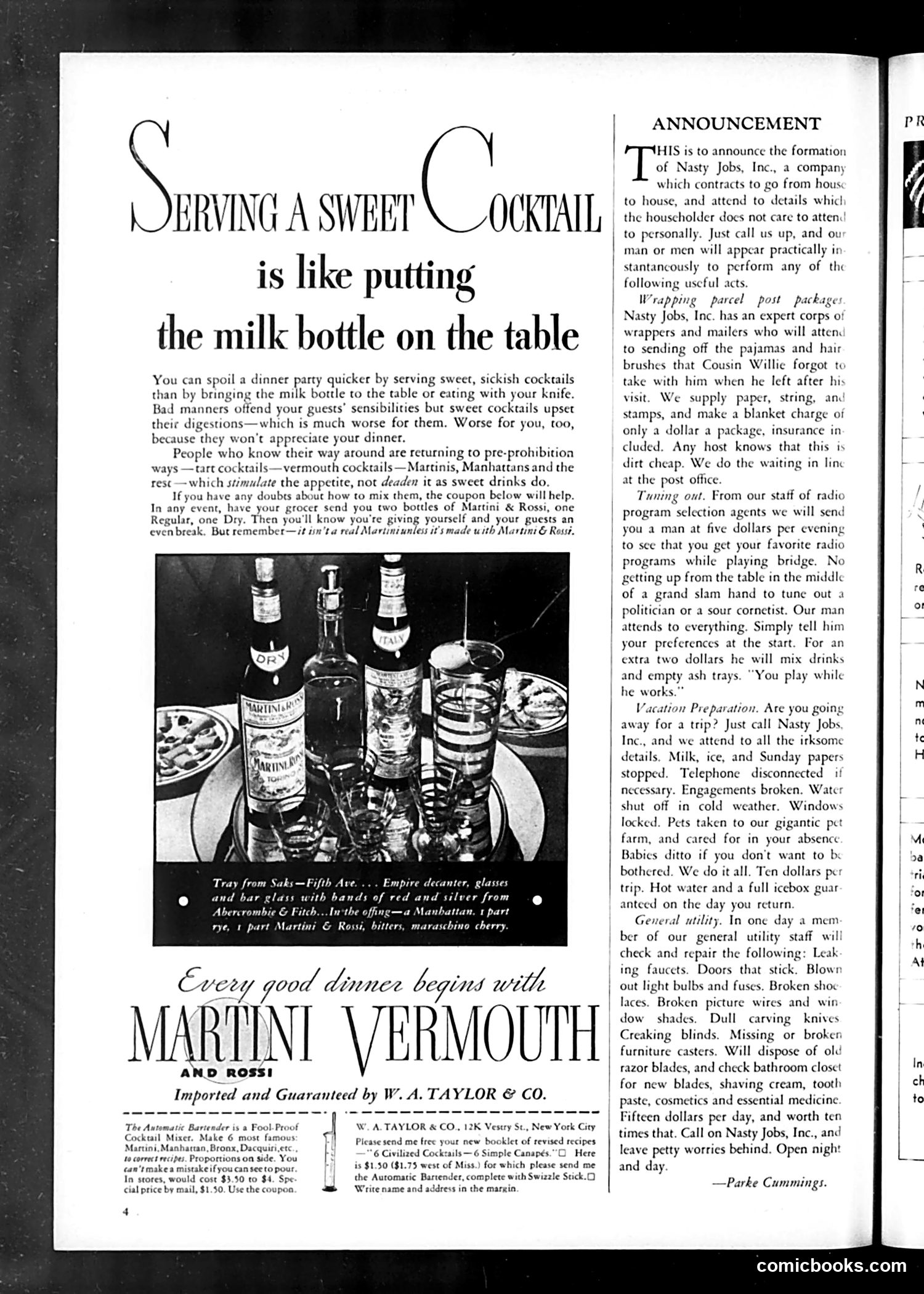
# Analysis This page is primarily **advertising content**, not satirical editorial material. The main advertisement promotes **Martini & Rossi vermouth**, using an article-style format titled "Serving a Sweet Cocktail" to market the product. The piece humorously compares serving sweet cocktails to bringing a milk bottle to a dinner table—suggesting such drinks are unsophisticated. The accompanying image shows an elegant cocktail service setup with bottles and glasses, reinforcing upscale dining associations. Below is a secondary ad for **W.A. Taylor & Co.**, selling Martini & Rossi products and a cocktail recipe booklet called "The Automatic Bartender." The right column contains **Nasty Jobs, Inc.** and **Parke Cummings** service announcements—utilities for household tasks and vacation preparation. This appears to be a **pre-WWII lifestyle/consumer magazine** page blending advertising with service-oriented content.
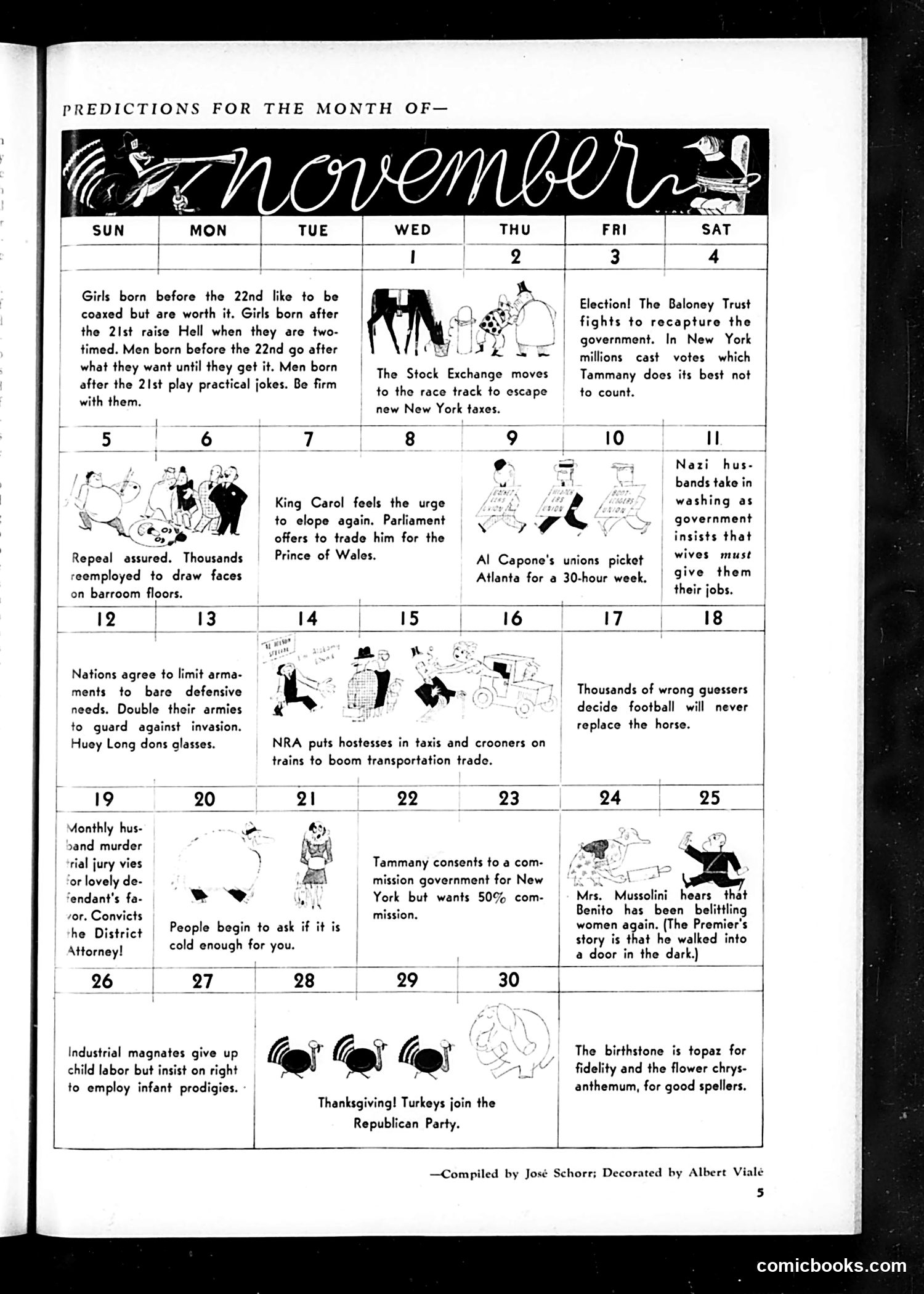
# November 1932 Political Predictions Calendar This satirical calendar mocks current events during the Great Depression and early 1930s politics: **Key targets:** - **Election day (Nov. 3)**: References Franklin D. Roosevelt's presidential campaign and corrupt voting practices in New York - **Nov. 9**: Al Capone's union activities in Atlanta (the notorious gangster was involved in labor disputes) - **Nov. 12-14**: Arms limitation debates and Huey Long's political influence - **Nov. 22-24**: References to Tammany Hall's political negotiations and Mussolini's domestic violence ("walking into a door") - **Nov. 29**: Thanksgiving joke about turkeys joining the Republican Party—implying Republicans face slaughter in upcoming elections The calendar uses dark humor about corruption, organized crime, political incompetence, and economic hardship to satirize contemporary American politics and society during the Depression era.
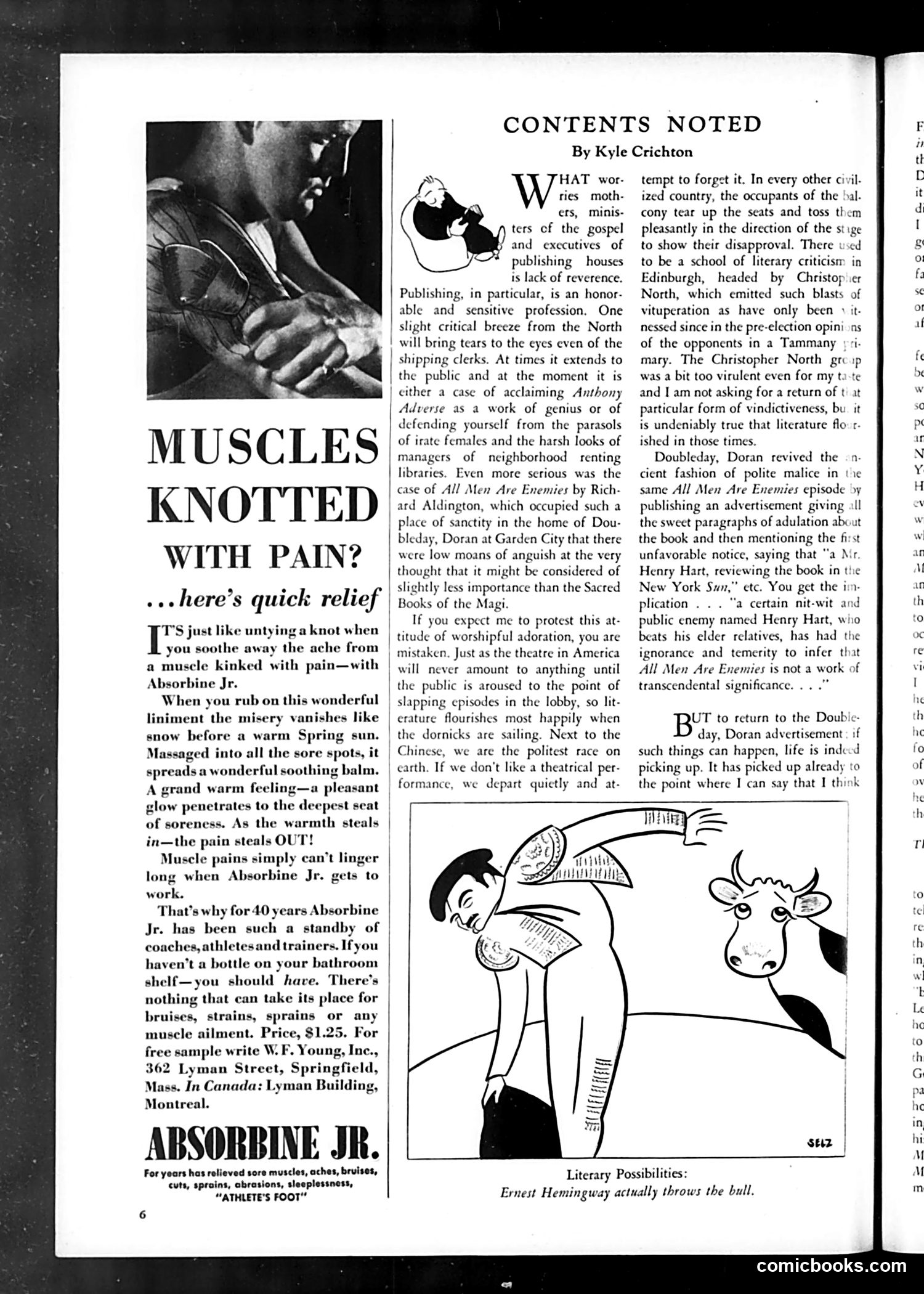
# Analysis This page combines an advertisement and literary criticism. The left side advertises **Absorbine Jr.**, a liniment for muscle pain, using humor about untying knots to illustrate relief. The right side, "Contents Noted" by Kyle Crichton, critiques recent literary publications and theater. It mentions: - **Anthony Adverse** (a novel) and its reception - **All Men Are Enemies** by Richard Aldington, criticized for being published with scandalous advertising - A **Doubleday advertisement** promoting the book despite its controversial nature - Theater criticism regarding theatrical performances in America The cartoon below shows a figure reading while a cow observes—captioned "Ernest Hemingway actually throws the ball," a humorous reference to literary style or Hemingway's reputation, though the exact satirical point remains unclear without additional context about contemporary literary debates.
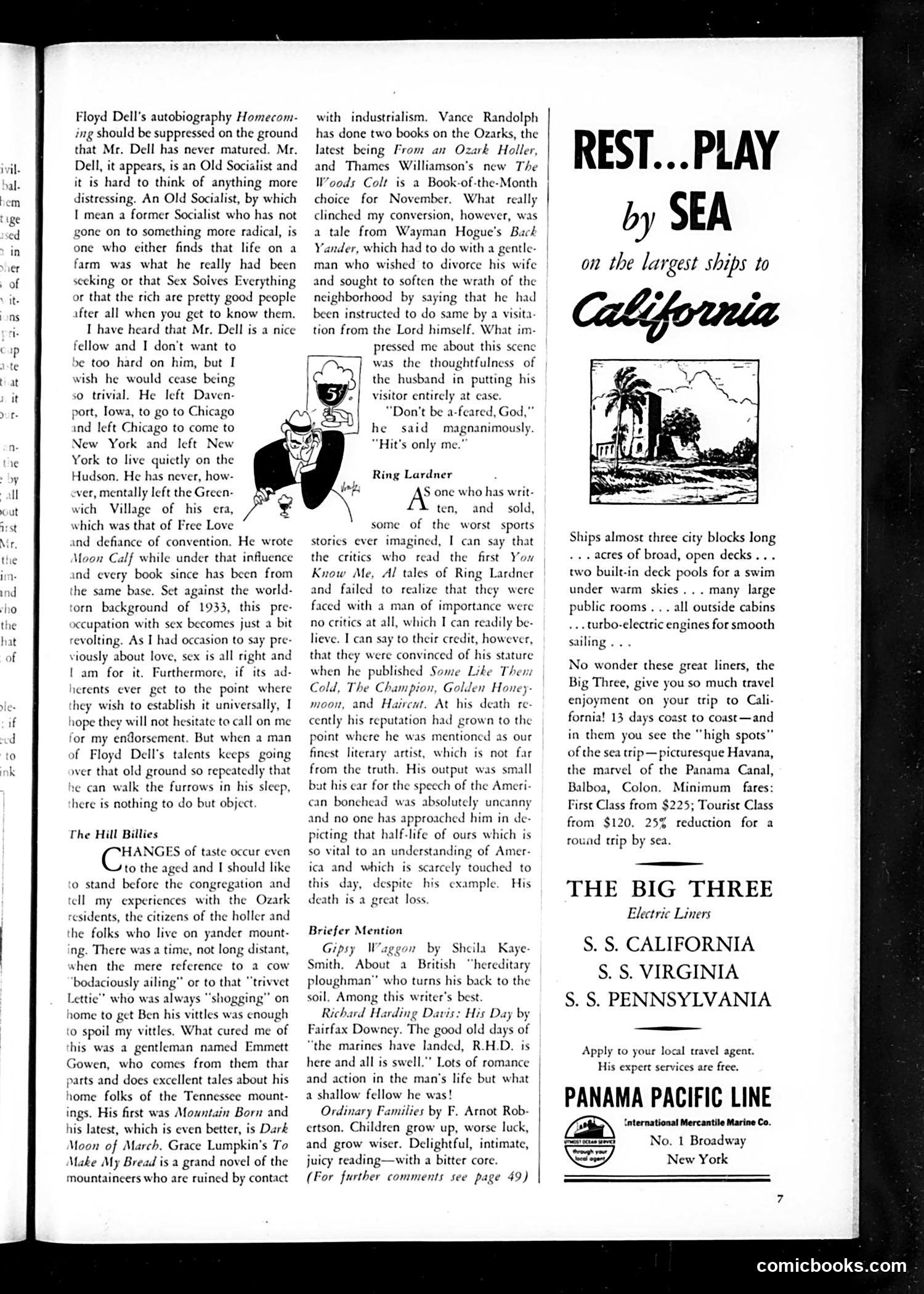
# Analysis of Page 7, Life Magazine This page contains literary criticism and advertising rather than political cartoons. The text discusses American authors including Floyd Dell (an Old Socialist), Ring Lardner, and others. There is **one small cartoon** showing a caricatured man in formal dress with an exaggerated nose, labeled with what appears to be a signature. The cartoon's specific meaning is unclear without additional context, though it likely illustrates a point in the literary discussion. The page is primarily devoted to **book reviews and a shipping advertisement** for the Panama Pacific Line's "Big Three" ocean liners to California. This reflects 1920s-era leisure travel marketing to affluent readers of Life magazine.
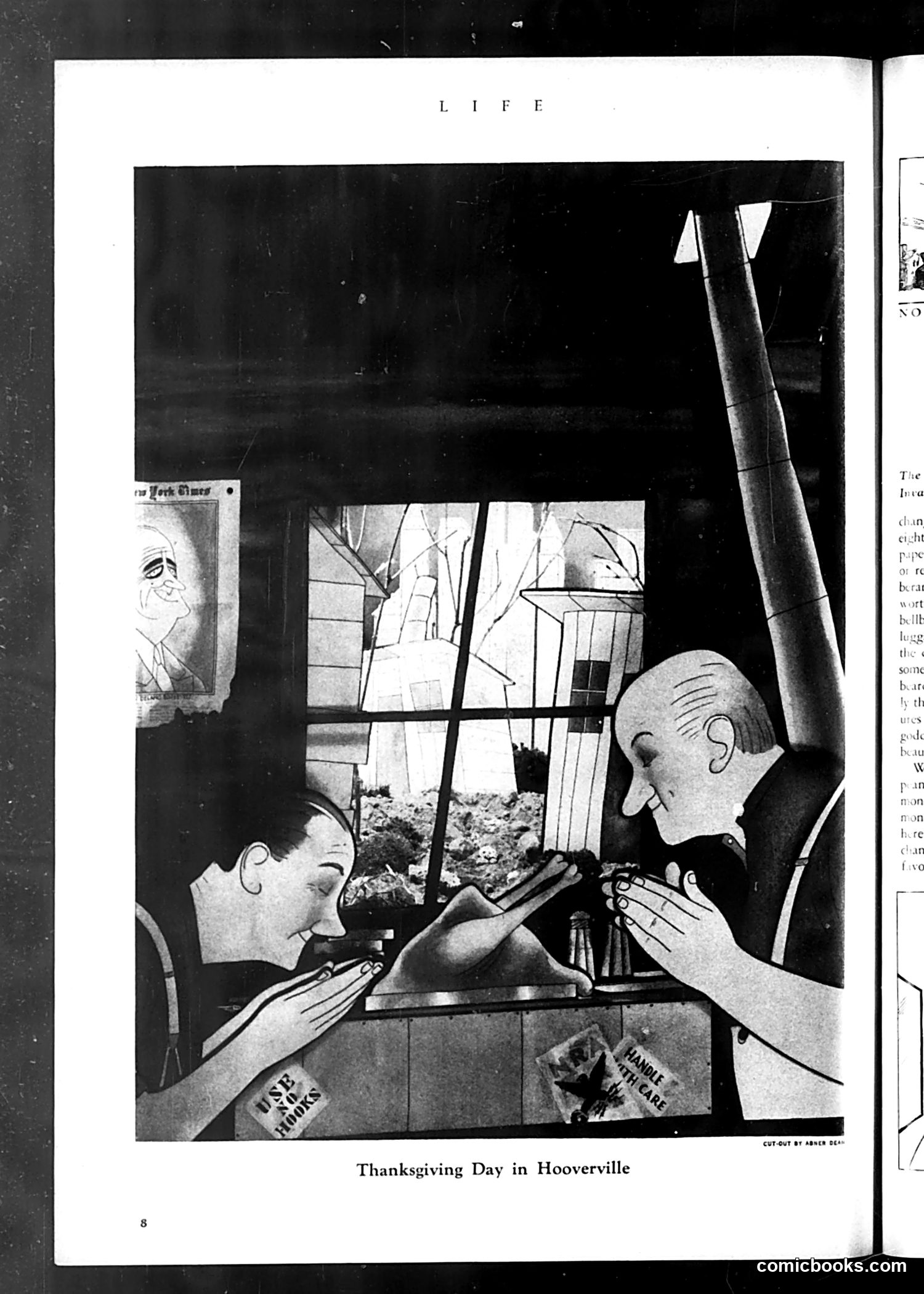
# "Thanksgiving Day in Hooverville" This satirical image depicts two caricatured figures in profile exchanging what appears to be canned goods or food items at a window. The caption references "Hooverville"—a derogatory term for Depression-era shanytowns, named mockingly after President Herbert Hoover, who was blamed for economic hardship. The cartoon satirizes poverty during the Great Depression, suggesting that Thanksgiving meals for the unemployed poor consisted only of minimal canned rations rather than traditional holiday fare. The figures' exaggerated facial features and the cramped, makeshift setting reinforce the bleakness of their circumstances. The humor is dark, critiquing both the inadequate relief available to struggling Americans and, implicitly, Hoover's administration's perceived indifference to widespread suffering.
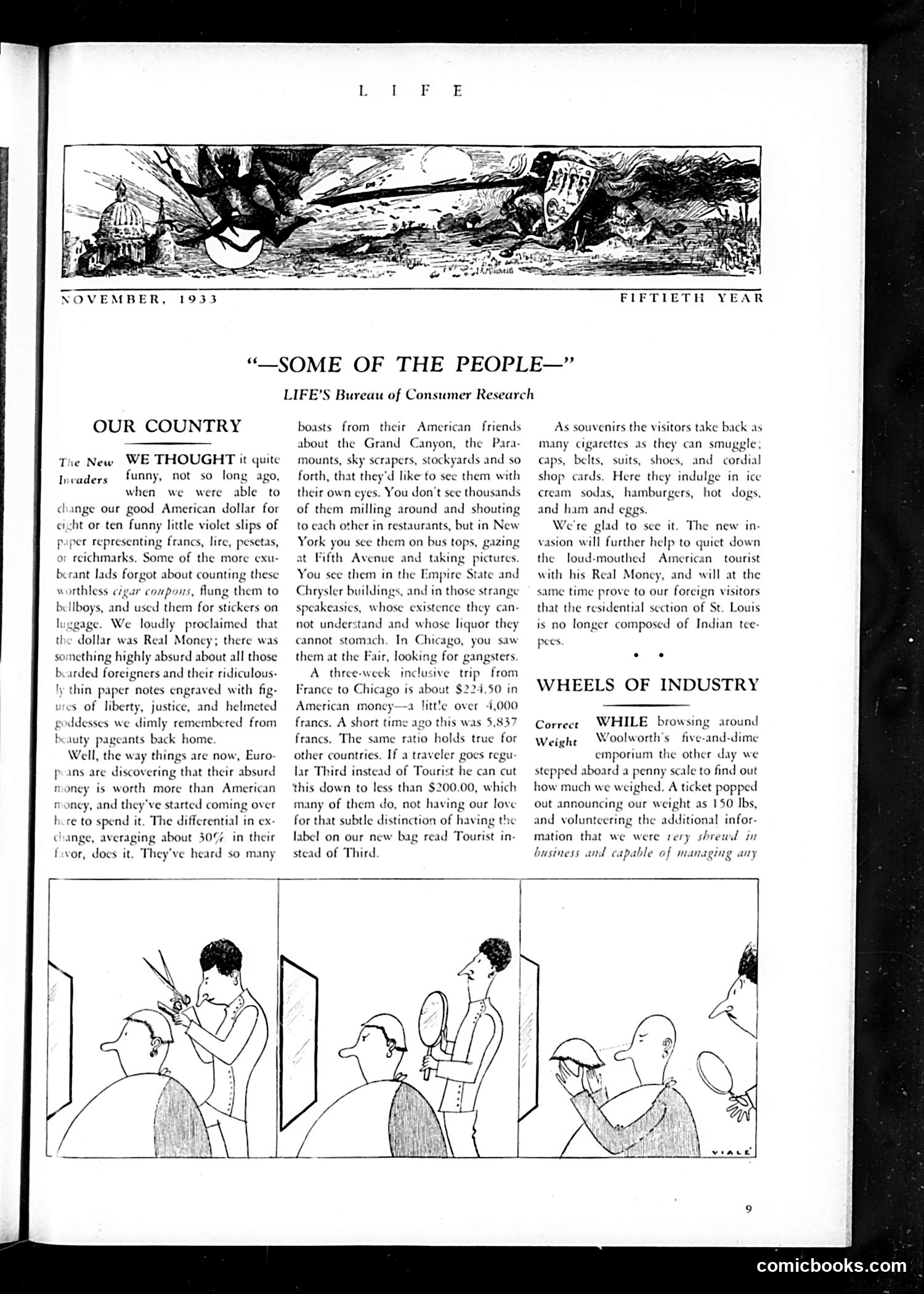
# Analysis of Life Magazine Page (November 1933) This page contains two distinct pieces: **"Our Country" section** satirizes American tourists abroad, mocking their materialism and cultural insensitivity. The text ridicules foreigners' fascination with American consumer goods and tourist attractions (Grand Canyon, Empire State Building), while also criticizing Americans for spending dollars abroad rather than keeping money domestic—a relevant concern during the Great Depression. **"Wheels of Industry" section** describes a humorous visit to Woolworth's five-and-dime store, where the author discovered their actual weight via a scale. **The three-panel cartoon below** (artist signed "Volk") depicts a barber shop scenario, likely commenting on the absurdity of weighing oneself or some social observation about customer behavior, though the specific satirical point is unclear from the image alone.
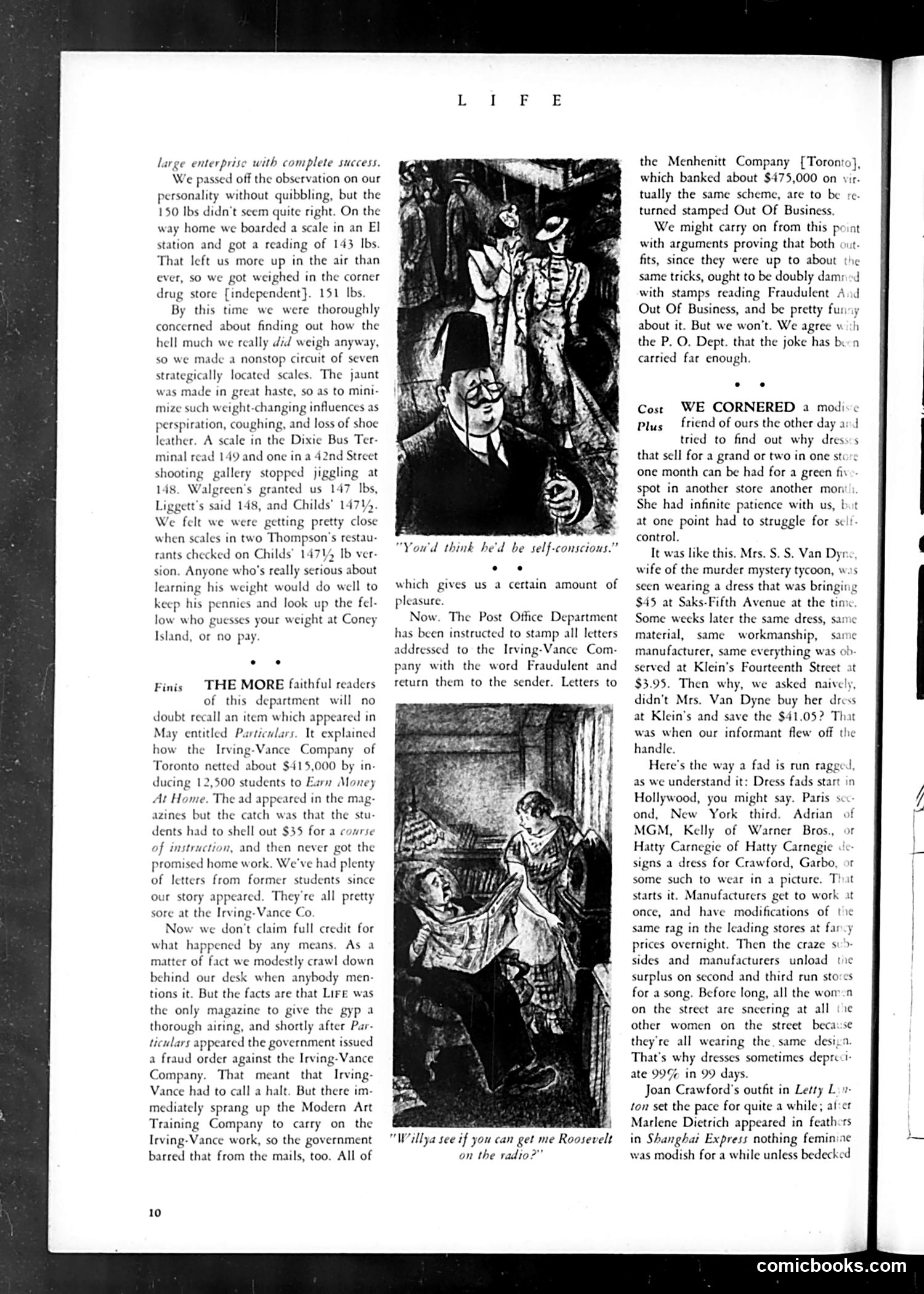
# Analysis of Life Magazine Page This page contains two satirical illustrations accompanying text about consumer fraud and fashion fads. The **top cartoon** shows people crowded on a scale, satirizing weight-checking schemes. The caption reads "You'd think he'd be self-conscious," mocking participants in a scam where the Irving-Vance Company charged students to learn "how to Earn Money At Home," then never delivered promised materials. The **bottom illustration** depicts someone at a radio, captioned "Will ya see if you can get me Roosevelt on the radio?" This appears to satirize the era's obsession with radio technology and celebrity culture—the joke being the absurdity of casually summoning a famous person via broadcast. The surrounding text discusses fashion fads' rapid cycles and how retailers exploit trend-chasing consumers, suggesting the magazine's broader critique of commercial manipulation during this period.