A complete issue · 51 pages · 1933
Life — July 1933
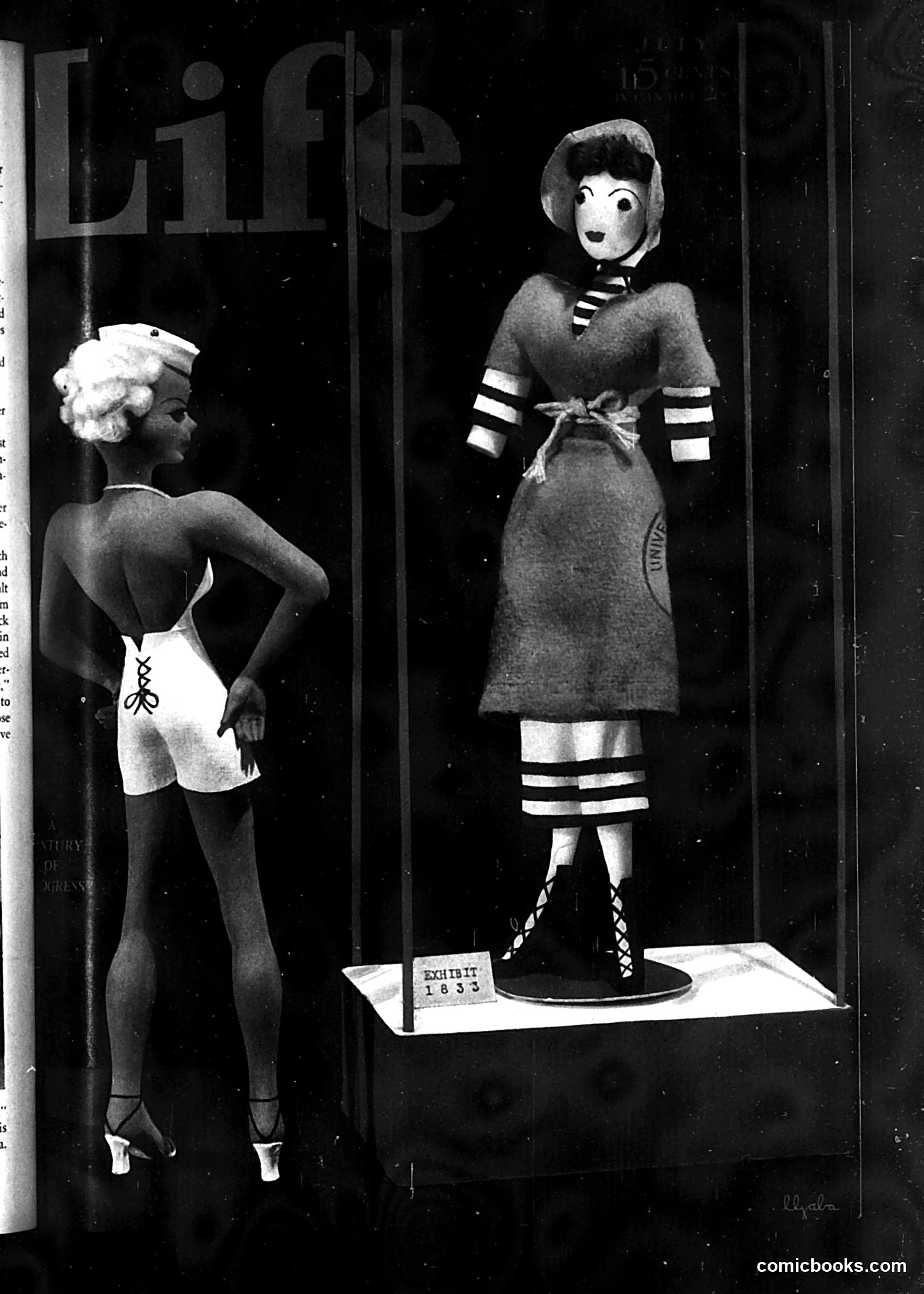
# Analysis This appears to be a Life magazine fashion or lifestyle piece featuring two mannequins or figures in 1930s-style clothing. The left figure wears minimal undergarments (corset and shorts), while the right wears a complete dress ensemble with striped details, hat, and lace-up shoes. The "EXHIBIT 1833" label suggests this is displaying fashion evolution or contrasting styles. The satirical point likely critiques changing fashion standards or women's dress codes—possibly commenting on the contrast between undergarments/intimate wear versus modest public clothing. The Life magazine context suggests social commentary on women's fashion norms of the era, though without additional visible text, the specific satirical target remains unclear. The deliberate display format emphasizes the contrast being made.
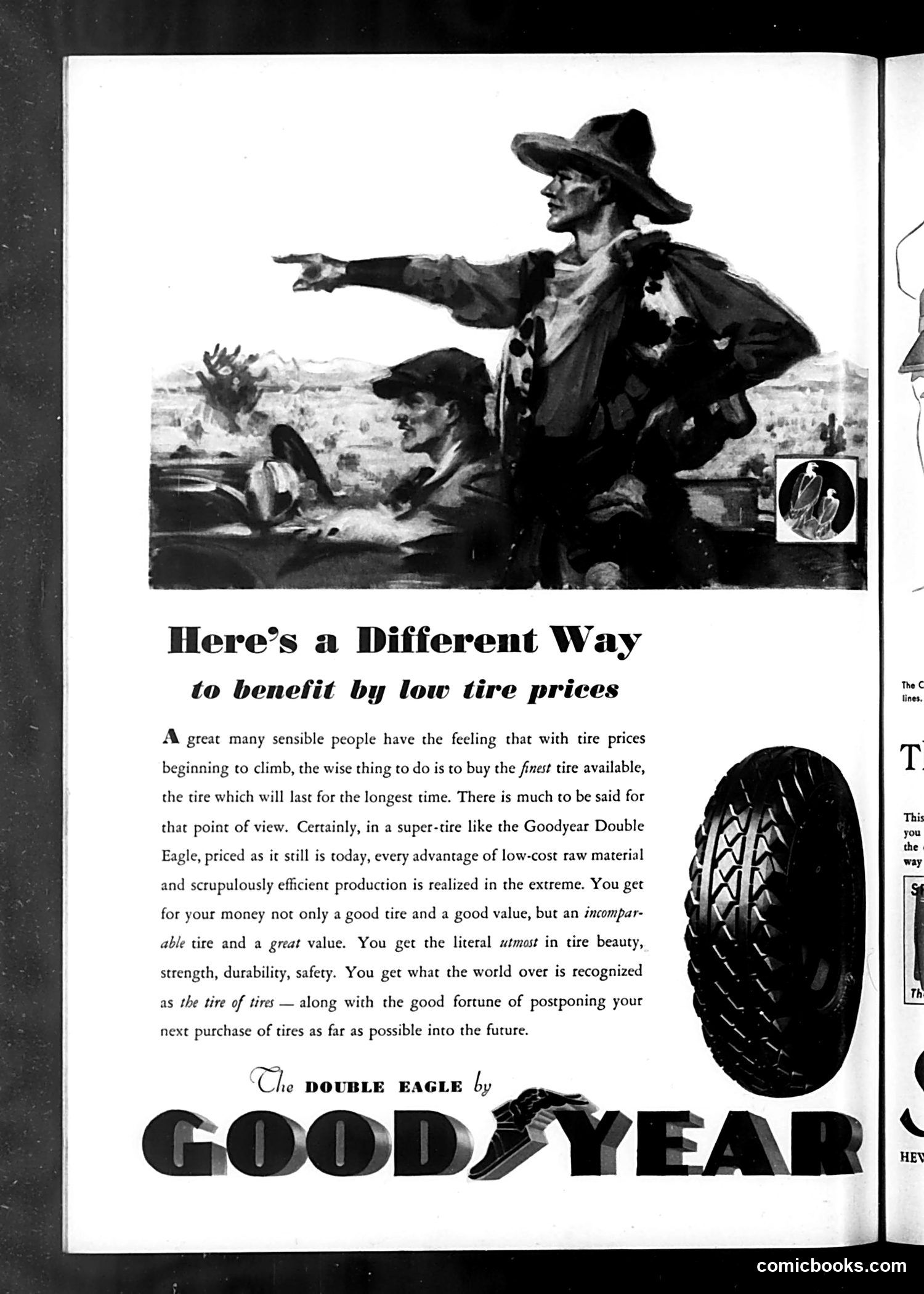
# Analysis This is a **Goodyear tire advertisement**, not a political cartoon. The image shows two men in a desert landscape—one standing and pointing, wearing a cowboy hat and weathered coat, the other seated. The standing figure appears to be a archetypal "prospector" or desert traveler character. The ad argues that buying premium Goodyear Double Eagle tires at rising prices is worthwhile because they last longer, offering better long-term value than cheaper alternatives. The Western/prospector imagery suggests durability and reliability suitable for rough conditions. The text emphasizes getting "the finest tire available" and postponing future tire purchases, framing quality as economically sensible despite higher upfront costs. This is straightforward product marketing using frontier imagery for authority and durability.
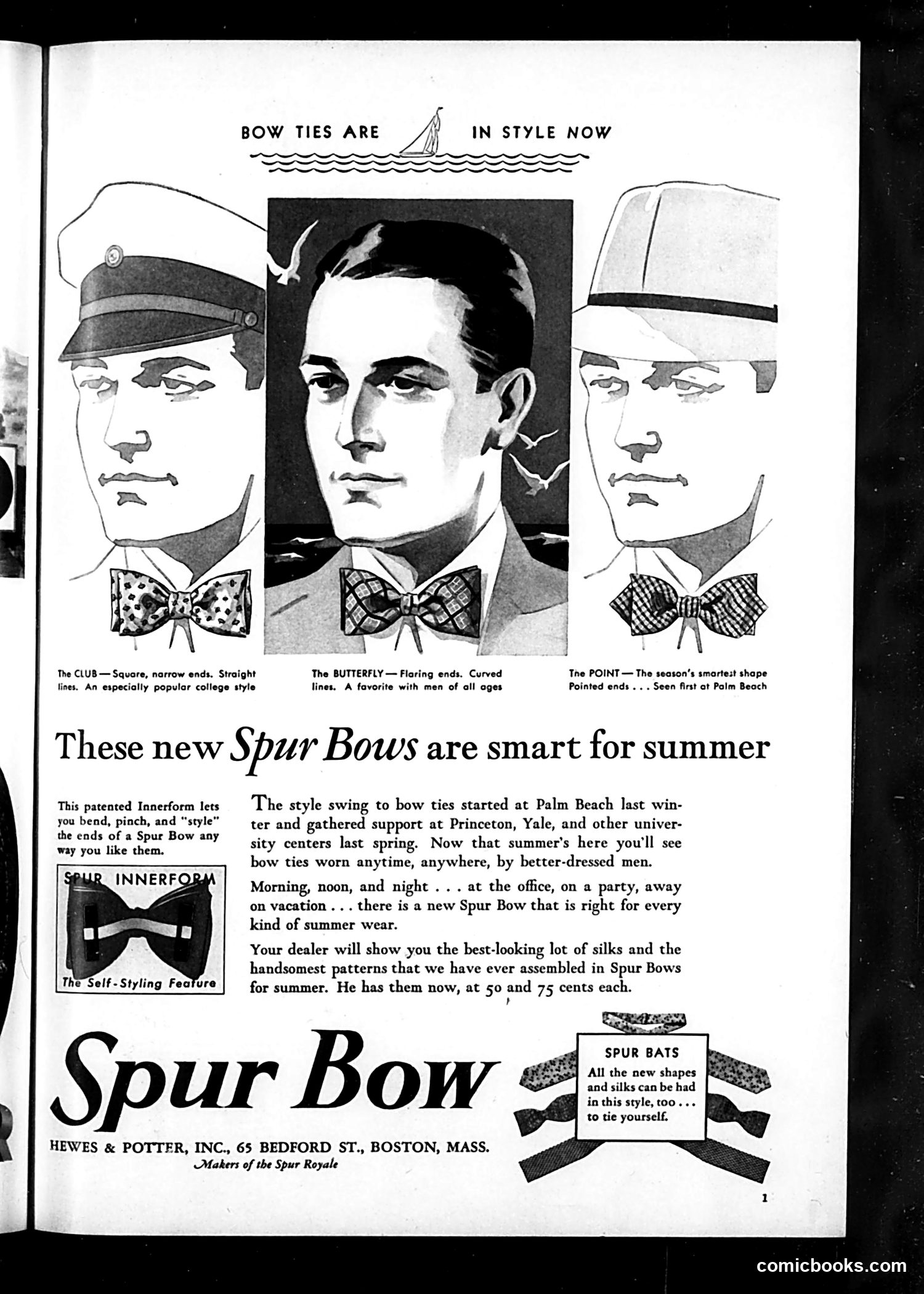
# Analysis This is primarily **advertising content**, not political satire. The page promotes "Spur Bow" neckties manufactured by Hewes & Potter, Inc. of Boston. The advertisement showcases three bow tie styles ("The Club," "The Butterfly," and "The Point") worn by illustrated male figures in nautical/summer attire. The marketing copy references a fashion trend that "started at Palm Beach last winter and gathered support at Princeton, Yale, and other university centers last spring." The "Spur Bow" features a patented "Innerform" self-styling mechanism allowing wearers to customize the tie's shape. Priced at 50-75 cents, these ties target well-dressed summer men across various social occasions. The content reflects 1920s-era menswear marketing and collegiate fashion influence, with no political commentary evident.
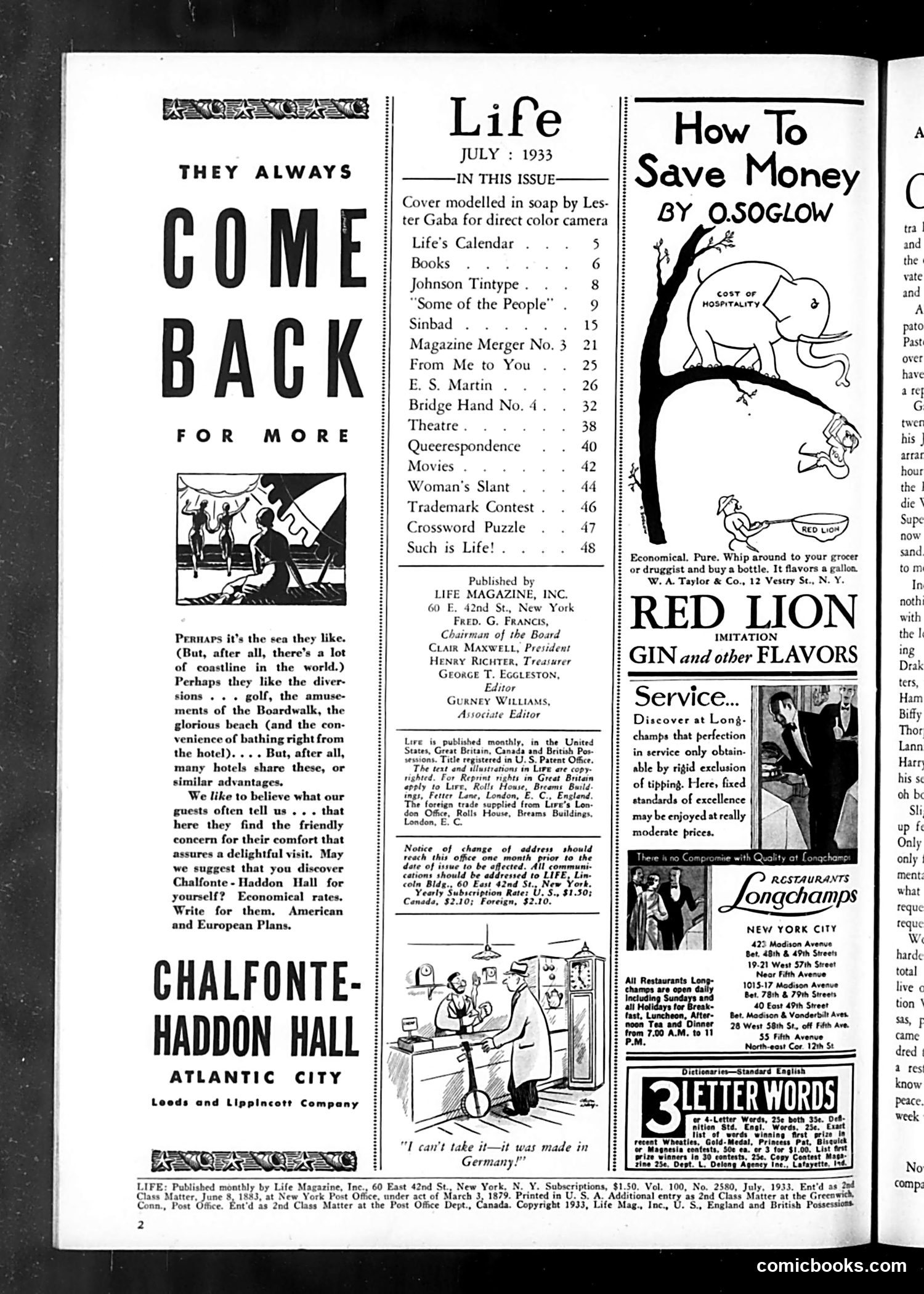
This is primarily a **table of contents and advertising page** from Life Magazine's July 1933 issue, not a political cartoon page. The main content includes: - A **Chalfonte-Haddon Hall hotel advertisement** (Atlantic City) with a small cartoon showing guests enjoying leisure activities, captioned "I can't take it—it was made in Germany," likely a **Depression-era joke** about avoiding German-made goods during economic hardship. - A **"How to Save Money" article** illustrated with an elephant hanging from a tree branch—a visual pun on economizing. - Various advertisements (Red Lion Gin, Longchamps Restaurants, Letter Words game). The magazine's contents reveal typical 1933 concerns: theater, movies, puzzles, and lifestyle features. The German goods reference suggests ongoing trade tensions during the early 1930s.
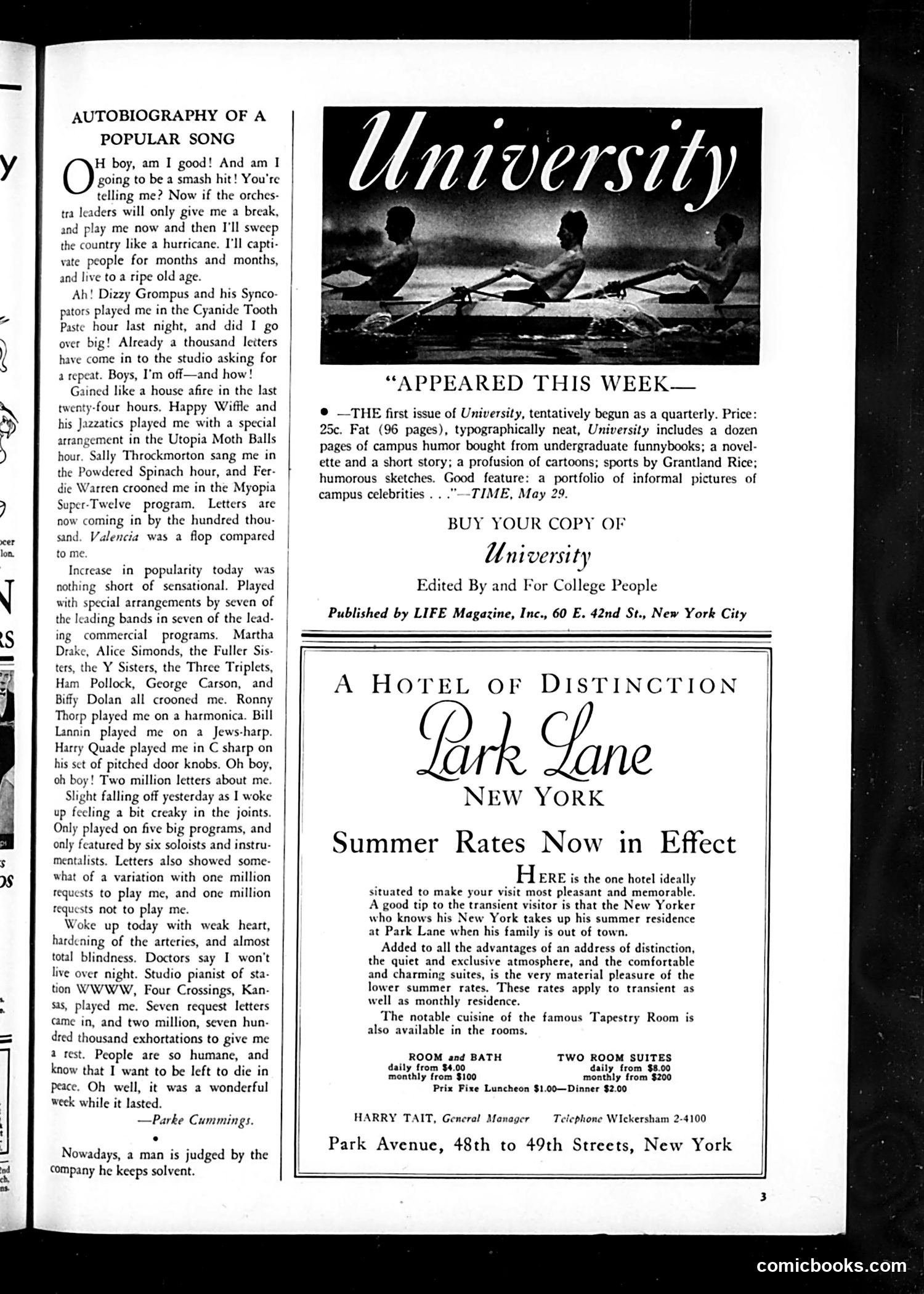
# Analysis This page is primarily **advertising and editorial content**, not political satire. The left column contains "Autobiography of a Popular Song" by Parker Cummings, a humorous first-person narrative where a song describes its journey to success—being played by orchestras, featured by famous bands (Dizzy Groucho's Syncopators, Ferdie Warren), and gaining enormous popularity through radio and requests. The right side advertises the magazine *University* (a college humor publication) and the Park Lane Hotel in New York. The satire is **light and self-deprecating**: the song personifies itself as vain and boastful about its sudden fame, while also noting audience fatigue with overplaying. This gently mocks both the music industry's hype cycle and popular songs' brief shelf-lives during the jazz era.
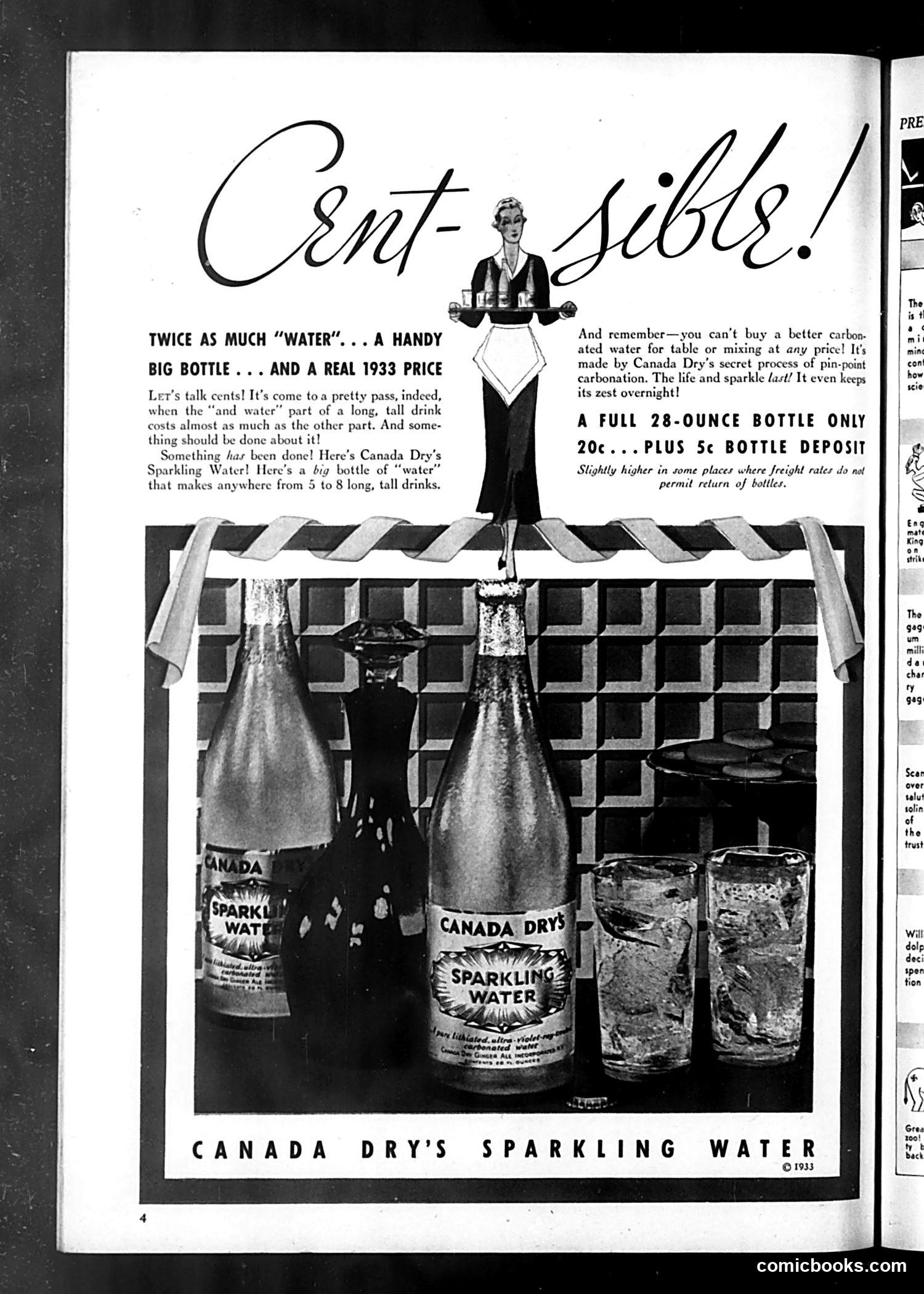
# Canada Dry's Sparkling Water Advertisement (1933) This is a **product advertisement**, not political satire. It promotes Canada Dry's sparkling water during Prohibition's final year (note the copyright 1933 date). The ad's humor targets the "water" problem: during Prohibition, sparkling water was marketed as a mixer for illegal alcohol. The headline "Cent Sibs!" (likely "Cent Jibs" or similar) plays on this absurdity. The key sales pitch emphasizes the product's *volume*—"twice as much water" in a "big bottle" at 1933 prices (20 cents plus 5-cent deposit). The copy stresses carbonation quality, relevant since Prohibition would end in December 1933, making legal beverage preparation suddenly important. The stylized woman and product imagery represent typical 1930s advertising design.
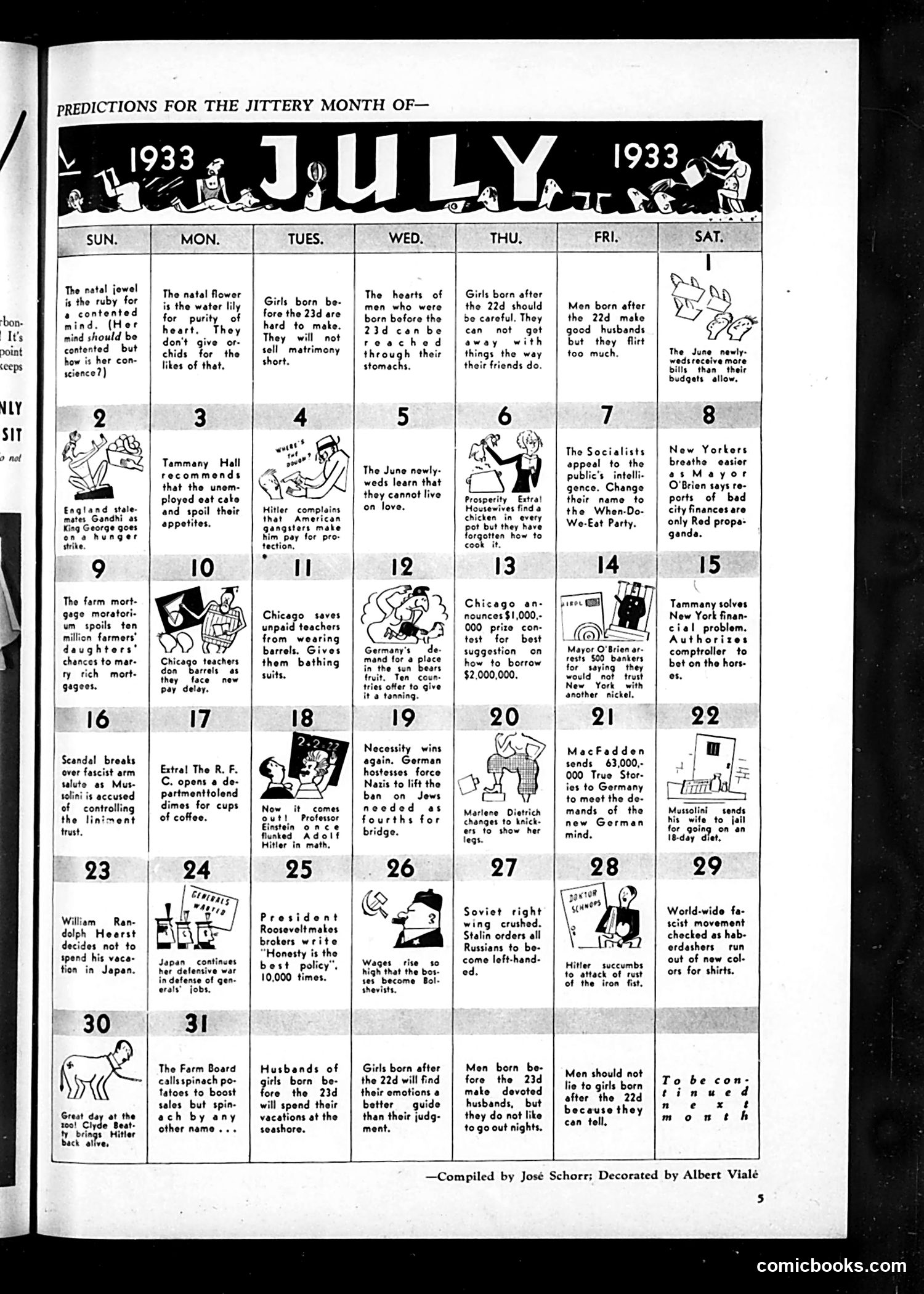
This is a satirical calendar for July 1933 titled "Predictions for the Jittery Month." Each day contains a humorous prediction mixing personal advice with contemporary political and social commentary. The cartoons reference 1933 events and figures: Hitler appears multiple times (entries on the 12th, 26th, and 29th), reflecting his recent rise to power and Nazi policies. Entry 20 mentions "Necessity wins again. German hostesses force Nazis to lift the ban on Jewish guests for the fourth's for bridge"—satirizing Nazi racial policies. Entry 27 shows Stalin ordering Russians to become left-handed, mocking Soviet authoritarianism. Entry 21 references MacFadden (likely publisher Bernarr MacFadden) and German matters. The page uses dark humor to comment on contemporary dictators and their absurd policies while maintaining casual, jokey predictions about daily life.
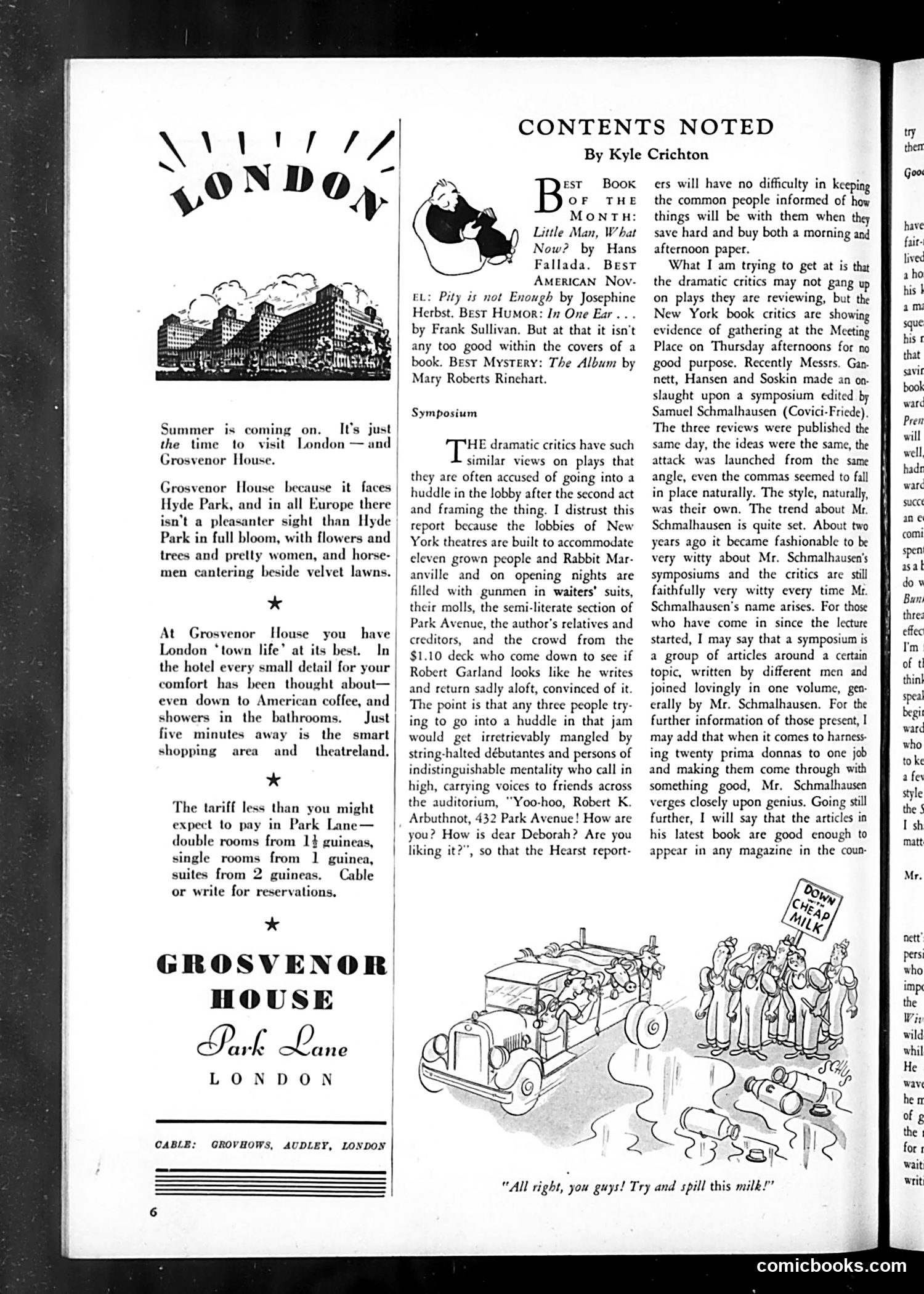
# Analysis of Life Magazine Page This page mixes advertising with book reviews by Kyle Crichton. The main cartoon depicts a milk delivery truck surrounded by children holding a sign reading "DOWN WITH CHEAP MILK," with the caption "All right, you guys! Try and spill this milk!" The satire appears to target **consumer activism or price protests**, likely referencing 1930s dairy industry labor disputes or price-fixing concerns. The children's protest sign suggests organized opposition to milk pricing, while the driver's defiant response mocks such efforts—implying the powerful industry will proceed regardless of public complaint. The left page advertises Grosvenor House hotel in London, noting its luxury amenities and competitive pricing. The reviews discuss contemporary books and note theatrical critics' behavior at new play openings.
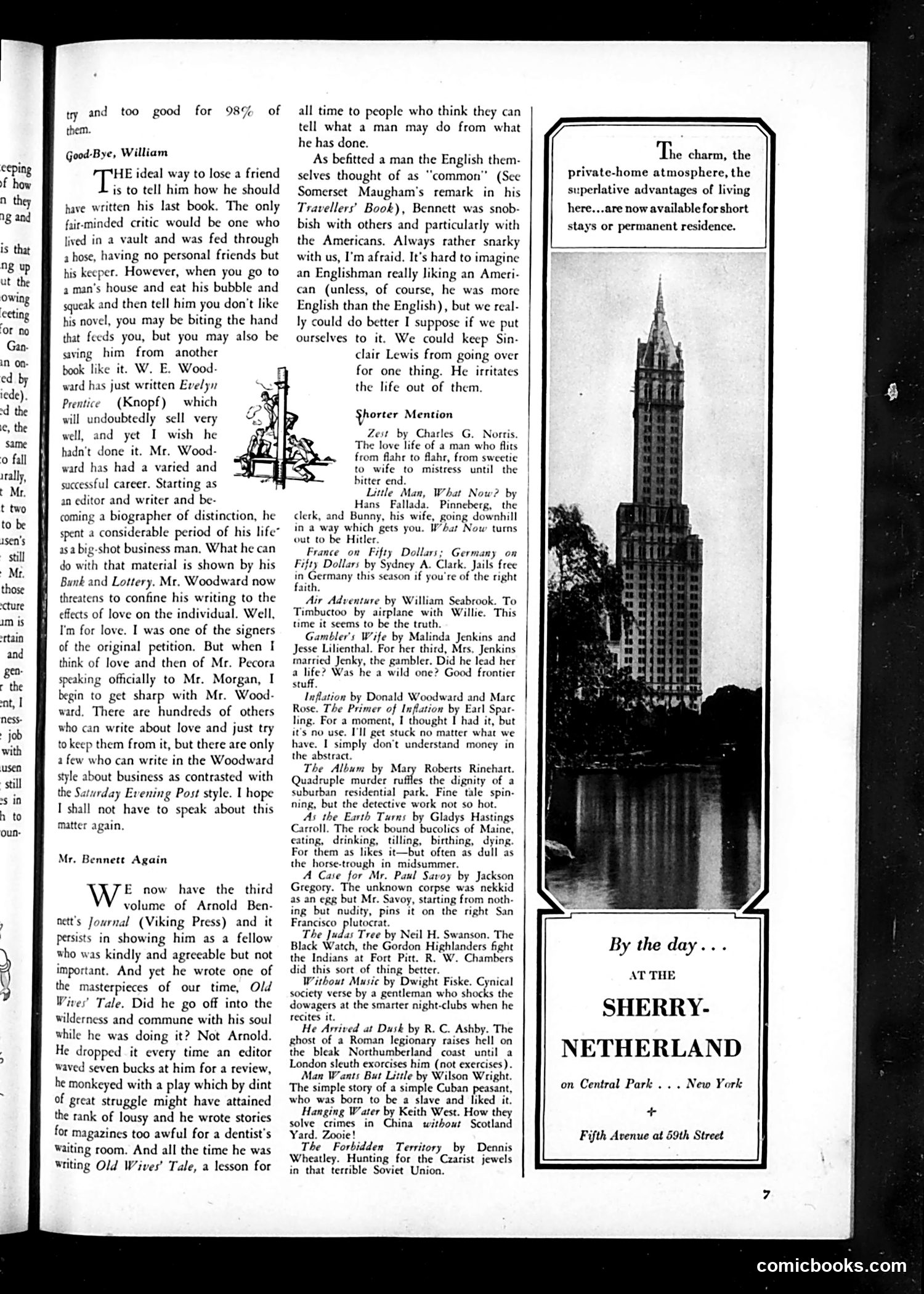
This page is primarily literary criticism and book reviews, not political satire. The main content discusses Arnold Bennett's *Journal* and other contemporary novels. There is one small illustration labeled "Prentice (Knopf)" showing a figure at a desk or drawing board, appearing to satirize the publisher or author, but the cartoon is minimal and the accompanying text (discussing a writer's varied career) doesn't provide clear political or social commentary—it seems a light jab at literary or publishing figures of the era. The right side features an advertisement for the Sherry-Netherland hotel in New York with a photograph of the building. The page is primarily a book review section, not a venue for political cartoons.
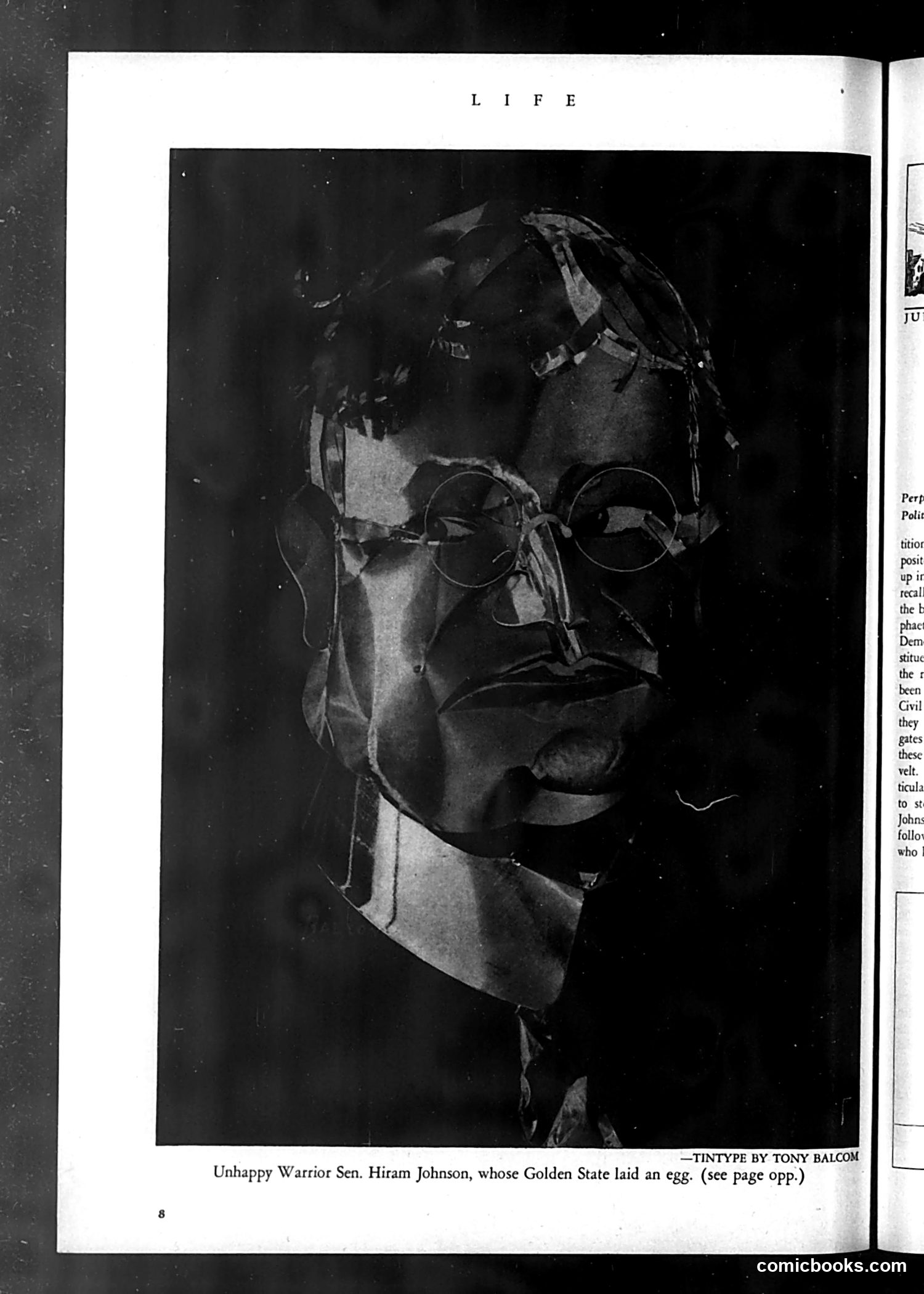
# Analysis This page features a political cartoon photograph titled "Unhappy Warrior Sen. Hiram Johnson, whose Golden State laid an egg" (credited to tintype by Tony Balcom). The image shows Senator Hiram Johnson wearing round glasses and what appears to be aviator or protective headgear, photographed in dramatic lighting against a dark background. The caption's phrase "Golden State laid an egg" is a contemporary idiom meaning California failed or disappointed. The "Unhappy Warrior" reference likely alludes to Johnson's political struggles or disappointment. The satirical point appears to criticize Johnson's political position or a failed initiative he championed in California. Without additional context, the specific event being mocked remains unclear, though the visual presentation emphasizes Johnson's apparent frustration or defeat.
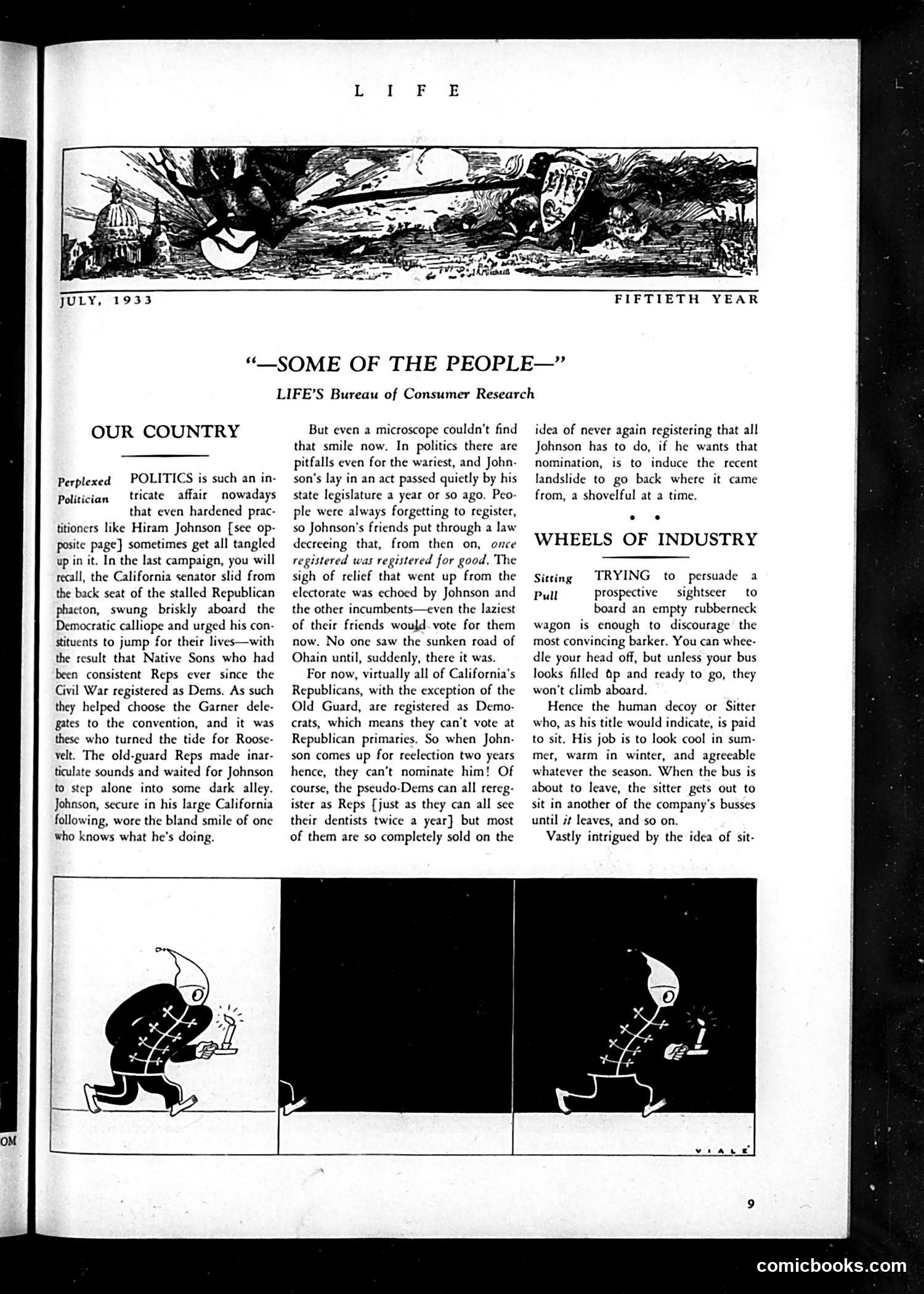
# Political Commentary from Life, July 1933 This page contains two sections: **"Our Country" column** discusses California politics, specifically criticizing Senator Hiram Johnson's inconsistent Republican affiliation. The text notes that Johnson—once a progressive Republican—has become difficult to pin down politically, comparing him to a manipulative figure who keeps California politicians "tangled up." The piece sarcastically suggests Johnson's supporters will vote for him regardless. **"Wheels of Industry" section** satirizes a sideshow attraction: a human performer hired to sit motionless in a bus window during summer heat, deliberately looking uncomfortable to attract paying sightseers. The joke ridicules both the exploitation and the public's fascination with mundane spectacles. The three-panel cartoon (bottom) appears to illustrate the bus-sitter concept, though reproduction quality obscures details.
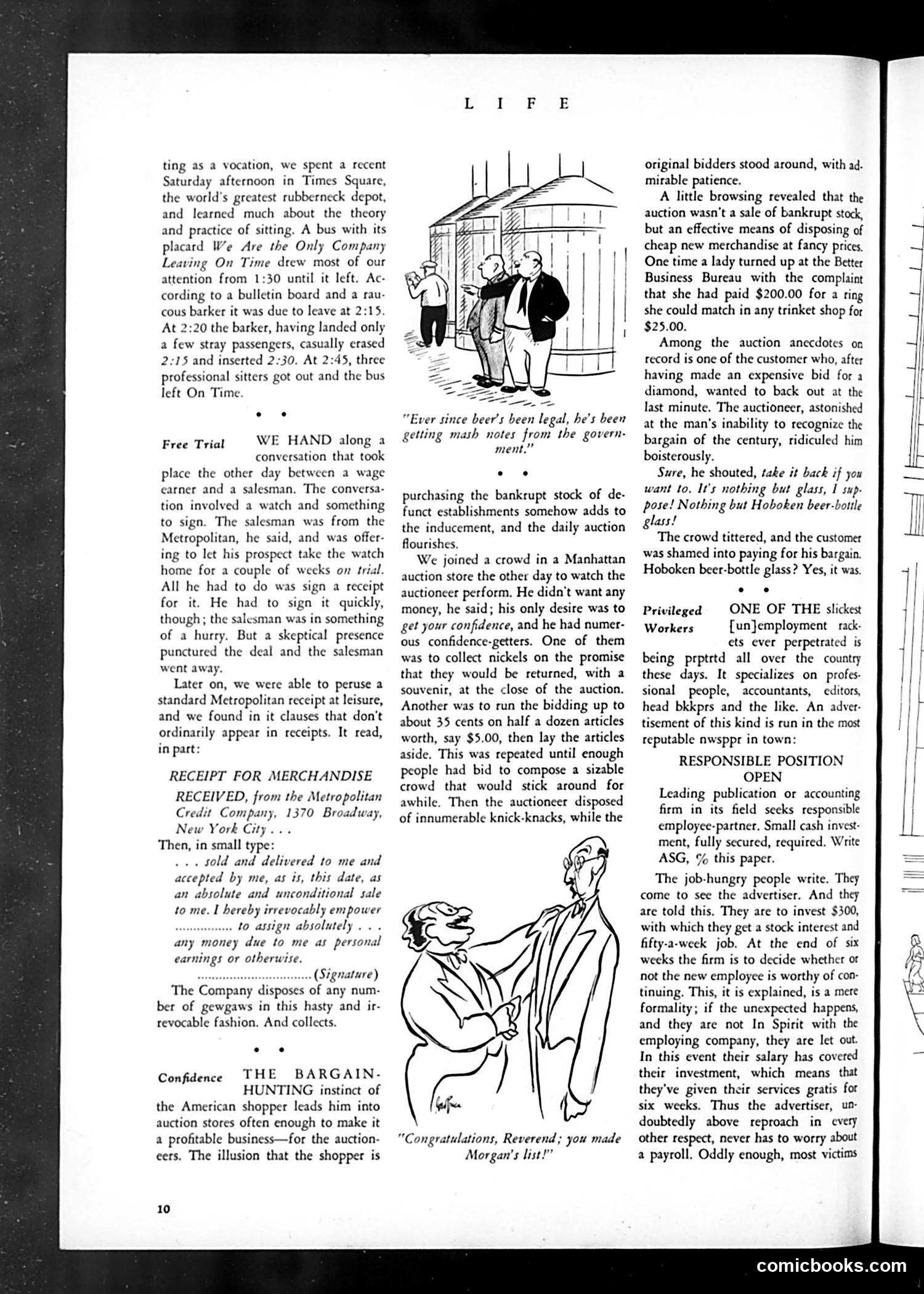
# "Ever since beer's been legal, he's been getting made hotel from the government" This cartoon satirizes the post-Prohibition era (likely 1930s), when alcohol became legal again in America. The caption suggests that breweries have begun exploiting government auctions of defunct businesses—purchasing bankrupt hotel stock cheaply and converting them into beer distribution operations or bars. The joke targets both corporate opportunism and government inefficiency: breweries are profiting from public asset sales while the government appears unable to manage these transactions effectively. The figures appear to be auctioneers and businessmen, with the cartoon implying that the beer industry has weaponized legal auctions for rapid expansion. The overall tone criticizes how businesses manipulate post-Prohibition opportunities at public expense.