A complete issue · 50 pages · 1933
Life — June 1933
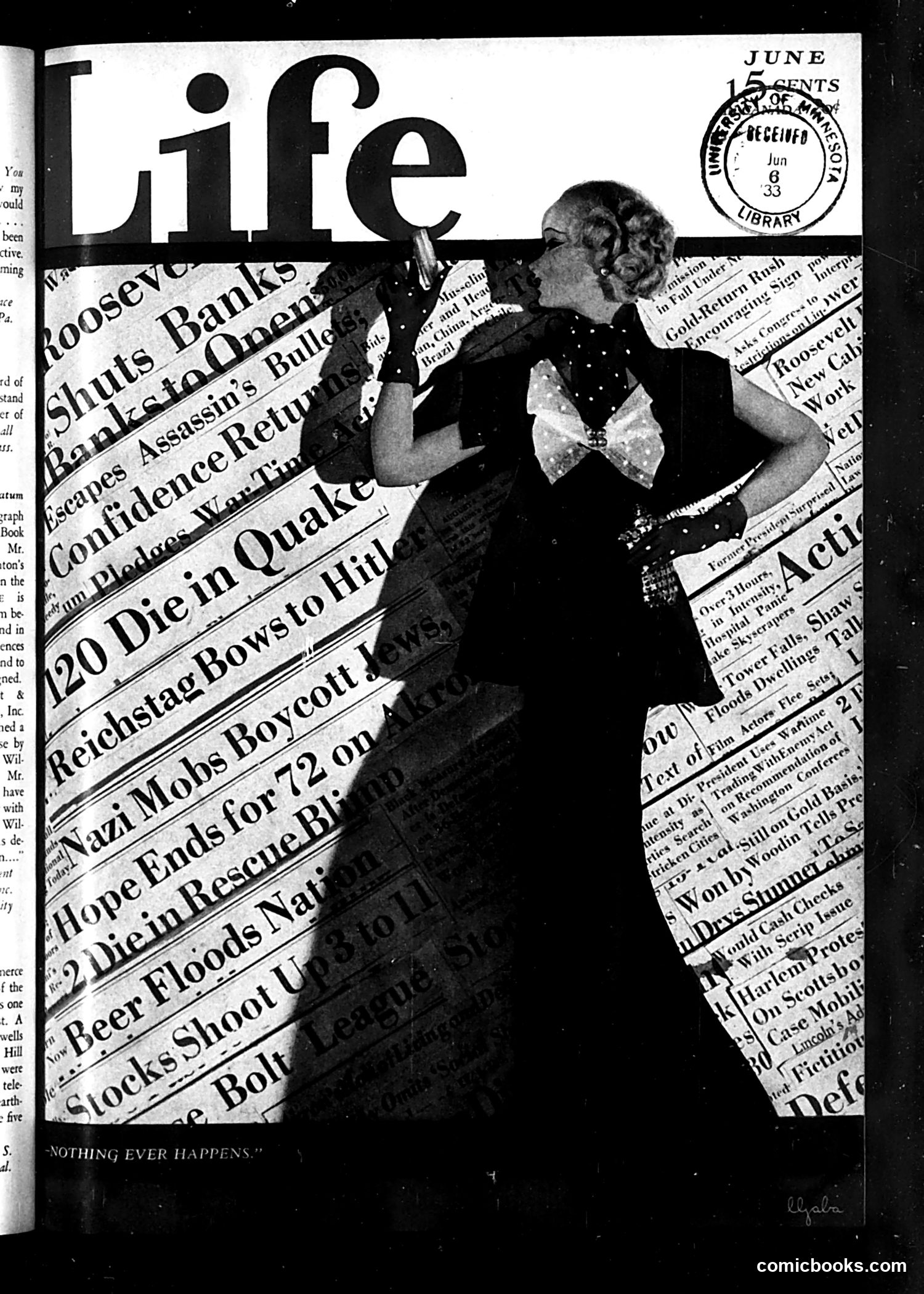
# Life Magazine June Issue - Political Satire Commentary This Life magazine cover from June features a woman reading newspaper headlines as collage background material. The visible headlines reference major 1930s-40s crises: "Roosevelt Shuts Banks," "Assassin's Bullet," "120 Die in Quake," "Nazi Mobs Boycott," "Hope Ends for 72 on [ship]," "Beer Floods Nation," "Stocks School U-boats." The satirical point appears to be commentary on the relentless parade of catastrophic news dominating headlines during this turbulent era—likely Depression and pre-WWII period. The woman's casual reading posture against this backdrop of dire events suggests either public numbness to constant crisis or satirical commentary on how media sensationalism overwhelms daily life. The caption "Nothing Ever Happens" reinforces this ironic contrast between headline severity and normalized public response.
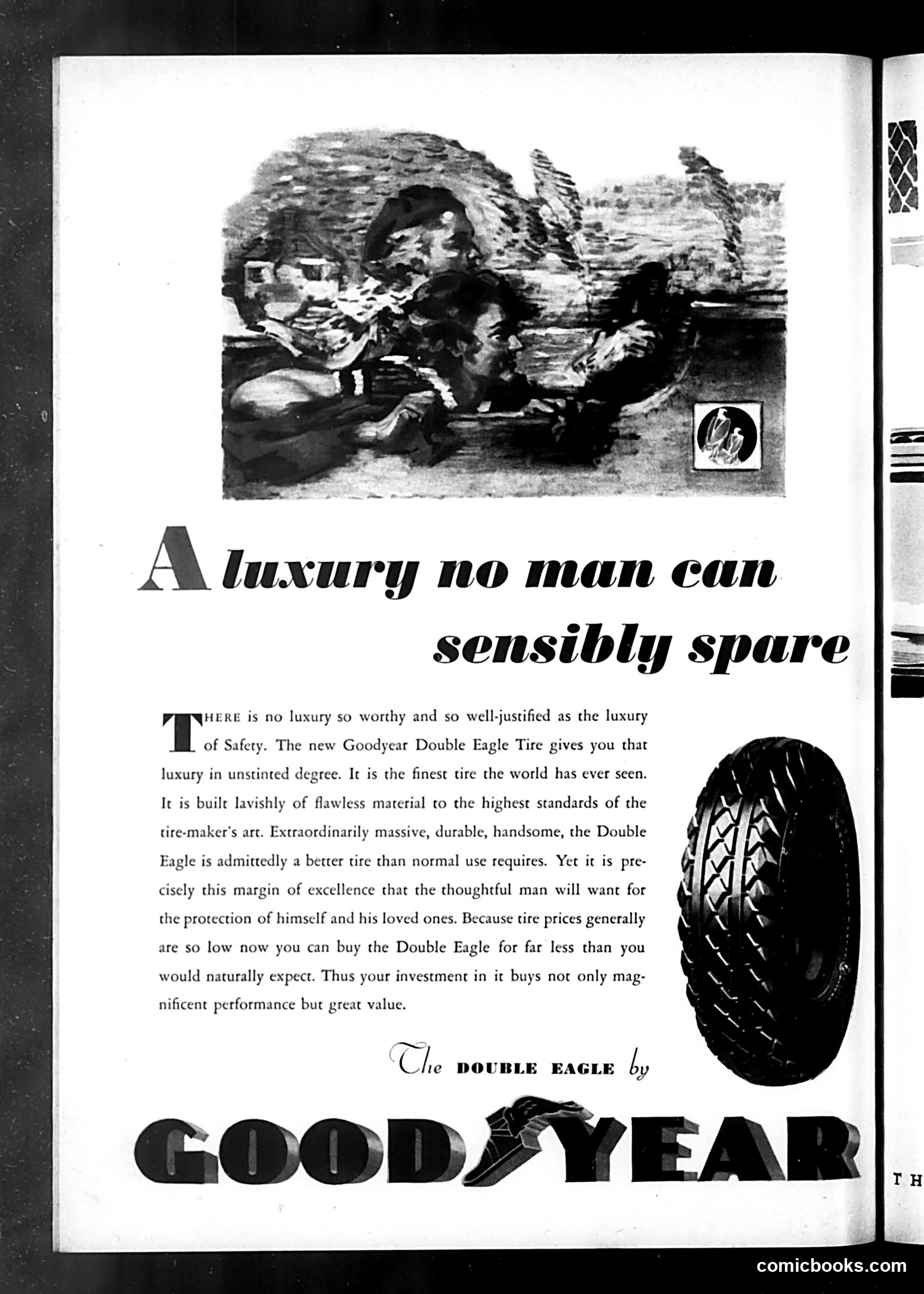
# Analysis This is a **Goodyear tire advertisement**, not satirical content. The page features: **The Advertisement:** - Headline: "A luxury no man can sensibly spare" - Product: Goodyear Double Eagle Tire - Sales pitch: Frames tire safety as a luxury good worth purchasing despite cost **The Imagery:** The top photograph appears to show people in a dangerous situation (possibly a vehicle accident or precarious position), serving as a visual argument for why tire quality matters for safety. **The Marketing Strategy:** Rather than emphasize practical durability alone, Goodyear positions premium tires as a justifiable luxury—appealing to affluence and family protection. The ad argues that because tire prices are "so low now," consumers can afford superior quality without the guilt typically associated with luxury purchases. This represents early 20th-century advertising strategy: making safety consumption seem aspirational and middle-class accessible.
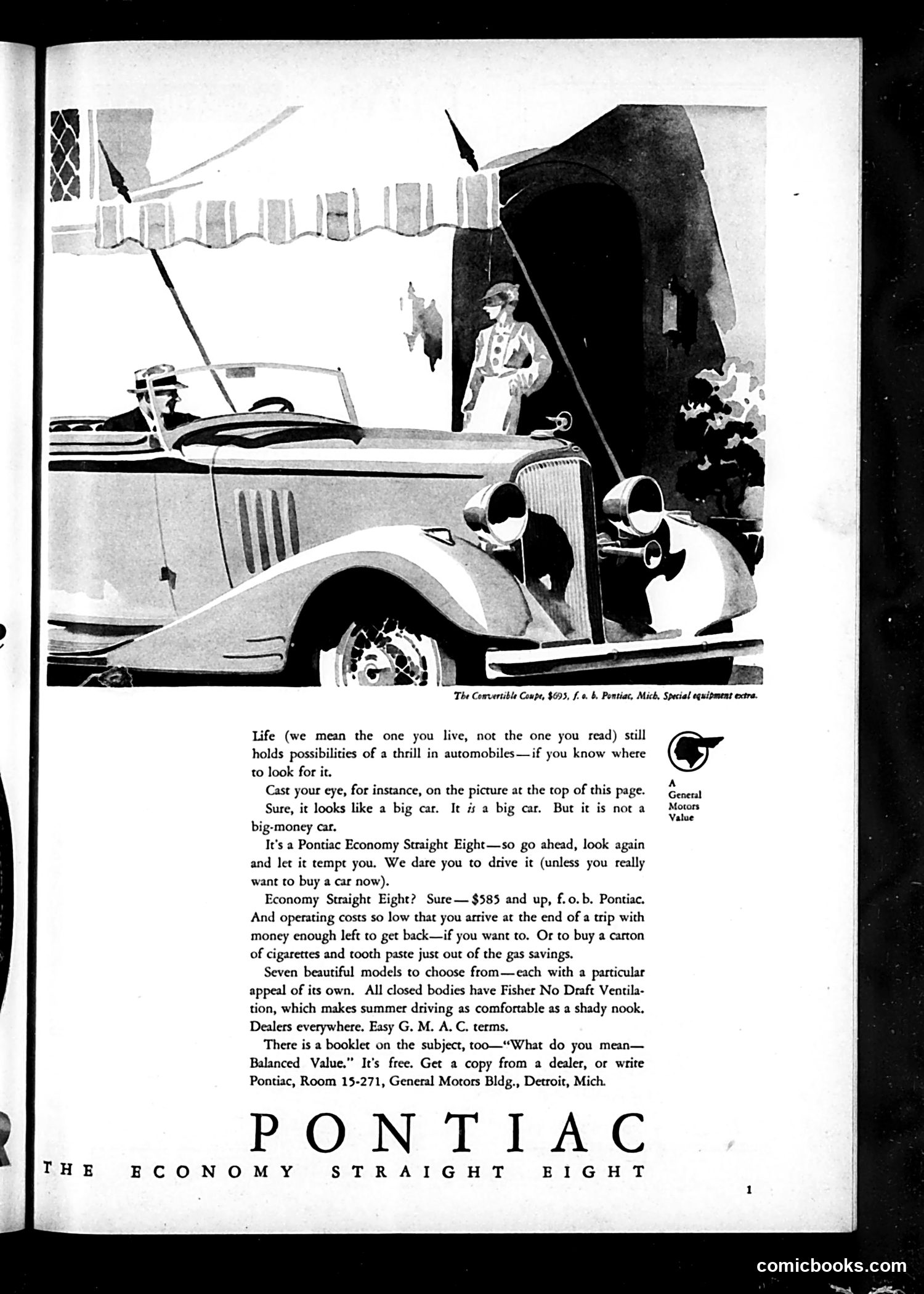
# Analysis This is primarily **advertising content**, not a political cartoon. The page promotes Pontiac's "Economy Straight Eight" automobile, priced at $585 and up. The illustration shows a convertible car at what appears to be a grand estate or mansion, with well-dressed figures nearby. The advertisement's humor relies on irony: it presents the car as economical while depicting it in an affluent, luxurious setting—suggesting that even wealthy people should appreciate its value. The text challenges readers to examine the car, daring them to "drive it" before buying. It emphasizes low operating costs and Fisher No Draft Ventilation for comfort. The ad includes a reference to a free booklet on "Balanced Value" available from dealers or General Motors in Detroit. This represents 1920s-30s consumer advertising strategy: selling practicality to aspirational audiences.
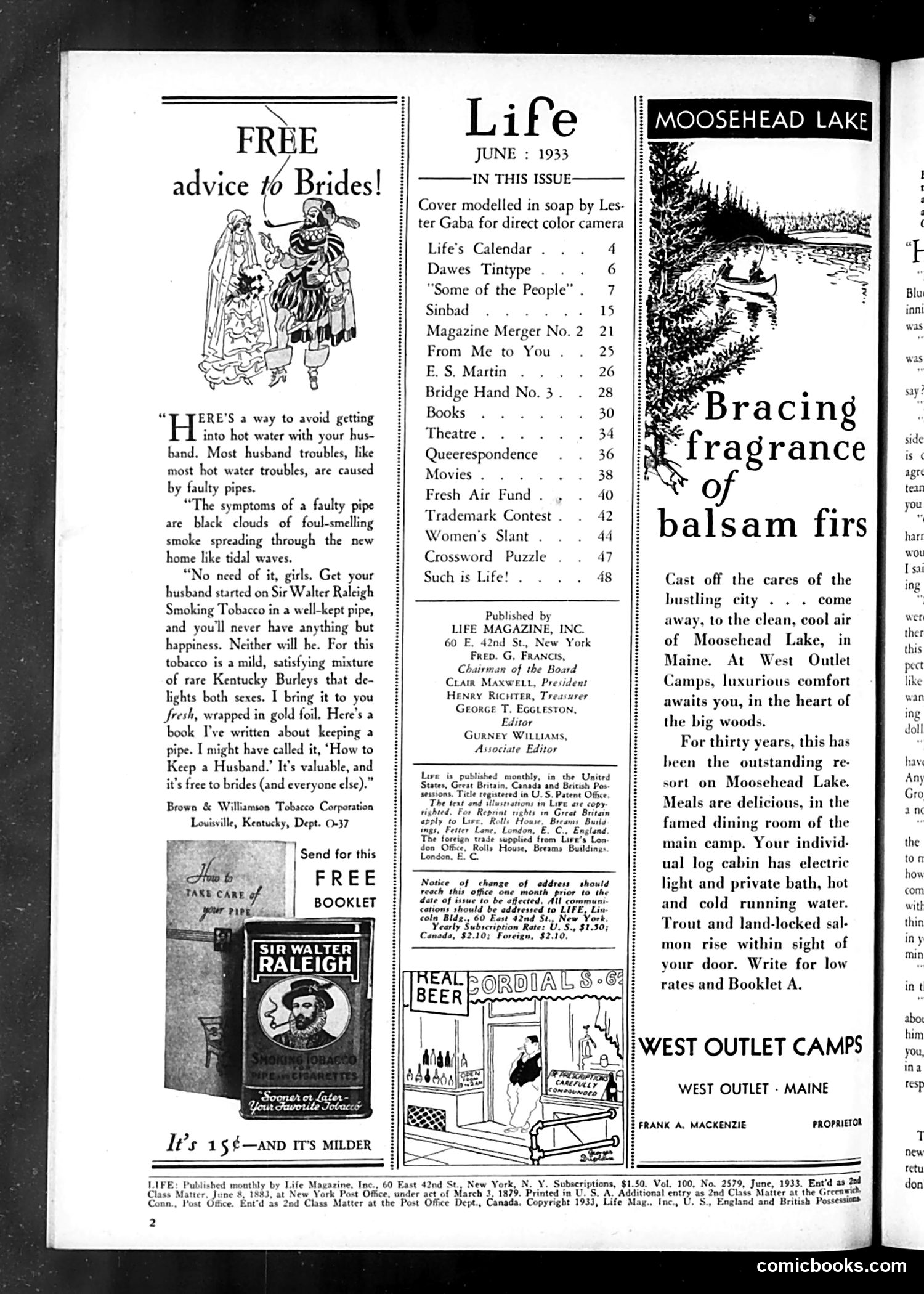
# Content Analysis This page is primarily a **table of contents and advertisements** for Life magazine's June 1933 issue, not a political cartoon. The left side features an **advertisement for Sir Walter Raleigh tobacco**, promoting a free booklet titled "How to Keep a Husband." The ad humorously frames marital happiness as dependent on the husband having a good pipe—suggesting that faulty plumbing (pipes) causes marital discord, so a quality tobacco pipe will solve relationship problems. This reflects 1930s gender stereotypes about wives' roles in domestic contentment. The right side advertises **Moosehead Lake camps in Maine**, emphasizing luxury accommodations and trout fishing. The page contains no political satire—it's a commercial/informational page typical of 1930s magazine layout.
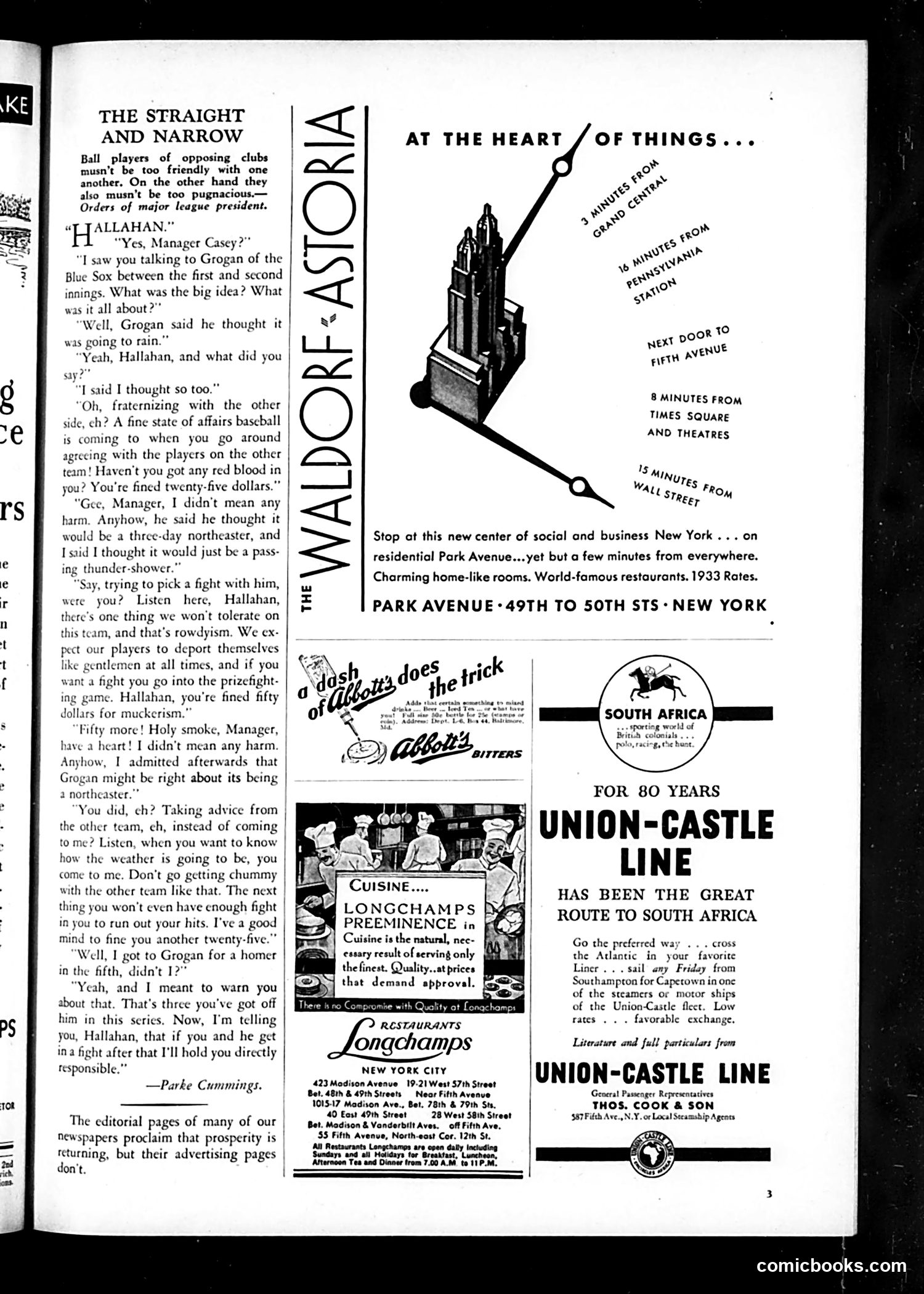
# Analysis This page is primarily **advertising and editorial content** rather than political satire. The left side contains "The Straight and Narrow," a dialogue between "Hallahan" and "Manager Casey" discussing baseball fraternization rules—specifically, whether players from opposing teams should socialize. The conversation references the Blue Sox and suggests conflict over player conduct. The advertisements dominate: Waldorf Astoria hotel, Abbott's Bitters, Longchamps restaurants, and Union-Castle Line shipping to South Africa. **No political cartoon is present.** The content reflects 1933-era concerns about **professional baseball conduct and decorum** rather than broader political satire. The "Hallahan" reference and managerial perspective suggest this addresses **actual baseball league policies** of the Depression era, not fictional characters.
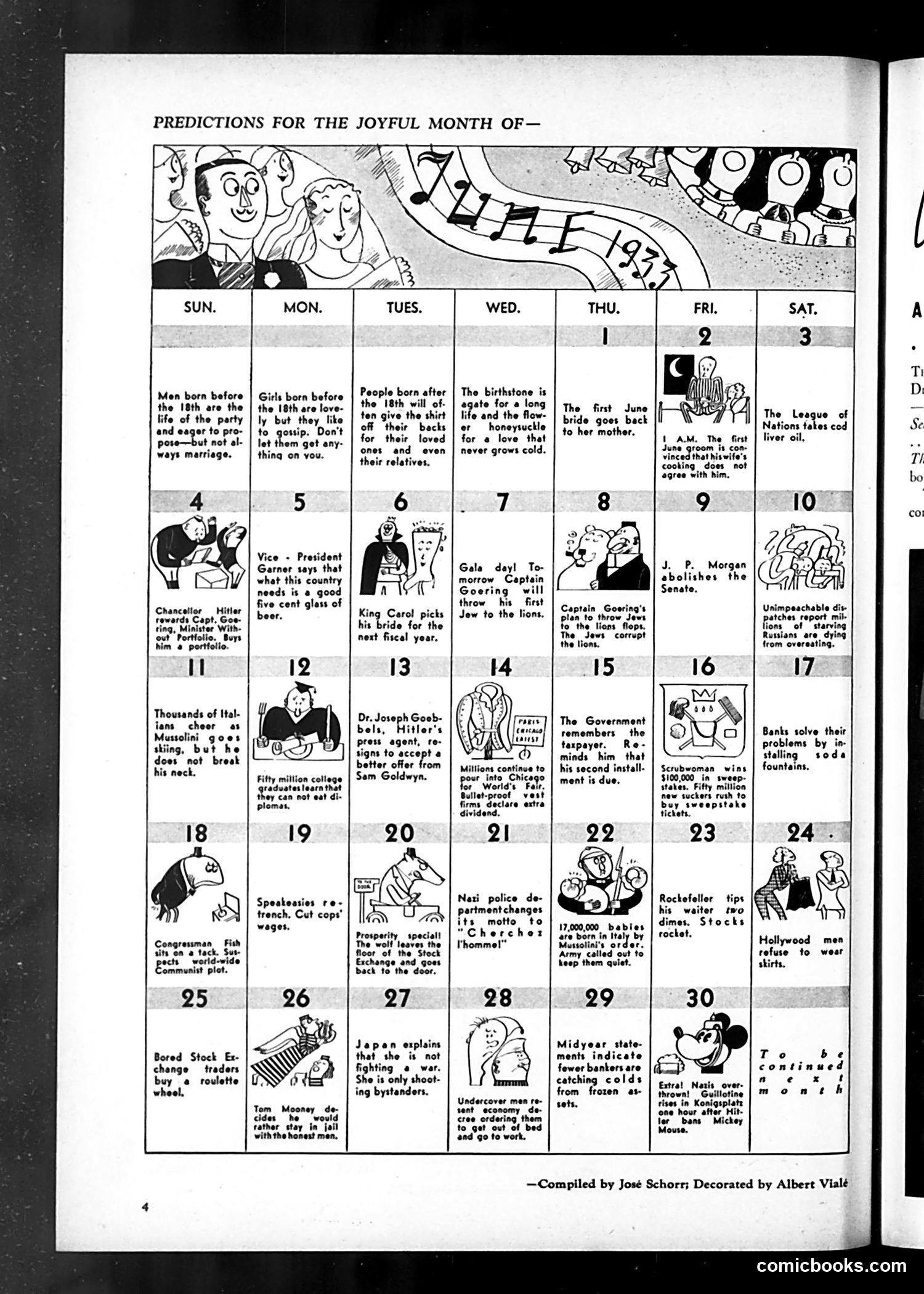
# Historical Context Explanation This is a 1937 satirical calendar called "Predictions for the Joyful Month" (likely June), compiled by José Schorr and decorated by Albert Vialé. It's a joke calendar mixing absurdist humor with contemporary political commentary. The entries reference 1930s events and figures: Chancellor Hitler, President Garner, Captain Goering (Nazi leadership), and various satirical "predictions" about politics and social issues. The cartoons mock Nazi Germany, American politicians, and contemporary events like the World's Fair. The humor relies on readers recognizing these figures and understanding current events—Hitler's regime, Nazi militarism, American political debates. Today's readers would need historical knowledge of 1937 politics to fully appreciate the satirical targets and topical jokes embedded throughout the calendar entries and illustrations.
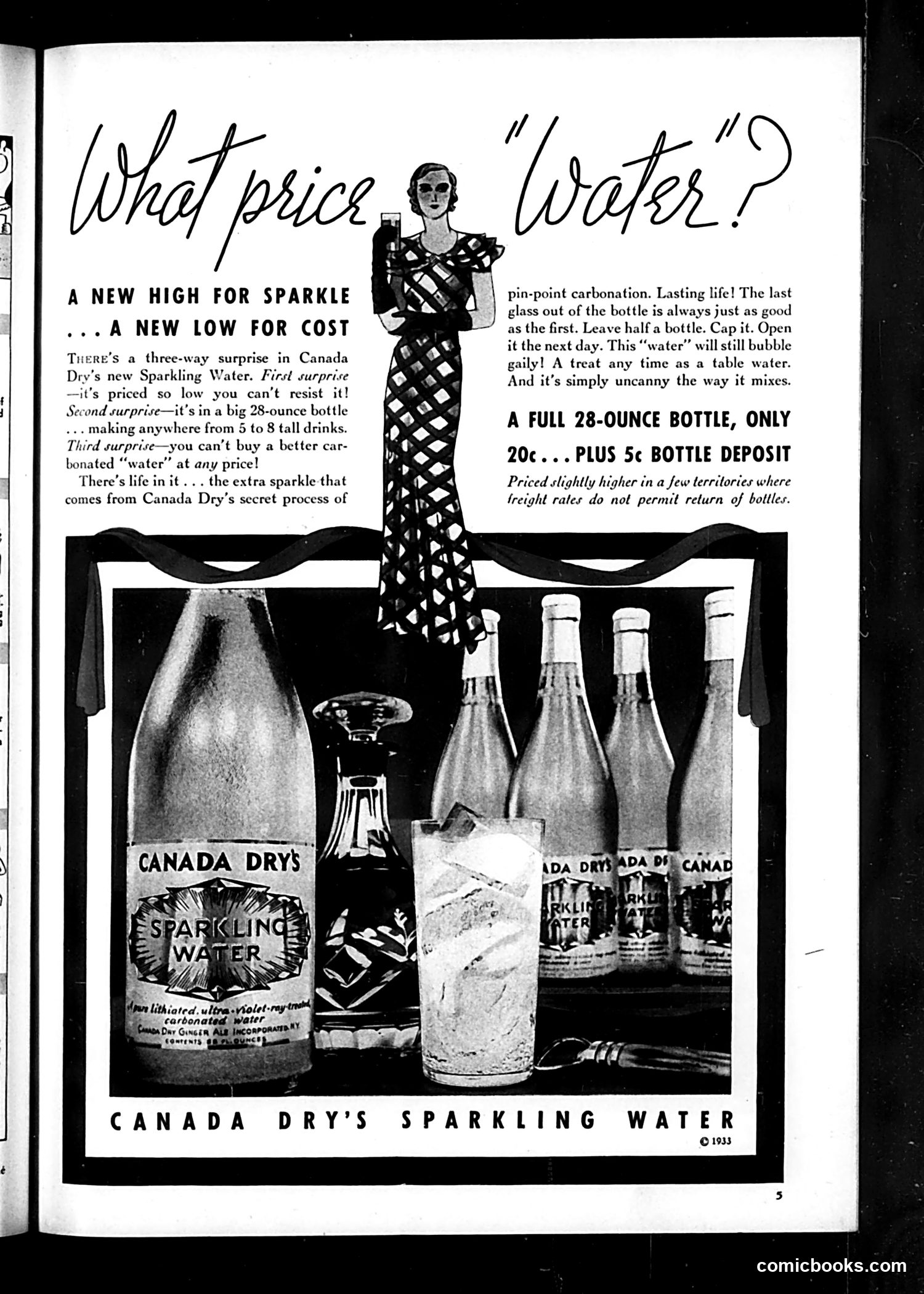
# Analysis This is a **advertisement, not political satire**. It promotes Canada Dry's Sparkling Water, marketed as an affordable luxury beverage during what appears to be the 1930s (based on the styling and typography). The ad's humor targets consumer anxieties about cost and quality. The headline "What price 'Water'?" presents a paradox: you're getting sparkling water (perceived as less valuable than other drinks) at an exceptionally low price (20 cents plus 5-cent deposit). The "three-way surprise" plays on this contradiction—it's cheap, it comes in large bottles, and the carbonation lasts even after opening. The stylized female figure in the patterned dress represents the target consumer: a middle-class woman concerned with value and household economy, particularly relevant during Depression-era austerity.
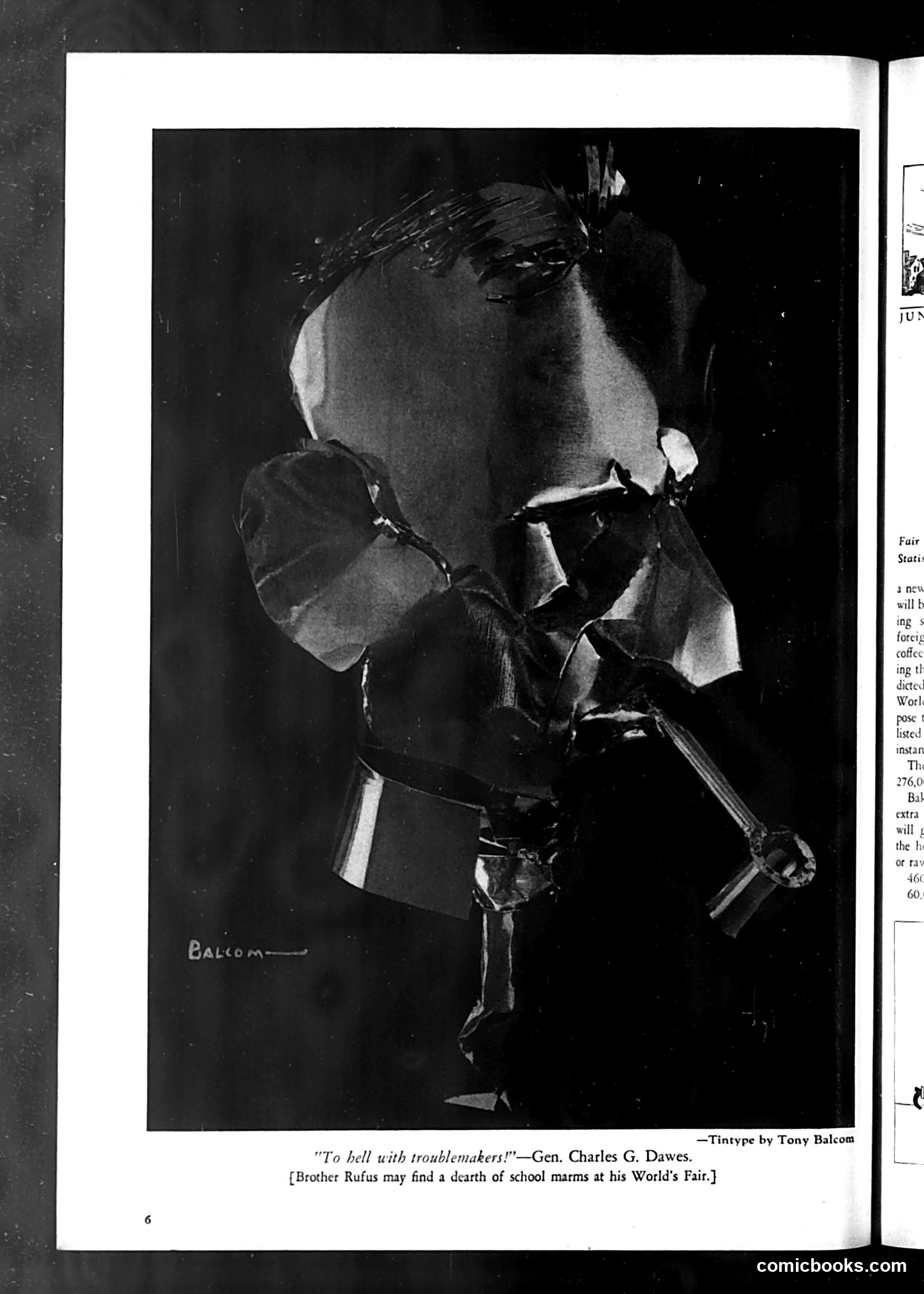
# Political Cartoon Analysis This is a tintype portrait by Tony Balcom depicting **General Charles G. Dawes**, captioned with his quote "To hell with troublemakers!" The bracketed note references "Brother Rufus" finding "a dearth of school marms at his World's Fair"—likely alluding to the 1933 Chicago World's Fair and apparently mocking Dawes's involvement or concerns about it. Dawes (1865-1951) was a prominent Republican politician and banker who served as Vice President under Calvin Coolidge. The cartoon appears to satirize his combative stance toward critics or opposition, using his blunt statement as the humor's centerpiece. The specific "troublemakers" reference and World's Fair context suggest contemporary political or social disputes, though the exact controversy remains unclear without additional historical context.
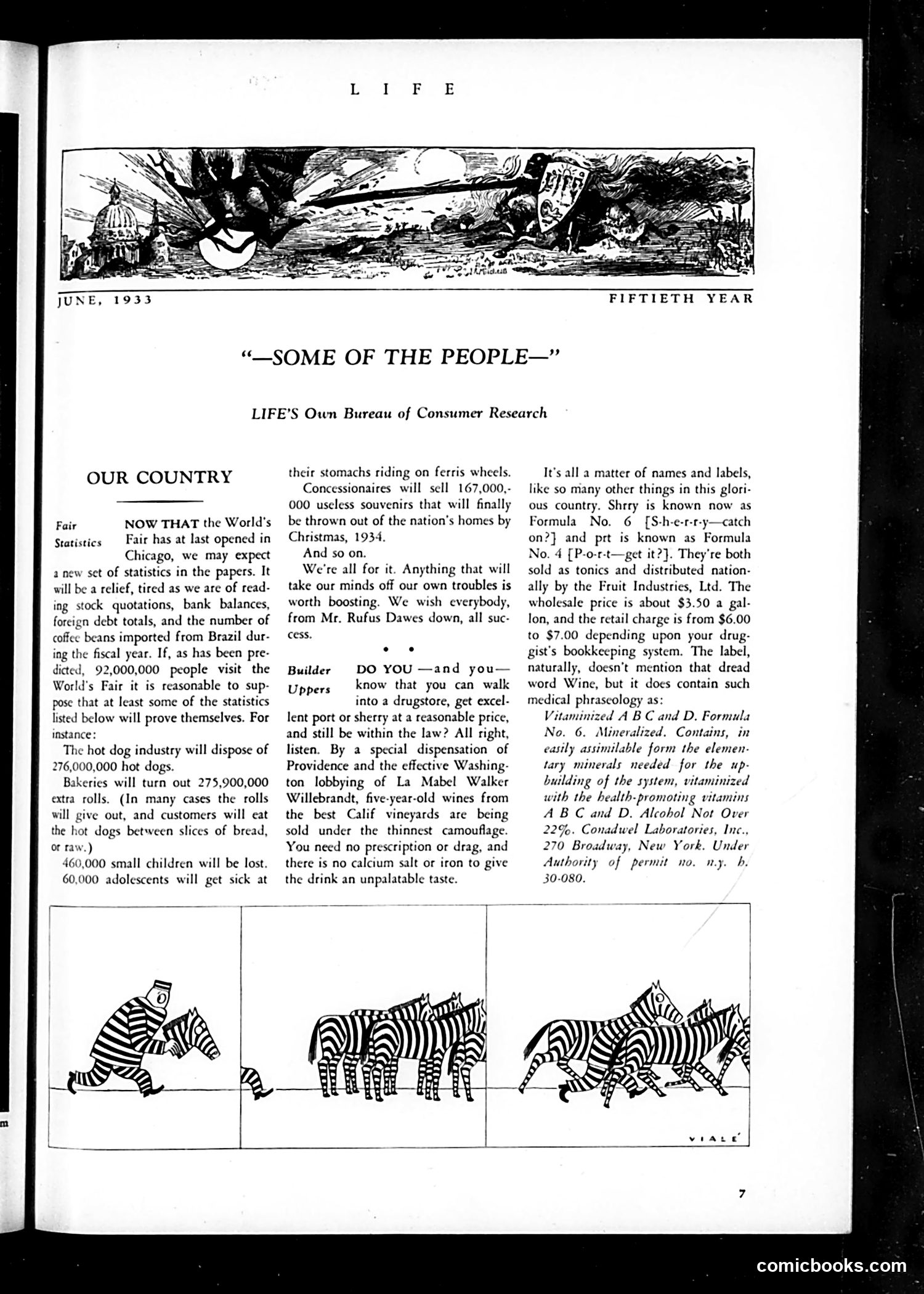
# Analysis of Life Magazine, June 1933 This page combines consumer statistics with satirical commentary on American consumption habits. The "Fair Statistics" section mocks the 1933 Chicago World's Fair by predicting absurdly high numbers of visitors and consumption (92 million visitors, 276 million hot dogs, 60,000 lost children). The "Builder Uppers" section satirizes Prohibition-era loopholes—specifically how people legally obtained alcohol through medicinal formulas and mail-order wines. It references La Mabel Walker Willebrandt, a Prohibition enforcement official, and mocks the ineffectiveness of dry laws. The zebra cartoon below (artist signed "Vial") appears to illustrate consumer behavior or conformity, though its specific meaning is unclear without additional context. The overall page satirizes American consumer excess and regulatory hypocrisy during the Depression era.
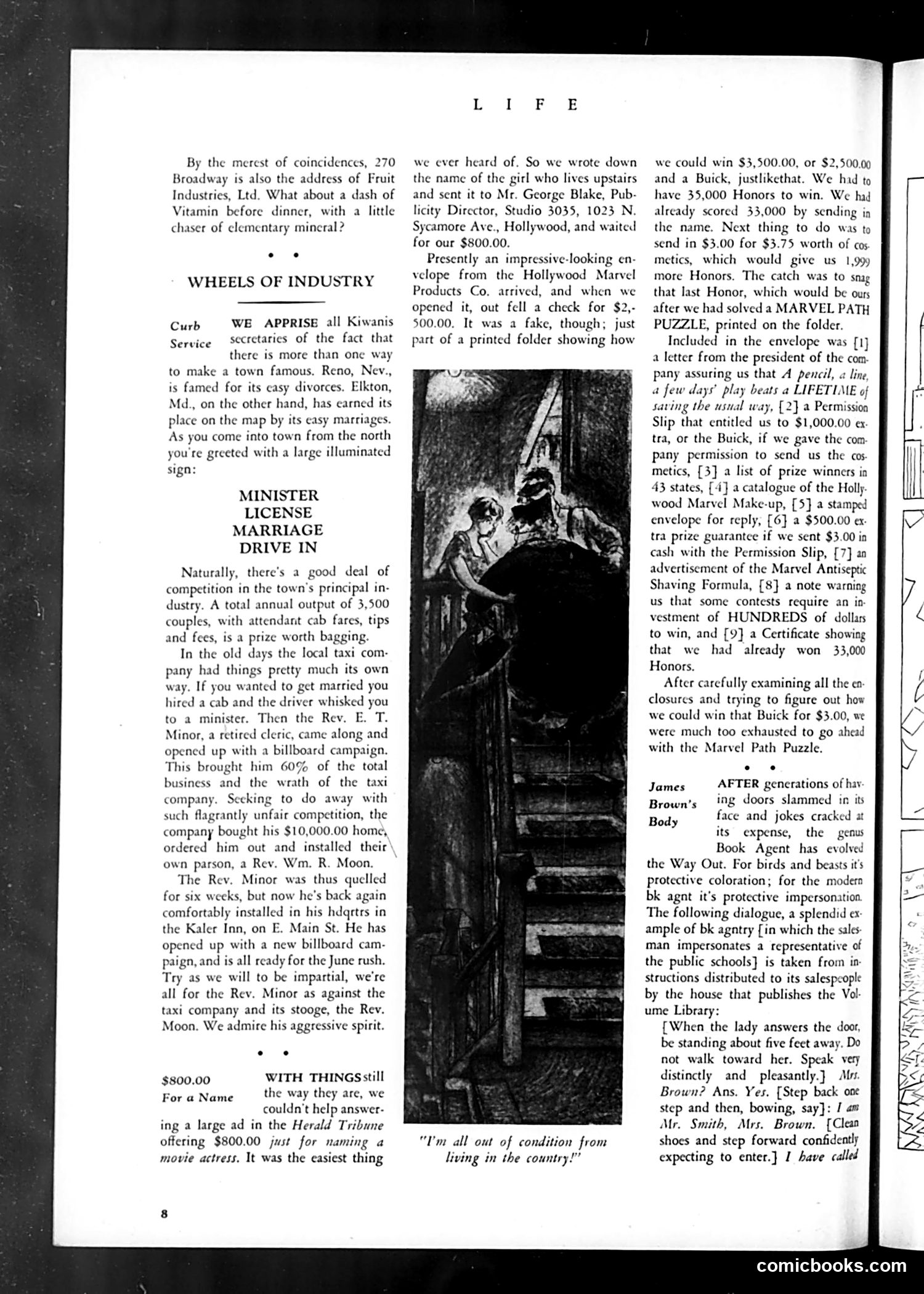
# Analysis This page from *Life* magazine contains satirical articles about small-town American industries and customs, not political cartoons. The main photograph illustrates an article titled "Minister License Marriage Drive In," which mocks a small Nevada town's (likely Reno's) competing marriage industry—where local businesses, including a taxi company and a retired clergyman, profit from couples seeking quick marriages. The satire targets the commercialization of marriage and competition among service providers to capture wedding business. A second article about "James Brown's Body" discusses protective book coloration and includes sample sales-dialogue mocking inauthentic customer service interactions. The content satirizes American consumer culture and small-town entrepreneurship rather than specific political figures or events.
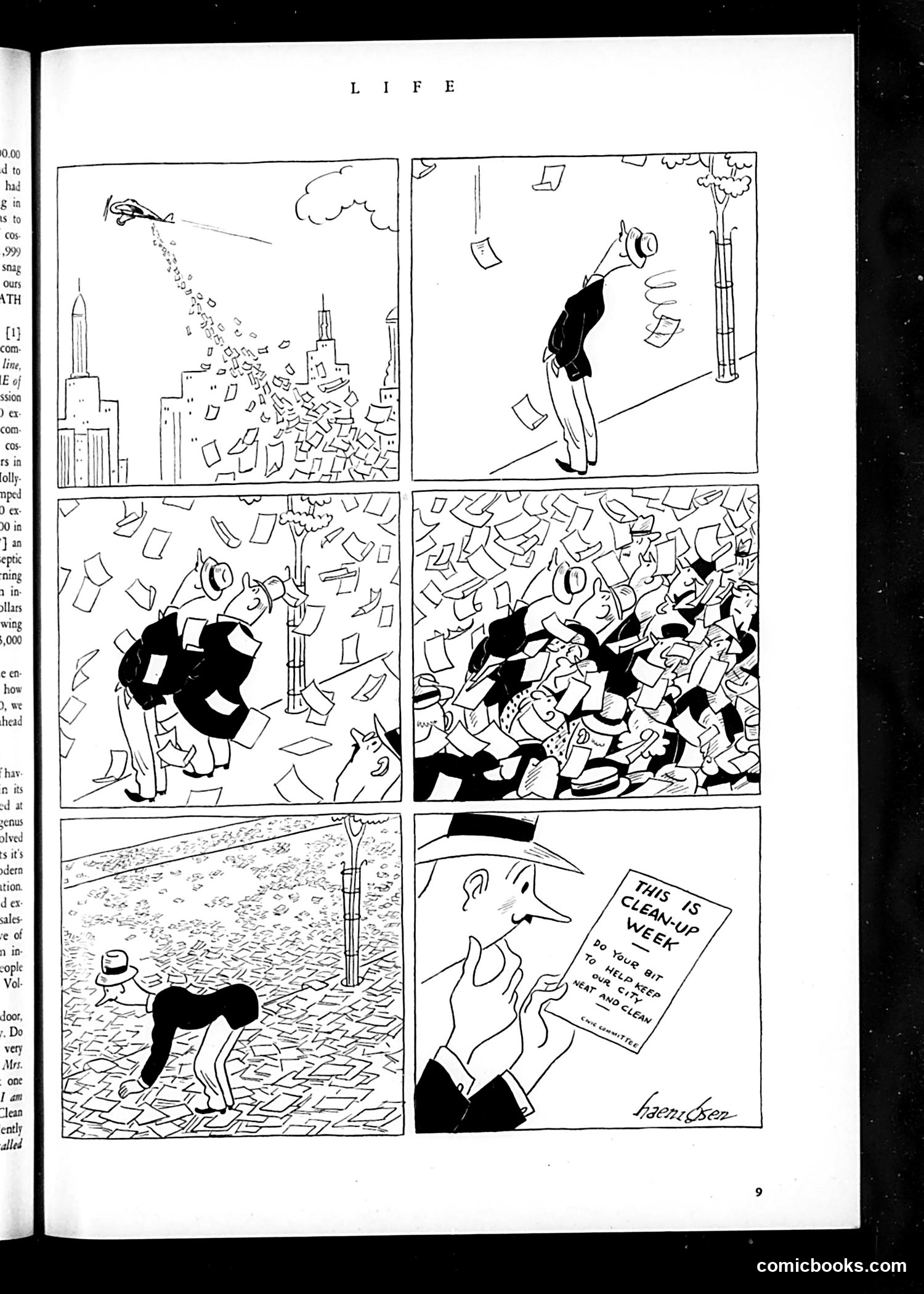
# Analysis of "Life" Cartoon Page This six-panel satirical comic depicts a businessman's descent into financial ruin, likely commenting on economic desperation during a financial crisis (appears to be early-to-mid 20th century based on style). **The sequence shows:** - Panel 1: Man throwing money from skyscraper - Panels 2-4: Progressive accumulation of papers/documents around him (suggesting mounting debts or bills) - Panel 5: Man reduced to poverty, crawling through scattered papers - Panel 6: A sign reading "THIS IS CLEAN-UP WEEK—DO YOUR BIT...KEEP GUTTERS AND STREETS CLEAN" — the cruel irony being the man himself has become human "litter" The satire critiques how financial collapse reduces people to poverty while society indifferently posts cleanup notices. The cartoonist is unsigned or unclear.
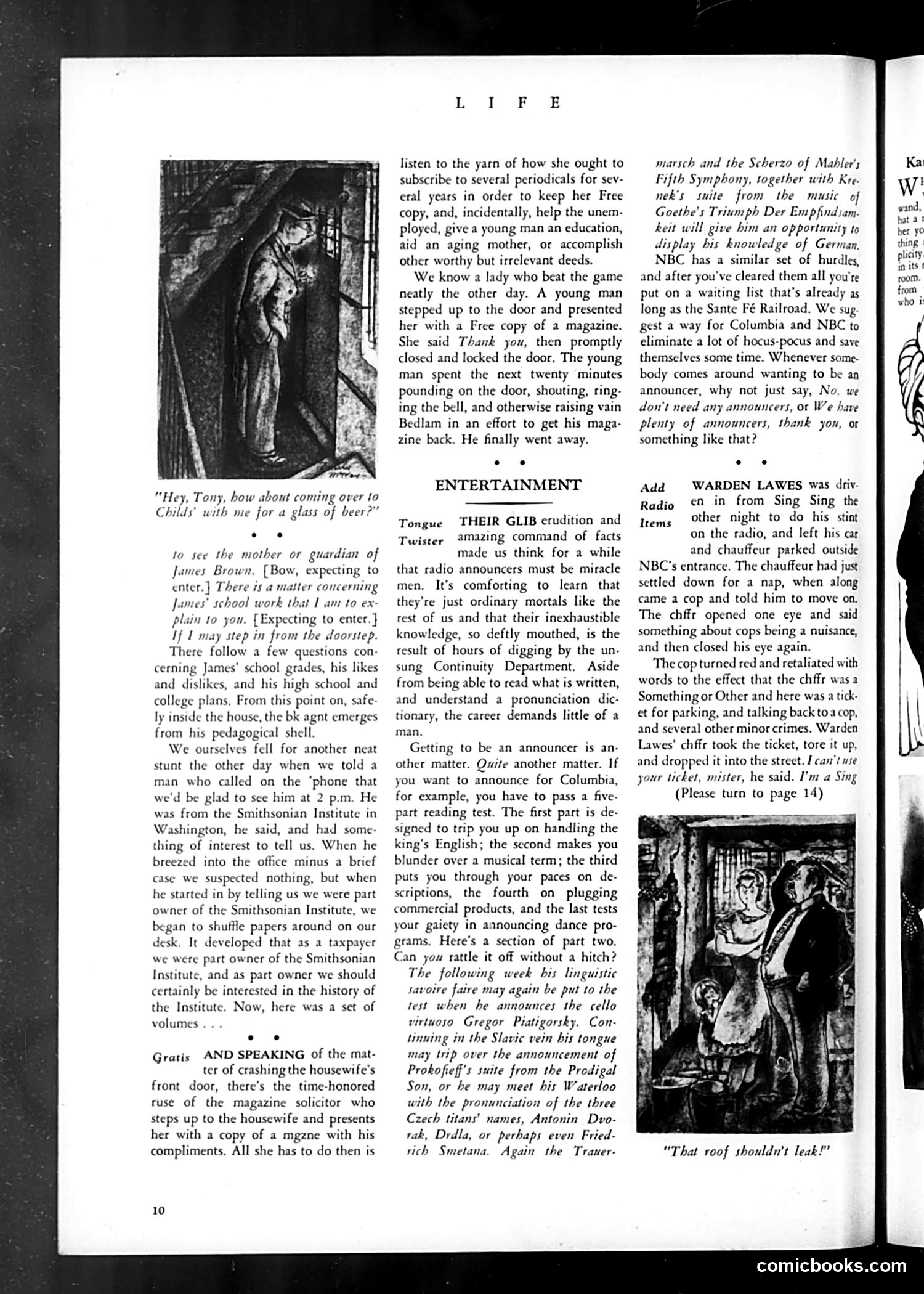
# Analysis of Life Magazine Page This page contains humorous anecdotes and social commentary rather than political cartoons. The main illustrated story, captioned "Hey, Tony, how about coming over to Childs' with me for a glass of beer?" depicts a door-to-door magazine solicitor. The joke satirizes aggressive sales tactics: a young man relentlessly pounds on a housewife's door demanding his magazine back after she rejected it, taking twenty minutes to retrieve it. The "Entertainment" section discusses radio announcers' challenges—their need for perfect diction, pronunciation, and composed professionalism. The anecdote about Warden Lawes mocks bureaucratic absurdity: a parked car receives a traffic ticket, then the warden himself gets ticketed for the same violation. The humor targets everyday American frustrations: invasive salesmen, officious minor officials, and the pretensions of emerging broadcast media professionals.