A complete issue · 52 pages · 1933
Life — May 1933
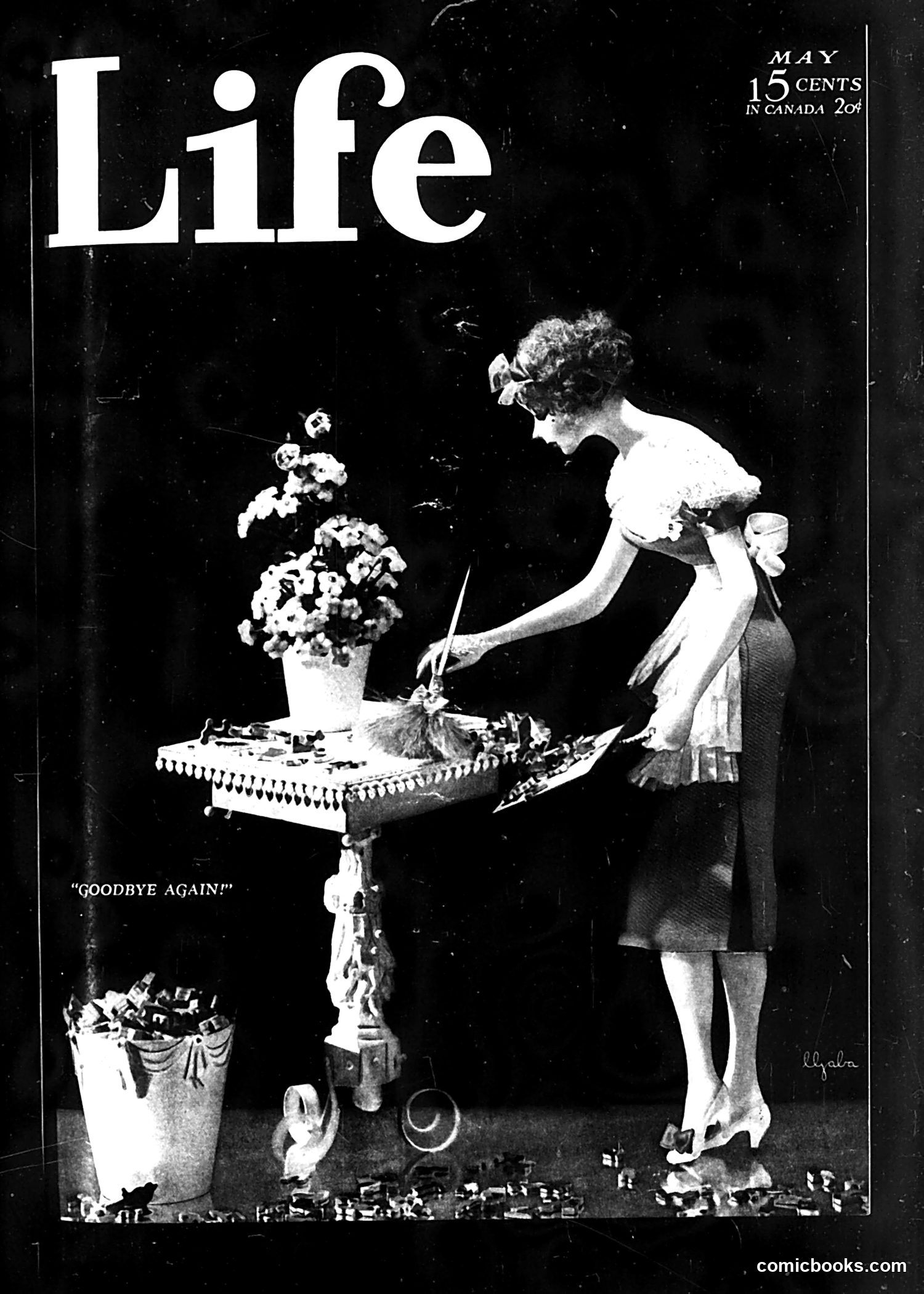
# Analysis This Life magazine cover from May (price 15 cents) depicts a woman arranging flowers at an ornamental table, with the caption "GOODBYE AGAIN!" The image appears to be satirizing the recurring pattern of wartime farewells—likely referencing soldiers departing for or returning from military service during a conflict period. The woman's formal attire and the decorative setting suggest a domestic, refined context, while scattered military items (possibly toys or miniatures) on the floor below reinforce the war theme. The "Goodbye Again" caption implies this is a repetitive experience—not a one-time parting but an ongoing cycle of separations. This likely commented on the emotional toll of repeated military deployments on the home front, a common satirical subject in American magazines during wartime periods.

# Analysis This page is primarily a **Goodyear tire advertisement**, not satire or political commentary. The image shows a well-dressed couple in 1920s-30s attire standing beside an automobile, positioned to suggest wealth and sophistication. The ad copy emphasizes that Goodyear Double Eagle Tires represent "something special for those who know how to value it"—appealing to aspirational consumers who understand quality and are willing to pay premium prices. The advertisement's messaging reflects period class consciousness: suggesting that superior tires convey social status and peace of mind. A large tire image appears on the right. The tagline promises both excellence and value "on a miles-per-dollar basis." This is straightforward product advertising leveraging status anxiety and lifestyle aspiration rather than satire.
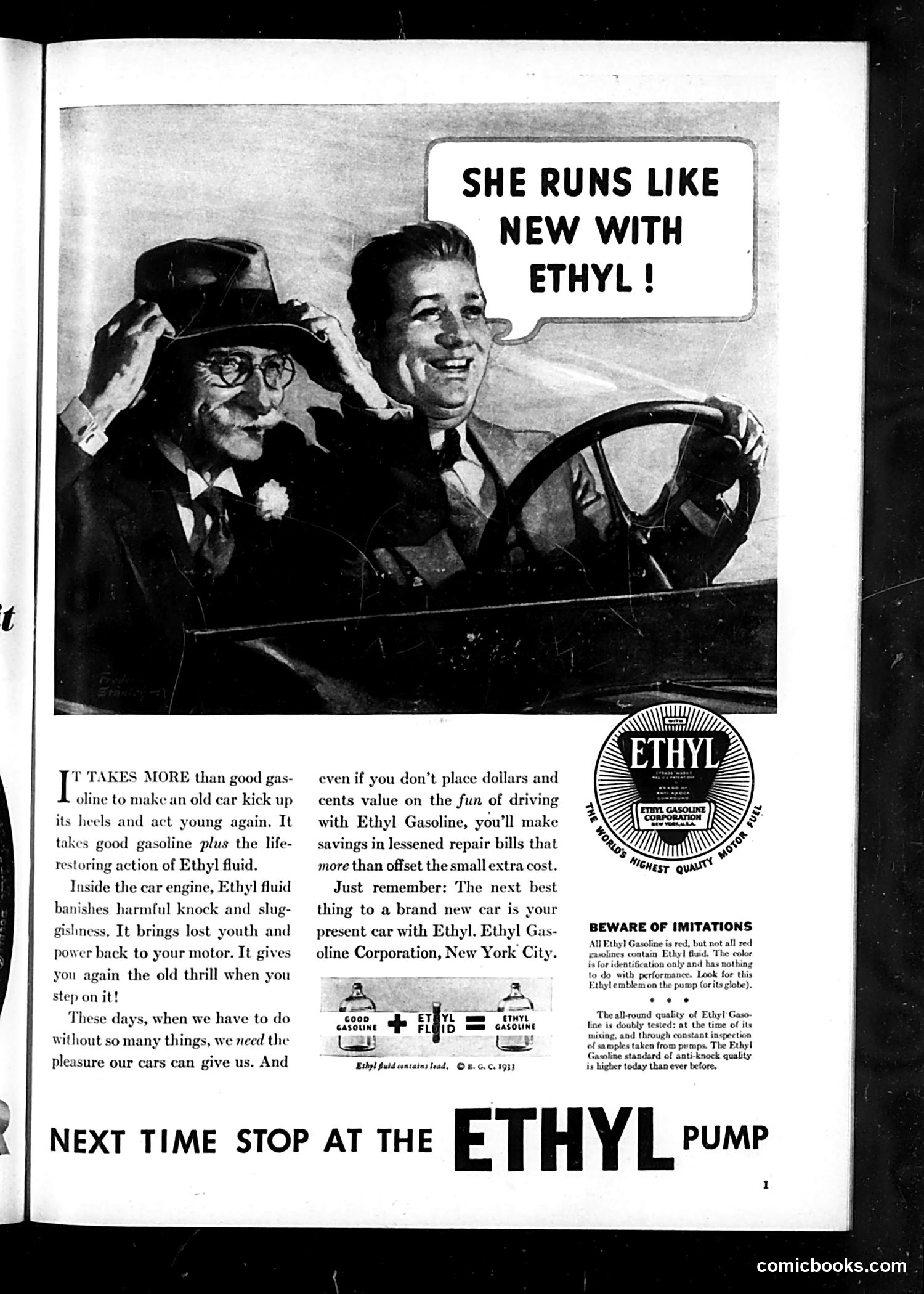
# Analysis: Ethyl Gasoline Advertisement This is a **commercial advertisement**, not political satire. It promotes Ethyl Gasoline, a leaded fuel product from the Ethyl Gasoline Corporation (New York City). The image shows two men in a car—an elderly gentleman and a younger driver—with the caption "She runs like new with Ethyl!" The humor relies on the double meaning: "she" refers both to the car and possibly plays on gendered language common to that era. The advertisement claims Ethyl fuel restores old cars to youthful performance by eliminating engine knock and sluggishness. The text emphasizes that despite higher cost, reduced repair bills offset the expense. A warning against imitations appears at bottom right, suggesting competitors existed. This reflects the early automotive era when fuel additives were novel selling points.
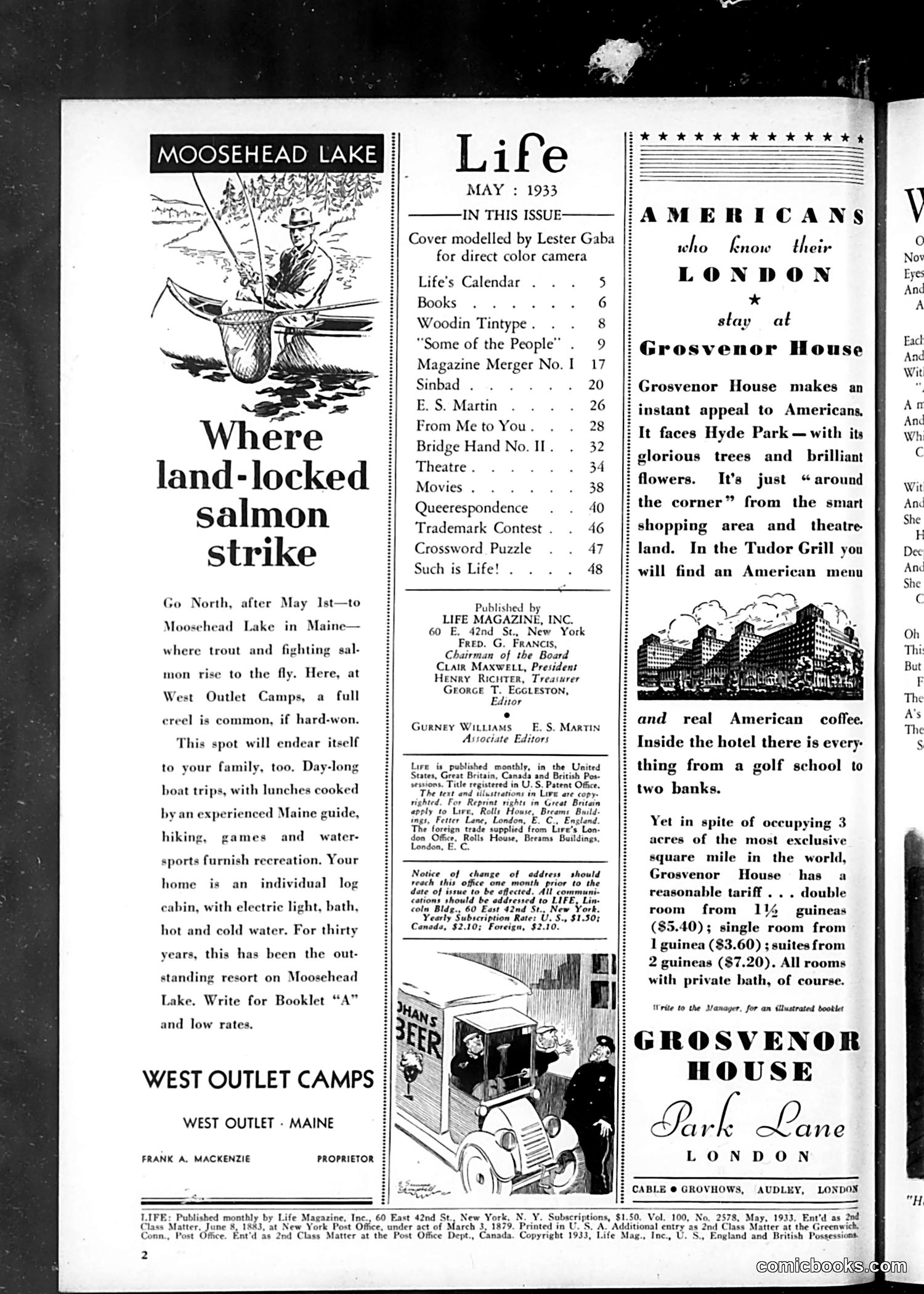
# Page Analysis This is primarily a **magazine contents and advertising page** from Life Magazine, May 1933. The left side features an advertisement for West Outlet Camps in Maine, promoting fishing at Moosehead Lake with illustrations of a fisherman and salmon. The right side advertises the **Grosvenor House hotel in London**, emphasizing its appeal to Americans visiting England. The small cartoon shows what appears to be a **humorous scene of people in or around a vehicle**, likely playing on tourist or travel themes, though the specific satirical reference is unclear from the image alone. The page is primarily commercial rather than satirical commentary—typical of Life Magazine's mixed format of advertising, articles, and occasional cartoons.
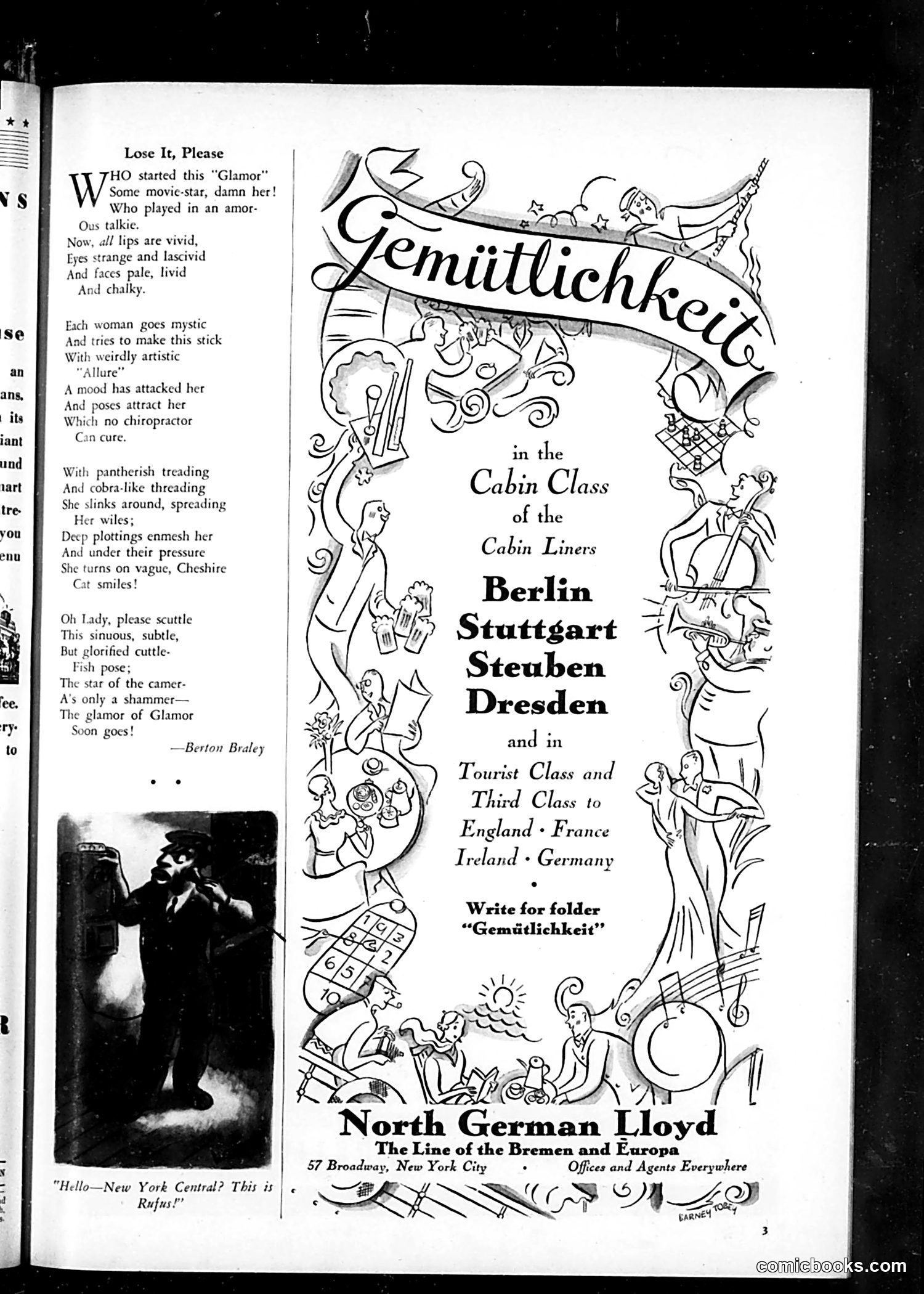
# Page Analysis This page contains a poem titled "Lose It, Please" by Berton Braley on the left, which critiques women's use of cosmetics and makeup—particularly "glamor" products that create artificial appearances. The satirical verse mocks the theatrical application of makeup ("werdily artistic") and compares women's behavior to mythical creatures ("turns on vague, Cheshire / Cat smiles"). The right side is a full-page advertisement for the North German Lloyd shipping line, promoting cabin accommodations on ships traveling between Germany and England/France/Ireland. The decorative border features whimsical illustrations of passengers enjoying leisure activities. Together, these represent typical Life magazine content: social satire about consumer culture paired with luxury advertising—ironically juxtaposing critique of women's artificiality with high-end commercial appeals.
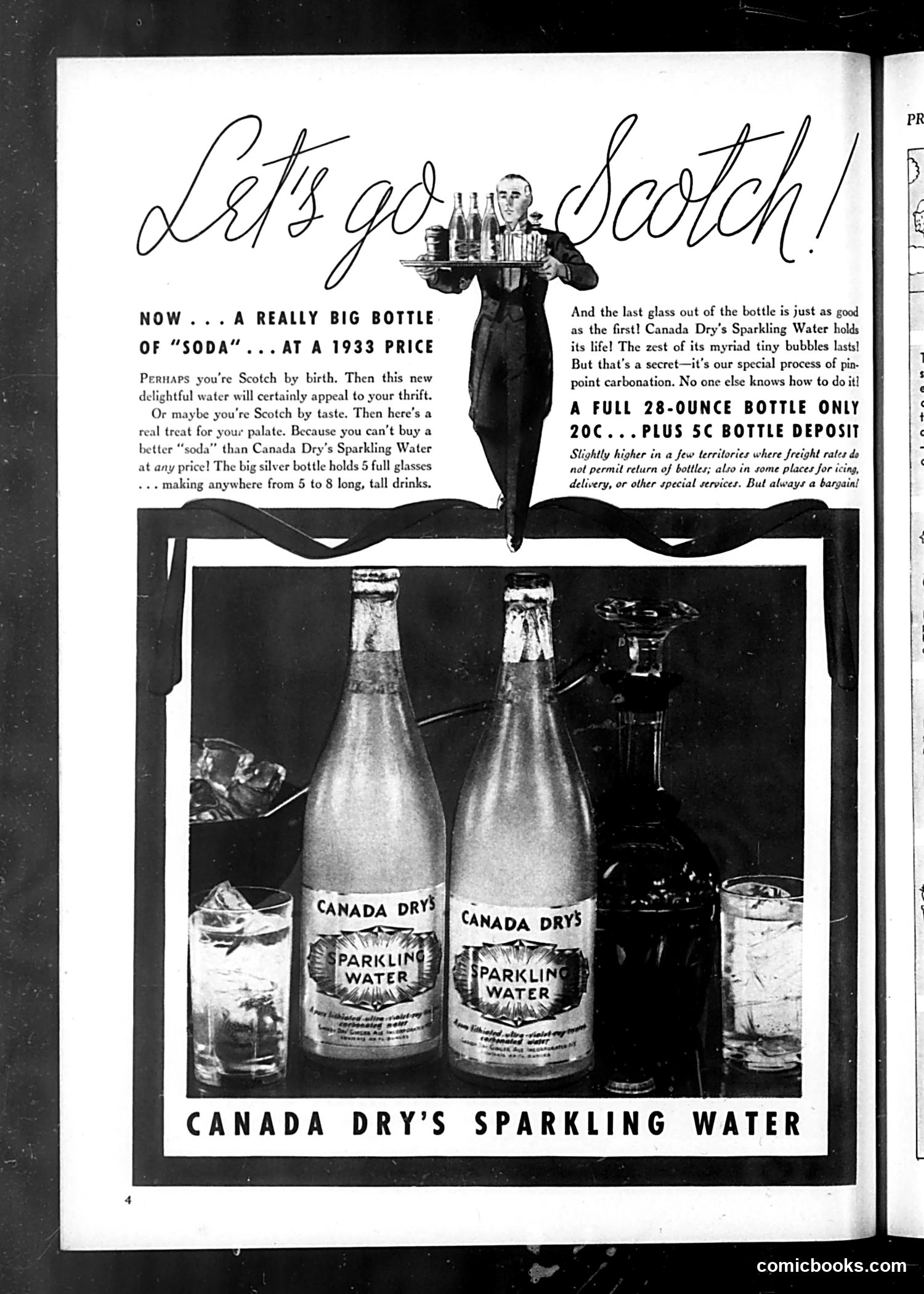
# Analysis This is a **product advertisement, not political satire**. It promotes Canada Dry's Sparkling Water during the Depression era (1933, based on the price point mentioned). The ad uses humor and appeals to Scottish heritage ("Perhaps you're Scotch by birth") to market an inexpensive beverage. The illustrated waiter holding bottles is a generic service-industry figure, not a political caricature. The headline "Let's go Scotch!" is a pun playing on both Scottish identity and the colloquial meaning of "going Scotch" (being thrifty). The copy emphasizes the product's affordability—20 cents for a full 28-ounce bottle—a significant selling point during Depression-era economic hardship. This is straightforward commercial advertising rather than political or social commentary.
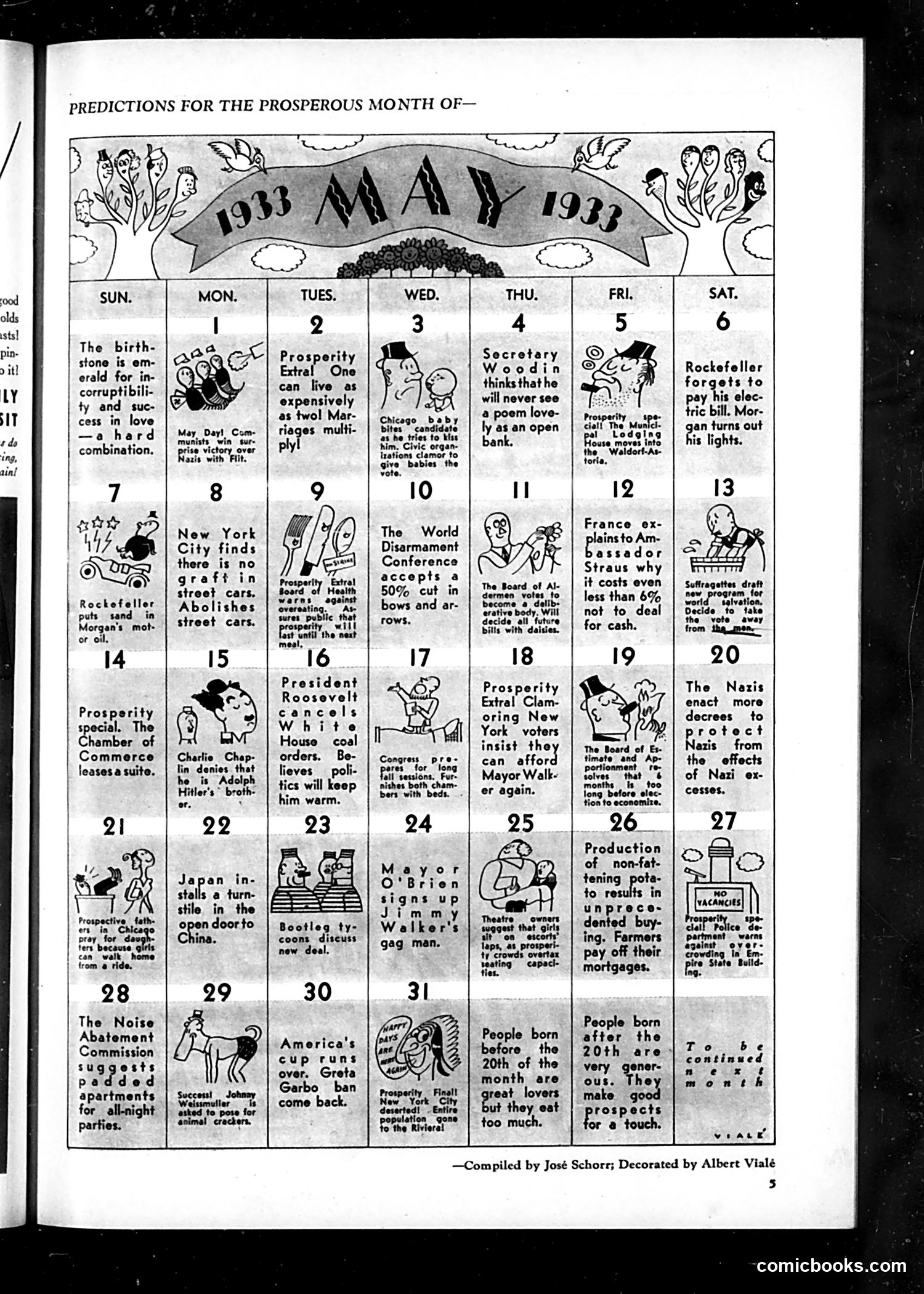
# May 1933 Predictions Calendar This is a satirical prediction calendar for May 1933, compiled by José Schorr and decorated by Albert Vialé. Each day contains a humorous "prophecy" about events likely to occur, mixing absurdist humor with contemporary political and social commentary. Key references include: - **May 3**: A political candidate trying to get votes - **May 10**: World Disarmament Conference (actual 1933 event) - **May 16**: President Roosevelt canceling White House coal orders - **May 20**: Nazis enacting decrees protecting Jews—clearly satirical, as this contradicts historical reality; this mocks Nazi policies - **May 31**: Greta Garbo returning to films The calendar satirizes both current events and predictable social behaviors through exaggerated, tongue-in-cheek daily predictions typical of Life magazine's irreverent humor.
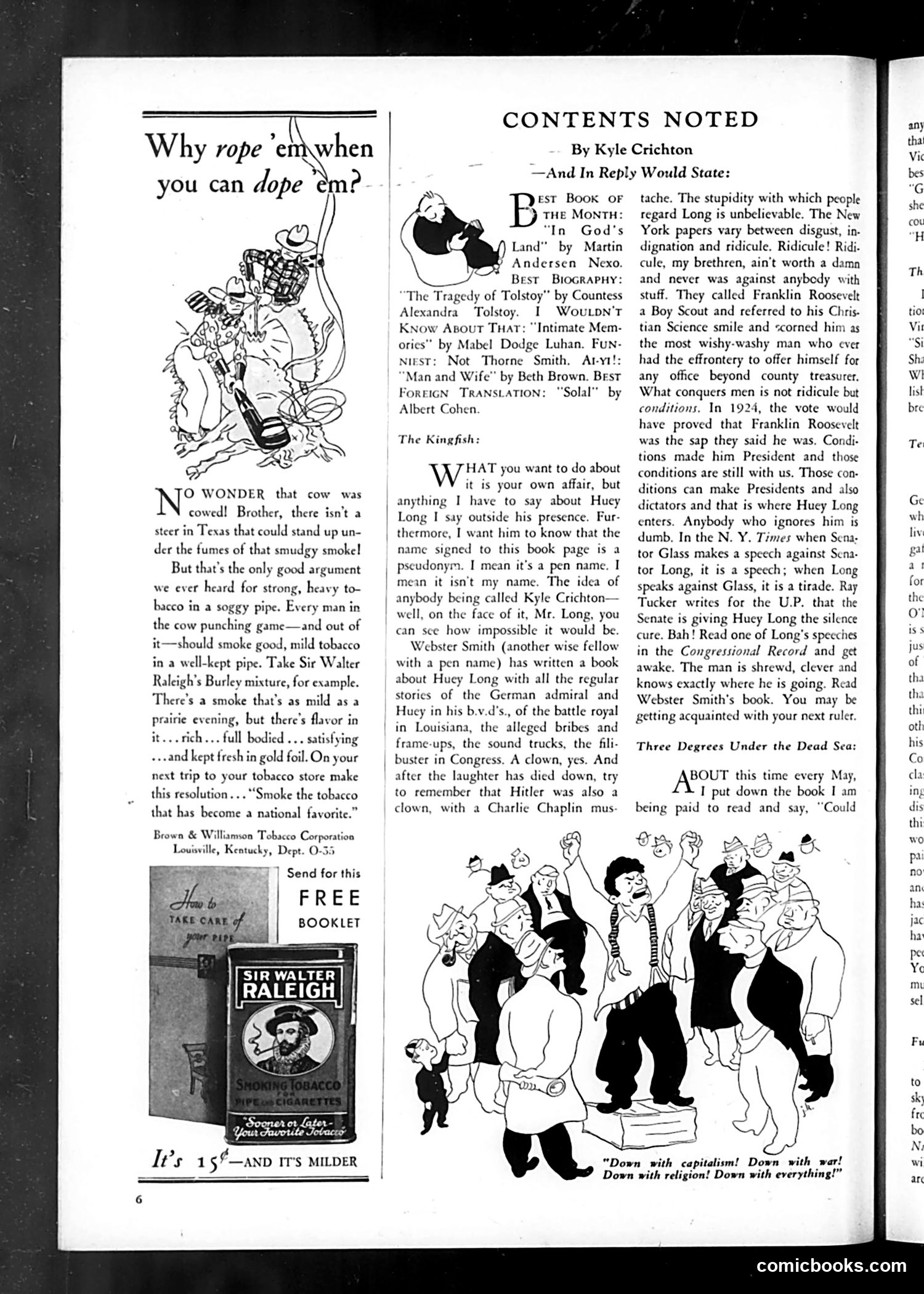
# Political Content Analysis The right-hand cartoon titled "Three Degrees Under the Dead Sea" depicts a crowd of figures with raised fists chanting "Down with capitalism! Down with war! Down with religion! Down with everything!" This satirizes radical political movements of the early 20th century—likely communists or anarchists—mocking their blanket rejection of existing institutions. The cartoon presents them as indiscriminate in their opposition: opposing not just specific grievances but fundamentally "everything," including religion and war itself (suggesting naive idealism). The left side contains a cigarette advertisement for Sir Walter Raleigh tobacco, presented as a lighthearted contrast to political seriousness. The page is from *Life* magazine's satirical section, using caricature to mock revolutionary extremism as lacking coherent philosophy—simply opposing all existing order reflexively.
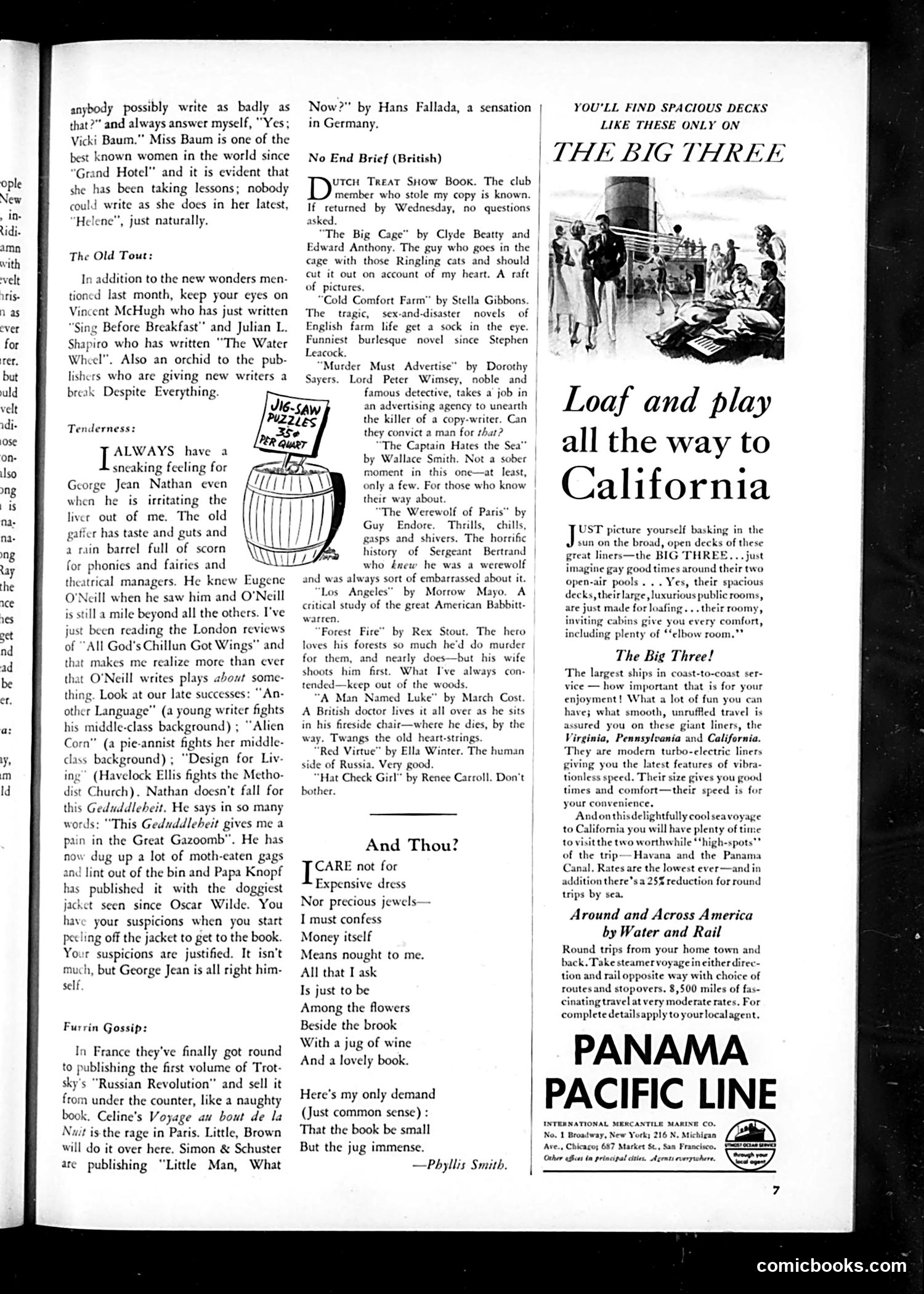
# Analysis This page consists primarily of **book reviews and literary commentary** rather than political cartoons. The main content includes: **"No End Brief"** - Reviews of contemporary novels, including works by Clyde Beatty, Stella Gibbons, Dorothy Sayers, and others. **"Tenderness"** - A small illustration (a jug-labeled "Jig-Saw Puzzles") accompanies commentary on writer George Jean Nathan's critical style. **"And Thou?"** - A poem by Phyllis Smith about simple desires (flowers, wine, a book). The page is **not satirical or political**. It's a cultural/literary section of Life magazine focused on book recommendations and literary criticism. The advertising for the Panama Pacific Line appears at bottom. This represents Life's role as a general-interest magazine covering arts and culture, not primarily political satire.
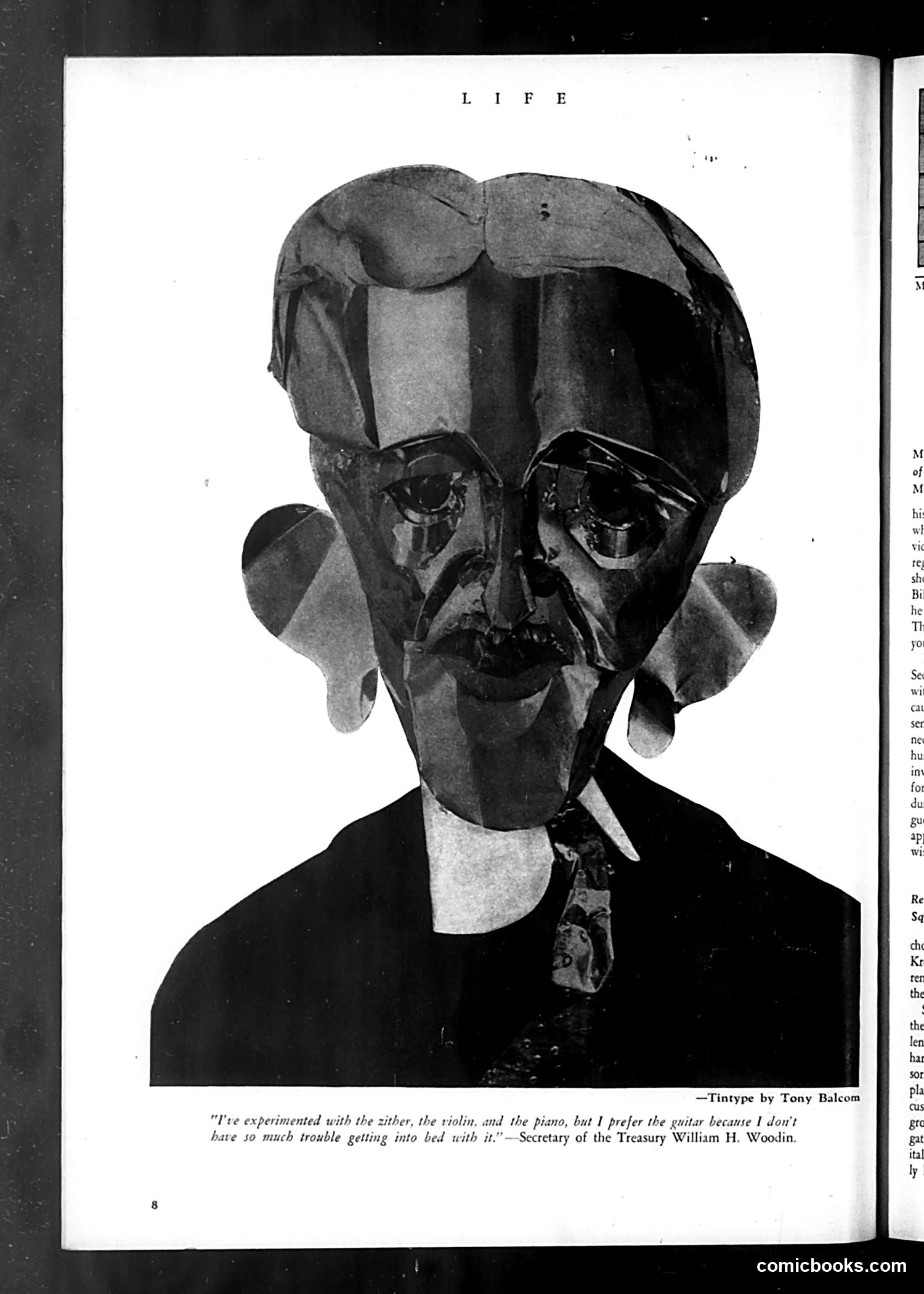
# Analysis This page features a tintype photograph by Tony Balcom of **William H. Woodin**, identified as Secretary of the Treasury. The image uses surrealist/cubist visual distortion—fragmenting and reassembling facial features geometrically—to create a deliberately grotesque portrait. The caption quotes Woodin claiming he prefers guitar over zither or violin because he doesn't "have so much trouble getting into bed with it." The satire likely mocks Woodin's musicianship or his public persona. The distorted portrait may suggest incompetence or unsuitability for his Treasury role, while the quote—seemingly innocent about instrumental practicality—carries potential double entendre about his habits or character. This appears designed as humorous political commentary typical of *Life* magazine's satirical approach to public figures.
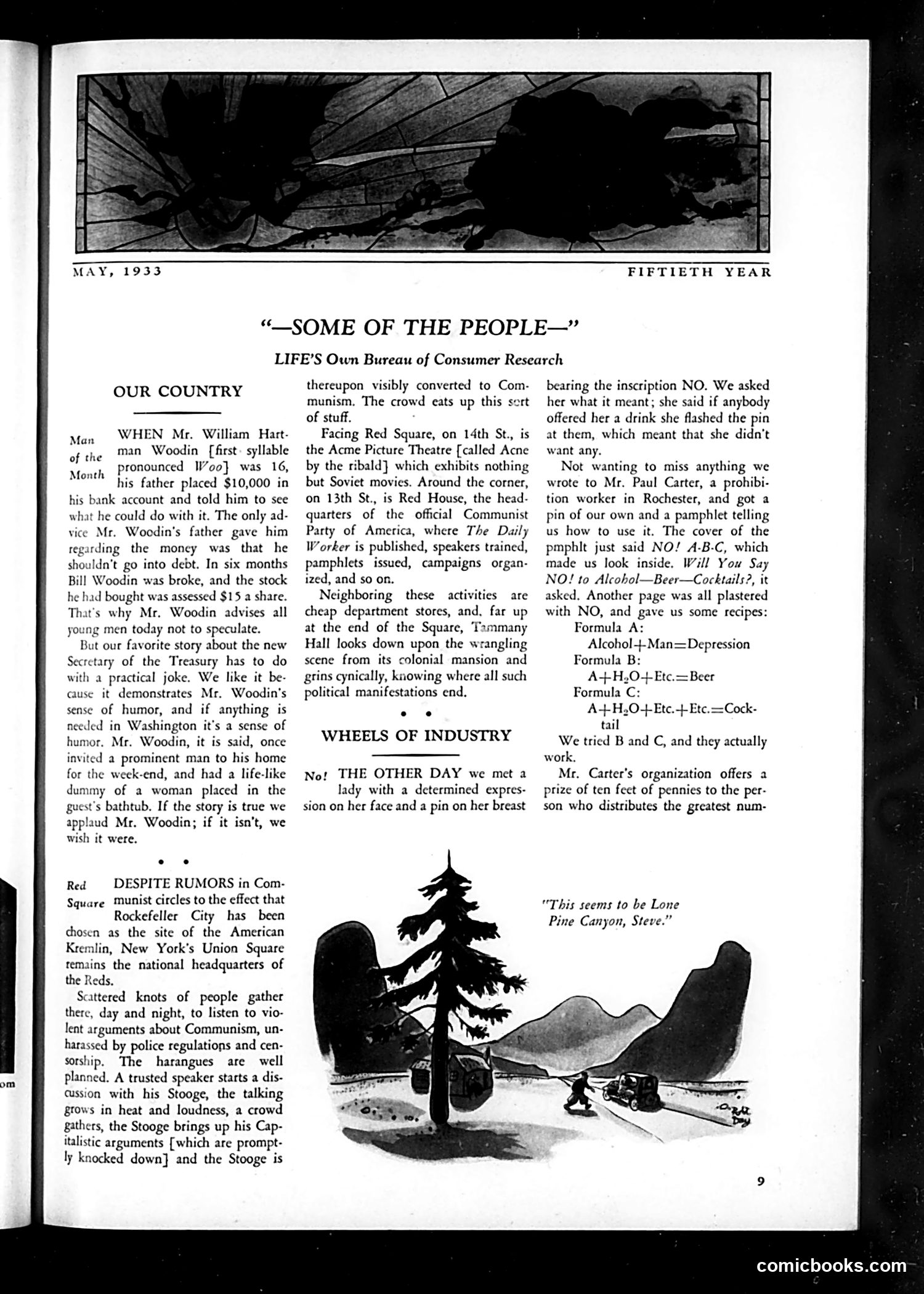
# Analysis of Life Magazine, May 1933 - Page 9 This page contains three separate satirical pieces about American politics and consumer culture during the Depression era. The "Man of the Month" section mocks William Hartman Woodin, Treasury Secretary, for receiving $15 a share from a bank account his father established—satirizing how wealthy officials handled Depression-era finances. The "Red Square" section criticizes Communist organizing in New York City, describing Soviet headquarters near Union Square and mocking their propaganda efforts and street debates, presented as absurd spectacle rather than serious threat. The "Wheels of Industry" cartoon (illustrating a Lone Pine Canyon scene) appears disconnected from the text, likely a caption or separate editorial cartoon. Overall, the page satirizes both radical left-wing activism and wealthy establishment figures, reflecting 1933's anxieties about economic crisis and political extremism.
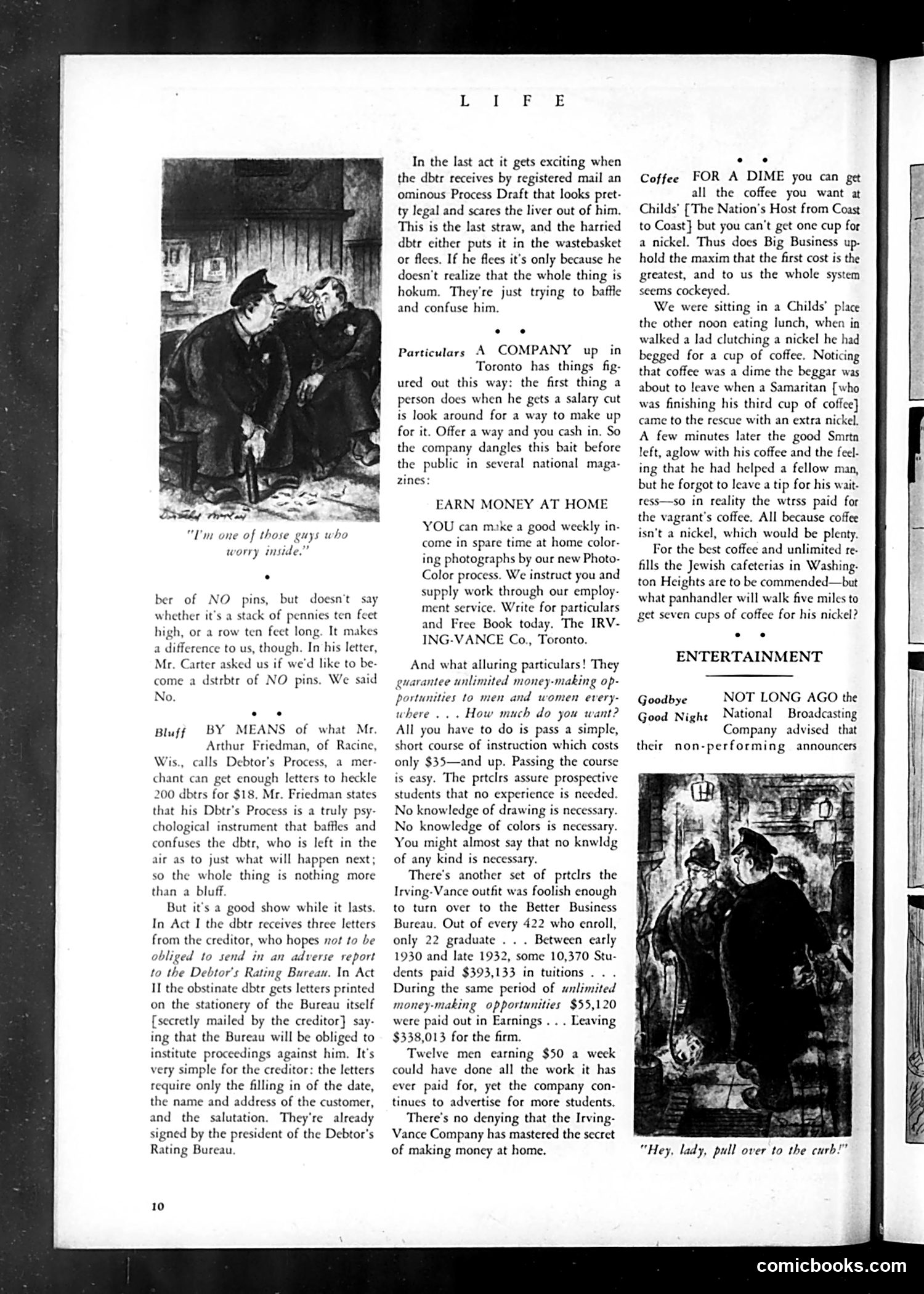
# Analysis of Life Magazine Page This page satirizes mail-order scams and get-rich-quick schemes popular during the Depression era. The left cartoon shows a gullible man receiving a "Process Draft" letter—one of many fraudulent solicitations promising easy money. The satire highlights how desperate people became targets for dubious schemes. The text mocks the "Debtor's Process" (a fake psychological instrument) and the Irving-Vance Company's "color photography" and "better business" courses. These promised unlimited income but actually collected tuition from thousands of students while delivering minimal value. The humor lies in exposing the con: companies advertise heavily for more victims despite earning substantial profits from tuition alone—the real money-making operation, not the courses themselves. It's satire of predatory commercialism exploiting economic desperation.