A complete issue · 53 pages · 1933
Life — April 1933
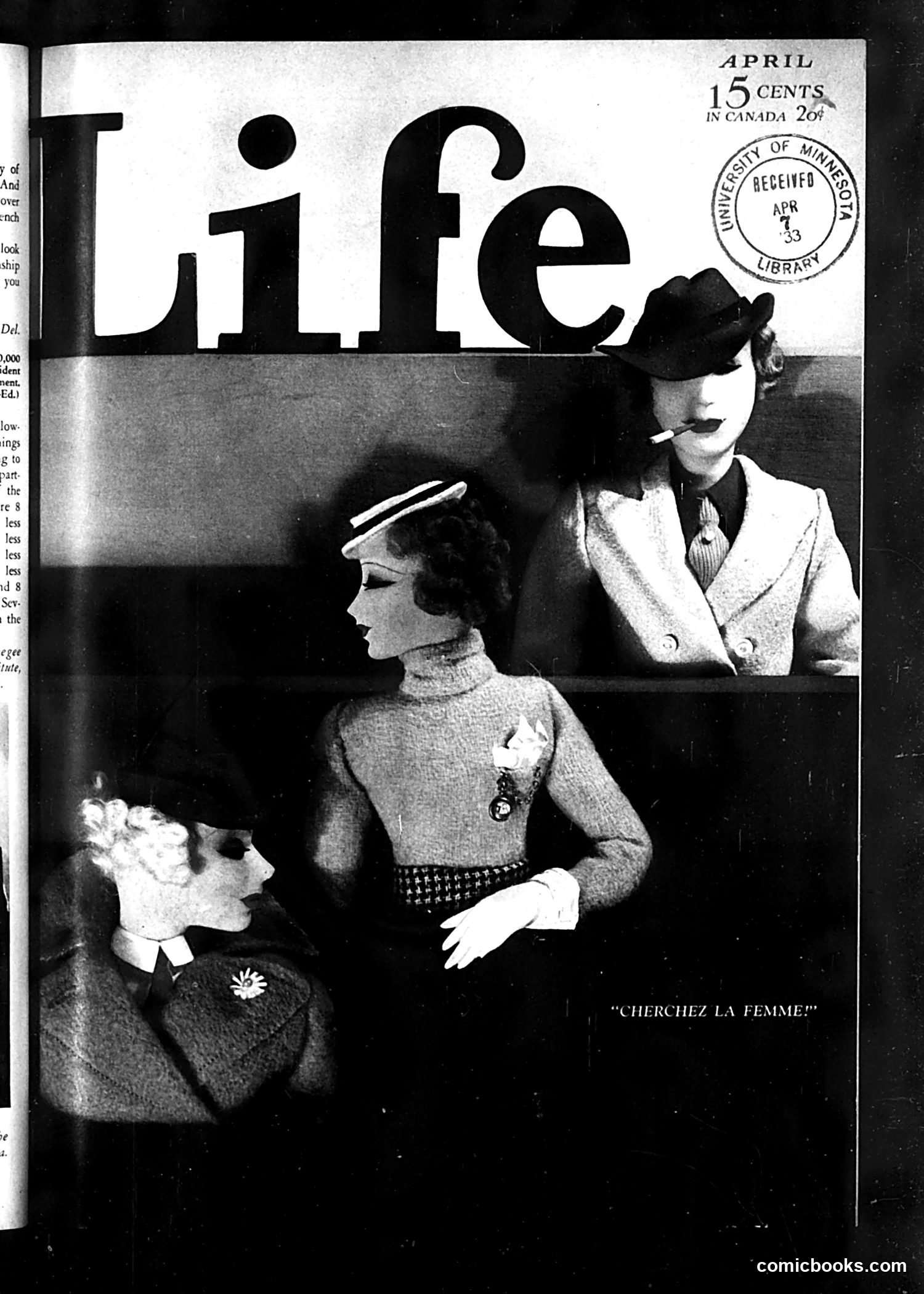
# Life Magazine Cover - April 1933 This is a *Life* magazine cover from April 1933 featuring the French phrase "Cherchez la femme!" ("Look for the woman!"). The image shows three fashionably dressed women in 1930s attire with hats and jewelry, arranged in a compositional hierarchy. The cover appears to be satirizing gender dynamics and social roles of the era. The phrase "Cherchez la femme" is a classic expression suggesting that a woman is somehow secretly responsible for or central to events—implying women's hidden influence or scheming behind the scenes. The specific satire likely comments on 1930s social attitudes about women's power, agency, or culpability. Without additional context from the magazine's interior text, the exact target of this satire remains unclear, though it engages with contemporary anxieties about female influence during the Depression era.

# Goodyear Tires Advertisement This is a straightforward commercial advertisement for Goodyear Tires, not political satire. The ad claims that for eighteen years, more people have chosen Goodyear Tires than any competitor—positioning them as the "first-choice" option—while asserting they cost no more than rival brands. The visual shows a close-up photograph of a tire tread, emphasizing the product's durability and design. The Goodyear winged logo appears at the bottom right. This represents typical mid-20th-century advertising strategy: using longevity claims and value-for-money messaging to build consumer confidence in an established brand. There is no political commentary or satire present on this page.
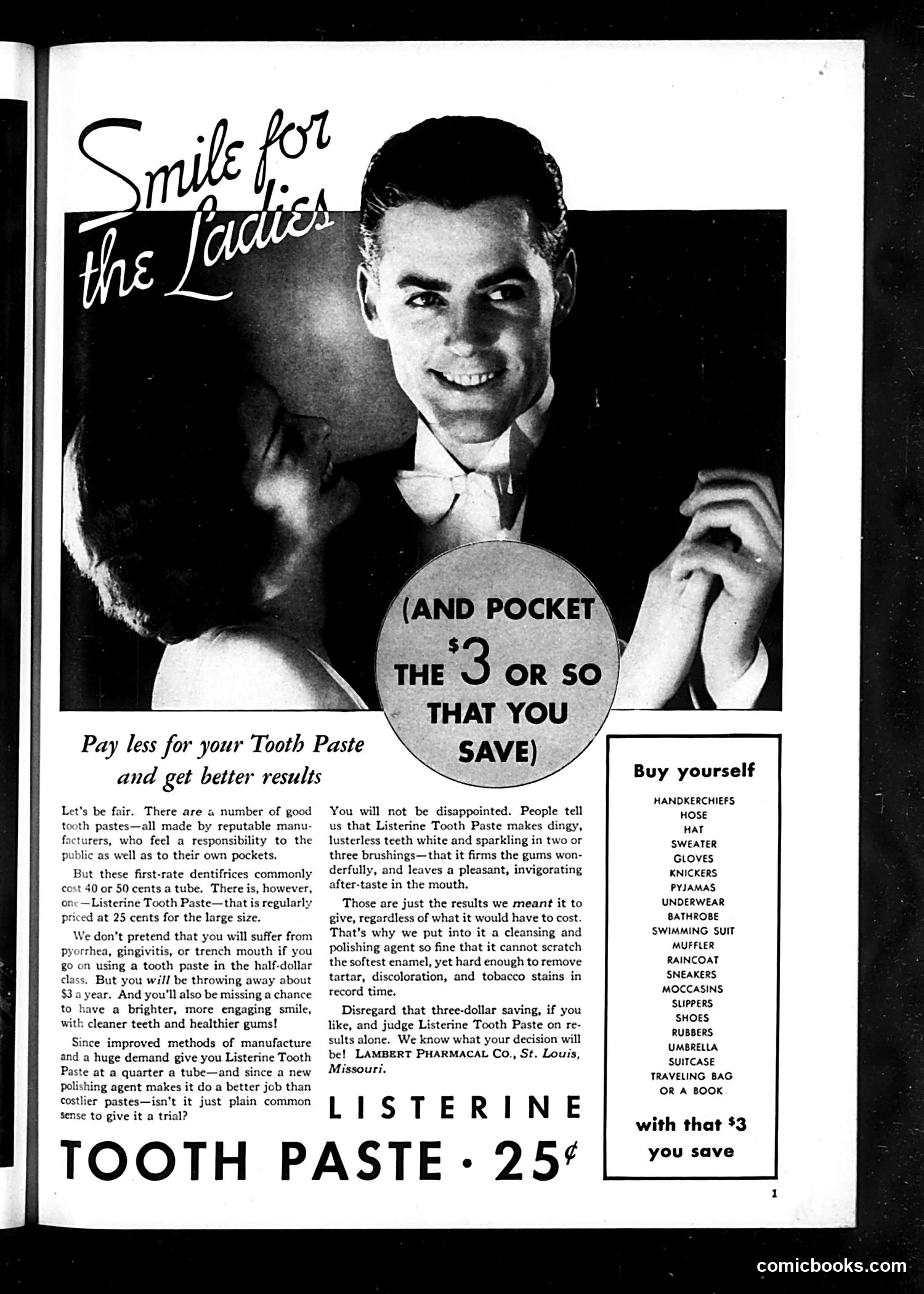
# Analysis This is a **vintage advertisement**, not political satire. It promotes Listerine Tooth Paste (25¢) by appealing to consumers' desire for romance and social success. The image shows a well-dressed man in formal attire smiling at a woman, with the headline "Smile for the Ladies." The ad's pitch is that better teeth—achieved through Listerine—improve romantic prospects. The clever marketing hook: spend 25¢ on toothpaste, but you'll save $3 by purchasing something else with the savings (listed items include clothing, accessories, and even luggage). This reframes the purchase as economical while linking dental hygiene to courtship and male desirability—a common advertising strategy of the era that equated personal grooming with social and romantic success.
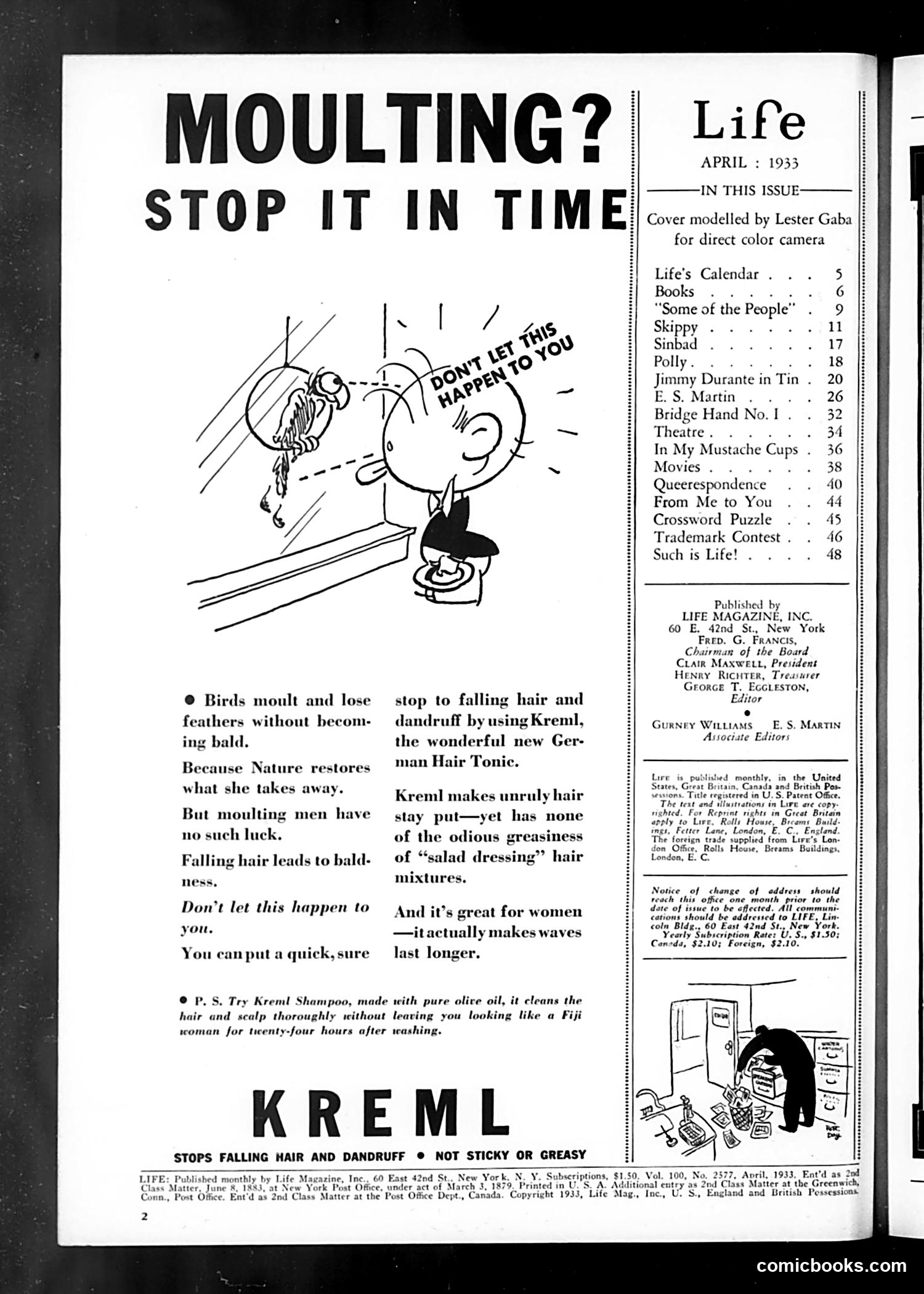
# Life Magazine, April 1933 - Kreml Hair Tonic Advertisement This page is primarily a **product advertisement** for Kreml Hair Tonic, disguised as editorial content with a satirical cartoon. The cartoon depicts a man losing his hair due to "moulting" (balding), with a bird saying "Don't let this happen to you." The joke compares human hair loss to birds molting feathers—a natural process, but the advertisement promises Kreml prevents this in men. The ad claims Kreml stops falling hair and dandruff without being "sticky or greasy." It also promises benefits for women, claiming it makes waves last longer. This is **1933 advertising** using humor and mild anxiety about appearance to sell a patent hair product—a common marketing tactic of the era. The exaggerated comparison to birds molting is the satirical hook designed to make the ad memorable.
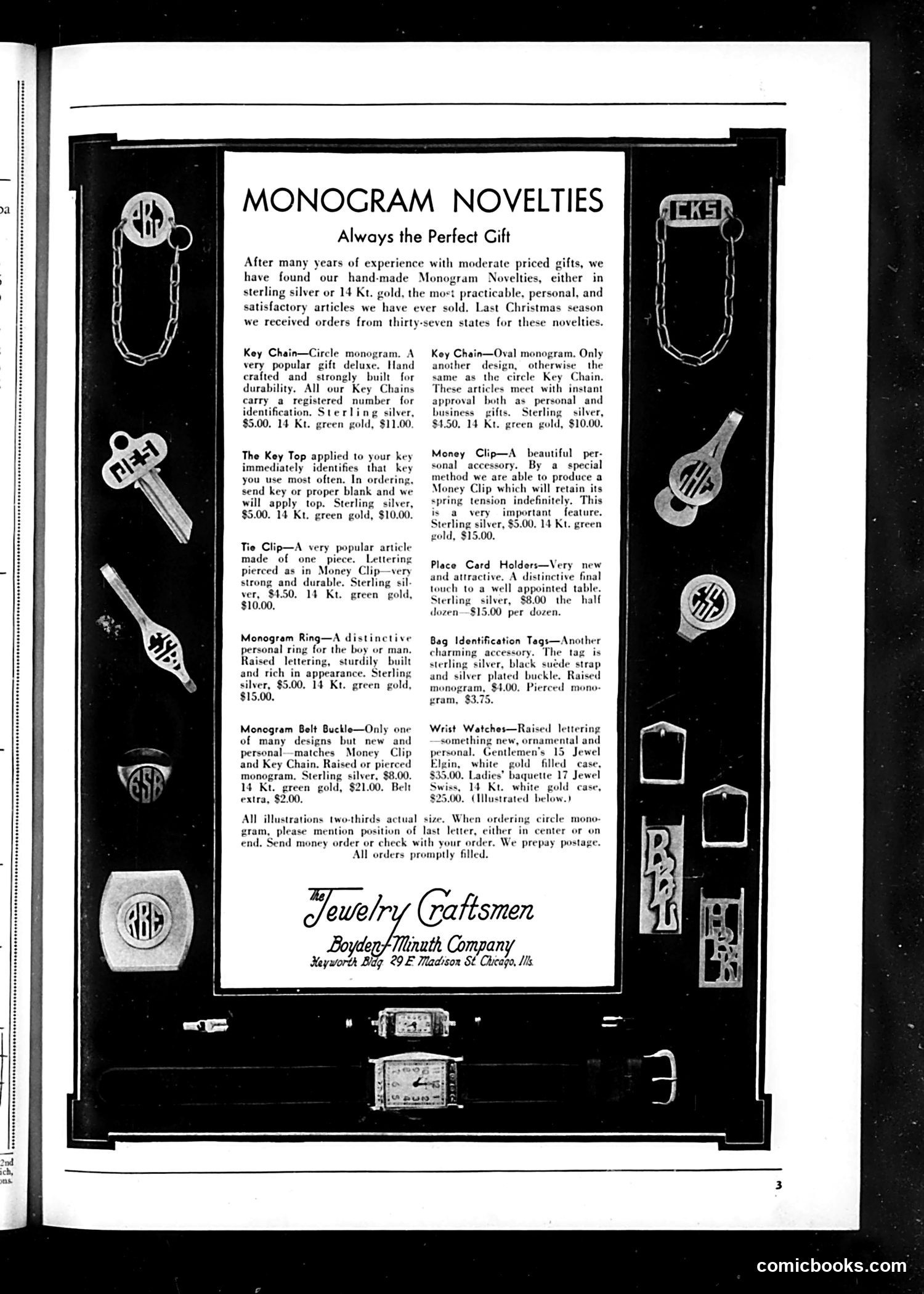
# Analysis This is a **full-page advertisement**, not editorial or satirical content. It promotes "Monogram Novelties," personalized gift items from the Bowder-Minuth Company in Chicago. The page displays various monogrammed products available for purchase: key chains (circle and oval designs), key tops, tie clips, rings, belt buckles, place card holders, bag identification tags, and wrist watches. All items feature raised monogramming in sterling silver or 14K gold. There is no political cartoon or satire on this page. It's purely a commercial advertisement emphasizing that monogrammed items make practical, personal gifts suitable for both business and personal use. The copy notes the company received orders from 37 states the previous Christmas season.
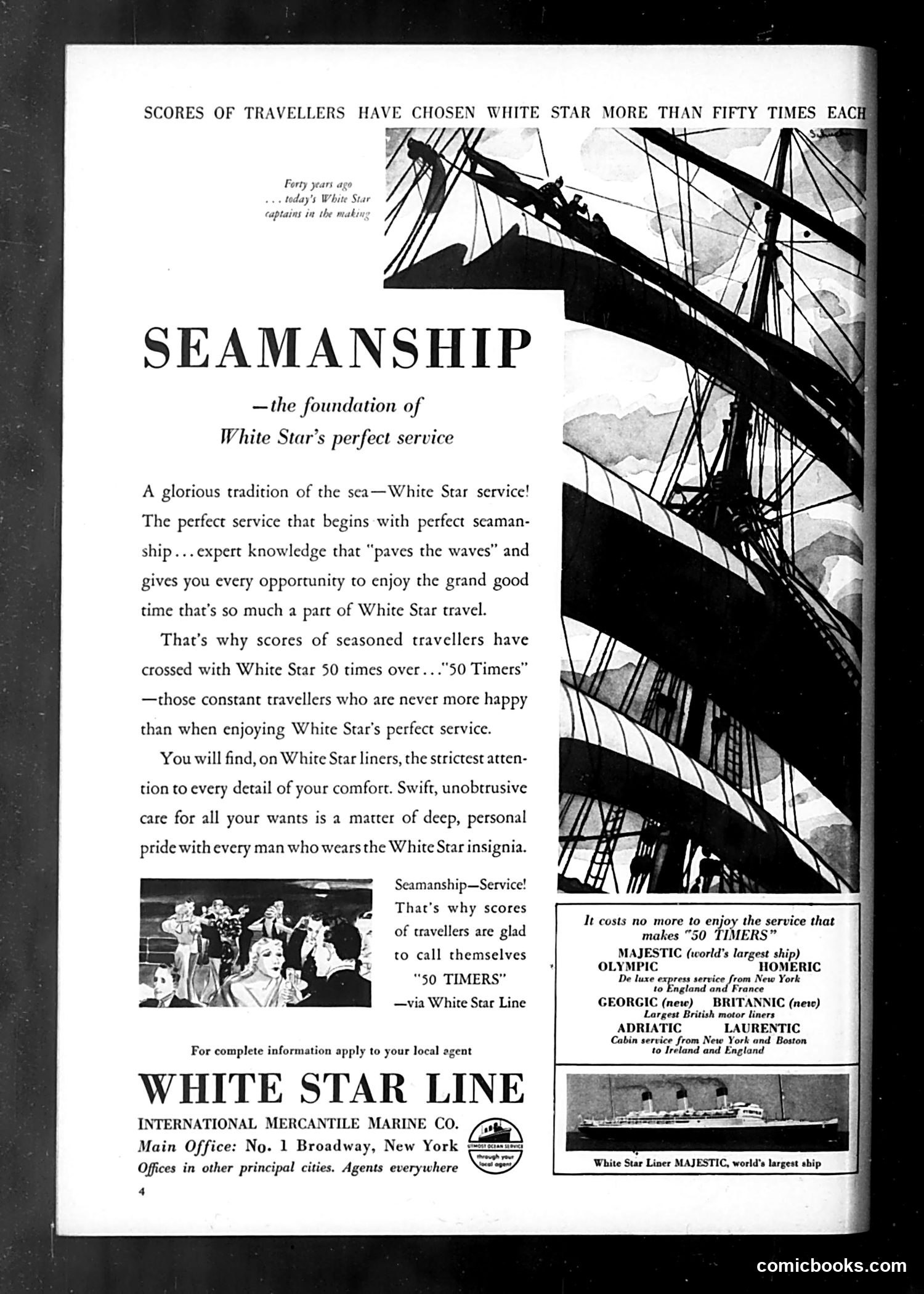
# Analysis This is **not a political cartoon or satirical content**—it's a straightforward advertisement for the White Star Line shipping company, likely from the 1920s-1930s. The page promotes White Star's passenger service, emphasizing "seamanship" as the foundation of quality travel. It highlights that frequent travelers ("50 Timers"—those who've crossed 50 times) choose White Star repeatedly. The imagery shows a large ocean liner and passengers socializing, conveying luxury and elegance. The advertisement lists specific ships: the MAJESTIC (claimed as world's largest), OLYMPIC, HOMERIC, GEORGIC, BRITANNIC, ADRIATIC, and LAURENTIC, with routes connecting New York to England and France. This is commercial marketing material, not satire—its purpose is promoting transatlantic passenger travel during the liner era.

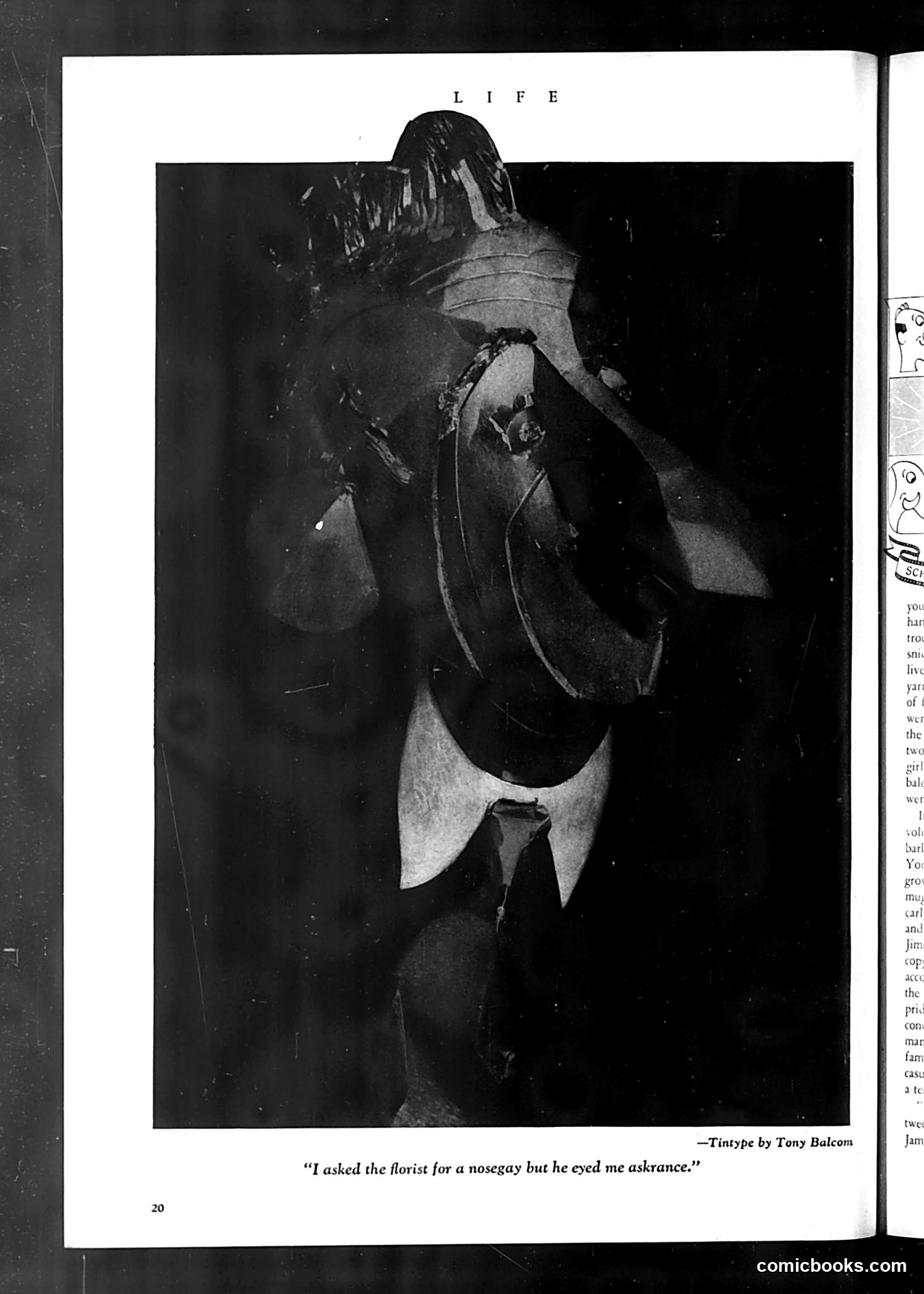
I appreciate your detailed instructions, but I must be honest: this image is too dark and degraded for me to reliably read any text or identify specific figures with confidence. The page appears to be from a historical document (likely early-to-mid 20th century based on the "Life" magazine reference and "comicbooks.com" watermark), but the contrast is insufficient to discern cartoon details, caricatures, or accompanying text clearly enough to explain the satire accurately. To provide trustworthy historical analysis per your rules, I cannot guess at identities or meanings. A higher-quality scan would be necessary to properly identify the political or social references and explain what a modern reader would need to know about this particular cartoon or page.

I can see this is a page from *Life* magazine, but the image quality is too poor for me to make out specific cartoon details, caricatures, or text clearly enough to provide reliable analysis. The page appears mostly dark/black with some lighter content on the right margin that might be advertisements or text columns, but I cannot read the specific words or identify particular figures with confidence. To properly explain the satire, political references, and historical context to a modern reader, I would need either a higher-resolution image or clearer source material. I cannot responsibly guess at identities or meanings without being able to see the actual content.
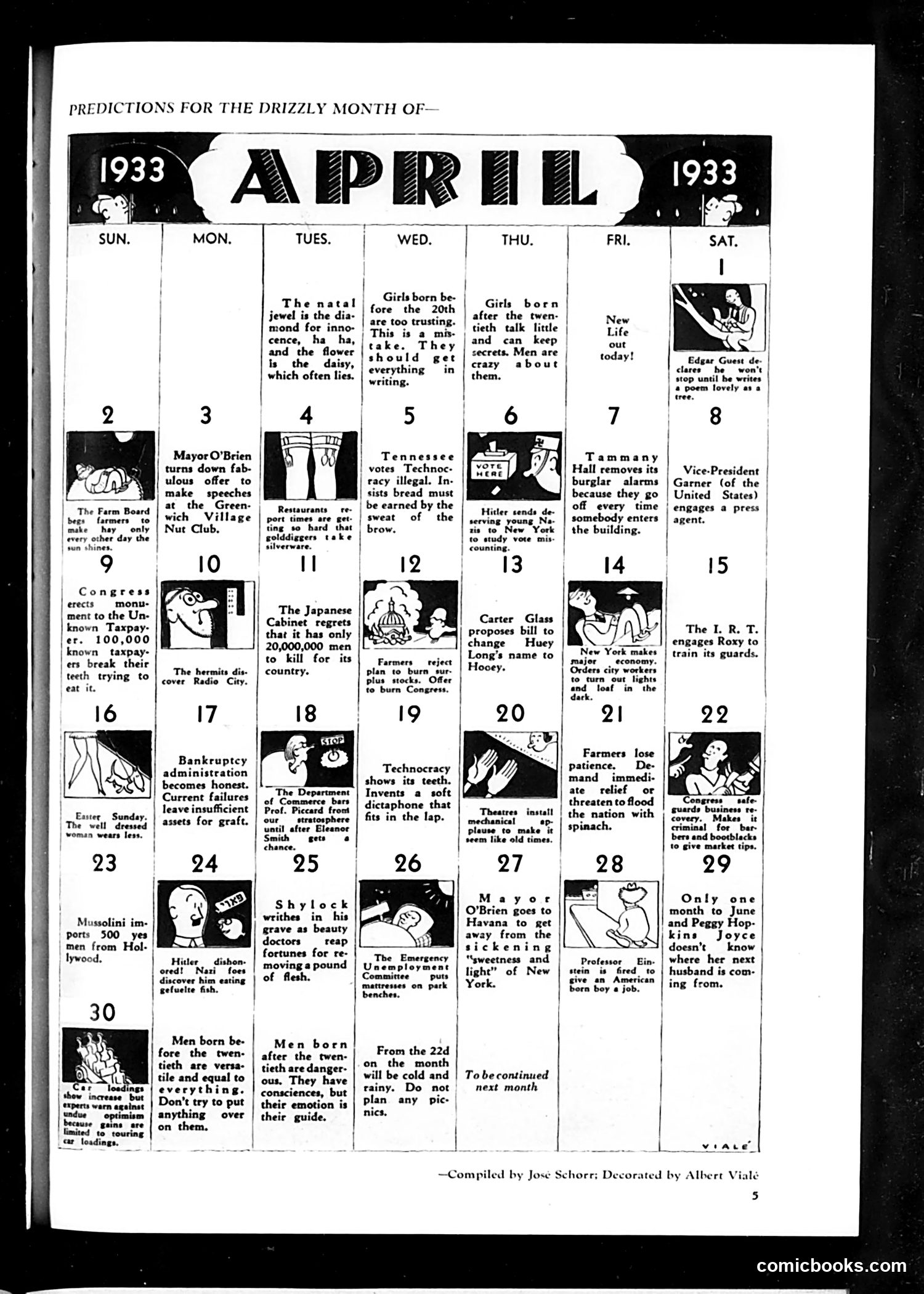
# April 1933 Life Magazine Calendar Page This is a satirical daily calendar for April 1933, during the Great Depression and early New Deal era. The cartoons and text entries mock contemporary events and figures: **Key references:** - April 2: The Farm Board (Hoover-era agricultural program) - April 10: "The hermits discover Radio City" (NYC's new entertainment complex, 1933) - April 17: Department of Commerce's "atmospheric" optimism amid economic crisis - April 25: Shylock reference—mocking beauty doctors and fortune-telling - April 27: Mayor O'Brien of New York appears referenced - Multiple entries satirize unemployment relief, technocracy movements, and absurd economic schemes The overall tone mocks both government institutions' failed Depression-era solutions and pop-culture preoccupations. The crude cartoon illustrations and brief daily "predictions" suggest darkly humorous commentary on contemporary chaos and false hopes for recovery.
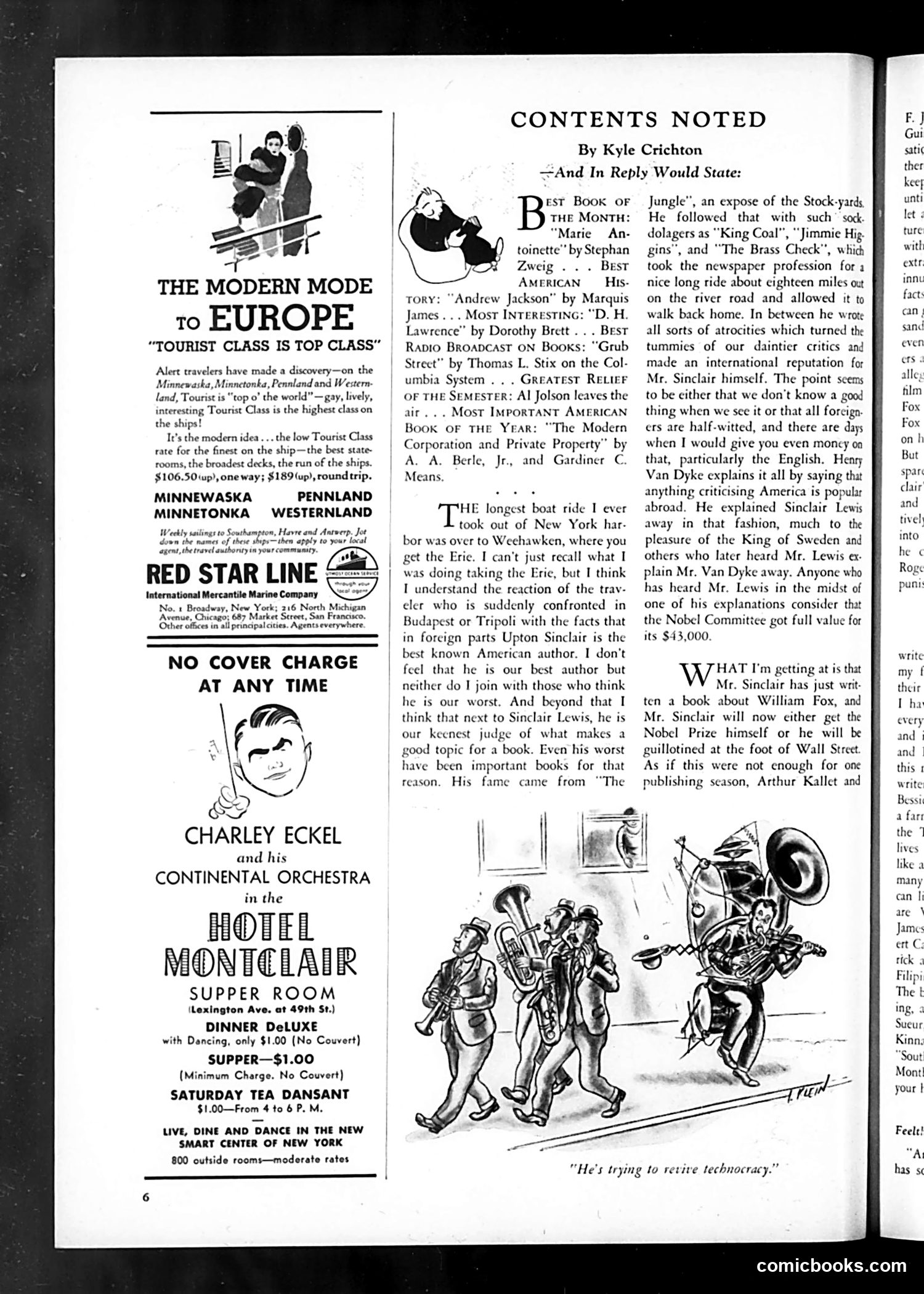
# Analysis This page is primarily **advertising and book review content** from Life magazine, not political satire. The main cartoon shows **musicians struggling with their instruments**, captioned "He's trying to revire technocracy." This references the 1930s "Technocracy" movement—a utopian ideology proposing that engineers and scientists should run society instead of politicians. The joke is that someone is attempting to "revive" (or "revire") this failed movement, depicted as chaotic and impractical, with musicians literally tangled in their own instruments. The left page advertises Charley Eckel's orchestra at the Hotel Montclair and the Red Star shipping line. The "Contents Noted" section reviews books including works by Sinclair Lewis and Andrew Jackson. This reflects 1930s popular culture and publishing trends rather than political commentary.
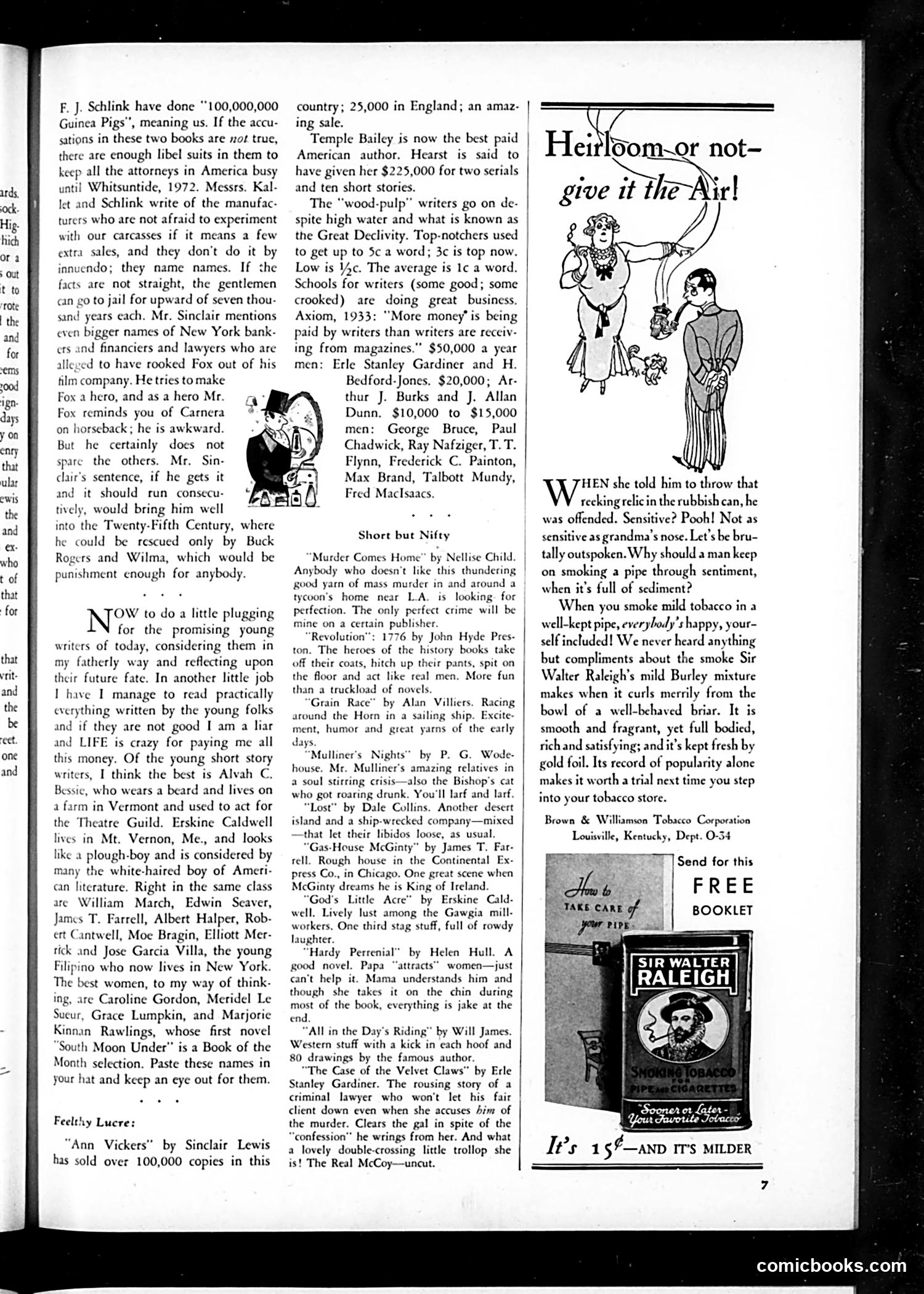
# "Heirloom or Not—Give it the Air!" Cartoon Analysis This cartoon satirizes sentimentality about inherited objects, particularly tobacco pipes. The illustration shows a woman presenting a worn pipe to a younger person, suggesting family tradition ("heirloom"). The accompanying text mocks this nostalgia, questioning why one should treasure a pipe "full of sediment" simply because it's old. The satire targets excessive reverence for family possessions and outdated customs. The joke suggests that practicality should override sentiment—a well-maintained, modern alternative (Walter Raleigh brand tobacco, advertised below) is preferable to preserving shabby heirlooms out of mere obligation. This reflects 1930s attitudes favoring modernization and pragmatism over blind adherence to tradition.
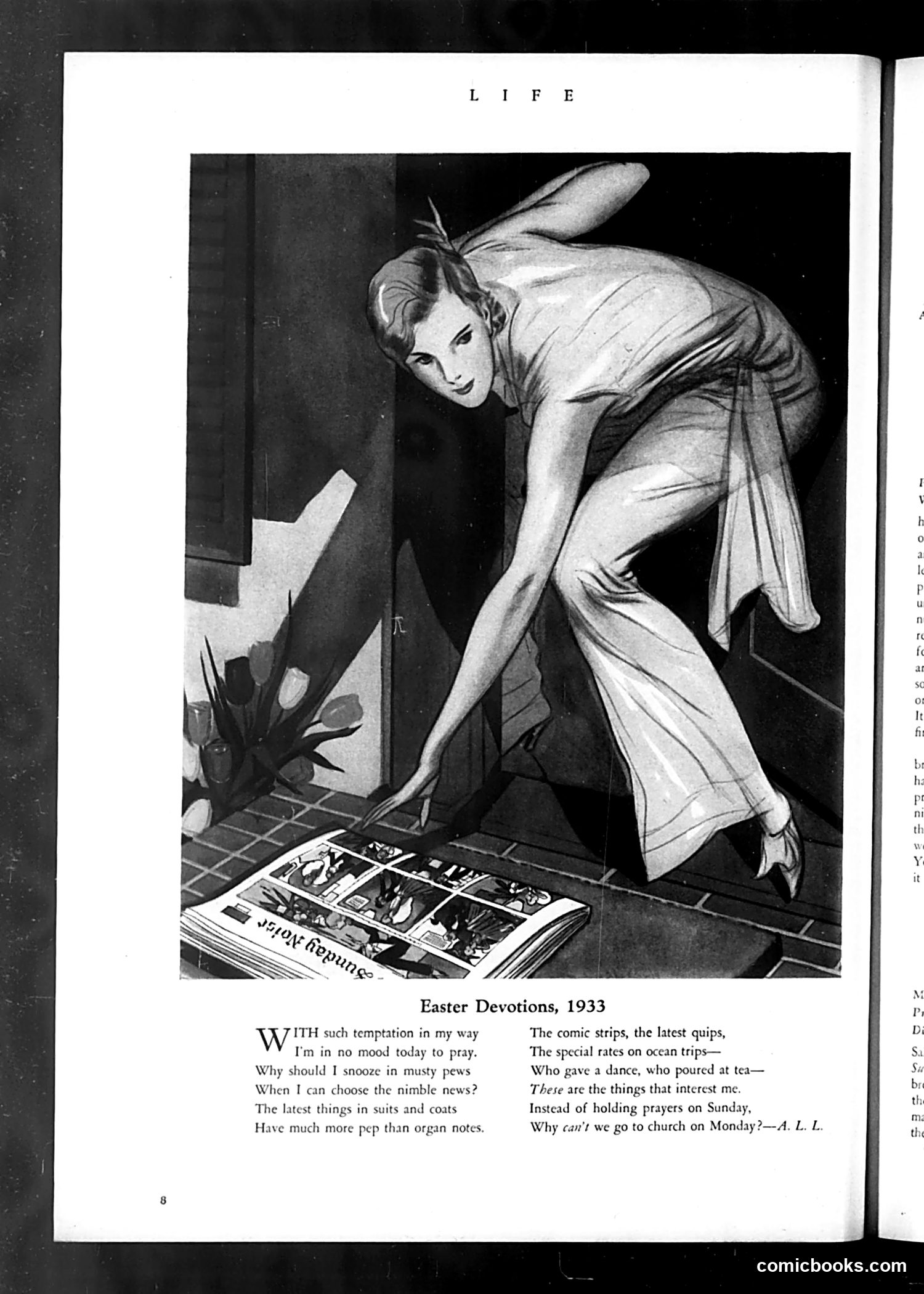
# Easter Devotions, 1933 This illustration satirizes modern secular distraction from religious observance. The 1933 caption presents a woman choosing entertainment over Easter worship—she's absorbed in a magazine featuring comic strips and gossip rather than attending church. The poem's speaker lists worldly temptations: "the latest quips," "special rates on ocean trips," social dancing, and tea parties. The rhetorical question "Why can't we go to church on Monday?" mocks the tendency to defer religious duty. The satire critiques early 1930s consumer culture and leisure activities as competitors to traditional Easter devotion. The woman's fashionable appearance and the magazine's prominence emphasize how commercial entertainment and social activities displaced religious practice among modern Americans—a common concern in Depression-era commentary about declining church attendance.