A complete issue · 50 pages · 1933
Life — March 1933
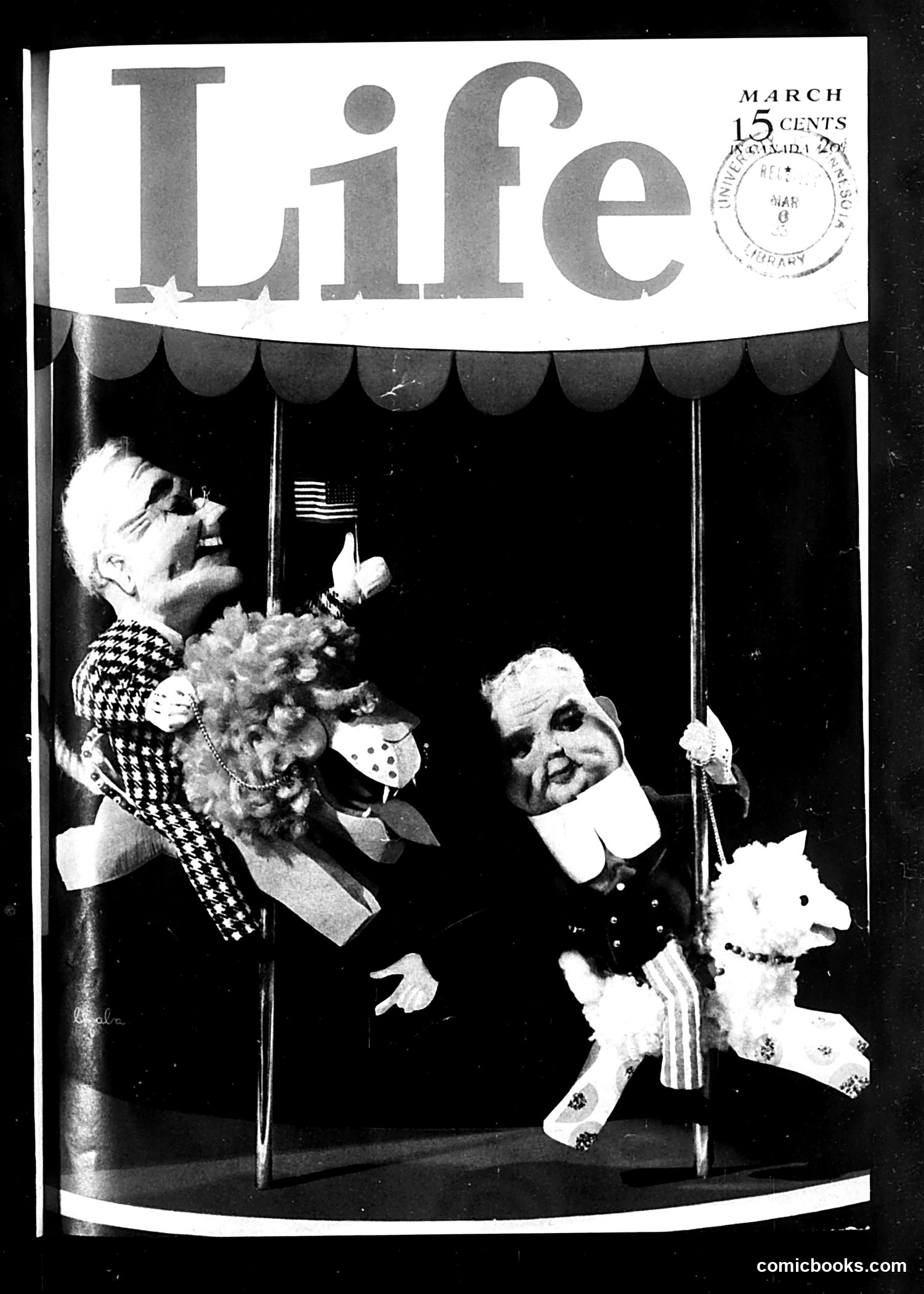
# Life Magazine Cover Analysis This is a Life magazine cover from March 1915 (15 cents). The illustration shows a theatrical scene with exaggerated character figures in what appears to be a storefront or stage window setting with an American flag. The figures display caricatured features typical of early 20th-century satirical illustration. Without additional context beyond what's visible, the specific political or social commentary remains unclear—it could reference theater, patriotism, immigration, or contemporary events of that period. The cartoonish style and theatrical staging suggest social satire, but identifying the precise figures and their intended meaning would require additional historical documentation beyond what the image alone conveys. The cover's design emphasizes large theatrical presentation typical of Life's satirical approach.

This is a **Powers Reproduction Corp. advertisement**, not satirical content. It promotes their pioneering work in direct color photography—a then-new technology. The black-and-white photograph shows three women in beachwear lounging on sand with a roped fence behind them. The ad claims this image exemplifies Powers' "candid camera" capabilities, capturing "bright and natural colors of this beach scene" in "fine four color work." The advertisement emphasizes that Powers offers superior reproduction facilities for both black-and-white and color work, positioning the company as innovative in commercial color photography before such technology became advertising standard. The beach scene serves as proof of their technical capability—casual, modern imagery that would have seemed impressive for color fidelity at the time.
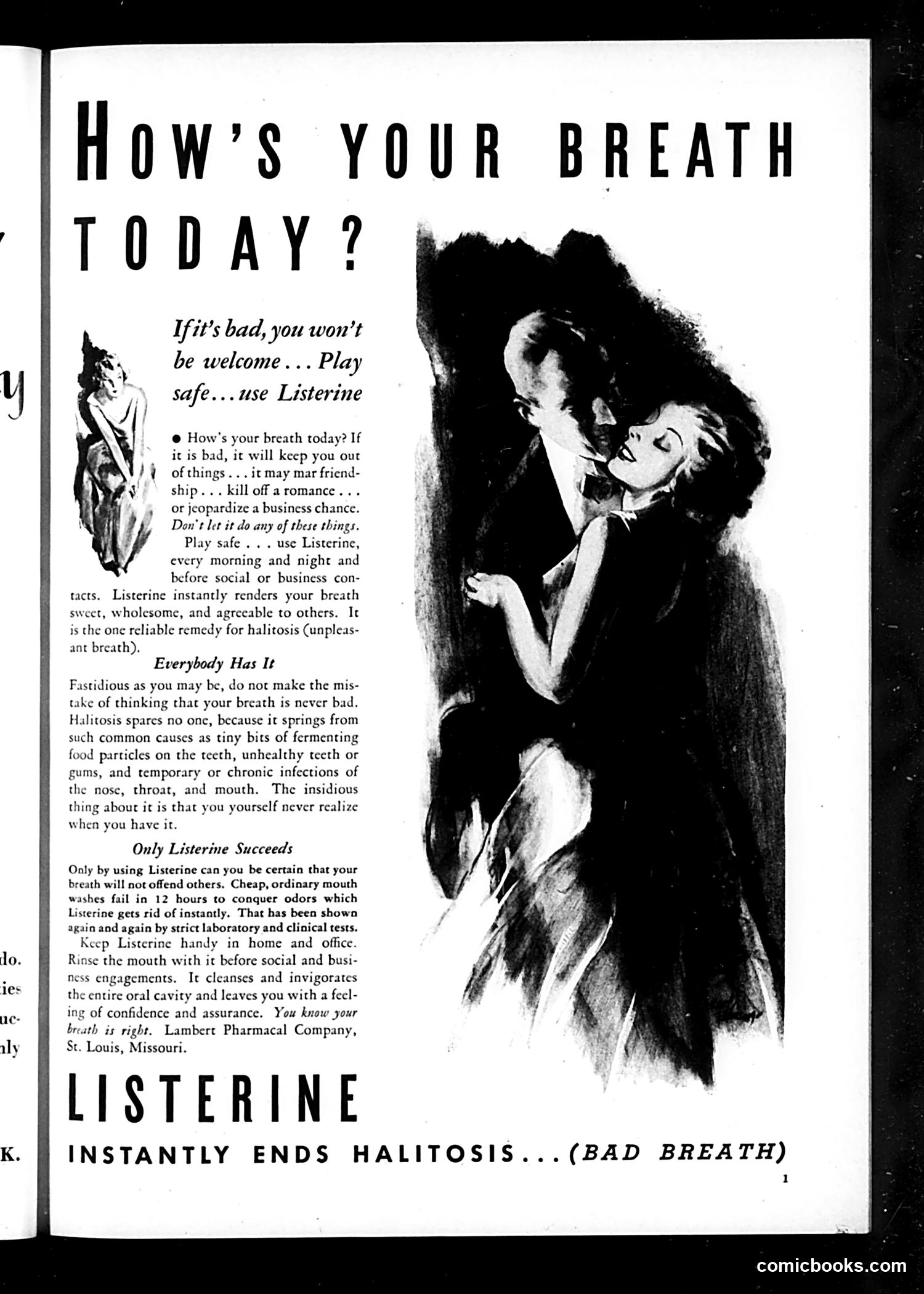
This is a **Listerine advertisement**, not political satire. The page uses social anxiety messaging to promote mouthwash as a solution to "halitosis" (bad breath). The imagery shows a couple in an intimate moment, with the implied threat that bad breath could "kill off a romance" or "jeopardize a business chance." The advertisement employs fear-based marketing—a common advertising technique—suggesting that breath odor is shameful and socially disqualifying. The text claims Listerine "instantly renders your breath sweet" and is "the one reliable remedy for halitosis." The phrase "You know your breath is right" implies social validation through product use. This reflects mid-20th century advertising's focus on personal insecurity and social acceptance rather than product efficacy.
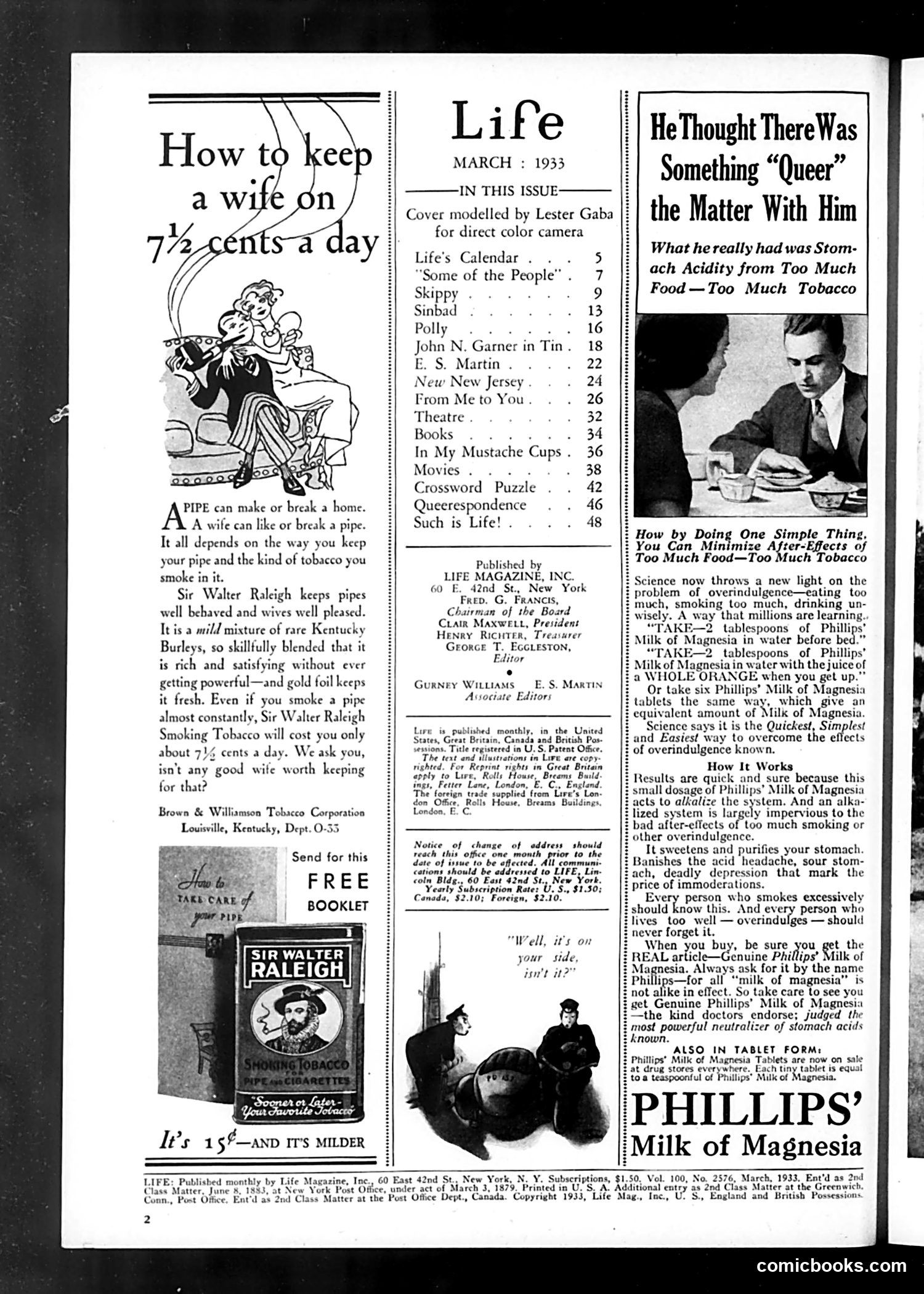
# Life Magazine, March 1933: Content Analysis This page is primarily **advertising and table of contents** rather than political satire. The left column advertises Sir Walter Raleigh pipe tobacco, emphasizing economical smoking at "7½ cents a day"—relevant context for Depression-era 1933 when frugality was urgent. The right side features a medical advertisement for Phillips' Milk of Magnesia, claiming to cure digestive problems caused by overeating and smoking. The accompanying photograph shows a man appearing ill at a dining table. The cartoon below depicts three figures (unclear who specifically) in what appears to be a humorous scene, though details are illegible at this resolution. The page reflects 1933 consumer concerns: economic hardship and health anxieties, with advertising positioned as practical solutions to everyday problems.
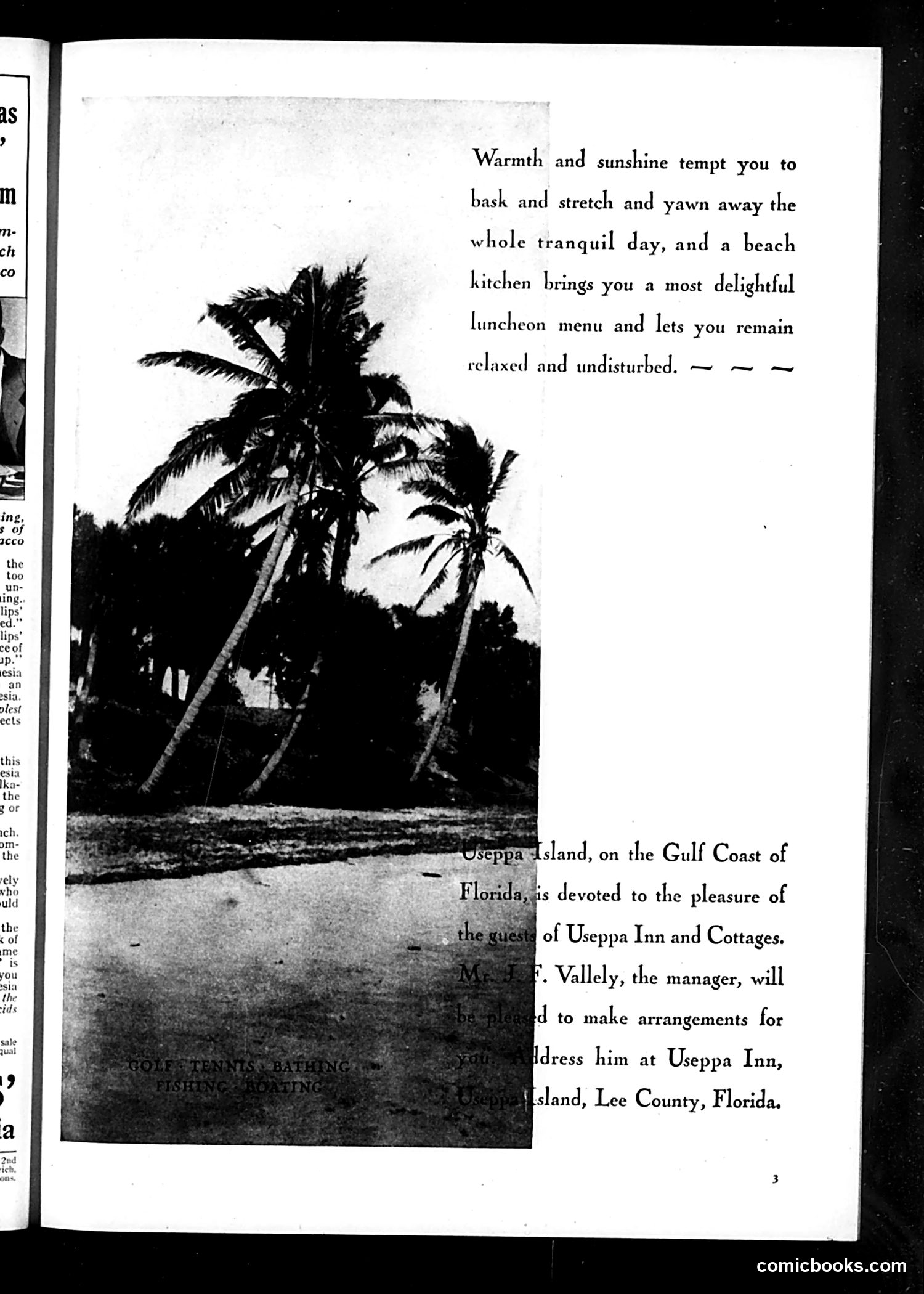
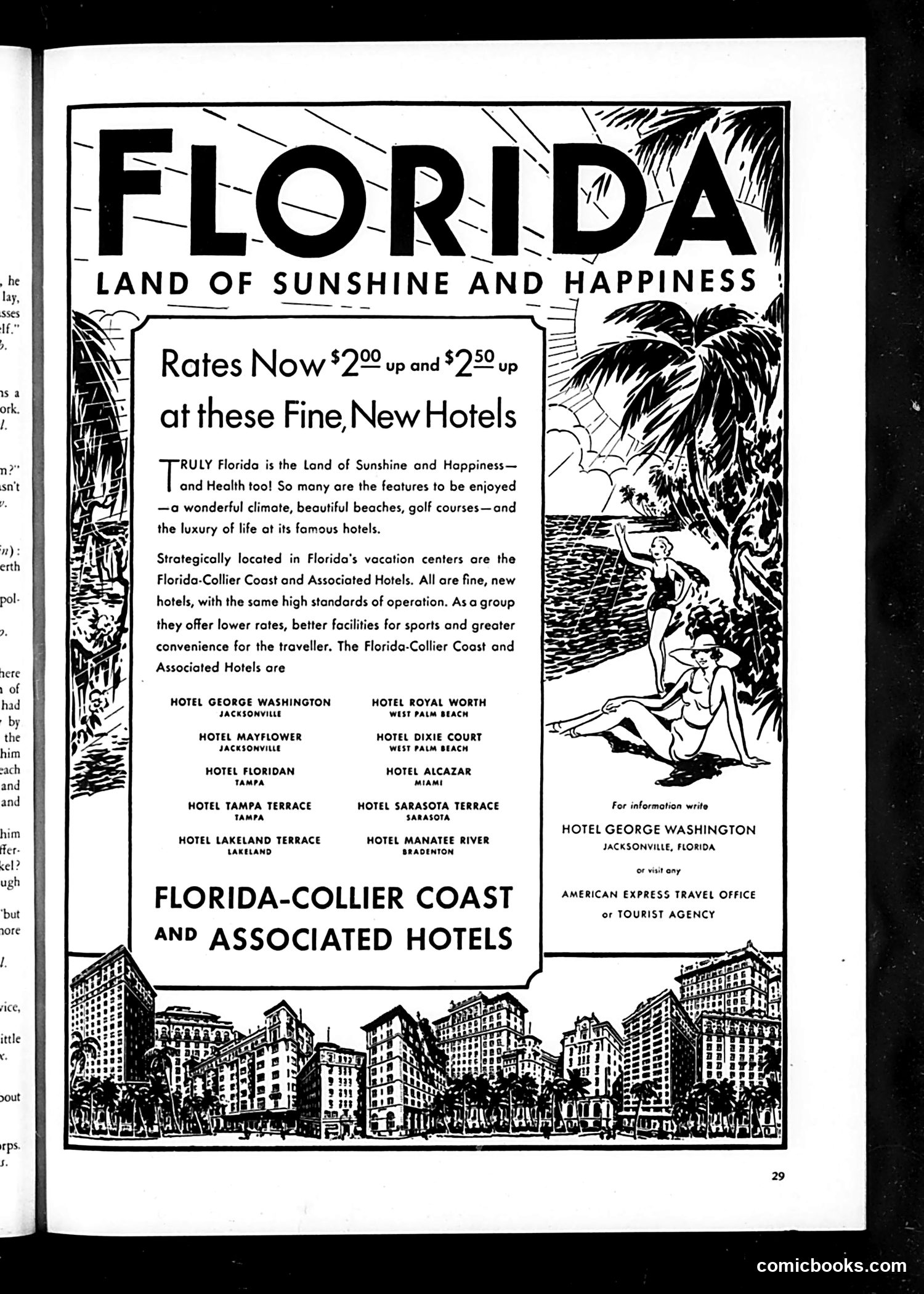
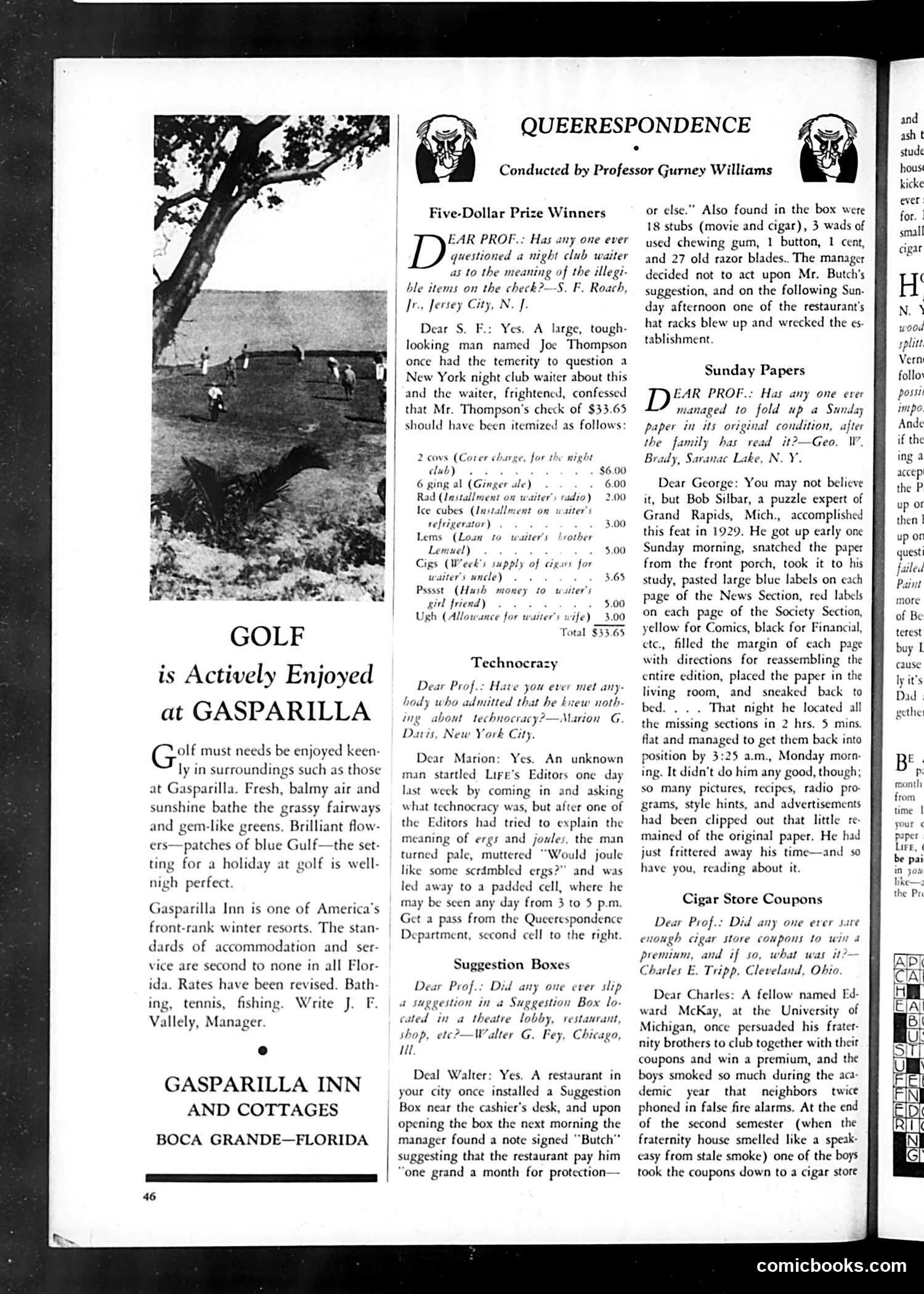
# Analysis This page is primarily **advertising content**, not satirical commentary. It promotes the Useppa Inn and Cottages, a resort located on Useppa Island in Florida's Gulf Coast (Lee County). The image shows a tropical beach scene with palm trees, designed to evoke leisure and relaxation. The accompanying text emphasizes vacation pleasures—basking in sunshine, a beach kitchen offering lunch, and undisturbed relaxation. The text invites interested guests to contact M. F. Vallely, the manager, for arrangements. This appears to be a travel advertisement typical of early-to-mid 20th century publications, targeting affluent readers seeking beach getaways. There is no political satire or social commentary present on this page.
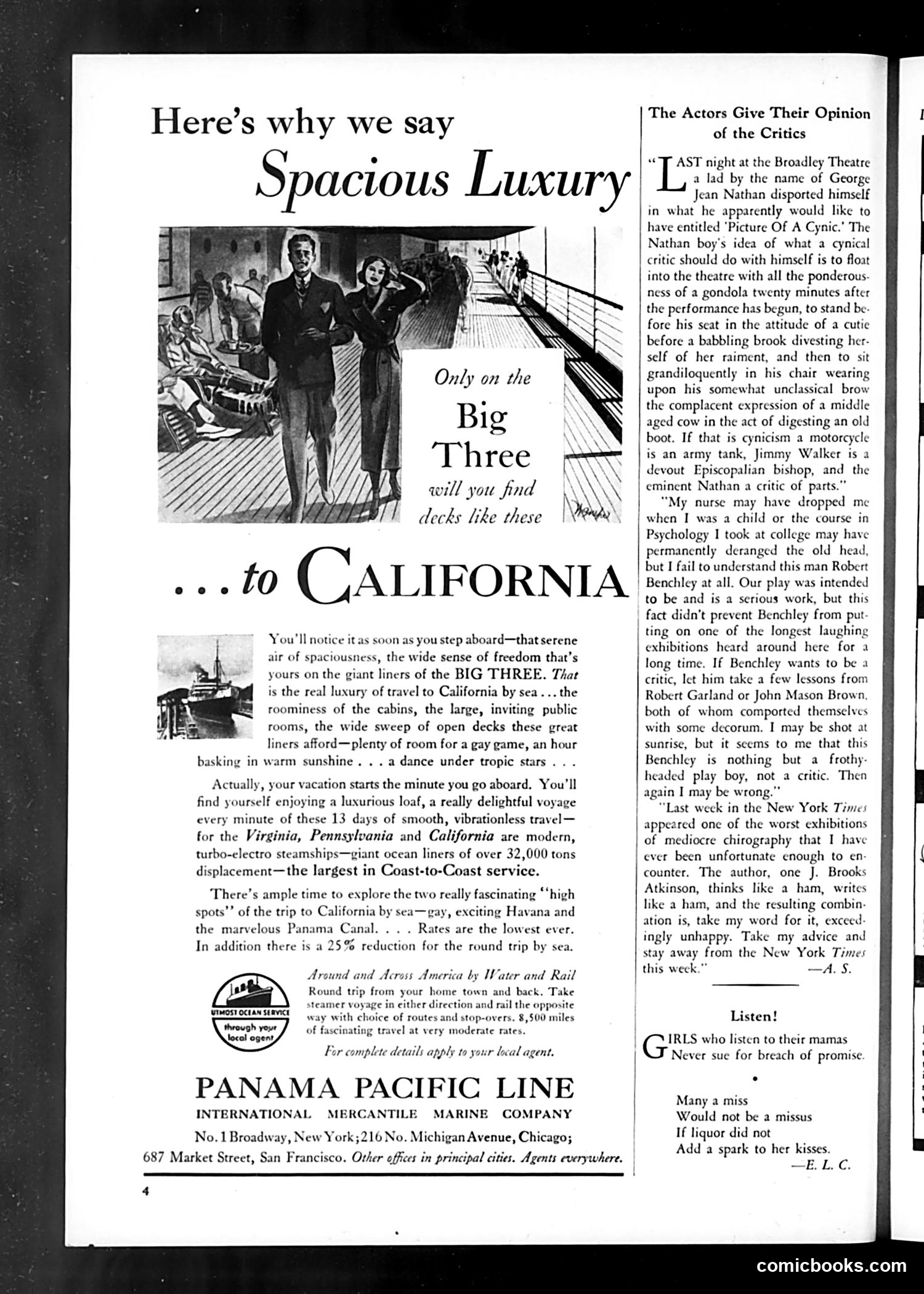
# Analysis This page is primarily a **luxury travel advertisement** for the Panama Pacific Line shipping company, promoting Caribbean and California cruises on their "Big Three" ocean liners. The left side features an illustration of elegantly dressed passengers enjoying spacious ship decks, emphasizing the vessels' size and comfort for wealthy travelers. The text promises 13-day voyages with activities like deck games and tropical dancing. The right column contains **theater criticism** mocking a play called "Picture of a Cynic" at the Broadley Theatre, featuring actor George Jean Nathan. The critics sarcastically disparage the production as pretentious and poorly acted, with one reviewer likening the lead performance to "a middle-aged cow." This represents typical Life magazine satirical theater reviews of the era. The bottom includes a brief humorous poem about women keeping promises.
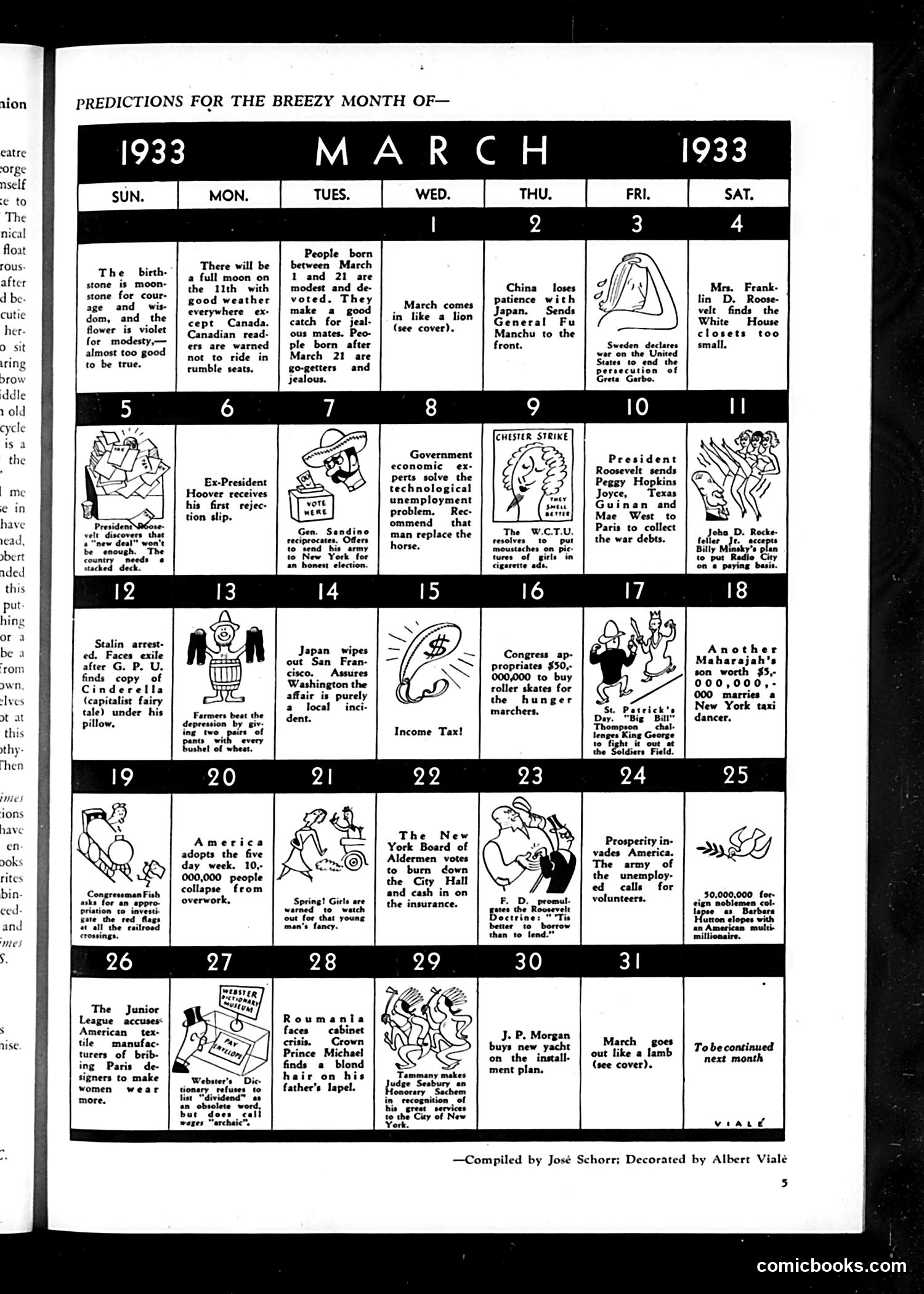
# March 1933 Calendar Commentary This satirical calendar depicts major events from March 1933 during the Great Depression and early New Deal period. Notable entries include: - **March 2**: Reference to China losing patience with Japan amid ongoing conflict - **March 10**: President Roosevelt sends "Train Loads" to address war debts - **March 15**: "Income Tax!" — highlighting government revenue concerns - **March 20**: "America adopts the 30-hour week" — a proposed labor reform to address unemployment - **March 22**: New York Board of Aldermen considers burning down City Hall over insurance costs - **March 24**: "Prosperity Inc." volunteers help the unemployed The cartoons mock Depression-era absurdities: governmental economic desperation, proposed (often impractical) solutions like the 30-hour workweek, and darkly humorous municipal crises. The satire reflects public anxiety about economic collapse and skepticism toward proposed remedies.
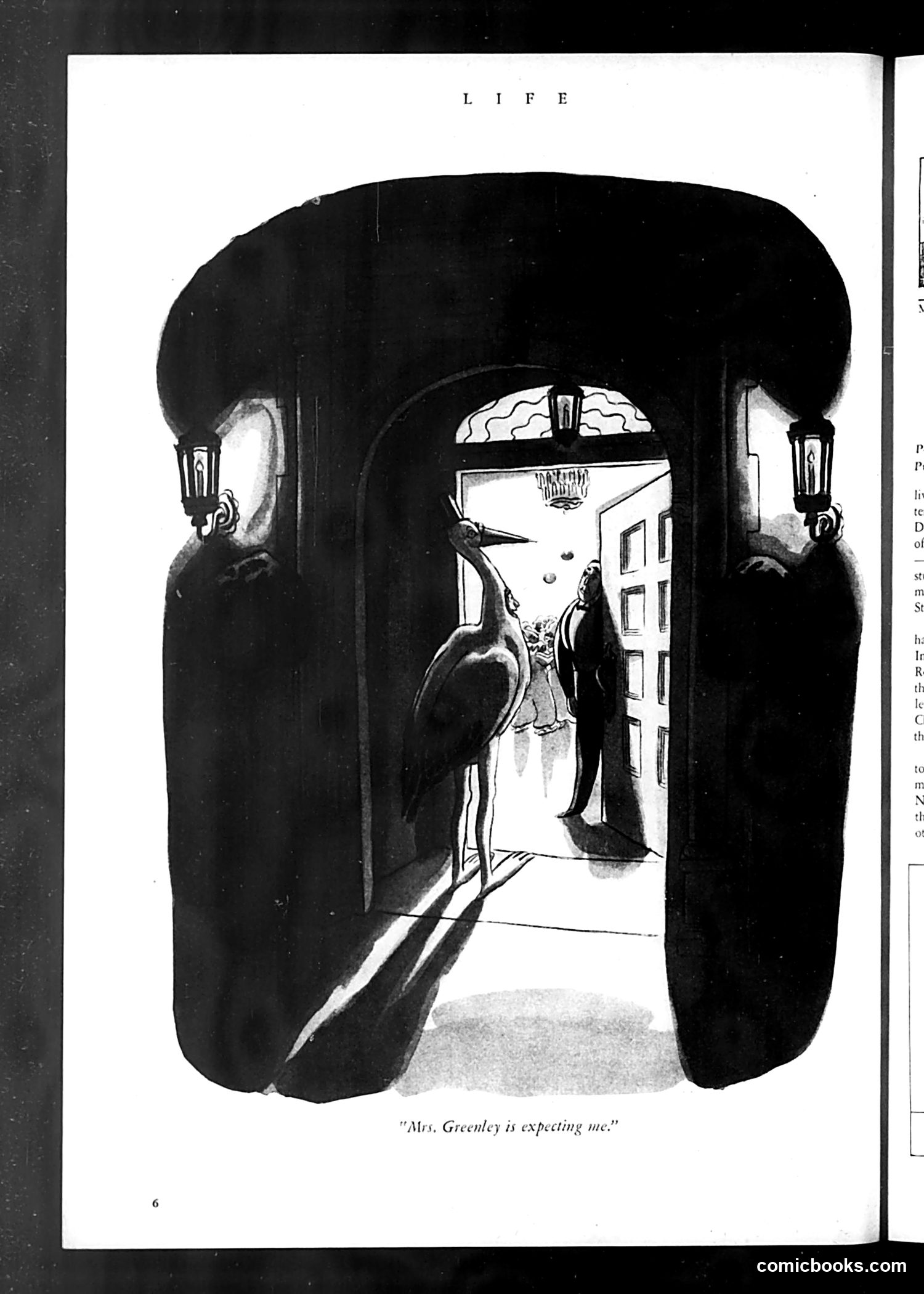
# Analysis of "Mrs. Greenley is expecting me" This cartoon depicts a domestic scene with social commentary. A figure stands in an arched doorway of what appears to be an elegant home, with another person visible through the open door in bright daylight. The dark, shadowy archway contrasts sharply with the illuminated exterior—a visual metaphor for the passage between private and public spaces. The caption "'Mrs. Greenley is expecting me'" suggests anticipated social obligation or appointment. Without additional context from the magazine's date and surrounding content, the specific satirical point remains unclear, though it likely comments on either social expectations, conjugal obligations, or contemporary relationship dynamics that Life magazine's readers would have recognized. The architectural framing emphasizes the boundary between worlds.
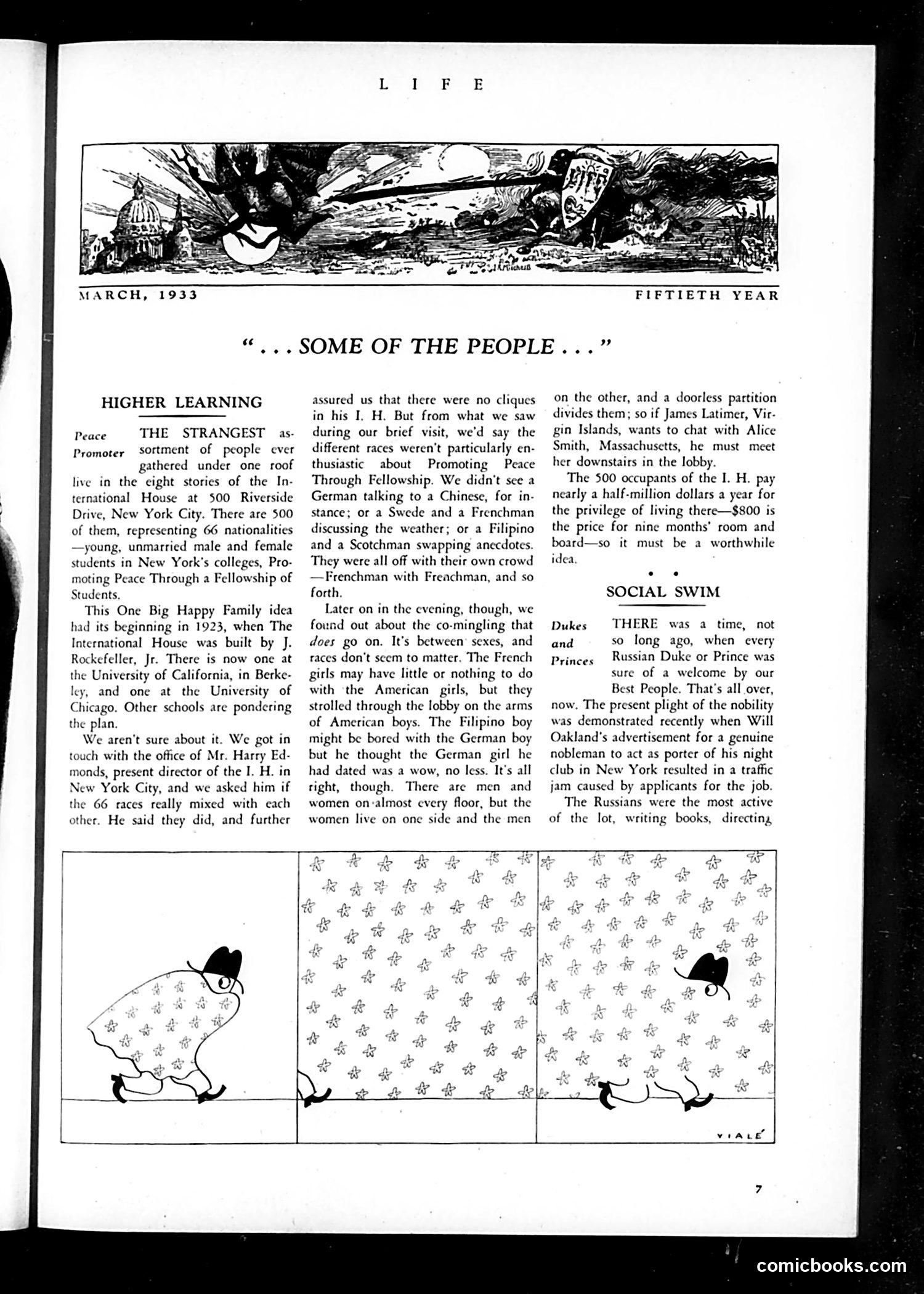
# Analysis of Life Magazine, March 1933 **Main Content:** The page discusses the International House at 300 Riverside Drive, New York—a residential facility housing 500 students from 66 nationalities. The text humorously describes observations about international students living together, noting that despite the "Peace Promoter" mission, different nationalities don't necessarily mingle harmoniously. It mentions gender segregation between male and female residents and references awkward social dynamics. **The Cartoon:** The bottom illustration by Viale shows a simple, humorous comic strip featuring what appears to be a figure in patterned clothing, suggesting cultural or national dress differences. The joke likely satirizes the clash of expectations versus reality in international student housing during this period of supposed cultural exchange. The article's tone mocks idealistic notions of international understanding.
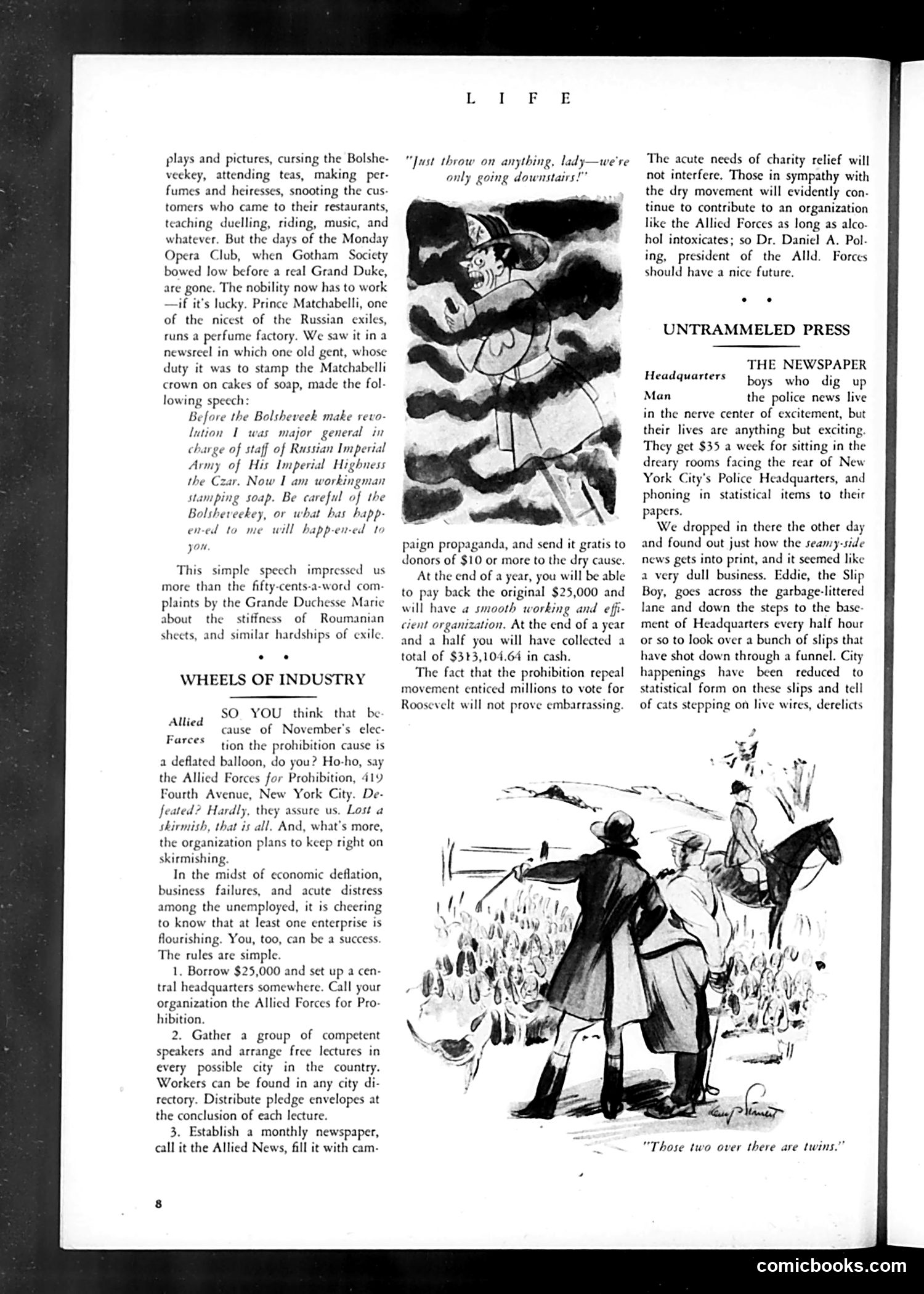
# Analysis of Life Magazine Page This page contains two distinct sections: **Upper cartoon**: Shows a figure (appears to be a wealthy woman based the context of cursing the Bolsheviks) throwing money from a window, captioned "Just throw on anything, Lady—we're only going downstairs!" The satire mocks aristocratic Russian émigrés during the post-Bolshevik Revolution period, depicting their casual wastefulness despite financial displacement. **Lower cartoon**: Titled "Those two over there are twins," shows a figure on horseback observing two similar objects in a field. This appears to be a visual joke about indistinguishable twins or similar things, though the specific reference is unclear from the visible context. The page primarily discusses the "Allied Forces for Prohibition" organization and newspaper work, suggesting this is a satirical commentary on various social movements of the era.
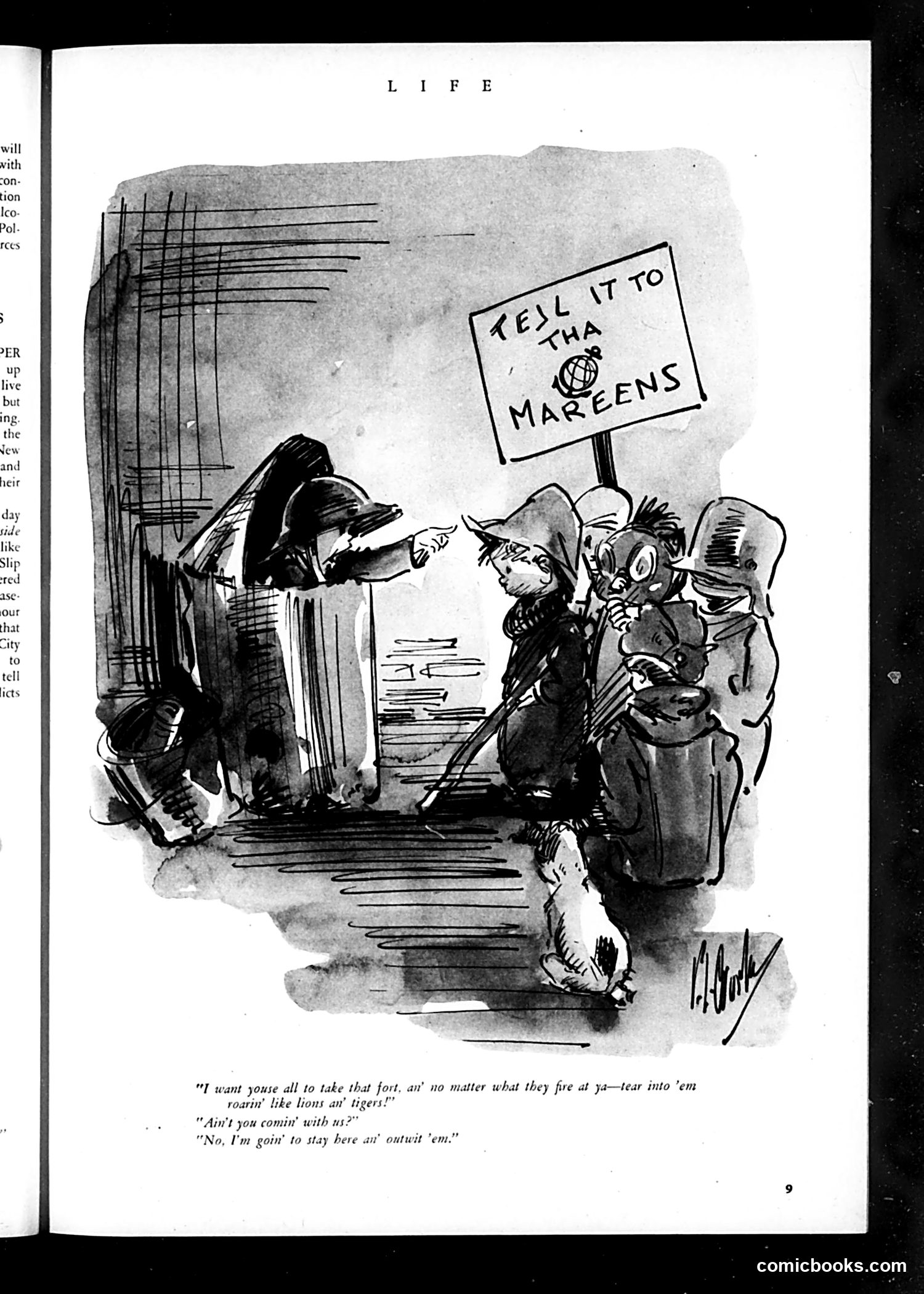
# Political Cartoon Analysis This cartoon depicts a military officer directing civilians toward a fortification, holding a sign reading "TELL IT TO THA MAREENS" (a play on the phrase "tell it to the Marines"). The joke references the common American expression dismissing someone's complaint or excuse—implying Marines won't believe you either. The dialogue below reinforces this: one figure wants others to "take that fort" no matter the cost, comparing soldiers to "lions," while another refuses to participate, saying he'll "stay here an' outwait 'em." The cartoon appears to satirize military recruitment propaganda or draft resistance during wartime, mocking both the appeal to martial heroism and the civilian reluctance to fight. The specific historical context—likely WWI or WWII era—remains unclear without additional dating information.
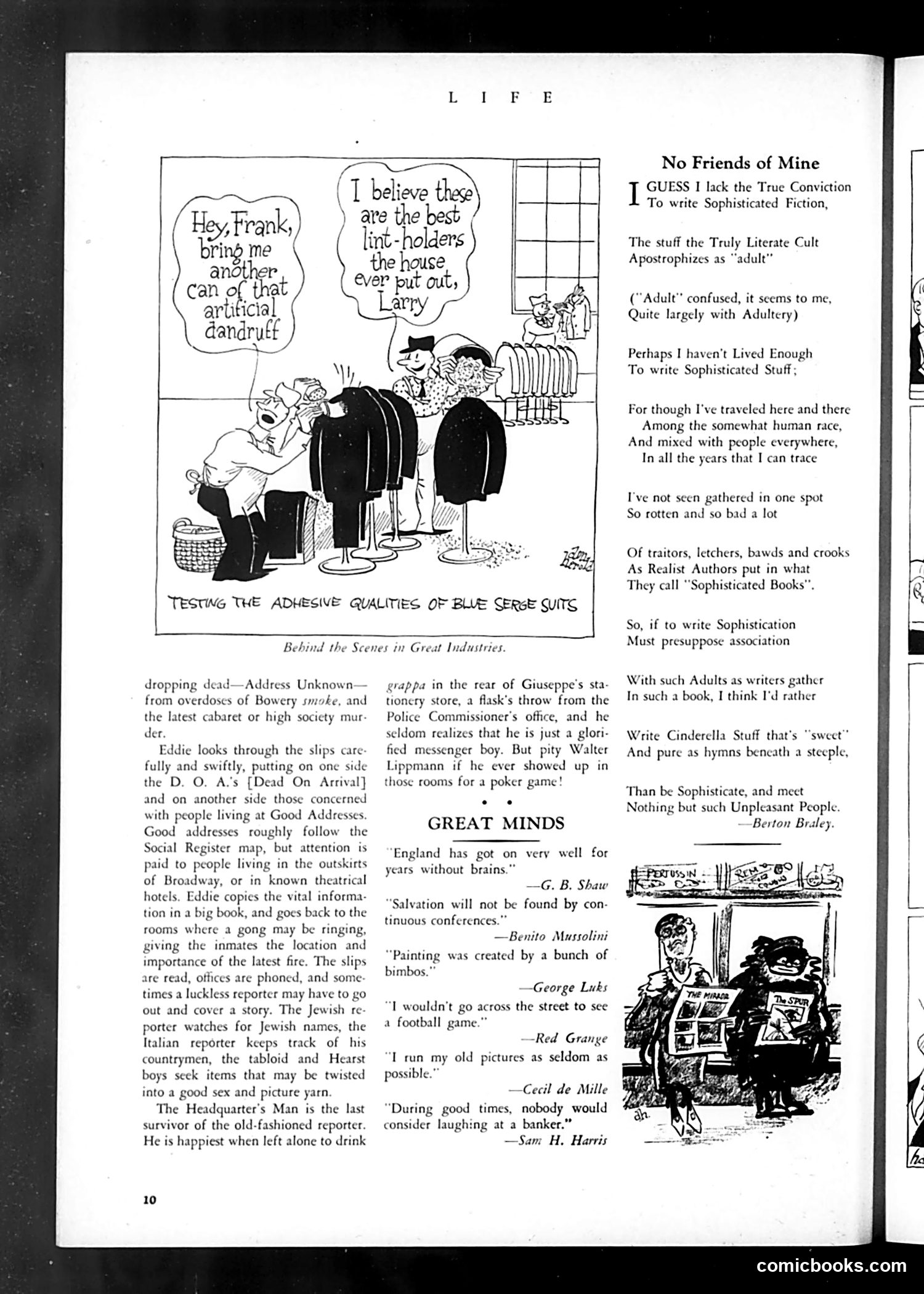
# Analysis of Life Magazine Page This page contains a cartoon satirizing literary pretension and a poem critiquing "sophisticated" writing. **The Cartoon:** Titled "Testing the Adhesive Qualities of Blue Serge Suits," it shows three men in formal wear (one labeled Frank and Larry) discussing lint-holders and artificial dandruff—apparently testing suit quality through deliberate messiness. The humor targets upper-class affectation and the absurdity of refined gentlemen obsessing over trivial grooming details. **The Poem "No Friends of Mine":** The accompanying verse (attributed to Berton Bradley) mocks writers of "Sophisticated Fiction" and the "Truly Literate Cult." The author suggests that sophisticated literary writing often portrays morally corrupt characters (traitors, scoundrels) and confuses adult themes with actual adulthood. The satire advocates for wholesome, honest writing over pretentious realism. Both pieces ridicule 1920s-30s literary snobbery and naturalist fiction's embrace of morally dubious characters.