A complete issue · 51 pages · 1933
Life — January 1933
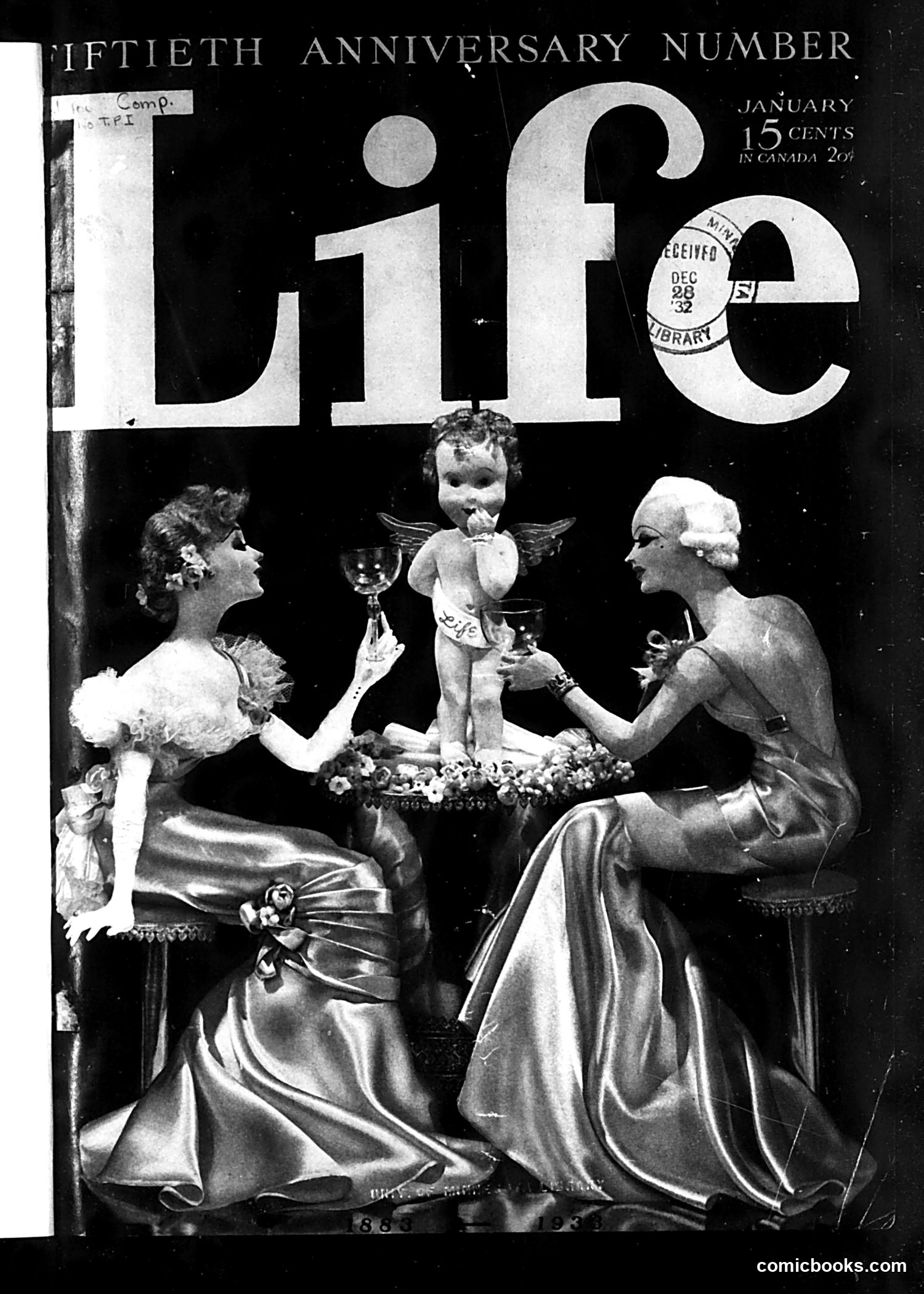
# Life Magazine 50th Anniversary Cover Analysis This is Life magazine's fiftieth anniversary issue (January, 15 cents). The cover depicts an allegorical scene: two elegantly dressed women in evening gowns present a cherub-like figure holding trophy cups, surrounded by flowers and garland. The imagery appears to celebrate Life magazine's golden jubilee through classical/allegorical symbolism—the cherub likely represents the magazine itself or the spirit of satire/humor it embodied. The two women in formal dress suggest prosperity and sophistication, while the trophies indicate achievement and success. The overall composition uses romantic, celebratory iconography typical of 1930s magazine design to commemorate the publication's longevity and cultural significance as a leading American humor and satire publication.
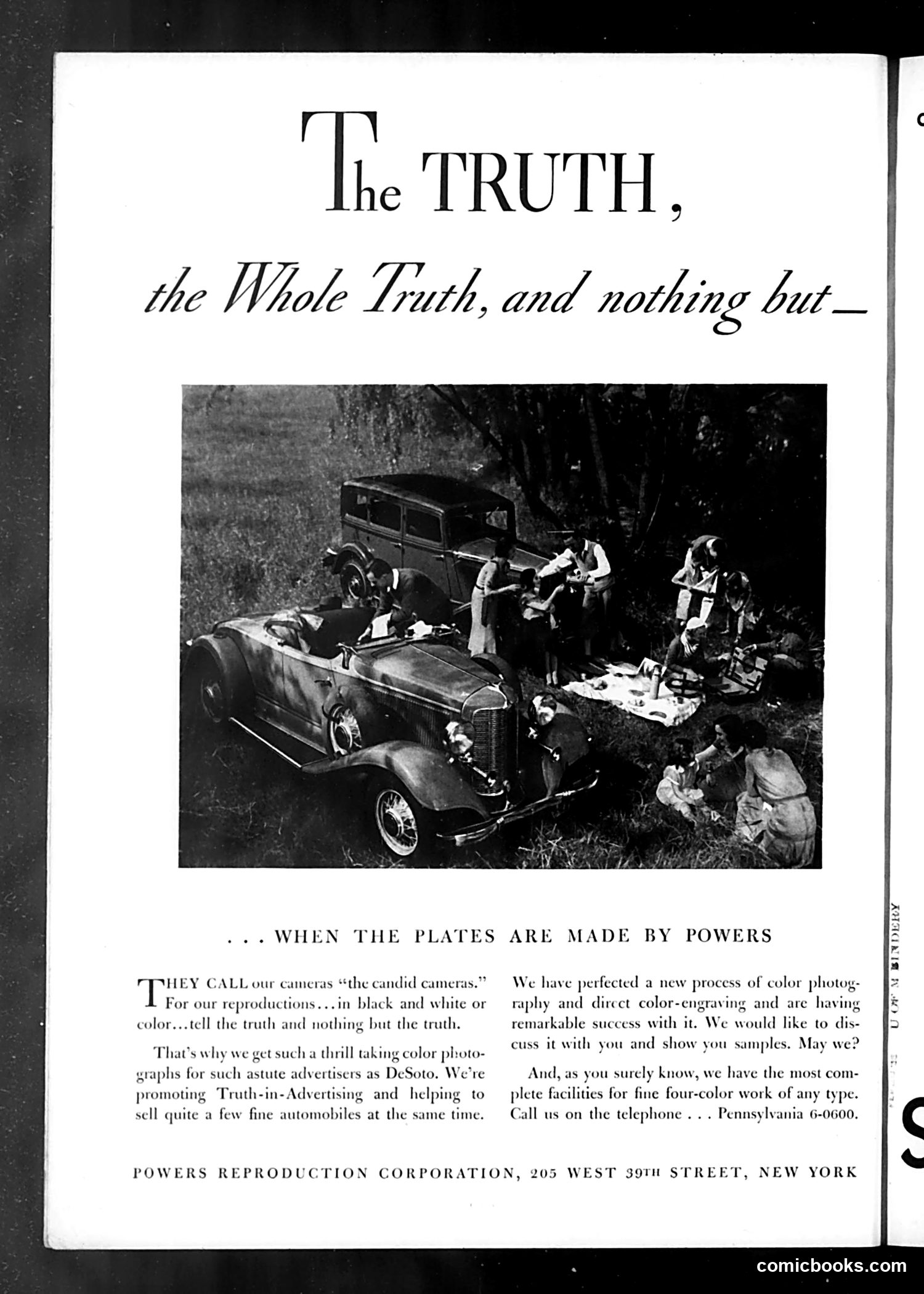
# Analysis This is a **Powers Reproduction Corporation advertisement**, not editorial content or satire. The page promotes their color photography and printing services for advertising. The image shows a casual picnic or outdoor social gathering with vintage automobiles (appearing to be 1930s models) and well-dressed people, likely representing a DeSoto car advertisement that Powers produced. The "candid camera" reference suggests capturing natural, unposed moments—a relatively novel concept in advertising photography at the time. The satirical hook is subtle: Powers frames their work as "Truth-in-Advertising," claiming their color photography captures reality more honestly than black-and-white images, while simultaneously promoting automobiles and lifestyle imagery designed to appeal to aspirational consumers. This is ironic advertising that acknowledges advertising's persuasive intent while claiming authenticity.
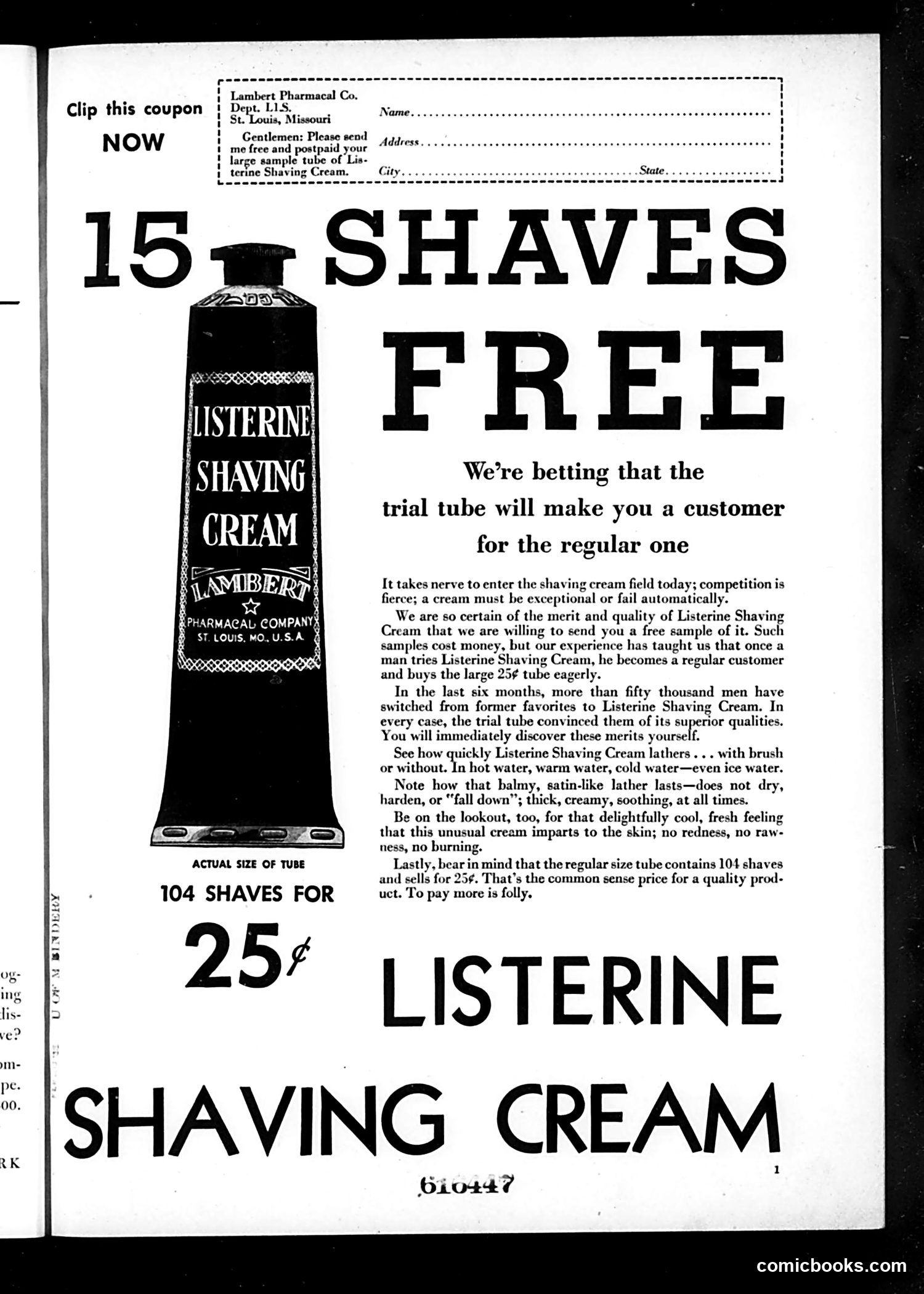
# Analysis This is **not a cartoon or satirical content** — it's a straightforward **advertisement** for Listerine Shaving Cream from the Lambert Pharmacal Company (St. Louis, Missouri). The ad offers 15 free shaves via a trial tube coupon, then promotes the full-size product at 25¢ for 104 shaves. The marketing strategy emphasizes quality and value: the company claims that users of the trial sample will become regular customers, citing that "more than fifty thousand men have switched from former favorites to Listerine Shaving Cream in the last six months." The ad highlights product benefits — quick lathering, soothing properties, and a cool feeling — typical of vintage shaving cream marketing. This is period advertising, not political satire.
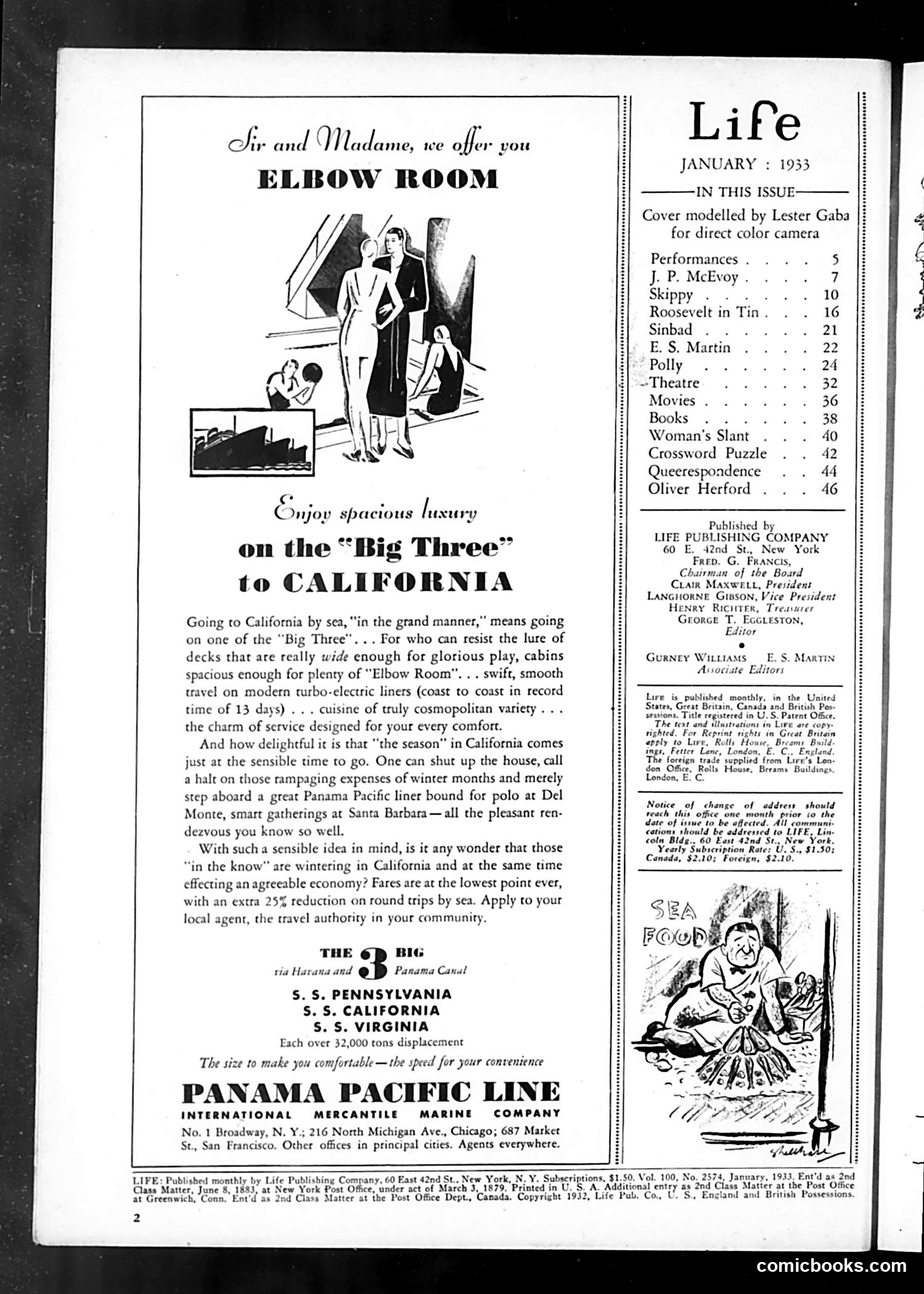
# Analysis This page is primarily **advertising and editorial content**, not political satire. The left side features a **cruise ship advertisement** for the Panama Pacific Line, promoting luxury travel to California aboard three large vessels ("the Big Three"). It emphasizes spacious cabins, comfort, and economical fares—particularly a 25% reduction on round-trip rates by sea. The right side is the **table of contents** for Life magazine's January 1933 issue, listing articles on performances, notable figures (J.P. McEvoy, Roosevelt), and entertainment topics. At the bottom right is a **maritime-themed illustration** labeled "Sea Food"—a humorous drawing of a sailor with seafood, likely a joke about ship provisions. No political figures or satire are present on this page. It reflects 1933 commercial culture and magazine layout conventions.
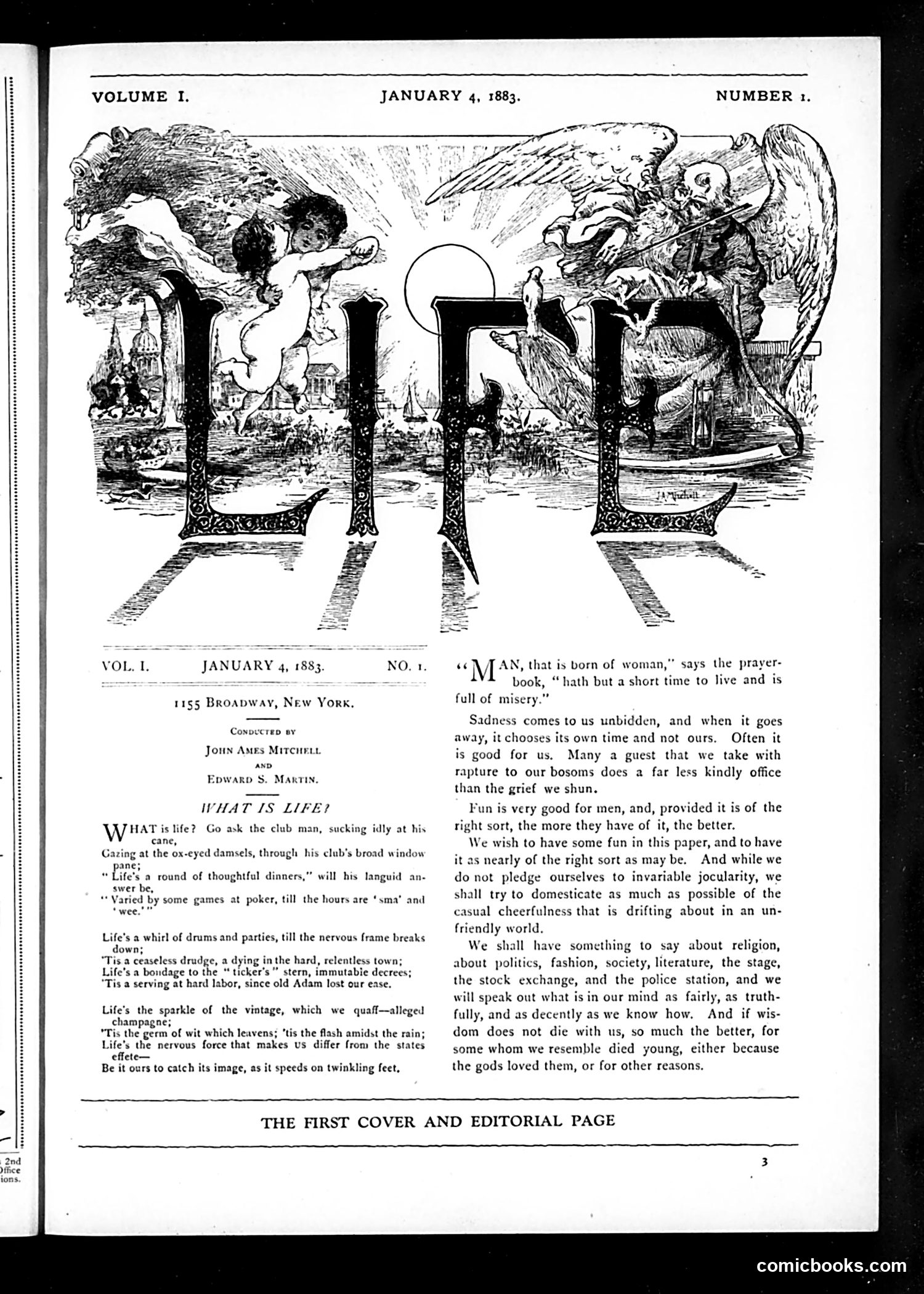
# Life Magazine, January 4, 1883 - First Issue This is the inaugural cover and editorial page of *Life* magazine. The elaborate illustration frames the title "LIFE" with allegorical figures—cherubs and a winged figure (possibly representing fate or fortune) above a cityscape below, suggesting life's varied experiences. The editorial, titled "What is Life?", presents life philosophically through poetic verse, describing it as "a round of thoughtful dinners," games, "drums and parties," and social pleasures—a characterization reflecting the magazine's intended audience: affluent, leisured New Yorkers. The text establishes *Life*'s editorial mission: publishing humor about "religion, politics, fashion, society, literature, the stage, the stock exchange, and the police station," while maintaining truthfulness and decency. This opening defines *Life* as a publication for urban elites seeking sophisticated social satire.
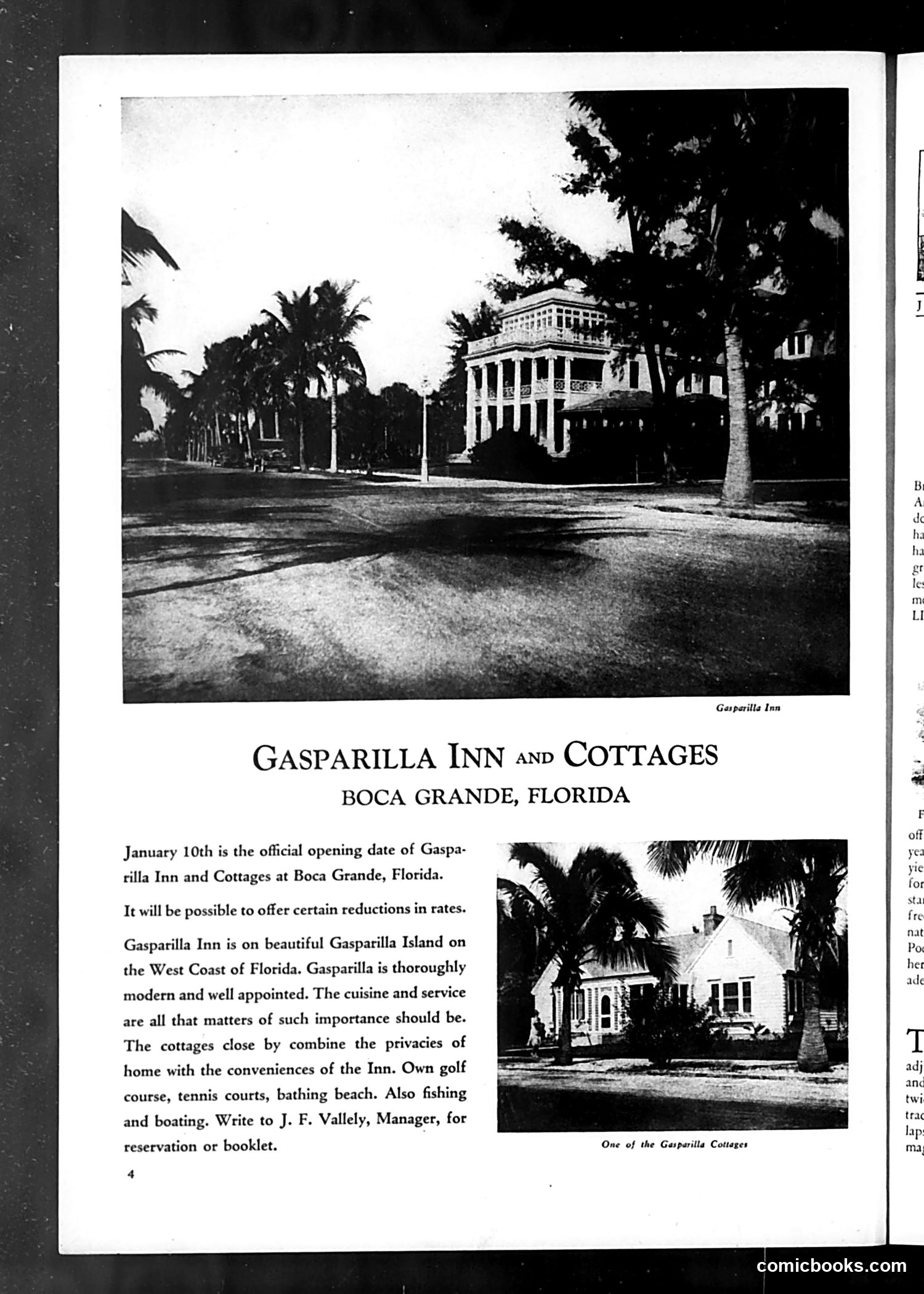
# Analysis This is **not a cartoon or satire page**, but rather a **straightforward advertisement** for the Gasparilla Inn and Cottages in Boca Grande, Florida. The page features two photographs of the resort: the main inn (a grand colonial-style building with columns) and one of the accompanying cottages. The text describes amenities including golf, tennis, bathing beach, fishing, and boating. It notes the official opening date as January 10th and offers reduced rates, directing inquiries to J. F. Vallely, Manager. This appears to be tourism/hospitality advertising from an era when Life magazine featured commercial content alongside satirical material. There is no political commentary, caricature, or joke to decode—it's simply promotional material for a Florida resort.
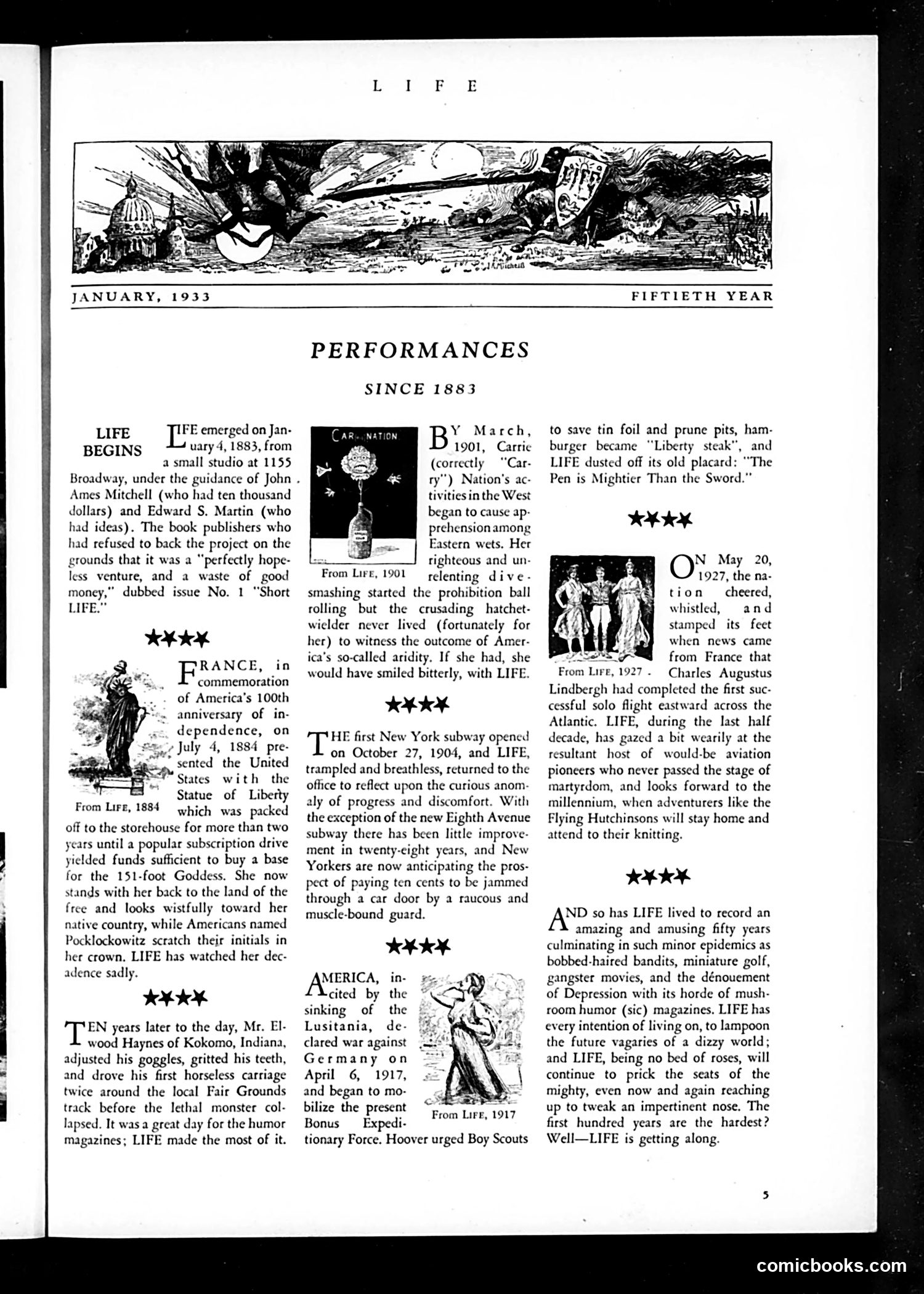
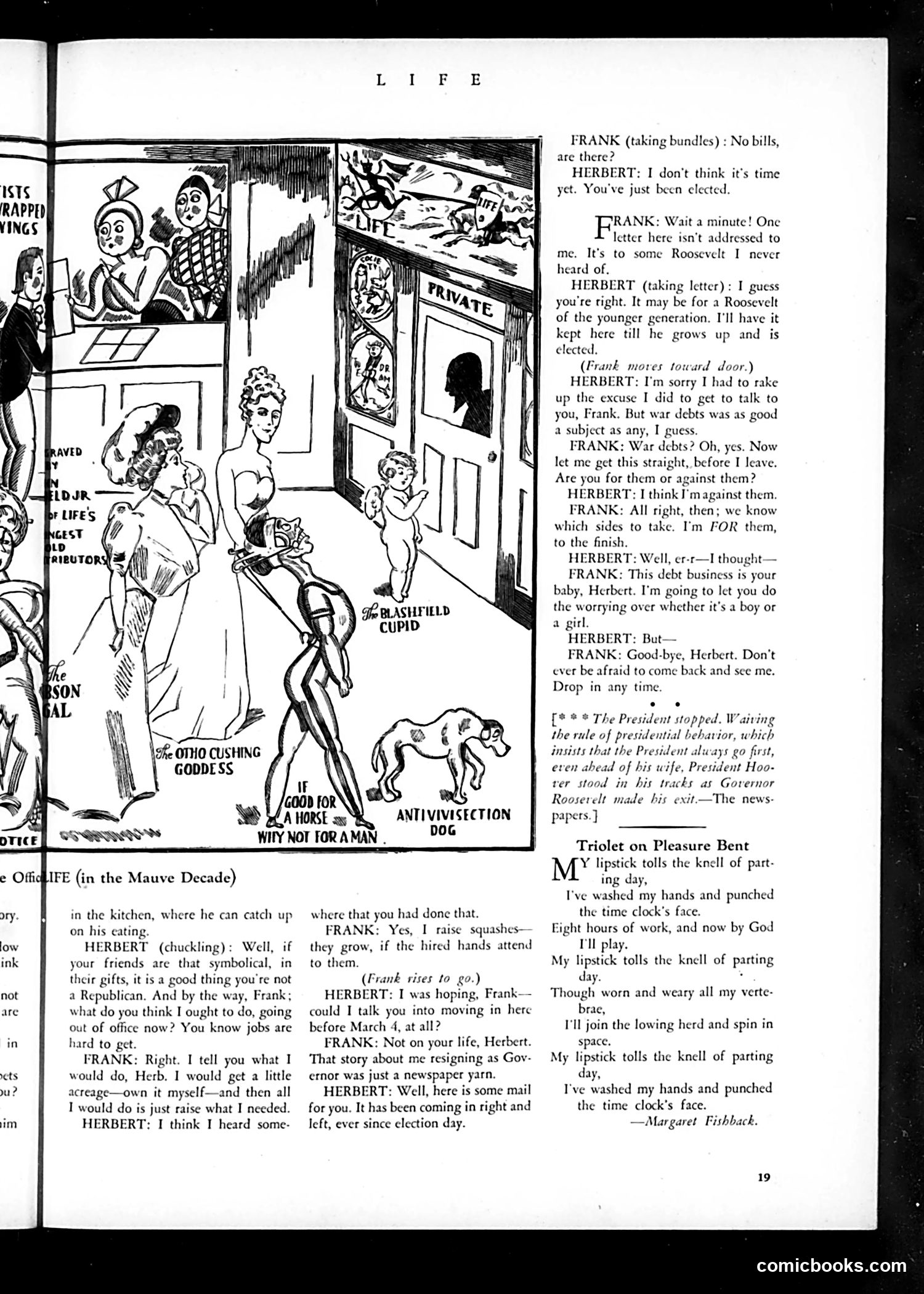
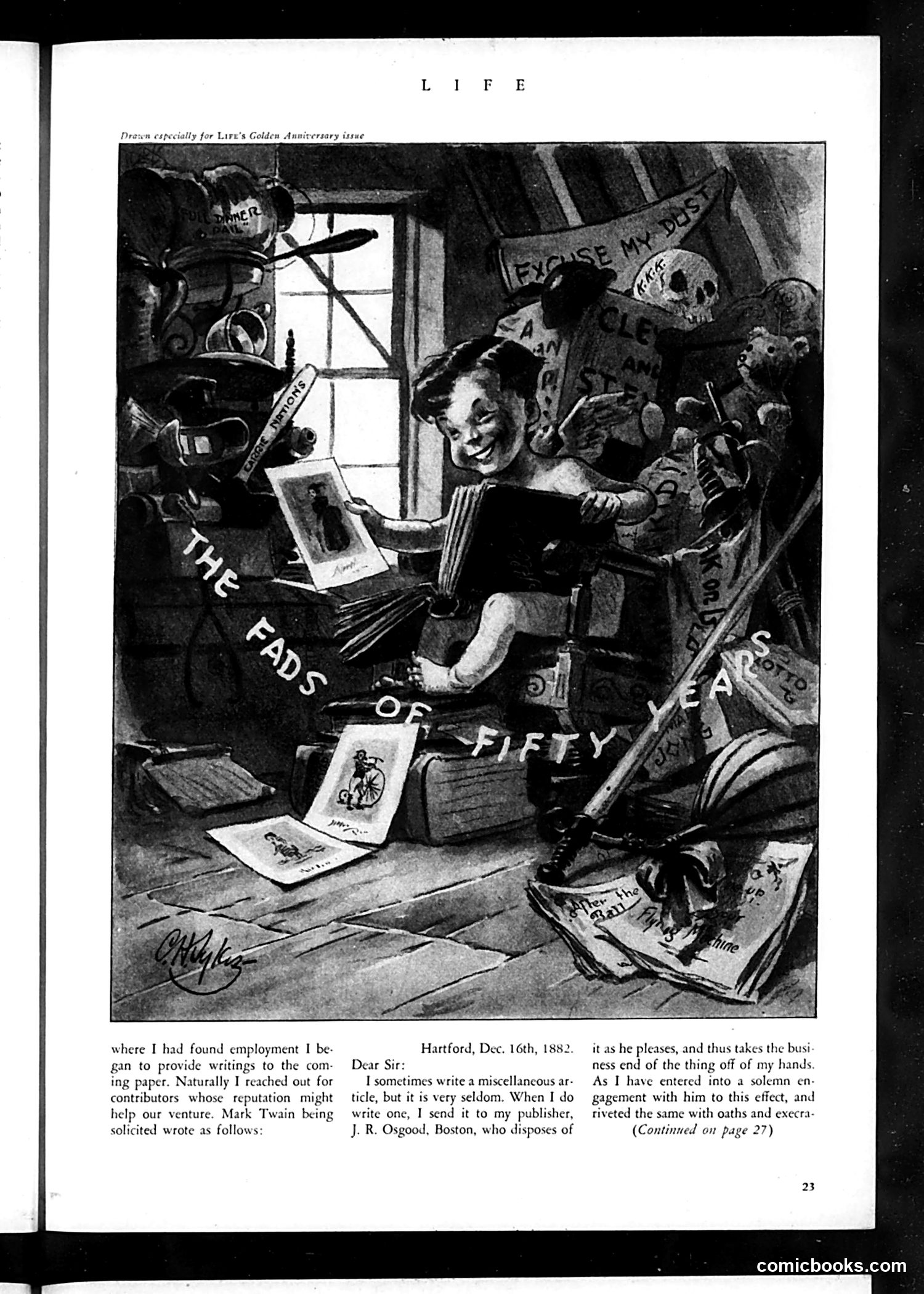
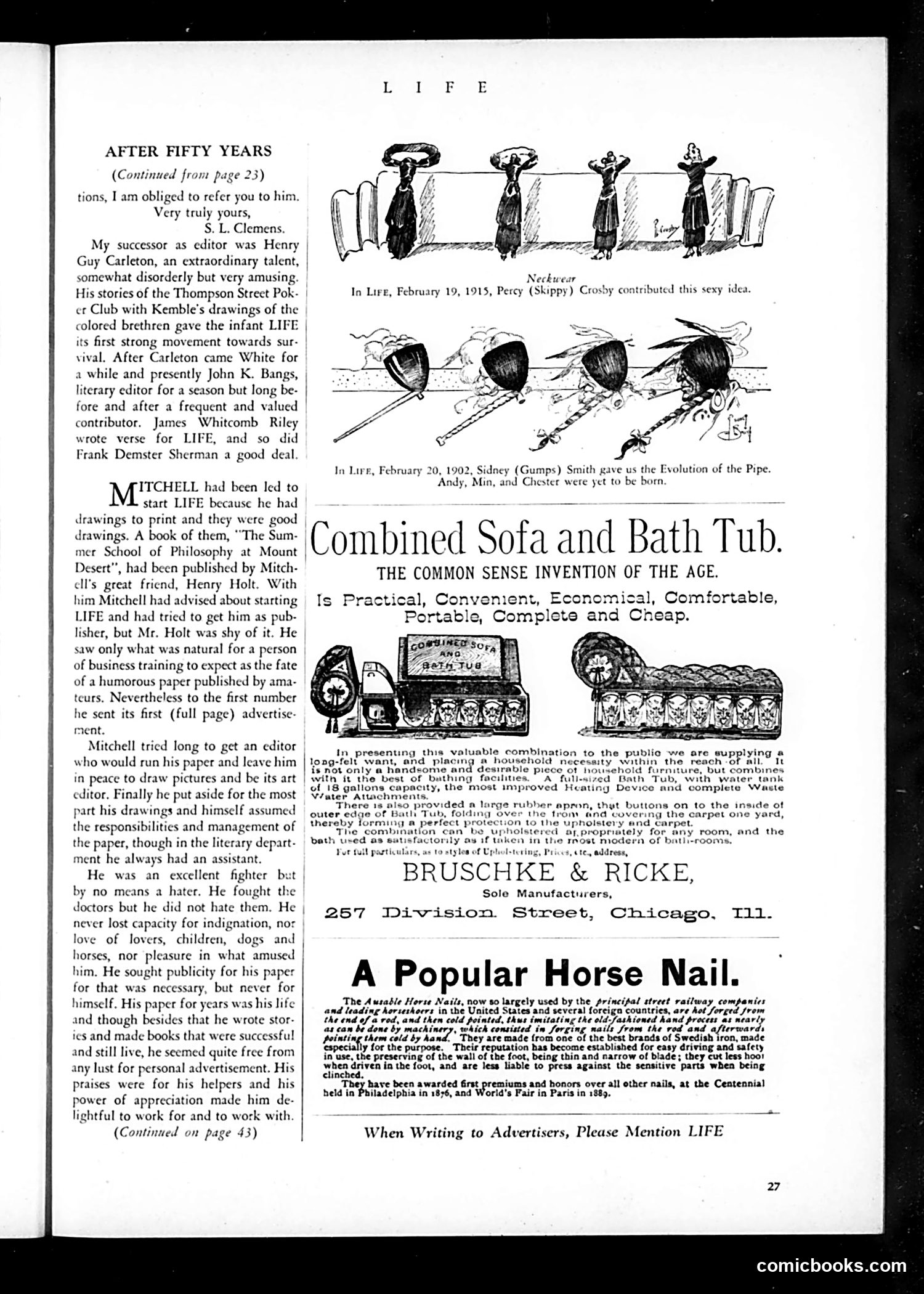
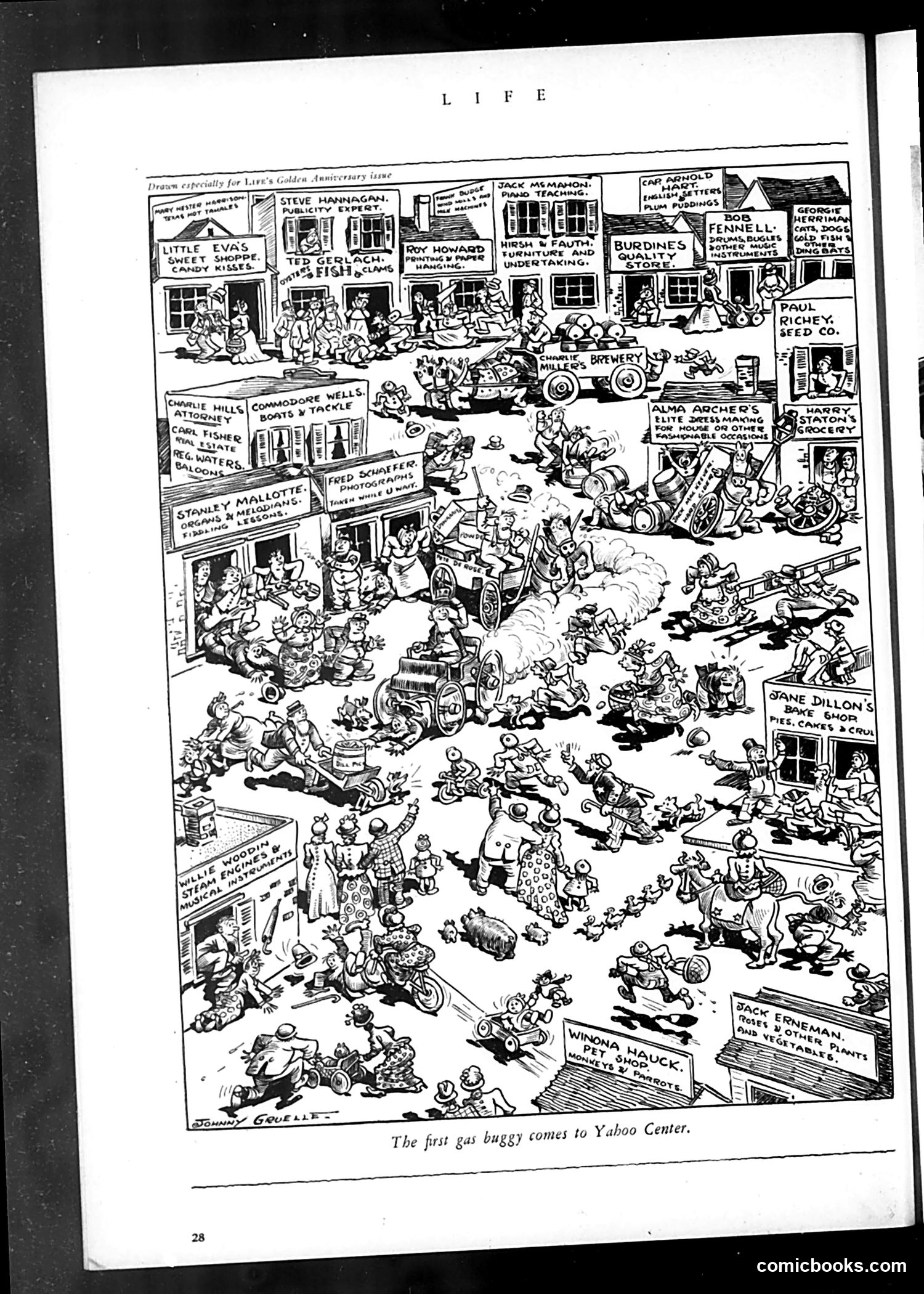
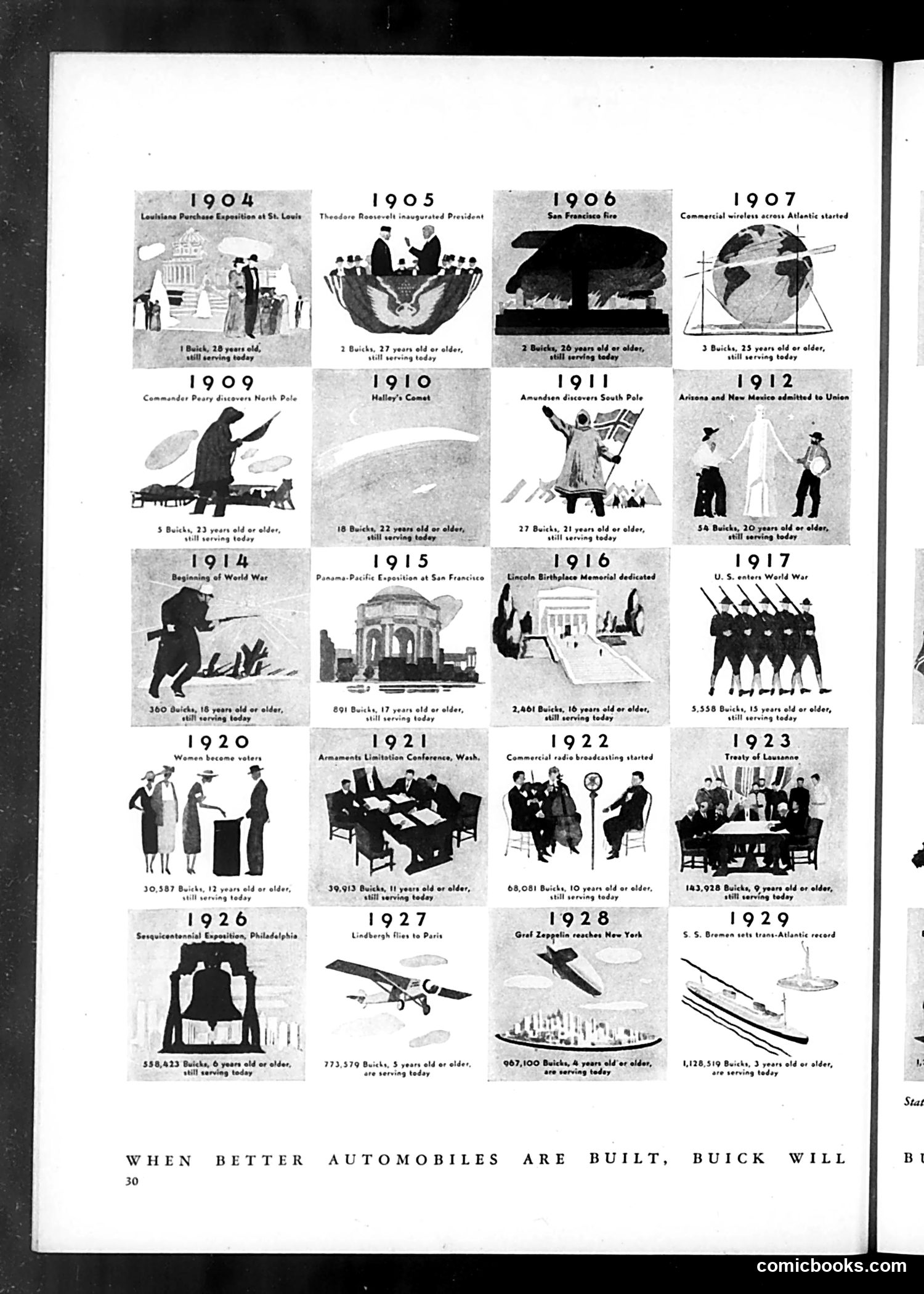
# Life Magazine: 50 Years of American Satire This January 1933 page celebrates Life's 50th anniversary by reviewing notable events since 1883. The content traces major American moments: the Statue of Liberty's 1884 arrival, the 1904 NYC subway opening, Carrie Nation's temperance crusade (circa 1901), Charles Lindbergh's 1927 transatlantic flight, and WWI events. The page emphasizes Life's role documenting American progress and absurdity—from serious infrastructure developments to humorous social movements. The asterisks (★) mark particularly noteworthy events. The final paragraph humorously claims Life recorded "amazing and amusing fifty years," from "bobbed-haired bandits" to "miniature golf," suggesting the magazine captured both significant history and trivial cultural trends with equal satirical attention.
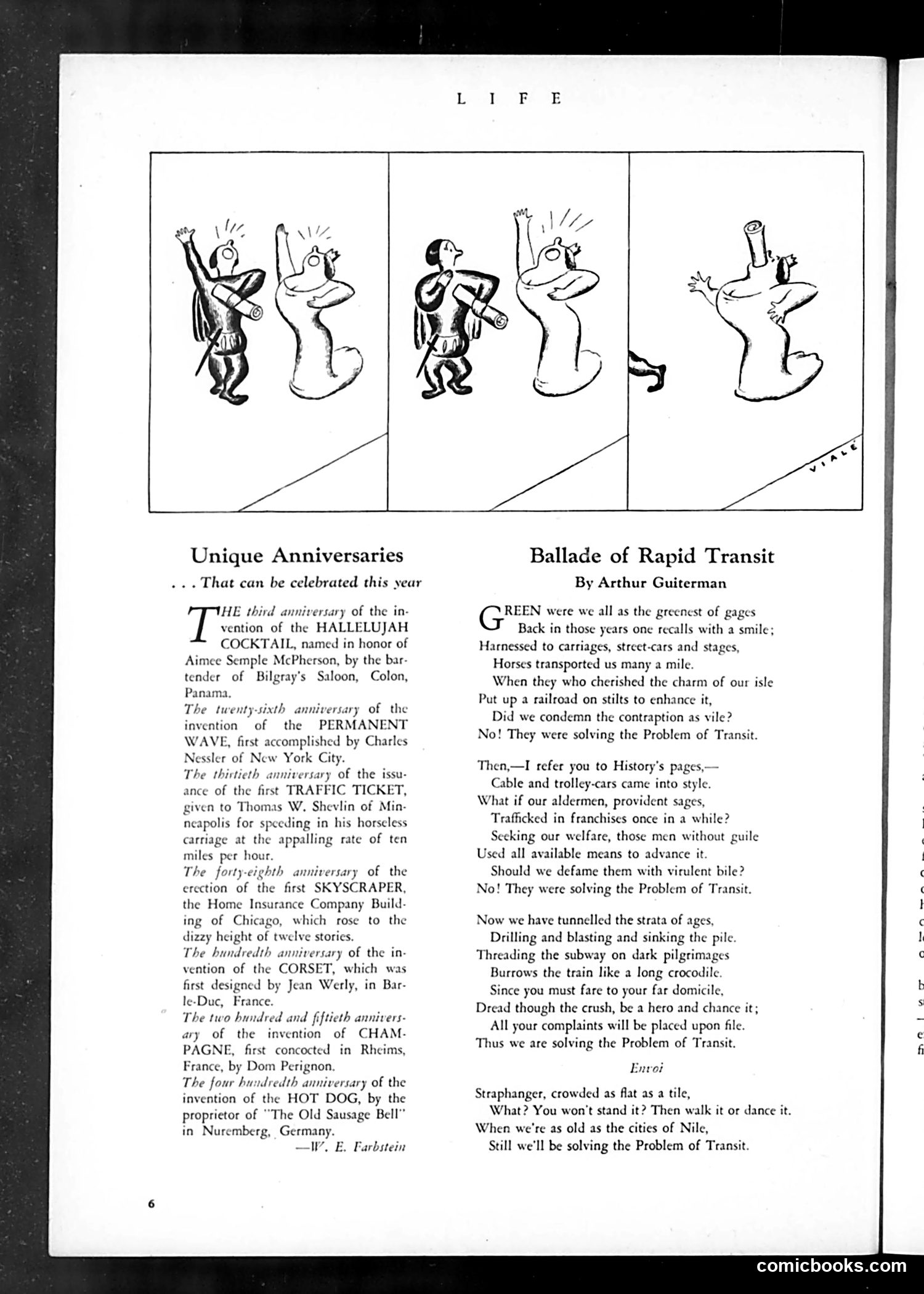
# Page Analysis: "Life" Magazine - Transit and Innovation Anniversaries The page contains a three-panel cartoon at top (artist signature unclear) showing figures celebrating with raised arms, followed by two articles below. "Unique Anniversaries" celebrates various invention milestones, including the Hallelujah Cocktail, the Permanent Wave hair treatment, the first traffic ticket, the skyscraper, the corset, champagne, and the hot dog. "Ballad of Rapid Transit" by Arthur Guiterman is a poem satirizing urban transit solutions. It humorously chronicles how cities solved transportation problems—from horses to streetcars to subways to trains—suggesting these "solutions" keep recurring. The final "Envoi" jokes that even as old as ancient Nile cities, we'll still be "solving the Problem of Transit," implying urban congestion is perpetually unsolvable.
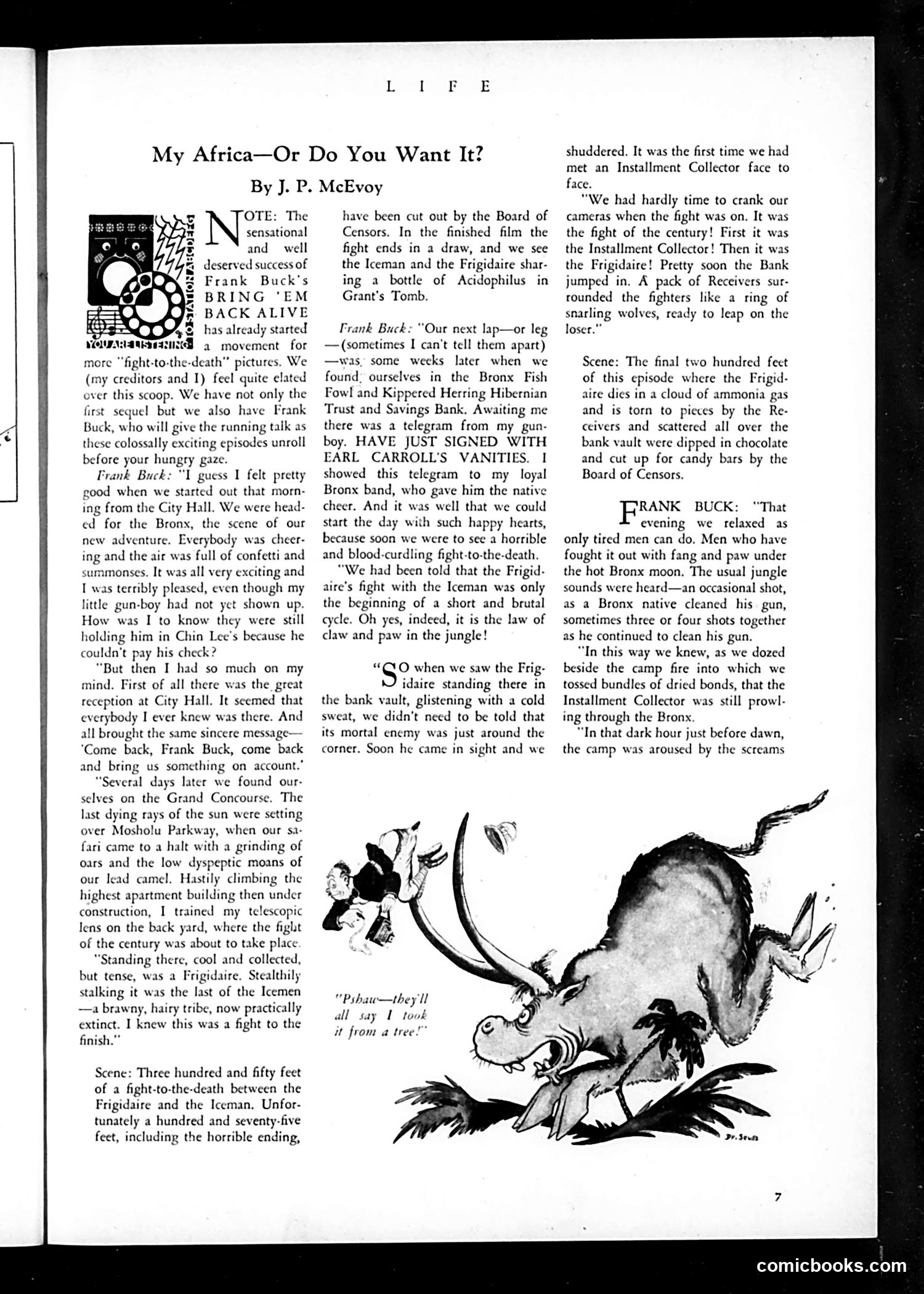
# Analysis This is a film review by J. P. McEvoy discussing Frank Buck's "Bring 'Em Back Alive," a nature documentary about capturing wild animals in Africa and Asia. The illustrated cartoon shows a rhinoceros being thrown or falling, with the caption "P'shaw—they'll all say I took it from a tree!" This is satirizing the film's sensationalism and dubious authenticity. The joke suggests that Buck staged or exaggerated dangerous animal encounters for dramatic effect—viewers might claim he faked the spectacular action, yet he presents it as genuine wildlife footage. The article describes various scenes of animal fights and tension, with censors cutting content. The satire mocks both Buck's adventure film and the era's appetite for exotic "danger" entertainment, while questioning whether audiences could distinguish fact from fabrication in early nature cinema.
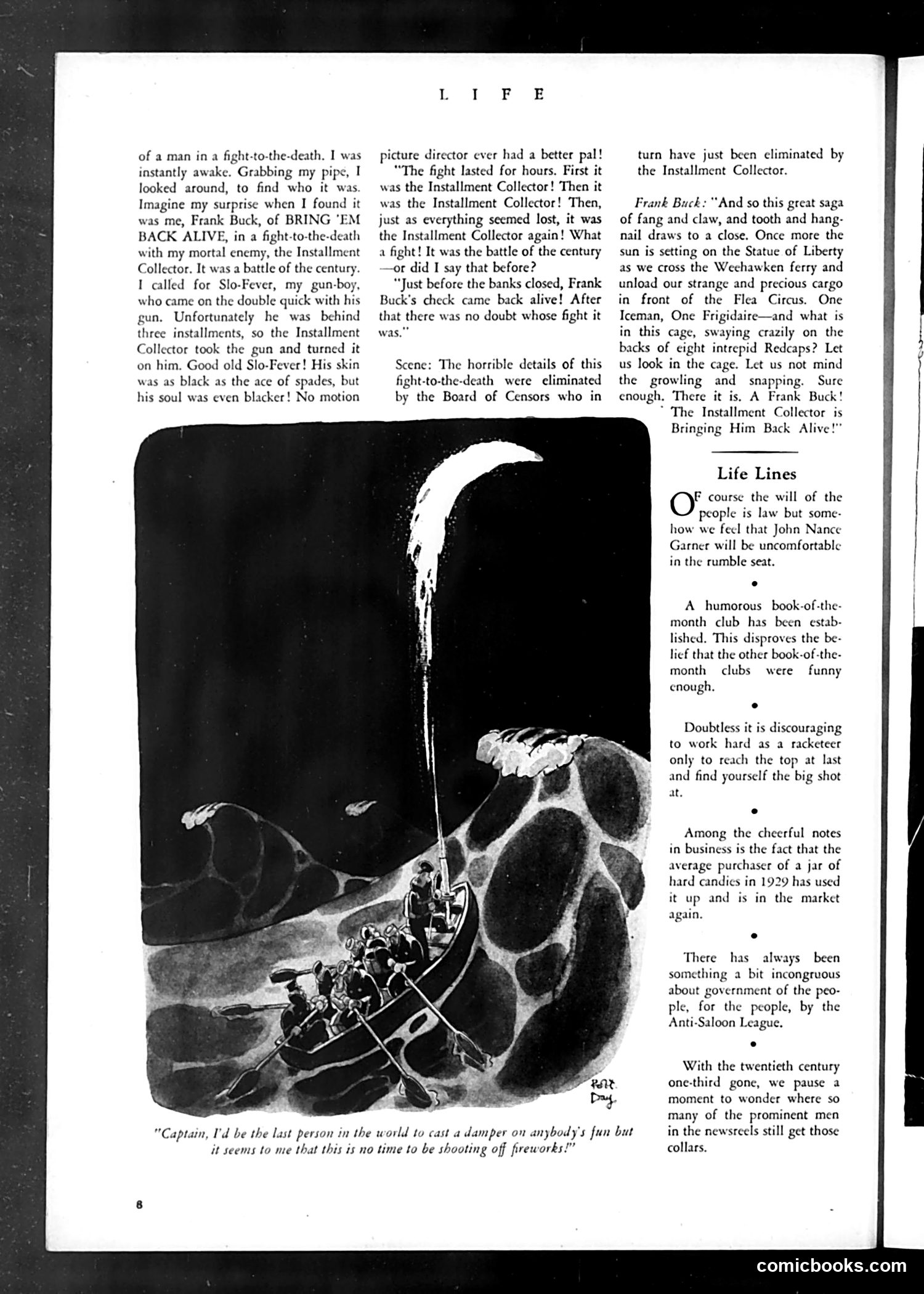
# Analysis of Life Magazine Page This page contains a narrative story about "Frank Buck" and "the Installment Collector"—a fight-to-the-death between a man and his creditor. The accompanying illustration shows a giant hand emerging from darkness, threatening a small ship below. The satire targets the economic anxieties of the era (likely late 1920s), depicting debt collection as a literally monstrous threat. The "Installment Collector" represents predatory lending practices common during this period, when installment buying became widespread but often left consumers vulnerable to aggressive collection tactics. The caption's joke about "shooting off fireworks" adds dark humor to financial desperation. The right-hand column's "Life Lines" section offers brief social commentary on unrelated topics, typical of the magazine's format.
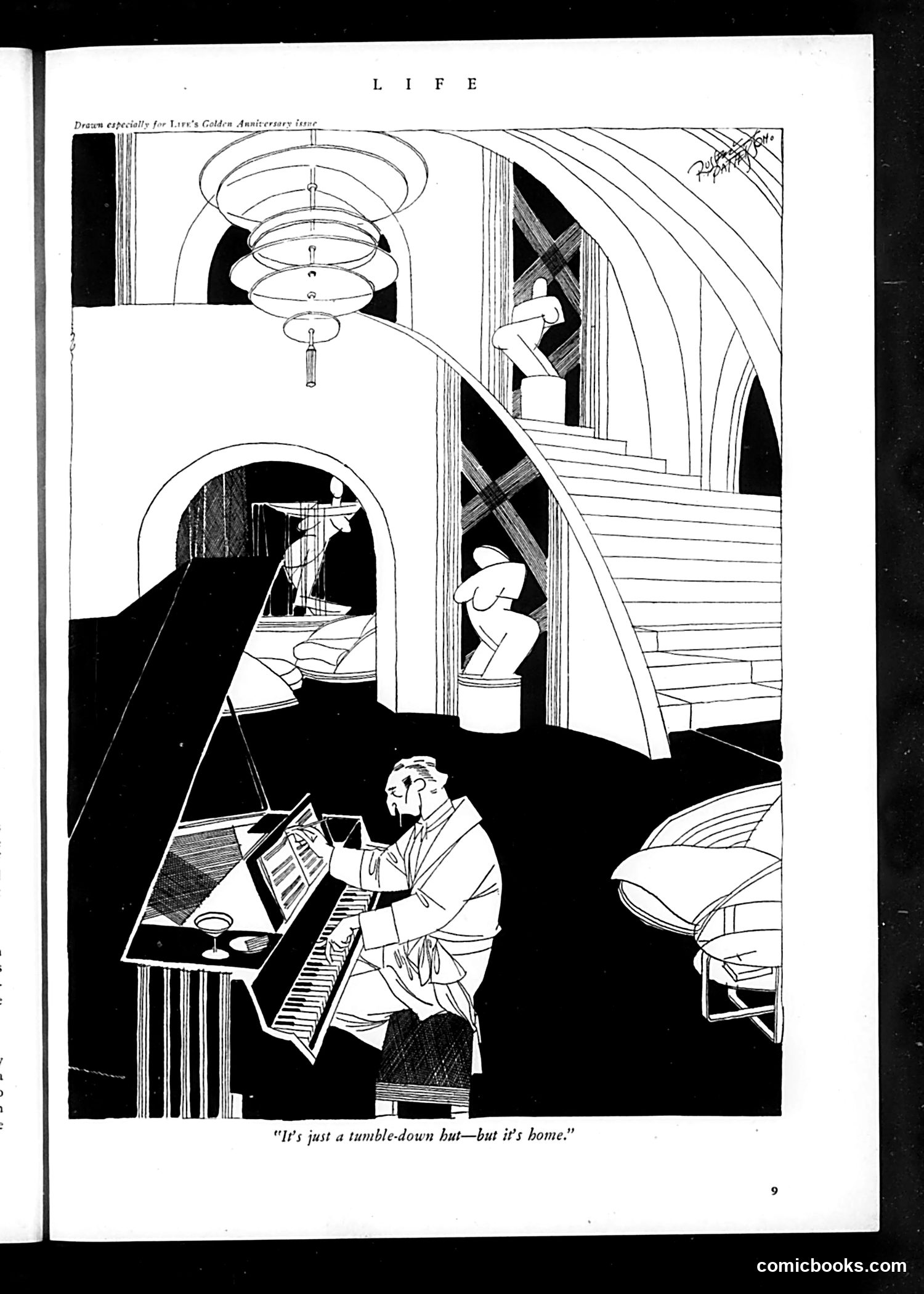
# Analysis This is a single-panel cartoon from *Life* magazine titled "It's just a tumble-down hut—but it's home." The image depicts a futuristic domestic space with Art Deco styling, featuring multiple levels, curved architectural elements, and modernist furnishings. A man sits at a keyboard/control panel in the foreground, appearing to operate or conduct the space itself like an instrument. The satire appears to target mid-20th-century anxieties about increasingly automated, mechanized homes. Despite the space's advanced technology and elaborate design, the caption suggests inhabitants rationalize living in such artificial, controlled environments by emphasizing emotional attachment ("home") over practical comfort. The joke mocks how people romanticize even impractical modern living spaces.
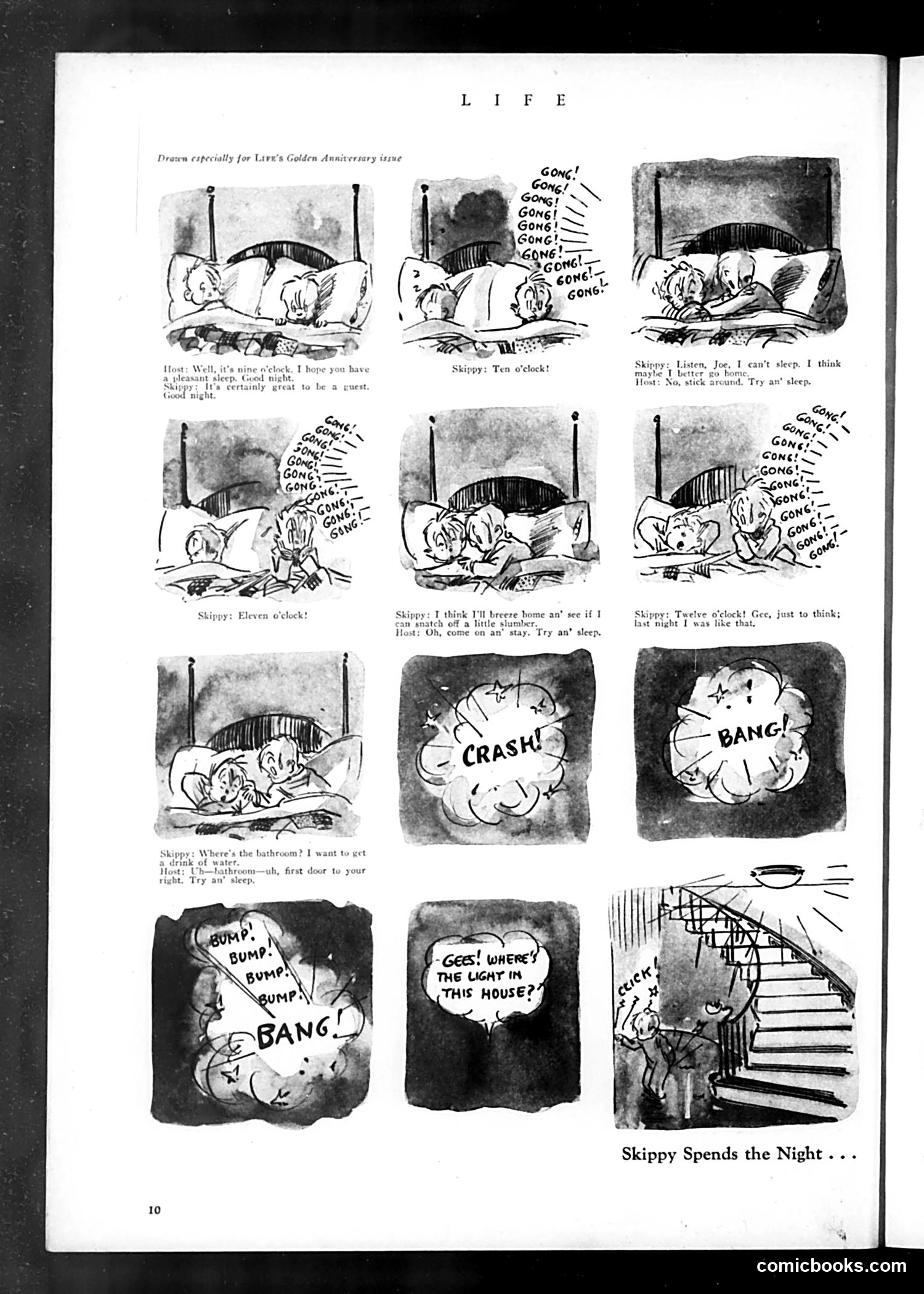
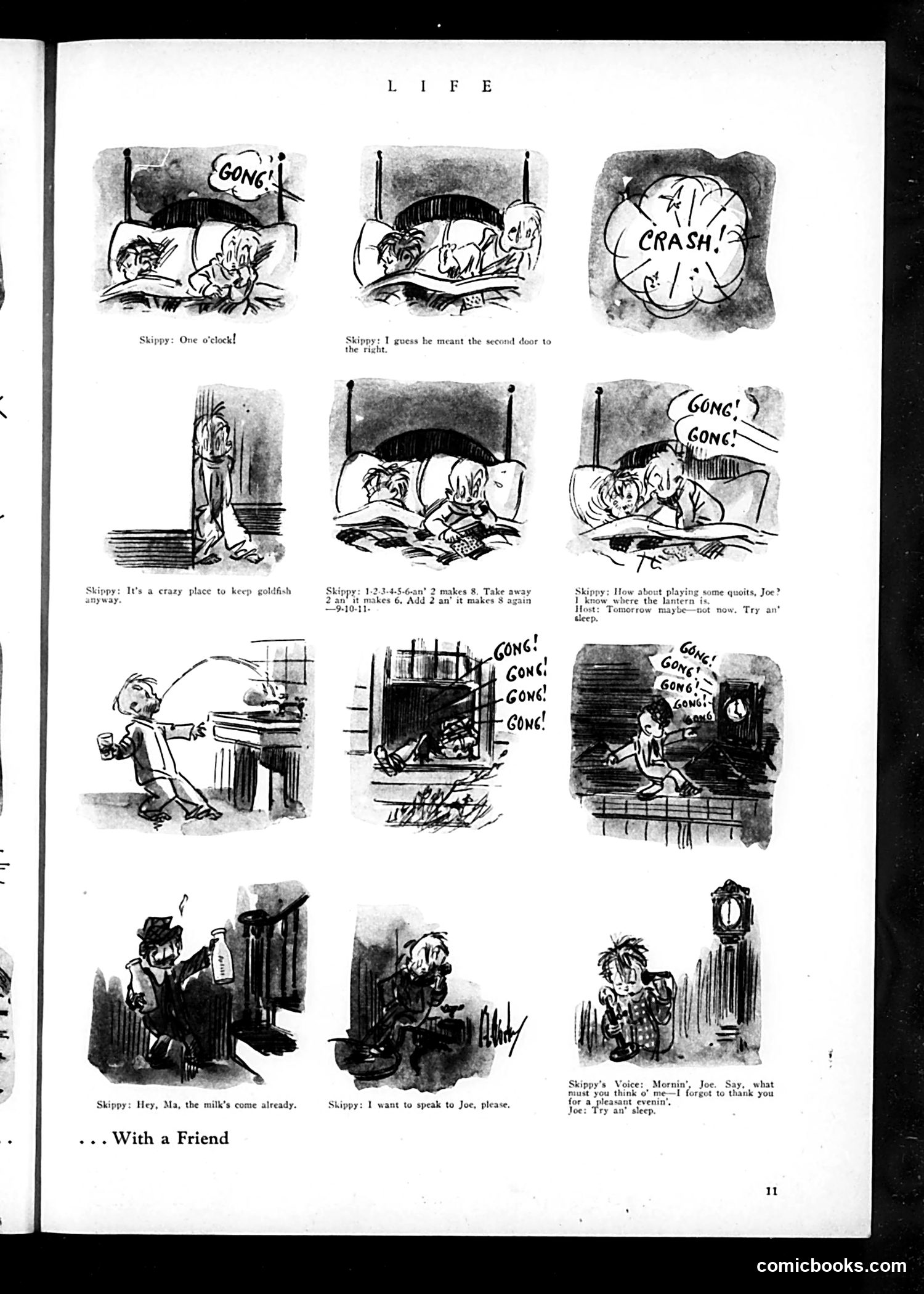
# "Skippy Spends the Night" This comic strip follows a child character named Skippy through a sleepless night at a guest's house. The humor relies on familiar domestic chaos: the host wishes Skippy goodnight at 9 o'clock, but Skippy remains awake, disturbed by a series of escalating nighttime noises—a gong sounding repeatedly, crashes, bangs, and bumps throughout the house. The joke satirizes both childhood anxiety about unfamiliar sleeping environments and the comedy of household disturbances beyond anyone's control. The final panel shows Skippy on the stairs asking "Gees! where's the light in this house?"—suggesting the night's events have thoroughly displaced him from any comfortable sleep. It's gentle domestic humor about the universal experience of a restless night away from home.