A complete issue · 52 pages · 1932
Life — November 1932
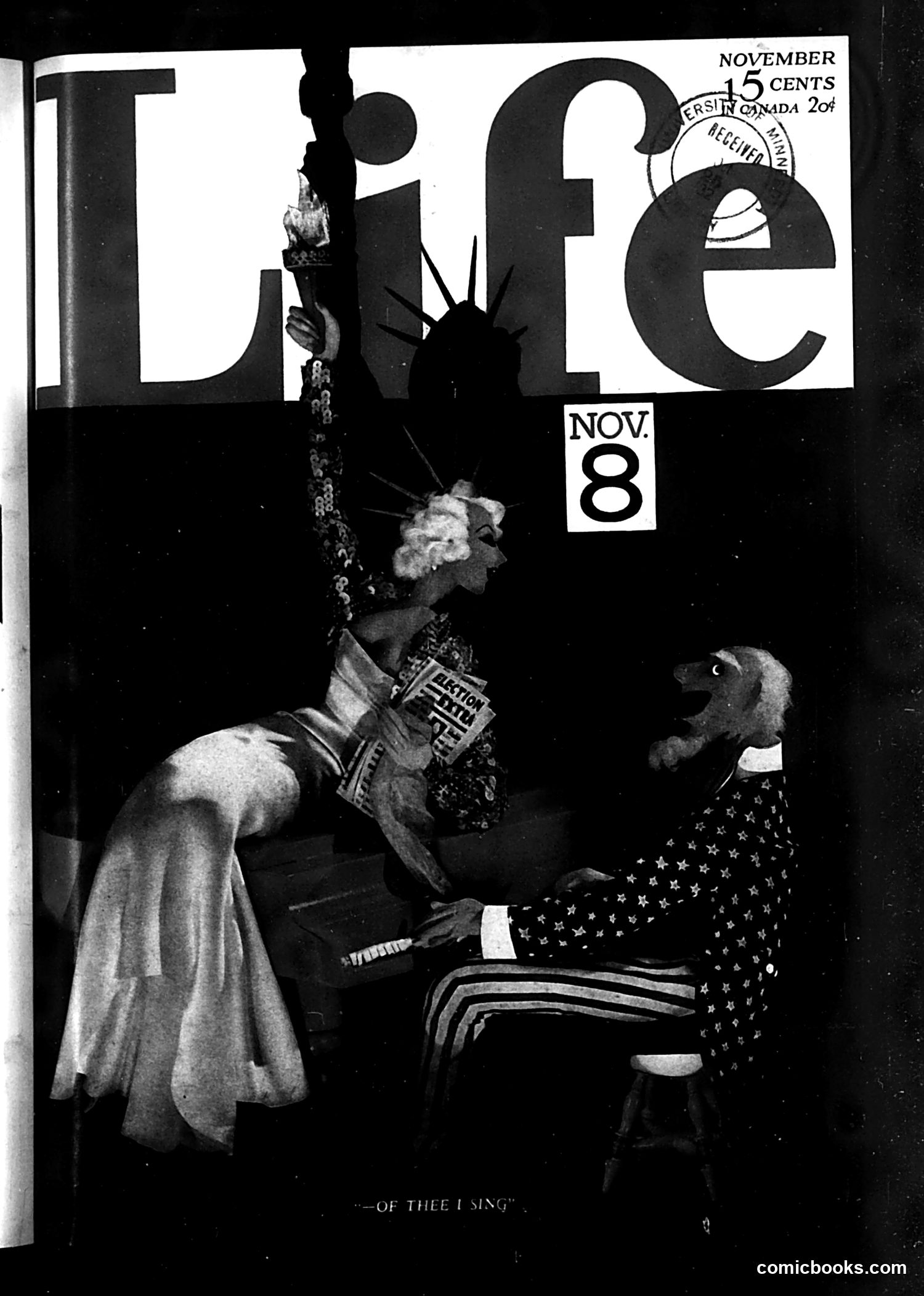
# Life Magazine Cover Analysis (November 8) This Life magazine cover from November (price 15 cents) features a theatrical scene titled "Of Thee I Sing." The image shows two figures in period costume—one standing (wearing a cape and holding a torch) and one seated (wearing a star-patterned outfit)—appearing to be characters from the 1931 George Gershwin musical comedy of the same name. The Statue of Liberty figure and patriotic staging suggest the cover is promoting this popular operetta, which satirized American politics and presidential campaigns. The date "NOV. 8" likely indicates the magazine's publication date, possibly coinciding with the show's performance or promotion. This appears to be an entertainment/theater cover rather than political satire.
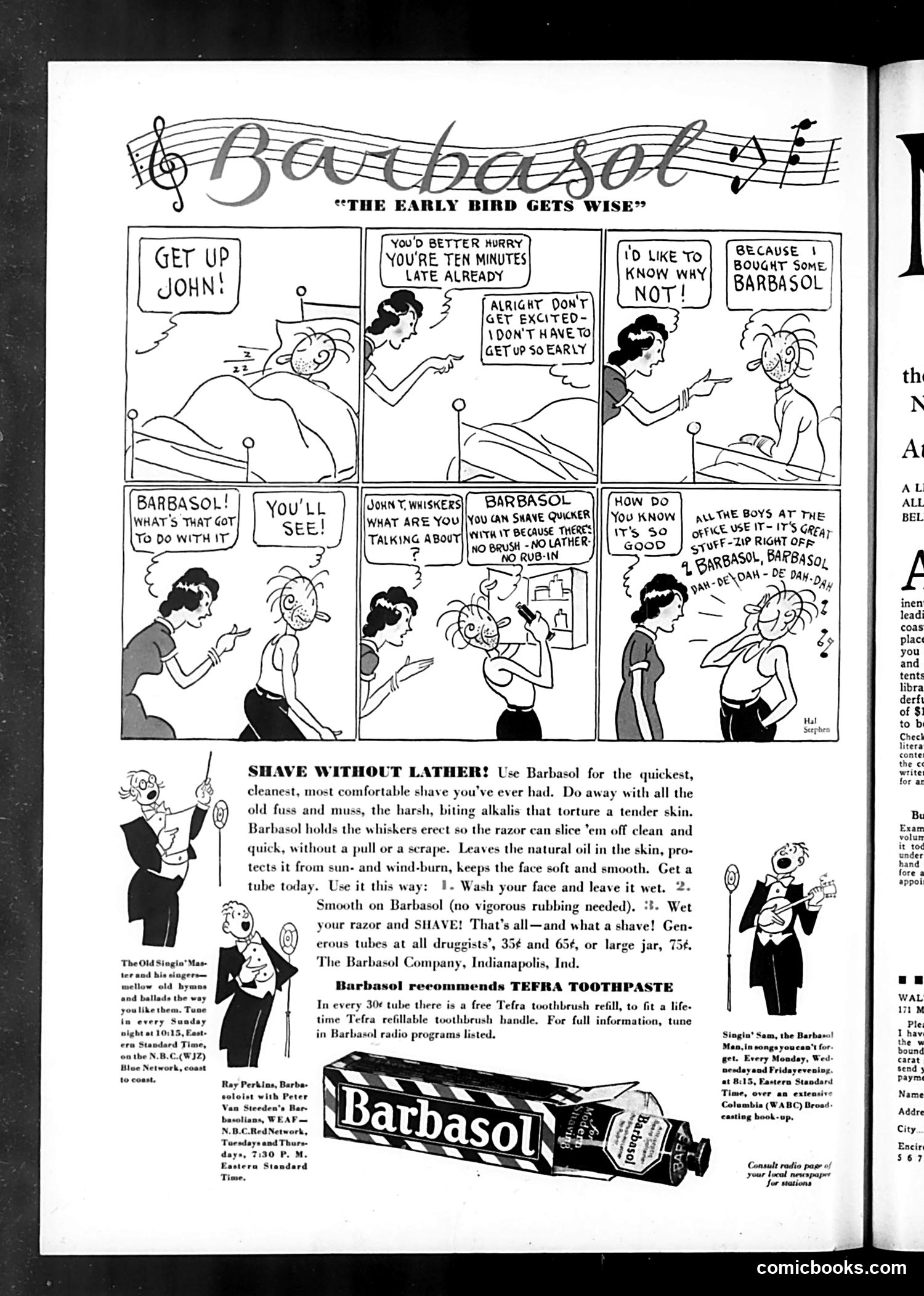
# Content Analysis This page is primarily a **Barbasol shaving cream advertisement disguised as editorial content**. The comic strip "Barbasol" presents a domestic scenario where a wife wakes her husband John, claiming he's late. John resists getting up early until his wife mentions she bought Barbasol shaving cream. He becomes enthusiastically cooperative, suggesting the product supposedly makes shaving so quick and pleasant that men willingly wake early. The advertisement below promotes Barbasol's latherless formula, claiming it provides the "quickest, cleanest, most comfortable shave." The comic's humor relies on exaggerating the product's appeal—implying it transforms men's morning routines so dramatically that domestic conflicts dissolve. This is **vintage advertising satire**, using cartoon narrative to sell a consumer product through comedic domestic scenarios typical of mid-20th-century marketing.
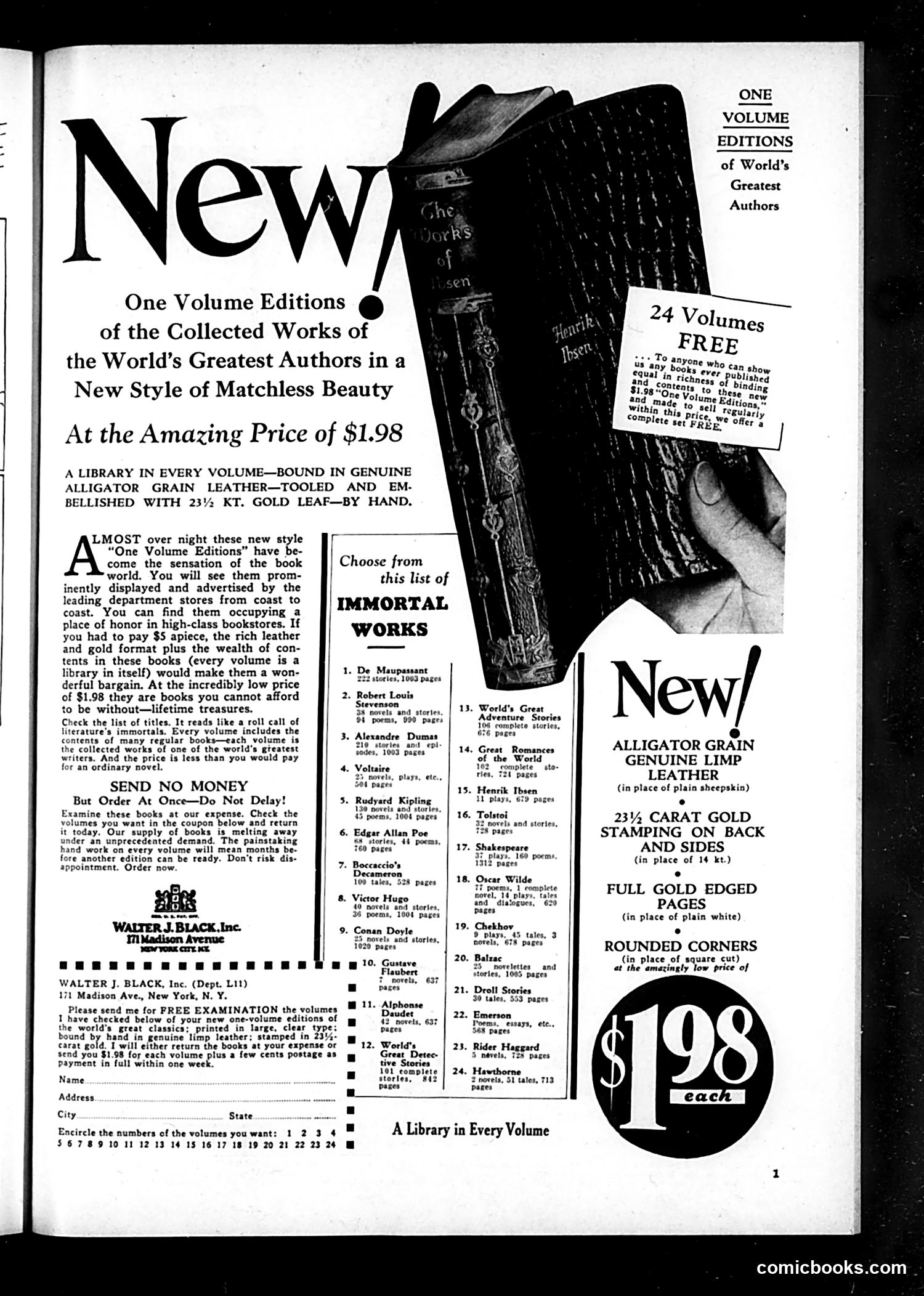
# Analysis This page is primarily **advertising, not editorial content or satire**. It's a full-page advertisement for "One Volume Editions" of classic literature published by Walter J. Black, Inc. The ad promotes leather-bound collections of works by famous authors (Shakespeare, Dickens, Ibsen, etc.) at $1.98 each. Key selling points include genuine alligator leather binding, gold leaf decoration, and what appears to be an appealing aesthetic design. The only visual element is a photograph of an ornate book being held, meant to showcase the product's quality and desirability. There is no political cartoon, satire, or social commentary present—this is straightforward commercial promotion of affordable luxury book editions during what was likely the Depression or post-Depression era, when such pricing was significant.
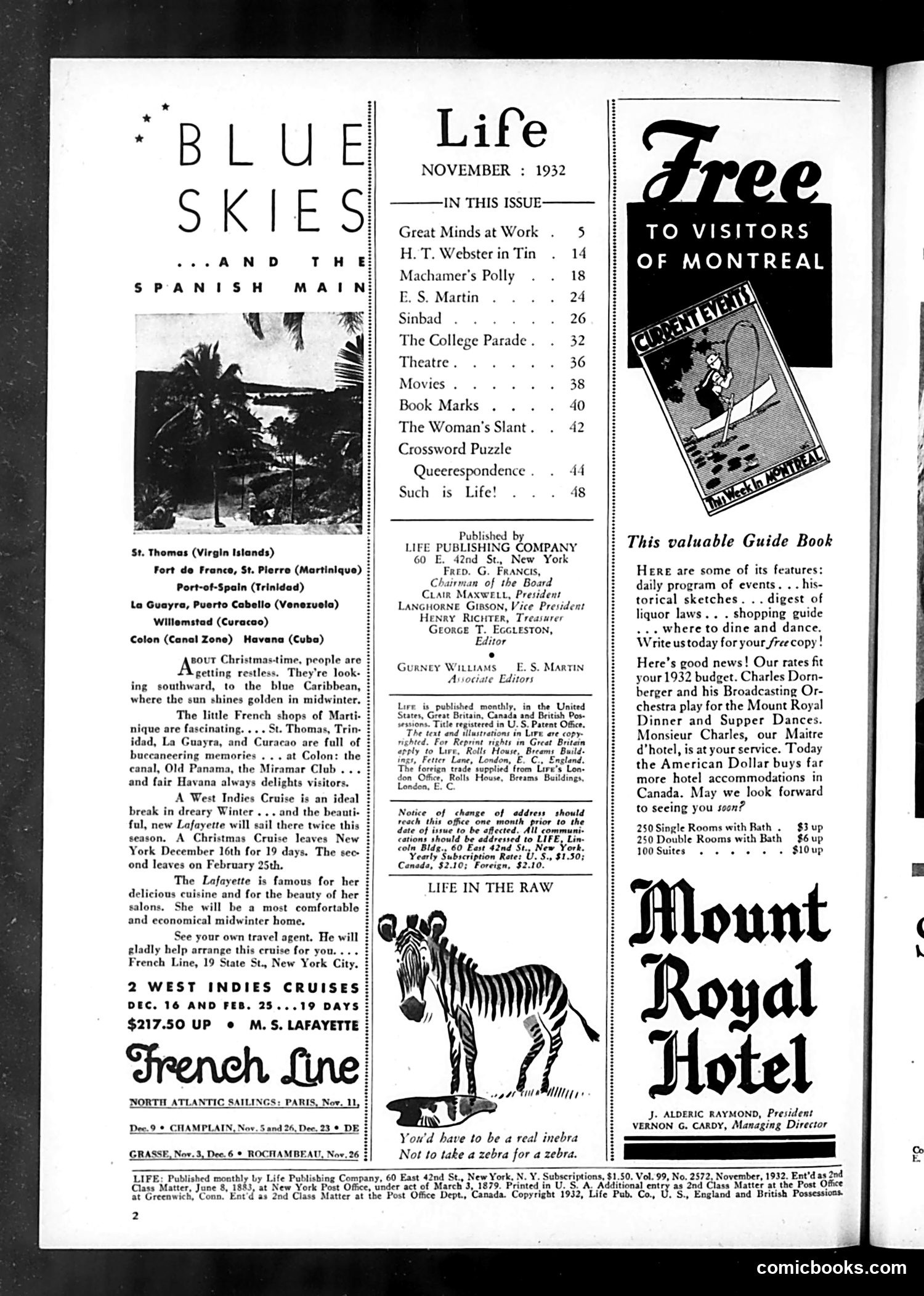
# Page Analysis This is primarily a **table of contents and advertising page** from Life magazine's November 1932 issue, not a political cartoon page. The visible content includes: - A feature on "Blue Skies and the Spanish Main" with travel photography - A "Life in the Raw" section featuring a zebra illustration with the caption "You'd have to be a real inebrа / Not to take a zebra for a zebra"—a simple visual pun about animal identification - Advertisements for Caribbean cruises, the Mount Royal Hotel in Montreal, and a travel guide - Masthead information crediting editors and publishers The zebra joke is the only cartoon element—a mild, non-political visual wordplay typical of magazine humor from this era. The page serves primarily to advertise travel and hospitality services during the Great Depression.

# Squibb Dental Cream Advertisement This is a **straightforward advertisement**, not satire or political commentary. The page promotes Squibb Dental Cream to a female audience circa 1932 (copyright date visible). The ad uses a glamorous portrait of a smiling woman with perfect teeth to sell the product's benefits. The headline "Why risk the gifts of health and charm?" frames dental care as essential to female beauty and attractiveness. The text emphasizes that merely cleaning teeth is insufficient—decay prevention requires Squibb's "scientifically balanced formula" with "effective anti-acid ingredient." The ad warns that decaying teeth threaten not just appearance but whole-body health. Pricing indicates a new 25-cent size alongside the standard 40-cent tube, suggesting market expansion during the Depression era.
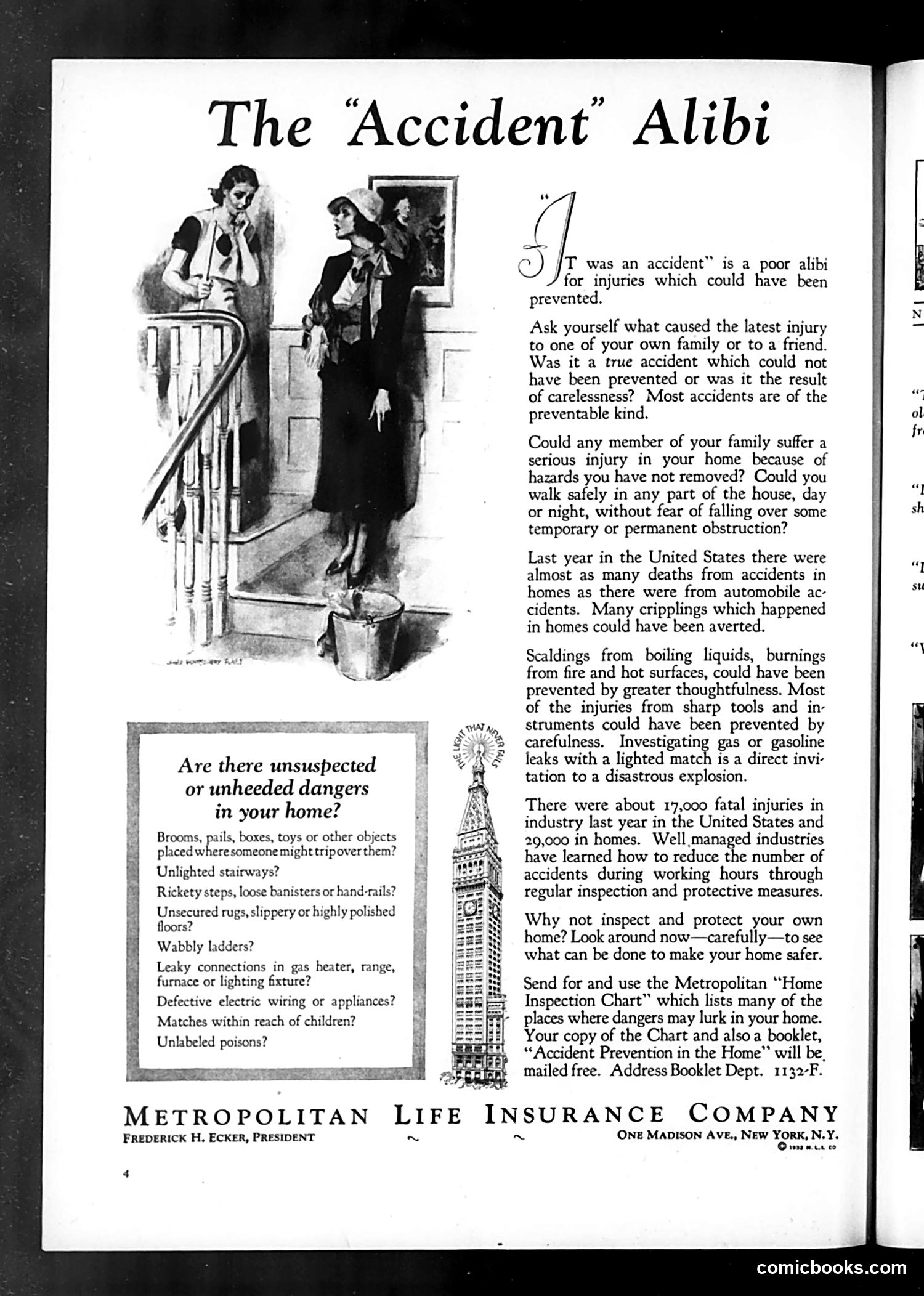
# The "Accident" Alibi This is a **public safety advertisement** from Metropolitan Life Insurance Company, not political satire. The illustration shows two figures—apparently a woman on stairs and another person below—depicting a domestic accident scenario. The ad's central argument: most "accidents" are actually preventable through basic care. It lists common home hazards (unlit stairs, cluttered floors, gas leaks, unlabeled poisons) and challenges readers to honestly assess whether recent injuries in their lives were truly unavoidable or resulted from carelessness. The "alibi" in the title suggests people falsely blame luck when accidents stem from neglect. The piece compares home accident deaths (29,000 annually) to automobile deaths, arguing that industry successfully reduces workplace accidents through inspection—homes should adopt similar safety practices.
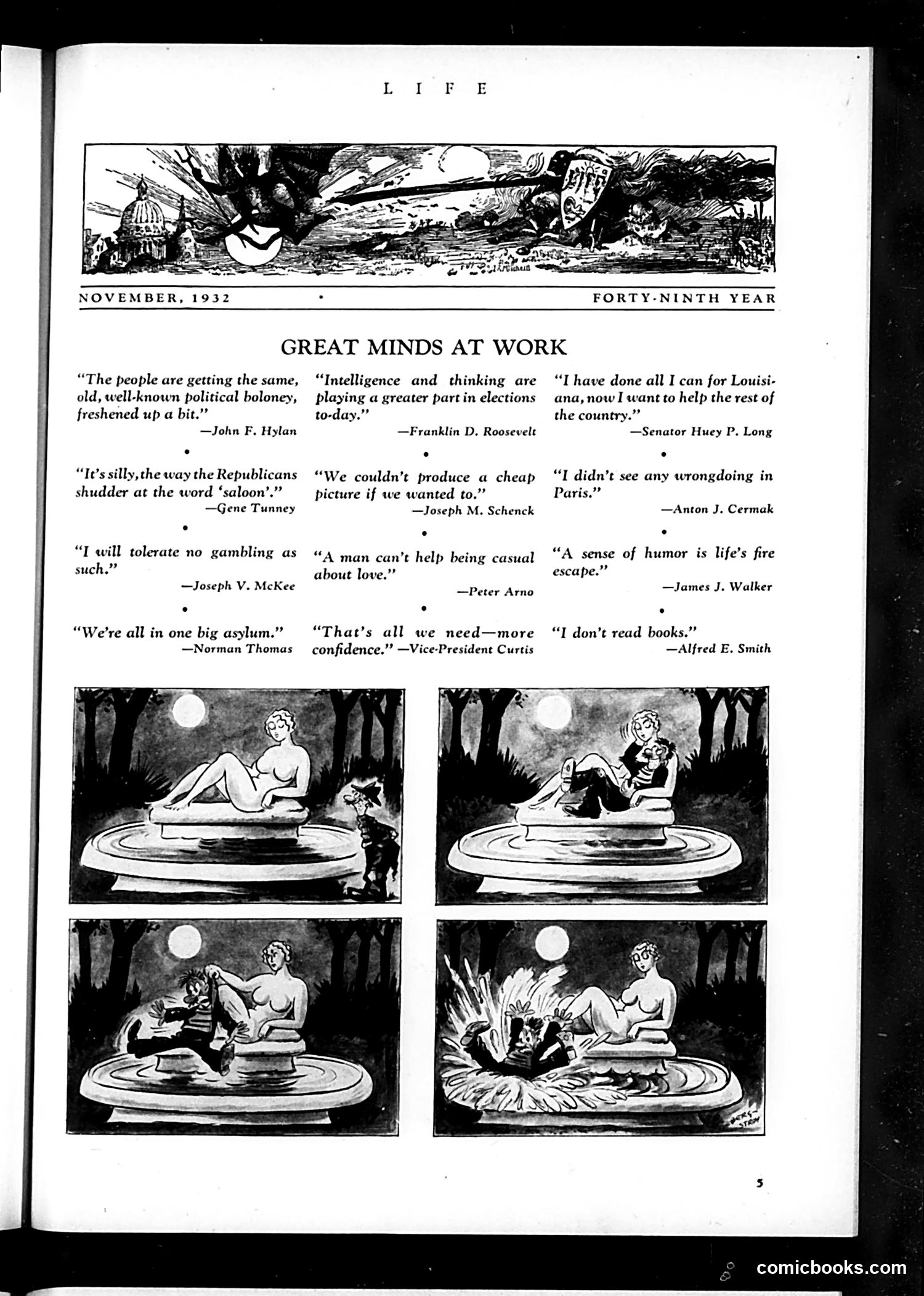
# Analysis: "Great Minds at Work" (Life, November 1932) This page satirizes prominent American figures' statements during the Great Depression. The quotes—attributed to politicians like Franklin D. Roosevelt and Senator Huey P. Long, plus business figures and celebrities—mock their often contradictory or vapid pronouncements about economic crisis. The four-panel cartoon below shows a woman bathing in a moonlit forest pool while a man watches. The sequence apparently depicts him progressively disturbing her peaceful scene. This visual joke likely comments on invasion of privacy or unwanted intrusion, though the specific satirical target remains unclear without additional context. The page's overall message: during national economic catastrophe, public figures offer platitudes while ordinary people face disruption—a critique of leadership inadequacy during the Depression.
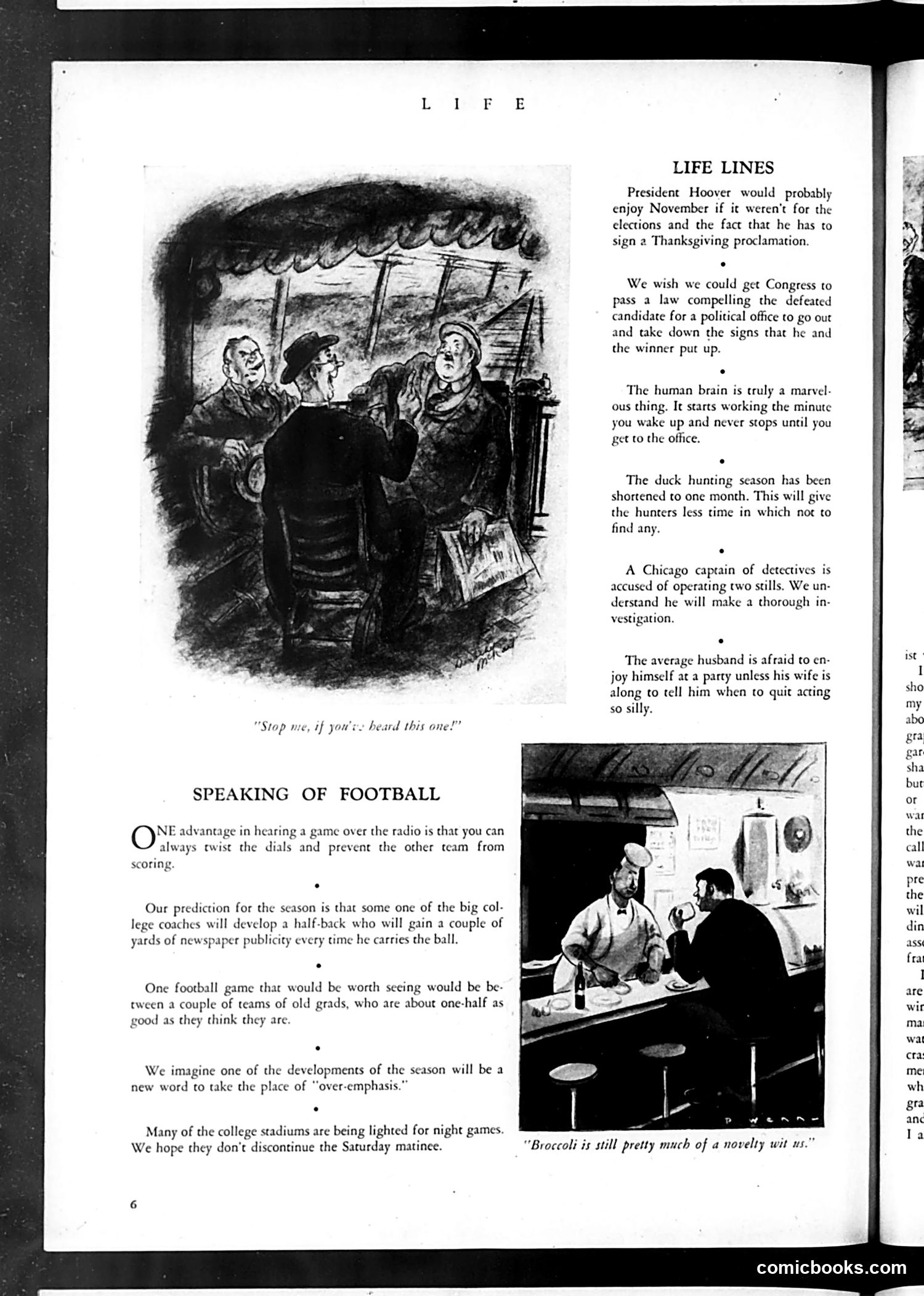
# "Life Lines" and "Speaking of Football" - Page Analysis The top cartoon depicts three men in what appears to be a speakeasy or illegal bar during Prohibition, with one saying "Stop me, if you've heard this one!" The joke satirizes how Prohibition-era establishments were common knowledge—so pervasive that warnings were pointless. The "Life Lines" column offers brief social observations, including quips about President Hoover, Congress, and political campaigns. The "Speaking of Football" section provides humorous predictions about college football season, suggesting coaches will develop new publicity tactics and that night games may become standard. The bottom photograph shows what appears to be a domestic scene, captioned "Broccoli is still pretty much of a novelty wit us," likely poking fun at unusual vegetables or modern eating habits.
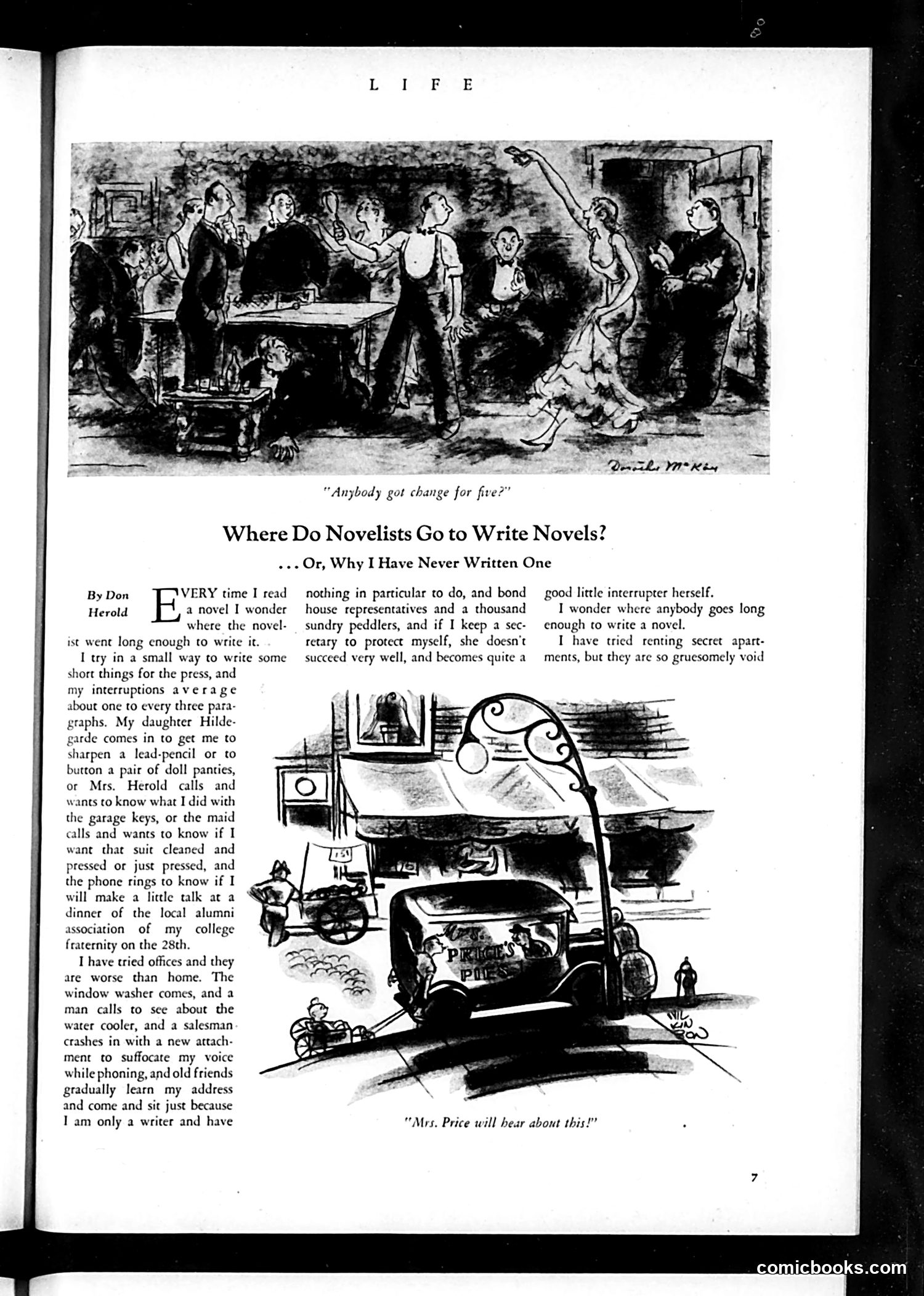
# Analysis of Life Magazine Page This page contains Don Herald's humorous essay "Where Do Novelists Go to Write Novels?...Or, Why I Have Never Written One." Herald satirizes the impossibility of finding quiet to write at home—his daughter interrupts him, the maid needs garage keys, Mrs. Herald calls about domestic matters, and old friends visit constantly. The two illustrations depict these domestic interruptions: the top cartoon shows a chaotic social gathering with the caption "Anybody got change for five?"; the bottom shows a car accident outside a house with "Mrs. Price will hear about this!" The satire targets the competing demands of domestic life that prevent serious creative work, a relatable complaint for early 20th-century male writers attempting to balance family obligations with professional ambitions.
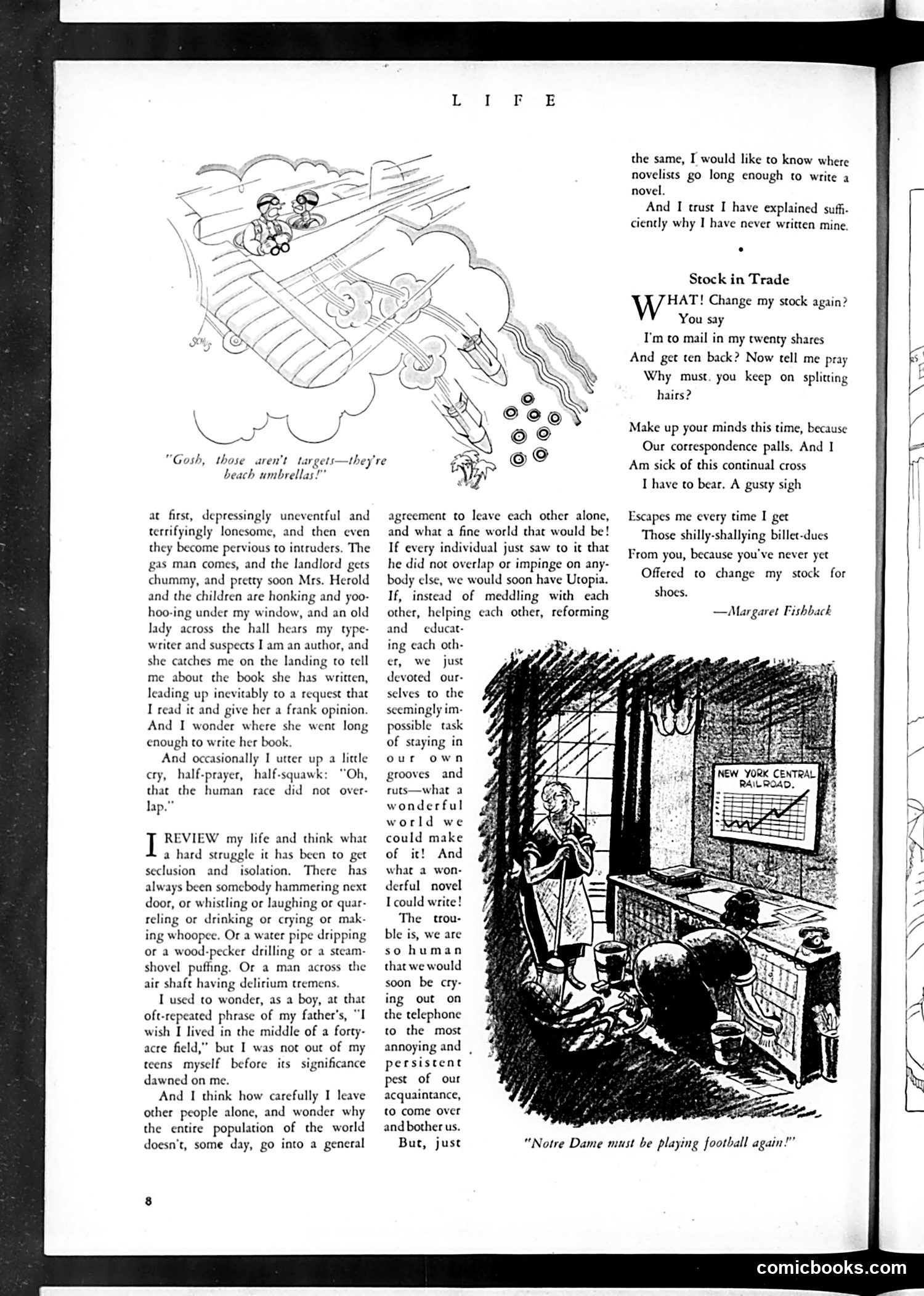
# Analysis of Life Magazine Page This page contains two satirical pieces about everyday frustrations. **Top cartoon** ("Stock in Trade"): A humorous complaint about stock market volatility. The writer describes mailing in 20 shares and receiving 10 back, then being pestered to split hair about it. The satire targets the frustration of small investors dealing with confusing stock transactions and persistent brokers. **Bottom cartoon** ("Notre Dame must be playing football again!"): Depicts a woman at home distracted by someone's persistent telephone calls. The joke references Notre Dame University's football popularity—suggesting the caller must be so obsessed with the sport that they're phoning to discuss it repeatedly, oblivious to being unwelcome. It satirizes both sports obsession and social inconsiderateness.
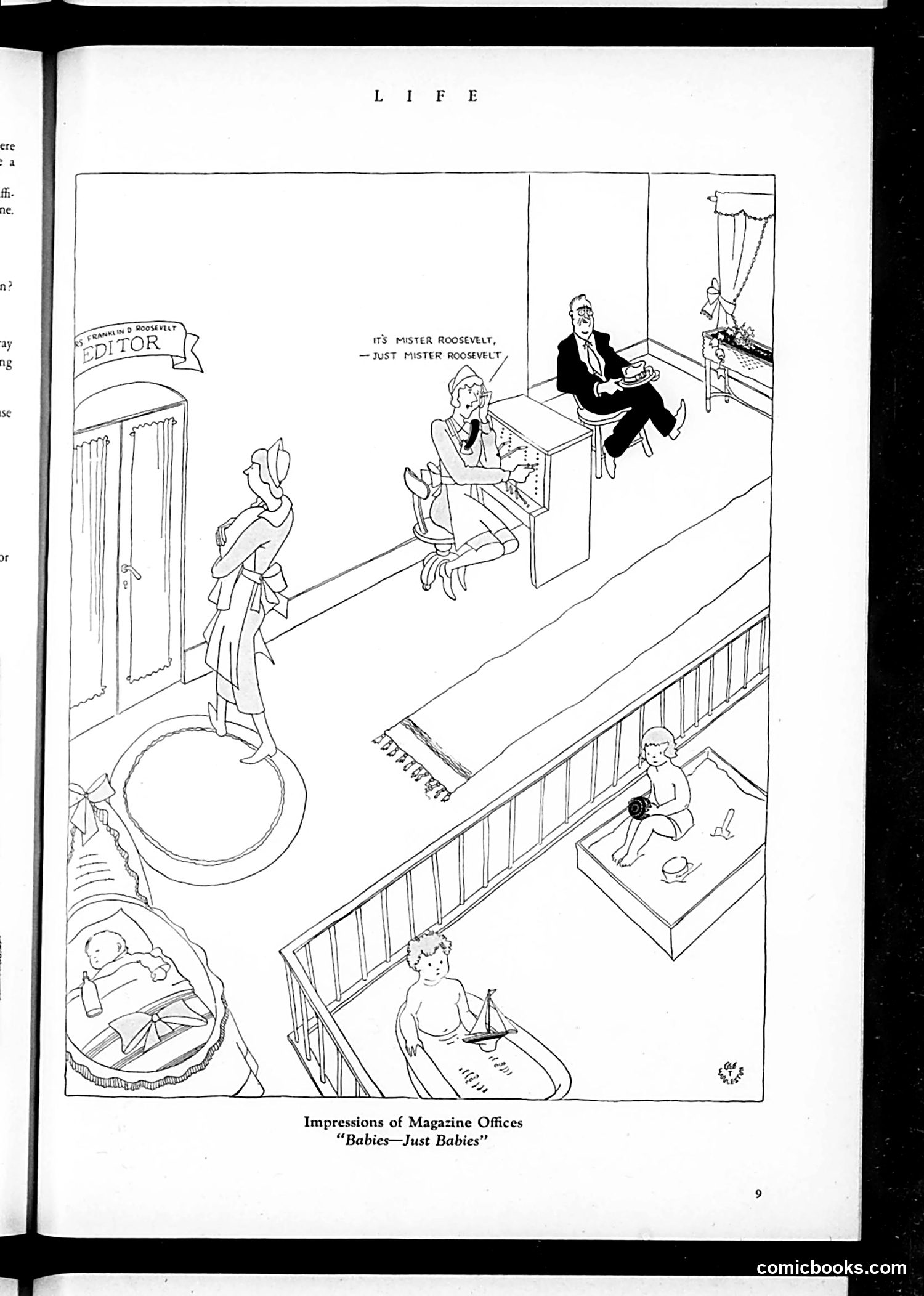
# "Impressions of Magazine Offices: Babies—Just Babies" This satirical cartoon depicts a magazine office (labeled "Editor") in disarray due to infants. The scene shows: - A woman entering holding a baby, appearing to announce "It's Mister Roosevelt—Just Mister Roosevelt!" - Adults attempting to work amid multiple babies in cribs and playpens - General chaos and disruption to office operations The satire appears to mock magazine editorial offices being overwhelmed by submissions related to babies, likely President Roosevelt's children or references to Roosevelt as a father figure. The joke plays on the notion that "baby" stories dominated magazine content and editorial attention during this period, rendering professional work nearly impossible. The cartoon criticizes both the proliferation of such trivial content and editors' apparent helplessness to manage it.
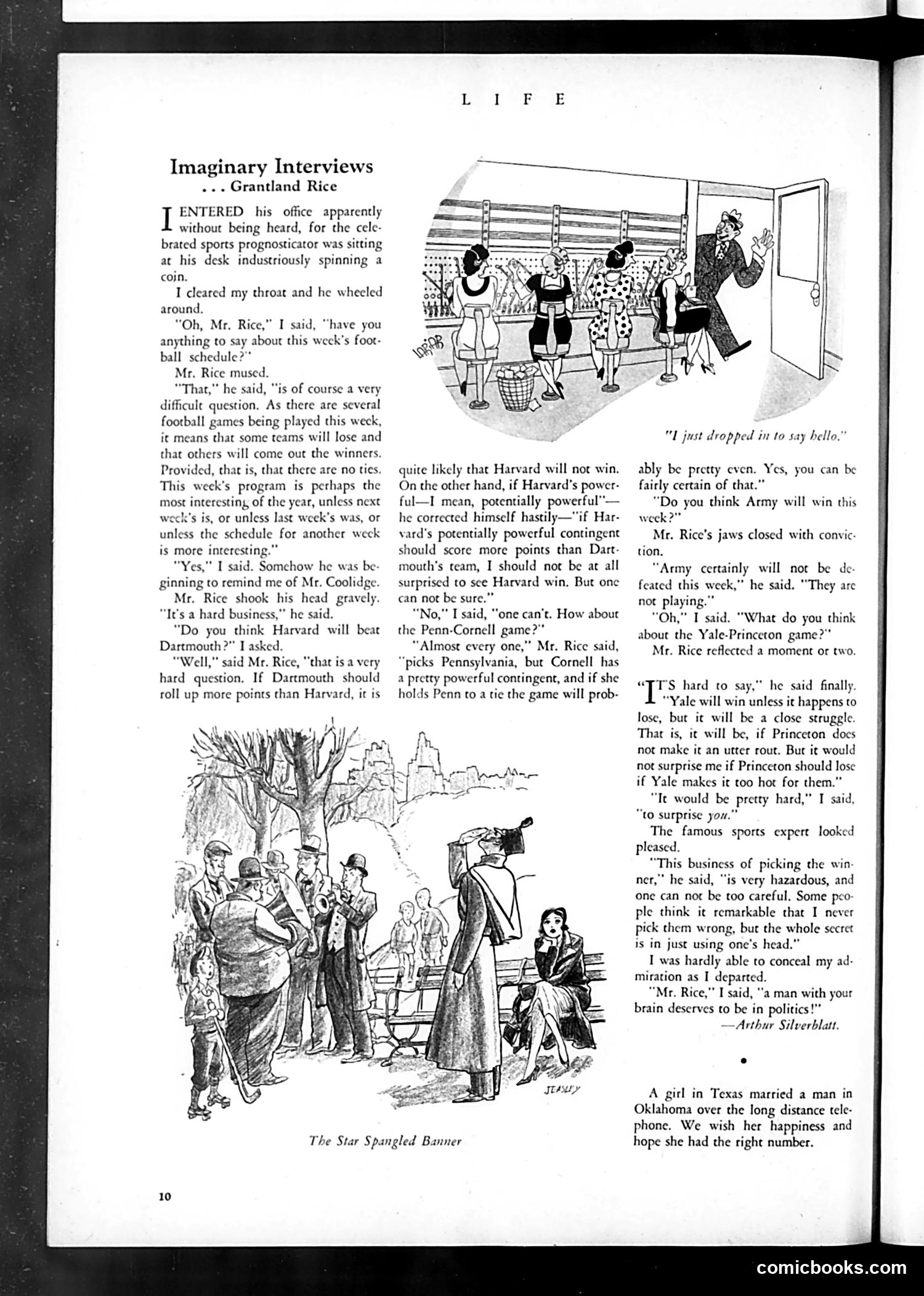
# "Imaginary Interviews: Grantland Rice" This page presents a satirical interview with **Grantland Rice**, a famous sports columnist and prognosticator. The cartoonist mocks Rice's habit of making football predictions by showing him "spinning a coin" to decide outcomes—suggesting his forecasts are essentially guesswork rather than expert analysis. The interview humorously presents Rice confidently predicting various college football games (Harvard, Dartmouth, Penn-Cornell, Army, Yale, Princeton) while the interviewer implies these predictions are unreliable. The accompanying illustrations show campus scenes and "The Star Spangled Banner" being sung at a game. The satire's point: even celebrated sports experts rely on chance, not genuine insight, when forecasting game results. It's a gentle mockery of overconfident sports journalism.