A complete issue · 52 pages · 1932
Life — August 1932
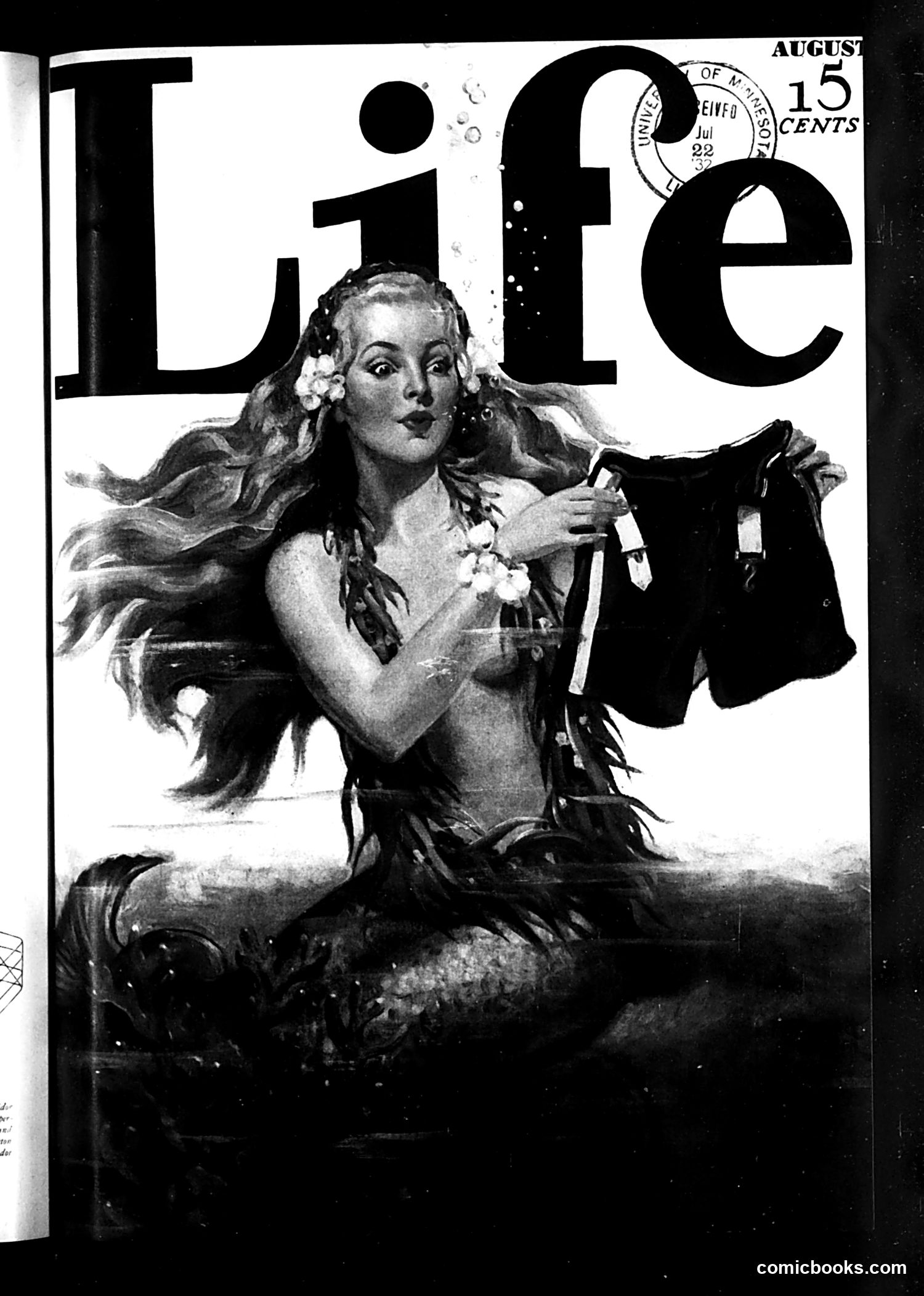
# Life Magazine Cover Analysis This is a Life magazine cover from August 15 (date stamp visible), priced at 15 cents. The image shows a woman in classical/theatrical costume—draped fabric, flowers in her hair—holding up what appears to be undergarments or clothing with an exaggerated, surprised expression. Without additional visible text identifying the specific subject, the satire appears to target **fashion, morality, or women's clothing conventions** of the era. The theatrical styling and her shocked expression suggest commentary on either: - Revealing fashions being considered scandalous - Changing attitudes toward women's dress - Sexual or social propriety standards The exact political or social reference remains **unclear without the article text**, though the tone suggests humorous social criticism typical of Life's satirical approach.
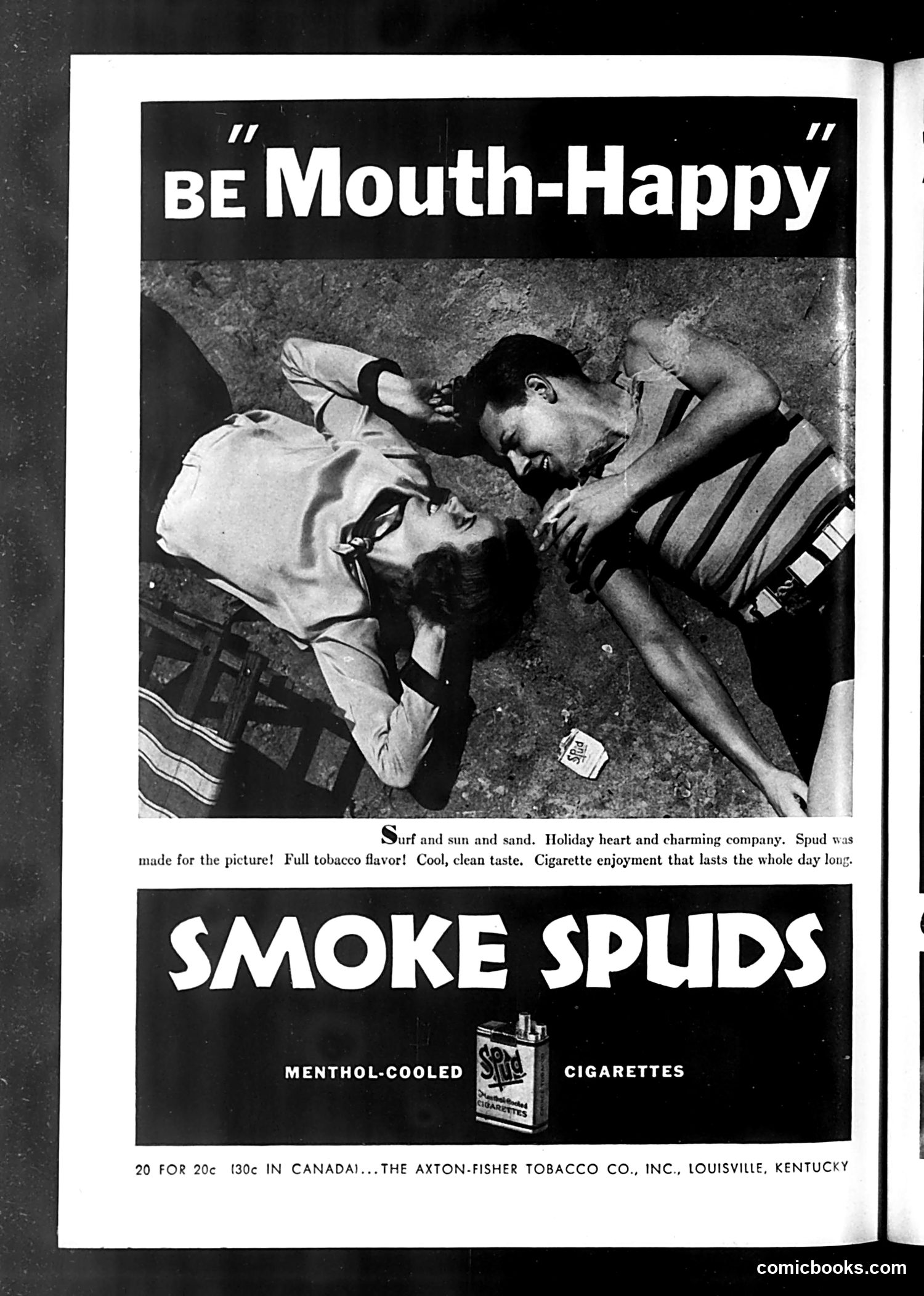
# Historical Advertisement Analysis This is a **cigarette advertisement**, not political satire. It's a "Spuds" brand cigarette ad from The Axton-Fisher Tobacco Co. (Louisville, Kentucky), priced at 20 for 20¢. The ad shows two men lying on sand in casual beach attire, appearing relaxed and happy. The slogan "BE 'Mouth-Happy'" promotes cigarettes as enhancing leisure activities. The accompanying text emphasizes "Surf and sun and sand. Holiday heart and charming company" — linking smoking to vacation pleasures and social enjoyment. This reflects **mid-20th century tobacco marketing**, before widespread health warnings. Cigarettes were advertised as lifestyle products associated with relaxation, friendship, and happiness — messaging now heavily restricted or banned.
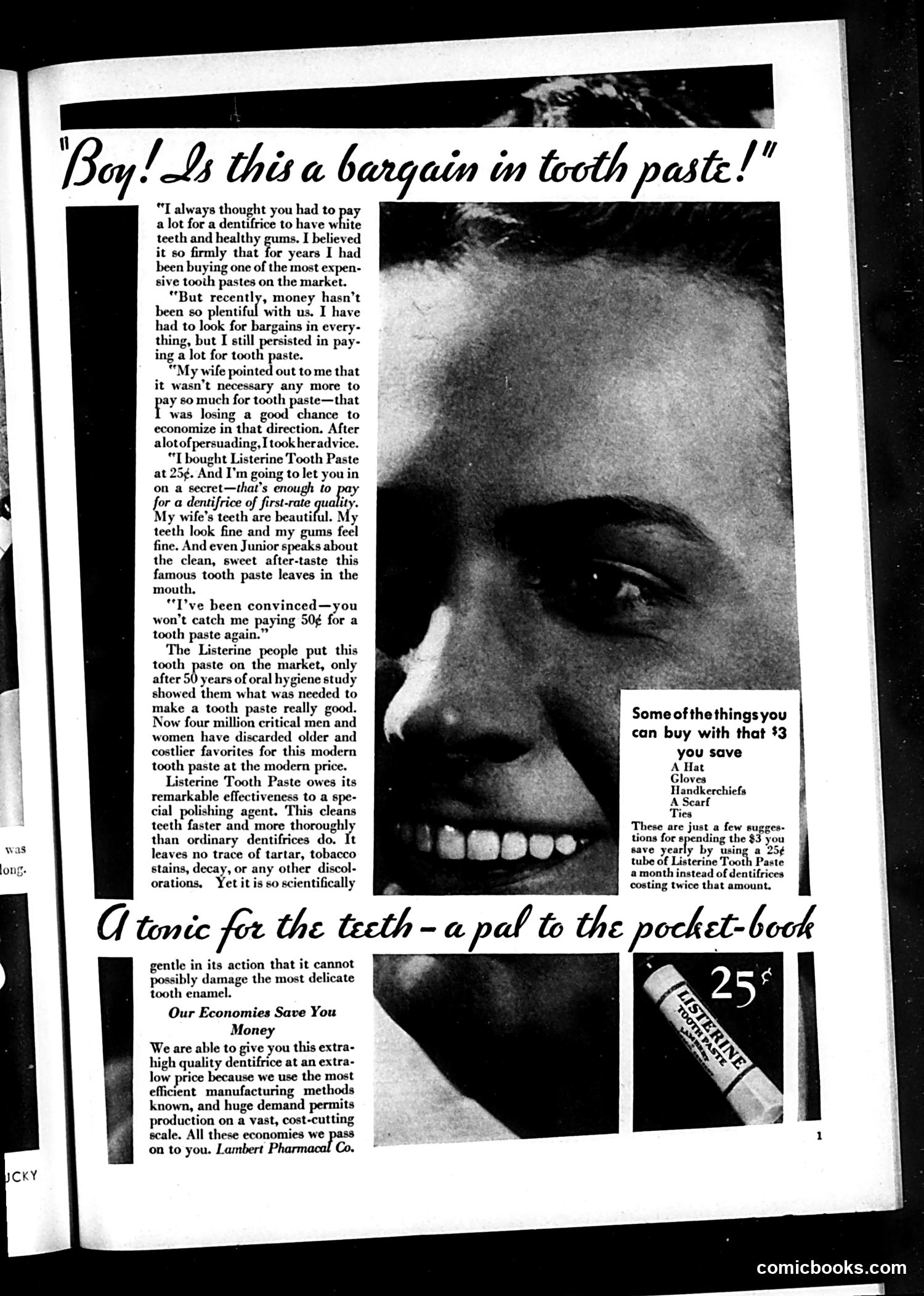
# Listerine Tooth Paste Advertisement This is a full-page advertisement for Listerine Tooth Paste, not political satire. The humor is commercial rather than political. The ad uses a testimonial format: a man describes switching from expensive premium toothpastes to Listerine at 25¢, claiming it delivers equal or superior results. The satire targets consumer behavior—specifically the assumption that higher price equals better quality. The headline "'Boy! Is this a bargain in tooth paste!'" and the sidebar listing what $13 saved annually could buy (a hat, gloves, scarves) appeal to Depression-era economy-consciousness. The copy emphasizes that Listerine's effectiveness comes from "efficient manufacturing methods" and "huge demand," not premium pricing—challenging readers' spending habits on personal care products.
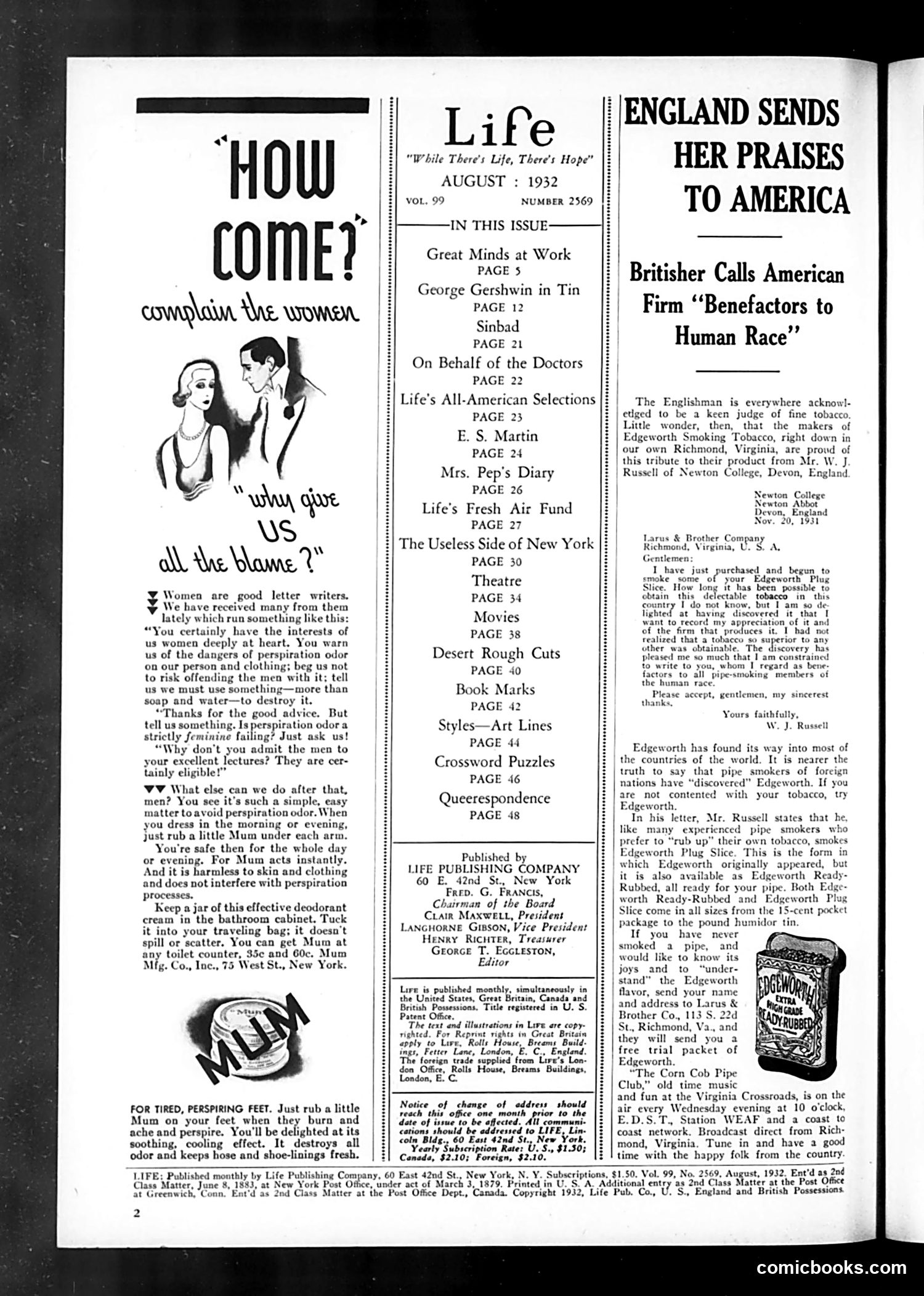
# Analysis of Life Magazine Page (August 1932) The left side features a satirical cartoon titled "How Come?" addressing women's behavior. It depicts a woman and man, with the woman saying "why give us all the blame?" The cartoon critiques women for being overly concerned with personal hygiene and appearance—specifically mentioning deodorant and soap use to prevent body odor. The satire suggests women are unnecessarily blamed for "dangers of perspiration odor" when men could similarly take precautions. The accompanying text humorously argues that if women must use deodorants to be socially acceptable, men should face equal scrutiny for their hygiene standards. It's a commentary on gender double standards regarding personal grooming and social expectations during the Depression era.
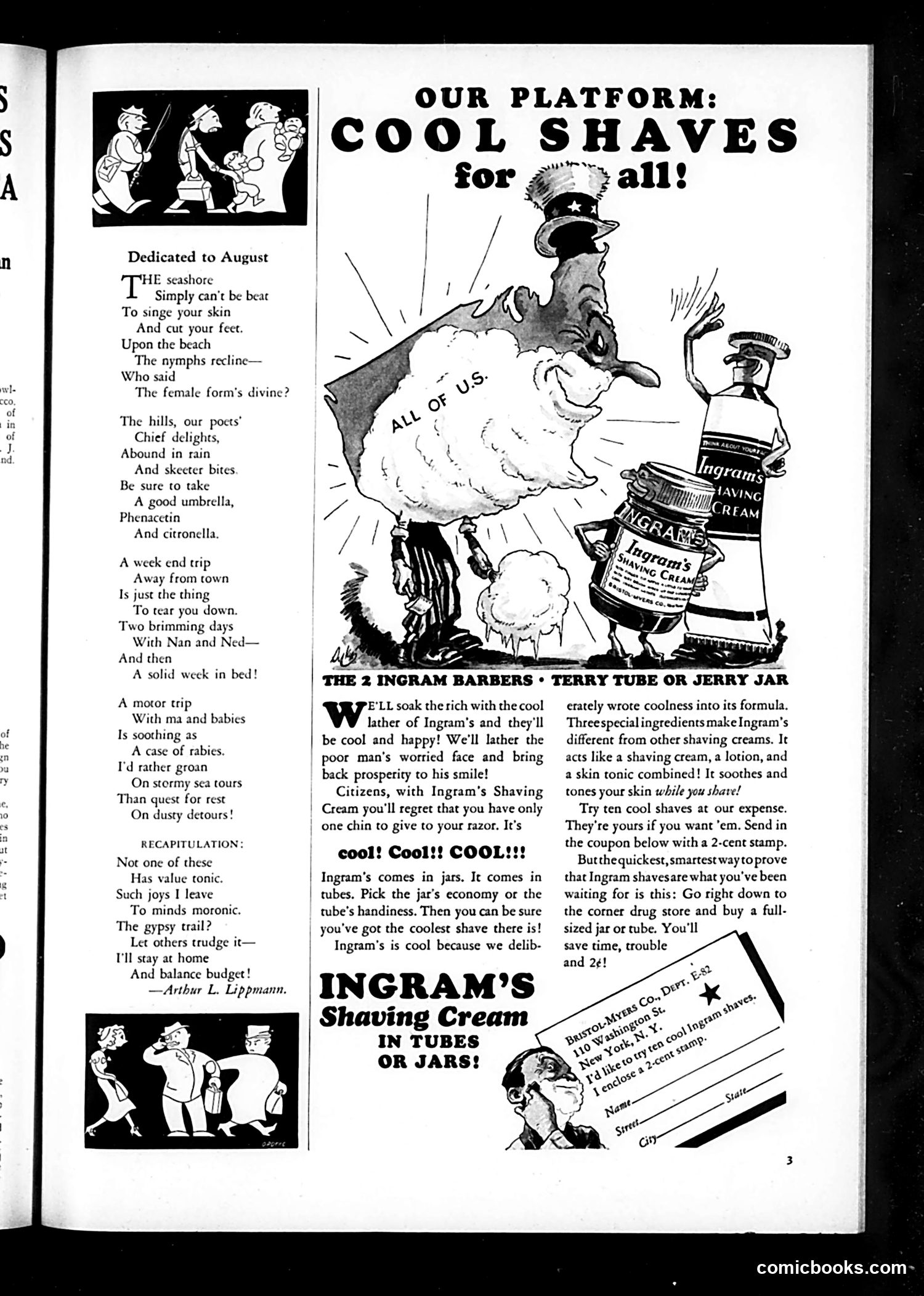
# Analysis This page is primarily an **advertisement for Ingram's Shaving Cream** disguised as editorial content. The main cartoon depicts Uncle Sam (identifiable by his star-spangled hat and "ALL OF US" label) being lathered with Ingram's products by two barbers labeled "THE 2 INGRAM BARBERS." The satire plays on the advertising slogan "COOL SHAVES for all!" — a populist promise that Ingram's product will benefit everyone equally, "poor man's worried face" included. The joke is that even Uncle Sam himself needs cooling relief, suggesting the product's universal appeal. The accompanying poem on the left, "Dedicated to August," romanticizes summer leisure activities. Overall, this blends patriotic imagery with consumer messaging to market the shaving cream as democratically available to all Americans.
# Analysis This is **not a satirical cartoon page**, but rather a **public health advertisement** from Metropolitan Life Insurance Company. The page advocates for annual physical examinations to detect rectal cancer early, when treatment is most successful. The text reports that over 5,000 Americans died from rectal cancer the previous year, most preventably through early detection via thorough physical exams. It criticizes both patient modesty and physician reluctance to conduct complete examinations. The only visual element is an architectural illustration (likely the Metropolitan Life Building in New York) serving as the company's logo. This represents early 20th-century corporate health messaging—insurance companies promoting preventive medicine as both humane and economically sensible, since detecting disease early reduced costly claims.
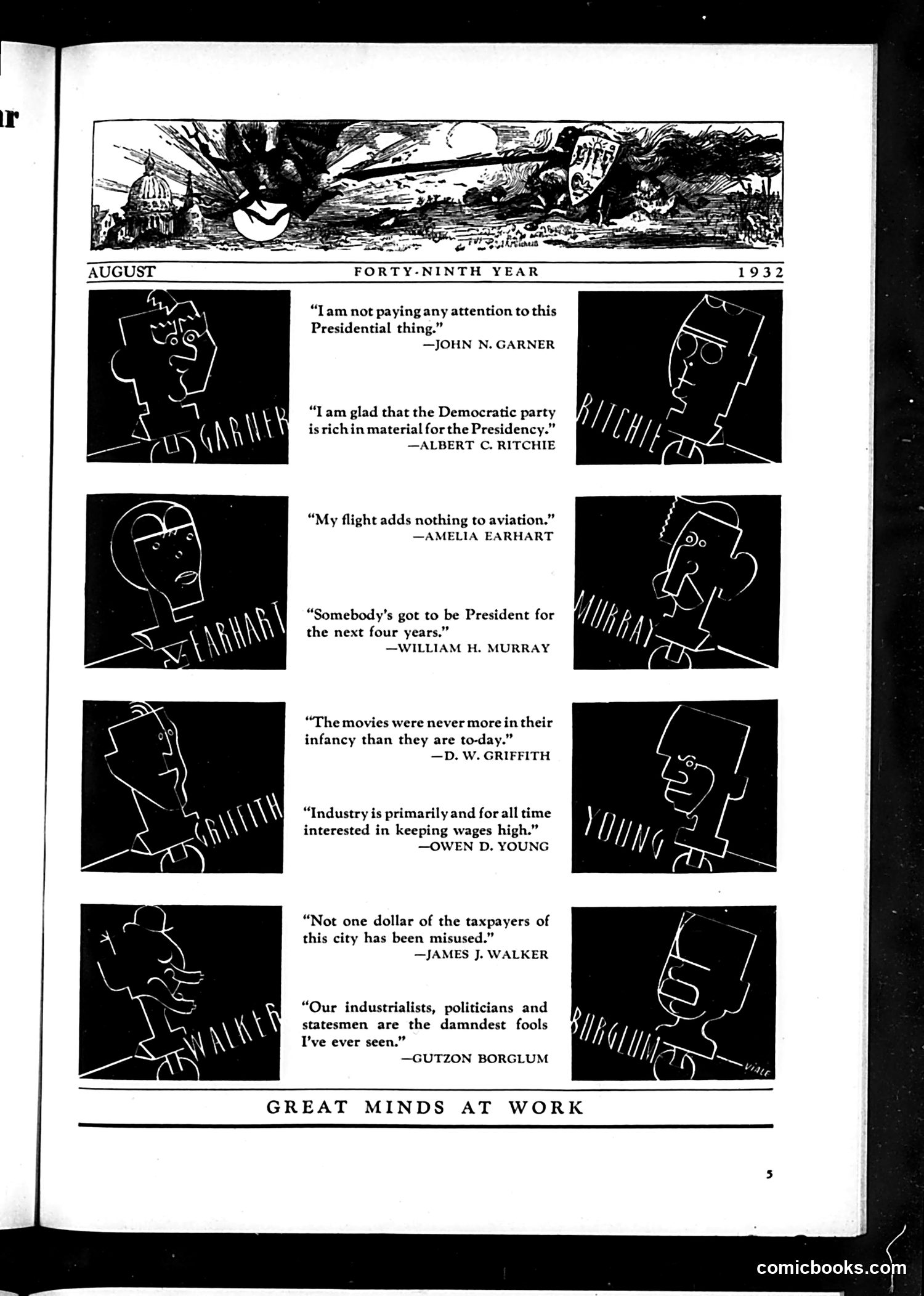
# "Great Minds at Work" — Life Magazine, August 1932 This satirical page mocks prominent public figures during the 1932 Presidential election. The cartoon pairs paired caricatured heads with dismissive quotes, suggesting these "great minds" are actually foolish or self-interested. The figures include John N. Garner (VP candidate), Albert C. Ritchie (Democratic contender), Amelia Earhart (aviator), William H. Murray (governor), D.W. Griffith (filmmaker), Owen D. Young (industrialist), James J. Walker (NYC mayor), and Gutzon Borglum (sculptor). The satire attacks their platitudes and perceived irrelevance to serious issues. The title "Great Minds at Work" is ironic—suggesting these supposedly important people offer only vapid commentary while America faced the Depression. Each quote is paired with a contrasting profile, emphasizing the disconnect between their statements and reality.
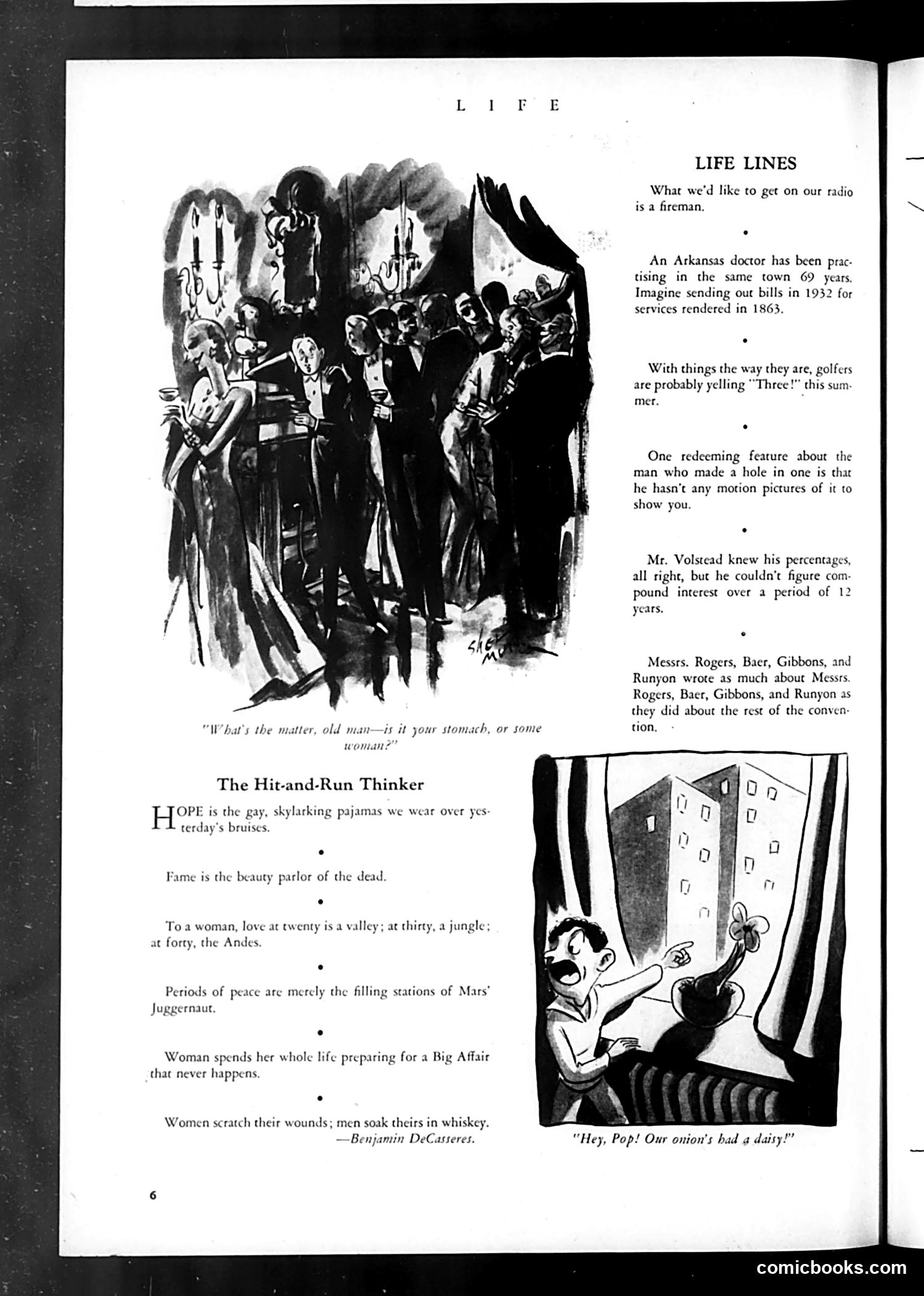
# Analysis of Life Magazine Page This page contains two distinct sections: **"Life Lines"** (top right) offers brief satirical observations about contemporary life, including jokes about radio programming preferences and golf etiquette. **"The Hit-and-Run Thinker"** (bottom left) presents cynical aphorisms about human nature and relationships—observations like "Hope is the gay, skylarking pajamas we wear over yesterday's bruises" and commentary on women's romantic expectations at different ages. The two cartoons illustrate these themes: the upper illustration shows a crowded social gathering with the caption questioning someone's physical complaint, while the lower cartoon depicts a man watering a potted onion plant, captioned "Hey, Pop! Our onion's had a dairy!" This appears to be a visual pun or absurdist humor typical of 1920s-30s magazine satire.
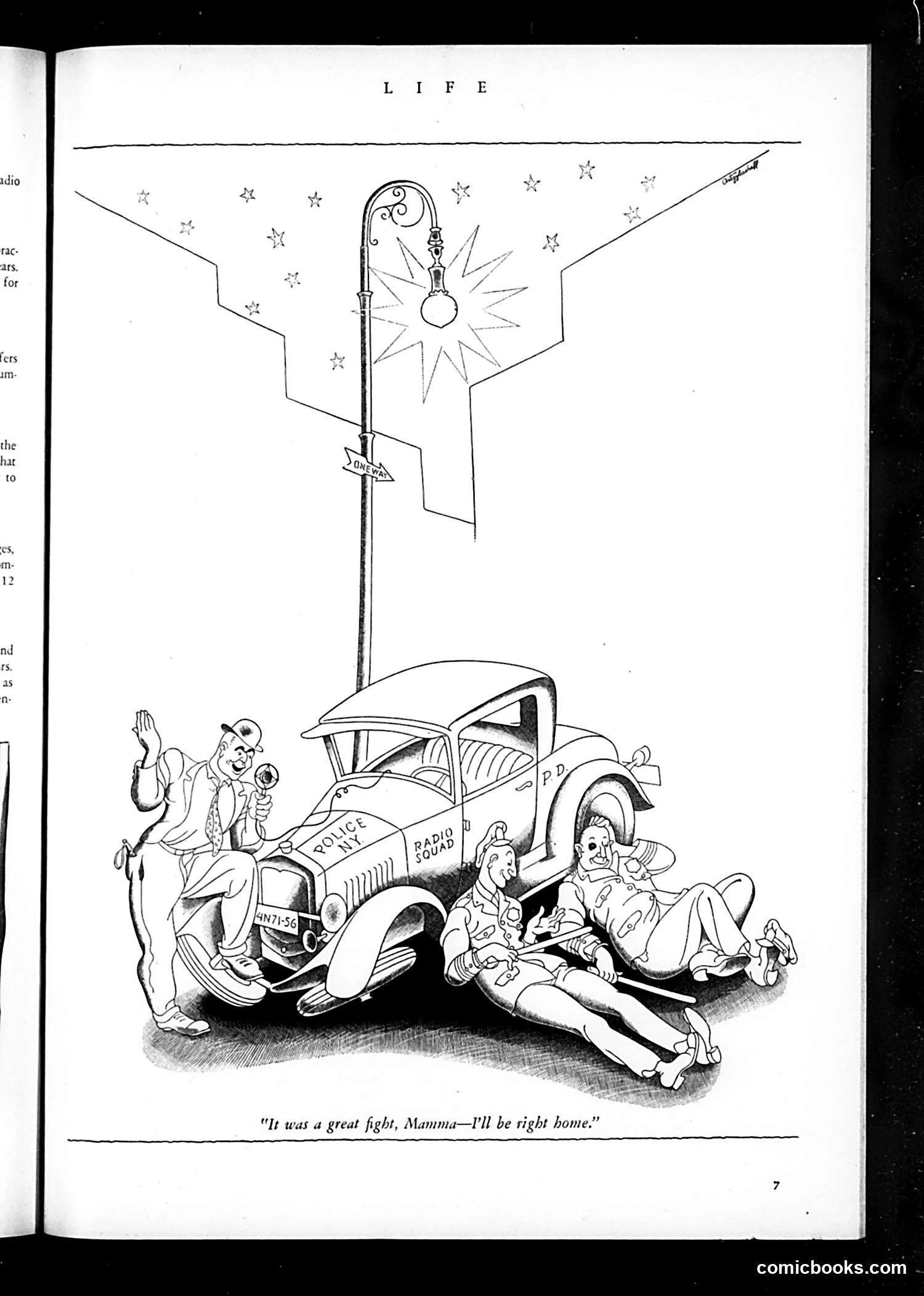
# Analysis of Life Magazine Cartoon This single-panel cartoon depicts a wrecked police radio car with the caption "It was a great fight, Mamma—I'll be right home." The satire targets **radio-equipped police vehicles**, a relatively new technology at the time. The crashed "Police N.Y." car labeled "Radio Squad" has apparently been in a serious accident. The injured officers and civilians strewn about suggest the new technology caused more problems than it solved—possibly implying that distracted driving via radio communication made police work more dangerous. The figure waving in the background appears to be reporting the incident, while the sardonic caption undercuts the gravity of the situation through dark humor. This mocks both the fanfare around police modernization and the unintended consequences of hasty technological adoption in law enforcement.
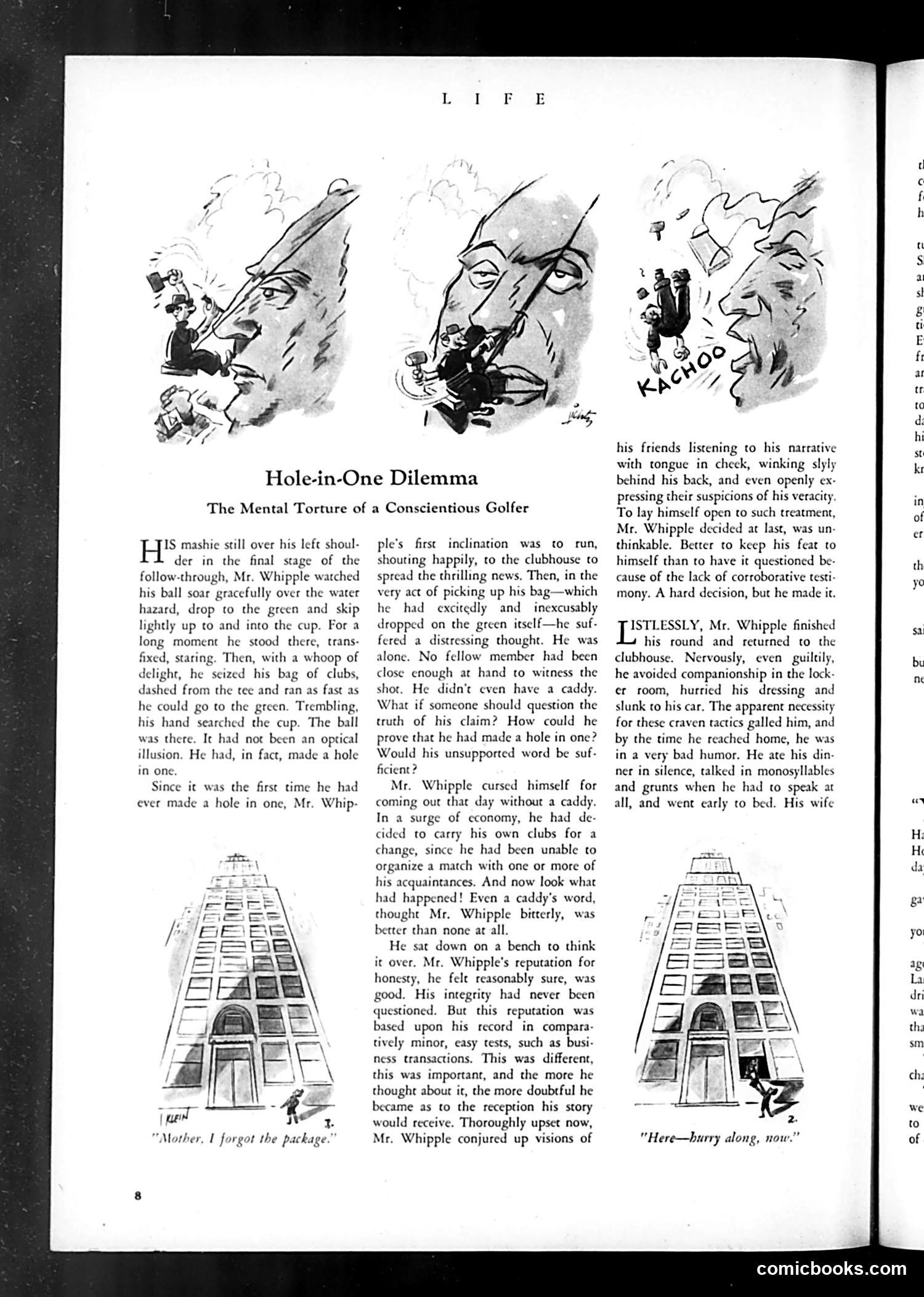
# "Hole-in-One Dilemma: The Mental Torture of a Conscientious Golfer" This satirical piece mocks the social anxiety of a golfer named Mr. Whipple who has achieved a rare hole-in-one but faces a credibility problem: he has no witnesses. The cartoon shows his internal torment—depicted through three caricatured head studies at top showing his distress. The humor centers on early 20th-century golf culture, where such achievements required corroboration. Without a caddy present to verify his claim, Whipple cannot prove his accomplishment to skeptical friends, despite his reputation for honesty. The illustrations of tall buildings suggest he's obsessing over this predicament. The satire targets both golf's social pretensions and the anxieties of maintaining respectability among peers.
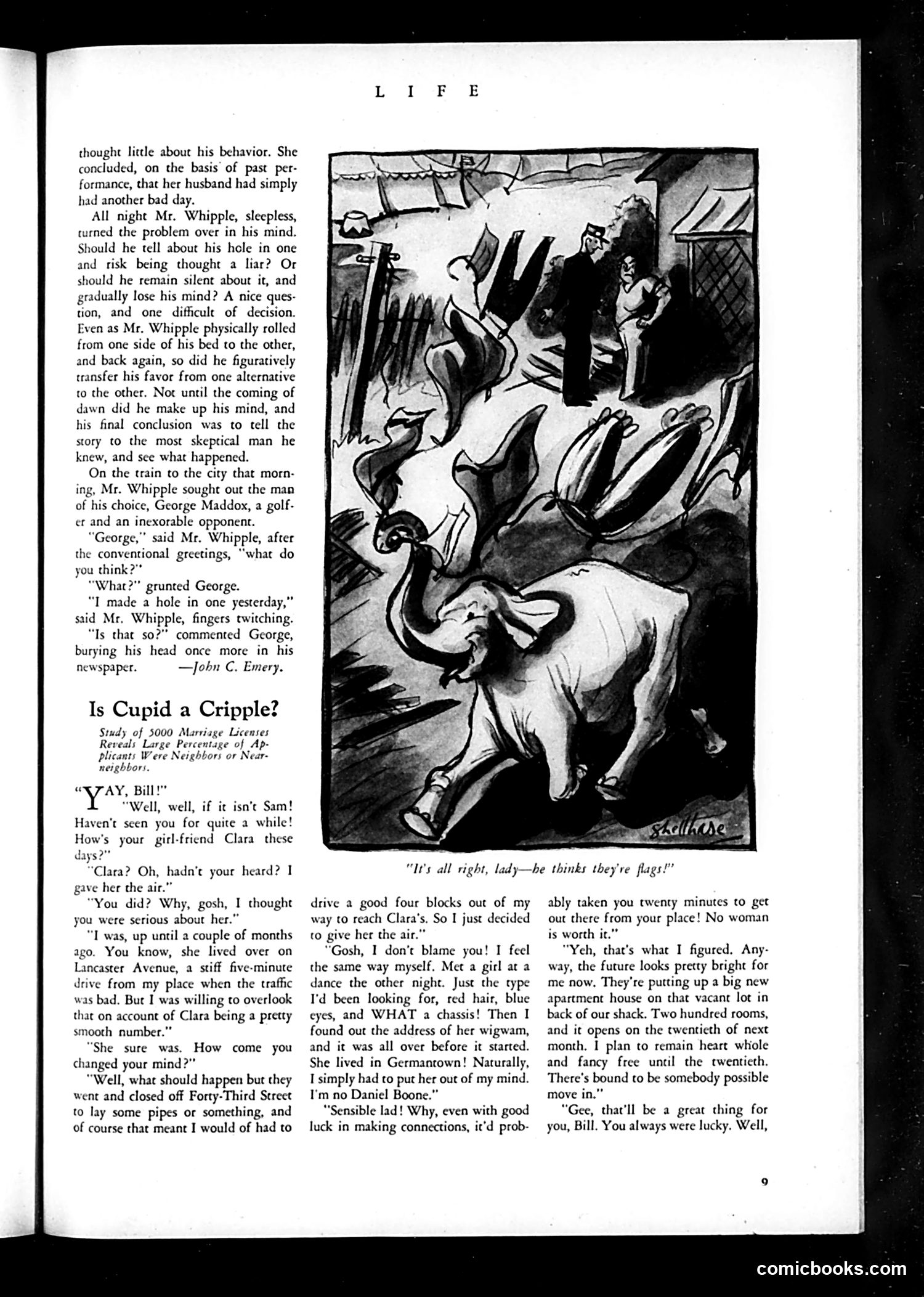
# Analysis of "Is Cupid a Cripple?" This page from *Life* magazine contains a satirical cartoon and accompanying narrative dialogue. The cartoon illustrates a chaotic domestic scene where a man appears to have fallen or been knocked down by a woman, with furniture overturned. The caption reads: "It's all right, lady—he thinks they're flags!" The article's title and dialogue suggest satire about marriage and courtship. The conversation between "Bill" and "Sam" discusses romantic misadventures—specifically, Sam's pursuit of a woman named Clara, whom he pursued but then abandoned due to complications. The humor derives from depicting romantic entanglement as chaotic and absurd, with the cartoon visual reinforcing marriage as conflict rather than harmony. The "Cupid" reference suggests love itself is portrayed as disabled or ineffectual.
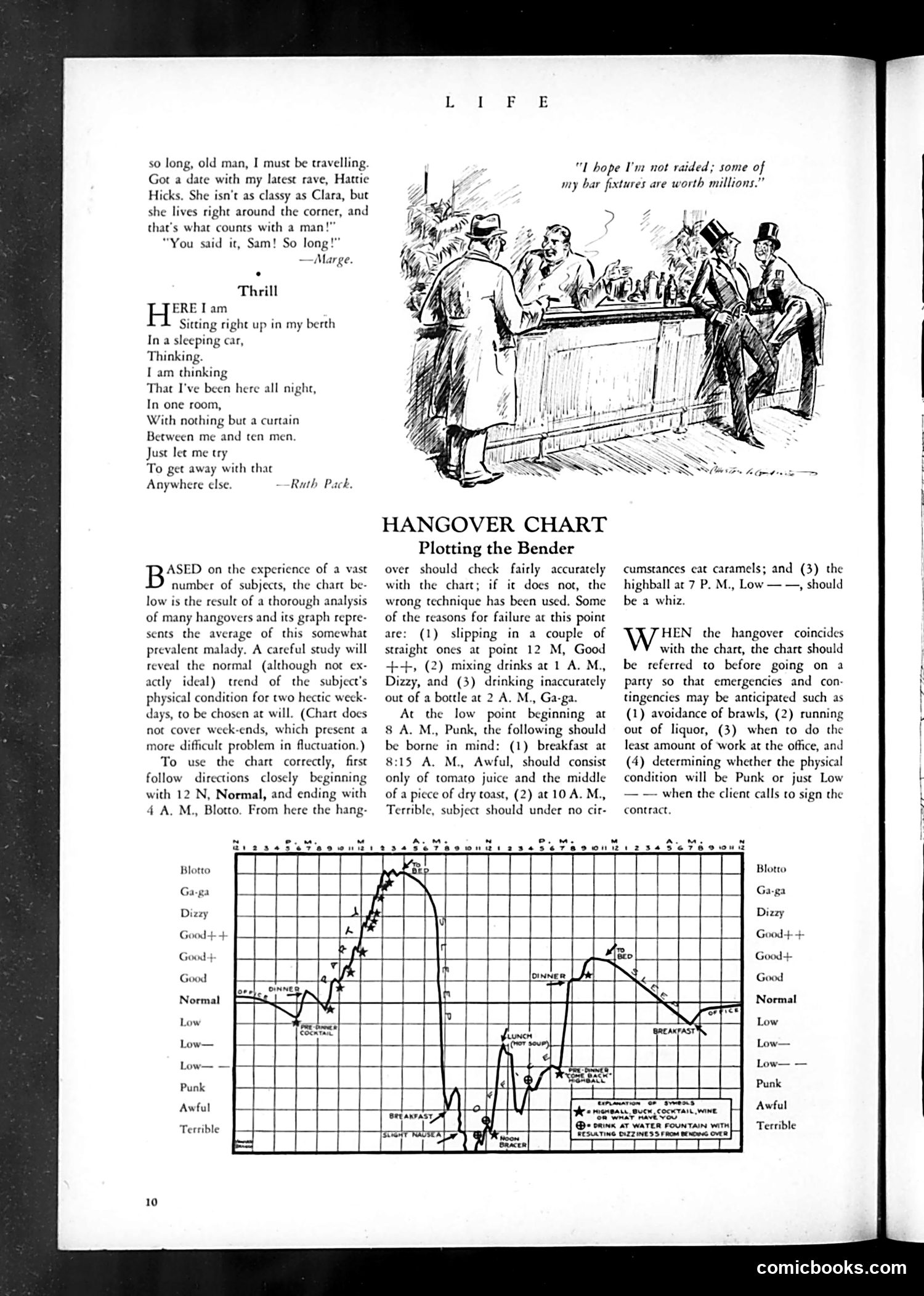
# Hangover Chart Analysis This page satirizes the "morning after" of heavy drinking through two pieces: **"Thrill" poem** by Ruth Pack: A tongue-in-cheek account of waking in a sleeping car with strangers, wanting to escape the awkward situation. **"Hangover Chart"**: A humorous graph plotting a drinker's physical condition over 24 hours, tracking the progression from "Blotto" (drunk) through various states (Dizzy, Good++, Normal, Low, Punk, Awful, Terrible) based on a specific drinking schedule. The chart includes comedic annotations about breakfast timing, drinking patterns, and remedies like "drink of water fountain with straw." The satire targets the predictable cycle of excessive drinking and its consequences—a commentary on 1920s-30s social drinking culture and hangover mythology, presenting the experience as both inevitable and measurable through pseudoscientific graphing.