A complete issue · 68 pages · 1932
Life — May 1932
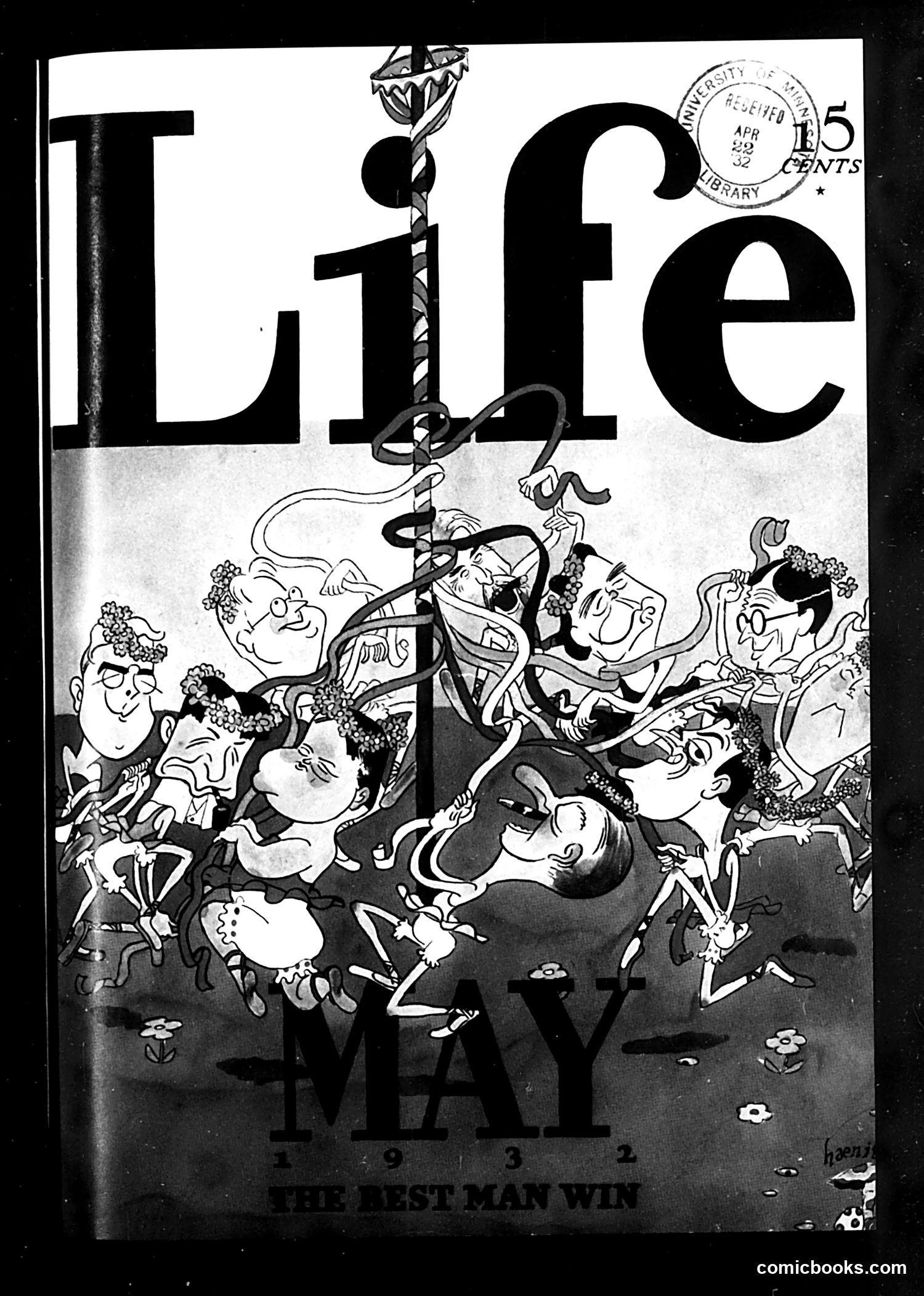
# Life Magazine Cover Analysis This is a **Life Magazine cover** from 1932 (dated April 29, based on the library stamp) priced at 15 cents. The cover depicts **"The Best Man Win,"** showing a caduceus (medical/commercial symbol) surrounded by caricatured figures in what appears to be a competitive struggle or "pile-on." The exaggerated cartoon faces suggest **political or business rivals competing fiercely**. Given the 1932 date during the **Great Depression**, this likely satirizes **competition for resources, jobs, or political power** during economic crisis. The chaotic tangle of figures grasping and climbing suggests the desperation and ruthless scramble for survival characteristic of that era. The specific identities of the caricatures are unclear without additional context, but the overall message critiques the brutal, cutthroat nature of American competition during economic hardship.
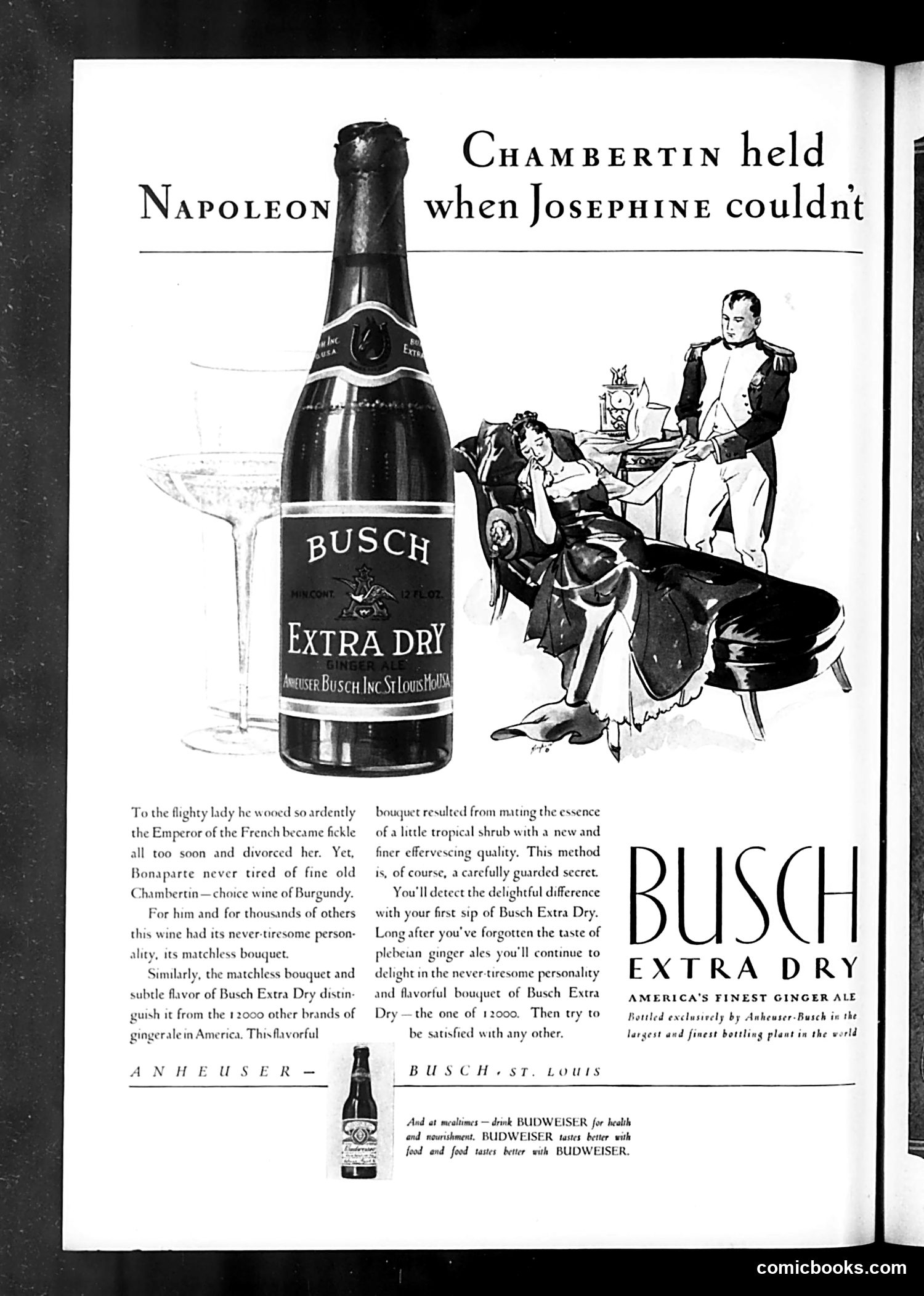
# Busch Extra Dry Advertisement This is a **beer advertisement** rather than political satire. The headline "Napoleon held Chambertin when Josephine couldn't" references the historical figures Napoleon and Josephine to evoke luxury and exclusivity. The ad's narrative claims that Napoleon loved fine Burgundy wine (Chambertin), and when Josephine was unavailable, he turned to Busch Extra Dry ginger ale as a substitute. The accompanying illustration shows an elegantly dressed couple in period costume, positioned to suggest romantic refinement. The advertisement attempts humor by comparing ginger ale to Napoleon's prestigious wine tastes, while positioning Busch as an acceptable alternative for the discerning drinker. It emphasizes the product as "America's finest ginger ale," bottled by Anheuser-Busch in St. Louis.
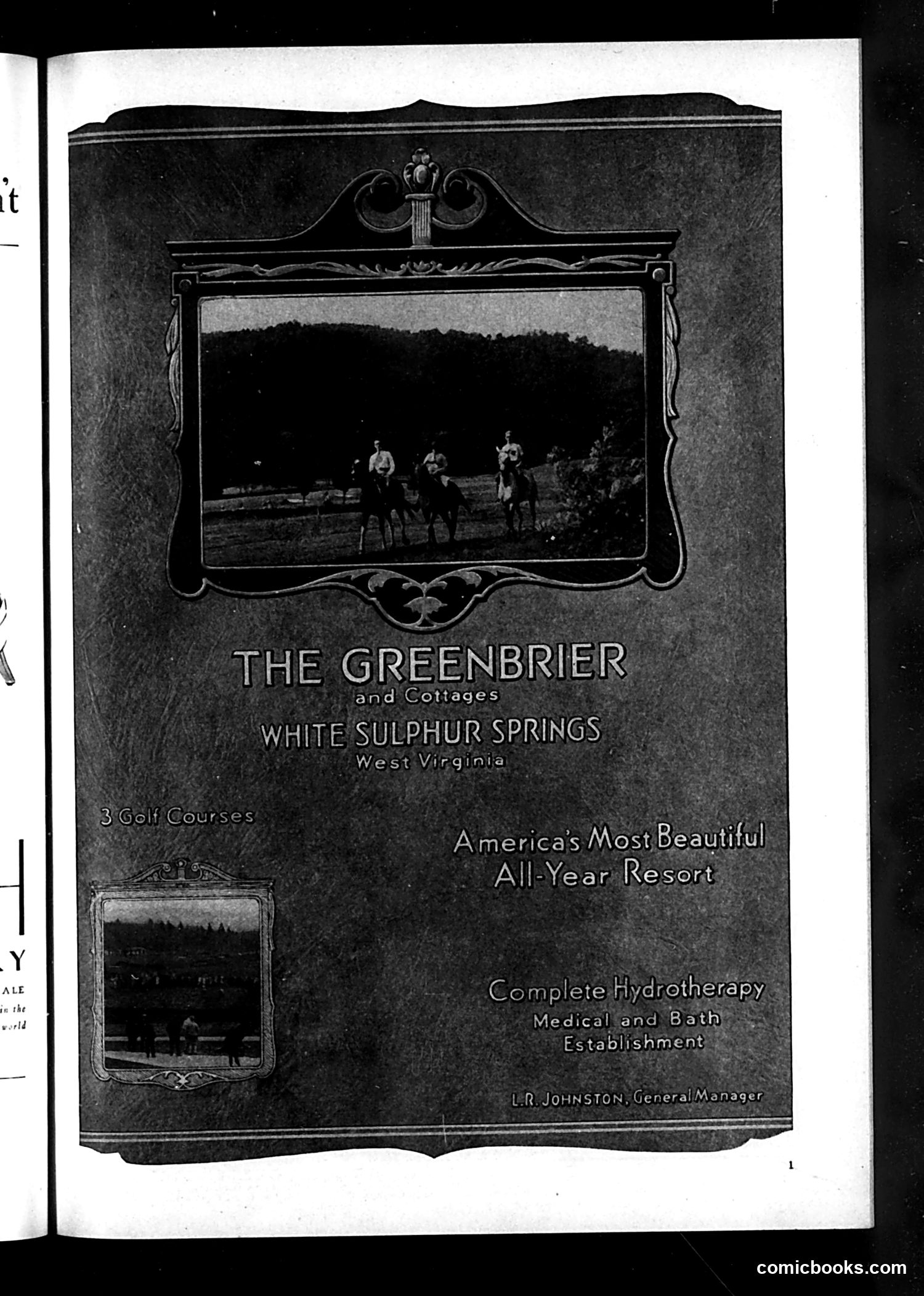
# Page Analysis This appears to be an **advertisement page rather than satirical content**. It promotes "The Greenbrier and Cottages" resort at White Sulphur Springs, West Virginia, marketed as "America's Most Beautiful All-Year Resort." The page advertises: - 3 golf courses - Complete hydrotherapy medical and bath establishment - L.R. Johnston as General Manager The image shows people on horseback in a pastoral landscape, emphasizing the resort's recreational and leisure amenities. This is a straightforward promotional piece from *Life* magazine, likely from the early 20th century, targeting wealthy Americans seeking resort destinations and health-focused spa treatments—common attractions during that era.
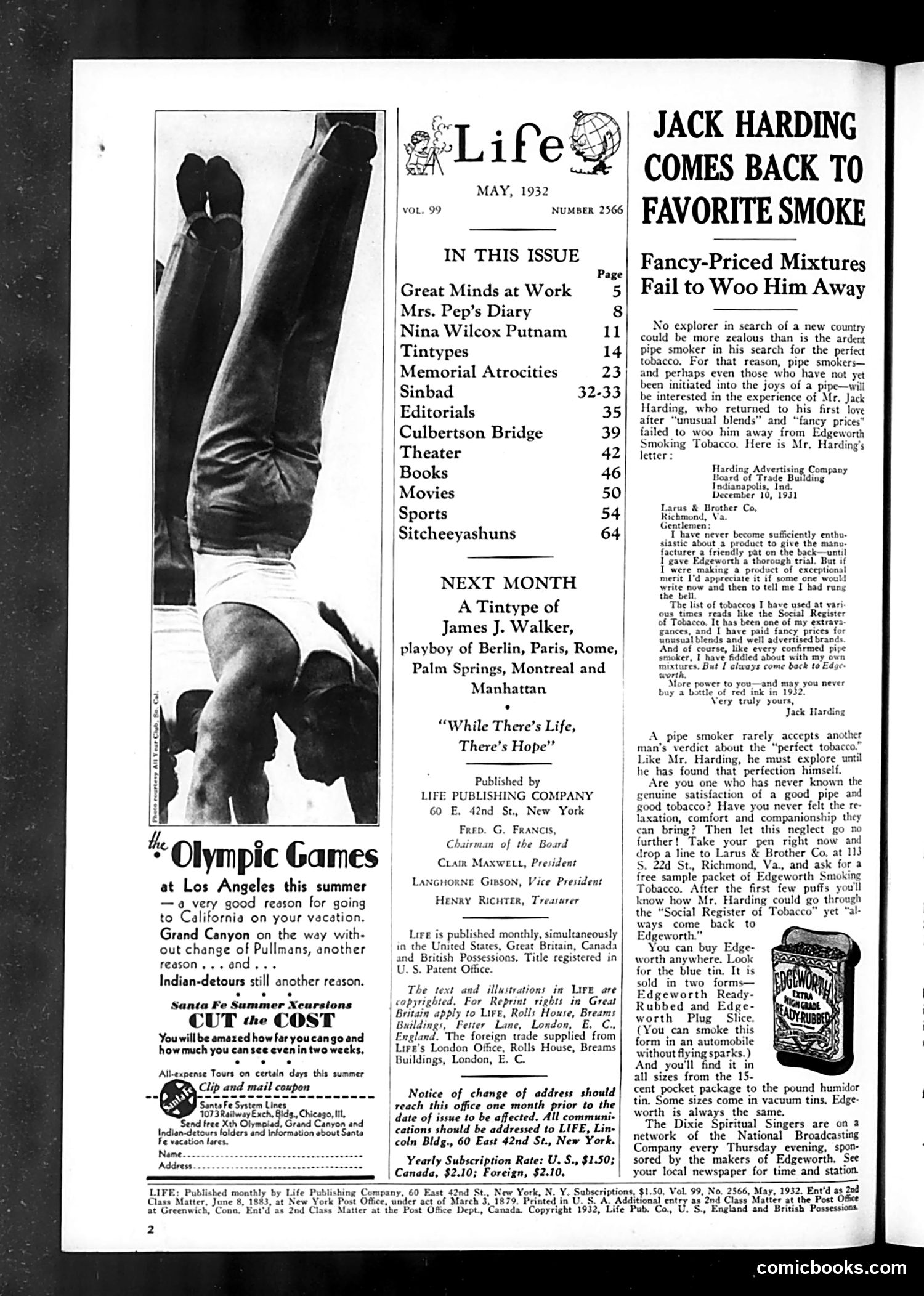
# Analysis of This Life Magazine Page (May 1932) This page contains primarily **advertising and editorial content**, not political cartoons. The main visual is a photograph of an Olympic diver in mid-dive, promoting the 1932 Los Angeles Olympic Games. The substantive content is an **advertorial letter from Jack Harding** about pipe tobacco. Harding describes his search for the "perfect" smoking blend, expressing frustration that "fancy-priced mixtures" from competitors failed to satisfy him. He endorses Edgeworth brand tobacco as superior, claiming it offers genuine quality without inflated prices. The piece uses humor to position Edgeworth as the authentic choice for discerning smokers, contrasting it with overpriced competitors. This represents straightforward **consumer advertising** disguised as personal testimony—a common 1930s marketing technique.
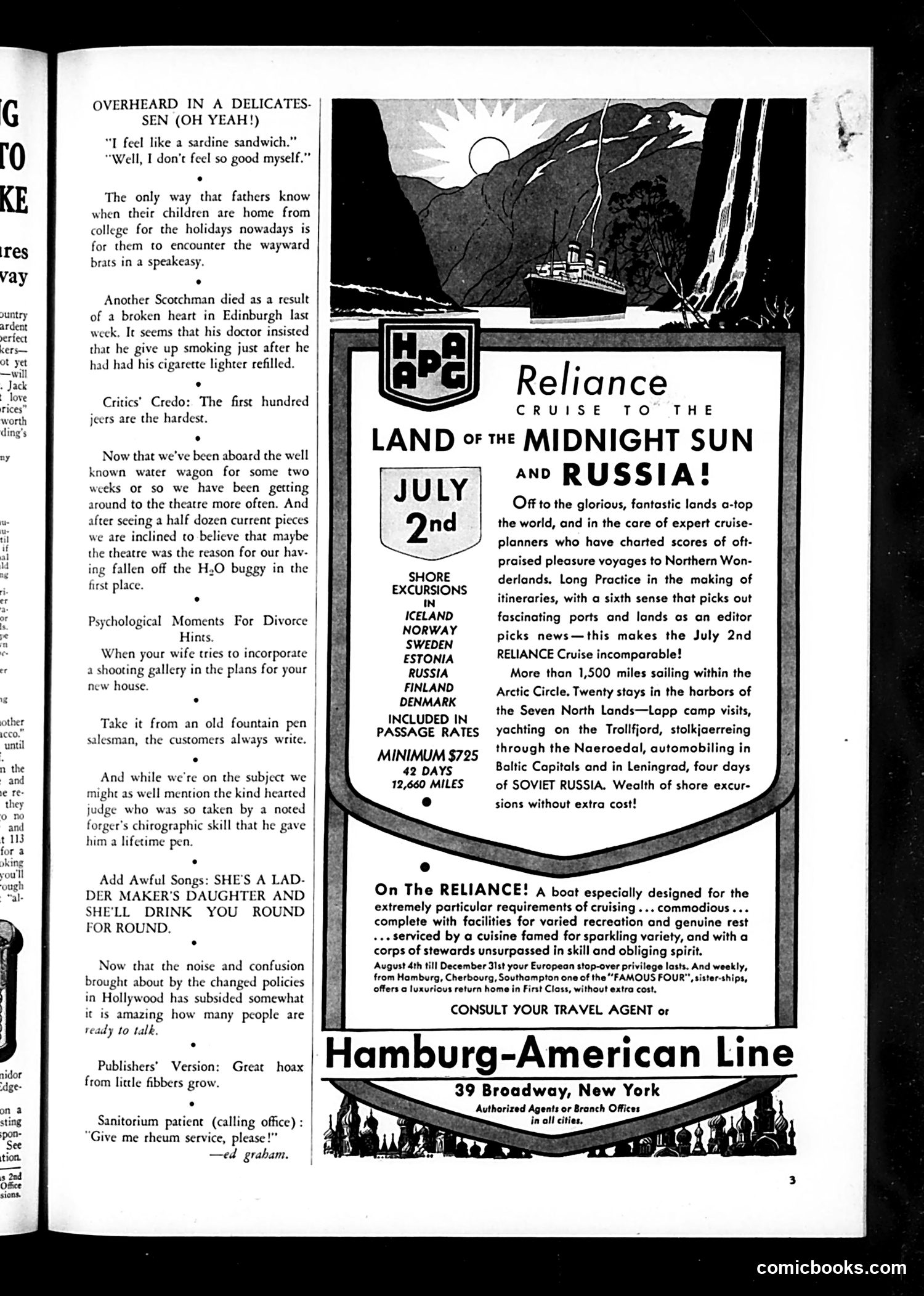
# Content Analysis This page is primarily **advertising, not satire or political commentary**. The dominant feature is a large Hamburg-American Line cruise advertisement promoting the *Reliance* ship departing July 2nd for Northern Europe and Russia, offering 42-day voyages starting at $725. The left column contains brief humor items under "OVERHEARD IN A DELICATESSEN" — casual jokes about fathers discovering college-age children home for holidays, a Scotsman dying of a broken heart, and marital advice. These are lightweight observational humor pieces typical of *Life* magazine's humor section, not political cartoons. The advertisement itself depicts a stylized ship and Nordic landscape, appealing to travelers interested in exotic destinations during what appears to be the 1920s-1930s era.
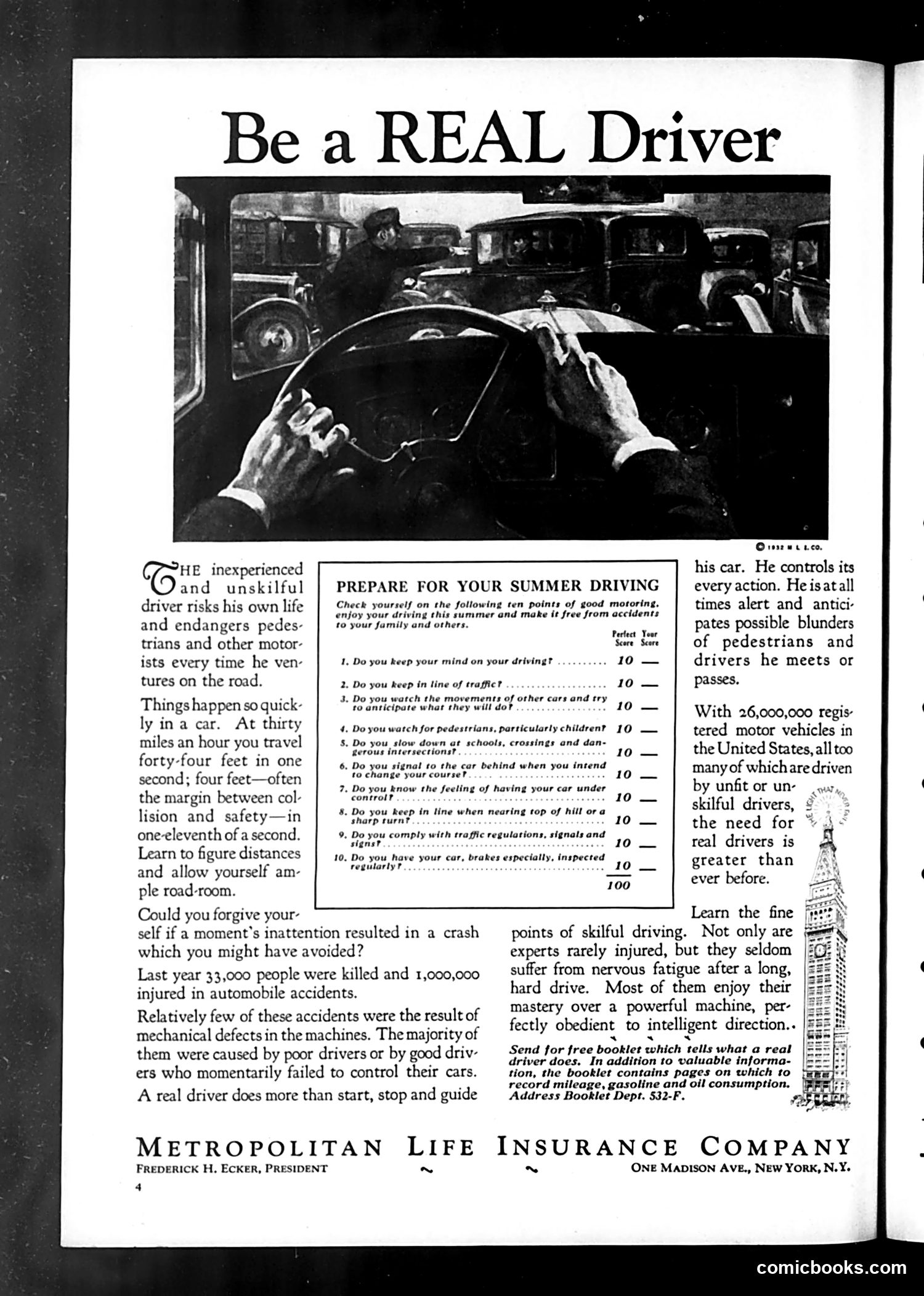
# "Be a REAL Driver" — Metropolitan Life Insurance Ad This is a **safety advertisement** by Metropolitan Life Insurance, not satire. The page promotes responsible summer driving through a self-assessment checklist (10 questions scoring up to 100 points). The black-and-white photograph shows hands gripping a steering wheel, emphasizing driver control. The ad argues that most accidents result from **driver error rather than mechanical failure**: "The majority of them were caused by poor drivers or by good drivers who momentarily failed to control their cars." The message targets inexperienced or careless drivers, contrasting them with "real drivers" who master vehicle control through attentiveness and skill. The ad offers a free booklet on proper driving technique, reflecting early 20th-century automotive safety concerns as car ownership expanded and traffic fatalities rose.
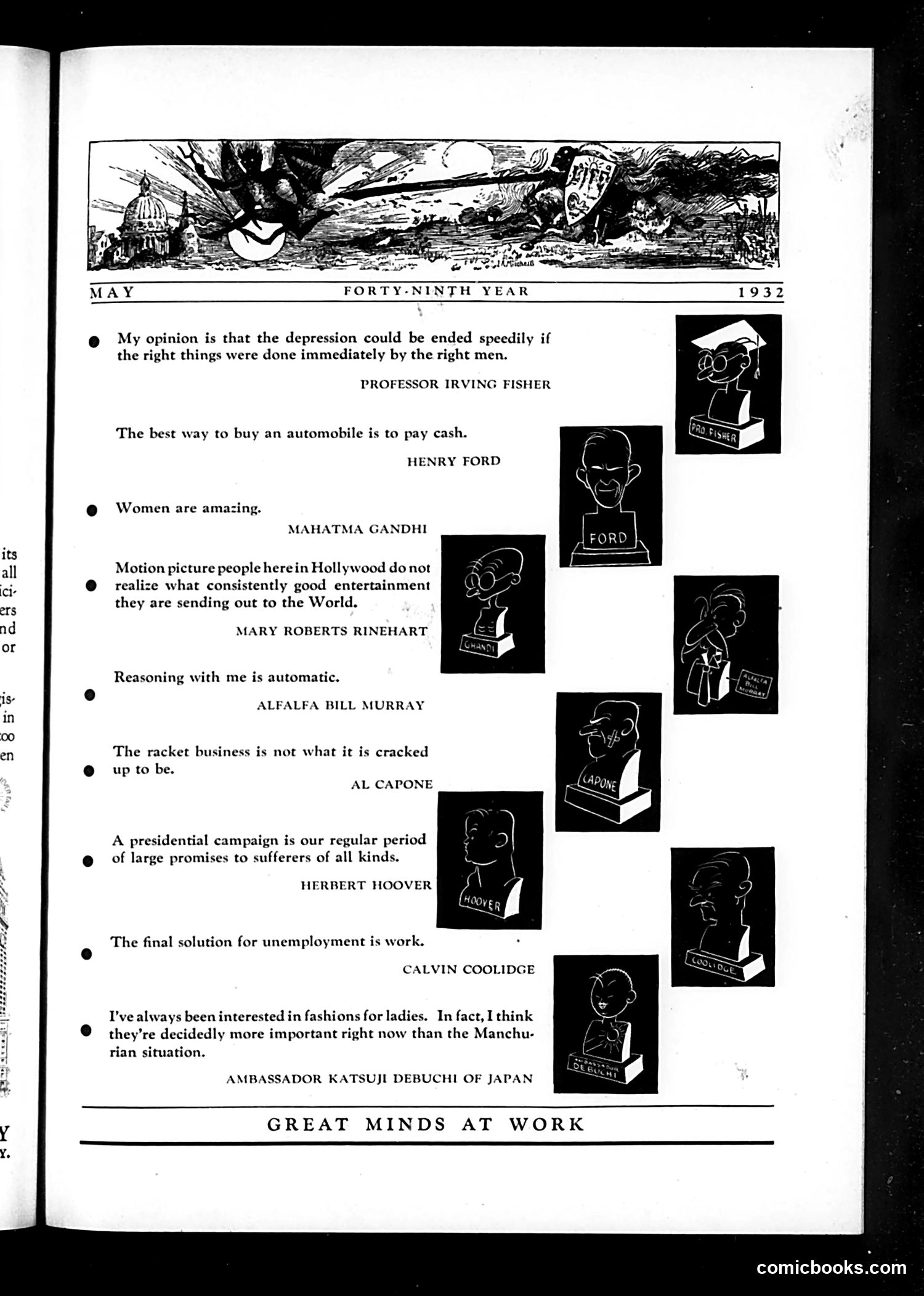
# "Great Minds at Work" - Life Magazine, May 1932 This page presents satirical quotes from prominent public figures during the Great Depression. Each quote appears alongside a caricatured bust, mocking the disconnect between leaders' statements and economic reality. **Key figures and satire:** - **Henry Ford** on buying cars with cash—absurd when millions are unemployed - **Herbert Hoover** on presidential campaigns making "large promises"—critiquing Depression-era political rhetoric - **Calvin Coolidge** claiming "work" solves unemployment—simplistic during systemic collapse - **Al Capone** on the racket business—darkly comparing organized crime to legitimate enterprise The overall satire attacks these "great minds" for offering platitudes or self-serving commentary while Americans suffer economic devastation. The title itself is ironic—these aren't actually great minds addressing real solutions.
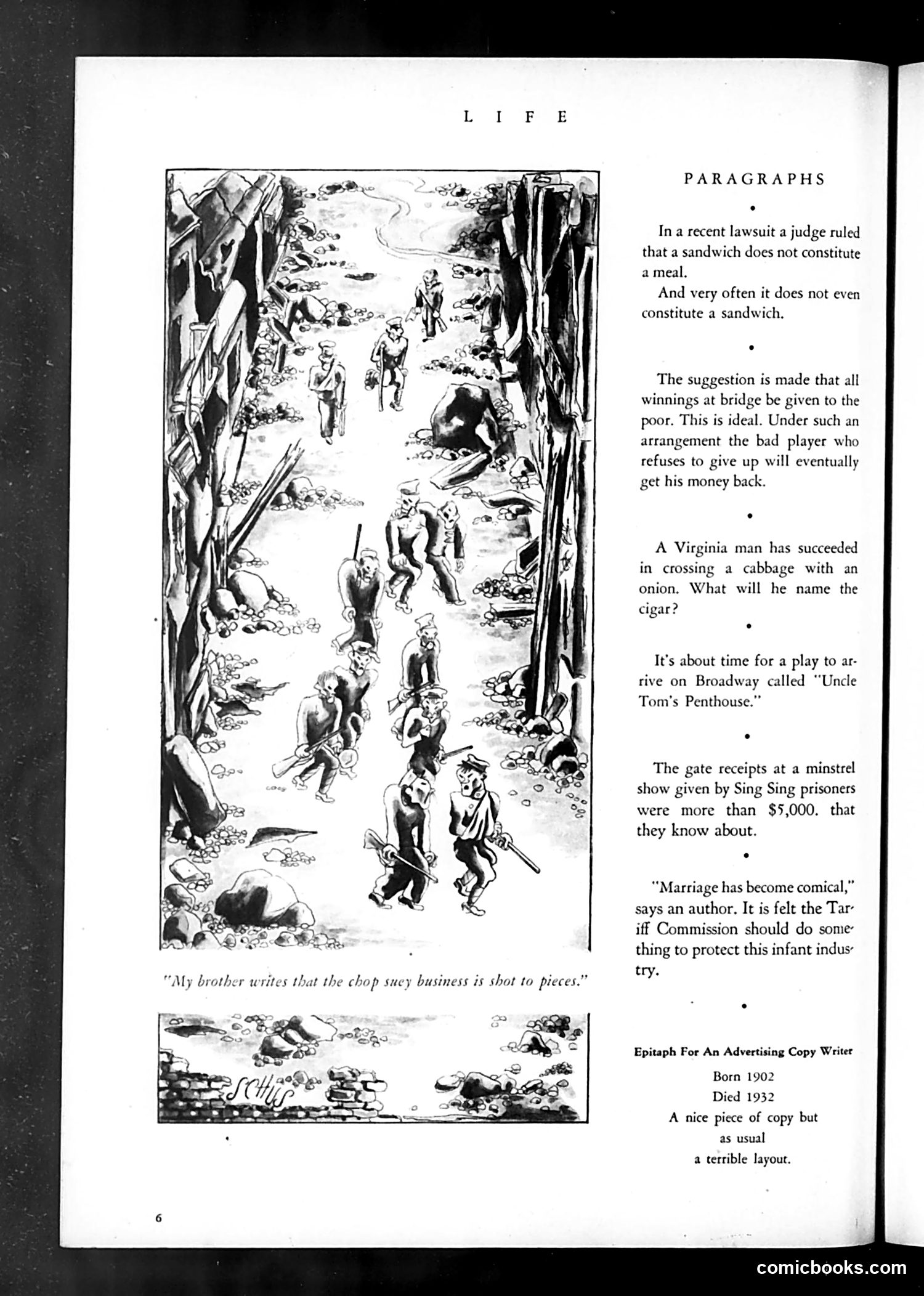
# Analysis of Life Magazine Page This page contains a large cartoon showing people working in what appears to be a canyon or quarry, with the caption "My brother writes that the chop suey business is shot to pieces." The joke references the economic collapse of Chinese restaurants during the Great Depression era. The "Paragraphs" section contains brief humorous items satirizing contemporary society: a lawsuit about sandwich definitions, bridge winnings for the poor, agricultural crossbreeding experiments, Broadway productions, and a minstrel show's gate receipts. The final item mockingly eulogizes an advertising copywriter (1902-1932) as having "a terrible layout"—a pun on both the copywriter's death and advertising terminology. The overall tone reflects 1930s American satirical humor about Depression-era economics and social absurdities.
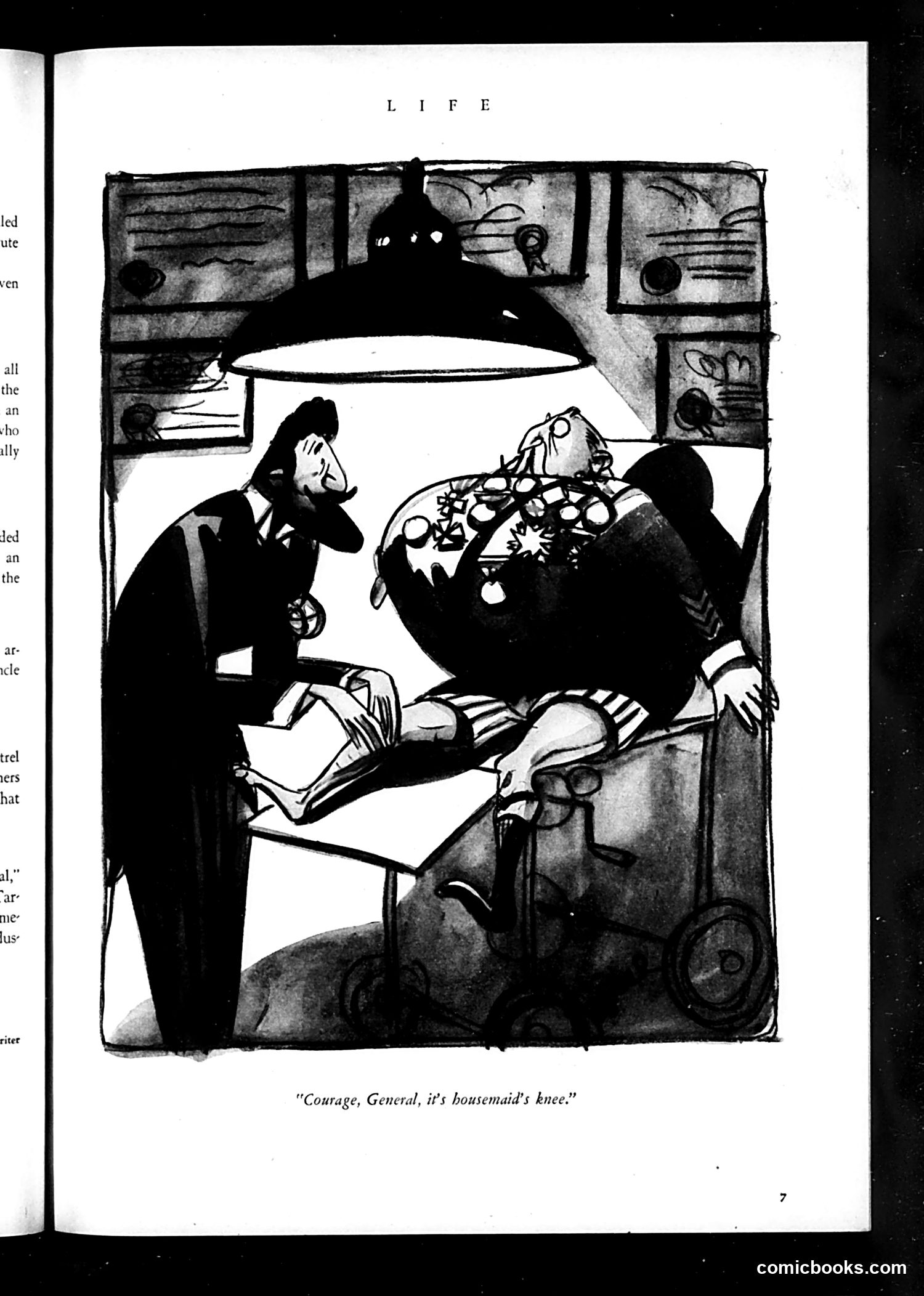
# Political Cartoon Analysis This cartoon appears to be a WWI-era satirical piece from *Life* magazine. It depicts a military general (identifiable by uniform and insignia) receiving news from what appears to be a subordinate officer or messenger. The central figure, labeled as a "housemaid's knee," suggests an injury or ailment—likely referencing "housemaid's knee," a real medical condition (bursitis). The satire targets military leadership, possibly mocking generals for treating minor injuries seriously or using health concerns as excuses. The ornate, decorated uniform covered in medals contrasts with the trivial nature of the ailment mentioned, emphasizing the cartoon's mockery of pompous military authority prioritizing minor complaints over actual wartime duties. The specific general depicted remains unclear without additional context.
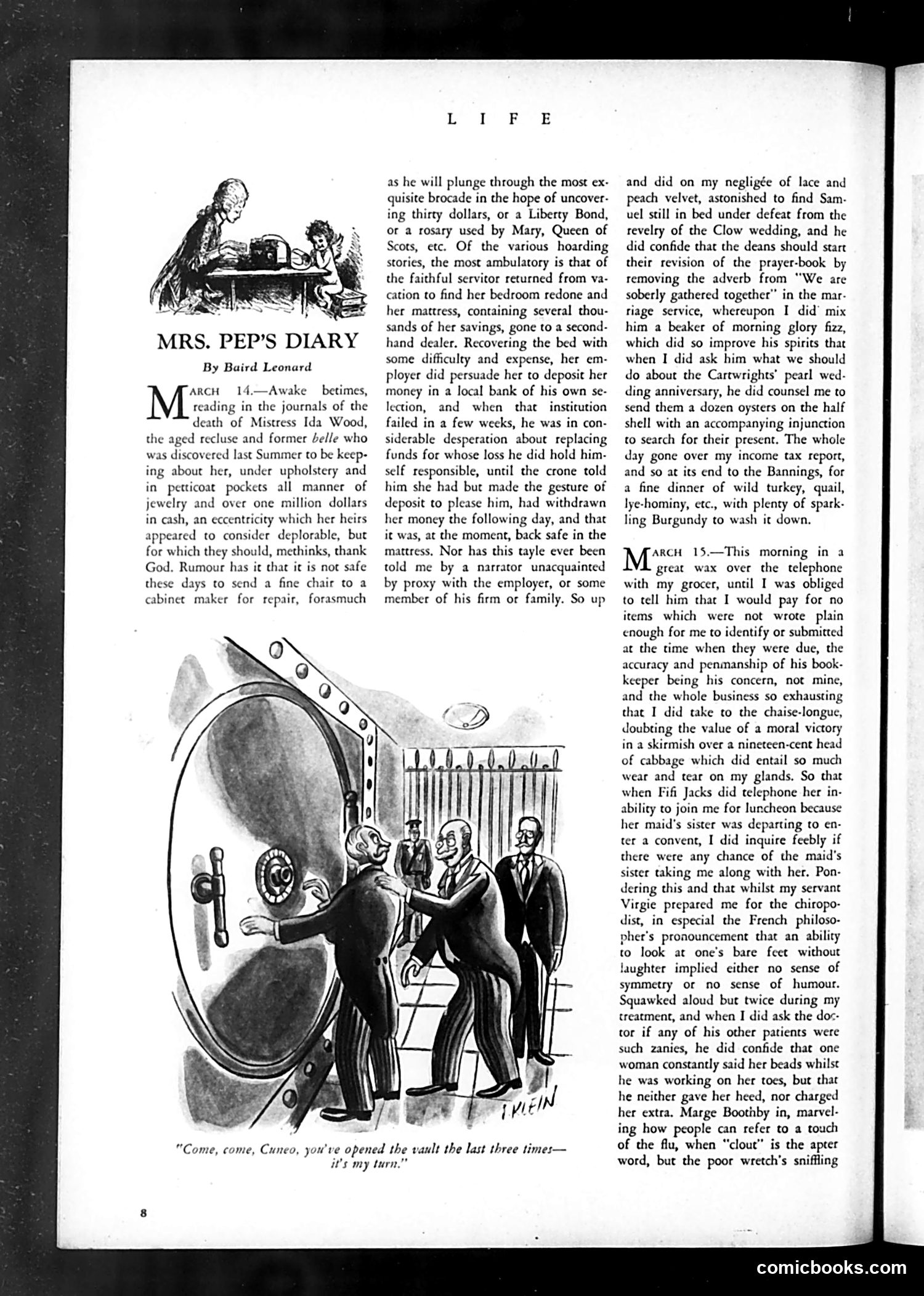
# Analysis of "Mrs. Pep's Diary" Page This is a humorous domestic advice column by Baird Leonard featuring the fictional Mrs. Pep. The main cartoon depicts a large bank vault being opened by several men in suits, illustrating a story about a servant who discovered hidden jewelry and over one million dollars in cash belonging to the deceased mistress Ida Wood. The satire targets wealthy society women's financial irresponsibility and secretive hoarding of valuables. The "diary" format mocks advice columnists while documenting upper-class domestic absurdities—including disputes over tea, prayer-book corrections, and chiropodist visits. The humor relies on depicting the petty concerns and moral vanities of privileged households, contrasting them with servants' practical struggles. This reflects 1920s-30s social commentary on class disparities.
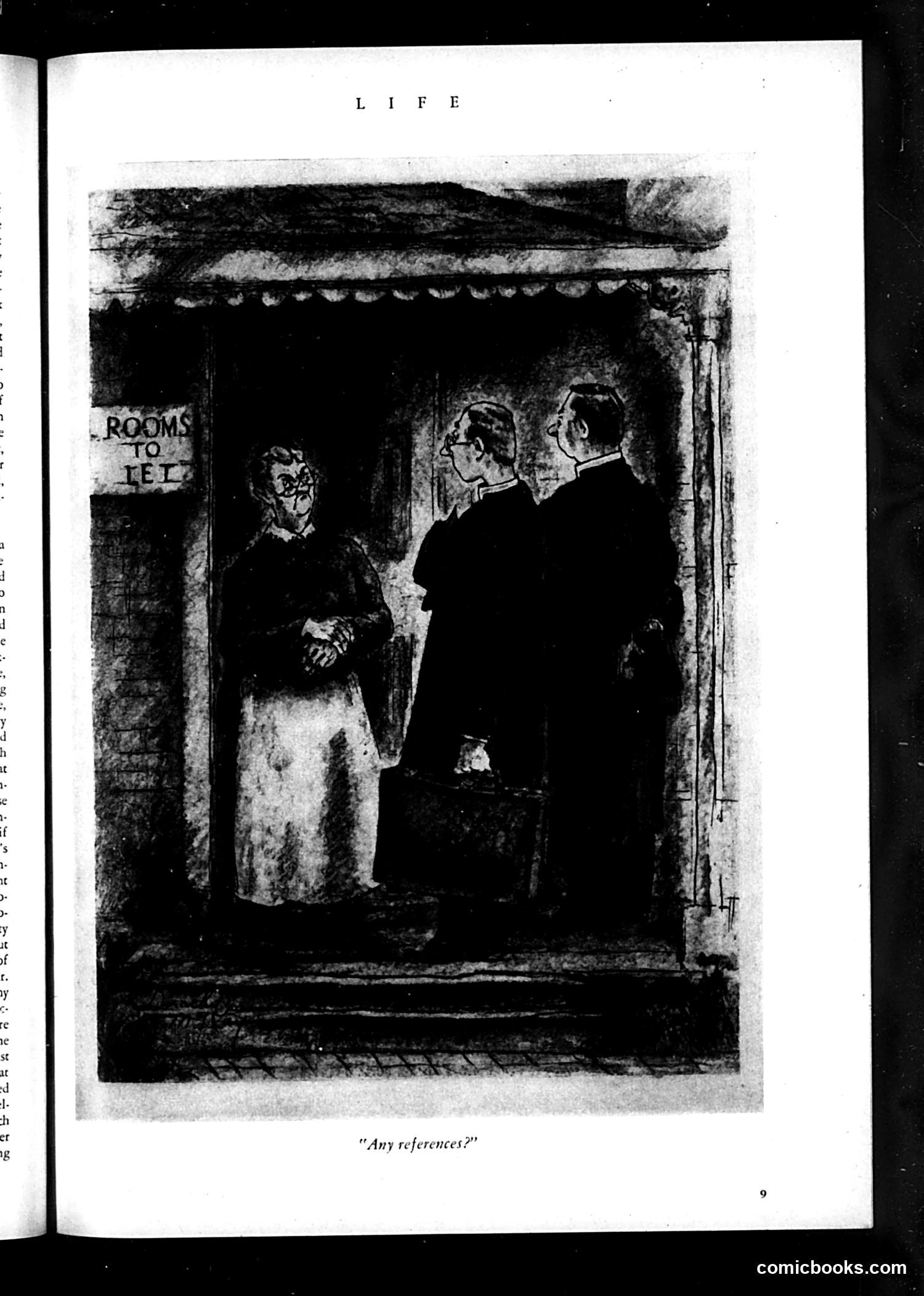
# Analysis This single-panel cartoon depicts three men in a hallway outside a "ROOMS TO LET" sign. Two well-dressed gentlemen in dark suits appear to be prospective tenants speaking with a landlord or property manager on the left. The caption reads "Any references?" The joke satirizes the practice of landlords requiring references from potential renters. In this era, "references" typically meant character witnesses or proof of respectability—often tied to social status or connections. The humor lies in the implication that these two formally-dressed men, who appear respectable by their clothing alone, are being subjected to the standard bureaucratic requirement for references, suggesting either that appearances are deceptive or that even obviously "suitable" candidates face this tedious formality. The cartoon mocks the rigidity of rental application procedures.
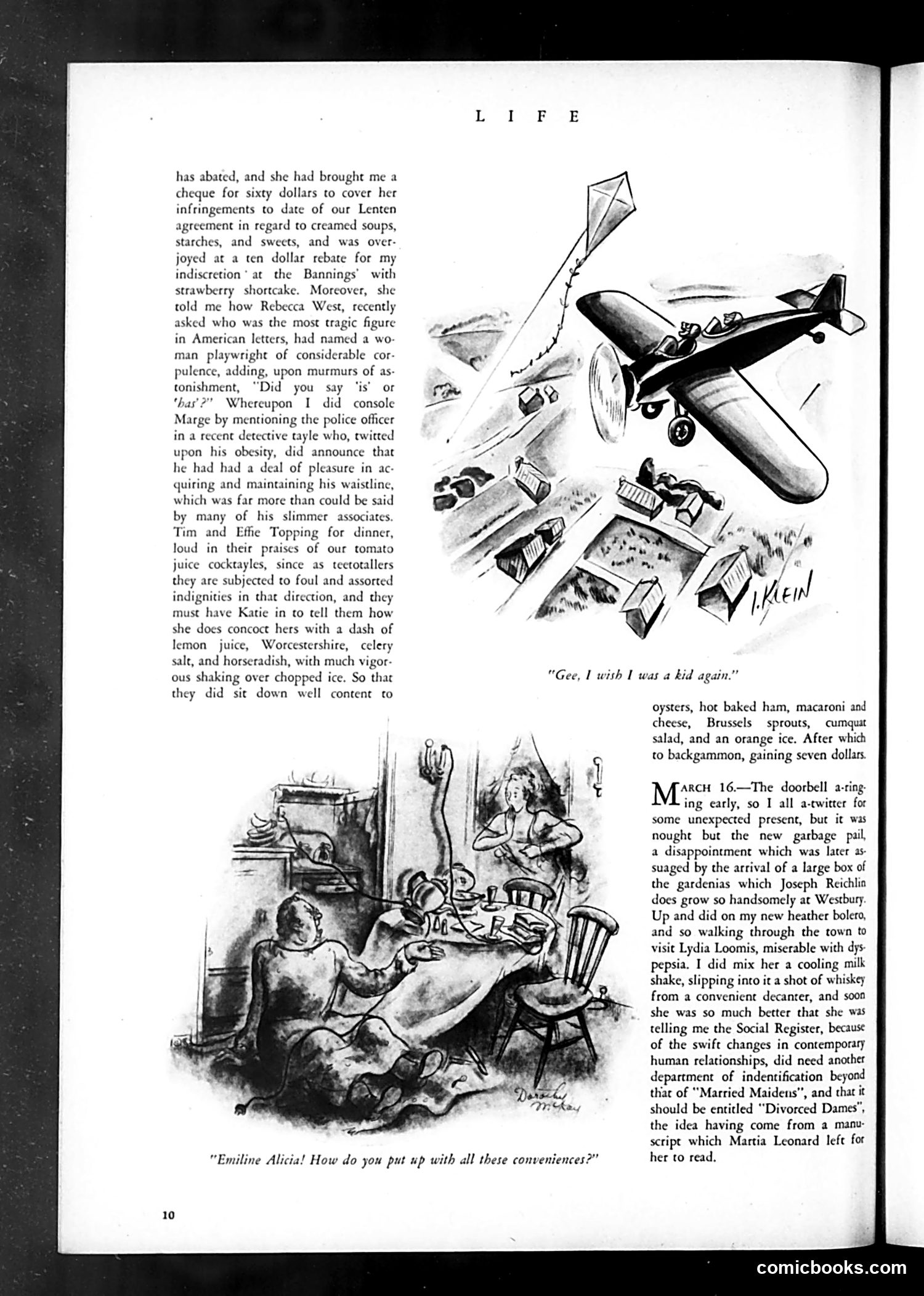
# Analysis of Life Magazine Page 10 This page contains two satirical illustrations with accompanying narrative text about social life and dining. The **upper cartoon** ("Gee, I wish I was a kid again") depicts toys and recreational items scattered around an airplane, satirizing adult pastimes and nostalgia. The **lower cartoon** ("Emelie Alicia! How do you put up with all these conveniences?") shows a woman surrounded by modern household appliances and conveniences, appearing overwhelmed or exasperated. The satire targets the irony that modern conveniences—meant to simplify life—actually complicate it, creating frustration rather than leisure for women managing these technologies. The accompanying text discusses social gatherings, meals, and contemporary relationship dynamics, suggesting this reflects 1920s-30s upper-middle-class social anxieties about modernity and changing gender roles.