A complete issue · 69 pages · 1932
Life — April 1932
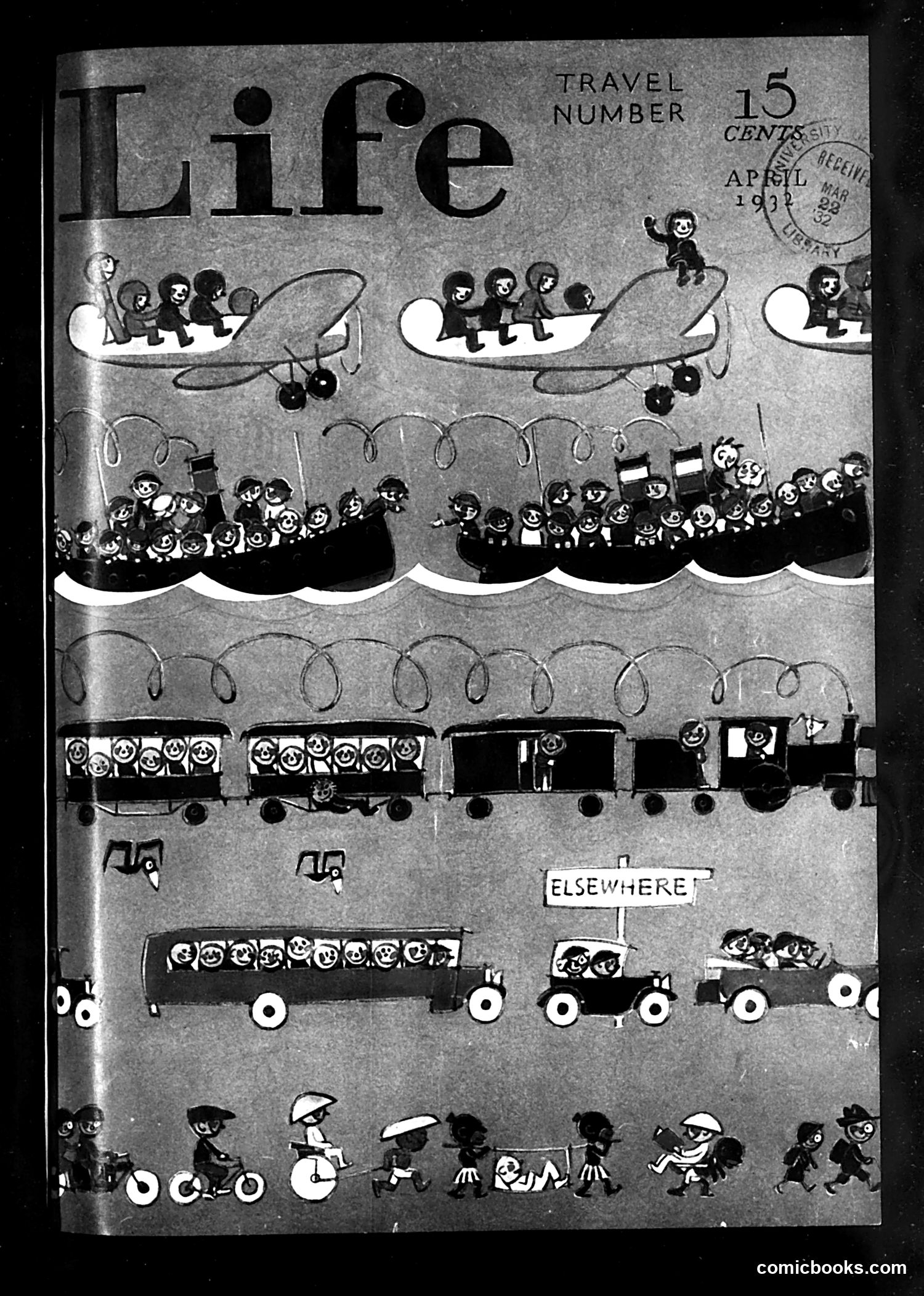
# Life Magazine Cover Analysis - April 1932 This cover illustrates Depression-era transportation and emigration, depicting crowds of small figures traveling by multiple vehicles: airplanes at top, boats/ships in the middle sections, trains, and automobiles below. The figures appear to represent American citizens or immigrants in transit. The heading "ELSEWHERE!" suggests satirical commentary on people fleeing or seeking opportunity elsewhere—likely referencing the mass migration during the Great Depression when Americans moved seeking work, or possibly emigration from the country. The "Travel Number" designation indicates this is a special issue focused on transportation themes. The crowded, repetitive cartoon figures emphasize the scale and ubiquity of movement during economically difficult times, using visual humor to comment on Depression-era displacement and mobility.
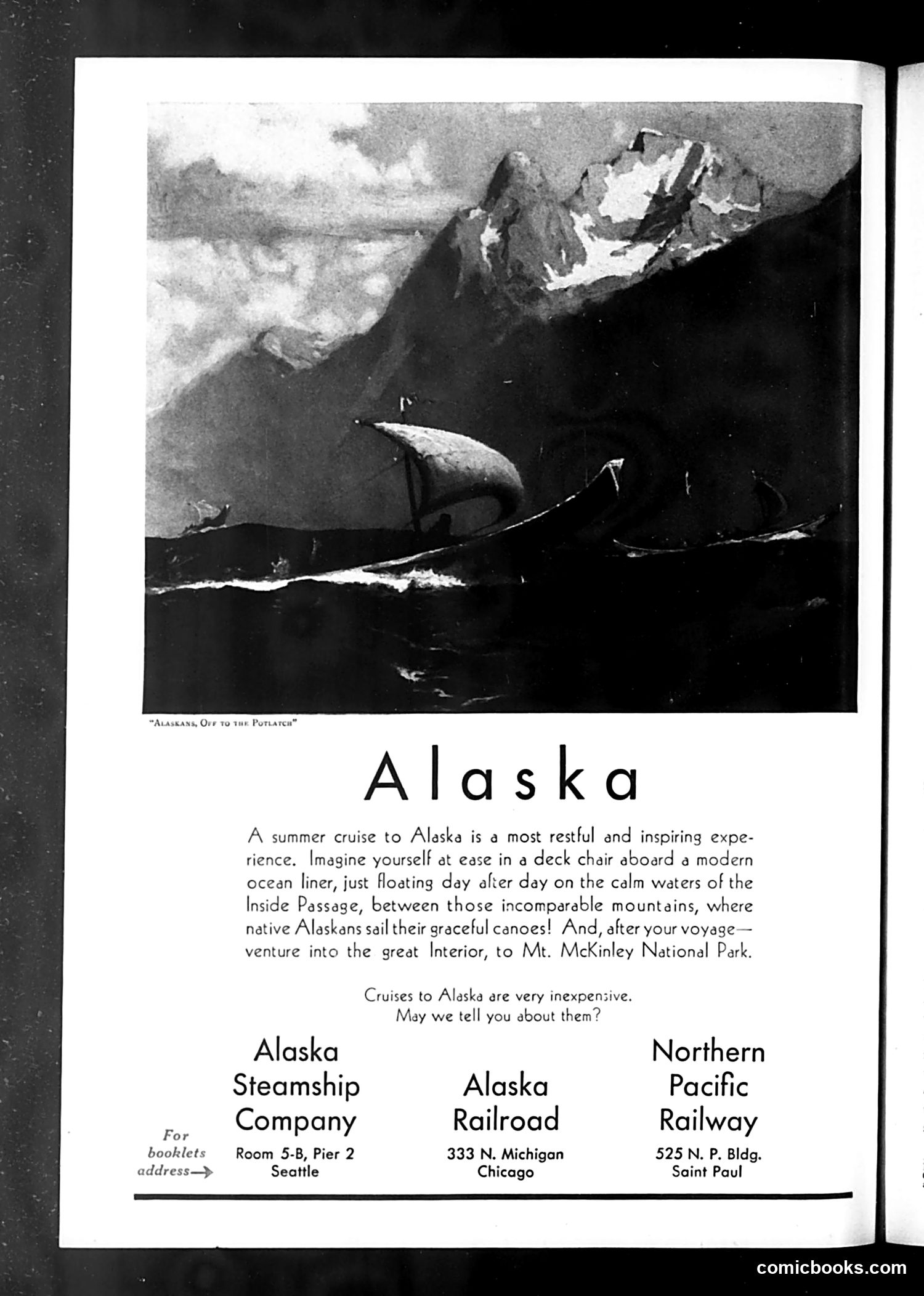
# Analysis This page is primarily **advertising, not satire or editorial content**. It promotes Alaska tourism and travel options. The image shows a dramatic mountainous Alaskan coastal landscape with a sailboat, captioned "Alaskans Off to the Potlatch" (referencing Native Alaskan cultural gatherings). The advertisement text romanticizes Alaska cruises as "restful and inspiring," emphasizing scenic beauty and visits to Mt. McKinley National Park. The copy notes that "Cruises to Alaska are very inexpensive," then directs readers to contact three transportation companies: Alaska Steamship Company (Seattle), Alaska Railroad (Chicago), and Northern Pacific Railway (Saint Paul) for travel booklets. This reflects early-to-mid 20th-century tourism marketing, promoting Alaska as an accessible luxury destination.
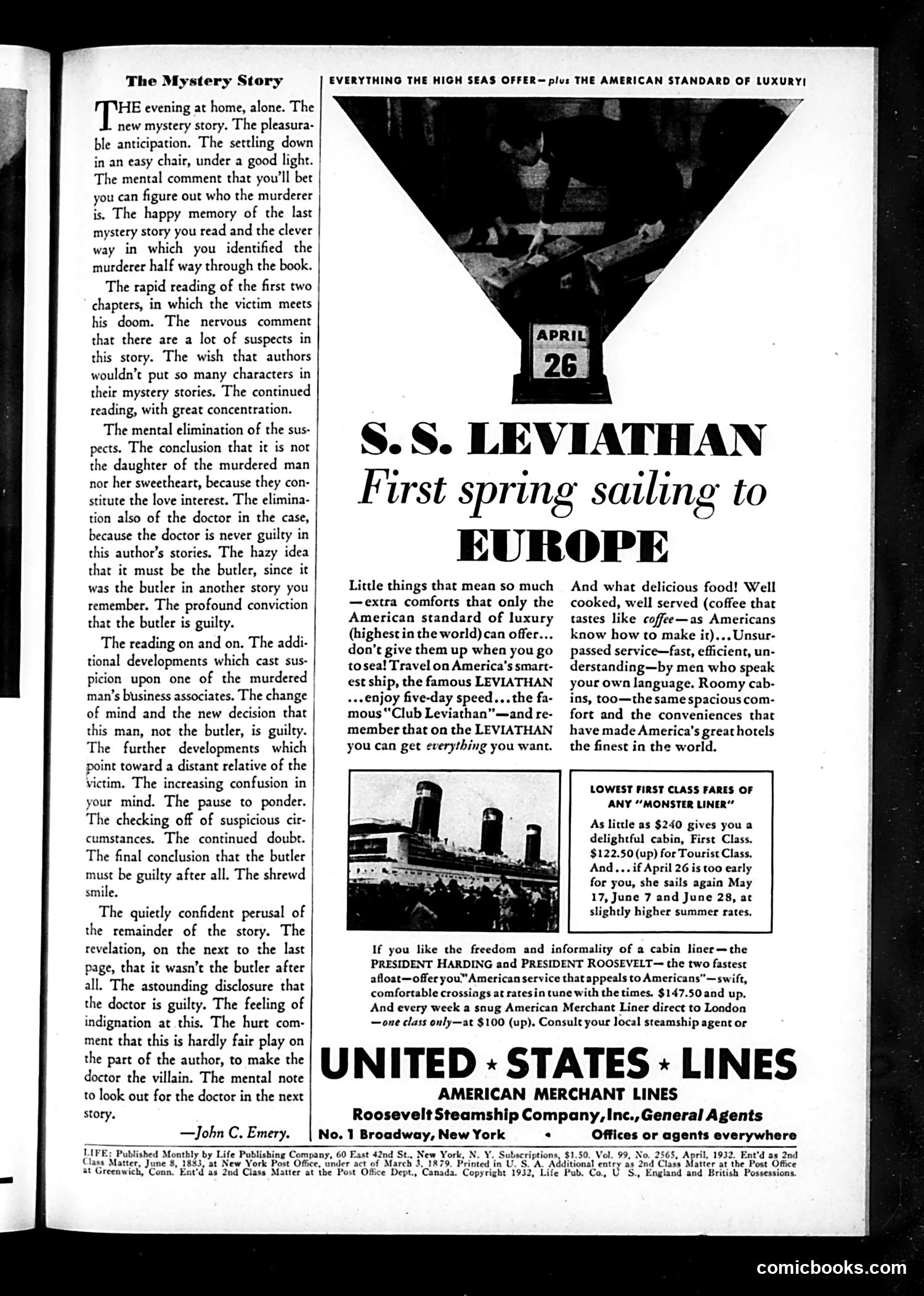
# Content Analysis This page is primarily **advertising rather than satire**. The left column contains a literary review of a mystery story by John C. Emery, praising its plot twists and suspect elimination. The main content advertises the **S.S. Leviathan**, a steamship offering "first spring sailing to Europe" on April 26. The ship is operated by United States Lines (American Merchant Lines). The advertisement emphasizes luxury amenities and competitive pricing—first-class fares as low as $240, with tourist class at $122.50. It mentions the ship's famous "Club Leviathan" and appeals to Americans seeking European travel with American-standard comfort. The page also references competitor ships (Presidents Harding and Roosevelt) to position the Leviathan as the superior choice for transatlantic crossing in the 1930s travel market.
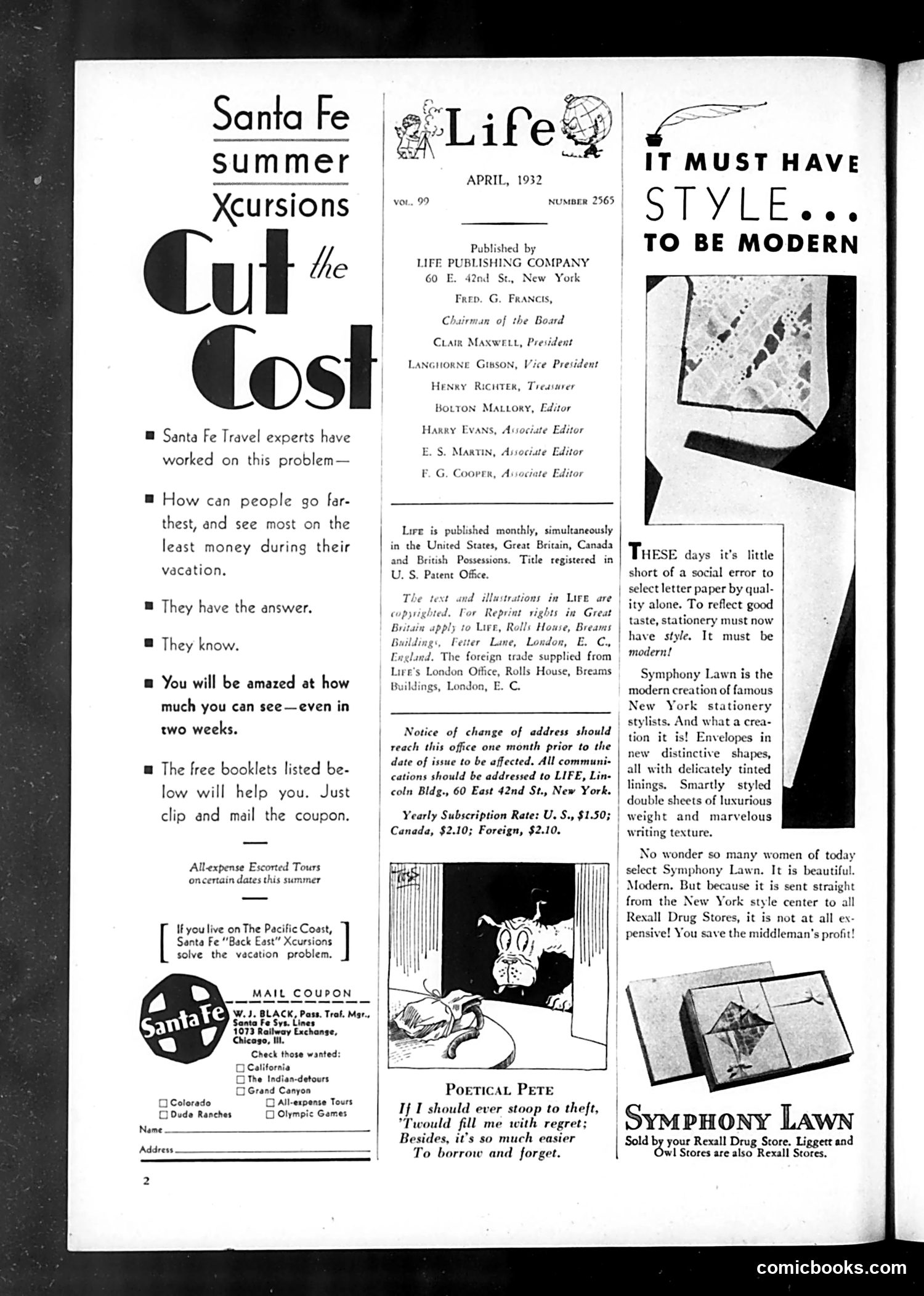
# Life Magazine, April 1932 - Content Analysis This is primarily a **title/contents page** rather than a satirical cartoon page. The left side advertises Santa Fe Railway's vacation excursions promising budget travel. The center displays masthead information for *Life* magazine (April 1932, Vol. 99). The right side features a **stationery advertisement** for "Symphony Lawn" letterhead, emphasizing modern style and design. Below this is a small cartoon titled "Poetical Pete" depicting a figure and brief humorous verse about theft and borrowing. The Pete cartoon appears to be light humor rather than political satire—a simple joke about moral hypocrisy regarding stealing versus borrowing. The page primarily serves administrative and advertising functions rather than delivering substantive editorial commentary.
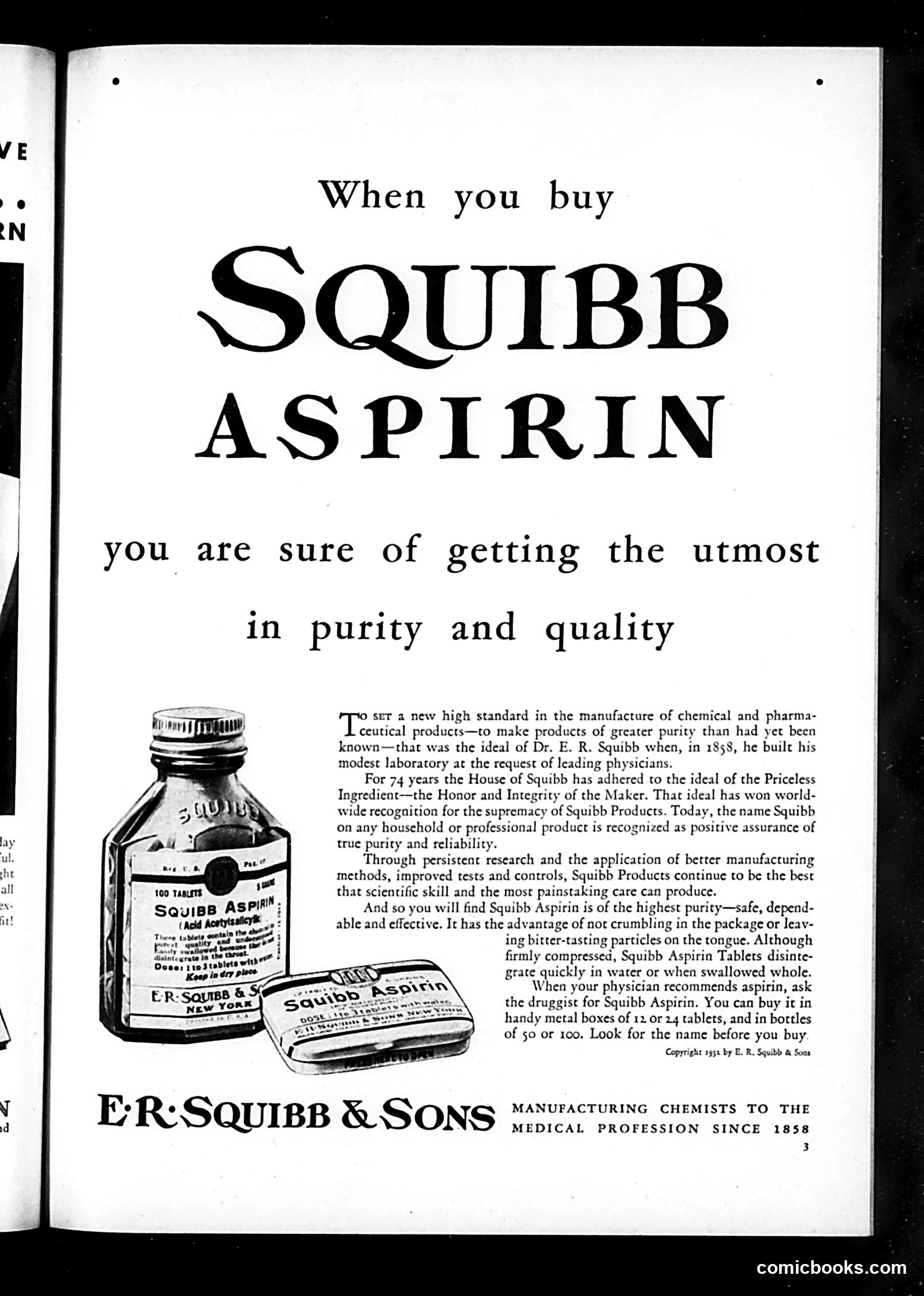
# Analysis This page is **entirely a pharmaceutical advertisement**, not editorial content or satire. It's a full-page ad for Squibb Aspirin by E.R. Squibb & Sons, a manufacturing chemist founded in 1858. The ad emphasizes product quality and purity, claiming Squibb aspirin won't crumble in packaging or leave "bitter-tasting particles." It highlights the company's reputation for reliability and recommends customers ask their physician for Squibb brand specifically. **There are no cartoons, caricatures, or satire present.** The only image is a product photograph showing a Squibb Aspirin bottle and tin box. This represents straightforward early 20th-century pharmaceutical marketing, before modern FDA regulations mandated skepticism toward such quality claims.
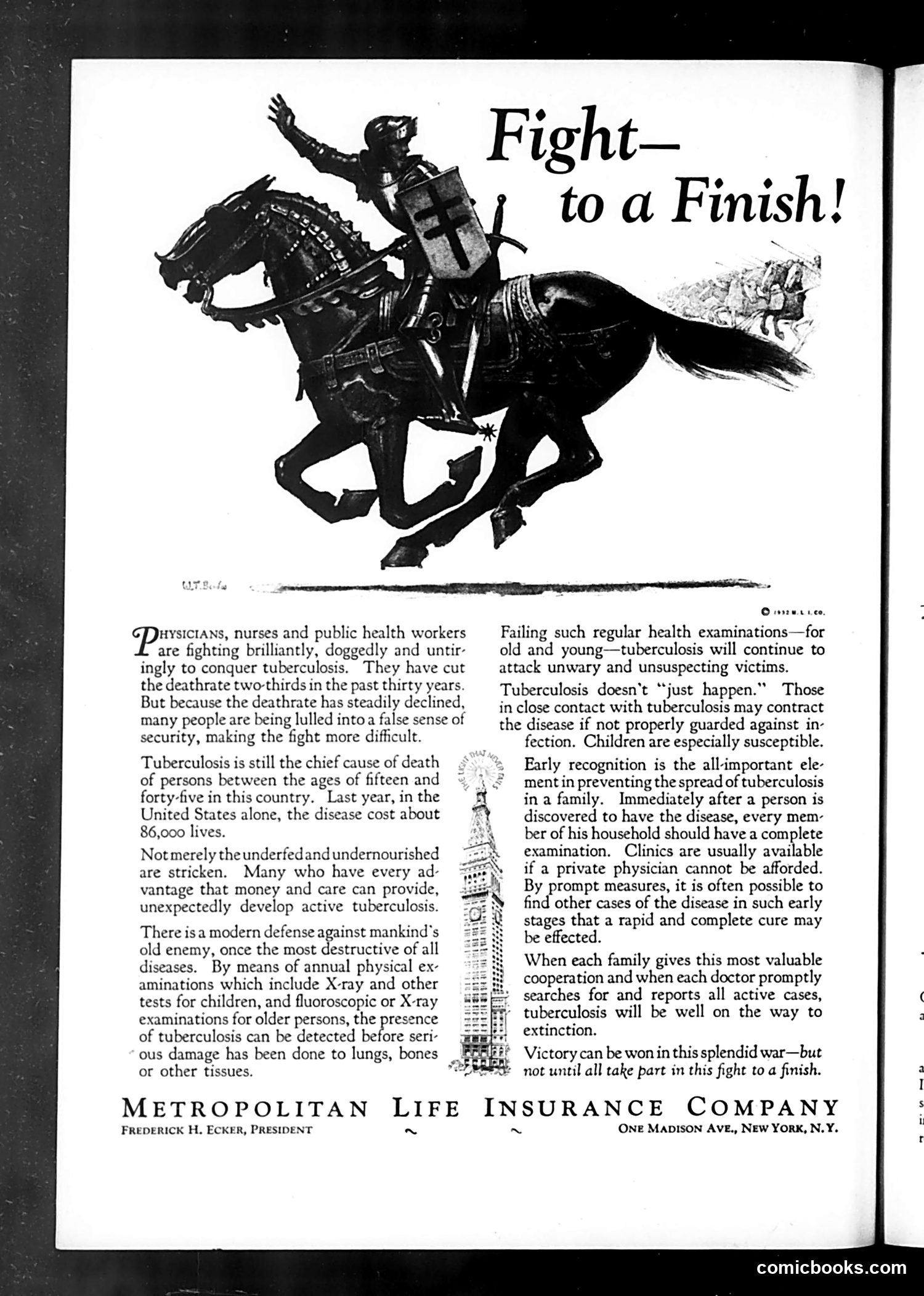
# Analysis This is a **public health advertisement**, not satire. Metropolitan Life Insurance Company used this page to promote tuberculosis prevention during what appears to be the early 20th century. The dramatic illustration shows a **crusader on horseback**, symbolizing the fight against tuberculosis as a righteous battle. The text emphasizes that TB was still the leading cause of death for people aged 15-40 in the United States, killing approximately 86,000 annually. The advertisement advocates for **early detection through physical examinations** (including X-rays), proper family quarantine measures, and cooperation between patients and doctors. The closing phrase—"Victory can be won in this splendid war—but not until all take part in this fight to a finish"—frames public health as a collective moral responsibility, reflecting Progressive Era messaging that positioned disease prevention as patriotic duty.
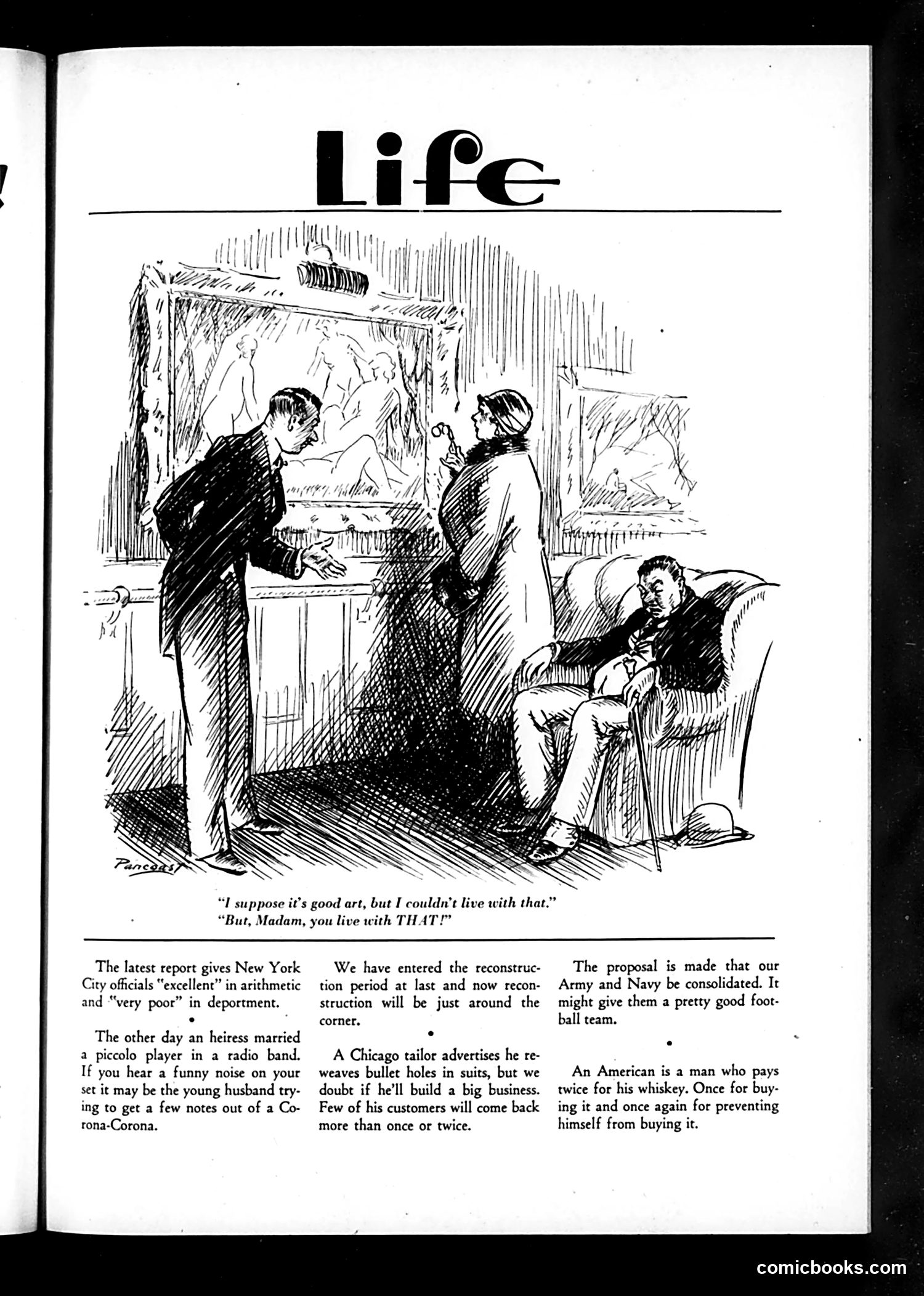
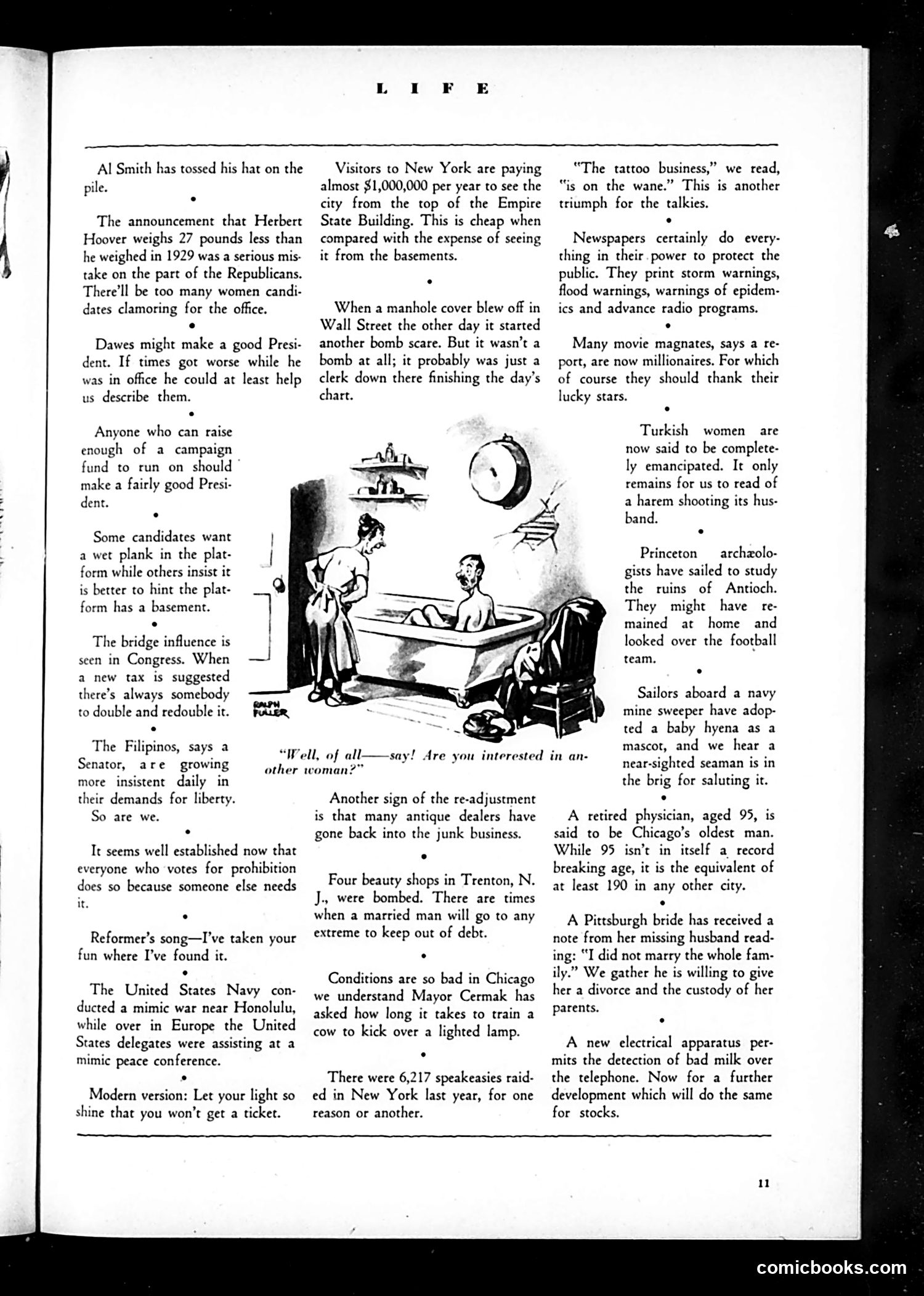
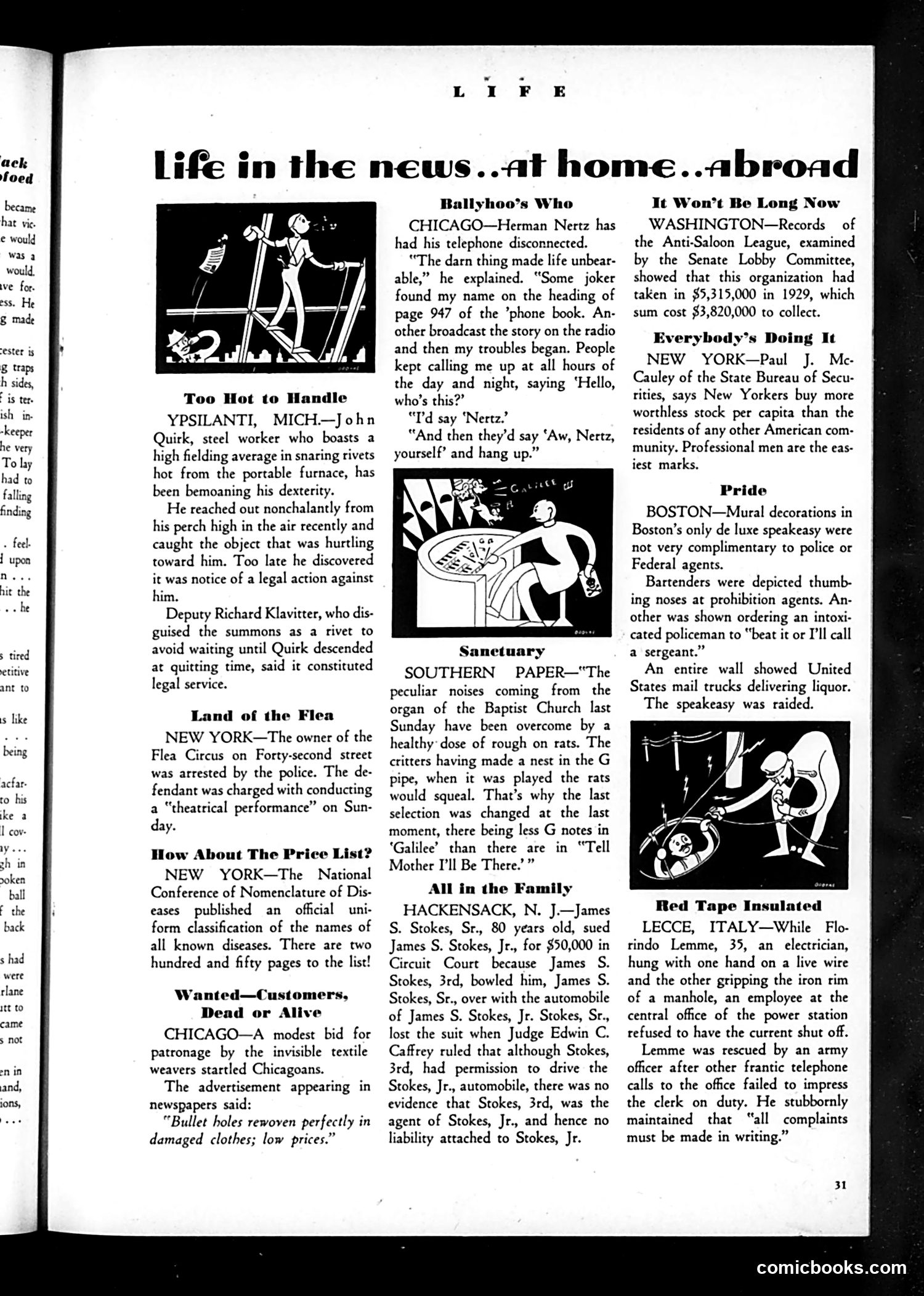
# Life Magazine "Life" Section Analysis This page contains a cartoon and brief satirical commentary pieces typical of Life magazine's humor section. **The Main Cartoon:** Shows two men viewing what appears to be modern/abstract art in a window or gallery, while a third man sits nearby. The caption reads: "I suppose it's good art, but I couldn't live with that." / "But, Madam, you live with THAT!" — suggesting the seated man's appearance is itself unattractive, creating irony about aesthetic standards. **The Brief Items** mock various topics: New York City officials' contradictory reports, a radio band featuring an heiress and piccolo player, a Chicago tailor's dubious claim about reweaving bullet holes, and observations about American consumerism and whiskey consumption. The humor relies on wordplay, irony, and social commentary typical of 1920s-30s satirical journalism.
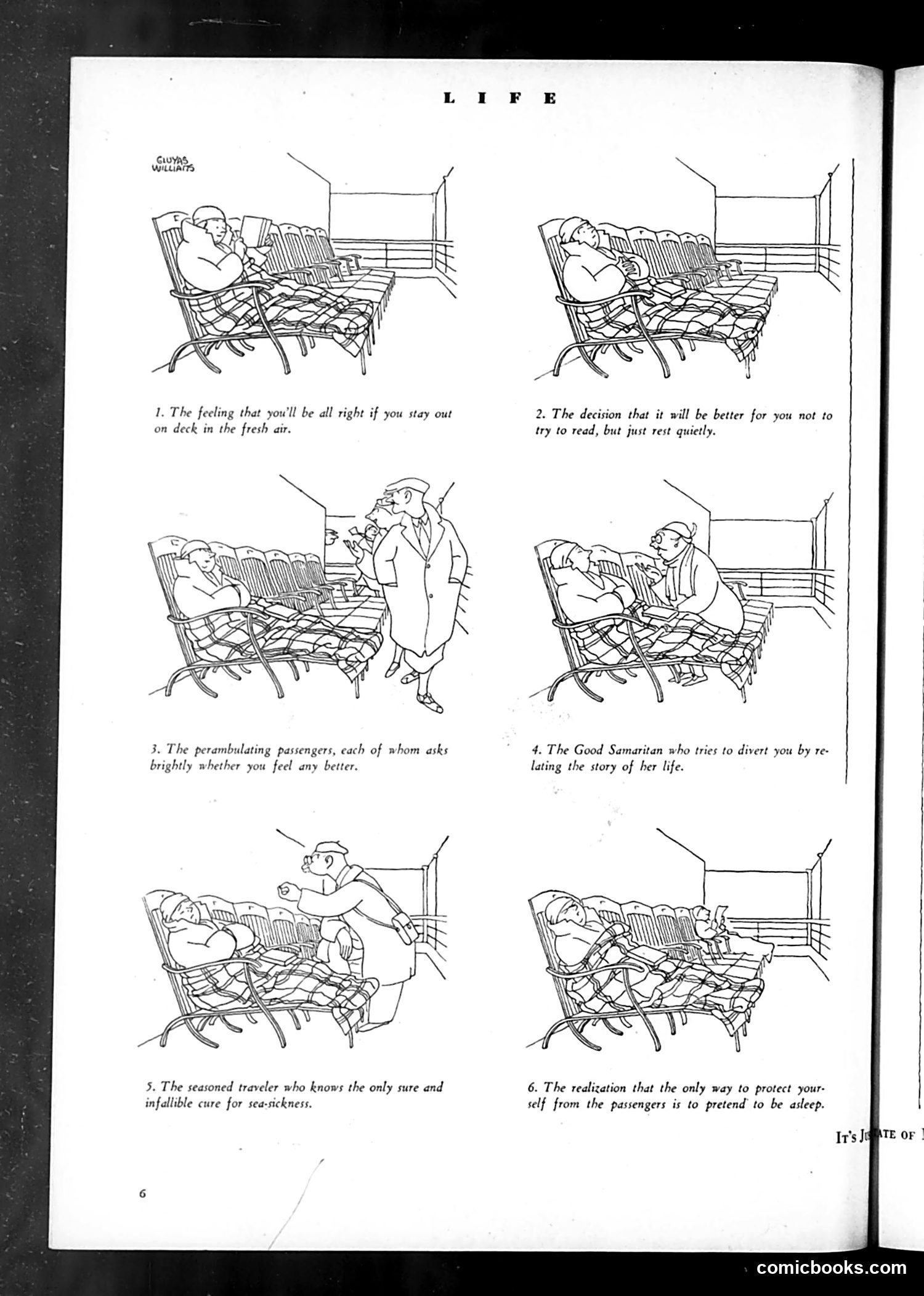
# Life Magazine Cartoon Analysis This six-panel satirical cartoon by Gluyas Williams depicts the absurd social dynamics of ship travel, likely from the early-to-mid 20th century. The humor targets: 1. **False reassurance** about seasickness from staying on deck 2. **Well-intentioned but useless advice** from other passengers 3. **Intrusive fellow travelers** offering unwanted remedies 4. **The "Good Samaritan"** boring you with life stories as distraction 5. **Dubious "cures"** for sea-sickness from experienced travelers 6. **Pretending to sleep** as the only effective escape strategy The cartoon satirizes the forced social intimacy of ship travel and how strangers presume to help while actually making situations worse through their meddling and unsolicited advice. It's fundamentally about invasion of privacy during travel.
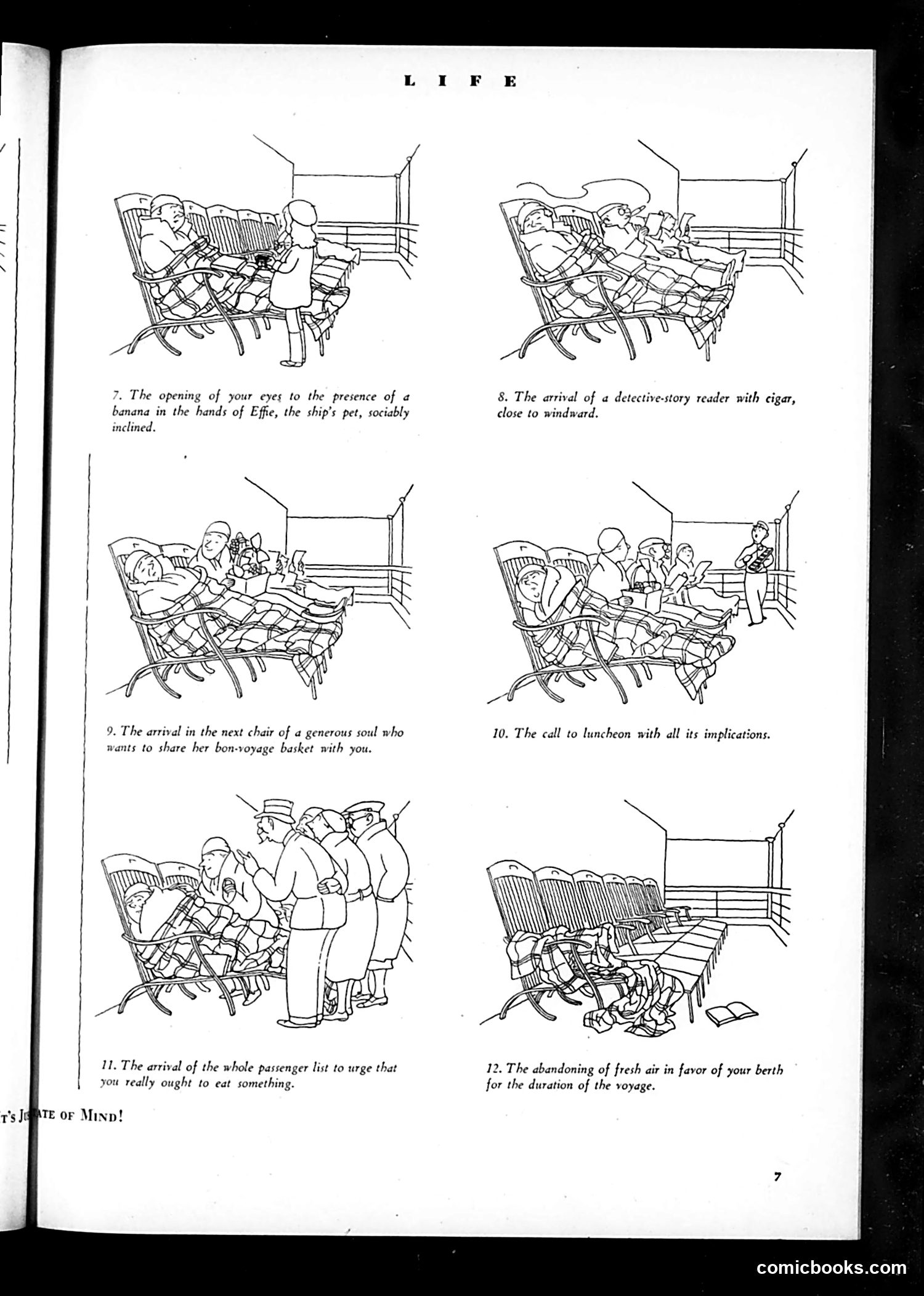
# Life Magazine Page 7: Ocean Voyage Satire This page satirizes the annoyances of ocean travel, depicting six numbered scenes showing shipboard disruptions. The humor targets fellow passengers and their intrusions: - Scene 7: A woman's banana-eating interrupts quiet reading - Scene 8: A cigar-smoking detective-story reader arrives - Scene 9: A generous soul wants to share their lunch basket - Scene 10: The lunch bell summons everyone to meals - Scene 11: Crew urges passengers to actually eat something - Scene 12: Passengers must abandon deck chairs for fresh air The satire presents relatable frustrations of close-quarters ship travel—unwanted socializing, invasive habits, forced interactions, and the constant disruptions to attempted relaxation. It's gentle social commentary on how public travel forces strangers into uncomfortable proximity.
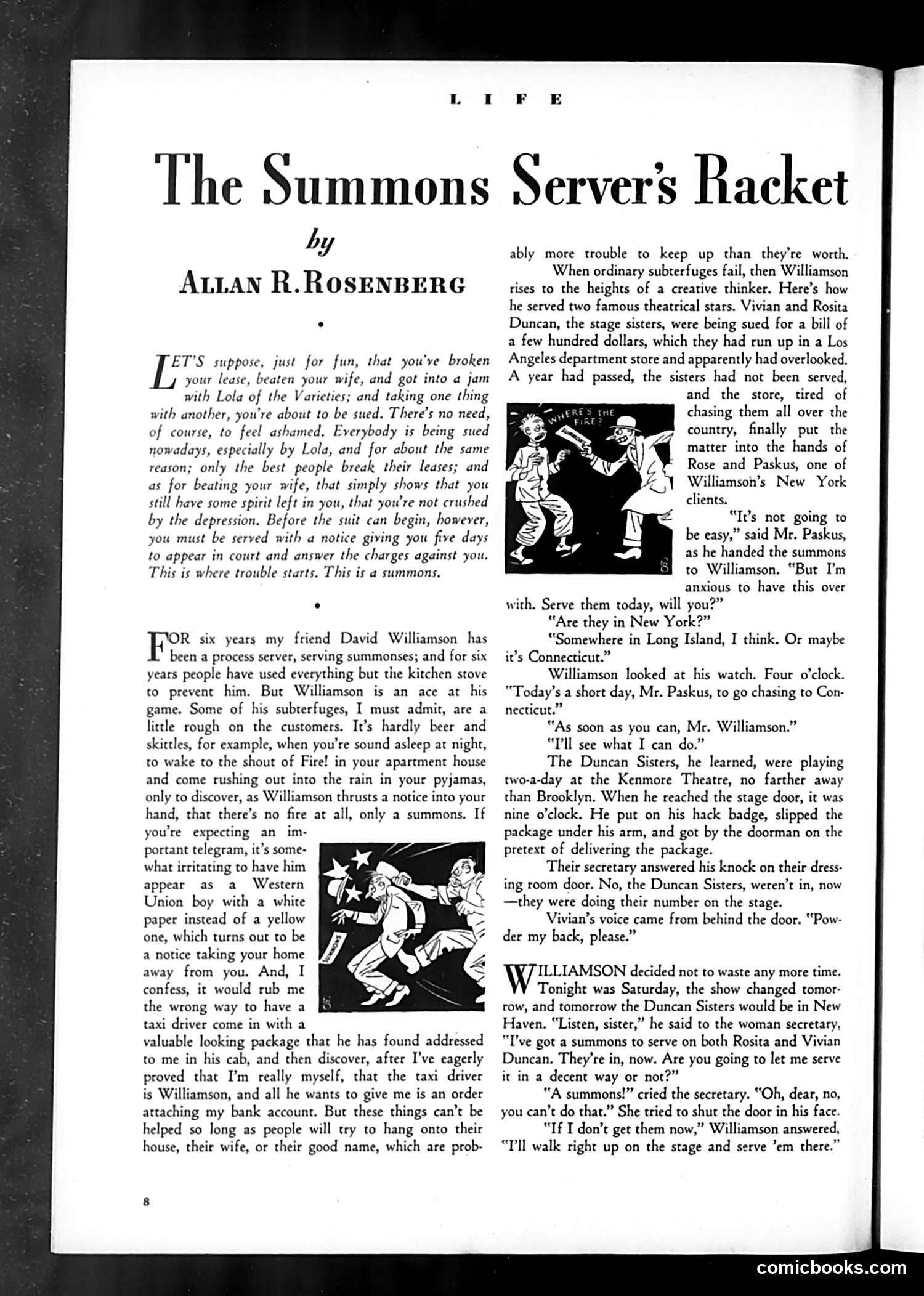
# "The Summons Server's Racket" by Allan R. Rosenberg This article satirizes the frustrations of being served legal summonses by process servers. The accompanying cartoons (which appear to show comedic scenes of summons delivery) illustrate the story's central joke: a process server named Williamson has served the famous Duncan Sisters—vaudeville performers—with a lawsuit. The satire mocks how process servers use creative deceptions to deliver notices (appearing as delivery men, hiding papers in packages). It also pokes fun at the theatrical world, where even famous stage performers aren't immune to legal troubles. The article treats a mundane legal nuisance as high comedy, typical of *Life* magazine's early-20th-century approach to satirizing everyday American frustrations and professional indignities.
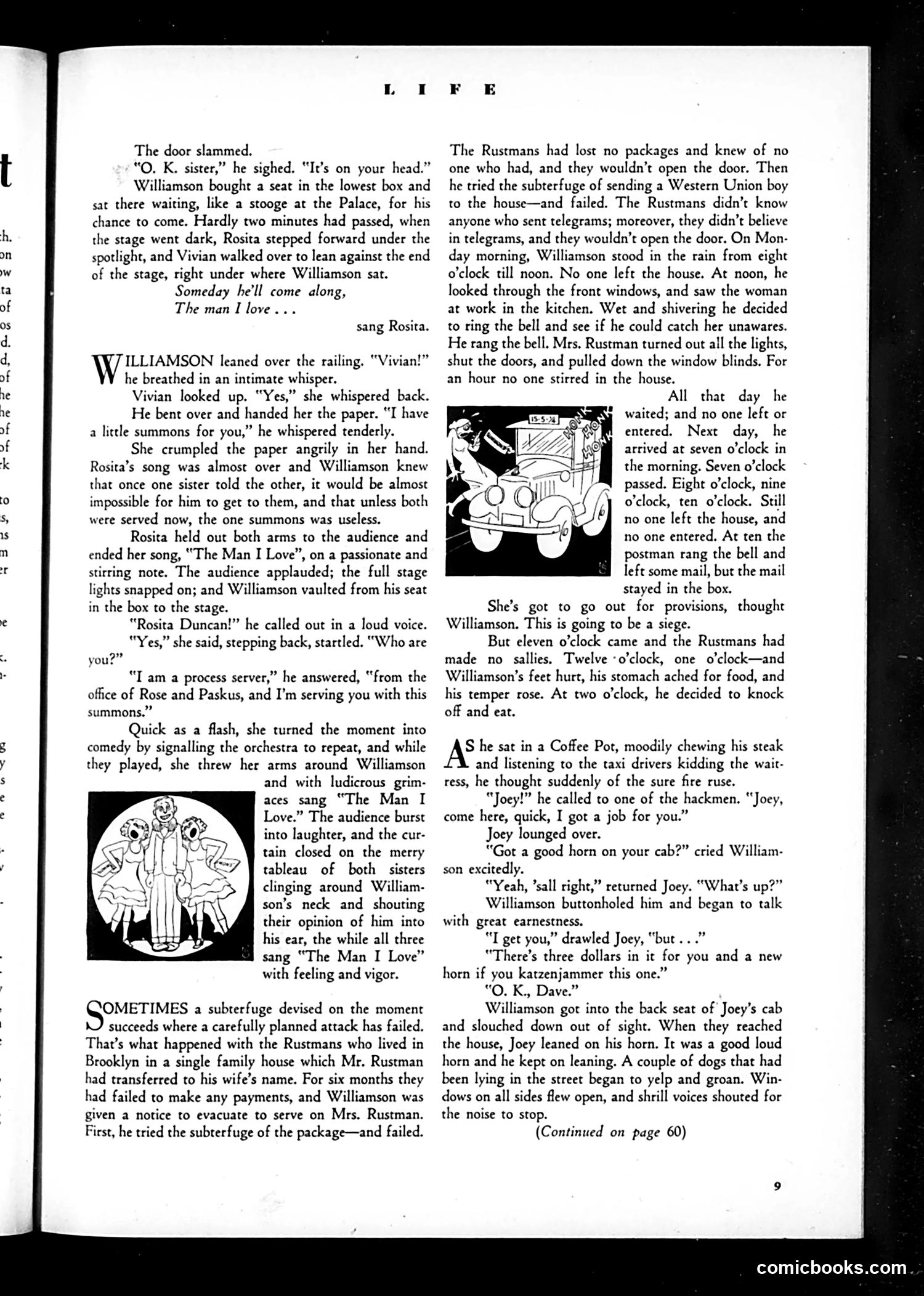
# Analysis of Life Magazine Page This page contains a serialized short story titled "Life" about a man named Williamson attempting to reunite with his estranged sister Vivian through an elaborate plan involving theater tickets and summonses. The narrative describes a comedic domestic crisis involving the Rustman family, who face eviction after failing to make payments on their Brooklyn home. Two illustrations accompany the text: one showing Rosita Duncan on stage performing "The Man I Love," and another depicting three figures in period costume, likely from the same theatrical scene. The content reflects 1920s-era popular fiction—emphasizing theatrical drama, domestic financial struggles, and romantic/familial reunion plots typical of the magazine's entertainment focus during this period.
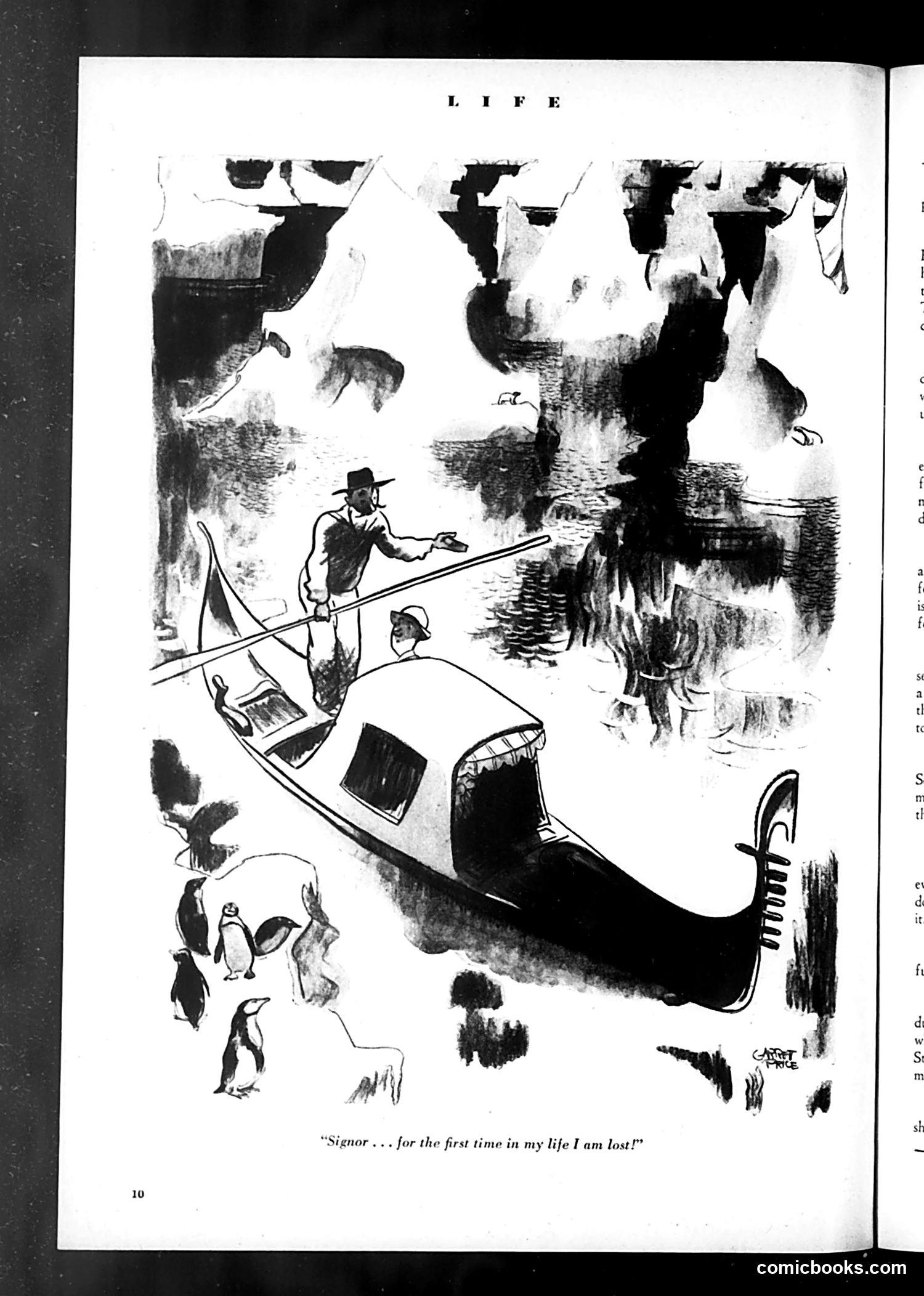
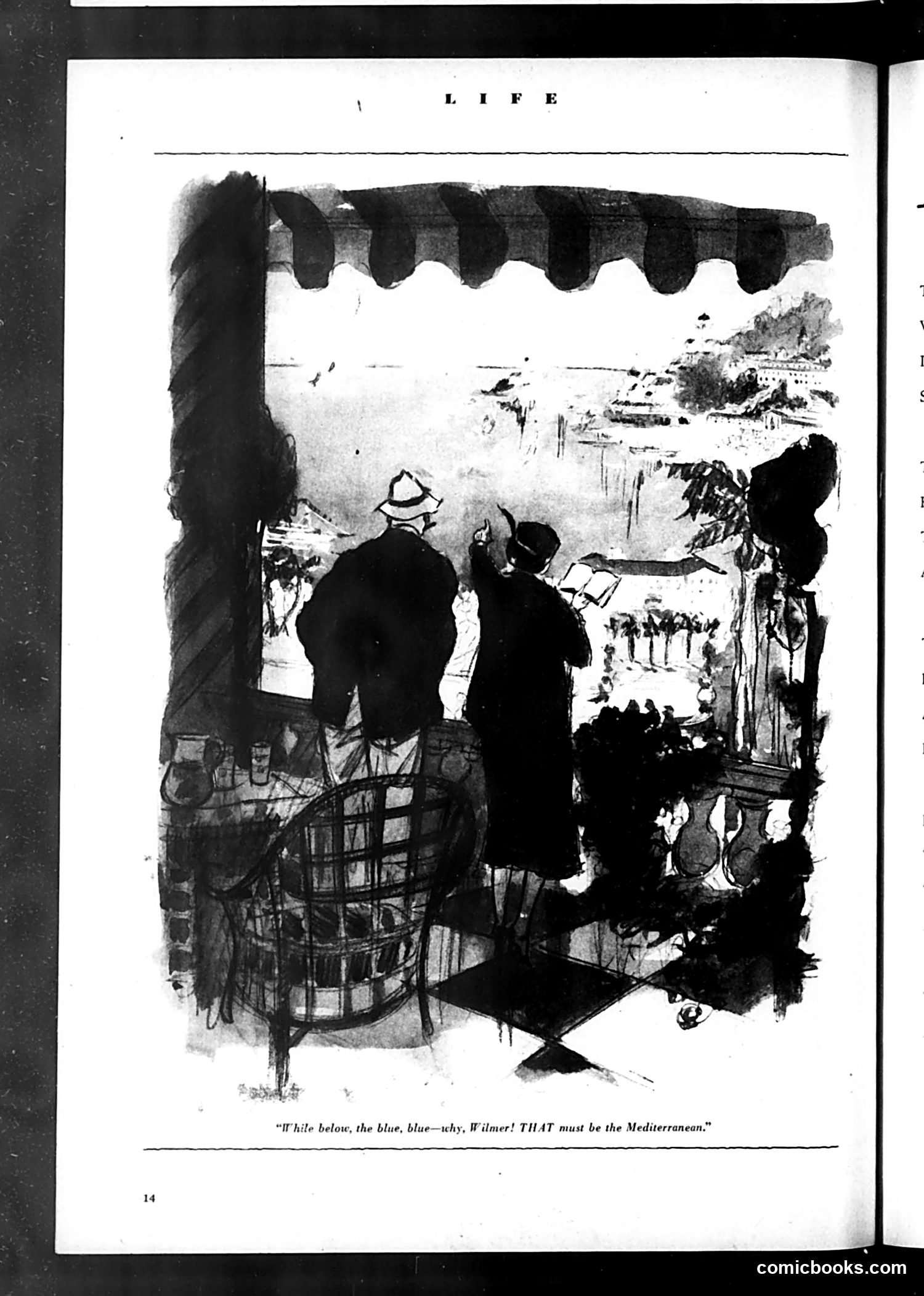
# Cartoon Analysis This is a humorous illustration showing two men in a gondola on what appears to be Venice's Grand Canal. One man poles the boat while wearing a hat; the other sits as a passenger. The scene includes classical Venetian architecture in the background and what appear to be penguins in the lower left. The caption reads: "Signor . . . for the first time in my life I am lost!" The joke appears to satirize tourism and getting lost in Venice despite hiring a gondolier—traditionally a skilled local guide. The incongruous presence of penguins (not native to Venice) suggests this is a surreal or absurdist humor piece, possibly mocking exaggerated travel narratives or the romanticized Venetian experience. The cartoon likely appeared in Life magazine's satirical commentary section.