A complete issue · 69 pages · 1932
Life — March 1932
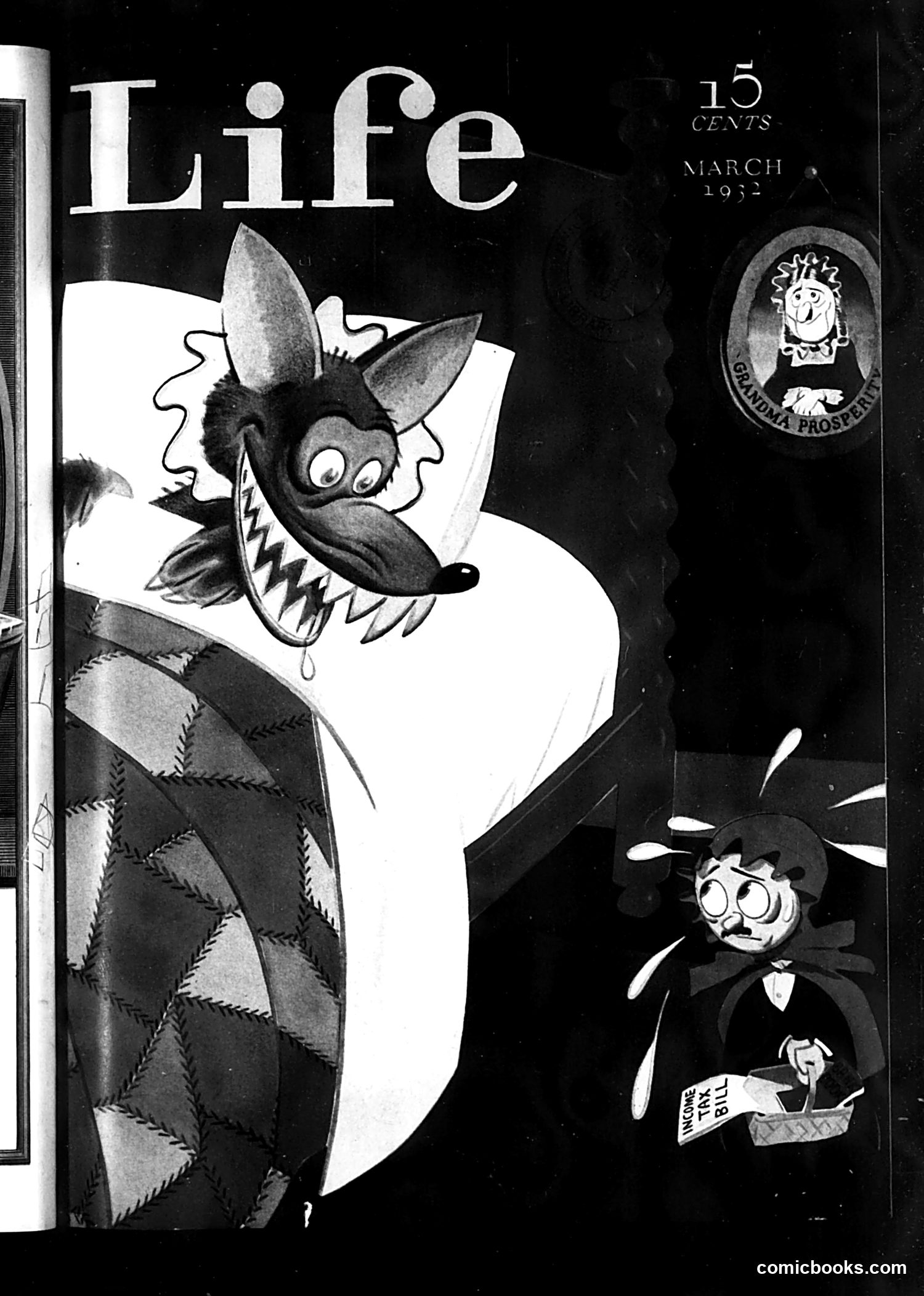
# Life Magazine, March 1935 This is a magazine cover featuring grotesque caricatures typical of 1930s satirical humor. The large figure appears to be a menacing creature with exaggerated features—pointed ears, sharp teeth, and wild hair—depicted in a nightmarish or demonic style. A smaller, similarly styled character appears below, also rendered in grotesque fashion. The cover price is 15 cents, dated March 1935. Without additional text identifying specific targets, the exact political or social references remain unclear. However, the exaggerated, monstrous depictions suggest this may satirize contemporary political figures or social anxieties of the Depression-era period. The style is consistent with Life's known use of caricature for social and political commentary, though the specific subjects cannot be definitively identified from the visual alone.
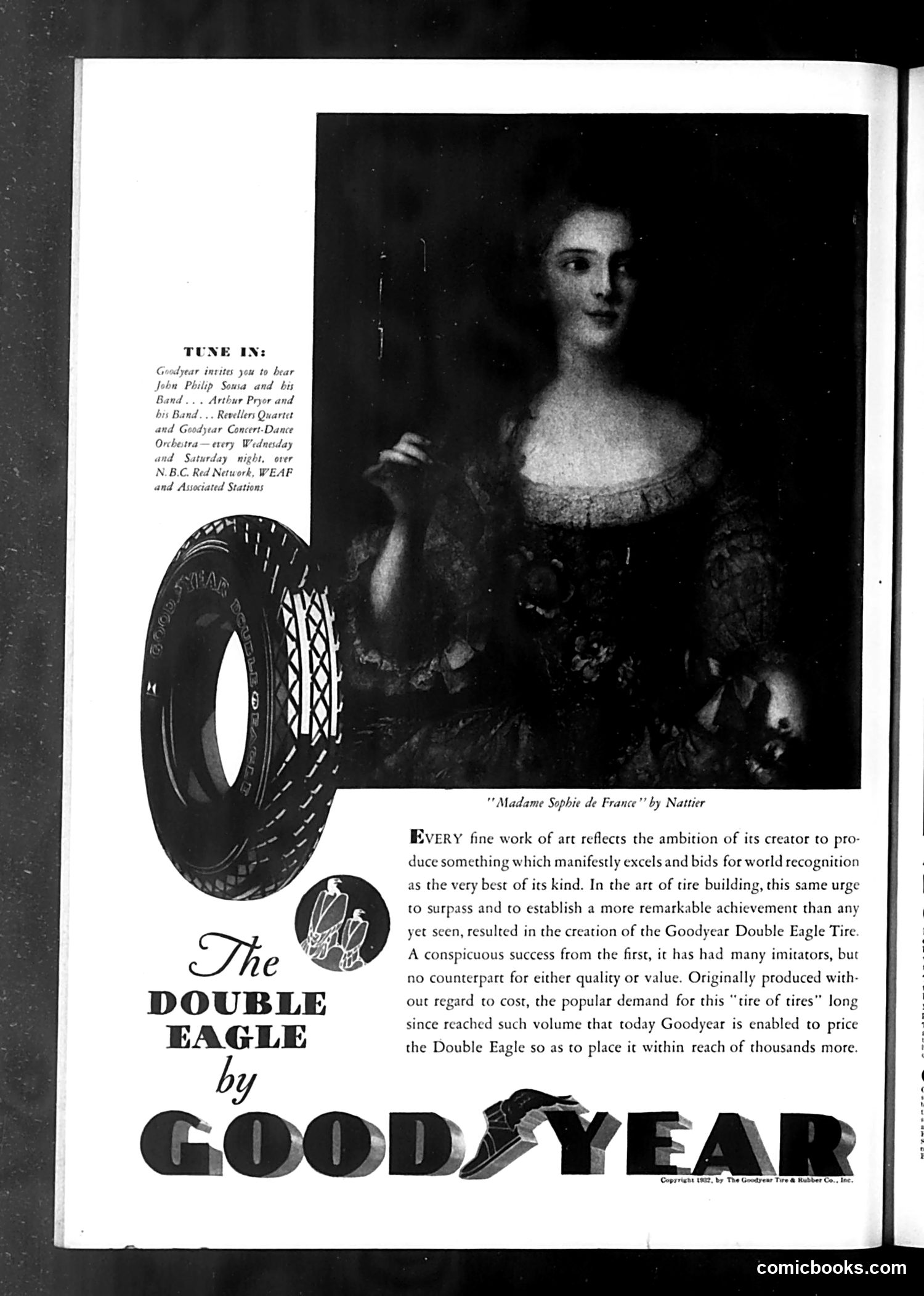
# This Page Analysis This is primarily a **Goodyear tire advertisement**, not political satire. The page features: **Visual Elements:** - A classical portrait labeled "Madame Sophie de France" by Nattier (an 18th-century French painter) - A Goodyear Double Eagle tire with tread pattern visible - Large text promoting Goodyear's product **The Advertisement's Strategy:** The ad pairs fine art with a tire to suggest that Goodyear tires represent the same ambition for excellence as masterpiece paintings. The copy explicitly compares the tire's creation to artistic achievement, claiming it's "a conspicuous success from the first" with "many imitators, but no counterpart." **Context for Modern Readers:** This reflects 1920s-30s advertising strategy: associating commercial products with classical culture and sophistication to appeal to affluent consumers. The use of high art imagery was meant to elevate the tire from mundane commodity to symbol of quality and refinement.
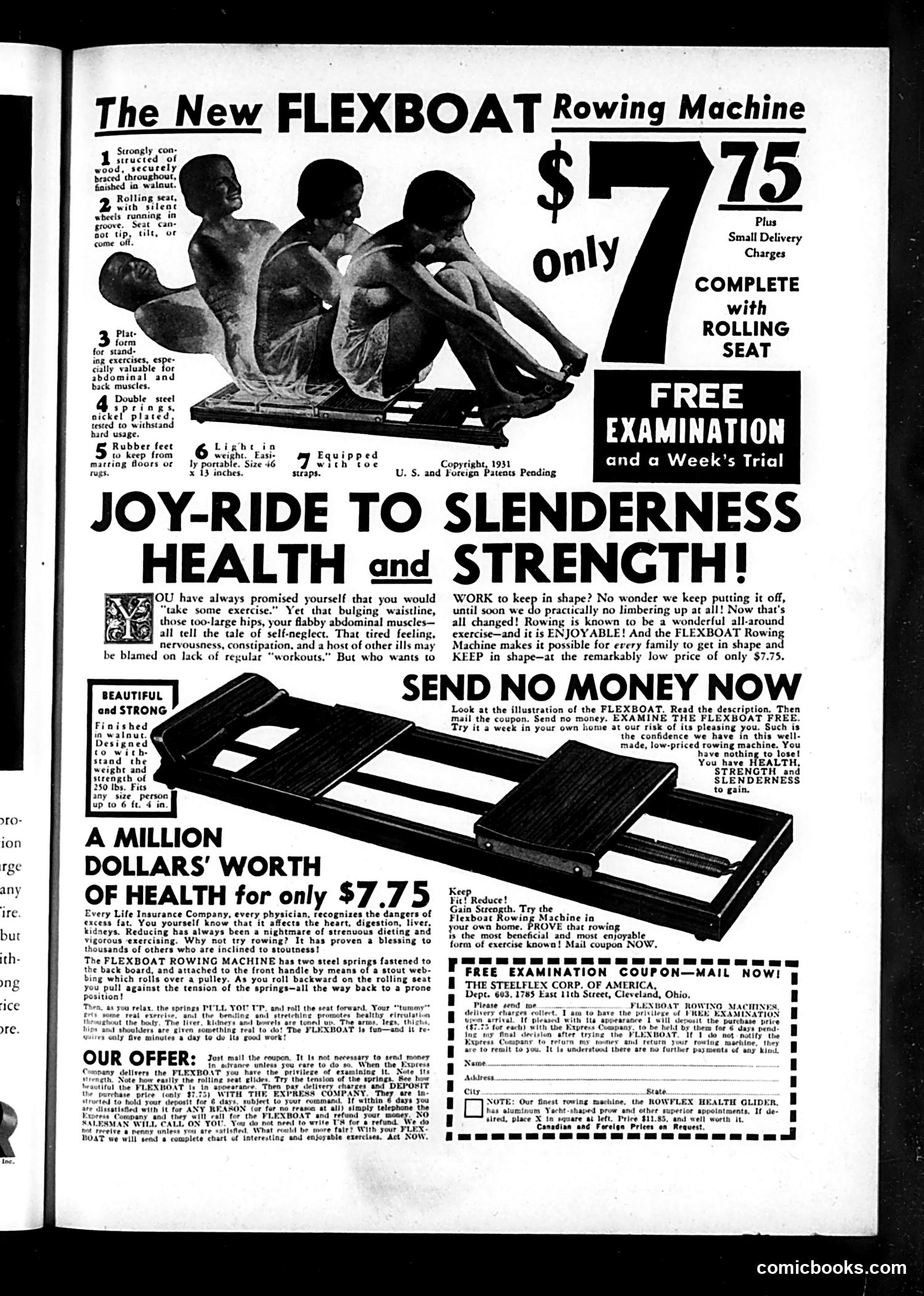
# Analysis This is a **vintage advertisement, not a cartoon or satire**. It promotes "The New Flexboat Rowing Machine," priced at $7.75 with a rolling seat, marketed in 1931 (copyright noted). The ad uses three shirtless men demonstrating the rowing motion to appeal to health-conscious consumers. The headline "Joy-Ride to Slenderness Health and Strength!" reflects 1930s fitness culture emphasizing weight loss and physical conditioning. Key selling points include: - No money required upfront ("Send No Money Now") - Free examination and one-week trial - Claims of providing "a million dollars' worth of health" - Appeals to busy people avoiding gym membership The language ("those too-large tips," "flabby abdominal muscles") targets Depression-era anxieties about appearance and health. This represents early direct-mail marketing for home exercise equipment.
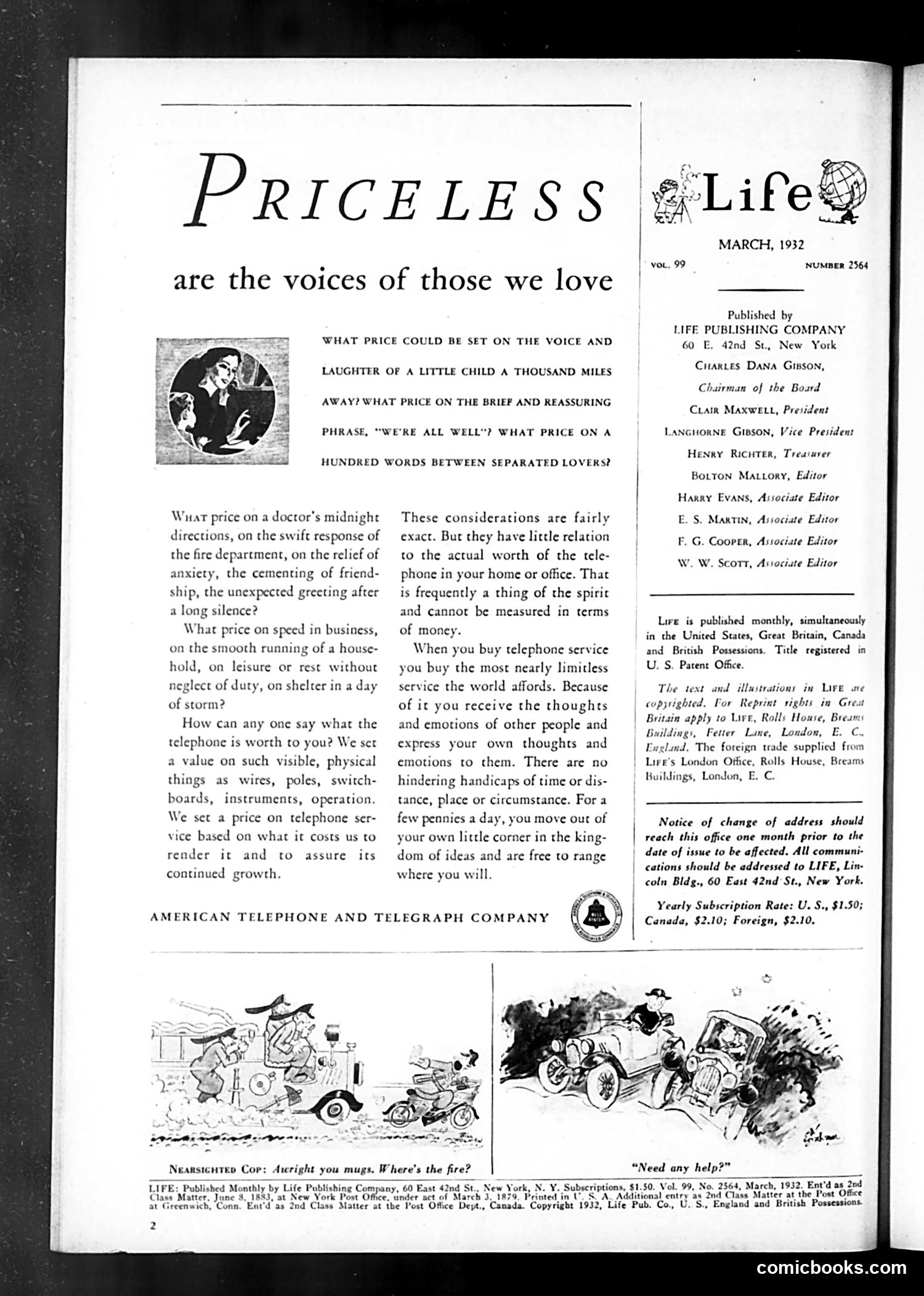
# Analysis of Life Magazine, March 1932 This page is primarily an **advertisement for American Telephone and Telegraph Company** promoting telephone service value. The main text argues that while phones have measurable costs, their true worth—connecting loved ones, enabling business, providing emergency response—is "priceless" and cannot be measured in monetary terms alone. At the bottom are two **cartoon jokes**: 1. **"Nearsighted Cop"**: A police officer asks "Alright you mugs, Where's the fire?"—apparently unable to see an obvious accident or disaster scene before him. 2. **"Need any help?"**: Depicts a chaotic car accident or collision scene, captioned with this sarcastic question. Both cartoons use visual humor common to 1930s Life magazine's satirical style, playing on obvious situations treated as if invisible or in need of stating the obvious.
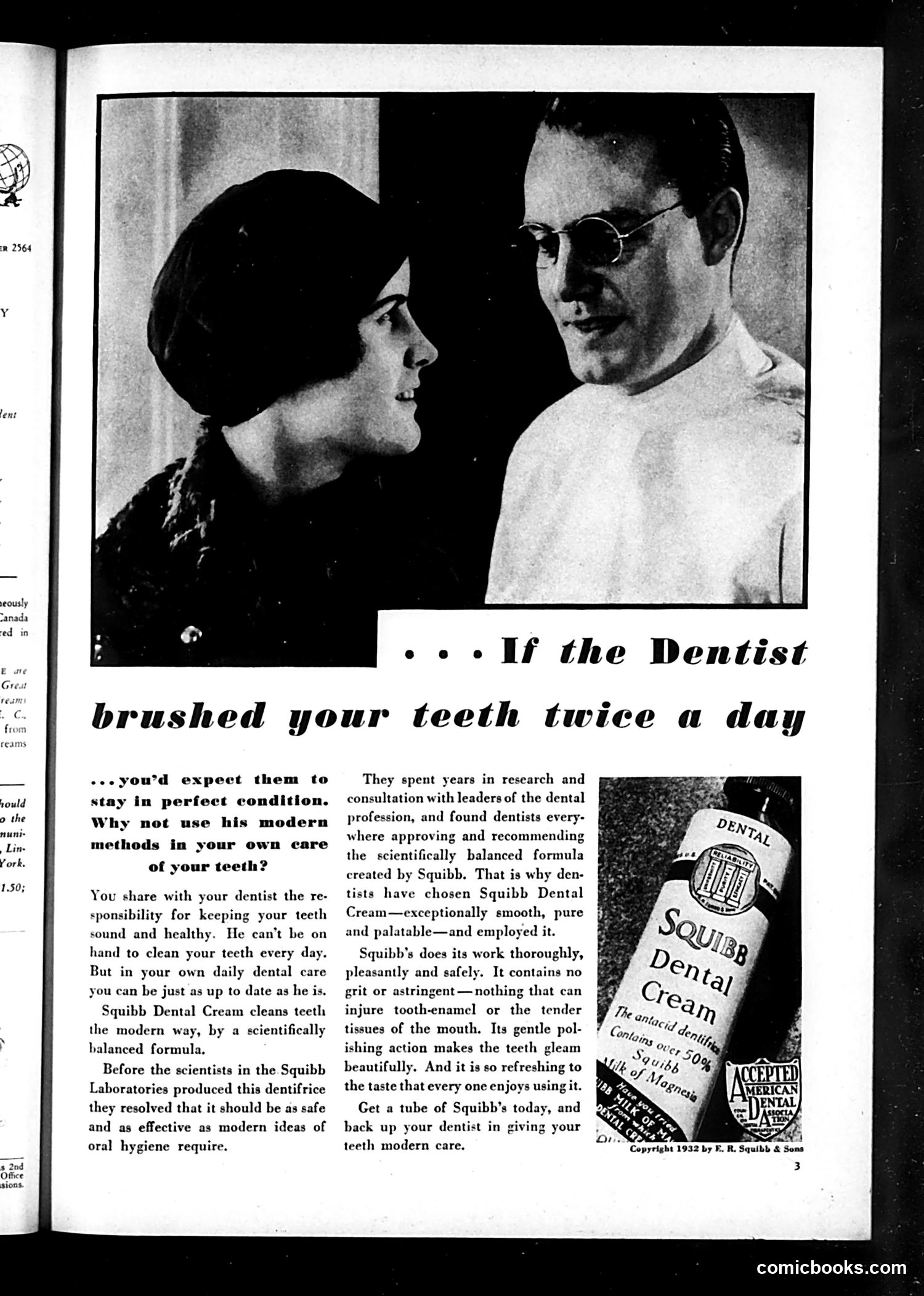
# Analysis This page is primarily a **dental product advertisement** for Squibb Dental Cream from 1932, not political satire or comics. The image shows a woman and man in conversation—likely representing a patient and dentist, though they're not caricatured. The headline uses a conditional joke format: "If the Dentist brushed your teeth twice a day—you'd expect them to stay in perfect condition." The ad argues consumers should apply professional dental methods at home using Squibb's product. It emphasizes the cream's "scientifically balanced formula" and endorsement by the dental profession, positioning it as modern oral hygiene. The piece reflects 1932 consumer culture: marketing scientific authority and professional legitimacy to sell everyday health products to middle-class readers.
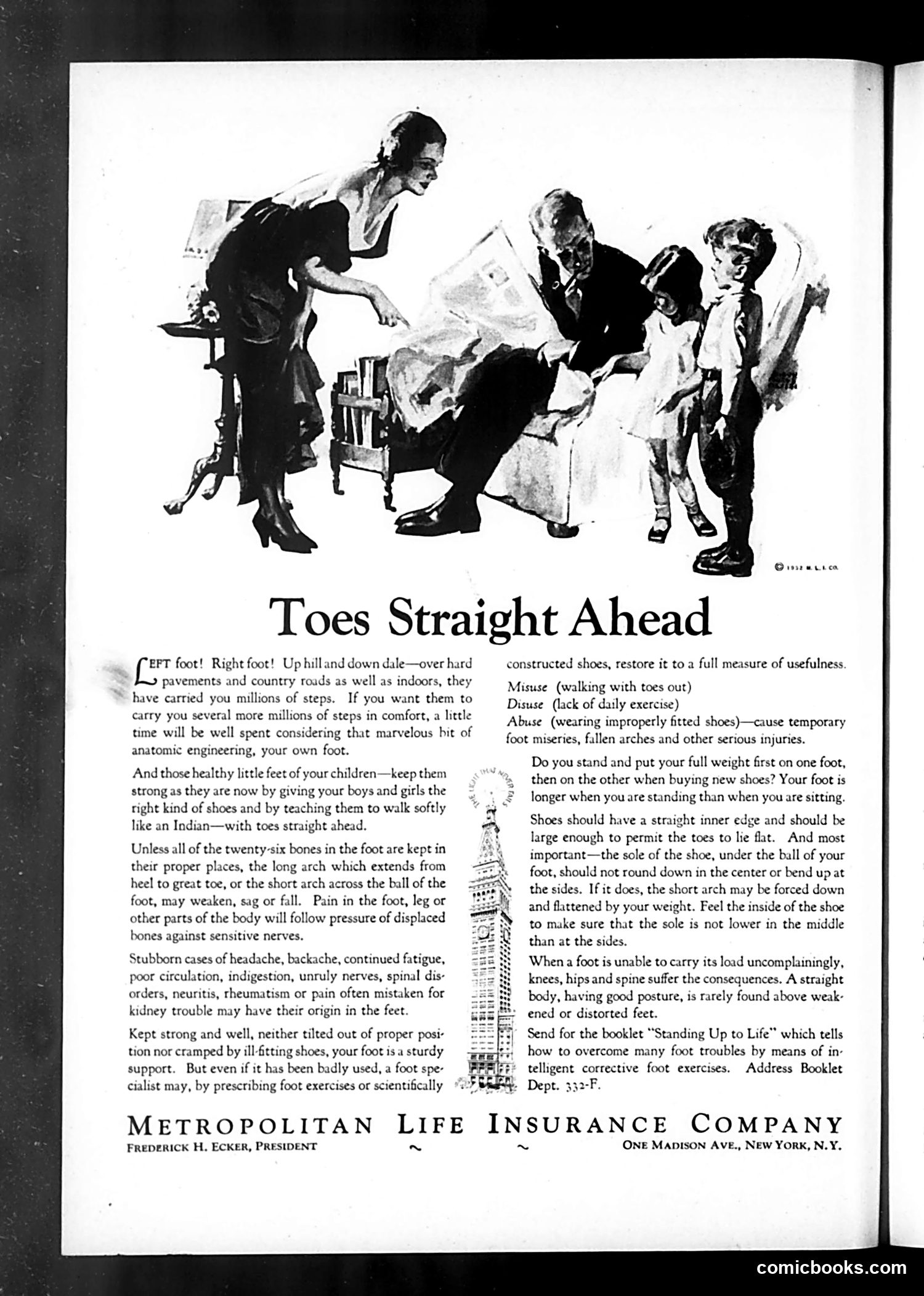
# "Toes Straight Ahead" This is a health advisory advertisement from Metropolitan Life Insurance Company, not political satire. The illustration shows a doctor or health professional instructing a family (adults and children) about proper foot care and posture. The article warns that poorly fitted shoes cause foot problems—including misuse (walking with toes out), disuse (lack of exercise), and abuse (wearing tight shoes)—which lead to headaches, backaches, fatigue, and spinal issues. The text advocates for straight-toed shoes, proper arch support, and foot exercises to maintain health. This reflects early 20th-century health reform messaging: insurance companies promoted preventive wellness because healthier customers meant lower claims. The advice assumes middle-class families could afford proper shoes and medical guidance.
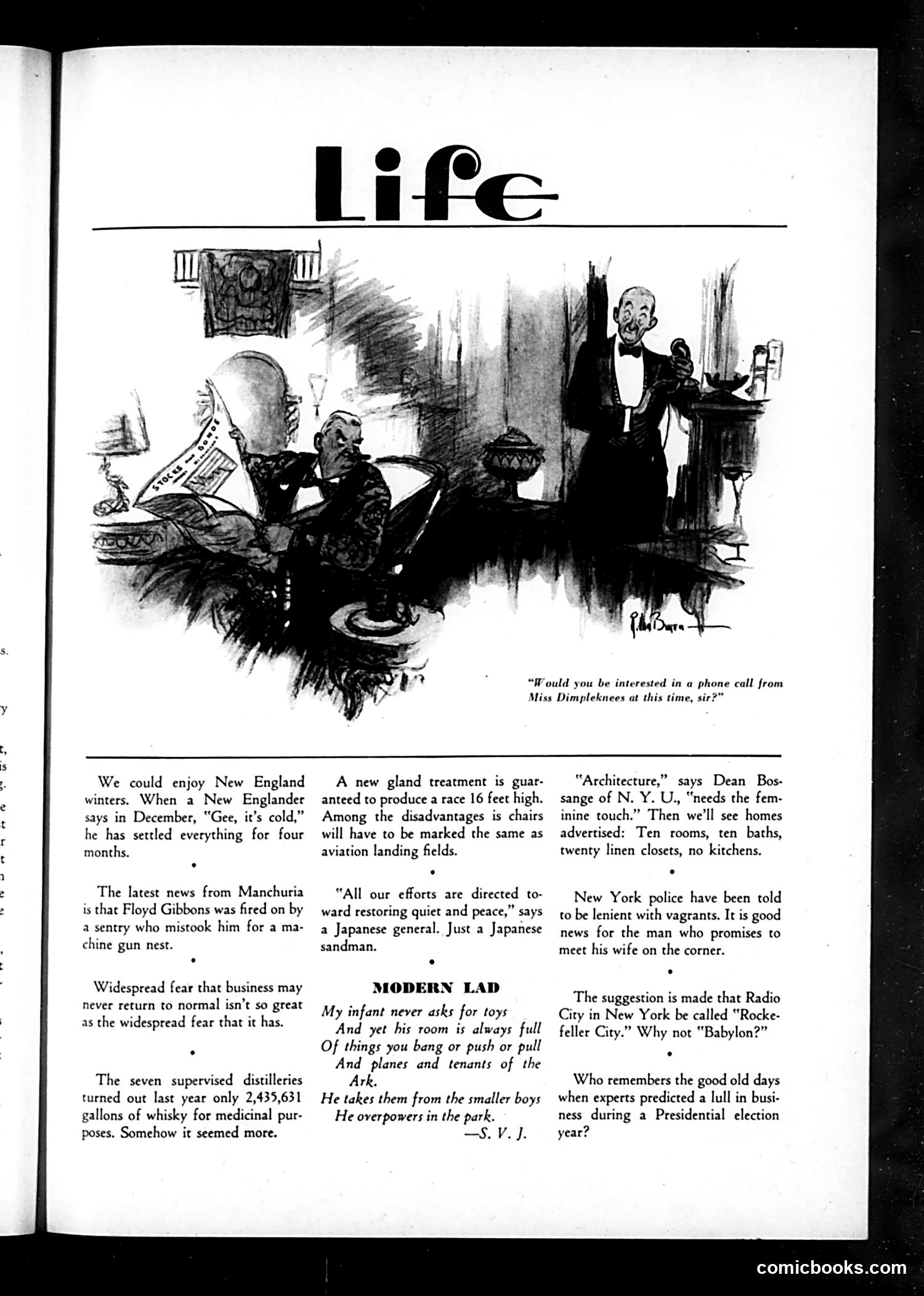
# Life Magazine Cartoon Analysis The cartoon depicts a formal dinner scene where a standing gentleman offers a phone call to a seated diner, with the caption: "If would you be interested in a phone call from Miss Dimplebness at this time, sir?" This is satire about **telephone interruptions during meals**—a social annoyance of the era. The cartoon ridicules the intrusion of modern technology into private dining. "Miss Dimplebness" appears to be a humorous invented name suggesting a frivolous female caller, mocking both the caller's superficiality and the absurdity of accepting social calls during formal dinners. The joke reflects early 20th-century anxieties about how telephones were disrupting traditional etiquette and social conventions, particularly the sanctity of formal meals.
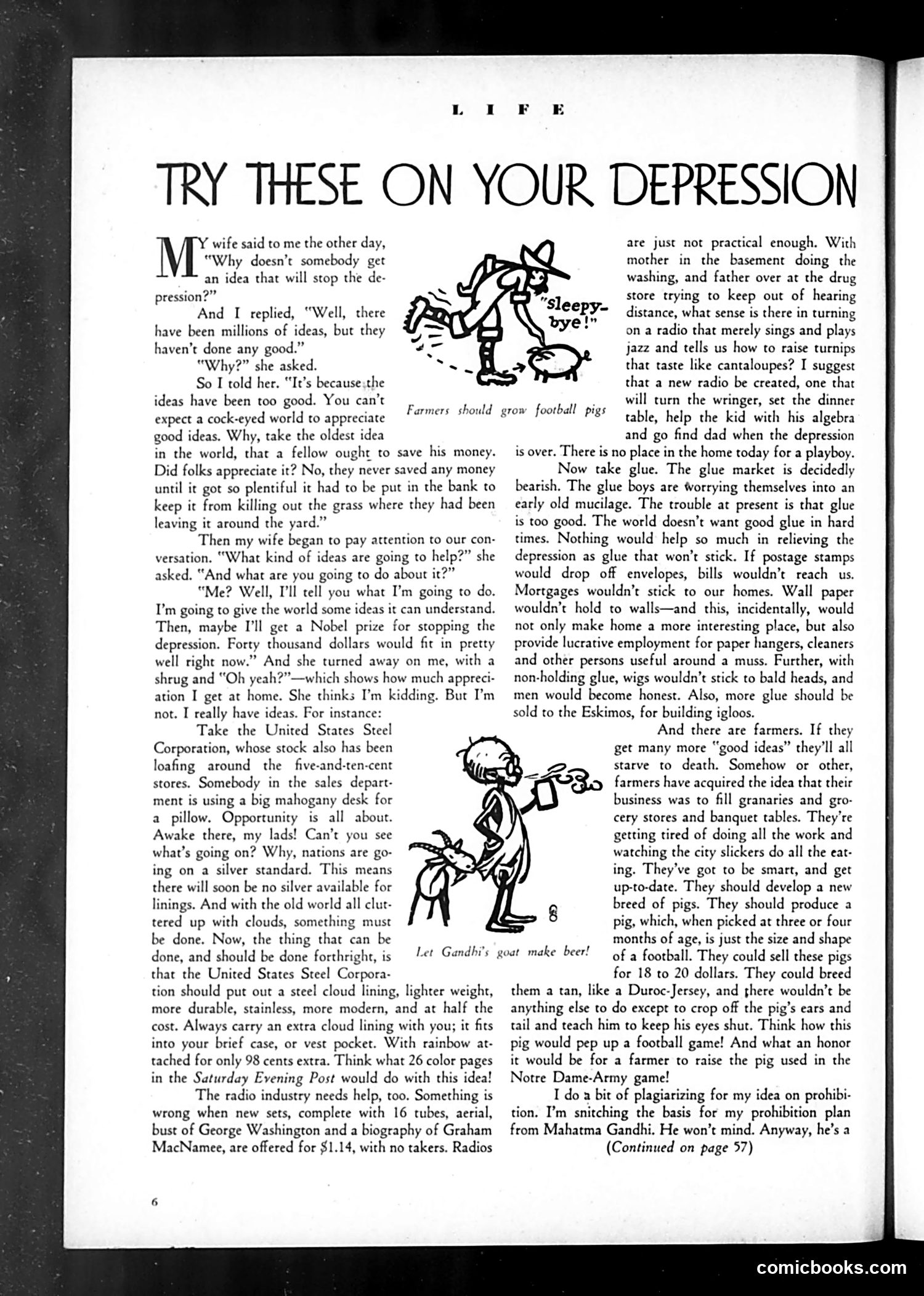
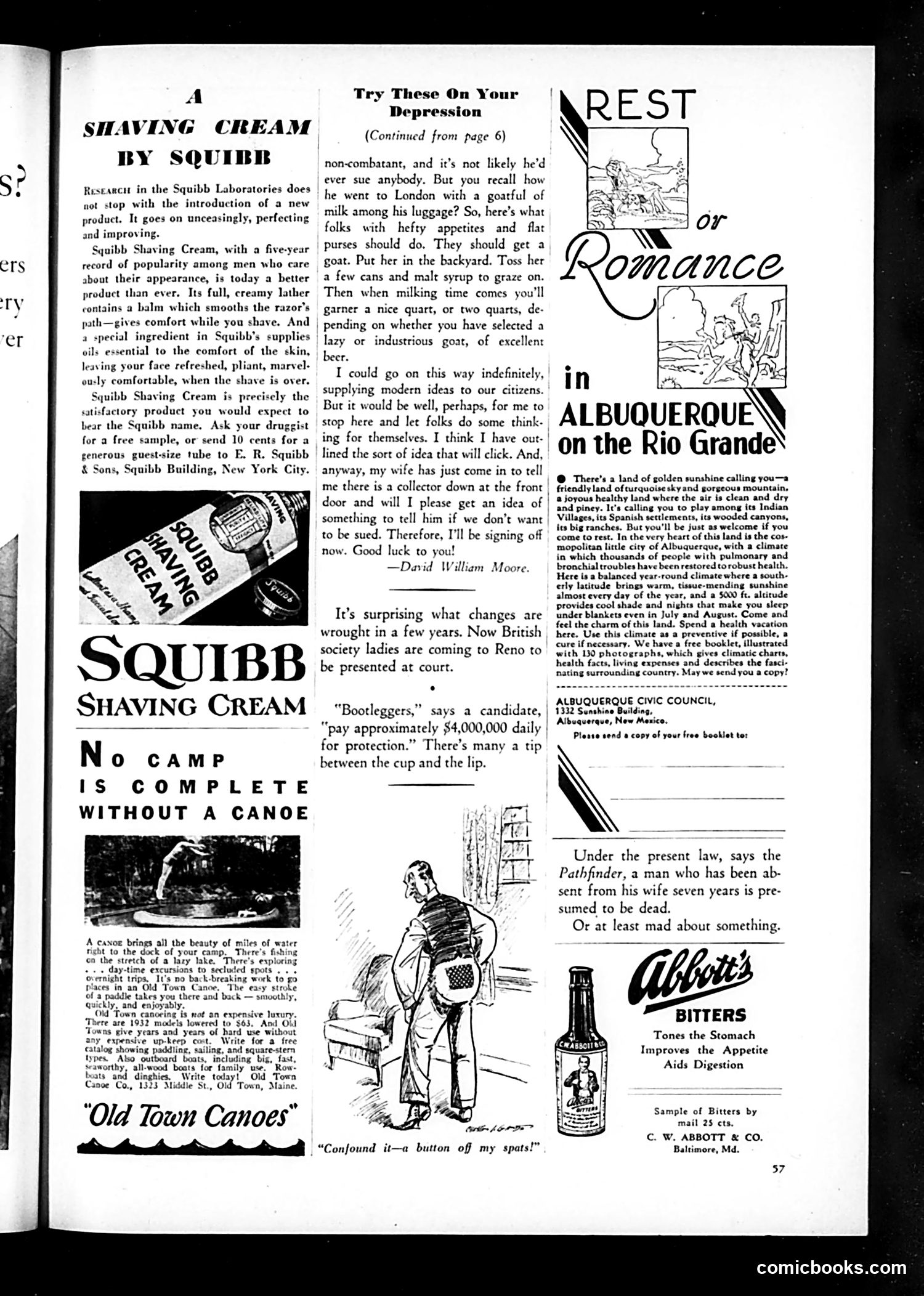
# "Try These on Your Depression" This satirical article mocks Depression-era "solutions" by proposing absurd business ideas. The author suggests that tired, impractical notions—like developing non-stick glue, breeding miniature pigs for football, or creating wallpaper that sticks to walls—could somehow lift the nation out of economic crisis. The accompanying cartoons illustrate the ridiculousness: one shows a figure labeled "Sleepy-eye" with a drum, another depicts someone attempting Gandhi's goat as a prohibition basis. The satire targets both the desperation of Depression-era thinking and the business establishment's disconnection from ordinary people's suffering—particularly farmers struggling to survive while city merchants propose frivolous "innovations." The piece is darkly humorous commentary on economic collapse and failure of leadership.
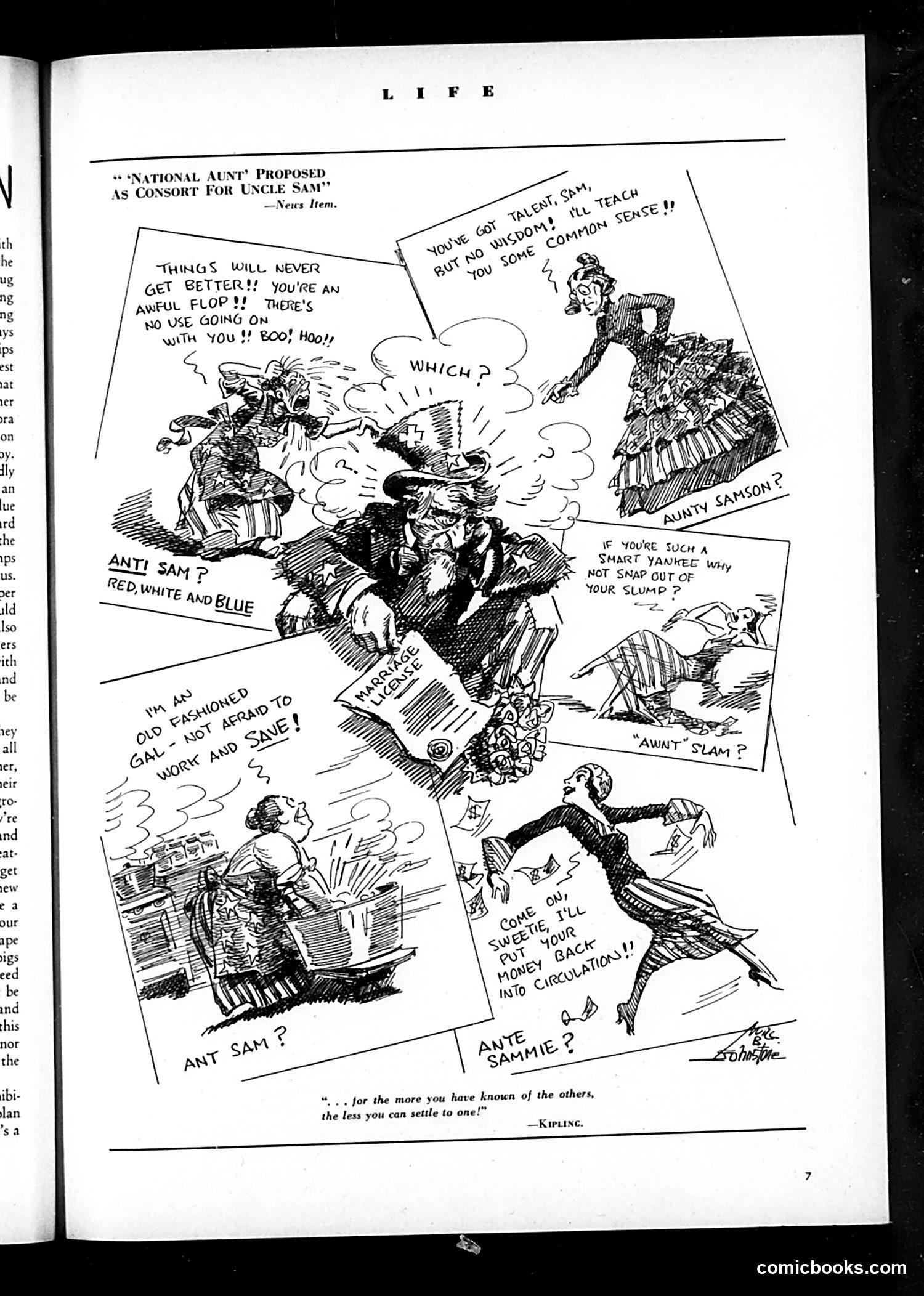
# Political Cartoon Analysis This cartoon satirizes the proposal of a "National Aunt" as a government position, specifically for "Uncle Sam." The multi-panel comic depicts competing female figures arguing over who should fill this role. The figures represent different character types or political positions—including "Aunty Samson," "Anti Sam," and others labeled as representatives of different values (red, white, and blue; old-fashioned; etc.). Each claims superiority and criticizes the others' qualifications. The satire mocks both the absurdity of creating such a position and the bitter partisan infighting over government appointments. The Kipling quote at bottom suggests that internal conflict makes unity impossible. The cartoon criticizes how political factions squabble over appointments rather than governing effectively.
# Analysis of Life Magazine Page This is a text-only opinion article by E.S. Martin titled "Over the Moon Again...Congress at Work...Loose Government." There are **no cartoons or caricatures visible** on this page. The piece satirizes Congress's ineffectiveness, noting that while symptoms of economic improvement exist, Congress has made mistakes and remains largely unhelpful. Martin criticizes the slight Democratic House/Republican Senate balance as creating unstable governance. He discusses President Hoover's administration, compares American colonial administration unfavorably to British efforts, and uses Chicago and New York city politics as examples of how mixed immigrant populations complicate governance and voting patterns. The satire targets Congressional incompetence and political machine dysfunction rather than specific individuals through visual caricature.
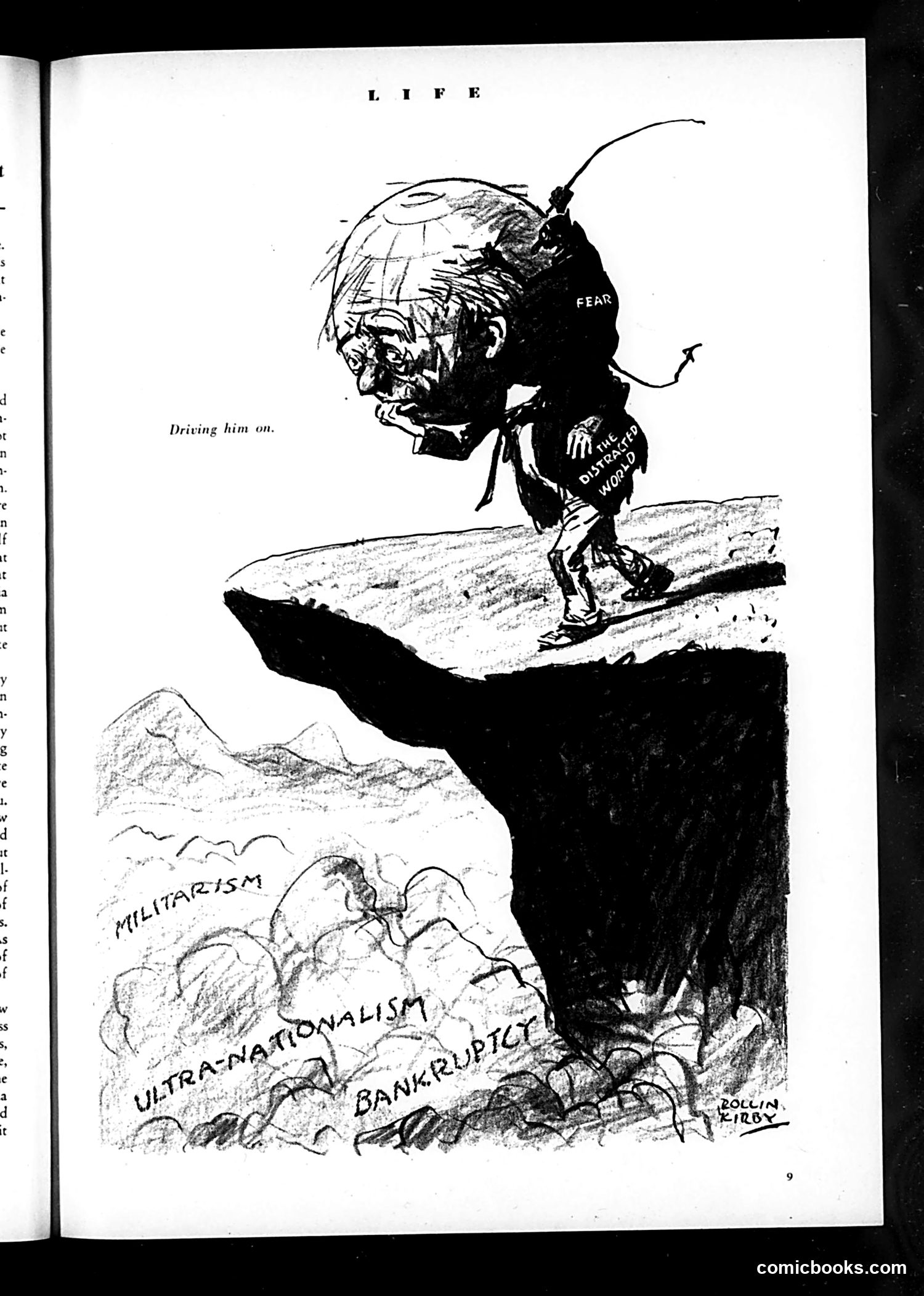
# Political Cartoon Analysis This Rollin Kirby cartoon depicts a figure standing precariously on a cliff edge, driven forward by a devil-like creature labeled "FEAR." The figure appears to be an older man wearing military insignia marked "PREPARED FOR WORLD" on his uniform. Below the cliff, three dangers lurk in the abyss: "MILITARISM," "ULTRA-NATIONALISM," and "BANKRUPTCY." The cartoon satirizes how fear is being weaponized to push political leaders toward military buildup and aggressive nationalism, despite the economic dangers this poses (bankruptcy). The caption "Driving him on" makes explicit that fear is the manipulative force behind these destructive policies. This reflects interwar anxieties about arms races and militaristic expansion leading nations toward financial ruin and potential conflict.
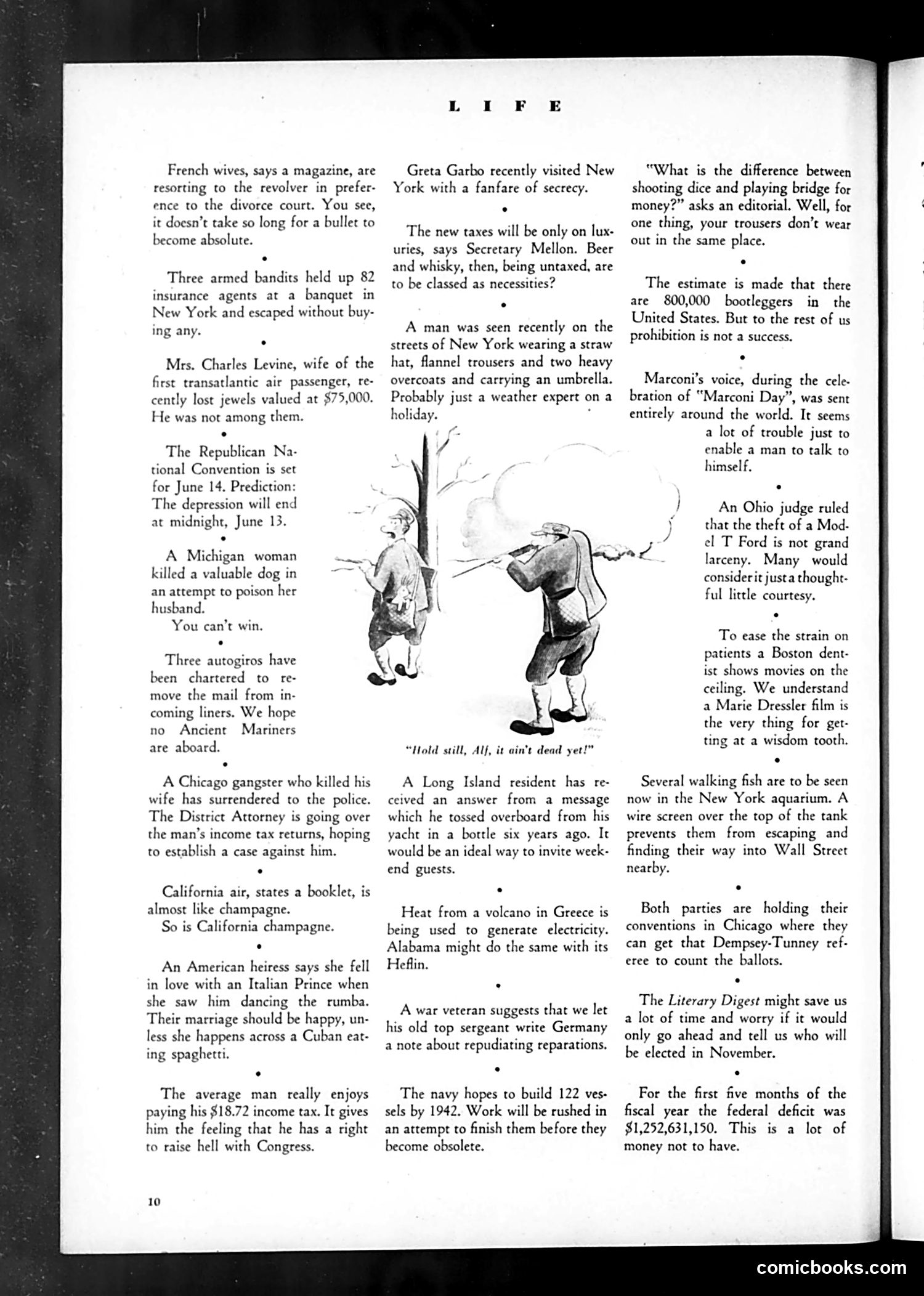
# Political Cartoon Analysis: Life Magazine Page This page contains a single cartoon depicting two figures in what appears to be a physical altercation or struggle, with the caption "Hold still, Al, it isn't dead yet!" The cartoon likely references a contemporary political or social conflict, though the specific identities of "Al" and the implied antagonist are unclear from the image alone. The caption's dark humor suggests one figure is attempting to finish off something already dying or defeated. The surrounding text consists of brief satirical commentary on various American topics—taxes, prohibition, weather fashion, and divorce—typical of Life magazine's humorous social observation. However, none of these fragments clearly connects to the cartoon's meaning without additional historical context about who "Al" represents.