A complete issue · 69 pages · 1932
Life — January 1932
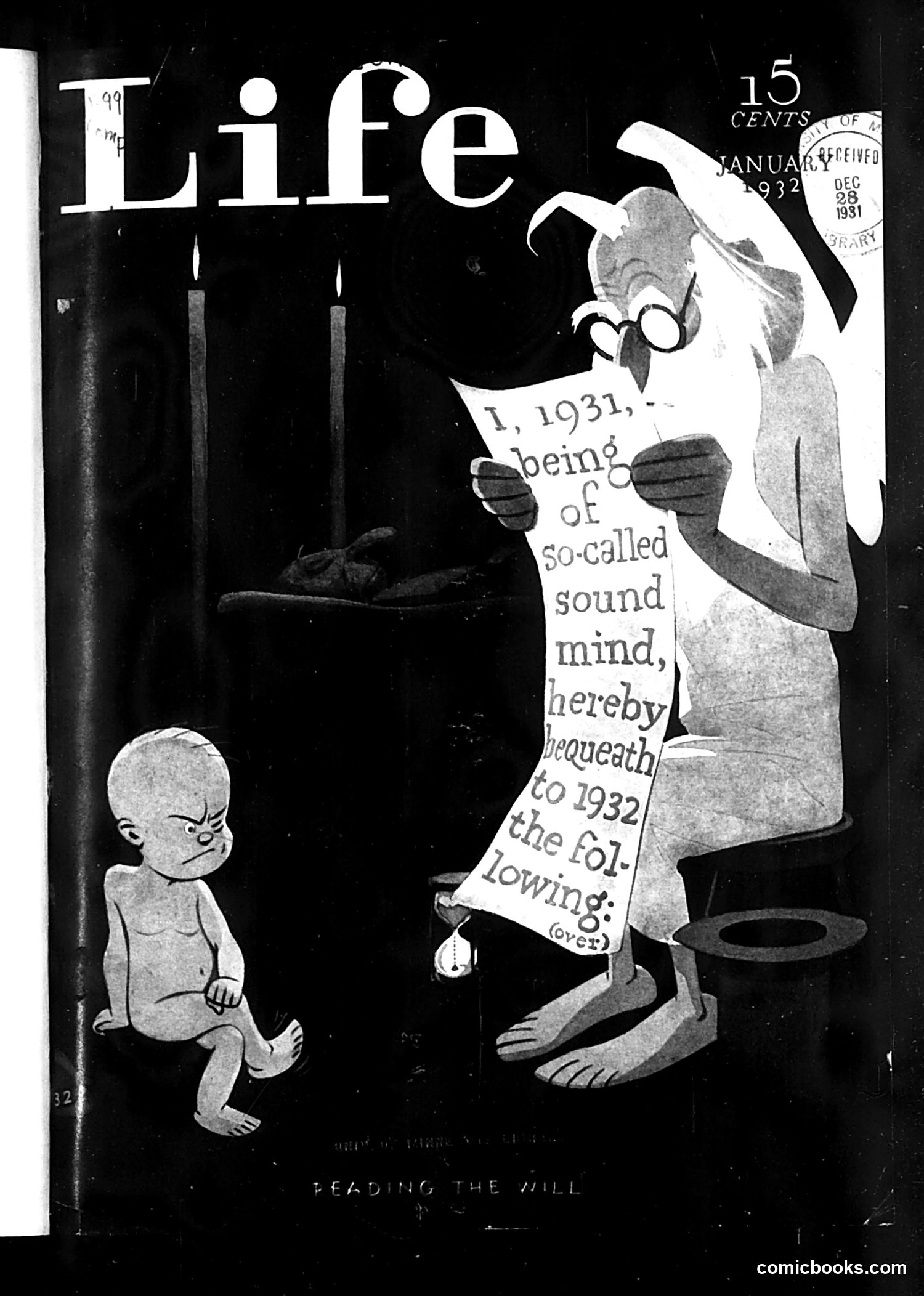
# "Reading the Will" - Life Magazine, January 1931 This cartoon satirizes the economic consequences of the 1929 stock market crash. A grotesque, skeletal figure (representing Death or financial ruin) reads a will to a distressed infant (symbolizing the upcoming generation or the nation's future). The will's text states the figure has been "of so-called sound mind" from 1931 through 1932, bequeathing "the following" — presumably debts and economic hardship. The joke targets how the crash's destruction will burden children born into this depression era. The "sound mind" phrase is darkly ironic, suggesting those responsible for the crash claimed rationality while causing catastrophic damage. The image reflects 1931's grim economic outlook during the Great Depression's early years.
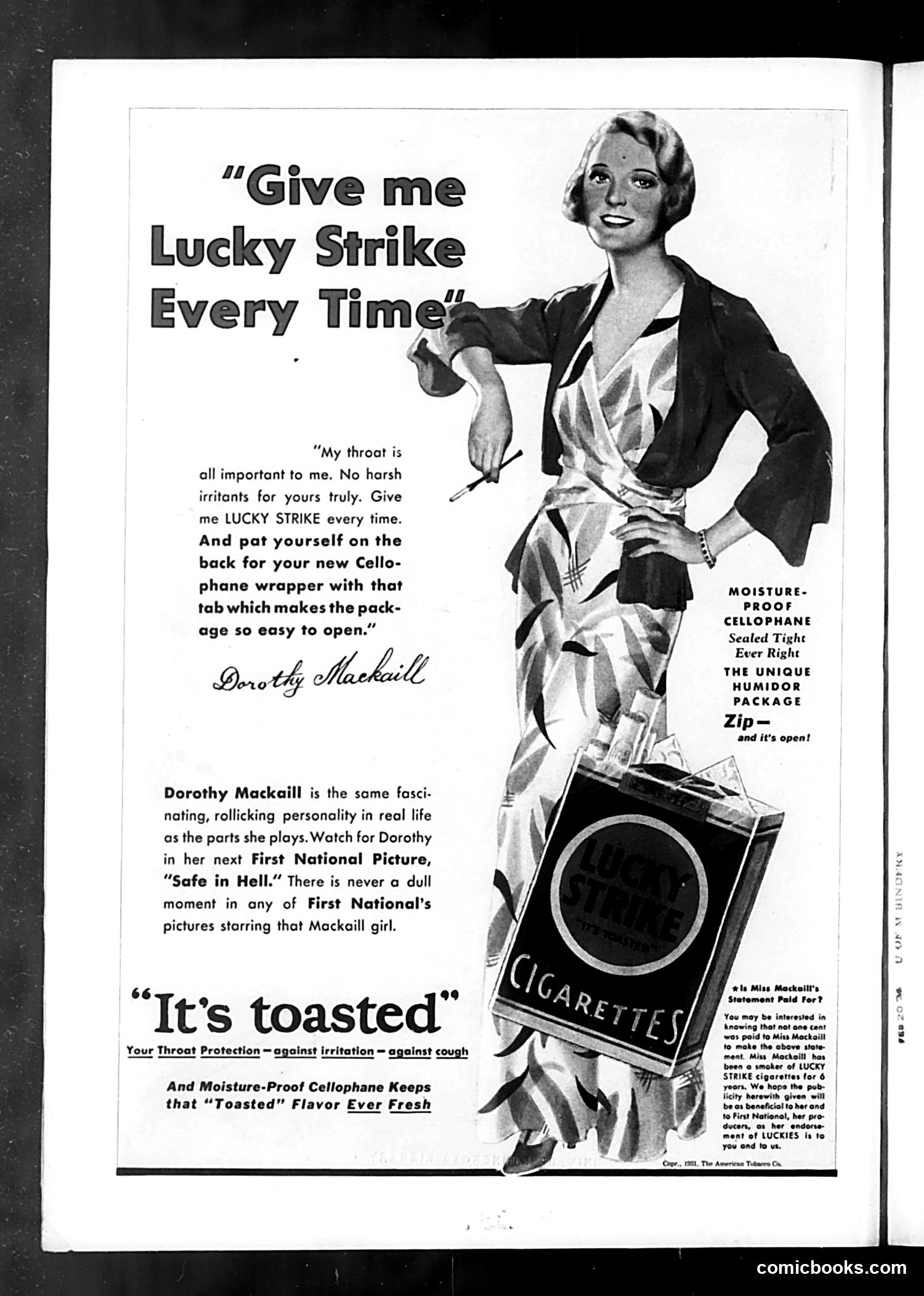
# Analysis This is a **cigarette advertisement**, not satire or political commentary. It features actress Dorothy Mackaill endorsing Lucky Strike cigarettes, claiming the product provides "throat protection" through a "toasted" process and moisture-proof cellophane packaging. The ad references Mackaill's upcoming film "Safe in Hell" (a First National Picture), positioning her as a glamorous spokesperson. The tagline "It's toasted" emphasizes throat protection—a common health-related marketing claim from the 1920s-30s era, before tobacco's dangers were widely acknowledged. This reflects the historical period when cigarette companies routinely made health claims and used celebrity endorsements without regulatory restrictions. Modern readers should note such advertising would be illegal today.
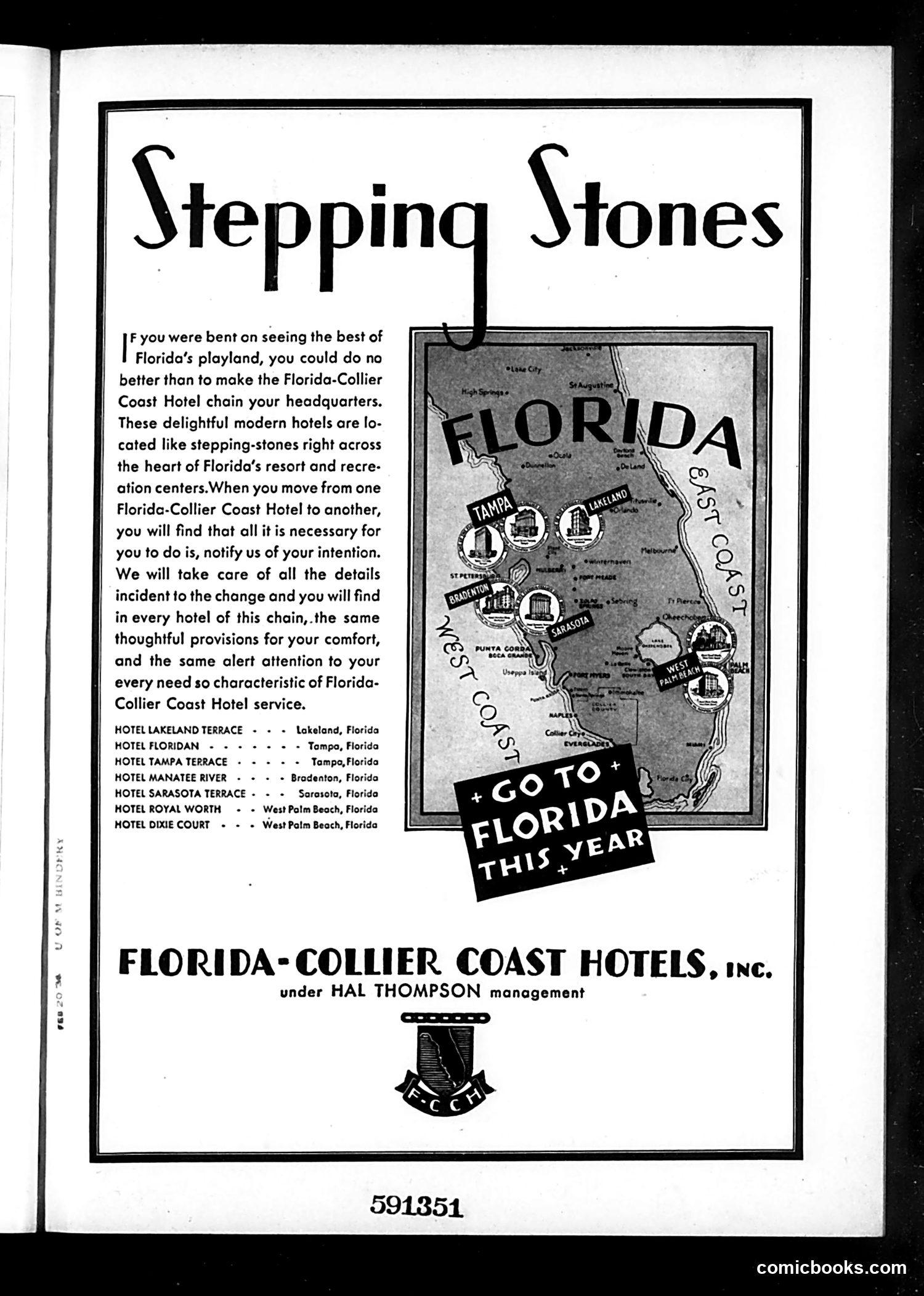
# Analysis This page is **not a cartoon or satire** — it's a straightforward **advertisement** for the Florida-Collier Coast Hotels chain, likely from the 1930s-1940s based on the styling. The ad uses the metaphor of "stepping stones" to describe the hotel chain's strategic locations across Florida's west coast. It lists seven hotels positioned from Tampa through the Keys, presented as convenient stops for tourists traveling through the state. The map shows these hotel locations marked as visual "stepping stones" along Florida's coastline. The headline "Go to Florida This Year" is a period tourism promotion. This appears in *Life* magazine's advertising section rather than its editorial/satirical content. There is no political commentary or caricature — merely promotional travel advertising under HAL THOMPSON's management.
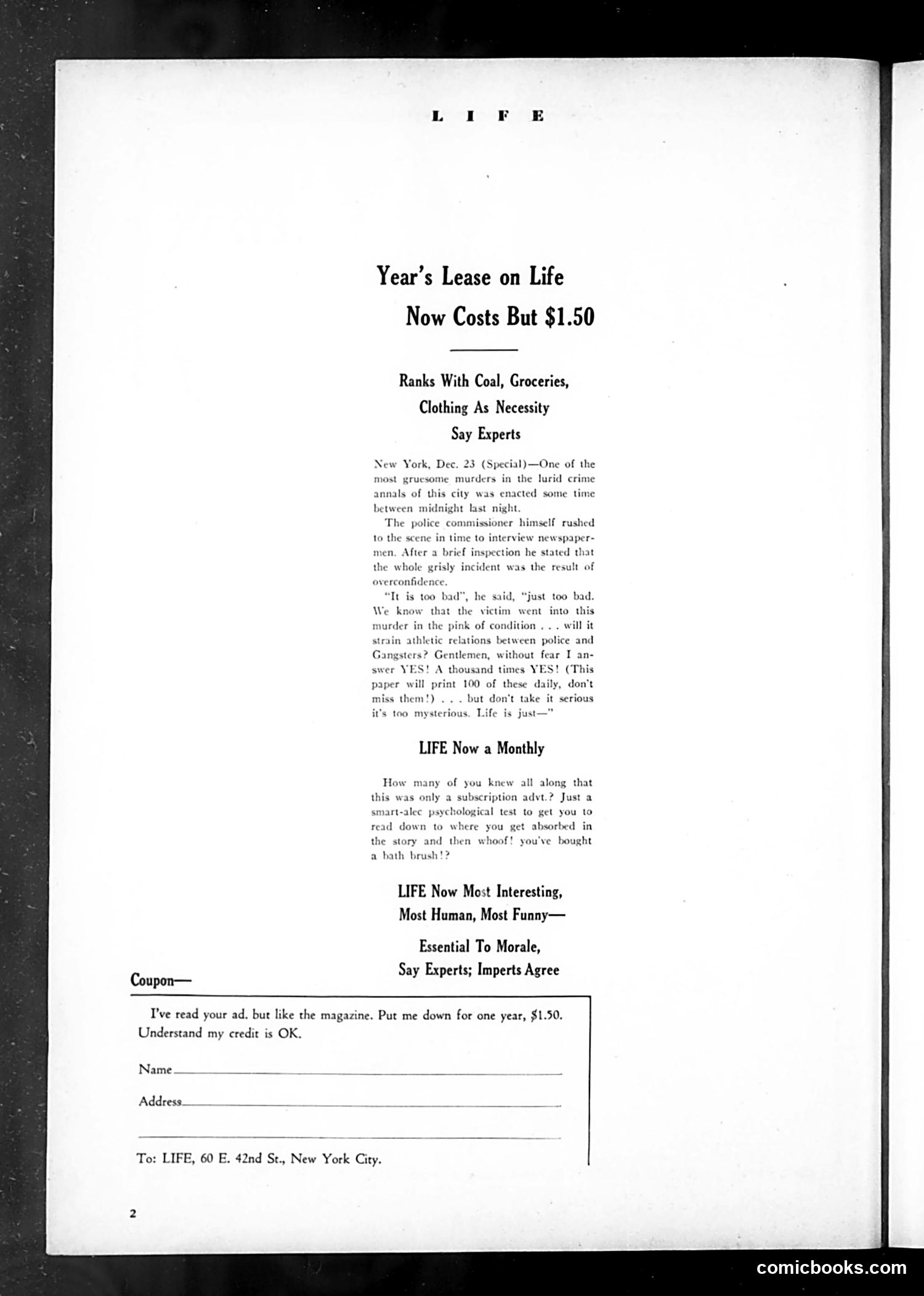
# Analysis This is primarily an **advertisement page for Life magazine**, not a political cartoon. The page announces Life's conversion to a monthly publication at $1.50 per year—positioning it as an affordable necessity comparable to "coal, groceries, clothing." The opening section includes a satirical news item about a police commissioner's dismissive response to a murder, using exaggerated language ("too bad," "Life is just—") to mock both crime reporting and public indifference to violence. This appears to be sample satirical content meant to showcase Life's editorial voice. The coupon invites subscriptions, emphasizing the magazine's appeal as "most interesting, most human, most funny" and claiming it's "essential to morale." This targets readers seeking affordable entertainment during what appears to be an economically constrained period.
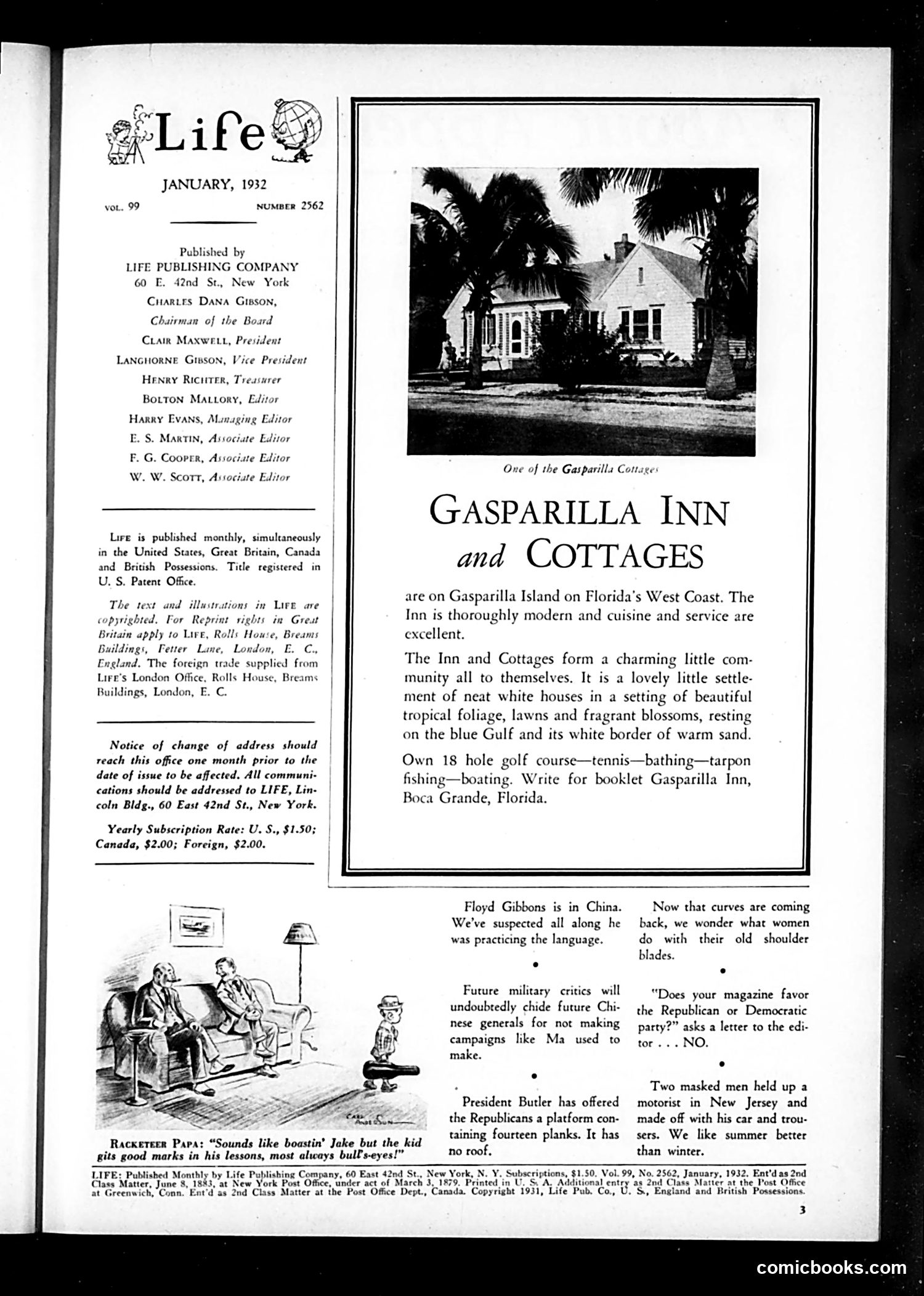
# Analysis This is primarily a **magazine masthead and advertisement page** rather than satirical content. The top section lists Life magazine's publication details (January 1932, Vol. 99) and editorial staff. The main content is a **commercial advertisement** for the Gasparilla Inn and Cottages on Florida's Gulf Coast, featuring a photograph of a white cottage surrounded by palm trees. Below is a **single cartoon** labeled "RACKETEER PAPA," depicting two men on a couch with a child. The caption suggests satire about parenting: the father figure boasts that his son gets "good marks in his lessons, most always bull's-eyes!" — a dark joke conflating academic success with criminal marksmanship, possibly satirizing organized crime culture during Prohibition era (1920s-1933). The remaining text consists of **brief social commentary snippets** unrelated to the cartoon.
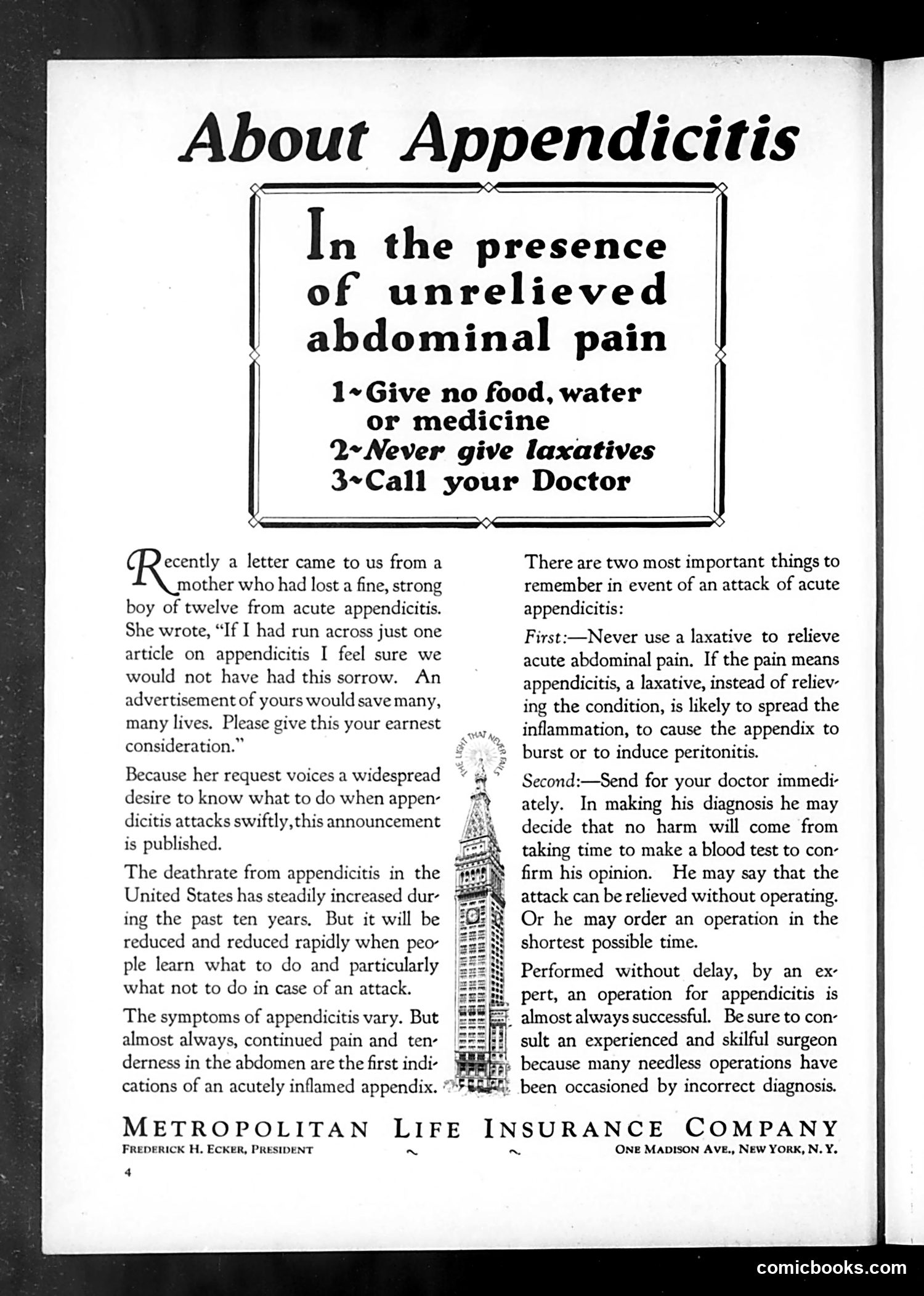
# Analysis This is a **public health advertisement**, not political satire. The Metropolitan Life Insurance Company published this educational notice about appendicitis, a serious and often fatal condition in the early 20th century. The page responds to a mother's letter describing her loss of a child to acute appendicitis. It aims to prevent similar tragedies by instructing readers on proper emergency response: avoid food/water/medicine, never use laxatives (which could rupture an inflamed appendix), and call a doctor immediately. The only visual element is a decorative building illustration (likely Metropolitan Life's headquarters). This is straightforward medical guidance, not commentary or satire—reflecting the era's high appendicitis mortality rates before antibiotics and reliable surgical techniques existed.
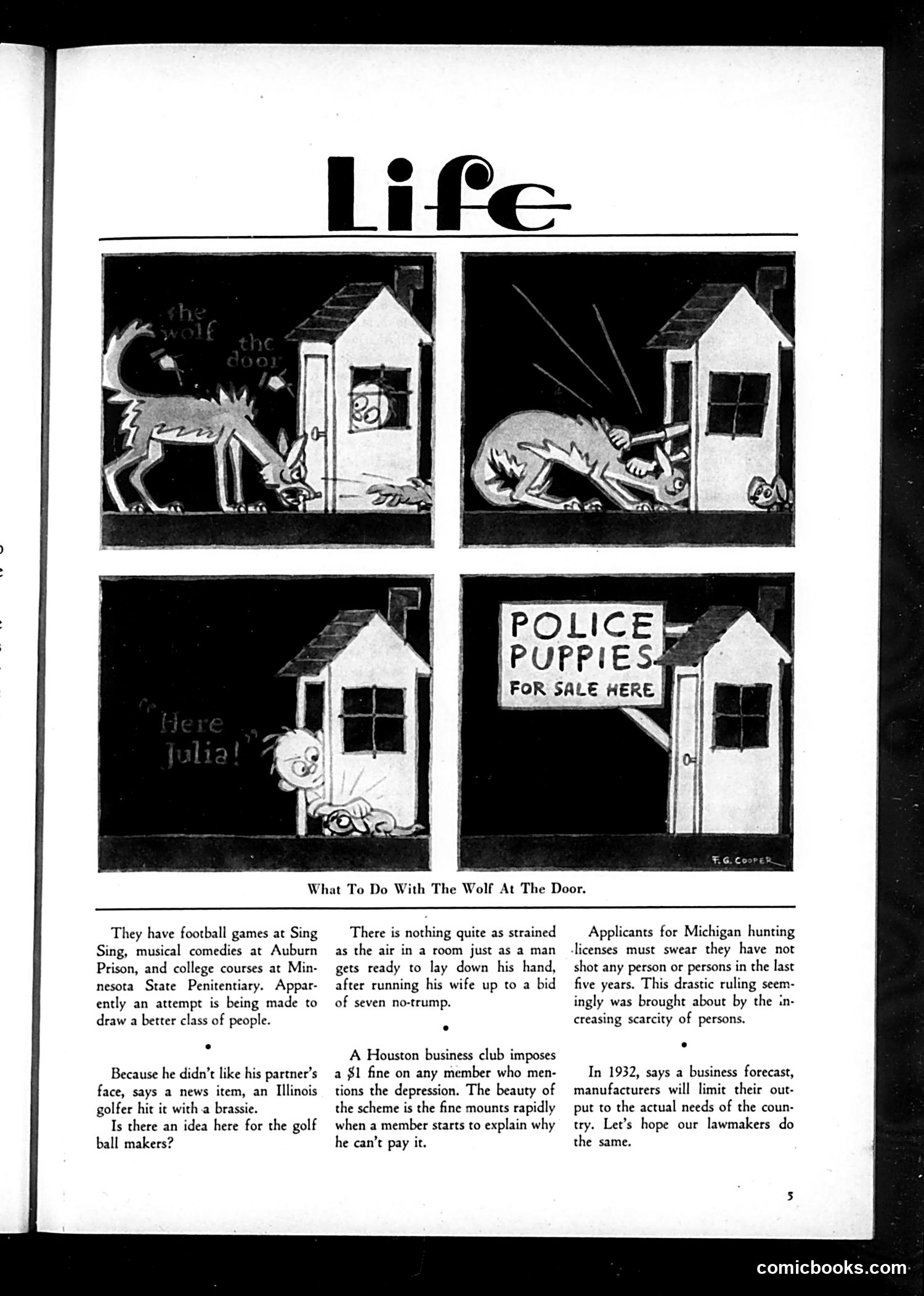
# "What To Do With The Wolf At The Door" This four-panel comic by T.G. Cooper uses the "wolf at the door" (a metaphor for poverty or financial hardship) as literal imagery. The panels show a starving wolf repeatedly approaching a small house. The final panel reveals the solution: a sign advertising "Police Puppies For Sale Here"—implying the wolf can be dealt with by selling police dogs, or satirically, that law enforcement offers a commercial solution to economic desperation. The accompanying text snippets discuss various social absurdities: competitive activities at prisons, marital disputes, hunting license requirements, and business austerity measures during the Great Depression era. The overall page satirizes American responses to economic hardship and social problems through quirky, darkly humorous anecdotes and visual gags.
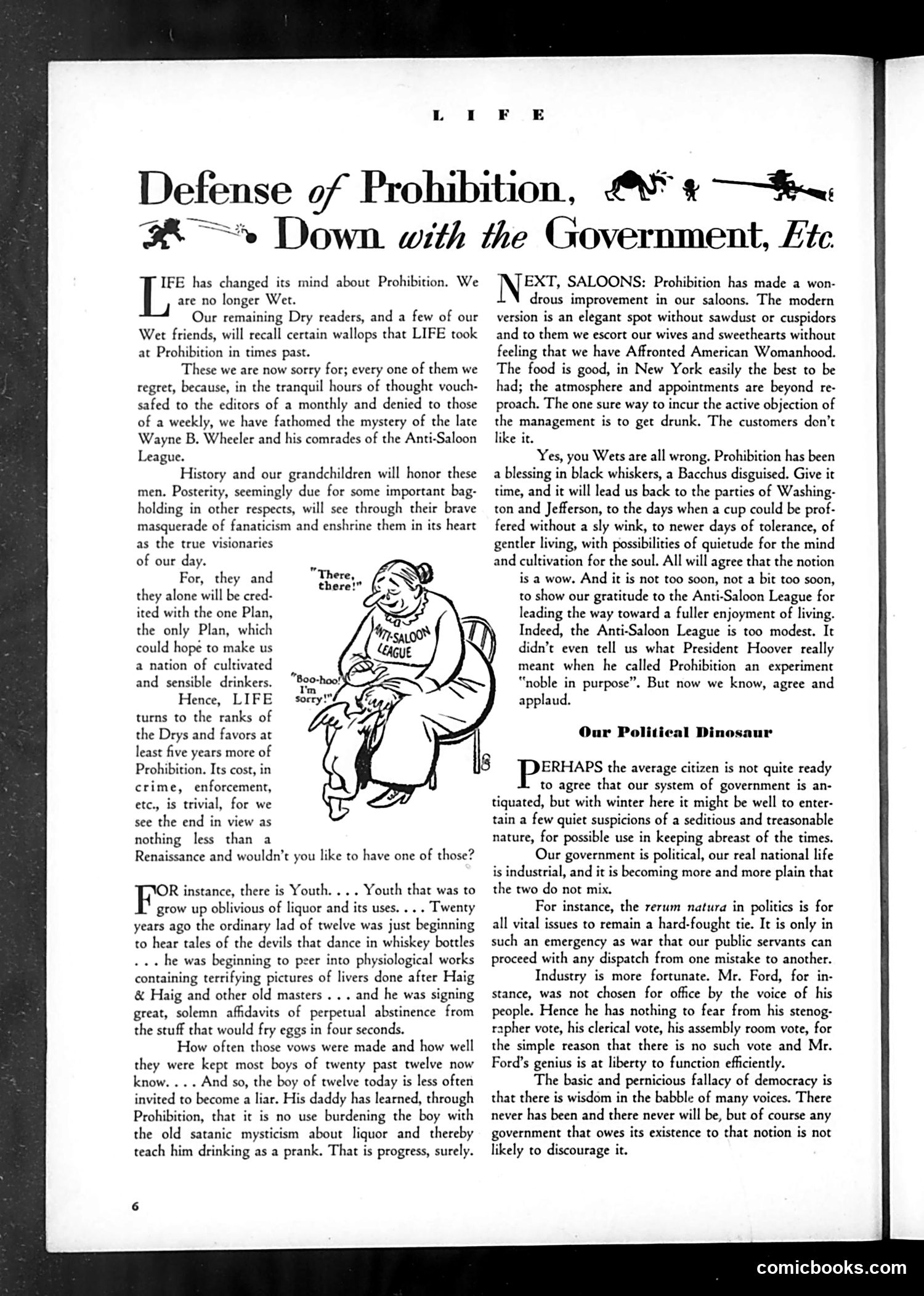
# "Defense of Prohibition" - Life Magazine Satire This page satirizes the debate over Prohibition (the 1920-1933 ban on alcohol). Life magazine, initially supporting Prohibition, now recants—admitting they regret their earlier anti-saloon editorials and wallpapers. The cartoon depicts a rotund figure labeled "Anti-Saloon League," the organization that championed Prohibition. The satire argues Prohibition has *failed*: it made speakeasies more elegant than saloons, encouraged drunkenness, and proved unenforceable. The second article, "Our Political Dinosaur," compares the government to an outdated creature, criticizing Prohibition as governmental overreach that contradicts American values of liberty. The overall message: Life's editors are reversing course, now viewing Prohibition as misguided social engineering rather than moral progress.
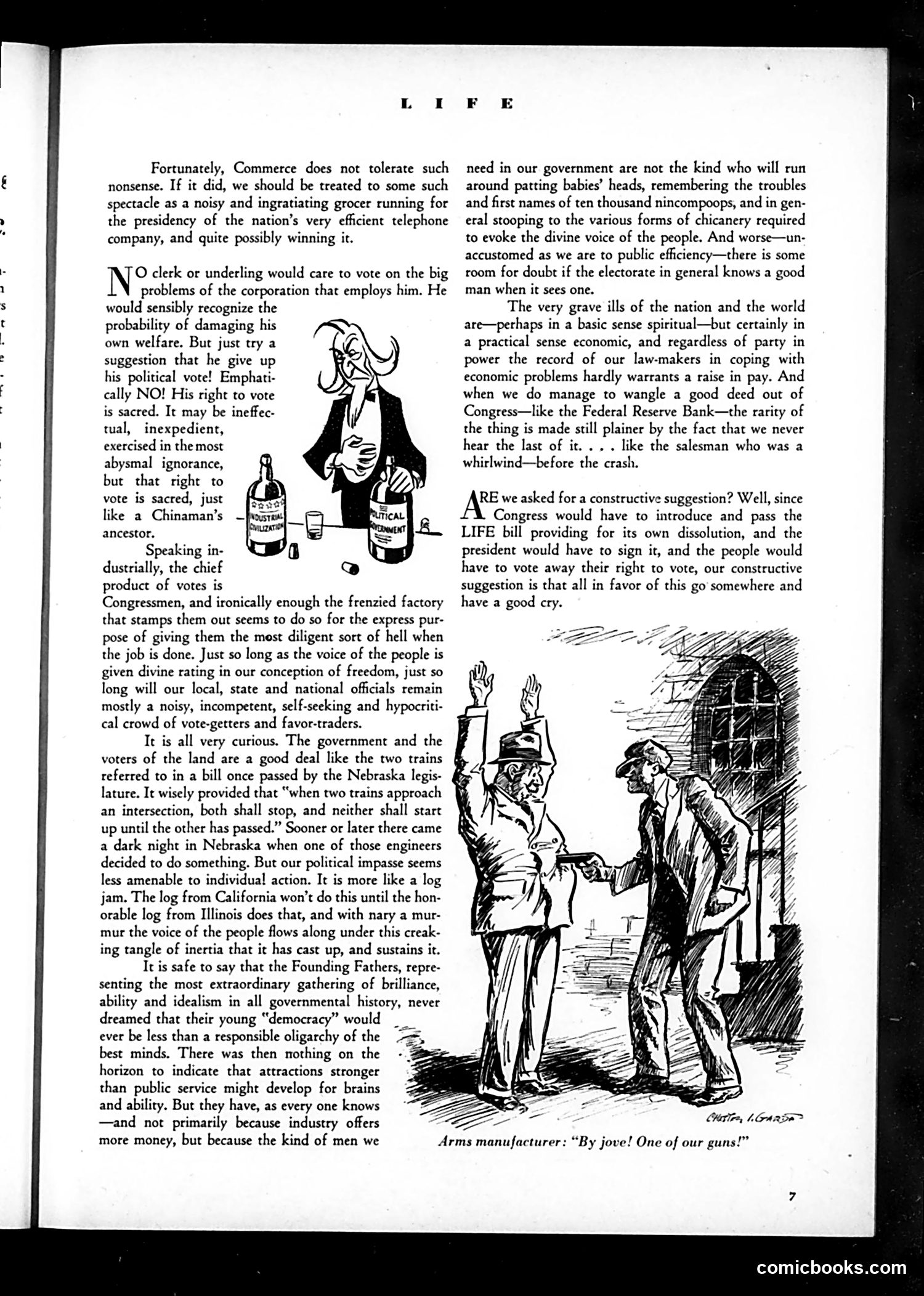
# Life Magazine Satire Analysis This page critiques American democracy and governance through two cartoons. **Upper cartoon**: Shows a caricatured politician with bottles labeled "Political" items, satirizing how Congress produces legislation as a factory product—implying politicians are mass-produced and interchangeable rather than thoughtful leaders. **Lower cartoon**: Depicts an arms manufacturer showing a gun to a uniformed military or government official, with the caption "By jove! One of our guns!" This mocks the cozy relationship between defense contractors and government, suggesting arms manufacturers profit from close ties to military/political power. The text criticizes voters for electing incompetent officials, compares government gridlock to a train collision, and laments that democracy produces "noisy, incompetent" leaders rather than attracting capable minds to public service. The satire suggests industry attracts better talent because it offers higher pay and prestige.
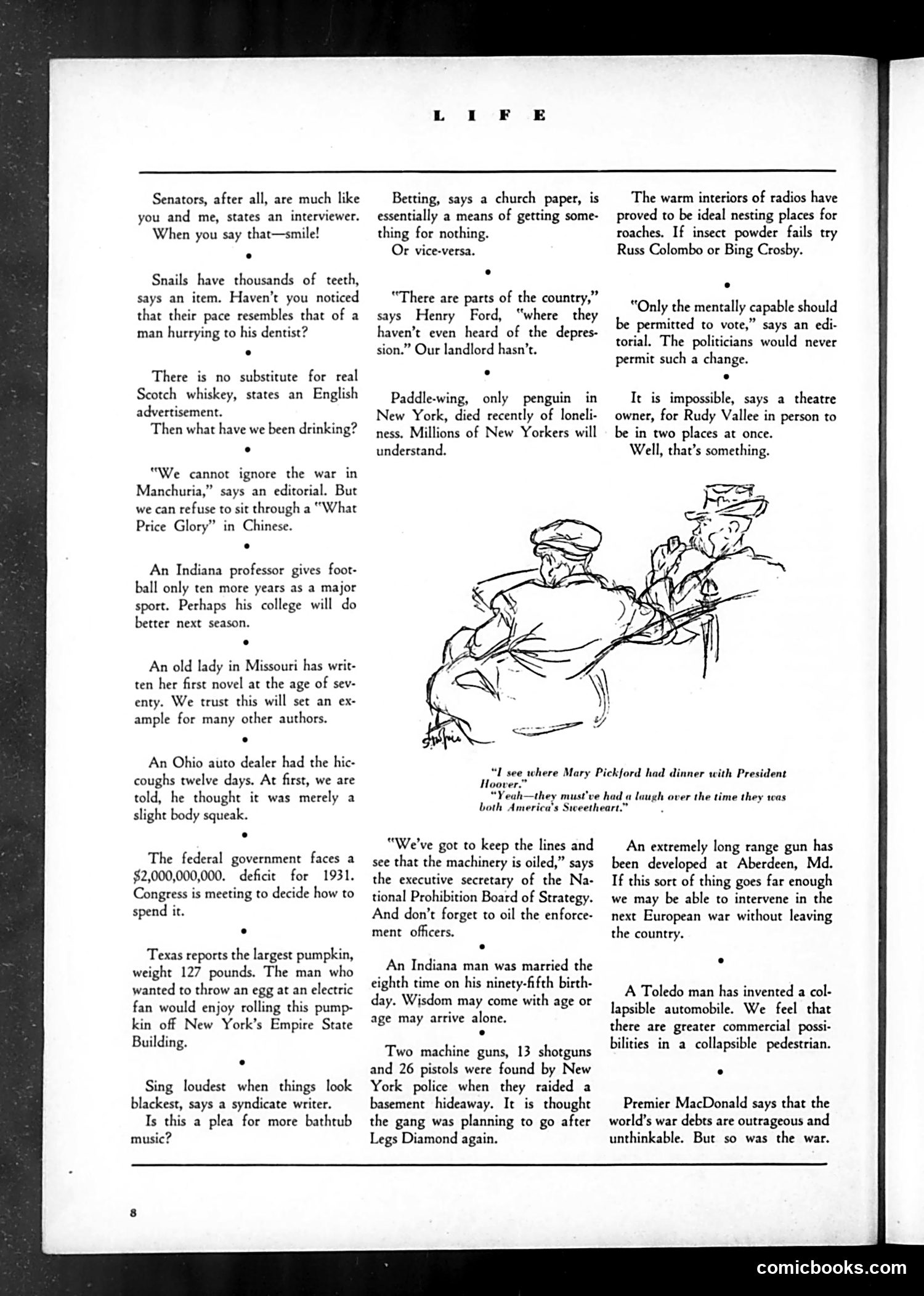
# Analysis of Life Magazine Page This page contains a single cartoon depicting two figures in period dress (likely 18th or 19th century based on clothing) sharing a meal. The caption references "Mary Pickford had dinner with President Hoover," suggesting these figures represent those two historical figures, with the implication they "must've had a laugh over the time they were both America's Sweetheart." The joke relies on early 1930s context: Mary Pickford was a famous silent-film actress, while President Herbert Hoover's popularity was collapsing during the Great Depression. The satire suggests both were once celebrated American figures—"sweethearts"—now diminished in relevance, making their hypothetical dinner conversation darkly humorous about faded fame and political failure.
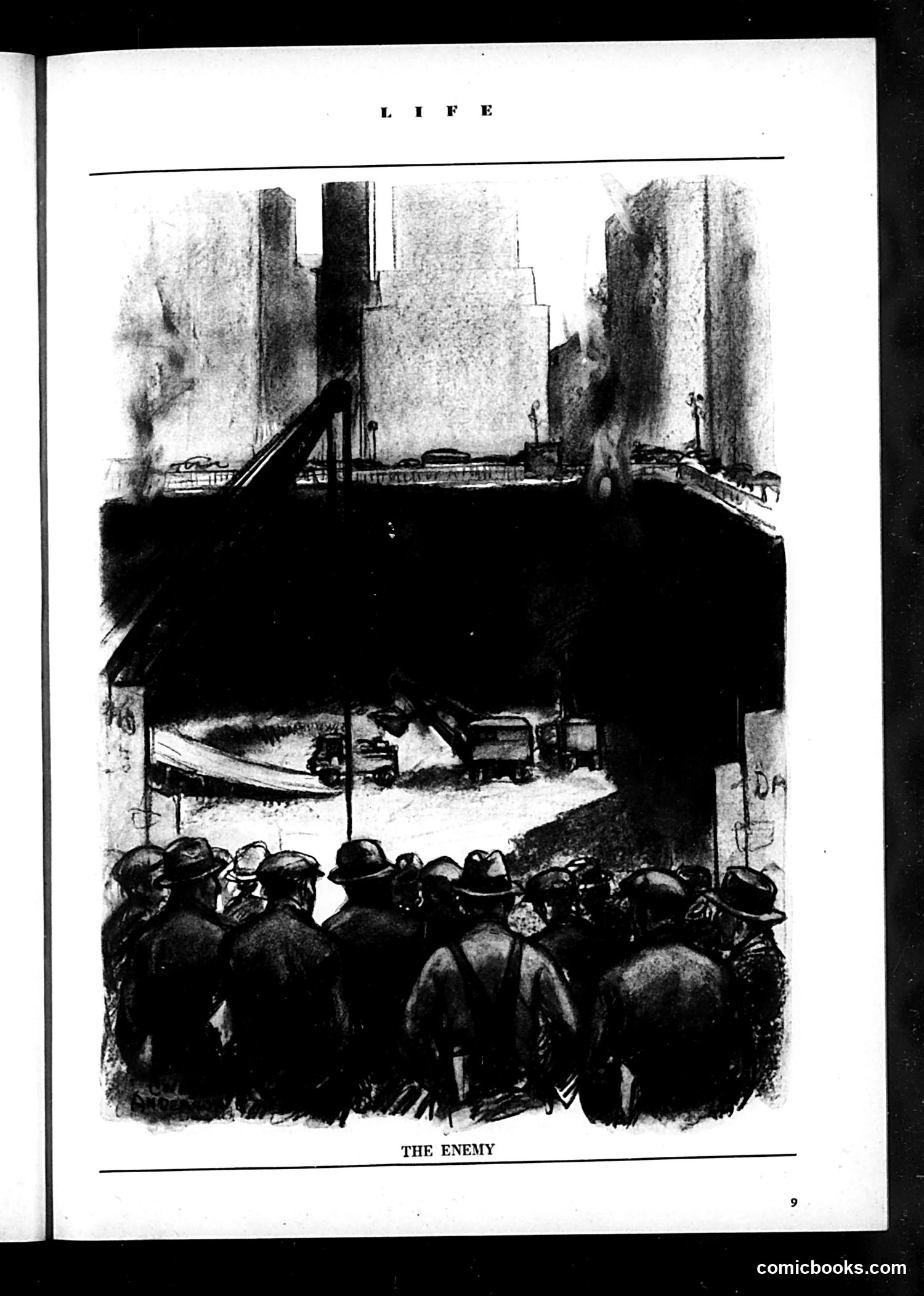
# "The Enemy" This illustration depicts a large crowd of soldiers wearing military helmets, viewed from behind as they gaze upward at an industrial cityscape with tall buildings and factory smokestacks belching smoke. The composition creates a stark contrast between the dark mass of troops in the foreground and the gray, ominous urban landscape above. The title "The Enemy" suggests the city itself—or what it represents—is the adversary. This likely refers to either enemy industrial capacity during wartime, or possibly critiques militarism and industrialization as threats to human life. The anonymous soldiers facing the imposing cityscape emphasizes individual soldiers as small against vast mechanized forces of war or industry. The mood is ominous and dehumanizing.
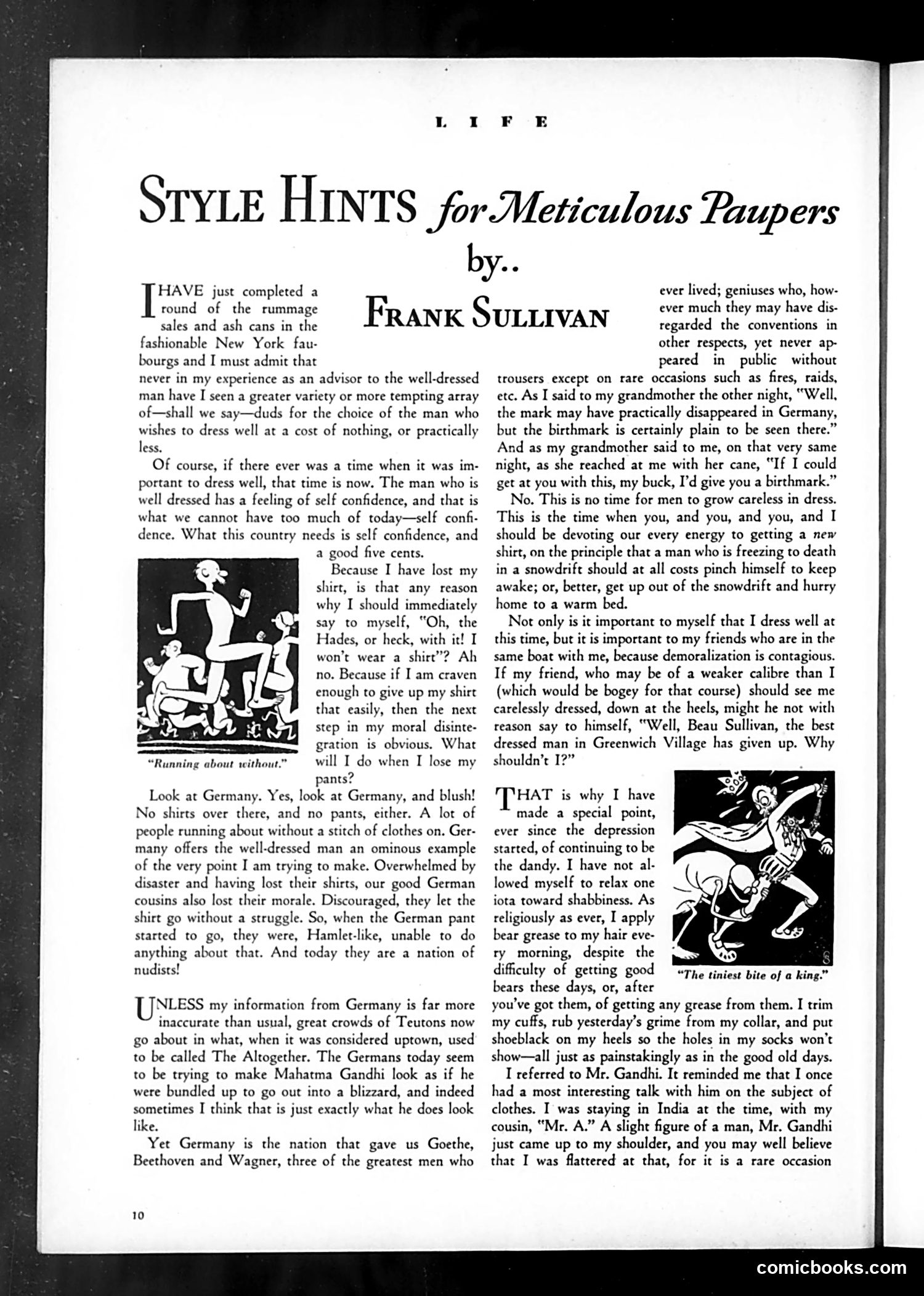
# Analysis of "Style Hints for Meticulous Paupers" by Frank Sullivan This satirical piece mocks Depression-era poverty through fashion advice. Sullivan argues that maintaining proper dress is essential for morale and self-respect during economic hardship. The cartoon labeled "Running about without" depicts a figure lacking clothing, illustrating Sullivan's opening anecdote about losing one's shirt—both literally and financially. A second illustration shows a figure in exaggerated motion, captioned "The tiniest bite of a king," likely referencing maintaining dignity on minimal resources. Sullivan references Germany's post-WWI economic collapse and mentions Gandhi to illustrate how even great figures face material deprivation. The satire critiques both the Depression's severity and society's obsession with appearances even amid widespread poverty—suggesting that proper dress becomes an almost religious obligation when everything else fails.