A complete issue · 37 pages · 1931
Life — November 20, 1931
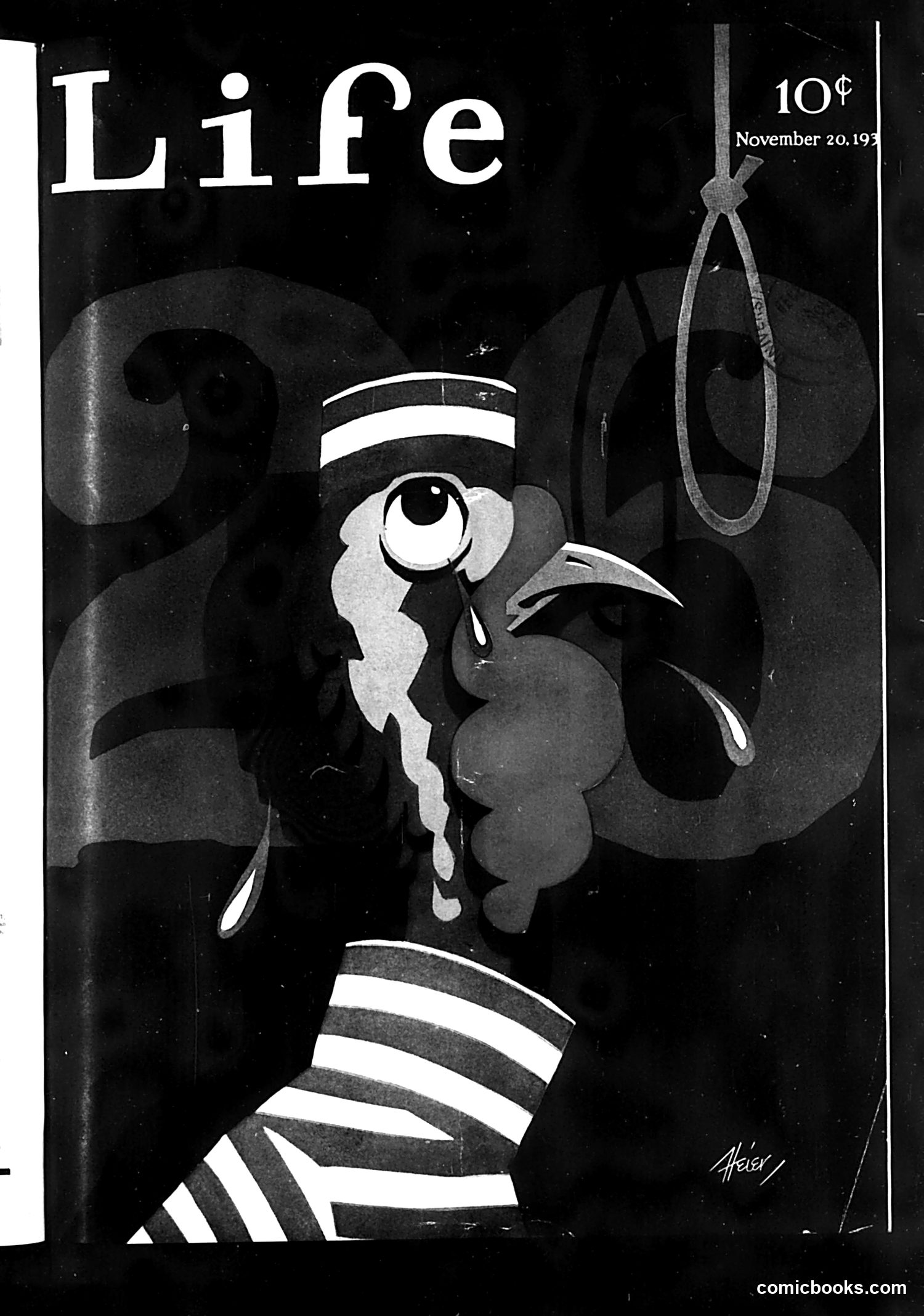
# Analysis of Life Magazine Cover (November 20, 1931) This cover depicts a caricatured figure in a sailor's uniform with an exaggerated, sorrowful expression—large tearful eye, downturned mouth—surrounded by dark, ominous shapes including what appears to be a noose. The styling suggests despair or suicide imagery. Published during the Great Depression (November 1931), this likely satirizes the economic crisis and its psychological toll on Americans, particularly those in maritime/naval occupations facing unemployment. The sailor represents the common working man devastated by financial collapse. The artist's signature appears to read "Aker" (unclear if full name). The 10¢ price reflects early-Depression-era costs. The overall message critiques the national mood of hopelessness during this economic catastrophe.
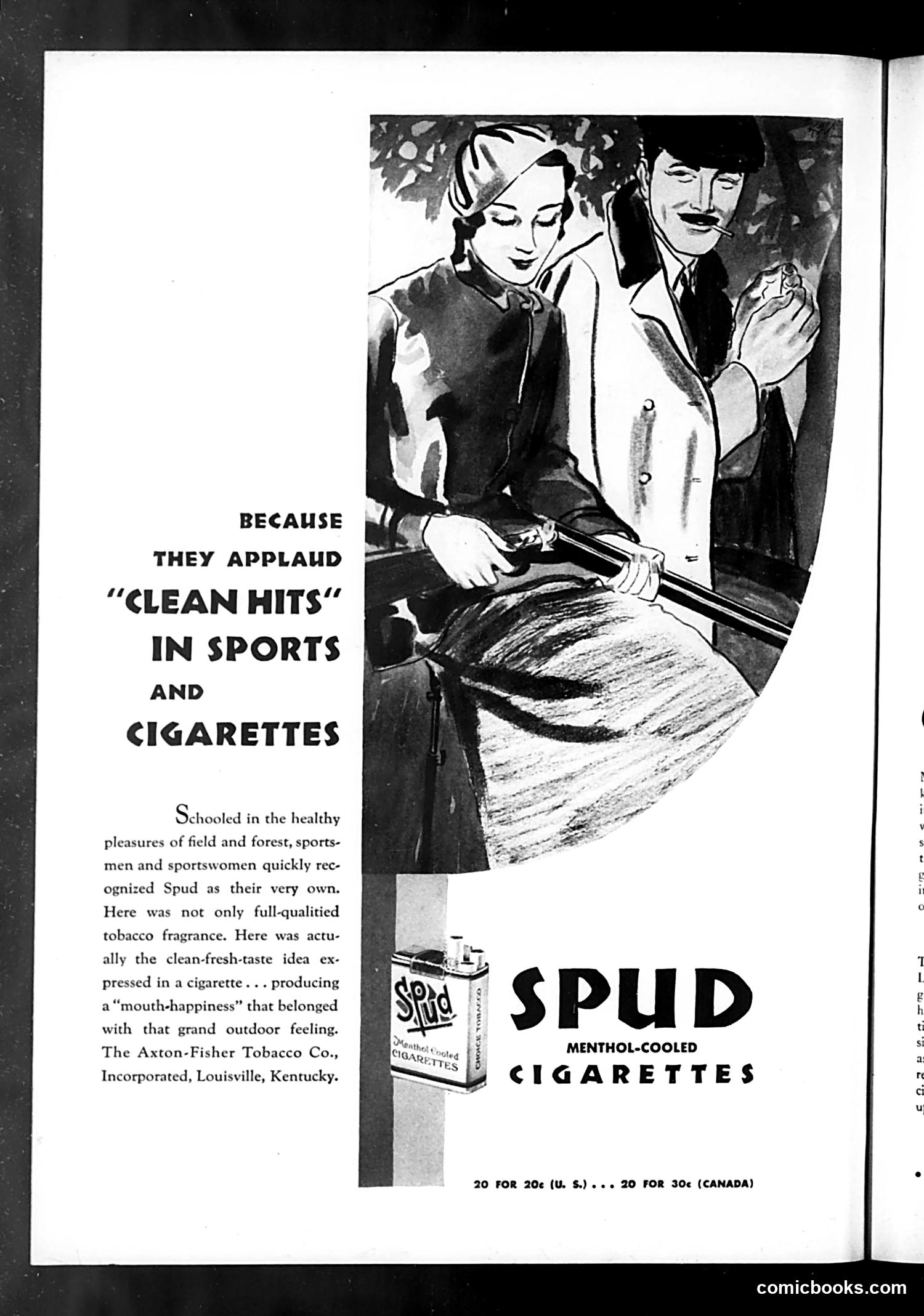
# Historical Advertisement Analysis This is a **cigarette advertisement**, not satire. It's a vintage Spud menthol cigarette ad from the Axton-Fisher Tobacco Company (Louisville, Kentucky) that exploits the association between smoking and sports. The ad depicts well-dressed men and women in what appears to be a hunting or outdoor sporting context. The headline cynically claims consumers applaud "clean hits" in both sports AND cigarettes—falsely equating athletic vigor with smoking. The text describes how "sportsmen and sportswomen" recognized Spud's "clean-fresh-taste" as matching their "grand outdoor feeling." **For modern readers**: This represents early tobacco marketing that deliberately targeted active, healthy demographics by linking cigarettes to athleticism and outdoor recreation—tactics now recognized as deceptive health claims. Such advertising is illegal today.
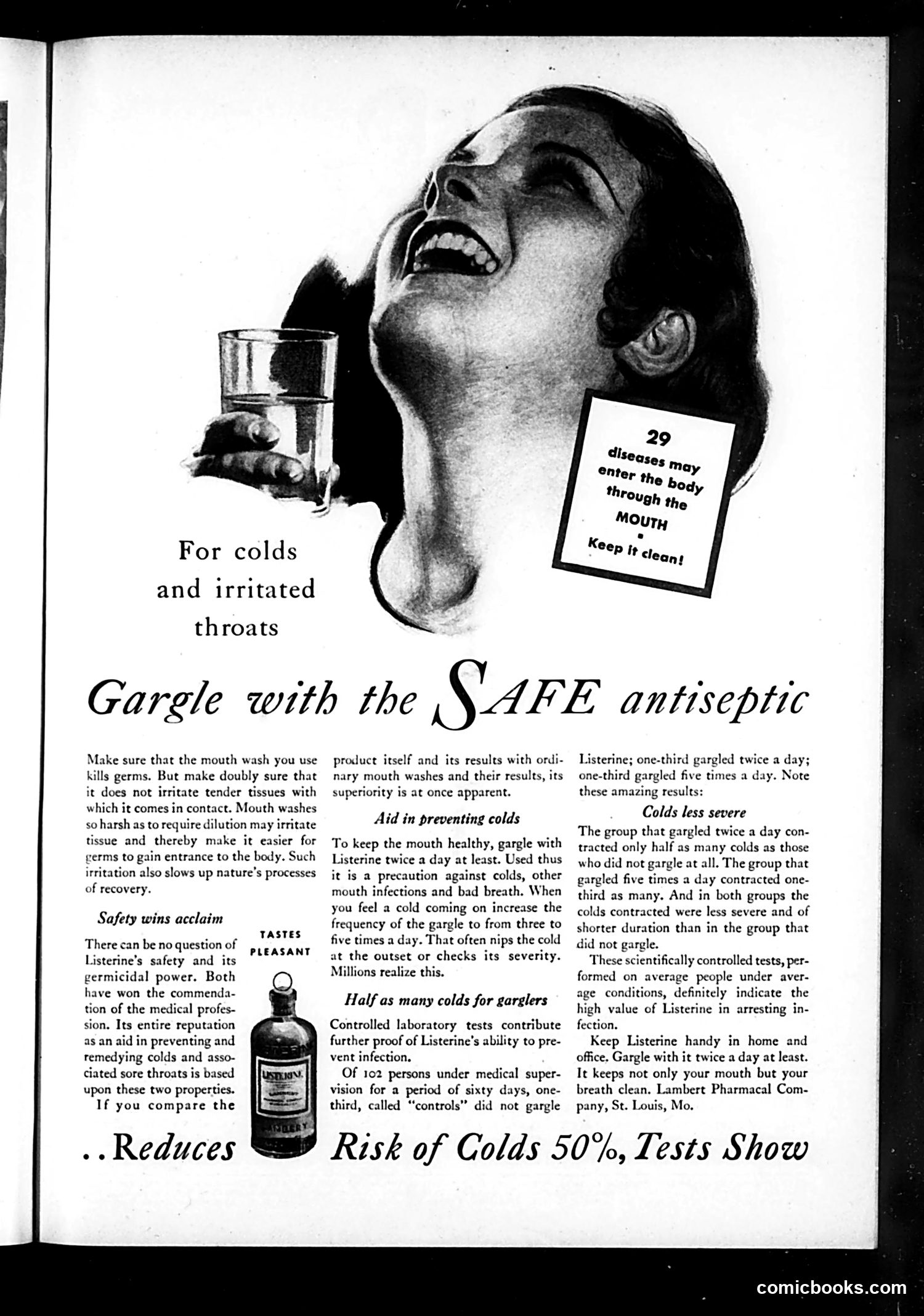
# Analysis This is a **vintage advertisement**, not political satire. It promotes Listerine mouthwash as a cold remedy, using exaggerated imagery of a man gargling with his head tilted back and mouth wide open. The ad makes specific health claims typical of early-to-mid 20th century marketing: that gargling with Listerine twice daily reduces cold risk by 50% according to "tests." It emphasizes preventing colds by maintaining mouth hygiene and warns that "29 diseases may enter the body through the MOUTH." The page includes a product bottle image and clinical-sounding language ("controlled laboratory tests," "medical supervision") to establish credibility. By modern standards, these claims would be considered misleading medical advertising—the product's actual efficacy against colds is far more limited than implied.
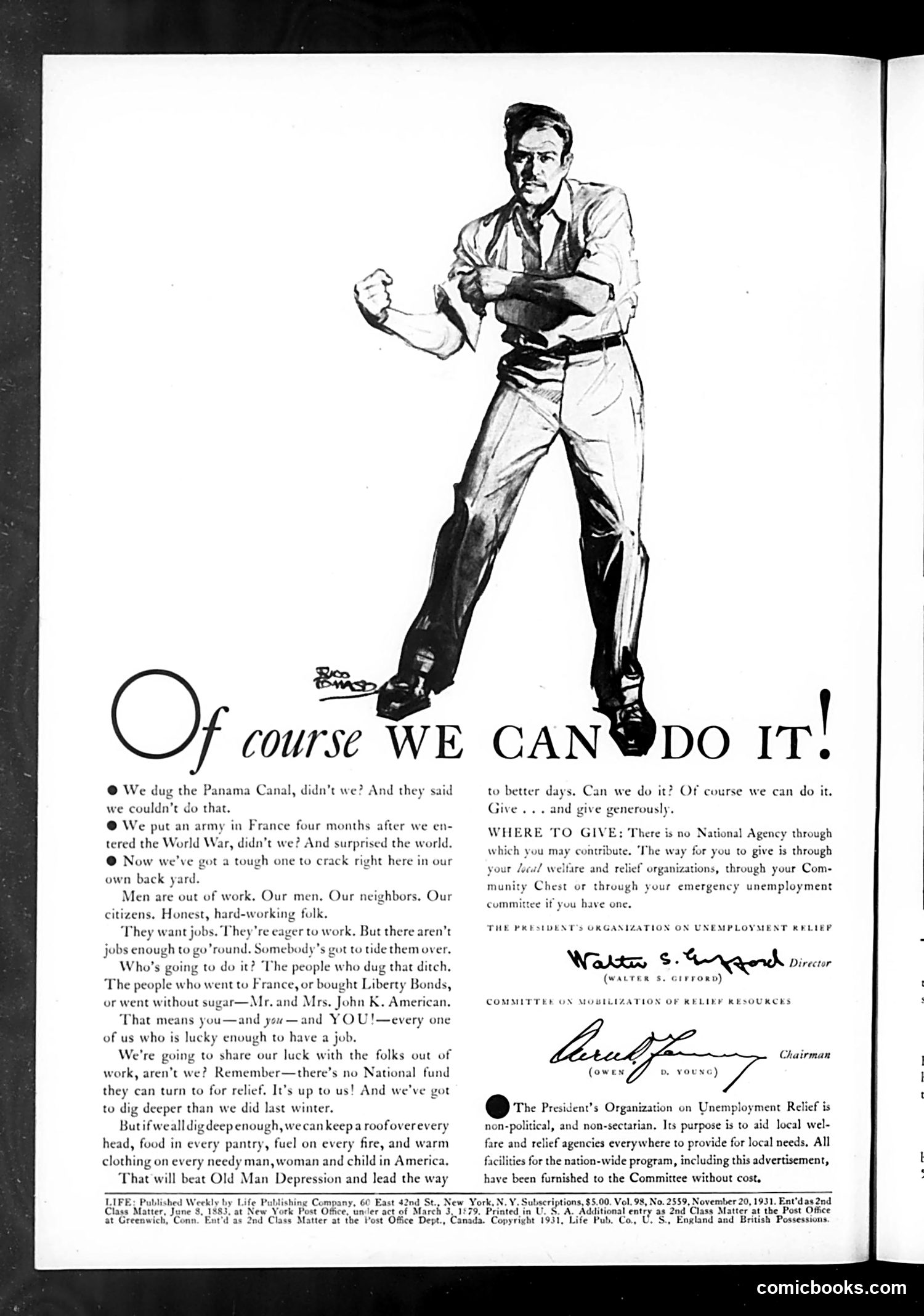
# "Of Course We Can Do It!" — Depression-Era Relief Appeal This 1931 Life magazine page presents a patriotic call for charitable giving during the Great Depression. The illustration shows a determined man in working clothes in a boxing stance, symbolizing American resilience and "can-do" spirit. The text references major national achievements—the Panama Canal, WWI victory in France—to argue Americans can overcome economic crisis through private charity and community relief efforts. It appeals to employed citizens to support jobless neighbors through local welfare organizations and community chests. Notably, this represents the **pre-New Deal** approach: relying on voluntary private donations rather than government programs. The President's Organization on Unemployment Relief (credited at bottom) represented Herbert Hoover's philosophy of private-sector solutions before Franklin D. Roosevelt's expanded federal relief programs took over.
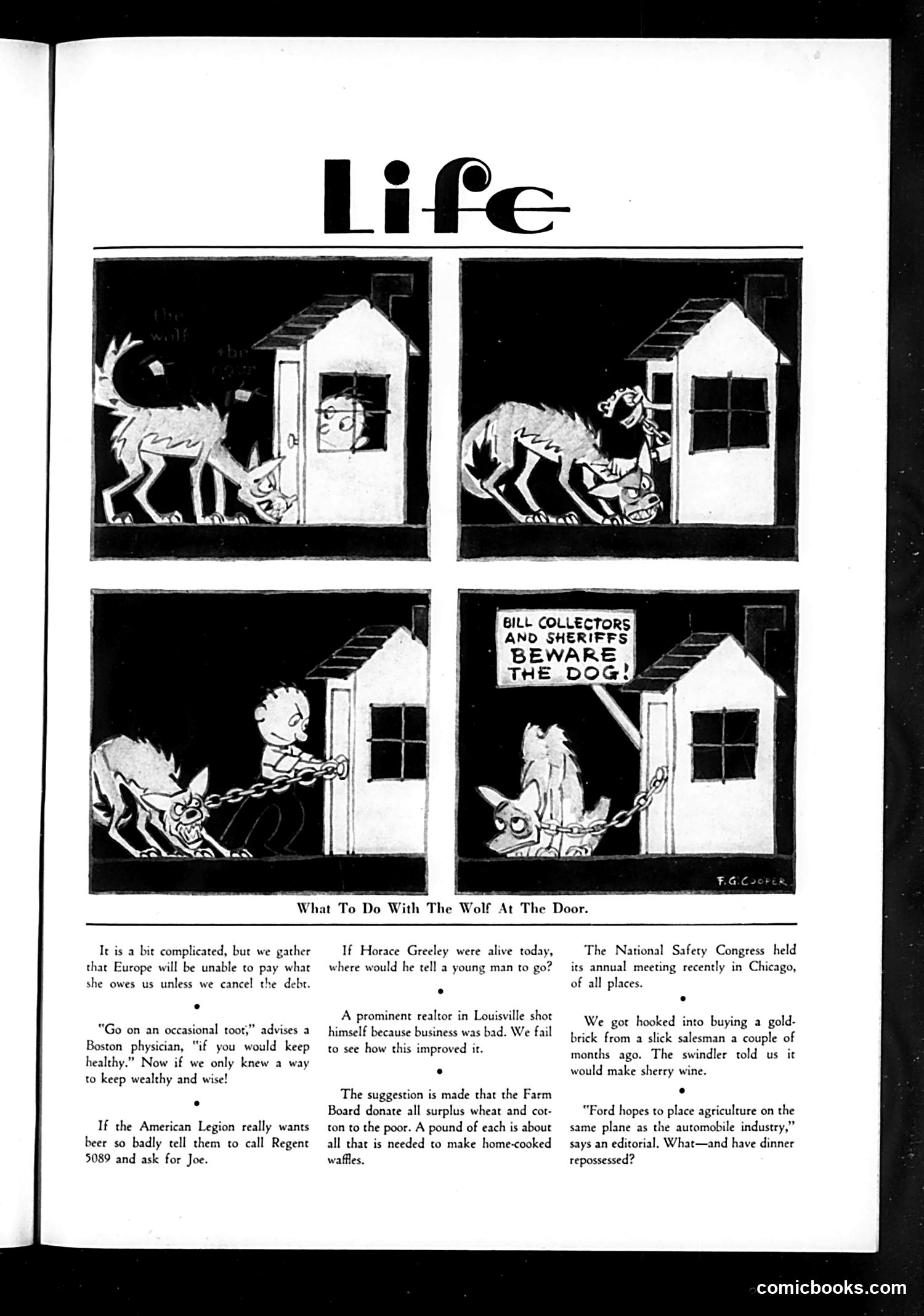
# "Life" Magazine - "What To Do With The Wolf At The Door" This four-panel comic satirizes debt collection during economic hardship. The phrase "wolf at the door" is a metaphor for creditors threatening foreclosure or seizure of property. The strip shows a homeowner progressively chaining up an aggressive dog (the "wolf") to keep bill collectors and sheriffs away. The final panel depicts a warning sign: "BILL COLLECTORS AND SHERIFFS BEWARE THE DOG!" The humor relies on inverting the threat—instead of fearing the wolf (debt), the debtor weaponizes a guard dog against creditors themselves. This reflects Depression-era anxieties about losing homes to foreclosure and mocking both creditors' aggressive collection tactics and desperate homeowners' resistance to them.
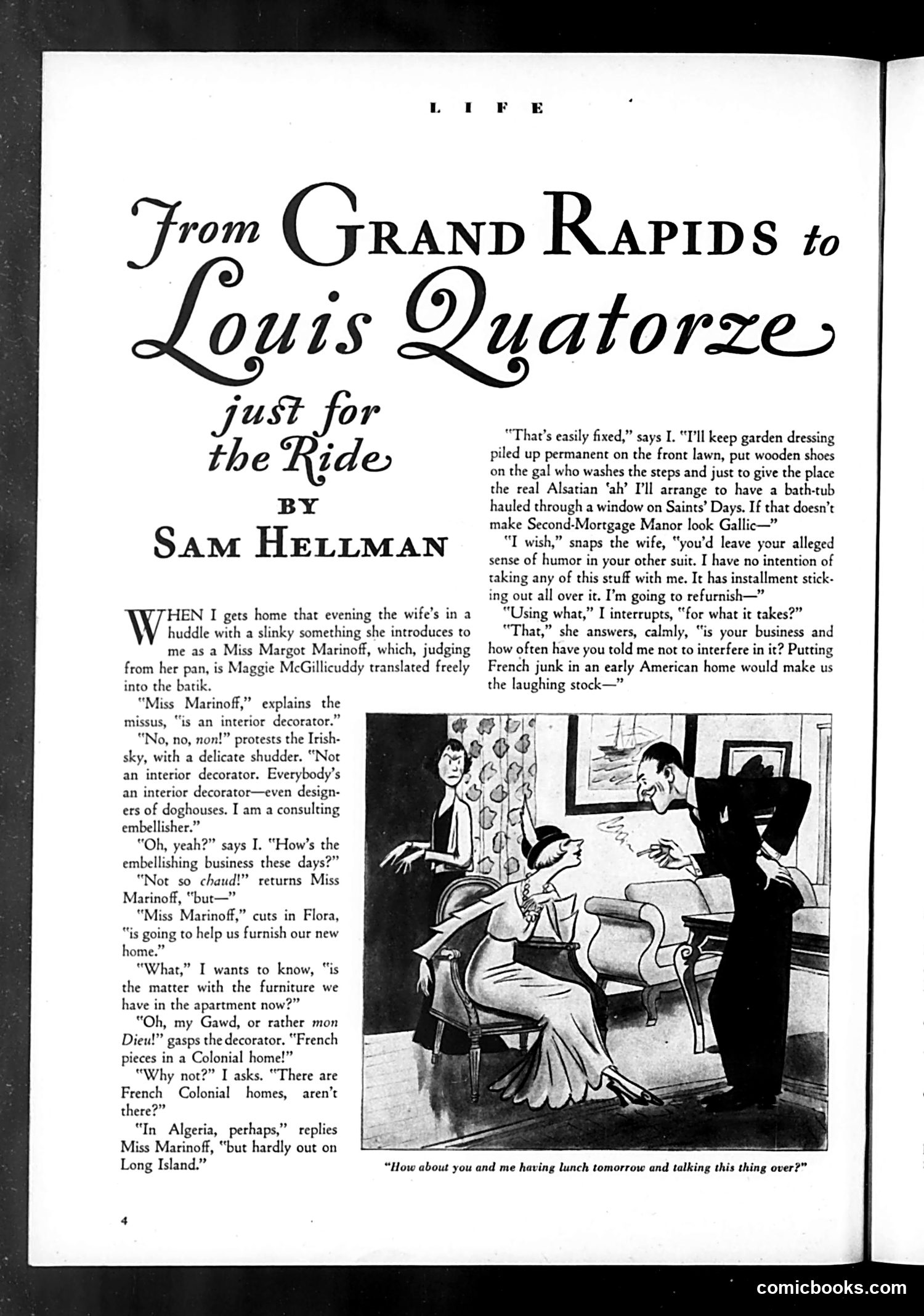
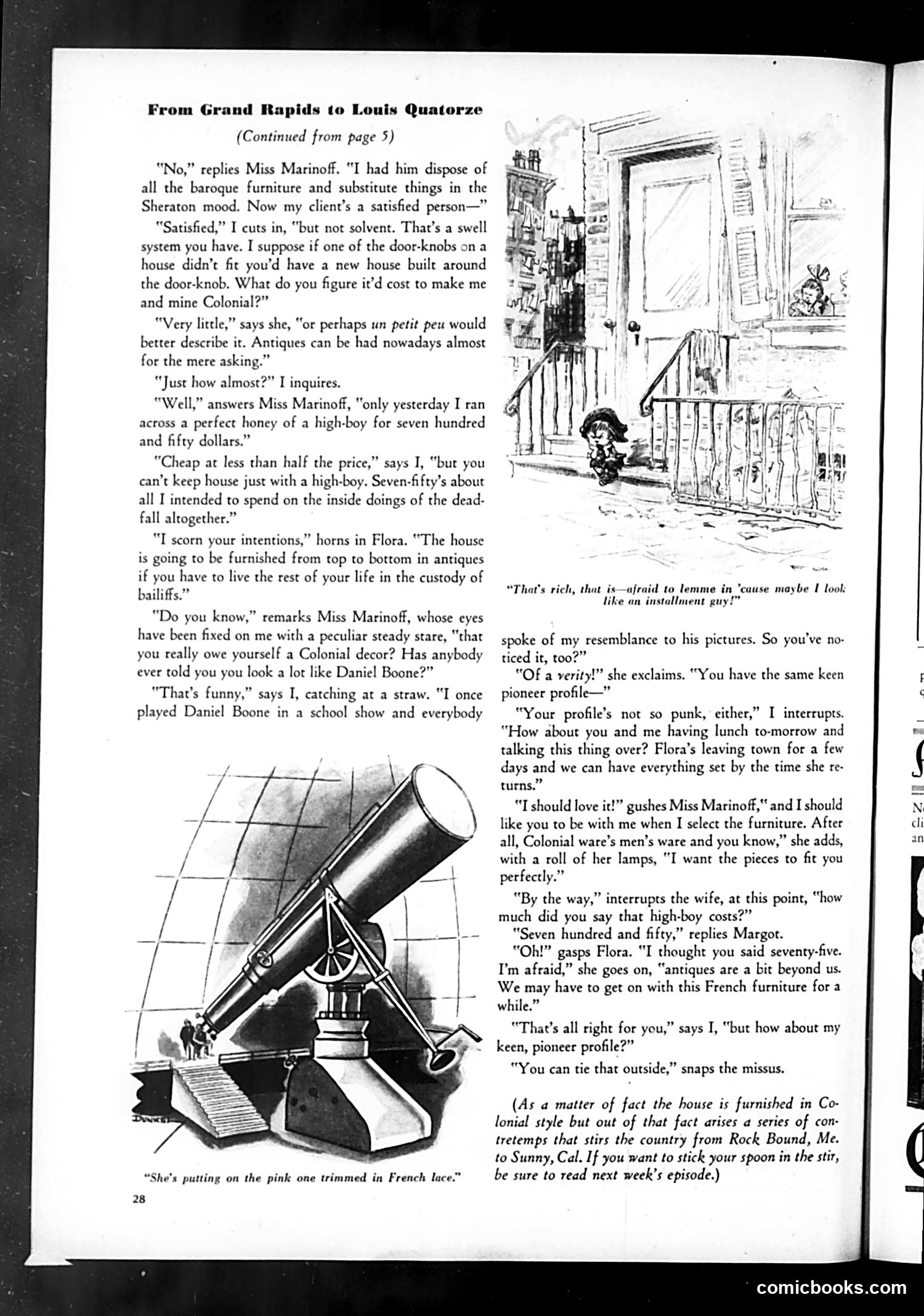
# Analysis for Modern Readers This is a humorous domestic story by Sam Hellman titled "From Grand Rapids to Louis Quatorze just for the Ride." It depicts a typical 1920s marital conflict about home decoration and furnishing. The plot: A husband returns home to find his wife has hired an interior decorator (Miss Margot Marinoff) to redesign their apartment. The wife dismisses the husband's concerns about their existing furniture, while he protests against expensive "French Colonial" decorating choices. The satire mocks the emerging trend of professional interior decorators and the social pretensions of middle-class Americans mimicking aristocratic European styles. The title jokes that they're adopting Louis XIV (Versailles-level) grandeur just for a ride to New York. The cartoon illustrates the couple discussing their plans while the decorator gestures enthusiastically—capturing the era's class anxieties about taste and conspicuous consumption.
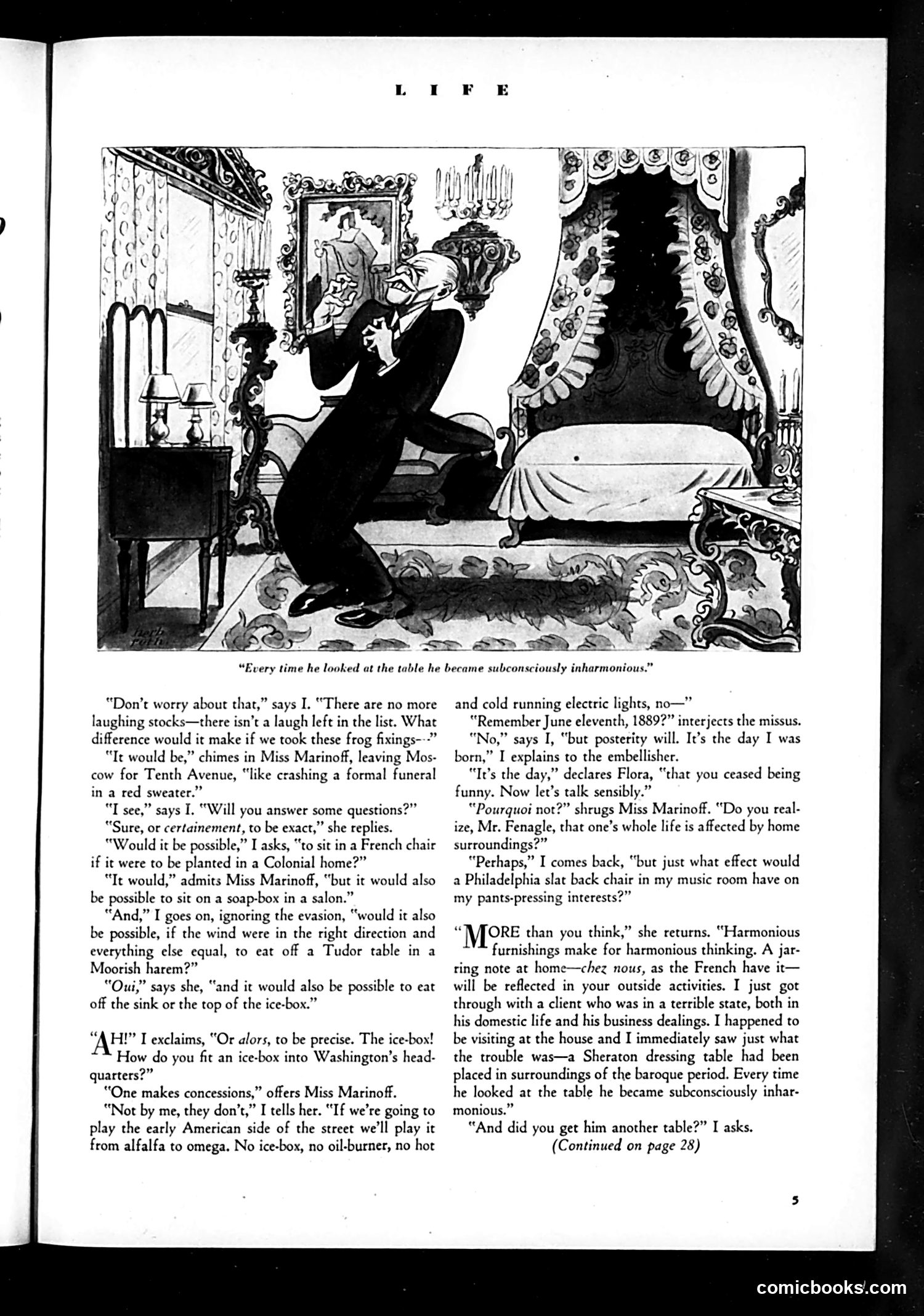
# Explanation for Modern Readers This page contains a satirical dialogue illustrated by a cartoon showing a man in formal attire examining a painting in an ornate bedroom. The humor centers on interior design and "harmonious furnishings." The conversation mocks pretentious home decorating theory—specifically the idea that furniture and décor placement affects one's behavior and thinking. A character named Miss Marinoff argues that "harmonious furnishings make for harmonious thinking," citing how a baroque-period table made a man "subconsciously inharmonious" every time he looked at it. The satire targets early-20th-century aesthetic philosophy that attributed psychological effects to interior design choices—a notion the author ridicules by suggesting absurd solutions like replacing the offending table, as if furniture directly controls human temperament and behavior.
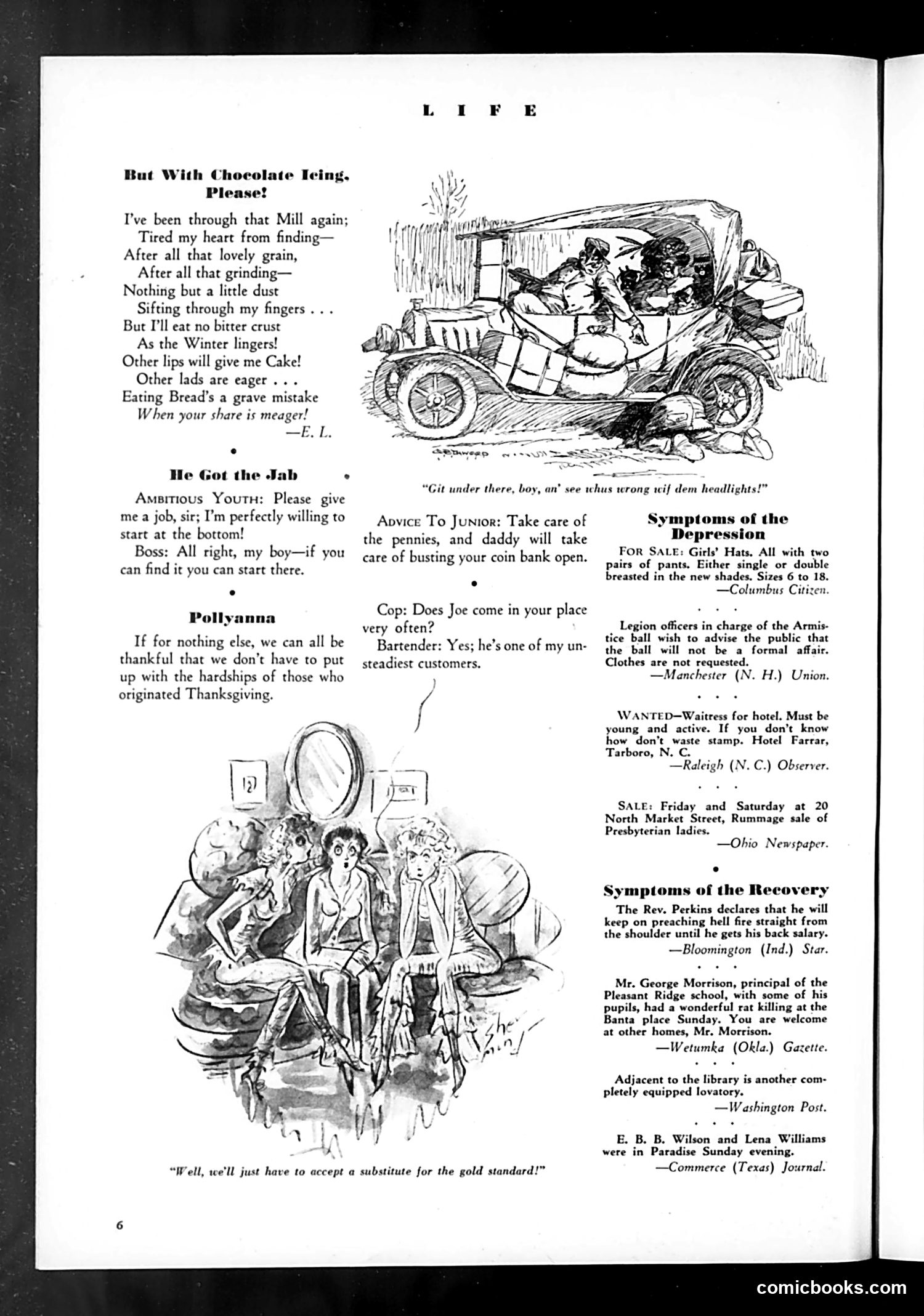
# "Life" Magazine Page Analysis This page combines humorous poetry, satirical illustrations, and classified ads typical of early 20th-century Life magazine. **"But With Chocolate Icing, Please!"** mocks unemployment and economic desperation—a job-seeker's willingness to accept any work, even eating "nothing but a little dust." The poem criticizes poverty wages and false promises. **"He Got the Jab"** satirizes workplace hierarchy: an ambitious youth willing to start at the bottom, while a boss offers only menial labor prospects. **The main illustration** depicts three women in a giant teacup discussing financial insecurity ("substitute for the gold standard"), reflecting post-WWI economic anxiety and women's financial dependence. The right column contains genuine classified advertisements and social notices, grounding the satire in real contemporary concerns about employment, sales, and social events.
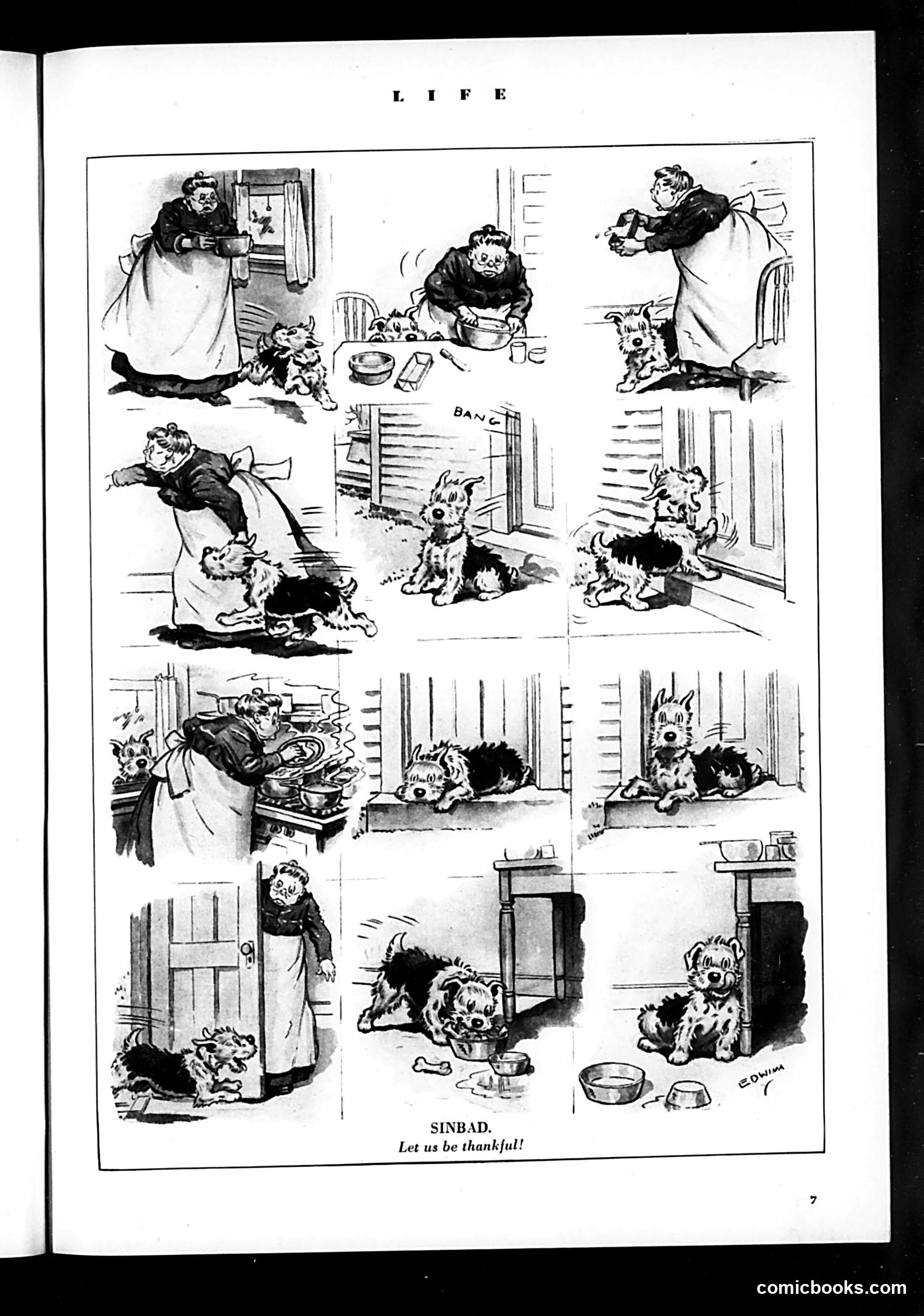
# "Sinbad: Let us be thankful!" This is a humorous comic strip following a small dog named Sinbad through various domestic scenes. The narrative appears to show Sinbad being chased away from the kitchen by a woman, expelled from the dining room, and generally shooed from the house—until the final panels reveal him contentedly eating from his own bowl, accompanied by the caption "Let us be thankful!" The satire plays on the contrast between the dog's mistreatment throughout the day and his ultimate gratitude for receiving his own meal. It's a gentle commentary on perspective and appreciation, suggesting that even modest provisions deserve thankfulness. The comic employs visual humor typical of early-to-mid twentieth-century magazine comics, with exaggerated expressions and movement lines.
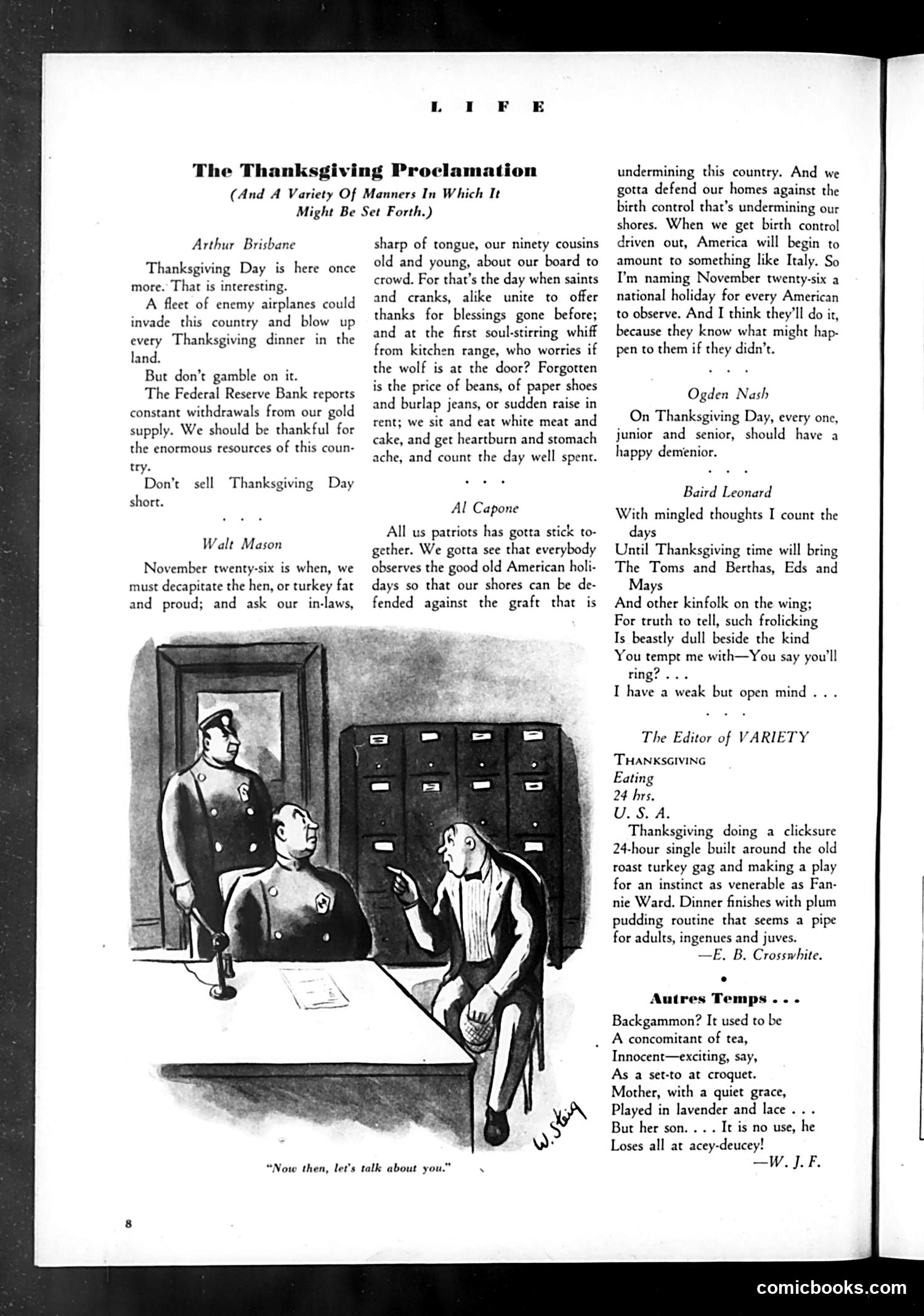
# "The Thanksgiving Proclamation" - Life Magazine This page satirizes Thanksgiving observance during what appears to be a period of national concern (likely WWI era, given references to "defending our shores" and birth control undermining the country). The cartoon depicts three military or government officials in an office, with the caption "Now then, let's talk about you." The image suggests bureaucratic interrogation or surveillance—poking fun at government overreach during patriotic holidays. The accompanying essays mock various approaches to Thanksgiving: Walt Mason warns against enemy airplanes attacking dinner; Al Capone (likely a fictional insertion) insists patriots observe the holiday; others offer humorous takes on the tradition. The overall tone ridicules how Thanksgiving becomes weaponized for political purposes rather than remaining a simple family observance.
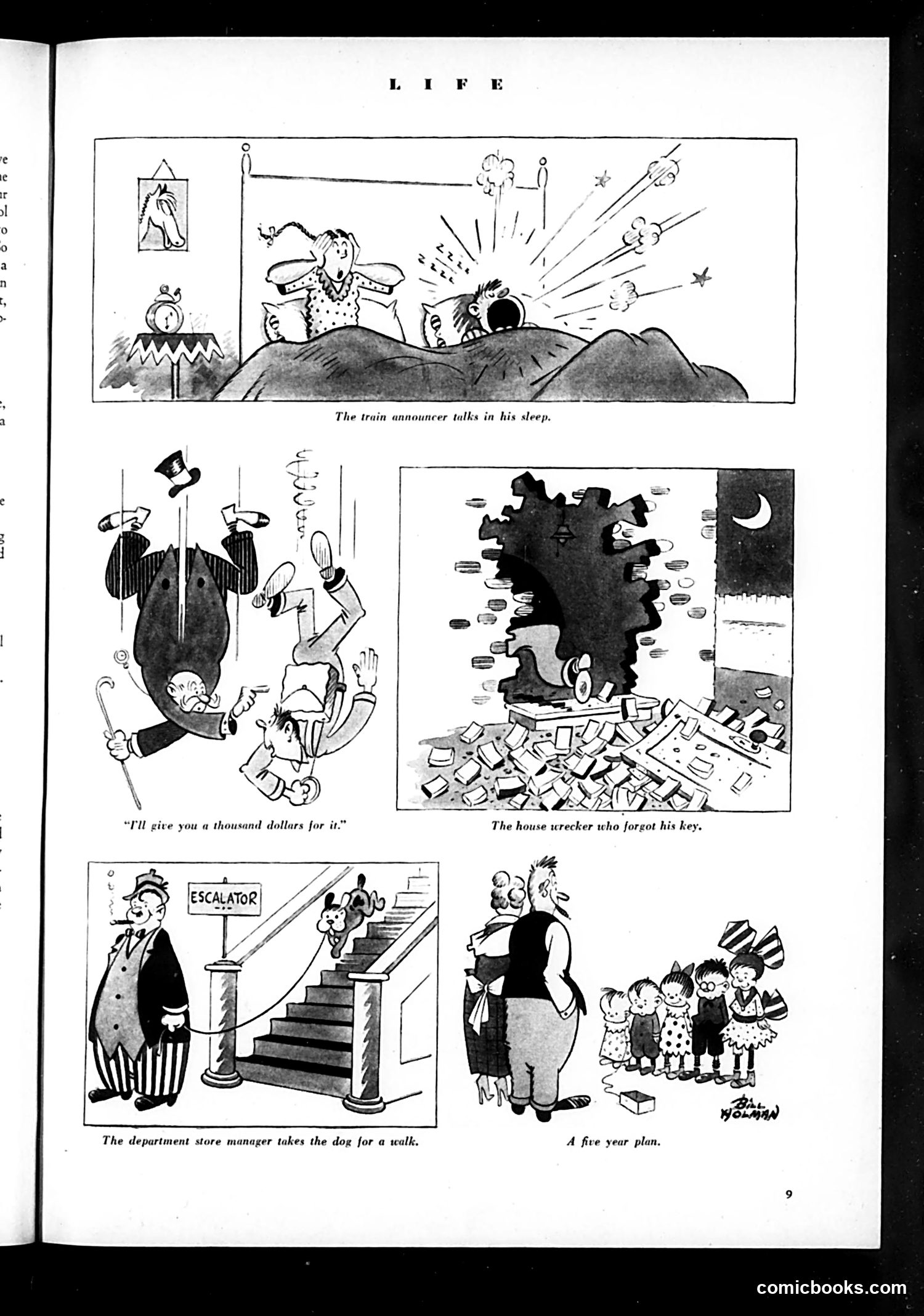
# Analysis of Life Magazine Page This page contains five separate satirical comic vignettes on common human situations: 1. **"The train announcer talks in his sleep"** — A sleepy conductor dreams so vividly about work that explosions burst from his head, disturbing nearby passengers. 2. **"I'll give you a thousand dollars for it"** — A businessman dangling upside down desperately bargains with a small figure, likely satirizing obsessive materialism. 3. **"The house wrecker who forgot his key"** — A man's silhouette is surrounded by debris, commenting on destructive absent-mindedness. 4. **"The department store manager takes the dog for a walk"** — Shows role reversal where the large manager appears dwarfed beside an escalator. 5. **"A five year plan"** — An adult surrounded by children represents ambitious family planning. The humor relies on exaggeration and everyday absurdities rather than specific political commentary.
# Political Commentary from Life Magazine This page critiques contemporary political figures and debates circa the 1920s. The main cartoon depicts a figure holding a globe, seemingly representing international affairs confusion. The text discusses several named politicians: **Alfred Smith** (debating forestry policy with Governor Franklin Roosevelt), **Senator Borah** (making controversial remarks to French journalists about war debts and German reparations), and **Mr. Lamont** (a banker commenting on European financial troubles). The satire targets government confusion over major policy matters—naval shipbuilding, fiscal affairs, and post-WWI European economics—where officials appear ignorant or contradictory. The piece mocks how different political figures make conflicting statements about complex international issues, suggesting American leadership lacks coherent understanding of pressing world problems.