A complete issue · 36 pages · 1931
Life — November 13, 1931
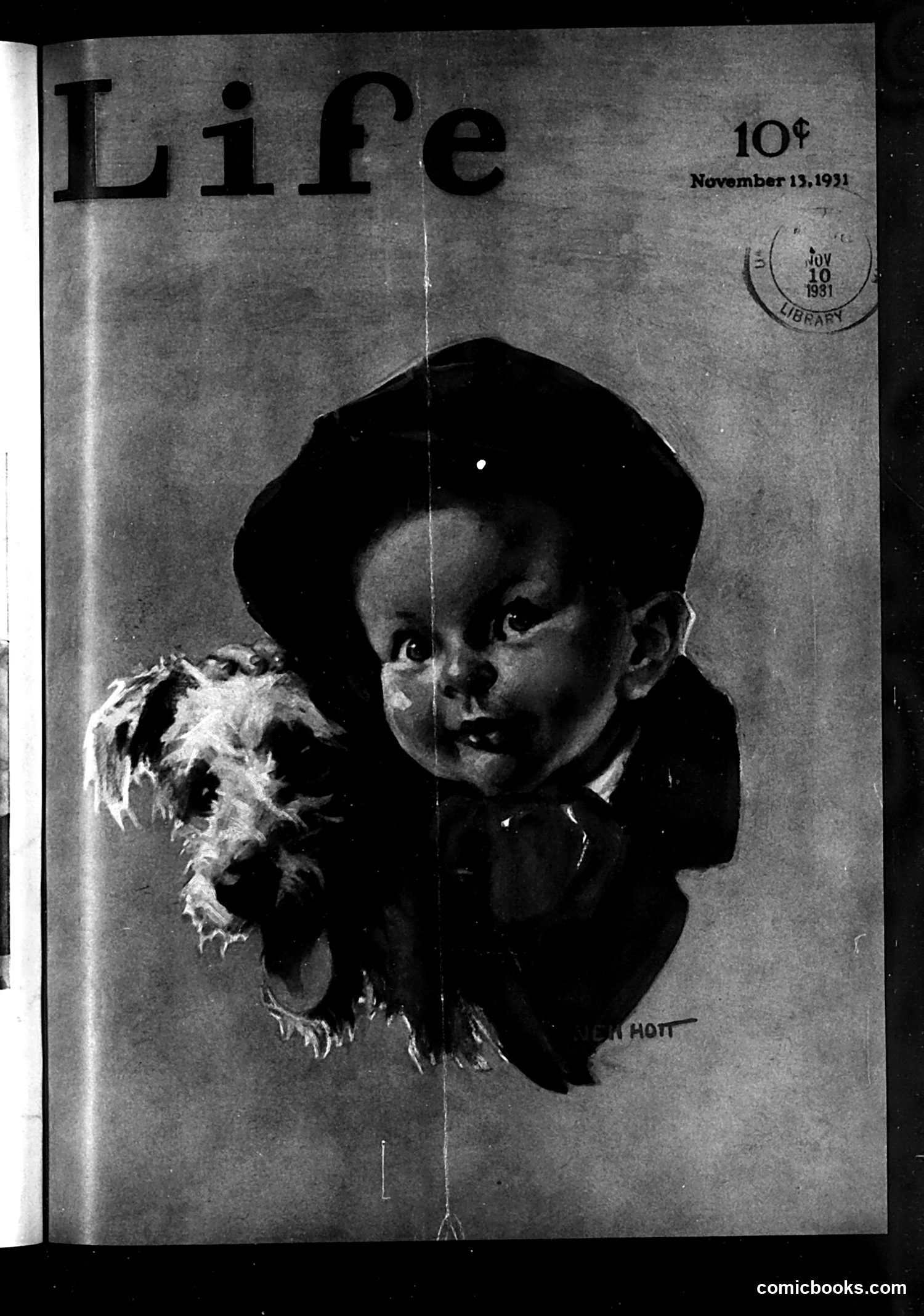
# Life Magazine Cover Analysis - November 13, 1931 This cover depicts a young child wearing a cap, holding a small terrier-type dog. The illustration is signed "N HOTT" (the artist's name). Without additional OCR text visible on this cover page, the specific satirical message is unclear. However, given the November 1931 date—during the Great Depression—the cover likely carries social commentary about childhood, family, or economic conditions of that era. The innocent pairing of child and pet may be either sentimental or ironic commentary on American life during economic hardship. The cover price of 10¢ is typical for Life magazine of this period. The library stamp indicates this was preserved in an archive.
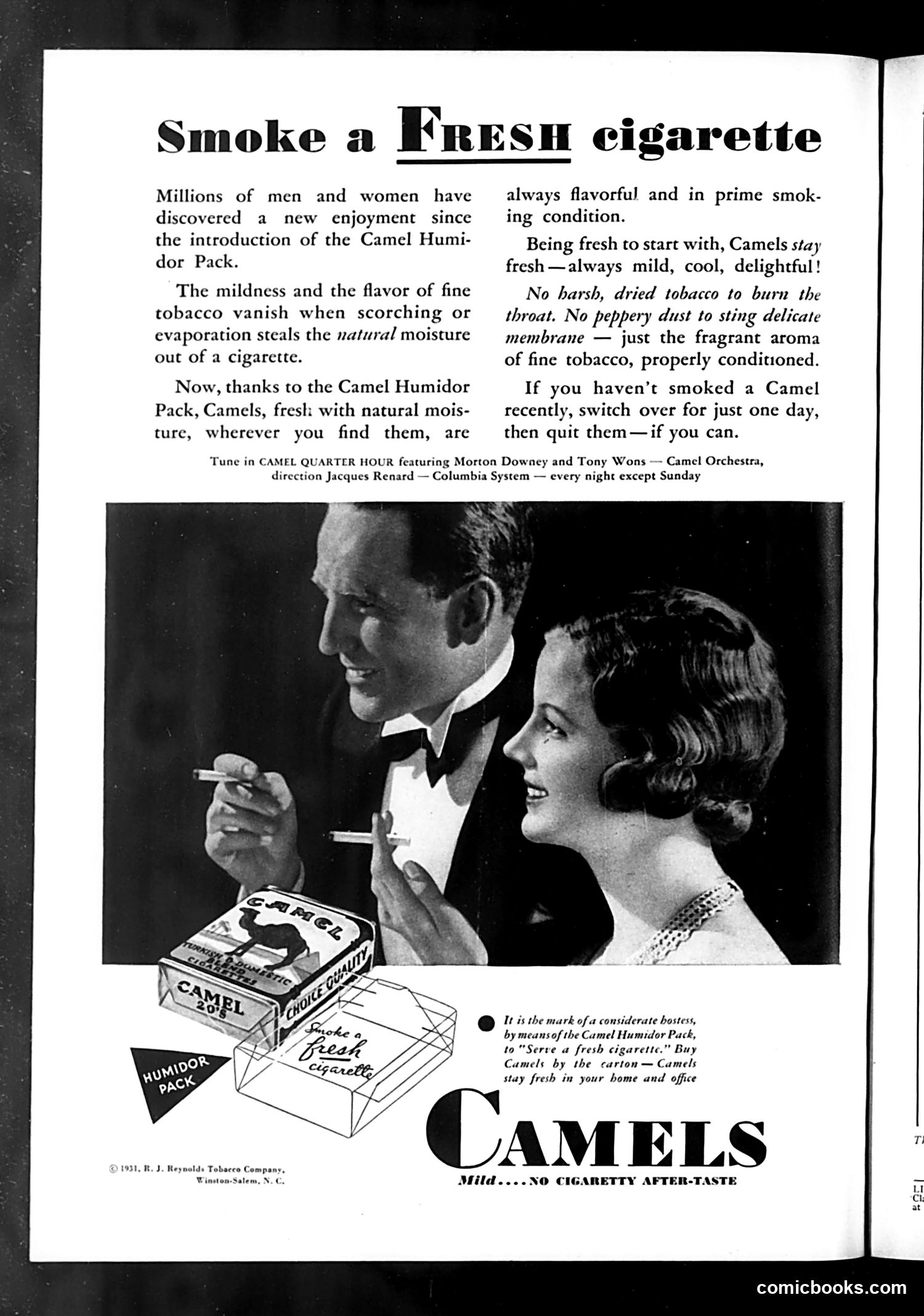
# Analysis This is a **Camel cigarette advertisement**, not political satire. The page shows a well-dressed couple in formal evening wear smoking cigarettes, with Camel cigarette boxes displayed below. The ad promotes the "Camel Humidor Pack," claiming it keeps cigarettes fresh by maintaining natural moisture. Key claims include: cigarettes stay "mild, cool, delightful," without "harsh, dried tobacco" or "peppery dust." The tagline "Mild... NO CIGARETTE AFTER-TASTE" emphasizes smoothness. A mention of the "CAMEL QUARTER HOUR" radio program suggests this is from the 1930s-1940s. **For modern readers**: This represents an era when cigarette advertising freely targeted consumers without health warnings, using lifestyle imagery of sophistication and glamour to market tobacco products.
# Analysis This is a **public service announcement, not satire or cartoon**. It's a full-page advertisement promoting Depression-era charitable giving during October 19–November 25 (year unclear from visible text, but context suggests early 1930s). The page appeals to American patriotism and moral duty, claiming that organized charitable fundraising can "banish" hunger and cold within one month. It's signed by Walter S. Gifford as Director of the President's Organization on Unemployment Relief, and another official as Chairman of the Committee on Mobilization of Relief Resources. The text emphasizes moral virtue ("Feel the thrill that comes with victory"), framing charitable donation as both patriotic duty and personal satisfaction—typical Depression-era messaging that encouraged private charity as a solution to widespread poverty.
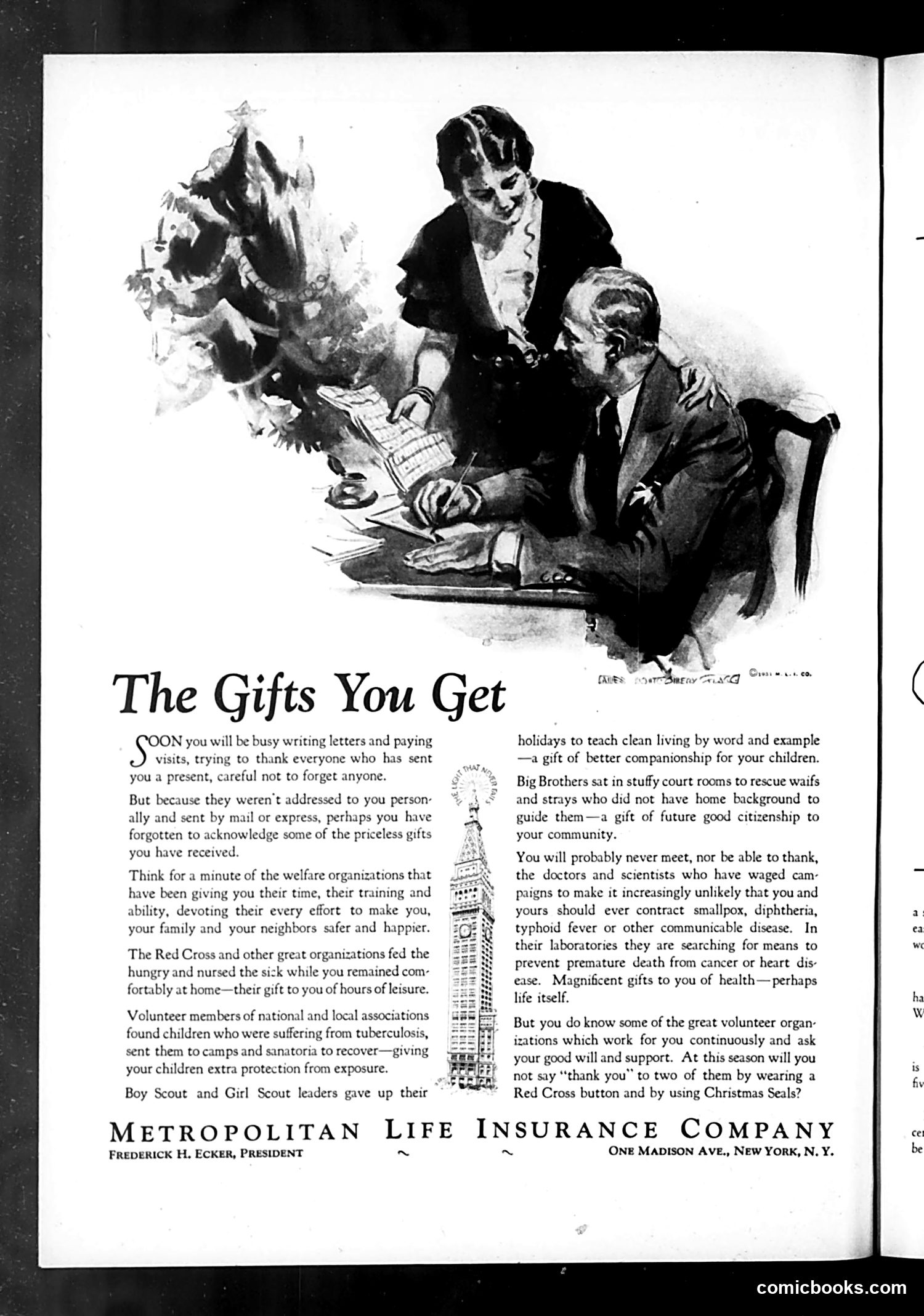
# "The Gifts You Get" - Metropolitan Life Insurance Advertisement This is a **corporate advertisement**, not satire. Metropolitan Life Insurance uses the heading "The Gifts You Get" to frame charitable organizations as invisible benefactors during the Christmas season. The illustration shows a man and woman examining Christmas gifts together. The text argues that while people receive tangible presents, they should recognize the "priceless gifts" provided by volunteer organizations: the Red Cross, welfare organizations, Boy Scouts, Girl Scouts, and medical researchers combating disease. The ad's point is philanthropic messaging—encouraging readers to support these organizations (notably mentioning Red Cross buttons and Christmas Seals) while subtly associating Metropolitan Life with civic goodness. This was common Depression-era corporate messaging promoting charitable giving and social responsibility.
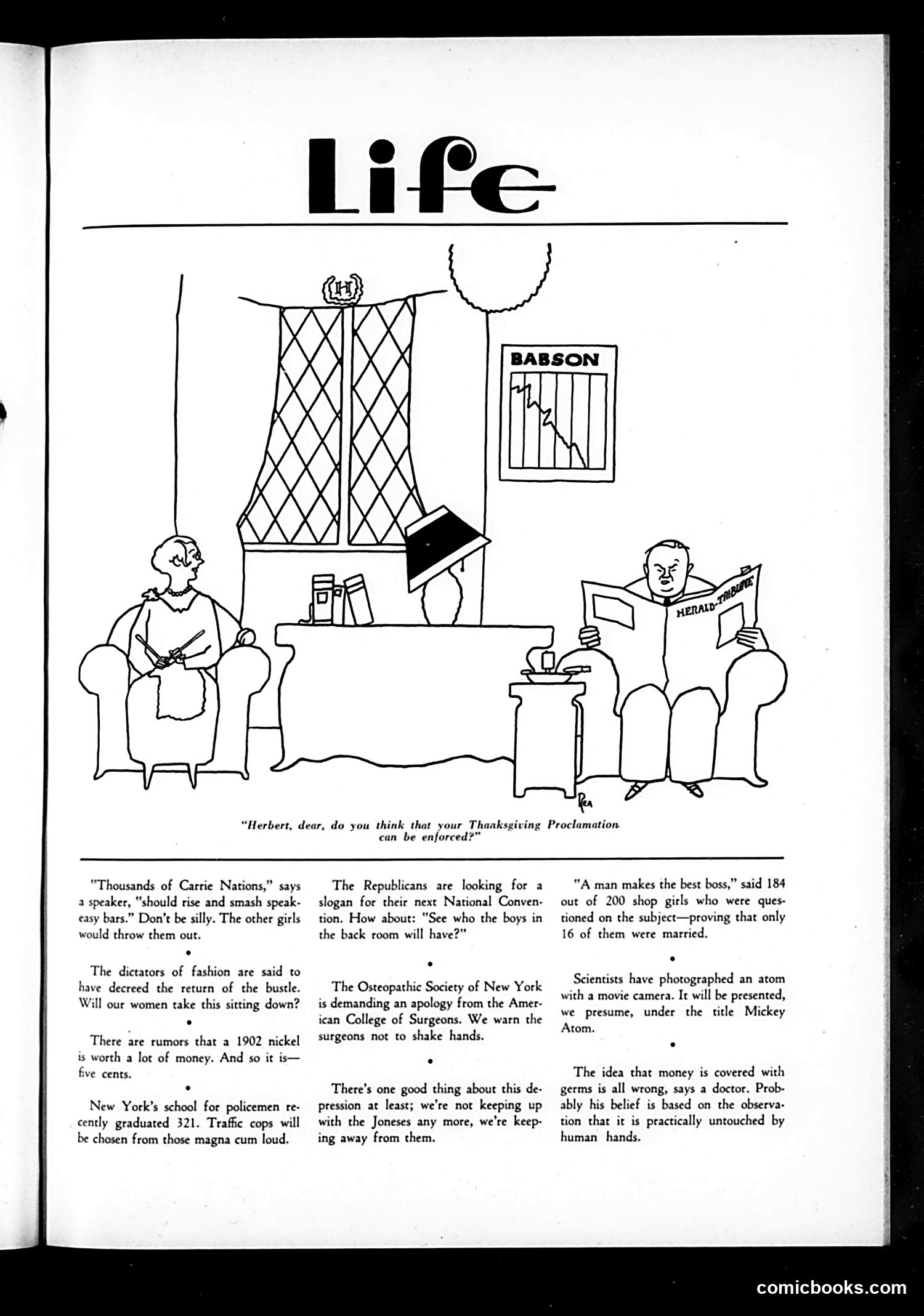
# Life Magazine Cartoon Analysis The main cartoon depicts a domestic scene where a wife asks her husband, "Herbert, dear, do you think that your Thanksgiving Proclamation can be enforced?" The husband figure labeled "HERBERT" (likely President Herbert Hoover) reads a newspaper titled "HERALD-TRIBUNE" while seated. The satire mocks Hoover's authority to enforce a Thanksgiving proclamation—suggesting his executive power was questionable or ineffectual, possibly during the Great Depression when citizens faced food scarcity. The accompanying text snippets are satirical observations about contemporary issues: fashion trends, medical colleges, and money hygiene. The overall page uses humor to critique governmental authority and social conditions of the era.
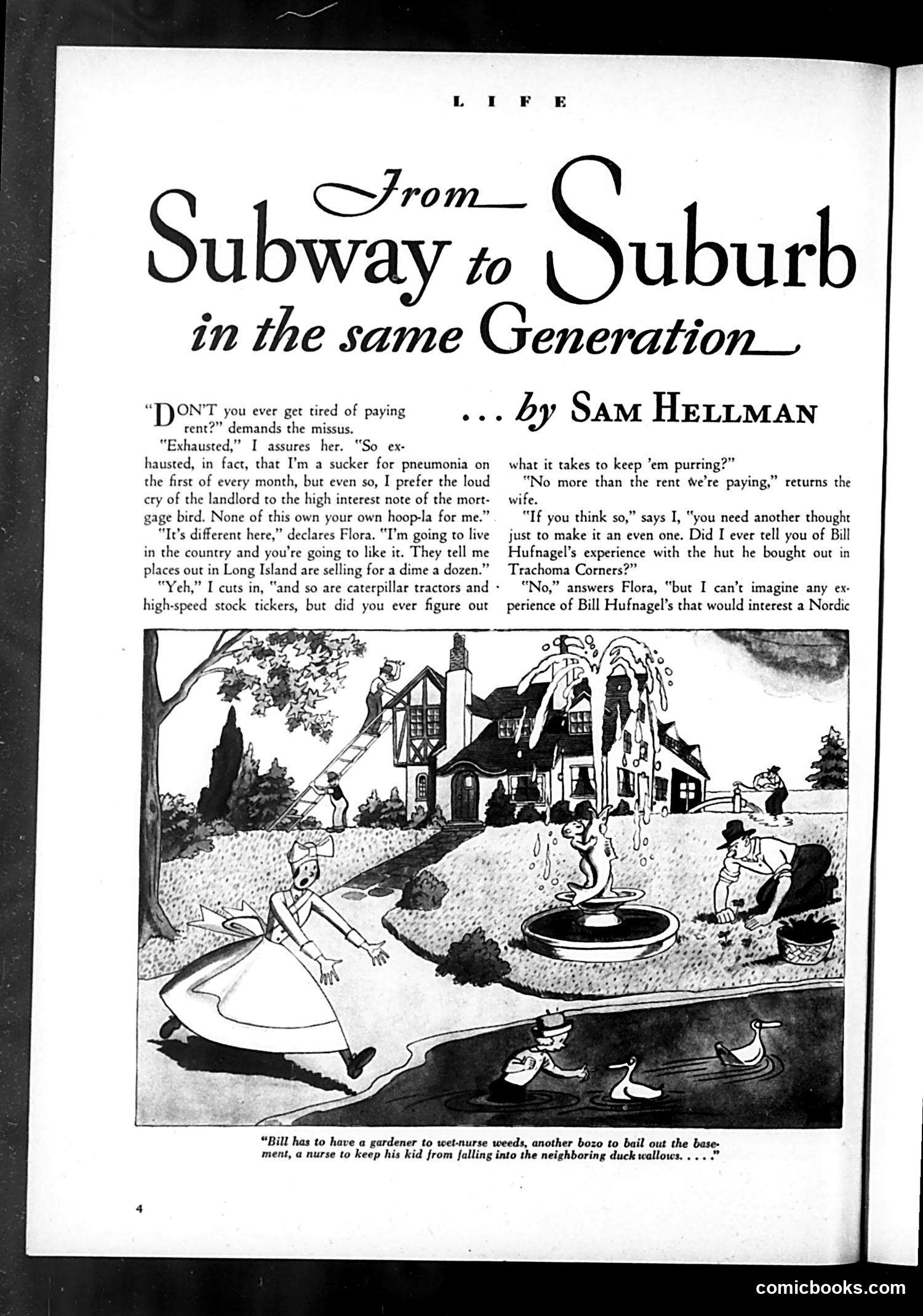
# "From Subway to Suburb in the Same Generation" This satirical piece by Sam Hellman contrasts urban and suburban life through a dialogue between a tired city tenant and an optimistic suburbanite. The cartoon depicts an idealized suburban scene with a house, manicured lawn, and recreational activities. The satire targets post-World War II aspirations: the city dweller complains about constant rent payments and landlord complaints, while the suburban character promotes homeownership on Long Island as escape. However, the humor undercuts suburban dreams—the caption reveals that maintaining a house requires hiring multiple workers (gardener, plumber, nurse) to handle endless problems, suggesting suburban life is actually *more* burdensome than apartment living, despite its apparent idyll. The piece mocks the suburban fantasy as costly and complicated, not the liberation it promised.
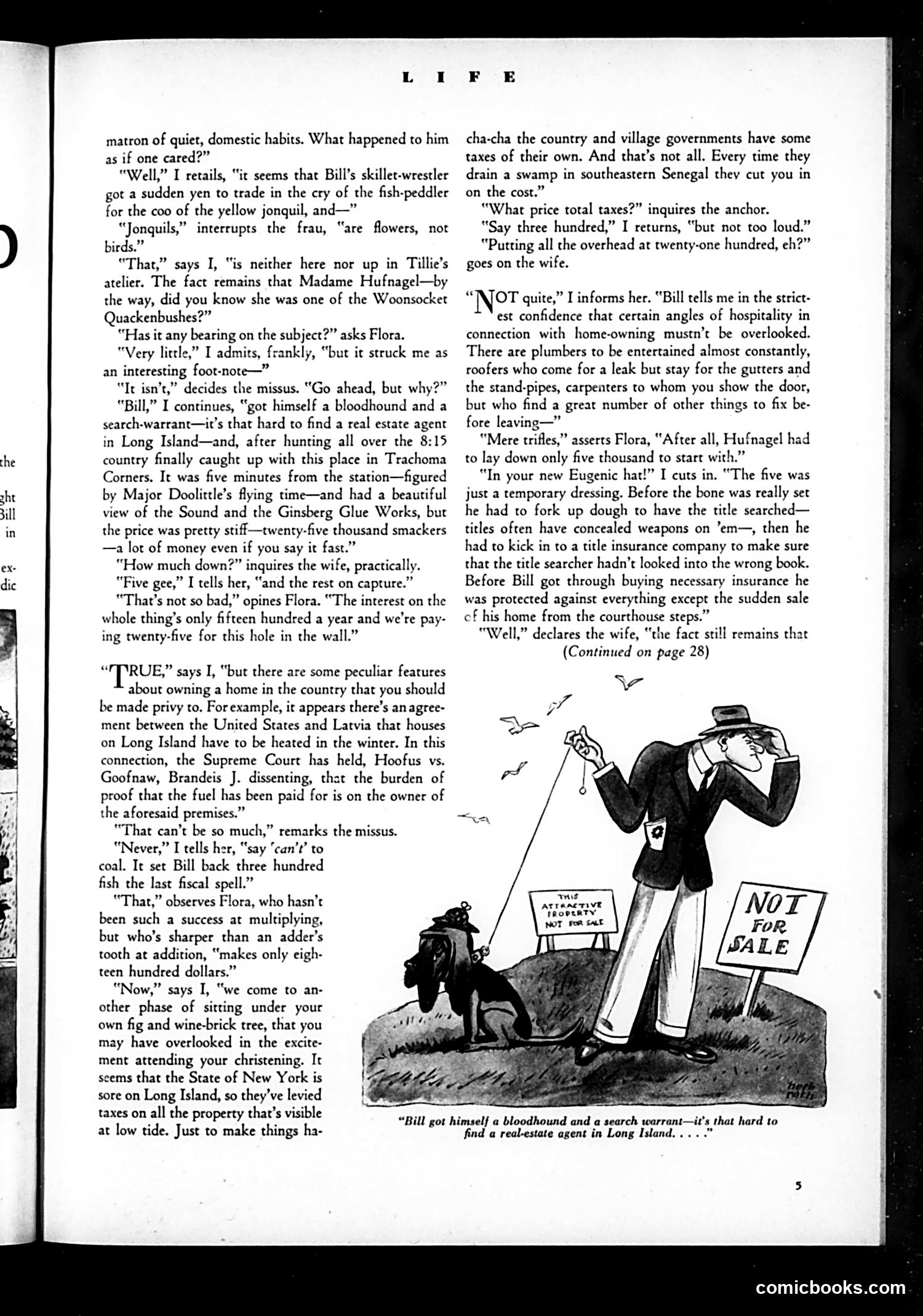
# Cartoon Analysis This cartoon satirizes the difficulties of buying rural property in Long Island, New York. A man in formal attire (the prospective buyer) holds a search warrant and a "NOT FOR SALE" sign, while a bloodhound searches the ground beside him. The caption explains: "Bill got himself a bloodhound and a search warrant—it's that hard to find a real-estate agent in Long Island...." The joke mocks the scarcity of real estate agents willing to work in Long Island at that time, suggesting you'd need law enforcement tools and tracking dogs just to locate one. The accompanying text discusses Long Island property taxes, heating costs, and insurance complications—implying the area's bureaucratic and financial burdens made it an unattractive market for agents and buyers alike.
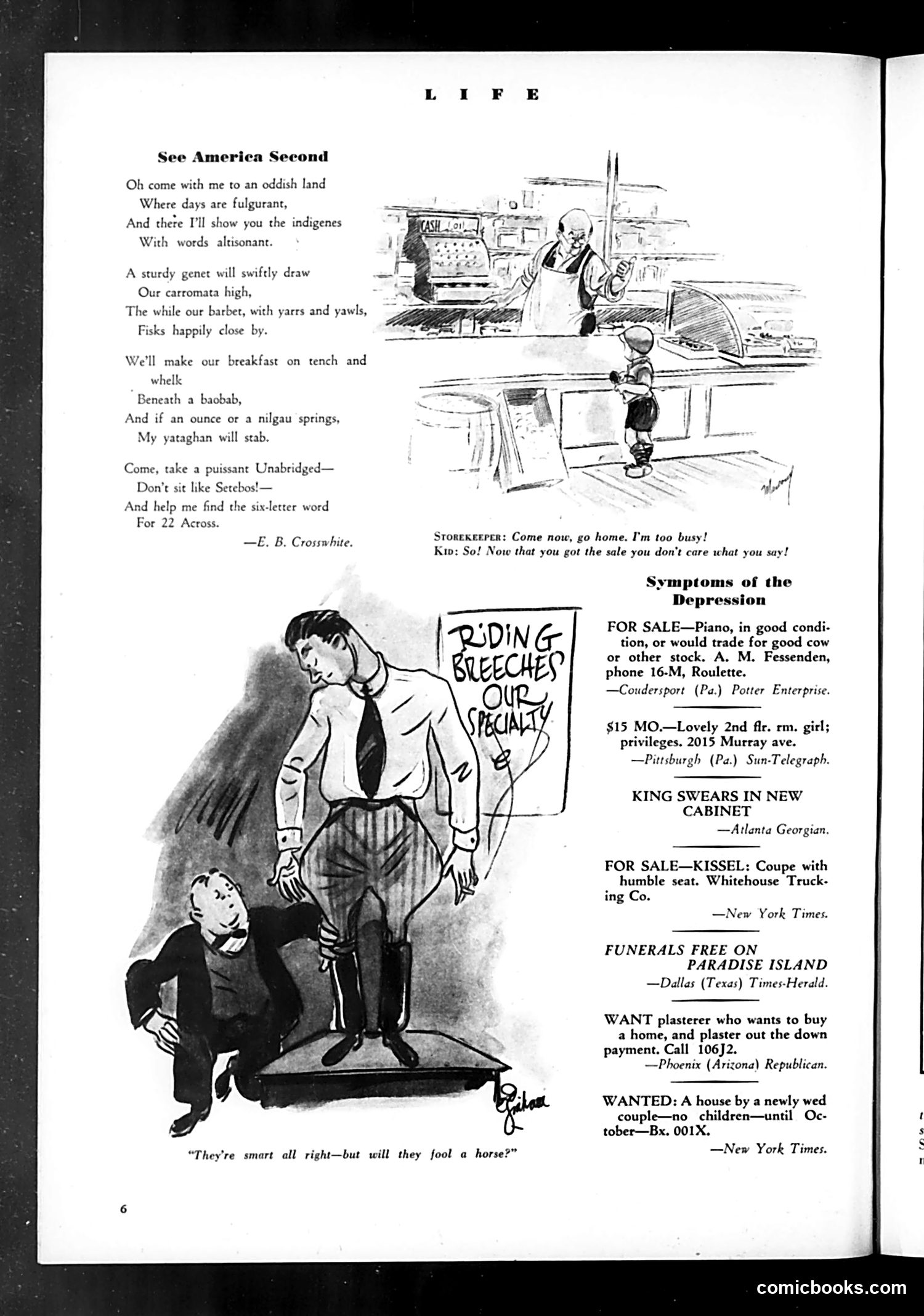
# Analysis of Life Magazine Page This page is primarily **classified advertising** ("Symptoms of the Depression") mixed with satirical content. The main cartoon depicts a tall woman in a suggestive pose with a sign reading "RIDING BREECHES OUR SPECIALTY" while a small man below asks, "They're smart all right—but will they fool a horse?" The joke satirizes both fashion trends and economic desperation during the Great Depression. The woman's exaggerated figure and the absurdist juxtaposition suggest that even ridiculous or compromising fashion choices were being marketed aggressively during hard times. The page-top poem "See America Second" humorously invites readers to visit undeveloped America as a cheap alternative tourism option—another Depression-era joke about reduced circumstances and lowered expectations.
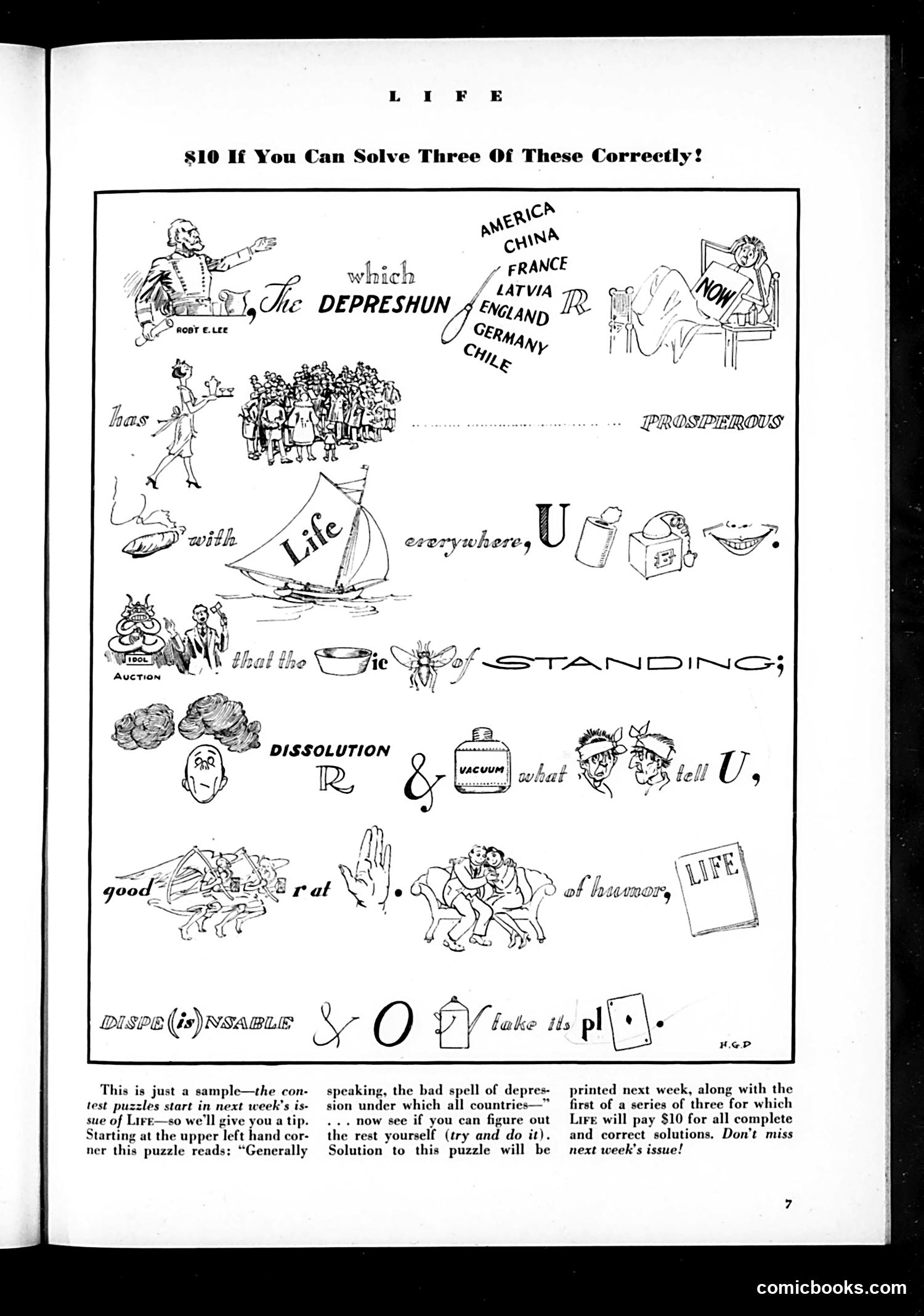
# Analysis This page presents a visual word-puzzle contest from *Life* magazine. The challenge asks readers to solve a rebus about "The Depreshun" (Depression) affecting multiple countries listed at top: America, China, France, Latvia, England, Germany, and Chile. The puzzle uses illustrated symbols and words to create a cryptic message. Key visual elements include a boat labeled "Life," various figures in distress, an auction scene, and references to "dissolution" and economic hardship. The scattered images of poverty (empty bowls, auction scenes, struggling people) reinforce Depression-era suffering. This appears to be commentary on the Great Depression's global reach, using satire and wordplay typical of *Life's* satirical approach. Readers competed to decode the hidden message for a $10 prize, with solutions promised in the following week's issue.
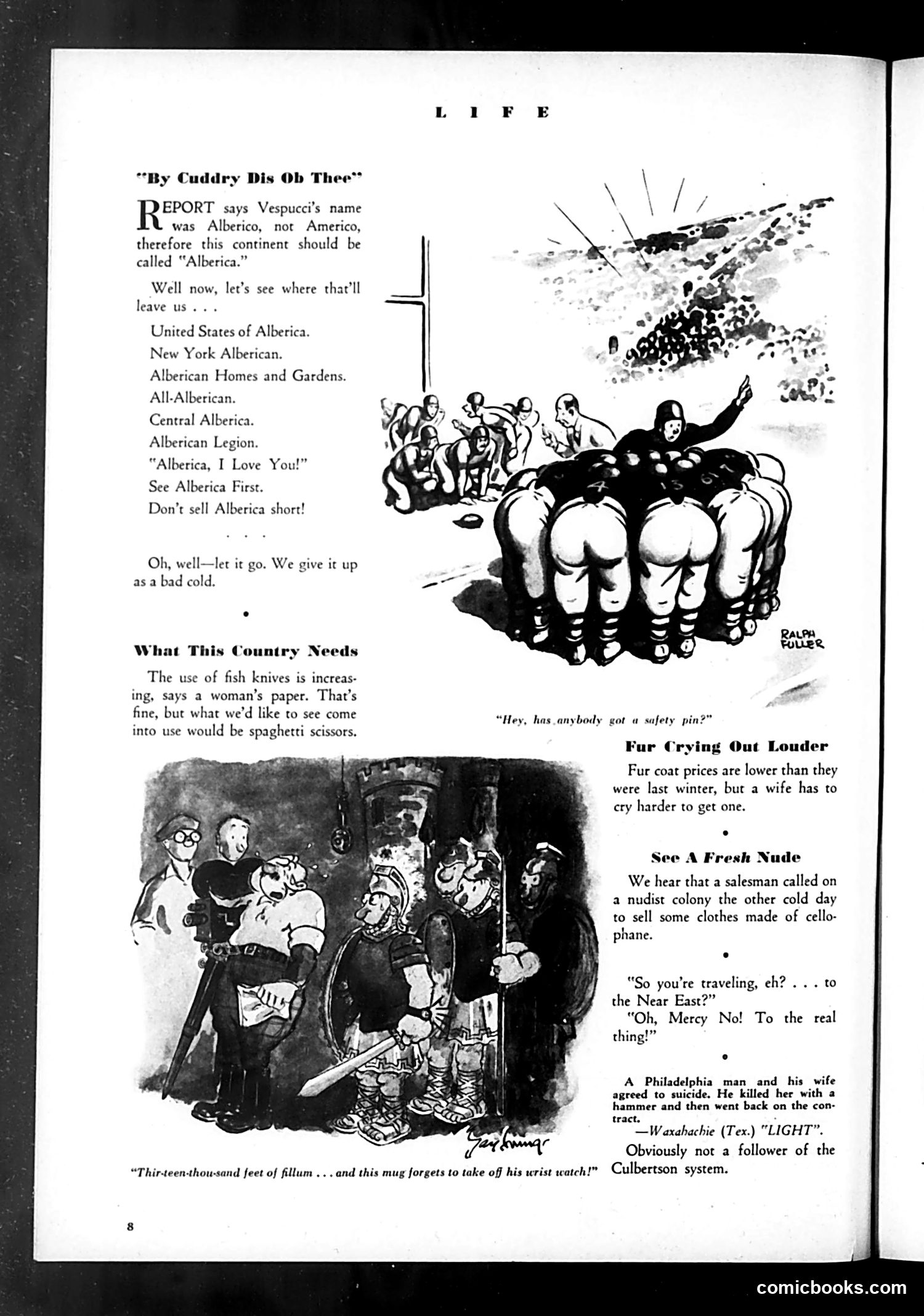
# Analysis of Life Magazine Page This page contains three satirical pieces typical of early 20th-century American humor: 1. **"By Cuddry Dis ob Thee"**: Mocks a reported naming dispute about explorer Vespucci—whether the continent should be called "Alberica" instead of "America." The joke lists absurd resulting names (New York Alberican, Alberican Legion, etc.) to ridicule the impracticality of renaming an entire continent based on a historical detail. 2. **"What This Country Needs"**: A woman's paper suggests spaghetti scissors as a useful invention, poking fun at impractical consumer product suggestions. 3. **"Fur Crying Out Louder"** and other brief items are one-liners about contemporary concerns: fur coat prices, nudist colonies, and a dark anecdote about suicide—typical of Life's mix of light and dark humor. The cartoons use exaggeration and absurdist logic to satirize both historical pedantry and consumer culture.
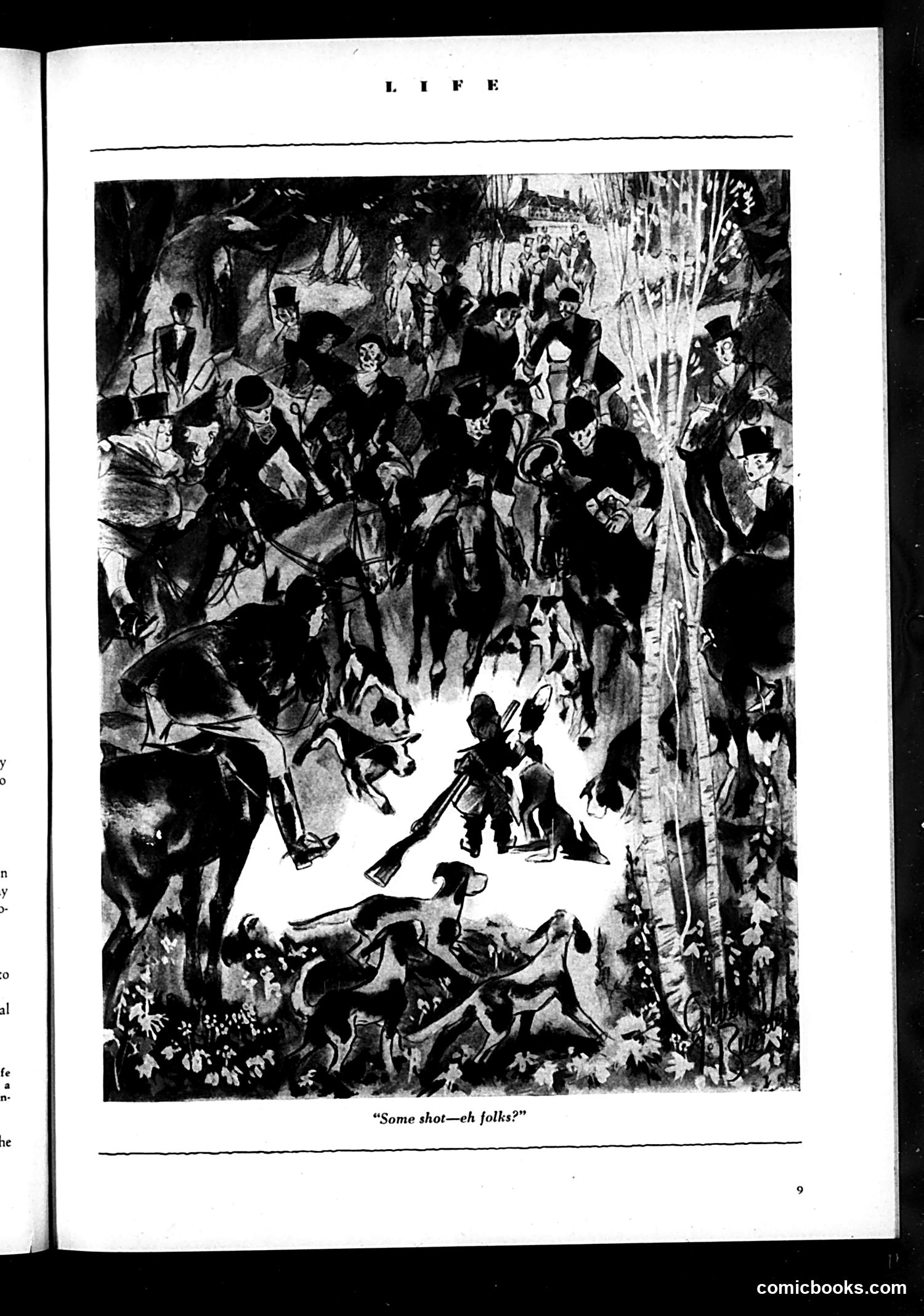
# Analysis of "Some shot—eh folks?" This illustration depicts a chaotic street scene with well-dressed figures in top hats and formal attire gathered around what appears to be a shooting incident or confrontation. The central bright area suggests gunfire or violence. The caption "Some shot—eh folks?" uses colloquial language to reference a recent shooting event, treating a serious matter with satirical levity—a characteristic Life magazine approach. The crowd's casual demeanor and formal dress suggest this mocks how society or the press treated violent incidents as entertainment or fodder for gossip. Without additional context (date, byline), I cannot identify the specific incident referenced. However, the satire appears to critique public indifference to or sensationalization of urban violence during the period this magazine was published.
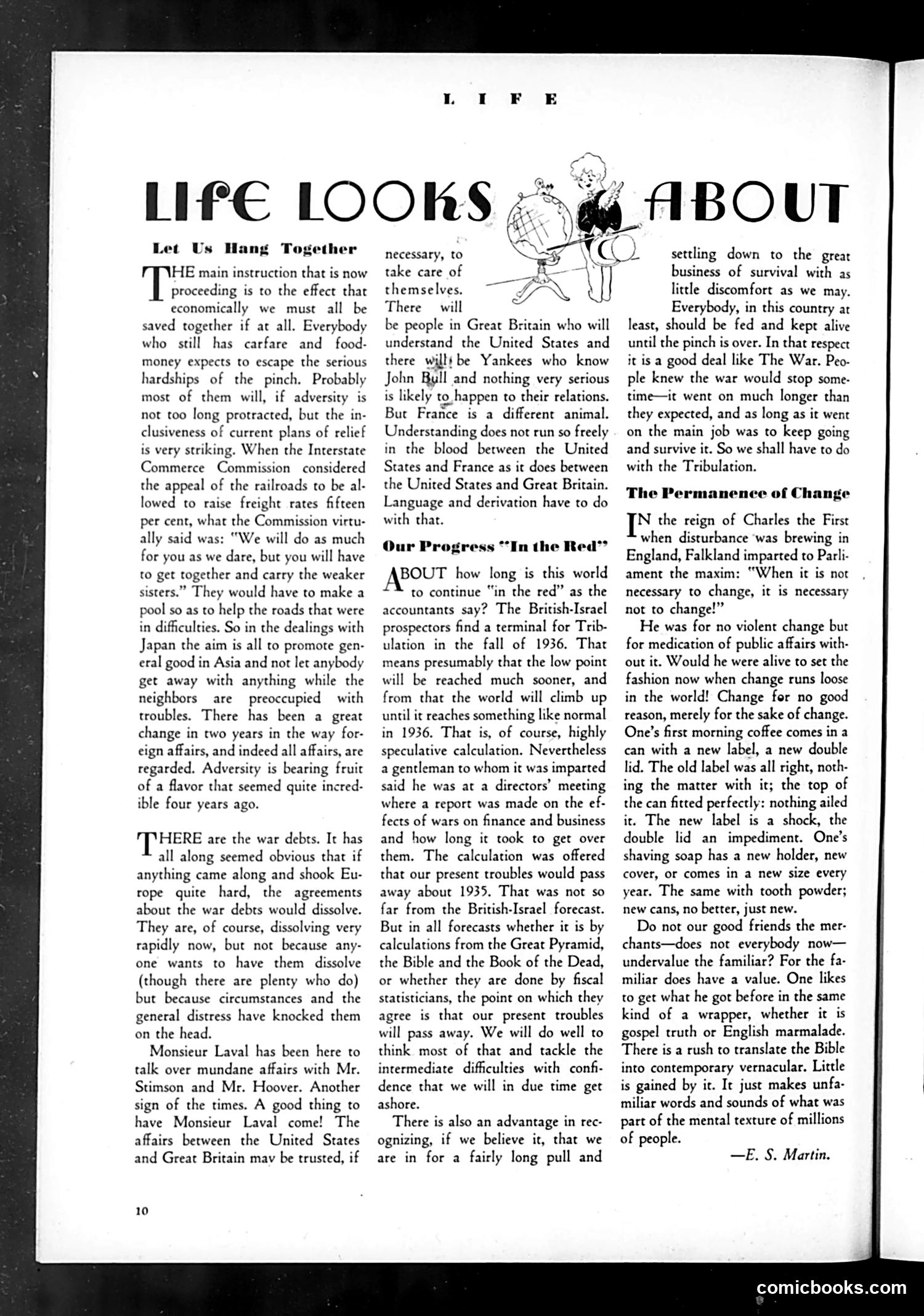
# Analysis This page from *Life* magazine contains three articles rather than political cartoons. The masthead illustration shows two figures examining a globe, accompanying the article "Life Looks About." The main content discusses post-WWI economic cooperation and international relations. References include: - **War debts** between nations (likely U.S., Great Britain, France following WWI) - **Monsieur Laval** (French politician) visiting to discuss affairs with U.S. and British leaders - British-Israeli forecasts about economic recovery by 1936 - The philosophy that change is necessary but should be managed carefully E.S. Martin's concluding piece argues against devaluing the familiar—using the example of changing product labels—suggesting people resist unnecessary modernization. The tone is cautiously optimistic about international cooperation while advocating for stability amid post-war economic uncertainty.