A complete issue · 36 pages · 1931
Life — November 6, 1931
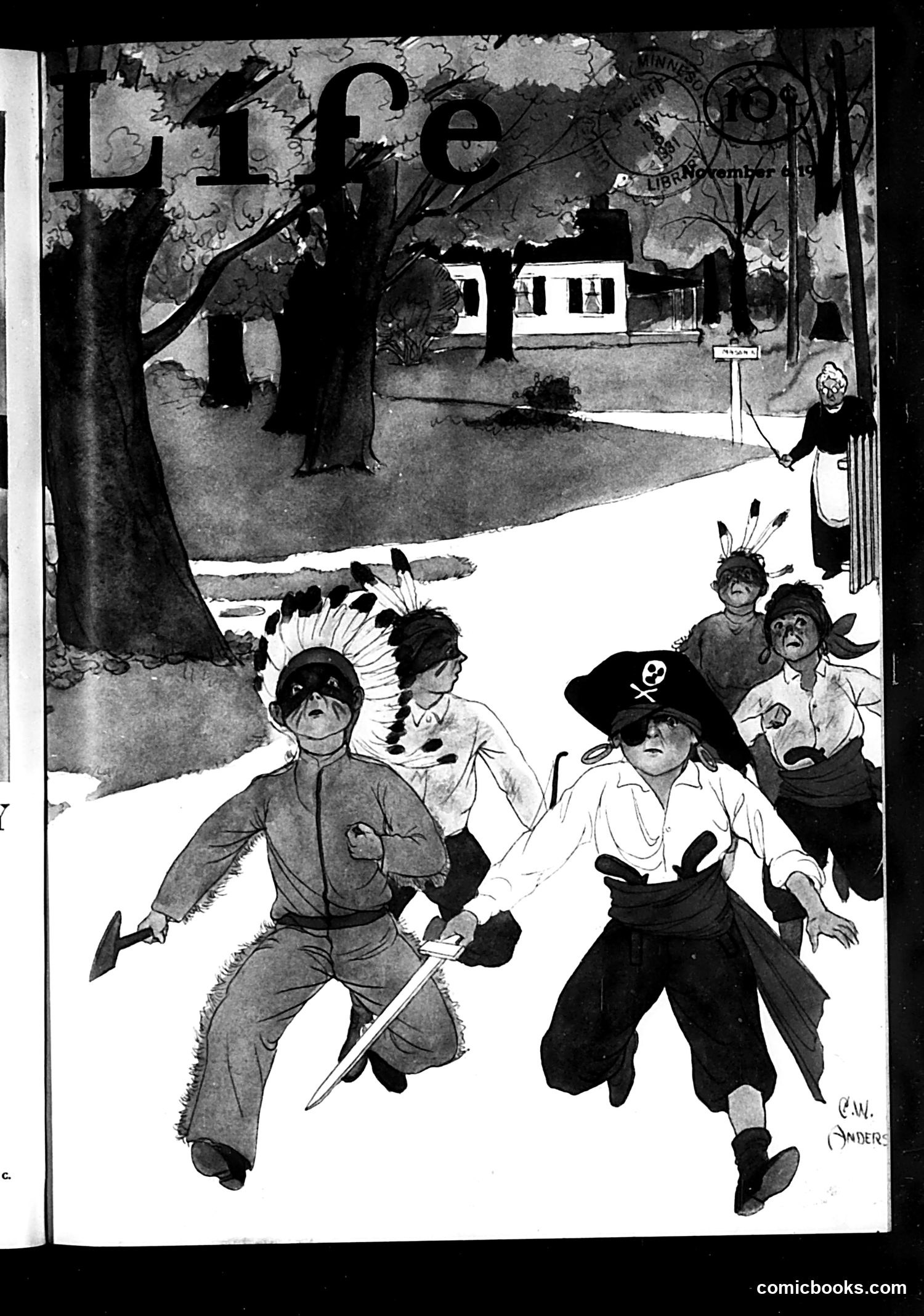
# Political Cartoon Analysis This satirical illustration depicts children engaged in imaginative play, costumed as Native Americans and a pirate. The cartoon appears to critique or comment on children's recreational games and popular cultural role-playing of the early 20th century. The image shows children in stereotypical "Indian" headdresses with tomahawks, and another child in pirate costume with skull-and-crossbones hat, running through a snowy landscape. In the background, a house and bare trees suggest a suburban American setting. The satire likely mocks either the romanticization of Native Americans and pirates in children's entertainment, or comments on how American youth were socialized through such play activities. The exaggerated expressions and dynamic poses emphasize the absurdity or commentary Life magazine intended about prevailing cultural attitudes toward these figures.
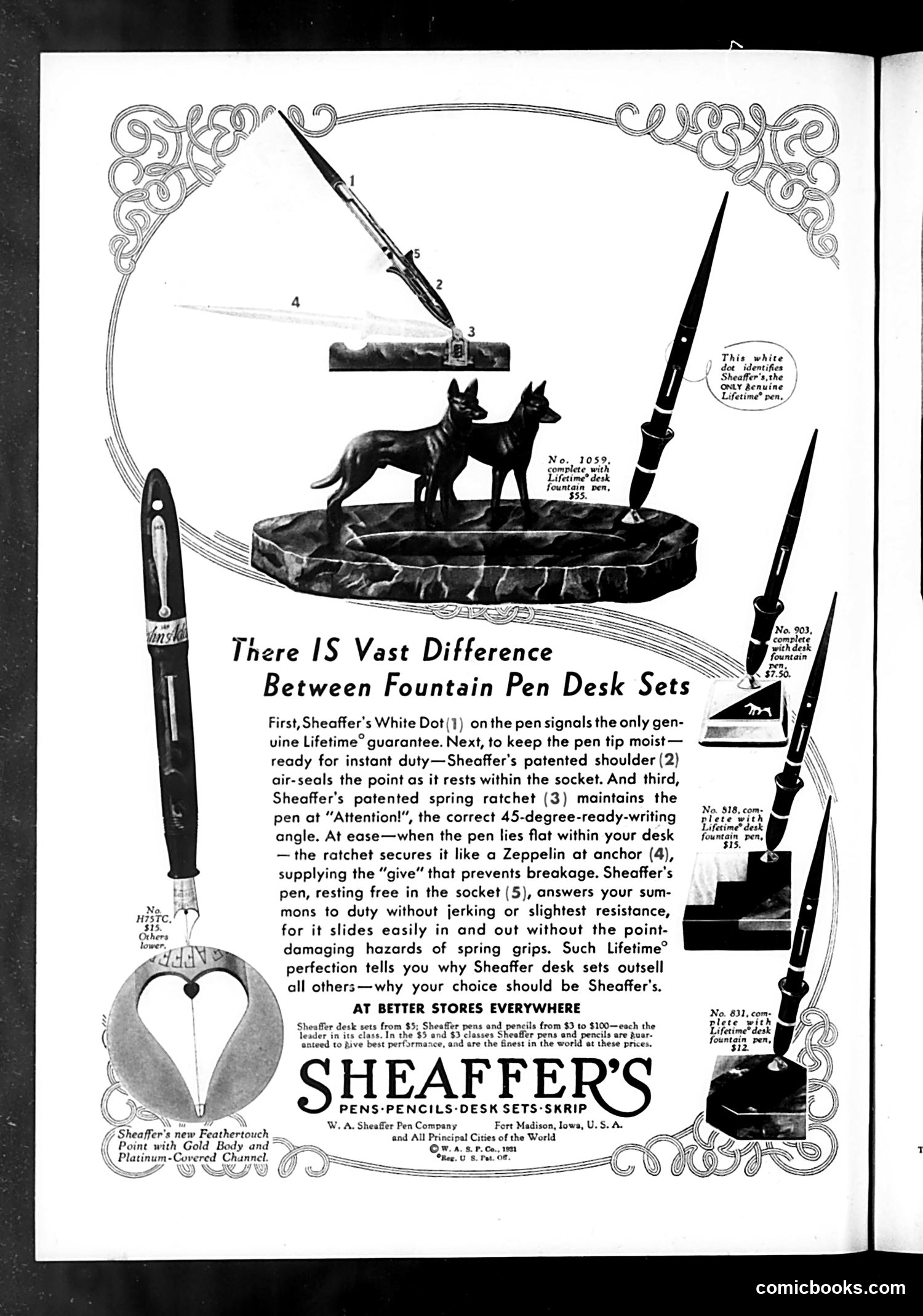
# Content Description This is a **Sheaffer fountain pen advertisement**, not political satire or a cartoon. The page promotes Sheaffer desk sets by highlighting design features that distinguish their products from competitors. The central image shows two dogs on a decorative base with various pens displayed around them. The numbered callouts (1-5) identify Sheaffer's patented features: the "White Dot" guarantee mark, a shoulder mechanism to keep the pen moist, a spring ratchet maintaining proper writing angle, a Zeppelin-style anchor preventing breakage, and a free-resting socket design. The dogs serve as decorative imagery rather than carrying symbolic meaning—typical ornamental elements for luxury desk sets of this era. The advertisement emphasizes engineering superiority and build quality to justify premium pricing ("$100—each").
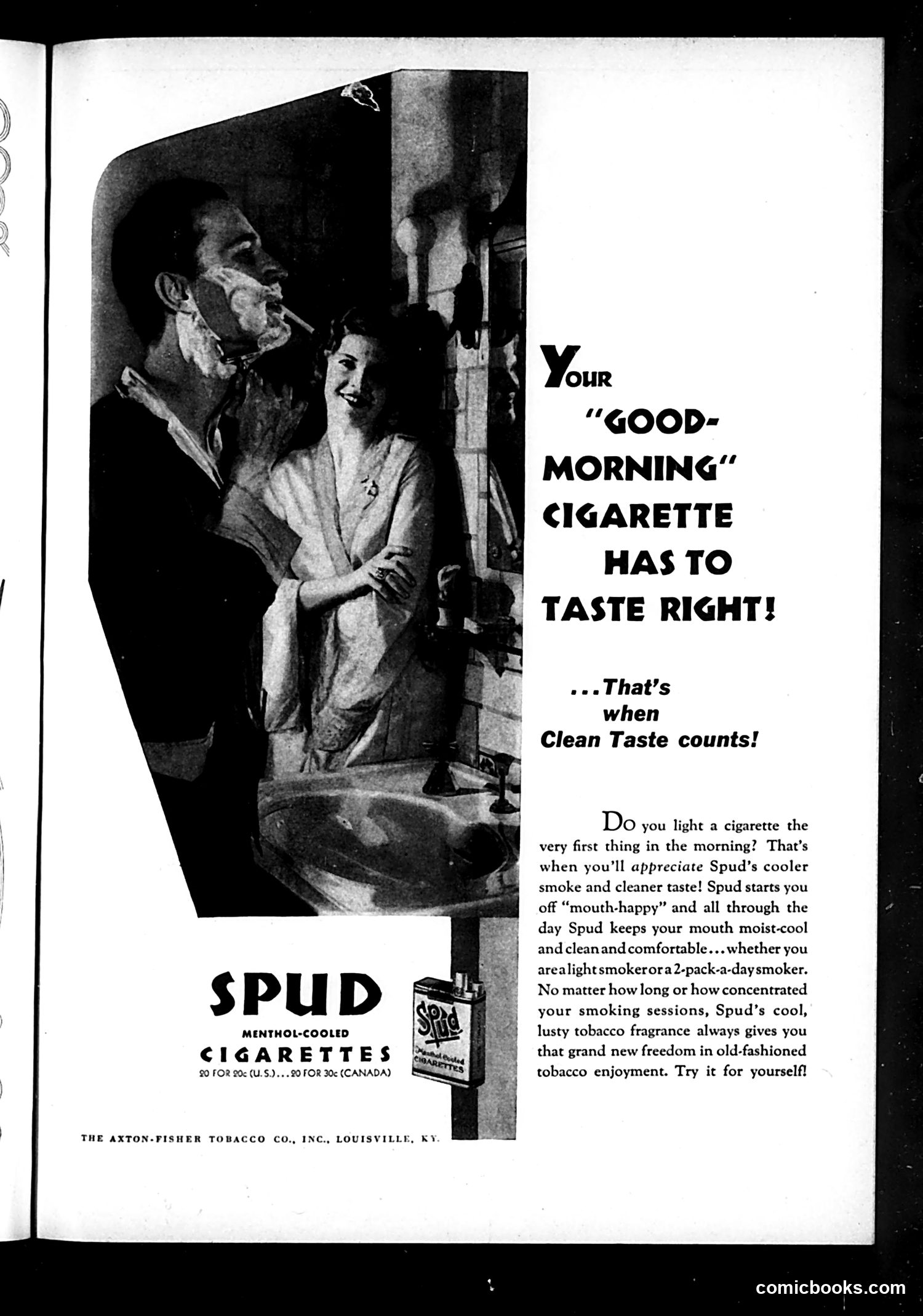
This is a **cigarette advertisement**, not satire or political commentary. It's a Spud Menthol-Cooled Cigarettes ad from The Axton-Fisher Tobacco Co. (Louisville, KY). The ad shows a couple in what appears to be a domestic morning scene. The headline promises that a "good-morning" cigarette will "taste right" because of Spud's "clean taste." The copy emphasizes the product's menthol cooling, claiming it keeps the mouth "moist-cool and clean" throughout the day, whether you're a light or heavy smoker. This reflects mid-20th-century tobacco marketing that aggressively promoted cigarettes as health-conscious, refreshing, and essential to daily comfort—claims that would be illegal today. The imagery normalizes smoking as a routine domestic pleasure.
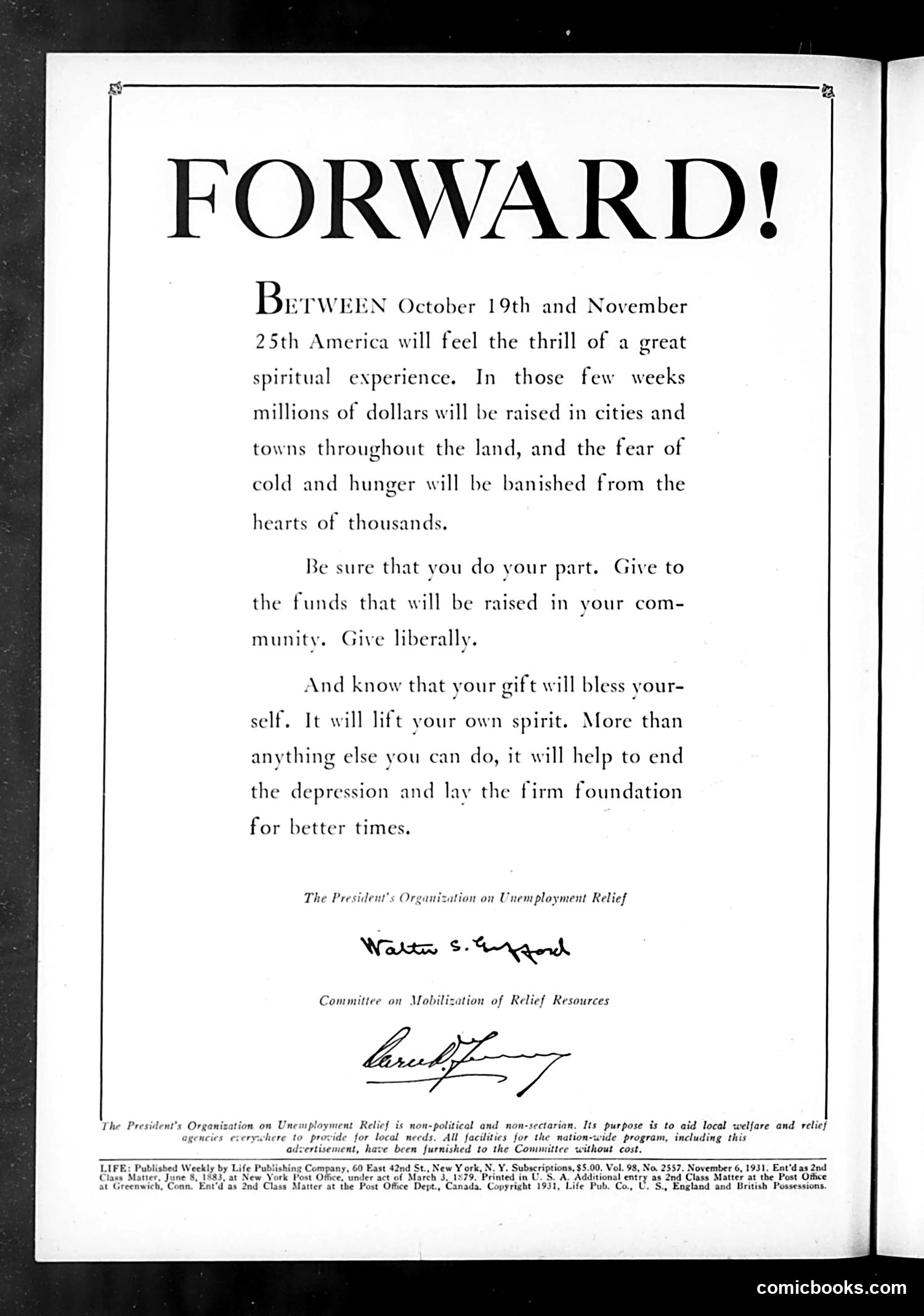
# Analysis This is **not a cartoon page**, but rather a public service announcement/appeal document dated November 6, 1931. The page urges Americans to donate to unemployment relief between October 19 and November 25. It's signed by **Walter S. Gifford** (President's Organization on Unemployment Relief) and appears to include another signature from the Committee on Mobilization of Relief Resources. **Historical context**: This dates to the **Great Depression**. The appeal emphasizes charitable giving will "banish fear of cold and hunger" and "help end the depression." It reflects early Depression-era reliance on **private charitable fundraising** rather than government programs—a policy approach that would soon prove inadequate, leading to New Deal programs. The religious language ("spiritual experience," "bless yourself") reflects how charitable giving was framed morally during this period.
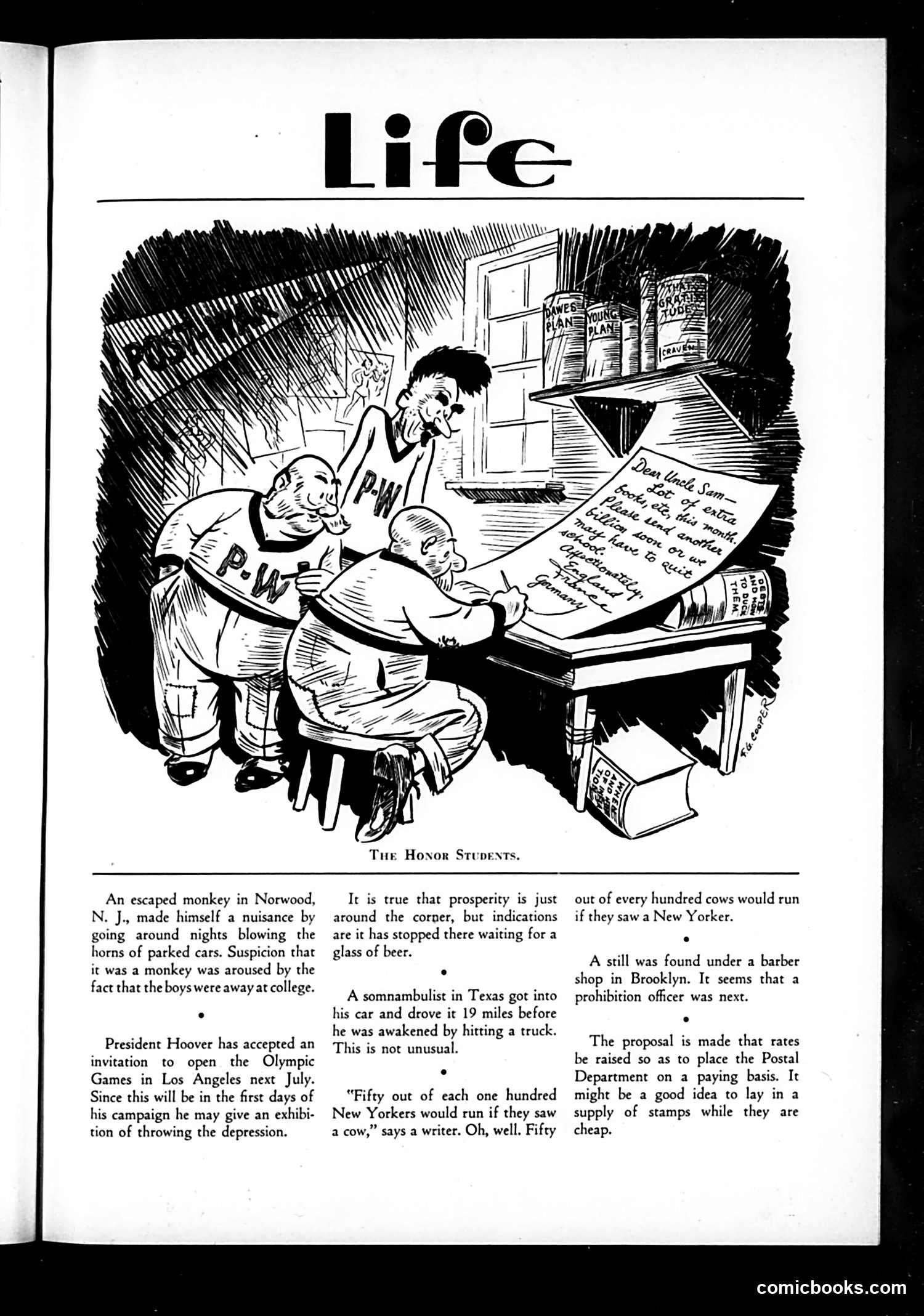
# "The Honor Students" Analysis This satirical cartoon depicts three young men wearing "P.W." armbands, seated at a desk studying papers. The illustration mocks college students, likely from a prestigious institution. The caption "The Honor Students" is ironic—the accompanying text reveals these are not academically distinguished pupils but rather troublemakers. One anecdote mentions boys "away at college" who were actually elsewhere causing mischief (blowing horns near parked cars in Norwood, N.J.). The "P.W." armbands likely reference a fraternity or college organization. The satire suggests a gap between students' reputations as "honor" pupils and their actual behavior—implying they receive academic credit while engaging in pranks and delinquency. This critiques both the students' hypocrisy and institutional oversight during what appears to be the 1920s Prohibition era.
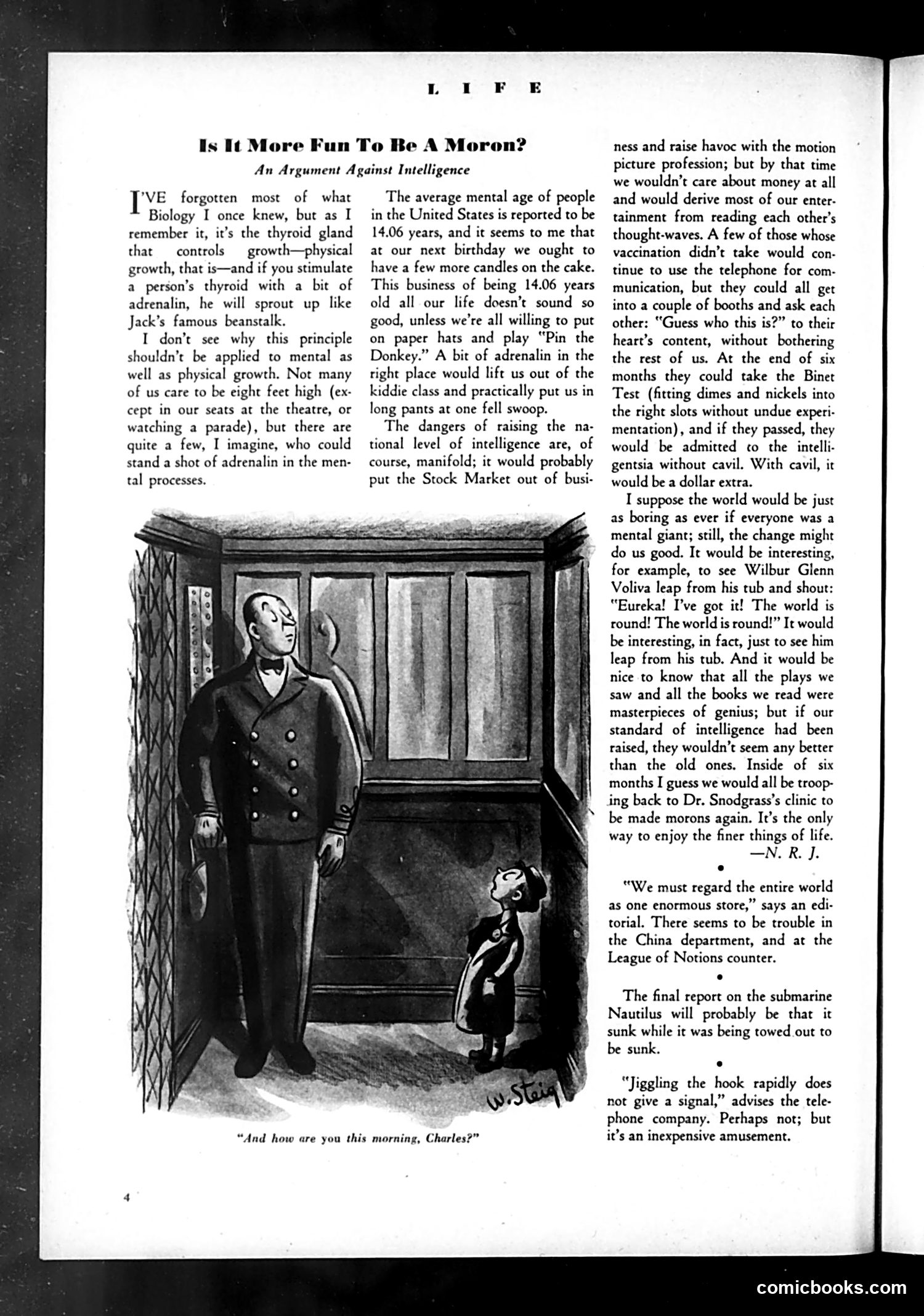
# Analysis of "Is It More Fun To Be A Moron?" This satirical article argues *against* valuing intelligence, using absurdist humor. The main cartoon shows a tall man in formal dress looking down at a tiny child, captioned "And how are you this morning, Charles?" The joke appears to be about physical stature—the adult towers over the child—but the article's title suggests the irony: society might prefer unintelligence because smart people cause problems (stock market crashes, etc.). The text references the "average mental age" of Americans as 14.06 years and sarcastically proposes solutions like intelligence tests with financial rewards, suggesting such systems are impractical and society functions better with widespread mediocrity. The humor relies on inverting conventional wisdom about intelligence being desirable.
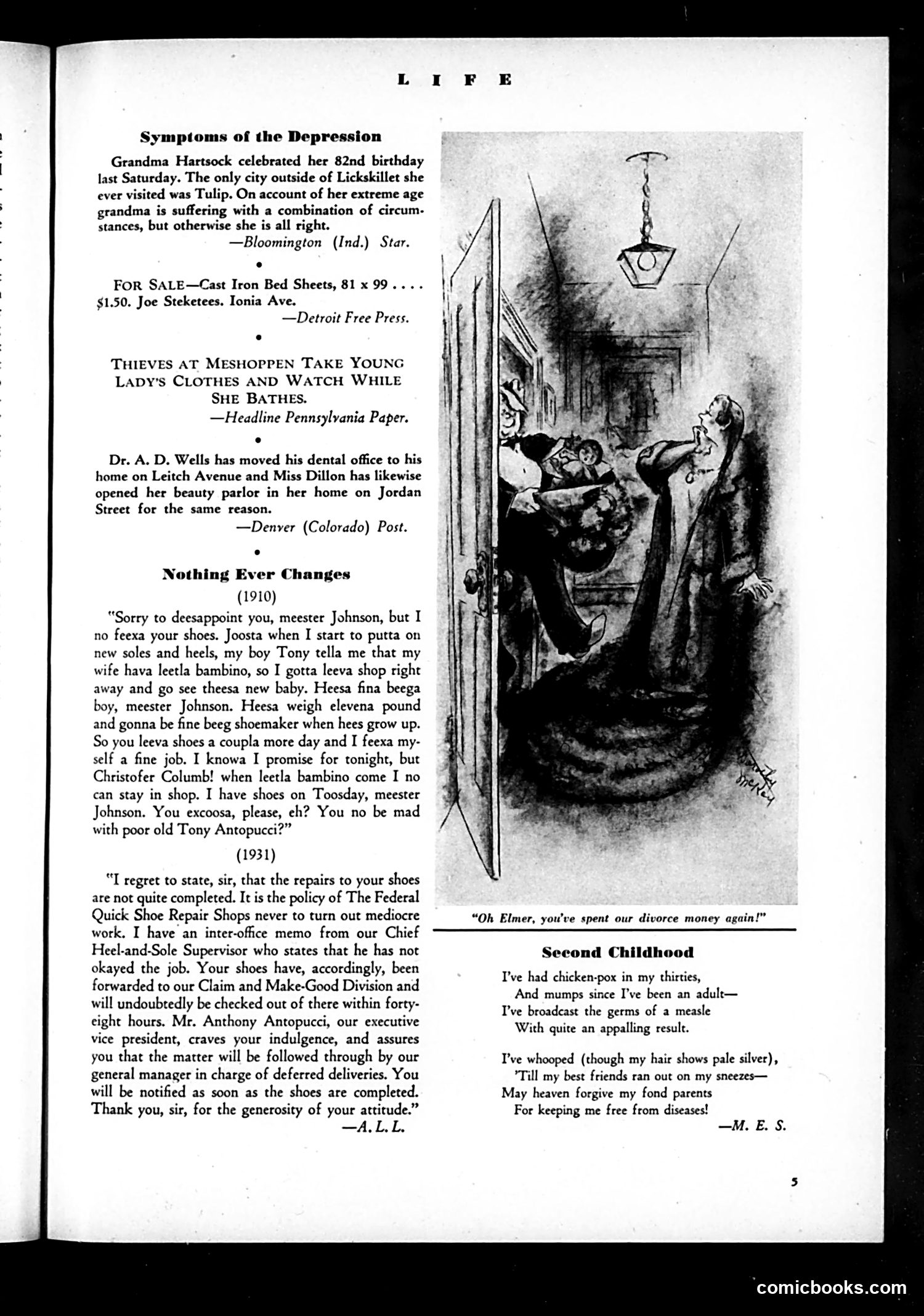
# Analysis of Life Magazine Page The main cartoon depicts a domestic quarrel, captioned "Oh Elmer, you're spent our divorce money again!" The image shows a woman confronting a man in what appears to be a modest home interior, with a hanging lamp above. The satire targets the absurdity of a couple spending money allocated for divorce proceedings on other expenses, suggesting financial irresponsibility within troubled marriages. This reflects early 20th-century attitudes toward divorce as both scandalous and financially consequential. The page also includes miscellaneous content: advertisements for cast-iron bed sheets and shoe repair services, personal notices, and a poem titled "Second Childhood" by M.E.S. The overall tone is lighthearted social commentary typical of Life magazine's satirical approach to American domestic and consumer culture.
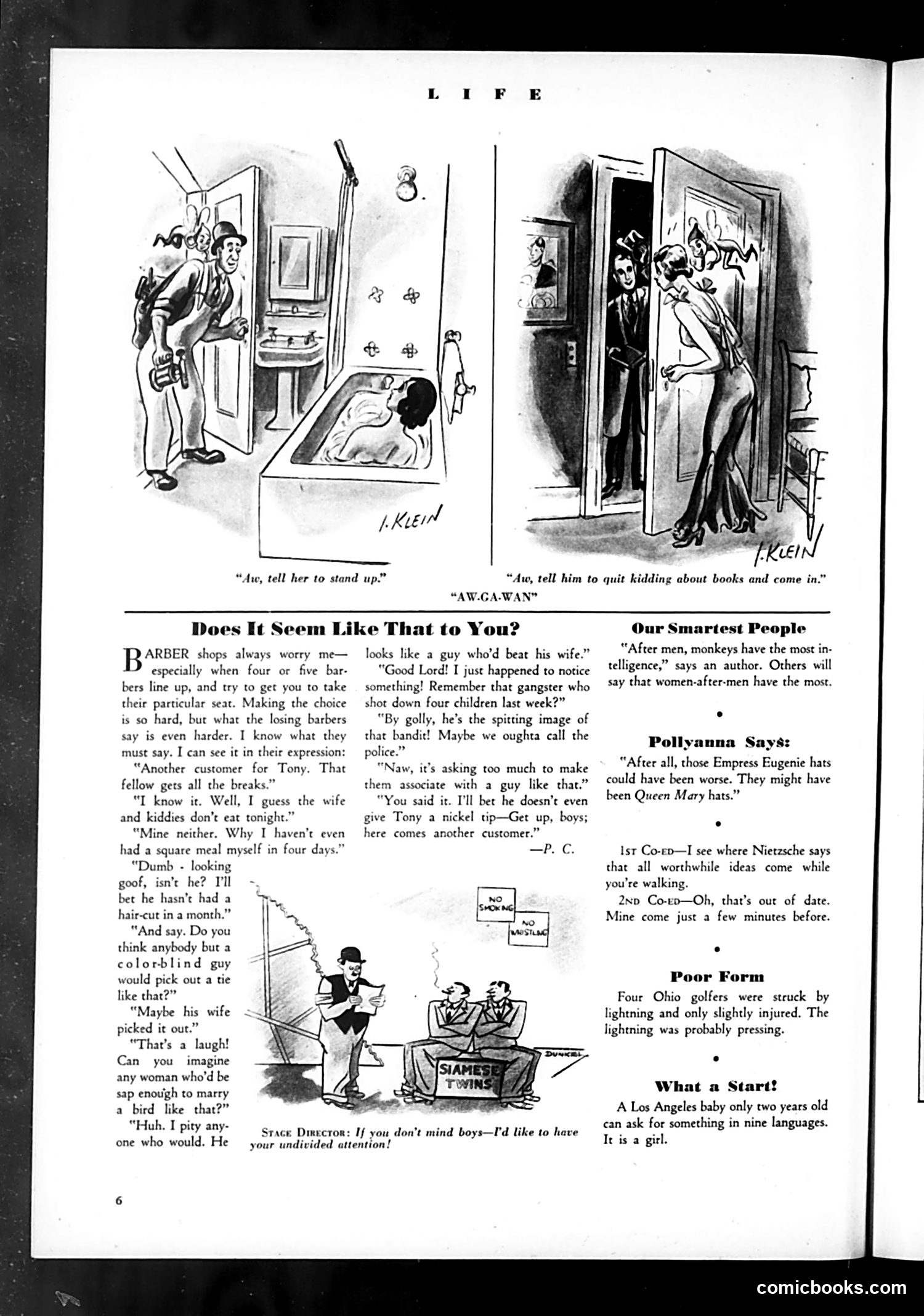
# Page Analysis: Life Magazine Humor Section This page contains three distinct humor pieces: **Top Cartoons (by I. Klein):** Two bathroom-related gags about domestic life—a husband being told to stand up in a bathtub, and a woman telling a man to stop discussing books and enter a room. **"Does It Seem Like That to You?"** A barber's monologue complaining about married life—wives picking restaurant seats, husbands not eating well, suggesting marriage is fundamentally miserable. The satire targets domestic dissatisfaction and male anxiety about matrimony. **"Our Smartest People"** Short humorous observations, including a quip that women-after-men possess more intelligence than men themselves—likely satirizing gender relations and male ego. **Bottom section:** Brief amusing anecdotes about stage directors, lightning strike survivors, and a multilingual toddler—typical light filler humor for the era. The page reflects early-to-mid 20th-century domestic satire conventions.
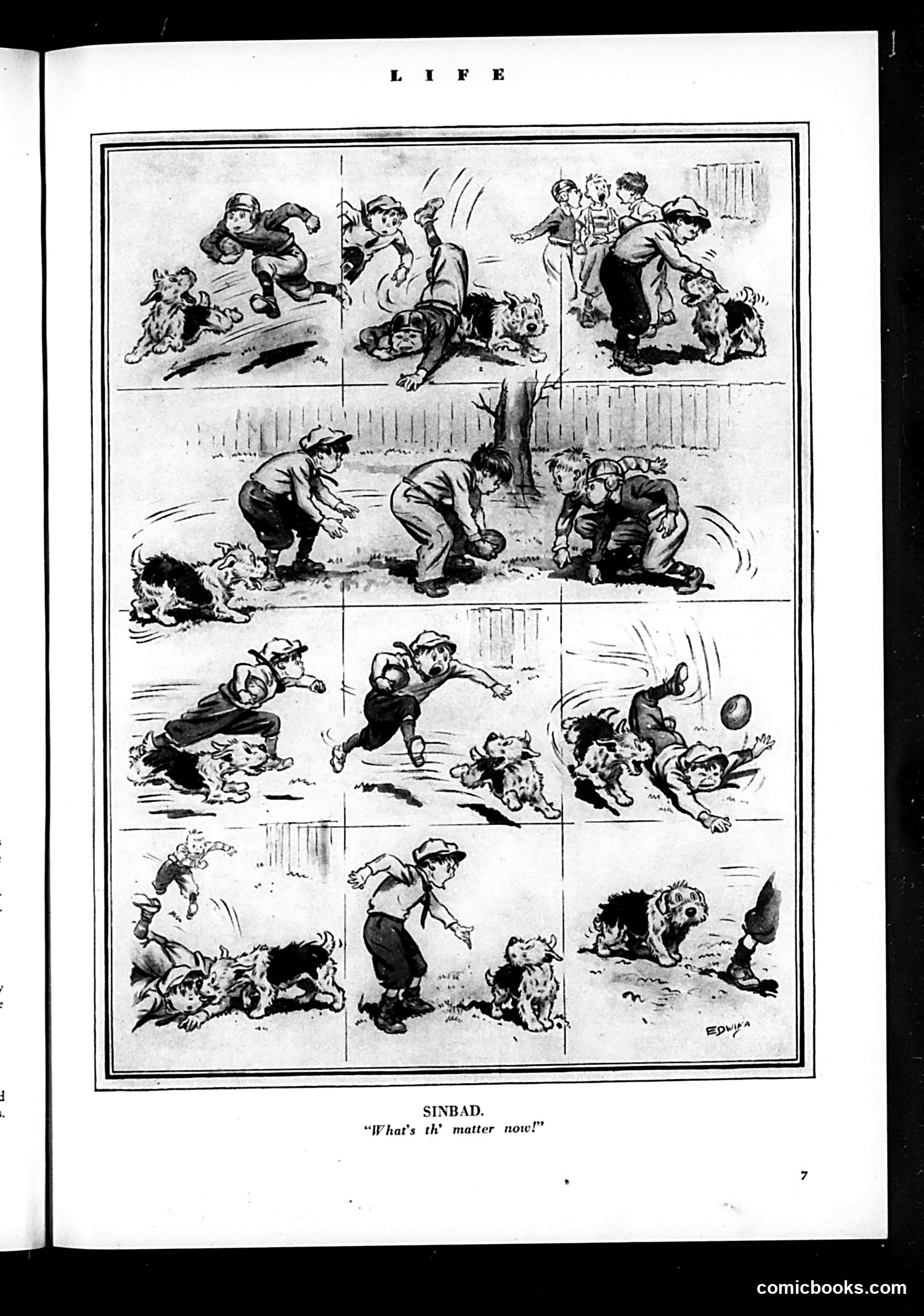
# Sinbad: "What's th' Matter Now?" This comic strip shows a boy (Sinbad) and his dog repeatedly getting into mischief with other children and dogs. The sequential panels depict escalating chaos—chasing, tumbling, fighting, and general roughhousing in what appears to be a neighborhood or street setting. The satire targets childhood behavior and parental exasperation. The phrase "What's th' Matter Now?" suggests an adult (likely a parent) repeatedly asking why the children keep causing trouble. The humor comes from the relentless, cyclical nature of children's play-fighting and the inevitable messy consequences—mud, torn clothes, and general disorder. This reflects early 20th-century attitudes about boyish mischief as both inevitable and somewhat amusing, though frustrating to adults managing households.
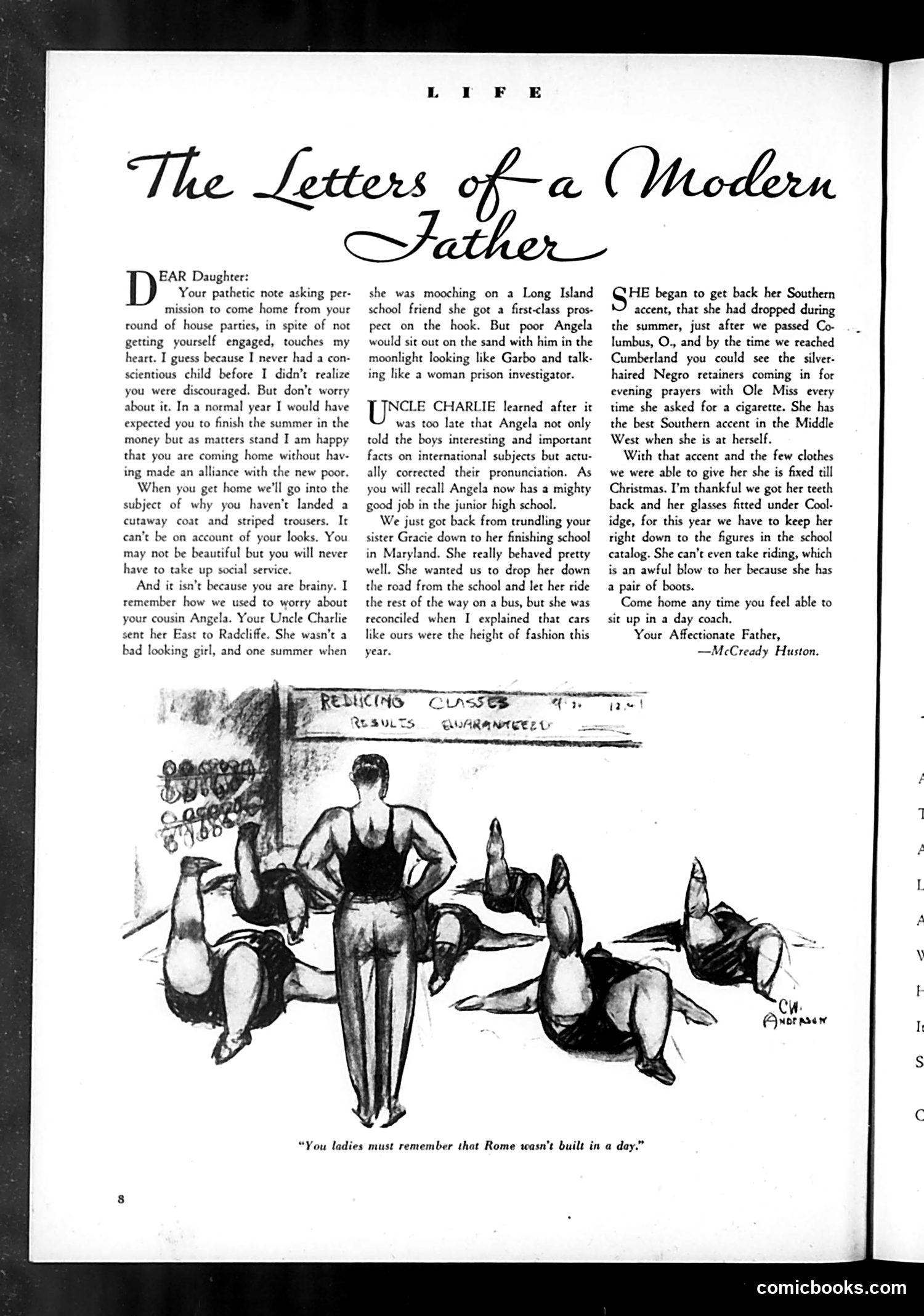
# Analysis This page features "The Letters of a Modern Father," a humorous advice column. The illustration depicts a father instructing his daughter and her friends about physical fitness or exercise classes, with the caption "You ladies must remember that Rome wasn't built in a day." The cartoon satirizes modern parenting and youth culture of the era. The father's comment—a common proverb about patience—appears to reference the girls' exercise routine or physical training, suggesting he's humorously cautioning them against expecting quick results from fitness efforts. The text discusses the father's various concerns about his daughter's life: her social activities, friendships, school progress, and summer plans. The overall tone mocks the earnest, somewhat old-fashioned advice fathers give to their daughters about conduct and ambition in what the magazine presents as a "modern" context.
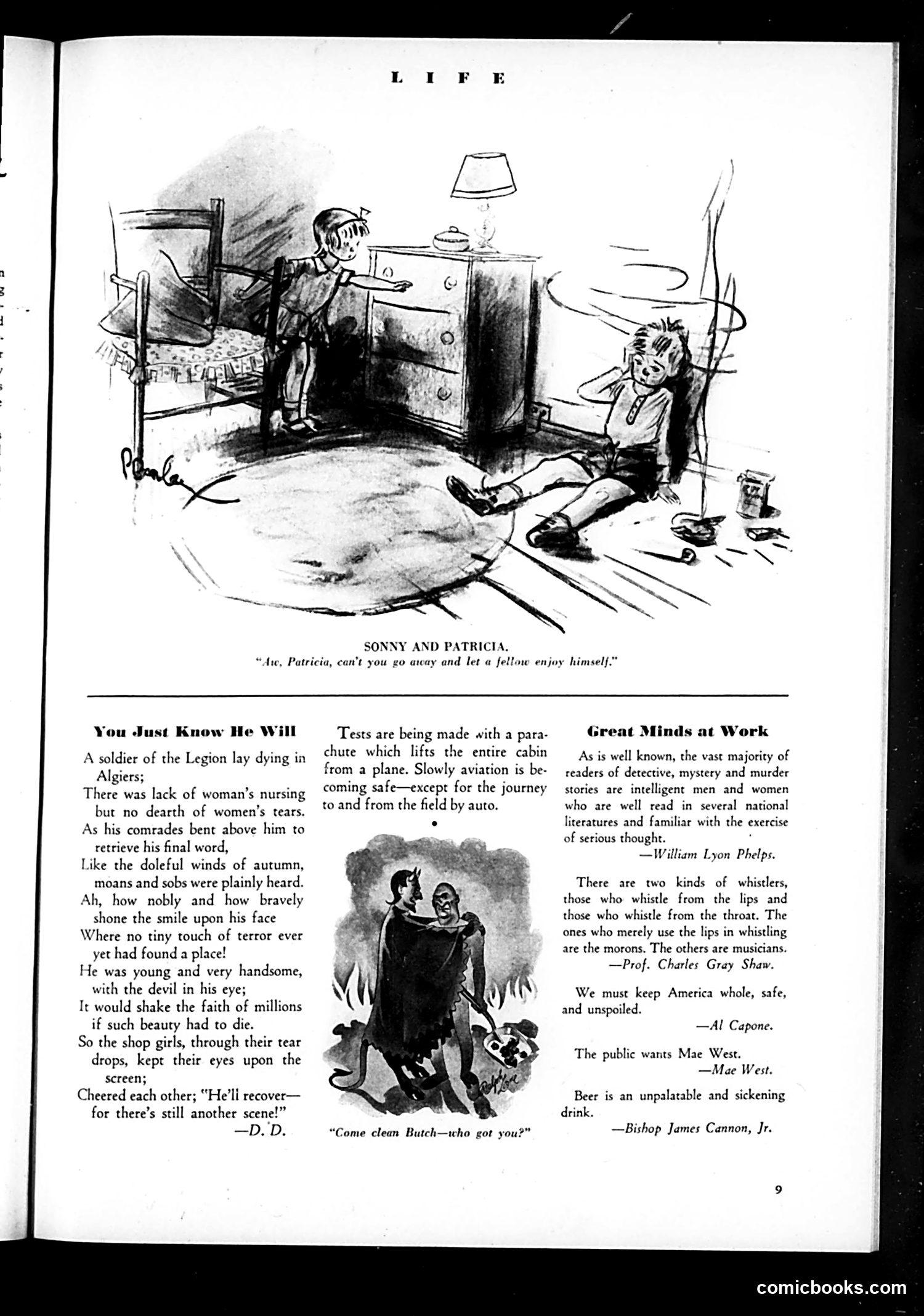
# Analysis of Life Magazine Page This page contains a cartoon titled "Sonny and Patricia" showing two children in a messy room with furniture and scattered toys. The caption reads: "Au, Patricia, can't you go away and let a fellow enjoy himself?" The humor targets spoiled or bratty children—a common satirical subject. The boy appears annoyed at being interrupted by a girl, suggesting period-typical gender dynamics and sibling conflict. Below are unrelated sections including a poem "You Just Know He Will" about a dying soldier, and a "Great Minds at Work" section featuring quotations from recognizable figures like Al Capone, Mae West, and William Lyon Phelps on various social topics (aviation safety, whistling, prohibition, etc.). The overall page mixes domestic humor with contemporary social commentary.
# Analysis This page from *Life* magazine features an article titled "Life Looks About: The Passing of a Benefactor," discussing Thomas Edison's legacy and character. The small cartoon at top shows two figures—apparently a child and adult—playing with a globe and telescope, illustrating themes of discovery and invention. The article praises Edison as an exceptional self-made inventor who, despite lacking formal education, achieved remarkable discoveries. The author (E. S. Martin) argues that Edison's deafness didn't hinder his brilliance and notes his humble origins and modest lifestyle despite wealth. The piece contrasts Edison favorably with purely capitalist figures like Henry Ford, emphasizing Edison's focus on innovation over profit-seeking. The overall tone celebrates Edison as an admirable "benefactor" to humanity through his scientific contributions rather than his financial success.