A complete issue · 37 pages · 1931
Life — October 16, 1931
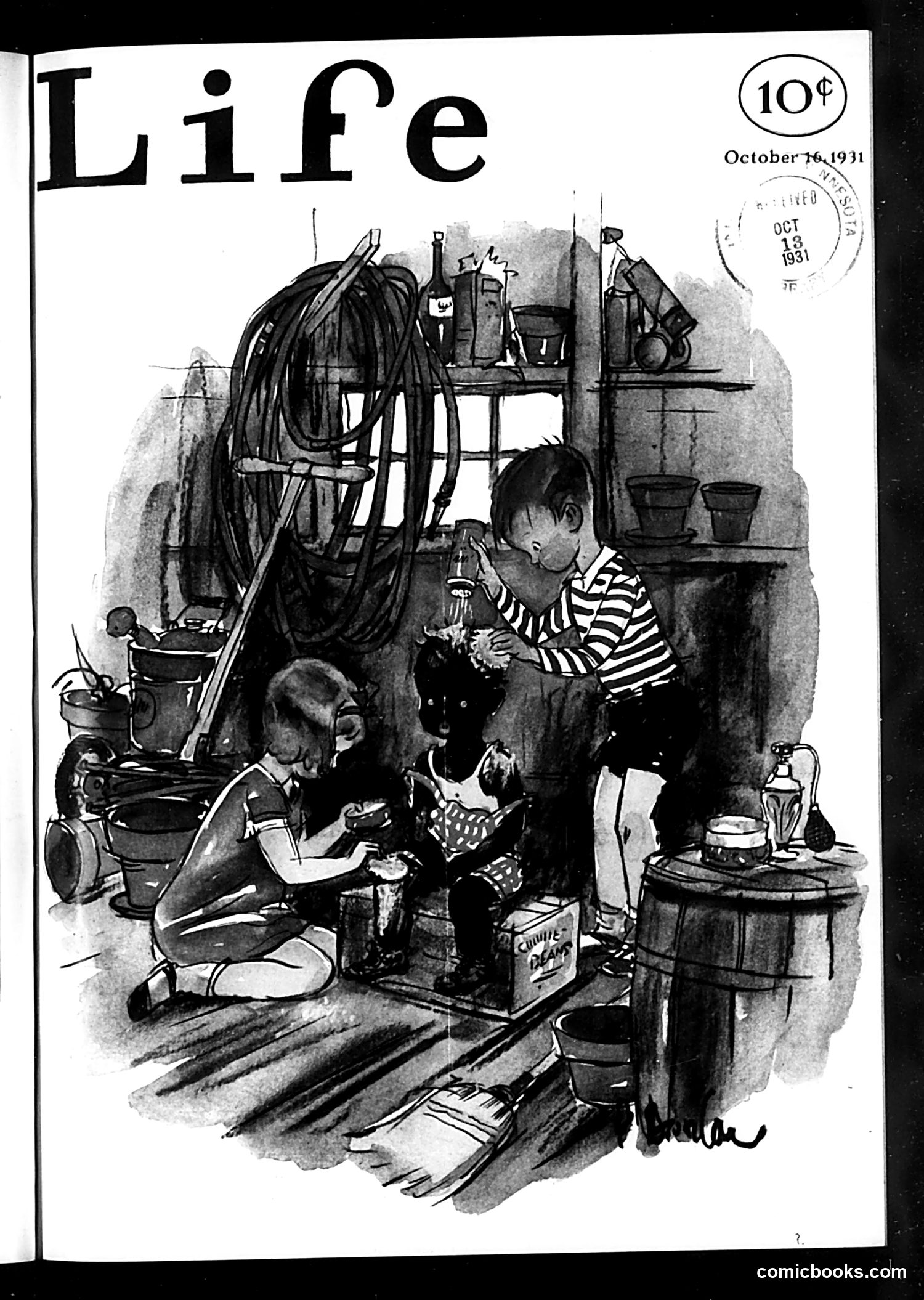
# Life Magazine Cover, October 16, 1931 This illustration depicts children playing in what appears to be a basement or cramped living space during the Great Depression. The scene shows makeshift conditions: coiled rope, buckets, tools scattered about, and sparse furnishings. One child holds what appears to be a "Skeeter" brand product box. The satire comments on Depression-era poverty and how children made do with whatever they found, turning utility items and salvage into playthings. The cramped, cluttered basement setting contrasts sharply with the idealized childhood play depicted in typical magazine covers of the era. This reflects 1931's economic hardship, when many families lived in inadequate housing with few resources for entertainment or comfort—a pointed social commentary on American conditions during the early Depression years.
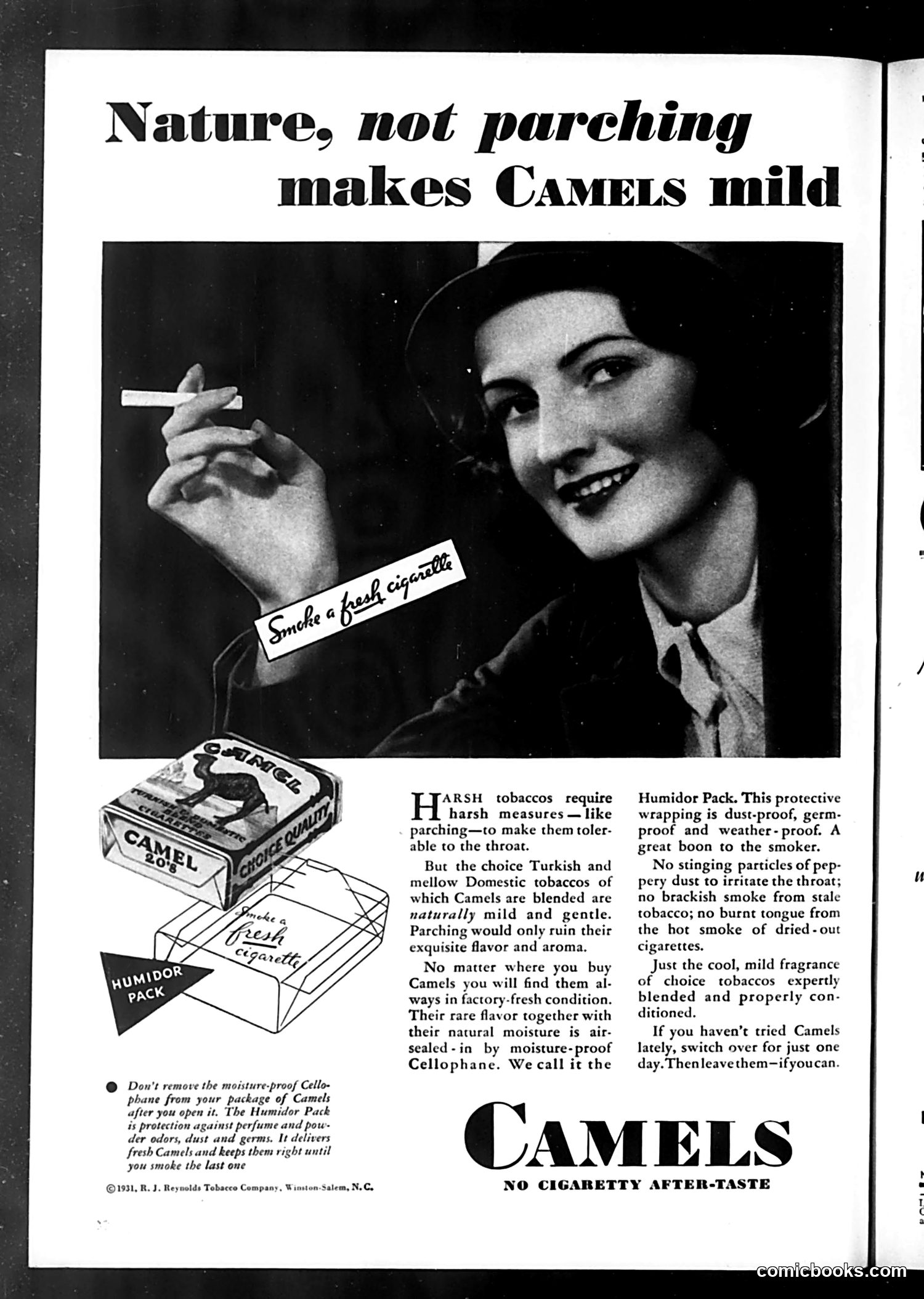
# Analysis This is a **Camel cigarette advertisement**, not political satire. The page dates to 1931 (visible copyright mark). The ad features a woman holding a cigarette with the tagline "Smoke a fresh cigarette." The headline claims "Nature, not parching makes CAMELS mild." The advertisement's argument: harsh tobaccos require protective measures like parching (a drying process), which damages flavor. Camel's Turkish and Domestic tobacco blend is "naturally mild and gentle," requiring no such processing. The "Humidor Pack" (moisture-proof wrapping) preserves freshness. The ad emphasizes no "stinging particles," "brash smoke," or "cigarette after-taste." For modern readers: this represents vintage tobacco marketing using pseudo-scientific health claims—assertions that would be illegal under today's FDA regulations governing cigarette advertising.
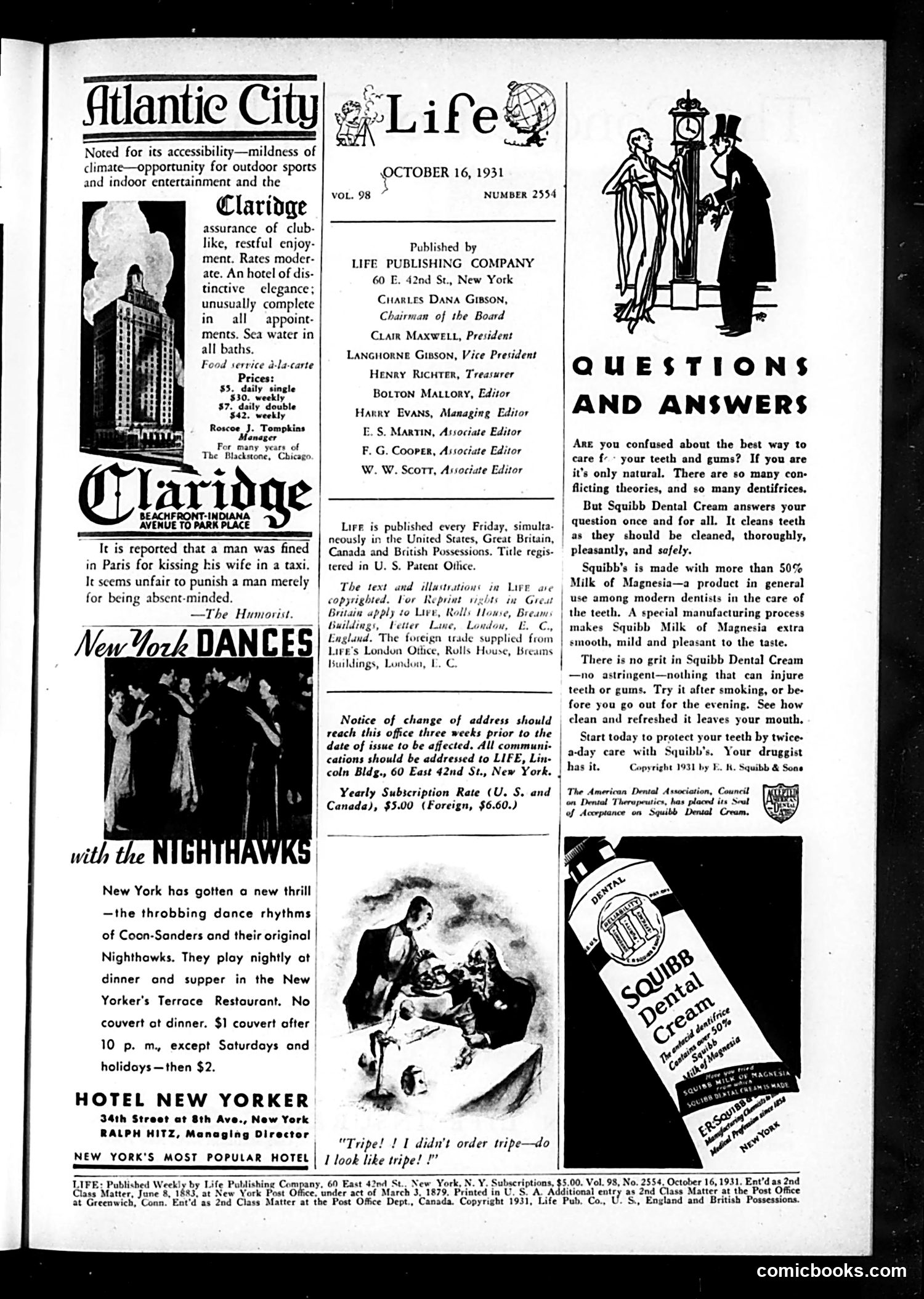
# Analysis of Life Magazine, October 16, 1931 This page is primarily **advertisements and publishing information** rather than political satire. The main visual content includes: 1. **Hotel advertisements** for Atlantic City's Claridge Hotel and the Hotel New Yorker in Manhattan 2. **New York Dances with the Nighthawks** — promoting Coon-Sanders and their band at the New Yorker's Terrace Restaurant 3. **Squibb Dental Cream advertisement** featuring a product bottle and endorsement text The only satirical element is a small **"Questions and Answers" humor section** with a Paris taxi joke about a man fined for kissing his wife (marked as absent-minded). The page reflects 1931 **entertainment and consumer culture** during the early Great Depression, emphasizing leisure activities, dining, and dental hygiene products.
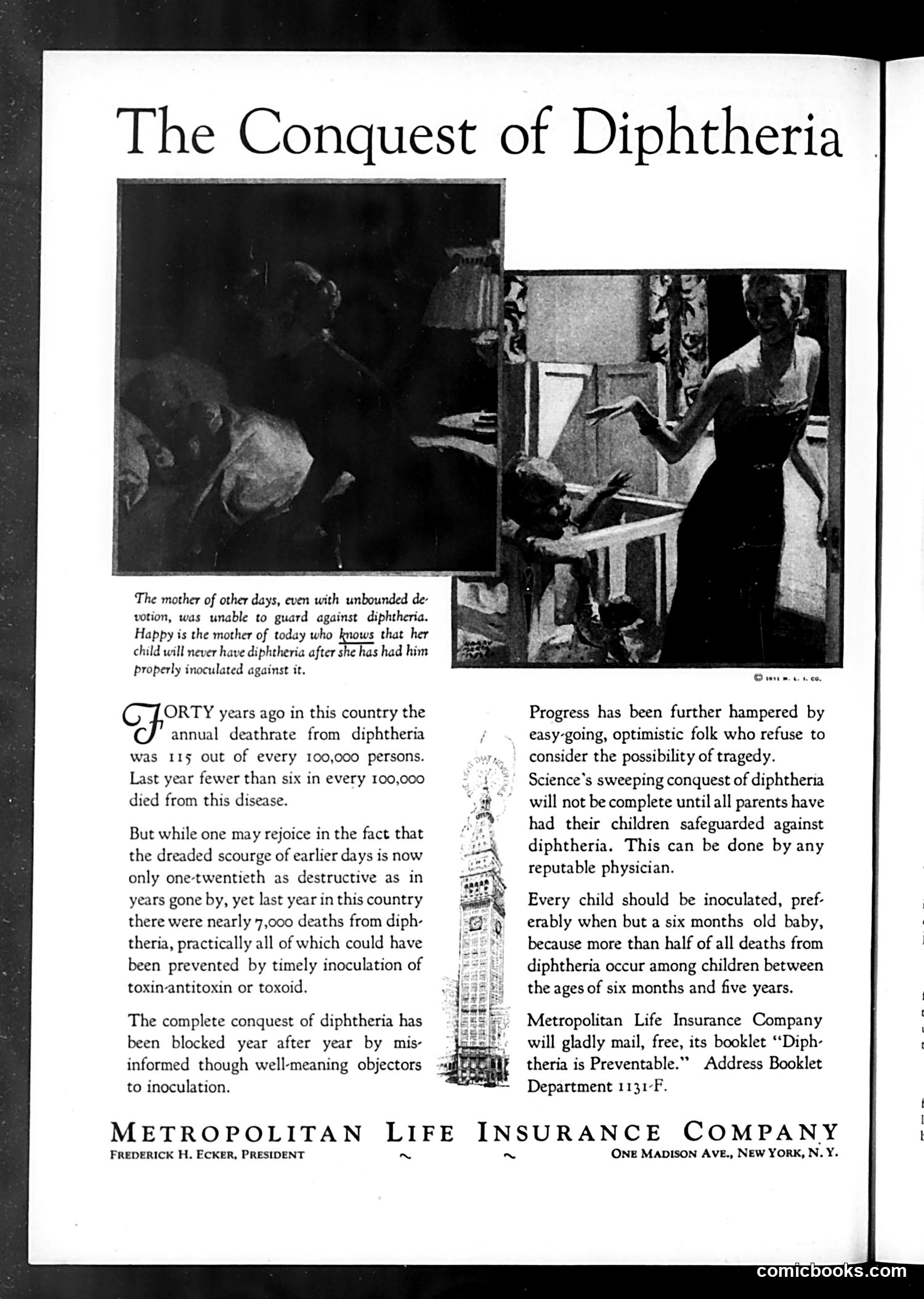
# "The Conquest of Diphtheria" This is a **public health advertisement** by Metropolitan Life Insurance Company, not satire or political commentary. The page advocates for **diphtheria vaccination**, presenting it as a medical triumph. The two photographs show **medical inoculation scenes**: healthcare workers administering vaccines to children. The accompanying text criticizes vaccine skeptics as "easy-going, optimistic folk who refuse to consider the possibility of tragedy," arguing that parents who fail to inoculate their children endanger them. The message is straightforward public health promotion: diphtheria deaths dropped dramatically through vaccination, and "every child should be inoculated, preferably when but a six months old baby." The company offers a free informational booklet to encourage adoption of this preventive medical practice.
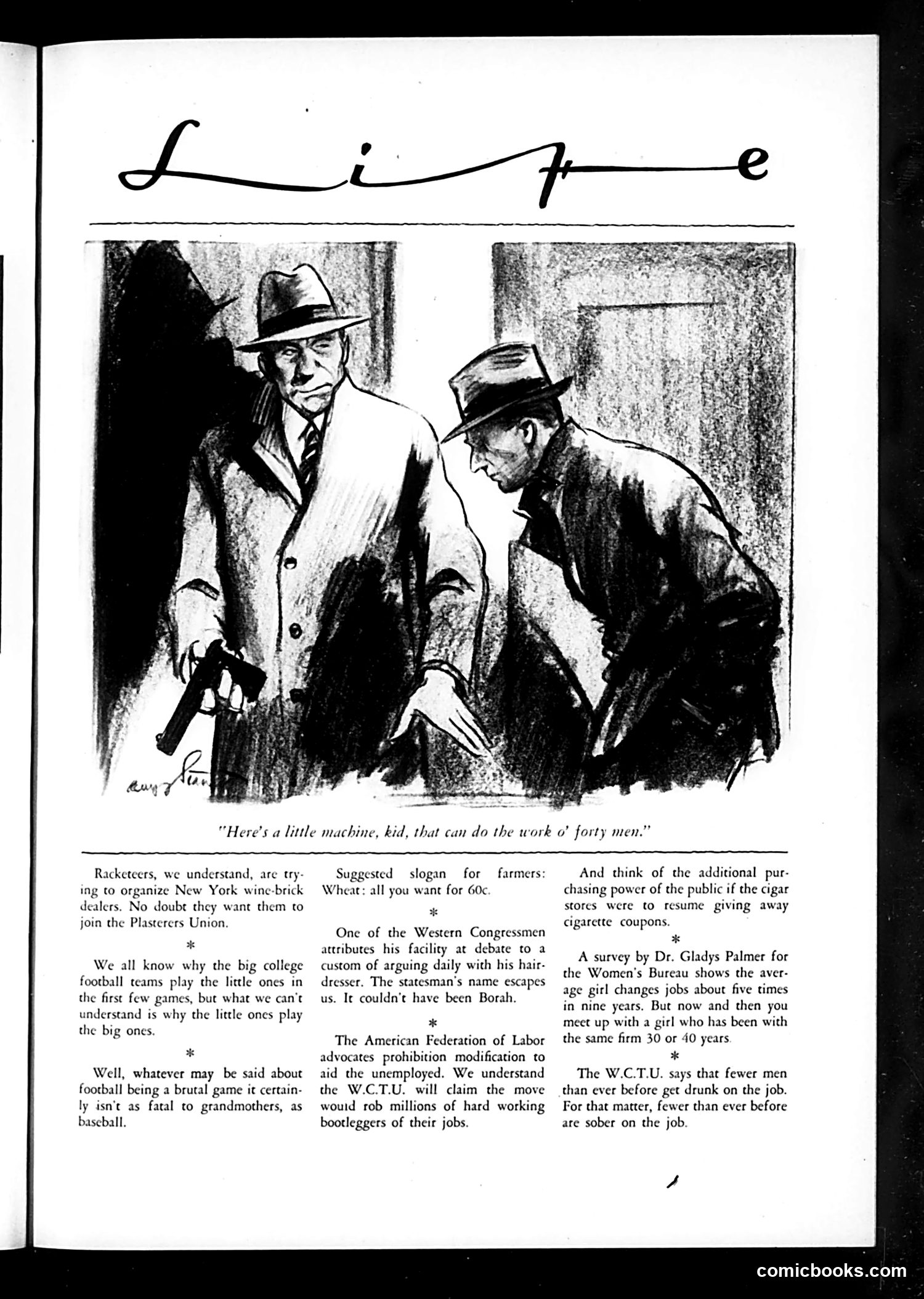
# Explanation for Modern Readers The cartoon depicts two men in fedoras showing a third figure "a little machine, kid, that can do the work o' forty men"—likely representing labor-saving machinery or automation. The surrounding text satirizes various contemporary issues: **racketeers** organizing New York wine-brick dealers to join the Plasterers Union; college football's brutality compared to baseball; the **American Federation of Labor's** opposition to prohibition modification, fearing job losses; and workplace sobriety claims by the W.C.T.U. (Women's Christian Temperance Union). The cartoon's dark humor suggests labor displacement anxiety—machines replacing workers—while the surrounding commentary mocks union protectionism and temperance advocacy as self-serving interests masquerading as worker protection or moral reform.
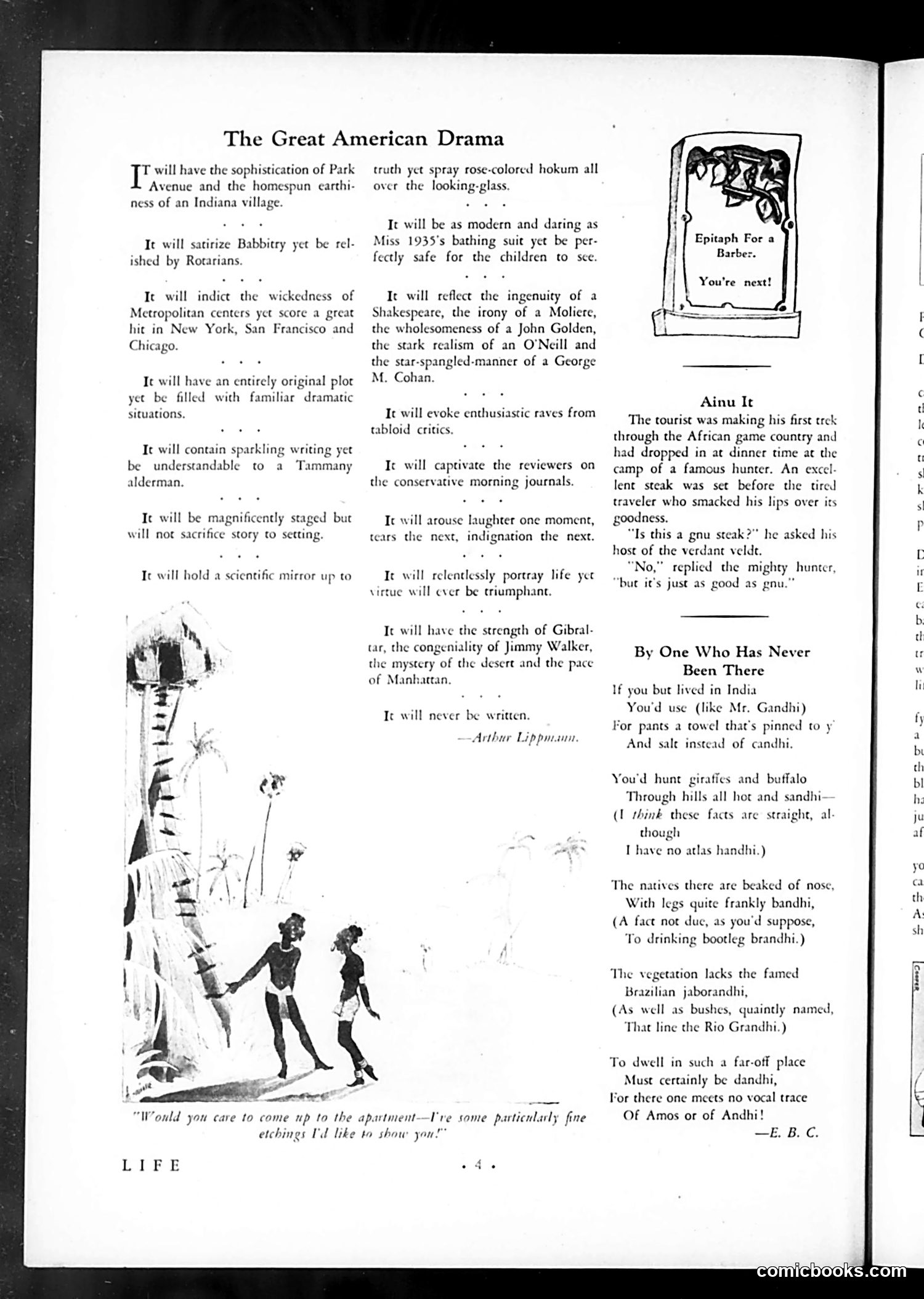
# "The Great American Drama" - Life Magazine Satire This page satirizes aspirations for a distinctly American theatrical masterpiece. The left column lists pretentious qualities the play will supposedly possess—sophistication yet earthiness, originality yet familiarity, modern yet safe for children—mocking contradictory demands from audiences and critics. The satirical point: American theater cannot simultaneously satisfy Park Avenue sophistication, Rotarian sensibilities, Metropolitan and Midwestern tastes, and conservative morning newspapers. It's impossible to write something both daring and universally acceptable. The illustration (lower left) depicts colonizers or hunters with a large tree, accompanying a humorous anecdote about a safari experience. The page mocks how American cultural aspirations are often diluted by competing commercial and social pressures, preventing genuine artistic innovation.
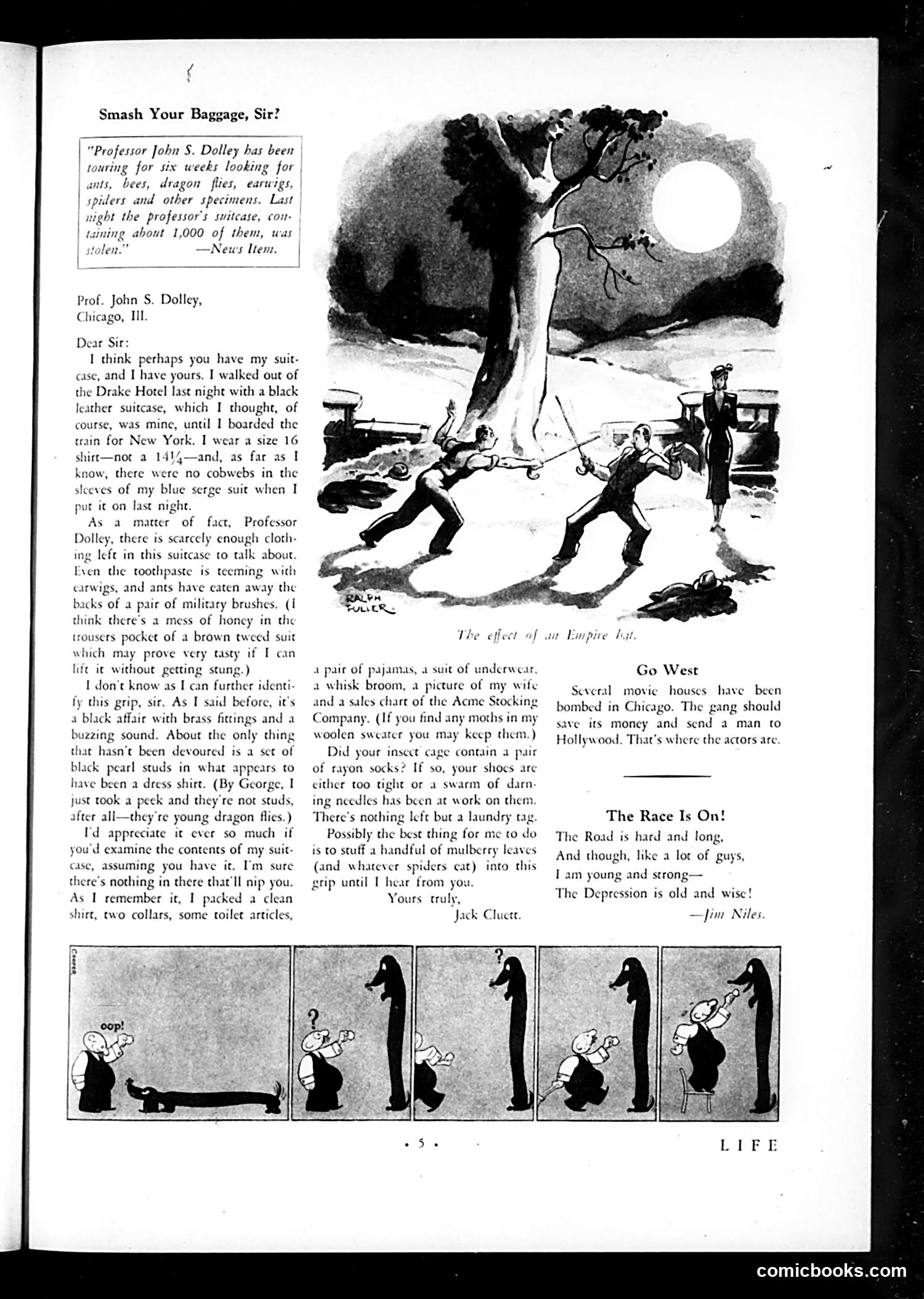
# Page Analysis: Life Magazine **Main Content:** A humorous letter from Jack Cluett to Professor John S. Dolley regarding a stolen suitcase mix-up at the Drake Hotel in Chicago. Cluett describes the confusion of swapping luggage and catalogs the bizarre contents of Dolley's suitcase—specimens including dragon flies, newts, and insects—mocking the professor's scientific collecting hobby. The satire targets academic eccentricity and absent-minded scholars. **Illustration:** A large cartoon depicts men being flung by a giant tree during what's labeled "The effect of an Empire Jolt," referencing the Empire State Building (completed 1931), suggesting natural disaster or seismic activity as contemporary anxiety. **Bottom Comic Strip:** A simple four-panel sequence showing a man repeatedly attempting to address a tall woman, likely a visual gag about height disparity or social awkwardness. The page reflects 1930s preoccupations with modern urban life and academic culture.
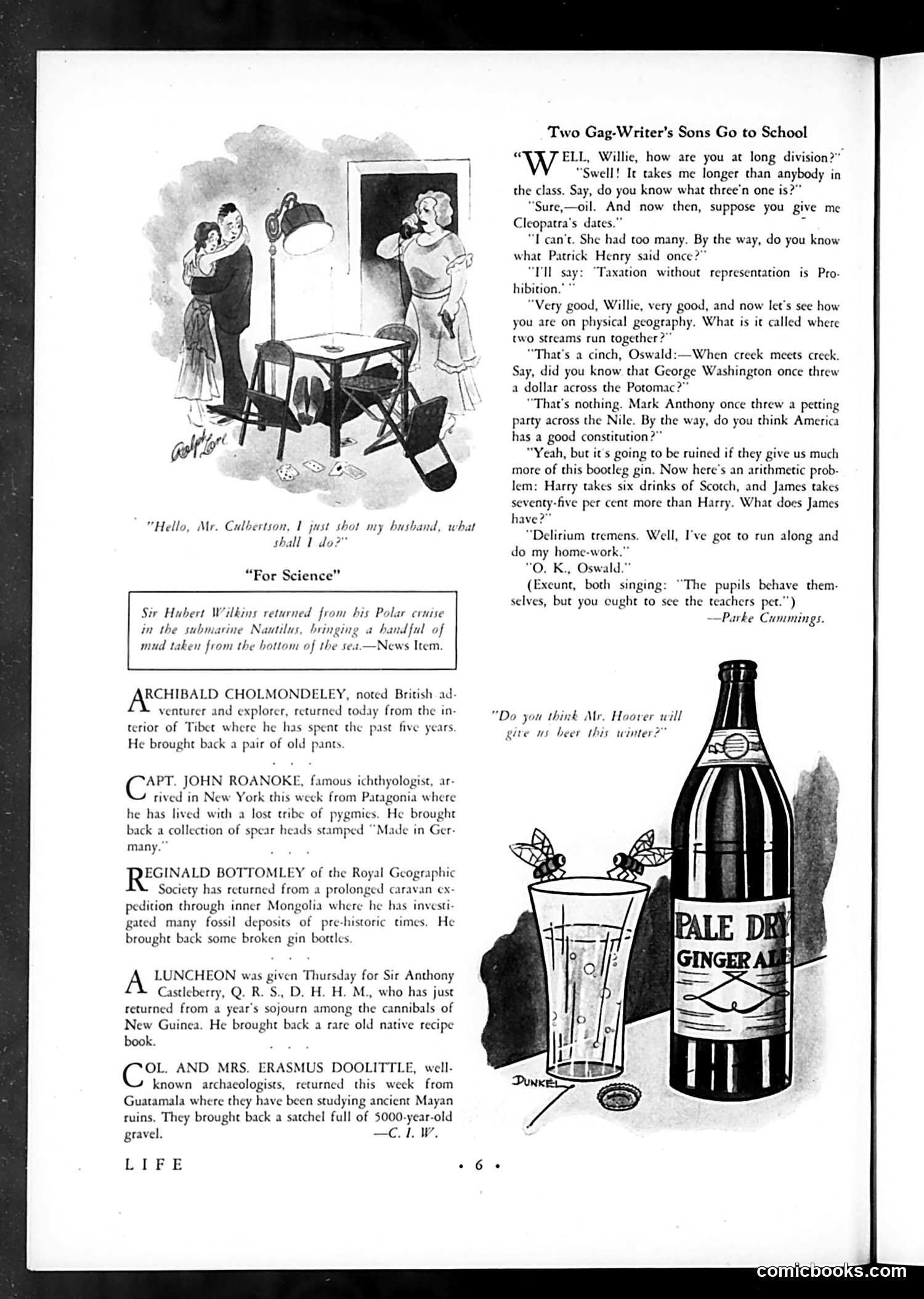
# "Two Gag-Writer's Sons Go to School" This cartoon satirizes two schoolboys—Willie and Oswald—whose fathers are professional comedy writers ("gag-writers"). The joke is that these boys mindlessly repeat famous historical facts and witticisms they've memorized, mimicking their fathers' profession. Willie recites Patrick Henry's "Taxation without representation is Prohibition," while Oswald mangles geography definitions and references to George Washington and Mark Anthony. The satire targets both the boys' rote learning and their fathers' profession: comedy writers who mechanically recycle established jokes and historical references. The caption suggests the teacher is exasperated by this performative, derivative wit rather than genuine education. It's social commentary on inherited mediocrity and the emptiness of professional joke-writing.
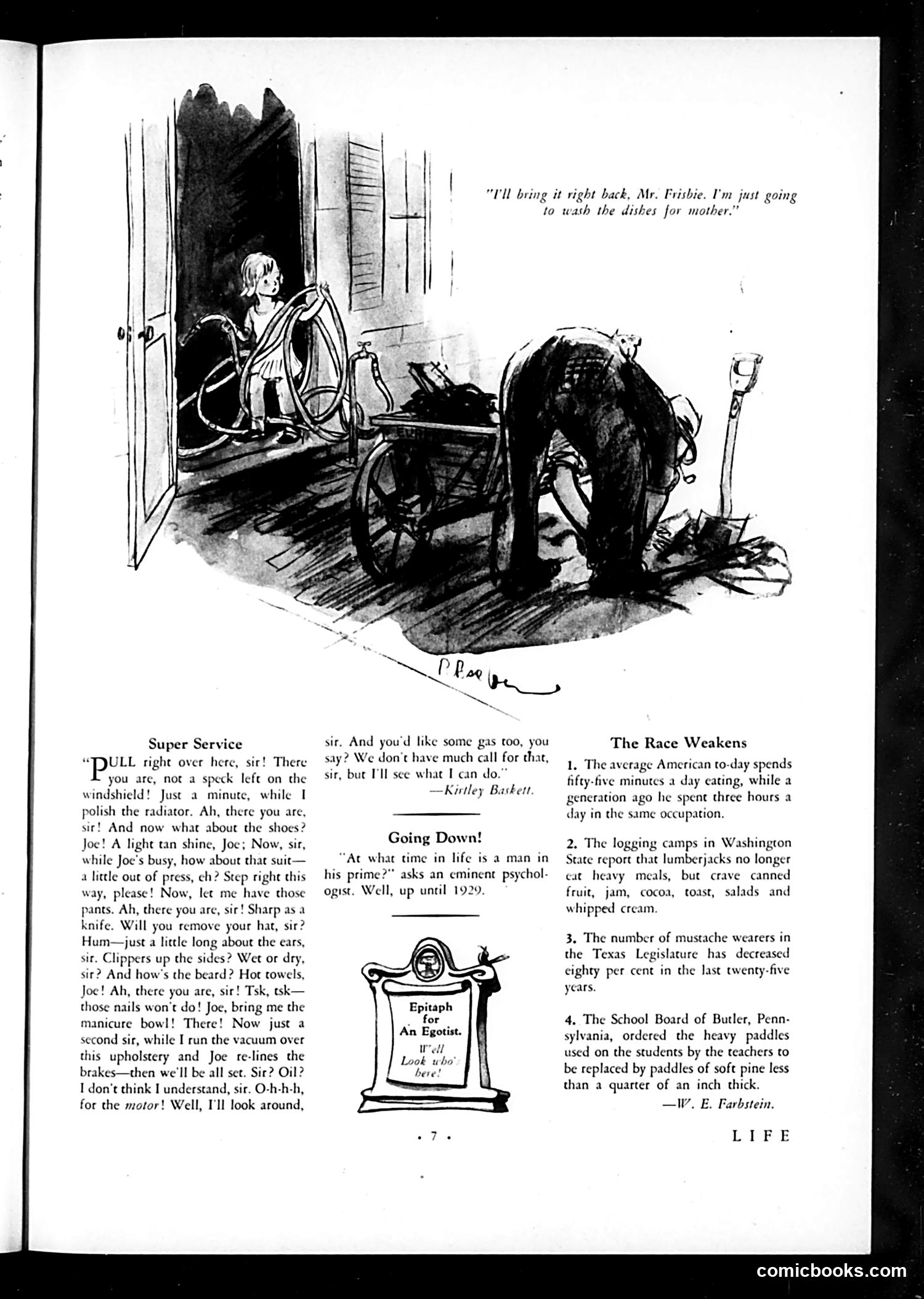
# "I'll Bring It Right Back, Mr. Fribbie" This page from *Life* magazine contains a cartoon and three separate humorous sections. The main cartoon depicts a young person at a doorway speaking to "Mr. Fribbie," promising to return quickly after washing dishes. A horse-drawn cart waits outside, suggesting the person may not return promptly—the humor lies in the implied broken promise. Below are three brief sections: "Super Service" (a comedic dialogue about excessive car maintenance), "Going Down!" (a psychological observation about life's struggles), and "The Race Weakens" (satirical observations about declining American vigor, mentioning logging camps and mustache-wearing legislators—suggesting physical deterioration of society). The page represents *Life's* characteristic early-20th-century approach: gentle social satire mixed with whimsical illustrations.
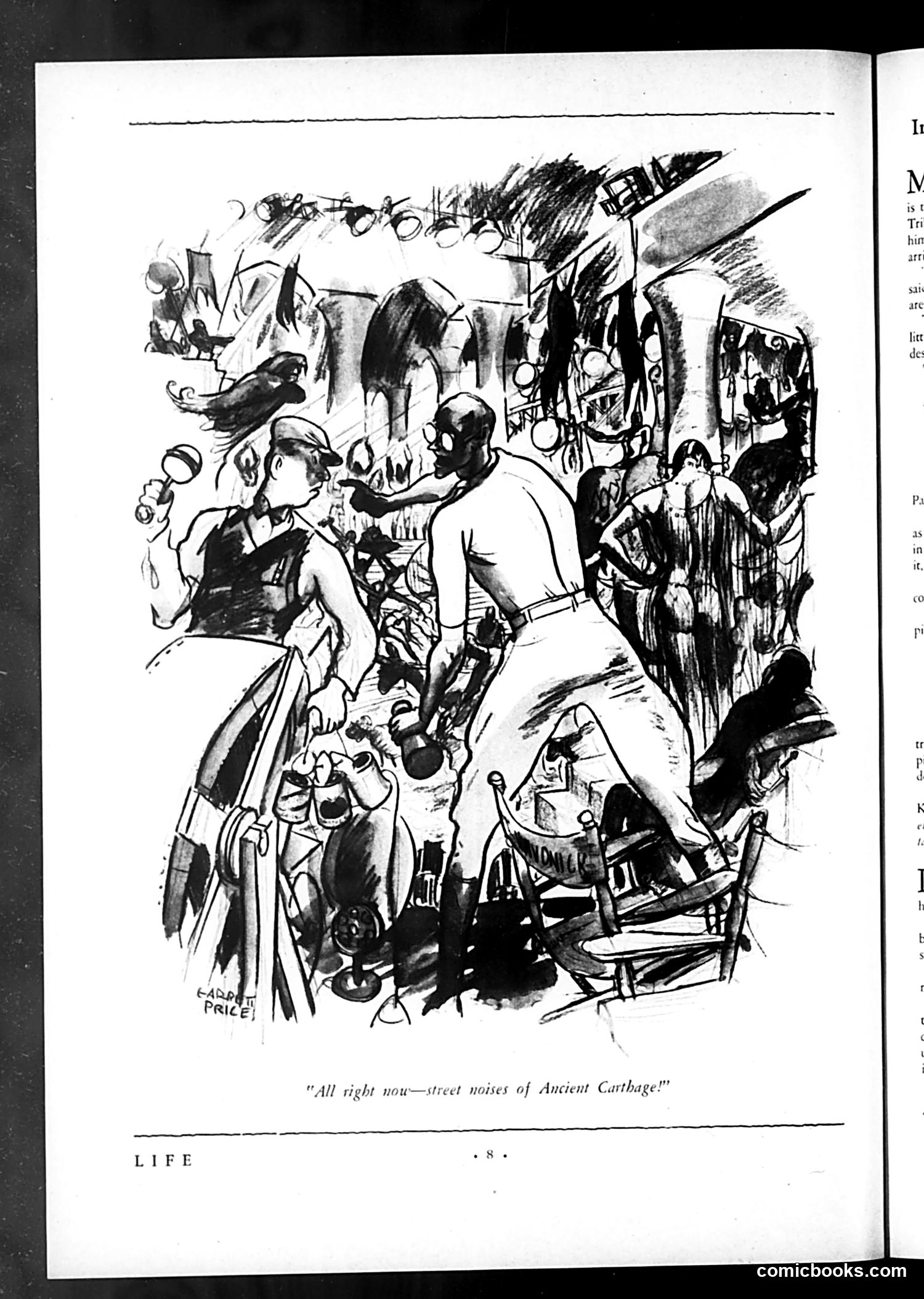
# Cartoon Analysis This satirical cartoon by Cesare Maccari shows a chaotic street scene captioned "All right now—street noises of Ancient Carthage!" The sketch depicts a crowded, raucous marketplace or public space with numerous figures engaged in various activities—juggling, performing, gesturing animatedly, and creating general tumult. The satire appears to mock contemporary urban chaos by comparing modern city commotion to ancient Carthage, implying that modern civilization hasn't advanced much from antiquity in terms of public disorder. The exaggerated, energetic linework emphasizes the pandemonium. This commentary likely reflects early 20th-century anxieties about urbanization and social disorder in rapidly growing American cities.
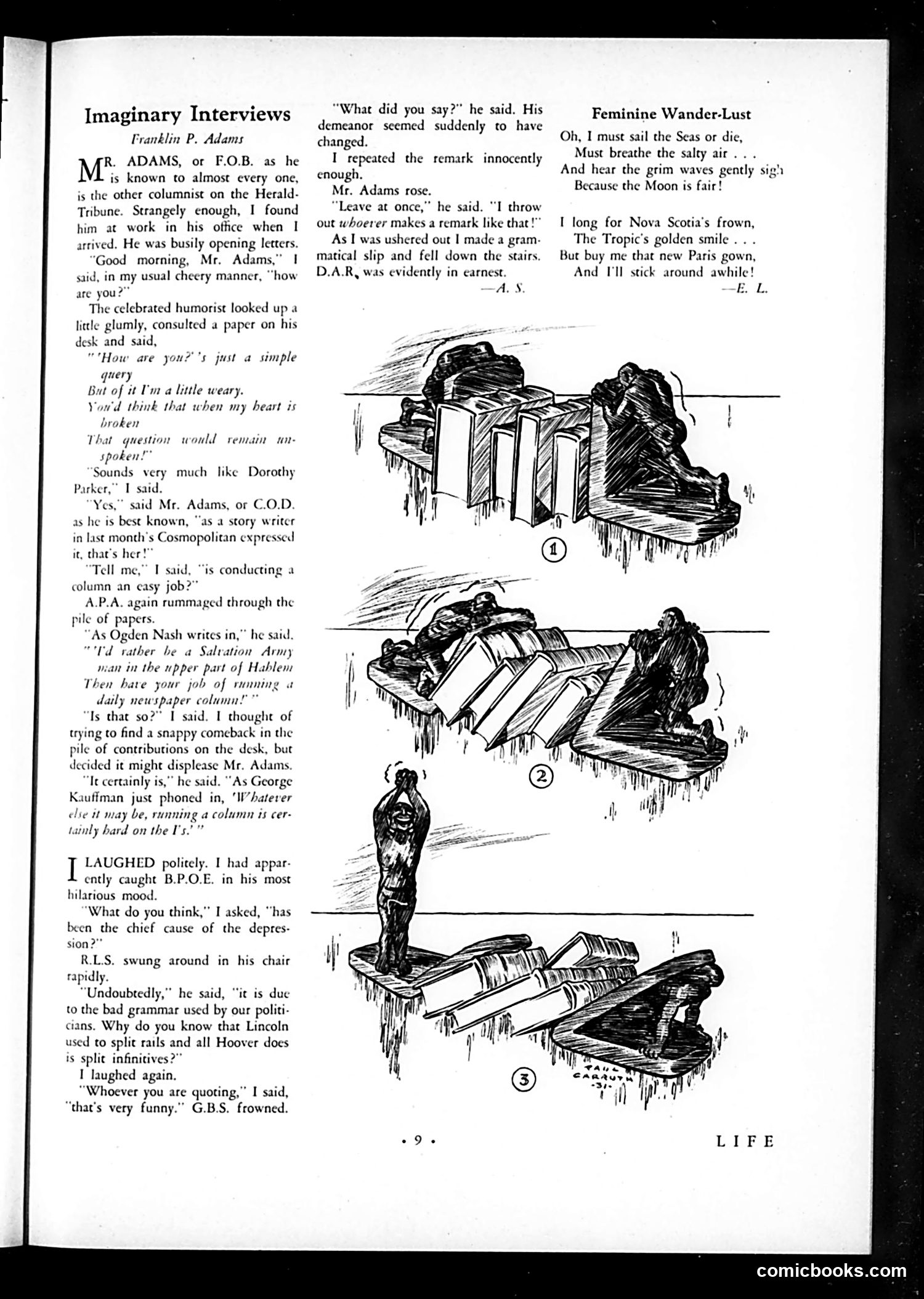
# Analysis of This Life Magazine Page This page contains an interview column titled "Imaginary Interviews" by Franklin P. Adams featuring humorist Mr. Adams. The text shows Adams bantering with the interviewer about conducting newspaper columns, with references to writers like Dorothy Parker and Ogden Nash. The right side features three numbered pen-and-ink sketches labeled "Feminine Wander-Lust," illustrating a poem about yearning for travel. The drawings show figures with luggage in increasingly precarious or weighted-down positions, humorously depicting the burden of wanderlust. The political humor in the interview targets politicians' poor grammar and Lincoln's historical rail-splitting, used as a satirical jab at contemporary political discourse and hypocrisy. The overall tone is light, conversational satire typical of Life's cultural commentary.
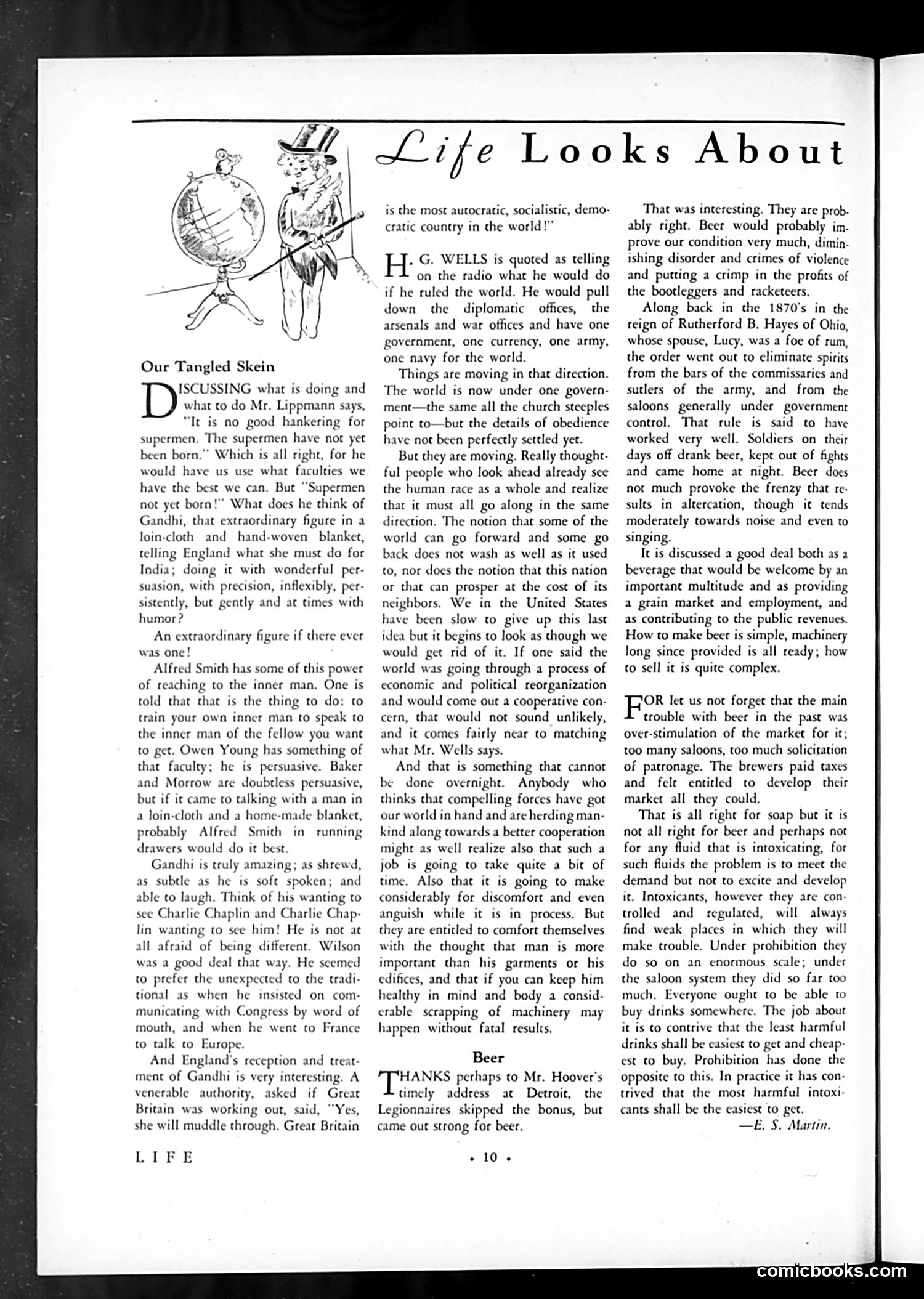
# "Our Tangled Skein" Cartoon Analysis The cartoon depicts two figures manipulating a globe like a tangled ball of yarn. One appears to be a politician or statesman (unclear which specific figure), while the other seems to represent a military or governmental authority. The accompanying article discusses H.G. Wells's vision for world government—consolidating diplomatic offices, currencies, armies, and navies. The cartoon satirizes the complexity and difficulty of actually reorganizing global institutions, suggesting that despite idealistic plans for world unity, the practical "tangling" of international affairs makes such reorganization far more complicated than it appears. The satire implies that well-intentioned proposals for world order founder on the messy reality of existing power structures and competing interests.