A complete issue · 37 pages · 1931
Life — October 2, 1931
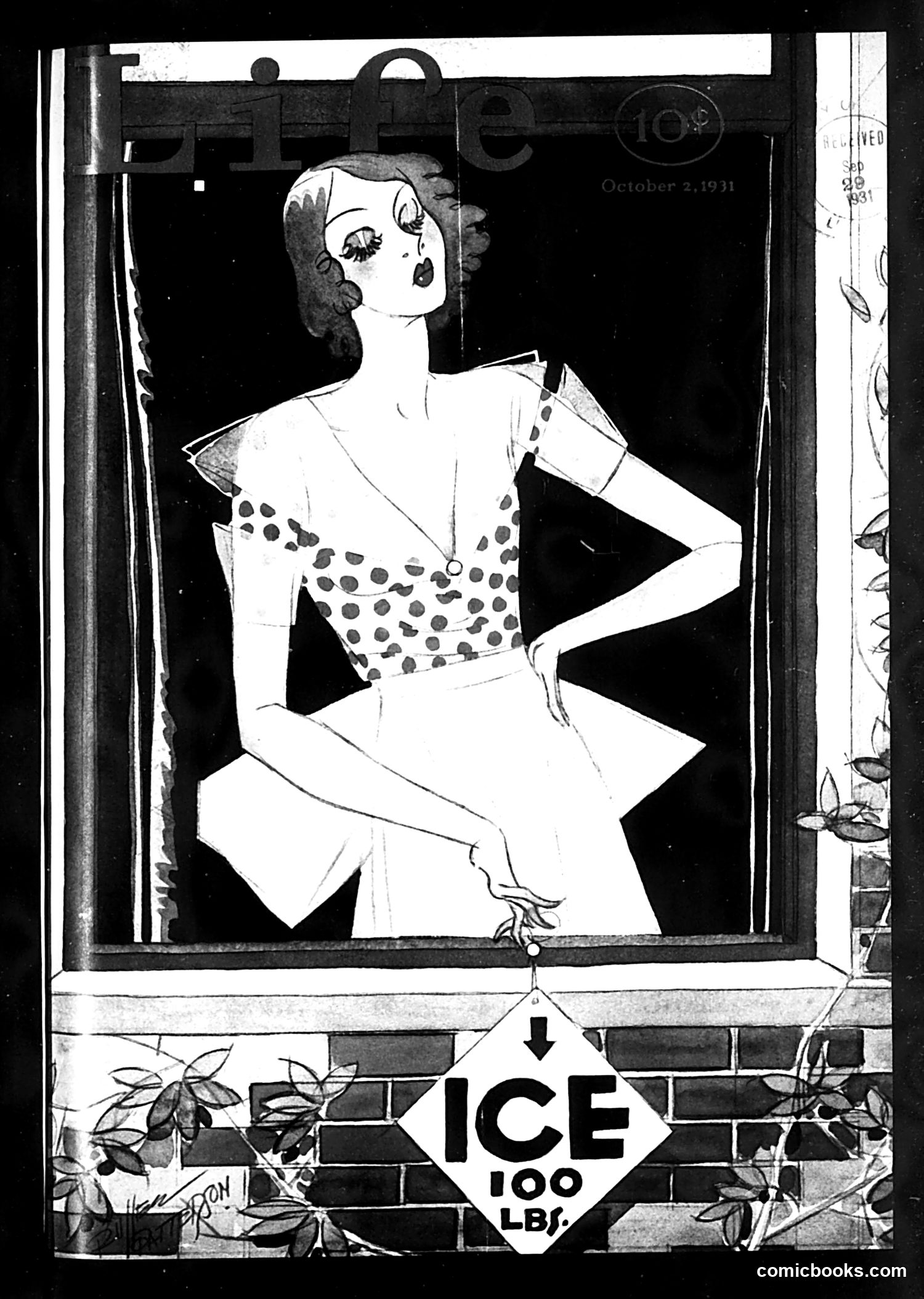
# Ice Advertisement, October 2, 1931 This is a commercial advertisement for ice (100 lbs.), not a political cartoon. It features a stylized illustration of a fashionable woman in 1930s attire—a polka-dotted top with dramatic shoulder details and a pleated skirt—displayed in what appears to be a shop window. The ad uses the visual appeal of an elegant, glamorous woman as a marketing device to sell ice, a common domestic product of the era. The illustration style is characteristic of 1930s fashion illustration and advertising aesthetics, with exaggerated features and simplified lines. The date suggests this appeared during the Great Depression, when even utilitarian products like ice were advertised through imagery of luxury and style to appeal to consumers.
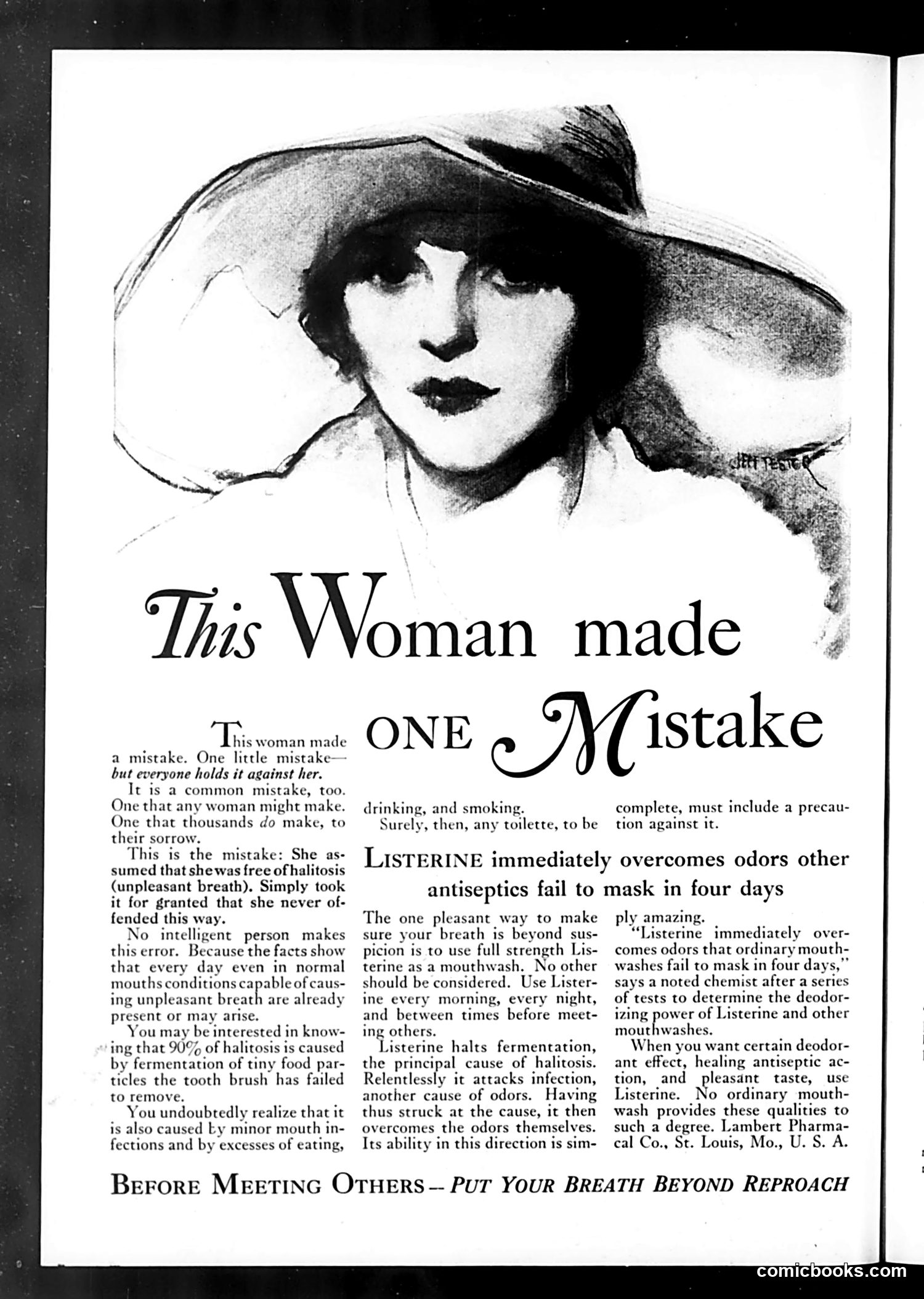
# Analysis This is a **Listerine mouthwash advertisement**, not political satire. The illustration shows a fashionable woman in 1920s attire (cloche hat, bob haircut) who made "one mistake"—assuming she had good breath hygiene. The ad uses shame-based marketing common to the era, warning that halitosis (bad breath) causes social rejection. The text claims that 90% of halitosis results from food fermentation in the mouth, and that Listerine is uniquely effective at halting fermentation and killing odor-causing bacteria. The tagline "Put Your Breath Beyond Reproach" emphasizes social acceptability. This exemplifies early 20th-century advertising that exploited insecurity about personal hygiene to sell products—a practice now considered manipulative by modern standards.
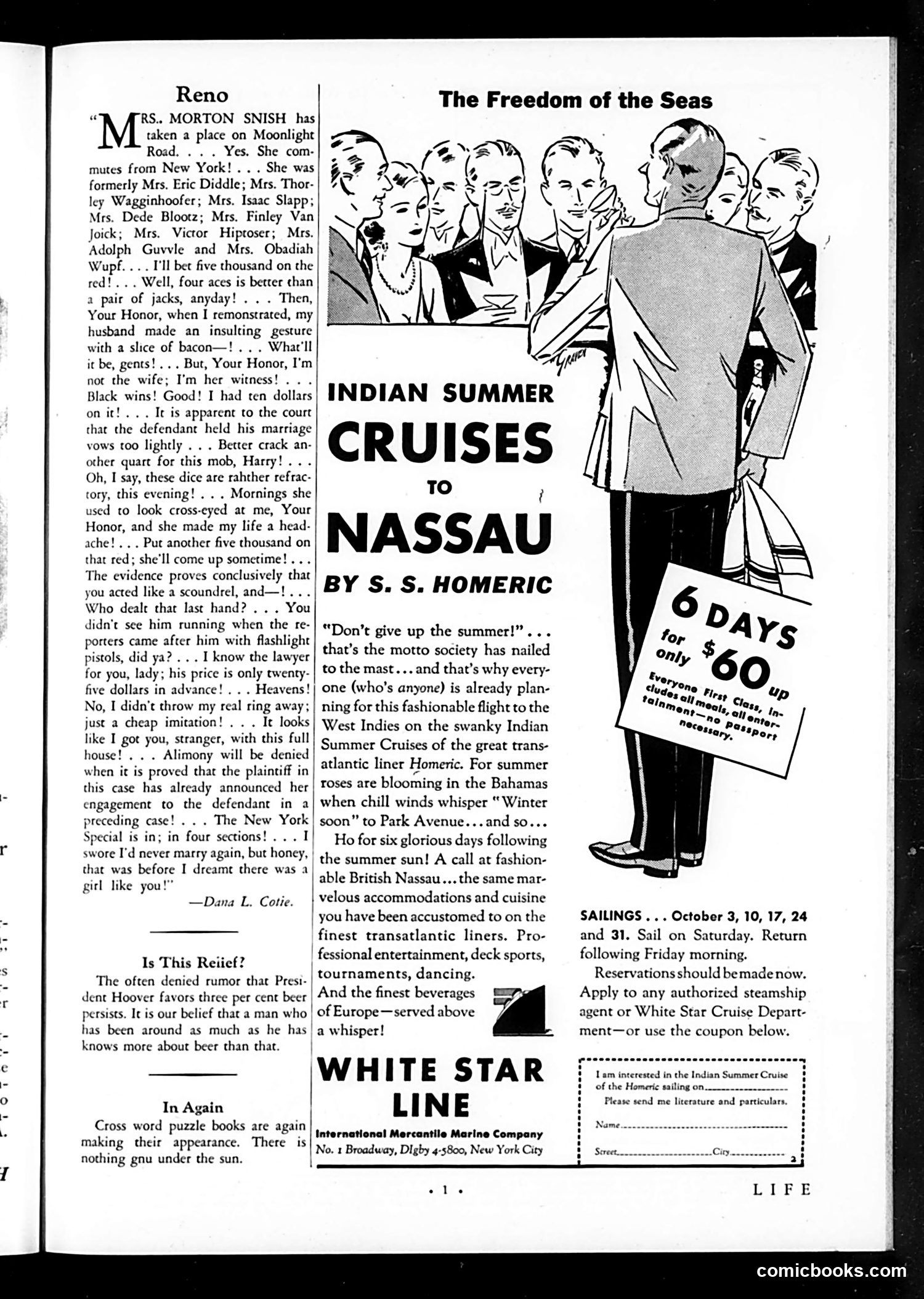
# "Reno" Column and Advertisement Analysis This page combines a satirical gossip column with a cruise ship advertisement. The "Reno" column (left) is a social commentary piece mocking high-society court cases, likely referencing Reno, Nevada—famous for quick divorces. The columnist sarcastically reports on wealthy socialites and their legal troubles, with names like Mrs. Morton Snish and references to marital disputes and alimony. The tone is mockingly sympathetic to defendants facing embarrassing testimony. The main advertisement promotes Indian Summer cruises to Nassau via the S.S. Homeric, targeting affluent readers who could afford luxury travel. The illustration shows well-dressed passengers, emphasizing sophistication and escape. Together, the page satirizes the wealthy leisure class—those embroiled in messy divorces in one section advertised leisure cruises in another—reflecting 1920s-30s attitudes toward American affluence and social scandal.
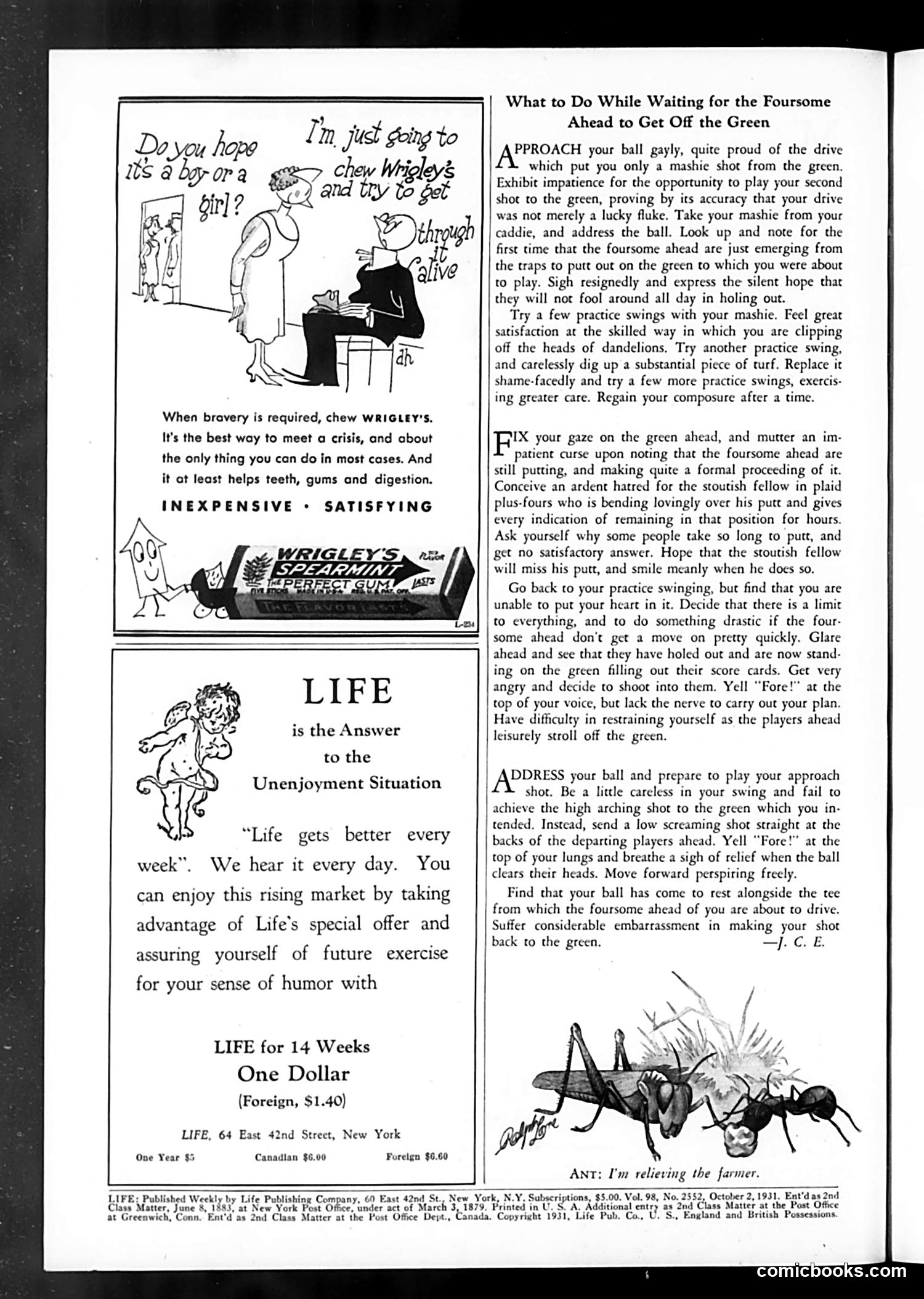
# Analysis of Life Magazine Page (October 2, 1931) This page contains a humorous golf article titled "What to Do While Waiting for the Foursome Ahead to Get Off the Green," written by J.C.E. The satire mocks the frustration of slow golf play in the 1930s. The cartoon at top shows a man asking his wife hopefully if they're having "a boy or a girl," while she responds she's going "to chew Wrigley's and try to get through it alive"—a joke about enduring boredom through gum-chewing. The main article satirically advises impatient golfers to practice swings, curse slow players ahead ("stoutish fellow"), deliberately botch shots, and disturb faster foursomes—essentially describing increasingly rude and destructive behavior as comic frustration escalates. An ant cartoon at bottom provides comic relief unrelated to golf.
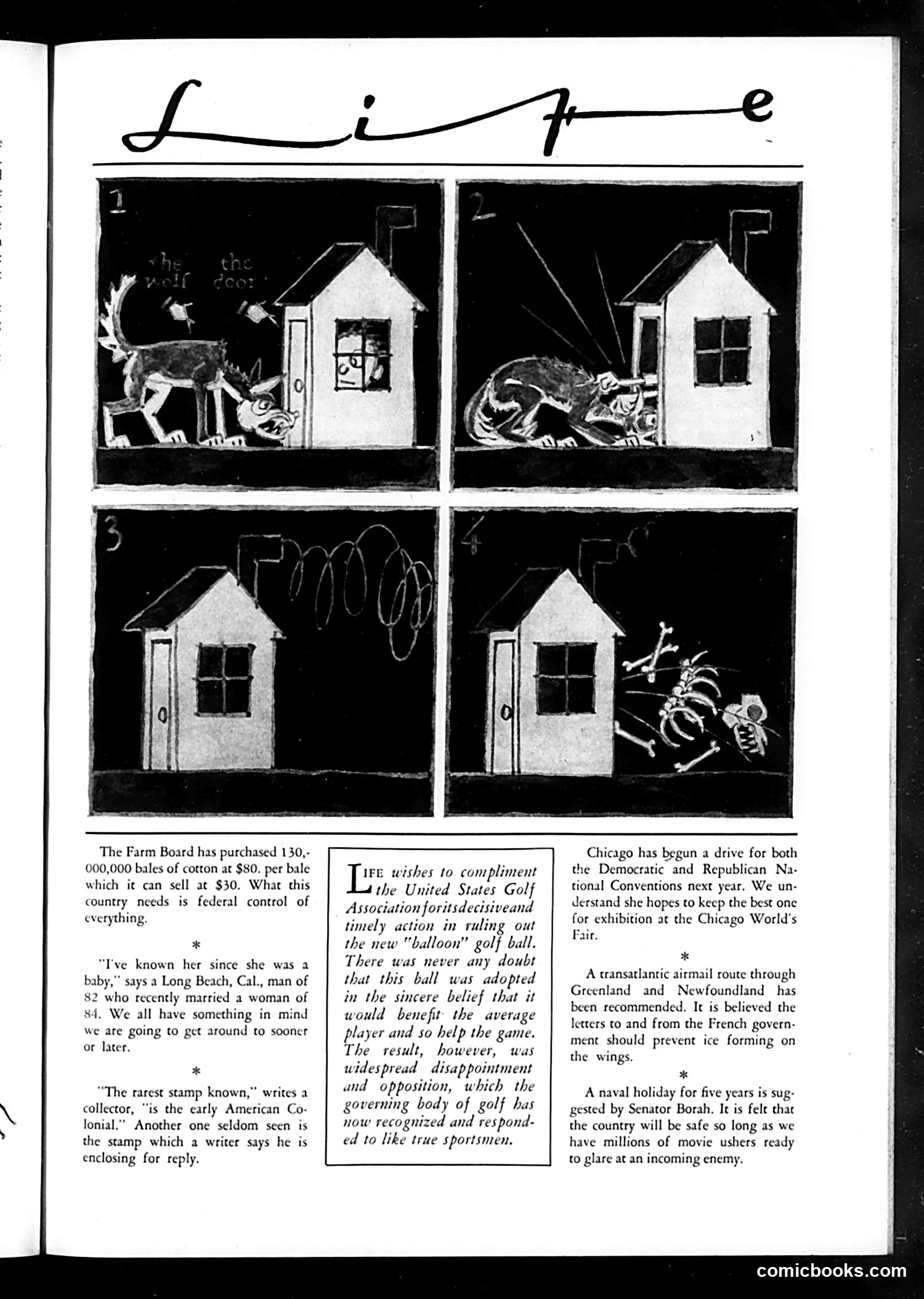
# "Life" Page Analysis This page contains a four-panel cartoon titled "Life" (top right) depicting a narrative sequence involving a small house and various creatures or figures approaching it at night. The panels progress from panel 1 (wolf at door) through panel 4 (appears to show a bee or insect). The text below discusses unrelated topics: cotton purchasing by the Farm Board, stamp collecting, golf ball standardization, transatlantic airmail routes, and naval holidays. The cartoon's meaning is **unclear from the image alone**—the dark panels and stylized figures make specific identification difficult. Without clearer details or contemporary context, I cannot confidently explain what social or political commentary this sequence intended to convey to 1920s-30s readers.
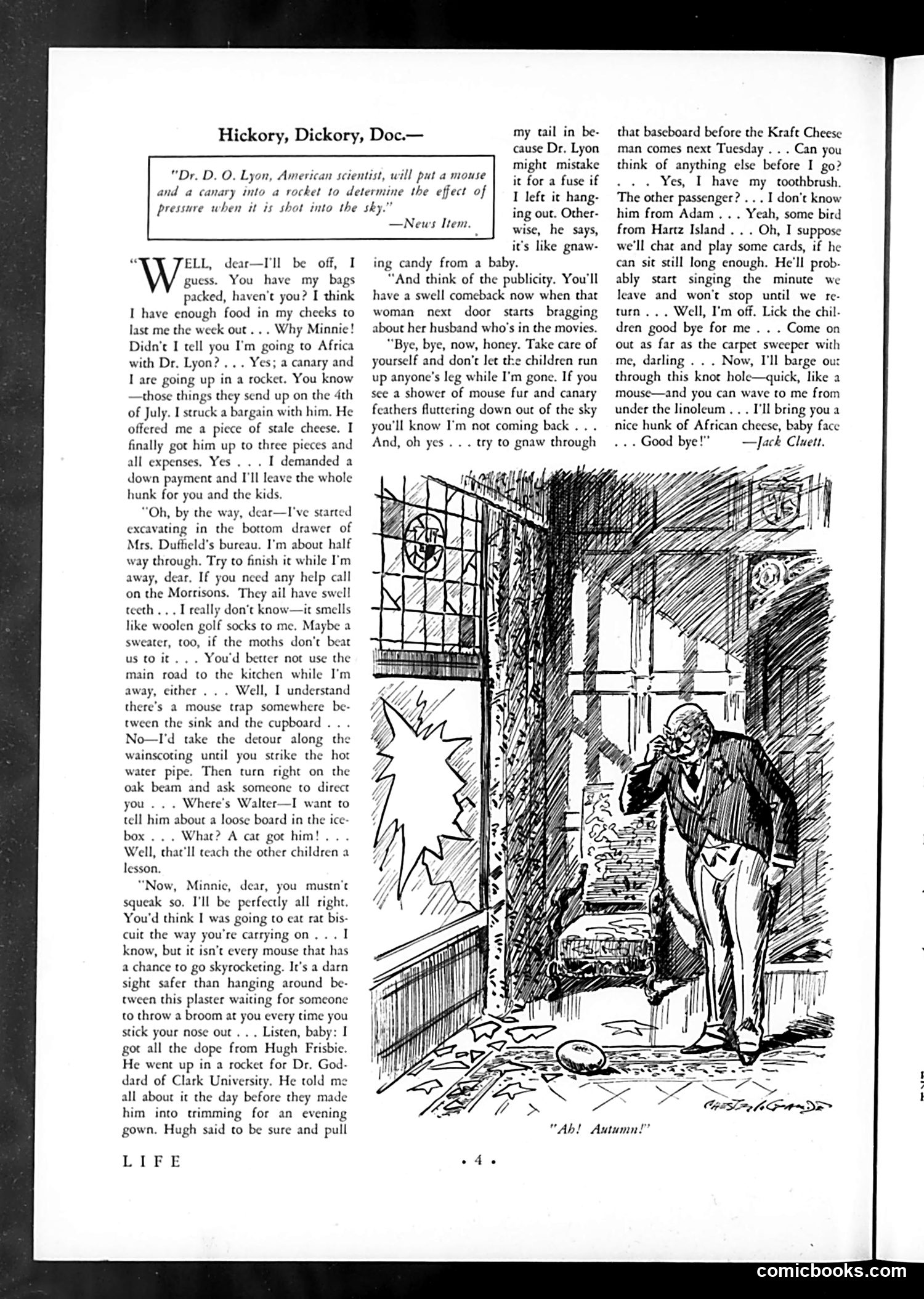
# Analysis of "Hickory, Dickory, Doc" This page features a humorous domestic narrative rather than political satire. A woman describes her preparations before departing on a trip to Africa with Dr. Lyon (referenced in the news item as a scientist studying air pressure effects). She's negotiating with her husband about household management during her absence—mentioning mouse traps, woolen golf socks, moths, and the need to avoid the main kitchen road. The illustration shows a man discovering a mouse in what appears to be a basement or cellar, exclaiming "Ah! Autumn!" The joke appears to be that autumn brings mice indoors, making the woman's practical concerns about pest control timely and justified. The satire gently mocks both domestic anxieties and the absurdity of detailed household instructions before departure.
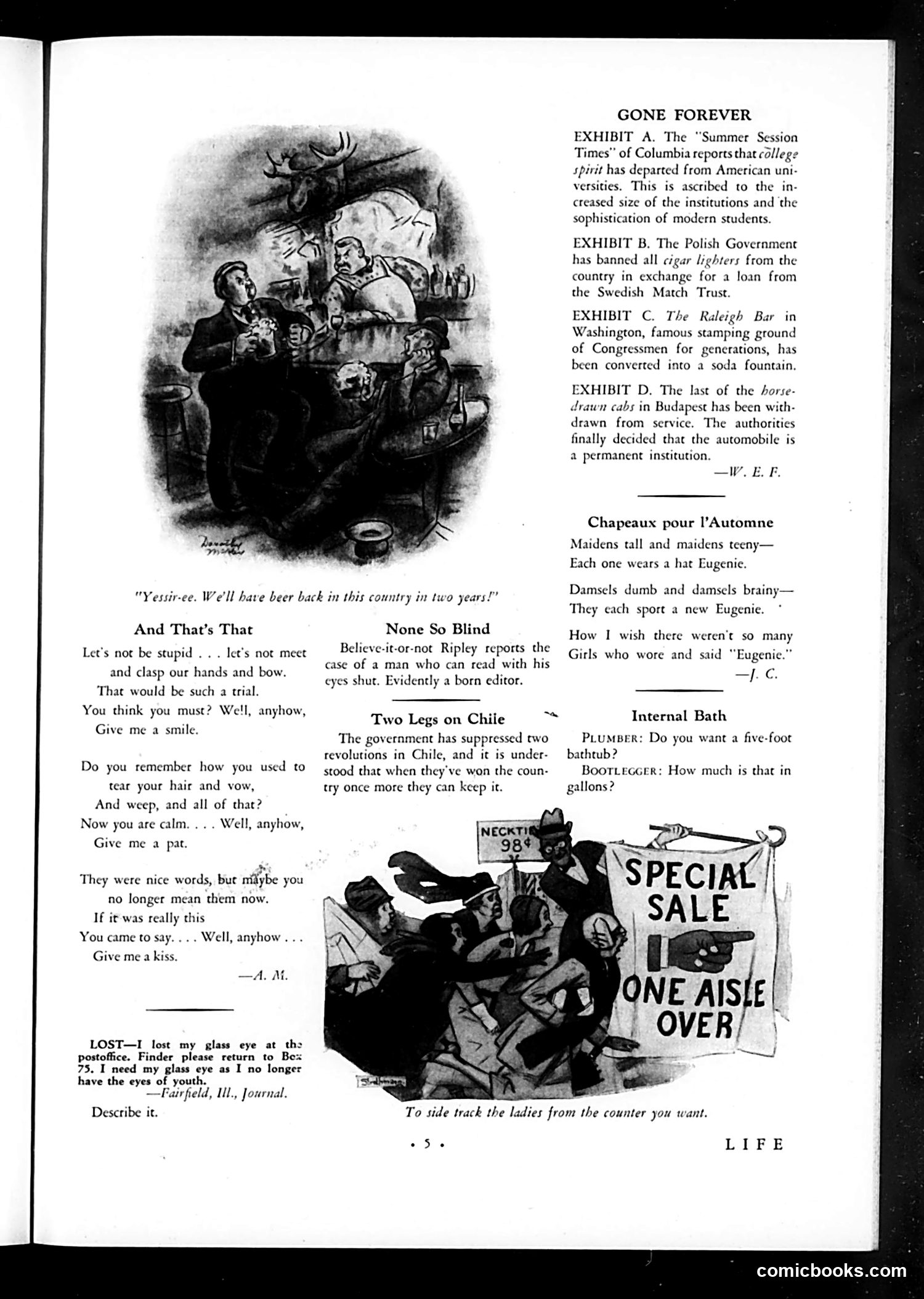
# Analysis This page from Life magazine contains satirical commentary and humorous items: **"Gone Forever" section**: Four brief satirical observations about vanishing American institutions—the college spirit, Polish cigars (banned due to a Swedish Match Trust loan dispute), Washington D.C.'s famous Raleigh Bar (now a soda fountain), and Budapest's horse-drawn cabs (replaced by automobiles). **Poems and humor items**: Short pieces with social commentary, including complaints about women wearing the name "Eugenie" and a plumber/bootlegger dialogue about bathtub size. **Main cartoon**: Shows a vendor hawking a "special sale" at what appears to be a necktie counter, with the caption about distracting ladies from other purchases—a lighthearted joke about retail marketing tactics and male-female consumer behavior. The overall tone reflects early 20th-century American satire mocking modern commercial culture and social changes.
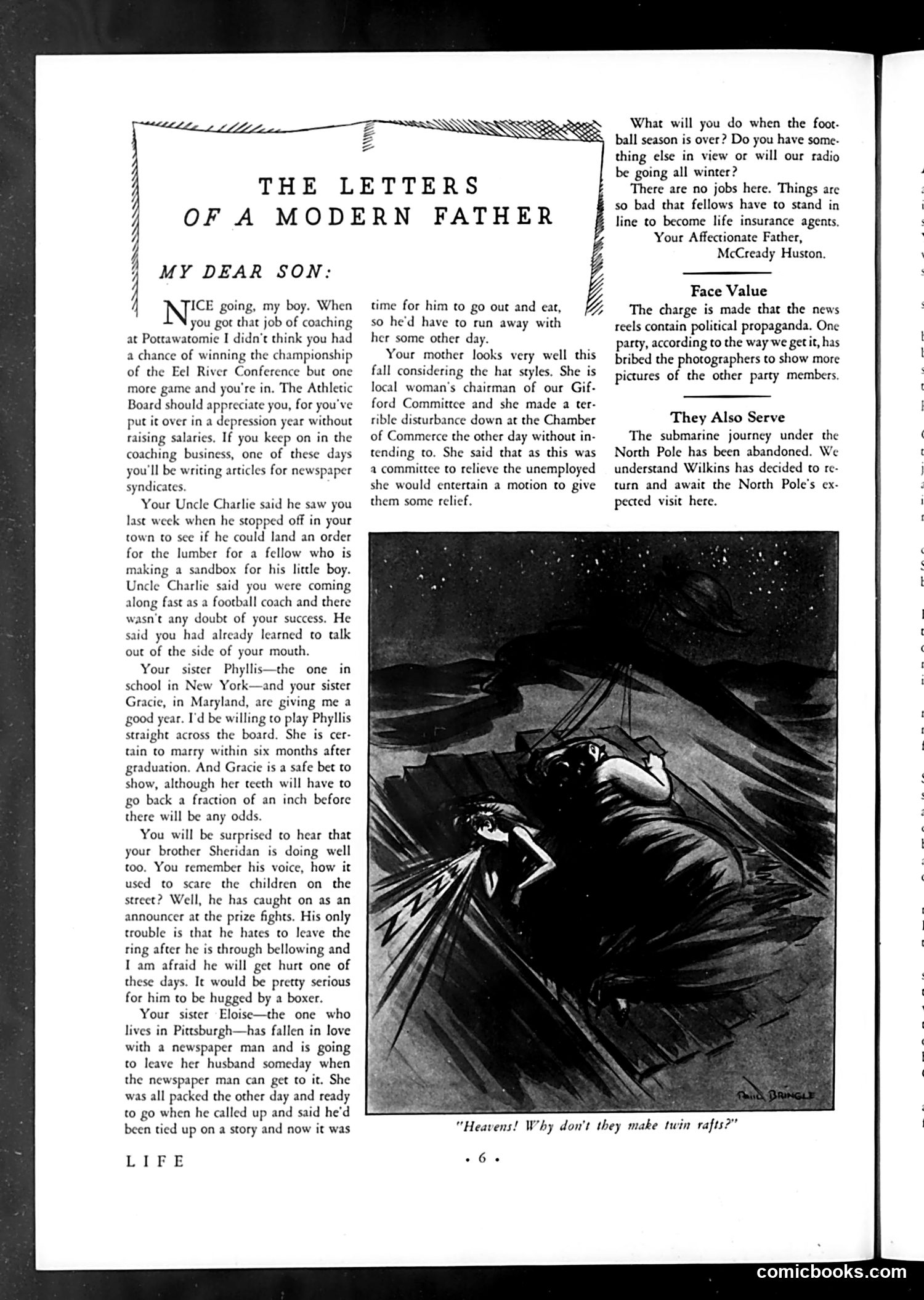
# Analysis of Life Magazine Page This page presents "The Letters of a Modern Father," a humorous column addressed to the writer's son. The accompanying illustration depicts a man in bed appearing distressed or uncomfortable, with the caption "Heaven! Why don't they make twin rafts?" The cartoon likely satirizes marital sleeping arrangements—a common comedic topic in early-to-mid 20th century publications. The "twin rafts" reference suggests the husband wishes for separate beds from his wife, humorously depicting marital discord through the metaphor of floating apart. The letter itself discusses the son's coaching career and family news about his siblings, maintaining a lighthearted tone typical of Life's satirical family humor. The illustration complements this domestic comedy theme without referencing specific political figures or events.
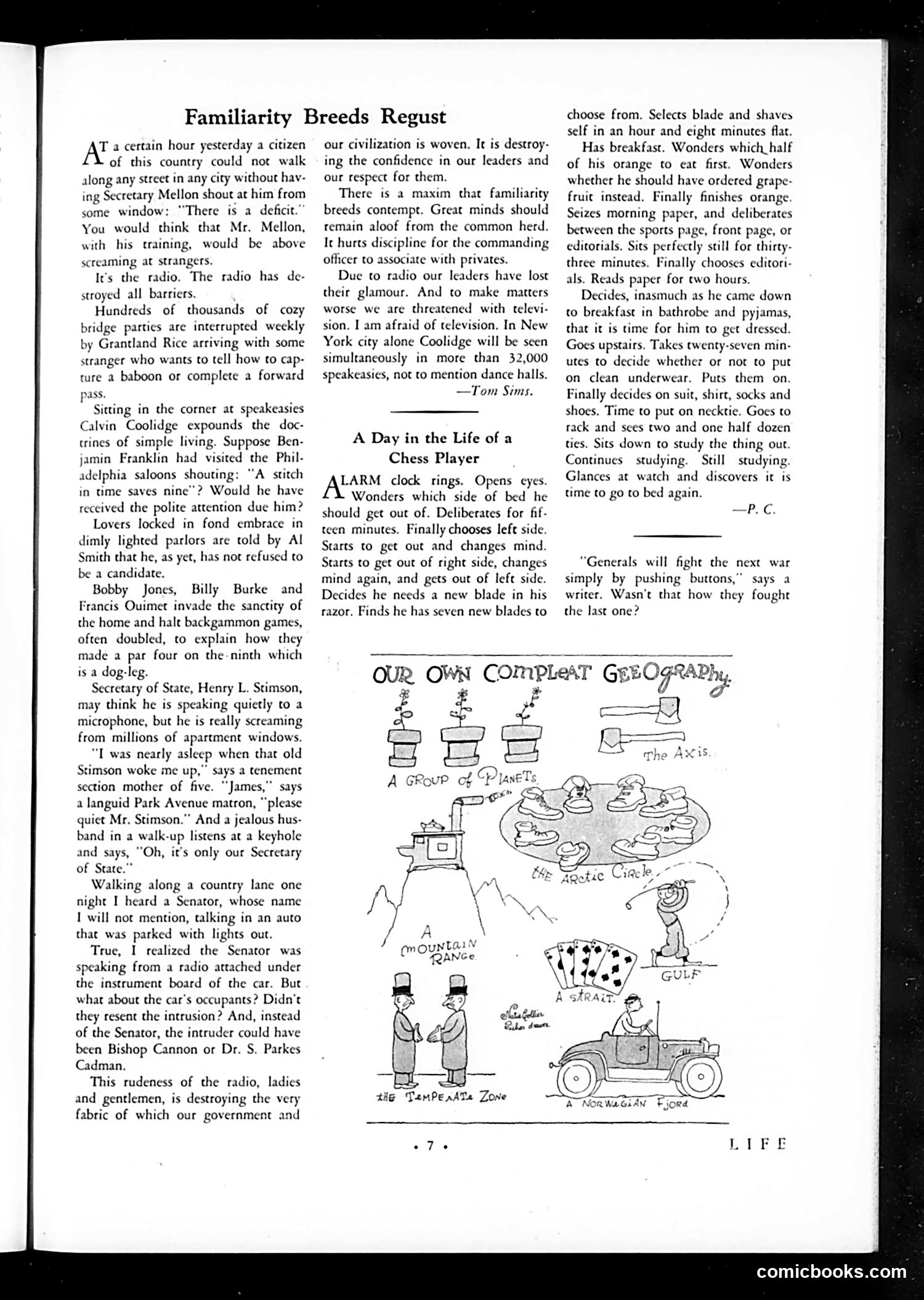
# Analysis: "Our Own Compleat Geography" This page contains satirical commentary on American civic life and a humorous illustrated map titled "Our Own Compleat Geography." The map is a playful, exaggerated representation of American geography and social activities. It depicts various regions labeled with activities: "A Group of Golfers," "The Arctic Circle," "A Mountain Range," "The Temperate Zone," and "A Norwegian Fjord." Each label pairs real geographic terms with humorous social scenes—golfers, card players, an automobile—suggesting Americans recognize their own leisure activities and social spaces better than actual geography. The satire mocks American geographical ignorance by conflating familiar social pastimes with geographic features, implying citizens were more invested in recreation and everyday life than understanding their nation's actual landscape and territories.
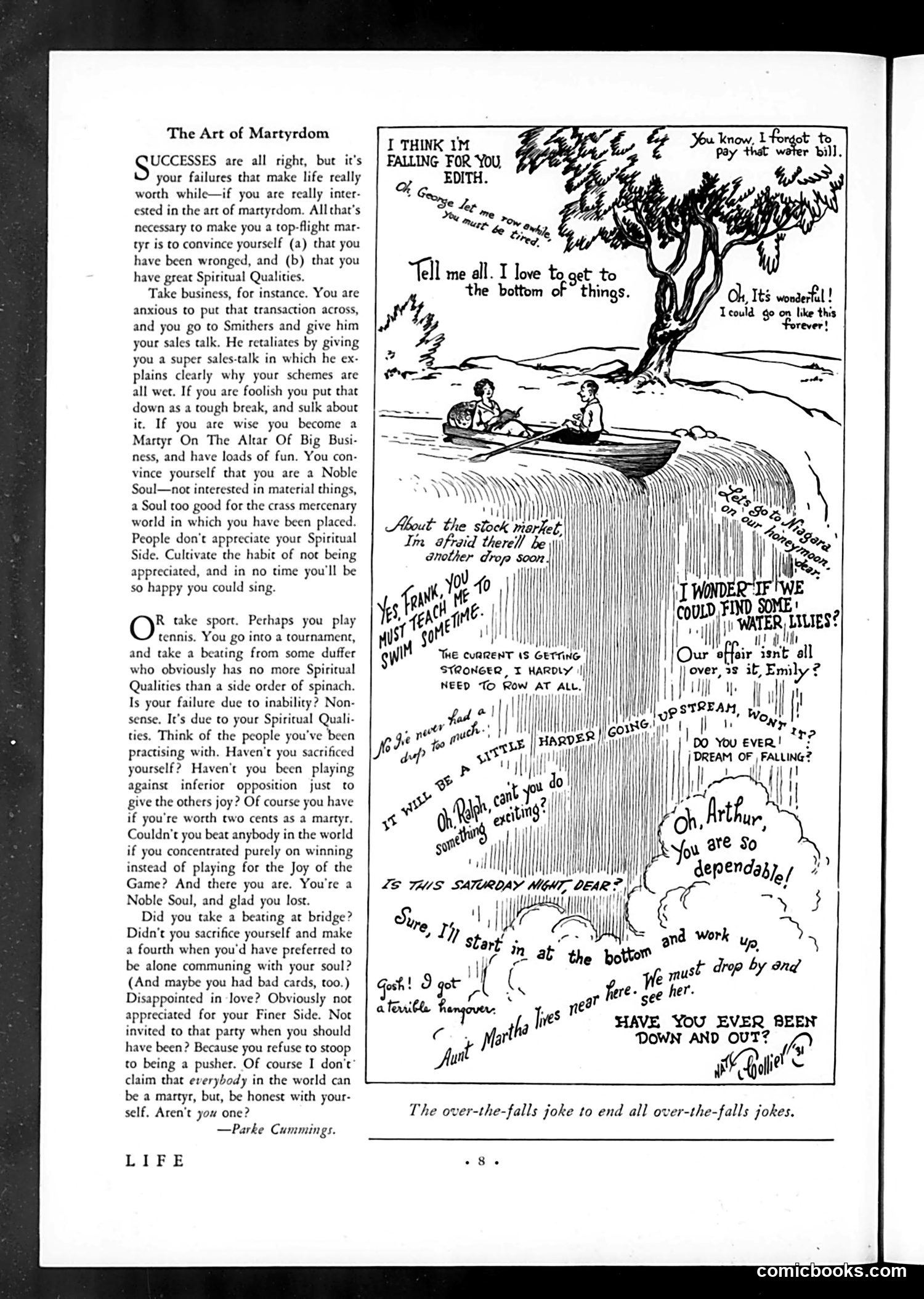
# "The Art of Martyrdom" - Life Magazine Page This page combines an essay on martyrdom by Parke Cummings with a cartoon about Niagara Falls. The essay advises readers to accept life's failures gracefully—to become a "Martyr On The Altar Of Big Business" rather than complain, suggesting spiritual dignity in suffering defeat. The cartoon depicts people in a boat discussing going over Niagara Falls. One character (Edith) mentions an "Aunt Martha" who "lines near" the falls, and another suggests they could find water lilies. The bottom caption jokes: "The over-the-falls joke to end all over-the-falls jokes." This appears to mock the era's obsession with Niagara Falls stunts and daredevil acts—treating the famous waterfall as both a tourist attraction and a casual conversation topic, satirizing American thrill-seeking culture.
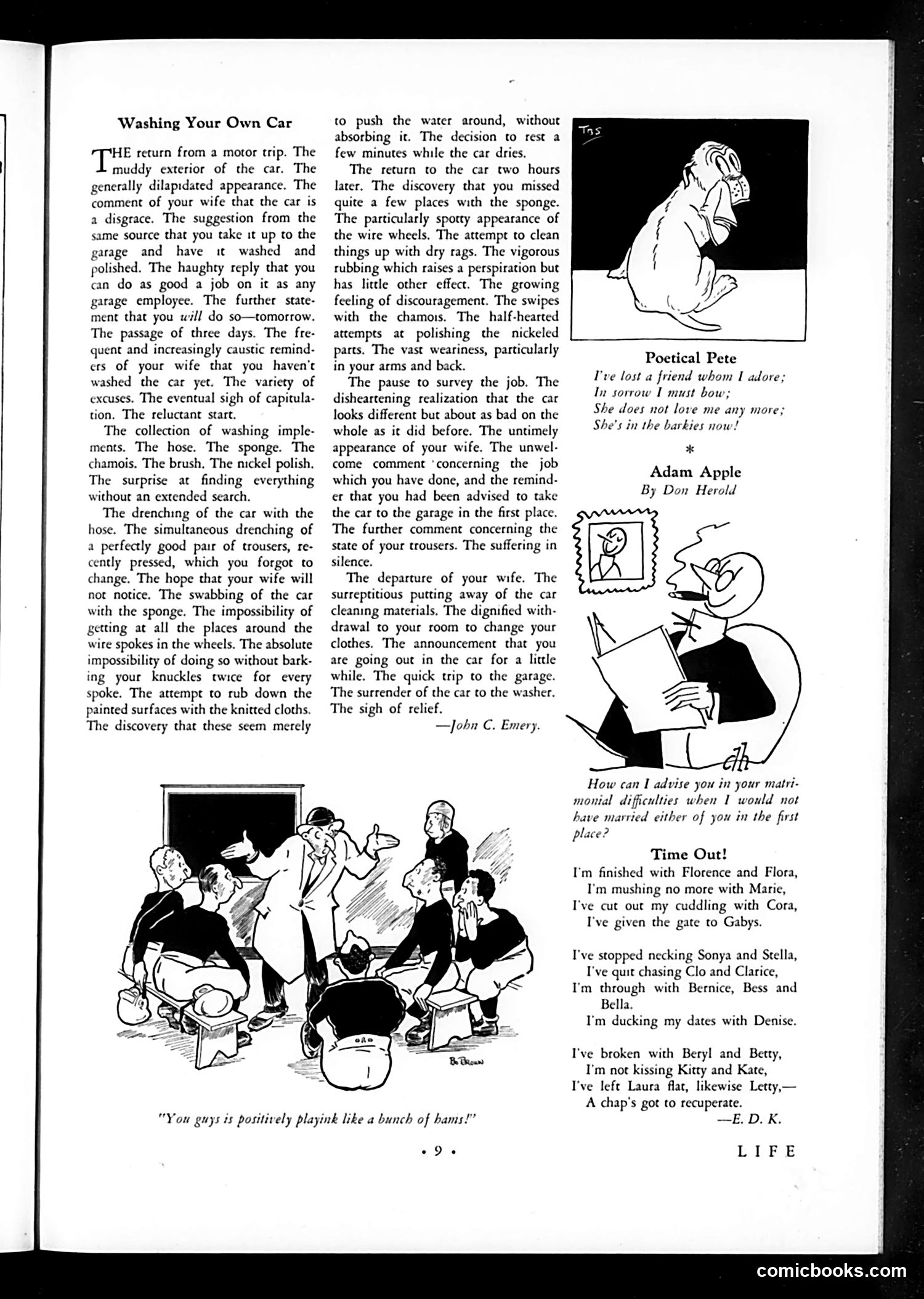
# Content Analysis This page contains three humorous pieces about everyday domestic life, likely from the 1920s-30s era based on the illustration style. **"Washing Your Own Car"** (left column) is a comedic essay by John C. Emery satirizing the husband's attempt to wash the family car himself—a task he discovers is far more difficult and exhausting than anticipated. The humor lies in the gap between his initial confidence and the brutal reality of manual labor. **"Poetical Pete"** (top right) is a brief verse lamenting a lost friend, written in sentimental style that the illustration undercuts with comic effect. **"Adam Apple"** and **"Time Out!"** are short humorous poems about romantic relationships and dating, capturing period attitudes toward courtship and relationship cycles with lighthearted cynicism. The bottom cartoon depicts people engaged in what appears to be a casual, messy group activity, with the caption suggesting playful disorder.
# "Life Looks About" - Political Commentary Page This page contains three opinion pieces rather than cartoons. The visible illustration shows a cherub-like figure, likely decorative. **"Clothes and the Man"** compares historical dress to character, using Mahatma Gandhi and Mayor Walker of New York as examples. The piece humorously notes Gandhi's simple garments versus Walker's formal attire, suggesting clothes reveal personality—Walker is "master of dress" while Gandhi embodies homely simplicity. **"Lippmann Comes Back"** welcomes political columnist Walter Lippmann back to *The Herald-Tribune*, praising his perspective on world affairs and civilization's state. **"Papacy, Whither Bound?"** questions the Catholic Church's declining influence, suggesting it may lose political power. The piece speculates whether the Church could remain relevant in a changing world, referencing potential revolution affecting Rome.