A complete issue · 36 pages · 1931
Life — September 18, 1931
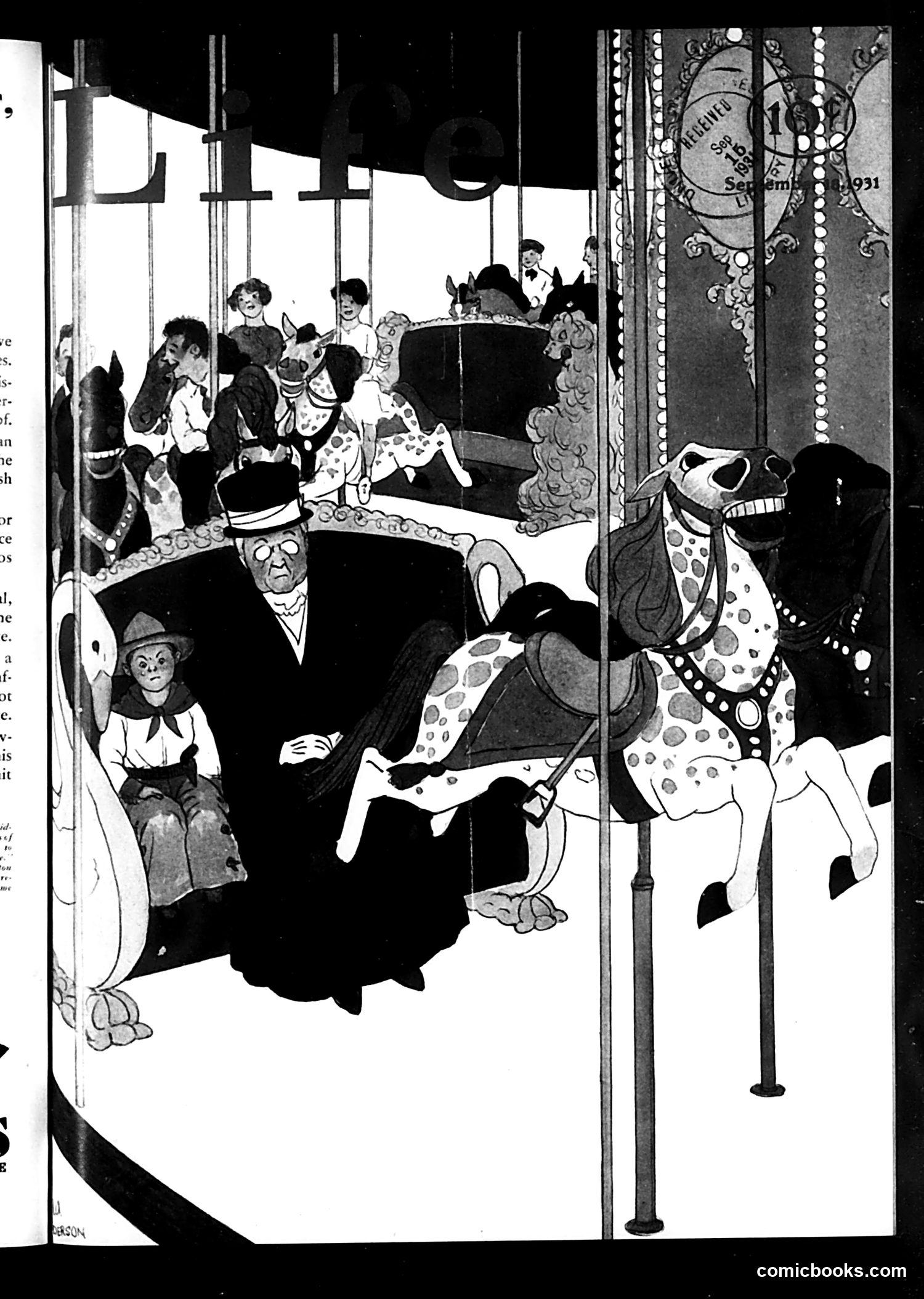
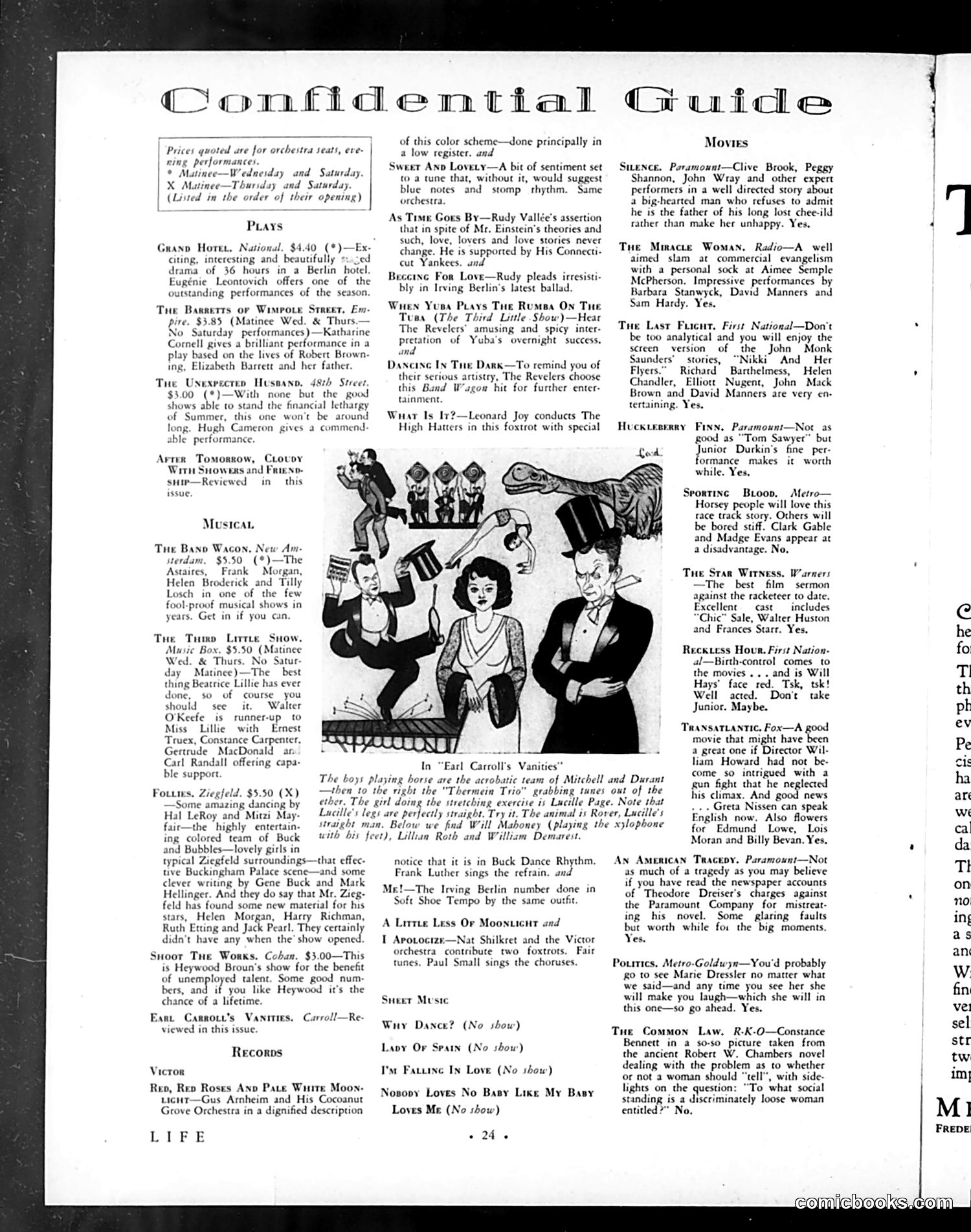
# Carousel Ride Satire This illustration depicts a merry-go-round scene with exaggerated, caricatured figures. The central focus is a well-dressed man in a top hat seated beside a woman on a carousel horse. The style and caricatured faces suggest this is political or social satire, likely from the 1920s-1930s era based on the artistic style. The ornate carousel decorations and the formal dress of the figures suggest commentary on wealth, leisure, or social pretension. However, without clearer text identifying specific political figures or events on this page, I cannot definitively identify which contemporary politicians or social issues are being satirized. The grotesque facial features and exaggerated proportions are typical of Life magazine's satirical approach to social commentary of the period.
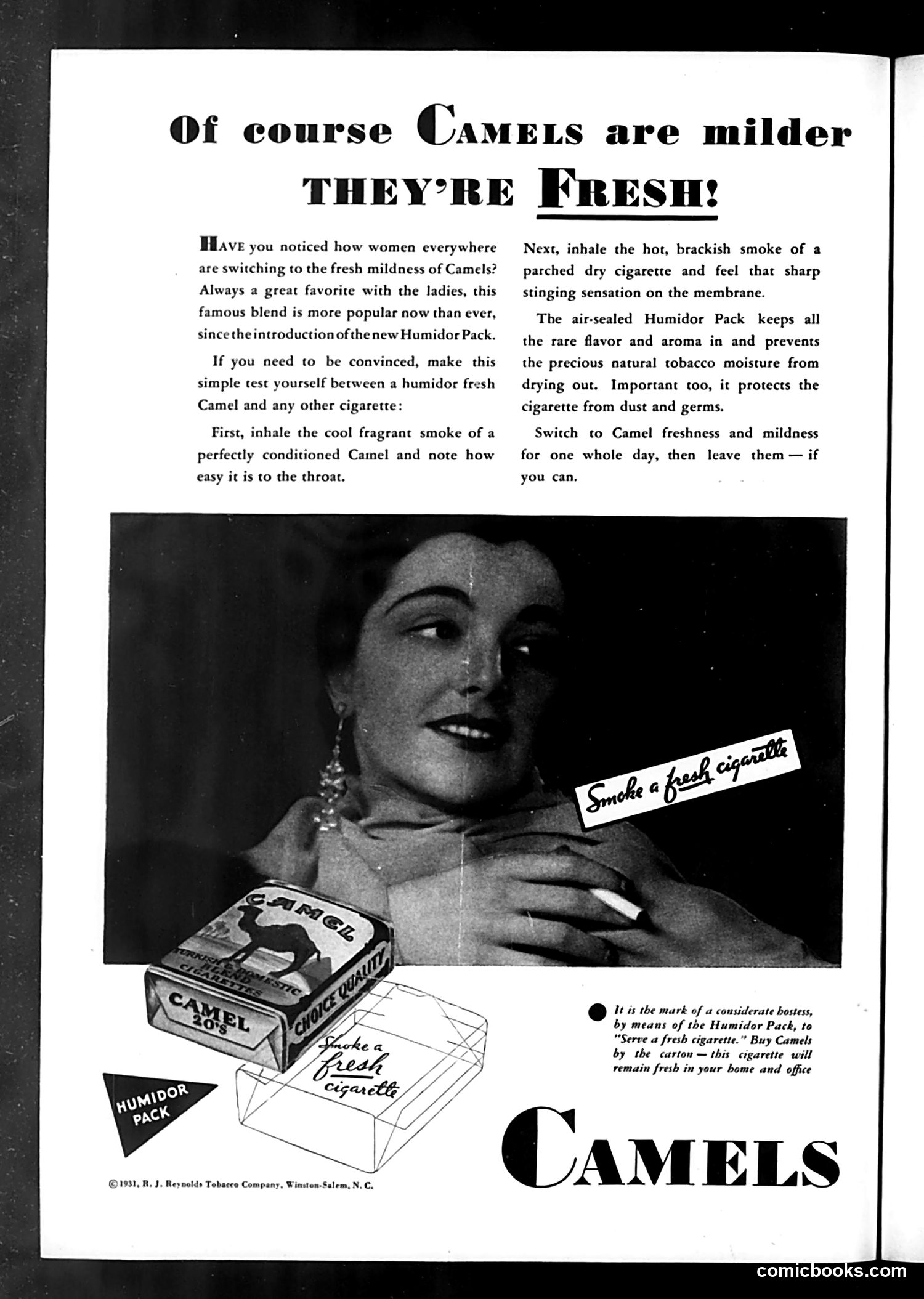
# Analysis This is a **Camel cigarette advertisement**, not satire or a political cartoon. The page promotes Camel's "Humidor Pack" to women, claiming the product keeps cigarettes fresh through special air-sealing. The ad features a photograph of a smiling woman holding a cigarette, with text encouraging readers to test Camel's "freshness and mildness" against competitors. It emphasizes the Humidor Pack's ability to preserve tobacco moisture and protect against "dust and germs." The tagline "Smoke a fresh cigarette" and closing text suggest buying Camels "by the carton" ensures home freshness. **Historical context**: This reflects early-to-mid 20th-century tobacco marketing targeting women during an era when smoking was promoted as fashionable and safe—claims later proven false.
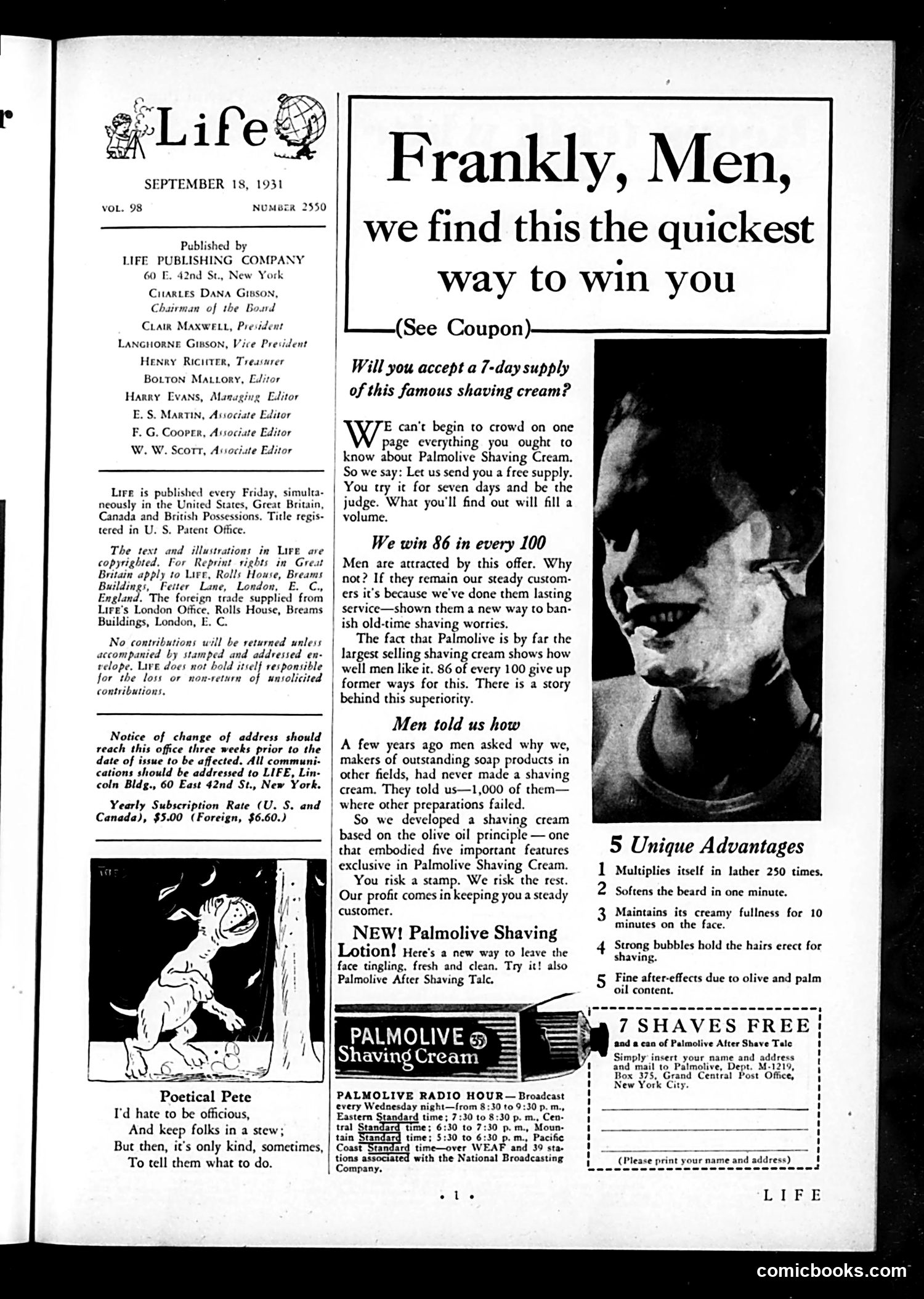
# Analysis This page is primarily a **Palmolive Shaving Cream advertisement** (circa 1931), not political satire. The small cartoon titled "Poetical Pete" in the lower left appears to be a humorous filler piece about someone wanting to be "efficacious" but being "only kind, sometimes." The main content uses the advertising hook "Frankly, Men, we find this the quickest way to win you"—a direct sales pitch offering a free 7-day supply. The ad emphasizes that 86 of every 100 men who try Palmolive switch to it permanently, attributing success to olive oil ingredients. The photograph shows a man shaving, demonstrating the product's lathering qualities. This is straightforward commercial advertising rather than political or social satire—typical content for Life magazine's revenue model in the early 1930s.
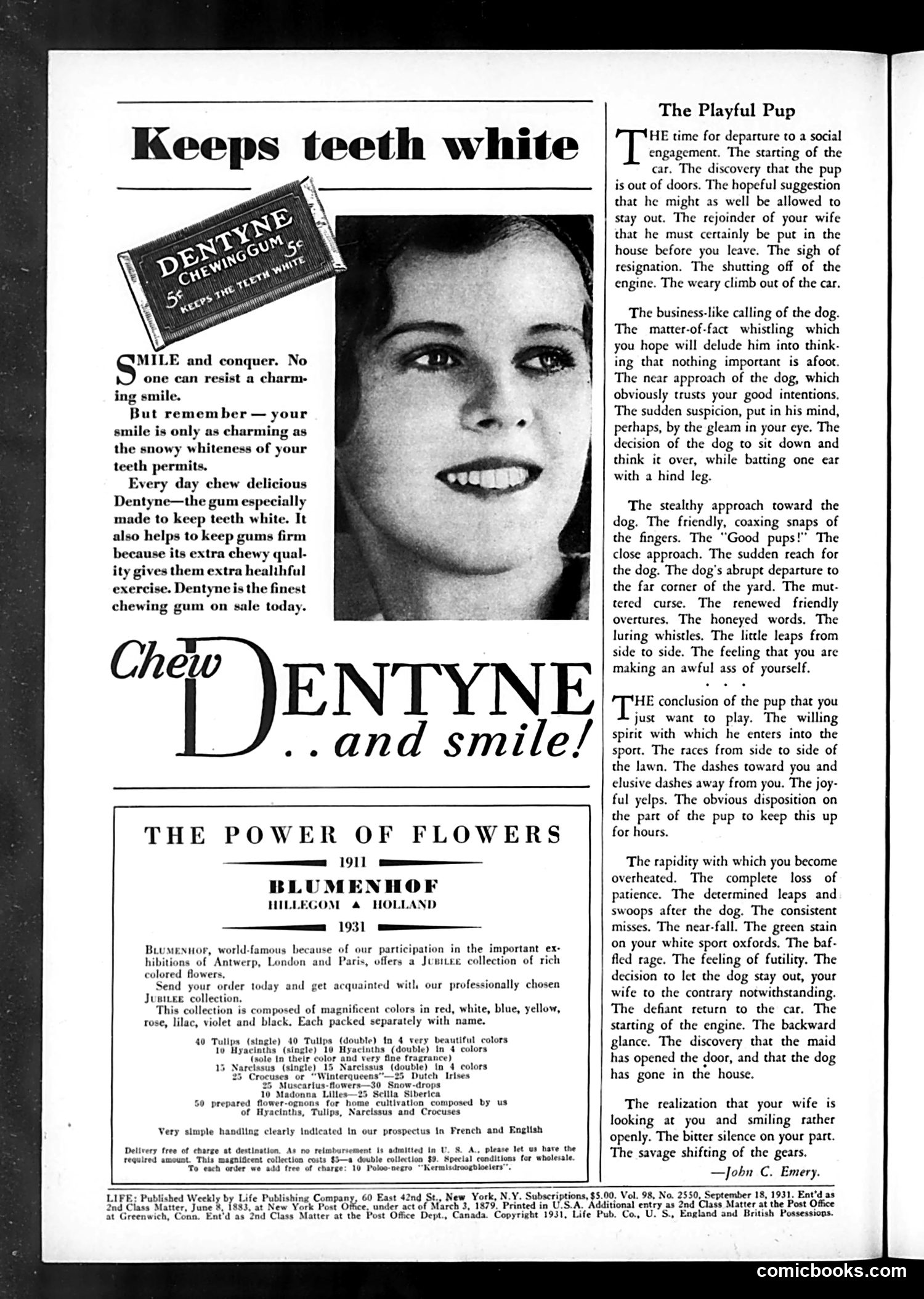
# Analysis of Life Magazine Page (September 18, 1931) This page contains **two advertisements, not political cartoons**: 1. **Dentyne Chewing Gum Ad** (top): Features a smiling woman's photograph with copy emphasizing that chewing gum keeps teeth white and helps maintain oral health. The tagline is "Chew Dentyne...and smile!" 2. **Blumenhof Flower Bulbs Advertisement** (bottom): Promotes mail-order flower bulbs for spring planting, listing various tulip and hyacinth varieties. It includes ordering information and pricing. Neither item contains satire or political commentary. This is a standard advertising page from Life magazine's 1931 era, when the publication regularly interspersed commercial advertisements throughout editorial content to generate revenue.
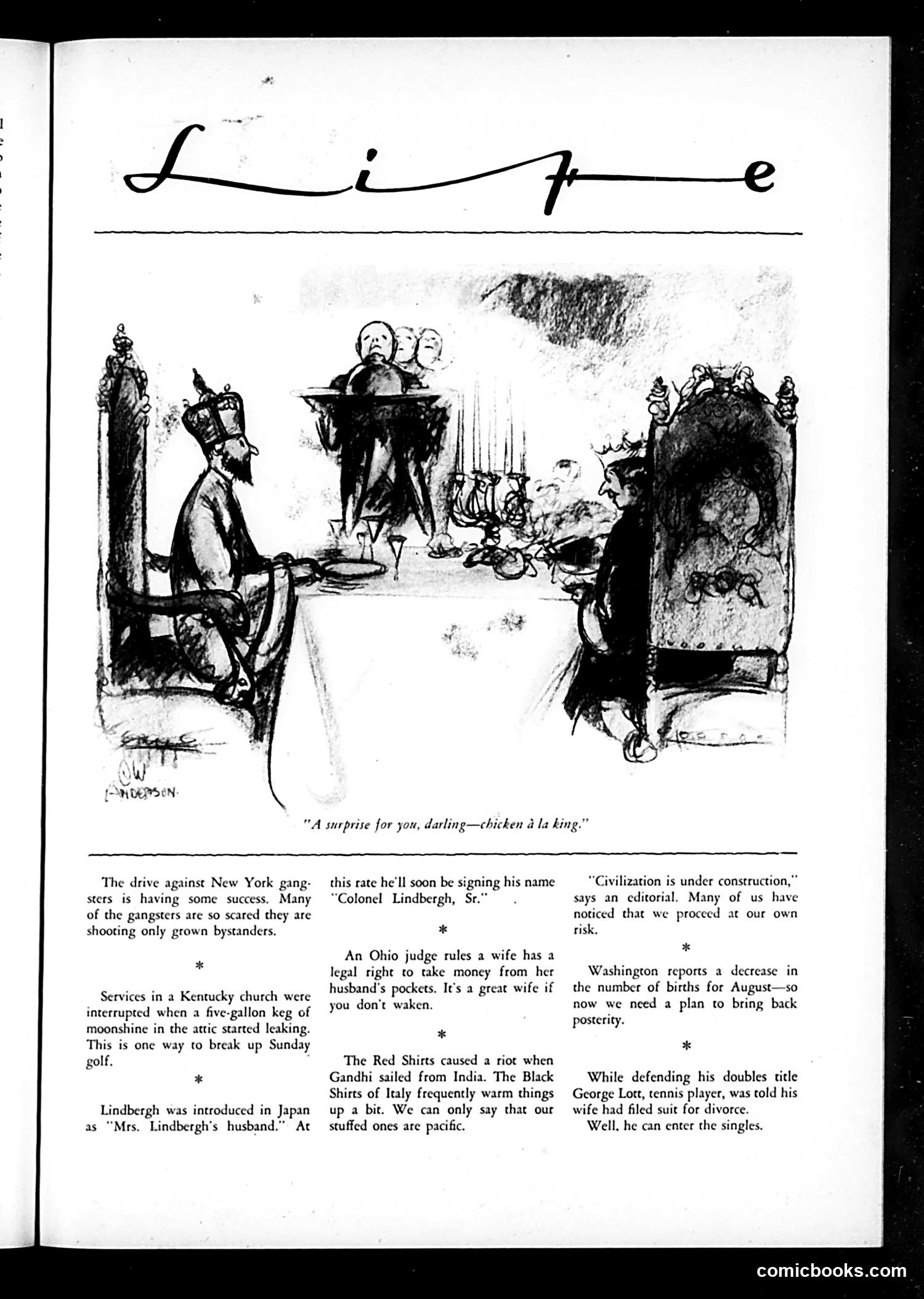
# "Life" Magazine Page Analysis This page contains a satirical cartoon titled "A surprise for you, darling—chicken à la king" depicting what appears to be a formal dinner scene. The cartoon likely mocks elaborate or pretentious dining, with the visual suggesting a contrast between expectation and reality. Below the cartoon, the page includes several brief satirical news items, including references to: - Gang violence in New York - Colonel Lindbergh (likely Charles Lindbergh, famous aviator) - Lindbergh being introduced in Japan as "Mrs. Lindbergh's husband" - Legal disputes (a wife's right to her husband's money) - Political unrest in India - A tennis player named George Lott The items mock contemporary social, legal, and political topics through deadpan humor typical of 1920s-30s satirical journalism.
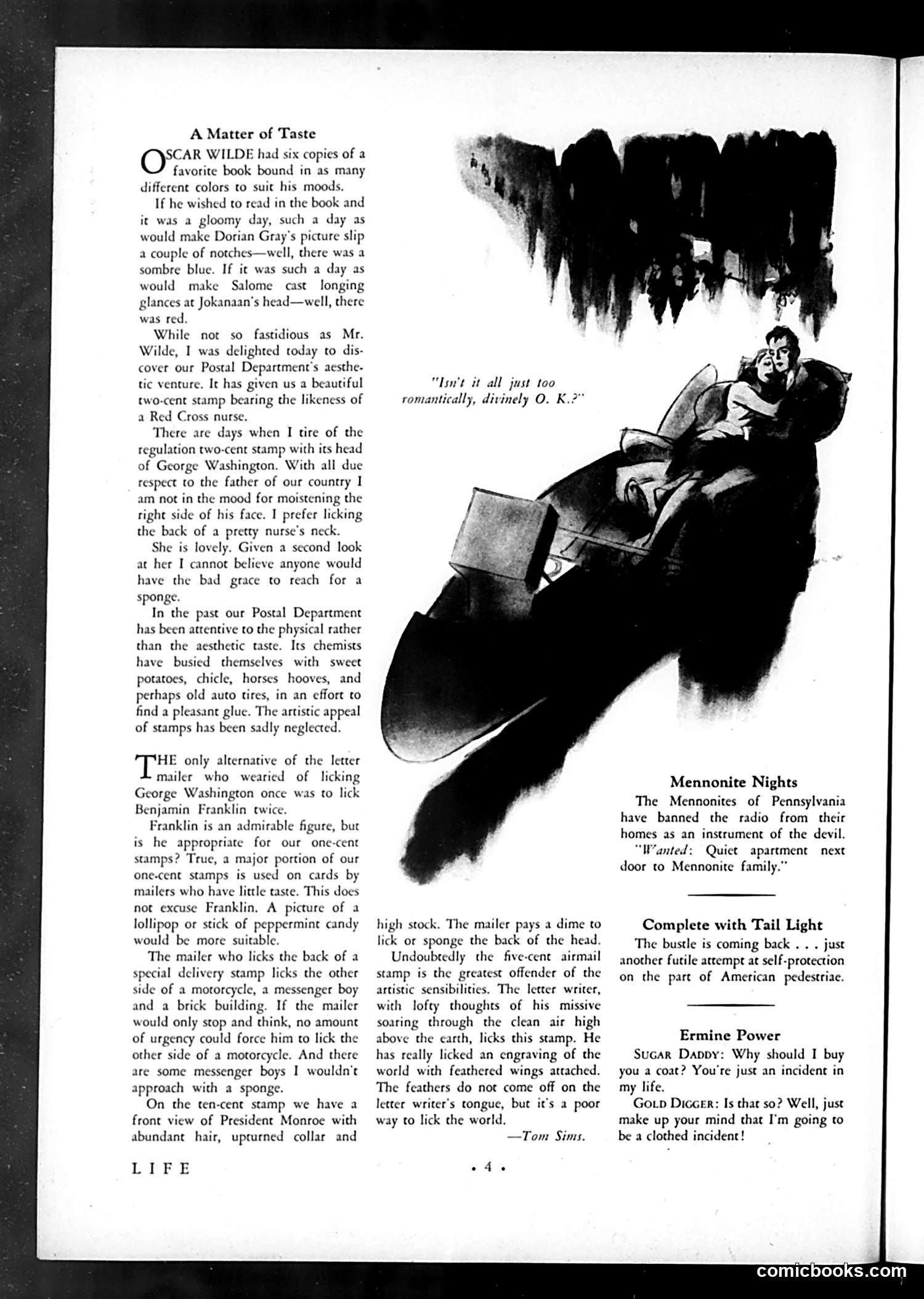
# "A Matter of Taste" - Life Magazine Satire This article satirizes the U.S. Postal Department's aesthetic choices. The author humorously critiques the "two-cent stamp bearing the likeness of a Red Cross nurse" and the regulation stamp featuring George Washington, objecting to Washington's stern expression. The main illustration depicts a couple in an intimate moment inside a large envelope or postal container—a visual joke about the postal theme. The caption reads: "Isn't it all just too romantically, distantly O. K.?" The satire mocks the Post Office's focus on practical glue composition (sweet potatoes, chicle, horse hooves) rather than artistic design. The author suggests alternatives like Benjamin Franklin or lollipops would be more tasteful for licking than current stamps. It's a lighthearted complaint about government neglect of aesthetic appeal in everyday objects.
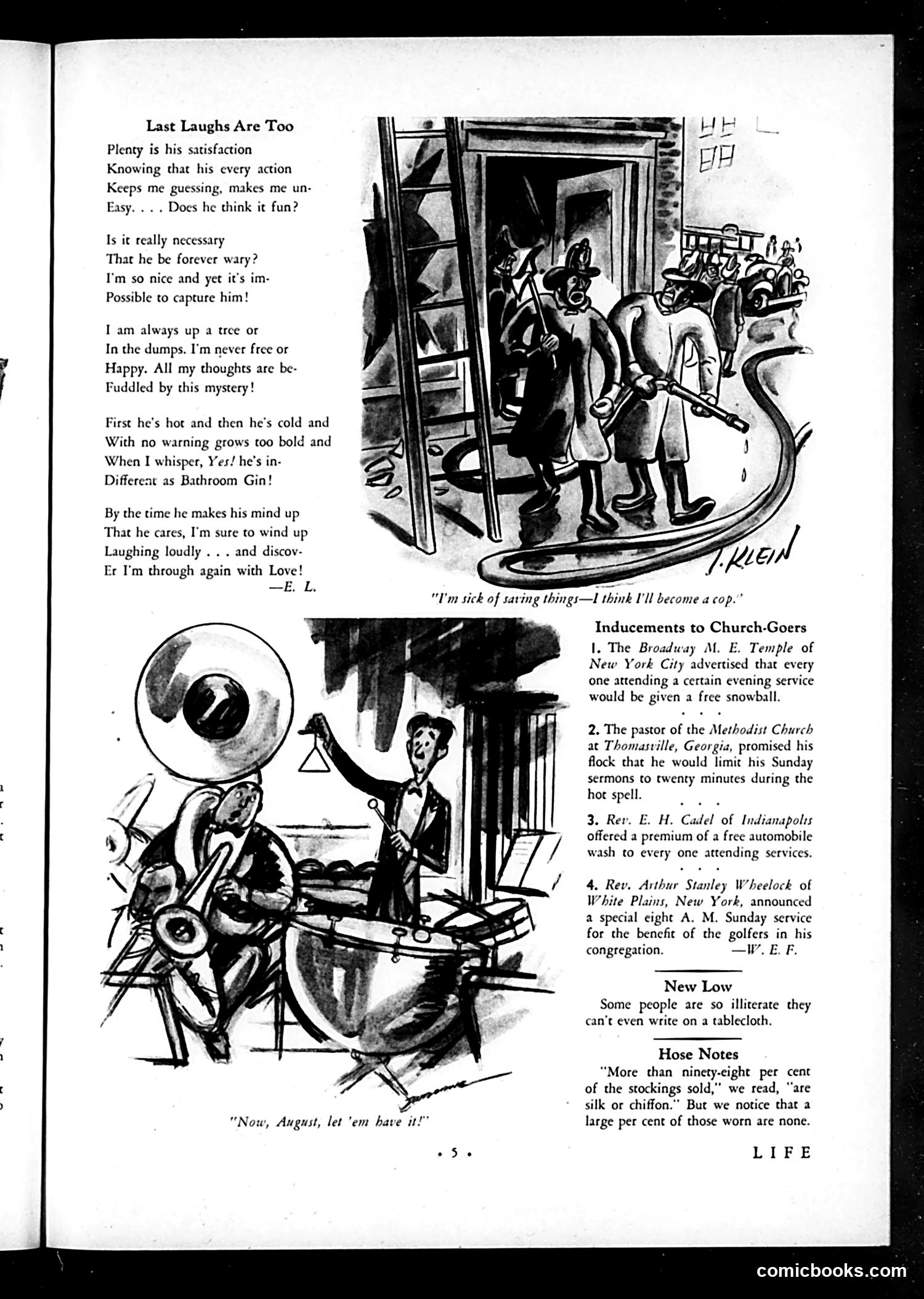
# Analysis of Life Magazine Page This page contains satirical commentary on dating and relationships. "Last Laughs Are Too" is a poem about a frustrating romantic partner who is unpredictable and emotionally exhausting—alternating between hot and cold, making the narrator perpetually uncertain. The top cartoon depicts a woman threatening to become a cop if her boyfriend continues "taving things"—likely meaning his unreliable or deceptive behavior. The humor relies on exaggerated threat as relationship commentary. The lower cartoon shows a man at what appears to be cooking equipment, with the caption "Now, August, let 'em have it!"—likely satirizing either domestic disputes or humorous cooking mishaps. The "Inducements to Church-Goers" section sarcastically catalogs various churches' unusual offerings (snowballs, shortened sermons, automobile washes, golf services) to attract attendance, mocking churches' desperation to fill pews during summer.
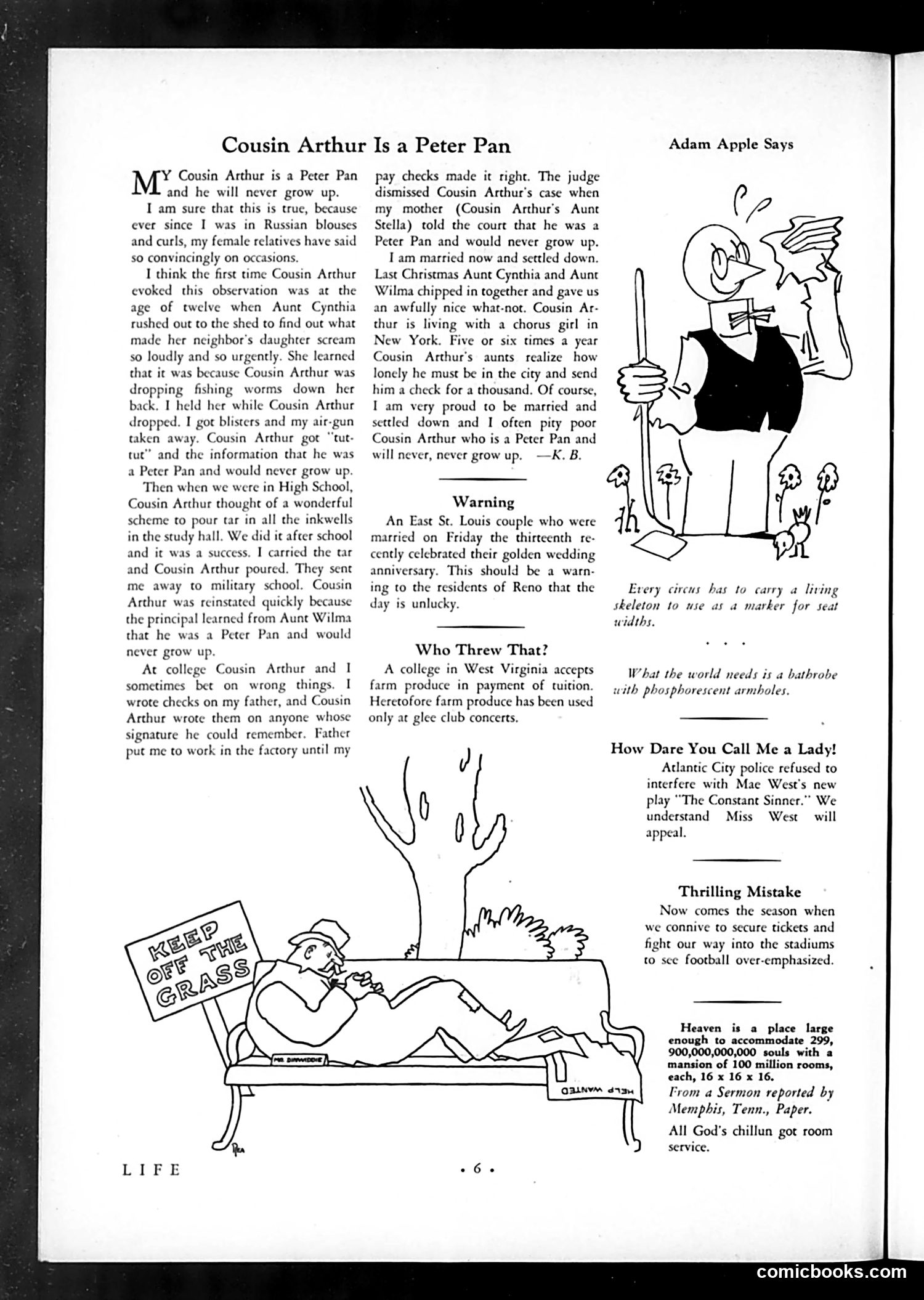
# Analysis of Life Magazine Page 6 This page contains several short satirical pieces and cartoons typical of Life's humor section: **"Cousin Arthur Is a Peter Pan"** — A personal essay mocking the author's cousin who never matured, using "Peter Pan" (the boy who never grows up) as a metaphor for arrested development. The piece uses childhood anecdotes to humorously document this character flaw. **"Who Threw That?"** — A cartoon showing a man lounging while holding a "Keep Off the Grass" sign, satirizing people who demand others follow rules they themselves ignore. The remaining brief items are typical Life humor segments: short, punchy observations about contemporary life (marriage, police, theater, football fandom, and religion). These showcase Life's style of accessible, lighthearted social commentary aimed at general readers.
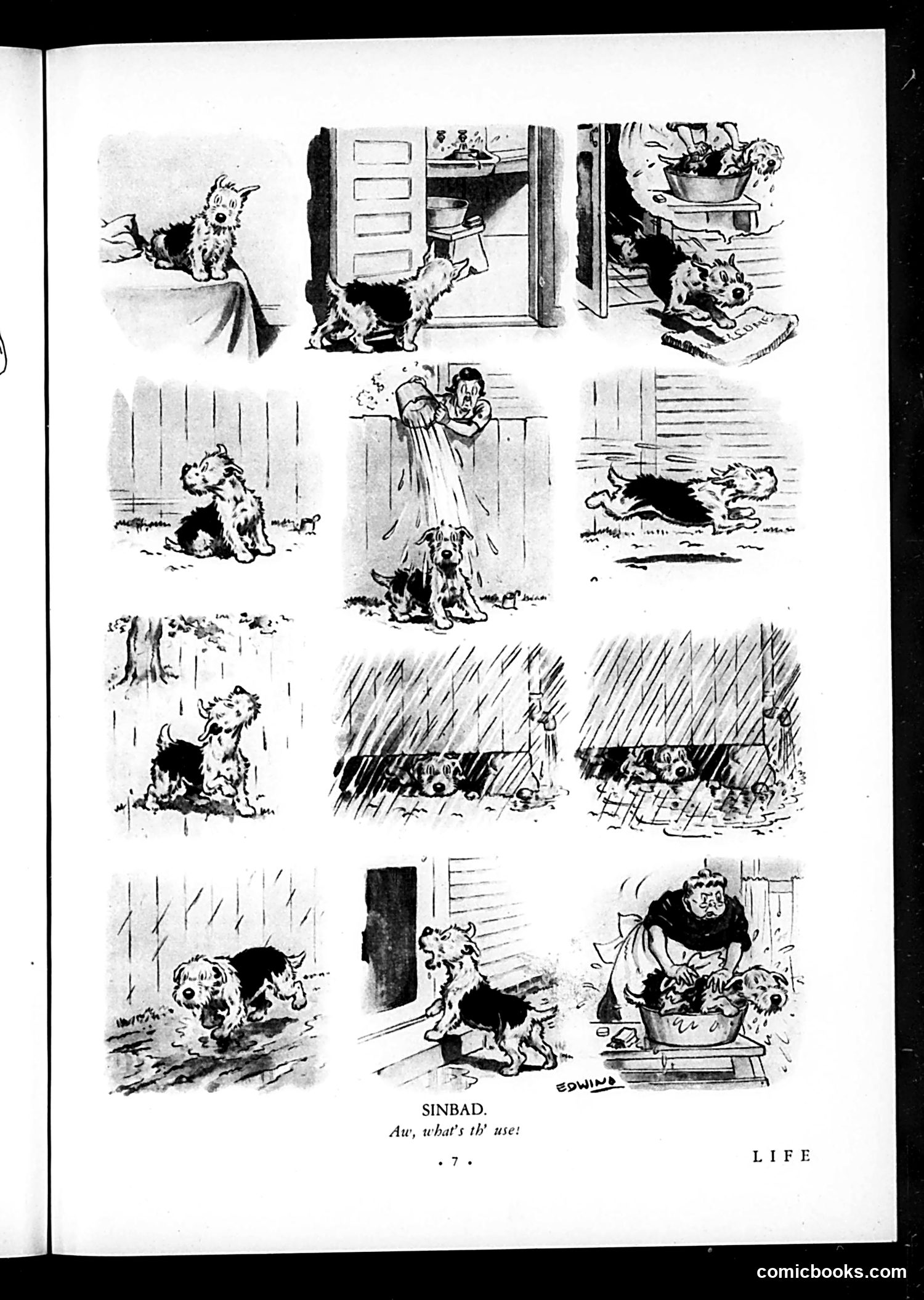
# Analysis of "Sinbad: Aw, what's th' use!" This is a comic strip by Sinbad (the artist's signature is visible) featuring a small, scrappy dog character experiencing a series of misfortunes across nine panels. The sequence shows the dog encountering various domestic troubles: being shooed away from a table, getting drenched by water, facing a bath, running from rain, and ending up soaking wet and dejected. The caption "Aw, what's th' use!" captures the dog's resignation to its perpetually bad luck. This appears to be a gentle, humorous strip about a lovable underdog (literally) perpetually defeated by circumstance—likely appealing to readers who identified with small creatures or individuals facing life's minor indignities. The humor derives from relatable domestic scenarios rather than political satire.
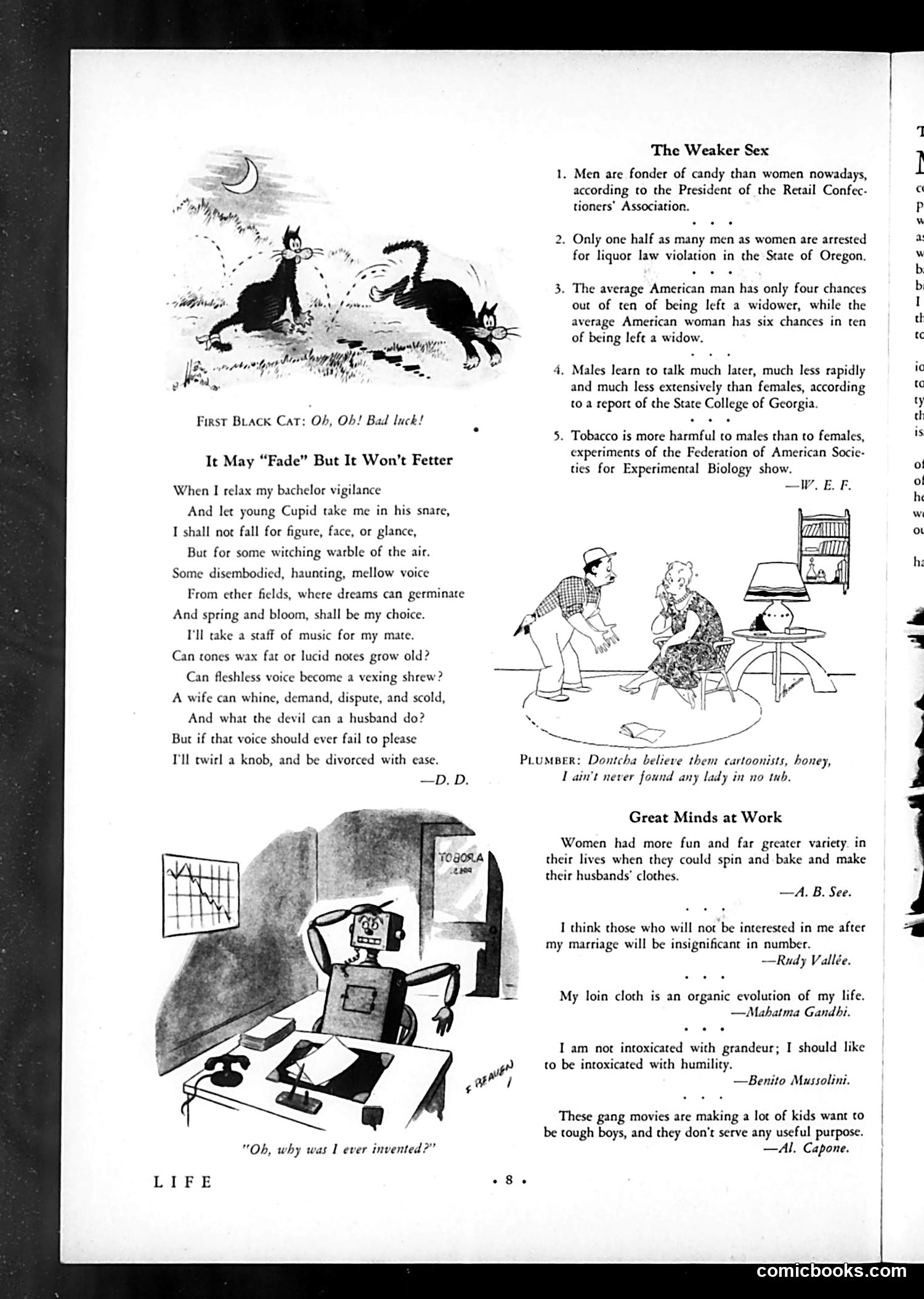
# Analysis of Life Magazine Page 8 This page satirizes gender stereotypes through multiple pieces: **"The Weaker Sex"** section presents ostensibly factual claims (men eat more candy, higher widower rates for men) that ironically contradict the title—suggesting men, not women, are actually the "weaker" sex. **"It May Fade But It Won't Fetter"** is a poem about a bachelor rejecting marriage, humorously listing domestic grievances (nagging wives, demanding spouses). **The robot cartoon** ("Oh, why was I ever invented?") shows a frustrated inventor surrounded by failed equipment, satirizing male inventors' struggles—possibly mocking the notion that men are logical problem-solvers. **"Great Minds at Work"** presents humorous quotes from famous figures (Gandhi, Mussolini, etc.) about domestic life and marriage, suggesting even great men are preoccupied with trivial domestic concerns, further undermining male superiority claims.
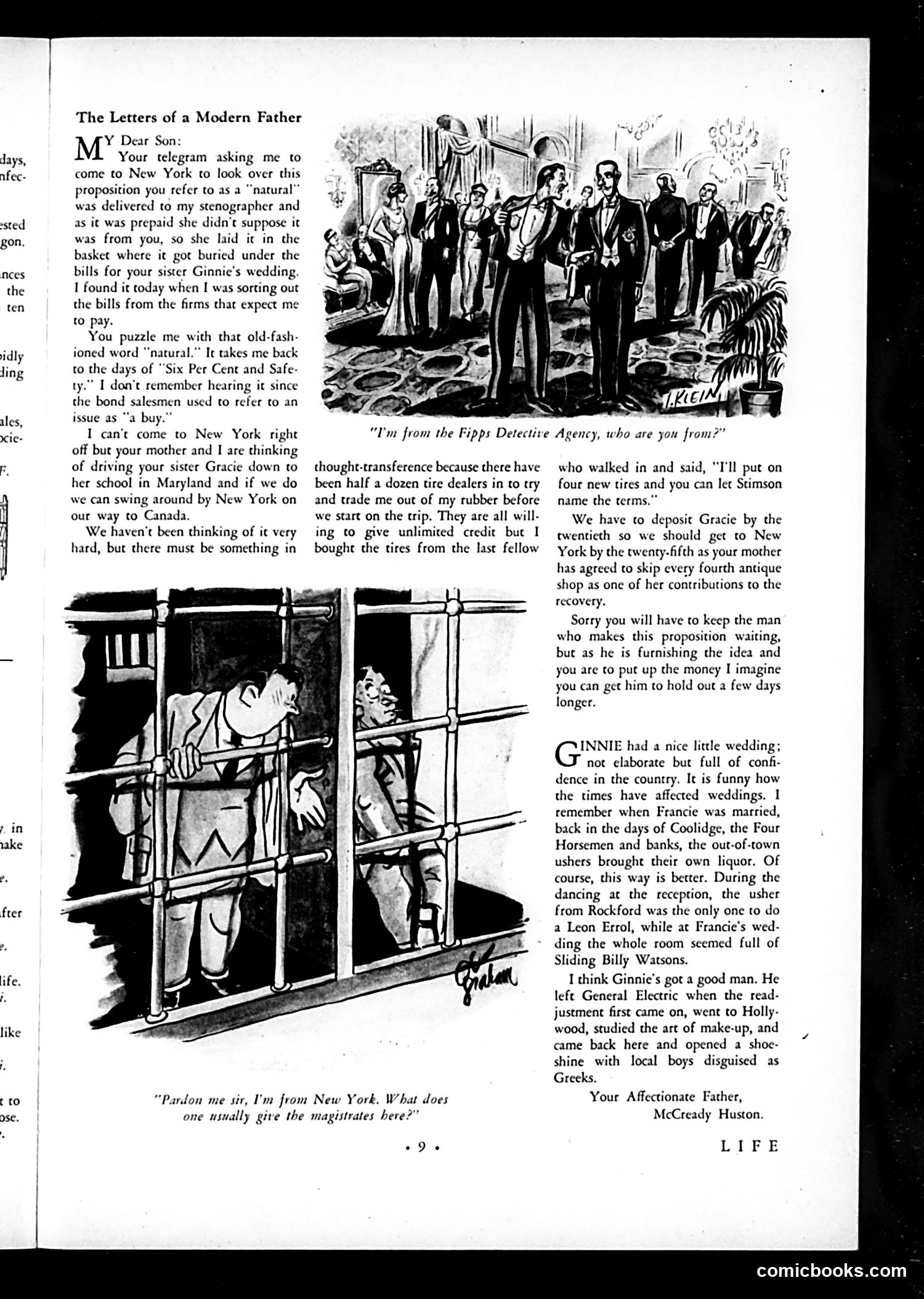
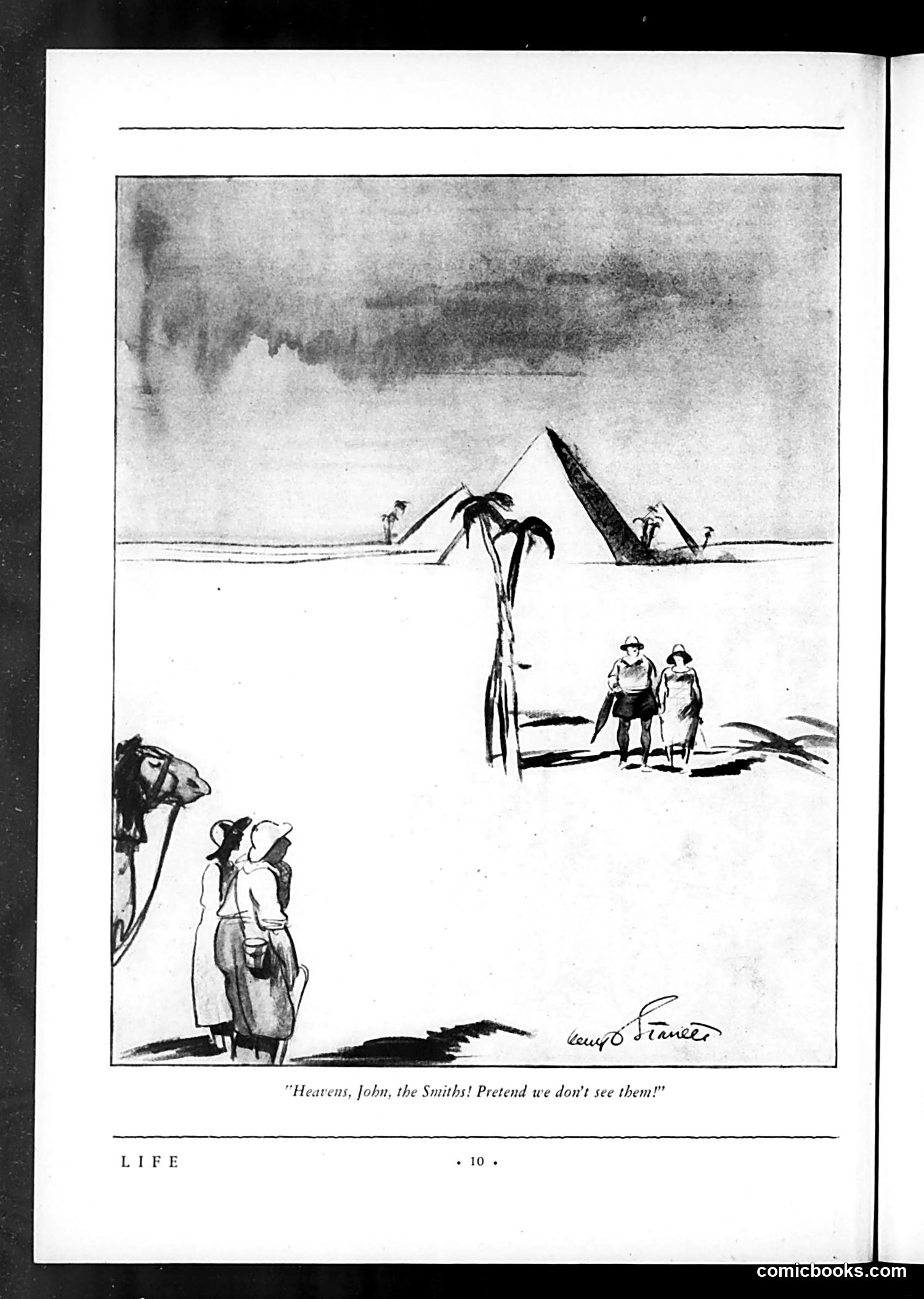
# Cartoon Analysis This cartoon depicts a shipwreck scene where a couple on the left observe other survivors in the distance. The woman says to her husband John: "Heaven, John, the Smiths! Pretend we don't see them!" The satire targets social snobbery and class consciousness. Even in a life-or-death maritime disaster, the couple prioritizes avoiding acknowledgment of their social acquaintances (the Smiths), suggesting they consider them beneath their station. The humor lies in the absurdity of maintaining social pretense during a catastrophe—the ultimate commentary on how some people's concern for social status overrides basic human decency and survival instincts. The cartoon mocks the artificiality and rigidity of social hierarchies among the upper classes.